

Crypto World
Is LINK undervalued or is Meme Punch the better entry point?


Disclosure: This article does not represent investment advice. The content and materials featured on this page are for educational purposes only.
Chainlink struggles near $10 as investors debate recovery potential versus growing interest in crypto presales.
Summary
- Chainlink trades near $10 in 2026, stuck below $14 resistance despite strong partnerships and rising cross-chain activity.
- MEPU is a meme P2E game token using established meme communities, where gameplay drives demand and in-game token utility.
- PTRUE is a prediction market AI tool presale that aggregates data and produces analysis for event-based betting decisions.
Chainlink has been one of the more frustrating charts to watch in 2026. The token trades around $10 in mid-May, down roughly 40% over the past year and still sitting well below the $14 resistance that has capped every recovery attempt for months.
That gap between price and network activity is the whole reason the Chainlink price prediction debate has been so heated. Some see it as a clear setup for a recovery. Others have moved their attention to presales.
Chainlink price prediction through May 2026
For the remainder of May, short-term projections place LINK in a narrow range. Around May 20, the price is predicted to fall to $9.86, then gradually rise through the second half of the month, ending May close to $10. Most days range from $9.97 to $10.17. The month’s high is $10.21, while its low is $9.86.
What is going on beneath the price is the interesting part. In the first quarter of 2026, Chainlink’s cross-chain volume exceeded $18 billion. In addition to an increasing number of organizations in the real-world asset area, the network has partnerships with SWIFT, Visa, Robinhood, and Aave. The news of a larger integration with DTCC, which is scheduled for late 2026, could cause the price to rise.
The key level is currently $14.37. For months, LINK has attempted and failed. The price is likely to remain in this range until that happens. The larger move would have to wait until later in the year because the May forecast does not come close.
Meme Punch: The other side of the question
Most new meme projects spend months trying to build a community from nothing. Most of them fail. Meme Punch takes a different route. The game uses five characters that already have big communities behind them: Pepe, Doge, Floki, Brett, and Pudgy Penguin. Each one comes with an audience that has been around for years.
The game is a medieval fighting arena. Players pick one of the five knights and fight other players. Wins pay out in MEPU. Inside the game, the token is used to buy weapons, skins, and special abilities, so the more people play, the more the token gets used.
MEPU runs on Ethereum. Total supply is 10 billion. Presale takes 40%, staking 14.5%, and liquidity 12%. Buyers can pay with ETH, BNB, SOL, USDT, USDC, or a card. The current presale price and APY are on the official website.

Poly Truth: A different kind of presale
The other notable presale is Poly Truth, which falls into an entirely different category. It is neither a game nor a meme coin. It is a research tool made for prediction market players.
Anyone betting on an election, a sports result, or a price target has the same problem. The information they need is spread across news sites, social platforms, and historical data, and there is rarely enough time to read all of it before placing a bet. Poly Truth does that work in the background. It pulls the data together, runs the analysis, and outputs a written brief on which side of the bet has the strongest case.
$PTRUE runs on Ethereum with a total supply of 11.5 billion. Presale takes 40%, liquidity 17%, and staking 10%. The team allocation has a 3-month cliff and a 12-month vest. The contract has been audited by SolidProof and Coinsult, with both reports public.
Reading all three together
LINK is the known infrastructure play. It already trades on every major exchange, the network is doing record volume, and the price has been pinned to the same range for months while the fundamentals quietly build up. The upside is there if $14.37 breaks, but the wait could be long, and the move depends as much on the broader market as it does on Chainlink itself.
Meme Punch and Poly Truth sit at different points. Both are still in presale. Neither has a public market price yet. The risk is higher, and the upside is harder to estimate. They are also smaller positions, since presale exposure is limited by stage caps rather than open market liquidity.
The honest answer to the question is that the three projects are doing different jobs. A LINK position is a bet on infrastructure adoption playing out over the rest of the year. A presale position is a bet on a specific project hitting its launch and finding a market once it lists.
Disclosure: This content is provided by a third party. Neither crypto.news nor the author of this article endorses any product mentioned on this page. Users should conduct their own research before taking any action related to the company.

Crypto World
Crypto users are choosing juicy yields over protection, putting billions at risk of hacks


DeFi insurance protocols debuted with huge ambitions during the 2020 crypto boom. But as hacks evolved and users chased yields over protection, most of the sector collapsed under the same risks it was built to cover.
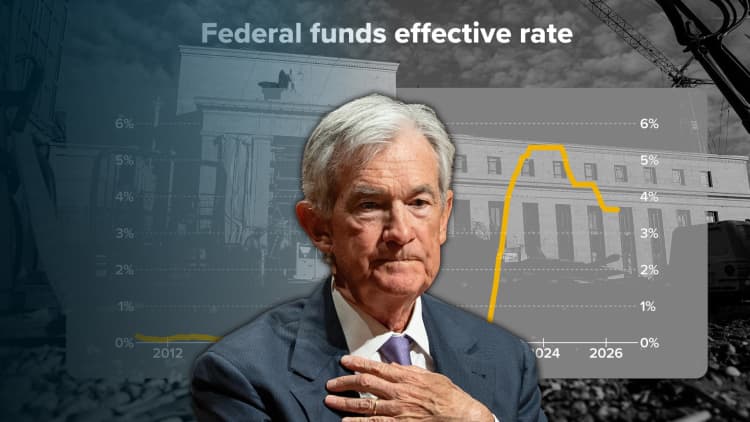
Kevin Warsh, nominee for US Federal Reserve Chair, testifies during a Senate Banking Committee hearing on his nomination on Capitol Hill in Washington, DC, on April 21, 2026.
Mandel Ngan | Afp | Getty Images
If new Federal Reserve Chair Kevin Warsh is still itching for a “good family fight” over monetary policy, he is likely to get one if he sticks to his guns on interest rate cuts.
With inflation spiking and Treasury yields surging, Warsh is likely to confront a Federal Open Market Committee in no mood to ease. In fact, several officials of late have stressed the need for the Fed to keep its options open for rate hikes ahead.
If it looked like outgoing Governor Stephen Miran was a lone wolf howling for reductions, seeing a Fed chair trying to defy his fellow policymakers and push for cuts will loom even larger.
Those who have watched Warsh over the years, from his prior stint as a Fed governor through his high-profile public disagreements with Fed policy since, expect him to put up strong arguments for cutting. The problem is, he’s likely to lose at least in the short term, a situation that sets up some interesting communication issues for the new central bank leader.
“I saw him in action. He does base his decisions on his view of the economy, and even his arguments for why he would favor rate decreases in general were based on his read of what’s happening structurally in the economy,” said former Cleveland Fed President Loretta Mester, who served with the Philadelphia Fed during the prior period when Warsh was on the board. “I just don’t think right now he can make those arguments in a credible way, because we have an inflation problem.”
Indeed, surging inflation will be Warsh’s first and primary policy challenge.

Officially, Warsh has echoed much of the Trump administration’s position on the current run of price surges — mainly that they are temporary and will fade once the fighting in Iran ceases and various disinflationary forces, such as increased productivity, take over.
However, those arguments face a tougher audience now with inflation levels at multi-year highs.
Warsh made the “family fight” remarks during his Senate confirmation hearing, a remark, along with other caustic comments he’s made about the Fed, that central bank observers privately say could come back to haunt him.
Rampant dissent
At the most recent meeting, in late April, three members of the Federal Open Market Committee, the central bank’s rate-setting arm, voted against the policy statement.
The vote homed in on one sentence in the missive that investors took to imply that the next move would be a cut: “In considering the extent and timing of additional adjustments to the target range for the federal funds rate, the Committee will carefully assess incoming data, the evolving outlook, and the balance of risks.”
However, it is just that disagreement that could allow Warsh to put a quick imprint on the Fed. By convincing the balance of the other 11 FOMC voters to remove it, he would further his oft-stated disdain for such “forward guidance” while also rallying the panel around a common objective, namely to preserve optionality for future moves.
“You get plenty of contrarian thinking in there. Kevin Warsh is a very fortunate man in his experience. Family fights generally lead to constructive outcomes,” said Lou Crandall, chief economist at Wrightson ICAP and a leading voice in internal Fed machinations.
“On the one hand, he can present this as not a tightening signal, just a shift to more agnostic communications framework,” he added. “There is a PR element that would be helpful to him. He doesn’t have to say that the committee forced his hand in his first meeting to go to an effectively more restrictive stance.”
Warsh’s problems would be far from over, though.
Facing the president
President Donald Trump nominated the new chair with clear statements that he expected lower interest rates. Should Warsh fail to deliver, it could set up the same kind of relationship Trump had with outgoing Chair Jerome Powell: a perpetual clash that saw frequent personal attacks and ultimately involved the Justice Department, as well as a historically unprecedented level of discord between the administration and central bank.
So might Warsh be left to present the decision of the committee, then state in his post-meeting news conference that he disagreed and tried but failed to persuade his cohorts to vote for a cut?
Not likely, say those familiar with inner FOMC workings, primarily because it would serve to further undercut Warsh’s credibility.

“That would undermine his power as chair. Part of the job of chair is you get the committee to reach a consensus.” said Mester, the former Cleveland president.
While there’s a perception that Fed officials enter the meeting room and then hash out positions, Mester, who served in various capacities at the Fed from 1985 until 2024, said it doesn’t really work that way.
“Chair Powell and the chairs before him, Ben [Bernanke] and Janet [Yellen], they both made a point of calling each participant right before the meeting so they would know where people are,” she said. “The driving towards consensus is part and parcel of the setup of the FOMC.”
Making the case
Former Governor Miran, who leaves the board with Warsh’s arrival, said in a Bloomberg News interview earlier in the week that “it’s important to understand that people at the Fed are responsive to arguments.” Though he voted against each of the rate decisions at the six meetings he attended, Miran noted that other officials “started to respond” to his contrarian arguments “but it takes time.”
Those who worked with Warsh say he’s up to the job, despite less-than-ideal circumstances surrounding the current Fed climate.
In addition to basic matters of rates, the new chair faces additional communications challenges.
He has spoken out not only against providing guidance, but also the Fed’s vaunted “dot plot” of individual officials’ rate expectations and even has shown misgivings about hosting news conferences after each meeting, a process that Powell began that deviated from the prior practice of quarterly meetings with the press.
Bill English, former head of monetary affairs at the Fed and now a professor at Yale, served with Warsh and deemed him “good at working with people, and I think he’ll try to find a reasonable consensus” among the myriad issues ahead.
“At least from what I saw years ago when he was a governor, he just doesn’t seem like the sort of guy who’s going to want to pick a fight with the committee,” English said. “My guess is he’s going to want to continue to be a chair who’s going to try to find consensus and move the committee over time with arguments and with data.”


There has been a lot of talk about an impending XRP breakout lately as the asset has been stuck in a relatively tight range since the early February crash.
Although each attempt has been met with immediate selling pressure, analysts are still hopeful that the token will overcome its most crucial resistance levels soon and head toward new peaks.
The Levels XRP Has to Surpass
In May alone, the cross-border token has already initiated three consecutive attempts to escape the captivity of its own consolidation. Although it was stopped almost instantly after each try, the good news is that it managed to mark higher highs before the subsequent rejections.
On May 6, it went from under $1.40 to $1.45 before it dumped back down to its starting point. However, it kept grinding and soared past $1.50 last Sunday before the bears stepped up once again. It managed to remain above $1.42, and Thursday’s attempt pushed it north to a two-month high of $1.55 before it was halted once again.
According to popular analyst EGRAG CRYPTO, XRP needs to overcome two major resistance levels before it goes on a more profound and sustainable run. The first is the one that stopped it in May at $1.51. If it falls, the second is located at $1.82, a level not seen since late January.
If the bulls managed to push XRP decisively above those lines, it would solidify the asset’s transition into a bullish Wave 5 expansion within the Elliott Wave structure. The analyst added that the most challenging parts of Elliott Wave are “NEVER Wave 3 or Wave 5;” instead, they point to fake breakouts, deep retracements, emotional traps, and complex structures.
“But once the correction is identified correctly: Wave 3 and Wave 5 become the easiest and most powerful moves to capitalize on,” EGRAG concluded.
We Still Play Range
Crypto Tony also mentioned XRP’s range between $1,30 and $1.55, in which the asset has remained for the past three and a half months. The analyst said he can look for more exposure once the asset breaks out in either direction, but until then, he will keep playing this range.
Fellow analyst CW added that XRP has liquidated a lot of short positions on its way up on Thursday, while the size of longs is “not large.” This would provide a more sustainable price rally structure if high-leveraged positions remain low.
Almost short positions in $XRP have been liquidated.
In addition, the size of long positions is not large. Most high-leverage positions in the $XRP futures market have been liquidated. pic.twitter.com/3WFZA0xMN3
— CW (@CW8900) May 15, 2026
The post XRP’s Next Bullish Wave Depends on These Crucial Price Levels: Analyst appeared first on CryptoPotato.
Crypto World
Intesa Sanpaolo Doubles Crypto Holdings to $235 Million in Q1 2026 With New ETH and XRP Positions

TLDR:
- Intesa Sanpaolo more than doubled its crypto exposure from $100M to $235M in the first quarter of 2026.
- The bank entered Ethereum for the first time via BlackRock’s iShares Staked Ethereum Trust with 3.1M shares.
- A new XRP position through Grayscale XRP Trust held 712,319 shares, valued at around $18M on March 31.
- Solana holdings collapsed from 266,320 shares to just 2,817, while Bitcoin and Coinbase positions grew notably.
Intesa Sanpaolo, Italy’s largest bank, has sharply increased its cryptocurrency exposure in Q1 2026. The bank’s crypto-related assets grew from roughly $100 million in Q4 2025 to around $235 million by March 31.
New positions in Ethereum and XRP drove much of this growth. The bank also expanded its Bitcoin holdings through multiple ETFs during the same period.
New Crypto Positions Mark a Shift in Strategy
The bank entered the Ethereum market for the first time through BlackRock’s iShares Staked Ethereum Trust. It acquired 3,147,918 shares in this ETF, which also offers staking rewards. This move marked a notable addition to its existing digital asset portfolio.
Intesa Sanpaolo also established a new position in XRP via the Grayscale XRP Trust. The bank held 712,319 shares, valued at approximately $18 million as of March 31. At current values, that position has grown to around $26 million.
When reached by Criptovaluta.it, the bank confirmed that these are “detentions for proprietary trading purposes,” without offering further details.
This was consistent with statements the bank had made in prior quarters regarding its digital asset activity.
Meanwhile, the bank increased its Bitcoin exposure through the ARK 21Shares BTC ETF and the iShares Bitcoin Trust ETF.
Share counts in both funds rose compared to the prior quarter. The bank also added call options on the iShares BTC ETF for the first time.
Solana Reduced While Equity Holdings Shift
Intesa Sanpaolo made a sharp cut to its Solana exposure during the quarter. Its holdings in the Bitwise Solana Staking ETF dropped from 266,320 shares to just 2,817. This reduction stands out against the broader increase in crypto assets.
On April 15, Ripple announced it had offered custody services to Intesa Sanpaolo. The timing followed closely after the bank’s XRP position became public.
As Ripple stated in its announcement, it had extended “its custody services to Intesa Sanpaolo,” adding a layer of infrastructure to the bank’s growing XRP exposure.
On the equities side, the bank added a new position in BitGo, holding 165,600 shares. At the same time, it closed its holdings in Bitmine and reduced its stake in Cantor Equity Partners II. The bank also closed its put options on Strategy entirely.
Coinbase shares increased from 1,500 to 10,357, showing a stronger bet on crypto infrastructure stocks. Positions in BTCS and Ethzilla remained unchanged from the previous quarter.
As early as January 13, 2025, the bank had confirmed to Criptovaluta.it “the purchase of 11 Bitcoins,” valued at approximately one million euros at the time, signaling that this crypto push has been building for over a year.

TLDR:
-
- The CLARITY Act passed the Senate Banking Committee 15-9 after a last-minute bipartisan deal during the markup itself.
- Senators Alsobrooks and Gallego voted yes in committee but have not committed to supporting the bill on the Senate floor.
- An ethics provision barring officials from financial interests in digital assets remains the top Democratic demand before floor passage.
- Galaxy Research puts the CLARITY Act at a 75% chance of becoming law in 2026 if it clears the Senate by mid-July.
The CLARITY Act passed the Senate Banking Committee in a 15-9 vote on Thursday. The bipartisan outcome came after last-minute negotiations during the markup itself.
Two Democratic senators, Angela Alsobrooks of Maryland and Ruben Gallego of Arizona, crossed party lines to advance the bill.
Both senators, however, noted their floor votes are not guaranteed. The bill now moves toward a full Senate debate, with a tight timeline ahead.
Last-Minute Deal Shapes the Committee Vote
The markup began with uncertainty over Democratic support. About 90 minutes in, Sen. Gallego signaled he would vote yes to advance the bill, though he clarified this was not a commitment for the floor. Shortly after, Committee Chairman Sen. Tim Scott announced a bipartisan compromise had been reached.
As part of that deal, five amendments from Sen. Cynthia Lummis were added for consideration. Most passed with five Democrats joining in favor — Warner, Warnock, Alsobrooks, Gallego, and Cortez Masto. However, on the final committee vote, only Gallego and Alsobrooks voted yes.
Alex Thorn of Galaxy Research noted the outcome in a post on X, writing that the bipartisan advancement raises the odds of final passage and placing the bill at a 75% chance of becoming law in 2026.
Both Alsobrooks and Gallego stated that further changes are needed before they commit to a floor yes vote. The central Democratic concern is an ethics provision.
This would bar senior officials and elected members from holding financial interests in or promoting digital assets.
What Comes Next for the CLARITY Act
The Senate Banking text must now be reconciled with the Senate Agriculture Committee version, which advanced in January.
After that, Majority Leader Sen. John Thune must schedule floor time for a full Senate debate, which is expected to take about a week.
The proposed timeline suggests Banking and Agriculture reconciliation could begin the week of June 1. Senate floor consideration may follow around June 15, with a possible final Senate passage by June 22.
A Senate-House reconciliation process could wrap up by late July, with a presidential signature targeted for the week of August 3.
Outside of ethics, other open issues include the treatment of DeFi under Title III and the Blockchain Regulatory Certainty Act in Section 604. These areas remain concerns for law enforcement-focused lawmakers on both sides.
The CLARITY Act, paired with last year’s GENIUS Act, is expected to establish a broad framework for digital asset markets in the United States.
Legislators and industry participants have worked on this type of market structure legislation for several years, with the goal of keeping crypto innovation within U.S. regulatory boundaries.

Key Takeaways
- Duquesne Family Office, managed by Stanley Druckenmiller, completely liquidated its 385,000-share Alphabet (GOOGL) stake during Q1 2026.
- TCI Fund Management, led by Christopher Hohn, established a fresh 2.46 million-share Alphabet Class A position and expanded Class C holdings to 8.85 million shares.
- TCI dramatically reduced its Microsoft exposure, cutting shares from 16.78 million down to 2.73 million.
- Third Point, managed by Daniel Loeb, launched new positions in Meta, Alphabet, bitcoin miner Hut 8, and SPDR Gold Shares ETF.
- Druckenmiller’s fund established fresh stakes in Broadcom, Caris Life Sciences, and Revolution Medicines while nearly eliminating its Amazon position.
Major hedge fund managers submitted their Q1 2026 13F reports late Friday evening, exposing significant portfolio adjustments across technology holdings. Alphabet emerged as a focal point, with prominent investors taking opposing positions on the tech giant.
Stanley Druckenmiller’s Duquesne Family Office led the exits. The investment firm completely liquidated its 385,000-share Alphabet Class A holding throughout the first quarter. This position had been substantially expanded during Q4 2025, when Duquesne boosted it from 102,000 shares. The firm has not issued public statements explaining the rationale behind this complete withdrawal.
Alphabet finished Friday’s trading session at $396.78, gaining 1% for the day. Year-to-date, the stock has climbed 27% in 2026. Notably, during the January through March period, shares declined 8%, indicating Druckenmiller’s exit occurred while the stock was underperforming.
Duquesne Establishes Broadcom Position, Nearly Eliminates Amazon
While divesting from Alphabet, Duquesne remained aggressive in other sectors. The fund launched a new Broadcom position comprising 195,955 shares. Additionally, it established a significant stake in Caris Life Sciences totaling 1.89 million shares and acquired 315,860 shares of Revolution Medicines.
The fund executed substantial reductions elsewhere in its portfolio. Its Amazon holdings were slashed dramatically, declining from 737,940 shares to merely 9,539 shares. Teva Pharmaceuticals was reduced from 5.87 million shares to 2.37 million, while Coupang saw its stake drop from 6.77 million shares to 2.67 million.
Duquesne completely exited several positions during the quarter, including State Street Financial Select Sector SPDR, Cogent Biosciences, Entegris, Delta Air Lines, and American Airlines.
TCI Expands Alphabet Holdings While Third Point Enters Crypto Exposure
Contrasting with Druckenmiller’s approach, Christopher Hohn’s TCI Fund Management aggressively accumulated Alphabet shares. The fund initiated a substantial 2.46 million-share Alphabet Class A position from scratch. Simultaneously, it expanded its Alphabet Class C holdings from 7.6 million to 8.85 million shares.
TCI strengthened other core holdings as well. Visa shares were increased to 30.47 million, while both S&P Global and Moody’s saw expanded positions. However, the fund executed a dramatic reduction in Microsoft, slashing its stake from 16.78 million shares to just 2.73 million.
Daniel Loeb’s Third Point pursued a distinct strategy. The fund initiated fresh positions across Meta, Alphabet, SPDR Gold Shares, and Hut 8, a bitcoin mining operation. These moves signal expansion into both established technology leaders and cryptocurrency-related investments. Third Point simultaneously exited Microsoft, PG&E, Brookfield Asset Management, Casey’s, and CoStar throughout Q1.
The contrasting approaches to Alphabet across elite hedge funds underscores the divergent perspectives on the stock during a quarter when shares traded below their year-start levels.
These portfolio changes were revealed through mandatory 13F regulatory filings, which capture positions held as of March 31, 2026. As of Friday’s market close, Alphabet shares have appreciated 27% year-to-date.

Key Takeaways
- Atlassian (TEAM) climbed 8.1% following a diplomatic summit between Trump and Xi that boosted technology sector confidence, with the S&P 500 reaching a new record exceeding 7,500.
- Trade relations between the US and China transitioned from hostile to moderately optimistic, alleviating concerns for software companies with global operations.
- Strong performance from Figma (46% revenue expansion) and ServiceNow’s AI collaboration with Experian bolstered confidence in enterprise AI revenue generation.
- Truist maintained its Buy recommendation with a $100 target price, highlighting Atlassian’s artificial intelligence approach and Rovo credit consumption framework.
- TEAM remains significantly depressed with a 44% decline year-to-date and sitting 60.8% beneath its 52-week peak of $220.89.
Shares of Atlassian (TEAM) advanced 8.1% on May 15, reaching $86.61, following a diplomatic meeting between Trump and Xi in Beijing that altered the trajectory of US-China trade discussions.
The summit delivered fewer tangible agreements than investors anticipated. However, the overall atmosphere evolved from adversarial to moderately positive — and for an industry as internationally integrated as enterprise software, that shift proved sufficient.
The S&P 500 achieved a milestone, surpassing 7,500 during the same trading session. Technology stocks experienced broad-based buying interest.
This upward movement wasn’t isolated. Two distinct developments from the broader enterprise software landscape reinforced the positive sentiment.
Figma disclosed 46% revenue expansion, demonstrating genuine progress in early AI monetisation efforts. ServiceNow unveiled a multiyear artificial intelligence collaboration with Experian. Both announcements conveyed a consistent message: enterprise software providers are successfully integrating AI capabilities into their offerings and generating revenue from these features.
This storyline holds significance for Atlassian. Earlier this year, apprehension that artificial intelligence would destabilize rather than strengthen enterprise software platforms had pressured the sector. These recent developments helped diminish those worries.
Analyst Perspectives
Truist Securities maintained its Buy stance and $100 price objective on TEAM, referencing the company’s artificial intelligence roadmap unveiled at its Team 26 conference.
The firm emphasized how Atlassian intends to generate revenue from AI through its Rovo credit framework, which encompasses both internal platform usage and external consumption. Truist views Atlassian as strategically positioned to function as a supplier of enterprise context for AI implementations.
Company leadership has highlighted adoption of the Teamwork Collection as proof that interest in its AI offerings is expanding. Truist anticipates the extended strategy involves adding proprietary context over tokens through a usage-based pricing structure.
Other Wall Street firms have shown less unanimous optimism but remain generally positive. Bernstein SocGen Group maintains a $295 price objective. Cantor Fitzgerald projects $107. BofA forecasts $100. Piper Sandler carries an Overweight designation with a $175 target. Macquarie holds a $130 estimate with an Outperform classification.
These projections reveal their own narrative — substantial divergence exists, with minimal consensus among the figures.
TEAM’s Broader Context
Atlassian’s third-quarter fiscal 2026 performance demonstrated strength. Cloud revenue exceeded analyst projections by 4.5% and expanded 29% year-over-year, accelerating from 26% in the previous quarter. Data center transitions and the DX acquisition fueled that expansion.
Free cash flow fell short of expectations due to severance costs, though cloud revenue and non-GAAP operating income surpassed analyst estimates.
The equity remains depressed by 44% year-to-date. It trades 60.8% under its 52-week maximum of $220.89, achieved in July 2025.
For perspective: a $1,000 position in Atlassian from five years ago currently holds a value of $407.94.
TEAM has experienced 33 movements exceeding 5% during the past year. Thursday’s 8.1% advance aligns with this volatility pattern — notable, yet not the type of movement that fundamentally alters the investment thesis independently.
The stock’s prior significant fluctuation was a 3.8% decline two trading days earlier, triggered by the April PPI data driving Treasury yields to 10-month peaks.
TLDR:
- BNB Chain processes around 40% of all global stablecoin transactions, with millions of monthly active users.
- Over 179,000 AI agents currently use BNB Chain as a financial layer, a major share of all onchain agents.
- The network holds roughly $4 billion in RWA assets and supports approximately 60,000 RWA holders onchain.
- BNB Chain plans to scale throughput from 6,000 to 20,000 TPS while launching a new dedicated Agentic SDK.
BNB Chain has outlined its priorities for 2026, with a sharp focus on stablecoins, real-world assets (RWAs), and AI agents.
The blockchain network is positioning itself as core infrastructure for the next wave of onchain activity. Nina Rong, the network’s Executive Director of Growth, shared these plans during a recent Binance Online session.
Her remarks covered infrastructure upgrades, developer tooling, and the growing role of AI in decentralized finance.
Stablecoins and RWAs Take Center Stage
BNB Chain now processes roughly 40% of all global stablecoin transaction activity. Millions of users conduct stablecoin transactions on the network each month.
The network is also pushing beyond USD-denominated stablecoins into local and cross-border payment use cases.
This expansion reflects a broader effort to bring everyday financial activity onchain. Rather than competing on narrative alone, BNB Chain is building the rails for real financial use. The goal is making stablecoin payments as routine as any traditional digital transaction.
On the RWA side, the ecosystem has grown quietly but steadily. BNB Chain now holds around $4 billion in tokenized real-world assets. The network also supports hundreds of live tokenized instruments and approximately 60,000 RWA holders.
The combination of stablecoin volume and RWA growth positions BNB Chain as a serious contender in institutional finance.
As more capital moves onchain, having both pieces in place becomes increasingly valuable for institutions exploring blockchain-based settlement.
AI Agents Emerge as a Financial Layer
One of the more striking disclosures from the session involved AI agents. Over 179,000 AI agents are currently using BNB Chain as a financial layer. This figure represents a large share of all active onchain agents across the crypto industry today.
Rong captured the shift in a single line during the livestream: “BNB Chain is serving not only humans but also non-humans.”
This reflects how automated systems are now interacting with onchain infrastructure at scale. The line between human and machine users is narrowing quickly.
To support this, BNB Chain is developing an Agentic SDK. The tool will allow AI agents to accept jobs, negotiate pricing, and interact with onchain services. Each agent will also be able to operate with its own onchain identity and financial rails.
This infrastructure layer is new territory for most blockchain networks. By building dedicated tooling for AI agents, BNB Chain is preparing for a future where automated systems handle a significant share of onchain activity.
Infrastructure Upgrades and Developer Support
BNB Chain is also investing heavily in performance improvements this year. The network plans to increase throughput from 6,000 transactions per second to 20,000 TPS. Alongside this, the team is working to reduce latency and improve transaction finality.
Rong described the broader user experience goal clearly: “BNB Chain should just be as easy as breathing air.” The intention is for users to interact onchain without needing to think about the underlying infrastructure. Speed and reliability should simply be expected.
For developers, the focus includes AI-focused infrastructure, onchain identity standards, and middleware for institutional use. New APIs and easier building blocks are also being introduced for teams launching onchain products.
Beyond tooling, BNB Chain is also expanding its builder support programs. Hackathons, incubator initiatives, and business development resources are all part of helping projects move from concept to live product more efficiently.


For protocol founders and security researchers, the incident reinforced a broader shift underway across crypto: DeFi is no longer primarily battling coding bugs. It’s battling complexity.
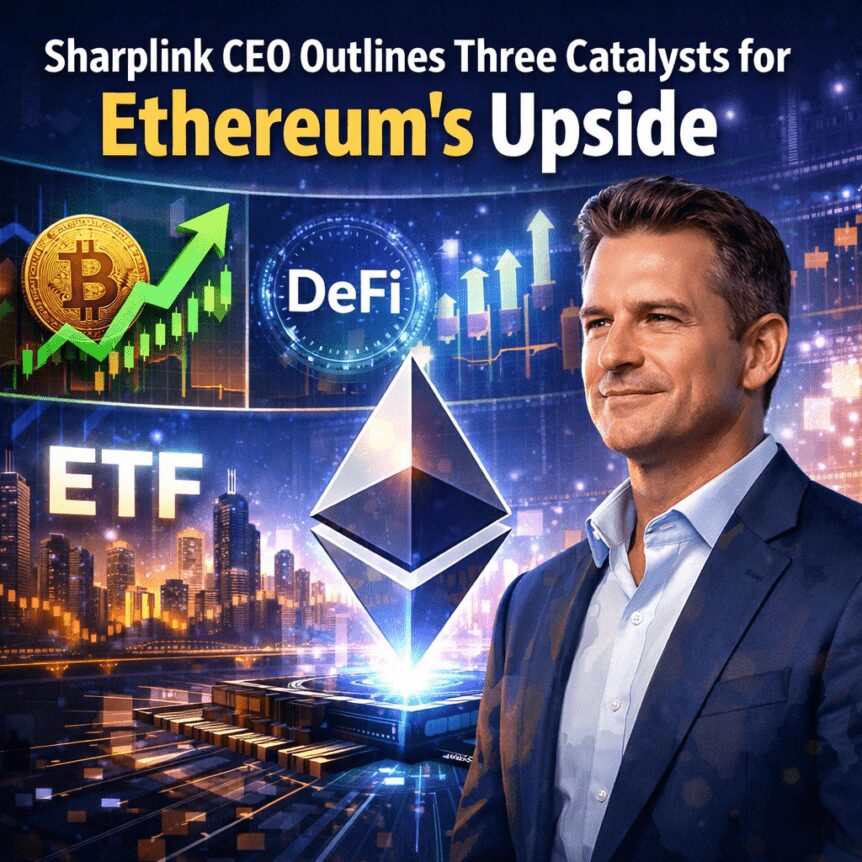
Ethereum’s next leg upward, according to Joseph Chalom, CEO of SharpLink Gaming, hinges on a trio of catalysts that could shift the macro and regulatory backdrop in its favor. In a Chain Reaction interview published this week, Chalom outlined the milestones he believes would align to rekindle momentum for the Ether market: regulatory clarity from Washington, a rebound in risk appetite, and a sustained push into real-world asset tokenization that he says could redefine Ethereum’s dominance in the space.
On the regulatory front, Chalom highlighted the Digital Asset Market Clarity Act (CLARITY) as a potential spark. He pointed to a development this week in which all 13 Republican members and two Democrats on the Senate Banking Committee voted to advance the CLARITY Act at a committee meeting. While framed as a U.S. policy effort, Chalom notes that the move resonates beyond American borders, signaling a broader shift toward clearer crypto guidelines that other jurisdictions are watching closely.
Key takeaways
- CLARITY Act progress: A bipartisan move in the U.S. Senate Banking Committee toward providing clear rules for digital assets could unlock renewed institutional engagement with Ethereum and related products.
- Global signal: The U.S. shift toward a more defined stance on crypto is seen as a global benchmark, with major markets in Asia watching the development as policymakers weigh their own regulatory paths.
- Risk appetite and macro backdrop: A return of risk tolerance, aided by easing geopolitical frictions and a cooling of AI-focused market frenzies, is viewed as a prerequisite for a broader crypto rally.
- Tokenization as a growth vector: Ethereum’s potential to dominate the tokenization of real-world assets (RWA) is cited as a long-horizon driver, supported by large-scale tokenization announcements and asset-manager interest.
US regulatory clarity as a potential price trigger
Chalom frames CLARITY not merely as a U.S. phenomenon but as a possible catalyst with global implications. He notes that the act’s advancement in the Senate Banking Committee signals a path toward clearer regulatory guardrails for tokens, wallets, and regulated products. The interview underscores a view that clearer rules could reduce uncertainty that has historically weighed on institutional participation in crypto markets. For investors, this suggests a potential re-rating of Ethereum-related exposure if the policy environment stabilizes and allows traditional players to transact and innovate with fewer legal ambiguities.
In the broader context, CLARITY’s progress arrives amid ongoing American debates about how to balance innovation with consumer protection and financial stability. While policy specifics remain to be worked out, the momentum is being read as a signal that the U.S. may reassert leadership in crypto finance in the coming years, which could encourage foreign ventures to align with American standards or to calibrate their own regulatory frameworks in response.
Global watchers, Asia’s cautious convergence on crypto leadership
Chalom emphasized that the ripples of the U.S. regulatory shift are being observed across major Asian centers. He has been traveling through Korea, Hong Kong, Tokyo, and Singapore, where officials and market participants are closely watching Washington’s trajectory. The concern is not merely about a regulatory victory for the U.S. side but about whether the global financial system can recalibrate around a disciplined, compliant framework for digital assets. In such a scenario, the U.S. could recast itself as a financing hub again, prompting capital to flow toward a regulated crypto ecosystem rather than away from it. For builders and traders, the implication is clear: regulatory clarity can reduce cross-border friction and enable more scalable use cases for Ethereum as a settlement layer and platform for tokenization.
Market mood, AI’s shadow, and the case for risk appetite
The second catalyst on Chalom’s list centers on macro sentiment. He argues that a sustained improvement in market risk appetite will largely hinge on two factors: de-escalation in geopolitical tensions and a cooling of the AI narrative that has driven much of the last year’s speculative fervor. “I think we’ll need some of that to go away in order to see crypto rise again,” he remarked. In other words, a calmer macro environment could reduce the headwinds that have pressured risk assets, including Ethereum, in recent months.
ETH’s price context provides a helpful backdrop for these considerations. Ether touched an all-time high of around $4,823 in August 2025 during a broad market upswing, but has since retraced about 55%, trading near $2,190 at the time of publication. The price trajectory underscores how a combination of policy clarity and macro stability could be required before a sustained rebound in Ethereum’s value materializes.
Tokenization: where Ethereum could dominate, now and ahead
The third catalyst centers on tokenization—the process of representing real-world assets on blockchain networks via digital tokens. Chalom argues that tokenization is the frontier where Ethereum could achieve meaningful dominance, noting that roughly $32 billion of real-world assets have been tokenized to date. He traces tokenization back to 2017, highlighting how progress has been uneven but is now accelerating with high-profile coordinations among asset managers and financial services firms.
Recent developments illustrate the momentum. JPMorgan filed to launch a tokenized money market fund on Ethereum, a vehicle designed to hold reserves backing stablecoins in a regulated, cash-like instrument while enabling yield. Separately, Franklin Templeton announced a collaboration with Ondo Finance to bring tokenized versions of its exchange-traded funds on-chain, expanding access to traditional investment products through crypto wallets. Taken together, these moves signal a shift from proof-of-concept pilots to scalable tokenized structures that can transit between traditional finance and Web3 rails.
Chalom’s forecast ranges from a plausible ramp to trillions of dollars in tokenized assets over time. “You could see a world where there’s not $30 billion in tokenized assets in a year from now. It could be $500 billion or a trillion,” he said, casting tokenization as a structural, long-run driver for Ethereum’s use cases and economic activity.
Even as tokenization accelerates, Ethereum’s role remains multifaceted. The broader narrative suggests that tokenized assets could anchor increased on-chain settlement demand, potentially boosting Ethereum’s utility as a settlement and back-end rails for financial products. In this framework, ETH would not just serve as a speculative asset but as an essential infrastructure layer for tokenized markets and regulated digital finance.
Notably, SharpLink Gaming itself sits at an interesting intersection in this ecosystem. The company is listed as the second-largest publicly traded Ethereum treasury holder, with approximately 861,251 ETH in its reserve, valued at about $1.89 billion at the time of publication, according to Ethereum Treasuries data. This positioning underscores how corporate treasuries have become a visible barometer of institutional exposure to Ethereum, even as tokenization and regulated product offerings evolve in parallel.
Beyond these developments, major players in traditional finance are signaling a broader appetite for on-chain integration. The JPMorgan and Templeton announcements illustrate a trend toward tokenized vehicles that can be traded or redeemed through crypto-native interfaces while benefiting from regulated oversight. If this trajectory continues, Ethereum’s ecosystem could attract new flows of capital and a wider variety of use cases—from tokenized funds to token-backed money-market instruments—strengthening the case for a longer-term structural upgrade in on-chain finance.
What to watch next
The confluence of regulatory clarity, a thaw in macro risk sentiment, and a tangible push into real-world asset tokenization could alter Ethereum’s trajectory in meaningful ways. Investors should monitor ongoing CLARITY Act developments and any subsequent regulatory guidance that clarifies custody, exchanges, and tokenized products. In parallel, watch for macro headlines that influence risk appetite and for more real-world asset tokenization deals and product approvals, which could bolster ETH utility beyond its role as a monetary asset.
For now, the market remains in a phase where structural catalysts—regulatory clarity, cross-border policy alignment, and asset-tokenization infrastructure—could unlock Ethereum’s next cycle. As Chalom and others flag, the outcome hinges on whether these elements cohere into a favorable environment for crypto—one that reduces friction for institutions, expands on-chain financial products, and anchors Ethereum as the backbone of tokenized asset markets.
Readers should stay attentive to the evolving CLARITY legislation, any broader international regulatory responses, and the pace of real-world asset tokenization announcements, as these signals will shape Ethereum’s near-term momentum and long-run potential.

Kenwood Avenue, Leigh GMP investigation after shots fired

Crypto users are choosing juicy yields over protection, putting billions at risk of hacks

Bill Cassidy’s last stand?

Manchester United reach agreement with Casemiro over contract clause amid transfer speculation

US brings back mandatory military draft registration

Steven Gerrard disagrees with Gary Neville over ‘shock’ Chelsea and Arsenal claim | Football


-

 Fashion5 days ago
Coffee Break: Travel Steam Iron
-

 Crypto World13 hours ago
BloFin War of Whales 2026 Grand Prix opens registration for $5M trading championship
-

 Fashion20 hours ago
Weekend Open Thread: Theory – Corporette.com
-

 Politics5 days ago
What to expect when you’re expecting a budget
-

 Fashion5 days ago
What to Know Before Buying a Curling Wand or Curling Iron
-

 Tech6 days ago
Auto Enthusiast Carves Functional Two-Stroke Engine from Solid Metal
-

 Crypto World19 hours ago
E-Estate Announces 1 Year Live: Washington DC Summit as Real Estate Tokenization Enters Its Next Phase
-

 Tech5 days ago
GM Agrees To Pay $12.75 Million To Settle California Lawsuit Over Misuse Of Customers’ Driving Data
-

 Tech1 day ago
Tech Moves: Microsoft AI leader jumps to OpenAI; former AI2 exec joins Meta; and more
-

 Crypto World6 days ago
CZ says US crypto rivals tried to block Trump pardon
-

 Tech5 days ago
GM agrees to $12.75M California settlement over sale of drivers’ data
-
Crypto World3 days ago
Bitcoin Suisse expands with Digital Asset License and Investment Business Act Registration Approval in Bermuda
-

 Politics4 days ago
Pakistan to enter Chinese capital market as war inflation bites
-
 Crypto World2 days ago
Google’s Gemini AI Predicts Incredible Solana Price by the End of 2026
-

 Crypto World4 days ago
Bitcoin Suisse expands with Digital Asset License and Investment Business Act Registration Approval in Bermuda
-

 Politics6 days ago
Sky News Presenter Says Keir Starmer Is Not Waving But Drowning
-
Crypto World7 days ago
Hacker Drains $5.9M From Ethereum Liquidity Provider TrustedVolumes
-

 Fashion6 days ago
Amazon Sundays: Spring Glassware & Vases
-

 Business22 hours ago
H&R Real Estate Investment Trust (HR.UN:CA) Q1 2026 Earnings Call Transcript
-
 Entertainment6 days ago
Prime Video’s Forgotten but Brilliant 2-Part Horror Anthology Is a Perfect Binge
You must be logged in to post a comment Login