

Crypto World
Latest Congressional swing at crypto tax reform would direct IRS to review de minimis exemptions



A bipartisan group of lawmakers introduced a revised crypto tax bill Wednesday that aims to update the tax code to better address crypto use cases and would, if signed into law, direct the IRS to analyze the effect de minimis exemptions might have.
Congressmen Steven Horsford (D-N.V.), Max Miller (R-Ohio), Suzan DelBene (D-Wash.) and Mike Carey (R-Ohio) reintroduced the Digital Asset Protection, Accountability, Regulation, Innovation, Taxation and Yields Act, otherwise known as the Parity Act, that Horsford and Miller had previously pushed a few times. The new language comes a week after lawmakers reportedly met to discuss crypto tax reform.
The new version of the bill calls for “regulated payment stablecoins” to incur no gain or loss unless the cost basis is less than 99% of the redemption value of the stablecoin, and it also creates a safe harbor for trading through brokers or in taxpayer accounts, defines how so-called “wash sale” rules might apply to digital assets and addresses how digital assets earned by acting as a validator.
The bill also directs the IRS to review what sort of tax burden crypto holders face when it comes to “small digital asset transactions” and how many transactions worth less than $200 are captured under existing law. This review should include the IRS’ needs if there was a de minimis exemption — meaning a carveout for activity that the law should consider too small to be concerned with — for crypto transactions, as well as whether and how such an exemption might be abused.
The crypto industry has long argued that freeing taxpayers of the burden of having to file and report taxes on small transactions would make it easier to use crypto as a payments tool for small items like a cup of coffee.
The bill is meant to just be a first step toward broader crypto tax reform, Horsford said at CoinDesk’s Consensus Miami conference earlier this month.
“I actually think tax is the foundation. Why? Because it’s tax policy that will determine number one, how these digital assets can be used in our finance system. And at a time when our federal tax code is outdated, it does not take into account the modernization of digital assets,” he said.
“For example, none of the current regulatory policy framework tells a consumer, an institution, or a builder what happens to their taxes when they sell a digital asset, earned staking reward, lend crypto on the U.S. platform or make a charitable contribution in bitcoin,” the lawmaker said “Those are tax questions. And they remain entirely unresolved.”



A South Korean funeral services company has reported an unrealized loss of about 45 billion won ($33 million) tied to investments in leveraged ether (ETH) exchange-traded funds (ETFs).
The Seoul-based Bumo Sarang, Korean for Parental Love, invested in the T-REX 2X Long BMNR Daily Target ETF (BMNU), a leveraged exchange-traded fund managed by Tuttle Capital Management that seeks to deliver 200% of the daily performance of Bitmine Immersion Technologies (BMNR), the world’s largest publicly traded holder of ether.
Leveraged ETFs are designed for short-term trading and can magnify both gains and losses, making them among the riskiest exchange-traded products available to retail investors.
The company’s losses are unrealized, meaning the holdings have not yet been sold. Still, the disclosure underscores the growing appetite in South Korea for speculative, crypto-linked investment products, particularly leveraged ETFs tied to digital asset firms and related equities.
South Korea has become one of the world’s busiest markets for leveraged and inverse ETF trading, with regulators warning investors about volatility and the risks associated with amplified exposure products.
The losses also reflect recent sharp swings in crypto-related equities as digital asset markets remain highly volatile.


The crypto industry’s campaign-finance juggernaut, the Fairshake political action committee, backed winners in half a dozen Southern primaries on Tuesday, pouring millions of dollars into the races as one of the congressional midterms elections’ leading spenders.
The super PAC deployed more than $20 million in political advertising in three states, mostly to Republican candidates who are considered likely to win their deep-red regions in the November general elections. So far this year, Fairshake — which has in previous election cycles helped get dozens of pro-crypto candidates to Washington — has backed a lengthy list of primary winners, though it did experience some setbacks, most notably in the Illinois race in which it spent more than $10 million trying to defeat Lt. Gov. Juliana Stratton on her way to her Democratic primary victory in March.
Fairshake devoted more than $7 million each in Tuesday’s Senate primaries in Alabama and Kentucky. It backed Republican U.S. Representative Andy Barr in Kentucky to replace the longtime Senate powerhouse Mitch McConnell, and Barr won that primary handily with more than 60% of the vote. In Alabama, the $7.4 million spent by Fairshake didn’t quite get to a resolution, yet, because Representative Barry Moore didn’t get past the 50% mark despite leading his closest competitor by more than 13 percentage points, so the crypto-backed candidate will face a runoff.”Fairshake’s 6-0 sweep tonight was a clear victory for pro-crypto leaders across the country,” said Geoff Vetter, a spokesperson for Fairshake, in a statement. “This powerful bipartisan mandate is being heard across America from Georgia to Alabama to Kentucky.”
In Georgia, the PAC focused on four seats in the U.S. House of Representatives, including a Democratic primary in the district left vacant after the death of longtime Democratic Representative David Scott. In the district, Fairshake supported Jasmine Clark, a Democratic state lawmaker who dominated a crowded field in this week’s primary after getting $4.2 million in crypto ad spending.
Such spending far outstripped the organic campaign fundraising in that race, with the crypto funds totaling more than was raised by all 10 Democratic candidates and far more than Clark’s own $1.2 million brought in by her campaign directly.
Clark’s campaign had included a supporting statement for crypto technology, which has often been the case with candidates Fairshake devoted its millions.
“We need to reassert ourselves as a leader on emerging technologies — whether that be AI, blockchain or cryptocurrencies — by working with experts to craft a smart, clear regulatory framework to help the industry grow and protect consumers from bad actors,” Clark’s campaign website declared.
Across Georgia, Fairshake also poured lesser amounts of cash into Republican primaries, backing candidates Jim Kingston (who won with 52%), Houston Gaines (who won with 67%) and incumbent Representative Clay Fuller (who had previously prevailed in a special election in April to replace Marjorie Taylor Greene and won this week with 81%).
Super PACs buy their ads without consultation with the campaigns they’re supporting, and Fairshake’s strategy has been to run ads designed to support or oppose candidates on whatever political points the committee sees as most effective — almost never mentioning the issue of cryptocurrency.
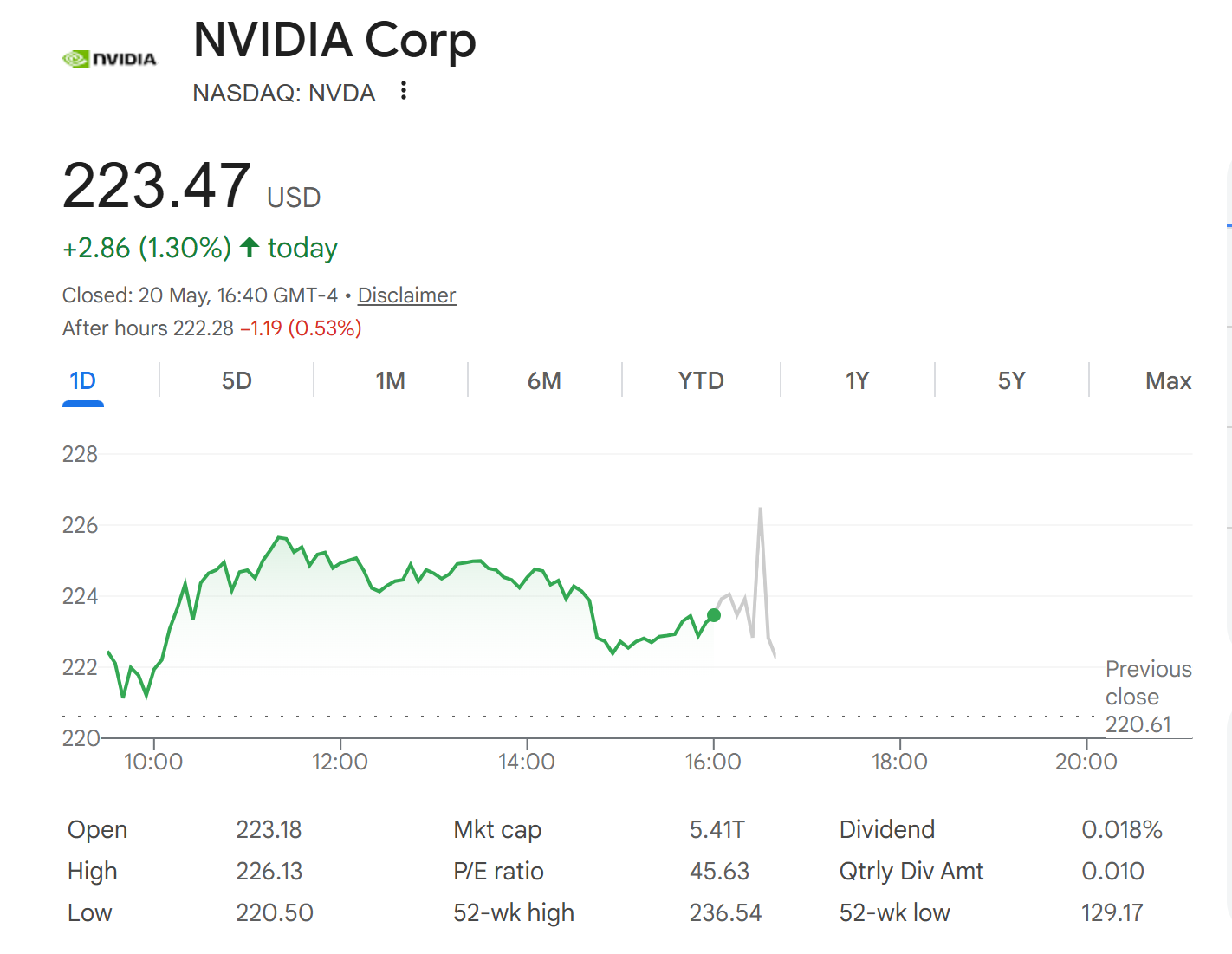
Nvidia delivered another blockbuster quarter, beating Wall Street estimates on revenue, earnings, and data center growth as global demand for AI infrastructure accelerated.
The chipmaker’s results reinforced its position at the center of the AI boom, while strong guidance signaled hyperscalers are still aggressively investing in next-generation computing capacity.

Follow us on X to get the latest news as it happens
Nvidia Tops Expectations on Revenue and AI Demand
NVIDIA reported first-quarter revenue of $81.62 billion, ahead of analyst expectations of $79.19 billion. Adjusted earnings per share came in at $1.87, also above forecasts.
The company’s data center division, the key engine behind the AI rally, generated $75.2 billion in revenue, surpassing estimates of $73.48 billion.

Nvidia also projected second-quarter revenue between $89.18 billion and $92.82 billion, well above Wall Street expectations of $87.36 billion.
The results highlight continued momentum in AI-related spending from major cloud providers and enterprise customers racing to expand computing capacity for generative AI models and inference workloads.
Blackwell AI Systems Fuel Massive Growth
Nvidia said demand for its Blackwell AI architecture continues to accelerate, helping drive record sales across hyperscalers, sovereign AI projects, and enterprise deployments.
The company also announced a new reporting structure focused on two major platforms: Data Center and Edge Computing. Nvidia said the framework better reflects its long-term growth strategy as AI workloads expand beyond centralized cloud infrastructure.
Investors have closely watched the Blackwell rollout after concerns earlier this year about supply constraints and execution risks. Instead, the latest quarter suggested Nvidia is maintaining pricing power and scaling production faster than expected.
Nvidia Earnings Seen as Key AI Market Signal
According to Daniela Hathorn, senior market analyst at Capital.com, Nvidia’s earnings now carry significance far beyond the company itself.
“NVIDIA has become the bellwether for the entire AI trade,” Hathorn told BeInCrypto, noting investors are focused on whether major technology companies continue spending aggressively on AI infrastructure despite macroeconomic uncertainty.
Indeed, AI crypto coins moved higher following the news, with the sector’s market cap rising almost 2% to $24.39 billion.

The market reaction reflects Nvidia’s growing influence across equities, semiconductors, crypto-linked AI tokens, and broader risk sentiment.
Strong guidance from Nvidia is often interpreted as confirmation that AI capital expenditure trends remain intact.
What’s Next for Nvidia and AI Markets?
Markets will now focus on Nvidia’s production ramp for Blackwell systems, future gross margins, and continued AI spending from companies like Microsoft, Amazon, and Google.
With Nvidia forecasting another quarter of record revenue, investors are likely to watch whether AI demand remains resilient through the second half of 2026 as competition, export restrictions, and valuation concerns continue to intensify.
The post Nvidia Shares Gain as Chipmaker Tops Estimates on 85% AI Revenue Surge appeared first on BeInCrypto.
Crypto World
Trump-Linked Truth Social Suddenly Pulls Crypto ETF, Analyst Doubts Reasoning Behind Exit
Truth Social’s planned push into cryptocurrency exchange-traded funds has suffered a setback after sponsor Yorkville America withdrew multiple applications tied to the social media company’s investment products.
Regulatory filings submitted to the US Securities and Exchange Commission (SEC) show the company pulled its registration statements for the Truth Social Bitcoin ETF and the Truth Social Bitcoin & Ethereum ETF, both originally filed in June 2025. The withdrawal also covers the proposed Truth Social Crypto Blue Chip ETF.
Trump Media’s ETF Push Stalls
Yorkville America said it withdrew its crypto ETF filings under the Securities Act of 1933 as part of a strategic decision toward launching investment products under the Investment Company Act of 1940. The advisor said the move followed an internal evaluation that found the ’40 Act framework better supports the differentiated and rules-based investment strategies it plans to develop for its investors.
According to Yorkville America President Steve Neamtz, the structure allows the company to offer investment strategies that are not possible under the ‘33 Act framework. He added,
“The ’40 Act framework – the regulatory structure under which the existing Truth Social Funds suite operates – provides enhanced investor protections, greater operational flexibility, and access to a broader range of institutional distribution channels.”
Yorkville America said the ’40 Act framework offers stronger investor protections through board oversight, audits, and fiduciary standards, while also providing wider access across brokerage and retirement platforms. The firm added that the structure can improve tax efficiency, requires regular SEC disclosures, and operates under a long-established regulatory framework that has governed US investment companies for more than 80 years.
However, prominent ETF analyst James Seyffart believes that the reasoning in the press release “doesn’t make a ton of sense.” Seyffart said that the differences between a ’33 Act exchange-traded product and a ’40 Act ETF, including the lower investor protections under the ’33 Act structure, are already well known within the industry and are not new developments.
He believes the decision is more likely tied to growing competition in the spot Bitcoin ETF market, particularly the launch of MSBT by Morgan Stanley with a fee of 14 basis points.
ETFs Extend Losing Streak
The latest development also follows a slowdown in the crypto ETF market as digital assets remain under significant pressure. Spot Bitcoin ETFs have seen major outflows recently.
These funds lost roughly $1 billion last week, according to data compiled by SoSoValue. Additionally, almost $980 million more has been pulled out during just the first two days of the current week.
The post Trump-Linked Truth Social Suddenly Pulls Crypto ETF, Analyst Doubts Reasoning Behind Exit appeared first on CryptoPotato.
Nvidia (NVDA) posted another blockbuster quarter on Wednesday, as demand for artificial intelligence infrastructure pushed revenue, profit and cash flow to record levels.
The chipmaker reported first-quarter revenue of $81.62 billion, up 85% from $44.06 billion a year earlier and above Wall Street estimates of $78.9 billion, according to FactSet data. Adjusted earnings came in at $1.87 per share, beating analyst expectations of $1.76 per share. The company also gave stronger-than-expected guidance for the current quarter, forecasting revenue of roughly $91 billion.
Meanwhile, the company also moved to return more cash to shareholders. Nvidia’s board authorized an additional $80 billion in stock buybacks and raised the quarterly dividend to 25 cents per share from 1 cent previously.
However, despite the beats, positive outlook and shareholder returns, the stock was down about 1.5% at the time of publication. Investors were likely looking beyond the quarter and into the potential challenges in growth opportunities for Nvidia as competition for AI chips continued to grow.
Bitcoin miners with exposure to AI and high-performance computing infrastructure traded modestly higher following Nvidia’s earnings report. Shares of Core Scientific (CORZ) and Cipher Mining (CIFR) each rose slightly in after-hours trading as investors continued to view some miners as potential beneficiaries of growing demand for data centers, power capacity and AI computing infrastructure. IREN (IREN), which rose initially, is down about a percent.
“The buildout of AI factories — the largest infrastructure expansion in human history — is accelerating at extraordinary speed,” CEO Jensen Huang said in a statement. “Agentic AI has arrived, doing productive work, generating real value and scaling rapidly across companies and industries,” he added.
Data center growth
Specifically for bitcoin miners moving towards the data center business, there was some positive news in the chipmaker’s earnings.
Nvidia’s Data Center business continued to drive growth as cloud providers, enterprises and governments expanded spending on AI infrastructure powered by the company’s chips.
Hyperscalers generated more than half of Nvidia’s $75 billion in Data Center revenue during the quarter, reaching roughly $38 billion and rising 12% from the previous quarter, CFO Colette Kress said on the company’s earnings call.
The remaining $37 billion came from a segment Nvidia now calls ACIE, which includes AI cloud providers, industrial customers and enterprise markets. Kress said AI cloud revenue more than tripled from a year earlier, as Nvidia helped rapidly expand AI computing capacity across more than 80 data centers with capacities of more than 10 megawatts.
Kress added that spending on AI infrastructure continues to accelerate, and demand for Nvidia’s computing systems remains strong. She also said Nvidia expects to generate $20 billion in CPU revenue this year.
Nvidia said its outlook does not assume any Data Center compute revenue from China, where U.S. export restrictions have limited sales of advanced AI chips.
Investors have closely watched Nvidia’s earnings for signs that spending on AI infrastructure remains strong despite growing questions about how quickly companies will turn those investments into profits.
So far, Nvidia’s results suggest demand continues to outpace expectations, which might be positive for data center providers.

As blockchain projects increasingly search for real-world utility beyond speculation, WYDE is attempting to redefine what a crypto ecosystem can accomplish through a model it calls the “Impact Exchange.”
Built around its mission-driven $EAT token, the platform combines decentralized finance, on-chain transparency, and nonprofit funding infrastructure with a long-term goal of helping fund one billion meals globally. Unlike traditional crypto projects focused purely on financial returns, WYDE routes portions of trading activity directly toward verified hunger-relief organizations through automated smart contract infrastructure.
In this interview with Crypto Breaking News, WYDE Co-Founder Martin Simms discusses the origins of the Impact Exchange model, why he believes crypto and social impact can coexist sustainably, how the project’s legal structure could influence future decentralized organizations, and why infrastructure, rather than hype, is the real long-term product.
What inspired the “Impact Exchange” model, and how is it different from a traditional crypto exchange?
Martin Simms explained that the idea behind WYDE emerged from decades spent inside traditional finance and corporate treasury systems, where he observed a recurring pattern among the most successful long-term companies.
“I’ve been fascinated by finance since I was a kid,” Simms said. “The companies that consistently outperformed weren’t the ones with the most aggressive extraction. They were the opposite. The traditional reading of fiduciary duty to the shareholder gets interpreted as a license to pull direct levers: layoffs, divestitures, cost-out. The companies that compound for twenty and thirty-year windows tend to invert that.”
According to Simms, companies such as Apple demonstrate how emotional alignment, community trust, and perceived societal value often generate stronger long-term market participation than purely financial optimization.
“When we built WYDE, the design question we kept asking was what that principle looks like applied to a market structure instead of a single company,” he said.
Simms describes the result as an entirely new type of exchange model:
“If the New York Stock Exchange is the for-profit stock exchange, WYDE is the stock market for nonprofits.”
Rather than treating charitable giving as a separate action outside the platform, the model integrates impact directly into the transaction layer itself.
“The direct trading of our vehicle adds value to every participant in the ecosystem,” Simms explained. “The community gets impact. The aligned organizations get sustainable funding. The holders get a token tied to a mission counter. Every transaction can fund impact. That’s our North Star.”
How does the $EAT token fund hunger relief in practice?
According to Simms, the experience for users remains intentionally simple.
“A user buys $EAT the same way they’d buy any token on Base,” he explained. “They connect a wallet, swap ETH for $EAT through the Uniswap pool, done.”
Behind the scenes, however, the token’s smart contract infrastructure automatically allocates a percentage of each transaction toward hunger-relief initiatives.
“Their trade pays a dynamic fee between 1% and 5%,” Simms said. “The smart contract splits that fee four ways at the moment of execution.”
Part of that fee is routed directly toward:
- Feed the Children
- community-voted local food banks
- ecosystem infrastructure
- treasury functions
“Feed the Children gets half of the cause bucket. Local food banks get the other half,” he added.
Importantly, Simms emphasized that users are not required to make separate donations or manually select charities.
“The user’s job ended at the swap. The mission infrastructure handled the rest.”
How does WYDE ensure transparency and accountability?
Simms outlined a three-layer accountability framework designed to ensure the funding flow remains publicly auditable and verifiable.
The first layer is blockchain transparency itself.
“Every fee distribution writes to Base,” Simms explained. “The cause-impact wallet, the partner wallets, the timestamps, the amounts — public record. You don’t need our word. You can audit the chain.”
The second layer involves verified nonprofit reporting.
“Feed the Children operates as a verified 501(c)(3). They receive disbursements, they convert them into meals through their existing distribution network, and they report meals delivered on a regular cadence.”
Simms noted that WYDE intentionally uses conservative conversion metrics.
“The conservative aggregate we use is $1 equals 5 meals, which is below Feeding America’s published figure. We’d rather under-promise on the conversion and over-deliver on the count.”
The third layer focuses on long-term partnership integrity.
“To qualify for token distributions at the milestone unlocks, a nonprofit partner has to remain active for at least 18 months,” he explained. “That gate exists specifically to prevent pop-up partners from extracting tokens and disappearing.”
“Real commitment, on-chain receipts, public reporting. That’s the stack.”
Is the goal of funding one billion meals realistic?
While ambitious, Simms acknowledged the target is intentionally long term rather than short-term marketing rhetoric.
“One billion is the long-horizon mission, not the year-one target,” he said.
The project’s tokenomics roadmap is tied to progressive milestones:
- 100 million meals
- 250 million meals
- 500 million meals
- 750 million meals
- 1 billion meals
Importantly, treasury and team unlocks are linked to mission progress rather than dates.
“Nobody on our side gets paid until the meals show up,” Simms explained.
Since launch in December 2025, the platform has reportedly already funded more than 45,000 meals.
Simms also highlighted recent ecosystem growth catalysts, including:
- the BitMart listing
- the upcoming $EAT Card launch
- the “Impact Summer World Tour”
- the “Hunger Cup” competition initiative
Still, he remains realistic about execution risk.
“Will we hit 1 billion in the first year? No,” Simms said. “Will we hit the first milestone of 100M? That depends on how the card adoption curve plays out, how the CEX listings perform, and whether we can keep momentum past the summer competition window.”
“We have a credible path. We don’t have a guarantee. Anyone who tells you a number this big has a guarantee is selling something.”
Why does the DUNA structure matter for decentralized organizations?
One of the more unique aspects of WYDE is its use of Wyoming’s DUNA structure, short for Decentralized Unincorporated Nonprofit Association.
According to Simms, the legal framework solves a major challenge facing decentralized mission-driven organizations.
“Before DUNA existed, you had two bad options,” he explained. “Option one: incorporate as a traditional 501(c)(3) and run the entire operation through a board, which kills the decentralization. Option two: stay structureless.”
Simms argues DUNA creates legal personhood without sacrificing decentralized governance.
“We can hold the treasury. We can sign the Feed the Children partnership agreement. We can be accountable in court.”
At the same time, governance decisions planned for 2026 can still maintain legal standing through community voting.
“DUNA gives them a real counterparty without forcing us to centralize the decision-making behind it,” he said.
Simms believes the structure may become increasingly important for future decentralized impact organizations operating at scale.
Can crypto and social impact actually coexist sustainably?
Simms acknowledged that skepticism toward “crypto philanthropy” is understandable.
“Most ‘crypto philanthropy’ is a founder writing a check after a token rally and posting the screenshot,” he said. “That’s PR with extra steps.”
However, he argues WYDE’s model differs because impact is embedded directly into transaction mechanics rather than relying on optional goodwill.
“The fee distribution doesn’t care whether a trader believes in the mission,” Simms explained.
“Whether someone is trading $EAT because they care about hunger or because they’re trying to flip it for a profit, the cause-impact wallet gets paid.”
He believes sustainability ultimately comes from usage volume and infrastructure integration.
“We’re building the volume through the card, the exchange listings, the Hunger Cup, the campus rollout,” he said. “Goodwill comes and goes. Card swipes happen every day.”
How will WYDE attract users beyond crypto-native audiences?
Simms believes the upcoming $EAT Card may become the ecosystem’s most important onboarding mechanism.
Launching June 1, 2026 through a banking partner, the card is designed to abstract away blockchain complexity entirely.
“From the user’s perspective, it’s a debit card,” Simms said.
“When they swipe it at a coffee shop, the interchange routes through our infrastructure, and a portion of that interchange buys $EAT from the pool, which triggers the same cause-impact split as any other trade.”
Users may never even realize blockchain infrastructure is operating underneath the experience.
“They never have to know what a wallet is. They never have to buy a token themselves.”
WYDE plans to initially target:
- college campuses
- ambassador programs
- Greek life competitions
- younger digitally native communities
“The blockchain runs underneath,” Simms added. “The user sees a website and a card.”
What comes next as governance launches in 2026?
According to Simms, the ecosystem’s next major evolution involves transitioning toward community governance.
“Year one was deliberately not democratic,” he said.
The decision was made intentionally to provide stability for nonprofit partnerships during the project’s early stages.
“No reputable 501(c)(3) is going to sign on if their funding can be voted away in week six.”
Following the initial 18-month stabilization period, $EAT token holders are expected to gain voting authority over:
- partner selection
- treasury deployment
- cause prioritization
- reward distribution
“The treasury holds 50 billion tokens, half the total supply, and every release is gated on meals-funded milestones rather than dates,” Simms explained.
Longer term, Simms believes the infrastructure itself may ultimately become WYDE’s most important product.
“The same fee-split contract works for healthcare, education, environment, any cause vertical with verified 501(c)(3) infrastructure to receive the funding.”
“Hunger is our proof of concept,” he concluded. “The infrastructure is the product.”


The U.S. Federal Reserve took another step toward special limited payment accounts that would give a lighter version of the master-account services the central bank offers to its fully-fledged banks, opening a comment period on the latest description of the new accounts.
Firms with diverse business models can use such accounts to clear and settle payments to increase speed and reduce their costs, but without master-account status, the Fed explained in a Wednesday statement. The central bank, which supervises and regulates its member banks, had issued a request for information in December to start crafting the concept with an initial 45-day comment period, and this approach is “substantially similar to the prototype outlined” in that effort.
Obtaining this enhanced access to the Fed’s payment rails has been a significant goal within the crypto sector, and the Fed’s earlier proposal was commonly referred to as “skinny” accounts.
“Payment account holders would not have access to intraday credit or the discount window, would not earn interest on balances held at a Reserve Bank, and would only have access to payment services with automated controls to prevent overdrafts,” the Fed said in the statement on its new proposal, which will be opened for a 60-day comment period.
But in response to comments to the Fed since December, it did overhaul parts of the idea, noting that “closing balance limits would be based on an institution’s expected payment activity and the maximum closing balance was increased.”
In March, Kraken became the first crypto bank to get a limited master account, though that access was granted by the Federal Reserve Bank of Kansas City and not under a federal rule from the Fed board in Washington. The Fed said it’s now asked the regional banks to pause their consideration of certain applications while it finishes the rule.
Just a day earlier, President Donald Trump issued a related executive order that asked the Fed to review how it grants uninsured depository institutions and non-bank financial firms access to payment accounts and services. This order also requested examination on the 12 regional Fed banks acting independently of the board to set up payment accounts.
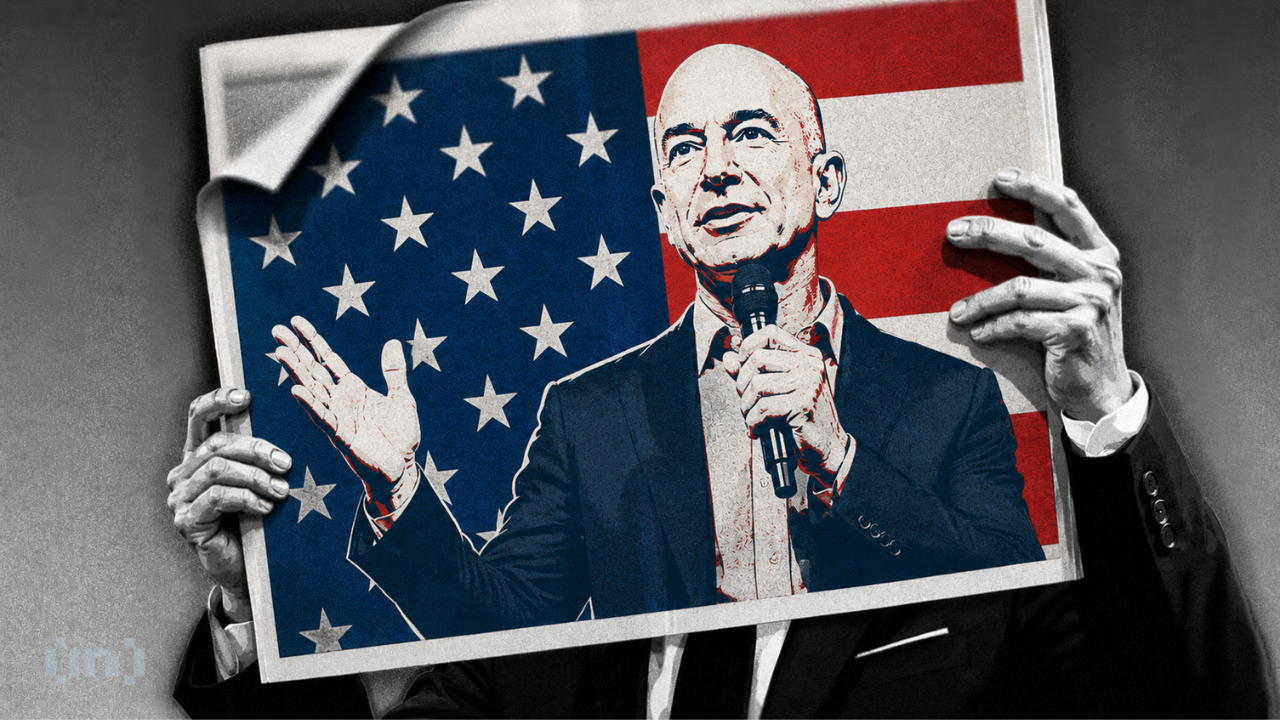

Jeff Bezos wants the United States to eliminate federal income taxes on the bottom 50% of earners. He argues that most revenue already comes from a small slice of high earners at the top.
The Amazon founder pitched the idea during a CNBC interview on May 20, 2026. He then amplified the message across social media, where the clip drew millions of views within hours.
Bezos Targets a “Nurse in Queens” to Make the Case
Bezos pointed to a New York City nurse earning $75,000 a year and paying more than $12,000 annually in taxes. He argued that the figure represents over $1,000 per month, enough to cover rent or groceries.
The clip filmed inside Blue Origin went viral within hours of airing. On X (Twitter), Bezos doubled down on the message, calling the burden absurd.
A nurse in Queens shouldn’t be sending money to Washington. Washington should be sending her an apology,” he said.
IRS data support his framing. The Tax Foundation reports the top 1% of US filers paid 40.4% of all federal income taxes in 2022. The bottom 50% paid only 3.3% the following year.
“The important part is zeroing out taxes on the bottom half. Best way to put money in someone’s pocket is to not take it out in the first place. Bottom half is only 3% of total tax revenue. But it’s very meaningful to that person. Zero it out,” Bezos explained.
Follow us on X to get the latest news as it happens
A Spending Problem, Not a Revenue Problem
The Amazon founder repeated a familiar critique that Washington overspends rather than under-taxes. He claimed New York City public schools spend $44,000 per student.
That tops outlays in Chicago, Boston, Los Angeles, Miami, and Houston, while producing weaker results, according to Bezos.
Federal Reserve Bank of New York data places recent NYC per-student spending closer to $39,304. The city still ranks among the highest spenders nationally, lending partial support to his broader point.
Bezos also rejected the standard counterargument that taxing billionaires harder would close the gap. He told CNBC that doubling his own tax bill would not move the needle on federal deficits.
What the Proposal Means in Practice
Eliminating the bottom 50% share would cost the Treasury a fraction of total receipts. Federal individual income tax revenue runs near $2.4 trillion annually, so the 3.3% slice translates to roughly $80 billion.
The figure is small in fiscal terms but meaningful per household. Bezos previously clashed with the Biden administration over inflation policy.
Subscribe to our YouTube channel to watch leaders and journalists provide expert insights
His latest comments fit a pattern of pushing for spending reform over wealth tax proposals.
The Treasury projects a $2 trillion federal deficit for fiscal 2026. Whether his pitch gains traction in Congress is another matter.
The framing places working-class tax relief, not a wealth tax, at the center of the conversation.
The post Amazon’s Jeff Bezos Stands Up for the Working Class, Calls for Zero Tax appeared first on BeInCrypto.


AllUnity stablecoin SEKAU is set to debut in June, backed 1:1 by Swedish krona reserves.
Summary
- German startup AllUnity plans to launch SEKAU, a MiCA-compliant Swedish krona stablecoin, pending regulatory and operational sign-off.
- AllUnity also unveiled Agentic Payments, a settlement layer built for AI-initiated business transactions using Coinbase’s x402 standard.
- Dollar-backed tokens control roughly 99% of the global stablecoin market, making SEKAU one of only a handful of regulated non-dollar alternatives.
AllUnity, a Frankfurt-based joint venture backed by DWS, Flow Traders and Galaxy Digital, announced the SEKAU stablecoin on Wednesday. The token will be fully reserved in Swedish krona and issued under the EU’s Markets in Crypto-Assets framework. Final approval from German regulator BaFin is required before the June debut.
The announcement also introduced Agentic Payments, AllUnity’s infrastructure for AI-driven commerce. Businesses using the system can accept transactions initiated by autonomous software agents and settle funds directly into local bank accounts using Coinbase’s x402 standard.
“Sweden has long been a global leader in the transition toward a cashless economy, but that transition also requires a new form of digital money that is interoperable and globally accessible,” CEO Alexander Höptner said.
AllUnity adds a third European currency to its regulated stablecoin lineup
SEKAU joins AllUnity’s existing euro-backed EURAU and Swiss franc-backed CHFAU tokens, both launched within the past twelve months. AllUnity operates under a BaFin electronic money institution licence, giving it a direct regulatory pathway to distribute across the EU. The token is engineered for 24/7 settlement, cross-border payments and treasury operations targeting financial institutions and enterprise clients.
COO Peter Grosskopf said the platform is built for scale. “AllUnity is the gateway for businesses in Europe enabling them to accept, settle, and operationalize agentic payments at scale,” he said. European banks are also accelerating: a consortium of 37 lenders is building a competing MiCA-compliant euro stablecoin targeting the second half of 2026.
Why non-dollar stablecoins still struggle to gain ground
Dollar-pegged tokens account for approximately 99% of global stablecoin supply. Non-dollar issuers face a structural disadvantage: US Treasury markets offer a deeper, higher-yielding reserve base that dollar stablecoin issuers use to fund distribution and liquidity. Tokenized US government debt stands at roughly $15 billion on-chain, against just $1.4 billion for all other government bonds combined.
Twelve European banks selected Fireblocks earlier this year for a separate MiCA-compliant euro stablecoin, and nine banks including UniCredit and ING are targeting a second-half 2026 debut.
AllUnity’s multi-currency model, now spanning euro, Swiss franc and Swedish krona, positions it as the broadest regulated European stablecoin issuer attempting to challenge dollar dominance.

Earlier today, hackers gained access to GitHub’s internal repositories by exploiting an employee’s computer with the use of a tainted VS Code extension.
Following the incident, reports emerged that a threat actor using the alias TeamPCP was now allegedly selling what they claim is roughly 4,000 of GitHub’s private repositories on a cybercriminal forum, with a minimum asking price of $50,000.
What GitHub Says Happened
GitHub confirmed the breach through several tweets posted on its X account, where it detailed what it knew thus far. As per the hosting platform, the attacker gained access to its internal repository via a malicious extension of VS Code loaded onto one of the devices of its employees.
GitHub claims that once it realized there was an attack, it promptly deleted the malicious software from the infected machine. Critically, it pointed out that there is currently no evidence that customer data held outside its internal systems, meaning individual users’ enterprises, organizations, or repositories, was accessed.
The hosting service also confirmed it moved quickly to rotate credentials, moving the highest-impact secrets first. It will also be examining logs to see whether there has been any additional activity, and it will be providing more details on the matter after the investigation concludes.
Meanwhile, French researcher Sébastien Latombe flagged a listing on a criminal message board by a threat actor calling themselves “TeamPCP,” claiming to be the one behind the hack, containing mentions of repositories related to GitHub Actions, GitHub Enterprise, GitHub Copilot, Azure, CodeQL, billing, and authentication services.
Allegedly, they are not looking to ransom GitHub but want a single buyer for the stolen data, with the minimum asking price being $50,000.
However, it must be noted that there has been no official confirmation of the content in the forum listing from GitHub or Microsoft, and any claims made in such cybercriminal sites may be taken with a pinch of salt, as any data they provide in such cases may be out of date or overblown to inflate its perceived value.
Security Concerns Spread Through Crypto
The reaction online to the breach was swift, with Binance co-founder Changpeng Zhao (CZ) posting a direct message to crypto developers:
“If you have API keys in your code, even private repos, now is the time to double check and change them.”
The replies painted a familiar picture of an industry-wide problem. Topaz DEX founder Aaron Shames called it “bad practice to have API keys in any repo, private or not,” though he acknowledged the heads-up.
Others pointed out that for builders managing hundreds of keys across projects, this is not a simple fix.
“This entire practice of key storage needs an update,” wrote digital artist Tuteth_.
Security commentator Dhanush Nehru went further:
“No one knows what all permissions each VS Code extension owns. The cybersecurity threat landscape is scary.”
The timing of this incident also contributed to pre-existing worries about crypto security following multiple high-profile hacks this month, which included an attack on Echo Protocol, where hackers managed to mint $76.7 million worth of eBTC.
That particular incident came just days after two other multimillion-dollar attacks were carried out on THORChain and the Verus-Ethereum Bridge.
This spate of events has led to renewed debates on the issues of code verification and software supply chain vulnerabilities, where Vitalik Buterin asserts that with the help of AI, formal verification can make software safer by mathematically proving its behavior.
The post GitHub Internal Repos Breached; Binance’s CZ Urges Urgent Key Rotation appeared first on CryptoPotato.

Jeff Bezos weighs in on Mamdani’s luxury home tax proposal

South Korean funeral company reveals $33 million loss on leveraged ether ETF bet

Bryson DeChambeau Floats Moon Landing Conspiracy Theory


-

 Crypto World5 days ago
BloFin War of Whales 2026 Grand Prix opens registration for $5M trading championship
-

 Fashion5 days ago
Weekend Open Thread: Theory – Corporette.com
-

 Crypto World5 days ago
E-Estate Announces 1 Year Live: Washington DC Summit as Real Estate Tokenization Enters Its Next Phase
-

 Tech6 days ago
Tech Moves: Microsoft AI leader jumps to OpenAI; former AI2 exec joins Meta; and more
-

 Tech5 days ago
Google reimburses Register sources who were victims of API fraud
-

 Crypto World6 days ago
Google’s Gemini AI Predicts Incredible Solana Price by the End of 2026
-

 Business5 days ago
H&R Real Estate Investment Trust (HR.UN:CA) Q1 2026 Earnings Call Transcript
-
 Entertainment6 days ago
Zara Larsson Has Blunt Response To Chris Brown Diss
-

 Sports5 days ago
Napoleonic enters 2026 Doomben 10,000 field via Abounding withdrawal
-
 Crypto World5 days ago
BeInCrypto 100 Institutional Awards Nomination: KAST for Best Digital Assets Neobank and Best Digital Assets Fintech
-

 Fashion4 days ago
On the Scene at Gucci’s Cruise Show in New York City: Mariah Carey, Kim Kardashian, Lindsay Lohan, Iman, and More!
-
 Crypto World5 days ago
Bitcoin Battles US Bond Nerves With BTC Price Dip Toward New May Lows
-
 Crypto World5 days ago
Wall Street’s Boldest Gold Prediction Has Russians Rushing to Buy
-

 Crypto World5 days ago
ICE and CME urge US regulators to curb Hyperliquid energy trading
-

 Fashion4 days ago
Trending Western Style Vests Perfect for Summer
-

 Politics6 days ago
DWP PIP Timms review continues to be an absolute farce
-

 Entertainment5 days ago
David Letterman Returns to Late Show, Blasts Cancellation
-
 Crypto World6 days ago
Lido Finance Selects Chainlink CCIP as the Official Cross-Chain Infrastructure for wstETH Security
-

 Crypto World5 days ago
IREN closes $3 billion convertible notes deal amid AI infrastructure expansion
-

 Fashion4 days ago
Amazon Sundays: Memorial Day Hosting
You must be logged in to post a comment Login