
Crypto World
Navy blockade sends oil past $103



The crypto market entered a new phase of geopolitical stress on Monday morning when the US Navy began enforcing a blockade of Iranian ports at 10 AM ET, sending Brent crude above $103 a barrel and keeping bitcoin pinned near the $70,000 support level that has held since the Islamabad ceasefire talks collapsed over the weekend.
Summary
- Brent crude rose more than 7 percent to top $103 a barrel after CENTCOM confirmed the blockade, while WTI climbed 7.8 percent to $104; the moves came after the US and Iran failed to agree on extended terms during 21 hours of talks in Islamabad on April 11 and 12, with VP Vance announcing the breakdown Saturday night.
- Bitcoin traded around $70,600 to $71,085 on Monday morning, holding above $70,000 through the blockade announcement; the ceasefire technically remains in effect until April 22, though neither side has indicated it will be extended following the Islamabad collapse.
- CENTCOM clarified the blockade targets maritime traffic to and from Iranian ports only and will not impede freedom of navigation for vessels transiting the Strait to non-Iranian ports, a partial scaling back of Trump’s social media announcement which said the Navy would interdict any ship that had paid a toll to Iran.
As CNN Business reported, WTI crude is now more than 50 percent higher than before the war effectively shuttered the Strait in late February. Iran’s oil accounts for roughly 4 percent of world supply, most of it exported to China, and the blockade could cut off a significant source of funding for Tehran’s government and military. Capital Economics chief economist Neil Shearing wrote in a note that the move “risks creating new potential flashpoints,” raising the question of whether the US Navy would seize allied ships that had paid tolls to Iran or target Chinese vessels in the Strait. Only 17 ships passed through the waterway on Saturday, compared with an average of roughly 130 daily crossings before the war.
Bitcoin’s resilience at the $70,000 level through this weekend’s events is meaningful. The asset dropped into the low $60s when Iran first closed the Strait in late February, then rallied to $72,700 when the ceasefire was announced April 7, liquidating $427 million in short positions. The subsequent pullback to the $70,000 to $71,000 range on the Islamabad collapse and Monday’s blockade news shows the market has partially priced in a return to conflict. Holding $70,000 through a formal naval blockade is a structurally different outcome than the early-war behavior.
What the Oil Price Level Means for Bitcoin
The direct transmission between oil and bitcoin runs through inflation expectations and Federal Reserve policy. Every dollar oil climbs above $100 makes a rate cut less likely, keeps liquidity tighter, and suppresses risk appetite across equities and crypto simultaneously. As crypto.news has reported, bitcoin’s behavior as a high-beta risk asset during oil spikes has been consistent across the entire conflict period, with an 85 percent correlation to the Nasdaq-100 during energy price surges.
What Happens Next Before April 22
As crypto.news has noted, three catalysts now define the two weeks ahead: the ceasefire expiry on April 22, the CLARITY Act Senate markup targeted for late April, and the FOMC meeting on April 28 and 29. If the blockade tightens oil supply further and prices push past $110, analysts project bitcoin could fall toward $65,000. A last-minute diplomatic breakthrough before April 22 could reverse that move sharply, as the original ceasefire rally demonstrated.



Donald Trump’s cryptocurrency project World Liberty Financial has sued Justin Sun for defamation.
World Liberty accused Sun of launching a “coordinated media smear campaign.” Sun responded, calling the lawsuit a “meritless PR stunt.”
World Liberty said Monday that it filed in the Eleventh Judicial Circuit Court for Miami-Dade County, Florida. It asserted claims for defamation and defamation by implication. It wants damages and a court-ordered retraction, according to the company’s own announcement.
Sun has been upset at World Liberty ever since the project froze the vast majority of his WLFI tokens on September 1, 2025.
World Liberty’s lawsuit today follows Sun’s April 21 complaint in the Northern District of California. In his earlier case, Sun and his companies Blue Anthem Limited and Black Anthem Limited sued World Liberty Financial, noting that Sun’s companies paid $45 million for 4 billion WLFI tokens, including advisory tokens, which have declined in value due to World Liberty’s alleged breaches of contract.
His complaint accuses World Liberty of using undisclosed blacklisting powers over the WLFI smart contract to freeze his tokens. In doing so, he also alleged, World Liberty disabled his governance rights, leaving him unable to vote on proposals that affected token holders.
Sun asked the court to order a financial remedy for “World Liberty’s egregious misconduct, including their breaches of contract, fraud, and conversion.”
Read more: Justin Sun goes to war with World Liberty Financial
World Liberty Financial v. Justin Sun
World Liberty’s de facto countersuit is simple enough.
It claims Sun’s entities broke transfer rules, improperly bought tokens for undisclosed third parties in straw purchases, and eventually bet against the price of WLFI.
Furthermore, it says Sun tried to publicly trash WLFI in public after World Liberty froze his tokens. The company also says its right to freeze Sun’s tokens appeared in sale documents, Sun’s unlock contract, as well as on-chain code.
Read more: Justin Sun wants World Liberty Financial to unmask its X admin
Sun, still nominally an advisor to World Liberty Financial, has engaged very publicly in back-and-forth posts with the World Liberty Team on X almost continuously for the last several months while his tokens have been restricted.
Several sections of the suit remain redacted.
As Protos reported in April, Sun’s blacklisted WLFI tokens have declined by tens of millions of dollars in value since the September freeze.
Sun, in his lawsuit against the World Liberty Financial team, has also threatened to bring a defamation suit.
Got a tip? Send us an email securely via Protos Leaks. For more informed news and investigations, follow us on X, Bluesky, and Google News, or subscribe to our YouTube channel.
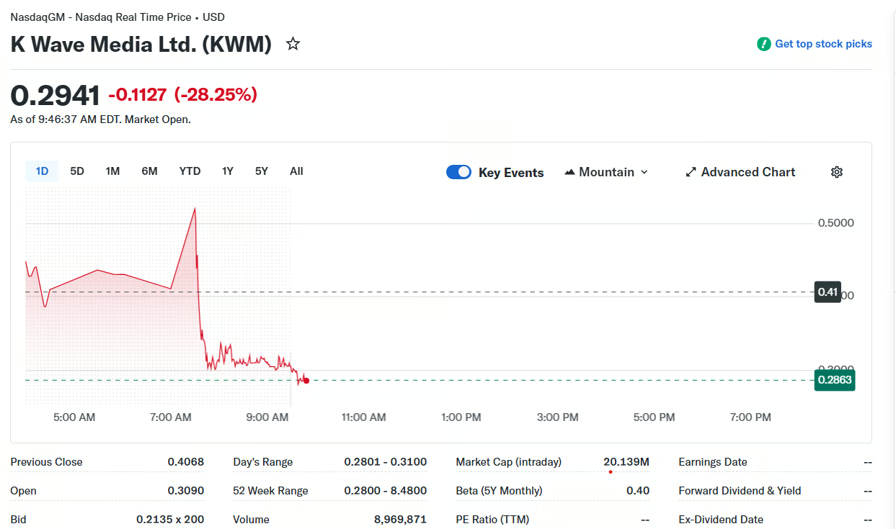
K Wave Media, a Nasdaq-listed media and entertainment company, said it is redirecting up to $485 million in remaining financing capacity from a Bitcoin treasury strategy into an artificial intelligence infrastructure buildout, according to a Monday 6-K filing with the US Securities and Exchange Commission (SEC).
The capital will be deployed into data centers, graphics processing unit (GPU) compute operations and related AI infrastructure investments under an amended securities purchase agreement with Anson Funds, the structured equity financing counterparty to the company.
The amendment revises a prior $500 million equity purchase facility, which had been structured to support a Bitcoin treasury strategy, leaving $485 million available for deployment into AI infrastructure initiatives, according to the filing. The Bitcoin treasury was previously announced in 2025 as part of the company’s broader capital markets repositioning.
The company said the shift forms part of a broader restructuring that also includes the planned disposition of its wholly owned subsidiary Play Co., Ltd. and the expected elimination of approximately $48 million in debt and related contingent liabilities.
Related: Strategy takes Bitcoin buying breather ahead of Q1 earnings report
The move marks a sharp strategic reversal for K Wave Media, which had only positioned itself around a Bitcoin treasury strategy in June 2025, alongside earlier initiatives tied to Korean cultural intellectual property and tokenized securities concepts.

K Wave share price down ~28% pre-market. Source: Yahoo! Finance
The company’s share price has been volatile following the announcement and was down 28.25% at the time of writing since Friday’s close, from ~$0.406 per share to ~$0.294, according to Yahoo Finance data.
Board approves shift toward AI infrastructure strategy
K Wave Media said in the filing that its board has approved a strategic repositioning toward AI infrastructure, including investments in data centers, GPU compute and acquisitions across the AI value chain.
In a statement included in the filing, chief executive officer Ted Kim said the company aims to become “a meaningful participant in the rapidly growing AI infrastructure sector,” citing plans to build a scalable platform across compute and related technologies.
The company also said it is evaluating a potential corporate rebrand, including the name “Talivar Technologies,” subject to shareholder approval at its annual meeting scheduled for early July 2026. The restructuring, including the subsidiary disposal and debt reduction, is intended to significantly de-leverage the company’s balance sheet.
Cointelegraph reached out to K Wave Media for comment, but had not received a response by publication.
Magazine: Bitcoin will not hit $1M by 2030, says veteran trader Peter Brandt


The emergency motion challenges a New York court order redirecting recovered Kelp DAO exploit funds toward decades-old terrorism judgments against North Korea.
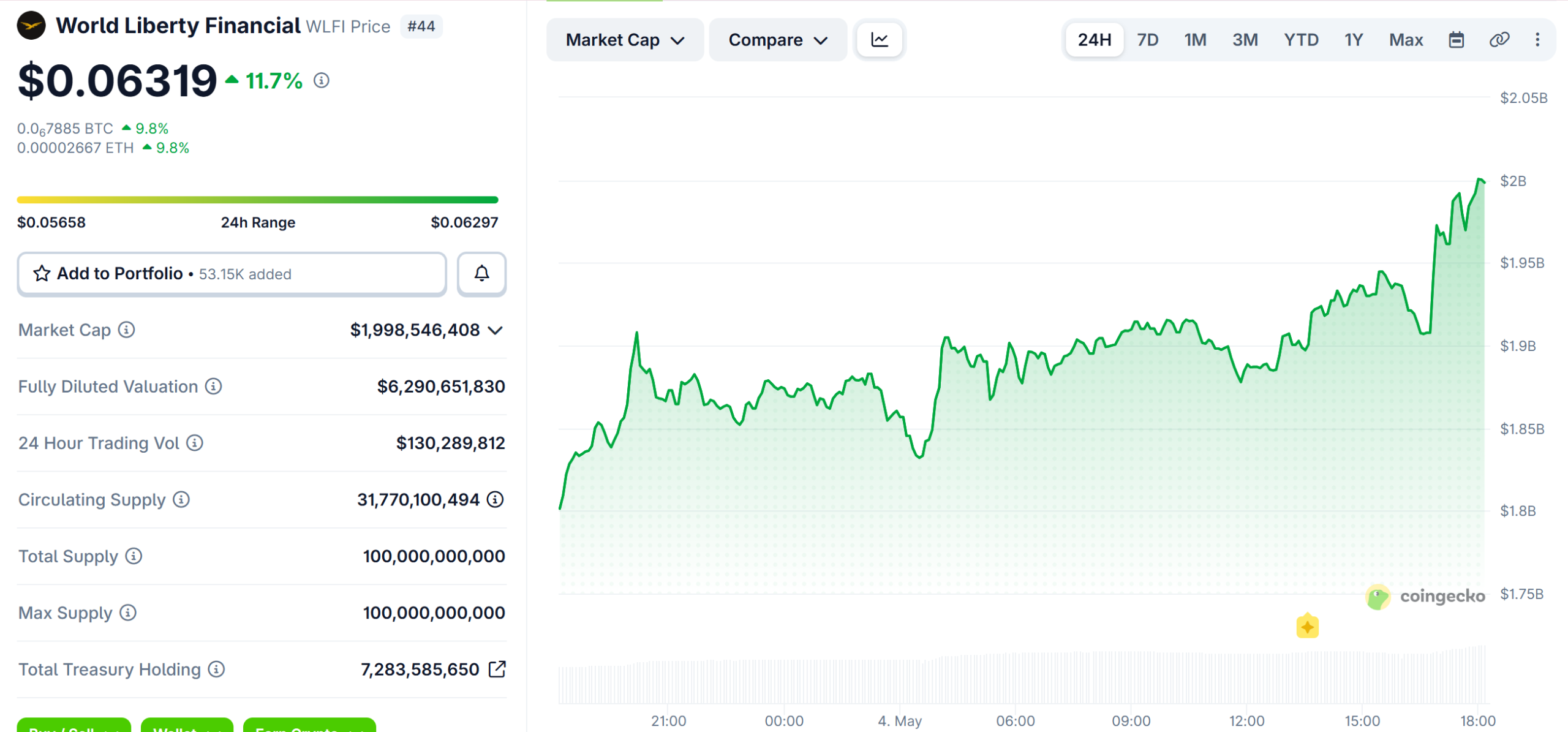
World Liberty Financial filed a defamation lawsuit against Tron founder Justin Sun on Monday. The complaint accuses Sun of running a paid smear campaign to crash the WLFI token.
The Trump-linked Decentralized Finance (DeFi) project says Sun used press, influencers, and bots to amplify false claims after the freeze of his tokens. Sun has rejected the suit and called it a meritless PR stunt.
Court Filing Alleges Drive-to-Zero Campaign
The complaint was filed in the Eleventh Judicial Circuit Court for Miami-Dade County, Florida. World Liberty Financial is seeking unspecified damages and a public retraction from Sun.
The company says Sun’s posts were designed to suppress WLFI’s market price. The token traded near $0.06 on Monday, up by almost 12% in the last 24 hours.

World Liberty Financial said in its filing announcement that Sun openly stated his intent to harm the project.
“Sun’s lies were designed, in his own words, to drive the token price ‘to shit,’” WLFI wrote on X
Token Freeze Triggered the Public Feud
The dispute began after WLFI used its on-chain controls to lock Sun-linked wallets in September 2025. The project froze 540 million unlocked tokens and 2.4 billion locked WLFI held by Sun’s entities.
World Liberty Financial said Sun’s vehicle, Blue Anthem, transferred tokens to Binance against his investor agreement. The company argues those transfers, plus alleged short selling, justified the freeze.
Sun previously invested $30 million in WLFI and later raised his stake to roughly $75 million.
He filed his own lawsuit in California federal court in late April, alleging fraud and breach of contract.
Smart Contract Controls at the Center of the Fight
The two sides disagree on whether WLFI’s freeze authority was clearly disclosed to investors. Sun has argued the project hid a blacklist function inside its smart contract.
World Liberty Financial counters that the freeze authority was outlined in its Terms of Sale and in Sun’s purchase agreements. The project says its governance process is community-driven and transparent.
WLFI’s price has slumped since the freeze became public last fall. The token is now down more than 75% from its all-time high.
According to Justin Sun, the lawsuit announced Monday is WLFI’s PR stunt, with the Tron executive calling it “meritless.”
The competing lawsuits leave WLFI investors watching two parallel cases. Filings in the coming weeks will test whether the freeze function was contractually disclosed. They will also test whether Sun’s posts crossed into defamation.
The post WLFI Soars 12% As World Liberty Financial Sues Justin Sun for Defamation appeared first on BeInCrypto.
The US Securities and Exchange Commission has delayed the expected launch of the first exchange-traded funds (ETFs) linked to prediction markets after requesting more information about their structure and disclosures, Reuters reported Monday.
The delay affects more than two dozen proposed ETFs from Roundhill Investments, GraniteShares and Bitwise, according to Reuters, citing people familiar with the matter. The issuers filed for the products in February, and launches had been expected this week after a 75-day review period.
The proposed funds would give investors exposure to event contracts tied to binary outcomes, including elections, economic data and market prices, without requiring them to trade directly on prediction market venues such as Kalshi.
The delay marks another development in the US approach to regulating prediction markets, which have attracted scrutiny over insider trading, ethics and market manipulation concerns.
“Delay is likely temporary”
According to the sources cited by Reuters, the delay is likely temporary, suggesting that progress with the filings could resume once the SEC receives and reviews additional details from issuers on product structure and disclosures.
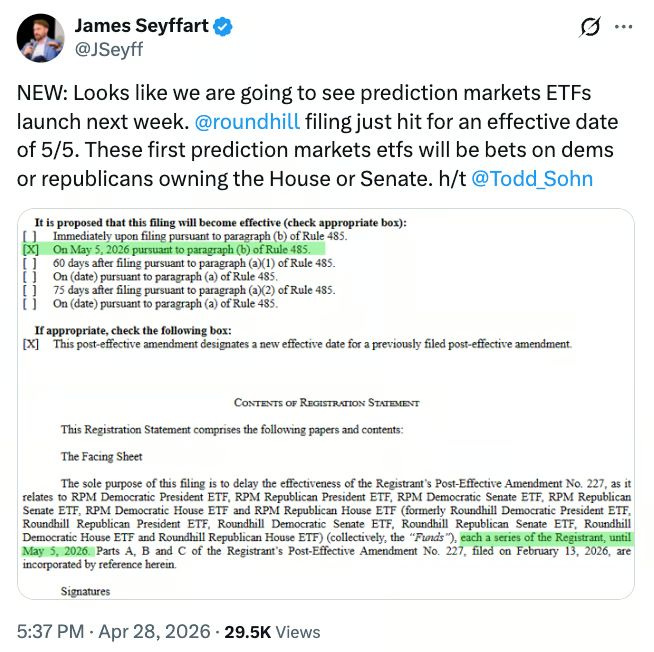
According to Bloomberg ETF analyst Eric Balchunas, the ETFs were expected to launch on Thursday. His colleague James Seyffart last week said Roundhill’s filing had an effective date of May 5, with the first prediction market ETFs linked to event-contract outcomes such as whether Democrats or Republicans control the House or Senate.

Source: James Seyffart
How prediction market ETFs would work
Prediction market ETFs are designed to give investors exposure to binary event contracts without requiring them to trade on specialized prediction markets platforms.
Specific features differ across more than 20 of the proposed ETFs, but the products generally use derivatives to track the odds of binary “yes” or “no” outcomes in underlying contracts traded on CFTC-regulated platforms such as Kalshi. These contracts settle at $1 if an event occurs and $0 if it does not.
Roundhill previously highlighted significant risks associated with the proposed ETFs in its February filings, stating that investments in event contracts involve “unique risks that differ from those associated with traditional futures, options or securities.”
Related: A16z sides with CFTC against states seeking to ban prediction markets
The company said such investments could result in significant losses, valuation uncertainty and deviations from the fund’s investment objective.
It also pointed to potential settlement issues tied to how event outcomes are interpreted, including errors, ambiguities or disputes over the definition of the underlying event, the data sources used or the timing of determination.
Magazine: How to fix suspected insider trading on Polymarket and Kalshi

Key Highlights
- Mastercard joins Rain’s stablecoin-powered payment ecosystem
- Partnership follows Rain’s recent $250M Series C fundraise
- Credit and prepaid card capabilities now available through Mastercard rails
- Rain diversifies beyond Visa-exclusive infrastructure
- Integration strengthens institutional on-chain settlement options
Rain has secured a strategic alliance with Mastercard, broadening its stablecoin payment infrastructure beyond its initial Visa-focused approach. This collaboration introduces credit and prepaid card functionality while enabling stablecoin-based settlements across Mastercard’s extensive network. The partnership positions Rain to capture growing institutional demand for blockchain-integrated payment solutions.
Mastercard Integration Expands Rain’s Payment Capabilities
Through this collaboration, Rain will launch Mastercard-branded credit and prepaid cards designed for institutional payment applications. This development diversifies Rain’s Stablecoin Card offering, which previously concentrated on Visa network integrations. Organizations can now implement stablecoin settlement infrastructure without overhauling their established payment workflows.
According to Rain, the Mastercard collaboration addresses needs of enterprises committed to specific payment networks. Rain manages on-chain treasury operations, currency conversion, and settlement processes invisibly. This architecture maintains familiar card usage patterns while leveraging stablecoins for backend payment processing.
The fintech startup secured $250 million through its Series C round at a $1.95 billion valuation recently. This capital injection provides resources to expand Stablecoin Card infrastructure significantly. The Mastercard arrangement represents a concrete application of that growth capital.
Blockchain Payments Gain Institutional Traction
Rain initially developed its platform around Visa programs utilizing on-chain stablecoin settlement. The Mastercard collaboration marks a strategic evolution toward multi-network capabilities. This expansion enhances Stablecoin Card accessibility for diverse corporate and institutional audiences.
Mastercard has accelerated its blockchain payment initiatives, including stablecoin settlement experiments. The payments giant has collaborated with organizations including Circle and Paxos on tokenized settlement trials. Additionally, its Multi-Token Network has facilitated broader blockchain payment applications.
These developments illustrate stablecoins’ evolution beyond cryptocurrency speculation. Today they facilitate settlement operations, treasury transfers, merchant transactions, and card-based spending. The Stablecoin Card framework bridges blockchain infrastructure with conventional payment experiences.
Enterprise Payment Solutions Drive Rain’s Strategy
Rain aims to provide enterprises with turnkey compliant card program solutions. The Stablecoin Card framework enables users to spend digital balances through established card networks. Rain orchestrates stablecoin conversion and settlement behind the user interface.
The Mastercard collaboration could attract enterprises hesitant to abandon existing card infrastructure. It offers these organizations a pathway toward stablecoin settlement without complex migrations. Additionally, it connects Rain with businesses already invested in Mastercard ecosystems.
Stripe and Coinbase have similarly integrated stablecoins into payment, commerce, and disbursement products. Rain therefore operates in an expanding market where stablecoins address tangible business requirements. Its Stablecoin Card offering now competes in a payment landscape gravitating toward accelerated settlement.
Rain’s Mastercard integration signals meaningful progress in stablecoin payment mainstream adoption. The platform now connects both Visa and Mastercard infrastructures with blockchain settlement capabilities. This dual-network strategy positions the Stablecoin Card as fundamental to Rain’s vision for next-generation payment infrastructure.

Crypto World
Spartans Casino Ranks 10th Globally in Beta With Exclusive RAF Deal as Monero Hits $346 And ZCash Sees 406% Spot Volume

Ranking 10th globally in crypto casino while still in Beta is a number worth pausing on. Spartans.com produced $1 billion in wagers, $40 million in Gross Gaming Revenue, and 27,000 first-time depositors in 60 days, then signed a multi-million dollar exclusive iGaming partnership with Real American Freestyle.
In the broader crypto market, Monero’s XMR is trading around $346 to $375, with a THORChain integration targeting mainnet within one to two months of April 10. ZCash’s ZEC surged 47% in a week before pulling back, with developers patching four critical node vulnerabilities on April 17. The top crypto casinos conversation looks very different when you place Beta metrics alongside privacy coin movements.
Monero: XMR Around $346 as THORChain Integration Approaches
Monero’s XMR is trading at approximately $346 to $375 in April 2026, with a 1.73% daily gain as of the most recent data. The most significant near-term development is the planned THORChain integration, with simulation tests having passed and mainnet deployment targeted within one to two months of April 10, 2026. The integration will enable cross-chain swaps and liquidity for XMR without centralized intermediaries, directly countering the impact of exchange delistings that have pressured Monero’s accessibility.
On April 16, the Qubic network began phase two of its planned migration away from Monero mining toward Dogecoin, with computers required to choose between legacy XMR mode or new DOGE mode starting from epoch 209. The migration raises network security questions around the hash rate distribution. On April 14, trading platform Margex added XMR as a collateral asset, signaling continued institutional utility for the privacy coin. Analysts are targeting a bullish breakout above $360, with longer-term projections toward $820 by late 2026.
ZCash: ZEC Up 30% in a Month Before Pulling Back
ZCash’s ZEC is trading between approximately $310 and $335 in April 2026, having surged 47% in a single week earlier in the month before pulling back. On April 17, developers urgently patched four critical vulnerabilities in zcashd and Zebra nodes, including one in Orchard action-encoding where a crafted transaction with an all-zeros key could instantly crash any reachable full node. The coordinated disclosure and rapid deployment by major mining pools before public release were noted by analysts as effective crisis management.

On April 21, ZEC fell below $335 as open interest dropped sharply from $763 million to $560 million, indicating longs being closed. A 406% increase in ZEC spot volume on Coinbase earlier in the month had signaled intense buyer interest. The broader Zcash roadmap published in April 2026 focuses on post-quantum security, a new cashZ wallet, and consensus protocol upgrades. Analysts note ZEC is up 30% over a month, driven by privacy demand, though EU regulatory ban risks loom.
Spartans.com: the Exclusive RAF Partnership That Tells You Where This Is Going
Spartans Casino is currently ranked 10th globally in crypto casino, achieved entirely during its Beta phase and before any global marketing push. The platform recorded $1 billion in wagers and $40 million in Gross Gaming Revenue across just 60 days in Beta. Those are not metrics typically associated with platforms that have not yet officially launched. They are operating metrics produced before August 1, 2026, the date when Spartans Casino opens to a worldwide audience with a stated goal of reaching the number one position in global crypto casino rankings by year’s end.
The RAF exclusive iGaming partnership announced in April 2026 adds the brand visibility layer that Beta performance alone cannot deliver. The 12-month, multi-million dollar deal names Spartans.com the exclusive iGaming partner of Real American Freestyle, giving it mat presence and main event ownership across every event, including RAF09 on May 30 in Dallas. RAF generates over 250 million social views per event and streams exclusively on FOX Nation. The runway from 10th to first runs directly through the most significant growth period for both brands.
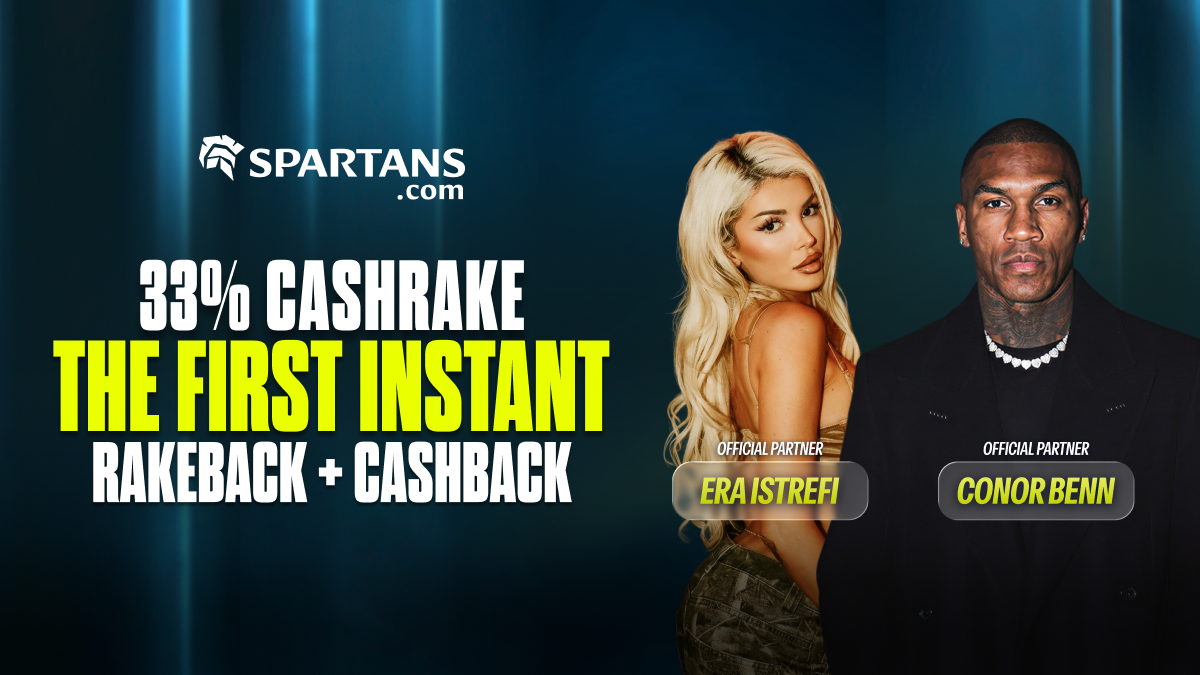
The product supporting that ambition is fully competitive. Spartans Casino’s $7 million monthly leaderboard is the largest in the world, distributing $25,000 daily with zero wagering requirements. The 33% CashRake system delivers up to 33% rakeback plus 3% cashback as real cash. Spartans Casino supports Bitcoin, Ethereum, Litecoin, and multiple additional cryptocurrencies, with instant withdrawal infrastructure. For the top crypto casinos conversation, no other platform is combining a 10th global ranking in Beta with an exclusive professional sports partnership and a global launch four months away.
Conclusion
Monero’s THORChain integration is a credible liquidity and accessibility play for a privacy coin facing exchange headwinds. ZCash’s security response and post-quantum roadmap reflect a technically serious project, though price volatility and regulatory risk remain real.
Spartans.com enters this comparison ranked 10th globally without a global launch, backed by $40 million in Beta GGR, an exclusive multi-million dollar RAF deal, and a product built to reach number one by December 2026. Among the top crypto casinos, that pre-launch position is without precedent.

Find Out More About Spartans:
Website: https://spartans.com/
Instagram: https://www.instagram.com/spartans/
Twitter/X: https://x.com/SpartansBet
YouTube: https://www.youtube.com/@SpartansBet
Disclaimer: This is a Press Release provided by a third party who is responsible for the content. Please conduct your own research before taking any action based on the content.
Key Highlights
-
BMNR shares surge 4.16% following disclosure of 5.18M ETH treasury position
-
Company’s total assets reach $13.1B including cryptocurrency and cash reserves
-
Staking operations now generate $297M in annualized revenue from 4.36M ETH
-
Weekly acquisition of 101,745 ETH marks fourth consecutive week of accelerated buying
-
Bitmine now controls approximately 4.29% of Ethereum’s circulating supply
Shares of Bitmine Immersion Technologies advanced during Monday’s trading session following the company’s announcement of expanded Ethereum treasury holdings and substantial staking revenue. BMNR stock closed at $22.79, reflecting a gain of $0.91, or 4.16%, after bouncing back from an early session low around $21.88. The equity climbed above the $23.00 threshold later in the day as investors responded positively to the strategic ETH accumulation.
Bitmine Immersion Technologies, Inc., BMNR
Company Accelerates Ethereum Accumulation Strategy
Bitmine disclosed that its Ethereum treasury position stood at 5,180,131 ETH as of May 3. Management calculated the position’s value using $2,336 per ETH. The firm confirmed this holding now accounts for roughly 4.29% of Ethereum’s entire circulating supply.
This disclosure brings the company significantly closer to its publicly announced goal of controlling 5% of all ETH in circulation. During the previous seven-day period, Bitmine added 101,745 ETH to its reserves. Leadership noted this purchase continued an accelerated acquisition pattern that has persisted for four consecutive weeks.
Management positioned this accumulation strategy within the context of Ethereum’s expanding role in asset tokenization and public blockchain infrastructure. The firm also highlighted ETH’s growing importance in AI-integrated commerce platforms. These strategic justifications provided additional support for BMNR stock’s positive price movement during the session.
Staking Operations Generate Substantial Revenue Stream
Bitmine reported that 4,362,757 ETH had been deployed in staking activities as of May 3. The company assessed this staked allocation at approximately $10.2 billion. This represents over 84% of the firm’s complete Ethereum holdings.
According to the announcement, current staking activities generate $297 million in annualized revenue. Furthermore, management indicated that full deployment through MAVAN and associated partner networks could increase annual rewards to $352 million. MAVAN refers to the Made in America Validator Network.
The company developed MAVAN primarily to facilitate its internal Ethereum treasury staking requirements. However, management revealed plans to extend MAVAN services to institutional investors, digital asset custodians, and blockchain ecosystem collaborators. This expansion positions the staking infrastructure as a revenue-generating service beyond internal operations.
Diversified Asset Base and Recent Transaction Activity
Bitmine disclosed combined holdings of approximately $13.1 billion across cryptocurrency, cash equivalents, and other publicly traded securities. This portfolio encompasses 5.18 million ETH, 200 BTC, and $700 million in cash reserves. Additionally, the company maintains a $200 million equity position in Beast Industries.
The firm also disclosed an $83 million investment in Eightco Holdings, which operates under the ticker symbol ORBS on the Nasdaq exchange. These diversified holdings demonstrate that Bitmine’s treasury management extends beyond exclusive Ethereum concentration. Nevertheless, ETH accumulation remains the central pillar of the company’s financial strategy.
The treasury update arrived shortly after another over-the-counter transaction between the Ethereum Foundation and Bitmine. The foundation transferred 10,000 ETH to the company at an average execution price of $2,292 per token. This represented the third documented OTC Ethereum sale from the foundation to Bitmine within the past two months.


Are stablecoins stable? Come on, it’s in the name!
Of course, the crypto industry has certainly seen categories misnamed. Anyone remember NuBits? Surely you lost money in Terra? Just last year, DeFi stables, including Synthetix and Ethena, lost their peg. And even robust stablecoins like Circle’s USDC and Tether have seen temporary depegging over the years.
It appears basic questions about stablecoins might actually uncover important lines of inquiry, especially as they relate to the structural risks of a nascent technology. As industries look to adopt stablecoins — sometimes even bypassing the much more battle-tested traditional financial system — it’s probably worth revisiting the answers to these basic questions.
During CoinDesk University’s School of Stablecoins, happening at Consensus 2026, May 5-7 in Miami, we’ll dig under the surface of these questions to give you a strong understanding of why stablecoins are the future and how to implement them into your business to reap benefits.
What is a stablecoin, and how is it different from Bitcoin?
Sam Broner, Founder of the Better Money Company, told CoinDesk he still gets these questions regularly. Bottom line, then: we’re still so early in this technology’s lifecycle. Whereas a stablecoin is a cryptocurrency that keeps a consistent price by being pegged to an asset, like the U.S. dollar, bitcoin’s price moves up and down depending on supply and demand.
Why can’t I just use fiat?
This is a deceptively important question. The idea behind stablecoins, and cryptocurrency broadly, is that it was built for this internet age we now live in. Money should be like the internet — global, real-time, programmable and composable. This innovates on the often clunky architecture of the traditional financial system, where decades of band-aids on an archaic core infrastructure have led to high fees, slow settlement, and inflexible services. So you can use fiat, but during our sessions, we think you’ll be persuaded that stablecoins are the future.
What keeps a stablecoin’s price at $1?
Just like fiat (and crypto), there are different types of stablecoins.
Some keep their peg by having the same amount of collateral in dollars (or euros or whatever fiat they choose) in their coffers. This mechanism design is called fiat collateralized, and it’s how stablecoins like USDC work — they’re backed 100% by cash or cash equivalent assets and are actually redeemable 1:1 with those.
Other stablecoins have what is known as overcollateralization, like DAI. MakerDAO’s stablecoin DAI is backed by overcollateralized loans: it keeps its dollar peg by locking other assets in contracts as collateral for DAI creation.
The last, and slightly controversial, type of stablecoins rely on algorithmic stabilization — that is, computer algorithms are built to manage the supply and demand so that a coin stays pegged to $1. While this is certainly an interesting tech that will continue to be innovated upon, it’s also led to huge failures, subsequently wiping out millions of dollars from the ecosystem.
Still confused? Join any of our CoinDesk University’s School of Stablecoins sessions to talk to the people actually building the stablecoin technology for consumers and businesses.
Who actually holds the money?
With fully backed stablecoins, the issuer holds the money. However, that doesn’t mean that a stablecoin issuer has a bank account and deposits $1 at a time when a new stablecoin is minted.
Instead, fiat-backed stablecoin reserves are usually held by custodians like BlackRock or BNY Mellon. And since each stablecoin issuer decides what their collateral looks like — whether it’s cash or other highly liquid assets — the type of custodian they use will vary based on what actually makes up the reserve.
For overcollateralized stables or coins with algorithmic backing, the issuers usually hold their version of reserves in smart contracts or blockchain-based wallets.
How do I get a stablecoin?
“Even established banks, fintechs, and payment companies that move millions of dollars in transactions every day ask this,” says Better Money Company’s Broner. “And it’s a fair question, because the on-ramps aren’t always obvious.”
So don’t feel embarrassed if you have to ask again. In the cryptocurrency industry, there are exchanges, wallet providers, custodians, payment platforms, plus decentralized and centralized versions of all those. The answer depends on what you’re trying to do with the cryptocurrency after acquiring it.
During CoinDesk University’s School of Stablecoins, you’ll hear from experts in the field about the digital storefronts you can patronize to get your hands on stables and what you can do with them afterward.
What happens if everyone redeems their stablecoins at once?
The U.S. dollar was on the gold standard until 1971 — that meant that you could walk into your bank and demand an equal amount of gold in exchange for dollars at any time. If you did that now, you’d be laughed out of the bank. But fiat-based stablecoins actually still work this way.
If you own a USD-backed stable that’s 100% collateralized, you can redeem it for dollars at any time. If every single person that owned that USD-backed stable went to the issuer to get their dollars at the exact same time (a probabilistic nightmare), hypothetically, everyone would get their money back — it just might not be instantaneous.
As the stablecoin market has grown, issuers have moved away from full cash reserves and instead are filling their reserves with Treasury notes and bonds, all of which should be highly liquid. But as the Silicon Valley Bank collapse showed, when people “run on a bank” that holds stablecoins, the dollar peg can get a little shaky.
What if the government bans stablecoins?
This isn’t as far-fetched as it might sound. In the U.S., the long-awaited CLARITY Act has been held up by unresolved issues, such as banning stablecoin yield (a rightfully tetchy issue). Businesses using stablecoins have been wary of keeping on the right side of regulation, even while getting mixed signals from Washington.
Whether CLARITY ends up passing or not, there’s still a lot to be aware of when using stablecoins in the U.S.. It’s why we invited the Blockchain Association and some of its partners to break down exactly what your business needs to know about policy and compliance.
Are stablecoins safe?
You’ve read the headlines of people losing millions of dollars of cryptocurrency, whether by losing their private keys, having invested in a scam or a project that gets hacked. As we mentioned above, depending on what type of stablecoin you’re investing in, there may be more or less risks associated.
According to Broner, though, that’s rapidly changing as legislation, such as the GENIUS Act, is passed, mandating that stablecoin issuers hold safe collateral as reserves and introducing federal oversight and transparency requirements.
“For an industry trying to earn mainstream confidence, that’s exactly the foundation you need,” Broner says.
Join us live at Consensus 2026 for our School of Stablecoins workshop series to learn more about how you can implement this new payment method for faster, cheaper, more programmable transactions in this new era of business.
Crypto World
DTCC sets October launch for tokenized securities platform in Wall Street blockchain push


Major Wall Street operator Depository Trust & Clearing Corporation (DTCC) said Monday it will begin limited production trades of tokenized securities in July, with a broader launch of its platform set for October.
The service, built within DTCC’s Depository Trust Company, will allow firms to issue digital versions of assets already held in custody, while keeping the same ownership rights and protections, according to the press release.
The system is being shaped with input from more than 50 firms, including BlackRock, Goldman Sachs, JPMorgan and crypto-native companies like Anchorage and Circle, the firm said.
The effort marks one of the most concrete timelines yet from a core piece of market infrastructure moving into blockchain-based settlement. DTCC sits at the center of U.S. markets, processing trillions of trades daily and serving as custodian of more than $114 trillion in securities.
Tokenization — the process of representing assets such as stocks or bonds on a blockchain — has drawn growing interest among traditional financial institutions. Advocates say it can reduce settlement times, cut costs and open markets to new participants.
“We believe tokenization will significantly change how markets work and operate, bringing new levels of liquidity, transparency and efficiency to investors,” said Frank La Salla, DTCC President and CEO.
Wall Street’s tokenization push
DTCC’s move comes as other Wall Street operators are pushing towards tokenization.
Nasdaq is working on a framework for companies to issue blockchain-based shares and is partnering with the parent company of crypto exchange operator Kraken to distribute them globally, with a potential launch as early as 2027. Intercontinental Exchange, which owns the New York Stock Exchange, has also backed plans for tokenized stocks through a deal with crypto platform OKX, aiming to tap into its large user base.
These efforts reflect a wider race to build what some call an “everything exchange,” where stocks, bonds and digital assets trade on shared infrastructure.
DTCC has gradually been building toward this moment. The firm has tested distributed ledger systems for years and has joined projects like the institution-focused Canton Network (CC). In December, it obtained a no-action letter from the SEC, allowing it to offer tokenization services for a defined set of assets, including Russell 1000 stocks, ETFs and U.S. Treasuries.
Read more: Here is why Nasdaq and owner of NYSE are putting the $126 trillion equity market on blockchain

Colm Cavanagh: Same shortcomings come back to haunt Derry in Ulster SFC classic

eBay And GameStop: A Deal Made In Meme Heaven

Trump’s World Liberty Financial sues its advisor Justin Sun

Manchester United reach agreement with Casemiro over contract clause amid transfer speculation

US brings back mandatory military draft registration

Steven Gerrard disagrees with Gary Neville over ‘shock’ Chelsea and Arsenal claim | Football


-

 Tech7 days ago
Register Renaming | Hackaday
-

 Politics7 days ago
Drax board avoid their own AGM, accused of greenwashing & environmental racism
-

 Fashion6 days ago
Kylie Jenner’s KHY Enters a New Era with ‘Born in LA’
-

 NewsBeat23 hours ago
Channel 5 – All Creatures Great and Small series 7 new post
-

 Tech7 days ago
Images of Samsung’s rumored smart glasses have leaked
-
 Tech3 days ago
Trump’s 25% EU auto tariff breaches Turnberry Agreement that also covers semiconductors and digital trade
-

 Business6 days ago
Most Commercial Energy Audits Miss the Real Losses
-

 Crypto World6 days ago
CFTC’s AI will review U.S. crypto registration applications, chairman tells CoinDesk
-
 Sports3 days ago
Paul Scholes issues Marcus Rashford reality check as agreement emerges over Man United star
-

 Business5 days ago
Barclay Brothers Avoid Bankruptcy: HSBC Drops High Court Petitions After IVA Deal
-
 Business5 days ago
Tesla Officially Registers Elon Musk’s Stock: What Investors Need to Know
-

 Tech6 days ago
Get Ready for More Brain-Scanning Consumer Gadgets
-
Crypto World6 days ago
Robinhood Phishing Scam Exploits Gmail Dot Feature to Bypass Security
-

 Crypto World6 days ago
Gmail Dot Trick Underpins Robinhood Phishing, Sending Real-Looking Emails
-

 Entertainment7 days ago
Sister Wives: Janelle Posts New Scary Warning
-

 Entertainment7 days ago
Michael Jackson’s Biopic Excluded Abuse Allegations For $25M
-

 Business4 days ago
Two Powerball Tickets Split $143 Million Jackpot in Indiana and Kansas
-

 Business7 days ago
Superdry co-founder accused of raping woman
-
 Crypto World7 days ago
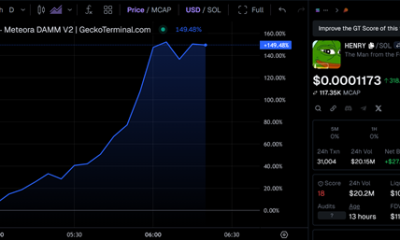
Meme Coin Based on White House Shooter Conspiracy Rallies 320%
-

 Tech7 days ago
YouTube TV’s Multiview Feature Just Got A Game-Changing Upgrade
You must be logged in to post a comment Login