
Crypto World
New York candidate proposes AI dividend plan as job loss debate grows



New York state assemblymember and congressional candidate Alex Bores has proposed an AI dividend program aimed at addressing possible job losses linked to artificial intelligence.
Summary
- Alex Bores proposed an AI dividend to support Americans if automation causes broad job displacement nationwide.
- The plan would use AI taxes, equity stakes, and reform to fund direct payments.
- The proposal also supports worker training, education, and oversight as AI adoption expands further.
He presented the plan as a way to prepare US workers and households for changes that may come as AI adoption spreads across industries.
In a post on X, Bores said the proposal would create direct payments for Americans if AI leads to major labor displacement. He said the goal is to prepare for what he called ”potential large-scale displacement of human labor by artificial intelligence.”
According to Bores, the proposed AI dividend would draw funding from several sources. These include taxes on AI use, equity stakes in major AI companies, and tax reforms tied to the treatment of labor and capital.
Bores said the plan is designed to respond if AI lifts productivity while concentrating more wealth in fewer hands. The proposal states, ”if AI dramatically increases productivity and concentrates wealth, the American people have a stake in those gains.” It also describes the dividend as ”not a punishment for innovation” but ”an insurance policy.”
Meanwhile, the plan goes beyond direct payments. It also calls for investments in workforce transition, education, training, and oversight systems tied to AI safety. That structure suggests the proposal is meant to address both income support and longer-term labor market adjustments.
Bores is promoting the policy as part of his campaign for Congress. That means the proposal’s path forward may depend in part on the outcome of his race and whether he can build broader political support for the idea.
Debate over AI job losses remains unsettled
The proposal comes as concerns about AI-led layoffs continue to grow. A recent Goldman Sachs report said AI adoption contributed to the loss of about 16,000 jobs per month over the past year, adding to worries that automation may reduce hiring in some sectors.
At the same time, other research points to a more mixed picture. Morgan Stanley said in an April 14 report that AI’s effect on the labor market has been ”modest so far.”
The firm said evidence of broad job losses remains limited and noted that past technological shifts often created new jobs over time, even when they replaced others in the short term.
Major US technology firms such as Amazon, Meta, Intel, and Microsoft have already cut thousands of jobs or reportedly planned cuts tied to AI-driven efficiency.
That backdrop has given more attention to proposals such as the AI dividend as policymakers weigh how to respond to the next stage of automation.

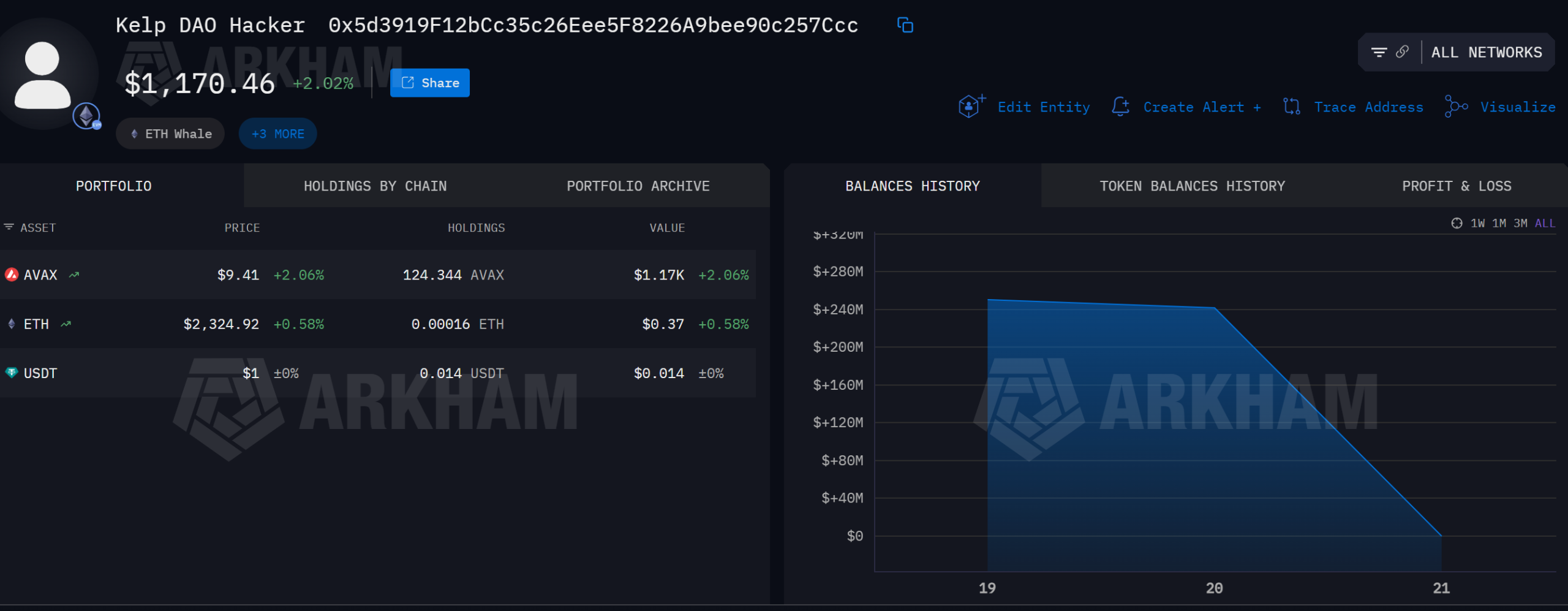
The attacker behind the $292 million KelpDAO exploit has begun laundering roughly 75,700 ETH, worth about $175 million, on Ethereum after the Arbitrum Security Council froze 30,766 ETH on Arbitrum One.
The freeze appears to have rattled the hacker into accelerating fund movements on the Ethereum mainnet.
Hacker Accelerates ETH Transfers Through UmbraCash
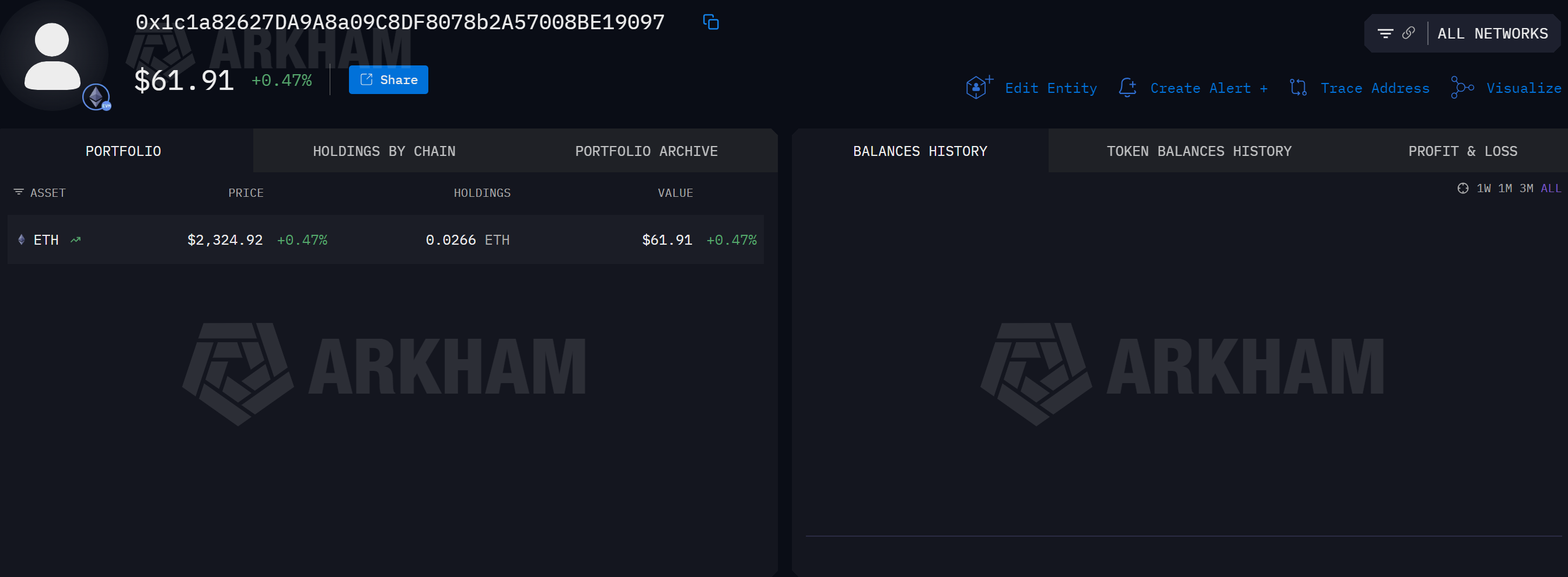
On-chain analyst EmberCN reported that several small ether (ETH) transfers have already gone through UmbraCash, a stealth address privacy protocol.
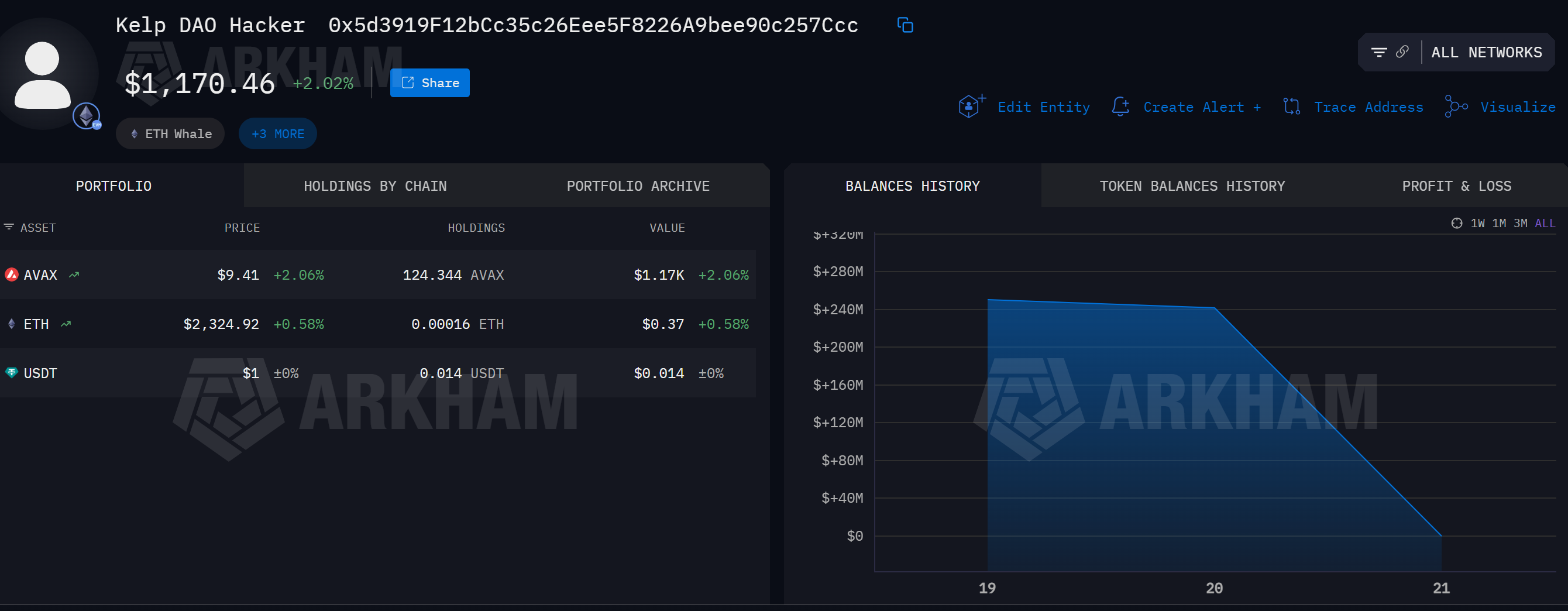
The fund-splitting strategy suggests the attacker is trying to obscure the trail before more assets can be frozen.
Arkham Intelligence data shows the hacker’s primary wallet still holds a significant ETH balance, with outflows routing through a secondary address tied to UmbraCash transfers.
Security Council Decision Draws Mixed Reactions
Offchain Labs co-founder Steven Goldfeder defended the council’s action, noting that the elected 12-member body required nine votes to act.
He stressed that the sequencer itself has no power to move funds and that the council operated independently from Offchain Labs and the Arbitrum Foundation.
However, some community members raised concerns. One user questioned whether a compromised council could seize any on-chain funds, highlighting the tension between emergency powers and decentralization.
“If i understand correctly, if the arbitrum security council gets compromised they can just do whatever they want to all of the funds on chain?” they posed.
In the same tone, crypto executive Justin Sun trolled the Arbitrum governance debate, highlighting the Tron DAO as the most decentralized blockchain.
Notwithstanding, KelpDAO thanked the council and credited SEAL 911 for coordinating the response. The protocol said its focus remains on supporting rsETH holders affected by the April 18 exploit.
The post Arbitrum Freeze Sparks $175 Million Laundering Frenzy on Ethereum appeared first on BeInCrypto.
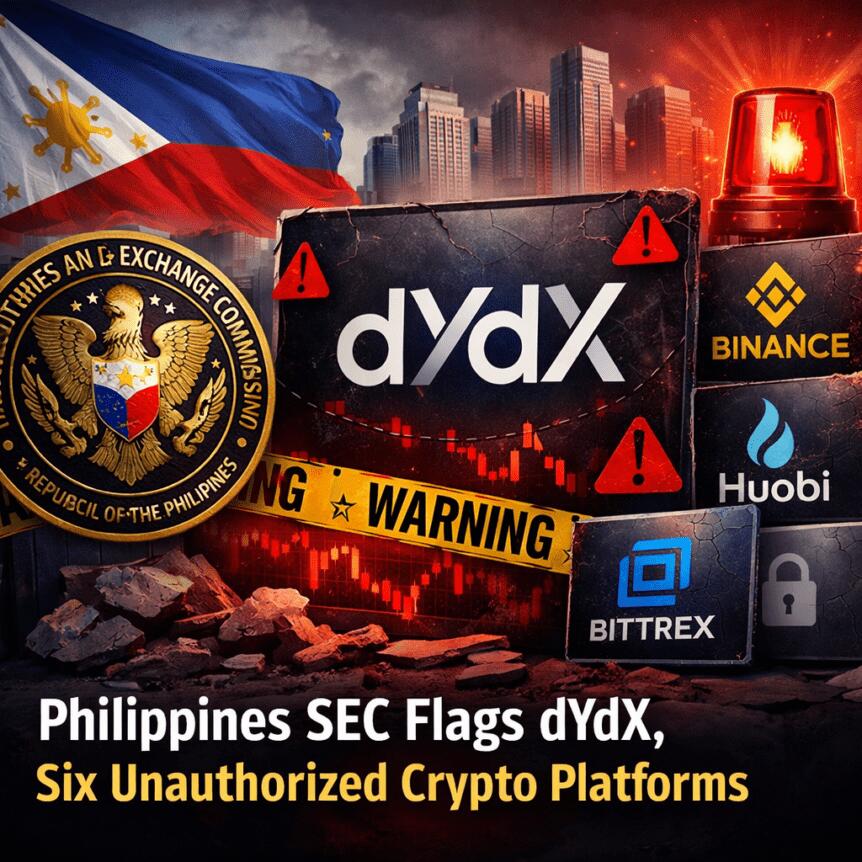
The Philippine Securities and Exchange Commission (SEC) has issued a public investor alert cautioning Filipinos against investing in dYdX and six other crypto trading platforms. The regulator stated that these platforms are not registered or authorized to solicit investments in the country, raising concerns about investor protection and regulatory compliance.
In a Facebook post on Tuesday, the SEC named dYdX, Aevo, gTrade, Pacifica, Orderly, Deriv and Ostium, asserting that, based on its findings, the platforms appear to be offering investments to the public in exchange for promised returns, profits or interest. The commission emphasized that none of the listed entities are registered or authorized under the Philippines’ crypto-asset service provider (CASP) framework, which requires firms offering crypto-related services to obtain licenses and meet capital and operational requirements.
The SEC warned that individuals promoting any of the listed platforms in the Philippines may face criminal liability under the Securities Regulation Code. Under Sections 28 and 73 of the law, violators could be fined up to 5 million Philippine pesos (about $89,000) or imprisoned for up to 21 years, or both.
The advisory underscores a broader shift toward stricter enforcement in the Philippines, where regulators have increasingly moved from warnings to access restrictions. As part of this trend, regulators blocked access to Coinbase and Gemini on December 24, 2025, as part of their broader crackdown on unlicensed CASPs. This moment marked a significant escalation in the country’s approach to crypto-market oversight.
Key takeaways
- The SEC warns that dYdX, Aevo, gTrade, Pacifica, Orderly, Deriv and Ostium are not registered or authorized to solicit investments in the Philippines.
- Compliance with the CASP framework is mandatory for firms offering crypto-related services, including licensing and meeting capital and operational requirements.
- Violations carry potential criminal penalties under the Securities Regulation Code, including fines up to PHP 5 million and imprisonment up to 21 years.
- The case reflects a broader enforcement shift within the Philippines, moving from advisory warnings to direct access restrictions on unlicensed platforms.
- Regulatory tension in the region continues to shape the operating environment for both unregistered operators and licensed players seeking to serve Filipino investors.
Regulatory framework and CASP licensing in the Philippines
The SEC’s CASP framework regulates entities that provide crypto-asset services within the Philippines. Under this regime, platforms must secure the appropriate licenses and satisfy capital adequacy, governance, and operational standards before offering services to the public. The current advisory reiterates that the listed platforms have not demonstrated compliance with these requirements, creating a clear risk posture for investors who engage with them. The Securities Regulation Code, particularly Sections 28 and 73, governs the liability of individuals and entities that promote or solicit investments in unregistered offerings, reinforcing the bounds of permissible activity for crypto platforms in the country.
In this context, the Philippine authorities have signaled a tightening of enforcement that aligns with global regulatory intent to reduce unregistered or non-compliant crypto operations. The SEC’s release also underscores the need for rigorous vetting by market participants and third-party promoters to ensure that offerings meet local legal and prudential standards before presenting them to Filipino residents.
Enforcement actions and investor protection concerns
The advisory comes amid an active enforcement posture designed to safeguard investors from unregistered and potentially risky platforms. By warning promoters of criminal liability and detailing possible penalties, the SEC aims to deter both direct solicitations and ancillary marketing that could mislead the public into engaging with non-compliant services. The regulatory approach reflects a preference for robust licensing and oversight to mitigate systemic risks associated with crypto trading and investment schemes lacking proper registration.
The Philippines’ enforcement trajectory has included high-profile actions targeting unlicensed platforms. In 2024, regulators moved to block access to Binance after a compliance deadline expired and directed app stores to remove the trading platform’s mobile app from local devices. The pattern continued into 2025, with further advisories naming major exchanges such as OKX, Bybit, KuCoin and Kraken for offering crypto services without registration. These measures illustrate the authorities’ willingness to restrict access and sanction non-compliant operators, reinforcing the importance of licensing as a prerequisite for market participation.
For legitimate players, the landscape remains one of continued growth within a regulated framework. Examples include PDAX’s partnership with Toku to enable stablecoin salary payouts, and GoTyme Bank’s digital banking initiative that expanded into crypto services with Alpaca, signaling a bifurcated market where compliant firms can innovate under regulatory supervision while unregistered platforms face increasing scrutiny and enforcement risk.
According to Cointelegraph, regulators have broadened the crackdown to encompass unlicensed virtual-asset service providers and established crypto exchanges, underscoring a pervasive policy shift toward greater accountability and consumer protection in crypto markets.
Broader policy context and international implications
The Philippines’ enhanced enforcement stack sits within a broader global push to codify crypto-asset activities through licensing, reserve capital requirements, and transparent operations. While the specifics of each jurisdiction differ, the trend toward stricter control—especially over platforms that solicit investments or promise returns—has become a common feature of regulatory narratives in many markets. In this environment, policymakers are balancing innovation with investor protection, financial stability, and anti-money-laundering (AML) objectives.
From a policy and market-structure perspective, the Philippines’ actions may influence cross-border service models and partner ecosystems. For institutions operating in or contemplating entry into the Philippine market, the CASP licensing regime creates a clear compliance highway: robust governance, capital adequacy, and ongoing regulatory reporting. As global standards evolve, the Philippine approach also interacts with broader conversations around licensing equivalence, cross-border enforcement cooperation, and the alignment of local rules with regional and international AML/KYC norms, as well as potential synergies or frictions with frameworks such as MiCA in the European Union.
For investors and corporate users, the evolving landscape emphasizes due diligence and validation of licensure status, functional licensing, and the governance posture of entities offering crypto-related services in the Philippines. It also highlights the importance of internal compliance programs, risk assessments, and clear communication channels to ensure alignment with local securities laws and crypto-asset regulations.
Closing perspective: the SEC’s public advisory marks a continuing phase of regulatory consolidation in the Philippines, with further guidance and potential licensing clarifications likely to follow as authorities refine the CASP regime and solidify enforcement norms. Market participants should monitor forthcoming regulatory filings and policy updates to anticipate changes in licensing criteria, enforcement timing, and permissible product offerings.


Key takeaways
- DOGE is up 1% and is now trading at $0.095.
- The memecoin could rally towards the $0.10 psychological level in the near term.
Dogecoin (DOGE), Shiba Inu (SHIB), and Pepe (PEPE) are all displaying signs of renewed strength on Tuesday, as bullish technical setups emerge across major meme coins.
DOGE and SHIB are testing key resistance zones, with a close above these levels potentially signaling further upside. Meanwhile, PEPE continues its recovery, finding support near the crucial 50-day Exponential Moving Average (EMA), setting the stage for a potential rally continuation.
Derivatives data support a bullish outlook for Dogecoin
Dogecoin is up 1% in the last 24 hours and could rally higher in the near term amid a bullish outlook from the broader crypto market.
Bitcoin has reclaimed the $76,000 level, while Ether is now trading above the $2,300 mark once again.
Meanwhile, Dogecoin is looking to embark on a breakout above the $0.10 psychological level if the bullish trend persists.
Dogecoin’s derivatives data suggests that the bulls are currently in control of the market. The futures Open Interest (OI) now reads $1.23 billion, up from the $986 million recorded on Monday.
The increase in OI suggests that retail traders are opening more positions in anticipation of a bullish move by Dogecoin.
Dogecoin could extend gains with a close above the 50-Day EMA
Similar to other leading cryptocurrencies, the DOGE/USD 4-hour chart remains bearish and efficient. It has surpassed the 50-day EMA at $0.95 following its 2.4% rally on Monday.
DOgecoin been consolidating beneath this resistance for over a month and briefly broke above it last week, but struggled to maintain support.
If DOGE closes its daily candle above the $0.095 level and holds, the altcoin could extend its rally toward the 100-day EMA at $0.105.

The Relative Strength Index (RSI) on the daily chart is at 52, above the neutral level of 50, signaling weakening bearish momentum. Furthermore, the Moving Average Convergence Divergence (MACD) indicator shows green histogram bars, reinforcing the positive outlook.
On the downside, if DOGE fails to hold above the 50-day EMA, it could face a potential correction, bringing the price back toward the February 6 low of $0.080.
Crypto World
Bitcoin, USDT ‘safe passage’ scam hits Hormuz as one ship reportedly duped and fired upon


Shipowners are receiving fraudulent messages asking for crypto payments in exchange for safe passage across the Strait of Hormuz, and at least one may have been taken in, Reuters reported Tuesday.
Marisks, a Greek maritime risk services company, issued a warning saying several shipping companies had received messages from scammers posing as Iranian authorities and asking for bitcoin or USDT. The firm said it believed at least one ship fell victim to the scam and was fired upon while trying to pass through the strait over the weekend, Reuters said.
Shipping traffic through the strait has largely been blocked by Iran since Feb. 28, when the U.S. and Israel initiated a war on the Middle East country. According to Reuters, there are roughly 20,000 oil tankers and other freighters stranded in the Gulf.
A week ago, U.S. President Donald Trump ordered a naval blockade of the Strait of Hormuz and has since seized one Iranian vessel trying to evade the operation.
On April 9, Tehran, which controls the chokepoint, proposed crypto tolls on vessels in exchange for safe transit. Hamid Hosseini, spokesperson for Iran’s Oil, Gas and Petrochemical Products Exporters’ Union, said the crypto fees would likely be charged in bitcoin.
Marisks issued its alert on Monday. Iran has not made any comment, Reuters added.
“These specific messages are a scam,” Marisks said, assuring the messages did not come from official Iranian sources.
“After providing the documents and assessing your eligibility by the Iranian Security Services, we will be able to determine the fee to be paid in cryptocurrency (BTC or USDT). Only then will your vessel be able to transit the strait unimpeded at the pre-agreed time,” said the fraudulent message cited by Marisks, according to Reuters.
The shipping company did not immediately respond to a CoinDesk request for comment.
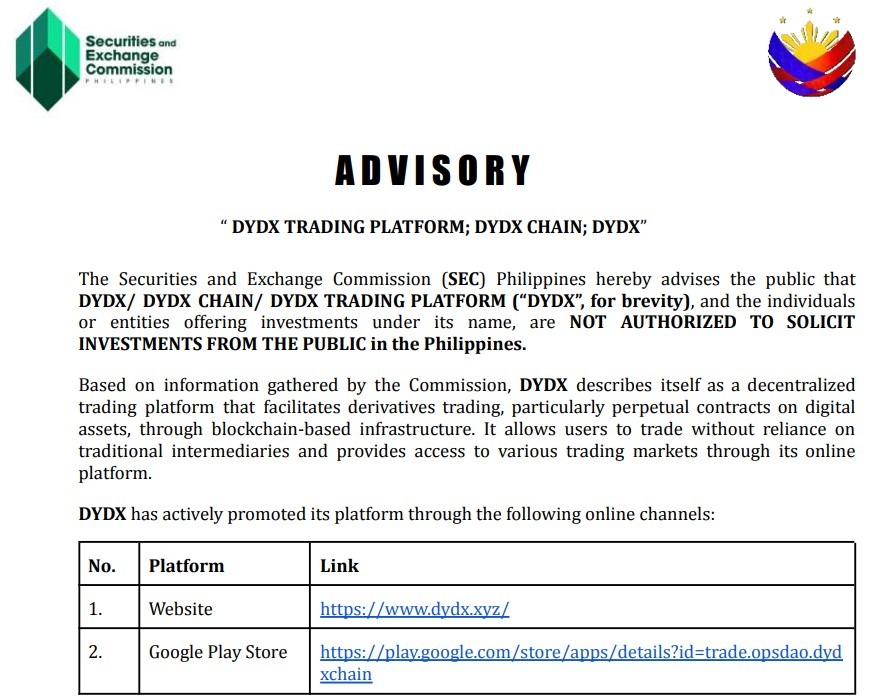
The Philippine Securities and Exchange Commission (SEC) has issued a public investor alert warning Filipinos not to invest in dYdX and six other crypto trading platforms, saying they are not registered or authorized to solicit investments in the country.
In a Facebook post on Tuesday, the SEC named dYdX, Aevo, gTrade, Pacifica, Orderly, Deriv and Ostium, stating that based on its findings, the platforms appear to be offering investments to the public in exchange for promised returns, profits or interest.
The regulator said none of the listed entities are registered with the Commission or hold the required authorization under its crypto-asset service provider (CASP) framework, which requires firms offering crypto-related services in the Philippines to obtain licenses and meet capital and operational requirements.
The SEC also warned that individuals promoting any of the listed platforms in the Philippines may face criminal liability under the Securities Regulation Code. Under Sections 28 and 73 of the law, violators could be fined up to 5 million Philippine pesos (about $89,000) or imprisoned for up to 21 years, or both.
The advisory highlights a broader shift toward stricter enforcement in the Philippines, where regulators have increasingly moved from warnings to access restrictions. On Dec. 24, 2025, Philippine regulators blocked Coinbase and Gemini as part of their broader crackdown on unlicensed CASPs.

Broader crackdown on unlicensed crypto operators
The latest advisory comes as Philippine regulators continue to step up enforcement against crypto platforms operating without local authorization.
In 2024, authorities moved to block access to Binance after a compliance deadline expired, with regulators also directing app stores to remove the trading platform’s app from users’ devices in the country.
Related: Cambodian lawmakers propose severe prison time for crypto scammers
The crackdown has since expanded to include other major platforms. In August 2025, the SEC issued an advisory naming 10 exchanges, including OKX, Bybit, KuCoin and Kraken, for offering crypto services without registration, warning that their activities exposed Filipino investors to risks.
While regulators have targeted unlicensed operators, compliant firms have continued rolling out crypto products. In 2025, PDAX partnered with Toku to enable stablecoin salary payouts, while digital bank GoTyme launched crypto services with Alpaca, allowing users to buy and hold digital assets within its app.
Magazine: Telegram avoids Philippines ban, yen carry trade going onchain: Asia Express
Crypto World
Bank of Korea’s new governor signals CBDC and bank token push, skips stablecoins in key address


Bank of Korea Governor Shin Hyun-song used his first address in office to prioritize central bank digital currencies (CBDCs) and bank-issued deposit tokens, while leaving out any mention of stablecoins as South Korea weighs new crypto rules.
Shin, who began his four-year term Tuesday, pointed to the bank’s ongoing retail CBDC and deposit-token pilot, Project Hangang, and its role in Project Agorá, a cross-border tokenization effort led by the Bank for International Settlements, according to news outlet Chosun.
He framed digital currency as part of a broader shift in central banking during a period of economic strain and slower domestic growth.
The absence of stablecoins from his remarks stood out. The issue has dominated policy debate in Seoul, with lawmakers considering the Digital Asset Basic Act, which would set rules for stablecoin issuance.
Shin had told lawmakers at his confirmation hearing that stablecoins could coexist with CBDCs and deposit tokens in a “supplementary and competitive” manner.
His speech also outlined a bank-led model where the central bank would issue a CBDC, while commercial banks would provide deposit tokens fully convertible into it. Shin has argued that any stablecoin issuance should begin with regulated banks.
Beyond payments, Shin signaled closer scrutiny of crypto markets and non-bank finance. He said the central bank would expand monitoring of cryptocurrencies and other nontraditional assets, and seek broader access to data to track financial risks.
Shin also pledged steps to modernize currency markets, including 24-hour foreign exchange trading and an offshore won settlement system.


Scammers are exploiting the Hormuz crisis amid the US-Iran war. Greek maritime risk firm MARISKS issued the scam warning on Monday.
According to the firm, fraudsters posing as Iranian authorities are messaging shipping companies whose vessels are stranded, demanding digital asset payments for supposed “safe-passage” clearance.
How the Scam Exploits Iran’s Real Crypto Toll Scheme
The scam draws plausibility from an actual policy announcement in Tehran. Iran recently stated that, during the two-week ceasefire, oil tankers transiting the Strait of Hormuz would be required to pay tolls of up to $2 million in cryptocurrency.
Hamid Hosseini, spokesperson for Iran’s Oil, Gas and Petrochemical Products Exporters’ Union, told the Financial Times that vessels must first submit cargo details via email to Iranian authorities. Following this, they will be issued a toll fee, reportedly payable in Bitcoin (BTC).
The fraudsters weaponize that legitimacy. According to MARISKS, unidentified actors approached shipping companies with messages demanding transit fees in Bitcoin or Tether (USDT), in exchange for so-called “clearance.” However, the firm stressed that “these specific messages are a scam.”
Their messages mimic bureaucratic language, citing Iranian Security Services checks and pre-agreed transit windows to appear authentic.
Follow us on X to get the latest news as it happens
“After providing the documents and assessing your eligibility by the Iranian Security Services, we will be able to determine the fee to be paid in cryptocurrency (BTC or USDT). Only then will your vessel be able to transit the strait unimpeded at the pre-agreed time,” read the message cited by MARISKS.
The fraud may already carry notable consequences. MARISKS believes that at least one vessel fired upon on Saturday had paid scammers.
Roughly 20% of global oil passed through Hormuz before the war. With hundreds of ships and around 20,000 seafarers now stranded in the Gulf, the disruption has created a broad and vulnerable pool of potential victims.
The scam adds to a broader surge in crypto-enabled crime. Industry data shows that April 2026 saw roughly $606 million in losses across 12 hacking incidents.
Subscribe to our YouTube channel to watch leaders and journalists provide expert insights
The post Crypto Fraudsters Target Stranded Seafarers With Fake Hormuz Toll Scheme appeared first on BeInCrypto.

TLDR:
-
- Starknet v0.14.2 introduces SNIP-36, enabling native in-protocol STARK proof verification on mainnet.
- STRK20 allows any ERC-20 token on Starknet to operate with encrypted balances and shielded transfers.
- strkBTC lets bitcoin holders access DeFi on Starknet without exposing their full wallet transaction history.
- SNIP-37 rebalances network economics by raising storage costs while lowering base L2 gas prices for users.
Starknet v0.14.2 is now live on mainnet, introducing native privacy infrastructure to the network. The upgrade adds in-protocol proof verification, enabling confidential transactions at the protocol level.
It also paves the way for STRK20 and strkBTC, two privacy-focused asset frameworks. Together, these changes position Starknet as a privacy-preserving rollup rather than a standard high-performance chain.
In-Protocol Proof Verification Changes How Starknet Handles Privacy
At the core of v0.14.2 is SNIP-36, which brings native proof verification to the protocol. Previously, verifying a STARK proof on Starknet required a smart contract, which was not practical.
STARK proofs are large, often containing tens of thousands of field elements. That size made them incompatible with the network’s maximum transaction limits.
Developers had no clean path forward under the old system. Splitting proofs across multiple transactions was slow, complex, and expensive.
The official release notes described the previous approach as “prohibitively slow, complex, and expensive.” With v0.14.2, transactions now reference off-chain execution proofs directly through new proof and proof_facts fields in the Invoke V3 transaction structure.
Starknet’s consensus layer handles verification natively under this new model. Users can now prove fund ownership or transfer rights without exposing their balance.
The protocol states that “privacy becomes as seamless as a standard transfer” with this native support in place. Transaction history also remains shielded from public view on the network.
This change removes the biggest barrier to practical privacy on Starknet. Without native support, any privacy solution would have been too slow and costly to deploy at scale.
STRK20 and strkBTC Are the First to Use the New Framework
STRK20 is a new framework that allows any ERC-20 token on Starknet to operate privately. Thanks to v0.14.2’s ability to verify S-two proofs, tokens can now support encrypted balances.
Per the release announcement, users can now “swap, stake, and send any ERC-20 token while keeping your financial footprint shielded.” This applies from day one of the framework’s availability.
strkBTC builds on this same infrastructure for bitcoin holders specifically. The upgrade allows BTC to be used in DeFi applications without exposing a user’s full bitcoin wallet history.
According to Starknet, the result gives bitcoin holders “hard money that is both private and productive.” This opens BTC participation across the broader BTCFi ecosystem on Starknet.
Both frameworks operate with a compliance layer in place. A third-party audit firm will hold a viewing key. Subject to valid legal or regulatory requests, that firm may share individual transaction data with relevant authorities.
Beyond privacy, v0.14.2 also addresses network economics through SNIP-37. The update raises storage costs while reducing base L2 gas prices.
SNIP-13 upgrades StarkGate token contracts to version 3.0.0, aligning ERC-20 events with industry standards and preparing for the decentralized validation phase outlined in SNIP-33.



Bitcoin has a well-earned reputation as a volatile asset that has historically doubled or halved in a matter of months. That may be changing.
Bitcoin’s 30-day realized volatility, currently 42%, has remained below 50% this month, according to TradingView data. Compare that with South Korea’s benchmark Kospi stock index, whose market capitalization is about twice the largest cryptocurrency’s, which hit 74% last week and is still around 51%. Another more volatile equity market is Pakistan, whose KSE 100 index is also around 51%.
Bitcoin’s volatility — a measure of how wildly prices have swung — has steadily declined in recent years, particularly since the introduction of spot ETFs in the U.S. in January 2024. These investment vehicles have increased institutional participation, bringing in more risk-managed capital flows that have helped dampen price swings.
The relative stability underscores its appeal as a geopolitical hedge, holding its value when macro forces like wars wreak havoc on traditional assets. BTC has historically outperformed gold, the S&P 500 and other traditional assets during wars, as River, a bitcoin-only financial institution, pointed out early this month.
Still, most major regional markets and their global counterparts exhibited less volatility than BTC in the period. Which raises the question: Why makes South Korea, the world’s 14th-largest economy, different?
Korean issues
The higher volatility in Korean stocks reflects, to a great extent, the gyrations in the cost of fossil fuel, which doesn’t really apply to bitcoin.
The Kospi fell from 6,340 points in late February to 5,000 by the end of March, before rebounding to record highs above 6,380 points.
The initial selloff occurred in the run-up to the war between Iran and the U.S.-Israeli coalition, which started Feb. 28, eventually leading to a closure of the Strait of Hormuz, a major oil supply route. This disruption and the resulting spike in oil prices hurt South Korea because the country imports nearly all its fossil fuels, including oil and natural gas from the Middle East.
Later, the index found its footing as the conflict eased and the two sides negotiated a temporary ceasefire, which is set to expire on Wednesday. Pakistan’s stock market saw similar swings, with its economy equally, if not more, exposed to energy market disruptions.
Throughout this time, bitcoin held relatively steady, trading mostly between $65,000 and $75,000, supported by renewed inflows into the U.S.-listed spot exchange-traded funds (ETFs).
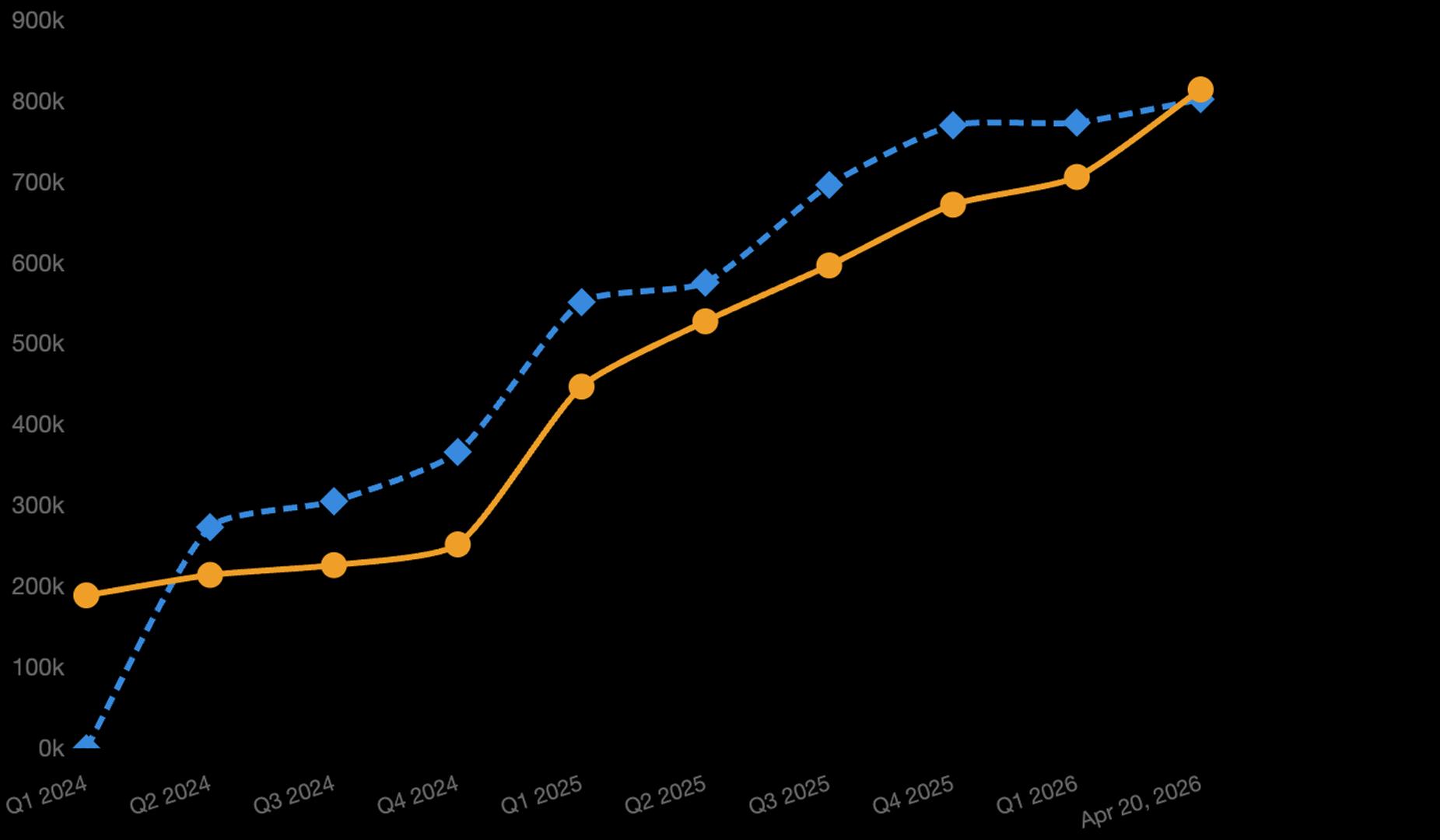
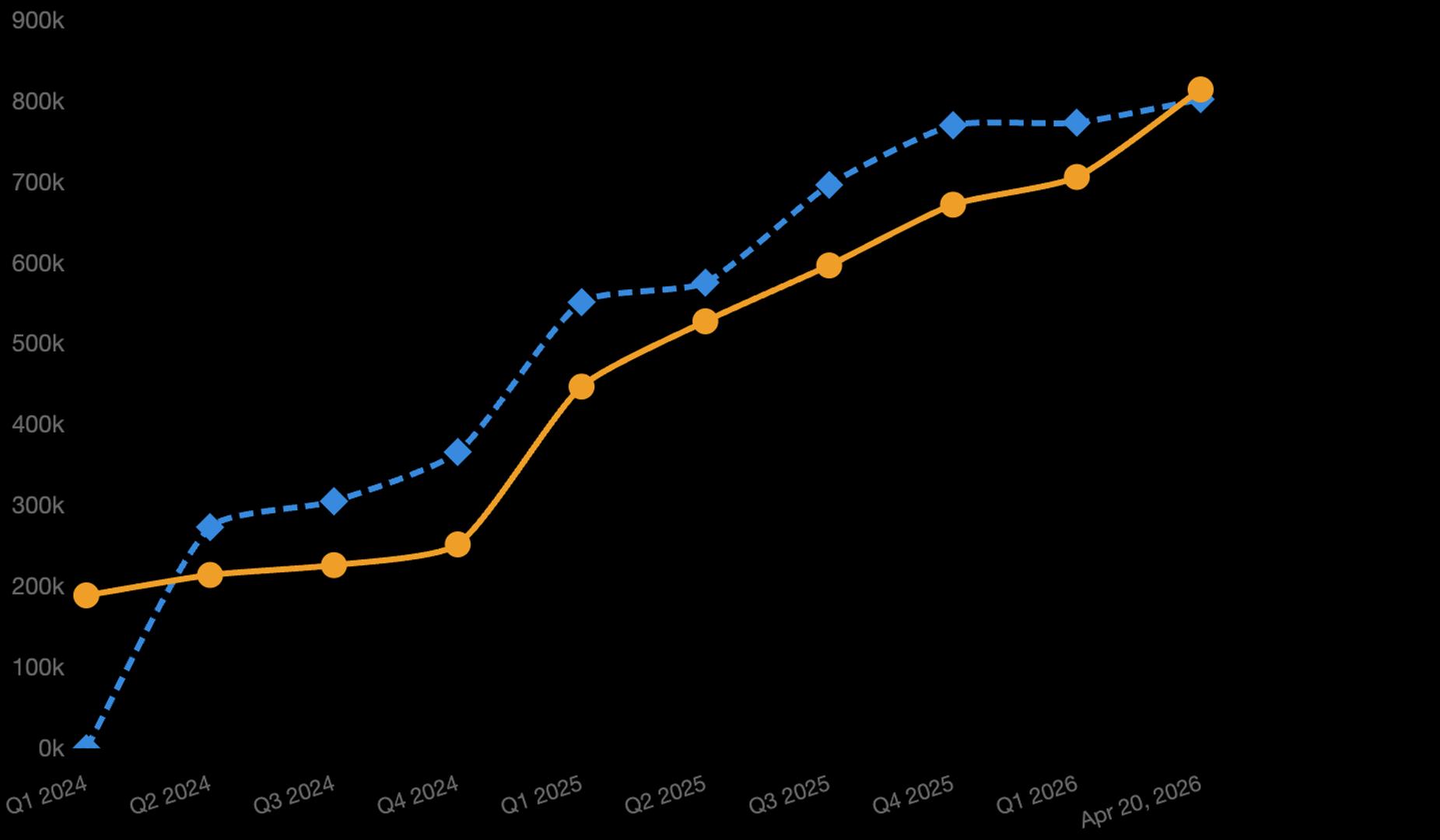
Strategy (MSTR), now holds more bitcoin than BlackRock’s iShares Bitcoin Trust (IBIT) for the first time since Q2 2024.
The world’s largest publicly traded BTC holder recently announced its third-largest bitcoin purchase on record, acquiring 34,164 BTC and bringing its total holdings to 815,061 BTC.
IBIT currently holds 802,824 BTC, leaving Strategy ahead by more than 12,000 BTC. While the gap is not anything meaningful in relative terms, it is symbolically important given IBIT’s rapid growth since launch. IBIT became the fastest ETF in history to reach $70 billion in assets, while IBIT ranks among BlackRock’s top revenue drivers.
Strategy held 189,150 BTC at the start of Q1 2024. IBIT surpassed it by early Q2 with roughly 273,000 BTC, compared with Strategy’s 214,400 BTC, a lead which it consistently maintained until now.
However, the two vehicles are fundamentally different. Strategy is an operating company that uses financial engineering, including at-the-market (ATM) equity issuance, convertible debt, and perpetual preferred securities, to accumulate bitcoin in a leveraged manner. IBIT, by contrast, is a spot ETF designed to passively track bitcoin’s price, offering investors straightforward exposure without leverage or corporate risk.
IBIT has gained around 55% since listing in January 2024, while Strategy has risen roughly 250%, driven by its leveraged structure.
Notably, Strategy accelerated accumulation during the recent market downturn, as bitcoin fell over 50% from its October all-time high, while adding nearly 80,000 BTC in 2026.
The perpetual preferred equity STRC has been a key differentiator for Strategy, providing a scalable source of capital that has funded a significant portion of its recent bitcoin accumulation.
Meanwhile, IBIT’s holdings remained relatively stable, with only a modest decline in assets under management.

Former ransomware negotiator pleads guilty to BlackCat attacks

K Camp – Money Baby ft. Kwony Cash (Official Video)

Man hospitalised after Belfast stabbing

Manchester United reach agreement with Casemiro over contract clause amid transfer speculation

Steven Gerrard disagrees with Gary Neville over ‘shock’ Chelsea and Arsenal claim | Football

US brings back mandatory military draft registration


-

 News Videos6 days ago
Secure crypto trading starts with an FIU-registered
-

 Fashion4 days ago
Weekend Open Thread: Theodora Dress
-

 Sports4 days ago
NWFL Suspends Two Players Over Post-Match Clash in Ado-Ekiti
-

 Politics4 days ago
Palestine barred from entering Canada for FIFA Congress
-

 Business2 days ago
Powerball Result April 18, 2026: No Jackpot Winner in Powerball Draw: $75 Million Rolls Over
-

 Crypto World4 days ago
Russia Pushes Bill to Criminalize Unregistered Crypto Services
-

 Politics14 hours ago
Gary Stevenson delivers timely reminder to register to vote as deadline TODAY
-
 Business5 days ago
Creo Medical agree sale of its manufacturing operation
-

 Politics2 days ago
Zack Polanski demands ‘council homes not luxury flats for foreign investors’
-

 Tech2 days ago
Auto Enthusiast Scores Running Tesla Model 3 for Two Grand and Turns It Into Bare-Bones Go-Kart
-

 Tech5 days ago
‘Avatar: Aang, The Last Airbender’ Leaked Online. Some Fans Say Paramount Deserves the Fallout
-

 Crypto World4 days ago
Russia Introduces Bill To Criminalize Unregistered Crypto Services
-

 Tech6 days ago
Microsoft adds Windows protections for malicious Remote Desktop files
-
 Entertainment6 days ago
Dave Portnoy Slams Dianna Russini: ‘Makes Zero Sense’
-

 Crypto World6 days ago
X Launches New Cashtag Feature for Stocks and Crypto: X
-

 Sports7 days ago
Younger Than Sachin Tendulkar: Vaibhav Sooryavanshi Set To Make Historic India Debut
-

 Entertainment7 days ago
Prince Carter Brings Fans Front Row and Backstage at Boys 4 Life Tour
-

 Sports5 days ago
British climbers complete new route in Swiss Alps
-
 Crypto World6 days ago
Bitcoin surpasses halfway mark in current halving cycle
-
 Crypto World7 days ago
Paxos Labs Raises $12M to Launch Crypto Yield and Lending Platform
You must be logged in to post a comment Login