

Crypto World
Prediction markets firms take heat in Senate Commerce hearing scrutinizing surge

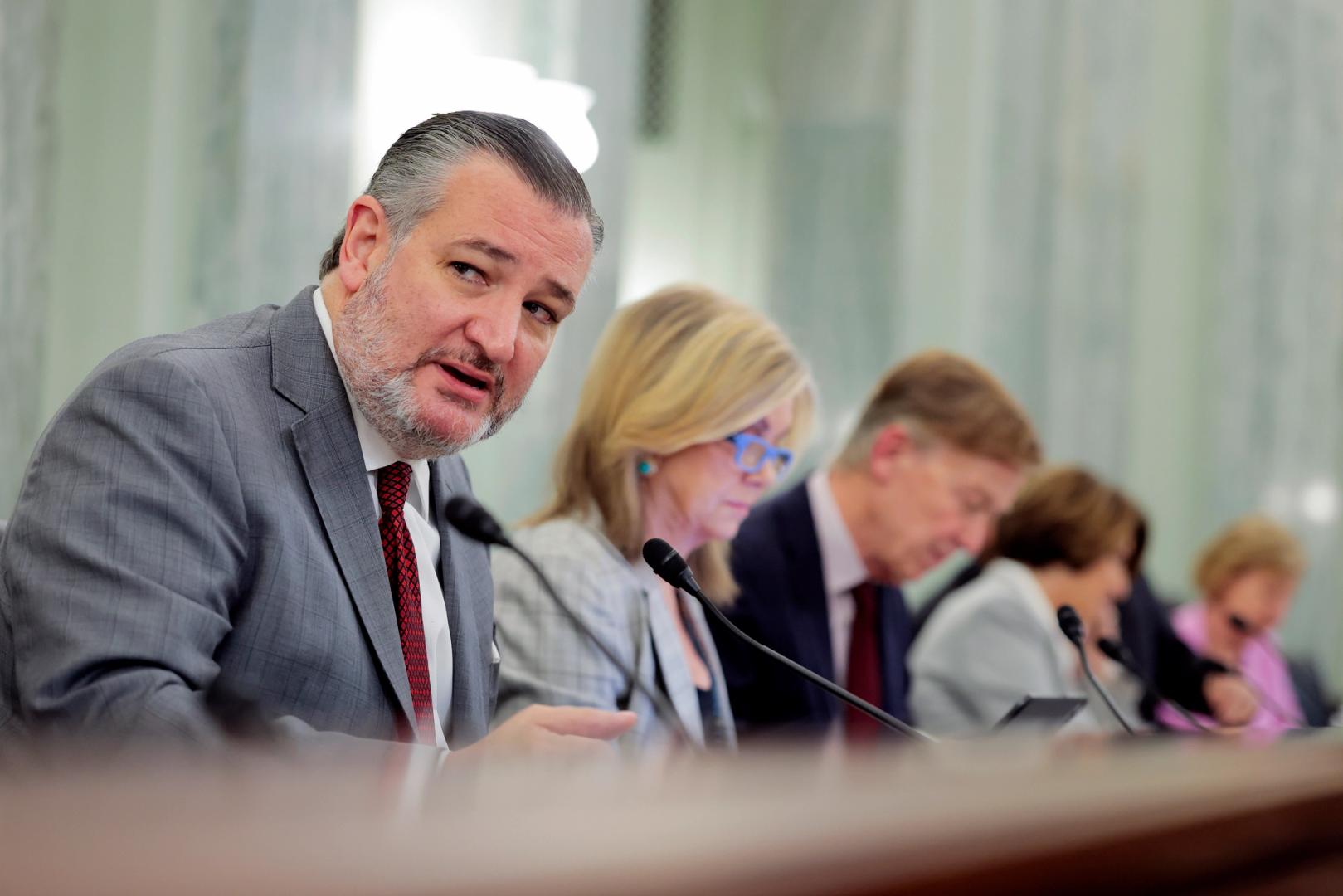
Prediction markets platforms such as those run by Kalshi and Crypto.com drew two hours of critical questioning in a U.S. Senate Commerce Committee hearing, including scrutiny on the platforms’ advertising practices, regulatory disputes and the cheating they may encourage.
“We want athletes competing on merit, but the opportunity to make money can tempt gamblers — and sometimes even athletes themselves — to guarantee a sure bet,” Senator Ted Cruz, a Texas Republican who chairs the committee, said during the Wednesday hearing. He said high-profile incidents of player cheating “sow doubt in the minds of fans.”
Cruz flagged some recent cases, saying: “NBA players and coaches are accused of manipulating performance and providing insider information to win bets. Two major league baseball pitchers allegedly rigged their own pitches in exchange for money. [Major League Soccer] banned two players for intentionally getting yellow cards to win bets, and the UFC has canceled matches and terminated contracts because of suspected match fixing.”
“It is not uncommon for fans scrolling Twitter on a Sunday afternoon in the fall to see posts speculating that a controversial call by an official was related to gambling,” Cruz said.
Other lawmakers focused on marketing that fosters problem gambling or that has reached youths that are otherwise meant to be blocked from betting. Senator John Hickenlooper, a Colorado Democrat, accused the prediction markets businesses of unleashing the “hounds of hell” in social media and marketing to “prey on our young people.”
Patrick McHenry, who was a prominent member of the House of Representatives until his recent retirement, is now an adviser at the Coalition for Prediction Markets that represents Kalshi, Crypto.com, Robinhood, Coinbase and others. He said trades aren’t allowed for anybody under 18 and that the average age of users is 33.
Problem gamblers
Harry Levant, director of gambling policy at the Public Health Advocacy Institute, testified on Wednesday, telling the lawmakers he was a recovering gambling addict and lamenting the “avalanche of unregulated advertising” from prediction market firms.
“It’s a known addictive product, just like heroin,” he said.
Earlier this week, Kalshi co-founder and CEO Tarek Mansour posted on social media site X to highlight his company’s $2 million commitment with the National Council on Problem Gambling to support an initiative on “trader health and safety.””As retail participation in markets increase, we have a responsibility to balance free markets and individual responsibility with customer education and safety guardrails,” he wrote.
And still other lawmakers on Wednesday dove into the rapidly growing industry’s avoidance of state regulators and competition with regulated gaming on U.S. tribal lands, where revenue is a core support of tribal reservations’ financial health.
CFTC
Even as the senators put the event-contract space under the microscope, the Commodity Futures Trading Commission that regulates derivatives trading platforms is pursuing a lawsuit filed on Tuesday to stop a new law in Minnesota that was set to hold prediction market activity as illegal there. The regulator adds this to a growing list of lawsuits the federal agency has filed against states that have sought to limit prediction markets or declare them in violation of state gambling laws.
“This Minnesota law turns lawful operators and participants in prediction markets into felons overnight,” said CFTC Chairman Mike Selig in a statement, who added this suit alongside similar agency fights against Arizona, Connecticut, Illinois and New York.
Selig has led an agency legal campaign to defend his agency’s authority to supervise and regulate prediction markets, which are managed on registered platforms under CFTC rules. Meanwhile, his agency — at which he’s the sole member of what’s meant to be a five-member commission — is also pursuing a formal rule to establish tailored standards for the sector.
McHenry defended the CFTC role on Wednesday.
“The CFTC, as a cop on the beat, has the capacity to oversee this market, just as they’ve done with the broader commodities marketplace that’s been around and well versed for decades,” McHenry said.
Senator Hickenlooper responded, “You’re the first person who’s told me you think that they think the CFTC is up to the standards.”
One of the witnesses, Bill Miller, the president and CEO of the American Gaming Association, contended the federal regulators “are absolutely not competent to handle this, and two, they are absolutely hurting tribes and states financially.” He added that, “it was never Congress’s intent to create a federal department of gambling through the CFTC.”
McHenry argued that these event contracts are derivatives that belong to “fundamentally different business models” from bets placed with gambling businesses. He equated them to long-regulated grain futures contracts, and he added that “our member companies have enhanced surveillance greater than any casino and greater than any sportsbook in the country.”
In the end, Chairman Cruz said, “The Supreme Court may have to decide the issue.”



- Ethereum is testing the $2,140 level after an intraweek low near $2,070.
- A technical breakdown raises the risk of a sharp decline to $1,350, CryptoQuant notes.
- Bullish catalysts could include regulatory clarity and continued institutional demand.
Ethereum (ETH) briefly traded back above the $2,100 level on Wednesday after gaining about 1% over the past 24 hours as Bitcoin reclaimed the $77,200 mark.
While the rebound offered some relief for bulls, the altcoin remains under pressure following a sharp weekly decline.
Technical indicators continue pointing to elevated downside risk, with some analysts warning that ETH could face a deeper correction toward the $1,350 level.
Ethereum price today
Market data during the US session on Wednesday showed Ethereum testing the $2,140 zone after rebounding from intraweek lows near $2,070.
The rebound followed several sessions of heavy selling, although ETH remains well below recent swing highs.
Ethereum is currently trading nearly 7% lower for the week and roughly 28% lower year to date.
The Relative Strength Index (RSI) is hovering near oversold territory, which may suggest conditions for a short-term relief bounce.
However, ETH continues trading below all major moving averages on the daily chart, signaling that bearish momentum remains dominant.
Could ETH fall to $1,350 after a bearish breakdown?
One of the primary concerns for bulls is Ethereum’s breakdown below the support trendline of a triangle pattern.
The latest sell-off confirmed the structural breakdown on the daily chart, raising concerns that price action could mirror a similar technical failure earlier this year.
At the time, Ethereum’s price declined sharply from the $2,800–$3,000 range, falling roughly 35% over several days in February. If similar market conditions develop again, analysts warn that selling pressure could intensify further.
Analysts at CryptoQuant highlighted the downside risk in a recent market note.
“If Ethereum fails to reclaim the broken triangle structure, selling pressure could accelerate further, and price may target the $1,350 support level,” CryptoQuant author and analyst Pelin Ay wrote.
Macro conditions and weakening market flows have also added pressure to Ethereum’s price outlook.

Ethereum’s recent weakness has tracked Bitcoin’s broader lack of momentum, with BTC slipping toward the $76,000 area in recent sessions.
Meanwhile, spot Ethereum ETFs have recorded seven consecutive days of net outflows.
Persistent outflows have increased concerns that the recent technical breakdown could develop into a more prolonged downtrend.
Contrasting views and potential support levels
Not all market participants remain bearish on Ethereum’s longer-term outlook.
Bitmine’s Tom Lee said the recent pullback could represent a “buy low” opportunity, particularly as Bitmine’s treasury holdings now exceed 4.37% of Ethereum’s circulating supply.
Some bullish investors continue pointing to longer-term catalysts, including stablecoin growth on Ethereum, increasing staking adoption, and expanding interest in tokenized real-world assets (RWA).
Market participants are also monitoring regulatory developments that could influence broader institutional adoption trends over time.
In the near term, traders will closely watch whether buyers can push ETH back above the $2,200–$2,400 resistance zone.
Failure to reclaim that range could expose the token to another decline below $2,000, with some analysts identifying $1,350 as a possible downside target.

TLDR
- Vitalik Buterin outlined new Ethereum upgrades aimed at enabling native onchain privacy for users.
- The roadmap includes account abstraction FOCIL and keyed nonces to improve transaction confidentiality.
- FOCIL introduces validator-enforced transaction inclusion to reduce the risk of censorship on the network.
- Account abstraction allows Ethereum accounts to function like smart contracts with enhanced security and flexibility.
- Keyed nonces make it harder to link transactions by replacing the single sequential nonce system.
- The access layer proposal focuses on protecting user data during blockchain queries through tools like Kohaku.
Vitalik Buterin on Wednesday detailed new privacy-focused upgrades planned for Ethereum. The proposals aim to bring private transactions directly onchain instead of relying on third-party tools. The update outlines three initiatives designed to improve privacy across transactions, accounts, and data access.
Vitalik Buterin outlines Ethereum Privacy Roadmap
Buterin shared the update in a technical post on X that described near-term privacy improvements. He focused on making private transactions a native feature of Ethereum.
The proposals include account abstraction, FOCIL, and keyed nonces. Each initiative targets a different layer of user privacy on the blockchain.
FOCIL, or fork-choice enforced inclusion lists, aims to reduce transaction censorship. It allows validator committees to require block builders to include specific transactions.
If builders ignore these transactions, the network can reject their blocks. This mechanism increases the likelihood that private transactions get processed.
Account abstraction upgrades how user accounts function on Ethereum. It allows accounts to act like smart contracts with features such as multi-signature approvals.
It also supports social recovery and flexible fee payments. Users can allow apps or third parties to cover transaction costs.
Ethereum Privacy Upgrades Target Transactions and Data Access
Keyed nonces address a tracking issue linked to Ethereum accounts. Current nonces increase sequentially, making it easier to connect transactions to the same user.
The new system introduces a nonce key and nonce sequence structure. This setup allows multiple independent transaction counters for a single account.
A researcher known as soispoke.eth said it “gives transactions independent replay domains.” This reduces the ability to trace activity across the network.
The third initiative focuses on access-layer privacy. It targets how users interact with blockchain data through RPC providers.
Wallet queries currently expose user IP addresses and activity patterns. These interactions can reveal identity links even if transactions remain private.
A toolkit called Kohaku aims to solve this issue. It enables private data queries using methods like private information retrieval.
Kohaku allows nodes to respond without knowing what data users request. This limits exposure of user behaviour to external providers.
The proposals come as the Ethereum Foundation undergoes internal changes. Several high-profile departures have occurred during a shift in its organisational role.
Privacy-focused crypto assets have also seen strong market performance. Zcash has risen over 800% since early last year, while Monero has gained more than 100%.
Bitcoin has declined by over 5% during the same period. None of Ethereum’s proposed privacy upgrades is live yet, according to the latest update.



Plume has obtained a digital asset business license from the Bermuda Monetary Authority, making it the first regulated on-chain vault manager and giving the real-world asset protocol a formal place inside one of crypto’s best-known regulatory regimes.
Summary
- Plume said it received a Bermuda digital asset business license.
- The protocol says the approval makes it the first regulated on-chain vault manager.
- The move places Plume alongside firms operating under Bermuda’s digital asset framework, including Circle, Coinbase, and Kraken.
Plume announced the approval in an official post on X, where it said the Bermuda Monetary Authority had granted it a digital asset business license and called the milestone a first for on-chain vault management. The license gives Plume a regulated foothold in Bermuda as the jurisdiction pushes deeper into tokenization and blockchain-based financial infrastructure.
The development matters because Plume is not a generic Layer 1 pitch anymore. In a public letter to the Bermuda regulator, the company argued for an “activities-based, outcomes-focused” framework for asset tokenization, making clear that it was pushing for formal rules around how tokenized assets are issued and managed.
Plume has also been expanding the operating side of that strategy. In crypto.news coverage of its Genesis mainnet, the company said an earlier alpha phase had already seen more than $150 million in real-world asset capital deployed on-chain.
Bermuda deepens its on-chain push
Plume’s arrival under the Bermuda framework places it in the same regulatory orbit as firms such as Circle and Coinbase, which were central to the government’s plan for a fully onchain national economy. That initiative was also detailed by Circle, which said Bermuda wanted to become “the world’s first fully onchain national economy” with support from both companies.
The implication is obvious: Bermuda is trying to build not just a friendly licensing venue, but a genuine operating environment for regulated on-chain finance. Kraken has also been part of that digital asset ecosystem, with Binance noting that the exchange launched derivatives trading in Bermuda under a BMA license.
Why the license matters
For Plume, the approval strengthens its attempt to occupy a narrow but valuable category: compliant on-chain asset management for tokenized real-world assets. The protocol’s public materials describe Plume as a blockchain built to bring real-world assets on-chain and make them usable in DeFi, rather than leaving them as static representations disconnected from market utility.
That strategy has appeared consistently across its rollout. Crypto.news coverage of tokenized real estate has pointed to a market that Deloitte expects could reach $4 trillion by 2035, while a separate crypto.news interview detailed Plume’s ambition to scale tokenized real estate to that same level. Bermuda’s license does not prove the model works at scale, but it does give Plume something most on-chain vault protocols do not have: regulatory legitimacy attached directly to the vault business itself.
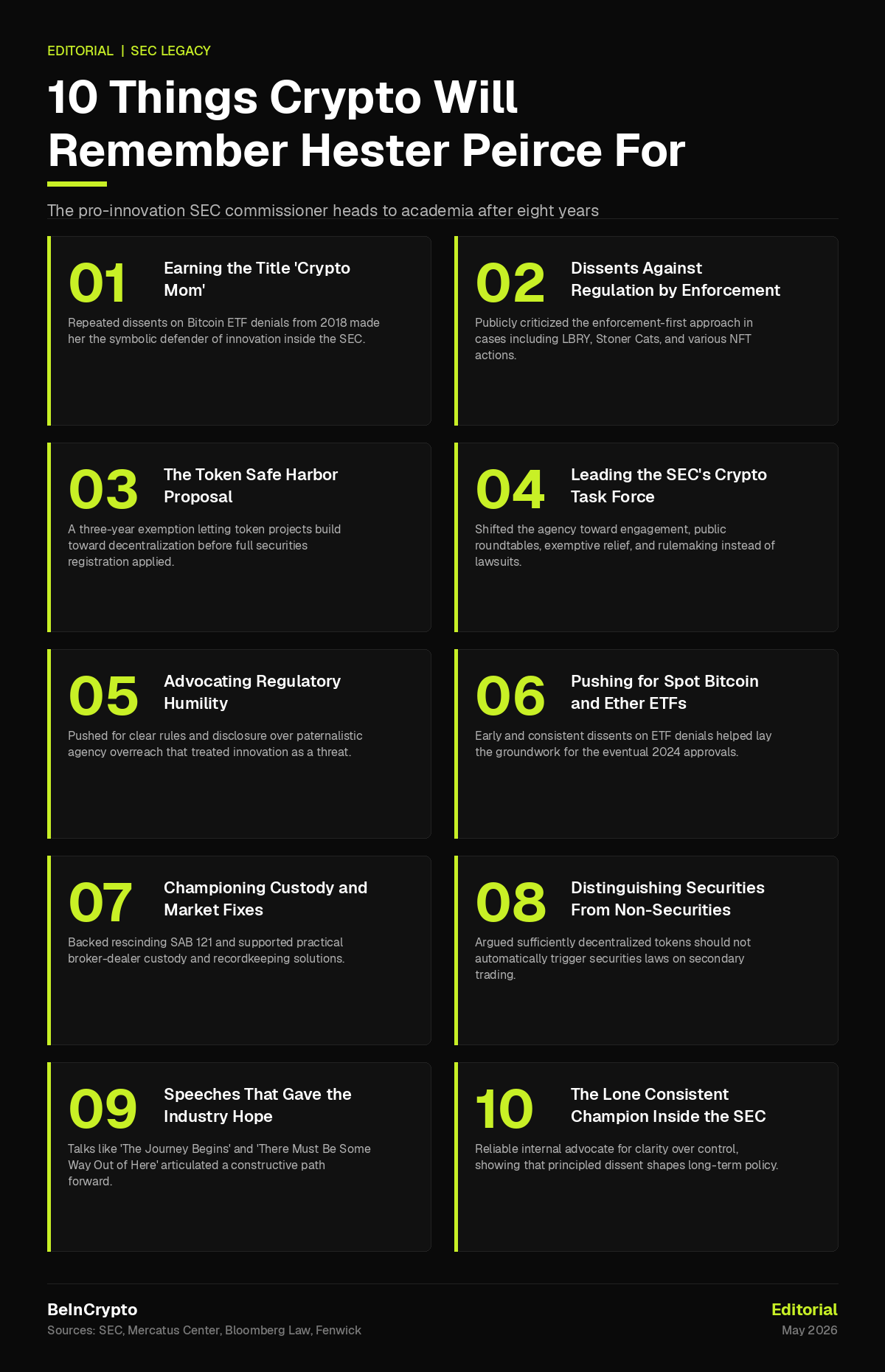
Hester Peirce, the SEC commissioner widely known across crypto as “Crypto Mom,” will join Regent University School of Law as an associate professor in November 2026, marking the planned close of her tenure at the agency.
Virginia-based Regent University announced the appointment in a May 19 press release, paired with the hire of former Solicitor of Labor Gregory F. Jacob. Peirce will teach securities regulation, financial markets, digital assets, and public policy.
A Tenure Defined by Pushback
Peirce joined the SEC in January 2018 after serving as senior counsel on the U.S. Senate Banking Committee and as a senior research fellow at George Mason University’s Mercatus Center.
She holds a J.D. from Yale Law School and a B.A. in economics from Case Western Reserve University.
Her second five-year term expired in June 2025, and she has served in a holdover capacity since.
Peirce publicly hinted in March 2025 that she would not seek another nomination, and the November start date at Regent aligns with that exit plan.
As she exits the SEC, she joins former agency chair Gary Gensler, who went back to academia, joining MIT Sloan as a professor, co-directing research on AI’s role in finance and fintech.
“Regent University School of Law will welcome Gregory F. Jacob as Senior Associate Dean and Associate Professor and Hester M. Peirce as Associate Professor, adding two nationally respected legal leaders with rare experience at the highest levels of federal law, regulation, and public service to a faculty committed to mentoring and forming the next generation of Christian lawyers,” read an excerpt on the institution’s page.
Peirce’s official X (Twitter) account had not confirmed the departure as of this writing.
Crypto Mom’s Regulatory Legacy
Often the loudest internal dissenter on digital asset cases, Peirce repeatedly faulted the agency for relying on enforcement actions rather than written rules during the tenure of former chair Gary Gensler.
She also championed a token safe harbor that gave development teams up to 3 years to reach network decentralization before securities registration applied.
The crypto industry credits her early dissents for helping clear the path to spot Bitcoin (BTC) exchange-traded fund approvals in 2024 and to softer SEC stances on meme coins and developer activity in 2025.
Most recently, Peirce led the SEC’s Crypto Task Force, an effort launched in January 2025 that has:
- Held public roundtables,
- Rescinded prior bank custody guidance, and
- Added named industry members to advise on tokenization and exchange rules.
There is so much Hester Peirce will be remembered for during her tenure at the SEC, actions that earned her the “Crypto Mom” moniker.

“No matter where Hester Peirce goes next, her impact on crypto regulation will be remembered. For the first time in years, the industry finally had voices inside the SEC willing to acknowledge that innovation shouldn’t be treated like a crime. The old guard fought blockchain,” one user highlighted.
Follow us on X to get the latest news as it happens
A Shrinking Pro-Crypto Bench
Her exit removes one of the agency’s most consistent industry-friendly voices at a time when stablecoin rules, tokenization frameworks, and questions about exchange registration remain unresolved.
The SEC currently operates with three commissioners following a recent Democratic departure.
Senator Cynthia Lummis, another long-time pro-industry figure in Washington, has likewise signaled her own retirement from public office in 2027.
How the White House fills Pierce’s seat will shape whether the rulebook she helped reopen closes the way she intended.
Industry attorneys say the next nominee’s stance on token classification, custody, and exchange registration will determine the pace of the task force agenda she set in motion.
The post Hester Peirce To Leave SEC for Regent Law, Ending Crypto Mom Era appeared first on BeInCrypto.


Steakhouse Fi has expanded its lead to approximately $1 billion over the next largest Morpho vault curator, marking a significant shift in the competitive curator ecosystem.


Dollar stablecoin supply has held at 99% of the global market as non-dollar tokens stall at 0.24% share.
Summary
- Non-dollar stablecoins grew from $261 million in 2021 to $771 million by April 2026, but their market share has actually declined.
- Dollar stablecoin issuers benefit from $15.4 billion in tokenized US Treasuries, a reserve advantage non-dollar rivals cannot match.
- Qivalis, a pan-European banking consortium, tripled its membership to 37 banks in May 2026 but a euro stablecoin launch is not expected until late 2026.
The European Central Bank noted in late 2025 that dollar stablecoin tokens account for approximately 99% of total stablecoin supply in circulation. Non-dollar supply has grown sharply over five years but its market share has edged down, not up.
The combined supply of euro, Canadian dollar, yen, Singapore dollar and other non-USD stablecoins reached $771 million in April 2026, up from $261 million in May 2021, yet their share of the total market sits at just 0.24%.
The gap reflects a structural problem, not a regulatory one. Dollar stablecoin issuers can plug into US Treasury markets as a reserve base, with tokenized US government debt standing at roughly $15.4 billion on-chain. Tokenized non-US government bonds total just $1.4 billion.
That yield and liquidity advantage allows dollar issuers to fund distribution and partnerships that non-dollar rivals cannot afford to match.
Why the European push is not closing the gap
“This infrastructure is essential if Europe is to compete in the global digital economy whilst preserving its strategic autonomy,” said Howard Davies, chairman of Qivalis’ supervisory board.
Qivalis, a pan-European banking consortium, expanded to 37 banks across 15 countries in May 2026, more than tripling its membership. Its euro stablecoin is not expected to launch until the second half of 2026.
A separate group of twelve European banks selected Fireblocks for a competing MiCA-compliant euro stablecoin earlier this year. Nine banks including UniCredit and ING are also targeting a second-half 2026 debut. Multiple regulated euro stablecoin projects are in motion, but none has yet reached meaningful scale or liquidity.
What it would take to shift the balance
The primary obstacle is not regulation. Most fiat currencies lack international liquidity in the first place, meaning only a handful can realistically support a global stablecoin.
The dollar, euro, yen, sterling and Swiss franc are among the few with deep enough foreign exchange markets to support cross-border crypto use.
S&P Global Ratings has projected that the euro stablecoin market could grow from roughly $895 million today to as much as 1.1 trillion euros by 2030. Reaching that figure would require a combination of institutional adoption, regulatory clarity, and the kind of deep liquidity infrastructure that took dollar stablecoins years to build.
Crypto World
Galaxy Research Alex Thorn Raised CLARITY Act Odds to 75%, Is August the Most Important Month in Crypto History?

Galaxy Digital’s head of firmwide research Alex Thorn raised his probability estimate for the CLARITY Act becoming law in 2026 to 75%, up sharply from the 50/50 call he held as recently as April.
The trigger was a 15-9 Senate Banking Committee vote on May 14 that produced the first meaningful bipartisan signal the bill has seen.
Two Democrats crossing the aisle does not guarantee passage. But it moved Thorn’s model by 25 percentage points, and that gap is the story.
Discover: The best pre-launch token sales
How the CLARITY Act Gets to a Signature, and Why 75% Is Not 100%
The mechanism here is worth understanding precisely. The CLARITY Act still requires 60 Senate floor votes to clear a filibuster, followed by House reconciliation and a presidential signature.
Thorn’s updated timeline, published in Galaxy Research’s weekly brief on May 16, runs as follows: Senate Banking and Agriculture committee reconciliation in early June, Senate floor consideration by mid-June, final Senate passage before the end of June, House reconciliation through July, and a potential Trump signature the week of August 3.

The White House is pushing a more aggressive July 4 target. Congress has roughly nine weeks of Senate floor time before the August 10 recess, after which substantive legislation rarely advances in a midterm cycle. That nine-week window is the entire margin.
What changed in Thorn’s model was not just the vote count, it was the character of the votes. Ruben Gallego of Arizona and Angela Alsobrooks of Maryland joined all 13 committee Republicans to advance the bill.
The Tillis-Alsobrooks stablecoin yield compromise, which resolved a structural dispute over whether stablecoin holders could earn interest, removed the specific risk Thorn had flagged as most likely to kill bipartisan momentum. The bill reaching the Senate floor is no longer a theoretical outcome, it is the base case.
Not everyone is at 75%. Kristin Smith, president of the Solana Policy Institute, put passage probability at 60%. “In theory, we have everything we need,” Smith said. “A lot can go wrong.” Polymarket traders priced 2026 passage at 68% as of May 18, up from 46% at the start of the month but still below Thorn’s estimate.
Senator Elizabeth Warren’s continued opposition on anti-money-laundering and ethics grounds remains unresolved on the floor, and the ethics language restricting senior officials’ digital asset holdings has created friction among some offices seeking carve-outs that could complicate the final vote count.
JUST IN:
Senator Elizabeth Warren says the crypto Clarity Act will "blow up the economy."
"It pushes more of the economy into crypto!" pic.twitter.com/4LbDiU2hUV— Watcher.Guru (@WatcherGuru) May 14, 2026
Thorn’s framing situates the stakes beyond the near term. He described the CLARITY Act and the companion GENIUS Act as the kind of foundational U.S. crypto legislation that has “laid the foundation for 100 years of US capital markets dominance.”
Andreessen Horowitz has drawn the same comparison to the Securities Act of 1933. Whether or not that framing holds, it reflects the legislative ambition behind the bill, and explains why a Senate committee vote is producing market-moving probability shifts.
Discover: The best crypto to diversify your portfolio with
The post Galaxy Research Alex Thorn Raised CLARITY Act Odds to 75%, Is August the Most Important Month in Crypto History? appeared first on Cryptonews.
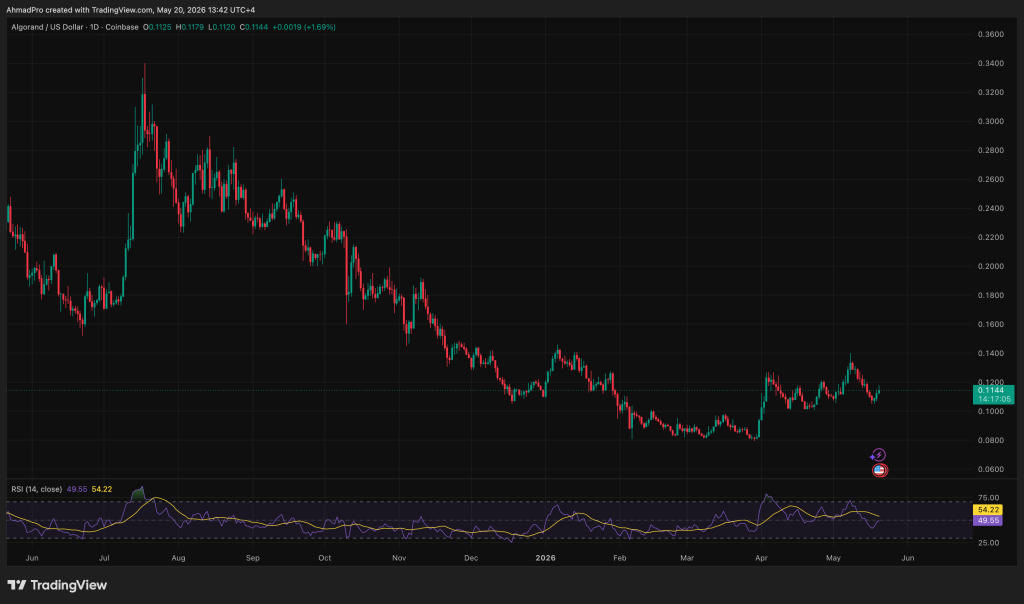
Algorand (ALGO) token is now fully tradable on Robinhood for U.S. retail users, ending a multi-year freeze that traced directly to the SEC’s 2023 enforcement wave.
The listing restores a domestic retail gateway for one of the tokens most visibly caught in the crossfire of the agency’s campaign to classify crypto assets as unregistered securities.
The regulatory overhang was explicit. In June 2023, the SEC’s complaint against Coinbase named ALGO specifically as an unregistered security, citing Algorand’s early token sales and promotional activity as evidence of an investment contract.
That single filing triggered a wave of U.S. platform restrictions. Robinhood’s U.S. app quietly shifted ALGO to view-only status, displaying price data while blocking trades.
Robinhood Europe, operating under EU frameworks where ALGO is treated as a standard crypto asset, had already offered full ALGO spot trading throughout that period.
The divergence between the same company’s U.S. and European product lines was the clearest possible illustration of how much regulatory jurisdiction shapes retail access.
Discover: The best pre-launch token sales
What the Robinhood Listing Actually Changes for Algorand (ALGO)
The directional signal here is unambiguous. When a major U.S. retail brokerage, one that previously restricted a token citing compliance risk, restores full trading access, it reflects a recalibrated internal legal assessment.
Robinhood’s platform reaches millions of retail users across all 50 states, and the decision to support ALGO under its existing New York State Department of Financial Services license is a statement about where the platform now places the token on the regulatory risk spectrum.
The broader regulatory environment has shifted materially since 2023. The post-Gensler SEC has retreated from the enforcement-first posture that produced the ALGO security classification, and the CLARITY Act reaching the Senate floor signals that legislative frameworks are advancing to replace the old guidance-by-lawsuit approach.
Robinhood’s move fits that arc; it is listing an asset that remains in legal gray territory technically, but where the practical enforcement risk has diminished enough to clear internal compliance thresholds.
Robinhood’s Bitstamp acquisition adds another layer. Bitstamp, now branded “Bitstamp by Robinhood”, has operated active ALGO/USD markets for years, meaning the infrastructure and liquidity rails for ALGO already existed within Robinhood’s corporate footprint before the U.S. retail launch.
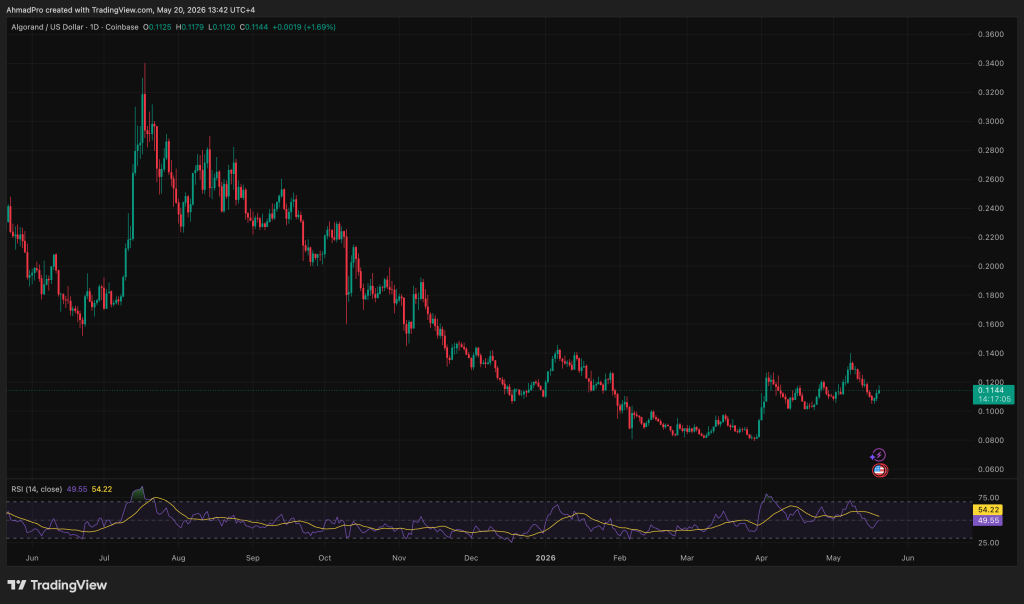
This was an alignment exercise as much as a new listing. Community threads on r/Algorand have framed the development as a “validation” step, with the consensus being that rebuilding presence on major U.S. retail brokerages is a prerequisite for ALGO recovering meaningful domestic retail volume.
Discover: The best crypto to diversify your portfolio with
The post Algorand Officially Debuts on Robinhood US: A Boost for Retail Accessibility appeared first on Cryptonews.
Former CFTC chair Timothy Massad says a US CBDC ban cannot stop behind-the-scenes infrastructure work.
Summary
- Timothy Massad told a London summit on May 19 that global tokenization trends make a US digital dollar ultimately inevitable.
- Massad pointed to Project Agora, a BIS initiative involving seven central banks, as evidence of quiet US participation in CBDC infrastructure.
- The Federal Reserve’s chief payments executive said a digital dollar is not currently under the Fed’s remit, but acknowledged it would be if introduced.
Former CFTC chair Timothy Massad told London’s Digital Money Summit on May 19 that a US digital dollar is ultimately inevitable. He said the CBDC ban is politically sensitive but does not reflect activity behind closed doors.
“We don’t have a central bank president who is going to get out there and speak about wholesale or retail CBDC, but that does not mean that we are not looking at how to create one,” Massad said.
Why Massad says the CBDC ban is a political facade
Mark Gould, the Federal Reserve’s chief payments executive, said a digital dollar is not currently within the Fed’s remit. Gould acknowledged it would be the central bank’s responsibility if one were ever introduced.
Massad pointed to Project Agora as evidence of continued US engagement. The BIS initiative involves the Federal Reserve Bank of New York and six other central banks, testing tokenized deposits alongside wholesale central bank money on a programmable platform.
House Republicans pushed on May 19 to make the CBDC ban permanent inside a major housing bill. Trump originally signed an executive order in early 2025 prohibiting federal agencies from developing a CBDC.
What the US risks by staying out
Massad argued that global tokenization activity is forcing the US to build equivalent digital settlement infrastructure. His concern is that stepping back from international experiments could cost the US influence over global digital payment standards.
His position aligns with analysis crypto.news has tracked questioning whether private stablecoins can preserve dollar dominance. Massad served as CFTC chair from 2014 to 2017 and has long pushed for faster US action on digital currency infrastructure.
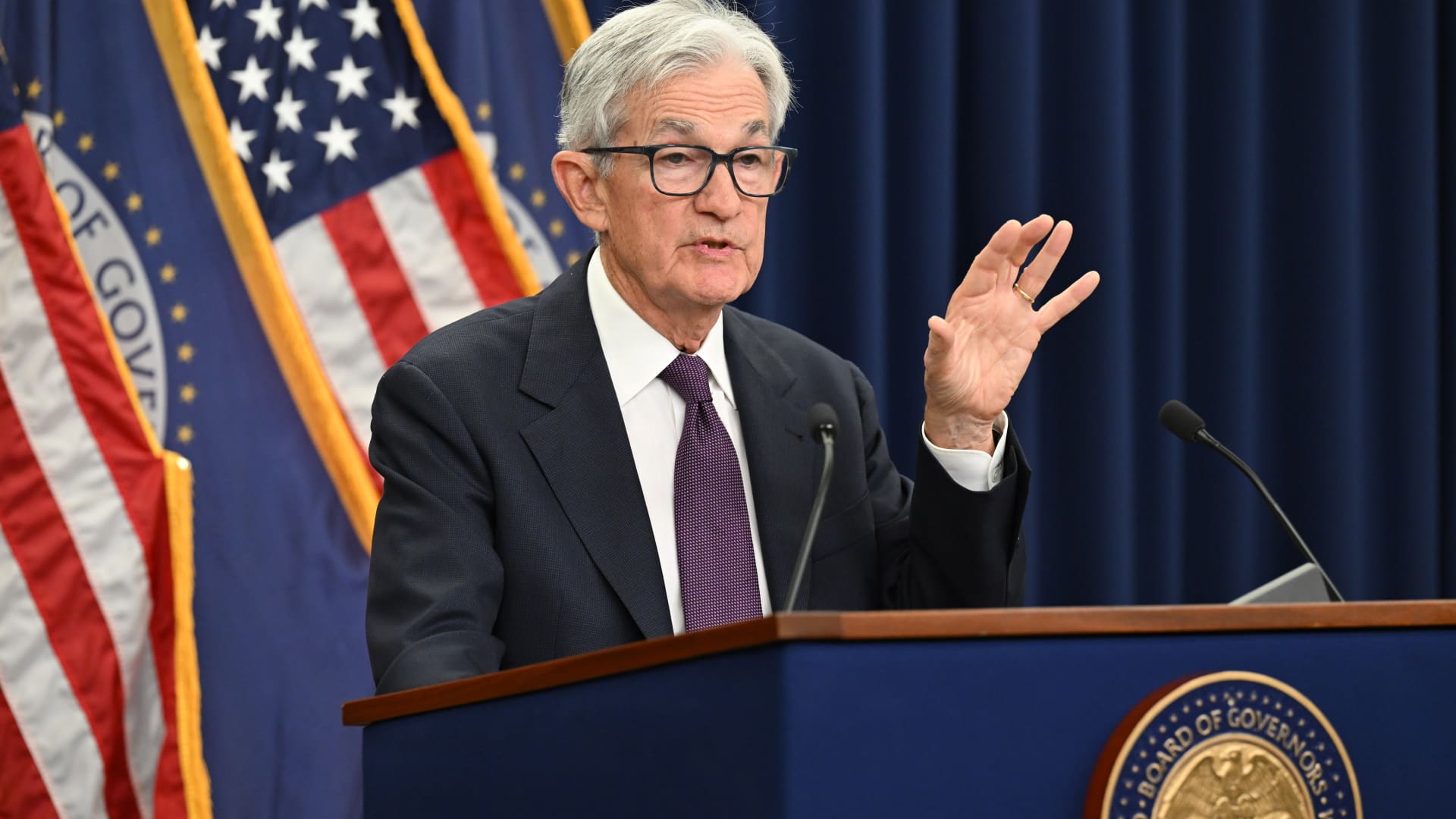
U.S. Federal Reserve Chair Jerome Powell attends a press conference in Washington, D.C., the United States, on April 29, 2026.
Li Rui | Xinhua News Agency | Getty Images
A majority of Federal Reserve officials at their most recent meeting anticipated that interest rate increases would be necessary if the Iran war continued to aggravate inflation, according to minutes released Wednesday.
Though the rate-setting Federal Open Market Committee again voted to keep its benchmark rate targeted between 3.5%-3.75%, the meeting featured four “no” votes, the most since 1992, and an apparently heightened level of disagreement about where policy should go.
At issue was the impact that the Iran war would have on prices and how that would work its way into monetary policy. Officials differed on how long the war’s impact would last and whether the post-meeting statement should continue to reflect a bias toward cutting rates as the more likely next move.
While several meeting participants said it would be appropriate to lower when it’s clear that inflation is moving back to the Fed’s 2% or when the labor market weakens, “A majority of participants highlighted, however, that some policy firming would likely become appropriate if inflation were to continue to run persistently above 2 percent.”
Three of the four “no” votes came from regional presidents who advocated policymakers keep their options open for increases amid an inflation surge. The group agreed with keeping the benchmark fed fund rates steady, but objected to the inclusion of language that referenced “additional adjustments” to rates. The phrasing is widely believed to infer the next move would be a cut.
The minutes noted that “many participants indicated that they would have preferred removing the language from the post-meeting statement that suggested an easing bias regarding the likely direction of the Committee’s future interest rate decisions.”
In Fed parlance, though, “many” does not constitute a majority, so the phrasing remained in the statement.
Officials broadly agreed that the Iran conflict would have “significant implications” for the Fed as it pursued its dual goals of full employment and stable prices, though they debated how long the impact on inflation would last.
“The vast majority of participants noted an increased risk that inflation would take longer to return to the Committee’s 2 percent objective than they had previously expected,” the document stated.
Warsh’s challenge
The meeting took place against an intriguing backdrop: It was the last time Jerome Powell presided over the committee, and it came amid escalating inflation pressures coming primarily from the war as well as other factors that have officials cautious over the future of policy.
Former Governor Kevin Warsh now takes over the helm, following a lengthy campaign that involved as many as 11 candidates. President Donald Trump chose Warsh and was explicit that he expects the Fed to be cutting rates.
Market pricing, though, has pointed to a higher probability that the committee’s next move will be a hike, either by late 2026 or early 2027.
Inflation had been trending towards the Fed’s 2% goal through 2025 and into the early part of this year. However, the war has changed the dynamic, with soaring energy prices sending most inflation measures above 3%.
Policymakers generally look through supply shocks like the oil surge as temporary. However, even core inflation, which excludes food and energy, has been climbing as well. Goldman Sachs expects that the Fed’s chief inflation forecasting measure will post an annual rate of 3.3% in April when that figure is released next week.
Warsh’s challenge, then, will be to convince his colleagues that improvements in productivity, led by artificial intelligence enhancements, will be disinflationary and counter the momentary impact of higher energy costs.
One of those colleagues will be Powell himself, who has chosen to stay on the Board of Governors. Powell has two years remaining on that term and said in April that he would stay on “for a period of time to be determined” while echoing a prior statement that he would stay until “this investigation is well and truly over.” No other Fed chair has stayed on the board in nearly 80 years.

Swinney appoints Public Sector Reform Secretary in ‘fiscal sustainability’ push

Watsco: A Great Business That’s Still Priced Expensively (NYSE:WSO)

Ethereum retests $2,100, but could ETH crash amid technical breakdown?


-

 Crypto World5 days ago
BloFin War of Whales 2026 Grand Prix opens registration for $5M trading championship
-

 Fashion5 days ago
Weekend Open Thread: Theory – Corporette.com
-

 Crypto World5 days ago
E-Estate Announces 1 Year Live: Washington DC Summit as Real Estate Tokenization Enters Its Next Phase
-

 Tech6 days ago
Tech Moves: Microsoft AI leader jumps to OpenAI; former AI2 exec joins Meta; and more
-

 Tech5 days ago
Google reimburses Register sources who were victims of API fraud
-
 Crypto World6 days ago
Google’s Gemini AI Predicts Incredible Solana Price by the End of 2026
-

 Business5 days ago
H&R Real Estate Investment Trust (HR.UN:CA) Q1 2026 Earnings Call Transcript
-
 Entertainment6 days ago
Zara Larsson Has Blunt Response To Chris Brown Diss
-

 Sports5 days ago
Napoleonic enters 2026 Doomben 10,000 field via Abounding withdrawal
-
 Crypto World7 days ago
Two AI Tokens Lead May Rally, But Risks Are Rising
-

 Crypto World5 days ago
BeInCrypto 100 Institutional Awards Nomination: KAST for Best Digital Assets Neobank and Best Digital Assets Fintech
-

 Fashion4 days ago
On the Scene at Gucci’s Cruise Show in New York City: Mariah Carey, Kim Kardashian, Lindsay Lohan, Iman, and More!
-
 Crypto World5 days ago
Bitcoin Battles US Bond Nerves With BTC Price Dip Toward New May Lows
-
 Crypto World5 days ago
Wall Street’s Boldest Gold Prediction Has Russians Rushing to Buy
-

 Crypto World5 days ago
ICE and CME urge US regulators to curb Hyperliquid energy trading
-

 Fashion4 days ago
Trending Western Style Vests Perfect for Summer
-

 Politics6 days ago
DWP PIP Timms review continues to be an absolute farce
-

 Entertainment5 days ago
David Letterman Returns to Late Show, Blasts Cancellation
-

 Fashion4 days ago
Amazon Sundays: Memorial Day Hosting
-

 Crypto World5 days ago
IREN closes $3 billion convertible notes deal amid AI infrastructure expansion
You must be logged in to post a comment Login