

Crypto World
Solana firm to support Kazakhstan’s $6B crypto megacity plan


Solana Company has entered a formal partnership aimed at building the blockchain and crypto infrastructure for Alatau City, Kazakhstan’s planned digital-first megacity. The Nasdaq-listed firm signed a memorandum of understanding (MOU) during the Alatau City Roadshow in Shenzhen and Hong Kong in June, according to the report that said the event yielded 30 cooperation agreements with a combined investment potential of more than $6 billion.
Solana Company chairman and CEO Joseph Chee said the parties plan to deepen their relationship and expand Solana’s ecosystem presence across the region. The agreement also adds to Kazakhstan’s growing exposure to Solana-related initiatives, including a Solana Economic Zone launched in Astana last year in cooperation with the Solana Foundation.
Key takeaways
- Solana Company signed an MOU to advise on Alatau City’s blockchain and crypto infrastructure during the June roadshow in Shenzhen and Hong Kong.
- The collaboration is framed around institutional adoption, infrastructure buildout, and Solana-aligned digital asset treasury capabilities.
- Kazakhstan’s earlier Solana Economic Zone in Astana and KASE’s Solana ETF launch help position the country as a recurring focus for Solana-related products and pilots.
- Alatau City remains in early planning, while reported constitutional and on-the-ground infrastructure hurdles raise questions about how quickly the crypto-focused vision can become real.
What Solana Company’s MOU covers
The MOU outlines four areas of cooperation between Solana Company and Alatau City’s authorities: digital asset treasury, blockchain infrastructure, accelerating institutional blockchain adoption, and platform development.
In addition, Alisher Abdykadyrov, CEO of the Alatau City Authority, said Solana Company will take part in creating an Alatau Crypto Cluster—a dedicated pilot zone and special economic area within the future city where crypto is intended to be used for everyday transactions.
Kazakhstan’s expanding Solana footprint
This is not Solana’s first attempt to formalize a presence in Kazakhstan. Last year, Kazakhstan reportedly launched Central Asia’s first Solana Economic Zone in Astana with the Solana Foundation. More recently, the Kazakhstan Stock Exchange (KASE) launched what was described as its first Solana ETF, providing a regulated channel for investors to gain exposure to Solana (SOL) through one of the region’s major exchanges.
Separately, the Solana Foundation also signed an MOU connected to Alatau City—this time specifically to develop blockchain capabilities—during the China roadshow. Taken together, the Solana-linked agreements suggest a multi-layer strategy: create policy and pilot environments, support infrastructure development, and wrap it in investment products that meet local regulatory expectations.
Why Alatau City matters to crypto markets
Megacity pilots have often been positioned as “real-world” testing grounds for blockchain infrastructure—especially where digital identity, payments, and regulated tokenization could be integrated into public services. In Alatau City’s case, the project is being marketed as a comprehensive smart-city build, including AI, digital identity, and blockchain technology from the outset, as noted by the Alatau City Authority during the Solana Summit Kazakhstan 2026, where a deputy CEO discussed the digital-economy concept.
For investors and builders, the question is less about whether a city plan sounds futuristic and more about whether it produces measurable adoption: working infrastructure, enforceable rules for crypto usage, and a path from pilots to scale. The emphasis on a crypto cluster and institutional adoption is particularly relevant because institutional participation tends to require clearer custody, compliance frameworks, and standards for how on-chain assets interact with the traditional financial system.
The project faces regulatory and practical constraints
While Alatau City is still largely in the early development and planning stage, multiple reports point to hurdles that could slow a crypto-forward rollout. In March, The Diplomat reported that Kazakhstan’s National Bank and the Financial Monitoring Agency had raised concerns about constitutional changes needed to support a crypto-based economy.
Other independent coverage has also suggested that day-to-day realities in the area may be lagging behind the megacity vision. Reports indicated residents were dealing with shortages including gas, water, electricity, and internet connectivity, implying the current state of infrastructure may be far from the “fully integrated” smart-city picture.
Cointelegraph reported reaching out to Alatau City for comment, but the underlying uncertainty remains: the next steps will likely depend on regulatory progress, infrastructure buildout, and how the crypto cluster is structured in practice.
Investors and builders watching this story should monitor how the MOU translates into concrete deliverables—such as the rollout timeline for the crypto cluster, regulatory outcomes tied to constitutional or compliance requirements, and whether Kazakhstan’s existing Solana pilots (including the economic zone and KASE ETF access) deepen into broader institutional infrastructure rather than staying limited to announcements.

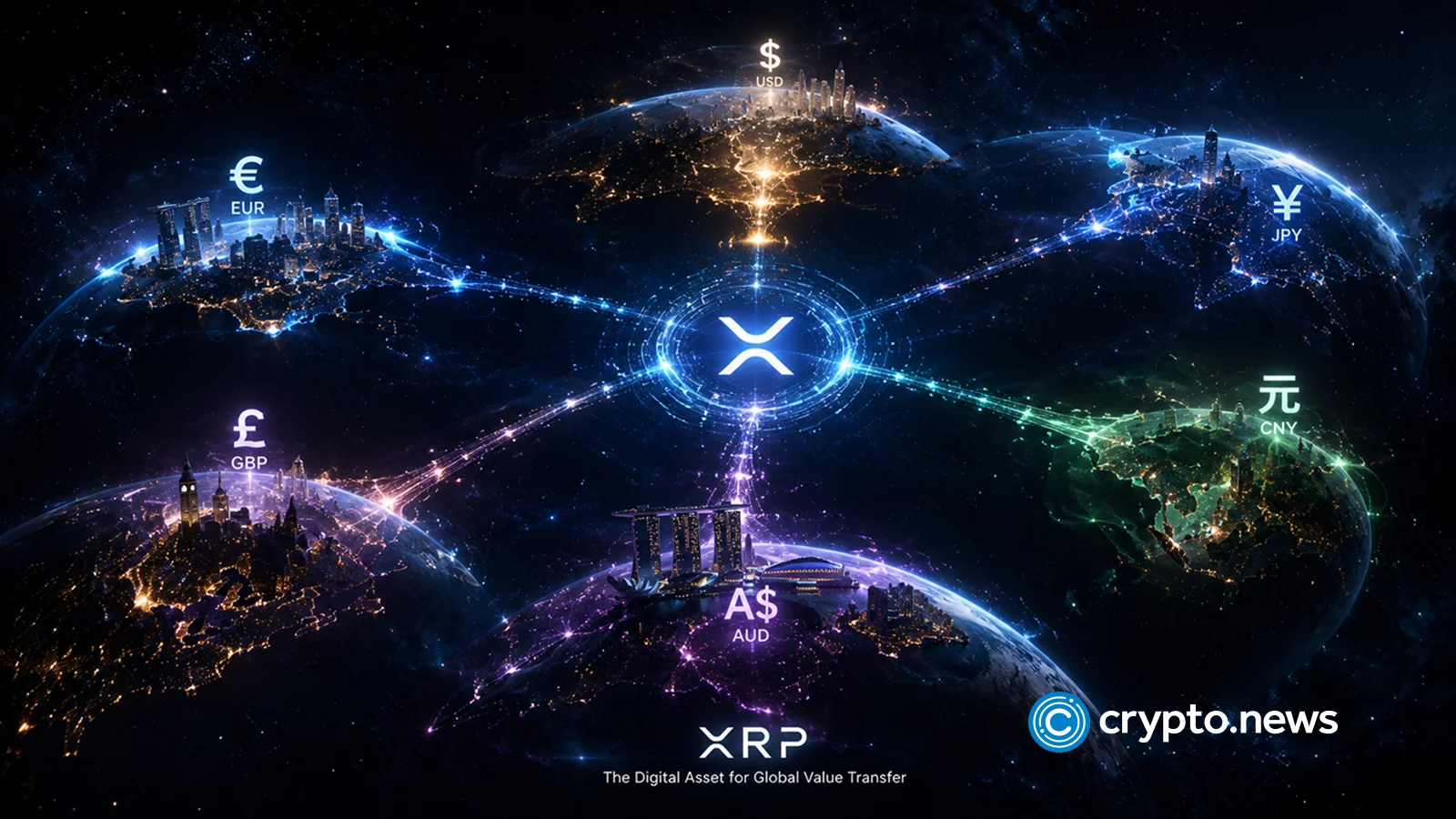
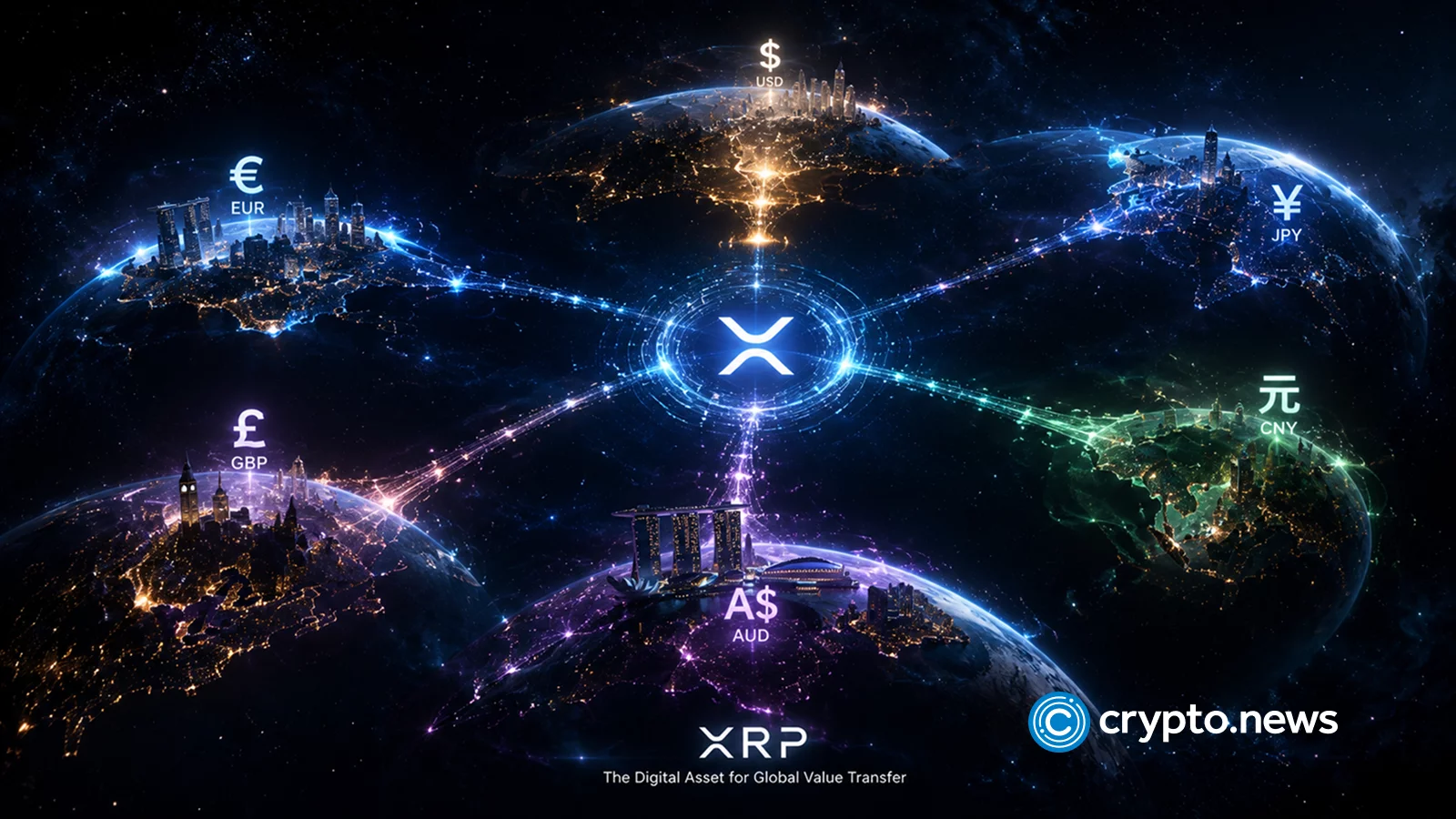
Ripple has unveiled a proposed lending protocol for the XRP Ledger that would allow financial institutions to borrow digital assets without selling their holdings, expanding the network’s institutional finance capabilities.
Summary
- Ripple has proposed an XRP Ledger lending protocol for institutional borrowers and lenders.
- The system lets institutions borrow digital assets without selling token holdings.
- The proposal now awaits XRP Ledger validator approval after devnet testing.
According to a proposal published by Ripple, the new XRP Ledger Lending Protocol is designed to fill what the company describes as a missing piece in blockchain-based finance. While tokenization has simplified the issuance and transfer of digital assets, Ripple argues that lending, collateral management, and credit infrastructure have not advanced at the same pace.
The proposal would support lending markets for tokenized U.S. Treasuries, money market funds, stablecoins, commodities, private credit, and other real-world assets on the XRP Ledger.
Rather than embedding credit decisions into blockchain code, Ripple said lenders and borrowers would negotiate loan terms and complete compliance checks off-chain before transactions move to the network for execution.
Credit decisions stay off-chain while loan servicing moves on-chain
Ripple said the protocol separates institutional credit assessment from blockchain settlement. Once a loan has been approved, the XRP Ledger would automate operational tasks including interest calculations, repayment schedules, loan servicing, and default management.
According to Ripple, this structure was intentionally designed to keep underwriting and regulatory requirements under the control of financial institutions while using the blockchain for standardized execution. The company said this approach mirrors how traditional financial markets separate credit decisions from settlement infrastructure.
The proposal introduces two core building blocks. A Single Asset Vault would pool a single token for lending, while a dedicated Lending Protocol would manage loan origination, servicing, and repayment. Ripple said separating custody from lending infrastructure follows the model already used in conventional capital markets.
As one example, Ripple said a payment provider holding reserves of RLUSD could obtain short-term liquidity through the protocol while waiting for cross-border transactions to settle. According to the company, doing so would allow institutions to avoid liquidating reserve assets or relying on higher-cost bank credit facilities.
Institutional access depends on validator approval
Compliance remains a central part of the proposal. Ripple said both lenders and borrowers would need to complete identity verification before participating, with access controlled through permissioned credentials rather than open participation.
The company also proposed assigning first-loss capital at the lending facility level instead of distributing losses equally across all participants. According to Ripple, this structure is intended to create a clearer framework for allocating credit risk.
The lending framework has not yet become part of the XRP Ledger. Ripple said the technical specifications, published as XLS-65 and XLS-66, still require approval from XRPL validators before they can be activated on the main network. Until then, developers and infrastructure providers can begin testing the proposed system on the XRPL devnet.
The proposal arrives days after Ripple drew attention through another institutional finance connection. As previously reported by crypto.news, Elon Musk’s X has begun rolling out X Money to a limited group of Premium+ users using traditional banking infrastructure provided by Cross River Bank, a Ripple banking partner.
Although some members of the XRP community speculated that the relationship could eventually support blockchain-based payments or stablecoin services, neither X nor Cross River Bank has announced plans to integrate XRP or other cryptocurrencies into the payment platform.
For now, X Money operates entirely through conventional banking rails despite Musk previously suggesting crypto features could be added to the platform’s financial services in the future.

Key Highlights
- Over 140 corporations including Visa, Mastercard, and Stripe support the OUSD stablecoin initiative
- Consortium-driven governance replaces traditional single-issuer control structure
- Zero-fee minting and redemption model eliminates direct transaction costs for businesses
- Primary focus includes corporate payment systems, settlement operations, and treasury management
- Major South Korean corporations like Samsung, Dunamu, and Shinhan participate in the initiative
On June 30, 2026, Open Standard unveiled OUSD with endorsement from Visa, Mastercard, Stripe, and over 140 corporate partners. This initiative focuses on enterprise-scale payment infrastructure and settlement solutions, employing a collaborative governance framework rather than centralized control. The platform offers zero-cost token issuance and redemption, potentially streamlining stablecoin adoption across corporate environments.
Collaborative Governance Model Defines OUSD Framework
Open Standard unveiled OUSD as a consortium-driven digital dollar initiative. The alliance encompasses payment processors, financial institutions, tech enterprises, cryptocurrency exchanges, and blockchain service providers. This launch bridges conventional finance with digital asset ecosystems through unified operational infrastructure.
Unlike traditional stablecoins controlled by singular entities, OUSD operates through a partner-governed board system for strategic oversight. This framework provides member organizations with meaningful input on governance matters and strategic development.
The model distributes reserve income among participating organizations following operational expenses. Consequently, partners obtain tangible financial incentives tied to broader market penetration. This arrangement encourages active promotion since member firms benefit directly from ecosystem expansion.
Leading Payment Processors Anchor Extensive Corporate Coalition
Among Open Standard’s supporters, Visa, Mastercard, and Stripe represent the most prominent payment industry players. Their participation establishes robust connections to worldwide payment infrastructure and commercial networks. This involvement reflects growing institutional appetite for stablecoin-based settlement mechanisms.
Additional consortium members feature BlackRock, BNY, Coinbase, Google, IBM, Ripple, OKX, and Standard Chartered. The roster extends to BBVA, DBS, Mizuho, MoonPay, Rakuten Group, and Crypto.com. OUSD launches with comprehensive backing spanning banking, payment processing, technology sectors, and cryptocurrency services.
South Korean members comprise Samsung Electronics, Hanwha Group, Dunamu, and Shinhan Financial Group. The Korean contingent also features K-Bank, KB Kookmin Card, Samsung Card, BC Card, and Hana Card. Hyundai Card, NH Nonghyup Card, and Woori Card complete the regional partnership lineup.
Corporate Settlement Infrastructure Emphasizes Cost Efficiency
Open Standard architected OUSD for cost-effective, high-capacity stablecoin operations. Organizations can create and redeem tokens without transaction charges, based on release specifications. This characteristic holds particular significance for payment processing, treasury functions, and settlement workflows.
The platform eliminates predetermined supply caps. OUSD circulation can grow proportionally with rising commercial demand. This methodology seeks to accommodate substantial transaction volumes without imposed supply constraints.
OUSD deployment remains planned for late 2026. Upon launch, it will compete directly with dominant stablecoins like USDT and USDC. Open Standard frames OUSD as collaborative enterprise infrastructure rather than a centrally controlled financial instrument.

Crypto World
Circle (CRCL) slides as Stripe, Coinbase (COIN) and BlackRock (BLK) back rival stablecoin network


With more institutions embracing stablecoins, the competition is increasingly shifting from issuing tokens to determining who controls the underlying infrastructure and network.
Unlike most existing stablecoins, Open USD will allow businesses to mint and redeem tokens without fees while returning reserve income to participating partners, less a management fee. Governance will also be shared among members rather than controlled by a single issuer.
The model targets one of the core economics of today’s stablecoin market. Issuers such as Circle earn revenue by investing reserves backing their tokens in short-term U.S. Treasuries and retaining most of the interest generated by those assets. Open USD instead plans to distribute that yield to participating businesses.
The approach resembles the Global Dollar Network (USDG), a stablecoin consortium led by Paxos that shares reserve income with participating firms. That network is backed by companies including Robinhood, Kraken and Galaxy Digital, and was designed to encourage broader adoption by aligning incentives between the issuer and distribution partners.
In Europe, a group of banks and payment providers launched Qivalis, a venture to develop a euro-denominated stablecoin as financial institutions seek to build shared digital payment infrastructure.
The breadth of Open USD’s backing reflects that shift. Beyond Stripe, Coinbase, Mastercard and Visa, launch partners include BNY, Standard Chartered, DBS, U.S. Bank, Shopify, Google, IBM, Mercado Pago, Fireblocks, Anchorage Digital, MetaMask, Aave, Solana, Polygon and Ripple.

David Schwartz, co-founder of the XRP Ledger and Ripple CTO Emeritus, has proposed a two-component transaction reservation mechanism to address front-running and sandwich attack risks on XRPL’s native DEX and AMM.
The proposal, surfaced in response to concerns raised by XRP-focused analytics account XRPresso.io, introduces priority execution guarantees for users willing to pay a reservation fee, a market-integrity measure with direct relevance as institutional inflows into XRP products continue to scale.

The proposal is currently under community discussion and has not been formalized as a network amendment. That distinction matters: on the XRP Ledger, protocol changes require a supermajority of validators to vote in favor before activation, meaning Schwartz’s design carries weight but faces a defined governance process before it touches mainnet.
Discover: The Best Token Presales
How the Ripple XRP ReservedTxns Mechanism Actually Works
The scheme introduces two new protocol components. The first is a ReservedTxns ledger object, which stores a target ledger sequence number and an array of up to 32 transaction IDs.
When that specific ledger executes, any listed transactions present in the consensus set are processed first, ahead of all other transactions, after which the object is deleted. The second component is a TxnReserve transaction type, which allows a user to claim a priority slot for one or more future transactions by submitting a reservation before the target ledger closes.
Three constraints govern the TxnReserve: the reservation fee must be at least twice the standard transaction fee; the target ledger must fall within 16 ledgers of the current one; and the actual transaction must set its LastLedgerSequence to match the reserved ledger.
Those rules are not incidental, they define both the economic cost of using the system and the narrow time window in which it operates. The 16-ledger ceiling keeps reservations tightly coupled to near-term execution, preventing the mechanism from being weaponized as a general-purpose queue-gaming tool.
DoS protection is built in through dynamic fee scaling: as reservation slots fill past 16, fees step upward, reaching several multiples of the base reserve near 30 slots. Schwartz also specified that XRPL server software would hold reserved transactions and release them only close to when the prior ledger’s proposals are known, compressing the pre-execution visibility window.
“This guarantees that you can execute your transaction ahead of any transaction that was formed after your transaction was disclosed,” Schwartz said. “You would use this approach any time you want to perform a transaction that you want to ensure cannot be sandwiched or front run.”
The XRPL-Specific Front-Running Problem Schwartz Is Solving
XRPresso’s concern centers on a structural feature of the XRP Ledger: pending transactions sit in a publicly visible queue before a ledger closes, giving validators and well-connected nodes advance sight of incoming trades.
Because canonical transaction ordering on XRPL is determined by a known, deterministic formula involving transaction hashes, a sophisticated actor can submit similar transactions repeatedly to increase the probability of landing in a favorable slot relative to a target trade, the mechanistic basis for a sandwich attack on the DEX or AMM.
Schwartz acknowledged the exposure but contested the framing. He argued that all participants have equal access to the public queue, and that validators gain no structural ordering advantage unless several conspire.
“If multiple validators did conspire, or a single validator attempted it, it would be very obvious to everyone exactly who was doing this,” he said, adding that no such attempt has been confirmed outside of a proof-of-concept.
He also flagged a practical profitability constraint: extracting meaningful value requires simultaneously high liquidity (to generate volume worth targeting) and low liquidity (to move price at manageable cost), a combination rarely present on XRPL.
That argument has not fully satisfied critics, but it does distinguish XRPL’s current risk profile from Ethereum’s historically active MEV environment.

The front-running debate in DeFi is not isolated to the XRP ecosystem. Binance co-founder Changpeng Zhao proposed a dark pool perpetuals DEX last year using zero-knowledge cryptography to conceal order data until execution, an approach that drew its own criticism from decentralization advocates who argued it recreates the information asymmetries crypto was designed to eliminate.
XRPresso made a similar argument in response to Schwartz, contending that targeted confidentiality for pending transaction details would be a cleaner long-term fix than a reservation fee layer, and pointing to implementations already live on competing chains.
Don’t Miss Out on Our $1,000 USDT Airdrop on ByBit
The post Ripple CTO Proposes ReservedTxns to Block Front-Running on XRPL DEX appeared first on Cryptonews.


- REAL launches private execution layer for RWA institutions.
- ZKsync tech enables confidential on-chain settlement via Ethereum.
- Platform aims to bridge the privacy gap in institutional blockchain use.
REAL has introduced a confidential execution layer designed to support regulated financial institutions operating in tokenized real-world asset (RWA) markets, addressing one of the key barriers to broader institutional adoption of blockchain-based finance.
The new layer, built using ZKsync’s Prividium technology, operates alongside REAL’s public Layer 1 network.
According to the company, it enables institutions to keep positions, allocations, and counterparty data private while still benefiting from public settlement and liquidity through Ethereum.
The company said the confidential layer is intended to provide privacy controls without compromising compliance, liquidity, or distribution, allowing institutions to participate in onchain markets while maintaining the confidentiality required for regulated financial operations.
Confidential infrastructure targets institutional needs
REAL said the new execution layer is designed to bridge the gap between public blockchain infrastructure and the operational requirements of regulated financial institutions.
While public blockchains offer benefits such as global access, instant settlement, and composability, the company noted that institutions have been reluctant to conduct business on networks where sensitive information—including positions, treasury strategies, and counterparty relationships—is publicly visible.
Because the confidential layer settles transactions on Ethereum, institutions can access the broader onchain capital market while maintaining operational privacy instead of operating within isolated private networks.
Platform supports regulated financial workflows
According to REAL, the confidential execution layer is built to support a range of institutional workflows where privacy is considered essential.
These include wealth and asset management activities that require protected portfolio information, balance sheet operations, tokenized deposit models, and selective disclosure capabilities for auditors, compliance teams, and regulators when necessary.
The company said institutions using the platform will continue to benefit from blockchain-native settlement, distribution, and liquidity while avoiding the need to expose sensitive business activity on fully public networks.
The launch also expands REAL’s broader strategy of supporting the entire lifecycle of tokenized real-world assets within a compliance-focused infrastructure.
The company said its platform covers issuance, risk assessment, insurance, trading, and institutional execution under a single architecture designed for regulated financial markets.
REAL expands institutional blockchain offering
REAL describes itself as an institutional blockchain infrastructure provider focused on compliant real-world asset tokenization and risk-managed capital flows.
Built on Cosmos Tendermint, the platform supports multiple stages of onchain financial products, including issuance, compliance, liquidity, insurance, risk assessment, and trading.
The company said its dual-validator architecture combines technical validators with business validators such as tokenizers, risk scorers, insurers, and credit agencies to provide an infrastructure aimed at institutional trust.
The confidential execution layer uses ZKsync’s Prividium privacy technology, which is designed to enable regulated entities to operate onchain with configurable confidentiality, selective disclosure, and settlement on Ethereum.
Crypto World
Chinese exile once linked to Trump strategist gets 30-year sentence in $1 billion fraud


A U.S. judge sentenced Chinese businessman Miles Guo, the billionaire behind the fraudulent crypto venture Himalaya Coin, to 30 years in prison, long after a trial jury found the well-connected defendant was guilty of several crimes in 2024.
Guo, 55, also known as Ho Wan Kwok and a number of other aliases, was a self-imposed exile from China who had a close relationship with Steve Bannon, the former strategist of President Donald Trump who has had his own legal entanglements. In 2021, Guo had pushed his fraudulent crypto token, known as H-Coin, telling prospective buyers that it was 20% backed by gold and that the operation would cover 100% of investment losses.
He was said to pull in $500 million in investments, which was just one element of what U.S. authorities called “interrelated fraud schemes” perpetrated over five years, leading to his conviction on counts including racketeering, fraud and money laundering.
Key Takeaways
-
RZLV shares advance 9.42% following shareholder endorsement of $300M share repurchase authorization
-
Company anticipates UK Court clearance by mid-September 2026
-
Rezolve Ai maintains FY26 revenue projection of approximately $360 million
-
Company aims for minimum $500 million annual recurring revenue by year-end 2026
-
Repurchase program provides board discretion without mandating specific share quantities
Rezolve AI PLC (RZLV) shares climbed 9.42% to reach $2.8450 following shareholder authorization of a substantial share repurchase program. The stock experienced an early jump after market open and maintained strength throughout the session near session highs. This approval provides the company with a strategic mechanism to address what management views as a market valuation disconnect.
Annual Meeting Delivers Buyback Mandate
During the company’s Annual General Meeting, Rezolve Ai shareholders voted to authorize both capital reduction and share repurchase capabilities. This mandate permits the board to execute buybacks totaling up to $300 million. The initiative still requires customary UK Court confirmation before any share repurchases can commence.
This authorization grants Rezolve Ai operational latitude to acquire ordinary shares in accordance with UK Companies Act 2006 provisions. Management anticipates completing the court approval process by mid-September 2026. Following judicial clearance, the company intends to initiate repurchases when market dynamics align with strategic board determinations.
According to Rezolve Ai’s announcement, the repurchase program may leverage open market acquisitions, block transactions, or private negotiations. The company noted it may occasionally repurchase shares from BTIG. Importantly, the program establishes no obligation to purchase any predetermined share volume.
Company Connects Repurchase Plan to Expansion Trajectory
Rezolve Ai characterized the shareholder vote as validation of its strategic direction and expansion prospects. Management stated that current market capitalization fails to capture the company’s operational scale. The company also highlighted accelerating commercial traction within its enterprise client portfolio.
The firm disclosed it currently supports over 1,000 enterprise clients worldwide. Additionally, Rezolve Ai reported approximately $60 million in preliminary revenue for the first quarter of 2026. Management reiterated its full fiscal year 2026 revenue target of roughly $360 million.
This projection represents approximately 7.5 times the company’s fiscal 2025 revenue baseline. Rezolve Ai also forecasts exiting 2026 with no less than $500 million in annual recurring revenue. Consequently, the buyback authorization coincides with an aggressive growth narrative the company continues to advance.
Brain Suite Platform Powers Digital Commerce Strategy
Rezolve Ai competes in the AI-powered commerce sector through its Brain Suite platform. This technology assists retailers, consumer brands, and financial services organizations in optimizing digital sales workflows. The platform facilitates search functionality, customer interaction, product suggestions, and transaction completion.
The company markets Brain Suite as foundational infrastructure for instantaneous commerce intelligence. It serves enterprises requiring accelerated product discovery and enhanced customer personalization. Accordingly, Rezolve Ai attributes its growth trajectory to rising enterprise adoption of automated commerce solutions.
RZLV’s rally demonstrated robust investor response to the buyback authorization combined with refreshed growth indicators. The stock’s 9.42% appreciation renewed market attention following the shareholder decision. Nevertheless, the repurchase program remains contingent upon court confirmation and board execution.
XRP price is holding above the $1.00 level, sitting between $1.04 and $1.06 with a slightly bullish prediction. Over the past 24 hours, it has been up nearly 2 percent, but the move still looks like a recovery within a volatile range.
Sentiment remains heavily negative, with the Fear and Greed index near 15 in extreme fear, with around 74 percent of readings still leaning bearish. This suggests participation is cautious and mostly retail-driven. As a result, upside moves remain fragile under risk-off conditions.
Technically, XRP has reclaimed short-term support after the prior decline, with momentum turned slightly positive on intraday readings. However, resistance remains concentrated around $1.08 to $1.10. Price action in this zone will decide near-term direction.
If buyers break above resistance, a base formation could develop; otherwise, rejection may confirm another failed bounce. Overall structure remains undecided despite the recent recovery. The market still waits for stronger confirmation.
Discover: The Best Token Presales
XRP Price Prediction: Reclaim $1.10 and Push Toward $2.00?
XRP is trading around $1.04 to $1.06, sitting in a sensitive technical zone, and near-term support sits between $1.02 and $1.04, holding recent pullbacks. Resistance builds from $1.10 to $1.11, where sellers previously absorbed momentum with volume near $1.58 billion, and remains steady but lacks breakout conviction.
If XRP holds $1.02–$1.04, momentum could rebuild gradually. A breakout above $1.10 may trigger stronger upside continuation. Upside extension targets $1.50 to $1.80 in that scenario. Some 2026 outlooks extend toward $2.80 under structural recovery.
Don’t Miss Out on Our $1,000 USDT Airdrop on ByBit
XRP likely consolidates between $1.02 and $1.11 in the near term, and price action may remain range-bound as sentiment slowly stabilizes. Not helping the case, the current market structure appears neutral, neither confirming a breakout nor a breakdown.
A daily close below $1.00 would weaken psychological support and reopen downside toward sub-$0.90 levels as sentiment near extreme fear increases volatility risk across markets. Longer-term projections remain conditional on macro stability returning.
Discover: The Best Crypto to Diversify Your Portfolio doesn’t.
Bitcoin Hyper Targets Early-Mover Upside as XRP Tests Key Levels
XRP at $1.04 is a recovery, not a repricing. Traders who bought the highs above $3.00 are still significantly underwater, and even a move to $2.80 represents a long hold against a market index screaming fear. That gap between current price and meaningful upside is exactly where early-stage infrastructure plays become worth sizing up alongside established large-caps.
Bitcoin Hyper ($HYPER) is positioning as the first-ever Bitcoin Layer 2 with Solana Virtual Machine (SVM) integration, a combination that targets Bitcoin’s core structural limitations: slow finality, high fees, and near-zero programmability.
The project has raised close to $33 million at a current presale price of $0.01368, with staking active for early participants. The SVM integration is the differentiator worth scrutinizing: it aims to deliver smart contract execution speed exceeding Solana’s own performance, anchored to Bitcoin’s security layer via a decentralized canonical bridge.
For traders watching XRP consolidate while seeking asymmetric early exposure, research Bitcoin Hyper’s presale terms before the current stage closes.
The post XRP Price Prediction: XRP Regains Momentum After Reclaiming Key Support appeared first on Cryptonews.
XRP (XRP) is holding above the $1.00 support zone amid a broader downturn. Yet, on-chain activity is rising.
New wallet, whale, and exchange-traded fund (ETF) activity suggest users are stepping in while the price looks fragile, pointing to demand below the surface.
XRP Price Slump Meets Steady Demand
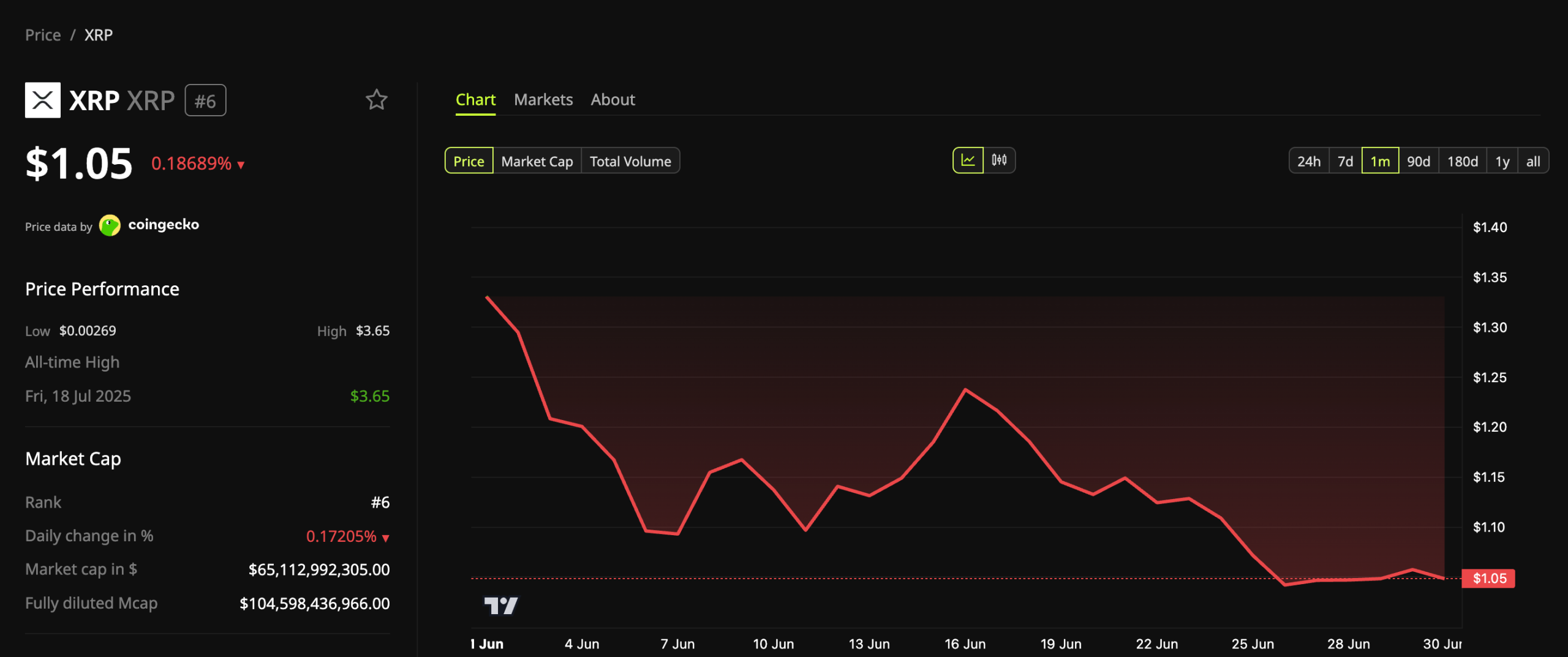
XRP, like the broader market, has seen notable declines this month. The altcoin touched a 19-month low of $1.01 on June 25. It now trades near $1.05, down 0.18% over the past day.
Follow us on X to get the latest news as it happens

Yet, on-chain data paint a different picture. Santiment reported that the XRP Ledger added 4,941 new wallets in a single day, marking its strongest network growth in more than three months.
Social sentiment has also flipped bullish. The positive/negative social ratio reached 3.7 positive comments for every bearish one, a three-month high in FOMO, according to Santiment. Traders appear to treat the $1.00 to $1.05 band as a dip-buy area.
“Part of this optimism comes from XRP’s familiar rebound history, ongoing ETF and institutional narratives, and the idea that larger holders have continued building exposure even during ugly price action,” the firm said.

On-Chain Signals Point to Accumulation
On-chain data support that view. Santiment data shows accumulation across all three large cohorts in June despite a 21% price dip. The 10 million to 100 million XRP tier led with 160 million XRP added, the strongest bullish signal of the group.
Smaller cohorts followed. Wallets holding 100,000 to 1 million XRP added 30 million tokens, while those holding 1 million to 10 million XRP gained 20 million tokens. This suggested that large holders continued to accumulate despite the decline.

Institutional demand has also remained resilient. US spot XRP exchange-traded funds (ETFs) attracted $22.99 million in net inflows last week, extending their inflow streak to eight consecutive weeks.
The new week also began on a positive note, with the funds recording $15.34 million in net inflows on Monday. This trend stands in sharp contrast to Bitcoin and Ethereum ETFs.
Bitcoin ETFs have recorded seven consecutive weeks of net outflows totaling approximately $7.7 billion. Investors pulled another $231 million on Monday.
Ethereum ETFs have also experienced consecutive weekly outflows. XRP ETFs, by contrast, have not recorded a single day of net outflows since June 3, although several sessions have ended with flat flows.
Santiment said the open question is whether this wallet surge converts into sustained buying pressure or fades as short-term FOMO. With XRP sitting so close to $1.00, the coming sessions should reveal which way the on-chain demand breaks.
Subscribe to our YouTube channel to watch leaders and journalists provide expert insights
The post XRP Demand Builds On-Chain Even as Price Sinks to 19-Month Low appeared first on BeInCrypto.
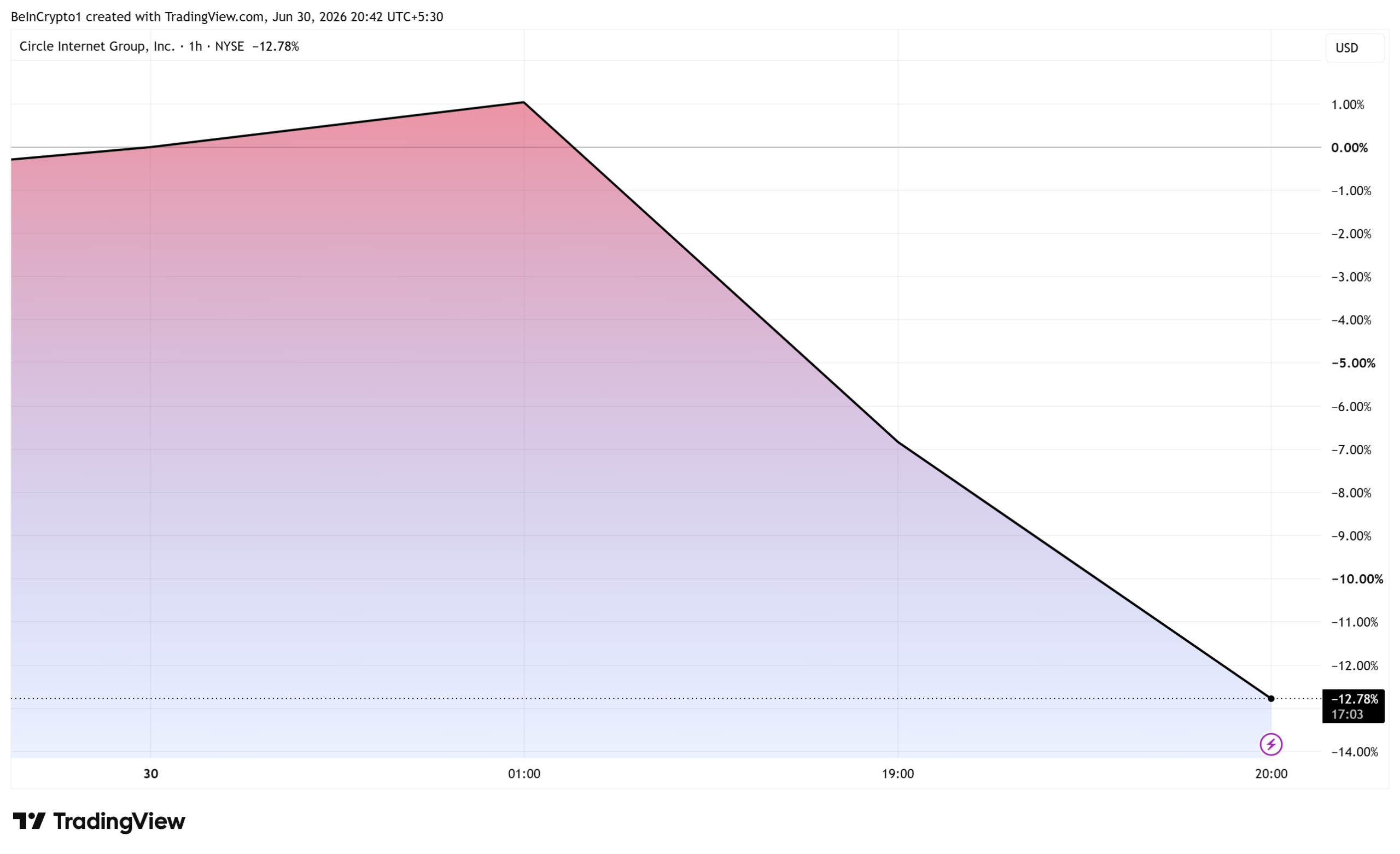
Shares of Circle Internet Group (CRCL) fell on Tuesday after Open Standard unveiled Open USD (OUSD), a dollar stablecoin backed by more than 140 companies, including Visa, Mastercard, and Coinbase, that targets the market its USD Coin (USDC) token leads.
The launch puts payment networks, banks, and crypto firms behind a single token. It lands as Circle’s USDC and Tether’s USDT control most of the stablecoin market.

Why Circle’s USDC Faces Pressure
Open USD goes after the enterprise users that drive USDC adoption. Businesses can mint and redeem it for free, and partners keep the earnings on its reserves after a small fee.
Follow us on X to get the latest news as it happens
That model strikes at how Circle makes money. Reserve interest produced 99% of its revenue in 2024, its filing shows.
Circle paid Coinbase $908 million that year to distribute USDC. Now Coinbase has joined a rival that lets partners keep those reserve earnings.
Circle stock fell nearly 15% on the news, touching its lowest level of the session. It extended a weak run after Circle’s stock rally from $50 to $129 in six weeks earlier this year.
The bigger risk is distribution. Circle gained ground as USDC overtook Tether in corporate transfers. Yet Open USD’s backers include the networks that move most of that money.
Circle still holds advantages. Its USDC carries regulatory standing in the US and Europe and deep exchange liquidity.
A Consortium Stands Behind Open USD
Open Standard will run the token through an independent board of its partners. Zach Abrams leads the company on an interim basis. He co-founded Bridge, the stablecoin firm Stripe bought for $1.1 billion in 2025.
The backers span finance and technology, from BlackRock and BNY to Google and Shopify. Many already run their own stablecoins or build stablecoin infrastructure firms, echoing Mastercard’s recent stablecoin payment integrations.
Stripe tied its payments business directly to the token.
“Open USD will be the default stablecoin for businesses running on Stripe…” read an excerpt in the announcement, citing Will Gaybrick, president of technology and business at Stripe.
Circle, Tether, and PayPal all sat out the venture. Tether’s USDT leads at about $185 billion and Circle’s USDC follows near $74 billion.

All these notwithstanding, the history is not encouraging for consortiums. Visa, Mastercard, and Stripe each backed Facebook’s Libra stablecoin in 2019, then abandoned it within months under regulatory pressure.
Open USD goes live later this year on Plasma and other chains built for stablecoin payments.
The timing matters for Circle, whose USDC revenue-sharing deal with Coinbase comes up for renewal in August.
The post Circle Stock Falls 15% as New Rival Stablecoin Targets USDC’s Enterprise Users appeared first on BeInCrypto.

Fake Perplexity extension on Chrome Web Store tracked searches

Tonix: 'Hold' Based On Tonmya Payer Expansions And MDD Trial Initiation

Ripple unveils XRP Ledger lending plan for banks without token sales

No Jackpot Winner as $257 Million Prize Rolls Over to $269 Million Monday Draw

Renter of Home in Anne Heche Crash Denies Settlement With Son

Two goals and an assist by sheer aura: Cristiano Ronaldo just entered the World Cup chat

L&T Finance Personal Loan Online Apply | L&T Finance Personal Loan | New Loan App | Instant loan app

10 Most Valuable Penny Errors #coin #money #collection #finance #investing #fun #shorts

You’re not supposed to think about money this much
-
Sports7 days ago
Two goals and an assist by sheer aura: Cristiano Ronaldo just entered the World Cup chat
-

 Fashion4 days ago
Weekend Open Thread: Staud – Corporette.com
-

 Politics4 days ago
The House | Manchesterism won’t survive the painful trade-offs unless it gets citizens on board
-

 Politics5 days ago
Potential 2028er World Cup attendee leaderboard
-

 Crypto World15 hours ago
Strategy authorizes up to $1.25B in Bitcoin sales under new capital plan
-

 Business4 days ago
Asia stock markets slide as tech shares slump
-

 News Videos2 days ago
MAJOR BITCOIN & MARKET UPDATE!!!! (MUST WATCH ASAP!!!)
-

 Tech5 days ago
A Look At A Gaggle Of Transputer Boards
-

 Crypto World6 days ago
Securitize Wraps Roubini's SEC-Registered ETF as Dubai VARA Digital Security
-
Crypto World7 days ago
Bitcoin (BTC) Dips Below $62K, Ethereum (ETH) Plunges 6% Daily: Market Watch
-
 Crypto World5 days ago
Dell (DELL) Shares Tumble Over 5% Following Analyst Downgrade to Hold
-

 Crypto World3 days ago
Coinbase, Circle Deepen Crypto Stock Losses Despite Resilient S&P 500
-
Business7 days ago
Entergy settles forward sale agreements, raises $672 million in cash proceeds
-

 Crypto World4 days ago
Kraken's xStocks Opens Bending Spoons IPO Registration to EEA Retail
-

 Sports4 days ago
FIH Pro League: India defeat Pakistan 7-1, register biggest win of campaign | Other Sports News
-
 Crypto World5 days ago
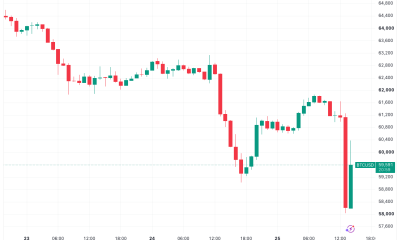
Bitcoin Sparks $600M Hourly Liquidations With $65,000 Set To Become Resistance
-

 Tech3 days ago
Bluekit phishing kit adopts browser-in-the-middle for login theft
-

 Tech3 days ago
Russian hackers now target Signal backup recovery keys
-
Crypto World4 days ago
Hyperliquid Named on Singapore MAS Investor Alert Register
-

 Crypto World4 days ago
RTX holders must register wallets before token distribution begins
You must be logged in to post a comment Login