
Crypto World
The Worst of Food Inflation Is Yet to Come, Industry Data Suggests

Food inflation accelerated last month, and several data points now suggest the trend may continue well into the year ahead. US food and beverage company inflation surged 7.9% year-over-year in March, the biggest jump in at least 12 months.
The Kobeissi Letter noted that March’s increase was driven mostly by higher fuel prices. The full impact of rising fertilizer and plastics costs has not yet reached store shelves.
Why Food Costs Are Climbing
Tomatoes posted the steepest jump at 102% year-over-year, with vegetables rising 90% and diesel climbing 88%. Overall, the headline reading accelerated by 373 basis points from February’s 4.2%.
Fertilizer is now a key concern. Urea, the most widely used nitrogen fertilizer, has roughly doubled since February to about $900 per metric ton. Historically, urea has not traded this high since 2022.
“70% of respondents say fertilizer is so expensive that they will not be able to buy all the fertilizer they need,” the American Farm Bureau Federation’s survey revealed.
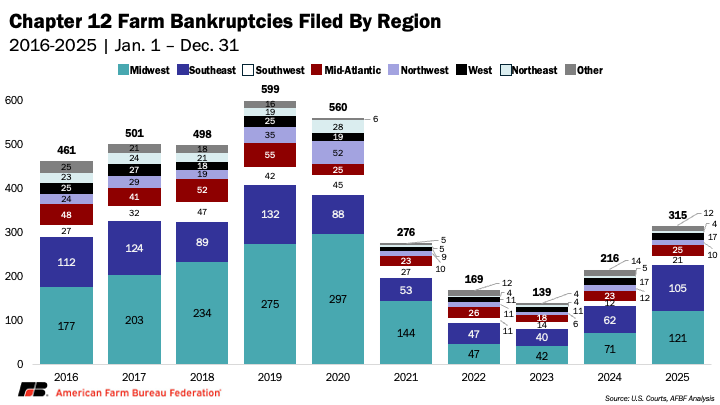
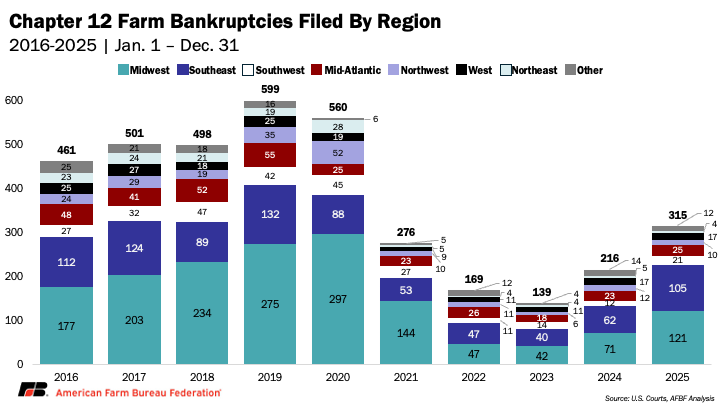
Farmers were already strained before that shock. Chapter 12 bankruptcy filings rose 46% to 315 cases in 2025, according to the American Farm Bureau Federation. It marked the third straight annual increase.
“Significant losses are expected across crop sectors for another year, and many livestock sectors are also tightening margins,” Economist Samantha Ayoub wrote. “A fourth consecutive year of expected declines in farm income will continue to strain agriculture, placing further reliance on credit options that are growing thin.”
Hormuz Disruption Adds a Global Dimension
Meanwhile, the fertilizer shock stems from the disruption in the Strait of Hormuz, a chokepoint for major exporters. Besides the US, India and other agricultural economies face direct risk, with shortages affecting planting decisions during the critical kharif season.
Follow us on X to get the latest news as it happens
Oilfield services firm Baker Hughes assumes the Strait will not fully reopen until the second half of 2026. CFO Ahmed Moghal told investors the company is operating under the assumption that the US-Iran conflict will last at least through June.
In a Dallas Fed survey, nearly 80% of about 100 energy executives expect the Strait to stay closed until August or later. Therefore, the shared view signals a longer disruption.
Fertilizer prices are rising. Farm bankruptcies are climbing for a third year. With a key shipping lane likely to remain restricted, those forces are aligning for further grocery price pressure beyond March’s reading.
Subscribe to our YouTube channel to watch leaders and journalists provide expert insights
The post The Worst of Food Inflation Is Yet to Come, Industry Data Suggests appeared first on BeInCrypto.

Key Takeaways
- Ethereum has corrected approximately 50% from its October 2025 peak of $4,700 to current levels around $2,300, yet accumulation patterns suggest institutional buying
- The taker buy/sell ratio climbed to levels not seen since January 2023, indicating strong demand pressure
- Network activity shows smart contract deployments hit an all-time high on a 180-day moving average basis
- Spot Ethereum ETFs recorded $155 million in net inflows last week, marking the third consecutive week of positive flows
- Critical price zones: $2,400 represents overhead resistance while $2,200 serves as downside support
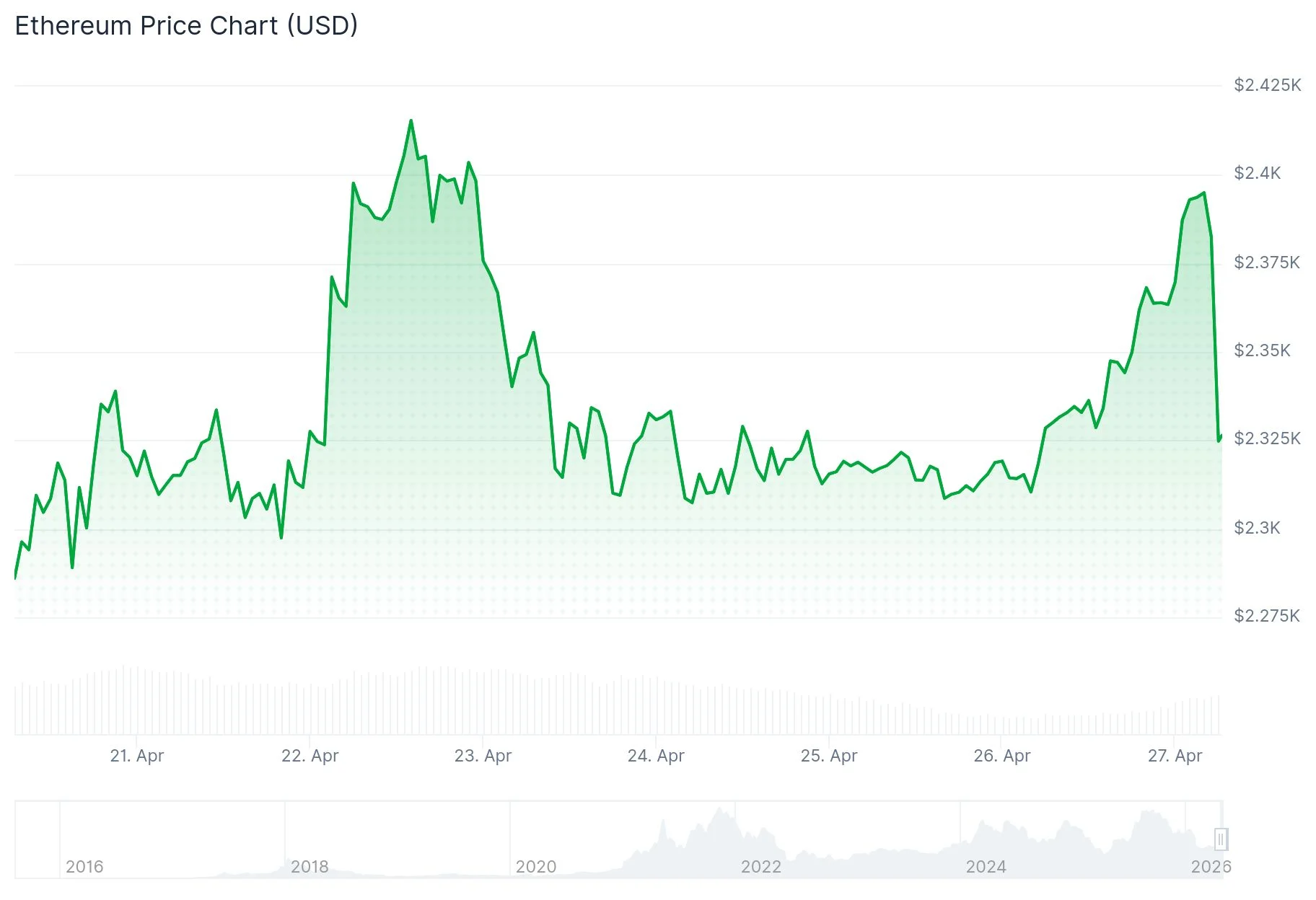
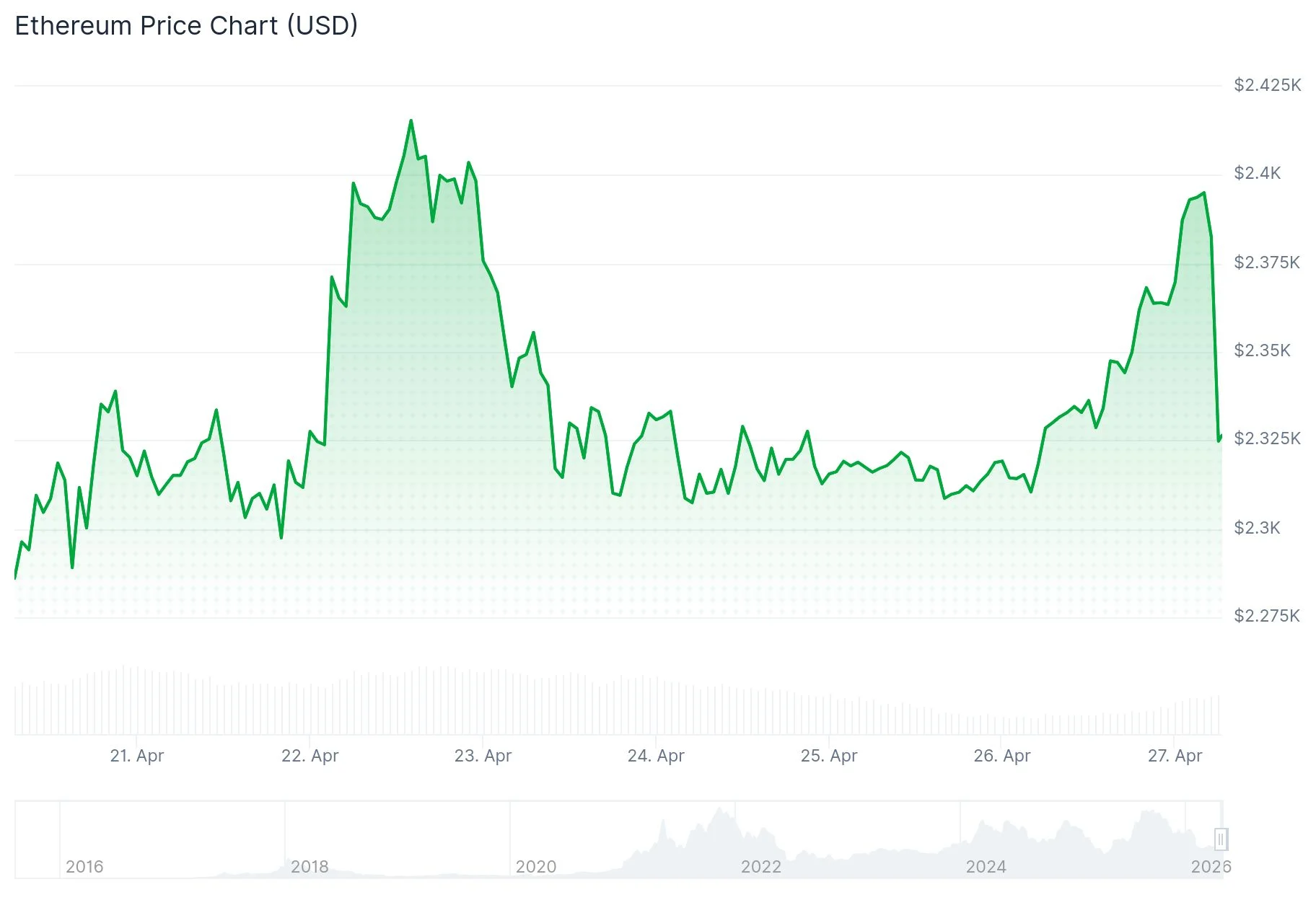
Ethereum’s price has experienced a significant downturn, shedding approximately half its value from the October 2025 peak near $4,700 to trade around $2,300 today. However, beneath the surface volatility, blockchain metrics reveal a different narrative—one of strategic accumulation.
According to metrics from CryptoQuant, the 30-day moving average of the taker buy/sell ratio has climbed to its most elevated reading since the beginning of 2023. This indicator measures the intensity of market orders on the buy side relative to sell-side pressure.
The data suggests that market participants are aggressively acquiring ETH even as downward price momentum persists. Such patterns typically indicate sophisticated investors methodically building positions during periods of market weakness.
Network Growth Contradicts Price Weakness
Additional analysis from CryptoQuant reveals that the 180-day moving average for newly deployed smart contracts has reached an unprecedented peak. This demonstrates that developer engagement continues to expand despite bearish price action.
Historical patterns show that surges in smart contract deployment activity have frequently foreshadowed price reversals. The current disconnect between robust network utilization and suppressed token valuation indicates that fundamental strength may not yet be reflected in market pricing.
According to SoSoValue data reported by Odaily, Ethereum spot exchange-traded funds attracted $155 million in net new capital during the week spanning April 20–24. This represents the third consecutive week of positive institutional flows.
BlackRock’s ETHA dominated inflows with $138 million for the period, pushing its cumulative net inflow to $11.97 billion. BlackRock’s ETHB contributed an additional $60.9 million. Conversely, Grayscale’s ETHE experienced the largest outflow at $49.2 million. Combined net assets across all Ethereum spot ETF products currently total $13.79 billion.
Market analyst Ted (@TedPillows) observed that ETH remains range-bound and cautioned that the collapse of US-Iran peace negotiations could introduce heightened volatility in the coming days. He highlighted that a successful reclaim of $2,400 could unlock the $2,470–$2,500 liquidity region, whereas a breakdown below $2,300 might trigger a retest of the $2,150–$2,200 zone.
Technical Outlook and Critical Zones
Examining the hourly timeframe, Ethereum successfully breached a descending triangle formation with resistance positioned at $2,320. The rally extended to $2,404 before entering a consolidation phase. Currently, ETH maintains its position above both $2,370 and the 100-hour simple moving average.
The nearest resistance barrier stands at $2,400, followed by $2,420 and $2,450. A decisive break above $2,450 could catalyze momentum toward $2,500 and potentially extend to the $2,550–$2,565 range.
For downside protection, $2,330 represents the initial support level. Below that threshold, $2,285 and $2,200 emerge as critical defensive zones.
In a notable development, Bitmine Immersion Technologies, linked to market strategist Tom Lee, disclosed plans to purchase 10,000 ETH directly from the Ethereum Foundation through an over-the-counter transaction valued at $23.9 million. This acquisition would elevate the firm’s total Ethereum holdings to 4.98 million ETH.


Key Takeaways
- Republican Senator Thom Tillis has withdrawn his opposition to Kevin Warsh’s Federal Reserve chair nomination following the conclusion of a DOJ investigation into Jerome Powell
- The Senate Banking Committee is set to vote on Warsh’s confirmation on April 29, with a full Senate floor vote potentially occurring the week of May 11
- Jerome Powell’s term as Fed chair concludes May 15; Warsh may assume the role shortly after Senate approval
- Financial markets indicate a 99% likelihood the Federal Reserve maintains interest rates at 3.50%–3.75% during the April 28–29 policy meeting
- Market projections suggest no rate reductions until September 2027, based on CME FedWatch analysis
The path to Federal Reserve leadership has cleared significantly for Kevin Warsh after a critical Republican lawmaker withdrew his opposition to the nomination.
North Carolina Senator Thom Tillis announced Sunday that he would no longer obstruct Warsh’s confirmation proceedings. The senator had previously stalled the nomination due to an ongoing Department of Justice inquiry into current Federal Reserve Chair Jerome Powell concerning a multibillion-dollar headquarters renovation project.
With the DOJ having concluded its three-month investigation, Tillis felt comfortable moving forward. In a statement posted on X, the senator described the investigation as “a serious threat to the Fed’s independence” and emphasized that its resolution was necessary before he could support the nomination.
As a member of the Senate Banking Committee, Tillis’s support carries significant weight. The committee has scheduled its confirmation vote for April 29.
Following committee approval, the nomination will advance to the full Senate chamber. While no official date has been announced, sources indicate a floor vote could take place during the week of May 11.
Powell’s tenure as Federal Reserve chair officially ends on May 15. Should Warsh receive Senate confirmation, he could be sworn in within days of Powell’s departure.
While Powell retains eligibility to serve on the Federal Reserve’s Board of Governors through 2028, historical patterns suggest he may opt for retirement once his chairmanship concludes.
Federal Reserve Rate Expectations
The upcoming April 28–29 Federal Open Market Committee meeting will mark Powell’s final gathering as chair. Market participants anticipate a steady course.
According to CME Group FedWatch data, there is a 99% probability that the Federal Reserve will maintain its current rate range of 3.50%–3.75%. The likelihood of a rate increase stands at merely 1%.
Matthew Luzzetti, Chief Economist at Deutsche Bank, anticipates the Fed will maintain its current messaging, signaling policymakers’ intention to hold rates steady for a considerable duration.
Market pricing does not reflect anticipated rate cuts until September 2027. At that juncture, there exists a 38.6% probability of rates declining to the 3.25%–3.50% range.
Global tensions, particularly developments involving Iran, are creating additional economic headwinds. Rising energy prices are fueling inflationary pressures, while economic uncertainty is dampening corporate investment appetite.
Warsh’s Views on Cryptocurrency and Monetary Policy
Warsh has traditionally been characterized as hawkish regarding monetary policy. This orientation generally favors maintaining elevated interest rates for extended periods, which tends to negatively impact risk-oriented assets such as cryptocurrencies.
Nevertheless, Warsh has recently emphasized his commitment to Federal Reserve independence, stating that President Trump has not attempted to influence his views on interest rate policy.
Regarding digital assets, Warsh disclosed holdings in over 30 cryptocurrency projects, including notable positions in Solana and the decentralized trading platform dYdX.
Warsh has also expressed skepticism about the Federal Reserve’s substantial holdings of Treasury securities and mortgage-backed securities, a portfolio expansion that originated from the 2008 financial crisis response.
The April 29 Senate Banking Committee vote represents the initial formal milestone in his confirmation journey.
Crypto World
XRP Price Prediction Tightens Toward $3 With Spot ETFs Booking Best Month of 2026, While Pepeto Charts a 100x Path
The xrp price prediction just picked up a fresh signal. Spot XRP ETFs have pulled in $75.6 million across April, the strongest month since launch, and GraniteShares debuted 3x long and short XRP ETFs on Nasdaq on April 23, lifting cumulative XRP fund flows past $1.28 billion as XRP holds $1.42 with no outflows since April 9 per The Market Periodical.
The xrp price prediction has wind behind it, but Pepeto is the vehicle putting smaller wallets on the same side as institutional flow before the wider market catches the signal. With $9.45 million already raised and analysts calling for 100x, the presale closes the moment the Binance listing opens.
Spot XRP ETF flows climbed from sub-$10 million daily reads to $75.6 million across April, the strongest stretch since launch, signaling capital rotating from Bitcoin dominance back into Ripple’s token per The Market Periodical. Confirming the trend takes a clean weekly close above $1.50, but the direction is running. Cumulative XRP ETF flows now top $1.28 billion, and GraniteShares’ 3x products on Nasdaq just opened a fresh derivatives lane for institutions on April 23.
Ripple unveiled a four-phase roadmap to make the XRP Ledger quantum-resistant by 2028, with emergency migration tools and post-quantum cryptography rolling in across stages. The Ripple plan removes a long-tail security risk that has weighed on long-term holders for years.
Lower overhang opens the ceiling, but the exchange still priced at presale levels and built to absorb volume as institutional capital keeps flowing on chain is where the return math really shifts before the listing arrives.
XRP Price Prediction Meets the Presale Entry Before the Listing Lands
Pepeto Price at $0.0000001866 as Binance Listing Nears and $9.45M Already Raised
When institutional flow at this size moves into smaller cap tokens, fresh launches grow faster than any solo trader can track. Pepeto was built for this market, handing every holder the tools to sort live setups from noise before the crowd catches up.
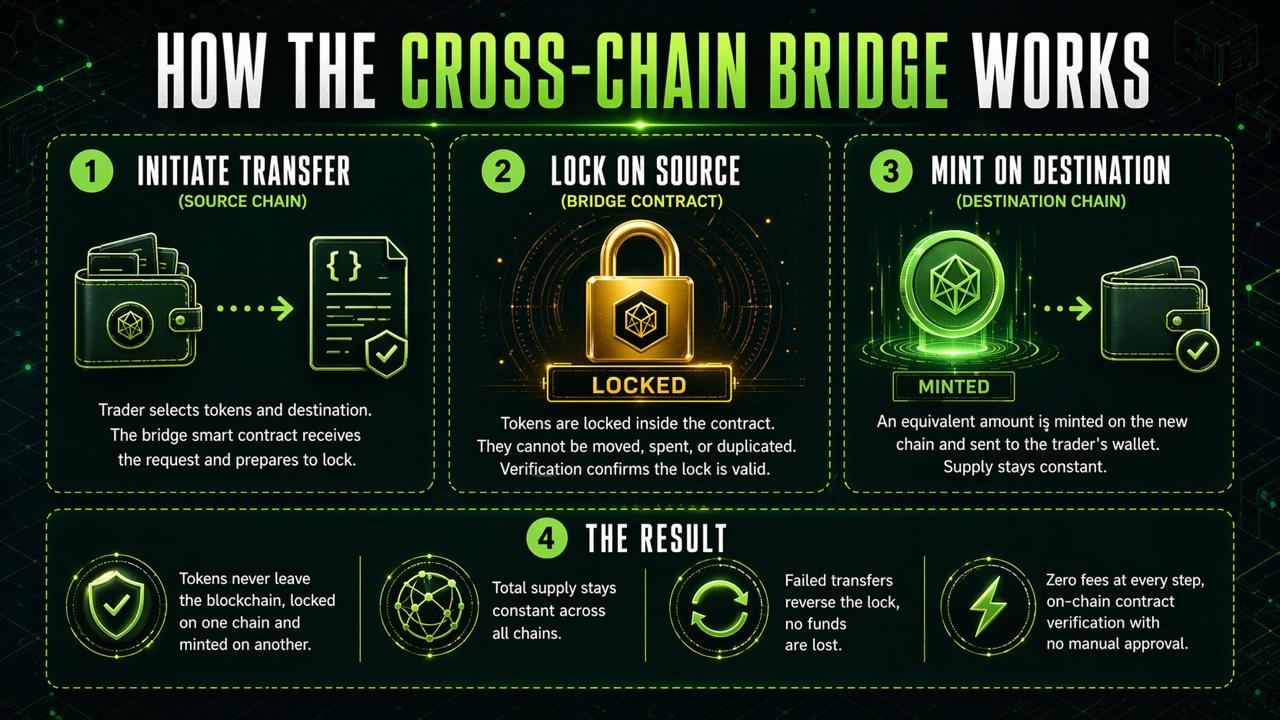
$9.45 million raised at $0.0000001866 with 100x projected by analysts strengthens the case as every round closes. The Binance listing unlocks the contract scanner, an in-house swap router that fires every trade for free, and a multi-chain bridge that hops tokens between ETH, BNB, and SOL with no gas at all.
While XRP climbs the ETF inflow chart, Pepeto hands smaller wallets the same setup the big holders already run. Staking at 178% APY pulls tokens off supply daily as rounds close. SolidProof cleared every contract, a senior Binance developer built the platform, and the founder behind Pepe’s $11 billion market cap on 420 trillion tokens is leading this build.
The cleanest wins in every bull run land in the wallet that grabbed the entry while everyone else hesitated, and Pepeto at $0.0000001866 is that entry while the listing window stays open. The moment trading goes live, the presale price disappears and market pricing takes over.
XRP Price Prediction: Can XRP Clear $1.50 and Push $3?
XRP Holds $1.42 With ETF Rotation Pointing Toward a $3 Reclaim
XRP trades at $1.42, around 58% under its $3.40 peak from January 2018 per CoinMarketCap. Resistance sits at $1.50 and $1.65, with support at $1.30. Standard Chartered carries a $5.50 year-end call.
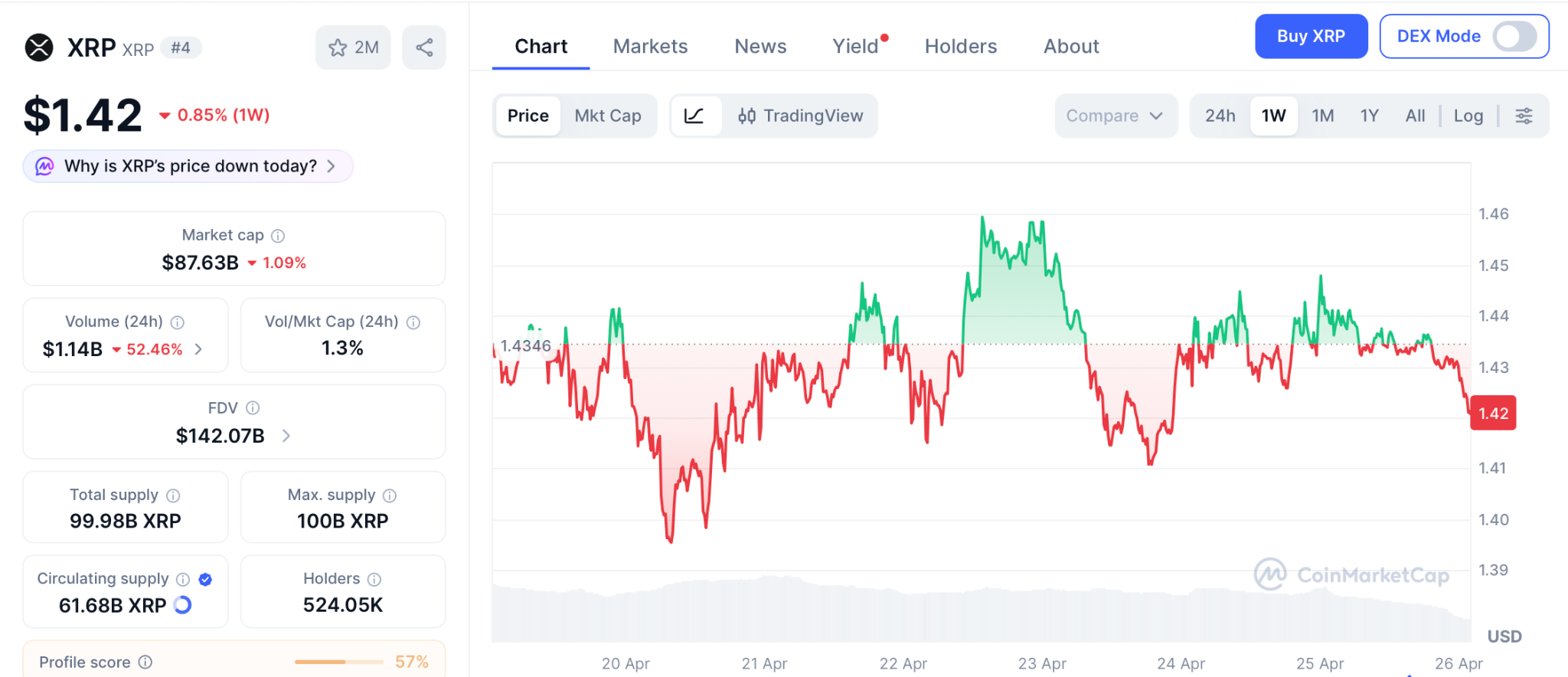
Clearing $1.50 opens $1.65 and puts $3 within reach based on the zones that preceded the last two major XRP runs. The quantum-resistant roadmap rolls out in stages through 2028, and roughly $1.28 billion locked in spot ETFs keeps sell pressure at multi-year lows.
The xrp price prediction reads strong for patient holders, but $1.42 to $3 is roughly 110% across months. The presale compresses what that climb pays into one listing event.
Conclusion
XRP just printed its best ETF month of 2026. Cumulative spot flows cleared $1.28 billion. GraniteShares opened a 3x derivatives lane. When that base grows instead of bleeding, the ceiling lifts across the whole XRP ecosystem.
But here is the part most traders are missing. The same wallets driving the XRP rotation are loading Pepeto ahead of the Binance debut. They are reading what the crowd has yet to register, and tracking that move before the listing is how every prior cycle paid the buyers who watched closely. The Pepe cofounder steering a live exchange at presale levels with a listing already booked is not something crypto hands out often.
The Pepeto official website is where that entry still sits, but the listing draws closer and once it opens, this price is gone for good.
Click To Visit Pepeto Website To Enter The Presale

FAQs
Can XRP (XRP) reach $3 based on the latest xrp price prediction?
XRP at $1.42 targets $3 for roughly 110% upside, on the path to Standard Chartered’s $5.50 call. Resistance at $1.50 is the first gate, with the quantum-resistant roadmap and $1.28 billion in spot ETF holdings backing that trajectory.
What drives Pepeto (PEPETO) returns beyond the xrp price prediction?
Five live exchange tools scale with on-chain growth as institutional capital rotates into XRP. The Binance listing compresses what months of XRP recovery deliver into one event at $0.0000001866.
Disclaimer: This is a Press Release provided by a third party who is responsible for the content. Please conduct your own research before taking any action based on the content.
Onyxcoin (XCN) climbed to a 3-month high after South Korean exchange Upbit confirmed it will list the token today.
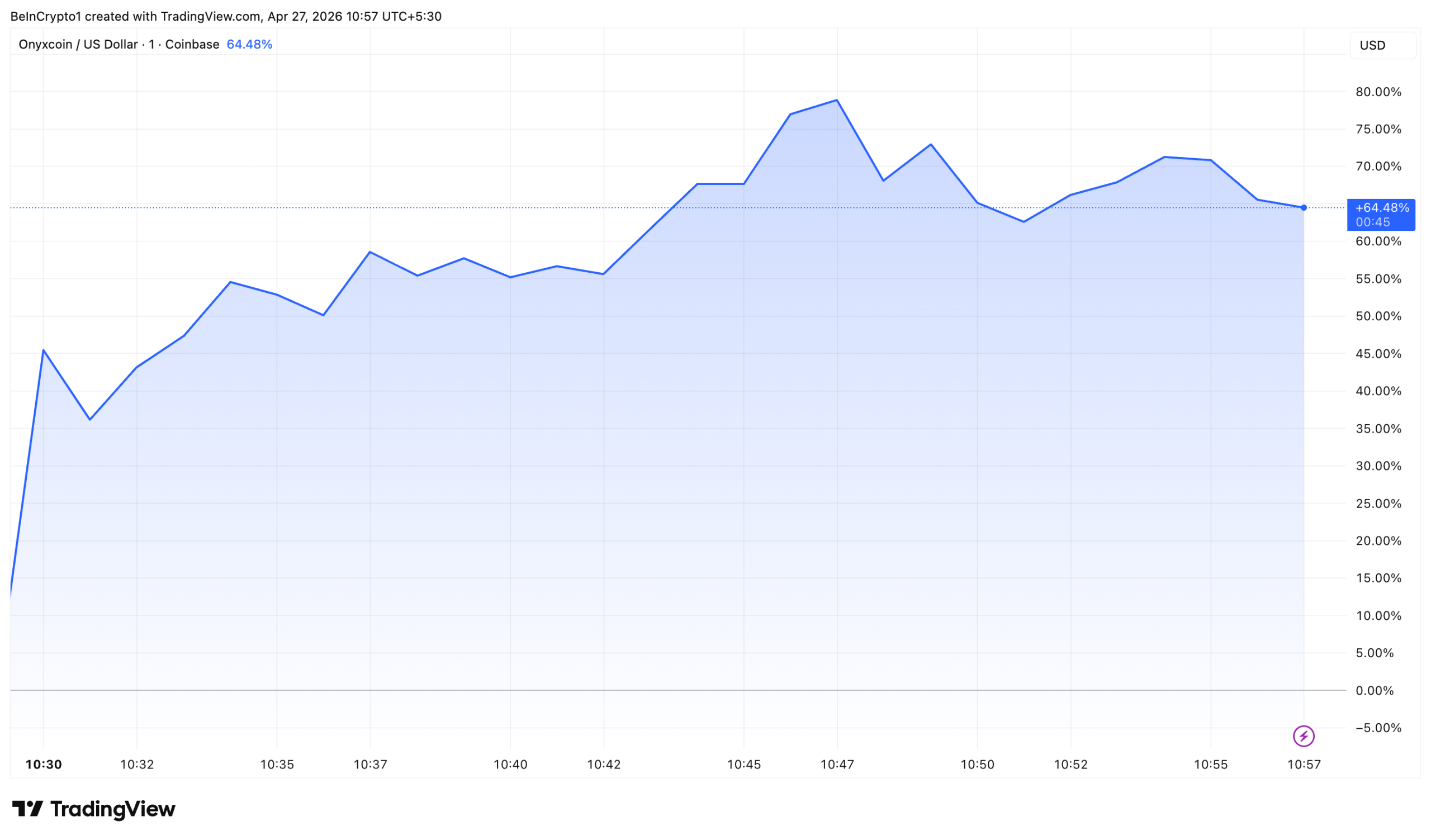
The altcoin saw a notable price surge after the announcement, reaching an intraday peak of $0.0086, its strongest level since mid-January.
Onyxcoin (XCN) Price Jumps to January Highs Ahead of Upbit Debut
At press time, XCN was trading at $0.0077, up 64.48% since the announcement. The sharp rally has propelled the token to the top of the gainers’ list among the 1,000 largest cryptocurrencies by market capitalization on CoinGecko.
Follow us on X to get the latest news as it happens
The daily trading volume also jumped 629% to reach $37 million. South Korea’s second-largest crypto exchange accounted 25.45% of the total volume. Historically, Upbit listings have produced sharp short-term price reactions in newly listed altcoins.
Meanwhile, the exchange revealed that XCN trading will start at 16:00 Korean Standard Time (KST). The altcoin will be available to trade against two pairs: the Korean Won (KRW) and Tether (USDT).
“Please be sure to verify the network before depositing digital assets. Deposits and withdrawals through networks other than the one specified are not supported,” the notice read.
The exchange also noted that it will apply short-term trading restrictions. For the first five minutes after trading opens, traders will not be able to place buy orders, and sell orders priced more than 10% below the previous day’s closing value will be blocked.
Additionally, the exchange will permit only limit orders for approximately two hours after trading support begins. The temporary measures are meant to reduce volatility and ensure a fair, controlled start to XCN trading.
Subscribe to our YouTube channel to watch leaders and journalists provide expert insights
The post Upbit Listing Pushes Onyxcoin (XCN) to Highest Level in 3 Months appeared first on BeInCrypto.


Bitcoin tagged a 12-week high of $79,399 overnight before sellers stepped in during Asian morning hours on Monday, dousing a rally that setup the asset for a run to $80,000 for the first time since January.
Bitcoin traded at $77,705 on Monday morning, down 0.4% over 24 hours after climbing to $79,399 around 09:00 IST and reversing sharply through the Asia session. Ether slipped 2.4% to $2,329, Solana fell 1.9% to $86, and BNB declined 1.2% to $630. The rally that lifted bitcoin to its highest level since January 31 unwound by mid-morning Singapore time.
The push higher came on a report from Axios that Iran offered a new proposal to the U.S. to reopen the Strait of Hormuz, with nuclear talks delayed until after the U.S. naval blockade is lifted.
Asian equities ran with it. The MSCI Asia Pacific Index rose 1.7%, the emerging markets index hit a record, and Taiwan Semiconductor Manufacturing surged 6% to its own record. Brent crude pared earlier 2.5% gains to up 1% at $106.50 a barrel.
Bitcoin briefly traded along with the risk-on move and then peeled away. The rejection at $79,399 has a clean technical explanation. Rachael Lucas, an analyst at BTC Markets, said $80,000 is where many recent buyers are approaching breakeven, which historically produces selling pressure as those traders rotate out of positions they were underwater on for weeks.
Bitcoin is up 16% in April, on pace for its first double-digit monthly gain since May 2025. Strategy bought $3.9 billion of bitcoin this month, according to Bloomberg, the firm’s largest monthly accumulation in a year.
Funding rates on perpetual futures across major exchanges remain negative on a seven-day basis at -0.13% per Coinglass, meaning shorts are still paying longs to hold positions, which is the structural setup that produces a squeeze if spot can hold above the recent breakeven cluster.
The Federal Reserve and European Central Bank both have policy decisions this week, and megacap tech earnings include the four largest U.S. companies by market cap.
Either the Fed or a single earnings beat could provide the catalyst the bitcoin tape has been missing. Without one, the third rejection from $79,000 in eight sessions starts to define the range rather than precede the breakout.


Non-fungible tokens (NFTs) are rallying, and to those fixated on rising prices, the market may seem to be booming. Overall activity, however, tells a different story.
Leading the rally are Bored Ape Yacht Club and Pudgy Penguins. Their floor prices, the lowest possible acquisition cost, have climbed double digits in recent weeks, and their tokens have posted double-digit gains. Still, the comeback is unfolding with far fewer buyers.
Pudgy Penguins’ floor has climbed above 5 ETH, up more than 20% on the week, with 201 sales and nearly 1,000 ETH in volume over the past seven days supporting the move. BAYC’s floor is up 81% over the past 30 days, rebounding sharply from depressed levels.
Floor prices are an important metric to follow. In an NFT collection, the floor price is the lowest-priced item currently for sale. If the lowest-priced Pudgy Penguin on the market is listed at 5.38 ether (ETH), that becomes the collection’s floor. A rising floor generally means buyers are willing to pay up to get in. A falling floor usually means holders are rushing for the exit.
But beneath the headline price gains, the market’s structure tells a different story, as broad participation is shrinking.
According to CryptoSlam, global NFT sales fell to roughly $175 million in April from $304 million in February, while total transactions and active users both dropped by nearly half.
Average sale prices, meanwhile, more than doubled month over month, climbing from $30.60 in March to $67.38 in April. Those two data points describe the same phenomenon from opposite ends. A smaller pool of capital is concentrating in high-value trades in blue-chip collections, rather than a broad-based demand returning to the market.
Even within blue chips, demand quality varies. Pudgy Penguins is seeing relatively high transaction counts alongside rising prices, a sign of sustained activity. By contrast, collections like CryptoPunks have recorded similar weekly volume with far fewer trades, implying that a small number of large transactions are having an outsized impact on price.
Broader market signals remain mixed. Wash trading still accounts for roughly 50% of total volume, according to CryptoSlam, and aggregate trading profits remain negative, indicating that many participants are still underwater despite the recent rebound.
Taken together, the data points to a market that is stabilizing but not yet expanding. Prices are rising, but participation is falling, and activity is concentrated in a handful of collections.
At the same time, ETH is up roughly 18% over the past month, and BTC is up nearly as much. Some portion of what looks like an NFT-specific rally is simply beta to a crypto-wide risk-on move, with blue-chip collections priced in ETH catching the updraft alongside everything else.
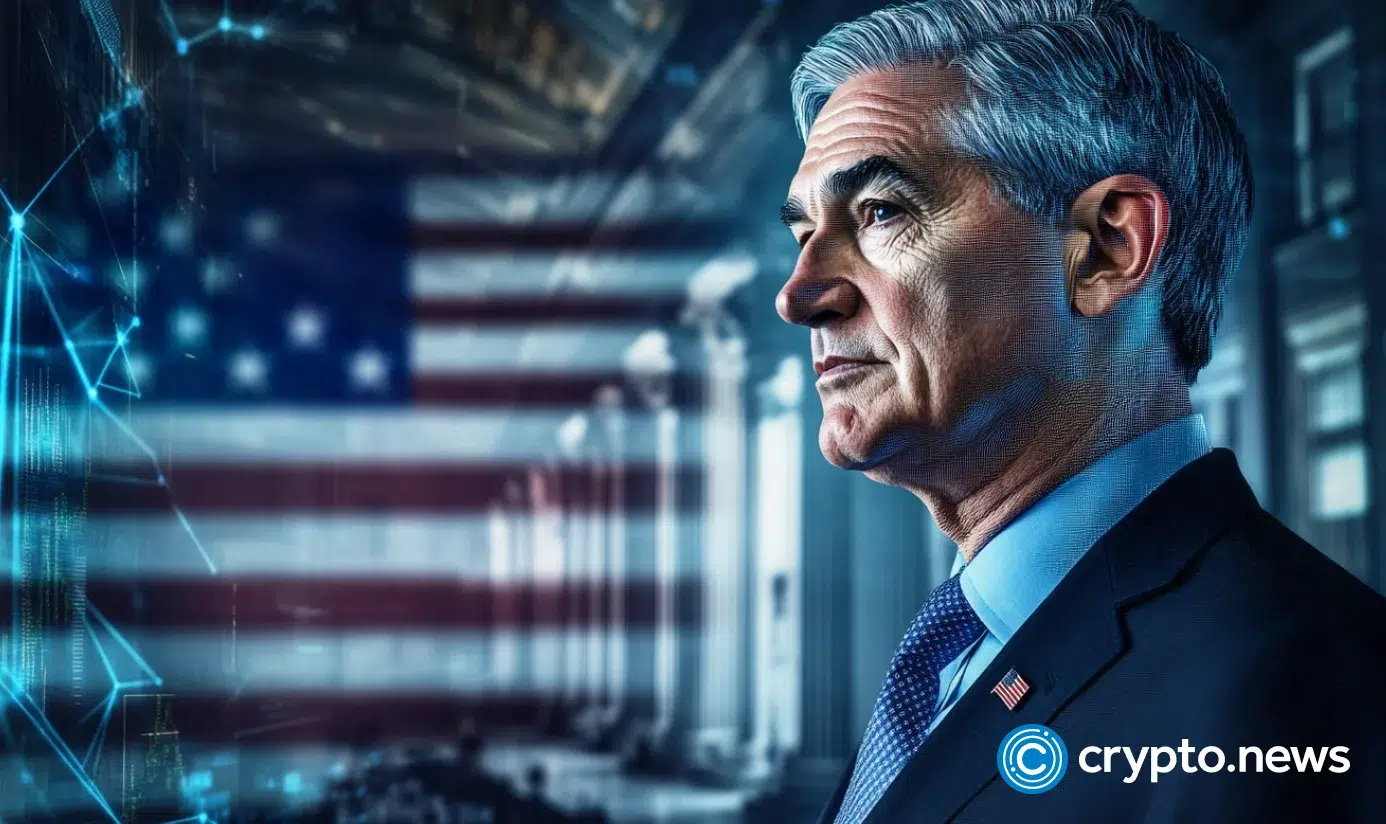
Republican Senator Thom Tillis has lifted his opposition to Kevin Warsh’s nomination as Federal Reserve chair after a federal investigation into Jerome Powell concluded.
Summary
- Tillis has ended his hold on Kevin Warsh’s nomination after the DOJ closed its investigation into Jerome Powell.
- The Senate Banking Committee is set to vote on April 29, with a full Senate decision expected in mid-May before Powell’s term ends.
According to a statement shared by Tillis on X, the U.S. Department of Justice has wrapped up its three-month probe into Powell over the Federal Reserve’s headquarters renovation, clearing a key hurdle that had stalled Warsh’s path forward.
“I have been clear from the start: the U.S. Attorney’s Office criminal investigation into Chair Powell was a serious threat to the Fed’s independence, and it needed to end before I could support Kevin Warsh’s confirmation,” Tillis said.
“I welcome the inspector general’s investigation. This is a necessary and appropriate measure, and I have confidence it will be conducted thoroughly and professionally.”
Holding a seat on the Senate Banking Committee, Tillis had been in a position to delay the process through a procedural hold or by withholding support, which would have prevented the nomination from advancing to the full Senate.
With his backing now in place, the committee is set to vote on April 29, while a full Senate vote is expected to follow, potentially during the week of May 11.
Jerome Powell’s current term is scheduled to end on May 15. If confirmed, Warsh is likely to assume the role within days, placing him at the helm of the U.S. central bank at a time when monetary policy remains closely watched across markets.
Policy outlook and crypto exposure
Attention has turned to how Warsh might steer interest rate policy and what that could mean for risk-sensitive assets, including cryptocurrencies. Known for a cautious stance on aggressive rate cuts during his time as a Federal Reserve governor, Warsh has often been viewed as hawkish, a posture that can weigh on speculative markets.
At the same time, political pressure has added another layer to expectations. U.S. President Donald Trump has repeatedly urged the Federal Reserve to lower rates, prompting questions about whether new leadership could lean in that direction.
Warsh, however, has indicated that policy decisions would remain insulated from external influence, noting that no such pressure has been directed at him.
Financial disclosures have also drawn interest from the digital asset sector. Warsh reported exposure to more than 30 crypto-related investments, including holdings tied to Solana and activity linked to decentralized exchanges such as dYdX.
The portfolio has led some market participants to view him as more familiar with the industry than previous candidates, even as his policy stance remains under close scrutiny.
With the confirmation process moving ahead, the focus now rests on the Senate vote and how quickly leadership at the Federal Reserve transitions once Powell’s term concludes.

Western Union is targeting May for the rollout of its USD-backed stablecoin, USDPT, as part of a broader crypto initiative that includes a digital asset network and a US dollar stablecard. During the company’s first-quarter earnings call, President and CEO Devin McGranahan framed the move as a turning point: “It is no longer a question of if Western Union will be active in digital assets, it is now how fast can we scale.” He added that USDPT is in the final stages of readiness and is expected to go live next month.
Industry observers have noted a growing appetite among traditional finance for stablecoins. In Europe, banks and corporations are increasingly selecting infrastructure partners to support stablecoin adoption, a trend underscored by comments from crypto custody provider Taurus’ co-founder about the shifting landscape for settlement and digital-asset rails.
Key takeaways
- Western Union plans the USDPT stablecoin rollout in May, positioning it as a cornerstone of its digital asset strategy alongside the Digital Asset Network (DAN) and a forthcoming US dollar stablecard.
- USDPT is to be issued by Anchorage Digital Bank and built on Solana, with the firm saying it will be accessible via exchange partners and supported by banking and financial institution partners along priority corridors.
- The company says its digital asset network will add its first partner this week, expanding a distribution channel that could reach tens of millions of crypto wallets globally.
- Stablecoins remain a dominant force in the market, with USD-denominated assets accounting for the majority of the roughly $320 billion stablecoin market, led by Tether’s USDT and Circle’s USDC.
- A stablecard allowing users to hold and spend stablecoins is planned for later this year, signaling Western Union’s intent to embed digital assets deeper into its money-movement platform.
USDPT: a foundation for Western Union’s digital payments strategy
Western Union announced USDPT last year as part of a broader push to integrate digital assets into its payments ecosystem. The company originally said USDPT would be built on Solana and issued by Anchorage Digital Bank, aiming to pair the stablecoin with the firm’s digital asset network to enable seamless use across its rails. In the latest update, McGranahan reiterated that USDPT is nearing live deployment and emphasized the plan to scale through a network of exchange partners that will facilitate access, conversion, and distribution to users, as well as direct settlement for banking and financial institution partners in priority corridors.
The aim, according to Western Union, is for USDPT to serve as a foundational asset that accelerates digital payments and settlement on its platform. By anchoring on a regulated USD-backed token and leveraging established liquidity channels, the company intends to offer an on-ramp for traditional customers into a growing digital-asset ecosystem.
Western Union’s approach reflects a broader industry pattern: a steady move by traditional players to embrace stablecoins as an enabling layer for faster, cross-border settlement and cash access. That backdrop has also been highlighted by industry observers noting that stablecoins are central to accelerating mainstream adoption across financial services and retail use cases.
For context, USD-denominated stablecoins account for the bulk of the current market, which DeFi analytics platform DefiLlama values at roughly $320 billion in total market capitalization. Tether’s USDt remains the largest with a market cap approaching $190 billion, followed by Circle’s USDC near $78 billion, while smaller entrants such as Sky Dollar sit in the low billions. These figures illustrate the scale at which Western Union’s USDPT ambitions will need to compete and coexist with established rails.
DAN and the bridge between crypto and everyday cash
McGranahan also described Western Union’s Digital Asset Network (DAN) as a bridge that will allow stablecoins and other cryptocurrencies to move through the company’s global payment network while providing access to real-world cash. He said the first partner for DAN would be announced in the current week, signaling an expansion of Western Union’s on-ramp and off-ramp capabilities for digital assets on a massive, existing distribution platform.
The DAN initiative is framed as a practical solution to a long-standing industry bottleneck: converting digital dollars into local currency at physical locations. In conjunction with Crossmint’s partnership disclosures, Western Union has previously noted that DAN would enable users to convert digital dollars into local currency at more than 360,000 collection points worldwide, broadening the reach of crypto-based payments for everyday use.
Additionally, Western Union has highlighted a growing ecosystem of partners designed to support USDPT’s adoption. In October, the company announced that USDPT would be built on Solana and issued by Anchorage Digital Bank, and that the arrangement would enable a native, crypto-enabled payments experience across its network. The emphasis on a robust partner pipeline—covering exchanges, custodians, and financial institutions—points to a strategic effort to embed digital assets into Western Union’s core money movement framework.
What to watch next for investors and users
From a market perspective, USDPT’s trajectory will hinge on how smoothly the partner network can scale access and liquidity, and how effectively the DAN can deliver a seamless crypto-to-cash experience for tens of millions of wallets. Western Union’s timeline for the May rollout will be a critical flashpoint to assess the feasibility of integrating a regulated stablecoin into a traditional payment giant’s operations at scale.
Beyond the launch, the eventual stablecard could further accelerate adoption by enabling users to hold stablecoins and spend them directly within Western Union’s infrastructure. The broader regulatory and interoperability questions—such as interoperability across blockchains, compliance controls, and consumer protections—will shape how quickly and widely these rails gain traction.
For readers tracking the evolution of crypto-enabled payments, the coming months will reveal how Western Union’s USDPT and DAN stack up against existing stablecoins and other digital-asset networks in terms of usability, custody, and integration with real-world cash access across a global network.
As Western Union advances its rollout, observers will be watching the partnerships in the DAN pipeline, the pace of USDPT adoption among exchange partners and institutions, and the practical rollout of the stablecard. The company’s next disclosures should clarify the scope of coverage, regional rollouts, and the ability of users to move fluidly between digital assets and cash within a trusted, familiar payments framework.

Western Union CEO Devin McGranahan said the company will focus on expanding adoption and embedding digital assets into its core money movement platform going forward.
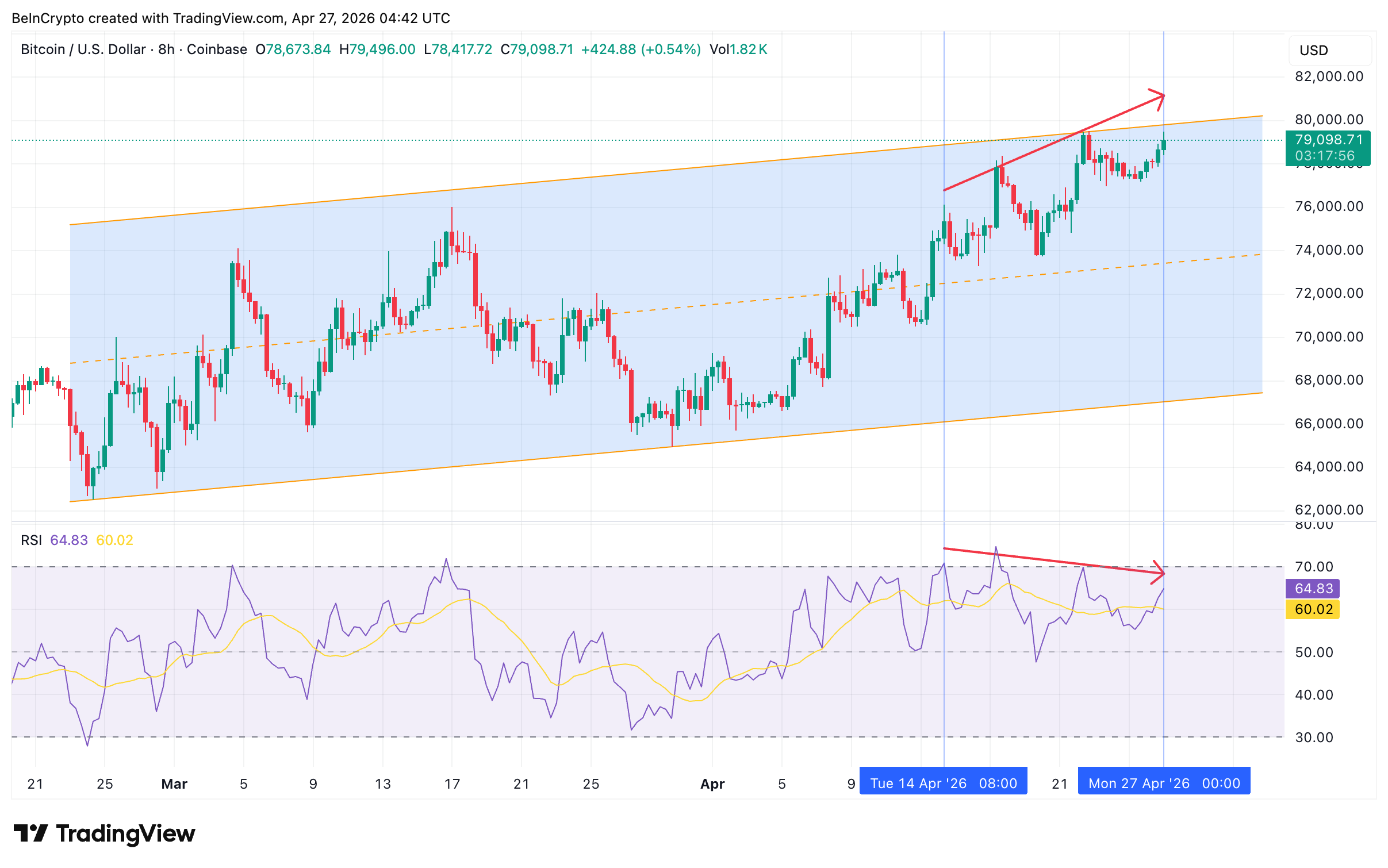
Bitcoin price is pushing back toward the $79,510 breakout level it failed at on April 22, but three on-chain signals confirm that US institutional demand is fading even as the chart looks ready to break out.
Bitcoin (BTC) trades at $79,098 on the 8-hour chart, up 0.54%, sitting just below the upper boundary of an ascending channel that has held since late February. The setup looks bullish on the surface. Beneath it, a momentum divergence, a gradual drop in US buying, and a collapse in short-squeeze fuel all point the other way.
Bearish Divergence Warns the Breakout Could Fail Like April 22
Since late February, Bitcoin has traded inside an ascending channel, a structure where higher swing lows align with rising resistance, signaling steady accumulation. BTC tagged the channel’s upper boundary on April 22, failed to break out, and pulled back. Now, the BTC price has rallied back to the same zone for a second attempt.
Want more token insights like this? Sign up for Editor Harsh Notariya’s Daily Crypto Newsletter here.
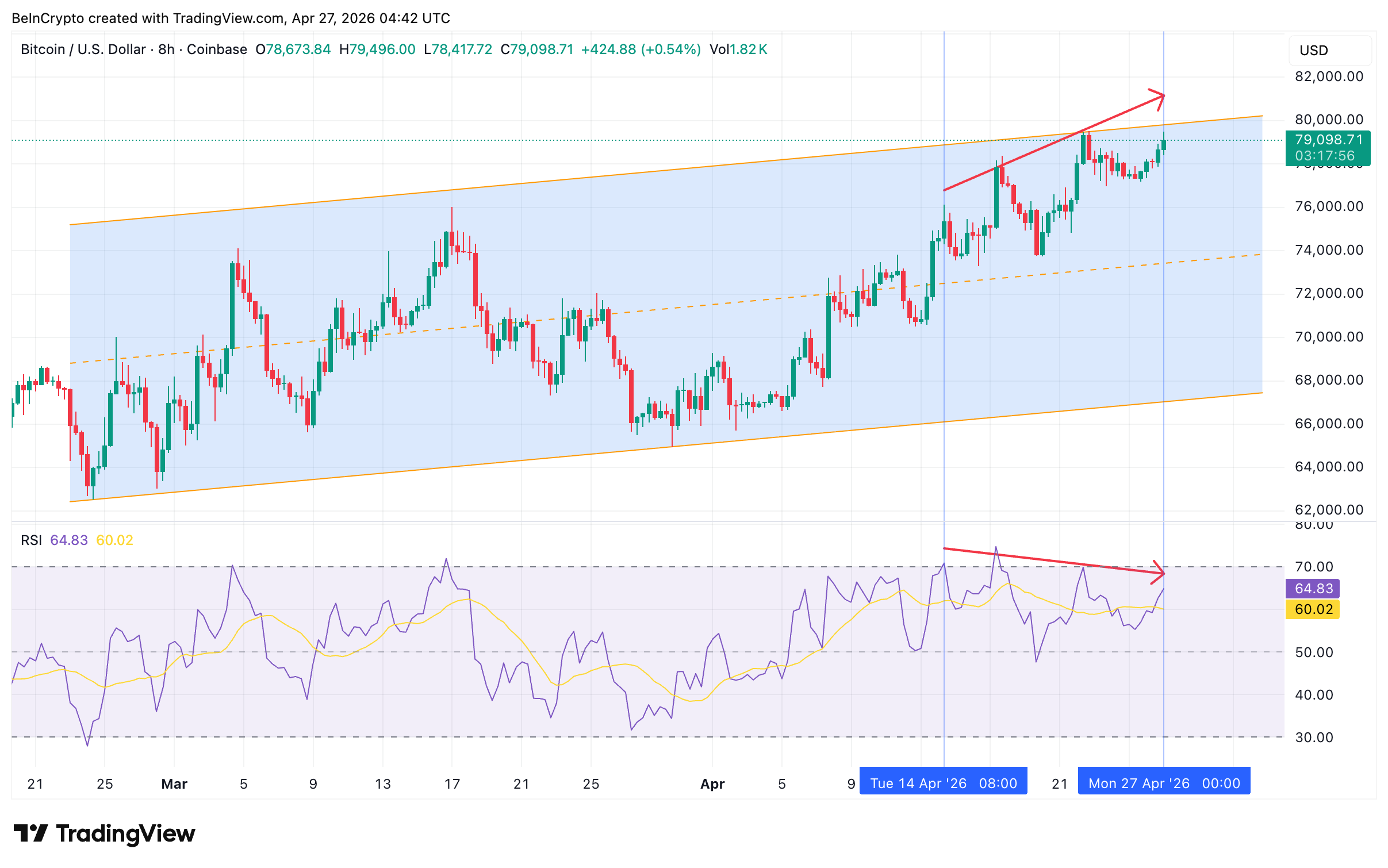
The momentum picture warns this attempt is weaker. Between April 14 and April 27, BTC has been making a higher high in price while the Relative Strength Index (RSI), a momentum indicator that measures the speed of price changes on a 0 to 100 scale, is close to confirming a lower high.
That is a standard bearish divergence, a pattern where price strength outpaces underlying momentum, often preceding a trend reversal. If the next 8-hour candle closes lower than the current one, the divergence confirms and the swing high is locked in.
Coinbase Premium Drop Is the Same Pattern That Triggered April 17 Pullback
The second warning comes from the Coinbase Premium Index, an on-chain metric that compares Bitcoin’s price on Coinbase against other exchanges and serves as a proxy for US demand. On April 22, when BTC attempted its latest breakout, the premium index sat at 0.038. By April 27, it has dropped to 0.020 even as price climbed back. US buyers are walking away while the chart looks bullish.
History shows this divergence resolves with price catching down to demand. Between April 14 and April 16, the Coinbase Premium fell from 0.064 to 0.011 while BTC kept rising. Price held up for one more day, then dropped from $77,089 on April 17 to $73,820 in the next session.
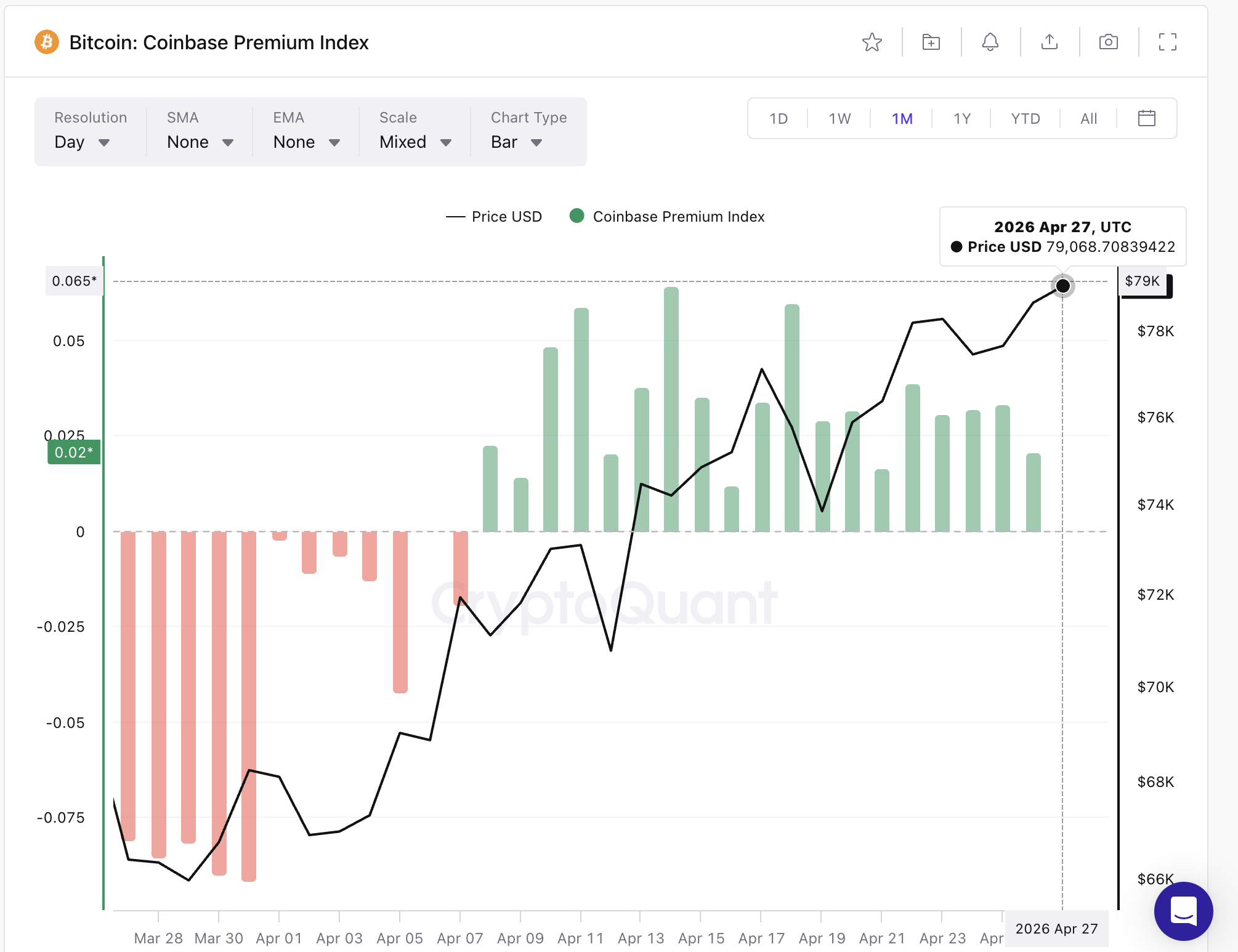
The premium index acts as a leading indicator. When US demand fades, the BTC price usually follows within days. The current setup mirrors that exact sequence, with the premium dropping into a price rally that has not yet broken structure.
Open Interest and Funding Rates Show the Short-Squeeze Fuel Is Drying Up
A breakout sometimes needs no demand. If shorts are heavily positioned, a squeeze can carry price through resistance even when buyers are absent. That fuel is now drying up. Open Interest (OI), the total dollar value of outstanding futures contracts, sat at $34.02 billion on April 22 with the funding rate, a periodic payment between perpetual futures longs and shorts that signals positioning bias, deeply negative at -0.021%.
Heavy short positioning failed to spark a squeeze that day, and the breakout died.
Today’s setup is structurally weaker. OI has dropped to $32.89 billion as $1.13 billion in positions closed out. The funding rate has compressed to -0.002%, ten times smaller than the April 22 reading.
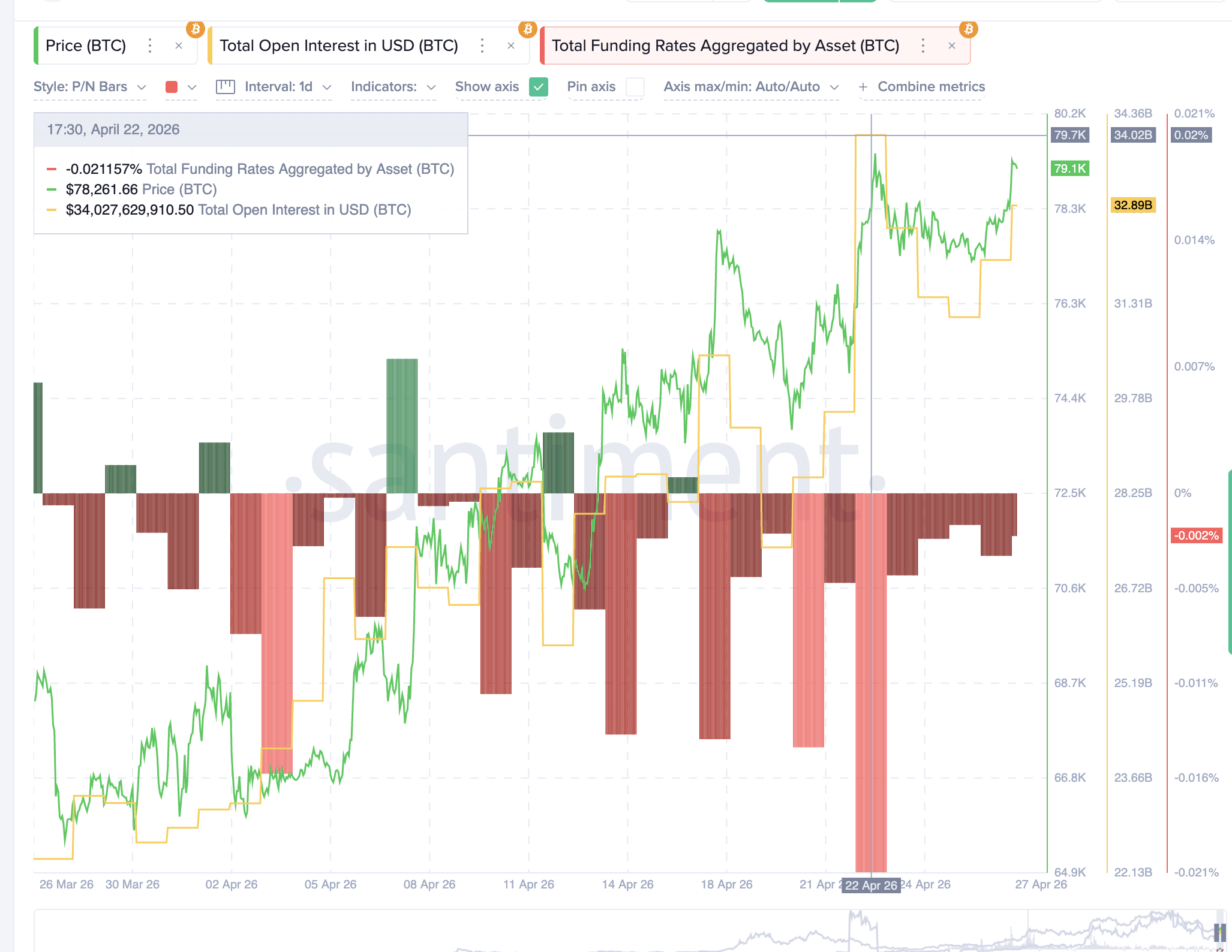
Fewer BTC shorts means less fuel, and a breakout that needs short covering to clear $79,510 has lost its most powerful trigger.
Bitcoin Price Levels: $79,510 Is the Decider, $76,074 Is the First Drop Zone
A clean 8-hour close above $79,510 confirms the breakout. It opens upside toward $80,000, and forces the divergence-based bear case to invalidate. Anything less, including a wick rejection or a daily candle that fails to close above resistance, keeps the structure intact for a pullback.
If the Coinbase Premium signal plays out the way it did between April 14 and April 17, the first downside zone is $76,074. A break below opens $73,948 and $72,230.
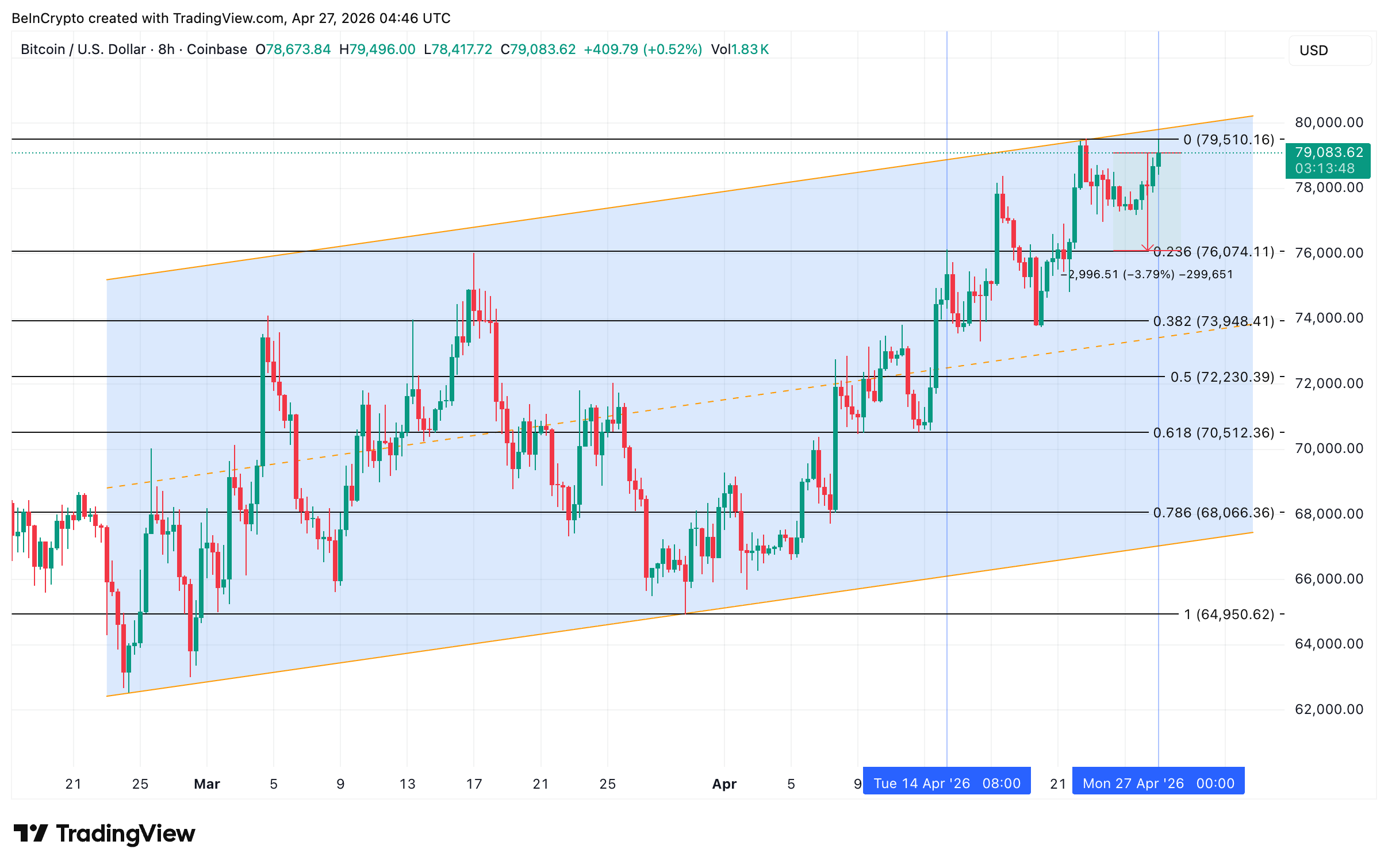
The decisive support sits at $70,512, the 0.618 Fibonacci and the strongest support cluster on the daily chart. A loss of $70,512 weakens the ascending channel structure considerably. For now, the divergence, the demand drop, and the dry squeeze fuel make the breakout hard.
The post Why Bitcoin’s Latest Breakout Attempt Could Fail on a US Demand Problem appeared first on BeInCrypto.
ATOME to host investor presentation on Villeta project Tuesday

Ethereum (ETH) Price Analysis: Accumulation Signals Flash Despite 50% Decline

Gladiators’ Giant Alleges He Was ‘Sacked’ Over OnlyFans Model Relationship

Manchester United reach agreement with Casemiro over contract clause amid transfer speculation

US brings back mandatory military draft registration

Steven Gerrard disagrees with Gary Neville over ‘shock’ Chelsea and Arsenal claim | Football


-

 Politics6 days ago
Gary Stevenson delivers timely reminder to register to vote as deadline TODAY
-

 Fashion3 days ago
Weekend Open Thread – Corporette.com
-
Crypto World1 day ago
Hyperliquid $HYPE Rally Builds Momentum as AI Sector Enters Prove-It Phase
-
Crypto World7 days ago
Bank of Hawai’i (BOH) Q1 2026: Net Income Drops to $57.4M as Net Interest Margin Expands
-

 Politics5 days ago
Making troops accountable for war crimes threatens US alliance, ex-SAS colonel warns
-

 Politics5 days ago
Disabled people challenge government SEND proposals over segregation concerns
-

 Business5 days ago
Rolls-Royce Voted UK’s Most Iconic Trade Mark as IPO Register Hits 150
-

 Business3 days ago
Patterson-UTI Energy, Inc. (PTEN) Q1 2026 Earnings Call Transcript
-

 Politics5 days ago
Zack Polanski responds to home secretary’s taser threat
-
 Sports18 hours ago
IPL 2026: Ruturaj Gaikwad registers slowest fifty of the season, enters all-time unwanted list | Cricket News
-
 Crypto World6 days ago
Five Value Stocks with Recovery Potential in 2026: PayPal (PYPL), Nike (NKE), and More
-
Politics5 days ago
Wings Over Scotland | How To Get Away With Crimes
-

 Politics5 days ago
Starmer handler McSweeney to be dragged from shadows by Foreign Affairs Committee
-

 Crypto World5 days ago
New York sues Coinbase, Gemini over prediction market offerings
-

 Politics4 days ago
‘Iran is still a nuclear threat’
-
 Business5 days ago
HCL Tech share price tank over 9% after weak Q4. JPMorgan, HSBC & 3 others cut target price
-
Entertainment6 days ago
Sydney Sweeney cameo cut from “The Devil Wears Prada 2”, source explains why (exclusive)
-

 Fashion6 days ago
Kilkenny Design New Beauty Arrivals for Spring 2026
-
 Sports4 days ago
Tim Bradley names the current best in the world: “Better than Inoue and Usyk”
-

 NewsBeat22 hours ago
LK Bennett closes all stores after entering administration
You must be logged in to post a comment Login