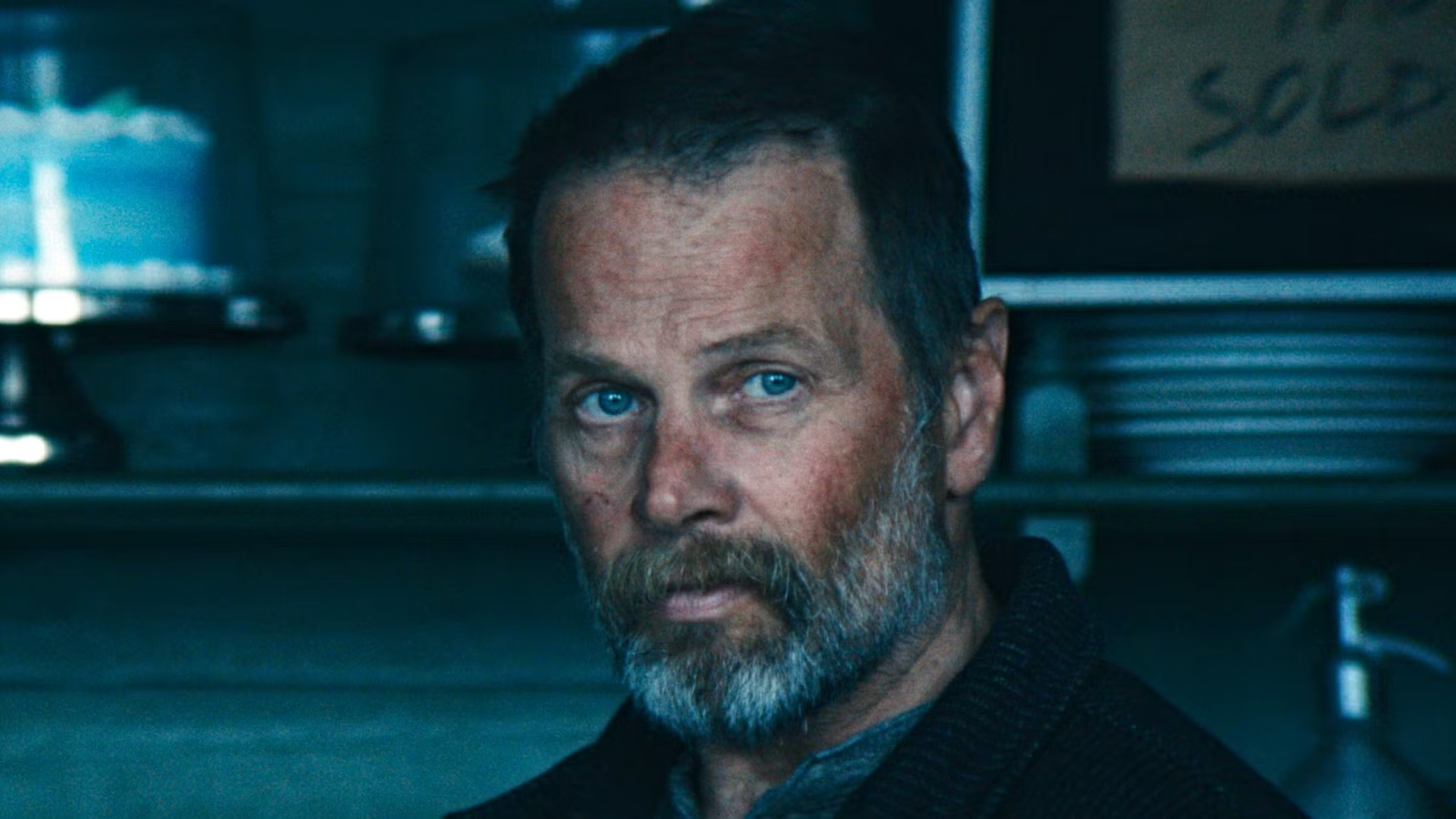
James Le Gros in Severance Season 2Image via Apple TV
Apple TV has become one of the world’s go-to streaming services for the best sci-fi shows, but the platform also offers a host of other originals for fans of all genres. One of Apple TV’s biggest properties that first drew people to the platform back in 2020 was Ted Lasso, which is finally set to return with Season 4 this summer after going on a three-year hiatus. Another Apple TV series that was on the air even before Ted Lasso was See, which was led by Jason Momoa, who returned to the platform last year to star in one of the biggest passion projects of his career, Chief of War. The show was met with praise from both critics and audiences, hailed as the perfect blend of other historical epics like Shōgun and Game of Thrones.
Last year, Apple TV returned to the sci-fi genre to deliver one of its most memorable hits in Pluribus, which hails from Breaking Bad creator Vince Gilligan. Pluribus is the second-best sci-fi show Apple TV has ever released, following only behind Severance, which stars Adam Scott and is directed by Ben Stiller. After a three-year wait, Severance returned to Apple TV at the start of 2025 for its second season, and the show was picked up for Season 3 on the day of its Season 2 finale. It’s still unclear at this time when Severance Season 3 is going to be released, though — it’s been well over a year since Season 2 concluded, and production on Season 3 seemingly won’t begin until later this summer. Before Severance’s inevitable return, fans can’t stop watching the show, which has led it back into the Apple TV global top 10 in more than 15 countries around the world.
Advertisement
Advertisement
Collider Exclusive · Sci-Fi Survival Quiz Which Sci-Fi World Would You Survive? The Matrix · Mad Max · Blade Runner · Dune · Star Wars
Five universes. Five completely different ways the future went wrong — or sideways, or up in flames. Only one of them is the world your instincts were built for. Eight questions will figure out which dystopia, galaxy, or desert wasteland you’d actually make it out of alive.
💊The Matrix
🔥Mad Max
🌧️Blade Runner
Advertisement
🏜️Dune
🚀Star Wars
Advertisement
01
You sense something is deeply wrong with the world around you. What do you do? The first instinct is often the truest one.
Advertisement
02
In a world of scarcity, what resource do you guard most fiercely? What we protect reveals what we believe survival actually requires.
Advertisement
03
What kind of threat keeps you up at night? Fear is useful data — if you’re honest about what you’re actually afraid of.
Advertisement
04
How do you deal with authority you don’t trust? Every dystopia has a power structure. Your approach to it determines everything.
Advertisement
05
Which environment could you actually endure long-term? Survival isn’t just tactical — it’s physical, psychological, and very much about where you are.
Advertisement
06
Who do you want in your corner when things fall apart? The company you keep is the clearest signal of who you actually are.
Advertisement
07
Where do you draw the line — if you draw one at all? Every survivor eventually faces a moment that tests what they’re actually made of.
Advertisement
08
What would actually make survival worth it? Staying alive is one thing. Having a reason to is another.
Advertisement
Your Fate Has Been Calculated You’d Survive In…
Your answers point to the world your instincts were built for. This is the universe your temperament, your survival instincts, and your particular brand of stubbornness were made for.
Advertisement
The Resistance, Zion
The Matrix
You took the red pill a long time ago — probably before anyone offered it to you. You’re a systems thinker who can’t help but notice the seams in things.
Advertisement
You’re drawn to understanding how the system works before figuring out how to break it.
You’d find the Resistance, or it would find you — your instinct for spotting constructed realities is the machines’ worst nightmare.
You function best when you have access to information and the freedom to act on it.
The Matrix built an airtight prison. You’d be the one probing the walls for the door.
The Wasteland
Mad Max
The wasteland doesn’t reward the clever or the well-connected — it rewards those who are hard to kill and harder to break. That’s you.
Advertisement
You don’t need comfort, community, or a cause larger than the next horizon.
You need a vehicle, a clear threat, and enough fuel to outrun it — and you’re good at all three.
You are unsentimental enough to survive that world, and decent enough — just barely — to be something more than another raider.
In the wasteland, that distinction is everything.
Los Angeles, 2049
Blade Runner
You’d survive here because you know how to exist in moral grey areas without losing yourself completely.
Advertisement
You read people accurately, keep your circle small, and ask the questions others prefer not to answer.
In a city where humanity is a legal designation rather than a feeling, you hold onto something that keeps you functional.
You’re not a hero. But you’re not lost, either.
In Blade Runner’s world, that distinction is everything.
Arrakis
Dune
Arrakis is the most hostile environment in the known universe — and you are precisely the kind of person it rewards.
Advertisement
Patience, discipline, and political awareness are your core strengths — and on Arrakis, they’re survival tools.
You understand that the long game matters more than any single victory.
Others come to Dune and are consumed by it. You’d learn its logic and earn its respect.
In time, you wouldn’t just survive Arrakis — you’d begin to reshape it.
A Galaxy Far, Far Away
Star Wars
The galaxy far, far away is vast, loud, and in a constant state of violent political upheaval — and you wouldn’t have it any other way.
Advertisement
You find meaning in being part of something larger than yourself — a cause, a crew, a rebellion.
You’d gravitate toward the Rebellion, or the fringes, or whatever pocket of the galaxy still believes the Empire’s grip can be broken.
You fight — not because you have to, but because standing aside isn’t something you’re capable of.
In Star Wars, that willingness is what makes all the difference.
Advertisement
What Is ‘Severance’ About?
Severance follows a group of employees who work at a mysterious place called Lumon Industries, but they’ve opted to undergo a procedure that completely severs their work lives and personal lives, making the memories of each completely inaccessible to their counterparts. The show may not be hard sci-fi — there are no futuristic spaceships or vaporizing laser guns — but it’s quite dystopian in its version of how it portrays corporate America. Written and created by Dan Erickson, Severance is like a Black Mirror episode come to life over multiple seasons.
Check out the first two seasons of Severance on Apple TV, and stay tuned to Collider for more updates and coverage of Season 3.
Fresh off the success of Off Campus season 1, Jalen Thomas Brooks is hopeful that one of his fellow members of The Pitt night shift will hit the rink down the line.
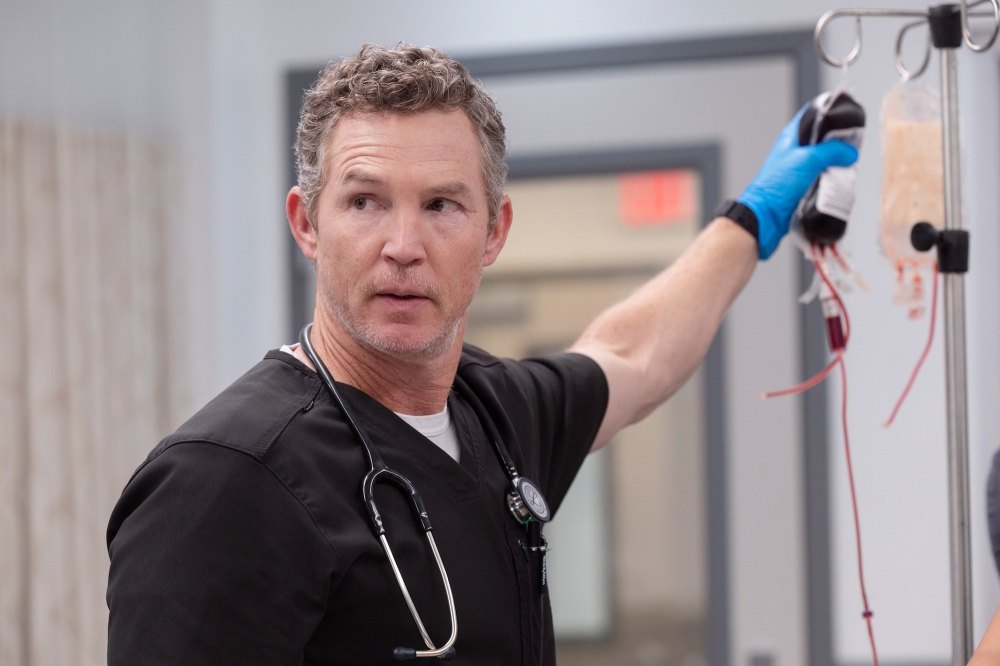
“Let’s see, as a rival head coach, I’m going to say Shawn Hatosy,” Brooks, 24, exclusively told Us Weekly on Monday, May 11, at the Amazon Upfronts in New York City. “That would be insane in, like, he’s intense and scary, but a rival evil head coach as Shawn Hatosy? That’s hot, that’s dope.”
Hatosy, 50, portrays attending Dr. Abbot on HBO Max’s The Pitt, on which Brooks appears as a nurse during the same night shift. In addition to his work on the acclaimed medical drama, Brooks scored a role as collegiate hockey player John Tucker in Off Campus.
Prime Video’s Off Campus was adapted from Elle Kennedy’s bestselling book series about four college-aged hockey players on the fictional Briar University team as they search for love on campus. Season 1 of the TV series took inspiration from The Deal, in which captain Garrett Graham (Belmont Cameli) meets Hannah Wells (Ella Bright).
Prime Video’s Off Campus follows different love stories at Briar U — but which couples end up together in the books? Based on the Off Campus book series by Elle Kennedy, the show follows an elite ice hockey team — and the women in their lives — as they “grapple with love, heartbreak, and self-discovery […]
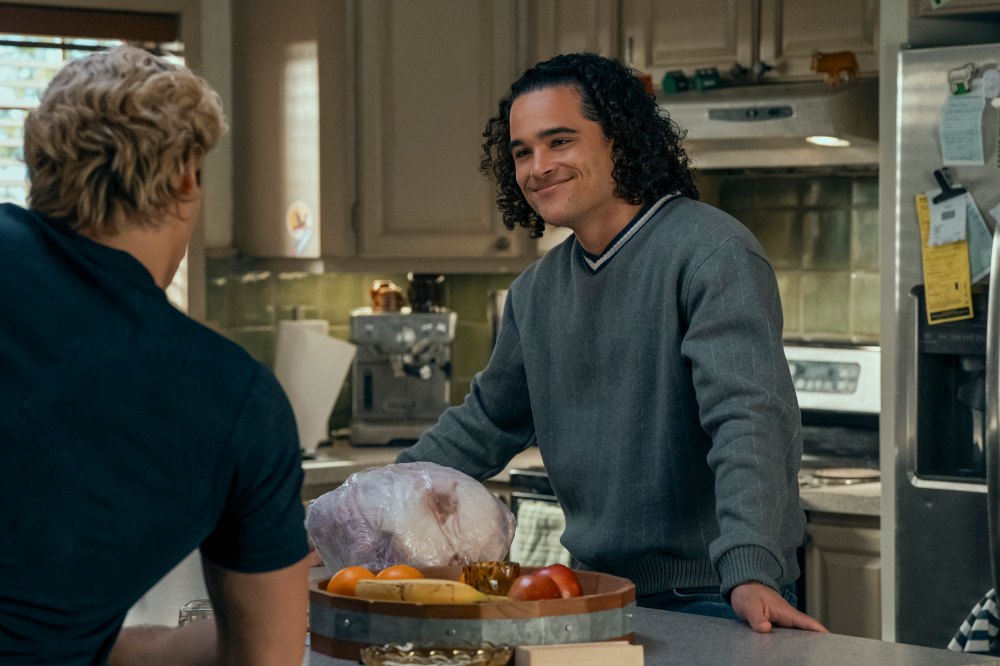
Tucker doesn’t take the lead until the fourth and final book, The Goal. (Logan, played by Antonio Cipriano, is the star of The Mistake, while Stephen Kalyn’s Dean is central to The Score.)
Advertisement
Off Campus has already been renewed for a second season, though it has not been announced which love story will be the focus. Whenever fans finally get to see Tucker meet literary leading lady Sabrina James, Brooks will be ready to step into the spotlight onscreen.
“I really enjoyed my time of sitting back and watching Belmont lead by example,” Brooks told Us. “What I’ve been doing this first season, in a sense, is just seeing how people step into leadership positions, and, most importantly, we had a conversation, as the guys in the show, [about] how to treat the crew, the cast, leading by example.”
He continued, “I get the privilege of seeing other people take all the pressure. I don’t have to carry as much weight, so I can just learn and absorb, [which is] something I’ve been able to do my whole career and everything.”
Thank You!
You have successfully subscribed.
Advertisement
Jalen Thomas Brooks in ‘Off Campus.’Liane Hentscher / Prime
“I’ve gotten the first two scripts,” he teased to Us. “You’re gonna see a lot of Tucker becoming this guy that he’s known to be in the books and everything. I’m excited for audiences to see Tucker, [who is] supposed to creep up on people, you know, and have a little bit of romance.”
Off Campus season 1 is now streaming on Prime Video.
Among older Star Wars fans, there are few (if any) Expanded Universe characters more popular than Mara Jade. Introduced in Timothy Zahn’s amazing Thrawn Trilogy of books, Jade was a character as we had never seen before. A former apprentice of Emperor Palpatine who lost everything when he died, Mara had to rebuild her life, completely from scratch. Thanks to a final Force command from her old mentor, she knew exactly who to blame: Luke Skywalker, the Jedi hero of the Rebellion and the man she was sworn to kill.
Mara Jade is such a cool and original character that fans are always curious about how Zahn managed to come up with her. Did she come to him in a Force vision, or was she maybe inspired by one of his other characters? As it turns out, he was inspired by the coolest plot twist in all of Star Wars. No, not the “I’m your father” bit, but the revelation that Darth Vader wanted Luke Skywalker’s help to defeat the Emperor. According to Zahn, Jade was the answer to a very simple question: what if Palpatine knew that Vader wanted to betray him?
Star Wars Gets Jaded
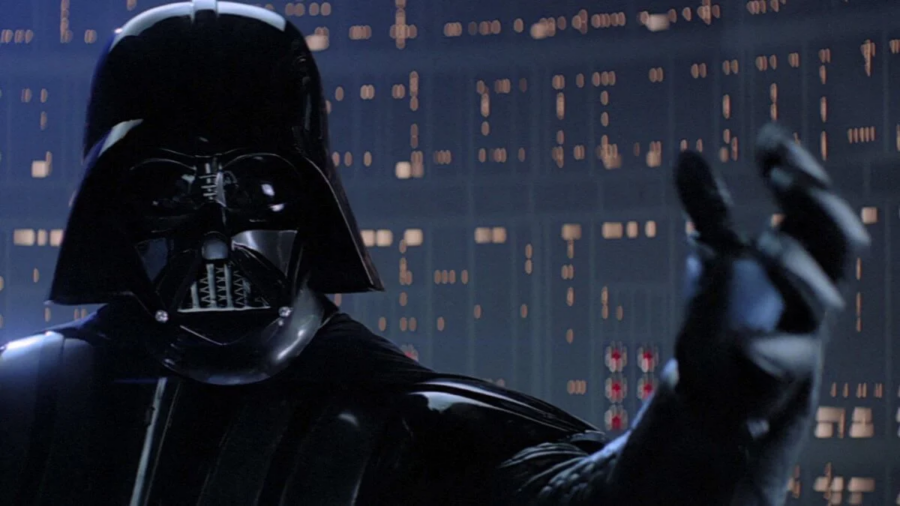
In the climax of The Empire Strikes Back, Darth Vader reveals something genuinely horrifying: that he is secretly Luke Skywalker’s father. He then makes a very unexpected sales pitch to the young, would-be Jedi. Vader offers Luke the chance to team up and overthrow the Emperor. Then, as he so memorably says, they “can rule the galaxy together as father and son!” Obviously, Luke refuses the offer, and Palpatine seemingly never learns about Vader’s betrayal. At least, by the time he finally appears in the flesh in Return of the Jedi, he doesn’t openly have a grudge against Vader for the whole planning his murder thing.
Timothy Zahn decided that, one way or another, the most powerful man in the galaxy was going to find out what happened at the end of The Empire Strikes Back. What would happen when Palpatine learned that Darth Vader was plotting to team up with one of the most powerful Force users in the galaxy? Zahn’s answer was that Palpatine would have his own Force-wielding secret agent whom he could dispatch to kill Luke Skywalker before the boy became a larger problem.
Inspired By Star Wars’ Coolest Plot Twist
In an interview with IGN, Timothy Zahn said, “Mara was originally my thought of how Palpatine would have reacted to Vader offering Luke an alliance at the end of The Empire Strikes Back, that he might want to get rid of Luke and send an agent to deal with him when he showed up to rescue Han at Jabba’s.” While her character was not yet fully fleshed out, this intriguing notion “was the nub of an idea that eventually became Mara.”
Zahn retroactively added Mara to Jabba’s Palace during the events of Return of the Jedi, where she was posing as a dancing girl in an attempt to find and kill Luke Skywalker. However, the Hutt refused to let her on his sail barge, and when she tried to use the Force on him, he realized that she wasn’t who she claimed to be. Mara later regrets her failure because this was her last real shot to kill Luke before the death of the Emperor. Years later, they cross paths but are forced to fight against a common enemy (Thrawn), and Mara eventually overcomes her personal demons by fighting and killing a clone of Luke Skywalker (no, really).
Advertisement
From Imperial Assassin To Jedi Wifey
Sadly, Mara Jade was removed from canon when Disney bought the rights to Star Wars. Zahn and other writers have confirmed that, despite intense fan demand, execs have forbidden bringing Mara back into canon. One possible reason for this is that her character has become superfluous. Now, Inquisitors do everything Mara did: they wield immense power, operate autonomously, and hunt down rogue Jedi on behalf of the Emperor. Another possible reason to freeze Mara out is that she married Luke Skywalker in the EU, a plot that is now nearly impossible to fit into modern Star Wars canon.
Long after Mara Jade was introduced to the Expanded Universe, a Star Wars video game expanded major lore about Darth Vader’s intentions towards Palpatine. The Force Unleashed (which is, sadly, no longer canon) revealed that Luke Skywalker wasn’t even the first Jedi that the Sith Lord had tried to recruit. Previously, he recruited Starkiller (real name: Galen Marek) to help assassinate the Emperor and anyone else who gets in the way. In this way, Starkiller was like Vader’s own Mara Jade: a Force-sensitive ace up the sleeve that he could use to dispose of foes halfway across the galaxy.
Suffice it to say that Mara Jade is one of the most popular and influential additions to Star Wars since the Original Trilogy. Timothy Zahn created this fan-favorite character to reveal what Palpatine would do if he knew Vader was scheming against him. This permanently ties her origin to The Empire Strikes Back, the absolute best Star Wars film ever made. Now that her one-time foe Grand Admiral Thrawn has been brought back into the fold, we EU fans can only cross our fingers (or should that be lightsabers?) that she sneaks her way back into canon.
Nobody hates television more than people who write about television for a living. Every year, the same conversation starts up again: audiences are rewarding “slop,” streamers are prioritizing quantity over quality, prestige TV is dead, and attention spans are fried. Then a show like His & Hers comes along and makes the whole debate feel moot because viewers know exactly what they’re getting here.
A six-episode crime drama with stars like Tessa Thompson (who appears tired and suspicious in really nice outfits) and Jon Bernthal (who stumbles around small-town Georgia with stoicism) has plenty of plot twists, enough to keep Netflixplaying until 2 a.m. Critics mostly passed, but audiences could not get enough. According to Nielsen, the show averaged 25.6 million viewers in the first 35 days, making it the biggest show of 2026 thus far.
Advertisement
Audiences Want Television With an Ending Again
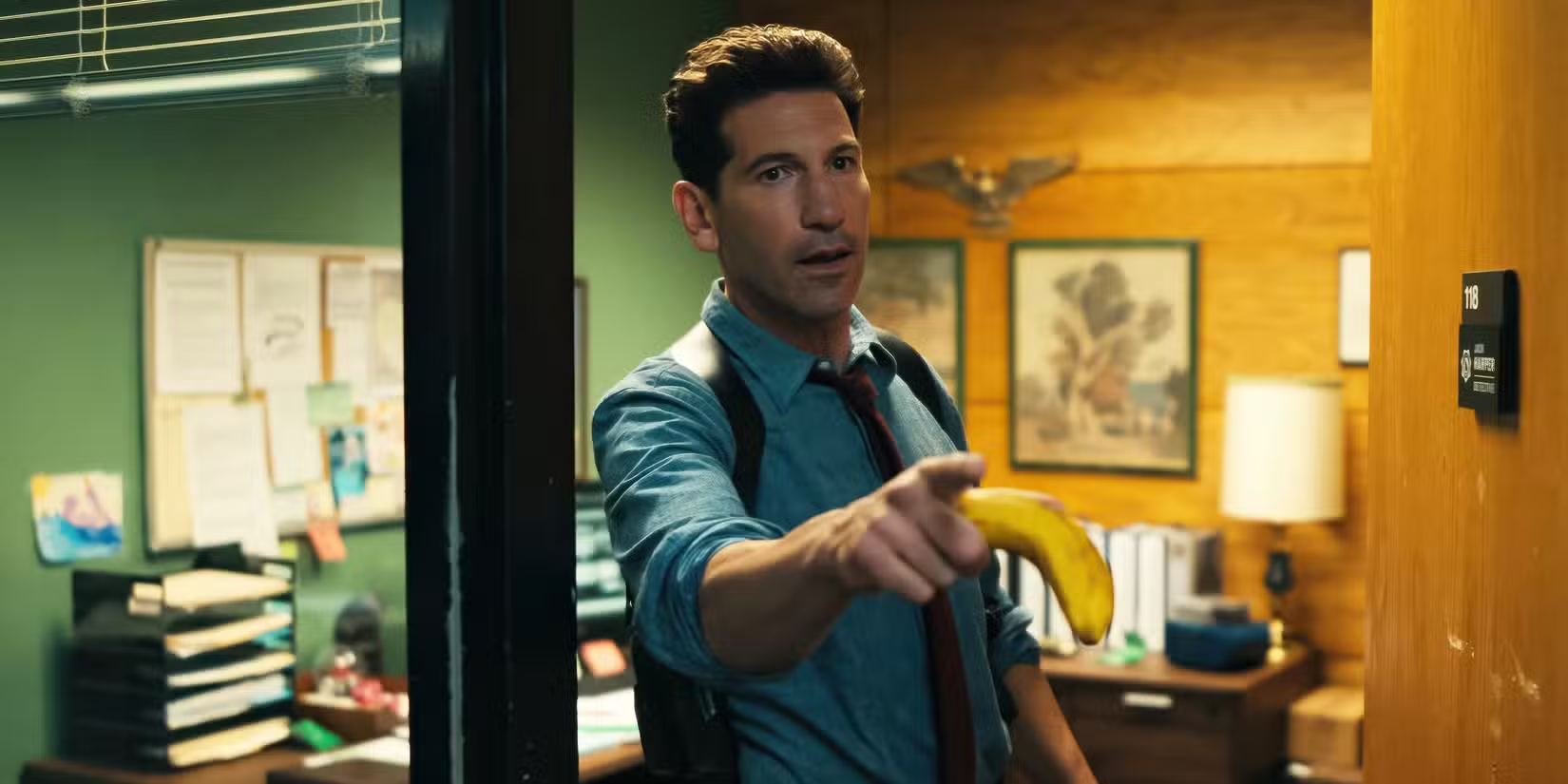
Jon Bernthal’s Jack Harper pointing with a banana in His & HersImage via Netflix
For over a decade, streamers trained audiences to think long-term. Every show needed to become a universe, and every hit required a spin-off, an expanded mythology, or a roadmap stretching five seasons into the future. At some point, that stopped feeling exciting. The Nielsen rankings say a lot about where viewers are now. His & Hers finished ahead of Bridgerton, Fallout, and Knight of the Seven Kingdoms, a prequel attached to one of the biggest television franchises ever made.
People are tired. They don’t want to spend three seasons waiting for a show to find itself or wrap up. There is also, presumably, no real desire from a vast majority of people—though some do love an analysis—to own spreadsheets on fictional bloodlines or rewatch old episodes before a new season drops two years later. Some folks just want to press play, get hooked fast, and reach an ending before the algorithm distracts them with something else. Limited series solve that problem neatly because there’s no commitment anxiety or fear that the show will get canceled on a cliffhanger or sense you’re signing a contract with the streaming service itself.
Advertisement
Collider Exclusive · Horror Survival Quiz Which Horror Villain Do You Have the Best Chance of Surviving? Jason Voorhees · Michael Myers · Freddy Krueger · Pennywise · Chucky
Advertisement
Five killers. Five completely different ways to die — if you’re not smart enough, fast enough, or self-aware enough to avoid it. Only one of them is the villain your particular set of instincts gives you a fighting chance against. Eight questions will figure out which one.
🏕️Jason
🔪Michael
💤Freddy
🎈Pennywise
Advertisement
🪆Chucky
Advertisement
01
Something feels wrong. You can’t explain it — you just know. What do you do? First instincts are the difference between the survivor and the first act casualty.
Advertisement
02
Where are you most likely to find yourself when things go wrong? Setting is everything in horror. Where you are determines which rules apply.
Advertisement
03
What is your most reliable survival asset? Every survivor has a quality the villain didn’t account for. What’s yours?
Advertisement
04
What kind of fear is hardest for you to fight through? Knowing your weakness is the first step to not dying because of it.
Advertisement
05
You’re with a group when things start going wrong. What’s your role? Horror movies are brutally clear about who survives group situations and who doesn’t.
Advertisement
06
What’s the horror movie mistake you’re most likely to make? Honest self-assessment is a survival skill. Denial is not.
Advertisement
07
What’s your best weapon against something that can’t be stopped by conventional means? Every horror villain has a weakness. The survivors are always the ones who find it.
Advertisement
08
It’s the final scene. You’re the last one standing. How did you make it? The final survivor always has a reason. What’s yours?
Advertisement
Your Survival Odds Have Been Calculated Your Best Chance Is Against…
Your instincts, your strengths, and your particular way of thinking under pressure point to one villain you actually have a fighting chance against. Everyone else — good luck.
Advertisement
Camp Crystal Lake · Friday the 13th
Jason Voorhees
Jason is relentless, but he is also predictable — and that is the gap you would exploit.
He moves in straight lines toward his target. He doesn’t strategise, doesn’t adapt, doesn’t outsmart. He simply pursues.
Your ability to keep moving, use the environment, and resist the panic that freezes most victims gives you a genuine edge.
The Crystal Lake survivors were always the ones who stopped running in circles and started thinking about terrain, water, and distance.
You think like that. Which means Jason, for all his indestructibility, would face someone who simply refused to be where he expected.
Advertisement
Haddonfield, Illinois · Halloween
Michael Myers
Michael watches before he moves. He is patient, methodical, and almost impossible to detect — until it’s too late for anyone who isn’t paying close enough attention.
But you are paying attention. You notice the shape in the window, the car parked slightly wrong, the silence where there should be sound.
Michael’s power lies in the invisibility of ordinary suburbia — the fact that nothing ever looks wrong until it already is.
Your spatial awareness and instinct to map every room, every exit, and every shadow before you need them is precisely the quality Laurie Strode had.
You are not a victim waiting to happen. You are someone who already suspects something is wrong — and acts on it.
Advertisement
Elm Street · A Nightmare on Elm Street
Freddy Krueger
Freddy wins by getting inside your head — using your own fears, your own memories, your own subconscious as weapons against you. That strategy requires a target who can be destabilised.
You are harder to destabilise than most. You’ve faced uncomfortable truths about yourself and you haven’t looked away.
The survivors on Elm Street were always the ones who understood what was happening and chose to face it rather than flee from it.
Freddy’s greatest weakness is that his power evaporates in the presence of someone who refuses to give him the fear he feeds on.
Your psychological resilience — the ability to stay grounded when reality itself becomes unreliable — is exactly the quality that keeps you alive here.
Advertisement
Derry, Maine · It
Pennywise
Pennywise is ancient, shapeshifting, and feeds on terror — but it has one critical vulnerability: it cannot function against someone who genuinely stops being afraid of it.
The Losers Club didn’t survive because they were braver than everyone else. They survived because they faced their fears together, and faced them honestly.
You ask the questions others avoid. You look directly at what frightens you rather than turning away.
That directness — the refusal to let fear fester in the dark — is Pennywise’s worst nightmare.
It chose the wrong target when it chose you. You are exactly the kind of person whose fear tastes like nothing at all.
Advertisement
Chicago · Child’s Play
Chucky
Chucky’s greatest advantage is that nobody takes him seriously until it’s already too late. He exploits the gap between how something looks and what it actually is.
You don’t have that gap. You take threats seriously regardless of how they present — and you never make the mistake of underestimating something because of its size or appearance.
Chucky relies on surprise, on the delay between recognition and response. You close that delay faster than almost anyone.
Your instinct to treat every unfamiliar thing with appropriate scepticism — rather than dismissing it because it seems absurd — is the exact quality that keeps you breathing.
Against Chucky, not laughing is already winning. You are very good at not laughing.
Advertisement
‘His & Hers’ Didn’t Need To Be Prestigious
Tessa Thompson’s Anna standing in the doorway in His & HersImage via Netflix
Advertisement
Streaming thrillers have figured out something prestige television occasionally forgets: viewers will forgive almost anything except boredom. Plot holes? Fine. Over-the-top twists? Sure. Dialogue that sounds like it was written during a Red Bull binge at 3 a.m.? Audiences can survive that, too, if the pacing works, and it does in this show.
The show constantly throws suspicion around like confetti. Every character looks guilty, every episode ends by yanking the floor out from under the last reveal. It doesn’t really matter whether all the twists hold up under forensic scrutiny afterward. By then, Netflix had already won the weekend. Not every thriller has to arrive announcing itself as Important Television. Sometimes audiences just want a glossy disaster full of beautiful actors accusing each other of murder for six straight hours.
The Streaming Boom Is Fueling a Mini-Series Arms Race
Jon Bernthal as Detective Jack Harper sitting next to Tessa Thompson as Anna Andrews in His & HersImage via Netflix
Advertisement
What’s happened with His & Hers also reflects a larger shift inside streaming itself. Executives clearly see the demand, and every platform is hunting for the next twist-heavy adaptation with a recognizable cast and an easy elevator pitch. That explains the flood of shows arriving lately: murder mysteries, suburban secrets, unreliable narrators, missing women, messy marriages, dead teenagers, and suppressed trauma. Most are adapted from bestselling paperbacks somebody finished in two flights and immediately optioned.
Limited thrillers fit streaming better than almost any other format. They provide instant interaction with viewers, encourage binge-watching, and allow quick, short conversations online without needing to plan years in advance. Plus, they are less expensive than an epic fantasy, easier to promote and market than a sitcom or comedy, and can still thrive because of audience curiosity, even if reviewers give mixed reviews. His & Hers may not end up remembered alongside the truly great limited series, and it probably won’t have the legacy of Mare of Easttown or the precision of early Big Little Lies, but it tapped into the exact viewing habit driving streaming television right now.
“Oh, hi, if you’re seeing this video, this is a reminder that a straight, white male [who is a] former reality star that has no previous experience in government should not be a legitimate political candidate,” Handler, 51, said in a Friday, May 15, video shared via TikTok. “Have we learned anything yet?”
Handler uploaded a photo of Pratt, 42, next to one of President Donald Trump, who famously hosted The Apprentice nearly a decade before running for office. (Trump, 79, was elected president non-consecutively in 2016 and 2024.)
“The bar is on the f***ing floor, people,” Handler lamented on Friday. “I need you to jump over it. OK thank you, have a nice day!”
Community alum Yvette Nicole Brown cannot believe notorious reality TV villain Spencer Pratt could pull ahead in the Los Angeles race for mayor. “This nation is unserious and has learned nothing. 💔,” Brown, 54, wrote via Threads on Friday, April 24, seemingly referring to President Donald Trump, a former reality TV star-turned-politician. Brown also reposted […]
Pratt, best known for his appearance on MTV’s The Hills alongside wife Heidi Montag, announced his candidacy for mayor in January.
Advertisement
“The only way I see God letting my parents’ house burn down and my house burn down is that God knows it’s the only way to turn me against a system that lets this happen to tens of thousands of people,” Pratt exclusively told Us Weeklyin his cover story. “In a best-case scenario, I would have helped at least 10,000 people to get 70 percent of what they got taken from them. That would be poetic.”
He continued, “Winning the mayor’s race will be a victory for truth and transparency, which is what I’ve been fighting for this whole year. The end goal is the same: to shine a light into the darkness.”
Pratt and Montag, 39, lost their home in the devastating wildfires that swept through Los Angeles in January 2025.
The Hills star Audrina Patridge honestly hopes her former costar Spencer Pratt becomes the next mayor of Los Angeles. “I’m actually excited,” Partridge, 40, exclusively told Us Weekly on Friday, May 1, while attending Calamigos Ranch Resort & Spa’s Leading Hotels of the World accreditation celebration. “He impressed me. I listened to some of his […]
Advertisement
“We put all of our money into our house and our life to build something for our kids to put in their name and every detail we just kept on every year for the last eight years,” Pratt told Us last year. “Our house was 3,000 square feet. It is not a mansion in the Palisades. Everything was perfect from the stoves to the washing machines.”
He added at the time, “That’s all we put our money into — and then we go and eat nice groceries at Erewhon. But our life was like, ‘Put our money into our house, eat clean groceries and that’s it.’ We go on one trip a year to see Heidi’s parents in Colorado.”
As Pratt is focused on his campaign, he’s received mixed reviews of his candidacy but continues to remain unbothered about any backlash.
One of the hardest things about enjoying dystopian sci-fi is how time continues to march forward, and suddenly we’re looking back at 1995’s Strange Days in the year 2026, knowing full well that Y2K’s initial threat never came close to living up to expectations. It’s easy to write off films like Strange Days for this reason alone because we all lived to see another day, despite the many kernels of truth peppered throughout the film’s premise. It’s worth noting, though, that the film isn’t nearly as dated as you might think, as it taps into present-day issues like police brutality, government overreach, device addiction, and a general sense of technology-driven apathy and malaise.
One of the unfortunate realities about Strange Days is that it’s nearly impossible to watch online. However, this isn’t due to some grand Orwellian conspiracy once you look at the numbers. Even though Roger Ebert gave Strange Days a perfect four-star rating, and the film currently boasts a 71 percent critical score on Rotten Tomatoes, the simple fact of the matter is that it only grossed $17 million at the box office against its reported $42 million production budget.
In other words, Strange Days, despite its acclaim, is still very much in the red, and when you consider the complicated, longstanding rights issues associated with the film, it’s not exactly a desirable IP for streaming platforms to pick up.
One SQUID To Rule Them All
Strange Days opens with a literal bang as we witness a Chinese restaurant getting held up at gunpoint. It’s shot from a frantic first-person perspective, and the robbery quickly goes off the rails. The building is surrounded by police, there’s a frenetic chase sequence, and after trying to jump from one city rooftop to the next, the person whose head we’re living in loses his grip and falls to his death, which introduces us to our protagonist, Lenny Nero (Ralph Fiennes).
Lenny is a former LAPD officer turned black market purveyor of the highly illegal, highly addictive SQUID (Superconducting Quantum Interference Device), a sort of virtual reality technology that allows its users to live somebody else’s memories as if they were their own. Lenny gets a kick out of watching the memories, which are stored on small CD-ROMS, when he retrieves them from his hookup, Tick (Richard Edson), before selling them off for a profit. He’s essentially a drug dealer because people become addicted to the dopamine rush that comes from living vicariously through somebody else’s memories and experiencing every sensation as if they were their own.
In between his black market business ventures, Lenny often throws on discs featuring memories with his rock band fronting ex-girlfriend, Faith (Juliette Lewis), while downplaying his obsession whenever he’s around Mace (Angela Bassett), a limo driver and bodyguard who doesn’t like how deep into the SQUID technology he’s getting. She doesn’t want to see him go off the deep end because when he was a cop, he functioned as a father figure to her young son after her abusive boyfriend was arrested and Lenny was the officer on the scene.
When a SQUID disc depicting a murder is dropped through the sunroof of Lenny’s car by a frightened prostitute named Iris (Brigitte Bako), Lenny, Mace, and private investigator Max (Tom Sizemore) try to figure out exactly what’s going on. While this initial murder investigation is underway, a far more sinister plot emerges involving Faith’s new record executive boyfriend, Philo Gant (Michael Wincott), and the recently murdered rapper and activist he used to manage, Jeriko One (Glenn Plummer).
Advertisement
When Cyberpunk And Neo-Noir Aesthetics Collide
Like most dystopian films, everything looks simultaneously modern and rundown, and the LA backdrop does so much heavy lifting in Strange Days. Really, all you need to make the imagery pop is wet streets and plenty of neon, and there’s no shortage of either here. Throw in police-state chaos and a murder mystery that slowly unfolds through the voyeuristic SQUID technology as Lenny finds more discs pointing him in the right direction, and you have a solid neo-noir plot where nobody can be trusted because everybody’s up to something.
Lenny and Mace keep the whole film grounded because they trust each other, but with everybody else whispering in their ears, they’re truly going it alone, which becomes terrifying once you consider Lenny’s increasing dependence on SQUID and Mace’s unwillingness to watch somebody she loves destroy himself.
Everything about Strange Days still holds up today if you ignore the whole Y2K angle, but in my mind, that just makes it a time capsule from a very specific moment in history. The SQUID technology is more relevant than ever because it hints at the kind of media addiction we live with today. The Jeriko One storyline points to much larger systemic issues involving racism and the horrors of living in a police state where every officer is corrupt and pushing some sort of ulterior agenda. But what makes Strange Days a truly timeless piece of cinematic art is its gritty aesthetic, shifts in perspective, and willingness to hold back major reveals until absolutely necessary, giving the mystery layer upon layer that rewards multiple viewings.
Strange Days is uncomfortable, addictive, and, at its core, a thrilling mystery that slowly unravels across 145 minutes without ever skimping on style or favoring it over substance. James Cameron was right to pen the screenplay with director Kathryn Bigelow in mind because she clearly understood the assignment.
As of this writing, Strange Days is not available on streaming or on demand. The best way to watch the film is to track down a physical copy on Amazon or keep your eyes peeled the next time you’re at the thrift store. Even then, you might have a hard time finding it because it’s been out of print for quite some time.
Sometimes the version of a film that audiences first see isn’t the one the director actually intended. Several factors, including studio interference and runtime constraints, can often shape a movie into something more digestible but less complete. The director’s cut, when it exists, is an attempt to reclaim that lost vision.
With that in mind, this list looks at the most striking cases where the filmmaker’s preferred version was a significant step up from the theatrical release. In some cases, these alternate versions merely add interesting material or improve upon the existing version by adding more details, fleshing out characters, or maybe even reframing the action. In others, they completely transform the movie itself, resulting in something that feels entirely different.
Advertisement
‘Blood Simple’ (1984)
blood-simple-frances-mcdormand-social-featureImage via Circle Films
“You’re not that smart, Marty.” In the Coen brothers‘ feature debut, a bar owner (Dan Hedaya) hires a private investigator (M. Emmet Walsh) to kill his wife (Frances McDormand) and her lover (John Getz), setting off a chain of misunderstandings and escalating violence. It’s a noirish, brutal story shot through with delectably dark humor. The original theatrical version is already a tightly wound thriller, but the director’s cut trims and refines key moments.
Unusually, this is an instance where the director’s cut is actually shorter than the original, in this case by 2 minutes and 35 seconds. It nixes some short filler scenes and unnecessary shots and adds in a few extended shots, and also changes one of the songs in the soundtrack. This version shows how small adjustments, like slight edits and subtly restructured sequences, can significantly improve a movie’s flow.
Advertisement
‘Almost Famous’ (2000)
Kate Hudson as Penny Lane and Patrick Fugit as William Miller in Almost FamousImage via DreamWorks Distribution LLC
“I am a golden god!” This gem from Cameron Crowe follows William Miller (Patrick Fugit), a teenage journalist who goes on tour with a rising rock band in the 1970s. It’s a funny, touching story populated by complex and vivid characters. The DVD release came with a director’s cut that adds a whopping 40 minutes of additional footage, which most fans consider to be the definitive version.
This extra runtime gives the movie a lot more room to breathe. Characters like Elaine Miller (Frances McDormand), Russell Hammond (Billy Crudup), Penny Lane (Kate Hudson), and even the band members themselves gain additional scenes that make them feel more even human and layered. It really adds to the immersion (while also making certain gags even funnier). This cut is less polished than the theatrical release, but that’s part of its charm.
Advertisement
‘Watchmen’ (2009)
Rorschach (Jackie Earle Hailey) stands looking at a bloodied badge while the full moon glistens behind him in ‘Watchmen’ (2009).Image via Warner Bros. Pictures
“I’m not locked in here with you. You’re locked in here with me!” Zack Snyder‘s name is the first that comes to mind when you think “director’s cut,” most famously with regard to Justice League. However, his preferred version of Watchmen is also superior to the original release. Based on the legendary comics by Alan Moore and Dave Gibbons, the movie follows a group of retired vigilante superheroes investigating the murder of one of their own.
The “Ultimate Cut” version adds a full 53 minutes of content, including the Tales of the Black Freighter animated sequence. This version is truer to the source material and adds new layers to the story, giving us more insight into the characters’ psychology. Sure, casual viewers may find this longer cut overwhelming, but diehard fans are likely to find it more satisfying.
Advertisement
‘Zack Snyder’s Justice League’ (2021)
Image via Max/Warner Bros. Pictures
“We’re asking people we don’t know to risk their lives.” Justice League sees Batman (Ben Affleck) recruiting Wonder Woman (Gal Gadot), Aquaman (Jason Momoa), The Flash (Ezra Miller), and Cyborg (Ray Fisher) to stop the alien conqueror Steppenwolf (Ciarán Hinds) from collecting the Mother Boxes and transforming Earth into a wasteland. Notoriously, the movie was heavily reshaped by Joss Whedon after Snyder stepped away during post-production, with most fans disappointed in the theatrical release.
The Snyder Cut quickly became a Holy Grail among fans, who clamored for its release. Their wishes were granted in 2021, when HBO Max released Snyder’s preferred version, which includes many scenes that Whedon had removed. These add some much-needed world-building and generally expand the film’s mythology. Fans and critics alike preferred this cut, though it’s admittedly pretty long at 242 minutes (the theatrical cut is just 120). The Snyder Cut is among the rare cases when the director’s cut is an outright different movie, and it’s for the best.
Advertisement
‘The Abyss’ (1989)
Image via 20th Century Studios
“You have to look with better eyes than that.” One of James Cameron‘s most underrated movies, The Abyss centers on a team of underwater oil drillers recruited by the U.S. Navy to investigate a sunken submarine, only to encounter something far more mysterious beneath the ocean’s surface. Unfortunately, the original theatrical release was heavily trimmed due to production problems and studio concerns about runtime, weakening the film.
Cameron’s preferred Special Edition was eventually released in 1993, and it’s dramatically better than the theatrical cut. This version is 26 minutes longer and restores some crucial scenes, while also adding great new special effects. It lets the awe and mystery of the underwater environment settle in more deeply instead of constantly rushing toward the next plot beat. Overall, this cut feels much more immersive.
Advertisement
‘Aliens’ (1986)
Sigourney Weaver as Ellen Ripley looking intently ahead in Aliens.Image via 20th Century Studios
“They mostly come at night… mostly.” Another banger from Cameron. The original release of Aliens is already a masterclass in tension and action, but the director’s cut enriches it even further. It’s 20 minutes longer, with improved pacing and fan-favorite moments like the sentry gun scenes. Other additions expand the colony’s early moments and the buildup to the disaster. Most importantly, though, this version adds a lot of material involving Ripley’s (Sigourney Weaver) daughter.
We learn that Ripley’s daughter Amanda (Elizabeth Inglis) grew old and died while Ripley was in hypersleep. She was just 10 years old when they last saw each other. This information changes the emotional meaning of the entire movie and makes Ripley’s relationship with Newt (Carrie Henn) vastly more powerful. All in all, this cut adds more emotion and melancholy to the action-packed spectacle.
Advertisement
‘Brazil’ (1985)
A man with a baby mask near the end of Terry Gilliam’s Brazil (1985)Image via Universal Pictures
“We’re all in it together, kid.” Terry Gilliam‘s oddball masterpiece features Jonathan Pryce as Sam Lowry, a low-level bureaucrat in a dystopian society dominated by surveillance, endless paperwork, and more than a little absurdity, as he becomes entangled in a case of mistaken identity. The studio-mandated version attempted to impose a more conventional, optimistic structure on the film. The director’s cut rejects this entirely, embracing the story’s darker, more surreal trajectory.
In this version, which was only released in its full director’s preferred iteration in 1999, the satire becomes sharper, and the story ends on a decidedly bleak note. This movie is not meant to be reassuring, so forcing a happy ending to it was a nonsensical creative decision. The studio version undermines Brazil‘s central idea by pretending the nightmare can simply be outrun. Gilliam’s cut, by contrast, offers no escape.
Advertisement
‘Kingdom of Heaven’ (2005)
Orlando Bloom and Velibor Topic in Kingdom of Heaven 2005Image via 20th Century Studios
“What man is a man who does not make the world better?” Audiences’ expectations for Kingdom of Heaven were sky-high, with many hoping it would be a thrilling historical epic like Gladiator. However, the theatrical release drew mixed reviews, with many criticizing its pacing and lack of depth. Released a few months later, the director’s cut totally transformed the movie’s reputation. It adds 45 minutes of footage and, critically, significantly deepens the main characters’ motivations.
We get emotional subplots, fuller backstories, and even more visceral action scenes. In the original, the protagonist Balian (Orlando Bloom) feels passive and underwritten, but the director’s cut helps explain his crisis of faith and his grief over his wife’s death. It makes his gradual evolution from blacksmith to reluctant leader much more impactful, going from being a one-note figure to a genuinely conflicted hero.
Advertisement
‘Once Upon a Time in America’ (1984)
Image via Warner Bros.
“I slipped.” Once Upon a Time in America was meant to be Sergio Leone‘s swan song, a sweeping crime opus charting David “Noodles” Aaronson’s (Robert De Niro) rise within the criminal underworld. Sadly, it suffered one of the most infamous studio edits in film history, with its theatrical release drastically restructured and shortened. It chopped the director’s 269-minute version down to a meager 139 minutes, jettisoning so much crucial material.
Needless to say, Leone’s preferred cut is in another league compared to the studio version. It dramatically deepens the relationships between the central gang members, especially Noodles and Max (James Woods). Pacing-wise, Leone’s version allows scenes to unfold slowly, where the theatrical cut tries to force them into a more conventional gangster-film rhythm. The slowness of the director’s cut is essential because the film is fundamentally about time: how decades reshape people, friendships, cities, and dreams.
Advertisement
‘Blade Runner’ (1982)
Image via Warner Bros. Pictures
“I’ve seen things you people wouldn’t believe.” Ridley Scott strikes again. His preferred cut of Blade Runner finally came out in 1992, improving the movie in several important ways. Most notably, it leans heavily into the ambiguity of Deckard (Harrison Ford) being a replicant. It does so by removing the protagonist’s voice-over narration and the studio-mandated “happy ending” and adding in the unicorn dream sequence.
The latter scene is perhaps the most famous addition because it radically deepens the film’s central mystery. Indeed, it implies that Deckard’s memories may themselves be artificial. As a result, instead of reassuring the audience, the director’s cut of Blade Runner leaves viewers suspended in uncertainty. That unresolved tension is central to why the film became such a landmark work of science fiction. It restores the movie to the philosophical noir poem it was always meant to be.
Enterprise was the last show from the Golden Age of Star Trek, and it was very different than the series that had come before. This new show wasn’t afraid to be weird and wild, which is why it had both a smoking hot Vulcan lady in a catsuit and an ongoing excuse to have the actors strip down to their undies and massage each other (seriously, every D-Con chamber scene looks like a vintage Cinemax skin flick). Its characters were also much rougher around the edges, which is why characters like Trip Tucker get to be believably flawed compared to more polished characters like Commander Riker or Captain Picard.
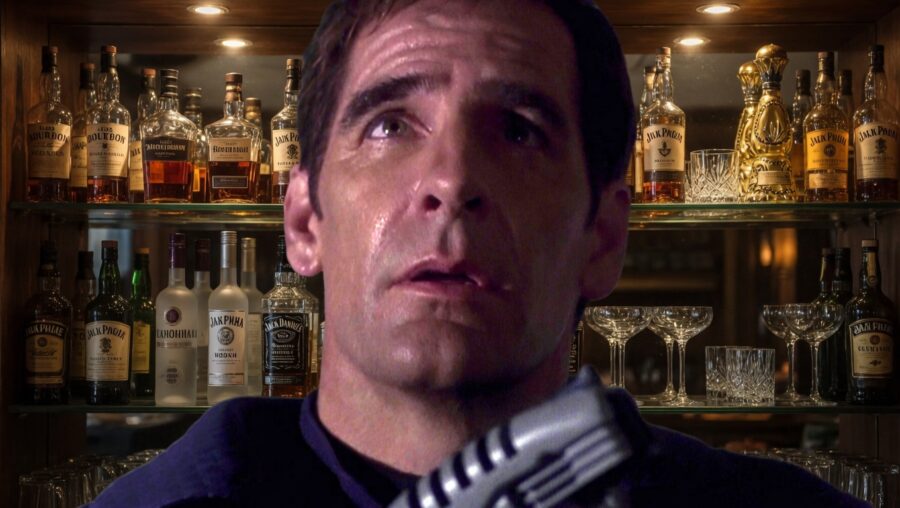
In Enterprise, Trip gets into some crazy hijinks, including getting tied up and stripped down while chasing tail on an alien sex planet. As it turns out, though, some of the character’s onscreen misadventures may have taken inspiration from the actor’s own drunken hijinks. While filming the very first episode of Enterprise, Trip Tucker actor Connor Trinneer crashed a Paramount party, abused the open bar, and stole four entire bottles of alcohol from the bar. The next day, he worried about losing his job when he got what every drinker dreads: a surprise phone call from his big boss!
The Sexiest, Sweatiest Star Trek Series
On Enterprise, Connor Trinneer plays Trip Tucker, the friendly chief of engineering. With his southern drawl and amiable demeanor, Trip is one of the warmest members of the entire crew. But he was still rough around the edges, often clashing with the Vulcan T’Pol as part of their compelling “will they, won’t they” dynamic. He also loves to party, which sometimes gets him in trouble. On one occasion, he gets pregnant after hooking up with an exotic alien. On another occasion, he and Reed were so horny on the planet Risa that they followed two alien women into a club’s basement; the “ladies” shapeshift into men, tying up and robbing the Starfleet officers.
Trinneer was always good at bringing his character’s exploits to life. One possible reason for this is that the actor has had a few of his own drunken misadventures over the years. The most notorious of these happened when he was filming “Broken Bow,” the very first episode of Star Trek: Enterprise. The night before some important scenes were scheduled for filming, Trinneer discovered a party on the Paramount lot. The party had nothing to do with Trek; instead, it was a party held to appeal to would-be foreign advertisers. Regardless of who the party was for, though, Trinneer attended and discovered that it had the one thing every boozehound loves to find: free alcohol!
Away Team, Party Of One
On the special features for the Season 1 Enterprise Blu-rays, Connor Trinneer revealed that not only did he crash this particular party, but he also took major advantage of the free hooch. Once he got drunk enough, he decided to keep the party going in the most brazen way. That is, he snuck behind the bar and stole four entire liquor bottles, bringing them all home with him! It really was theft, too: not only was he not an invited guest, but nobody was authorized to walk away with the alcohol behind the bar. But he wasn’t too worried at the time. After all, what’s the worst that could happen?
The next day, the worst did happen: Trinneer got a phone call from Rick Berman. Now, Berman wasn’t just any bigwig. He was the executive producer overseeing the entire franchise and, effectively, the man in charge of all things Star Trek. For the actor, this was like getting a phone call from his boss’s boss’s boss. Like many of us would in his place, Trinneer assumed he was in trouble and thought that he was about to get fired. Understandably, he was full of regret because, as far as he knew, he was about to lose a life-changing acting gig because of a drunken workplace crime.
Advertisement
That Face When Your Boss Calls
As it turns out, though, Rick Berman knew absolutely nothing about Connor Trinneer’s hijinks from the night before. The executive producer was simply calling the actor with news about his Enterprise character. The character’s real name was Charles Tucker, but he was originally going to go by the nickname “Spike.” When Berman called Trinneer, he just wanted him to know that the producers had decided that the character’s nickname was going to be “Trip” instead.
Relief flooded through Trinneer when he discovered the reason for Berman’s call. He had gotten away with it! Not only did he crash a party and get wasted for free, but he came home with plenty of extra alcohol. Considering that he kept his cool and kept his job, he even had a reason to pour himself a glass and celebrate. Of course, you could say that Rick Berman got his own revenge: years later, he killed off Trinneer’s character for no real reason, a decision that the Enterprise fandom still mourns to this day.
Us Weekly has affiliate partnerships. We receive compensation when you click on a link and make a purchase. Learn more!
It’s no secret that Kelly Rutherford has mastered luxe dressing with approachable, fashion-forward pieces that we constantly use for inspiration. Just in time for summer, her latest look included a dreamy white dress that’s at the top of our wish lists, and it’s one we found a surprisingly similar version of for under $40.
The Tributaries actress posted on Instagram, posing in a lightweight white midi dress that gives off total New York City rich mom vibes. She paired it with black cat-eyed sunglasses, a Hermès Birkin bag, ballet flats and leather watch. But let’s face it: Her dress is the main center of attention. While we don’t know exactly where Rutherford snagged hers, we’re willing to bet it cost triple the price of this budget-friendly style.
The PrettyGarden summer maxi dress has a smocked bodice, squared neckline and puffed sleeves, just like Rutherford’s choice. Our Amazon pick even has a smocked bodice that’s both bohemian and flattering due to its figure-hugging texture. The only minor difference is the tiered, lined skirt, which if you ask Us, adds an additional luxe detail to the piece. Oh, and it has pockets! No one will know it’s not the exact same dress as the A-lister’s.
Not blue, not white! Katie Holmes stepped out in New York City rocking retro purple jeans. Unconventional, yes, but so incredibly chic. The pants gave Holmes’ style a vintage flair, and we found the fun look for 30% off on Amazon. In an iconic head-turning outfit, Holmes paired purple jeans with a simple black cardigan, […]
Though this flowing midi dress style can be dressed up or down, Rutherford showed an especially chic way to elevate the piece with timeless neutral accessories that streamline look. The combination is undeniably polished, especially with her ballet flats. However, we could also see the dress worn casually with a pair of white sneakers and a denim jacket.
The dress style is also perfect for a vacation to the tropics; wear it with buckled sandals and a woven raffia crossbody bag, and you’re ready to hit the boardwalk. Jewelry like pendant necklaces, bangle bracelets or charm drop earrings will also add a delicate feel to the look, which can easily transition from day to night.
Clearly, Rutherford’s on the right path with her midi dress. Savvy shoppers are also fans, including one reviewer who deemed it as “very attractive” and said they “receive many compliments” while wearing it. Another consumer in her 40’s shared that the style is “comfy, good quality and affordable,” noting that it looked equally wonderful on both her and her teenage daughter. Sounds like a win to Us!
Advertisement
With its flattering, elevated details and versatility, it’s easy to see why a flowing midi dress like Rutherford’s style is a must-have for summer. The piece takes minimal effort to style, and can easily be dressed up or down depending on your needs. Plus, our pick’s light feel, opaque base and pockets are ideal for wearing in warmer weather, especially during long stretches of time. Consider this your new summer uniform.
It seems like every time we open Instagram, another influencer is telling Us that something we love wearing is suddenly uncool. We’ve decided to stop paying attention, especially when it comes to the debate about Bermuda shorts. Not everyone wants to rock booty-baring options, and after seeing how Selma Blair styled her denim pair, we’re totally sold on […]
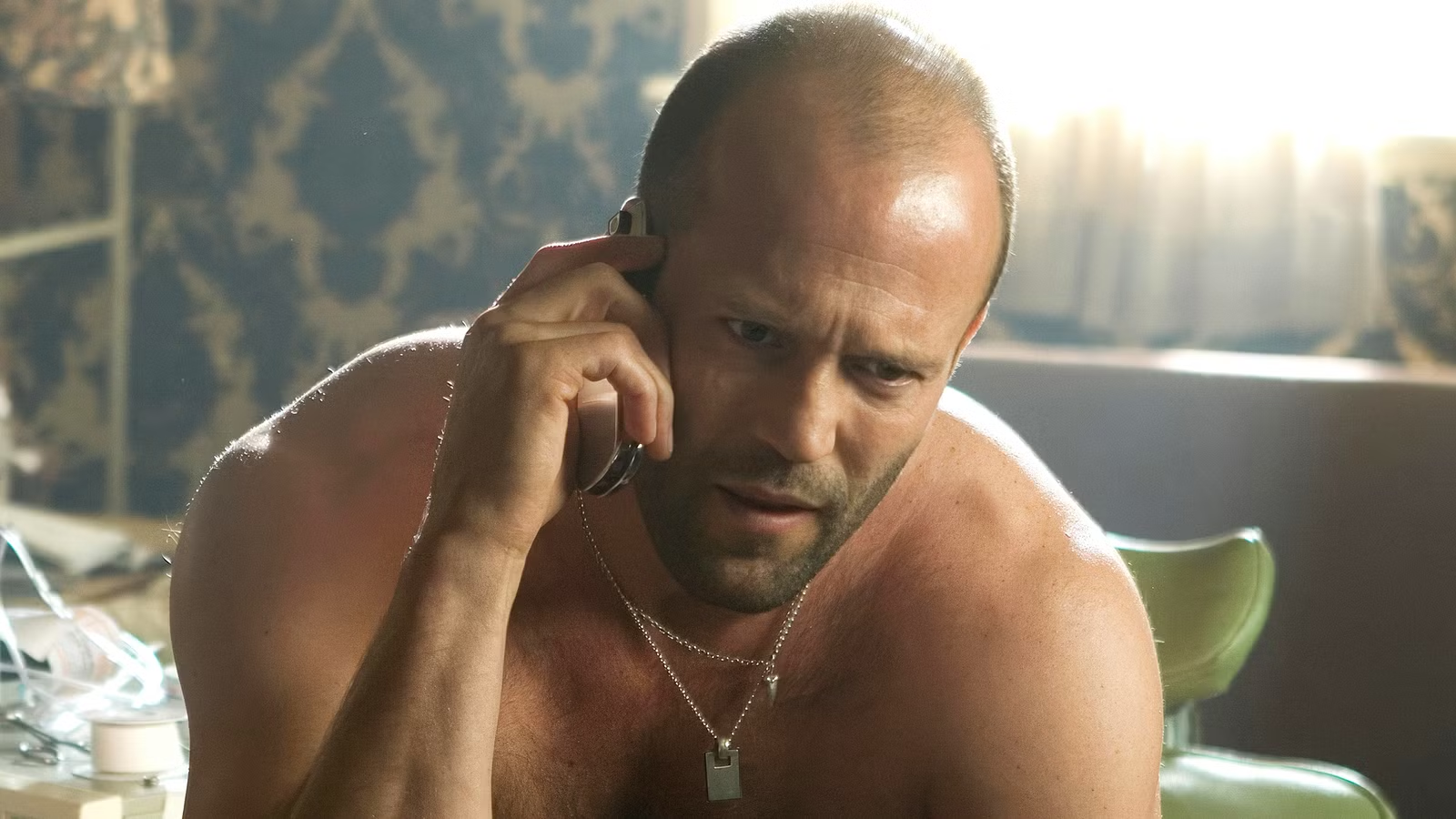
Jason Statham talking on the phone in ‘Crank’Image via Lionsgate
Fans of Jason Statham ironically chose to shelter in place when they were presented with an opportunity to watch his latest action-thriller, Shelter. The movie grossed just $53 million worldwide against a reported budget of $50 million, emerging as his lowest-grossing release since Operation Fortune: Ruse de Guerre, which was released in 2023. That film, a crime caper directed by Statham’s longtime collaborator Guy Ritchie, grossed $49 million worldwide against a $50 million budget. Over the years, even Statham’s non-franchise titles have become more expensive. There was a time, however, when he was knocking out modestly produced action movies that routinely turned a solid profit.
One of his earliest and most beloved action hits turns 20 this year. The movie is currently streaming on Peacock in the United States, but it won’t hang around on the streamer for much longer. The film in question was directed by Mark Neveldine and Brian Taylor, who’ve since split up. It stood out in the crowd for the filmmakers’ energetic aesthetic and Statham’s committed performance as an assassin who must constantly keep his adrenalin up or risk death. It also featured Amy Smart and Dwight Yoakam in supporting roles, and was successful enough to spawn a sequel.
Advertisement
Advertisement
Collider Exclusive · Action Hero Quiz Which Action Hero Would Be Your Perfect Partner? Rambo · James Bond · Indiana Jones · John McClane · Ethan Hunt
Five legends. Five completely different ways of getting out alive — with style, with muscle, with charm, with luck, or with a plan so intricate it probably shouldn’t work. Ten questions will reveal which action hero was built to have your back.
🎖️Rambo
🍸James Bond
🏺Indiana Jones
Advertisement
🔧John McClane
🎭Ethan Hunt
Advertisement
01
You’re dropped into a dangerous situation with no warning. What do you need most from a partner? The first few seconds tell you everything about who belongs beside you.
Advertisement
02
You have to get somewhere dangerous, fast. How do you travel? How you get there is half the mission.
Advertisement
03
You’re pinned down and outnumbered. What does your ideal partner do? This is when you find out what someone is really made of.
Advertisement
04
The mission is paused. You have one evening to decompress. What does your partner suggest? Who someone is when the pressure drops is who they actually are.
Advertisement
05
How do you prefer your partner to communicate mid-mission? Good communication is the difference between partners and a liability.
Advertisement
06
Your enemy is powerful, well-resourced, and has the upper hand. How should your partner approach them? The approach to the enemy defines the partnership.
Advertisement
07
Things go badly wrong and you’re captured. What do you trust your partner to do? Who someone is when you need them most is the only thing that matters.
Advertisement
08
What does your ideal partner bring to the table that you couldn’t replace? A great partner fills the gap you didn’t know you had.
Advertisement
09
Every partnership has a cost. Which of these can you live with? No one comes without baggage. The question is whether you can carry it together.
Advertisement
10
It’s the final moment. Everything is on the line. What do you need from your partner right now? The last question is the most honest one.
Advertisement
Your Partner Has Been Assigned Your Perfect Partner Is…
Your answers have pointed to one action hero above all others. This is the person built to have your back — for better or considerably, spectacularly worse.
Advertisement
Rambo
Your partner doesn’t talk much, doesn’t need to, and will have assessed every threat in your immediate environment before you’ve finished your first sentence. John Rambo is not a man of plans or politics — he is a force of nature shaped by survival, loyalty, and a capacity for endurance that goes beyond anything training can produce. He will not leave you behind. He has never left anyone behind who deserved to come home. What you get with Rambo is the most capable, most quietly ferocious partner imaginable — one who has been through things that would have broken anyone else, and who chose to keep going anyway. You’ll never need to ask if he has your back. You’ll just know.
James Bond
Advertisement
Your partner will arrive perfectly dressed, perfectly briefed, and with a cover story so convincing it’ll take you a moment to remember what’s actually true. James Bond is the most professionally dangerous person in any room he enters — and the most disarmingly charming, which is the point. He operates in a world of layers, where nothing is what it appears and every advantage is used without apology. You’ll never be bored. You’ll occasionally be furious. But when it matters — when the mission is genuinely on the line and the margin for error has collapsed to nothing — Bond is exactly the partner you want. He has survived things that have no business being survivable. He does it with style. That is not nothing.
Indiana Jones
Your partner will know the history, the language, the cultural context, and exactly why the thing everyone else is ignoring is actually the most important thing in the room. Indiana Jones is brilliant, reckless, and occasionally impossible — but he is also one of the most resourceful, most genuinely knowledgeable partners you could find yourself beside. He approaches every situation with a scholar’s eye and a brawler’s instinct, which is an unusual combination and a remarkably effective one. He hates snakes and gets personally attached to objects of historical significance, both of which will slow you down at least once. It doesn’t matter. What Indy brings is irreplaceable — and the adventures you’ll have together will be the kind people write books about. Assuming you survive them.
Advertisement
John McClane
Your partner was not supposed to be here. He does not have the right equipment, the right information, or anything approaching the right odds. He has a sarcastic remark and an absolute refusal to accept that the situation is as bad as it looks. John McClane is the greatest accidental hero in the history of action cinema — a man whose superpower is stubbornness, whose contingency plan is improvisation, and whose capacity to absorb punishment and keep moving would be alarming if it weren’t so useful. He will complain the entire time. He will make it significantly more chaotic than it needed to be. And he will absolutely, unconditionally, without question come through when it counts. Yippee-ki-yay.
Advertisement
Ethan Hunt
Your partner has already run seventeen scenarios by the time you’ve finished reading the briefing, and the plan he’s settled on involves at least two things that should be physically impossible. Ethan Hunt operates at the absolute edge of human capability — technically, physically, and intellectually — and he brings the same relentless precision to protecting his partners that he brings to dismantling organisations that shouldn’t exist. He is not easy to know and he will never fully tell you everything. But he will carry the weight of the mission so completely, so absolutely, that your job is simply to trust him — and the remarkable thing is that trusting him always turns out to be the right call. The mission will be impossible. He will complete it anyway.
Advertisement
Here’s How Long You Have Left To Watch Jason Statham’s Bonkers Action Movie
We’re talking, of course, about Crank. Produced on a reported budget of $12 million, the film grossed more than $40 million worldwide. It now holds a 62% critics’ score and a 71% audience score on the aggregator website Rotten Tomatoes, where the consensus reads, “Crank‘s assaultive style and gleeful depravity may turn off casual action fans, but audiences seeking a strong dose of adrenaline will be thrilled by Jason Statham’s raucous race against mortality.” The movie was followed by a sequel titled Crank: High Voltage, which was released in 2009. The sequel holds a 64% critics’ score on Rotten Tomatoes, but it grossed $34 million worldwide against a reported budget of $13 million. Statham will next star in Viva La Madness, the new film directed by Ritchie and likely set for a 2027 release. Meanwhile, you can check out Crank on Peacock, but keep in mind that it’ll be removed from the platform on June 1. Stay tuned to Collider for more updates.






:max_bytes(150000):strip_icc():format(jpeg)/tom-cruise-top-gun-013026-bc3ff251557e469a88ac5ff72e187578.jpg)





































































You must be logged in to post a comment Login