

Entertainment
Love Island USA’s Jen Declares She Hates Men Before Elimination


Love Island USA‘s Jen Terry made a bold statement about how she hated all men.
“I just hate men. I always say this,” she said in the Friday, July 3, episode. “I say it outside of here and inside.”
She continued: “They all f**king suck. When will it ever be my turn? It feels like it never is.”
Jen was venting about her issues with Gal Tshnieder after their connection came to an end. The boys were then instructed to choose who they wanted to couple up with — and Gal didn’t choose Jen. As a result, she was sent home as the only single person still left in the villa.
Before her exit, Jen was surprisingly candid when she previously admitted to struggling when guys in the villa don’t show interest in her.
“I know that I am gorgeous and stunning but here — besides when I was with Gabe — I felt like, ‘Am I hideous?’” she said in a June episode. “Is there something wrong with me? Does my personality suck?”
She continued: “Normally I am used to guys drooling over me. Here, it has been so hard.”

Love Island USA follows a group of singles who must pair off in order to stay in the show’s luxury villa. The contestants — referred to as Islanders — live in isolation in a villa under constant video surveillance. They must be coupled up to remain on the show and earn a shot at the $100,000 prize.
The show is coming off a record-breaking moment with season 7 bringing in 18.4 billion streaming minutes, making it the most-watched original season of television on the platform.
“[This season] there’s a lot more emphasis put on the journey as opposed to the result,” narrator Iain Stirling told Us Weekly exclusively in July 2025. ”I think it’s about the journey of finding someone and how you grow as a person by doing that. Whereas five or six years ago, you had, like, proper millennials in there. There was that more traditional approach to dating.”
While some fans questioned the love journeys, Stirling was on board with the Islanders taking a different approach.
“The end goal [was] to be with someone and you have this contract with someone you’re in a relationship with to honor that person and to honor that relationship,” he noted. “I think now there’s a lot more people who make contracts with themselves to have the journey that they want and the experience they’re after.”


He added, “These people are predominantly speaking in their early 20s. If you can’t be selfish dating then — then when can you? Especially people from my generation, they weren’t selfish in their 20s and maybe did not want to upset people. Then they get to sort of 30 to 40 and get divorced and go insane. Maybe it’s the healthier way to do it.”
New episodes of Love Island USA are released six days a week — except for Wednesdays — on Peacock.
Join Us Weekly and Bracketology.tv in our first-ever Love Island USA fantasy league! This is your chance to predict who you think will win Season 8 and rank the Islanders weekly based on how confident you are that they will survive the next elimination. You will be playing against our editors, get access to exclusive content and have the chance to win fun prizes. Sign up for free today!

Continue Reading
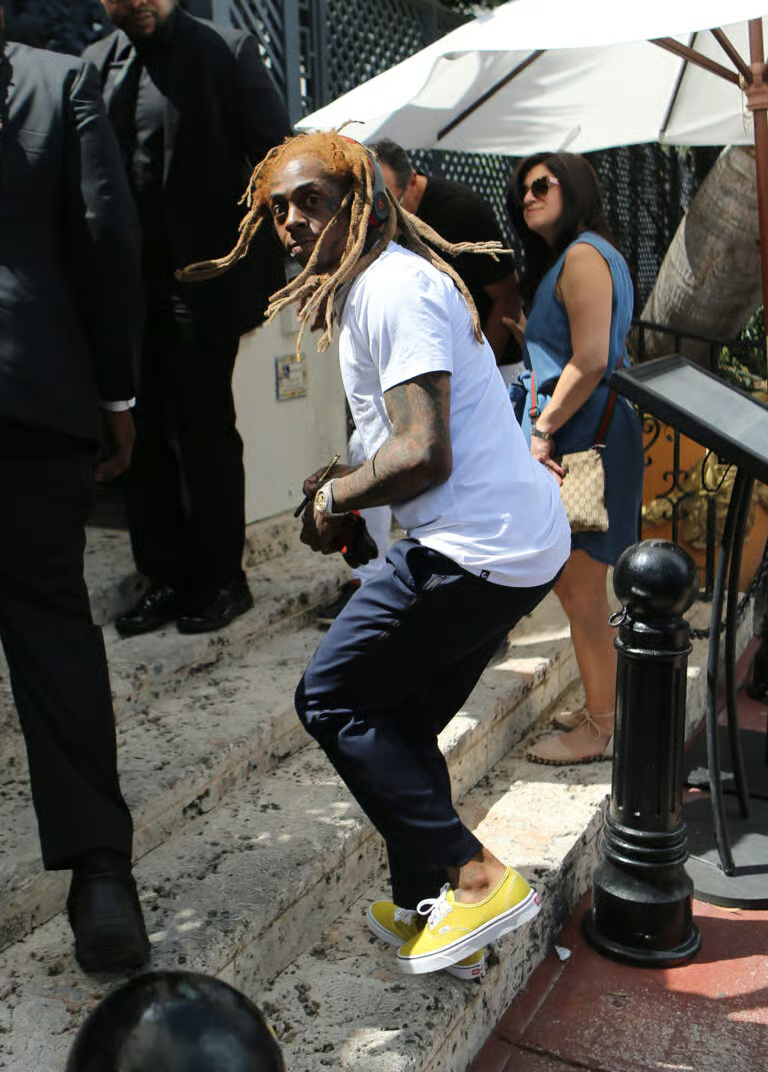
Lil Wayne is facing backlash after fans claimed he arrived nearly two hours late to his recent concert at BankNH Pavilion in Gilford, New Hampshire. While the rapper later suggested on social media that the show went off without a hitch, frustrated concertgoers flooded online platforms with complaints about the delayed start. The criticism comes just days after Lil Wayne—born Dwayne Michael Carter Jr.—also faced backlash for failing to appear at a scheduled performance in Maine.
Lil Wayne was supposed to take the stage in Gilford around 9 PM ET, according to TMZ. However, the “Lollipop” rapper didn’t start performing until 11 PM. To make matters worse, concertgoers claimed the 43-year-old only performed an hour’s worth of songs before bailing.
Lil Wayne posted about the concert to his personal social media page after the show, implying everything went according to plan. “New Hampshire! It’s your man-ster. I told you man, that sh-t was awesome. You can see I don’t even have no voice. You all took my voice. You all took everything, man. It was f—in awesome,” he said.
He ended his message by letting his fans know he was headed to Iowa for his next show. Despite his claims, it’s unclear whether he’ll actually make the concert, which is currently scheduled for July 16 at Casey’s Center.
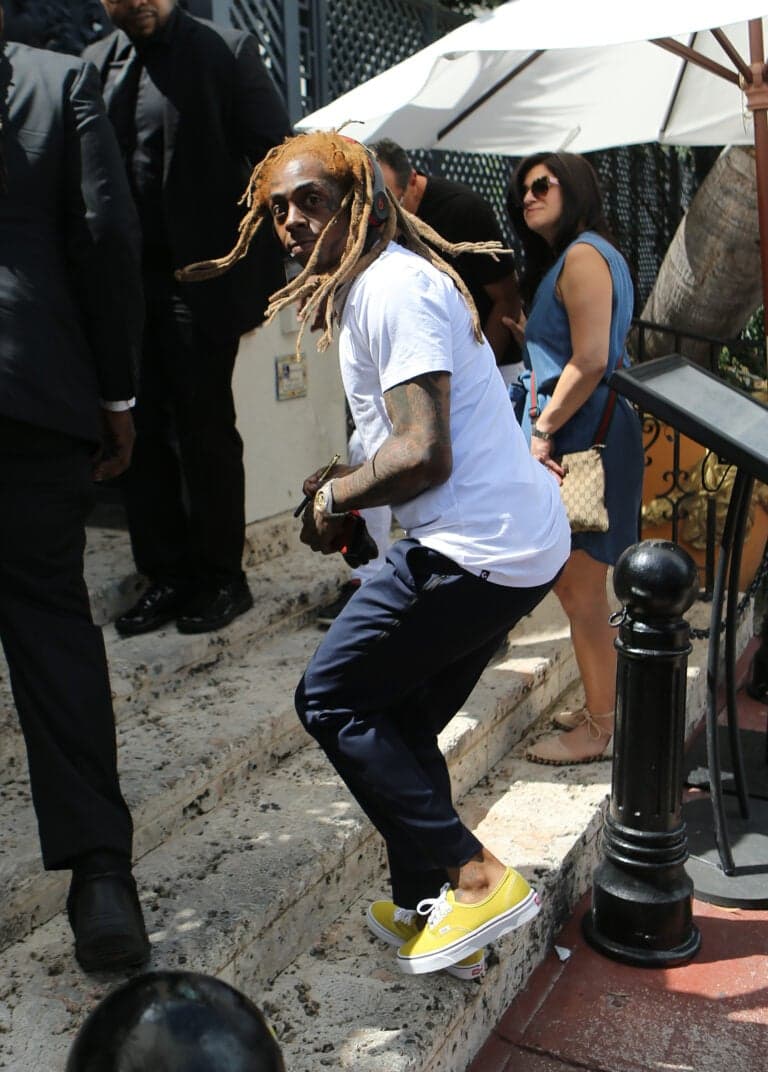
The drama surrounding Lil Wayne’s most recent concert was shared on Reddit, and passionate pop culture fans weighed in, blasting the rapper for allegedly failing to consider his fans.
“Insanely disrespectful when performers do this. So gross and why I have so much more appreciation for Broadway actors who are so much more professional,” someone wrote.
“He’s been doing this for years, homie and I were supposed to see him like 2015 prob. He was supposed to take the stage at 10, openers finished at like 9:30. He didn’t come out till close to midnight, mad people had left,” another claimed.
A third said, “At this point, expecting punctuality from these legacy rappers is like setting yourself up for disappointment. 2 hours is just disrespectful, period. like, do you not value the people who literally pay your bills?”
Someone else wrote, “I don’t understand why artists do this. You knew the date and time at least a freaking YEAR in advance. This is your job as well. Be a professional, respect your fans. You should be thanking them for making you rich and famous ffs.”
Lil Wayne Under Fire After Leaving Fans High And Dry In Maine
The backlash Lil Wayne is receiving for his latest stunt comes only days after the “A Milli” rapper failed to appear at his scheduled concert in Maine. The rapper was supposed to hit the stage at the Bangor waterfront with 2 Chainz at 10:45 PM. Minutes before the start time, though, a staffer told the crowd that Lil Wayne had bailed on the event.
Like the most recent concert, social media users slammed Lil Wayne for the last-minute cancellation, and in a recent post, they warned his followers not to purchase tickets to any of his future shows. “Wayne doesn’t show up for his shows,” someone posted. “Maine wasn’t the first time. He goes on hours late or no shows. Lil Wayne is a lil boy.”
Lil Wayne made headlines in August 2025 when he canceled a performance in Canada moments before the show was set to begin. In 2024, he dropped out of a California music festival at the last minute, and in 2023, he walked off a stage moments after it began.
Wayne Will Reportedly Make It Right For His Fans
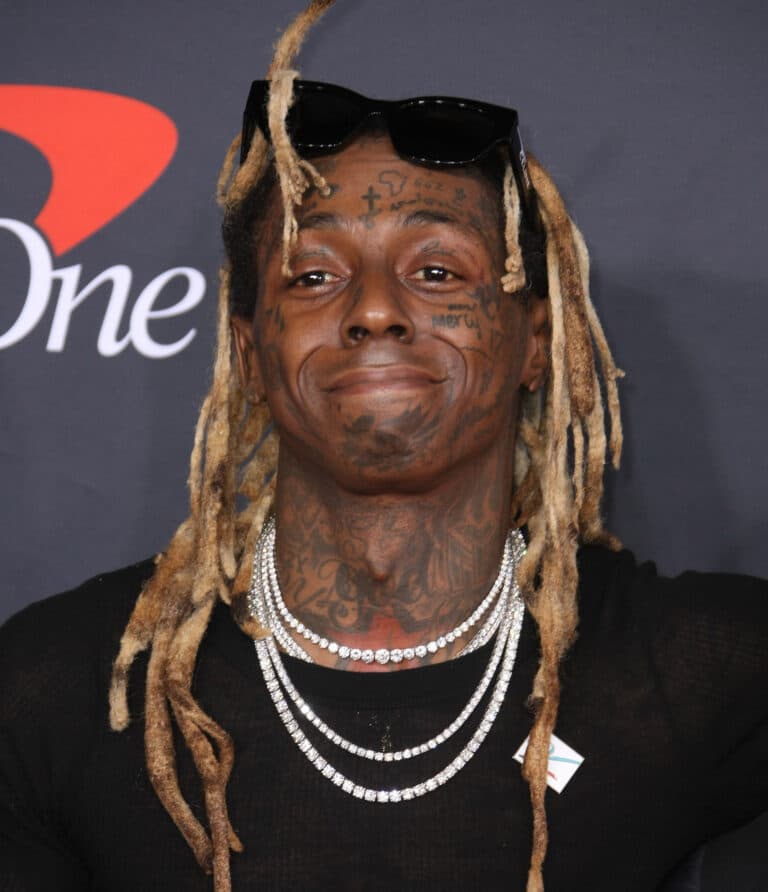
According to The Blast, Lil Wayne broke his silence days after missing his scheduled performance in Maine and apologized to fans for the no-show. He also confirmed the concert had been rescheduled for July 28 and assured ticketholders that all previously purchased tickets would be honored. Lil Wayne thanked fans for their continued support, saying he wouldn’t be where he is today without them. He closed by promising to deliver the “show you deserve” when he returns in a few weeks.
Wayne Was Upset With The NFL For Choosing Another Rapper For The Super Bowl Halftime Show In 2025
Lil Wayne garnered much attention in early 2025 when he slammed the NFL for choosing rapper Kendrick Lamar to perform at the Super Bowl halftime show in New Orleans (his hometown) over him. In a previous interview with Rolling Stone, Lil Wayne said he wouldn’t consider doing it today, even if they asked him.
“They stole that feeling. I don’t want to do it. It was perfect,” he said. “To perform, it’s a bunch of things [the NFL] going to tell you to do and not do, asses to kiss and not kiss.”
Lil Wayne went on to mention that he started hanging out with people like Tom Brady and Michael Rubin in hopes of securing the coveted gig. “You ain’t never seen me in them types of venues. I ain’t Drake. I ain’t out there smiling like that everywhere. I’m in the stu’, smokin’ and recording,” he said.
When the NFL announced Lamar as the performer in late 2024, Lil Wayne admitted that the decision “hurt” him.
“I blame myself for not being mentally prepared for a letdown and for automatically mentally putting myself in that position like somebody told me that was my position,” he said. “But I thought there was nothing better than that spot and that stage and that platform in my city, so it hurt.”

Us Weekly has affiliate partnerships. We receive compensation when you click on a link and make a purchase. Learn more!
Summer is in full swing, but our penchant for sundresses never goes out of season. Especially for women over 55, loose, figure-flattering sundresses offer that sophisticated, warm-weather polish that’s always cool and chic. Right now, there’s no better place to shop sundresses for women over 55 than Amazon, which is packed with options in every style, fabric and length you could want.
Whether you’re on the hunt for a youthful-but-modest mini dress, a rich-mom-inspired maxi, a midsection-slimming sundress or something that will earn endless compliments, you can’t go wrong with these 17 loose sundresses — starting at just $15! — that’ll have you soaking up the season in style.
17 Comfortable Loose Sundresses For Women Over 55
1. Our Favorite: Sophisticated and summer-ready, this smocked maxi dress earns rave reviews for its flattering fit. It’s a budget-friendly find that rivals a $220 Hill House Home style — and we’re officially obsessed.
2. Work Ready: For an outfit that moves effortlessly from weekends to workdays, reach for this breezy shirt dress. The gathered waist adds definition, while the flowy skirt keeps things light and easy.
3. Fan Favorite: Over 800 shoppers have snagged this cap-sleeve maxi dress this past month, and we don’t blame them. With a figure-forgiving fit that’s loose but not too loose, it’s an easy go-to for everything from errands to evenings out.
4. Luxe and Loose: Getting out the door never looked so chic as this ruffle-sleeve summer dress. It has the ease and feel of a favorite tee, with the sophistication of a refined and reliable frock.

I love summer dresses in theory, but the second something starts clinging to my waist, hips or stomach, I’m out. When temperatures climb, I want pieces that feel airy, comfortable and easy to move around in. The good news is that some of the most flattering sundresses happen to be the loosest ones, too. Relaxed […]
5. Midsection Friendly: Disguising the midsection is easy with this empire-waist sundress, which breaks things up elegantly and efficiently. One 62-year-old shopper said the flattering pick “completely hides” her “menopause belly.”
6. Flirty and Fun: Sure, it’s technically a T-shirt dress, but this maxi is anything but basic. The petite-friendly piece hugs in all the right places, and even features a flirty side slit that’s not too daring.
7. Buy Every Color: Weary of showing off your arms but don’t want to be too covered? This cap-sleeve option disguises extra arm softness without feeling heavy or restrictive, giving you that coverage and confidence you deserve.
8. Country-Club Chic: Quiet luxury comes alive in Dokotoo’s striped empire-waist dress, which looks like it came from a pricey boutique. Ruffle sleeves, a chic V-neck and elongating stripes work in tandem to flatter from every angle.
9. Event Ready: From a well-deserved ladies’ lunch to a humid outdoor wedding, this flowy maxi dress understands the assignment. It has the flattering fit and fashion-forwardness of a pricey Anthropologie design for a fraction of the price.
10. Modest Mini: Who says mini dresses are just for the twenty-somethings? This loose puff-sleeve find has that just-right length that won’t have you second-guessing your outfit. It’s fashionable, fun and totally wearable at any age.
11. Easy-Breezy: This loose V-neck sundress is completely customizable. Dress it up with an oversized tote, a slimming belt, statement sunnies and cozy sandals for the ultimate summer look. Or keep it casual and let it shine on its own.
12. Breathe Easy: Not too tight, not too loose, this elegant summer sundress meets your body where it’s at. One reviewer said she “loved this dress for traveling,” and honestly, that’s the only endorsement we need.
13. Versatile Pick: Not one for billowy silhouettes? This button-up sundress is the perfect compromise: cute, chic and just as at home on the beach as it is dressed up for a work meeting.
14. All-Around Flattering: This arm-flattering and midsection-flattering puff-sleeve sundress is an all-ages favorite. Shoppers say the breezy, beautiful dress is especially great for Southern heat.
15. Statement Piece: Far from forgettable, this easy-to-style black and white sundress proves you don’t have to go overboard on colors. The fan-favorite maxi features a striking graphic print that gives the dress a boutique-worthy quality.
16. Anything But Basic: It’s the thoughtful design details — like the chic V-neck, youthful ruffle sleeves and figure-flattering tiers — that take this soft sundress to the next level.
17. Vacation Fit: Adorned with a flattering tie-waist and subtle slit, this slimming and soft sundress is a must-pack for your next summer getaway. It’s a power piece that’s just as right at 25 as it is at 55.
UsNow Summer Sale Alert: These Chic Fashion Finds are over 30% off – Plus Free Shipping
Welcome to summer with our biggest sale of the year. This summer’s chicest dresses, tops and swimsuits are all over 30% + free shipping. Inventory is limited so hurry before they’re gone.
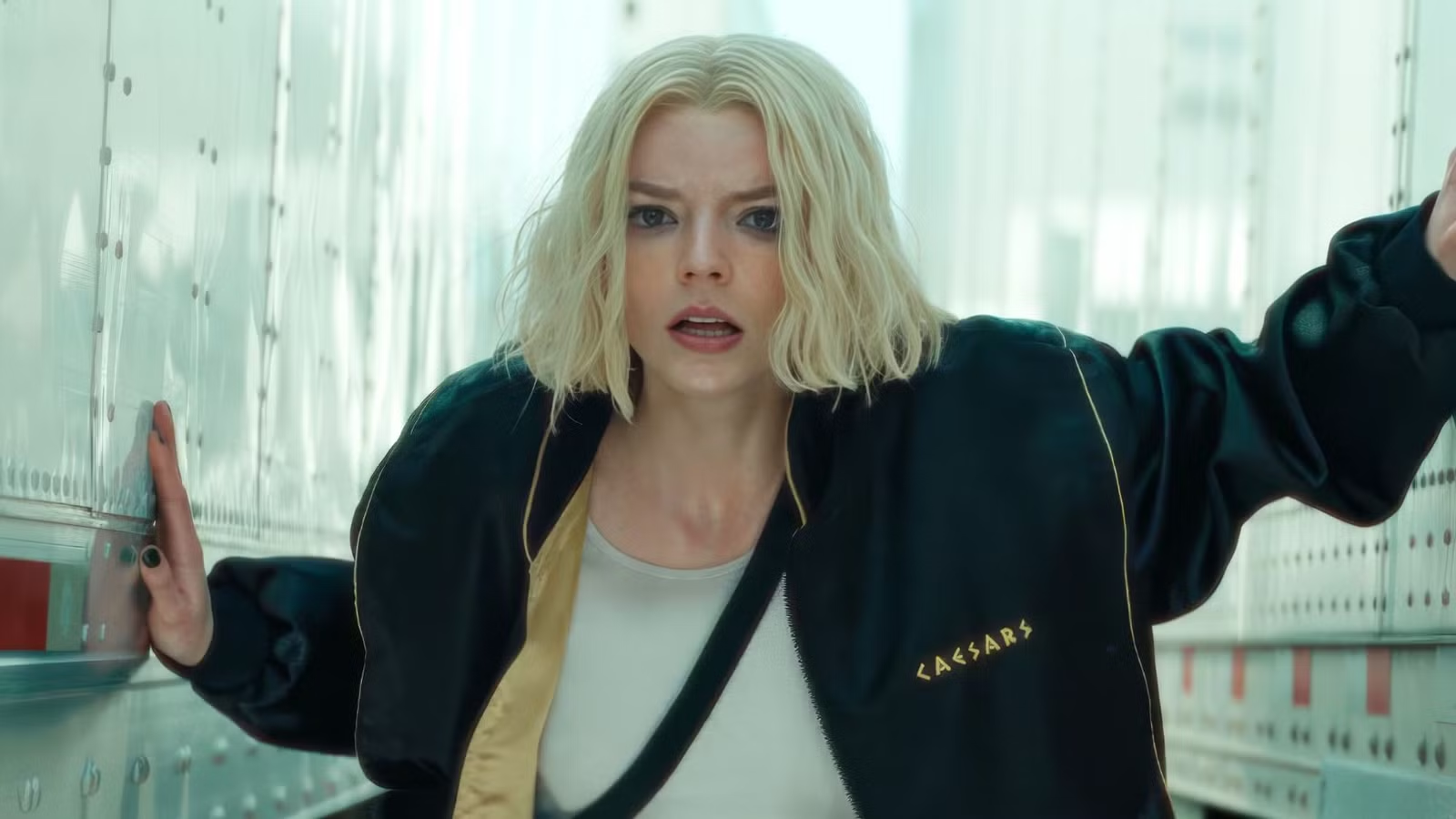

Anya Taylor-Joy‘s first two attempts at big-screen stardom didn’t pan out like she probably planned. While most viewers would be aware of the box-office underperformance of Furiosa: A Mad Max Saga, the epic prequel wasn’t Taylor-Joy’s first time headlining a franchise property. She starred alongside Maisie Williams and Charlie Heaton in the X-Men spin-off film The New Mutants, which was dumped in theaters during a transitional phase for 20th Century Studios in 2020. Miraculously, it grossed around $50 million at the box office even though movie theaters around the world were mostly shuttered. Furiosa was released in far more stable times, but the movie ended up grossing just $175 million globally against a reported budget of $168 million. Mere months later, however, Taylor-Joy rebounded with the blockbuster Apple TV movie The Gorge.
It marked a return to form for the young actor, who broke out with a lead role in M. Night Shyamalan‘s Split, but became a household name thanks to Netflix’s The Queen’s Gambit. In The Gorge, she starred alongside Miles Teller. The genre-bending movie remains one of the biggest original hits on Apple TV’s roster. Taylor-Joy will continue her creative partnership with the streamer with an upcoming crime-drama limited series that’s due out in a matter of weeks.
Here’s When Anya Taylor-Joy’s New Show Debuts
We’re talking, of course, about Lucky. The show has been created by Jonathan Tropper, who, like Taylor-Joy, already has a hit Apple TV title under his belt: the black comedy Your Friends and Neighbors, starring Jon Hamm. Tropper also wrote the script for this year’s buddy cop action movie The Wrecking Crew, starring Jason Momoa and Dave Bautista, and is the sole credited writer for next year’s Star Wars: Starfighter. Lucky also features Annette Bening, Aunjanue Ellis-Taylor, Timothy Olyphant, and Drew Starkey. Based on a novel by Marissa Stapley and executive-produced by Reese Witherspoon, the series’ logline might remind viewers of the final season of HBO’s Euphoria. It features Taylor-Joy as a reformed criminal who is forced to perform one last job to secure her freedom. Lucky will premiere on Apple TV on July 15, and will conclude after seven episodes on August 19. Stay tuned to Collider for more updates.

- Release Date
-
July 15, 2026
- Network
-
Apple TV
- Showrunner
-
Jonathan Tropper, Cassie Pappas, Jonathan van Tulleken
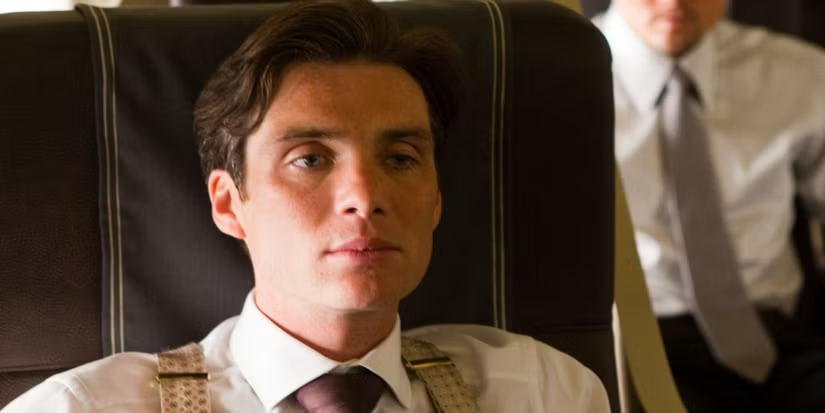
Cillian Murphy is undoubtedly one of the greatest actors of our generation. The role he’s arguably most iconic for is Thomas Shelby from Peaky Blinders. Murphy was insanely charming as the troubled gang leader with a moral code, and it’s hard to imagine the character becoming such a cultural phenomenon if anyone else had played him.
But long before he was walking the streets of Birmingham in a flat cap, Murphy had already built one of the most impressive filmographies in modern cinema. For more than two decades, he has been one of the most compelling screen presences on the big screen, and his body of work is the kind that film students will likely be studying for years to come. In this list, we’re taking a look at the Cillian Murphy movies that stand as true masterpieces and showcase exactly why he’s considered one of the finest actors working today.
‘Inception’ (2010)

Ask someone what their favorite movies are, and there is a very good chance the list includes Inception. Christopher Nolan‘s 2010 sci-fi thriller became a genuine cultural phenomenon and one of those rare films that an entire generation of moviegoers claims as their own. The film follows a team of specialists who use experimental technology to enter their targets’ subconscious minds and steal or plant information directly in their dreams. Murphy plays Robert Fischer, the heir to a corporate empire whose mind becomes the team’s most ambitious target.
Nolan takes a concept that should be impossible to follow and makes it not only comprehensible but thrilling at every turn. The rules of dream architecture, the ticking clock of the sedative, the way each dream level runs on a different time dilation. Most filmmakers struggle to make audiences care about exposition scenes, but Nolan somehow turns those scenes into the most fascinating parts of the movie. It’s a cerebral masterpiece that consistently blows minds on first, fifth, and even tenth viewing.
’28 Days Later’ (2002)

Before 28 Days Later, zombies were usually slow, undead creatures that shuffled around waiting to be avoided. They were creepy and grotesque to look at, sure, but they rarely felt like a real threat. Danny Boyle completely changed that in 2002. The infected in 28 Days Later sprint at terrifying speeds with manic agility, and just one drop of their blood entering the body is enough to turn someone. That simple creative choice made zombies infinitely more threatening and set a whole new standard for the zombie genre going forward.
The entire film was also shot on consumer-grade Canon DV cameras on a shoestring budget, which gave the film this dirty, murky feel that polished studio horror simply couldn’t replicate. And at the centre of it all is Murphy’s Jim, a bicycle courier who wakes up in an abandoned London hospital 28 days into the outbreak. The character became such a fan favorite that audiences would repeatedly call for Murphy to return whenever a new sequel was discussed. More than two decades later, the franchise finally gave audiences what they had been asking for by bringing Murphy back in 28 Years Later: The Bone Temple.
‘Dunkirk’ (2017)

Nolan is no stranger to playing with film structure, and he does something similar in Dunkirk. Set during World War II, the movie takes place across three timelines running simultaneously at different speeds. The Land storyline follows soldiers stranded on the beach over the course of a week. The Sea storyline follows a civilian boat crossing the Channel over a single day. And the Air storyline follows Spitfire pilots locked in aerial combat over the course of a single hour. And in the end, all three converge in one breathtaking sequence.
Murphy plays a shell-shocked soldier rescued from the Channel by the civilian vessel, and his performance is a masterpiece of restraint. There is almost no dialogue for his character, but you understand everything about his state of mind from the way he sits and stares and flinches. The film is a war movie that almost completely refuses to show you combat in the conventional sense. The enemy is an unseen, faceless force represented by constant aerial bombings, sniper fire, and torpedo attacks, and yet it is one of the most anxiety-inducing films ever made.
‘Oppenheimer’ (2023)

Many consider Oppenheimer to be the magnum opus of Nolan’s career so far, and it is very hard to argue against that. The film stars Murphy as J. Robert Oppenheimer, the theoretical physicist who headed the Manhattan Project and oversaw the creation of the first atomic bomb. When Oppenheimer came out, it was a global cultural event in a way that rarely happens with serious, character-driven historical films. People who normally wouldn’t even go for this kind of dense, dialogue-heavy cinema lined up on opening weekend, and it went on to become the highest-grossing biopic of all time.
And the entire film is almost single-handedly carried by Murphy. His portrayal of Oppenheimer was a masterclass in internalized agony; in every scene, you could see the guilt clawing at him just from his eyes. The Academy recognized it accordingly, and Murphy took home his long-overdue Oscar for Best Actor.
‘Steve’ (2025)

Steve is a heavy, slow-burn character study that follows Murphy as Steve, a head teacher at a reform school who is trying to hold his students together while quietly falling apart himself. The students are difficult to deal with. The institution is underfunded. And the movie does not offer tidy resolutions or redemption arcs tied up with a bow. It just lies down with the messiness of being human and lets you feel it alongside its characters.
Murphy is especially extraordinary in it. He has always been good at playing men who keep everything locked inside, but here he takes that quality further than he ever has because there are moments in Steve that feel genuinely private, like you are watching someone at their most unguarded. If you’re a fan of artsy, heavy movies like The Banshees of Inisherin or The Holdovers, Steve should be at the top of your watchlist.

Entertainment
‘House of the Dragon’ Is Quietly Setting Up Another Major Reveal About Aegon’s Prophecy
Prequels often suffer from a lack of suspense, since the audience knows where the story is headed in the end. Back in its first season, House of the Dragon had an explosive solution for this issue — it confirmed for the first time that House Targaryen had prophesized the Long Night and the return of the White Walkers, and that prophecy had guided their actions for generations leading up to Game of Thrones. It was a long-time fan theory, but by confirming it, House of the Dragon showed that Westeros has many mysteries left to uncover, and they could come from any spinoff media. Now, with the series hurtling towards its end, fan theorists have many ideas about what other revelations might be coming before the Dance of the Dragons is over. One tantalizing possibility concerns Aegon’s prophecy, House Stark, and the future king of Westeros.
It’s been nearly four years since House of the Dragon revealed that Aegon the Conqueror dreamed of the White Walkers in a prophecy he called the “Song of Ice and Fire.” In that time, fans have teased out many of the implications this might have on the story — characters who passed it down, characters who were influenced by it, and characters who failed to get the message. In all that digging, many fans feel that House Stark must have known about the prophecy, and likely cooperated with House Targaryen because of it in some cases. Evidence for that theory is mounting, but the real question is if or when it might be confirmed. It would make sense to put another monumental lore dump at the end of House of the Dragon, and the show itself is giving us some hints about what’s coming.
‘House of the Dragon’ Says ‘Winter is Coming,’ Though It’s Still Summer

There are plenty of clues to support the theory that House Stark knew about Aegon’s prophecy and passed that knowledge down in secret — too many to include in this article. What’s important is how House of the Dragon is drawing attention to those clues, and perhaps setting up a grand revelation towards the end of the series. Northmen have only appeared in a few scenes scattered throughout the series so far, but that’s about to change, as we’ve already seen with Roderick Dustin’s (Tommy Flanagan) dramatic entrance into the Riverlands this season.
“We have come to die for the dragon queen,” he said bluntly in the season premiere. This stellar line is taken straight from George R.R. Martin‘s book Fire & Blood, and it’s not just melodramatic wording. Lord Dustin leads a force known as the “Winter Wolves,” who are all old, gray-bearded warriors from throughout the North. They do not expect to survive the war whether they win or lose — it’s part of a brutal custom in the North where old men risk their lives in battle or hunting expeditions around the time the seasons change, knowing they’ll likely die. This way, they leave their community with one less mouth to feed through the winter.
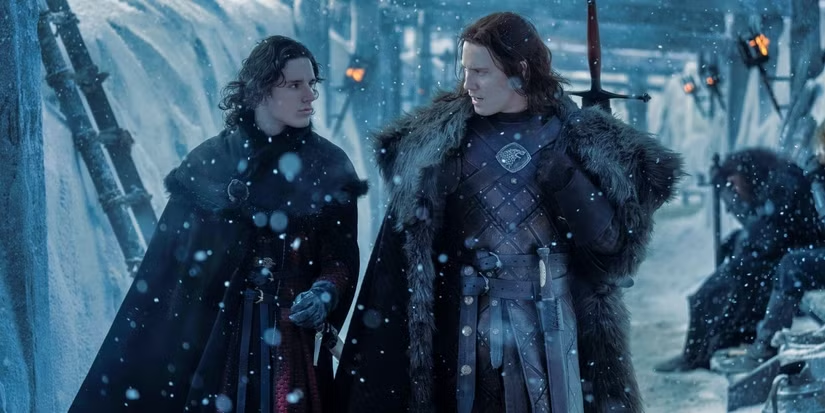
House of the Dragon is not shying away from this fatalistic aspect of Northern culture — if anything, the show is calling attention to it. In Season 2 Episode 1, the show depicted Jacaerys Targaryen (Harry Collett) meeting with Lord Cregan Stark (Tom Taylor) on the Wall, rather than at Winterfell. Lord Stark claimed that he could not send all his forces south to war because he would need them in the winter to guard the Wall. He asked Jace, “Do you think my ancestors built a 700-foot wall of ice to keep out snow and savages?” According to Cregan, the Wall is really there to keep out “death.” However, the Lord of Winterfell rarely visits the Wall, allowing the Night’s Watch to operate independently. Cregan’s personal interest in the Wall might be a hint that he knows something we don’t.
Cregan’s focus on the Wall and the Winter Wolves’ willingness to die are both surprising, since House of the Dragon has given us no real indications that winter is coming to Westeros. This fantasy world is defined by its irregular seasons, but there is usually quite a bit of warning of the onset of winter. Characters in the south have not complained about unusual cold or storms, and the maesters of the Citadel have not sent out their albino ravens to herald the changing seasons. It’s possible that Cregan, Roderick, and other Northmen can sense a different kind of winter coming on. Cregan might even have knowledge of Aegon’s prophecy passed down to him, and he may believe there are signs that the White Walkers’ attack is imminent.
Prophecies Could Completely Recontextualize ‘Game of Thrones’
In general, Game of Thrones did not examine the magical elements of Westeros very closely — especially toward the end, when it mattered most. For years, fans and critics have speculated that spinoffs like House of the Dragon will try to vindicate the main series, and in some ways, it looks like they’ve been right. House of the Dragon has magic centered in its story, from the haunting mysteries of Harrenhal to Helaena’s (Phia Saban) clear psychic abilities. Prophecies and telepathy are arguably more important to this franchise than dragons and ice monsters, and we should expect to see more of them in the back half of House of the Dragon.
So far, dreams and visions in this show have already shown us glimpses of important things coming in the main series. In Season 2, Episode 8 Alys Rivers (Gayle Rankin) leads Daemon (Matt Smith) to the Weirwood tree, where he sees the White Walkers, and Daenerys hatching dragons in the desert. He even sees Brynden Rivers, a.k.a. Bloodraven, the future Targaryen who will become a Greenseer and eventually teach Bran Stark (Isaac Hempstead Wright) to do the same. Bloodraven is an important character in the books, though his presence was downplayed in the TV adaptation. The younger version of him on House of the Dragon is played by Joshua Ben-Tovim, while on Game of Thrones he was played by Struan Rodger, then recast as Max von Sydow.
Readers know we should never take a vision of Bloodraven lightly. It’s possible that we’ll see him again in House of the Dragon as more characters interact with the Weirwoods and the bloodshed of the war awakens the trees. However, it’s possible this show will go one step farther by showing us Bloodraven’s successor, Bran Stark. We know that Bran can use his powers to reach backward in time to influence people and events — he did so when he commanded Hodor (Kristian Nairn) to “hold the door,” and in the books, it’s implied that he can reach other characters as well.
If Bran appears in a vision, it would be a fitting magical climax for House of the Dragon, and it would mirror some of the other tie-ins we’ve seen in the show so far. Some fans and critics would inevitably call it cheap, but it’s a move that would definitely appeal to HBO executives and creators who want to keep this franchise alive. In the long run, Easter eggs like that could become a central feature of Game of Thrones spinoffs, further complicating the web of causes and effects around the wars in Westeros.
‘House of the Dragon’ Has Just as Much Ice as Fire
House of the Dragon is ostensibly about a civil war among House Targaryen’s dragon-riders, yet the show has dedicated a surprising amount of time to the other end of Westeros’ magical spectrum — the old gods and the Weirwood trees, which are strongest in the North. The show has given us two glimpses of the mythical “Green Men,” and shown an immense amount of Greenseer magic at play around Harrenhal and the God’s Eye lake. According to Game of Thrones, this same branch of magic was responsible for the creation of the White Walkers in the first place, so it makes sense that the prequel is still highlighting this connection.
In some ways, Fire & Blood tells us where these Weirwood-heavy plots are headed, but because of the book’s unique nature, there’s a lot of ambiguity in the upcoming parts of the story. We’ve already seen connections that fans didn’t expect, such as Helaena’s intrusion on Daemon’s Weirwood vision, implying that dragon-dreamers and Greenseers have access to the same astral plane. We should expect a carefully-planned show like this to save some of its best spectacles for the end, so it’s not unreasonable to imagine a fully-realized King Bran appearing by the series finale. Alternatively, revealing that House Stark was also acting on Aegon’s prophecy could serve as one final revelation without the need for magical dreams.
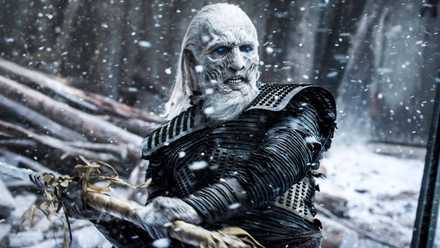
Of course, the creative team will want to be careful not to overdo it with Easter eggs and lore drops. They could also be wary of delving into the lore without the involvement of Martin. The author is not pleased with this prequel, and doesn’t seem to be as closely involved as he was in Season 1. It’s possible that he already agreed to another big revelation when the show first started, but it’s also possible that the creators won’t want to rock the boat now that he’s not closely involved anymore.
At the time of this writing, there are only 14 episodes left of House of the Dragon — assuming showrunner Ryan Condal fulfills his plan of finishing the series with four seasons. That doesn’t leave much time for new information to sink in, so we should have our eyes peeled for any more big clues coming our way. Season 3 continues on Sunday nights at 9 p.m. ET on HBO and HBO Max. Martin’s books are available now in print, digital, and audiobook formats.

- Release Date
-
August 21, 2022
- Network
-
HBO
- Showrunner
-
George R.R. Martin
- Directors
-
Clare Kilner, Geeta Patel
- Writers
-
Gabe Fonseca
-

-

Fabien Frankel
Ser Criston Cole
Entertainment
Where is the cast of “House” now? See what became of the stars of Fox's hit medical drama
:max_bytes(150000):strip_icc():format(jpeg)/House-062526-b09bb7abeee346e99dc4d2d9091a567d.jpg)
Hugh Laurie and his costars have continued to dominate TV since the series ended in 2012.
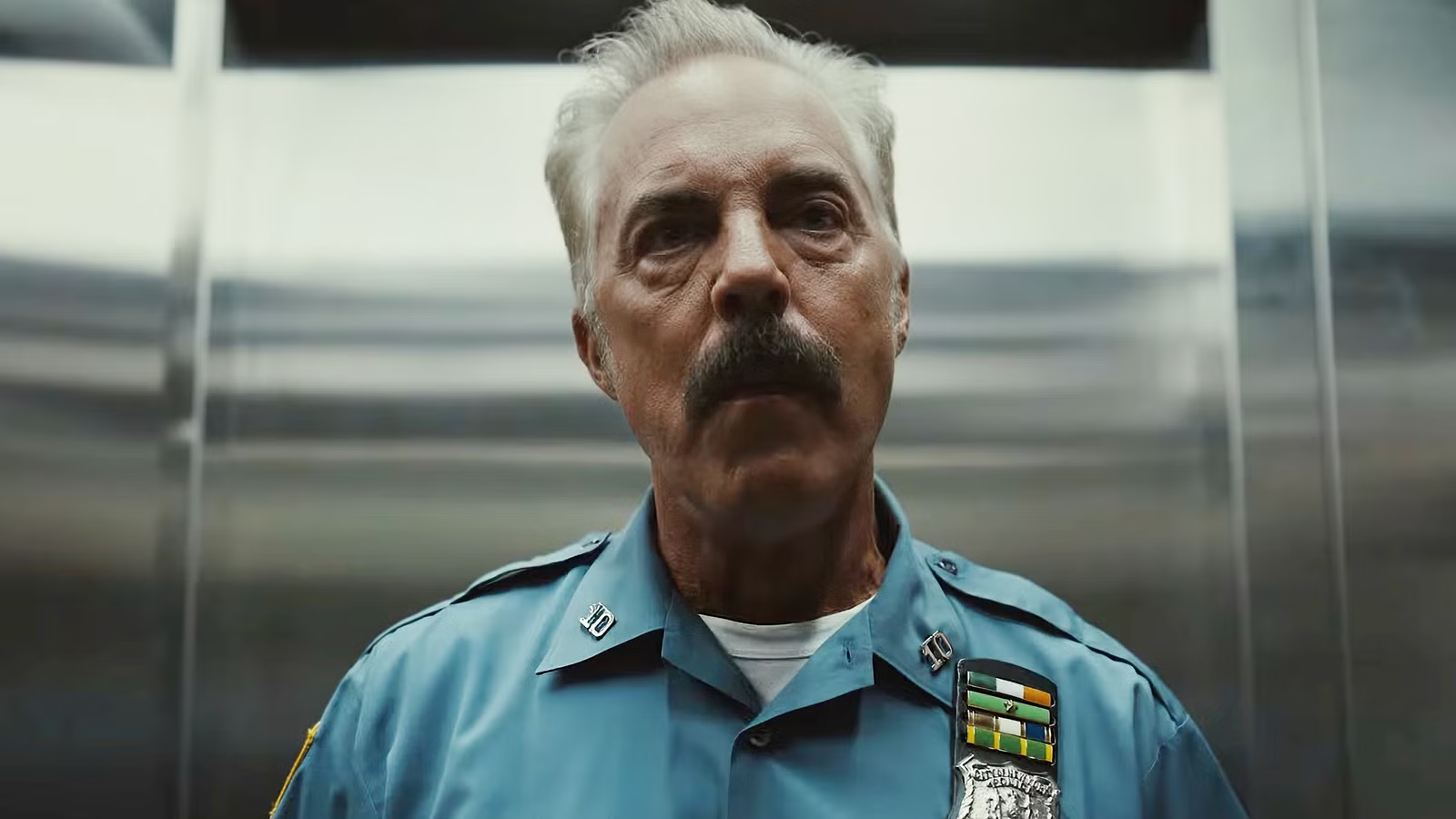

After a generational run as a jazz-loving modern-day gumshoe in the blockbuster Prime Video series Bosch, Titus Welliver will soon return to the small screen in a new series with massive potential. He is joined as the new show’s lead by the Oscar-winning J.K. Simmons. They play two childhood friends who drifted in different directions: one became a police officer and the other a gangster. Their paths collide in 1980s New York. It’s like Mystic River meets The Sopranos, and it’ll be released soon on MGM+ — the same streaming service that delivered the only well-liked Robin Hood adaptation of the last two decades earlier this year.
Welliver’s new series was created by Chris Brancato and Michael Panes. Brancato is best-known as the co-creator of the hit Netflix series Narcos and its spin-off, Narcos: Mexico. Panes transitioned, like the very successful Taylor Sheridan, from an acting career to writing, and worked on Brancato’s writing team for the Epix-turned-MGM+ series Godfather of Harlem. Their new show with Welliver also features Tom Brittney, a relative newcomer who made headlines recently for reportedly being in the running to play Batman in the DC Universe.
Here’s When Titus Welliver’s New Show Premieres
We’re talking about The Westies. The crime drama series will debut on MGM+ on July 12. The show’s official logline reveals that the narrative unfolds in Daredevil’s backyard, Hell’s Kitchen, amid rising tensions between the Irish and the Italian gangs. Welliver is coming off the third season of Bosch: Legacy, a spin-off to the wildly successful Prime Video original, based on the novels of Michael Connelly. The original series ran for seven seasons, from 2014 to 2021, with the spin-off debuting on Amazon Freevee in 2023, airing a sophomore season in 2024, and concluding with a third season in 2025. Welliver also reprised his role as Bosch in another spin-off, Ballard, which has aired two seasons so far and has been renewed for a third. A prequel series featuring Cameron Monaghan in the lead role, titled Bosch: Start of Watch, will be released on MGM+. Simmons has a considerable body of work on television as well, having recently starred in shows such as Die Hart and Defending Jacob. In August, he will star as George Schultz in the Cold War drama film The Brink of War. Stay tuned to Collider for more updates.

- Release Date
-
July 12, 2026
- Network
-
MGM+
Supernatural horror gets weaker the moment the ghost becomes the whole point. The perfect supernatural horror, however, knows that. It knows the haunting is usually tied to something people were already carrying: grief, guilt, family damage, buried crime, childhood fear, national trauma, or the terrible need to know what really happened.
The six films on this list stay frightening because their ghosts do not feel random. They have history. They have emotional logic. They turn houses, videotapes, children’s rooms, abandoned buildings, family stories, and old photographs into places where the past refuses to stay polite. Each one is controlled from the first uneasy sign to the last emotional consequence. And that’s how these films remain perfect from start to finish.
6
‘The Changeling’ (1980)

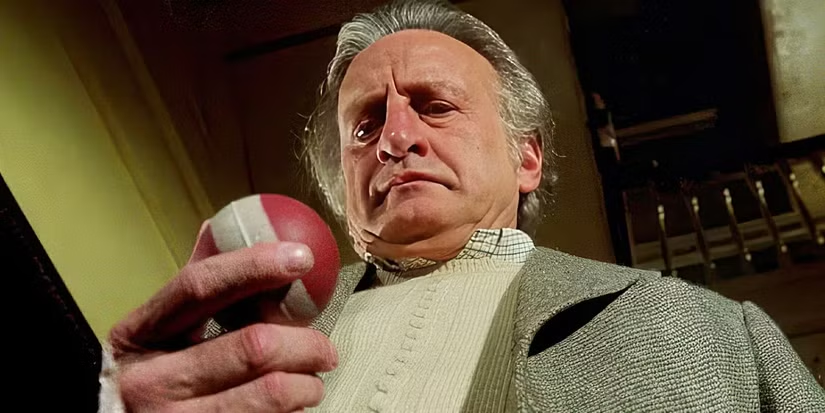
Grief gives The Changeling its first chill before the house does anything. John Russell (George C. Scott) loses his wife and daughter in a car accident, then moves into a large old mansion in Seattle to continue his work as a composer. He carries a quiet heaviness that makes the silence around him feel personal. He is not a thrill-seeker. He is not chasing a mystery for fun. He is a broken man trying to live in rooms that keep answering him back.
The genius of the film is its patience. A bouncing ball, a locked attic, a child’s wheelchair, a séance, a hidden room, and a decades-old crime slowly turn the mansion into a place where grief and injustice speak the same language. The horror never feels cheap because John’s loneliness gives every sound weight. The film also understands that a ghost story becomes more powerful when the dead are not the only guilty ones. Political respectability, family secrets, and stolen identity make the haunting feel earned rather than decorative.
5
‘The Devil’s Backbone’ (2001)

Guillermo del Toro’s orphanage is frightening before Santi (Junio Valverde) ever appears in The Devil’s Backbone. The film follows the Spanish Civil War and sits around the boys like an adult disaster they inherited without permission, and the unexploded bomb in the courtyard tells you exactly what kind of world they are living in. Carlos (Fernando Tielve), a new boy at the orphanage, has to learn its rules, its cruelties, its rivalries, and its hidden grief while the ghost of a murdered child keeps pulling him toward the truth.
The supernatural material hurts because the living are already dangerous. Jacinto (Eduardo Noriega)’s resentment, Carmen (Marisa Paredes)’s compromised authority, Dr. Casares (Federico Luppi)’ tenderness, Jaime (Íñigo Garcés)’s fear, and the boys’ fragile alliances give the story a human tension that would work even without the ghost. Santi’s presence is tragic rather than flashy. He is not there to perform scares on schedule. He is a child who was betrayed, abandoned, and left to become part of a building full of other abandoned children. The film is perfect because the ghost story, war story, and coming-of-age story all wound each other in the same place.
4
‘Noroi: The Curse’ (2005)

Noroi: The Curse is a found-footage horror and while most found-footage horror films want you to believe the camera caught something scary. Noroi makes you feel like the footage itself should never have been organized in the first place. The film follows paranormal researcher Masafumi Kobayashi (Jin Muraki) through interviews, TV clips, home videos, missing-person material, strange rituals, dead pigeons, psychic disturbances, and the name Kagutaba, which keeps gaining force the more the pieces connect.
The terror comes from accumulation. A woman hears impossible baby sounds. A child behaves as if something has already touched her life. A foil-hat psychic seems ridiculous until the movie makes his panic feel horribly rational. The editing style looks dry and investigative, which only makes the supernatural pattern more disturbing. Nothing in Noroi rushes to comfort the viewer with clean answers. It lets dread build through repetition, distance, and the awful sense that every clue has been waiting for the others. The ending is terrifying because the movie has trained you to fear context itself. Once enough information is gathered, ignorance starts looking safer.
3
‘The Orphanage’ (2007)

This is one of the rare ghost stories where the emotional devastation is as strong as the scares. The Orphanage circles Laura (Belén Rueda) returning to the orphanage where she grew up, hoping to reopen it as a home for children with disabilities. Her son Simón (Roger Príncep) begins talking about invisible friends, and what first seems like childhood imagination slowly becomes tied to the building’s past, Laura’s memories, and a mystery that punishes every delay.
The film is terrifying because Laura’s love keeps pushing her further into fear. She gives the performance a desperation that never feels exaggerated. She is a mother trying to solve something no one else can fully believe with her. The game of knocking on walls, the sack-masked child, the seaside cave, the old woman, the medium’s visit, and the reopening of childhood wounds all carry a sadness that makes the horror sharper. The film never treats motherhood as a simple virtue shield. Laura’s love is powerful, but it is also frantic, mistaken, stubborn, and late to understand the truth. That complexity is why the film stays lodged in the chest.
2
‘A Tale of Two Sisters’ (2003)

Image via Cineclick Asia Big Blue Film
A Tale of Two Sisters feels delicate until you realize how much pain is hiding inside every room. Su-mi (Im Soo-jung) comes home from a psychiatric hospital with her younger sister Su-yeon (Moon Geun-young), and the house immediately feels hostile: their stepmother Eun-joo (Yum Jung-ah) is cold and theatrical, their father is withdrawn, and the domestic space seems organized around something nobody wants to say clearly. The supernatural signs are disturbing, but the family tension is worse because it has already shaped how everyone breathes around each other.
Kim Jee-woon turns the house into a place of memory, denial, and punishment without losing the emotional thread. Su-mi’s protectiveness, Su-yeon’s vulnerability, Eun-joo’s cruelty, and the father’s silence keep shifting meaning as the truth becomes harder to avoid. The wardrobe, the dinner scene, the bedroom terror, the stepmother’s behavior, and the sisters’ bond all gain new pain once the film reveals what the family has been circling. The scares are beautifully staged, yet the real damage is psychological and familial. It is a ghost story where grief has rearranged the entire home.
1
‘Lake Mungo’ (2008)

No film on this list understands the loneliness of a family after death more precisely than Lake Mungo. Sixteen-year-old Alice Palmer (Talia Zucker) drowns, and the documentary-style structure follows her parents and brother as they try to understand what remains of her. Photographs, home videos, interviews, alleged sightings, and family secrets build a portrait of a girl who becomes more unknowable after death, not less.
That is what makes the film so upsetting. The Palmers are not simply asking whether Alice’s ghost is real. They are confronting how little they may have known her while she was alive. The supernatural evidence feels eerie, but the emotional fear is worse: a dead child can leave behind mysteries no parent gets to solve cleanly. The phone footage at Lake Mungo is one of modern horror’s most devastating moments because it combines dread with an unbearable sense of recognition. The film never uses the afterlife as a cheap answer. It turns haunting into grief, grief into investigation, and investigation into the awful knowledge that love does not guarantee understanding.


The first Star Wars movie in seven years, The Mandalorian and Grogu, was effectively wiped out at the box office by the massively successful horror hits Obsession and Backrooms. The two horror movies cost less than $1 million and $10 million, respectively, and have grossed more than $300 million worldwide each. In fact, The Mandalorian and Grogu is poised to ultimately finish its theatrical run as the lowest-grossing film of the three, even though it cost a reported $165 million to produce and millions more to market. The new Star Wars movie also happens to be the lowest-grossing installment of the legendary franchise, and has virtually no chance of outgrossing Solo: A Star Wars Story, which made around $390 million worldwide in 2018. However, an even bigger sci-fi Western bomb was released back in 1999, and is now streaming for free.
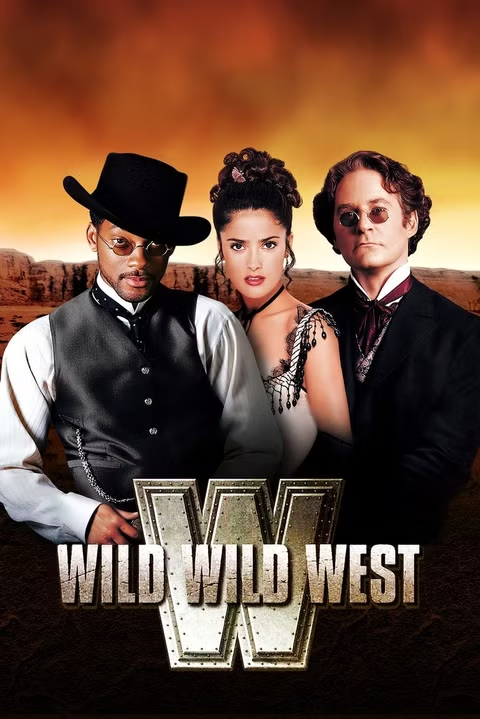
The movie in question cost a reported $170 million and grossed around $220 million worldwide. It was headlined by Will Smith, who infamously passed on The Matrix to star in it. Smith had recently been crowned the biggest star of the 1990s, thanks to hits such as Bad Boys, Men in Black, and Independence Day. The 1999 movie reunited him with his Men in Black director Barry Sonnenfeld, and also features Kevin Kline, Salma Hayek, and Kenneth Branagh.
Here’s Where You Can Watch Will Smith’s Sci-Fi Western
We’re talking, of course, about Wild Wild West. The movie was inspired by a television series from the 1960s, and written by three pairs of writers. Wild Wild West was heavily marketed by Warner Bros., but it opened to extremely poor reviews. The movie now holds a 16% score on the aggregator website Rotten Tomatoes, where the consensus reads, “Bombastic, manic, and largely laugh-free, Wild Wild West is a bizarre misfire in which greater care was lavished upon the special effects than on the script.” Smith later expressed regret about choosing the movie over The Matrix, which was critically acclaimed and massively successful at the box office. In a YouTube video, Smith admitted that he isn’t proud of underestimating the Wachowskis and said, “If I had done it — because I’m Black — then Morpheus wouldn’t have been Black because they were looking at Val Kilmer. I was going to be Neo and Val Kilmer was going to be Morpheus. I probably would’ve messed The Matrix up, I would’ve ruined it. So I did y’all a favor.” You can watch Wild Wild West on Tubi, and stay tuned to Collider for more updates.

- Release Date
-
June 30, 1999
- Runtime
-
106 minutes
- Writers
-
Brent Maddock, Jeffrey Price, Peter S. Seaman, S.S. Wilson, Jim Thomas, John Thomas
- Producers
-
Jon Peters
A perfectly written trilogy has to do something brutal: make three separate films feel satisfying on their own while also making the whole thing richer when viewed as one long design. The first film cannot feel like a pilot. The second cannot exist only to delay resolution. The third cannot just tidy the room and call it closure.
The best trilogy writing creates pressure across years. A line gains new meaning later. A character’s early flaw becomes their punishment. And more. These eight trilogies understand long-form cinema at the deepest level, and the writing in each one has a different kind of perfection. Lock in and I’ll explain why.
8
‘The Koker Trilogy’ (1987–1994)

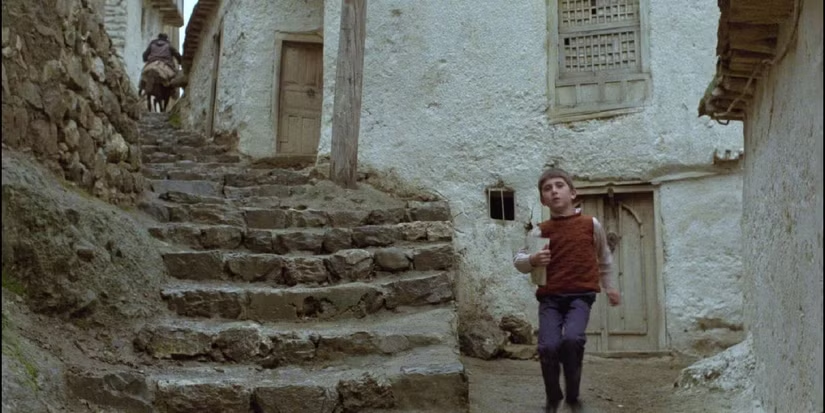
A boy returning a notebook should not be enough to carry an entire film, yet Where Is the Friend’s House? turns that tiny act into one of cinema’s purest moral adventures. Ahmad (Babak Ahmed Poor) knows his classmate may be punished if the notebook stays with him, and that single responsibility sends him through adult indifference, village routines, repeated refusals, and the frightening loneliness of being a child who understands urgency better than the grown-ups around him.
Then Abbas Kiarostami expands the idea of responsibility in ways that feel almost impossible on paper. And Life Goes On follows a filmmaker searching for the children from the first film after the 1990 earthquake, turning the earlier fiction into a doorway toward real devastation and survival. Through the Olive Trees then folds cinema back into life again through Hossein (Hossein Rezai)’s quiet pursuit of Tahereh (Tahereh Ladanian) during a film shoot. The trilogy’s writing keeps asking how stories continue after the camera leaves. It finds drama in duty, curiosity, persistence, and unanswered feeling.
7
‘The Cornetto Trilogy’ (2004–2013)

The joke with this trilogy is that people remember the jokes first, which is fair, because the jokes are absurdly precise. The greater writing achievement is how Edgar Wright and Simon Pegg build three comedies where the punchlines, genre mechanics, character immaturity, and emotional payoff all keep feeding each other. Shaun of the Dead uses Shaun (Simon Pegg)’s zombie rules to expose his refusal to grow up. Hot Fuzz turns Nicholas Angel (Simon Pegg)’s action-movie obsession into a story about friendship, community rot, and one man learning to loosen his grip. The World’s End weaponizes nostalgia against Gary King (Simon Pegg) and the exact people who keep pretending the past was their best self.
Every film has comic architecture that rewards rewatching. Throwaway lines become plot devices. Pub names, background details, repeated phrases, and awkward social habits all return with purpose. Gary’s tragedy in The World’s End cuts so sharply because the trilogy has already trained viewers to laugh at arrested development before showing the damage underneath it. Shaun, Nicholas, and Gary are very different men, yet all three are trapped by a version of themselves they mistake for identity. That is brilliant comic writing: the laugh gets there first, then the ache follows.
6
‘Back to the Future Trilogy’ (1985–1990)

Time-travel stories usually collapse under their own rules once sequels start stacking complications. Back to the Future somehow turns complication into pleasure. Robert Zemeckis and Bob Gale write the first film with near-perfect cause and effect: Marty McFly (Michael J. Fox) changes one night in 1955, endangers his own existence, forces his parents toward each other, and learns enough about courage to change the family he returns to. The plot is tight, funny, emotional, and ridiculously efficient.
The sequels take that original design and keep remixing it without losing the audience. Part II makes the first movie’s timeline feel like a playground and a trap at once, using alternate 1985, future Hill Valley, and the 1955 overlap with almost comic mathematical confidence. Part III shifts to the Old West and gives Doc Brown (Christopher Lloyd) the romantic test Marty already had in another form: the temptation to break time for love. The trilogy is so satisfying because the writing understands repetition as variation. Clocks, cars, photographs, bullies, dances, accidents, family shame, and personal courage keep returning in new shapes until Marty’s final growth feels cleanly earned.
5
‘The Dark Knight Trilogy’ (2005–2012)

Batman has been rewritten so many times that another origin story could have felt pointless. Batman Begins solves that by treating Bruce Wayne (Christian Bale)’s mission as a set of ideas under construction: fear, justice, theatricality, discipline, symbol-making, and the danger of becoming too useful to one’s own pain. The script gives Bruce a reason for every piece of Batman, then surrounds him with people who challenge different parts of the myth: Alfred (Michael Caine)’s love, Gordon (Gary Oldman)’s decency, Rachel (Katie Holmes)’ moral line, and Ra’s al Ghul (Liam Neeson)’s extremism.
The Dark Knight is the trilogy’s writing peak because it turns Batman’s symbol into a public crisis. The Joker (Heath Ledger) attacks rules, stories, institutions, and self-image. Harvey Dent (Aaron Eckhart) becomes the clean hope Bruce wanted the city to choose instead of Batman, which makes his fall more than a villain turn. The Dark Knight Rises has rougher plotting, but its core idea still completes the written arc: a man who built his life around sacrifice has to learn the difference between dying for a symbol and living beyond it. The trilogy earns its place because its best writing treats superhero mythology as an argument with consequences.
4
‘The Apu Trilogy’ (1955–1959)

The writing in The Apu Trilogy has an almost dangerous amount of trust in ordinary life. It’s like the Indian version of Boyhood but spread over three films and much better and fleshed out. Pather Panchali does not hurry childhood into a clean lesson. Apu (Subir Banerjee) watches Durga (Uma Dasgupta), his mother Sarbajaya (Karuna Banerjee), his father Harihar (Kanu Banerjee), their aging relative Indir (Chunibala Devi), the village, the rain, the trains, the hunger, and the small pleasures that make poverty even more painful because beauty still keeps appearing. The film’s story grows through observation, which is harder than plot mechanics and far rarer.
Aparajito understands the cruelty of becoming yourself. Apu’s education gives him a future, but that future costs his mother the nearness she needs. The writing never turns either side into a villain. That emotional fairness continues in Apur Sansar, where Apu (Soumitra Chatterjee)’s unexpected marriage to Aparna (Sharmila Tagore) becomes tender through small adjustments, shared embarrassment, and domestic discovery. When loss breaks him, the trilogy refuses easy nobility. Apu fails as a father before he can return as one. Satyajit Ray and his collaborators write a life, not a résumé of events. Childhood, ambition, love, grief, guilt, and reconciliation all unfold with devastating simplicity.
3
‘The Lord of the Rings Trilogy’ (2001–2003)

Adapting J.R.R. Tolkien could have gone wrong in a thousand directions. The writing team of Fran Walsh, Philippa Boyens, and Peter Jackson had to condense an enormous literary world without reducing it to lore delivery. Their greatest decision was emotional prioritization. Every kingdom, object, battle, creature, and prophecy is filtered through a character need: Frodo (Elijah Wood)’s burden, Sam (Sean Astin)’s loyalty, Aragorn (Viggo Mortensen)’s fear of inheritance, Boromir (Sean Bean)’s weakness, Gollum (Andy Serkis)’s divided self, Éowyn (Miranda Otto)’s hunger for dignity, Faramir (David Wenham)’s need for his father’s love, Théoden (Bernard Hill)’s return to courage.
The trilogy keeps giving each storyline its own moral test. Frodo’s mercy toward Gollum later becomes the only reason the quest can succeed. Sam’s plainspoken devotion grows from comic warmth into the trilogy’s strongest expression of grace. Aragorn’s reluctance has to become responsibility rather than pose. Even smaller choices carry weight because the scripts keep linking private character decisions to the fate of the world. The writing also knows when to let language feel old and when to keep it direct. For a trilogy this huge, the emotional logic stays shockingly clear. Middle-earth survives on structure, sacrifice, and character payoff more than scale.
2
‘The Before Trilogy’ (1995–2013)

The terrifying thing about writing The Before Trilogy is that there is almost nowhere to hide. No mystery plot rescues a weak exchange. No spectacle interrupts a false line. Jesse (Ethan Hawke) and Céline (Julie Delpy) have to talk, and the writing has to make every digression feel like attraction, defense, curiosity, flirtation, philosophy, fear, memory, or resentment. Before Sunrise captures the way young people perform intelligence while accidentally revealing themselves. They are sincere and ridiculous at once, which is exactly why the romance feels real.
Before Sunset is even more precise because every sentence carries the ghost of the conversation they failed to continue for nine years. Jesse and Céline talk about marriage, work, politics, sex, memory, and disappointment while slowly admitting that Vienna never ended for either of them. Before Midnight is the bravest writing of the three. It lets the same verbal chemistry curdle into marital combat, then keeps enough tenderness alive to make the damage frightening. Richard Linklater, Hawke, and Delpy write love as conversation across time. The trilogy is nearly perfect because the words change age with the people speaking them.
1
‘The Three Colours Trilogy’ (1993–1994)

No trilogy on this list has a more elegant writing challenge than Three Colours: three films inspired by liberty, equality, and fraternity, each separate, each emotionally complete, each quietly connected. Krzysztof Kieślowski and Krzysztof Piesiewicz never treat those ideals like slogans. They test them inside grief, humiliation, loneliness, sex, pride, chance, music, law, and human connection until each concept becomes painfully personal.
Blue gives Julie (Juliette Binoche) the freedom she thinks she wants after losing her husband and child, then shows how impossible total detachment becomes when memory, music, and unfinished love keep returning. White treats equality through Karol (Zbigniew Zamachowski)’s wounded masculinity after divorce, turning humiliation into a bitter, funny, morally complicated revenge story. Red is the trilogy’s miracle because Valentine (Irène Jacob) and the retired judge (Jean-Louis Trintignant) create a bond built from attention rather than romance, and the film’s coincidences feel emotional instead of mechanical. The ferry ending ties the trilogy together without reducing its mysteries. This one, therefore, is a top-notch, perfectly written trilogy filmmaking because the design is visible only after the feelings have already reached you.

Three Colors: Blue
- Release Date
-
September 8, 1993
- Runtime
-
98 minutes
- Director
-
Krzysztof Kieślowski
- Writers
-
Krzysztof Piesiewicz
Politics17 seconds ago
Wings Over Scotland | Search And Replace

Sports1 minute ago
Super League: Wakefield Trinity 48-6 Castleford Tigers – nine-try Trinity boost top-four hopes

Tech2 minutes ago
2026 Frikkin Lasers Challenge: A 3D-Printed Raman Spectrometer


-

 Fashion2 days ago
Weekend Open Thread: High Hopes
-

 Politics2 days ago
The House | “Reframing the debate from a binary discussion of winners and losers”: Yuan Yang reviews ‘We Are Not Machines’
-

 Crypto World6 days ago
Strategy authorizes up to $1.25B in Bitcoin sales under new capital plan
-

 News Videos7 days ago
MAJOR BITCOIN & MARKET UPDATE!!!! (MUST WATCH ASAP!!!)
-

 Tech6 days ago
Anonymous researcher drops 0-day ‘exploitarium’ repo
-

 News Videos5 days ago
How to Build INSANE Live Financial Dashboards With Claude
-

 Business5 days ago
Australia treasurer says alleged access of prime minister’s bank data ’incredibly concerning’
-
 NewsBeat11 hours ago
Taylor Swift and Travis Kelce wedding staffer hilariously struggles to keep her cool while checking in megastars
-
 Business6 days ago
The AI boom won’t burst all at once. It will pop in ‘rolling bubbles’: Macquarie
-

 Sports4 days ago
Broncos roster: OL Ben Powers (No. 74) entering final year of contract
-

 NewsBeat5 days ago
Presenter Caroline Flack’s brother Paul Flack dies aged 55
-

 Crypto World3 days ago
Binance stock trading tops $1B in first month after launch
-

 Crypto World4 days ago
Alibaba-affiliate Ant Group enters the humanoid robot market with 12 deals
-
 NewsBeat3 days ago
New exhibition reflects five decades of movement between island of Ireland and GB
-
 Crypto World4 days ago
Airdrop Registration Becomes Key Focus For Remittix As RTX Launch Updates Approach
-

 Business4 days ago
Meta Platforms Stock Jumps 7% Today as Bloomberg Reports Company Plans to Enter the Cloud Business
-

 Business2 days ago
What a 10 Percent Drop Means for Buyers, Sellers and Renters
-

 Crypto World3 days ago
Binance Re-Enters Philippines As EU MiCA Rules Restrict Access
-

 Tech3 hours ago
Lenovo laptops are now shipping with YMTC SSDs, a sign of Chinese NAND entering the mainstream
-

 Crypto World2 days ago
Standard Chartered Secures MiCA License as ESMA Adds 37 New Crypto Firms
You must be logged in to post a comment Login