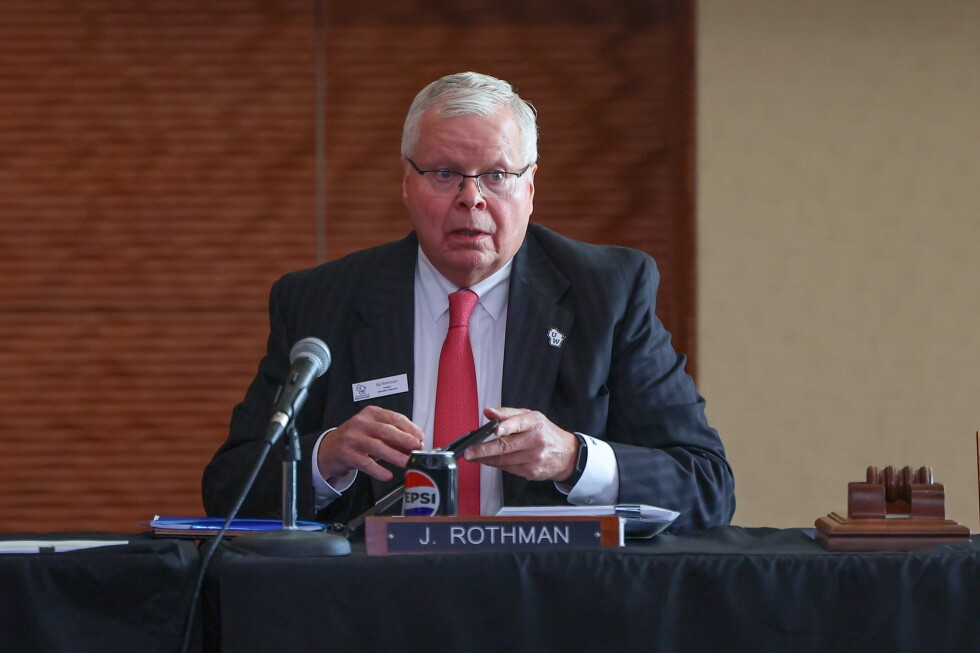
MADISON, Wis. (AP) — The president of the University of Wisconsin system said in letters obtained by The Associated Press on Thursday that he’s been told to either resign or be fired, but has been given no reason and won’t step aside.
Jay Rothman, president of the multi-campus 165,000-student university system since 2022, said in a letter addressed to the head of the Board of Regents dated March 26 that he’s been given no reason why regents want him to leave.
Rothman said he’s been told that his options are to resign or retire, and that if he doesn’t then the board “was prepared to terminate my employment despite all that has been accomplished.”
The Board of Regents held a closed emergency meeting on Wednesday night to discuss personnel matters.
Advertisement
“The Board is responsible for the leadership of the Universities of Wisconsin and is having discussions about its future,” Amy Bogost, board president, said in a statement to AP. “We don’t comment on personnel matters.”
Rothman declined to comment when reached via email on Thursday.
“I believe my letter speaks for itself,” he said.
In the letter addressed to Bogost, Rothman said he had not been “provided any substantive reason or reasons for the Board’s finding of no confidence in my leadership.”
Advertisement
Because of that, Rothman said, “I am not prepared, as a matter of principle, to submit my resignation.”

Rothman also refused to resign in a second letter sent to two other regents on Wednesday after he said they urged him to step down during a Tuesday meeting. Rothman said the regents told him if he didn’t resign, the board was prepared to meet this weekend to fire him.
Rothman said those regents also could not give a reason for them wanting him to resign or be fired.
“I find this process to be nearly (if not completely) indefensible,” Rothman wrote.
Advertisement
Rothman said he asked for an opportunity to discuss the situation with the board and was told that would not happen.
Rothman’s tenure has been marked by his efforts to increase state funding amid federal cuts, debates over free speech on campus amid pro-Palestinian protests, and declining enrollment leading to eight branch campus closures.
Rothman raised the possibility of resigning in 2023 when the Board of Regents rejected a deal reached with the Republican-controlled Wisconsin Legislature over diversity, equity and inclusion efforts. The board later reversed its vote and approved the deal.
Rothman noted in the March letter that “among so many other things,” the university will need to replace the chancellor of the flagship Madison campus this year. Chancellor Jennifer Mnookin is leaving to take the job as president of Columbia University.
Advertisement
“I do not believe my resignation at this time is in the best interests of either the Universities of Wisconsin or the state of Wisconsin,” Rothman said.
Rothman said in the letter that he has devoted his “heart and soul to the mission of the Universities of Wisconsin” and that he was surprised when told “an unidentified majority of the Board of Regents had lost confidence” in his leadership.
“When I asked you to articulate reasons for the Board’s conclusion and apparent lack of confidence in me, you merely noted that each Regent has his or her own perspective on the matter,” Rothman wrote. “You did not provide any tangible reasons for the Board’s determination.”
Rothman, the former chair and CEO of the Milwaukee-based Foley & Lardner law firm, was chosen as UW president in 2022. He had no prior experience administering higher education.
Advertisement
The Universities of Wisconsin consists of 13 universities and several other branch campuses.
Despite his early exit, Littler remains top of the table while Van Veen – still recovering after missing night seven in Dublin because he needed surgery to remove kidney stones – is up to fifth.
The match was a repeat of January’s World Championship final and the dramatic ending only adds to the feeling that there could be quite a rivalry between the exciting young pair over the next few years.
“Luke Littler was happy that Gian van Veen went inside the 15 and he kind of did the Simon Whitlock ‘well done’ and you shouldn’t do that,” former player Wayne Mardle said on Sky Sports.

“As he did it, Gian turned round and he kind of went ‘why did you do that?’
Advertisement
“You’ve got to say that Gian handled it better because Luke Littler fluffed his lines and went too aggressive at the double seven. Gian held it together really well.
“[Littler] didn’t expect to get caught. He got caught with his hand in the cookie jar and he won’t be doing that again.”
Three-time world champion John Part, speaking on Sky Sports, added: “I think don’t either player was too far into the wrong. The end of a match can get quite heated.
“Gian handled himself more appropriately in a lot of ways. Luke could have handled it slightly better.”
You may be surprised about how healthy certain foods are
A leading nutritionist has offered some guidance on maintaining a balanced diet. The health expert addressed some widespread misconceptions about snacking and making sensible food choices.
Advertisement
Abby Coleman works as a performance nutritionist at The Edge. The health group runs a human performance and nutrition lab in Leatherhead, Surrey, which serves elite athletes and professional sports stars.
She issued some guidance around certain foods that can be perceived as unhealthy, yet can actually be beneficial in moderation. One example she pointed to is eggs. Ms Coleman explained: “Egg yolks are high in cholesterol, but for most people, dietary cholesterol has minimal impact on blood cholesterol levels.
“Observational studies linking eggs to heart disease are inconclusive.” She outlined their nutritional benefits: “Eggs remain a nutrient-dense food, offering high-quality protein, essential vitamins (including D and B-complex), choline, and antioxidants that support satiety, overall nutrition, and health.”
State Pensioners to face major tax change
Healthy cholesterol boost
Another food that might come as a surprise for its health benefits is chocolate. Ms Coleman noted: “Chocolate itself should be eaten in moderation, but dark chocolate can be ‘good for you’.
Advertisement
“Try to stick to 70 per cent or more cocoa and you can benefit from it being rich in antioxidants, which protect our cells from damage, a ‘boost’ to HDL cholesterol levels (the ‘good’ cholesterol)”. She added that eating some dark chocolate may also improve your cognitive function.
Ms Coleman issued a warning regarding snacking. She said: “People can often underestimate how much they snack on foods like crisps, biscuits and pastries.
“They’re easy to eat because they’re high in sugar, salt and saturated fat so our taste buds love them, but these types of snacks are low in fibre and protein, and don’t keep you feeling full.” The real danger, she stressed, emerges when unhealthy snacking becomes habitual.
Weight gain risk
The specialist warned: “The danger comes from consistent overeating. This can lead to weight gain, increased cholesterol levels (from too much saturated fat), increased risk of Type 2 diabetes and elevated blood pressure.”
Advertisement
She emphasised that the problem isn’t snacking itself, but rather the potential for consuming too much. Ms Coleman said: “Choosing snacks which are low in nutrition and high in saturated fat, sugar, and/or salt and, and eating them mindlessly, can be a problem.
“Instead of avoiding snacking, choose options which align with your goals such as health, performance, and body composition.”
The parliament, sitting for the first time since the coup, is filled with his loyalists. With the armed forces guaranteed one quarter of the seats, and the military’s own party, the USDP, winning nearly 80% of the remaining seats in an election which was tilted heavily in its favour, this was a preordained outcome. More of a coronation, than an election.
A man in his 30s and young girl died after a collision involving a tipper truck and pony and trap on the A228 in East Peckham near Tonbridge
Peter Hennessy UK & World News Editor
00:29, 03 Apr 2026Updated 00:30, 03 Apr 2026
A young girl and a man in his 30s have died following a horrific crash involving a tipper truck and a pony on a busy road.
The devastating collision occurred in East Peckham near Tonbridge on Wednesday, 1 April, on the A228 Boyle Way, between the junctions of Branbridges Road and Hale Street.
Advertisement
According to police, a white DAF tipper truck was travelling along the southbound carriageway when it collided with a pony and trap moving in the same direction — the pony also died at the scene.
Officers, South East Coast Ambulance Service and Kent Fire and Rescue Service all attended the scene, where a man in his 30s, who had been riding in the trap, was pronounced dead.
A woman and a young girl who had also been travelling in the trap were rushed to hospital. The young girl was sadly pronounced dead upon arrival, while the woman remains in a critical condition.
The driver of the tipper truck, a 29 year old man from Kent, was arrested in connection with the incident and taken into custody.
Advertisement
Kent Police are now appealing for witnesses and any dashcam footage as investigators work to establish the full circumstances of the crash.
A spokesperson for Kent Police said: “An investigation into the circumstances is underway and witnesses or anyone who saw the truck or pony and trap prior to the collision, is urged to contact the appeal line.
“Call the Serious Collision Investigation Unit on 01622 798538, quoting reference BN/JG/027/26.” “Alternatively email sciu.td@kent.police.uk. Dashcam footage can be uploaded here. “
This is the text from The Conversation UK’s World Affairs Briefing email. Sign up here to receive weekly analysis of the latest developments in international relations, direct to your inbox.
Anybody who tuned in to Donald Trump’s prime-time speech to the American people last night hoping to hear that he plans an end to the US attacks on Iran and will focus instead on reaching an agreement over opening up the Strait of Hormuz would have been bitterly disappointed. I know I was.
Instead of a strategy to restore the vital flow of oil and gas through the strait – something which would have immediately calmed the markets and started to bring down energy prices – the US president opted for a familiar mix of revisionism, self-aggrandisement and bloodcurdling threats.
So we heard that it was never his intention to force regime change in Iran (despite having said exactly that on day one of the special military operation). We had the miraculous achievements of his administration over the past year which had restored “a dead and crippled country after the last administration” to what is now “the hottest country anywhere in the world by far”.
Advertisement
And instead of seeking a deal with Iran over the Strait of Hormuz, Trump promised to “hit them extremely hard over the next two to three weeks. We’re going to bring them back to the Stone Ages, where they belong.”
Along the way, the US president took a potshot at America’s Nato allies who have been reluctant to get involved in this war, exhorting them to “build up some delayed courage. Should have done it before. Should have done it with us as we asked.”
Donald Trump addresses the American people, April 1 2026.
In the event, Nato secretary-general Mark Rutte and many of Nato’s European leaders will probably feel as if they have got off lightly. Trump and his secretary of state, Marco Rubio, have been outspoken in their criticism of Nato in recent days. Rubio told Fox News host Sean Hannity that the US would “reexamine the value of Nato”, while the president, when asked if the US was reconsidering its Nato membership, said the question was “beyond reconsideration”, adding that the alliance is a “paper tiger, and Putin knows that too, by the way.”
Advertisement
Trump is not the first US president to question the operation of Nato and worry about the outsized burden borne by the US. But none before has done so much to publicly undermine the alliance. But then, as Andrew Gawthorpe explains, Nato’s focus on European security has been a huge benefit to the US over the decades. Gawthorpe, an expert in American foreign policy at Leiden University, presents us with a cost-benefit analysis of US leadership of Nato, spelling out the many advantages which he says “generations of American strategists, military officers and diplomats have viewed as worthwhile”.
It’s not as if the US-Israeli military operation in Iran is a matter for Nato in any case, writes David Galbreath. Nato is a defensive alliance. Article 5 of its founding treaty holds “an armed attack against one NATO member shall be considered an attack against all members, and triggers an obligation for each member to come to its assistance”. This is clearly not the case in Iran.
To be sure, as Galbreath notes, Nato’s focus has shifted at times over the years. From aiming purely at collective defence – defined as coming to the aid of a fellow member whose territory is threatened by a third party – at times Nato has intervened in issues of regional security, most notably in the 1990s wars in the former Yugoslavia.
But an individual member’s foreign policy adventures have never mandated nato’s involvement: indeed the US actively opposed the UK and France during the Suez crisis in 1956 and in turn UK minister, Harold Wilson, resisted pressure from US president Lyndon Baines Johnson to get involved in the US war in Vietnam. It would, Galbreath concludes, be tragic if – having weathered these storms – Nato falls apart over this war of questionable legality.
Not just questionable legality, either. After the US president’s speech last night the world is no wiser as to how long this might continue. But Trump’s enthusiasm for Operation Epic Fury will, to an extent, be calibrated by how he and his close advisers judge it might affect his party’s chances in the midterm elections in November. High gasoline prices and inflation (as well as continuing entanglement in a war – something he pledged not to do on the campaign trail in 2024) are likely to lose him votes.
For Israeli prime minister, Benjamin Netanyahu, the calculation will be different. He also faces an election in the autumn. But when Israelis cast their ballots on October 27, they’ll be voting on different issues. Netanyhu’s appeal to voters on security grounds is a potent one. There’s a clock in Tehran which counts down to 2040 by which time the late supreme leader Ayatollah Ali Khamenei swore Israel would no longer exist.
A leader who could neutralise that threat for good could use that accomplishment to good purposes on the campaign trail, whether or not his methods are deemed legal in international law.
Advertisement
Benjamin Netanyahu in the Knesset: the Israeli prime minister faces an election in October 2026. AP Photo/Ohad Zwigenberg
Leonie Fleischmann, a scholar of Israeli politics at City St George’s, University of London, has researched Israeli security policy over decades, particularly when it comes to the way it has been enacted by Netanyahu. The current prime minister, she writes, is a disciple of the founder of Revisionist Zionism, Ze’ev Jabotinsky. For Jabotinsky, the watchword was “strength first, diplomacy second”.
But, Fleischmann notes, there is an important secondary concern for Netanyahu beyond the security of his people. That is that at present the polls suggest that while his party might be the most popular with voters, the support is not enough to enable him to form a coalition government. And if he loses, Netanyahu could face trial for bribery and corruption and a possible jail term. So arguably, his security is at stake, too.
There’s a bizarre twist to the US-Israeli operation in Iran. In the initial years of Russia’s invasion of Ukraine, Moscow was relying heavily on Shahed drones supplied by Iran. Now Russia is returning the favour, supplying its drones to Iran and – as a bonus – providing data to help Iran identify and hit its targets.
Advertisement
Meanwhile Kyiv is understandably increasingly concerned that US involvement in the Middle East has inevitably meant that US munitions previously available for purchase by Ukraine’s allies are instead being used against Iran. If so – and it seems a reasonable assumption – it will seriously undermine Ukraine’s ability to defend itself.
State of the war in Ukraine, April 1 2026. Institute for the Study of War
Meanwhile, in an attempt to control rising oil prices, the US has removed some sanctions preventing Russia from selling its oil. So the war in Iran has the potential to be an utter disaster for Ukraine.
The one silver lining towards the end of last year was that Russia was losing far more men on the battlefield than Ukraine. But Charlie Walker and Bettina Renz have been following Russia’s recruitment and write that good salaries and lavish signing on bonuses continue to attract plenty of new soldiers.
Walker and Renz believe that Vladimir Putin has worked hard in recent years to repair and enhance conditions in the Russian military, prompting the in-house newspaper of the defence ministry to trumpet that “contract soldiers are becoming the country’s middle class”. Needless to say, the in-house defence ministry newspaper is bound to take a rosy view of conditions in the military, but the confidence with which this has been asserted suggests that anyone hoping for a collapse in Russian military morale in 2026 might be disappointed.
Sign up to receive our weekly World Affairs Briefing newsletter from The Conversation UK. Every Thursday we’ll bring you expert analysis of the big stories in international relations.
North Yorkshire Police says it is investigating an assault involving a number of people in the village of Osgodby, near Scarborough last week.
It happened near Hunters Close at approximately 10pm on Saturday (March 28) and involved two victims who were injured after being attacked by a group of people.
RECOMMENDED READING:
Advertisement
“We are particularly interested in speaking to anyone who may have witnessed the incident or anyone who may have CCTV, doorbell or video footage of the area during this time,” said a spokesperson for the force.
If you have any information that could help the investigation, please email Holly.Millington@northyorkshire.police.uk, call North Yorkshire Police on 101 and ask for Holly Millington, or contact Crimestoppers anonymously on 0800 555 111 or via their website.
Please quote reference 12260058143 when passing on information.
NEW YORK (AP) — President Donald Trump signed an executive order Thursday that could slap long-threatened pharmaceutical tariffs of up to 100% on some patented drugs from companies that don’t reach deals with his administration in the coming months.
Companies that have signed a “most favored nation” pricing deal and are actively building facilities in the U.S. to onshore production of patented pharmaceuticals and their ingredients will have a 0% tariff. For those that don’t have a pricing deal but are building such projects in the U.S., a 20% tariff will apply but will increase to 100% in four years.
A senior administration official told reporters on a press call that companies still have months to negotiate before the 100% tariffs kick in — 120 days for bigger companies, and 180 days for everyone else. The official, speaking on condition of anonymity to preview the executive order before it was issued, did not identify any companies or drugs that were in jeopardy of getting hit with the increased tariffs but noted the administration had already reached 17 pricing deals with major drugmakers, 13 of which have signed.
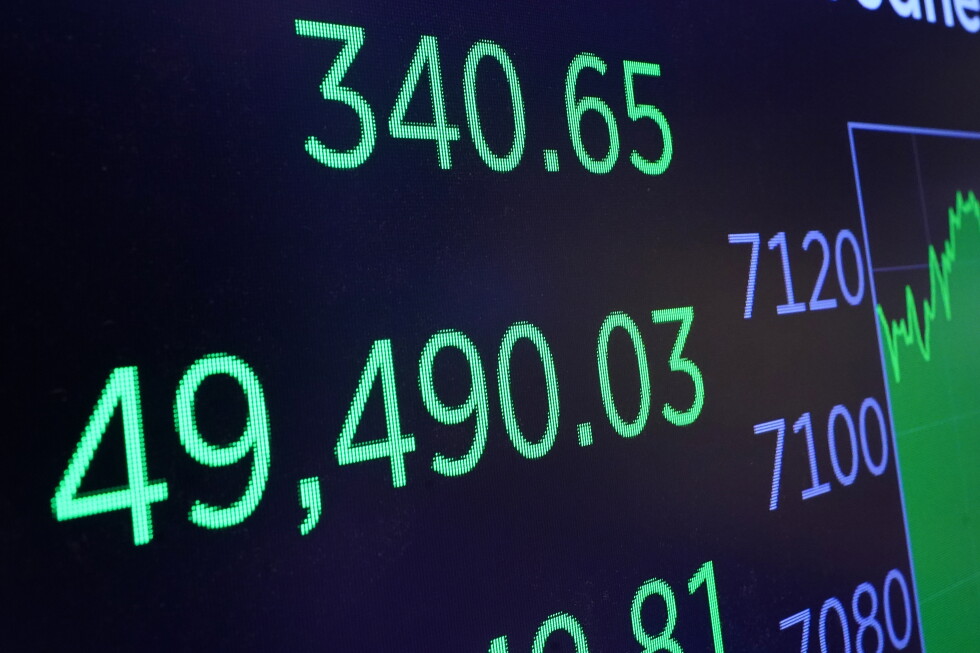
In the order, Trump wrote that he deemed such actions necessary “to address the threatened impairment of the national security posed by imports of pharmaceuticals and pharmaceutical ingredients.” It arrived on the first anniversary of Trump’s so-called Liberation Day, when the president unveiled sweeping new import taxes on nearly every country in the world that sent the stock market reeling. Those “Liberation Day” tariffs were among the duties the Supreme Court overturned in February.
Advertisement
Some warned of consequences of the coming tariffs announced Thursday. Stephen J. Ubl, CEO of pharmaceutical company trade group PhRMA, said taxes “on cutting-edge medicines will increase costs and could jeopardize billions in U.S. investments.” He pointed to America’s already large footprint in biopharmaceutical manufacturing and noted medicines sourced from other countries “overwhelmingly come from reliable U.S. allies.”
Trump has launched a barrage of new import taxes on America’s trading partners since the start of his second term and repeatedly pledged that sky-high levies on foreign-made drugs were on the way. But the administration has also used the threat of new levies to strike deals with major companies — like Pfizer, Eli Lilly and Bristol Myers Squibb — over the last year, with promises of lower prices for new drugs.
Beyond company-specific rates, a handful of countries have reached trade frameworks with the U.S. to further cap tariffs on drugs sent to the U.S. The EU, Japan, Korea and Switzerland will see a 15% U.S. tariff on patented pharmaceuticals, matching previously agreed rates for most goods, and the U.K. will get 10% — which Thursday’s order noted would “then reduce to zero” under future trade agreements. The U.K. previously said it secured a 0% tariff rate for all British medicines exported to the U.S. for at least three years.
Trump also unveils update to metal tariffs
In addition Thursday, Trump rolled out an update on his 50% tariffs on imported steel, aluminum and copper. Starting Monday, tariff rates on those metals will be calculated based on the “full customs value” of what U.S. customers pay when buying foreign metal under the latest order, which the administration officials claimed will keep importers from other countries from escaping higher payments.
Advertisement
Products fully made of steel, aluminum and copper will continued to be tariffed at 50% for most countries. But the administration is also shifting how tariffs are calculated for derivative metals — or finished goods that contain some of these metals, but are not made entirely of them.
For a product with metal that amounts to less than 15% of its entire weight (like the cap on a perfume bottle) only country-specific tariffs will now apply, officials told reporters Thursday. But for products with more metal, such as a largely steel washing machine, they said a 25% tariff will apply to the whole value.
More sectoral taxes are piling up
Thursday’s orders reflect the latest example of Trump tapping into sectoral duties. The president used Section 232 of the 1962 Trade Expansion Act to impose the levies, the same authority he cited to slap import taxes on cars, lumber and even kitchen cabinets. And many expect to see more product-specific import taxes down the road.
That’s because a ruling from the Supreme Court struck down tariffs Trump imposed using another law — the 1977 International Emergency Economic Powers Act — to immediately slap tariffs on any country, at nearly any level.
Advertisement
While the Feb. 20 court decision marked a significant blow to Trump’s economic agenda, the president still has plenty of options to keep taxing imports aggressively. Beyond sectoral levies, Trump also imposed a 10% tariff on all imports under a separate legal power mere hours after the Supreme Court’s ruling, but that duty can only last for 150 days. Some two dozen states already challenged the new tariffs.
Trump has argued his steep new import taxes are necessary to bring back wealth that was “stolen” from the U.S. He says they will narrow America’s decades-old trade deficit and bring manufacturing back to the country. But Trump has also turned to tariffs amid personal grudges, or in response to political critics. And upending the global supply chain has proven costly for businesses and households that are already strained by rising prices.
A young girl and man in his 30s died after a collision involving a tipper truck and pony and trap on the A228 in East Peckham near Tonbridge, with a woman left in critical condition
A young girl and a man in his 30s have died following a horrific crash involving a tipper truck and a pony on a busy road.
Advertisement
The devastating collision occurred in East Peckham near Tonbridge on Wednesday, 1 April, on the A228 Boyle Way, between the junctions of Branbridges Road and Hale Street.
Police say a white DAF tipper truck was travelling along the southbound carriageway when it collided with a pony and trap heading in the same direction – the pony also tragically died at the scene.
Emergency services, including South East Coast Ambulance Service and Kent Fire and Rescue Service, rushed to the scene, where a man in his 30s, who had been riding in the trap, was pronounced dead.
A woman and young girl who had also been travelling in the trap were rushed to hospital, where the young girl was sadly pronounced dead. The woman remains in a critical condition.
Advertisement
The tipper truck driver, a 29 year old man from Kent, was arrested in connection with the incident and taken into custody.
Kent Police are now appealing for witnesses and dashcam footage to help establish the full circumstances of the tragedy.
A Kent Police spokesperson said: “An investigation into the circumstances is underway and witnesses or anyone who saw the truck or pony and trap prior to the collision, is urged to contact the appeal line.
“Call the Serious Collision Investigation Unit on 01622 798538, quoting reference BN/JG/027/26.” “Alternatively email sciu.td@kent.police.uk. Dashcam footage can be uploaded here. “
One of the officers is believed to have suffered serious but not life-threatening injuries.
Two police officers have been taken to hospital after a crash in Cambridge. Cambridgeshire Police were called to Gilbert Road in Cambridge at around 8.55am on Thursday (April 2) with reports of a crash involving a police van and a car.
Advertisement
An officer suffered serious injuries that are believed not to be life-threatening. Another officer suffered minor injuries.
A spokesperson for Cambridgeshire Police said: “We were called at about 8.55am this morning (2 April) to Gilbert Road, Cambridge, to reports of a collision between a car and a police van.
“An officer suffered serious injuries believed not to be life-threatening while another officer suffered minor injuries. They were both taken to hospital.”
To get more news and top stories delivered directly to your phone, join our new WhatsApp community.Click this linkto receive your daily dose of CambridgeshireLive content.
Advertisement
We also treat our community members to special offers, promotions, and adverts from us and our partners. If you don’t like our community, you can check out any time you like. If you’re curious, you can read ourPrivacy Notice.
One of Ireland’s most dangerous criminals has been arrested over the murder of gangster Robbie Lawlor.
The Irish Mirror has reported that detectives arrested the criminal known as Mr Big in Dublin on Thursday – on foot of an extradition request from the PSNI.
Sources told the outlet the PSNI want to charge the infamous Dubliner – who is a suspect for up to 16 killings – with the murder of Lawlor in April 2020.
Advertisement
Lawlor, 34, was gunned down in Ardoyne in north Belfast – but Gardaí and the PSNI suspect Mr Big ordered the hit from Dublin.
It’s understood investigators have evidence from a busted criminal communications network called Encrochat that they believe showed Mr Big was centrally involved in the Lawlor murder – and he is now to face a murder charge if, as expected, the High Court in Dublin rubber stamps his extradition.
The Dubliner is due to appear in the High Court on Friday.
Gardaí confirmed his arrest in a statement on Thursday. They also said they had been involved in a joint investigation with the PSNI over the murder.
Advertisement
The force said: “The Garda National Bureau of Criminal Investigation (GNBCI) of An Garda Síochána has been involved in a joint investigation with the Police Service of Northern Ireland into the murder of Robbie Lawlor on 4th April 2020.
“This afternoon, Thursday 2nd April 2026, investigating Gardaí from the GNBCI arrested a male (aged in his 40s) in Dublin on foot of a Trade and Cooperation Agreement extradition warrant to extradite the male to Northern Ireland to be charged in connection with the investigation.
“The male is currently detained at a Garda station in the Dublin region and will appear before the High Court at the Four Courts, Dublin 7 tomorrow, Friday 3rd April 2026, at 10:30am.
“An Garda Síochána has no further comment.”
Advertisement
The PSNI also issued a statement, saying: “A man in his 40s has been arrested in the Dublin region today, Thursday 2 April, on suspicion of the murder of Robbie Lawlor.
“The man was arrested by An Garda Síochána and is due to appear before the High Court at the Four Courts, Dublin 7, tomorrow Friday 3rd April 2026 at 10.30am.”Robbie Lawlor was shot dead outside a house in Etna Drive in North Belfast on 4 April 2020.”
Although the Lawlor killing happened in north Belfast’s Etna Drive, investigators believe it was organised and ordered from Dublin. Investigators believe Mr Big sanctioned the murder of Lawlor because he feared the Dubliner was planning to kill him as part of the Drogheda feud.
Lawlor was a suspect in the horror murder of teenager Keane Mulready-Woods in the Co Louth town in January 2020 as part of that feud – and Mr Big was linked to the opposing side.
Advertisement
He feared Lawlor was planning to kill him – and decided to strike first.
Officers also believe the crime Godfather had it in for Lawlor since he murdered associate Kenneth Finn, 36, in north Dublin in February 2018.
Two men have already been charged with the murder of Lawlor after a PSNI investigation north of the border, but last year officers teamed up with Gardaí to mount a joint operation that saw the series of searches in the Republic.
A house connected to Mr Big was one of 12 properties searched in that operation – in which Gardaí seized phones and other electronic equipment.
Advertisement
Sources say last year’s operation was linked to the Encrochat affair – when French police broke the encrypted phone service used by criminals all over the world.
Data from Encrochat phones have been used in dozens of trials in the United Kingdom – but sources say Gardaí used their treasure trove of information as intelligence.
Mr Big, who is heavily involved in drugs, tiger kidnapping and other serious crime, has long been a major target of Gardaí.
But officers have never been able to land a knockout punch against the Dubliner – despite him being charged with at least one serious charge.
Advertisement
His gang is in the frame for a string of murders, including dissident republican brothers Alan and Vincent Ryan, as well as Lawlor.
Gardaí also believe Mr Big is setting up his own cocaine smuggling network by sourcing cocaine directly from South America.
Sources say Gardaí who have been monitoring Mr Big believe he is one of the most intelligent and ruthless gangsters in Irish criminal history.
You must be logged in to post a comment Login