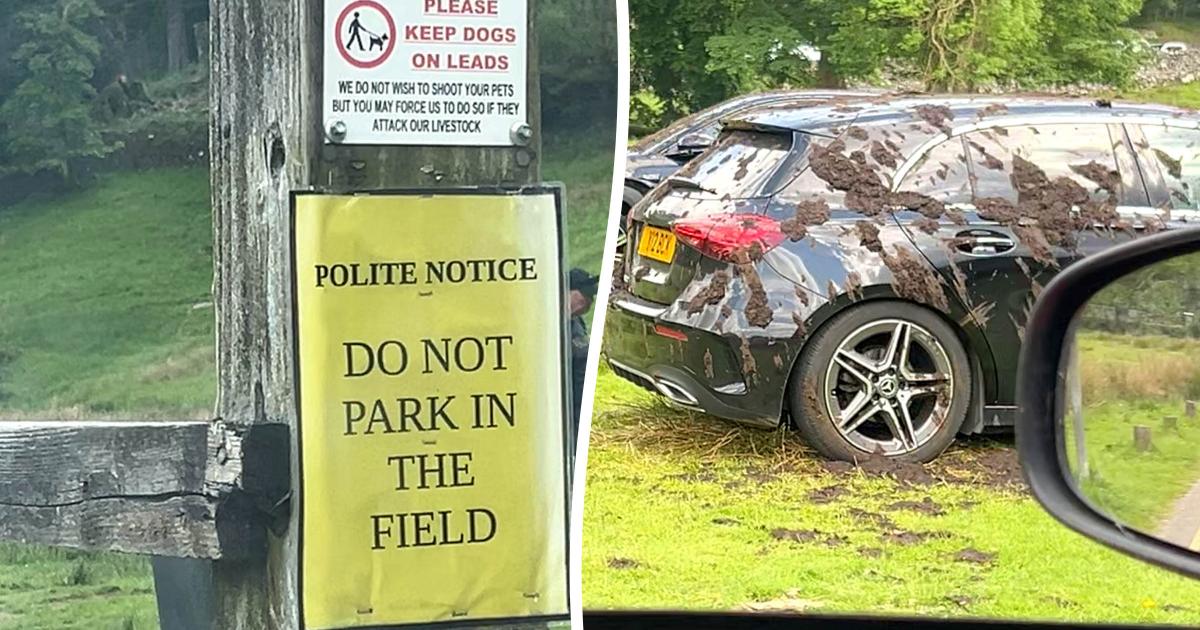
Phone footage shows at least 20 vehicles, which had parked on private land near Rydal Water, on Tuesday covered in the horrid muck.
At the start of the video a sign is visible which reads “Polite Notice – DO NOT PARK IN THE FIELD” and above is another sign which says “SHEEP IN FIELD”.
One particular car, a Black Mercedes, appears to have been drenched in the putrid stuff while other fuming owners can be seen assessing the damage.
Cars sprayed with slurry after being illegally parked on private land near Rydal Water in the Lake District (Image: SWNS)
Other luxury cars like Jaguars and BMWs were also covered in the incident, which has been dubbed “countryside karma”.
Advertisement
Parking in the beauty spot has been a long-standing issue with further pressure piled on during the bank holiday and summer periods.
Cumbria Police had previously warned visitors to the national park in an “appropriate place” which follows the “highway code”.
Dylan Wakley, 25, recorded the video at 3:20pm as he was driving through the area to Buttermere with his partner Emma Hudson, 24.
Dylan Wakley (Image: SWNS)
The farmer, from Lyme Regis, Devon, who was also on holiday at the time, said he has no sympathy for the car owners.
Advertisement
He said: “I can’t blame the farmer really.
“These motorists have ignored the sign and gone out of their way to park on the field, so fair enough.
“Any farmer who has dealt with tourists has dreamed of doing this.
“I say poor farmer for having to put up with them.
Advertisement
“Imagine coming back from a long walk to find your car covered in slurry, horrid.
Cars sprayed with slurry after being illegally parked on private land near Rydal Water in the Lake District (Image: SWNS)
“But it is their own fault.
“It acts as a good deterrent and is justice, really.”
Dylan says that he heard that the car owners had parked there after moving rocks deliberately placed on the field by the farmer to stop people from accessing the field.
Advertisement
He also said that people need to “remember to be considerate” and have some “common sense” which he says “people sometimes forget” when they are on holiday.
Dylan said that later the same day he visited Ambleside and there were queues of cars waiting outside the local car wash.
Cars sprayed with slurry after being illegally parked on private land near Rydal Water in the Lake District (Image: SWNS)
Other people have posted online in support of the farmer.
One said: “Never mess with a farmer and never park in their fields.”
Advertisement
Another said: “If only there was a water shortage and the car wash had been shut.”
One other local said: “He should get a bonus from the carwash company.”
Another said: “This guy must be so frustrated, honestly.
“The absolute disrespect of some people.
Advertisement
“If it was my field, I would do so much worse just for the audacity of ignoring my signs.”
Cars sprayed with slurry after being illegally parked on private land near Rydal Water in the Lake District (Image: SWNS)
In a social media post, Cumbria Police said: “If you’re parking somewhere, make sure it is following the highway code and in an appropriate place that is not going to block any drivers – especially emergency services vehicles that may need to get through.”
A spokesperson for Cumbria police said: “Police were made aware at 10pm on the 25 May of reports of cars having been sprayed with suspected cow slurry at a location near to Rydal.
“Our Neighbourhood Policing Teams are carrying out further enquiries to determine the full circumstances.”
Advertisement
They also said it appears the cars had parked on a farm owner’s land without permission.
The farmer, who is believed to have sprayed the slurry, has been approached for a comment.
More than ten pizzerias have opened in the capital so far this year — high profile, or at least well trodden into London’s frenetic food-based discourse. Probably you’ll have seen Dough Hands, Napoli on the Road, Hot Saint, Pizza Nerds, Short Road, Weezie’s, Fresh Hot, Track’s, Connie’s, All Kaps… the list goes on and more are coming (like Carmy’s slice shop in Covent Garden, due this summer). Some are Neapolitan or Roman but most are New York-inspired or at least East Coast in style. Such as Bar Etna, the most hyped of the lot, which opened earlier in May and comes from the lads behind The Plimsoll, a pub best known for its burger.
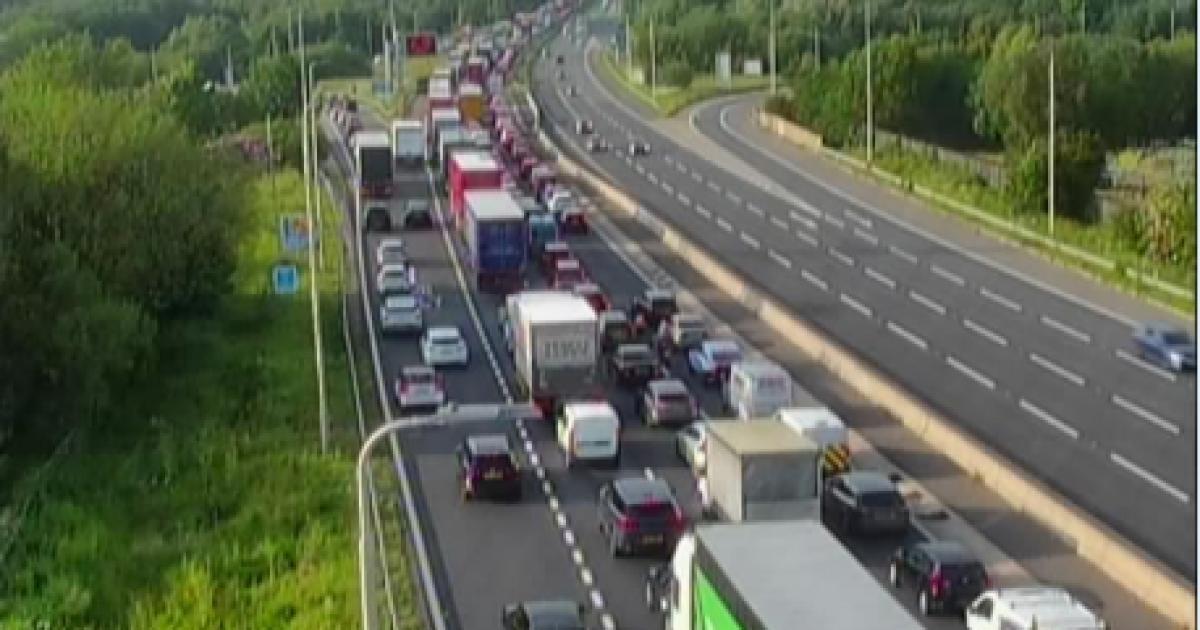
Traffic is being held on the M6 northbound between junction 26 for Orrell and junction 27 for Appley Bridge following a collision this afternoon. National Highways North West says emergency services are currently at the scene. Drivers are facing delays of up to 60 minutes with around four miles of congestion building on approach. Motorists are being advised to plan ahead and allow extra time for journeys. Follow our live blog below for the latest traffic updates, congestion information and diversion details.
An EastEnders favourite has made an unexpected exit from the long-running BBC soap after making the decision to leave his wife and children following a very tough time
On Wednesday night’s episode of the long-running programme, he suddenly reappeared just as Priya was getting ready to go to the wedding of Vicki Fowler and Ross Marshall. He promised her he had done a lot of work on the way and it suddenly seemed as if it was all back on between them once again, but there was a twist on the way.
On Thursday night’s instalment of EastEnders, which was released early on BBC iPlayer, Priya was taken aback to see that Ravi was packing his bags and preparing to leave Walford all over again. He said: “I thought you knew, I’m leaving,” and pointed out that he had written her a letter to explain things.
After letting the bombshell sink in, Priya raged: “I can’t believe I’m hearing this! Who writes a letter? It’s not the 1800s!” Ravi said: “It was a part of my therapy, I wrote it all down.
Advertisement
“How I need to set you free and let you go so I can finish the healing without you. I’m so sorry – I thought you knew it was goodbye. I’m not healed, I’m not healed! You will be so much happier without me.”
With tears streaming down her face, Priya read the letter and Ravi stood by the door with his suitcase as he waited for a taxi to arrive. Once it was time for him to go, he whispered: “I’m sorry.”
She begged: “There must be a way we can make this work,” – but it appeared to be to no avail as he left his keys behind and closed the door, leaving Priya to sob hysterically behind it.
Advertisement
Fans instantly took to social media to question if this really was the end for the couple as some predicted their Priya will end up pregnant as a result of their encounter. One wrote on X: “How long is Ravi off the Square for?”
Another said: “So they bring back Ravi for 2 days – so he can have a moment of intimacy with Priya and sleep with her….. Only for him to break up with her again the next day because he feels he isn’t fully healed and now he’s healing alone out of the MH unit.”
A third wrote: “S*** what if it’s Ravi that gets Priya pregnant,” and another said: “So does this more or less confirm that Priya is pregnant by NYD 2027 – either with Ravi’s baby or another man’s baby that isn’t Max’s.”
EastEnders airs Mondays to Thursdays at 7:30pm on BBC One and BBC iPlayer.
The inquest is now in its 17th week at Belfast Coroner’s Court
18:51, 28 May 2026Updated 18:56, 28 May 2026
It is “extremely unlikely” that Noah Donohoe entered the storm drain where he was found dead anywhere other than the Premier Drive stream culvert, an inquest has heard.
The inquest, which is being heard with a jury, is now in its 17th week at Belfast Coroner’s Court, and heard further evidence from engineer and hydrologist Jeremy Benn on Thursday about the culvert.
Noah, 14, had set off on his bicycle from his home in south Belfast on the evening of Sunday June 21, planning to meet two friends in the Cavehill area in the north of the city. However, he was later seen on CCTV footage cycling along York Road. The last sighting of him was on Northwood Drive.
Advertisement
Police believe Noah entered the nearby Premier Drive stream culvert, although there is no direct evidence such as CCTV or witnesses to support that. His naked body was found around 600m further down the storm drain tunnel at a Northern Ireland Railways depot almost a week later on June 27 2020.
A post-mortem examination found the cause of death was likely to be drowning.
Mr Benn had previously given evidence along with three other expert witnesses last month.
Advertisement
The inquest heard all four thought it was “extremely unlikely” Noah entered the culvert system at any other point.
Mr Benn said the alternatives were manholes, which he described as having heavy covers, designed not to be easy to lift, and if Noah had entered via a manhole the cover would have remained off.
He said other parts of the watercourse were fenced off, while another section would have involved wading through deep mud, and the train depot where the section of storm drain where his body was found, is gated with 24-hour security.
Meanwhile, the experts were at odds over whether Noah’s body would have moved in the tunnel.
Advertisement
Mr Benn said Noah’s body could have moved a short distance downstream with the outgoing tidal flow, while the other experts felt any movement would have been short, less than a few metres.
The inquest heard Mr Benn was involved with drafting guidance on culverts in 2010 and 2019, and trained staff at Northern Ireland’s Department for Infrastructure on that guidance. He was instructed by the department as an expert witness for the inquest.
Mr Benn was also described as having disagreed with the other expert witnesses over whether there should have been a security screen and fencing at the culvert which was refurbished in 2017.
On Thursday he warned that fencing in the area would have been very costly and difficult to put in.
Advertisement
In terms of security screens at culverts, he said they can lead to other dangers, adding that the flooding of the Westlink bypass in Belfast in 2008 was caused by a security screen at a culvert.
Counsel to the coroner Peter Coll KC, questioned Mr Benn on his assessment of the risk or hazards of the culvert.
Mr Coll suggested that due to it being dark, cold and the storm drain tunnel being so long and filling twice a day with the tide, that it was a “seriously dangerous place for a 14-year-old child, unauthorised, to be in”.
Mr Benn responded saying: “I wouldn’t go as far as to say it’s seriously dangerous.”
Advertisement
Returning to resume his evidence after lunch, Mr Benn said the culvert “wasn’t high risk” because of hazards being unlikely, terming it instead as “medium risk”.
Drive on Interstate 10 along the Gulf Coast of the United States, through Louisiana and into Texas, and you’ll see signs of the oil industry everywhere. There are offshore rigs out in the water and refineries lining the shoreline, where tankers deposit crude oil extracted from the Gulf floor.
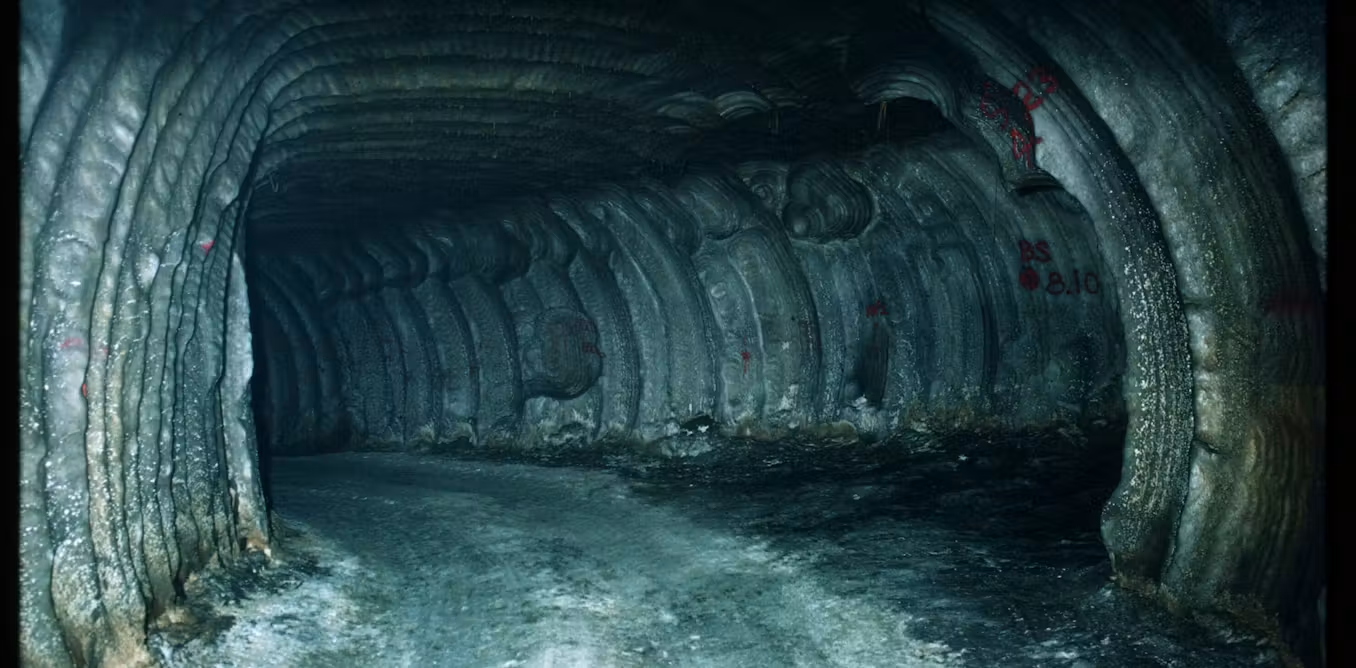
But what you might not realise from looking at the surface, is that this area is also home to a network of underground salt deposits, known as salt domes.
Advertisement
And dug down deep inside them are caverns, carved out in the late 1970s, that contain the Strategic Petroleum Reserve, America’s huge stockpile of oil.
With the Strait of Hormuz now closed for more than two months, global oil supplies are being squeezed, with warnings mounting about shortages affecting global industries, from aviation to agriculture. In March 2026, as part of a co-ordinated move by members of the International Energy Agency to release 400 million barrels of oil to prevent price spikes, the U.S. began releasing 172 million barrels from the Strategic Petroleum Reserve.
Globally, at the end of 2025, global strategic oil stockpiles were estimated at 2.5 billion barrels, with China holding the most.
Advertisement
In this episode of The Conversation Weekly podcast, we speak to Scott Montgomery, a former petroleum geologist who lectures in international studies at the University of Washington, about why these oil stockpiles were built up in the first place, and how they work.
Montgomery says salt is an ideal place to store oil because it’s impermeable, but also quite movable under the right amount of pressure. “These are not huge open gaping caverns … we haven’t hollowed out the salt dome. We actually have 60 separate smaller what are called bottles, about 200 feet (60 meters) in diameter and up to 2,000 feet (610 meters) in vertical length,” he explains.
But Montgomery says that there is only a certain number of times that oil can be taken out and put back into the bottles. “These really have a safety margin of about five cycles of drawing oil out of them and putting oil back,” he says, without dissolving the sides of the cavern too much. “The geological reality … is that we’re going too have to make new caverns.”
Listen to the interview with Scott Montgomery on The Conversation Weekly podcast, where he traces the history of strategic oil reserves, and explains what happens when they run out.
Advertisement
This episode of The Conversation Weekly was written and produced by Gemma Ware, Katie Flood and Mend Mariwany. Mixing by Eleanor Brezzi and theme music by Neeta Sarl.
Newsclips in this episode are from DW News and CBS News.
Listen to The Conversation Weekly via any of the apps listed above, download it directly via our RSS feed or find out how else to listen here. A transcript of this episode is available via the Apple Podcasts or Spotify apps.
In a statement to the inquiry, West Berkshire District Council said the application was based on “the legal principle that a public footpath can be deemed to exist if it has been enjoyed by the public for an uninterrupted period of 20 years, without force, secrecy or permission, or if evidence infers that a public footpath has been dedicated by a landowner at some point in the past and that dedication has then been accepted by the public (i.e. by being used by the public)”.
The tanker needs to be recovered before the road is reopened
17:24, 28 May 2026Updated 17:30, 28 May 2026
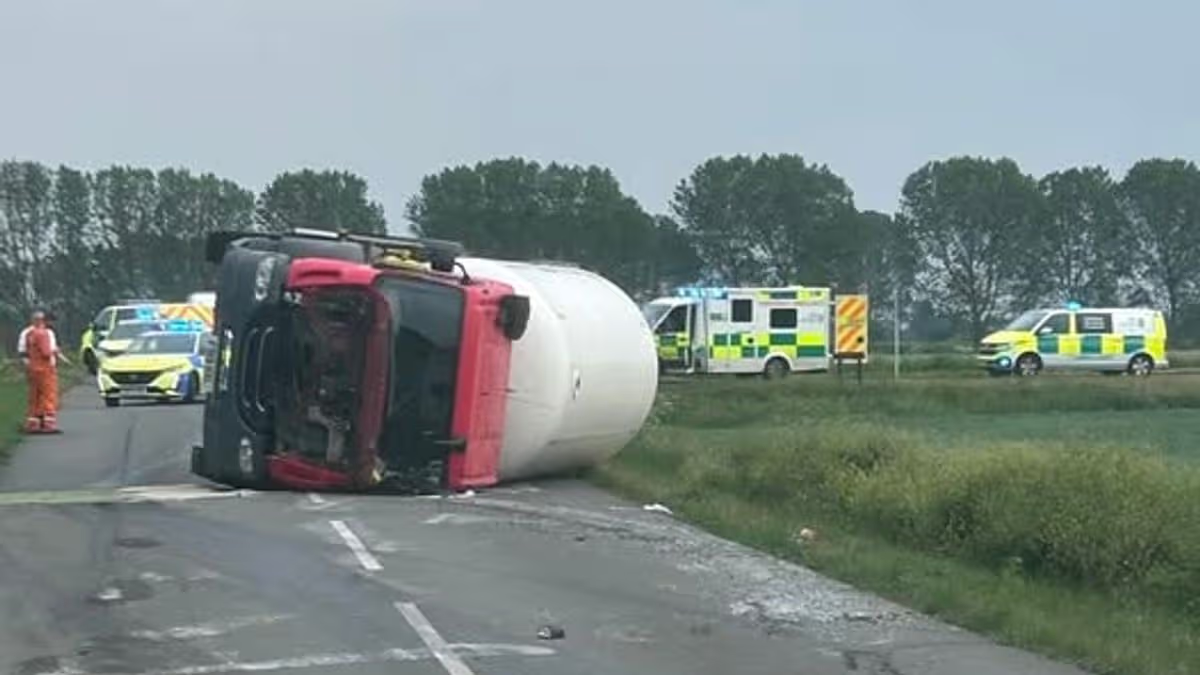
A road in Cambridgeshire will be closed overnight after a tanker overturned. The B1104 Prickwillow Road near Soham will be closed tonight (Thursday, May 28) after a tanker overturned at the junction with Great Fen Road this afternoon.
Cambridgeshire Police and the Cambridgeshire Fire and Rescue Service have attended to the scene. The road is closed to allow for the vehicle to be recovered. Drivers should find alternative routes when travelling in the area.
A spokesperson for the Cambridgeshire Fire and Rescue Service said: “Crews are currently responding to an incident near Soham where a tanker has overturned at the junction between Prickwillow Road and Great Fen Road.
Advertisement
“The road will be closed overnight whilst the vehicle is recovered so please find alternative routes when travelling.”
To get more news and top stories delivered directly to your phone, join our new WhatsApp community.Click this linkto receive your daily dose of CambridgeshireLive content.
We also treat our community members to special offers, promotions, and adverts from us and our partners. If you don’t like our community, you can check out any time you like. If you’re curious, you can read ourPrivacy Notice.
Muhammad Sheikhi, 23, denies sexually assaulting two women in Falkirk and told police he took “pity” on one alleged victim after finding her crying in the street, while prosecutors claimed he acted in a “predatory manner”.
Nick Forbes, Press Association Scotland and Gemma Ryder Reporter
18:25, 28 May 2026
A Syrian asylum seeker accused of sexually assaulting two women in Falkirk told police he walked one of his alleged victims home as “an act of kindness”, a court has heard.
Muhammad Sheikhi, 23, is alleged to have attacked one woman in Kerse Lane, close to the Hotel Cladhan where he was staying.
He is then said to have sexually assaulted a second woman with intent to rape her in Kerse Lane and Bellsmeadow skate park.
Advertisement
Sheikhi, who came to the UK by boat, is accused of carrying out both attacks in the early hours of Sunday, November 30, 2025.
He denies all the charges against him.
Stirling Sheriff Court previously heard CCTV footage showed Sheikhi walking alongside one of the women in Kerse Lane while she wore his shoes and he walked in socks after allegedly giving her his footwear because her high heels had broken.
On Thursday, jurors were shown footage of Sheikhi’s police interview following his arrest at the hotel later that morning.
Advertisement
During the interview, conducted through an Arabic interpreter, Sheikhi claimed he had taken “pity” on one of the women after seeing her crying by the roadside.
“She told me that she needs help to get home,” he said.
“She was crying and she was wearing high heels and the straps were broken, they were snapped.
“When I saw her, we are human so I took pity on her. I took pity on her, I took off my shoes, I gave her my shoes.”
The indictment alleges that during the walk Sheikhi seized the woman, pinned her against a tree and sexually assaulted her before later attacking her again at Bellsmeadow skate park with intent to rape her.
Advertisement
But Sheikhi denied any sexual conduct took place.
“I said to myself, ‘you’re doing something nice to people’,” he told police.
“When I was walking to her address I thought the guy she was talking to over the phone … I thought they would be thanking me for helping her, walking her home.
“To me it was something like an act of kindness.”
Advertisement
He also said that after his parents died in Syria and “nobody helped them”, he had pledged to help people in need whenever he could.
The court also heard Sheikhi deny allegations involving a second woman in Kerse Lane earlier that night.
He claimed it was the woman who approached him and asked where he was from before requesting his Snapchat details.
“She looked at me and asked me where I was from,” he said.
Advertisement
“I told her I was from Syria and she asked me for my number.”
Asked whether he hugged or kissed the woman, Sheikhi said she hugged him and “might have kissed” him, but denied touching her sexually.
“Nothing of that happened,” he said.
Giving his closing speech to the jury on Thursday, prosecutor Jamie Hilland said the evidence demonstrated Sheikhi had behaved in a “predatory manner” towards both women.
Advertisement
“There are compelling similarities between the two crimes,” he said.
“These were so closely linked in time and circumstances as to form part of a single course of criminal conduct systematically pursued by the accused.”
Mr Hilland told the court both women were in their early 20s, alone after nights out in Falkirk town centre, and had described similar behaviour from Sheikhi.
“On their evidence the accused approached both women, he’s tried to give them his phone. He tried to get them to add him on Snapchat,” he said.
Advertisement
“In both cases he’s tried to corner the complainer, and he then sexually assaulted both of them.”
Addressing the allegation of intent to rape, the prosecutor said it was “pretty obvious” what Sheikhi intended when he allegedly pinned one woman against a tree and put his hands under her clothing.
“This only comes to an end because she pushes him and runs away,” he said.
“The accused doesn’t stop.”
Advertisement
Defence solicitor advocate Paul Keenan urged jurors to acquit Sheikhi, describing the Crown case as “flawed throughout”.
He questioned the reliability of the evidence given by both complainers, telling jurors the women had been drinking for hours before the alleged assaults.
Mr Keenan argued Sheikhi’s actions were consistent with someone helping a vulnerable person home rather than carrying out an attack.
“He was looking out for a girl who had too much to drink and whose high heel was broken,” he said.
Advertisement
Referring to the woman Sheikhi is accused of attempting to rape, Mr Keenan noted that the accused remained nearby while she spoke through a friend’s letterbox for up to 30 minutes afterwards.
“If Sheikhi had sexually assaulted her with the intention of raping her, does it make sense for him to be hanging about while she’s talking with other people?” he asked the jury.
“I would say not.”
He added: “You judge this case based only on the evidence, you don’t judge this case based on prejudice or based on sympathy.
Advertisement
“On the evidence before you, I say you simply cannot convict Muhammad Sheikhi on these charges. The evidence simply is not good enough.”
The trial, before Sheriff Keith O’Mahony and a jury, continues.
Get more Daily Record exclusives by signing up for free to Google’s preferred sources. Click HERE
In the footage, Mr Moritz claims sunglasses block UV light from reaching the eyes, preventing the brain from producing a hormone needed for melanin production in the skin, leaving it “susceptible” to sunlight. The clip includes the claim that the introduction of sunglasses led to a massive increase in cancers.


















































You must be logged in to post a comment Login