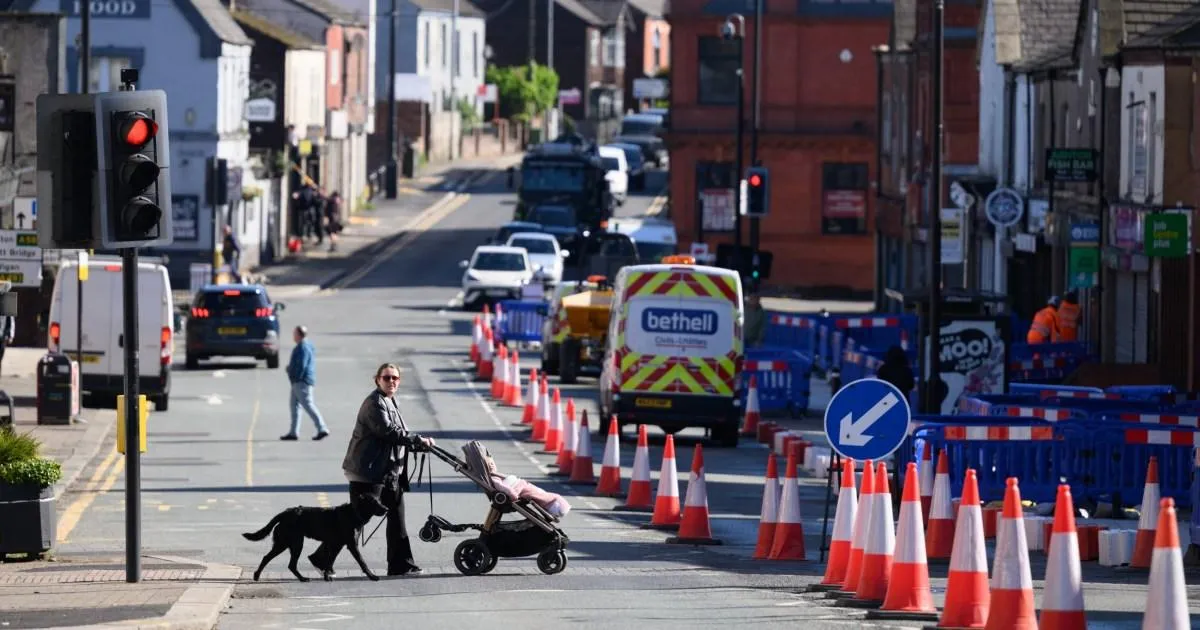
The high street in Ashton-in-Makerfield, one of the main towns in the constituency (Picture: Gary Oakley/Getty Images)
The final pieces are falling into place for one of the most consequential by-elections in modern British history.
Next month, the people of Makerfield – a constituency covering the area south of Wigan in Greater Manchester – will choose who they want to be their new MP.
The contest was triggered by the resignation of Josh Simons, who said explicitly he wanted to give Andy Burnham an opportunity to win a seat in the Commons and possibly launch a leadership challenge against Sir Keir Starmer.
This afternoon, it was confirmed that the Mayor of Greater Manchester will indeed be running as the Labour candidate.
Advertisement
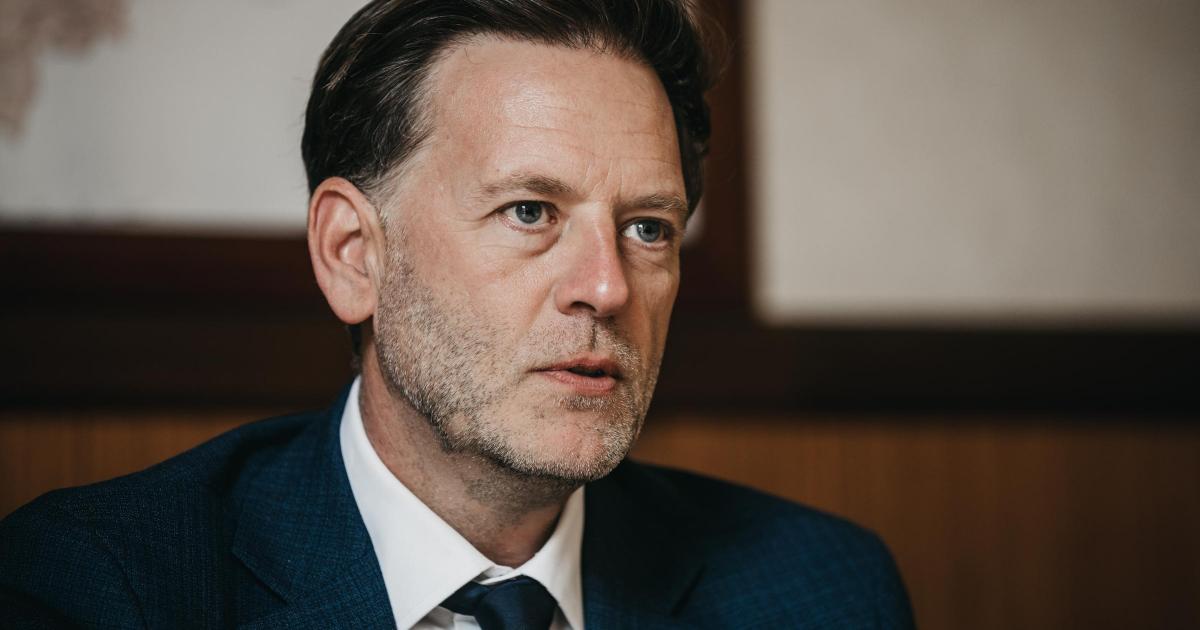
We also now know the identity of the man likely to be his biggest threat: Robert Kenyon, a local plumber who is running for the second time as the candidate for Reform UK.
Both men have emphasised their community credentials. Burnham grew up a 20-minute drive away in the town of Culcheth, while Kenyon says he was born and bred within the constituency boundaries.
Everything is changing, all the time
Cut through political noise and understand how the Westminster chaos actually affects your life with Metro’s politics newsletter Alright, Gov? Sign up here.
Advertisement
In a speech yesterday, Burnham apologised to the area for ‘the circus that’s about to arrive in town and the inconvenience that will result’.
But he added: ‘I hope you feel it’s a good thing as well that the places that make up this constituency, long forgotten by national politics, finally are at the centre of the national debate.’
What you should know about Makersfield
The first thing is that ‘Makersfield’ is not a town, and never has been.
Advertisement
It is an area containing several settlements large and small – including a few that incorporate the name, such as Ashton-in-Makersfield and Ince-in-Makerfield.
If you were to draw a line on a map connecting Manchester and Liverpool city centres, Makersfield would be almost exactly in the middle and a little to the north.
A hardware shop owner in Ashton-in-Makerfield paints his shop red (Picture: Gary Oakley/Getty Images)
At the time of the last general election, just over 100,000 people lived in the constituency and they were almost 97% white.
The child poverty rate was more than 5% lower than that for the broader north-west of England, but house prices were also lower than the average for the region.
Like many other places in this part of England, Makerfield was once dominated by two industries: cotton and especially coal.
Advertisement
Burnham has focused heavily on the impact of deindustrialisation in the area, saying Margaret Thatcher’s government in the 1980s drained away ‘economic, social and political power’.
What are Makerfield’s politics?
This is a seat with strong, historic links to the Labour Party.
In fact, its residents voted Labour at the first opportunity in 1906, when the constituency was called Ince and the party was called the Labour Representation Committee.
They continued voting for the red rosette until 1983, when the constituency’s boundaries and name were changed. From then on, it was Makerfield rather than Ince that kept choosing Labour MPs.
Advertisement
There was never much of a threat to the party’s dominance until 2019, when Boris Johnson’s Conservatives came within 5,000 votes of taking the seat. This counted as a close call.
Mayor of Greater Manchester Andy Burnham has been confirmed as Labour’s candidate (Picture: Ryan Jenkinson/Getty Images)
In summer 2024, it was Reform UK that posed a threat to new Labour candidate Josh Simons. More people voted for Nigel Farage’s party in Makersfield than any other seat won by Labour.
As Sir Keir Starmer’s government has grown ever more unpopular, it has looked more like a dead cert that Reform would bag the constituency at the next election.
But Andy Burnham’s candidacy changes the calculations. Not only is he a popular mayor, he is also positioning himself in opposition to the Prime Minister.
His unspoken message to voters is: ‘Vote for me, and you’ll make sure Starmer is replaced by a strong northern voice.’
Advertisement
For Robert Kenyon and Reform, the spoils of victory are irresistible – demonstrating they can beat Labour’s most popular figure in the country on his doorstep, while also keeping an unpopular PM in power.
Reform UK announced its candidate Robert Kenyon on Tuesday (Picture: Reform UK)
They might be buoyed by the fact Makerfield voted 65% leave in the Brexit referendum, which took place almost exactly ten years before the constituency will go to the polls in June.
Luke Tryl, the boss of pollster More in Common, says attitudes have shifted to the extent it would likely now narrowly vote to remain. However, the landscape that led to that high percentage – such as concern over levels of immigration – remains.
He said: ‘Andy Burnham definitely wants it to be Andy Burnham versus Reform, rather than Labour versus Reform.
‘If it’s Labour versus Reform, Reform win. If it’s Andy Burnham versus Reform, it’s much closer.’
A £12.4m innovation fund aims to make foster care more flexible, inclusive and better suited to modern life
For Chanice, the difference began with weekends. Not a single life-changing moment, but ordinary time spent with someone who kept coming back. There were trips to the theatre, new places to visit, things to learn and a relationship that grew slowly into something enduring.
“Having a Weekender is different from having a parent,” she tells Positive News magazine. “For me it was about having someone who kept showing up, who took me to new places, taught me things, introduced me to theatre and believed I could do more. When you are in care, people can come and go, so having a consistent adult who is still there years later really matters. [Carer] Sara became part of my life, not just for a weekend, but for the long term.”
Advertisement
That idea – that a child in care may need not only a foster home, but a wider circle of adults who can stay close over time – is at the heart of a new effort to rethink fostering in England.
Advertisement
The government has launched a £12.4m Fostering Innovation Fund, designed to help modernise foster care and make it more accessible to a wider range of people. It forms part of a wider government pledge to create 10,000 additional foster care places during this parliament, amid concern that the number of approved fostering households has fallen in recent years.
At the end of March 2025 there were 42,190 fostering households in England, with numbers having declined steadily since 2021, according to Ofsted. The number of mainstream local authority fostering households has fallen particularly sharply in recent years, while charities and fostering organisations have warned that too many children cannot currently be matched with the right family, in the right place, at the right time.
The decline is less a story of people caring less, and more a sign that the system has made it too hard for many of the right people to step forward, and too hard for some existing carers to stay.
The new fund is not simply about asking more people to do an already difficult job. Its ambition is to change who feels fostering is possible for them in the first place.
Advertisement
The idea that a child in care may need not only a foster home, but a wider circle of adults who can stay close over time, is at the heart of a new effort to rethink fostering in England. Image: Pressmaster / Shutterstock
For years, fostering has often been imagined through a narrow picture of family life, built around a couple, a spare room and at least one adult with enough time to provide care in a fairly traditional way. That model will continue to be right for many children and many carers, but it does not reflect the full range of households, working patterns and support networks that exist now.
Advertisement
The new approach is intended to test ways of making fostering more flexible, without weakening safeguarding or lowering the level of care children receive. That could mean supporting carers to make better use of the space they already have, creating stronger local clusters of support around foster families, or developing models in which people offer regular weekend care or respite, building long-term relationships with children while supporting full-time carers.
One example already being developed is Weekenders, led by NOW Foster, which gives people a route into building a relationship with a child when full-time fostering is not possible.
For me it was about having someone who kept showing up, who took me to new places, taught me things, introduced me to theatre and believed I could do more
Sara Fernandez, NOW Foster’s chief executive, knows the power of that model personally. She first met Chanice when she was 26 and did not feel able to foster full-time.
“We started with weekends and sleepovers, doing very ordinary things: swimming, bike rides, knitting, crochet, theatre trips, cooking and chatting,” says Fernandez. “Over time, those ordinary weekends became an enduring relationship, still going strong over 12 years later. That is what is so powerful about the Weekenders model. It gives people a flexible, realistic route into being there for a child, more like an auntie, uncle or godparent, while giving children another trusted adult who is committed to them as they grow up. It helped me learn more about fostering and I went on to do other fostering roles over the years too,” she says.
Advertisement
More flexible routes into fostering aren’t aiming to replace full-time foster care but instead, look to strengthen it, offering children more trusted adults and giving potential carers the confidence, training and experience to consider taking on more in future.
More flexible routes into fostering aren’t aiming to replace full-time foster care but instead, look to strengthen it, offering children more trusted adults and giving potential carers the confidence, training and experience to consider taking on more in future. Image: fizkes
Advertisement
Other models are trying to tackle different barriers. Room Makers, for example, supports carers to adapt their homes so they can welcome a child or keep siblings together. In Greater Manchester, one foster carer who had been limited by space was given a £7,800 grant through the scheme to reconfigure her home and will soon be able to care for siblings.
The Mockingbird model, meanwhile, builds constellations of foster families around a central “hub home”, so carers and children are not left to manage alone. It is a simple but powerful insight: foster families, like any families, are more likely to thrive when they have practical help, friendship and people nearby who understand what they are carrying.
Amy Burns, who is care experienced, describes what the absence of that support can feel like.
“There were two years between Mum dying and being fostered,” she says. “There was breakdown. There was chaos. There was danger. And then there was a new home, a new start and a new village. My foster family saved my life, as much as my social workers, as much as anyone who came before. You don’t have to be a full-time foster carer to make a difference. A village for someone who is care experienced might look like teachers, neighbours, people from past foster placements. But it has to exist.”
Advertisement
You don’t have to be a full-time foster carer to make a difference
Fostering is not easy, and presenting it as a simple act of kindness would be misleading. Children in care may have experienced grief, trauma, neglect, instability or repeated moves. Foster carers need proper training, respect, financial support and access to skilled professionals when things become difficult.
Children’s minister Josh MacAlister said the investment would help move fostering “into the 21st century”, by opening it up to a wider range of people and changing more children’s lives through stable homes.
The test now is whether that ambition reaches children quickly and carefully enough. The strongest reforms will be those shaped not only by systems and targets, but by the voices of people who know what care feels like from the inside.
For Chanice, the lesson is simple. A weekend was never only a weekend. It was a beginning, and it became a relationship that lasted.
Advertisement
Main image: Pressmaster / Shutterstock
Be part of the solution
At Positive News, we’re not chasing clicks or profits for media moguls – we’re here to serve you and have a positive social impact. We can’t do this unless enough people like you choose to support our journalism.
Give once from just £1, or join 1,800+ others who contribute an average of £3 or more per month. Together, we can build a healthier form of media – one that focuses on solutions, progress and possibilities, and empowers people to create positive change.
Get previews of every single team at the World Cup sent directly to your inbox, featuring the players to look out for, games you shouldn’t miss and Metro’s big England predictions.
A total of 13 extra places are set to be created at Haxby Road Primary Academy following a City York Council decision to award £7,800 in funding.
Council officials stated the grant would be funded from £333,000 the authority had received from the Government to help increase the amount of local ‘wrap-around’ places.
It comes after the council’s executive approved using a total of £922,800 in September 2024 to expand early years and childcare places.
RECOMMENDED READING:
Advertisement
The Labour executive heard at the time an extra 390 places in breakfast and after school clubs could be needed so York families could get the care they are entitled to.
Officials forecast up to new 304 places would need to be created so parents and carers could claim their 30-hour-a-week allowance of free childcare by the September 2025 rollout date.
Education Secretary Bridgett Phillipson said in March free childcare hours meant families were now better off after research showed they had saved families an average of £8,000-a-year for every child.
An annual Coram Family and Childcare survey found the cost of a full-time 50-hour-a-week place for a child of two had fallen from around £305-a-week in 2024 to £149.
Advertisement
Education Secretary Bridgett Phillipson said extra free childcare hours were saving families money (Image: PA)
The secretary of state said: “Childcare costs have weighed on working families for too long – pushing parents out of work and stretching household budgets to breaking point.
“We are giving working families the real, practical cost of living support they need to get on.”
In January, the council approved grants worth a total of £51,000 to create extra breakfast and after school club places in three other York schools.
Clifton Green Primary School received £30,000 for 35 breakfast and after school club places, while Dringhouses Primary School received £15,000 for 25.
Advertisement
Wheldrake with Thornganby Primary School got £6,000 to create eight new places for its pupils following the decision.
Andrew Husband, Reform leader at Durham County Council, urged the government to protect “valued landscapes” and change its planning policies to create a “fair and balanced” approach to solar farm applications.
Durham County Council initially turned down the application due to its size and impact on the landscape after hundreds of objections and a High Court appeal in July last year.
Advertisement
But in a new ruling in April, the government’s Planning Inspectorate said the need to tackle climate change and achieve Net Zero targets outweighed the concerns.
Cllr Husband said it is “very frustrating” that the concerns were “set aside as a result of the government’s overly permissive policy approach to solar development”.
In a letter to the North Durham Labour MP, he added that other parts of the region are also at high risk of being used for similar schemes.
He said: “I would invite you to now support your residents by using your undoubted influence in Government to request that urgent action is taken to review the currently overly permissive National Planning Policy Framework policy wording to ensure a more fair and balanced approach to solar development is applied.
Advertisement
“Until government policy is amended in this manner – to introduce a more balanced approach to include one which seeks to protect valued landscapes and respect residents’ quiet enjoyment of the same – I fear that we will be subjecting our communities to yet more unwarranted commercialisation of our splendid countryside.”
Up to 14 fields near the County Durham village will be overlaid with panels, including areas near the Chapman’s Well nature reserve.
Lightsource bp, the applicant, added that the solar farm would have “a significant positive impact on the surrounding area, both environmentally and economically”.
The Planning Inspectorate conceded that the development would “harm” the local area, but the solar farm will only be working for up to 40 years.
Advertisement
Its report concluded: “The adverse landscape impacts identified would be temporary, reversible and highly localised.”
Are solar farms changing the countryside too much? Let us know in the comments.
It comes just a day after the railway bridge was hit by a tractor
18:21, 19 May 2026Updated 18:27, 19 May 2026
Another vehicle has crashed into the railway bridge on Stuntney Road in Ely. Network Rail was called at around 3.40pm on Tuesday (May 19) with reports that a van had hit the bridge
The crash caused minor delays on some services with trains going through Ely running at a reduced speed. People travelling in the area were told to leave up to 20 minutes of extra time for their journeys.
An inspection of the area was carried out by engineers to check if any damage had been done to the bridge. Network Rail confirmed services ran as normal from 4.45pm.
The railway bridge is regularly named one of the most bashed bridges in the UK. In October 2025, the bridge was hit three times in just one week.
To get more news and top stories delivered directly to your phone, join our new WhatsApp community.Click this linkto receive your daily dose of CambridgeshireLive content.
Advertisement
We also treat our community members to special offers, promotions, and adverts from us and our partners. If you don’t like our community, you can check out any time you like. If you’re curious, you can read ourPrivacy Notice.
Emma Willis, Josh Widdicombe and Johannes Radebe confirmed as new Strictly hosts
Announcing the news, Kate Phillip, BBC’s Chief Content Officer said: “Emma, Johannes and Josh’s chemistry is undeniable.
“There’s been so much speculation and hype, so I’m relieved we can share the news with the public at last!
“I’d like to thank all the brilliant people we saw before making this tough decision.
Advertisement
“But the most beloved ballroom in the UK always leads the way, and in a Strictly first we have chosen three outstanding hosts to take up the mantel.
“Along with our amazing Strictly team, who are busy planning fabulous and unforgettable treats for this new series, I know this terrific trio can’t wait to join our judges and pros to bring us must-see TV on the BBC this autumn.”
In the comments section of Strictly’s official Instagram post, fans of the show have shared their thoughts on the new host line-up, including big names like Alison Hammond who said: “This is wonderful, three truly beautiful people . You will all smash it”.
Former Strictly host Tess Daly commented: “Can’t wait to tune in, the ultimate trio”.
Professional Strictly dancer Dianne Buswell said: “This is so exciting. Particularly excited for our fellow pro @johannesradebe babe you are a true star and this role is made for you. We love you”.
Advertisement
What are Emma Willis, Josh Widdicombe and Johannes Radebe known for?
Presenters Willis and Widdicombe have both hosted TV and radio shows.
Willis is best known for her work on Channel 5’s Big Brother, The Voice UK, Love is Blind: UK, Cooking with the Stars and The Circle.
She’s also been featured in documentaries, Emma Willis: Delivering Babies, Swiped: The School That Banned Smartphones and Change Your Mind Change Your Life.
She is married to musician Matt Willis, who, as well as presenting and acting roles, is notably the co-founder, bassist and co-vocalist of the pop-punk band Busted.
Advertisement
Widdicombe is a popular comedian, presenter and actor, having appeared on shows such as The Last Leg, Fighting Talk and Mock the Week.
He also has a podcast with fellow comedian Rob Beckett, Parenting Hell, about bringing up children, experiences, tips and face-palm moments.
The comedian has featured on Strictly before, as part of the 2024 Christmas special.
He scored 36 after dancing a Charleston with pro partner Karen Hauer, but lost out to drag artist Tayce, who scored 40.
Advertisement
Meanwhile, Johannes Radebe is a professional dancer who has worked on Strictly for several years.
Are you happy with the choice of the new Strictly Come Dancing hosts? Let us know in the comments.
The world’s major oil and gas companies claim they are leading the energy transition. They spend billions on PR to brand themselves as part of the solution. The data we’ve reviewed tells a different story.
Where a rapid transition to renewables is taking place, incumbent fossil fuel firms have almost nothing to do with it. Analysis by one of us shows that the largest 250 oil and gas companies only own 1.42% of global renewable energy, and just 0.01% of the energy they extract comes from renewable sources.
For decades, many Indigenous peoples and environmental activists have accused the fossil fuel industry of offering “false solutions”. These are projects that amplify the industry’s green credentials while leaving its core business model untouched. Our research supports their case.
We argue that fossil fuel companies’ deployment of renewable energy, biofuels, carbon capture and storage (CCS), green hydrogen and carbon offsetting isn’t designed to oppose decarbonisation, but to manage the conversation around renewables. False solutions signal compliance while helping to mute calls for a systemic transformation.
Advertisement
Mapping the delay
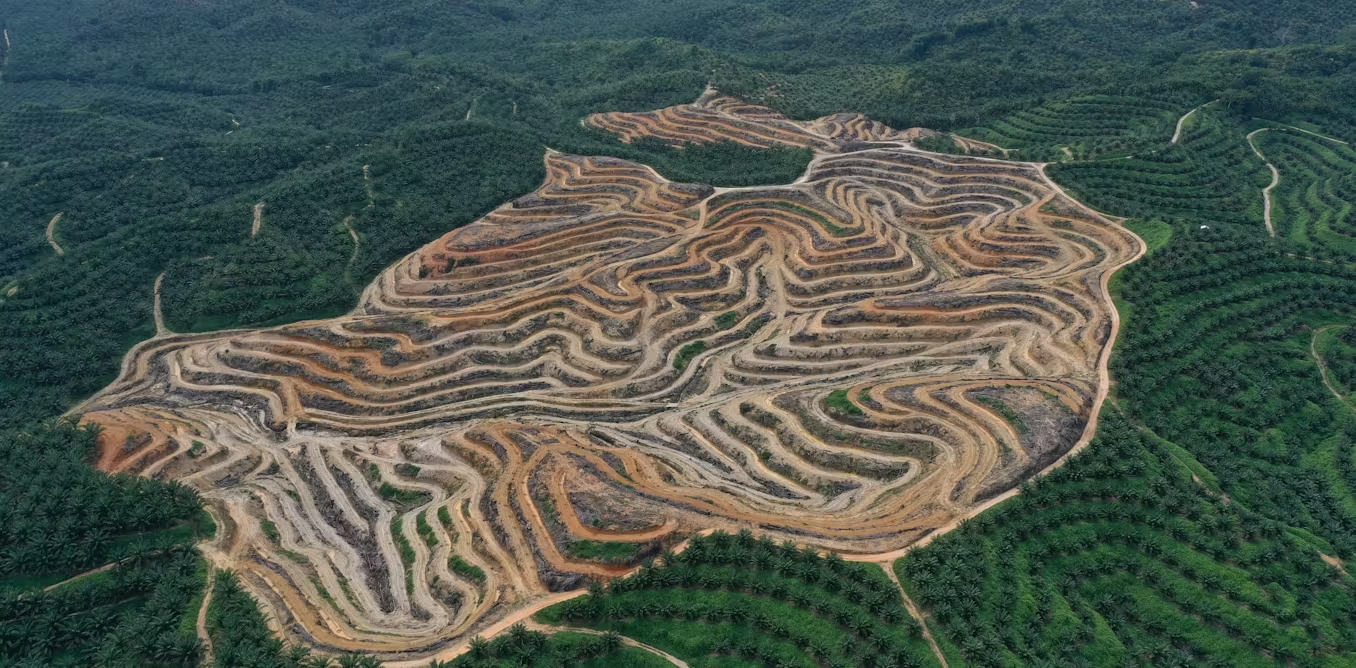
Drawing on the Global Atlas of Environmental Justice, the world’s largest environmental conflict database based at the Autonomous University of Barcelona, we mapped and analysed 48 projects run by fossil fuel firms. These ranged from biofuels to CCS and forest restoration schemes, as well as some renewable energy projects that are owned and used by these firms.
The 48 projects the authors assessed. Llavero-Pasquina et al
Crucially, we found that these were rarely displacing fossil fuels. Instead, they justify further use of oil, gas or coal.
For instance, CCS facilities are often linked to “enhanced oil recovery”. That involves CO₂ captured from a power plant or factory being injected into wells to squeeze out more fossil fuels from underground reservoirs – an approach that actually extends the lifespan of oil fields. The industry’s own documents back this up: the Global CCS Institute’s 2025 status report lists 77 commercially facilities in operation around the world. Of these, it notes 33 were developed to enhance oil recovery.
Advertisement
Likewise, “clean hydrogen” is often used to greenwash projects that are actually built on continued gas production. Even renewables can become false solutions. We found solar and wind farms built specifically to power refineries and oil and gas drilling. These projects don’t decarbonise the grid, they simply make it easier and cheaper to extract fossil fuels.
New tech, old injustices
False solutions do more than lock in fossil fuel dependence. Across the 48 cases there were examples of land conflicts. Carbon offset schemes often involve high emitters paying to protect or restore a forest or other ecosystem, to “make up” for their emissions. But in practice, they can lead to the enclosure of previously common land and the loss of communal or Indigenous rights. Biofuel plantations can displace smallholders, replacing local food systems with industrial-scale farms.
Indigenous and traditional communities are disproportionately affected by false solutions. Many projects are sited on ancestral or sacred land without meaningful consultation or consent.
Resistance to these projects is often framed by the fossil fuel industry and its supporters as hostility to climate action or a form of nimbyism. But our data suggests that, in many cases, these communities are opposed to projects that perpetuate the fossil fuel economy.
Advertisement
We also found evidence of governments channelling public subsidies to fund many of these projects. Such cases amount to a direct cash transfer from taxpayers to private companies for promises that deliver minimal emissions reductions.
They are, therefore, in effect helping to delay the end of the fossil fuel era.
Yet these projects have enabled politicians to claim they are climate leaders without having to confront a powerful industry.
After examining these 48 conflicts, one lesson becomes unmistakable: false solutions are not experimental missteps. They are in effect helping to delay the end of the fossil fuel era.
The buzzard was found with shotgun pellets in its wing in the Bransdale area on May 4.
The bird was also found to have a broken leg, and was taken to a vet, were sadly, it had to be euthanised due to its injuries.
A spokesperson for North Yorkshire Police said: “The bird was x-rayed, and pellets from a shotgun were found in its wing.
Advertisement
“It is believed the broken leg occurred up to 48 hours before it was found, and may have been caused by a hard landing – so the buzzard could have been shot within that same 48-hour period.
“Buzzards and other birds of prey are legally protected by the Wildlife and Countryside Act 1981. To intentionally kill or injure one is a criminal offence.
“Anyone with any information about how the bird came to be injured is asked to contact North Yorkshire Police on 101, quoting reference 12260080894.”
Alcaraz announced the news on social media on Tuesday. He will also miss Queen’s, the London grass-court tournament that many players use as a warm-up for Wimbledon.
Carlos Alcaraz during his defeat by Jannik Sinner in the 2025 Wimbledon final (PA)
“My recovery is going well and I feel much better, but unfortunately I’m still not ready to be able to play,” Alcaraz wrote on Tuesday.
“And that’s why I have to withdraw from the grass-court swing at Queen’s and Wimbledon. They are two really special tournaments for me and I’ll miss them a lot.
Advertisement
“We keep working to return as soon as possible!”
Alcaraz is a two-time champion at Wimbledon, having beaten Novak Djokovic in the 2023 and 2024 finals. The 23-year-old finished runner-up to Jannik Sinner last year.
Alcaraz, a former world No 1 who is currently ranked No 2, is also a two-time champion at Queen’s. He lifted the trophy there in 2023 and 2025.
Alcaraz’s withdrawal from Wimbledon leaves Sinner the heavy favourite to win the grass-court major, just as the Italian is on the clay of the French Open.
Advertisement
Sinner, 24, said he was “sad” to learn of Alcaraz’s withdrawal from Roland Garros in April, but that news – and Tuesday’s – gives the world No 1 a great chance of taking his grand slam haul from four to six in the coming months.
Alcaraz with the Wimbledon trophy in 2024 (Getty)
Before beating Alcaraz at SW19 last summer, Sinner narrowly lost to the Spaniard in an all-time classic French Open final. The rivals met again in the final of the US Open, where Alcaraz triumphed.
Alcaraz also won the Australian Open in January, beating Djokovic in the final after the Serb overcame Sinner in a scintillating semi-final. The Spaniard’s victory in Melbourne made him a seven-time major champion, but he will have to wait until the US Open in September at the earliest to add to that tally.
Alcaraz’s last competitive outing on court was in Barcelona in April, where he was beaten by Tomas Machac in the round of 16. Before that, “Carlitos” was defeated by Sinner in the final of the Monte Carlo Masters. Both tournaments are played on clay.
The Ely bridge is one of the most-bashed in Britain
13:36, 19 May 2026Updated 13:47, 19 May 2026
A tractor struck a railway bridge in a Cambridgeshire city causing disruption to train services on Monday, May 18. Network Rail received a report of a vehicle striking a bridge at Ely just after 6pm.
The crash caused minor disruption to some passenger services using the freight line and platform three. Following an inspection of the bridge, it was deemed there was no damage reported. Train services resumed at 6.40pm the same evening.
A spokesperson for Network Rail said: “We received a report of a vehicle striking a bridge at Ely yesterday at around 18:07. This caused a minor impact on some freight and passenger services using the freight line and platform 3.
“After inspection of the bridge, no damage was reported and services resumed at 18:40pm.”


























































You must be logged in to post a comment Login