

Connect with us
DAPA Banner
DAPA Coin
DAPA
COIN PAYMENT ASSET
PRIVACY · BLOCKDAG · HOMOMORPHIC ENCRYPTION · RUST
ElGamal Encrypted MINE DAPA
🚫 GENESIS SOLD OUT
DAPAPAY COMING

NewsBeat

Is it harder than ever to be prime minister?

Published

on

Is it harder than ever to be prime minister?

Sir John Major, the former prime minister, agreed with Matt Chorley on BBC Radio 5 Live, that voters wanted quick and easy answers to complicated problems. “I’m afraid we do, and that is because nobody is telling us we can’t have that,” he said. “Governments have lost the capacity, it seems, to say no. And part of the job of politics is to say, no.”

Source link

Continue Reading
Click to comment

You must be logged in to post a comment Login

Leave a Reply

NewsBeat

Pregnancy is a chance to reshape family eating habits before the baby arrives

Published

on

Pregnancy is a chance to reshape family eating habits before the baby arrives

Pregnancy is often regarded as a time to prepare the nursery, but it is also a useful moment to get the kitchen ready.

For many expectant parents, the months before a baby arrives are filled with practical jobs: buying clothes, assembling a cot, choosing a pram, packing a hospital bag. Yet one of the most important forms of preparation happens somewhere less photogenic: in the cupboards, the fridge and the daily routines of the home.

Research Peles and colleagues conducted suggests that pregnancy can be a powerful moment for change. During pregnancy, food becomes about more than personal preference. It is bound up with the health of the developing baby, the wellbeing of the mother, and the kind of family life parents hope to create.

The idea of nutritional nesting is useful here. It describes how first-time parents begin shaping the home food environment during pregnancy. It means the food world a baby will eventually be born into: what is bought, what is visible, what is easy to reach, what gets cooked, what is eaten together, and what becomes normal.

Advertisement

Healthy habits begin before a baby first tastes puree or sits in a high chair. They begin in the rhythms and environment parents establish before birth. Vegetables in the fridge may technically be available, but they are unlikely to be chosen by exhausted parents looking for something quick. Fruit on the counter, chopped vegetables ready to use, batch-cooked meals in the freezer and simple ingredients within reach make healthier eating easier when energy is low.

The distinction between availability and accessibility matters. Availability means the food is present in the home. Accessibility means it is easy to see, easy to reach and easy to eat. Research on the home food environment suggests that what is available at home, what parents eat themselves, and family eating routines all play a role in the overall healthiness and variety of children’s diets. Shloim describes this as healthy mealtime interactions, accounting for what and how the family eats.

Kitchens are shaped by more than mothers alone. Pregnancy can be an especially useful time to think about food because many parents, including fathers and partners, are already imagining the family they want to become. Peles’ work with first-time expectant fathers suggests that men often see pregnancy as a turning point: a chance to take more responsibility, support their partner, and help create a healthier home. Good intentions, though, do not chop vegetables, plan meals or fill a freezer. Fathers and partners may need practical support to turn motivation into everyday action.

Nutrition support during pregnancy should involve the household, not only the pregnant mother. The home food environment is usually shaped by more than one person. Partners influence shopping, cooking, budgeting, snacking and the emotional tone around food. Treating food preparation as a shared parental responsibility, rather than another task added to the mother’s mental load, makes it more realistic and fair.

Advertisement

The point is to make nutrition advice more useful, rather than more judgmental. Lists of foods to eat or avoid have their place, but they rarely solve the daily problem of what tired people can afford, cook and face eating. Families also need help with the basics: planning meals, preparing quick options, shopping on a budget and making nutritious food convenient before the sleep deprivation of early parenthood begins.

For many parents, the second trimester may be a useful period for this kind of preparation. For some women, though not all, the nausea and exhaustion of early pregnancy may have eased, while the physical demands of late pregnancy have not yet fully arrived. That can make it a more realistic time to ask: what will make daily eating easier when life gets harder?

The answer does not have to be complicated. Parents might reorganise the fridge so healthier foods are visible, learn a few reliable recipes that can be cooked quickly, prepare snacks that do not depend on willpower at 3pm, or decide together how meals will work when the baby arrives. These small changes are not glamorous, but they reduce the number of decisions tired parents have to make.

Pregnancy may be a good time to reorganise the fridge so healthier foods are visible.
nelic/Shutterstock

Early family food culture is about nutrients, but it is also about relationships. Children learn from what is served and from how meals feel.

Advertisement

Shloim suggests that a calm, responsive feeding relationship means paying attention to a child’s hunger and fullness cues, offering food without pressure, and making mealtimes feel safe rather than stressful. Evidence suggests that these early interactions can support children’s ability to regulate their own eating. They also support overall positive interactions.

Early-life conditions, including the period before birth, can influence health later in life. A child’s future is not fixed before birth, but early environments matter, and supporting families before and during pregnancy can be a practical way to improve long-term health.

Expectant parents do not need a perfect diet or a perfect kitchen. Nutritional nesting is about making ordinary healthy choices more visible, more convenient and more shared. Its value is practical: reducing friction before the exhausting early months begin.

The nursery matters. But the kitchen may be where some of the most important family interactions begins.

Advertisement

Source link

Continue Reading

NewsBeat

‘Labour rivals want to rejoin EU’ and ‘survival of the fittest’

Published

on

'Labour rivals want to rejoin EU' and 'survival of the fittest'
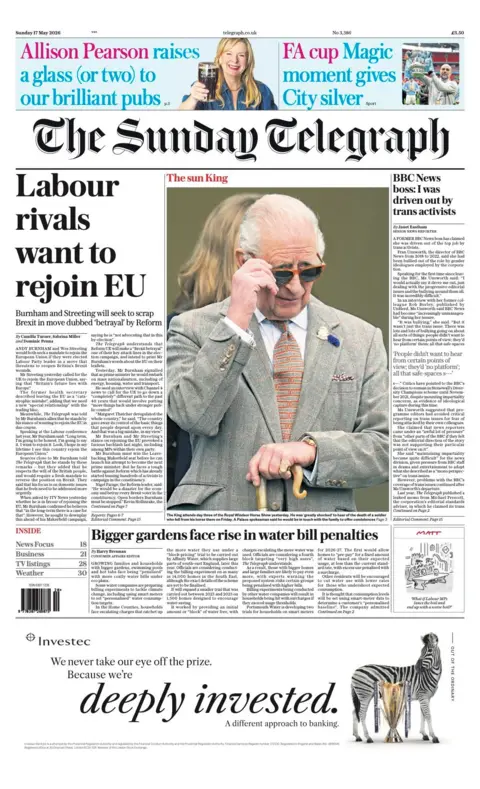
The headline on the front page of the Sunday Telegraph reads: "Labour rivals want to rejoin EU."

The position of Wes Streeting and Andy Burnham on rejoining the European Union dominate Sunday’s papers. Both Streeting and Burnham, who are both expected to try to replace Sir Keir Starmer as leader, would seek to rejoin the EU if they were to become prime minister, the Sunday Telegraph reports. Meanwhile, Reform UK leader Nigel Farage has said Burnham as PM would “betray every Brexit voter in the constituency”, the paper reports.

Source link

Continue Reading

NewsBeat

WHO declares global health emergency over Ebola outbreak in Congo and Uganda

Published

on

WHO declares global health emergency over Ebola outbreak in Congo and Uganda

ABUJA, Nigeria (AP) — WHO Director-General Tedros Adhanom Ghebreyesus declared the Ebola disease outbreak in Congo and Uganda a public health emergency of international concern on Sunday after more than 300 suspected cases and 88 deaths.

In a post on X, the World Health Organization said the outbreak does not meet the criteria of a pandemic emergency like the COVID-19 pandemic, and advised against the closure of international borders.

Health authorities have confirmed the current outbreak is caused by the Bundibugyo virus, a rare variant of the Ebola disease that has no approved therapeutics or vaccines. Although more than 20 Ebola outbreaks have taken place in Congo and Uganda, this is only the third time the Bundibugyo virus has been reported.

Officials first reported the spread of the disease in Congo’s eastern province of Ituri, close to Uganda and South Sudan, on Friday. On Saturday, the Africa Centres for Disease Control and Prevention reported 336 suspected cases and 87 deaths.

Advertisement

Congo accounts for all except two of the cases, both of which were reported in neighboring Uganda, the WHO said.

Uganda on Saturday confirmed one case it said was imported from Congo, and said the patient died at a hospital in Uganda’s capital, Kampala, and the WHO said that a second case has been reported in Kampala. The two cases had no apparent links to each other and both patients had traveled from Congo, it added.

The Bundibugyo virus was first detected in Uganda’s Bundibugyo district during a 2007-2008 outbreak that infected 149 people and killed 37 people. The second time was in 2012 in an outbreak in Isiro, Congo, where 57 cases and 29 deaths were reported.

Advertisement

Source link

Continue Reading

NewsBeat

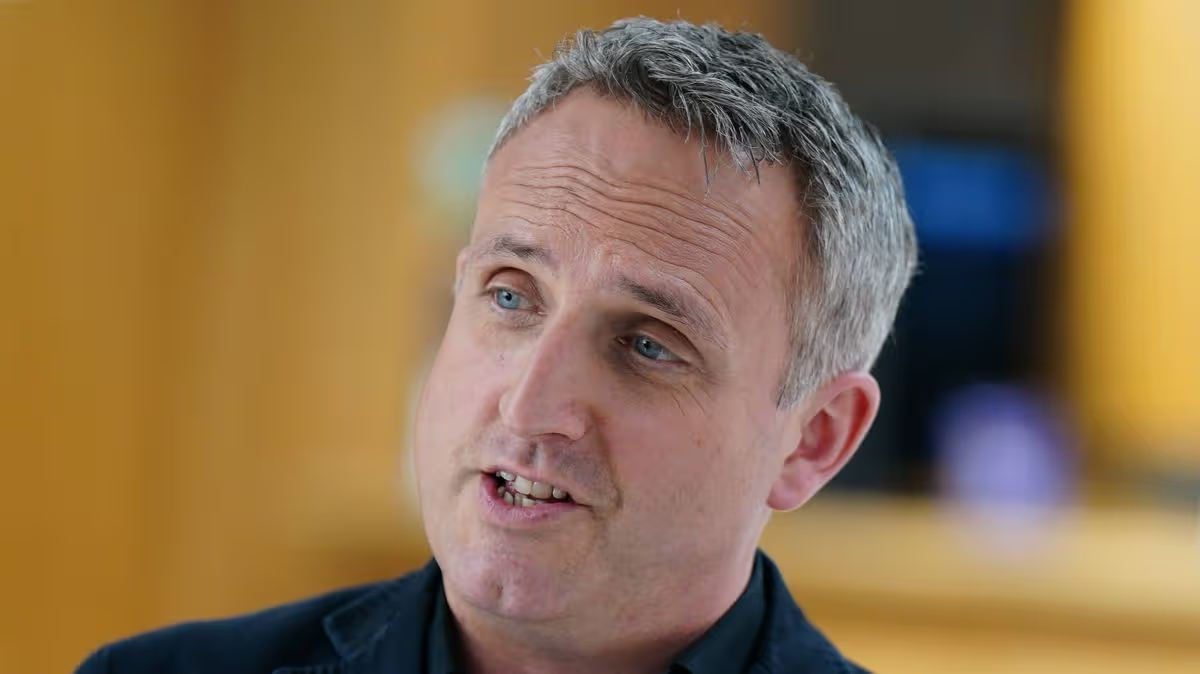
Scottish Lib Dem leader Alex Cole-Hamilton will run for first minister

Published

on

Daily Record

“By standing for first minister, I want to show how Scottish Liberal Democrats envisage that change.”

Scottish Liberal Democrat leader Alex Cole-Hamilton has confirmed he will be running for first minister when MSPs vote on who should have the top job next week.

Advertisement

SNP leader John Swinney – who currently holds the post – is certain to be re-elected as his party is the largest in the Scottish Parliament. Mr Cole-Hamilton said it “would be an insult to democracy” if Tuesday’s vote is taken as “some kind of done deal”.

He said the ballot is a “key part of our parliamentary democracy”, as well as being the chance for him to “make the case for a liberal vision of Scotland”. Mr Cole-Hamilton said he will put himself forward to be first minister after “phenomenal” results for his party in the Holyrood election.

The Liberal Democrats increased their tally of MSPs from four in 2026 to 10, claiming victories in the Strathkelvin and Bearsden and Edinburgh Northern constituencies as well as ousting the SNP in Skye, Lochaber and Badenoch, and Caithness, Sutherland and Ross.

Advertisement

Mr Cole-Hamilton said: “I understand that the outcome of this election has been decided, but no party has won a majority.

“If our democracy is about anything, it is about the exchange of ideas for what our country can become. By standing for first minister, I want to show how Scottish Liberal Democrats envisage that change.

“Scottish Liberal Democrats want a government that is focused every single day on fixing the NHS, on addressing the cost-of-living crisis, on getting Scottish education back to its best.

“We want a government that respects the needs of people in every corner of this country, that will end the ferries chaos, upgrade dangerous roads and get Scotland moving again.”

Get more Daily Record exclusives by signing up for free to Google’s preferred sources. Click HERE

Advertisement

Source link

Continue Reading

NewsBeat

As electric bills rise, some states are focusing on the growing profits of utilities

Published

on

As electric bills rise, some states are focusing on the growing profits of utilities

The artificial intelligence boom is leading to fights in some states over growing utility profits, as governors, attorneys general and others protesting rising electricity bills say cash-strapped residents are stuck in a broken system.

Officials and lawmakers in at least six states — including Arizona, Indiana, Maryland, New Jersey, New York and Pennsylvania — are going to new lengths to try to block rate increases proposed by utilities. Some are pressing utilities to completely change their model for financing major system upgrades.

The push comes during a midterm election year in which affordability is the leading theme in Democrats’ attempts to loosen Republicans‘ control of Washington.

Arizona Attorney General Kris Mayes, a Democrat who is seeking reelection this year, is challenging two utility rate increase requests in front of the state’s utility regulatory board.

Advertisement

“I felt like it’s never been more important to stand up against the blatant corporate greed of our monopoly utilities in Arizona,” Mayes said in an interview.

The fights are getting noticed on Wall Street

The voracious energy demands of AI data centers have driven up electric prices in some regions and launched a moneymaking energy-sector construction boom.

For years, consumer advocates have tried to challenge the size of a utility’s investment return in front of regulators. But maybe not like this, consumer advocates say.

Advertisement

“We’ve entered into this era of expensive energy and (demand) growth, and we’re seeing utility profits at record highs and rising utility bills,” said Matt Kasper of the Energy and Policy Institute, which pushes utilities to keep rates low and use renewable energy sources.

Utilities were long viewed as a stable haven for investors, with a reliable source of income and predictable demand. Because of that lower risk, the utility’s sector investment returns are typically on the low end compared to other sectors, analysts say.

However, utilities — many of which are owned by multibillion-dollar, for-profit parent companies — have seen share prices perform particularly well during the data center expansion.

The investment returns that utilities get from regulators aren’t the sole reason consumers’ bills are rising, but researchers suggest they are a contributing factor. In March, the Energy and Policy Institute issued a report that said the profits of 110 for-profit utilities rose from just under $39 billion in 2021 to over $52 billion in 2024.

Advertisement

Mark Ellis, a former utility executive-turned-consumer advocate, said about 10% of the typical customer bill is what he called a for-profit utility’s “excess profit,” above what might be considered reasonable under long-standing Supreme Court precedent.

Instead of regulators setting returns above what the market might require, utilities should instead shop for the lowest-cost investor cash, much like someone might shop for the lowest interest rate on a loan, Ellis said.

Paul Ferraro, an economics professor at Johns Hopkins University, said that targeting utility investment returns is a political action, not an economic action.

“That’s an action that’s aiming to address the deep social disagreements we have about who should benefit from essential infrastructure,” Ferraro said. “But it’s not going to address the key challenges that the electricity sector is facing.”

Advertisement

That includes investment in modernization, expansion, renewable energies and distributed sources of power, Ferraro said.

‘Affordability’ has reached corporate earnings calls

Travis Miller, an energy and utilities analyst for Morningstar, said utility executives on earnings calls are emphasizing efforts to cut costs or protect residential customers from the cost to supply electricity to data centers.

“Affordability is probably the number one issue that executives and investors are thinking about right now in the utility sector,” Miller said.

Advertisement

If rates aren’t affordable currently, there’s no way that utilities can get the rate increases they need to boost earnings and dividends for investors, Miller said.

Utilities point to federal data showing that home electricity bills as a proportion of household income have fallen in the past couple decades. They defend the investment returns they are granted by state regulators as critical to raising the cash they need to appropriately maintain electric grids and ensure reliability for millions of people.

They also warn that investors will simply send their cash to utilities in other states that promise higher returns.

Critics call that fearmongering.

Advertisement

Earlier this month, the New Jersey Board of Public Utilities launched what its president, Christine Guhl Sadovy, called one of the most consequential regulatory reviews in a generation, to question how utilities “should earn revenue in a modern energy system.”

In recent weeks, Pennsylvania Gov. Josh Shapiro pressured PECO, the Philadelphia-area utility subsidiary of Exelon Corp., to withdraw a 12.5% rate increase, or $20 per month extra for the average residential customer. Shapiro, a Democrat running for reelection this year, then issued a letter to utility executives, taking a whack at utility profits and saying that the “20th century utility model is broken.”

“We can no longer simply prioritize corporate profitability to drive infrastructure development,” Shapiro wrote.

In a note to investors, one analyst called it “Quaker State Sticker Shock,” and the share prices of companies that own Pennsylvania-based utilities lagged their peers in the following days.

Advertisement

For its part, Exelon — the Chicago-based parent of Commonwealth Edison, PECO, Baltimore Gas and Electric and several other utilities — emphasized that it recognizes the importance of affordability.

Calvin Butler, Exelon’s president and CEO, told analysts on its first-quarter earnings call May 6 that it was committed to justifying what it spends and keeping energy bills as low as possible. Its decision to withdraw its rate increase request came after conversations with “stakeholders” who said, “Hey, if you could partner with us to address the affordability issue and lean in, timing is not the best right now,” Butler said.

In Indiana, Republican Gov. Mike Braun appointed a new slate of utility commissioners with a mission to face down rate increases.

Their first big test is a request by AES Indiana for a 10.1% increase, or $193 million a year more from ratepayers, said Ben Inskeep, program director for the Indianapolis-based consumer advocate Citizens Action Coalition.

Advertisement

As part of it, AES Indiana — whose parent company is being taken private in a $33.4 billion deal led by private investment giant BlackRock — sought a 10.7% return on its cash.

Inskeep said an 8% return — instead of 10.7% — would slash the proposed rate increase nearly in half.

In Arizona, Mayes is challenging a pair of 14% proposed increases that she said could be dramatically reduced if the companies are simply paid the cost to maintain reliable service.

“It’s becoming unbearable for the people in Arizona,” Mayes said. “And I think we have to fight back.”

Advertisement

___

Follow Marc Levy at http://twitter.com/timelywriter

Source link

Advertisement
Continue Reading

NewsBeat

Family of child rape victim fear attacker could be freed back into their community

Published

on

Daily Record

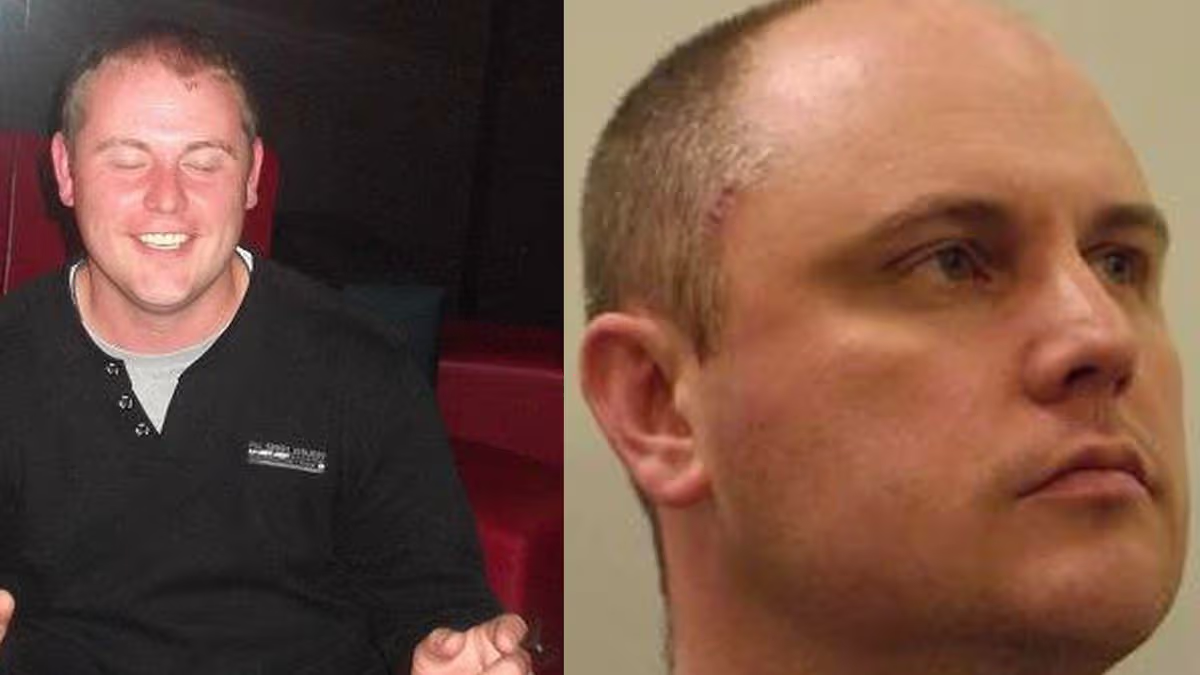
Robert McGregor filmed himself raping three boys, aged three, six and 12, then shared the videos with other paedophiles online.

The family of a child rape victim say they fear the attacker could be freed back to their community on release from prison this month.

Advertisement

Robert McGregor filmed himself raping three boys, aged three, six and 12, then shared the videos with other paedophiles online. The delivery driver from ­Inverness was jailed for 10 years in April 2017.

The family of one victim was notified by letter last week from the Scottish Prison Service, telling them that the 45-year-old is due to be released on May 29.

They are terrified of coming face to face with their son’s attacker as authorities would not confirm if McGregor will be allowed to return to their home town.

The mum said: “In November he was denied parole and the letter from the board stated he would be released in April 2027 so we thought we had a year. It turns out there was an error in the paperwork because they hadn’t taken into consideration his time on remand.

Advertisement

“So when that letter dropped on the doormat saying he will be released in weeks, I collapsed. No sentence is going be enough for what he did but we’ve been fighting to keep him inside through parole hearings. We are living in fear that any of our family could come face to face with him at any time.”

The letter confirming McGregor’s release failed to mention that the paedophile was ordered to be supervised for five years upon release. The family have since received an apology.

The mum said: “We went the police station, we waited for hours.

Advertisement

“There’s been no support. The justice system is failing people. We are living a nightmare. He raped and sold videos of innocent children all over the world. He is pure evil. I’ve no doubt he is still a danger.”

The Sunday Mail previously told how the family’s online petition calling for McGregor to be denied release when he applied for parole in 2021 won 3500 signatures.

McGregor abused children in the Highlands for 13 years, starting in 2001. He duped families into trusting him, took the boys on trips or to his home, then raped them.

Scottish Tory justice spokesman Liam Kerr said: “It is appalling that the family appear to have been the victim of an admin error and are also being kept in the dark about where this dangerous criminal will be when he is released soon.”

Advertisement

The SPS acknowledged the ­family’s concerns, adding: “We would encourage anyone in this situation to contact organisations such as Victim Support Scotland.” The Parole Board for Scotland does not comment on individual cases.

Police Scotland said it and other agencies “use professional assessment, robust risk assessment processes, and the latest technologies to manage registered sex offenders, mitigate risk and properly target appropriate resources”.

Get more Daily Record exclusives by signing up for free to Google’s preferred sources. Click HERE

Source link

Advertisement
Continue Reading

NewsBeat

Man United lineup vs Nottingham Forest predicted as Casemiro handed final Old Trafford start

Published

on

Manchester Evening News

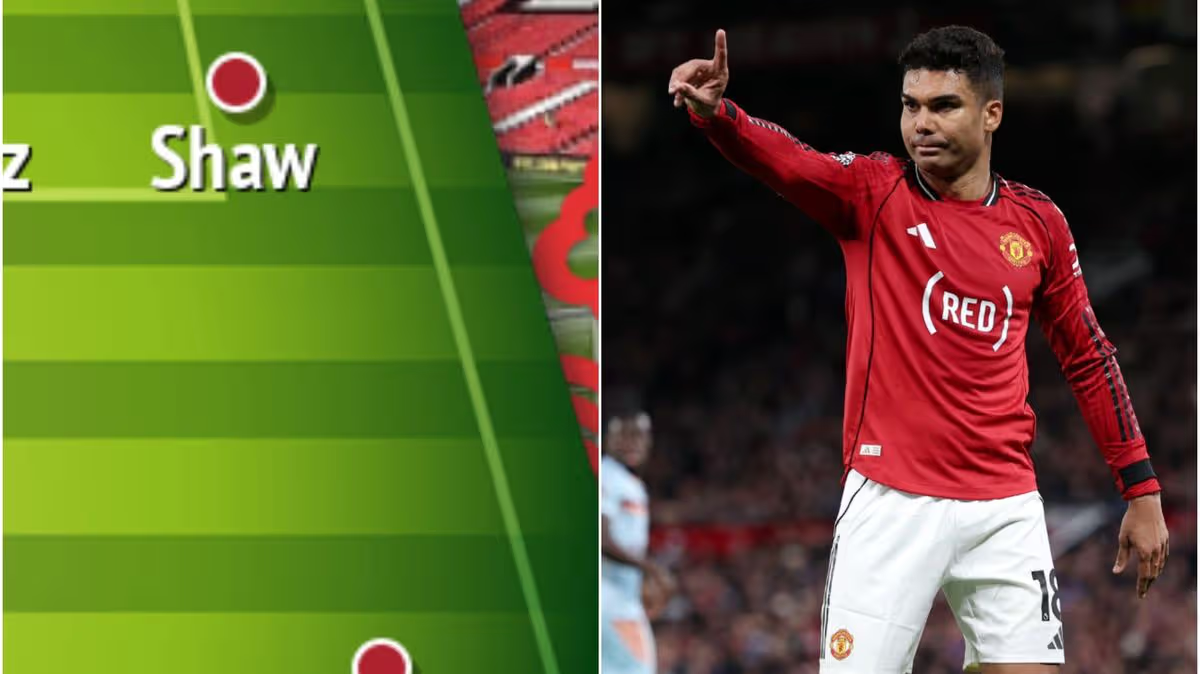
Manchester United midfielder Casemiro will play his final game at Old Trafford for the Reds this afternoon.

Manchester United will play their final match of the season at Old Trafford this afternoon when they host Nottingham Forest in the Premier League. After last season’s disappointment, there will be a feel good feeling inside the stadium as the Reds gear up for a return to the Champions League next year.

Advertisement

Forest are safe and may choose to make changes ahead of their final match of the season at the City Ground next week. However, United should go for a strong starting line-up. Senne Lammens is guaranteed to start in goal.

Diogo Dalot and Luke Shaw have solidified themselves as the starting full-backs this season. Shaw’s fitness has been particularly pleasing considering his injury issues over recent campaigns. He is just two starts away from starting every Premier League match for United this season.

Click here to find out the latest Manchester United news in our daily newsletter

Carrick has favoured Harry Maguire since returning and there is little evidence to suggest he will deviate from that stance. Partnering him could be Leny Yoro or Ayden Heaven but the most likely choice will be Lisandro Martinez.

Advertisement

The midfield two pick themselves. Casemiro is fit and Carrick will not deny him a start on his final Old Trafford appearance. Partnering him will be Kobbie Mainoo who has played so well in 2026 he has been nominated for the Premier League’s Young Player of the Year award.

In front of them will be Bruno Fernandes. The captain has been superb this season and without him this would have been a very different season.

Benjamin Sesko’s injury means the three attackers pick themselves. Bryan Mbeumo will lead the line, albeit Matheus Cunha is an option for that role.

Amad will begin on the right flank. He has hit a difficult patch of form and desperately needs a goal.

Advertisement

United’s predicted XI vs Forest: Lammens; Dalot, Maguire, Martinez, Shaw; Casemiro, Mainoo; Amad, Fernandes, Cunha; Mbeumo

Source link

Advertisement
Continue Reading

NewsBeat

Man Utd news: Carrick can agree bargain first transfer as Rashford risks breaking unwritten rule

Published

on

Daily Mirror

Manchester United have a huge summer transfer window ahead after qualifying for the Champions League once again

Michael Carrick is already being offered transfer opportunities after reports that Manchester United have reached an agreement to make the interim head coach their permanent successor to Ruben Amorim.

Advertisement

United are said to be offering Carrick a two-year contract, with an option to extend it by another 12 months. Once that deal is signed, attention will turn to this summer transfer window.

Qualifying for the Champions League presents the club with an opportunity to overhaul their squad ahead of next season, and a midfield revamp is in the offing. Here, Mirror Football looks at some of the biggest headlines surrounding United.

READ MORE: Cristiano Ronaldo receives bombshell news hours before title deciderREAD MORE: Wayne Rooney hospitalised on BBC show as Man Utd legend at risk of surgery

Bargain first transfer

Benfica would consider selling United target Richard Rios for just £26million this summer, according to A Bola. They are said to be weighing up a significant departure, with Andreas Schjelderup and Vangelis Pavlidis also potential options.

Advertisement

A rebuild is required after a disappointing season domestically, finishing well adrift of champions Porto after drawing too many matches. As a result, they will reportedly be willing to move on Rios for just £26million, a figure that falls well below the Colombia international’s £87million release clause.

United are one of several clubs credited with an interest ahead of the summer. With the club eyeing multiple midfield reinforcements, signing Rios at a reduced rate could enable them to afford Elliot Anderson’s asking price.

Making the Colombian their first summer signing could also be beneficial because of the upcoming World Cup. Striking any deal before the action begins would avoid any price hike based on his performances in North America.

Rivals to United are said to include Napoli, who are due to pay them £38million for Rasmus Hojlund this summer. That amount would effectively cover the costs of any deal for Rios.

Advertisement

Rashford risks unwritten rule break

Marcus Rashford could end up swapping Barcelona for Real Madrid this summer, according to the Independent. They cite sources close to the situation when reporting that the Spanish club’s prospective new head coach, Jose Mourinho, could go for Rashford.

With their rivals yet to trigger their £26million option to sign the England international permanently, there may be an opening for Madrid to make a move. Mourinho is said to still have a good relationship with Rashford from their time working together at United when the Portuguese replaced Louis van Gaal.

However, any switch would prove highly controversial, as it is rare for any player to represent both, let alone swap one for the other in the space of a summer. Luis Figo is the most infamous example, and Luis Milla also did so before the Portuguese, like Rashford, after only a season at Barcelona.

Advertisement

Michael Laudrup is another example, but he only lasted a season at Madrid after the move, while Luis Enrique went in the opposite direction during the 1990s. Rashford would become the first senior player to follow in their footsteps since Javier Saviola. The Argentine left Barcelona for Spain’s capital city, but, like Laudrup, left after just a year.

Join our new WhatsApp community and receive your daily dose of Mirror Football content. We also treat our community members to special offers, promotions, and adverts from us and our partners. If you don’t like our community, you can check out any time you like. If you’re curious, you can read our Privacy Notice.

Sky Sports discounted Premier League and EFL package

This article contains affiliate links, we will receive a commission on any sales we generate from it. Learn more
Content Image

£43

£35

Advertisement

Sky

Get the deal here

Sky has slashed the price of its Essential TV and Sky Sports bundle ahead of the 2025/26 season, saving members £192 and offering more than 1,400 live matches across the Premier League, EFL and more.

Sky will show at least 215 live Premier League games next season, an increase of up to 100 more.

Source link

Advertisement
Continue Reading

NewsBeat

The day Darlington’s ‘white elephant’ station quietly opened its doors

Published

on

The day Darlington’s ‘white elephant’ station quietly opened its doors

“The Central station, Newcastle, may be a more magnificent pile (who can say otherwise?), but Newcastle claims to be the northern metropolis.

“York station may be more extensive, so it ought to be for a number of railway systems converge at that point.

“Hull station, with its huge hotel, may present a far more imposing appearance, but then that great outlet of the Yorkshire and Lancashire manufacturers contributes nearly one-third of the entire revenue of the North Eastern Railway.”

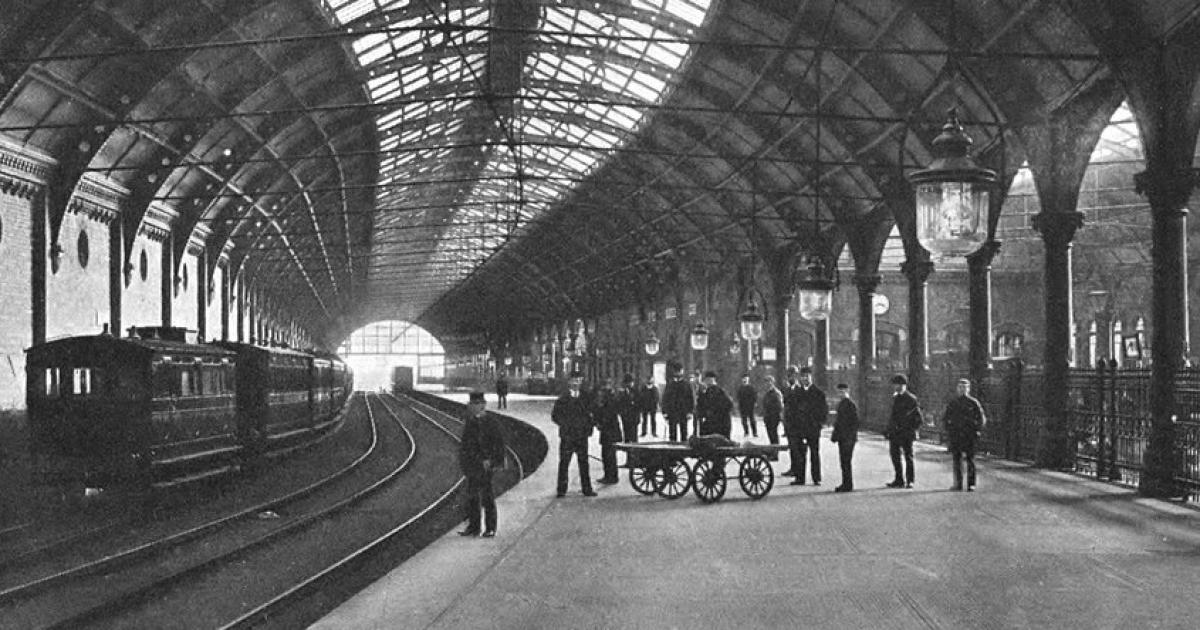
On the platform at Bank Top station shortly after it was completed (Image: Darlington Centre for Local Studies)

For all the weekly newspaper’s enthusiasm for the station, Bank Top was regarded as a small, drab building, and within 30 years was completely rebuilt.

Advertisement

Demand was growing for passengers to be able to access Teesside from the main line station – it was previously only possible from the Stockton & Darlington’s North Road station and so when, in the 1880s, a loop line was planed connecting Bank Top to Middlesbrough and Stockton, it was clear passenger numbers were going to increase.

Much to the despair of some directors of the NER, who didn’t think more money should be lavished so soon on Darlington, the company asked its new chief architect, William Bell, to plan a new station.

A fabulous picture from John Askwith of Bank Top station under construction, by a couple of men and their dog (Image: John Askwith)

Mr Bell, from York, had joined the NER architect’s department aged 14 and spent his entire 57 year career in it. He was largely responsible for stations at Hull, Newcastle, Leeds and Scarborough, and while working on Bank Top, he also built Sunderland and Thornaby stations.

Bell’s work was overseen by the NER’s chief engineer, TE Harrison, who was at that stage a big fan of “island stations” – which is why Bank Top is such a weird, back-to-front sort of a station with a fabulously grand entrance that no one uses as everyone sneaks in the side, tradesmen’s entrance.

Advertisement

Island stations have all their offices and waiting rooms on a central island with the up and down railways tracks flowing on either side of them.

The plans increased the size of the station by two-thirds, and 20 houses and three pubs in Station Street, plus Bank Top school, were bought and demolished to accommodate it.

The clay and topsoil excavated for its foundations and for the new cutting in Parkgate, so bridges could take the tracks, was deposited on the fields to the south of Victoria Road – the streets between Bedford Street and Clifton Road were later built on top of this clay. Waverley Terrace, named after the Edinburgh station, was the first and Victoria Embankment soon followed.

Work began in 1885, and was delayed three months by the winter of 1885 and a further two months by the winter of 1886.

Advertisement

An amazing picture from the archive of the North Eastern Railway Association showing Bank Top under construction in about 1886. That dog, by the way, appears to be sitting on the roof of the low building in the foreground (Image: NERA)

It was to have three arched train sheds. The western two are 62ft wide while the eastern one is 66ft wide because it follows the footprint of the 1861 station, including incorporating part of its eastern wall. Mr Bell helpfully put “oculi” – rounded openings – into his extended walls for ventilation but they also show which stretches of wall are later.

The grand Victoria Road clocktower and portico of Bank Top station (Image: Chris Lloyd)

Mr Bell also designed a grand main entrance at the top of Victoria Road. It had an elegant 80ft clocktower, in the French Renaissance style, and a tall and broad portico. Cabs entered the portico through one elegant arch, dropped off their passengers in the dry, and then exited by another elegant arch.

Inside the portico of the station’s grand Victoria Road entrance which not many people now use (Image: The Northern Echo)

Access, though, was not so easy for the passengers who now had to get across the north-bound tracks to reach the booking office and waiting rooms in the centre of the island.

Two tunnels were dug beneath the tracks for foot passengers and two shafts were sunk for hydraulic lifts for those who couldn’t manage the stairs.

Advertisement

“But,” says Bill Fawcett, the absolute expert in North Eastern Railway architecture, “an extraordinary piece of petty meanness intervened and, having built shafts for them, the directors left out the lifts, arguing that these would entail the full-time services of a porter.”

In fact, they would have had to employ at least two lift operatives to ensure the lifts were working 24/7.

And then they decided that no one would be use the main entrance because it was too inconvenient.

Henry Tennant, the station general manager, predicted that most people would drive up the goods ramp from Parkgate straight onto the platforms’ island because they would regard it as preferable to “see your luggage taken to the train than use the subway or lift at the west entrance and lose sight of your luggage which might go astray”.

Advertisement

The goods entrance to Bank Top station has now become the main entrance. This picture taken by John Boyes in about 1964. What is that strange shaped lorry facing him? Picture: JW Armstrong Trust (Image: JW Armstrong Trust)

So the southern subway at the Victoria Road entrance was dug but never opened to the public. It was, for a while at least, used as a service tunnel – but it, and the lift shafts, must still be there somewhere.

Just to give Bank Top a further vice-versa feel, shortly after it was opened, a horse-drop was built on Park Lane, near the portico. Cattle and sheep were also unloaded here, convenient for the market, so the Victoria Road entrance quickly started to look as if it were the goods entrance.

A further embarrassment was that soon after Sir ED Walker, “the WH Smith of the North”, had started the clock in the tower, it stopped and needed repairs. Once going, residents in the new streets complained that its chiming kept them awake at night, and so it was silenced forever.

One councillor condemned the station as a “gross extravagance” and a “white elephant”, while the chairman of the railway, John Dent Dent, said the company had “built a much larger station…than there was any occasion for”.

Advertisement

Bank Top station shortly after it opened on July 1, 1887. Picture: North Eastern Railway Association (Image: NERA)

Bank Top station shortly after it opened on July 1, 1887. Picture: North Eastern Railway Association (Image: NERA)

Perhaps because of this, the station slipped into service on July 1, 1887. The Northern Echo reported the following day: “The new station at Bank Top, Darlington, was yesterday opened for traffic without any formal ceremony.”

This was the day that NER’s summer timetable came into operation, so the station had to be operational, ready or not. The first train to leave it was the 5.30am to Middlesbrough and Saltburn, pulled by engine number 1099 and driven by James Allen. It was, of course, 22 minutes late because of a delay with the mail.

Dinsdale station was opened at the same time as Bank Top as new loop line connected Bank Top with Teesside (Image: The Northern Echo)

The first train into it was the 5.40am from Middlesbrough, which was also the first train to use the station on the new loop line at Dinsdale, where a smattering of people on a new bridge gave it a cheer as it went over celebratory fog signals (mini-explosives strapped to the tracks).

Bank Top obviously wasn’t quite ready for the big day, but The Northern Echo was impressed by what it saw.

Advertisement

“Even yet the finishing touches are to be given,” it said, “but the building is sufficiently near completion to show that it is among the largest and most notable of its kind in the country.

The refreshment rooms at Bank Top on the London-bound platform (Image: Chris Lloyd)

“The first class waiting room is amongst the handsomest – perhaps the handsomest – of the kind in England. It is large, lofty, and light, and the roof is richly panelled with elaborate and artistic mouldings. In the centre of the ceiling is a large coloured glass light. The walls have a dado, about 3ft 6ins high, of panelled and polished teak. The buffet is a handsome piece of furniture of the same wood, with plate glass backs, with a counter in front of polished granite standing on teak panelling.”

Bank Top station in the days of steam (Image: The Northern Echo)

There was even, overlooking platforms two and three, a room dedicated to footwarmers. Until the 1920s, trains were unheated and a long journey on a cold winter’s day could be very challenging. From the 1850s, the railway issued passengers with footwarmers – initially brass or metal tins filled with boiling water but then metal tubes were devised with chemicals inside that, if shaken vigorously, would set off a reaction and heat up.

A busy summer’s day at Bank Top station in 1962 (Image: The Northern Echo)

The failings of railway footwarmers – they either leaked everywhere, quickly went cold, or melted the soles of shoes – were a source of jokes throughout the Victorian railway age, and it was often said that a footwarmer which made everything in the carriage wet would “break the ice” and get the strangers talking.

Advertisement

The Silver Jubilee service departs from the south end of a snowy Bank Top in late 1936. Picture: JW Armstrong Trust (Image: JW Armstrong Trust)

In those early days, Bank Top handled 148 trains every 24 hours, including most of the passenger traffic which had been handled at North Road.  “The North Road station loses all its importance, and so far as a chief station is concerned, it passes out of existence, and will be carried on only as a roadside or calling statin for trains passing to and from the west only,” said the North Star newspaper.

A porter at work on Bank Top station in the 1960s (Image: The Northern Echo)

Bank Top also consigned the station at Fighting Cocks to the history books, as the new loop line bypassed it and instead went through Dinsdale.

Bank Top had cost £100,000 to build. The purchase of its land had cost another £30,000 and the construction of the loop line and Dinsdale station had cost a further £80,000, making it a £24.5m project in today’s values.

Waving a train off at Bank Top station. Picture: Rodney Wildsmith (Image: Rodney Wildsmith)

Despite the chaos on opening day, despite all the criticisms over its extravagance, and despite all the eccentricities over its entrances, the layout of the island station has remained largely unchanged since 1887 – which makes the £150m enlargement of 2026 such an enormous moment in its 140-year history.

Advertisement

Source link

Continue Reading

NewsBeat

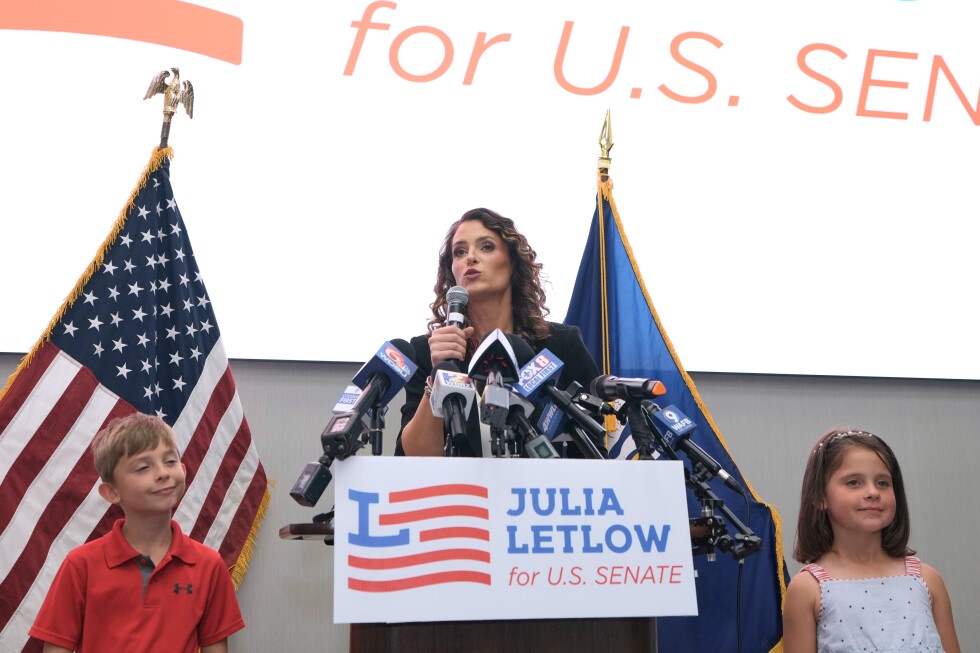
Letlow and Fleming advance to Louisiana Senate runoff, Cassidy loses

Published

on

Letlow and Fleming advance to Louisiana Senate runoff, Cassidy loses

BATON ROUGE, La. (AP) — U.S. Rep. Julia Letlow advanced to a runoff in Louisiana’s Republican Senate primary Saturday, capitalizing on the power of President Donald Trump’s endorsement in another attempt to purge his party of people he views as disloyal. State Treasurer John Fleming came in second to join her in the next round of voting.

Trump supported Letlow over incumbent Sen. Bill Cassidy, one of the few Republican senators who voted to convict him during his second impeachment trial over the attack on the U.S. Capitol on Jan. 6, 2021. Cassidy, a doctor, has also clashed with Health Secretary Robert F. Kennedy Jr. over vaccine policy, though he provided crucial support to help Kennedy get confirmed.

“I want to say thank you to a very special man who you all know, the best president this country has ever had, President Donald Trump,” Letlow told supporters in the evening, flanked by her two young children. “There is no greater endorsement than the endorsement of President Trump. We’ll always be singing that from the mountaintops.”

Invoking Cassidy’s impeachment vote, Letlow said: “Louisiana was not pleased with that vote. They took that as a sign that he had turned his back on the Louisiana voters.”

Advertisement

Advertisement

Trump, who has been trying to dislodge Cassidy, unloaded on him the morning of the election, calling him “a disloyal disaster” and “a terrible guy” on social media. In the evening he followed up with: “Congratulations to Congresswoman Julia Letlow on a fantastic race, beating an Incumbent Senator by Record Setting Numbers.”

Speaking to supporters after the result was known, Cassidy made a thinly veiled reference to the president, saying, “Insults only bother me if they come from somebody of character and integrity, and I find that people of character and integrity don’t spend their time attacking people on the internet.”

“Our country is not about one individual,” he said. “It is about the welfare of all Americans, and it is about our Constitution.”

Advertisement

The Louisiana primary comes in the middle of a month of campaigns by Trump to exact retribution on politicians who have crossed him. On May 5 he helped dislodge five of seven Indiana state senators who rejected his redistricting plan.

Next Tuesday, U.S. Rep. Thomas Massie of Kentucky will face a Trump-backed challenger, Ed Gallrein, in another Republican primary. Massie angered Trump by opposing his signature tax legislation over concerns about the national debt, pushing for the release of the Jeffrey Epstein files and opposing his decision to go to war with Iran.

By receiving less than 50% of the vote, Letlow and Fleming, a former U.S. House member and Trump administration official, were unable to avoid the runoff, which will take place June 27. The GOP winner will almost certainly take the November general election because of the state’s Republican leanings.

Jeanelle Chachere, a 66-year-old nurse, said she considers Cassidy “a phony” and voted for Letlow solely because Trump endorsed her.

“I’m going by what he says, because I like what he does,” she said.

Advertisement

Election changes stir concern

The election was scrambled by a recent U.S. Supreme Court decision gutting a part of the Voting Rights Act that affects how congressional maps are drawn. Although the Senate primary is moving forward, Louisiana leaders decided to delay House primaries until a future date to allow them to redo district lines ahead of time, a shift that threatened to cause confusion for voters on Saturday.

Mary-Patricia Wray, who has consulted for Republican and Democratic candidates in Louisiana, said the change could weigh against Cassidy by dampening turnout among voters who are less fervently pro-Trump.

“Suspending the congressional primaries hurts Cassidy,” she said. “Some people believe the Senate primary is canceled.”

Cassidy also complained that a new primary system enacted last year confused voters by requiring them to ask for a partisan ballot instead of the all-party primary previously in place. He said some called his office to say they had been unable to vote for him.

“The process that was set up was destined to be confusing,” Cassidy told reporters Friday.

Advertisement

Dadrius Lanus, executive director of the state Democratic Party, said his team fielded hundreds of calls from voters statewide who said the changes undermined their ability vote as they planned.

“A lot of the information should have gotten to voters well in advance,” Lanus said. “It’s literally been a whirlwind of confusion.”

Incumbent senator tried to hang on

Cassidy waged an aggressive campaign to convince voters he should not be counted out.

The senator’s campaign was expected to have spent roughly $9.6 million on advertising through May 16, according to the ad-tracking firm AdImpact. And Louisiana Freedom Fund, a super PAC supporting him, was on track to spend $12.3 million.

Advertisement

By comparison Letlow’s campaign, which launched Jan. 20, spent roughly $3.9 million, while a super PAC backing her, the Accountability Project, spent about $6 million.

Advertisement

Fleming’s campaign spent about $1.5 million.

Cassidy and Louisiana Freedom Fund ran ads attacking Letlow within days of her entering the race for supporting diversity, equity and inclusion initiatives, which Trump has tried to root out of the federal government.

Letlow, a college administrator before her election to the House, said she supported DEI while interviewing for the position of president of University of Louisiana-Monroe in 2020.

The ads, an attempt to characterize Letlow as a progressive trying to pass as a conservative, were one way Cassidy tried to flip the script in a race where he was on the outs with Trump.

Advertisement

Targeted by Trump

The senator’s vote in favor of convicting the president after his 2021 impeachment has shadowed Cassidy throughout his second Senate term.

Advertisement

John Martin, a 68-year-old retired engineer in south Louisiana, said he would vote for Letlow because he was still upset by Cassidy’s decision. He waved a flyer from Letlow’s campaign showing her standing alongside the president.

“I know a lot more about Cassidy than I do about her,” Martin said. “But if she’s endorsed by Trump, I’m going to believe that.”

Cassidy steered clear of Trump’s ire last year, supporting Kennedy to lead the Department of Health and Human Services despite his public reservations about the nominee’s anti-vaccine views.

As chair of the Senate health committee, Cassidy has been more publicly critical of Kennedy, including over funding cuts for vaccine development.

Advertisement

Trump blamed Cassidy for the failed nomination of his second choice for surgeon general, Casey Means, who raised doubts about vaccinating newborns for hepatitis B, a practice Cassidy supports. Trump withdrew the Means nomination and blasted Cassidy.

Advertisement

Letlow waited for Trump’s backing

Letlow considered running last year but only entered the race after Trump announced his endorsement in January.

By that time Fleming, a former House member and Trump administration official who was elected state treasurer in 2023, was already in the race as a Trump devotee. But Landry was looking for a better-known challenger, and he suggested Letlow to the president.

Letlow had an unconventional and tragic entry into politics.

In 2020, while she was a college administrator, her husband Luke was elected to the U.S. House but died of COVID-19 before he could be sworn in. Letlow ran for and won the seat in a March 2021 special election and was reelected in 2022 and 2024.

Advertisement

___

Beaumont reported from Des Moines, Iowa.

Advertisement

Source link

Continue Reading

Trending

Copyright © 2025