


Connect with us

NewsBeat

Low flypast over Cape Town stadium prompts safety review

Published

on

Low flypast over Cape Town stadium prompts safety review

JOHANNESBURG (AP) — A low-altitude flyover by two Airlink passenger jets before a rugby match at Cape Town’s DHL Stadium is being reviewed by South African aviation authorities after it drew safety concerns, officials said Wednesday.

The South African Civil Aviation Authority (SACAA) said it had obtained flight data recordings and requested additional information from regional carrier Airlink as part of its assessment. A full report with recommendations will be issued once the review is complete.

“It is therefore critical that we interrogate this past weekend’s events … to determine if there were any safety concerns which warrant a review,” the agency said in a statement.

Airlink has withdrawn plans for another flyover at the upcoming rugby match in Soweto, according to the SACAA, which is responsible for regulating aviation safety and security.

Advertisement

The flyover ahead of the Springboks-All Blacks rugby match on Aug. 29 drew huge cheers from an estimated crowd of about 56,000, but also sparked a debate over the safety risks after video footage by spectators inside and around the stadium spread online.

Deandra Peters, 25, a pilot and aviation enthusiast attending her first live rugby match, said the crowd in the stadium was electrified by the spectacle in a way that was difficult to capture on video.

“You can watch the planes fly over, but you can’t recreate what it felt like to be inside a stadium full of Springbok supporters absolutely losing their minds,” she told The Associated Press. “The atmosphere was electric — the noise, the pride, the emotion. It was a very uniquely South African moment.”

Airlink on Wednesday said the maneuver had been carefully planned and rehearsed and that safety was “the first consideration at every stage of the process.” It said each aircraft had three senior captains aboard, with more than 75,000 combined flight hours across the crews.

Advertisement

Earlier this week, Airlink had provided the data from the airplanes’ black boxes to the civil aviation authority for review.

The SACAA said it would examine flight data to determine whether any safety concerns warranted a review.

The airline acknowledged the enthusiasm generated by the spectacle while also recognizing what it described as the “valid questions and concerns” that followed.

“We never intended to become the news or upstage Rugby’s Greatest Rivalry,” Airlink chief executive de Villiers Engelbrecht said in a statement.

The regulator said the airline had made applications for three flyovers. The most recent one in Cape Town was the second, while the first flyover took place in Johannesburg on Aug. 22. Both were approved in line with the requirements for special air events.

Airlink has withdrawn its application for a flyover scheduled for Sept. 1, over Johannesburg’s FNB Stadium. The airline said forecast weather conditions were unfavorable for a safe formation flyby. SACAA confirmed that the application had been withdrawn.

Advertisement

South African rugby has a long tradition of stadium flybys at major matches, dating back to the 1995 Rugby World Cup final in Johannesburg, when a Boeing 747 swept over Ellis Park before the Springboks faced the All Blacks.

Last Saturday’s flyby was unusually low and dramatic, drawing international attention, with some aviation experts later questioning whether the aircraft had left too little margin for error.

___

AP Africa news: https://apnews.com/hub/africa

Advertisement

Source link

Advertisement
Continue Reading
Click to comment

You must be logged in to post a comment Login

Leave a Reply

NewsBeat

North Yorkshire bakery applies for licence at flagship store

Published

on

North Yorkshire bakery applies for licence at flagship store

​Cooplands bakery, which was founded in Scarborough and now has more than 150 stores across Yorkshire, Lincolnshire, and the North East, is seeking a new pavement licence for the flagship store in its home town.

​Several tables and four chairs could be placed outside the pie shop in Scarborough town centre at 103 Westborough if the application is approved.

​Coopland and Sons (Scarborough) Ltd’s new proposal for outdoor seating is currently open to representations from members of the public.

Cooplands’ Flagship Store On Westborough. Google Maps.

​The business was founded in 1885 by husband-and-wife team Frederick and Alice Coopland, who started with a small pork butcher’s and pie shop on Market Street in Scarborough.

Advertisement

​“Every single product in our range is made with the same care, detail and attention. We bake each and every day to ensure the freshest quality products reach our shops every day. We continue to innovate to meet the ever-evolving tastes and needs of all our customers, and make sure we have their favourites too,” according to the company.

​The deadline for members of the public to comment on the pavement seating plans is Thursday, September 10.

​Anyone wishing to make representations regarding the application should give notice in writing to: North Yorkshire Council, Licensing Services, Town Hall, St Nicholas Street, Scarborough, YO11 2HG.

​​The authority can also be contacted by email at licensing.east@northyorks.gov.uk.

Advertisement

​​The council’s website states: “It is an offence knowingly or recklessly to make a false statement in connection with an application punishable on summary conviction by an unlimited fine.”

Source link

Advertisement
Continue Reading

NewsBeat

School defends policy as pupils ‘turned away after fortune spent on uniform’

Published

on

Daily Mirror

Denton Community Academy’s trust has defended its uniform rules after pupils were reportedly turned away on their first day back over skirt lengths.

A secondary school has defended its uniform policy after pupils were reportedly turned away on their first day back for wearing skirts “a couple of inches” above the knee.

Advertisement

One parent said his two daughters, who attend Denton Community Academy, were refused entry on Wednesday despite their skirts being bought through an official uniform provider.

The father, who did not wish to be named, told Manchester Evening News he had spent a “fortune” on new uniforms for his children. He said: “They were ringing us saying they weren’t allowed to enter the school.

“The skirts they had on were not rolled at all and fell a couple of inches above the knee, if that.

“It was throwing it down with rain and there were 40 or 50 kids standing outside, not allowed in. They were soaking wet and some were crying.”

The father said other parents also went to collect their children, while his two daughters spent the rest of the day at home and missed their first day back.

Northern Education Trust, which operates Denton Community Academy, said its uniform expectations had been shared with families several times before the start of the new academic year and insisted its policies were applied “consistently” and “fairly”.

The trust said: “Denton Community Academy is committed to maintaining the high standards that have driven significant improvements in our students’ educational outcomes.

Advertisement

“The academy is the most improved secondary school in Tameside and is now the highest-performing non-selective secondary school in the borough.

“We are incredibly proud of our students and the high expectations that have driven this improvement.”

It said families had been told about the uniform expectations on May 6, May 18, July 16 and August 20. The trust added: “We cannot comment on individual cases, but we strongly encourage parents with any concerns to speak directly to the academy.

Advertisement

“We will always work with families to resolve issues, and believe that direct conversation with the school, rather than through the media, is the most constructive way to do that.”

The father said he had since returned to TopMarks Schoolwear in Ashton, where he claimed the longest skirts available were around 20 inches.

He said his daughters were of average height for their age and claimed even the longest skirts available would not fall below their knees.

The father also pointed to a photograph in the uniform section of the academy’s website which he said showed a female pupil wearing a skirt several inches above the knee.

He said: “This is not an army camp. They’re treating them like soldiers, but they are children, they need an education. It feels like punishment.”

Denton Community Academy’s website says its uniform policy is intended to “set an appropriate tone for education”. It says the uniform provides “a sense of belonging and identity for all students”, while also being “comfortable” and allowing pupils to be themselves.

The policy also prohibits make-up, hoodies and jewellery, as well as “writing on hands or arms for any reason”.

Advertisement

It states: “We do not exclude students for wearing jewellery, having mobile phones or any other breaches of this policy.

“We will however, always ask students to rectify the issue that we have raised. These are reasonable requests.”


Source link

Advertisement
Continue Reading

NewsBeat

QPR v Cardiff City LIVE: Score updates as Burrell doubles his tally

Published

on

Wales Online

Goal! Screamer from Perry.

Tanner rolls the ball to Ng 25 yards out and the right back shifts it on to his left foot before sending a rifle into the top corner. Charles couldn’t get near that.

When he hits them, they stay hit.

Advertisement

They don’t deserve it, on balance, but Cardiff are suddenly very much in this.

Source link

Continue Reading

NewsBeat

Why criminal justice shouldn’t just be about what punishment people ‘deserve’

Published

on

Why criminal justice shouldn’t just be about what punishment people ‘deserve’

Prisons running near capacity have created a dilemma for Andy Burnham. The new prime minister has now confirmed that anyone convicted of manslaughter would not be eligible from the prisoner early-release scheme.

Questions around prison capacity hinge on public safety, of course, but also on what types of criminals “deserve” to be let out early.

There was little pushback when Burnham announced that those convicted of rape, grooming offences or serious child sexual offences would not be eligible for early release. But the revelation that two of PC Andrew Harper’s killers could be released early sparked a passionate public campaign for changes to the scheme. Burnham has now exempted all manslaughter offences, meaning hundreds more people will remain in overcrowded prisons.

The point here is not whether that particular decision was right or wrong, but that there is a tension between what punishment people are thought to deserve, and what evidence suggests may best reduce future offending.

Advertisement

The prison overcrowding crisis shows how politicians struggle to balance evidence on reducing crime with deeply felt and understandable public views about punishment and accountability.

Behind this dilemma are broader questions explored by both philosophy and psychology: what shapes human behaviour, and why do people act as they do? Questions about free will sit at the heart of this debate. In recent research, my colleagues and I explored beliefs on free will, finding that the more strongly someone believes in free will, the harsher the punishment they favour for criminals.

This aligns with other research that has suggested beliefs about free will can influence how much retributive punishment people think someone deserves.

Put simply, a purely free will view holds that people are agents of their own behaviour, and whether or not they choose to commit a crime.

Advertisement

However, a substantial body of research shows that behaviour does not occur in a vacuum. A complex range of developmental, family, social and individual factors have all been associated with offending and violence.

Research on adverse childhood experiences has found associations between these and later interpersonal violence and problematic drug use. Wider social and structural conditions, including poverty and neighbourhood disadvantage, also matter. Neuroscience research has identified subtle differences in brain structure and functioning in groups with conduct problems or persistent antisocial behaviour.

None of this means that any single factor inevitably leads to crime. And most people exposed to any one of these risk factors do not go on to offend.

The point of understanding why people offend is not simply to explain their behaviour. It can help identify ways to prevent crime and reduce reoffending. But attempts to explain offending can also clash with deeply held ideas about responsibility and deservingness.

Advertisement

Understanding offending

There has long been a perception among some sections of the public and politicians that trying to understand why someone offends risks being “soft on crime”. In 1993, then prime minister John Major argued that when it comes to crime, society should “understand a little less, condemn a little more”.

Understanding the factors linked to offending can help identify what preventative interventions should target before offending occurs, and what rehabilitative support should address afterwards. Understanding does not require us to excuse what someone did. If that understanding helps reduce reoffending, its value is not in being “soft” on offenders, but in creating fewer future victims.

Preventing offending is, at least conceptually, relatively straightforward: if research identifies factors that increase risk, interventions can try to address them before harm occurs.

This thinking is already shaping policy. The government’s plans for youth justice emphasise earlier intervention and prevention, including targeted support for children at risk of entering the criminal justice system.

Advertisement
The potential early release of two of PC Andrew Harper’s killers sparked significant public outcry. Harper was killed in 2019.
Ben Birchall/Alamy

Once an offence has been committed, however, things become more complex. Criminal justice has to protect the public, respond to understandable expectations of punishment and accountability, and consider how best to reduce further offending. These aims can overlap, but they do not always point in the same direction.

Making criminal penalties more severe does not necessarily reduce offending. There is strong evidence that criminals respond more to the likelihood of being caught than to harsher sanctions. A systematic review comparing custodial and community sentences found no evidence that imprisonment was more effective at reducing subsequent reoffending.

Alongside this sits a large body of research on rehabilitation and what supports people to stop offending, including psychological interventions, and support for education, employment and accommodation.


À lire aussi :
How to stop released prisoners reoffending: what the evidence says

Advertisement

This can lead to uncomfortable conclusions. Treatment, education, help finding work and support with reintegration may look insufficiently punitive to some. Rehabilitation is not a substitute for protecting the public where someone poses a serious ongoing risk. Nor do we know what works in every case – evidence varies in strength. But if rehabilitation and support can reduce reoffending, failing to invest in them because they appear too compassionate may ultimately mean more future victims.

With the right support, some people who offend go on not only to stop offending, but to build constructive lives and contribute positively to their families and communities. Humane treatment can be compatible with accountability, public protection, and concern for victims.

None of this means prison is unnecessary, or that we must all agree on how much punishment or compassion an individual deserves. For victims and bereaved families, wanting punishment that reflects the seriousness of the harm done is entirely understandable.

But policymakers must also ask which response is most likely to prevent future harm. Views about what punishment someone deserves understandably shape public debate, but they are not the same as evidence about which responses are most likely to reduce future offending.

Advertisement

Source link

Continue Reading

NewsBeat

Stars of The Gentlemen react to Meghan rumours

Published

on

Theo James, Maya Jama, Hugh Bonneville

Stars of Netflix’s The Gentlemen react to rumours that Meghan, Duchess of Sussex may be joining the cast.

Theo James, Hugh Bonneville and Maya Jama are some of the cast members in attendance at the shows London premiere tonight, where they caught up with the BBC’s Noor Nanji.

In August the BBC learnt that the Duchess of Sussex was in talks to return to acting following her and Harry’s move back to the UK.

More on this story.

Advertisement

Source link

Continue Reading

NewsBeat

Andy Burnham jokingly compares Bayeux Tapestry to politics career | News

Published

on

Video Player Placeholder

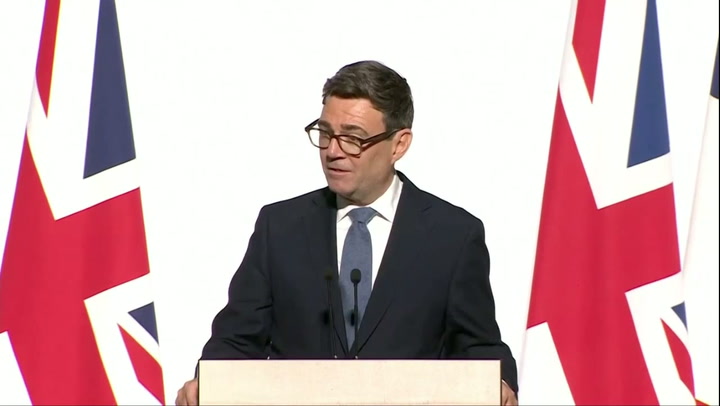
Andy Burnham jokingly compared his political journey to the story depicted in the Bayeux Tapestry as he gave a speech at the British Museum celebrating its loan to the UK on Wednesday (2 September).

The prime minister said the embroidered cloth “shows a new leader emerging from a northern territory, travelling to the south of England in search of the crown, something clearly that couldn’t happen today.”

The 70-metre-long tapestry depicts the Norman conquest of England, when William the Conqueror invaded and defeated King Harold Godwinson.

It has returned to the UK for the first time in almost 1,000 years, on loan until September 2027 as part of a special trilateral agreement between the UK, France and the London museum.

Advertisement

Source link

Continue Reading

NewsBeat

King says ‘what is past is prologue’ after Bayeux tour with Macron and Burnham

Published

on

King says ‘what is past is prologue’ after Bayeux tour with Macron and Burnham

The tapestry was “most likely to have been embroidered in Canterbury by English”, Charles said, before joking: “The Bayeux Tapestry – or the Canterbury embroidery as it might just have been called… recounts a conflict, yet here it is today, nearly a thousand years later, as a precious symbol of trust, at a time when trust seems sadly to be in short supply between nations.

Source link

Continue Reading

NewsBeat

Maine’s high court rules father can restrict daughter’s church attendance

Published

on

Jury says The New York Times defamed Alabama player

A Portland District Court judge was correct in giving a father the power to decide whether his daughter could attend an evangelical church following a clash with the girl’s mother over her religious upbringing, the Maine Supreme Judicial Court ruled on Sept. 1.

The decision keeps in place the lower court’s ruling on a 2024 dispute between Matthew Bradeen and Emily Bickford regarding the religious upbringing of their daughter, who was then 11 years old. Bickford had been bringing her daughter to multiple services a week at Calvary Chapel Greater Portland, an evangelical church in Westbrook.

Bradeen argued the church was a “dangerous and harmful environment” that had caused his daughter to suffer from anxiety. He said she had a panic attack after hearing the church’s teachings on the rapture, a belief that Christians will join God at the end of the world and nonbelievers will be left behind.

The lower court ruled in his favor, saying some of the church’s language was “psychologically damaging the child” because of how it characterized her father, and the state’s high court affirmed this decision on Tuesday.

Advertisement

The lower court ruling gave Bradeen the right to decide whether his daughter could continue to attend Calvary Chapel services or interact with members of the church other than her mother. It also said the pair must “continue to share parental rights and responsibilities” regarding their daughter’s exposure to other religious organizations, but that if they disagreed the father has the right to make final decisions.

Bickford’s lawyer, Mathew Staver, told The Monitor he plans to appeal the case to the U.S. Supreme Court. Staver’s law firm, Liberty Counsel, which describes itself as a “Christian ministry” focused on religious freedom, has been involved in other cases before the U.S. Supreme Court including a 2022 case in which the court ruled in favor of a private religious group that Boston had barred from flying a Christian flag.

In a brief to the Maine Supreme Court, Liberty Counsel argued that the 2024 order violated Bickford’s First Amendment rights through its “open hostility” toward religious beliefs and by preventing her from directing the “religious upbringing of her child as she sees fit.”

“What Maine has done in this decision is put the Supreme Court of Maine at odds with the courts of a number of other states,” Staver said. “I think it will be a case that will be very significant and catch the attention of the Supreme Court because of how far-reaching it is with regards to the First Amendment exercise clause.”

Advertisement

Michelle King, an attorney representing the father, said she “anticipated all along” that the case could end up before the Supreme Court. She called the Sept. 1 decision “well thought-out and reasoned” and said Bradeen was happy with the result.

“Anytime you’re in court, it’s stressful,” King said. “But this case has definitely garnered a lot of media attention, and I think that’s always difficult for parents.”

Advertisement

Part of the case centered on one service where Bradeen himself was mentioned by the church’s pastor. While hearings for the original dispute were ongoing, Bickford brought her daughter to a service at Calvary Chapel Greater Portland in which pastor Travis Carey led a six-and-a-half-minute prayer focused on the case, referring to the parents and child by name “almost 30 times,” describing Bradeen as “in need of salvation” and calling the proceedings “an attack on God’s Word.”

According to the Maine Supreme Court, Bickford made no attempt to remove her child from the service and later called it “appropriate.” She “is unwilling to recognize, much less mitigate, the risk that these messages alienate the child from Bradeen or otherwise cause her harm,” the court wrote.

In the 2024 order, Maine District Court Judge Jennifer Nofsinger wrote that the harm caused to the daughter stemmed not from “a belief system that is rooted in the Bible” but from the mother’s “inability to co-parent” on the topic of religion and the fact that she had given control of decisions about her daughter’s best interests to the church and its language had disparaged the father.

“The court found that the child was harmed by Bickford’s decisions to expose the child to messages that characterized Bradeen as an ‘enemy’ who seeks to ‘persecute’ the child and her faith, and by Bickford’s unwillingness to prevent the child from receiving those messages or to take any other steps to reduce the risk of alienating her from Bradeen,” the Maine Supreme Court wrote in its Sept. 1 decision affirming the order.

Advertisement

The final finding “reflected simply that it is harmful for a child to hear negative and frightening messages about one parent from the other parent or the other parent’s authority figures.” The court found that the order rested on the parents’ inability to co-parent on matters of religion, not on the substance of Bickford’s religious beliefs, making it necessary for one parent to be granted decision-making authority over the other.

While Calvary Chapel Greater Portland was not an official party in this case, churches in the evangelical network been at the center of several lawsuits in recent years, including a 2020 lawsuit brought by Calvary Chapel of Bangor against the state for its pandemic restrictions and an ongoing lawsuit brought by Calvary Chapel Belfast alleging religious discrimination after the University of Maine System rescinded its agreement to sell a building to the church. Liberty Counsel represented both churches in their cases.

Bickford and her counsel have 90 days to appeal the decision to the U.S. Supreme Court.

___

Advertisement

This story was originally published by The Maine Monitor and distributed through a partnership with The Associated Press.

Source link

Advertisement
Continue Reading

NewsBeat

‘Below the dignity of the office’: Canadian officials condemn Pete Hegseth cadet post

Published

on

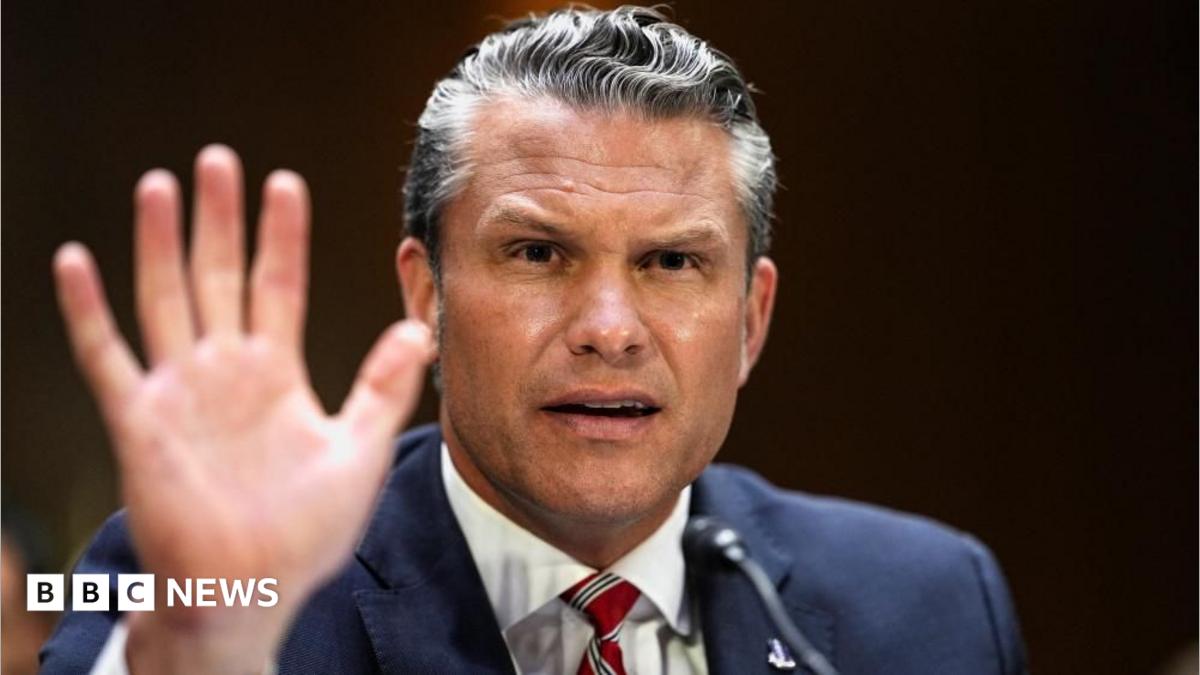
Pete Hegseth gestures by lifting his hand as he frowns

In a statement, the Army Cadet League of Canada, a civilian organisation that supports the programme, said it strongly condemns “any online harassment, or mockery of cadets’ achievements”.

“Directing derogatory commentary toward youth who are actively working to better themselves and serve their communities is unacceptable,” the organisation said.

Speaking to broadcaster CBC, Canada’s top military commander, General Jennie Carignan, said they are in contact with the cadets involved and any response they may have.

“We are consulting with them on how they want to go about doing this,” she said.

Advertisement

Other officials weighed in, including Scott Anderson, a Conservative member of parliament for the Canadian city of Vernon and a former military reservist, who in a post directed at Hegseth accused him not living up to the “responsibility and decorum” that comes with his title.

“You have chosen to set both aside and insult two female Canadian non-combatants, and to intentionally shame them before millions. You should be ashamed,” he said.

“Our economies, our continental defence and our cultures are irretrievably intertwined and yet we are two distinct nations. Canadians and Americans should have no problem with each other, but I have a problem with you,” Anderson added.

Trade talks broke down between Canada and the US last month, with both sides accusing the other of last-minute demands that torpedoed a tentative agreement.

Advertisement

The US immediately imposed 50% tariffs on some $20bn (C$28bn) of Canadian imports, and Canada plans to bring in matching countermeasures next week.

Both sides have traded insults, including Ontario Premier Doug Ford calling Trump a “loser”, the US president seeking to change the name of Lake Ontario to Lake America, and transportation secretary Sean Duffy accusing Canada of being a country that “doesn’t have a military”.

Still, the two counties have long been defence partners and allies, including when Canada backed the US in the war in Afghanistan.

Canada has also significantly ramped up defence spending in recent months after years of lagging behind Nato targets.

Advertisement

Hegseth, a veteran, is himself under pressure at home following a string of recent high-profile military leaders leaving the Pentagon and questions about the US handling of the Iran war.

He has also long focused on the appearance and physical fitness of US troops and on what he calls the “warrior ethos”.

Source link

Advertisement
Continue Reading

NewsBeat

Burnham and Majority of Britons agree with Burnham that Brexit was ‘wrong turn’ for UK

Published

on

Burnham and Majority of Britons agree with Burnham that Brexit was ‘wrong turn’ for UK

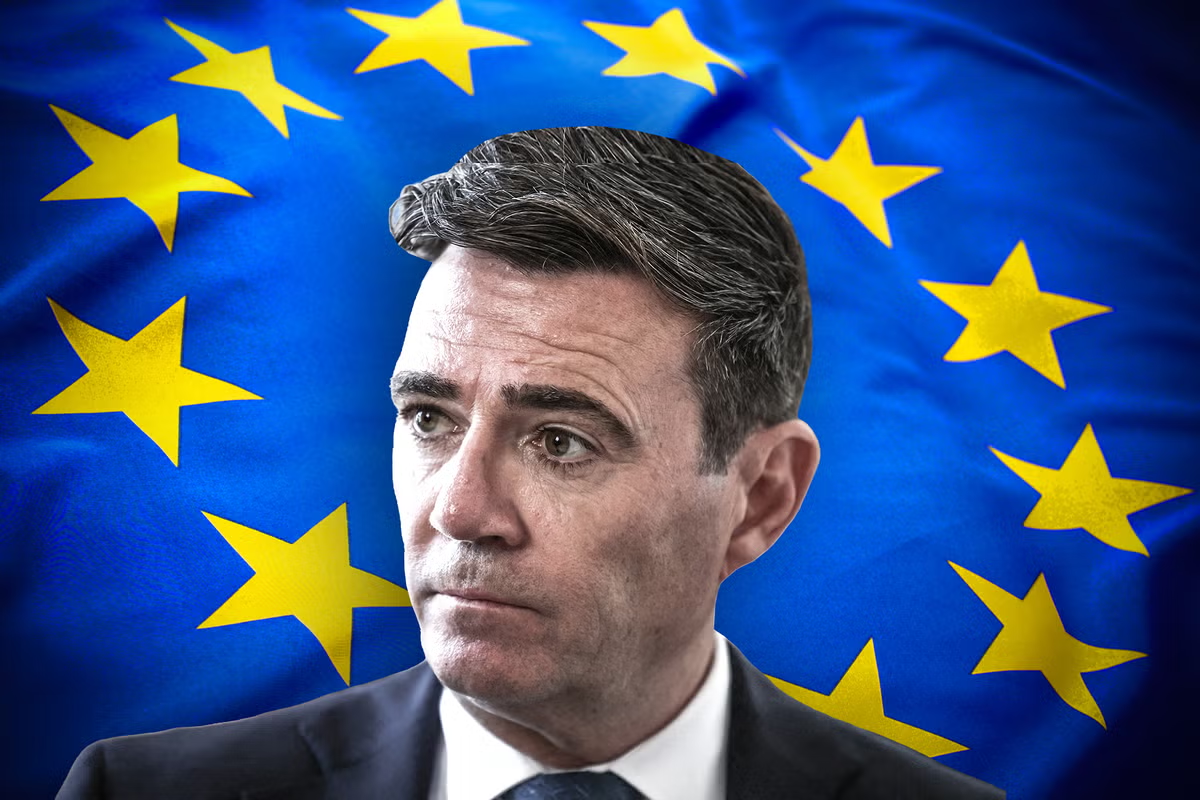
The majority of Britons agree with Andy Burnham that the country took a wrong turn by leaving the European Union, but they are split over his belief that Margaret Thatcher’s premiership set the country on the wrong path.

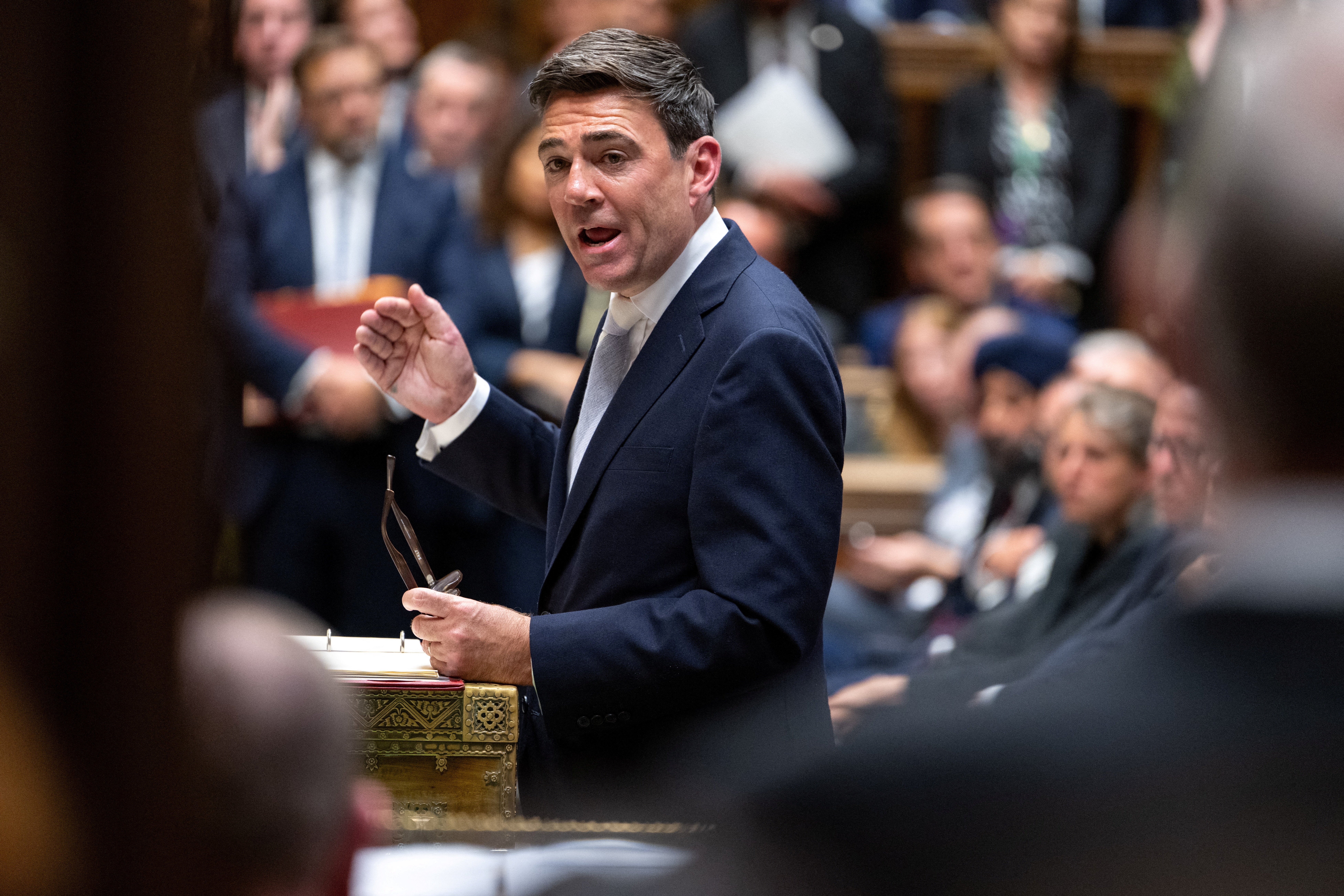
Addressing the House of Commons for the first time as prime minister on Tuesday, the former mayor of Greater Manchester took aim at deindustrialisation and privatisation of the 1980s, and the impact of austerity and Brexit on regions of the UK outside of England’s South East and London.

He listed the “series of wrong turns” the UK has made since over the past 40s years and warned that Brexit had embedded the problems in the last decade.

Mr Burnham told MPs: “From the 1980s, this country took a series of wrong turns. Political power was centralised, economic power privatised.

Advertisement

“The country deindustrialised. Austerity followed, hollowing out councils and depriving them of the agency to act to reverse any of this, and then Brexit, compounding the damage, ushering in a decade of low growth and stalled regeneration.”

Andy Burnham made his Commons debut as prime minister on Tuesday
Andy Burnham made his Commons debut as prime minister on Tuesday (Reuters)

According to new polling from YouGov, 55 per cent of British people agree with the prime minister that Brexit was a wrong turn, with 21 per cent disagreeing. 11 per cent said neither and 13 per cent said they did not know.

Among Labour voters at the 2024 general election, 78 per cent believed it to be a wrong turn, while 59 per cent of Reform voters claimed it was a right turn.

The Makerfield MP’s comments were welcomed by pro-EU campaigners just days after The Independent revealed the £11.7bn a year loss in exports Brexit has caused for British business as well as a survey showing 98.2 per cent of businesses want the UK to rejoin the single market.

Naomi Smith, chief executive of Best for Britain, said: “It’s hugely welcome to hear a prime minister stand at the despatch box and say loudly and clearly that Brexit harmed Britain; far from taking back control, it shrank our economy, left us poorer, weaker, less safe and more divided.”

Advertisement

Europe: The Way Back

We’re campaigning to rebuild Britain’s future in Europe


When it comes to Baroness Thatcher, whose 11 years in Downing Street from 1979 to 1990 made her the longest-serving British prime minister of the 20th century, 35 per cent of Britons believe her premiership represented a wrong turn for the country.

28 per cent said it was more of a right turn, with 14 per cent saying neither and 23 per cent not knowing.

60 per cent of 2024 Conservative voters and 57 per cent of Reform voters said it was a right turn, while 58 per cent of Labour voters believed it to be a wrong turn.

Advertisement

Regarding the privatisation and centralisation of power prominent during the Thatcher years – and the legacy he believes it has left – Mr Burnham claimed this was a “failed economic model”.

He said it had led to high streets across the country being left desolate and described Britain’s water industry as “a leaking monument to that approach, a country run in the private rather than public interest”.

“For a long time, the country did not have ambitions for its regions outside of London – it even talked of the managed decline of Liverpool,” the prime minister told the Commons.

“It took the devolution of power out of this place to allow our big city regions the ability to set new ambitions for themselves.

Advertisement

“Now, I want every single place across our regions and nations to be able to do the same, creating the conditions for good growth in every postcode.”

Join the Independent’s new campaign
Join the Independent’s new campaign (The Independent)

What you will get by joining our campaign Europe: The Way Back:

  • A dedicated community: We are fully committed to the long haul, consistently campaigning to secure the absolute best deal for Britain within Europe.
  • Free weekly newsletter: Every Wednesday, political editor David Maddox and political correspondent Millie Cooke will be in your inbox with exclusive reporting, analysis and insight on the biggest developments shaping relations between Britain and Europe. Each week, they will explain what’s happened, what it means, and what the key political figures, experts and decision-makers are saying about it.
  • Essential continental updates: Stay informed with regular briefings on the biggest developments in European politics and the specific policies that could pave the way for closer EU relations.

There are even more benefits if you subscribe for just £1 for seven months:

  • Exclusive content: Get the highest-quality analysis, opinion and debate from political experts across the UK and Europe by subscribing to our premium service.
  • The Brexit Effect: You’ll get exclusive access to extracts from Anthony Seldon’s major new book, The Brexit Effect, offering an unparalleled analysis of the 10 years since the referendum.
  • Inform the debate: Receive exclusive invitations to live events, webinars, expert Q&As and podcast recordings.

Source link

Continue Reading

Trending

Copyright © 2025