






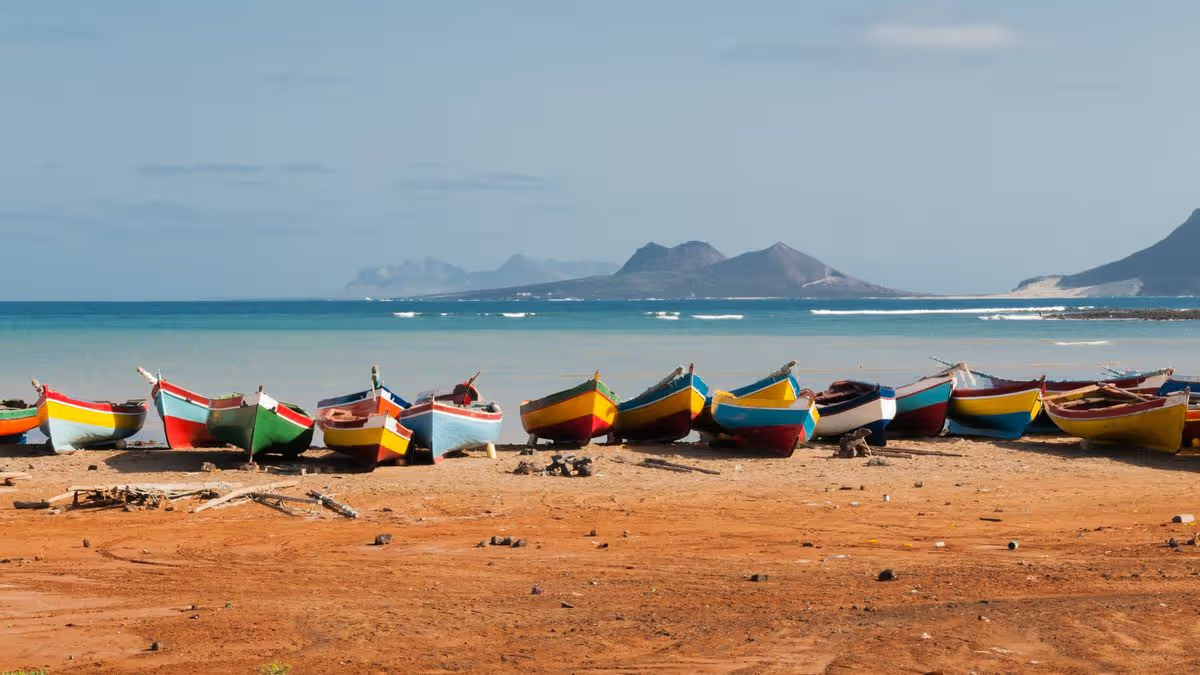
Foreign Office backed experts issue update as tourists from England, Scotland and Wales struck down
UK health experts have disclosed that 164 individuals have arrived back in England, Scotland and Wales from a holiday destination carrying a serious infection. In a fresh update, the Foreign Office-backed Travel Health Pro stated that people must exercise additional caution.
The surge in stomach bugs Shigella – also referred to as shigellosis or dysentery – and Salmonella has been occurring on the Cape Verde Islands, a favoured destination among British holidaymakers. Authorities confirmed that over the past eight months, cases of Shigella and Salmonella infection have been documented in travellers returning to England, Scotland and Wales from the Cape Verde Islands.
Of 164 confirmed Shigella cases, the majority – 112 – individuals reported travel to Cape Verde, predominantly to the Santa Maria and Boa Vista regions. As of June 2026, of 99 confirmed Salmonella cases, from three distinct clusters reported in England, Scotland and Wales since 1 October 2025, a total of 70 individuals reported travel to Cape Verde.
Cases in the largest of the Salmonella clusters reached their peak in January 2026. The European Centre for Disease Prevention and Control (ECDC) also flagged a surge in Shigella cases amongst travellers returning from Cape Verde since September 2022.
More than 1,000 confirmed and suspected cases of shigella and other gastrointestinal infections, including salmonella, have been identified in travellers returning from Cape Verde to 13 countries across the European Union/European Economic Area: Belgium, Czechia, Denmark, Finland, France, Germany, Ireland, Luxembourg, Norway, Poland, Portugal, Sweden and the Netherlands. Cases have also been recorded amongst US travellers who visited Cape Verde.
Shigella is a bacterium that can trigger shigellosis, a gut infection capable of causing severe diarrhoea, fever and stomach cramps. The majority of people recover within a week.
However, certain individuals, such as older adults, those with weakened immune systems, anyone with complex medical conditions, pregnant women and children under five, may face a heightened risk of complications, including sepsis.
Shigella spreads through contact with contaminated faeces, either directly via person-to-person transmission or indirectly through food, water or surfaces tainted with Shigella. Travellers visiting destinations where food and water safety cannot be guaranteed are particularly at risk.
Globally, the majority of Shigella cases occur in children younger than five years of age, though all age groups can be affected. There is additionally a risk of sexual transmission amongst men who have sex with men.
Salmonella, also known as salmonellosis, is a bacterial illness that primarily targets the intestines. Symptoms such as diarrhoea, stomach cramps, nausea, vomiting and fever typically appear between 12 and 72 hours after infection [8].
Young children, pregnant women, those with underlying health conditions and elderly people are at greater risk of developing severe symptoms. The majority of human cases stem from contaminated food and water.
For further details, click here.
While you are away.
Be sure to follow these steps when travelling overseas.










You must be logged in to post a comment Login