








“Thankfully, the situation was much calmer than we have seen in recent days.”
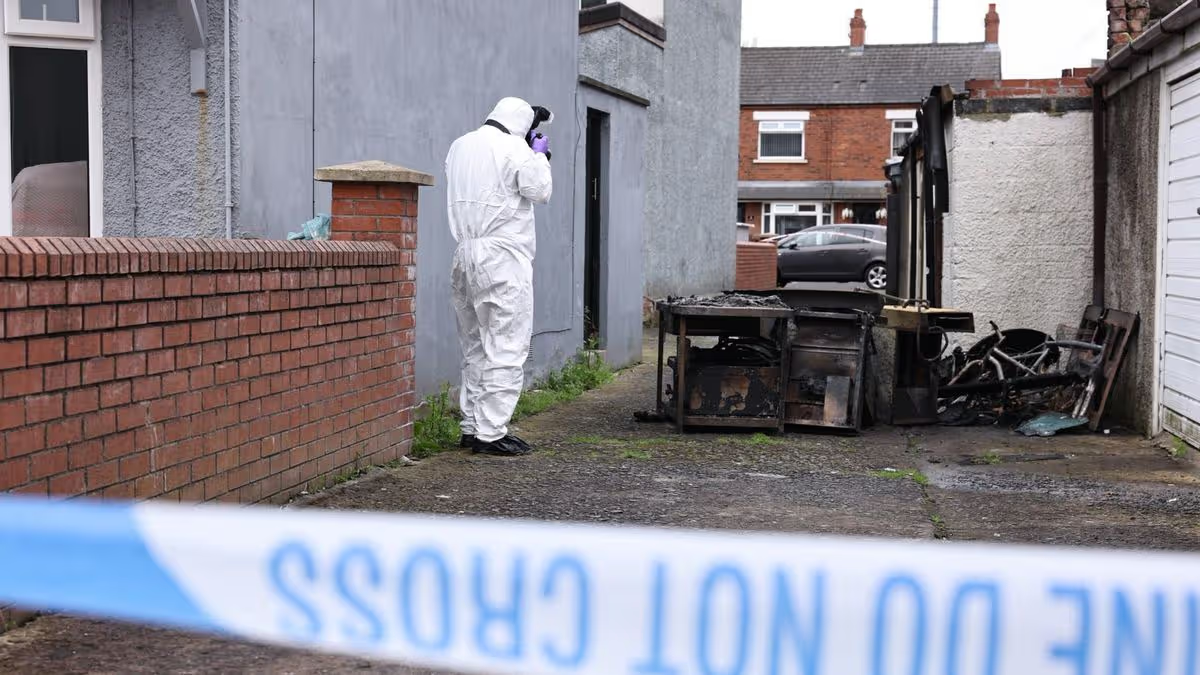
A house in North Belfast was targeted in an arson attack last night as police say there was a “reduction in the level of disorder”.
Police say there were a number of peaceful protests at various locations, however three arrests were made which include a 37-year-old man for disorder and criminal damage on Upper Malone Road close to the Taughmonagh area of South Belfast. A 27-year-old was also arrested for throwing a stone at a police vehicle in the Abbeyville Court of Newtownabbey.
A 16-year-old was also arrested for riotous behaviour in Derry with police saying they have made 19 arrests so far this week in connection with the violent disorder that has taken place.
Assistant Chief Constable Ryan Henderson said: “Our heightened presence in our local communities and engagement to de-escalate violence continued last night. Thankfully, the situation was much calmer than we have seen in recent days. Our policing operation will remain over the weekend to ensure public order is maintained.
“There were peaceful protests last night at a number of locations, including Newtownabbey, with no significant incidents of public disorder. Officers engaged with participants supporting their right to express their views lawfully.
“Last night, officers were dealing with some lower level disturbances and keeping focus on patrols of key areas. There were three arrests in total across Northern Ireland – one in connection with disorder on Wednesday and including a man detained following criminal damage to a vehicle in the Taughmonagh area of south Belfast.”
There was an arson attack on a house in the Shore Road area of north Belfast and reports of race-hate graffiti in the Dee Street and Newtownards Road area of east Belfast.
A 27-year-old male threw a stone at a police vehicle during a mobile patrol in Abbeyville Court in Newtownabbey. He was arrested on suspicion of disorderly behaviour. No significant disorder noted in Derry overnight with one arrest of a 16-year-old male for riotous behaviour the previous night.
ACC Henderson continued: “There have been 19 arrests so far this week with people already charged to court. Our Public Order Enquiry Team is working day and night to identify those who have been involved in the disorder over the last number of days.”
A report can also be submitted online using the non-emergency reporting form via www.psni.police.uk/makeareport/ or you can contact Crimestoppers anonymously on 0800 555 111 or online at www.crimestoppers-uk.org/. You can also contact us on 101.
* Photos and footage – including CCTV, mobile phone or dashcam footage – can be shared with police through the Major Incident Public Portal at www.mipp.police.uk/operation/PSNI26W14-PO1 * Images of people would like to speak to in connection with the disorder are being released regularly through Op Exposure and can be viewed here: www.psni.police.uk/news/op-exposure-june-2026.
For all the latest news, visit the Belfast Live homepage here and sign up to our daily newsletter here.







































You must be logged in to post a comment Login