

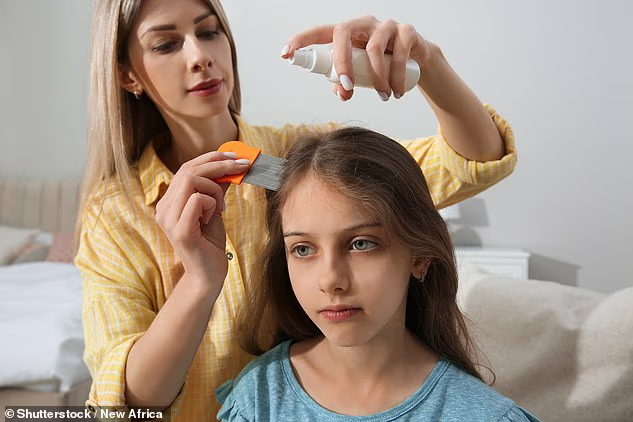
Chemicals used in a popular head-lice treatment used in children as young as six months could increase the risk of breast cancer, researchers say.
The warning comes after a wide-ranging study found that exposure to hundreds of chemicals in cosmetics and food packaging may begin years or even decades before the cancer develops.
Among the substances is malathion, the active ingredient in the head-lice treatment Derbac M.
Other potentially harmful chemicals highlighted in the study include bisphenol A (BPA), which is used in drinks cans and till receipts, and methylparaben, a preservative found in moisturisers, shampoos and deodorants.
Jennifer Kay, the lead author of the study, said: ‘People are exposed to hundreds of chemicals from multiple sources throughout their lives, and these exposures add up.
‘Breast cancer can take years to develop, so reducing exposure to potentially harmful chemicals early in life is an essential part of cancer prevention.’
The findings – published in Environmental Health Perspectives – come amid a rise in breast cancer among younger women, with cases among 20 to 49-year-olds increasing by almost 10 per cent over the past decade.
Derbac M, a popular head lice treatment, contains malathion – a toxic chemical that has now been linked to breast cancer
To identify the biggest sources of exposure, researchers analysed more than a dozen US government databases covering chemical use, pollution levels and human exposure.
They focused on more than 900 chemicals previously identified as potentially linked to breast cancer, including substances that can disrupt hormones or have been shown to cause mammary tumours in animals.
The researchers found hundreds are still used in everyday products, including building materials and medical equipment.
Among them was benzene, which people are commonly exposed to through exhaust fumes and cigarette smoke, and styrene, used in some takeaway coffee cups and food containers.
They also highlighted BPA, a chemical used in some reusable plastic food containers, the lining of drinks cans and till receipts. It was banned from baby bottles in Britain in 2011 amid concerns it could leach into their contents.
The European Commission went further in December 2024, banning BPA from materials that come into contact with food. The UK has yet to follow suit.
Researchers also highlighted DEHP, a chemical used to soften plastics that can still be found in some medical equipment, as well as methylparaben, a preservative used to extend the shelf life of moisturisers, shampoos and deodorants.
Parabens can mimic the effects of oestrogen in the body – significant because the hormone can fuel the growth of some breast cancers.
However, several of the pesticides highlighted in the study are no longer approved for agricultural use in Britain.
Scientists said the findings expose a potential regulatory ‘blind spot’, because safety assessments often consider individual chemicals rather than the mixture of substances people may be exposed to in everyday life.
‘Breast cancer can take years to develop, so tracking and reducing people’s exposure to pesticides from multiple sources is an essential part of cancer prevention,’ said Dr Kay.
Around 59,000 women and 420 men are diagnosed with breast cancer in the UK each year.
There is no single cause of the disease, and the study does not prove that exposure to any one of the chemicals identified will lead to breast cancer.
However, a number of factors are already known to increase the risk, including getting older and having a family history of the disease.
Drinking alcohol, smoking, being overweight, having dense breasts and exposure to certain hormones, including through HRT, are also linked to breast cancer.





















![IT'S HAPPENING! Bitcoin Bearish Divergence Playing Out! [My Targets!]](https://wordupnews.com/wp-content/uploads/2026/09/1790181021_maxresdefault-80x80.jpg)






































You must be logged in to post a comment Login