Connect with us
DAPA Banner

NewsBeat

Ryan Reynolds and Rob McElhenney offer Coventry free trip to Las Vegas BEFORE Wrexham clash

Published

on

Wales Online

Coventry City won the Championship last night in emphatic fashion and by means of congratulations, Wrexham owners Ryan Reynolds and Rob McElhenney jokingly offered a tantalising award

Wrexham co-owner Rob McElhenney has playfully offered Frank Lampard and his Coventry City squad an all-expenses-paid trip to Las Vegas – just days before their pivotal Championship showdown with the Red Dragons.

Advertisement

The Sky Blues clinched the Championship title on Tuesday evening in stunning style with a 5-1 home victory over Portsmouth. Ephron Mason-Clarke netted twice while Haji Wright, an own goal from Regan Poole and an injury-time strike from Kaine Hayden rounded off a 5-1 triumph.

Promotion to the Premier League had already been secured with last Friday’s 1-1 away draw with Blackburn Rovers, but there were still scenes of jubilation at the Ricoh Arena. Once the celebrations subsided, McElhenney – also known as Mac – light-heartedly extended the ultimate congratulatory invitation to Sin City…provided it happened before the away fixture against Wrexham!

JOIN OUR WALES FOOTBALL FB PAGE! Get latest news, analysis and more on The Dragons

McElhenney took to X and wrote: “Congrats to Coventry City. My friend @VancityReynolds (Ryan Reynolds) and I would like to offer you a first class trip to Vegas. Please be ready in the am and be back in time for kick-off on Sunday. A little late is okay too.”

Advertisement

The tongue-in-cheek post from McElhenney comes as Wrexham pursue their own push for Premier League promotion. They travel to the Ricoh Arena to face Lampard’s side this Sunday.

The Red Dragons currently sit sixth, but are separated from seventh-placed Hull City only on goal difference. A win against the Sky Blues will almost certainly be required to keep their play-off destiny in their own hands as the season reaches its conclusion.

If Wrexham are able to get into the playoff places, win the two-legged semi-final and then triumph at Wembley, they’d become the first ever side to enjoy four consecutive promotions. It would also open up many more lucrative financial doors for the Red Dragons, as a result of the broadcast money which comes with being in the Premier League.

Advertisement

On February 9, the two Hollywood actors celebrated their five-year anniversary of co-owning the club. Wrexham were down in the National League when they strode into the Racecourse Ground.

Now there is an achievable, but still difficult, route to the Premier League. In March, while commentating on Sky Sports for Wrexham’s victory over Swansea, Reynolds said: “You have high expectations in long term, but our goal was to listen and learn and at that point, you don’t know what you’re saying, if that’s just going to sound preposterous or naive.

“But our goal was always the Premier League. I mean, we’d be foolish to not aim for that. I didn’t think we would be here this quickly.

Advertisement

“However, sometimes the ball bounced our way. Other times, this team’s grit, determination and character is what really kind of pushed them across, even more so than just skill.”

After Coventry, Wrexham play host to fellow play-off chasers Middlesbrough in what could be a win or bust clash for both teams, depending on their results in the previous match.

Sky Sports, HBO Max, Netflix and Disney+ with Ultimate TV package

This article contains affiliate links, we will receive a commission on any sales we generate from it. Learn more
Content Image

Sky has upgraded its Ultimate TV and Sky Sports bundle to now include HBO Max, Netflix, Disney+, discovery+ and Hayu, as well as 135 channels and full Sky coverage of the Premier League and EFL.

Sky broadcasts more than 1,400 live matches across the Premier League, EFL and more with at least 215 live from the top flight alongside Formula 1, darts and golf.

Advertisement

Source link

Continue Reading
Click to comment

You must be logged in to post a comment Login

Leave a Reply

NewsBeat

Work underway on new sixth form centre at Pocklington School

Published

on

Work underway on new sixth form centre at Pocklington School

The new sixth form centre at Pocklington School follows several years of planning and consultation, involving staff, students and the wider school community.


Recommended reading:


Tim Morris, head of sixth form, said: This is an important investment in our Sixth Form and in the experience of our students. We want to provide an environment that reflects the next stage of their journey, with high-quality spaces for both independent study and collaboration.

“The new centre will give students greater ownership of their learning, while also offering a comfortable and welcoming place to relax and connect with others. It is designed to support not only strong academic outcomes, but also the confidence and independence that students need as they move on to university and beyond.”

Advertisement

Designs for Pocklington School’s new sixth form centre (Image: Pocklington School)

He said the redesigned space will provide a clearer, more purposeful layout, with dedicated areas for both independent study and social interaction.

And that the redevelopment will transform the existing two-floor centre into a high-quality environment that better reflects the needs of Sixth Form students as they prepare for life beyond school.

The upper floor will become a contemporary study zone, featuring individual study pods, collaborative workspaces and improved supervision. Designs include integrated lighting, power access and carefully planned layouts to support focused, independent learning.

On the lower floors, the space will be reimagined as a comfortable and mature social and study environment, with flexible seating, improved storage and café style areas designed to support both collaboration and relaxation. The redesign will include new flooring, lighting and a refreshed colour scheme, alongside the introduction of natural materials and planting to enhance the overall environment.

Advertisement

The project is being delivered in partnership with design and build specialists TS Booker, working closely with the school’s estates team. The redevelopment includes a £100,000 investment in high-quality, bespoke furniture and will be completed over the summer, ready for September 2026.

Mr Morris said the investment reflects Pocklington School’s ongoing commitment to providing an environment that supports both academic success and personal development.

He said the sixth form centre plays a central role in student life, offering space to study, collaborate and develop the independence and skills required for university and future careers.

“By creating a more clearly defined and purposeful environment, the redevelopment will further enhance the Sixth Form experience and support students in achieving their full potential,” he said.

Advertisement

Source link

Continue Reading

NewsBeat

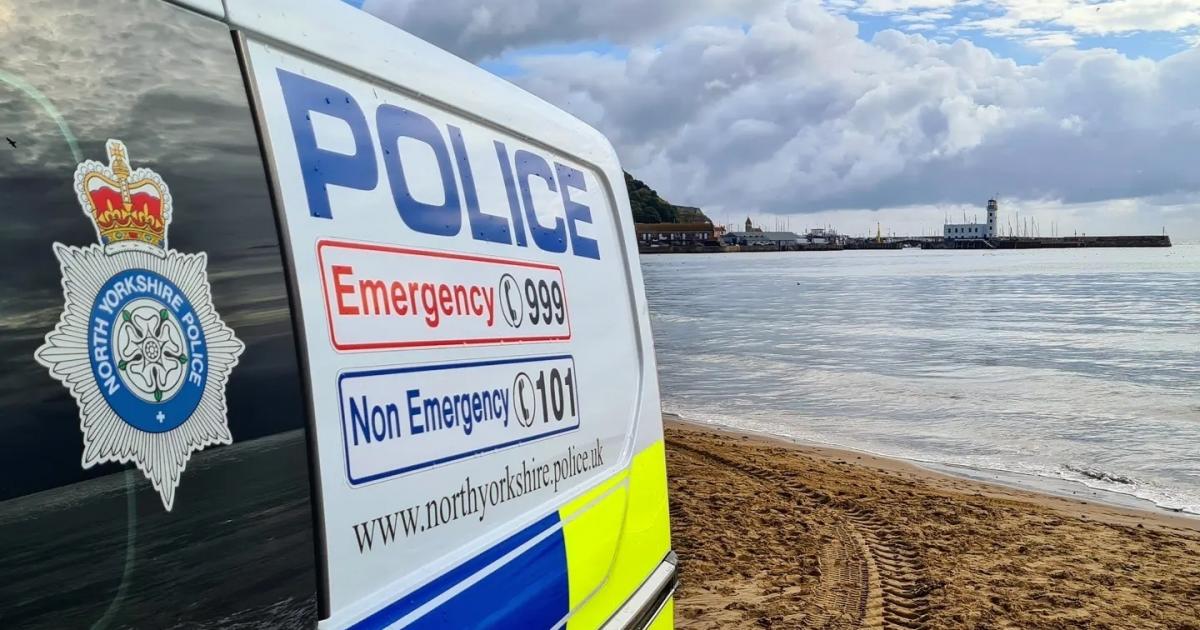
Family of man found dead in Scarborough come forward

Published

on

Family of man found dead in Scarborough come forward

As a subscriber, you are shown 80% less display advertising when reading our
articles.

Those ads you do see are predominantly from local businesses promoting local
services
.

These adverts enable local businesses to get in front of their target audience – the local
community
.

It is important that we continue to promote these adverts as our local businesses need
as much support as possible during these challenging times.

Advertisement

Source link

Advertisement
Continue Reading

NewsBeat

What is the Lyrid Meteor Shower – and will it be visible in London?

Published

on

What is the Lyrid Meteor Shower - and will it be visible in London?

The world’s oldest known meteor shower will be visible this week – and you might be able to spot it from London.

First spotted in 687 BC, the Lyrid meteor shower, which comes from debris from Comet Thatcher, passes by Earth once a year.

Source link

Advertisement
Continue Reading

NewsBeat

how the US and Iran could step back from the brink

Published

on

how the US and Iran could step back from the brink

Donald Trump’s deadline for Iran to reopen the Strait of Hormuz or face a renewal of American bombardment was due to expire this week, but was extended at the last moment, this time with no defined time limit. But the risk of renewed escalation remains real, as both sides continue to block traffic through the Strait of Hormuz, one of the world’s most important – and contested – waterways..

Yet, despite hardline rhetoric on both sides, diplomacy has not collapsed. In fact, several plausible off‑ramps exist that could allow Washington and Tehran to cool tensions without either side appearing to capitulate.

Research in conflict resolution suggests that warring parties will be more likely to come to an agreement when both sides can take away what they consider a winning result. Often, this comes in trade-offs between what you are willing to give away in order to gain elsewhere. Nevertheless, it’s axiomatic in conflict resolution that it’s much easier to start a war than to stop it.

The most viable pathway to a settlement remains a reset of the nuclear file broadly along the lines of the 2015 Joint Comprehensive Plan of Action (JCPOA), albeit under a new political brand.

Advertisement

Iranian officials have proposed a staged arrangement that would cap uranium enrichment at 3.67%, well below the level needed for a nuclear weapon. Such an arrangement would return intrusive International Atomic Energy Agency inspections with the prospect of ultimately transferring stocks of higher‑enriched uranium out of the country in exchange for phased sanctions relief.

This would not represent a fundamental concession by Tehran. These were the parameters it accepted 11 years ago under the deal brokered by Barack Obama. But it would significantly lengthen Iran’s nuclear “breakout time” (the time it takes to produce enough weapons-grade uranium). It would also restore transparency that has been steadily eroded since the first Trump administration pulled out of the JCPOA in 2018.

For Washington, such a deal would fall short of longstanding demands for “zero enrichment” – but that position has so far proved unattainable. Even US officials now appear more focused on verifiable constraints than absolute prohibitions, understanding that China recognises the right to enrich uranium as a matter of sovereignty.

A capped and monitored programme would allow the US president to claim that Iran had been forced back under strict controls, while avoiding a further costly regional war. The irony is that this would largely put Iran back into an agreement that Obama agreed and which Trump, with considerable bluster, withdrew from in 2018. This appears to be a stumbling block for the US president.

Advertisement
Donald Trump is reported to be seeking a nuclear deal with Iran which is better for the US than the treaty agreed by Barack Obama.
EPA/Daniel Heuer/pool

A second and related off‑ramp concerns the duration rather than the existence of enrichment limits. Recent talks have stalled over US demands for a 20‑year moratorium on enrichment, which Iran has countered with proposals closer to five years. A compromise, such as a seven to ten-year limit with built‑in reviews, would give both sides something to sell domestically. It would represent long‑term risk reduction for Washington and for Tehran it would be a reaffirmation of Iran’s right to a nuclear future.

Time‑limited arrangements have precedent in arms control. They are known as confidence and security building measures and are often used in conflict prevention and resolution to build trust between parties while working towards a resolution. And they may be more politically durable than maximalist demands that are more likely to collapse as political conditions change.

Beyond the nuclear issue, the Strait of Hormuz has emerged as Iran’s most potent source of leverage. Roughly one-fifth of global oil passes through the waterway, and even limited disruption has sent energy prices climbing this year. Former Russian president, Dmitry Medvedev – a close ally of Vladimir Putin – recently described the strait as Iran’s “real nuclear weapon”. It’s a comment that captures how central maritime pressure has become to Tehran’s strategy.

An agreement guaranteeing the strait’s unconditional reopening without harassment, tolls, or threats, would provide immediate economic relief worldwide and give Washington a highly visible diplomatic win.

Advertisement

But Gulf states have expressed concern that such a bargain could end up managing rather than dismantling Iran’s leverage. It would effectively normalise – rather than remove – Iran’s ability to threaten shipping during crises.

A man walks in front of a poster showing a crowd hailing former supreme leader Ayatollah Ali Khamenei.
Iran has shown it can absorb pressure and play for time.
EPA/Abedin Taherkenareh

For neighbouring countries, stabilisation without broader de‑escalation risks entrenching a dangerous precedent. This makes it all the more important that any Hormuz‑focused deal be tied to wider commitments on restraint and established confidence-building measures.

Lowering the stakes

Process matters as much as substance. Increasingly, mediators such as Pakistan, Oman and China appear to favour “sequenced de‑escalation”. This is where limited reciprocal steps, including mutual adherence to ceasefire agreements, shipping guarantees and relaxation of both sides’ maritime blockades, are locked in before negotiations widen to sanctions relief and regional security.

This approach lowers the political stakes of any single concession and reduces the risk that talks collapse under the weight of unresolved disputes. However, this scenario would make it harder for the US administration to define the agreement as a victory.

Similarly, there is the question of political narrative. The US president has vacillated between threats of overwhelming force and signals of fatigue with the conflict. This suggests he has a strong desire for an exit that can be framed as victory.

Advertisement

A narrowly defined agreement that could be rebranded, front‑loaded with Iranian compliance and heavy on enforcement language may prove more acceptable than a comprehensive treaty – even if its substance closely resembles older Obama-era frameworks.

The problem is the Trump administration’s failure to maintain a consistent narrative of what it wants from Iran. This presents a challenge to the established research on conflict resolution. The US president, in particular, has made understanding the US position difficult. In years to come, this crisis may be a useful case study when it comes to exploring conflict resolution theory. But, right now, it makes a settlement very hard to envisage.

Source link

Advertisement
Continue Reading

NewsBeat

Dr Feelgood’s Wilko Johnson, Sean Walsh and Tommy Banks in York

Published

on

Dr Feelgood's Wilko Johnson, Sean Walsh and Tommy Banks in York

York Theatre Royal has announced a new wave of shows for 2026, which also includes a one-off appearance from Michelin-starred chef Tommy Banks.

Tommy Banks will bring Spinning Plates: LIVE! to the Main House for one night only on Friday 17 July at 7.30pm. The show blends live storytelling and immersive cinema, charting the chef’s journey in hospitality across three timelines, from the past 25 years to the opening day of his latest pub. It also explores the pressures facing the industry, including rising costs and closures.

Sean Walsh is heading to York Theatre Royal. (Image: York Theatre Royal)

The following day, Saturday 18 July at 2.30pm, Dinosaur Adventure Live: Danger on T-Rex Mountain takes over the Main House.


Recommended reads:

Advertisement

Classic car lovers to flock to North Yorkshire attraction this weekend

York’s chart-topping band gets ‘incredible response’ to winter tour announcement

How live music made this North Yorkshire ‘ghost town’ a must-visit destination


The interactive family show invites audiences to join rangers on a mission to save dinosaurs, featuring lifelike creatures, audience participation and a post-show meet-and-greet in the foyer. The production runs for one hour with no interval.

Advertisement

Dinosaur Adventure Live is coming to York Theatre Royal.

Music fans can catch Wilko: Love And Death And Rock ‘N’ Roll from Thursday 10 to Saturday 12 September. Performances are at 7.30pm on 10 and 11 September, with two shows on 12 September at 2.30pm and 7.30pm.

Wilko: Love And Death And Rock ‘N’ Roll from Thursday 10 to Saturday 12 September.Wilko: Love And Death And Rock ‘N’ Roll from Thursday 10 to Saturday 12 September. (Image: York Theatre Royal)

The play with live music tells the story of Dr Feelgood founder Wilko Johnson, from his terminal cancer diagnosis in 2012 to his unexpected recovery. It arrives in York following runs in London and Hornchurch.

Sean Walsh is heading to York Theatre Royal. (Image: York Theatre Royal)

Comedian Sean Walsh returns on Friday 6 November at 8pm with This Is Torture, a new stand-up show as part of a UK tour. The performance runs for 110 minutes including an interval and is strictly for ages 14 and over.

Priority booking for York Theatre Royal members opened at 1pm on Wednesday 22 April, with general sale scheduled for 1pm on 27 April.

Advertisement

Tickets and further details are available via the York Theatre Royal box office.

Source link

Advertisement
Continue Reading

NewsBeat

Enoch Burke seeks to appeal against judgment which found suspension lawful

Published

on

Belfast Live

A school in the Republic and the German teacher have been in a long-running legal dispute stemming from a request address a student by a new name and the pronoun “they”

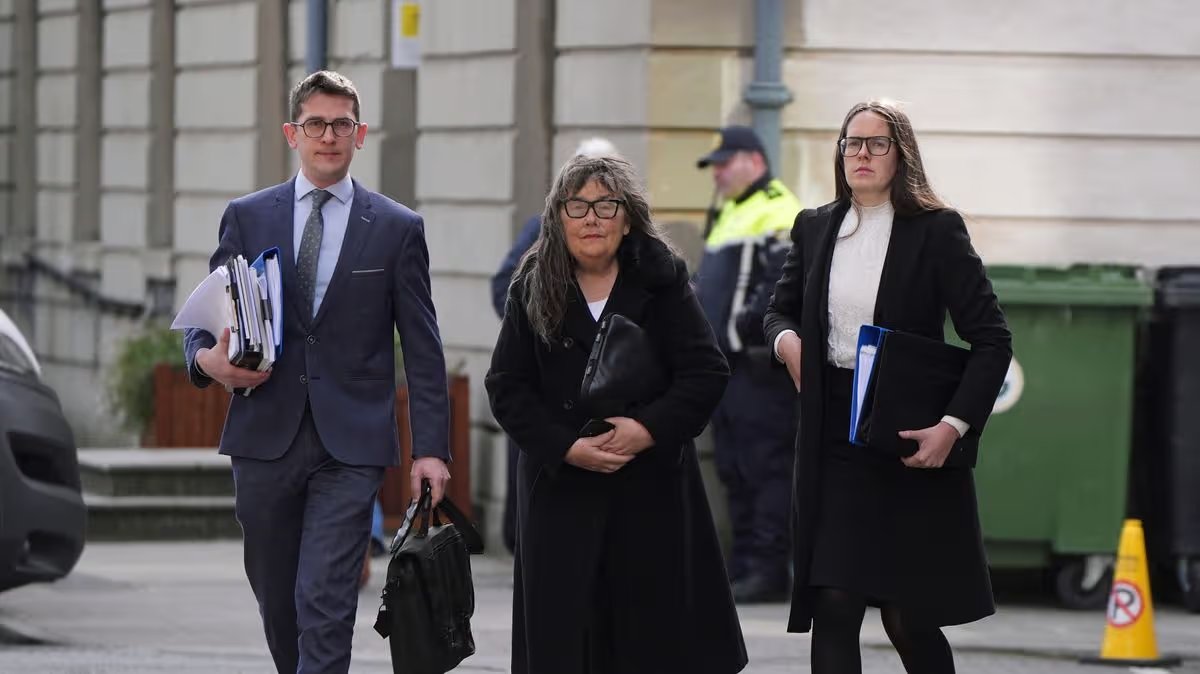
Enoch Burke has argued that he should be granted an appeal against a High Court decision that his suspension from a Co Westmeath school was lawful.

Advertisement

In May 2023, Mr Justice Alexander Owens ruled it was lawful for Wilson’s Hospital School to suspend the history and German teacher in 2022.

Following the judgment, Mr Burke had 28 days in which to appeal, but on Wednesday, he appeared in front of the three judges of the Court of Appeal to make his case for an extension of time.

The school and Mr Burke have been in a long-running legal dispute stemming from incidents over a request from the former’s then-principal to address a student by a new name and the pronoun “they”.

Mr Burke, an evangelical Christian, argued that his suspension was unlawful and went against his right to express his religious beliefs.

He has spent more than 650 days in jail for contempt of court after repeatedly trespassing at the school.

Addressing the judges on Wednesday, he outlined a number of reasons for seeking an appeal two-and-a-half years after the original judgment.

They included his involvement in a number of legal actions, in which he represented himself, his imprisonment and because he had “lost confidence in the Court of Appeal” following a previous decision.

Advertisement

The barrister representing the school’s board of management, Rosemary Mallon, described the case as “unusual and extraordinary” and said an extension of time to allow an appeal should not be granted.

She said the reasons Mr Burke gave for the delay were “not legitimate or valid reasons” and said there was a “need for finality” in the matter given that over two and a half years had passed since order had been perfected.

Mr Burke said his suspension “was contrary to the constitution and the law” and the court had not properly analysed the grounds for his suspension.

He said Mr Owens’ decision “hinged” on one factor – whether or not Mr Burke complied with the direction of the then-principal to refer to a pupil using they/them pronouns.

“Was that right? Was it just?” he asked

He said “the central fact” of the case has never been disputed, “that I failed to comply with the principal’s instructions”.

However, he said the principal’s request was not valid as constitution and the Equal Status act both refer to males and females, but not they/them pronouns.

Advertisement

He also referred to a statement, given by the Department of Education to the Irish Times in January of this year, which said schools were not legally obliged to use a pupil’s preferred pronouns.

He said the issue at the centre of his appeal was “of manifest public importance”, and relevant “to every teacher, and every school in the country”.

Responding to Mr Burke’s points, Ms Mallon said the decision was not “a declaration as to the lawfulness of the principal’s direction or instruction”, but about “the lawfulness of the decision to suspend”.

She added a worker can be suspended and ultimately not found guilty of gross misconduct, and that the suspension stage is “very different” to the disciplinary stage.

Advertisement

She said during the 2023 hearing, Mr Burke was “disorderly and in persistent contempt of court”, and he was asked to leave the court.

She said he could have made his arguments about the legality of the directions he had been given by the school’s principal, but was not in court.

“He was never precluded in making arguments, he precluded himself,” she said.

She said the reasons Mr Burke gave for the delay were “not legitimate or valid reasons” and said there was a “need for finality” in the matter.

Advertisement

President of the court Ms Justice Caroline Costello said judgment on the matter was reserved, and when asked for a timeline on when a decision might be made, she replied: “We will do it when we can, everybody has different pressures with work.”

Mr Burke was supported by five members of his family during the hearing, his father and mother Sean and Martina, as well as his brother Isaac and sisters Ammi and Jemima.

To ensure you don’t miss out on all the latest from Belfast Live, be sure to make us your preferred source on Google.

Source link

Advertisement
Continue Reading

NewsBeat

‘Beautiful’ girl, 12, killed by falling branch after ‘council fails to remove rope swing’

Published

on

Daily Record

Brooke Wiggins died in a tragic incident on a rope swing that saw a tree branch snap

A 12‑year‑old girl died just days before her birthday after a rope swing that “should have been removed” months earlier was left hanging from a Surrey tree, an inquest has heard.

Advertisement

Brooke Wiggins was described as a “beautiful, fun, caring and loving girl” at a hearing held at South London Coroner’s Court on Wednesday (April 22). She had died after the impact of the branch caused a fatal injury.

Brooke had been swinging from a tree, maintained by Surrey County Council, the inquest was told, which had been inspected in May 2022 and was due for re-inspection in May 2024 – but this did not take place.

Christian Weaver, representing Brooke’s father, Lee Wiggins, explained how, if the inspection had been carried out, any rope swing found on the tree should have been removed, “as per policy”.

Advertisement

A delegation representing Surrey County Council argued that even if the planned inspection had gone ahead, evidence suggests it may not have achieved a “material different outcome”.

In a statement read by assistant coroner Ivor Collett on behalf of Brooke’s mother, Claire Etherington, she was described as a “beautiful, fun, caring and loving girl” who had “the most incredible way of lighting up every room she went into”.

“She was always surrounded by the people who loved her, and it’s easy to see why – she gave so much love back,” her mother said. “Brooke loved dancing, art, singing and taking photographs. She took pride in expressing herself, and “never went anywhere without her eyelashes on”, she said.

“She was a smart girl with so much potential. We will always wonder what she would have gone on to achieve in her life,” Ms Etherington said. She added that she hopes knowing what happened to Brooke will bring “a small sense of closure” and “some understanding”.

In a second statement read by Mr Collett, Brooke’s father told the inquest his daughter was an “amazing young woman”, who was “bright” and “very funny”.

“I am devastated that my baby girl has been taken from me. She packed so much into her short life,” he said.

“Only 12 years old, and now she’s gone forever. When I think of her, I ask myself, ‘why my darling Brooke?’ If only people had done their job properly… the one thing they are paid to do, and did it properly, Brooke would still be here,” Mr Wiggins added.

Advertisement

Speaking at the start of the hearing, Mr Collett said: “This is a particularly sad inquest. Of course, there are no happy inquests, but this is dreadful because it concerns the death of a young child and there’s no escaping that.

“To the family, I am bound to sound, at times, rather cold and distant… (but) I do not take away for a moment the unending pain felt by the family by the loss of their beloved daughter.” The inquest continues.

Ensure our latest stories always appear at the top of your Google Search by making us a Preferred Source. Click here to activate or add us as your Preferred Source in your Google search settings.

Source link

Advertisement
Continue Reading

NewsBeat

Greater Manchester’s most truanted schools revealed – including one in Salford among England’s worst

Published

on

Manchester Evening News

New data has revealed the schools in the country with the highest rates of truancy – with two in Greater Manchester in the top 20.

Pupils at state-funded secondaries in Greater Manchester missed the equivalent of around one in 26 days through unauthorised absences in the 2024/25 academic year – a rate of 3.8 percent.

That rate of lost “school sessions”, to use the official term, was above the national average of 3.2% – which itself is almost double that of pre-pandemic levels, when just 1.8% of sessions were lost to unauthorised absences in the 2018/19 academic year.

Click here to get the biggest stories straight to your inbox in our Daily Newsletter

Advertisement

You can use our interactive table to find out the truancy rates at every state-funded secondary school in England.

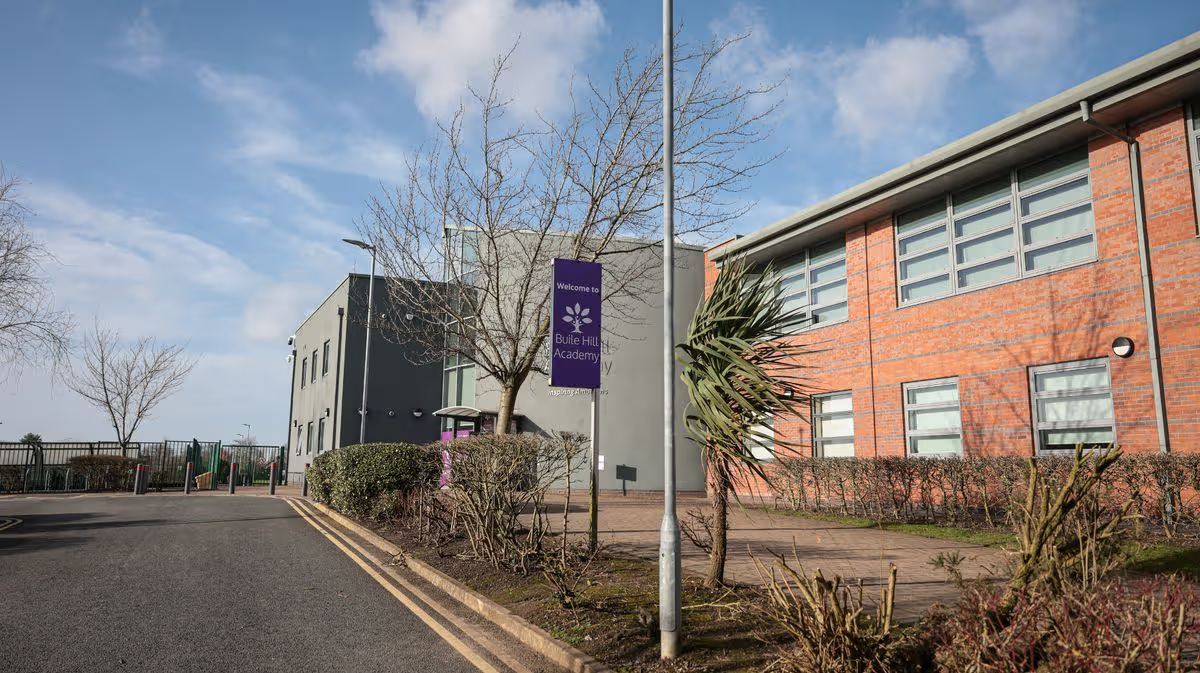
Buile Hill Academy in Salford had the highest rate in Greater Manchester, with more than one in every nine school sessions last year (11.7%) were lost due to unauthorised absences. That saw the school ranked ninth in the whole of England.

When contacted for a comment, the school said: “Buile Hill Academy has undergone rapid and significant improvement since joining Northern Education Trust.

“GCSE performance has risen dramatically: the proportion of students achieving grade 5+ in English and maths has surged from around 16% in 2024 to nearly 50% in 2025. Overall attainment has strengthened too, with English and maths 4+ increasing from 33% to 65.1% and 5+ rising from 16.8% to 49.4%.

Advertisement

“Attendance is also improving, and DfE data now places the academy among the ten most improved schools in the North West. Throughout this transformation, the academy has maintained a clear commitment to being both outcomes‑focused and child‑centred.”

Denton Community Academy in Tameside had the region’s next highest rate of unauthorised absences at 11.2%, ranking 14th in the country. That was followed by Dixons Brooklands Academy in Manchester at 10.8%, and Manchester Enterprise Academy also at 10.8, ranked at 21 and 22.

Advertisement

When contacted for comment, Denton Community Academy said: “Northern Education Trust Denton Community Academy has also undergone a rapid transformation since joining the trust.

“Their results have doubled in a short space of time, with the proportion of students achieving a grade 5 or above in English and maths rising from 26% to 52%.

“Attendance at Denton has also improved and overall absence has reduced. It is important to recognise that attendance is a national issue facing all schools, and describing this simply as ‘truancy’ does not reflect the full picture.

“As with all trust academies, Denton has clear and consistent systems in place, alongside strong pastoral support and works closely with families, to ensure students attend regularly and are well supported.

Advertisement

“These improvements were recognised in the school’s most recent Ofsted letter, which highlighted strengths in education, behaviour and the wider school culture.”

But it was Tameside that had the highest rate of unauthorised absences of any borough last year, with one in every 20 sessions (5.1%) lost to unauthorised absences. That puts Tameside just ahead of Salford (5.0%), Rochdale (4.8%) and Manchester (4.3%).

By contrast, just 1.5% of school sessions at state-funded secondaries in Trafford were lost to unauthorised absences last year. That’s the lowest rate in the county ahead of Wigan (3.2%), Bolton (3.4%) and Stockport (3.5%).

Advertisement

Fir Vale Academy in Sheffield was England’s most truant secondary school last year with 17.1% of sessions missed through truancy. The Co-op Academy in Leeds has the next highest rate in the country with 13.3%, followed by Saint Edmund Arrowsmith Catholic Academy in Knowsley with 13.1%.

That’s followed by The Basildon Upper Academy in Essex at 12.8%, Alsop High School in Liverpool at 12.7%, Leeds East Academy in Leeds at 12.5%, and Aylesbury UTC in Buckinghamshire at 12.3%.

Greater Manchester’s 10 highest rates

9. Buile Hill Academy, Salford: 11.7%

Advertisement

14. Denton Community Academy, Tameside: 11.2%

21. Dixons Brooklands Academy, Manchester: 10.8%

22. Manchester Enterprise Academy, Manchester: 10.8%

47. Werneth School, Stockport: 9.3%

Advertisement

81. The Albion Academy, Salford: 8.4%

83. Rayner Stephens High School, Tameside: 8.4%

124. Co-op Academy Manchester, Manchester: 7.8%

168. Cedar Mount Academy, Manchester: 7.1%

Advertisement

172. Hyde High School, Tameside: 7.1%

Source link

Continue Reading

NewsBeat

Amanda Holden says ‘can’t get Chris back’ as she exposes husband’s ruthless move

Published

on

Wales Online

Britain’s Got Talent star Amanda Holden has shared a candid revelation about her husband Chris Hughes’ antics, even though the story makes him ‘look really bad’

Radio presenter Amanda Holden has spoken out about wardrobe malfunctions with her Heart FM co-presenter JK, arguing that such embarrassing incidents can occur to both men and women, after JK suggested it was “more of a female thing”.

Advertisement

To illustrate her point, Amanda chose to recount a story involving her husband Chris Hughes.

She said: “This makes my husband look really bad, but it’s very funny. We once went to Center Parcs with our lovely friend.

“This is ages ago and our friend’s dad was bringing his kid out of the pool, he was holding the kid in his arms and Chris pulled his trunks down. He had nowhere to go except walk out of the pool with a baby in his arms.”

When asked whether the friend had sought revenge on Chris, 51, for his antics, Amanda, 55, replied: “No you can’t get Chris back, he does a double knot on his…he’s learnt.”

Advertisement

This is not the first occasion Amanda has opened up about her domestic life with her husband, whom she married in December 2008. Together, the couple have two daughters, Alexa and Hollie.

In a recent interview with The Times, Amanda offered a glimpse into her routine upon arriving home, and how her rescue dogs play a vital role in greeting her at the door.

She said: “I kick off my heels then lie on the floor so the dogs can lick my face. I have two rescues: Rudie, a 14-year-old Yorkshire terrier/Jack Russell cross, and Minnie, a one-year-old toy spaniel/shih tzu cross.”

Advertisement

While Amanda is fond of the animals she and Chris keep at home, she revealed that he has firm boundaries regarding where they are permitted to sleep.

She added: “I’m not fussy about where the animals are allowed but my husband is, so they all have to sleep downstairs.”

However, she admitted that when he is away, the rules shift somewhat. She added: “I love it if my husband’s away because then they’ll sleep on the bed with me.”

As well as rescue dogs, Amanda also has a rescue cat called Bolt from the Greek island of Corfu, whom she met whilst filming Amanda & Alan’s Greek Job with comedian Alan Carr.

Bolt joined another cat in her household called Muffy, and Amanda says the pair don’t get on very well.

Amanda made the admission on her Heart FM show earlier this year, sharing: “My garden is such a sun trap and I love it because all the animals go out and find their little spots in the sun apart from moody Muffy who is not over the fact we rescued a cat from Corfu. She hates it.

“She’s gone from being a beautiful serene princess, beautifully housetrained, never been to the vet, travels with us to the Cotswolds, she’s just gorgeous, to now weeing on our bed.

Advertisement

“She’s got no kidney infection, nothing. We know it’s spite, we’ve got a proper cat behaviourist coming out. We’ve had two brilliant ones coming out and unfortunately that didn’t work out but we’ve got another one next week.”

Source link

Continue Reading

NewsBeat

Reading shortcuts for children may be popular, but the research doesn’t back them up

Published

on

Reading shortcuts for children may be popular, but the research doesn’t back them up

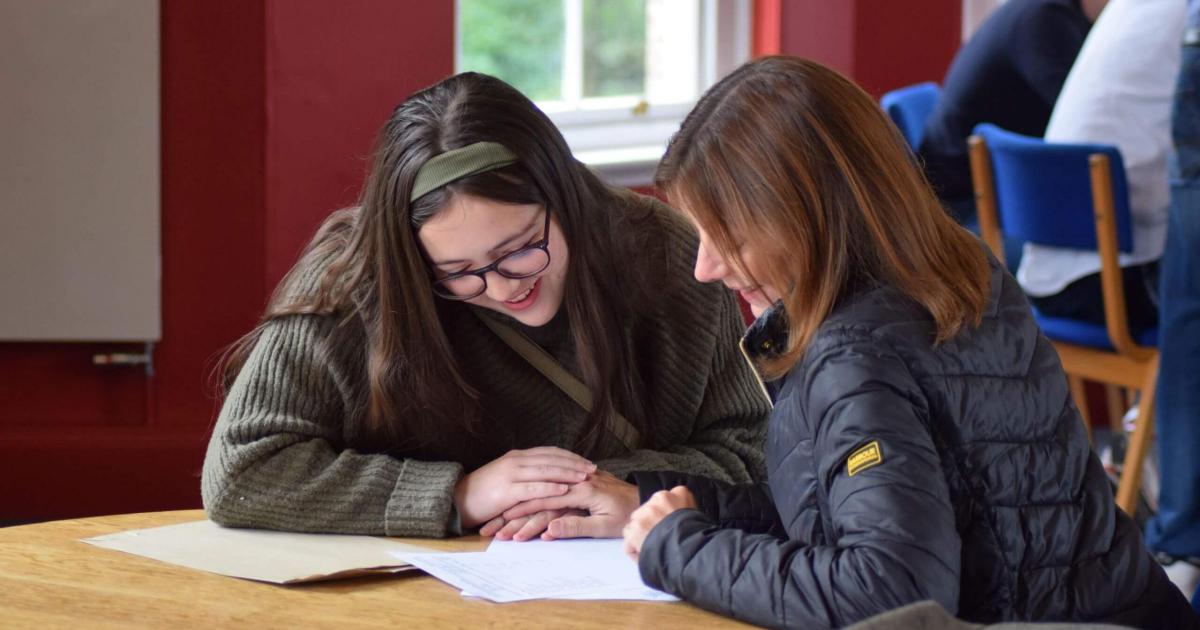
This year marks the UK’s National Year of Reading, which aims to rebuild good reading habits and enjoyment as child and adolescent reading declines year on year.

Reading enjoyment is at its lowest level for two decades, according to the National Literacy Trust’s annual survey. This matters because books expose children to a broader and richer vocabulary than everyday conversation, giving them access to words and language patterns they are less likely to hear.

Researchers do not point to a single cause for the decline, but studies suggest a mix of competing activities, weaker reading motivation and limited access to books that match children’s interests. This decline brings with it a sense of urgency, but also a risk because quick fixes often do not align with research.

We do have strong evidence about one crucial ingredient. Children need to learn how print represents speech sounds and practise decoding until word reading becomes accurate and fluent. That’s why phonics – the teaching of letter-sound relationships to help children sound out written words – is embedded in early literacy instruction. Phonics isn’t the whole of reading (comprehension is also key), but it is a necessary foundation. Importantly, it isn’t a shortcut: it takes time, practice and good teaching.

Advertisement

So where do shortcuts come in? Alongside the teaching methods we know help children to read, parents and teachers are often encouraged to try commercial products, online trends and social media campaigns that promise faster progress. But do they work? Here are five popular shortcuts and what the research suggests.

1. Bypassing phonics: an unhelpful avoidance strategy

When phonics isn’t working for a child, a common suggestion is an “alternative”: memorising whole words, relying on pictures or guessing from context cues (multi-cueing). However, when children are encouraged to bypass decoding words, they are not developing a reliable method for reading new words independently.

Reviews of intervention research indicate phonics training can improve decoding and word reading for poor readers. In other words, if a child is struggling with learning to read, the answer is usually more explicit teaching and guided practice in matching sounds to letters, not strategies that avoid it.

Advertisement

2. Coloured overlays: comfort is not the same as improved reading

Coloured overlays are transparent coloured sheets placed over a page and are often promoted as a way of reducing “visual stress” and making reading easier, especially for children with dyslexia. However, numerous studies and a systematic review have shown that the research does not support coloured lenses/overlays as a treatment for reading difficulty.

This doesn’t mean visual discomfort should be ignored. Headaches, glare sensitivity or unusual visual symptoms merit clinical attention. But it does mean overlays shouldn’t be treated as a primary intervention for decoding, fluency or comprehension, and there is no good evidence of meaningful improvements in reading outcomes for dyslexic children.

3. Turn on the subtitles: exposure isn’t the same as practice

Turning on subtitles while watching TV gives additional exposure to print that we might expect to improve reading. However, a recent study with year 2-3 children showed that six weeks of TV viewing with subtitles did not result in gains in reading fluency beyond the improvement seen in children generally.

Advertisement

One likely reason is that children who are not yet fluent readers often don’t look at the subtitles when they are watching TV enough for them to function as reading practice. Why would you look at the text at the bottom of the screen if you can’t make sense of it? But even when they do, “book language” includes rarer vocabulary and more complex grammar than everyday speech, so books still add something extra.

4. Specialist fonts: spacing can help, ‘dyslexia fonts’ less so

Dyslexia-friendly fonts are specially designed typefaces that aim to make letters easier to tell apart, often by changing their shape, weight or spacing. They are appealing because they’re easy to implement. But when studies measure reading objectively, specialist typefaces typically don’t deliver the improvements implied.

Research comparing specialist and standard typefaces (while controlling spacing between words and letters) tends to find little or no meaningful advantage for word or passage reading. Formatting such as larger print, more generous spacing and shorter line lengths can sometimes make text easier to navigate visually and therefore more comfortable to read.

But this should not be viewed as a substitute for instruction that builds decoding and fluency. And specialist typefaces have no impact on comprehension either – which, after all, is the ultimate goal of reading.

Advertisement

5. ‘Bionic’ reading: bold claims, weak evidence

Bionic reading (bolding the beginnings of words) has spread rapidly online with claims that bolding helps guide readers’ eyes to the relevant part of a word which “lets the brain centre complete the word”, which in turn increases reading speed. However, research doesn’t support these claims: bionic formatting does not reduce reading times compared with standard text in well-controlled experiments, nor does it improve comprehension. Some readers may prefer the format of bionic reading, but preference is not evidence of improved reading skill.

Reading for enjoyment is at its lowest for two decades.
Shutterstock

So what does work?

The key distinction is between changes that make reading feel easier and changes that make reading better. Adjustments such as font, spacing or subtitles may support access or enjoyment for some children, but they don’t replace the slow and necessary work of building fluent word reading.

For children struggling with decoding or reading accuracy, we have known what works best for many years now. Teach decoding explicitly, practise it in texts that match what’s been taught, build fluency with short frequent practice, and teach spelling alongside reading. And if progress is slow, increase the dose (more time, more guidance) rather than looking to alternative methods.

This is a particularly difficult message for parents of children with dyslexia or other reading difficulties, who desperately want to help their child with what they find hardest. But it is crucial that we don’t promote myths or interventions that are not backed up by evidence.

Advertisement

As a rule of thumb, if it seems too good to be true, it most likely is. Learning to read in English is really hard and it takes time. As much as we might wish otherwise, there’s no quick fix.

Source link

Advertisement
Continue Reading

Trending

Copyright © 2025