Ryedale Community & Leisure Centre (RCLC), in Norton, needs a caterer or chef to take over the running of its restaurant facilities.
Following the retirement of its current function suite operator, Julie Copeland, the committee is looking for someone new to take on the catering side of the RCLC.
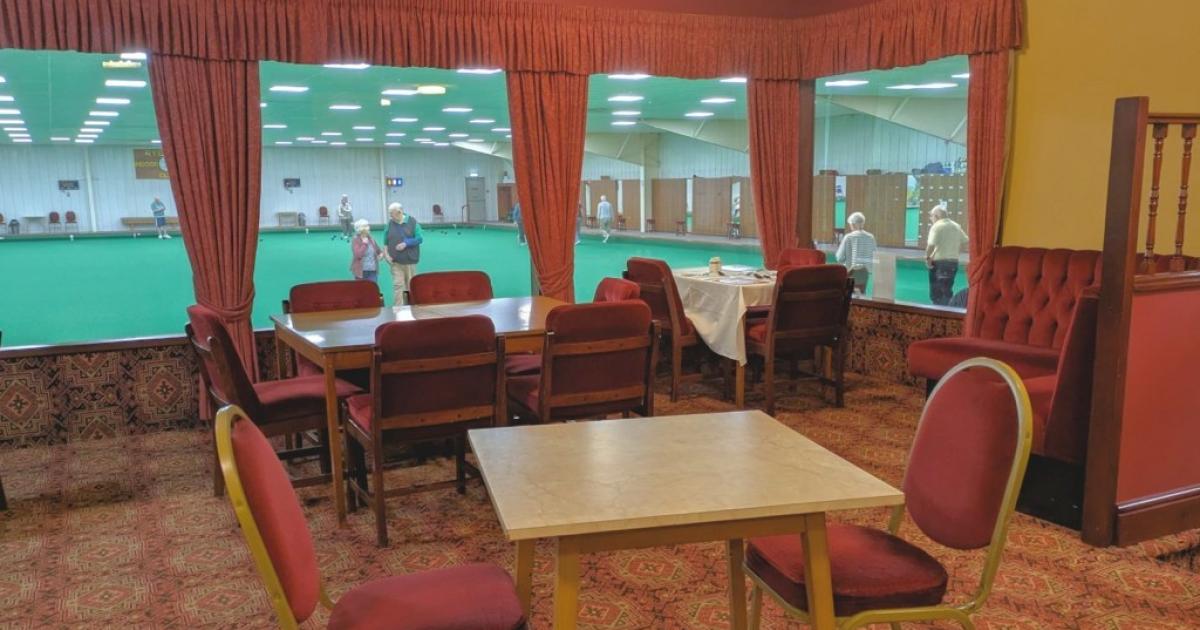
Based in Bowling Lane, Norton, RCLC is a charity, incorporating a five-lane bowling area with over 300 members, along with the thriving Brooklyn Nursery and dance school Dance Expression, that offers dance and exercise classes for all ages.
Advertisement
Chair of the RCLC a management committee, Ray King, said: “We want to thank Julie for the fine work managing the clubs catering facilities and we all wish her a very happy retirement.
“Moving forward we are now looking for an active and enthusiastic operator to run our function suite, which is made up of a 120 seat restaurant, a dance area and features good bar facilities along with easy parking in our large carpark.
“We firmly believe that this is an excellent business opportunity for the right person, be they a chef or caterer. The RCLC committee would also consider an Outside caterer should they be looking for premises to operate out of.
For initial enquiries and to arrange an informal chat, anyone interested in this exciting opportunity can email – RCLCadmin@gmail.com
Thomas Tuchel’s England have one last friendly ahead of next week’s Group L opener against Croatia
12:22, 10 Jun 2026Updated 20:08, 10 Jun 2026
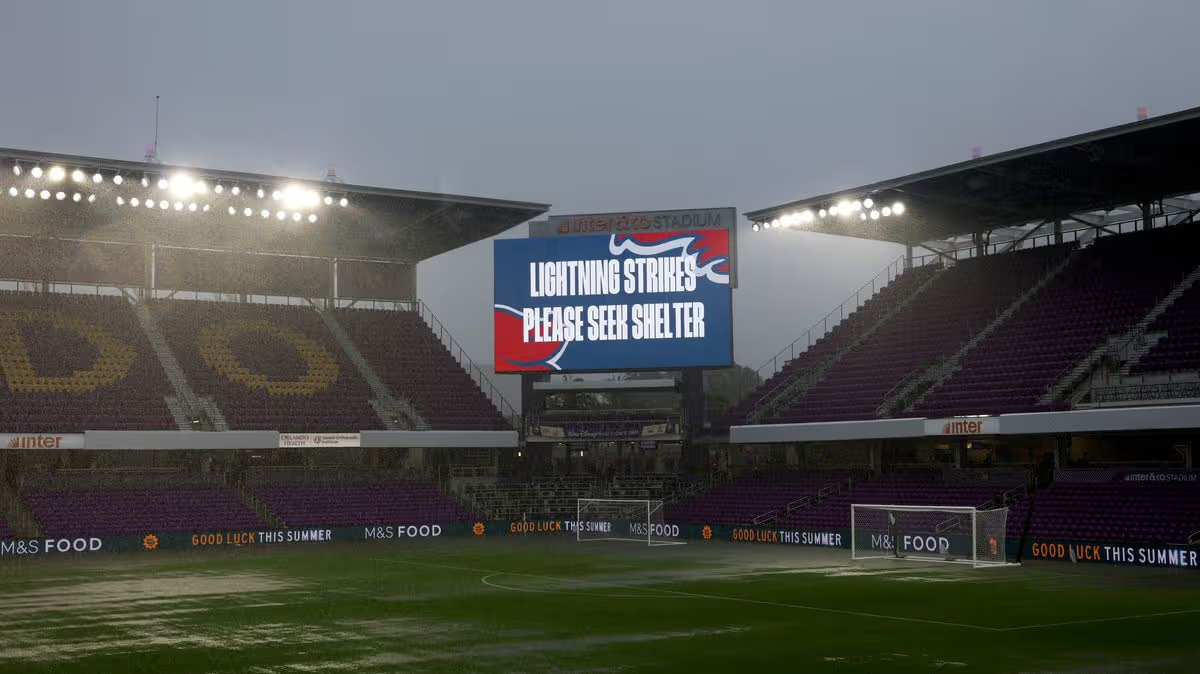
England’s match against Costa Rica has been delayed after lightning strikes and heavy rain in Orlando. Weather issues are set to cause major disruption to the tournament, with the warm-up game in Florida already falling victim.
Safety rules stipulate fans must be evacuated from stadiums and can only be allowed back in 30 minutes after the last recorded lightning strike in the area.
The game had been due to kick off at 9pm UK time but will now start later and could yet be abandoned if the weather persists. ITV afre reporting the new kick-off time will be 9.30pm but that is not yet official.
Advertisement
Here’s everything you need to know about watching England v Costa Rica.
What time is England v Costa Rica?
England v Costa Rica kicks was due to kick off at 9pm BST on Wednesday, June 10 but that will now not happen. ITV are reporting the match is expected to kick off at 9.30pm instead, although that has not been officially confirmed
The match will be played at Ineter&Co Stadium in Orlando, Florida.
Is England v Costa Ricaon TV?
Yes, the game will be shown live and free-to-air in the UK.
Advertisement
The match is being broadcast on ITV1, with coverage beginning at 8pm.
England v Costa Ricalive stream
Viewers can also watch the match live on ITVx.
All you need is a login to watch on mobile devices, tablets, smart TVs and desktop computers.
Quotes corner
England manager Thomas Tuchel: “We can’t be one of the favourites as we haven’t won it for so long.
Advertisement
“There are proven winners within the tournament. These are the favourites.
“We can compete for the trophy and dream big. We know what it takes.
“Our responsibility is on the effort – this is where the focus is – we see ourselves as competitors and challengers.
“We want to go all the way. I don’t think we’re heavy favourites.
Advertisement
“But we want to win. We know what it takes. It takes a calm mind and focus on our steps.
“If we want to reach the top of the mountain we go step-by-step otherwise we will get distracted.
“I have belief but it comes with responsibility, hard work, discipline and deal with setbacks. We dare to dream.”
You could win a £2m jackpot tonight as the National Lottery Lotto draw is made for the first time since a major change to the format was announced.
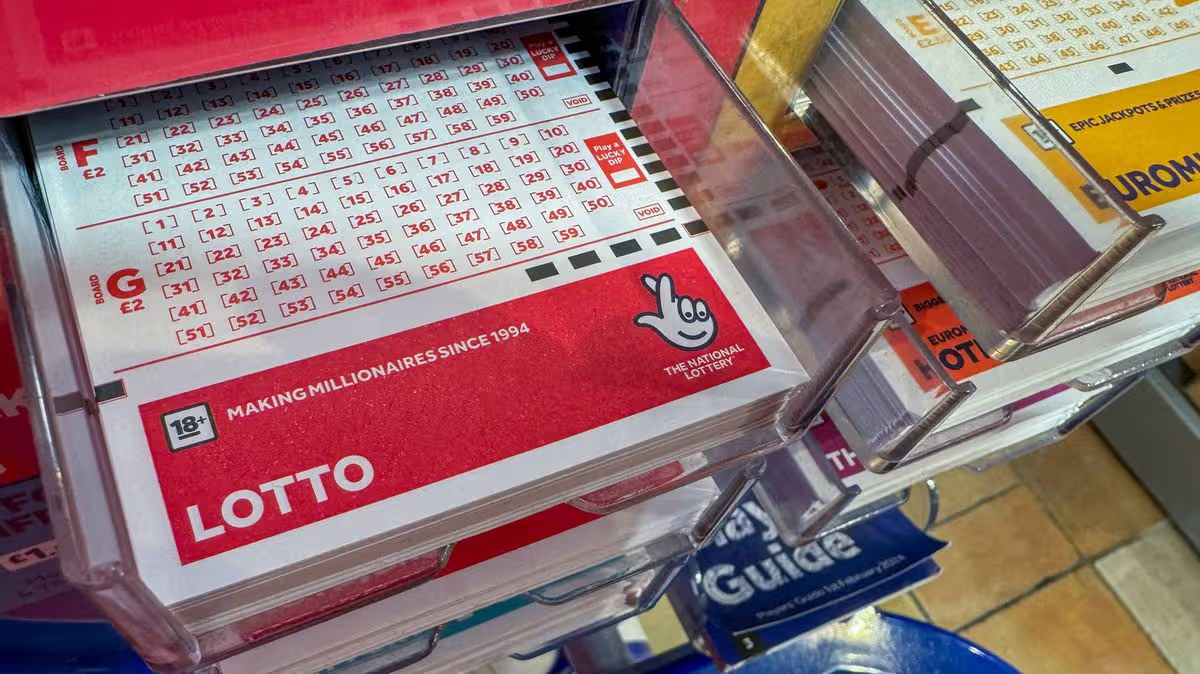
From tonight (Wednesday, June 10) players will have two chances to win from a single line of numbers. Each line will be entered into two draws, with two sets of six main balls and a bonus ball drawn using two separate machines.
A player could win in round one, round two, or both rounds, from a single Lotto line. The price will stay the same at £2 a line, and there will still be 59 balls. The games will also still take place on Wednesdays and Saturdays, starting from tonight.
Advertisement
National Lottery operator Allwyn says the chance of winning any prize will improve from one in 9.3 to one in 4.9, while the number of Lotto millionaires is expected to double from around 140 a year to around 345.
A life-changing jackpot of £5m could be won by one lucky person in tonight’s National Lottery Lotto draw.
It costs £2 per play. As well as being in with a chance of winning serious cash, playing the Lotto also helps raise around £30m each week for good causes across the UK.
Since its first draw on November 19, 1994, the UK National Lottery has distributed funds far beyond its winners. Around half of all ticket sales go towards prizes, while 28% supports good causes. The remainder is split between government duty (12%), retailers (5%), and the operator (5%).
Advertisement
The Thunderball will also be drawn tonight, offering a top prize of £500,000 – another shot at a big payout. We’ll have all the results as they come in below.
Players will have until 7.30pm to enter. Tickets can be purchased via the National Lottery website or at retailers across the UK.
The Lotto draw will take place at around 8pm, with the Thunderball results being drawn at around 8.15pm.
Follow our blog below for the results as they come in.
The nutrient could play a role in supporting cognitive health in later life
Robert Rowlands Deputy editor, money and lifestyle, content hub and Neil Shaw
20:00, 10 Jun 2026
Consuming vitamin C could enhance brain function in elderly people, according to fresh research. Blood levels of the nutrient appear to be connected with brain connectivity amongst older adults, the study suggests. The research, which examined more than 2,000 Japanese individuals aged over 64, discovered that participants with reduced vitamin C levels in their blood plasma typically showed a smaller volume of grey matter in their brains.
They also displayed reduced connectivity across a group of brain regions called the default mode network (DMN), the study published in the journal PLOS One revealed. Scientists say their results indicate that maintaining optimal vitamin C levels may support brain health. Vitamin C, also referred to as ascorbic acid, is a vital nutrient that humans cannot manufacture themselves.
Research demonstrates it plays a key role in tissue building and repair, maintaining a robust immune system, and functioning as an antioxidant to shield cells from free radical damage. However, since the body cannot store it, daily consumption is necessary. Food sources include citrus fruits, such as oranges and lemons, bell peppers and chilli peppers, strawberries, broccoli, Brussels sprouts and tomatoes.
Advertisement
Earlier studies have identified connections between diets richer in vitamin C and reduced risk of cognitive decline in elderly people. Yet few investigations had examined blood plasma vitamin C levels directly and any possible links with brain structure and connectivity within neural networks. In the new study, researchers at Hirosaki University in Japan examined MRI scans and plasma vitamin C levels from 2,044 Japanese adults aged over 64. They measured each participant’s grey and white brain matter volume, taking into account individual variations in total brain size between subjects.
The team also assessed connectivity within the default mode network, which plays a role in various cognitive functions, including attention and autobiographical memory. After controlling for other factors that might influence brain structure and connectivity – such as age and education levels – the scientists discovered that participants with lower plasma vitamin C levels generally had reduced grey matter volume, alongside decreased connectivity within the default mode network, reports Gloucestershire Live.
Study co-author Dr Haruka Nagaya said: “These findings suggest the possibility that optimal levels of vitamin C in blood plasma could potentially support cognitive function and counteract cognitive decline. However, the findings do not confirm any such cause-effect relationship between vitamin C levels and brain health, and further research is needed to explore the biological mechanisms behind the observed statistical associations.”
Researchers suggested that future studies could expand on these results by taking repeated plasma vitamin C measurements over time, factoring in additional lifestyle and nutritional influences, and incorporating participants from diverse ethnic and socio-economic backgrounds. Co-author Dr Tomohiro Shintaku said: “Our study demonstrates that higher plasma vitamin C levels are associated with better preserved structural connectivity of the default mode network, a key brain network involved in cognitive function.
“This finding generates the exciting hypothesis that a diet rich in vitamin C might play a supportive role in maintaining brain health and mitigating age-related cognitive decline in older adults.”
He added: “What I found most fascinating about this research is that we were able to detect these subtle but significant associations between a single nutritional factor and large-scale brain networks by utilising a robust, community-based cohort of over 2,000 older adults.
“It truly highlights the potential impact of our everyday dietary habits on our brain structures.”
UK-based gambling reform campaigner Matt Zarb-Cousin punters betting on the World Cup will be “cross-promoted more addictive casino content”. And he pointed to a National Centre for Social Research report showing that, in the UK, 79% of gambling company winnings came from the top 10% of spenders, those who wagered at least £5,639 in a year.
The venue has acted after a ‘Free Rio’ campaign was backed by thousands
A new luxury restaurant and shisha bar has agreed to hand a parrot over to a wildlife group after an outcry over the bird being kept in a glass box inside the venue.
Advertisement
Gardens, situated on the riverbank off Chapel Street on the Salford side of the River Irwell near Manchester city centre, describes itself as a ‘luxury dining and shisha experience’ and the ‘new fine dining Mediterranean terrace everyone is talking about.’
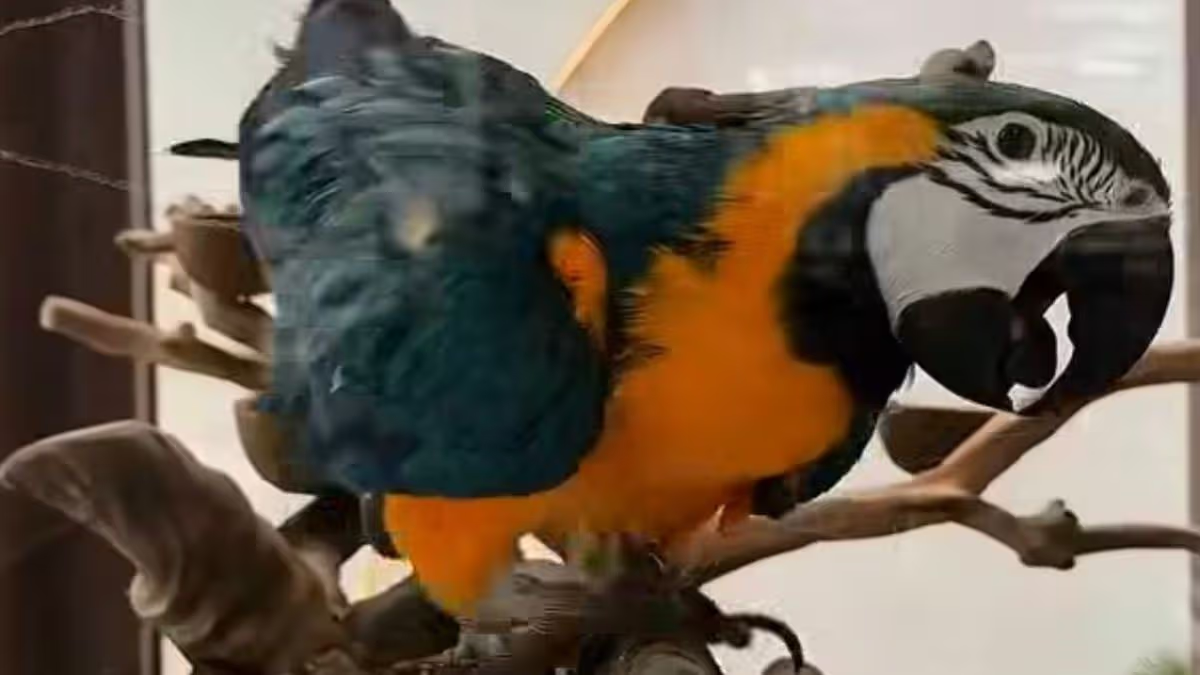
However just a week after announcing their opening, they became the subject of a massive online backlash. Video tours of the venue shared on their social media channels showed a live parrott being kept in a glass box in the middle of the restaurant.
Click here to get the biggest stories straight to your inbox in our Daily Newsletter
That prompted a wave of harsh online criticism with hundreds of comments slamming them for the move, and animal rights activists claiming it was ‘completely inappropriate.’
Advertisement
An earlier video before the venue’s opening showed the parrot, a blue-and-yellow macaw called Rio, in a portable cage before it was repeatedly seen in the glass box in the venue in two subsequent videos posted on Instagram.
Vegan food blogger Paul Jennings was one of the first people to raise concerns, and contacted the not-for-profit campaign group Protect the Wild. They launched a petition urging the venue to ‘Free Rio’ which more than 10,000 people signed.
The venue now says it has ‘heard the concerns of the people of Manchester’ and made the decision to hand Rio over for free to the group in order than he can be rehomed in a large aviary or sanctuary.
Advertisement
A member of their management told the Manchester Evening News that the macaw, which they said cost £3,500 to buy, was chosen by the co-owner’s daughter and his business partner’s son and that they felt it complimented the ‘natural environment’ they had created in the venue.
The girl came in each morning before opening to feed it and it was also well fed by the venue’s chefs, he said, as he insisted the bird’s welfare ‘was a priority.’
He said they then spent £5,000 on the glass tank, which has a filtration and ventilation system, and that the branches inside it alone cost £950.
Advertisement
He said the RSPCA visited the venue and raised no concerns, adding they had said it was ‘cared for better than 99 per cent of parrots in the UK.’
The organisation confirmed to the M.E.N that they visited the premises after receiving complaints but said they were unable to comment on the specifics of the case.
The member of management said he believed they ‘adhered to standards’ but said they now understood there was a strong body of opinion that macaws belong in the wild rather kept as pets and that they believed letting him go would be ‘beneficial’ for all concerned.
Advertisement
Charlotte Smith, from Protect the Wild, said: “Today, Rio will be surrendered, and we could not be more relieved. We want to acknowledge The Gardens lounge for engaging with us and making the decision to surrender Rio.
“We know it was not easy, and we respect that ultimately, they chose Rio’s welfare above all else. That matters, they did the right thing and it should be recognised.
“To every single person who signed, shared, and spoke up, Thank you, you did this! 10,000 people in under 24 hours showed Manchester that the public will not stay silent when animals need help.”
Stephen Smith, from the Manchester Animal Rights Network said macaws were ‘highly intelligents birds and should not be kept in shisha bars and restaurants.’
“”They are vey easily distressed and lots of vibration from the music and being around so many people is likely to cause stress.” he said.
In statements issued before the venue confirmed their intention to release him, an RSCPA spokesperson said: “We are aware of this and have visited the premises. Unfortunately we are unable to discuss specific complaints and what action may have been taken.
“We understand that is frustrating for animal lovers but releasing information could prejudice a future prosecution or lead to us being fined.
Advertisement
“We’re very grateful to people who report concerns about animals to us and we would like to reassure people they will always be looked into.
“A lot of the time issues will be dealt with by advice and education and it is not always appropriate to publicise this information for legal reasons.”
Whilst a Salford Council spokesperson said: “The Council is aware of public concerns that have been raised regarding the welfare of the bird.
Advertisement
“Salford City Council officers will be visiting the premises. At this stage, we are unable to comment on any actions that may result from the visit. Anyone who may have any animal welfare concerns, please report them to the RSPCA in the first instance.”
Click here to get the biggest stories straight to your inbox in our Daily Newsletter
He’s been hit severley in the pocket after a prosecution by Carmarthenshire Council
A taxi driver has been ordered to pay more than £2,000 after he transported children to school on five separate occasions despite not having the correct licence to do so.
Advertisement
David Rhydian Thomas, of Windy Corner Coaches in Carmarthenshire, took pupils to school in a licensed private hire vehicle between October 1 and October 8 last year. However, he did not hold the required Hackney Carriage/Private Hire Dual Driver’s Licence.
Thomas had previously received a formal warning in October 2024 about driving a licensed vehicle whilst unlicensed. Despite this, further offences were committed. Stay in the know by making sure you’re receiving our daily newsletter
After pleading guilty by post, Thomas was fined £666, ordered to pay a victim surcharge of £266, and made to pay costs of £1,762 – a total outlay of £2,694.
Carmarthenshire Council’s cabinet member with responsibility for enforcement, Cllr Aled Vaughan Owen, said: “The safety of children and the wider public is our absolute priority.
Advertisement
“Licensed drivers are required to meet strict standards designed to protect passengers, particularly when transporting school children.
“This case sends a clear message that we take breaches of licensing regulations very seriously and will not hesitate to take enforcement action where necessary.”
Get daily breaking news updates on your phone by joining our WhatsApp community here. We occasionally treat members to special offers, promotions and ads from us and our partners. See our Privacy Notice.
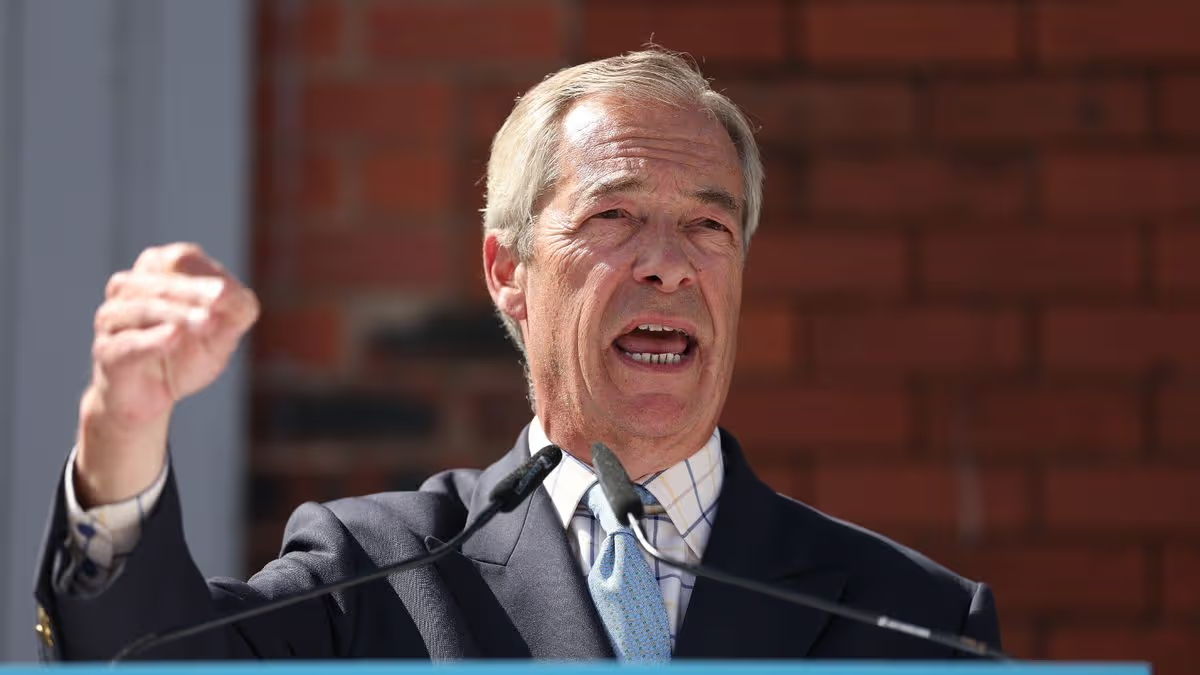
As the Makerfield campaign enters its final stretch, Reform leader Nigel Farage was asked about whether Restore could be a problem for his party
Reform leader Nigel Farage has taken a swipe at fellow right-wing party Restore over speculation the rival could cause his party to lose to Andy Burnham in the upcoming Makerfield by-election. Mr Farage said Restore’s support was overblown but ‘has the potential to be unhelpful’.
Advertisement
The hotly-contested by election is entering its final stretch as voters prepare to go to the polls on June 18. 14 candidates are in the running but polls suggest the race will be between Labour’s Mr Burnham or Reform’s Rob Kenyon.
In his fourth visit to the constituency, Reform’s leader Nigel Farage said the party was gaining momentum, telling reporters and local supporters: “There is no doubt in my mind this is close. There’s no doubt in anybody’s mind it is a two horse race.”
Despite the criticism over his past social media comments, Mr Kenyon told the Manchester Evening News: “I don’t feel the pressure. Pressure is running a business and worrying about the work in to feed your family and keep a roof over your head.
Advertisement
“Pressure isn’t posting leaflets through doors and having the press say nasty things about you. That’s not pressure. That’s just nastiness.”
He argued it had not clouded Reform’s message in the campaign, adding: “The voters aren’t bringing it up on the doorstep. It’s just the press who is bringing it up.
“When we are knocking on doors, the only time it’s ever been brought up is when people are saying ‘take no notice, they are just trying to smear you’. If they are going to attack you personally, it means they can’t attack your policies.”
At an event earlier in the day Mr Farage announced a new Reform policy to increase the threshold small businesses pay VAT to £150,000. He said this would cost £2bn but would be covered by an increase in productivity and boost small businesses which he said was the backbone of the economy.
Advertisement
Taking questions from the press, the party leader also hit back at the continued criticism over Mr Kenyon’s past comments. Responding to the Manchester Evening News, Mr Farage said: “I tell you what they are the kind of comments you will hear in every pub in the country every evening.
“We should be unapologetic that Rob is an ordinary bloke who’s carved quite a career for himself, had the guts to set up a business, served as an army reservist, is a patriot, likes his rugby, likes the odd pint, and said a few laddish things on social media 10 years ago.
“Do you know what I’d say to that? I’d say so what? What about all those politicians at local and national level in the north of England that covered up the grooming gang scandal at exactly the same time? Which of those is more serious?”
Join our new Makerfield by-election WhatsApp community by clicking this link for the latest news. We also treat our community members to special offers, promotions, and adverts from us and our partners. If you don’t like our community, you can check out any time you like. If you’re curious, you can read our Privacy Notice.
Advertisement
One possible dark horse that could ruin Reform’s chances of winning is whether Restore’s candidate Rebecca Shepherd could take away support. At the event, Mr Farage suggested the Reform campaign was being pushed on social media by X owner Elon Musk but in the short term, Restore ‘has the potential to be unhelpful’ but he does not ‘believe it will last’.
Speaking to the Manchester Evening News afterwards, Mr Farage said Restore’s support was overblown as ‘it’s a great media story’, adding: “Of all the people I have met this morning, maybe one who said I am not going to vote Labour or I haven’t decided yet. He didn’t mention them.
“They’ve got some votes out there but I don’t believe it’s particularly huge because I think the logic of if you want to beat Labour, you have to vote for us is getting through.”
Despite Reform winning 24 out of 25 seats in the Wigan local elections on May 7, Mr Farage said they faced a challenge as ‘the Labour Party machine is still quite big in this part of England’ and Mr Burnham’s position as Mayor of Greater Manchester.
Advertisement
He said: “Our vote from May 7 is still rock solid strong I have no doubt about that at all. The question is do people who declined to vote on that day or voted Labour in 2024 but are disappointed with them, do they go out to vote in big numbers or not? That’s the big question around this whole election.”
Defending Mr Kenyon, Mr Farage said: “My message is very simple. It’s this candidate is not using this as a stepping stone, this candidate is a local lad in every way who represented trades and skills, who represents business, who represents family.
“He’s been in the army and he’s a patriotic bloke. Wouldn’t it be nice for once to have somebody in Westminster who actually spoke and thought the way you did?”
New figures have found an increasing number of Scottish adults are experiencing poor mental health.
Nick Forbes and Eilidh Farquhar Trainee Trends, Showbiz and Lifestyle Writer
18:53, 10 Jun 2026
New figures suggest nearly a quarter of Scottish adults are experiencing poor mental health. In a staggering increase on previous years, experts say this rise in mental health worries is due to rising living costs and pressure on public services “taking a toll”.
Over recent years, there has been more talk about mental health and how it can impact an individual’s health and wellbeing in comparison to those around them. However, these stark figures highlight problems in society are having a direct impact across the country.
Data from The Mental Health Foundation (MHF) shows in 2024, 1.1million Scottish adults were experiencing poor mental health, which sits at 24.6 per cent of people. This number is said to approximately fill Hampden Park 22 times.
Advertisement
In comparison to previous figures, this report is around 425,000 more than in 2009, which recorded 16.6 per cent of Scots were suffering – which is about 720,000 people.
The MHF has said against a backdrop of austerity, the global coronavirus pandemic, and the ongoing cost-of-living crisis, the most “significant driver” of this poor mental health increase is financial insecurity. Additionally, according to the charity, those experiencing economic and social inequality have been hit the hardest.
Dr Calum MacLeod, policy and public affairs manager at the MHF, said: “The past 15 years have been incredibly challenging for many people. Rising living costs, insecure work and pressure on public services have all taken a toll on people’s wellbeing.
Advertisement
“Today, the number of people experiencing poor mental health in Scotland could fill Hampden 22 times over. We must take urgent action to address the root causes of this public mental health emergency, or that number will continue to grow.”
If people do not receive help, he warned: “Otherwise, more people, families and communities will be devastated by a preventable condition.”
The report found concern around money was a significant factor in the increasing rate of poor mental health, with nearly half of Scottish adults (47%) feeling financially insecure.
Advertisement
A “widening gap” was also shown between communities, with 31 per cent of those in deprived areas stating poor mental health in comparison to 17 per cent of those in the least deprived parts of the country.
While Scotland is recognised as the only UK nation to have decreased childhood poverty rates, as well as having increases in the mental health budget and community initiatives, the charity warns other commitments have been missed.
For example, the 2021 pledge to ensure 10 per cent of NHS spend is on mental health, with one per cent going to service for children and young adults.
Dr MacLeod added: “While our findings are deeply worrying, these trends can and must be reversed. The importance of preventing poor mental health is now widely recognised, with recent Scottish Government strategies giving it greater prominence.
Advertisement
“However, investment and implementation have, so far, fallen short of what is needed. There is broad agreement on the need for a more cross-Government approach, but delivering this in practice remains elusive.”
In a bid to decrease the poor mental health figures in Scotland, the MHF has made a number of recommendations to the Scottish Government, such as creating a new £20million fund for improving mental health and calling for a legal duty to embed preventative action in budgets.
It said the decision was made after “careful consideration” with the BBC, the show’s writer Russell T Davies and production company Bad Wolf all coming to an agreement that means fans won’t see a festive special this year.
Davies told fans on social media that there is now “no need for it”, when discussing the Christmas episode.
BBC confirms Doctor Who’s Christmas special has been cancelled for 2026
The BBC explained: “As part of securing the next phase of the show for future generations, and in line with the BBC’s Charter and Agreement requirements, the BBC will put Doctor Who out to competitive tender this year.
“Doctor Who remains an important part of the BBC and this tender underpins the BBC’s continued commitment to Doctor Who ensuring audiences will enjoy the show for years to come.
Advertisement
“After careful consideration, the BBC, Russell T Davies and Bad Wolf have collectively decided not to go ahead with the previously announced Doctor Who Christmas episode.
“This decision was not taken lightly, and we know it will be disappointing for fans, but in order to set the show up for future series, it was decided that rather than bridge the gap with a one off special, we are choosing to push forward to invest in the long-term future of the show which ensures that when the TARDIS lands once more, it does so in all its glory.”
Sharing the announcement on Instagram, Russel T. Davies confirmed he hadn’t written a script for the Christmas special.
All 15 Doctors in order
He said: “And so GOODBYE from me to Doctor Who but HELLO to a big new future for the show, as the BBC announces it’s putting the show out to tender.
Advertisement
“As a result, there won’t be a Christmas Special – we only cooked that up to guarantee a future when no one knew what would happen, but now we do know, there’s no need for it.
“You’ll have to wait a bit longer for new Doctor Who… but you’ll be waiting for MORE Doctor Who than a one-off.
“So it’s worth it! For the record: there was no script, I never wrote it, and no actor was ever approached to play the next Doctor.
Recommended reading:
Advertisement
“You may disagree; fine, sit in that chair and wait to be proved right. You’ll wait a lonnng time 🪑
“Now I’m as excited as anyone to see what comes next! Will they keep the theme tune?
“Will they lose the blue box? Will they bring back the Drahvin?!
“It’s all up for grabs, which is so Doctor Who, exciting and unpredictable and new!
Advertisement
“Here comes the future, vworp vworp 🌪️ @bbcdoctorwho ♥️”.
Do you think there should be a Doctor Who Christmas special? Tell us your thoughts in the comments below.
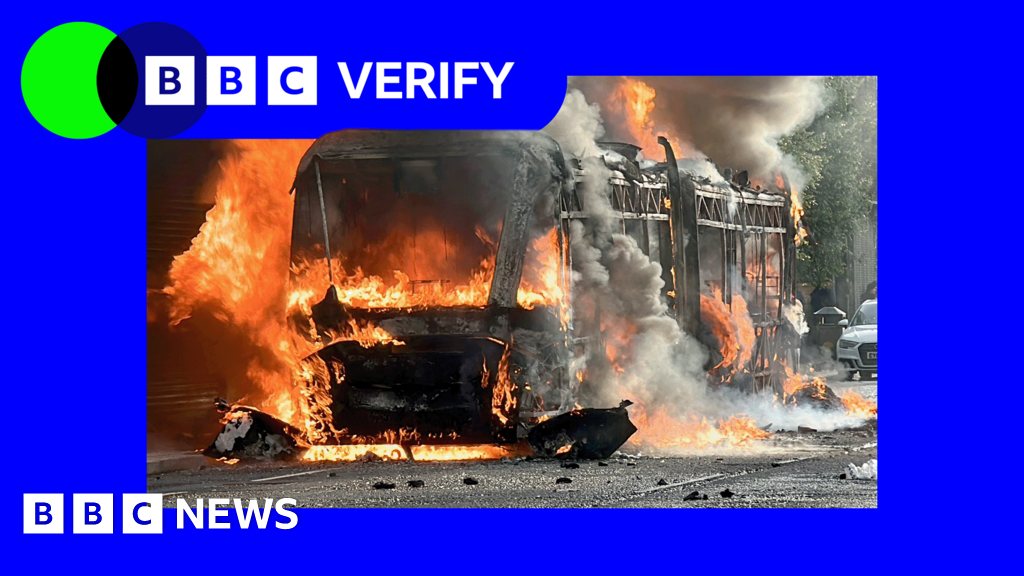
Violence and disorder broke out in the streets of Belfast after a knife attack on Monday night.
The victim, Stephen Ogilvy, lost his left eye in the attack, Belfast Magistrates’ Court heard. The suspected attacker, Hadi Alodid, has been remanded in custody for four weeks after being charged with attempted murder, threats to kill an NHS radiographer and possession of a knife.
BBC Verify has mapped out some of the violent disorder that took place across the city, and elsewhere in Northern Ireland. Videos show masked men walking down the streets, shops and homes attacked and bins and buses set on fire. Merlyn Thomas reports.
Produced by Aisha Sembhi. Graphics by Mark Edwards and Leo Scutt-Richter. Additional reporting by Thomas Copeland.













































You must be logged in to post a comment Login