


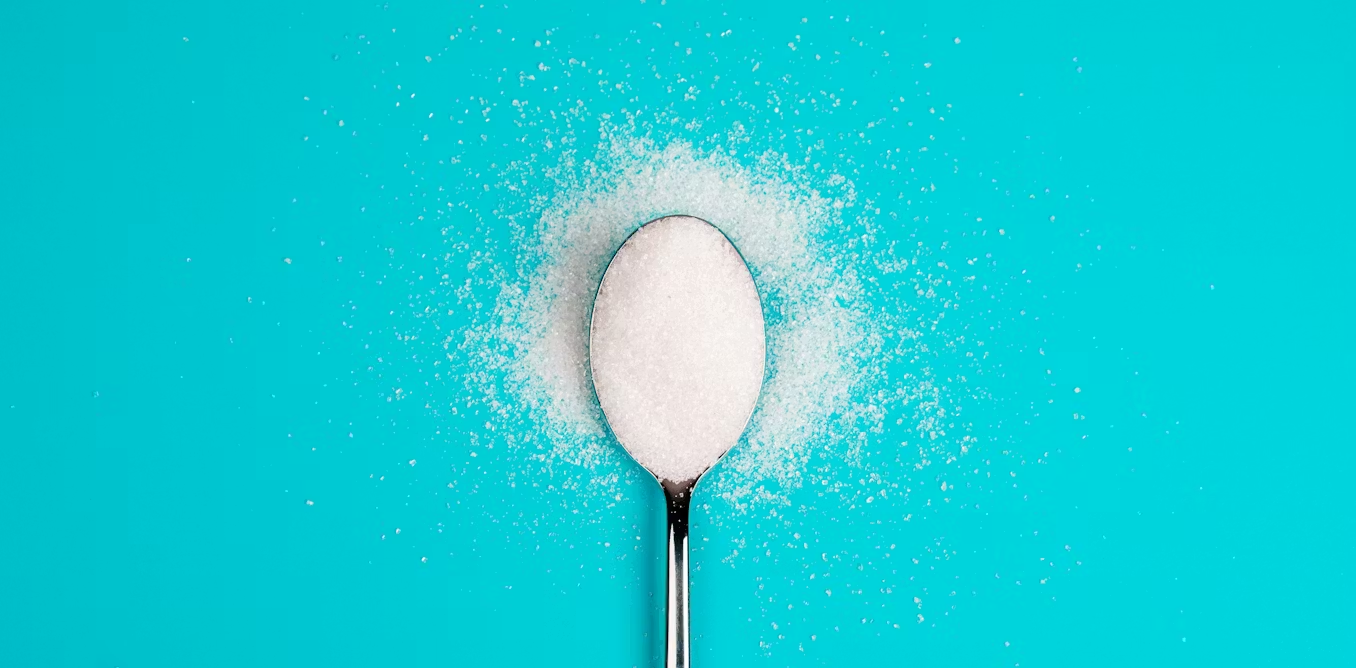
Designing a series of sweetener trials seemed straightforward enough to us as behavioural scientists who specialise in human appetite and obesity. The plan was simple: replace the added sugar in a range of foods with different classes of alternative sweeteners, holding everything else constant.
We would start with a simple biscuit with a fruit filling and work from there. In each case we would measure the effects on participants’ eating choices, metabolism and health outcomes.
We put this to our collaborator, Alain Le Bail, a professor and senior food scientist in France with more than 30 years’ experience. He looked as if we’d asked him to build a bridge using marshmallows.
Sugar, he said, isn’t just sweet. It provides structure, texture, browning, moisture and mouthfeel. Removing it doesn’t just alter the biscuit; it breaks the rules that make it a biscuit in the first place.
If even we researchers on appetite and nutrition need to be educated on these complexities, what hope does the average consumer have?
Welcome to our new series exploring the cutting edge of food science. From the latest advances in meat alternatives to weird and wonderful new additives, science is transforming what we eat like never before. This series will bring you up to speed on all the latest and give you plenty of, er, food for thought.
Sweeteners, as we’ll call the broad category of sugar alternatives and sweetness enhancers, were once fairly niche. They were used to lighten a soft drink or sweeten a low-calorie yoghurt, but not much more besides. Now, they are on almost every shelf of the supermarket.
They go to the heart of global debates on obesity, diabetes, child nutrition and ultra-processed foods. Whether it’s politicians deciding on sugar taxes, doctors helping diabetic patients manage their diets, or parents wrestling with product labels, sweeteners are unavoidable.
They attract endlessly conflicting headlines. While we try to reconcile our very human desire for a healthy win-win with our deep cultural unease over “artificial” additives, sweeteners are alternately framed as helpful diet liberators or harmful hormone disruptors. Far more rarely are they seen as ingredients with a specific, measurable function. It doesn’t help that the science in this area is still surprisingly thin on the ground.
Understanding what sweeteners can (and can’t) do for us requires looking beyond the binary of “good” or “bad” to more grounded questions. What are they replacing? In what context? For whom? According to what desired outcomes?
And beyond all this is the question of where sweeteners are heading. Will new technologies like artificial intelligence be transformational? Will we ever make the perfect sugar alternative? Look down the decades and you realise we’ve been trying for a very long time.
A brief history of sweeteners
For over a century, sweeteners have promised the same taste as sugar without the calories or health risks – guilt-free pleasure, in other words. But every breakthrough has been followed by a backlash, leaving a trail of safety scares and shifting public attitudes.
The modern story of sweeteners begins in the late 19th century with the accidental discovery of saccharin at Johns Hopkins University in Baltimore, USA. Derived from coal tar, saccharin is 300-500 times sweeter than sugar.

Wikimedia
It quickly found favour among diabetic patients and later, calorie-conscious consumers. Critics questioned its taste, safety and “unnatural” origins, yet its presence grew – particularly amid sugar shortages during the world wars.
In the decades that followed, saccharin became widely used in diet drinks and tabletop products, before safety scares and the arrival of newer sweeteners reduced its popularity.

The Insights section is committed to high-quality longform journalism. Our editors work with academics from many different backgrounds who are tackling a wide range of societal and scientific challenges.
In the early 20th century, other synthetic compounds such as dulcin and P-4000 also emerged, but safety concerns led to their withdrawal a few years later. More prominent was cyclamate, discovered in 1937, which gained popularity in the post-war years, especially in the US.
Marketed as a diet aid and used widely in soft drinks, cyclamate was abruptly banned in 1969 by the US Food and Drug Administration (FDA) following concerns about bladder cancer. Though the evidence was contested – rats in one pivotal study were consuming the equivalent of 550 cans of diet soft drink each day – the US ban was never lifted, leaving a lasting scar on public trust in sweeteners.

Retro AdArchives
The next turning point came with FDA approval of aspartame in soft drinks in 1983, ushering in what might be called the Diet Coke era. It was also approved as a general purpose sweetener in 1996.
Compared to saccharin, aspartame tasted more sugar-like: in an early comparative study of soft drinks, those sweetened with aspartame were found to be statistically equivalent to sugar (sucrose) on every descriptive scale. Drinks sweetened by saccharin, with its bitter/metallic aftertaste, were among the most different from sucrose.
Aspartame does still taste somewhat different to sugar, but duly became the sweetener of choice for weight-conscious consumers and the food industry, especially in the US and UK. It has drawn negative comparisons to the alternatives, however. In one Canadian study from 2021, 52% of respondents rated aspartame as less healthy than table sugar, while more favourably judging other sweeteners they saw as more “natural”.
Aspartame’s chemical origins admittedly lead to relatively minor drawbacks. It contains the amino acid phenylalanine, which harms individuals with the rare metabolic disorder phenylketonuria. Products containing aspartame must therefore warn about this risk in many jurisdictions, including the US and UK.
Journalists have also amplified speculative risks around aspartame, such as brain cancer, albeit without robust evidence. Regulators including the FDA and the European Food Safety Authority (EFSA) continue to regard aspartame as safe at current permitted intake levels.
Yet consumer scepticism has persisted – and with commercial consequences. In 2015 PepsiCo reformulated Diet Pepsi in the US as “aspartame-free”. Yet the ingredient was not displaced more broadly, and Pepsi later reintroduced aspartame after the reformulated product performed poorly.
The next wave of sweeteners focused on improved sensory profile and functionality. Acesulfame-K (ace-K) and sucralose were adopted in the 1990s and 2000s because they generally tolerate heat and storage better. For example you can’t use aspartame for baking or making sauces because it breaks down at high temperatures. It’s also not useful for items with long shelf lives including certain condiments, dried mixes and confectionery because it can lose sweetness over time.
However, ace-K and sucralose tend only to work in combinations. Ace-K, for example, boosts upfront sweetness, but has a bitter aftertaste that other sweeteners can help “round out”.
In general, uptake of “artificial” sweeteners has varied. They appear more accepted in the UK and Germany, and less, for example, in Portugal and Romania. Influencing factors include regulatory approvals, cultural preferences and health attitudes.
In the 2010s, consumers came to favour natural sweeteners with more botanical origins. The first to become a big deal was stevia, a sweetener extracted from the leaves of Latin America’s Stevia rebaundiana plant (below). It was followed by monk fruit, from the Siraitia grosvenorii vine of southern China.

Photoongraphy
These too come with trade-offs, however. For instance, stevia has unpalatable bitter or liquorice notes. And with various natural sweeteners, there are again challenges when sugar’s structural properties matter, including mouthfeel, browning and moisture retention.
This is one reason bulk sweeteners called polyols have become an important, parallel additive. Also known as sugar alcohols, polyols include erythritol, isomalt, maltitol and sorbitol. They are usually synthesised industrially using corn and wheat syrups.
Polyols can be added to products in much larger amounts, since they are not as sweet as the likes of aspartame and stevia. Used to replace sugar’s volume and texture, they can lower the calorie content of foods and also reduce the risk of tooth decay.
However, excessive consumption can give people gastrointestinal discomfort and make them go to the toilet. So when polyols make up more than 10% of the weight of most food products in the UK and EU, for instance, they require a laxative warning on the label.
Overall, the UK permits around 20 different sweeteners. But such are the pros and cons of each that there is still no simple sugar replacement.
Instead, manufacturers mix, match and blend ingredients to approximate the sweetness and structure that sugar provides. The resulting products generate huge annual sales around the world, but each advance is up against a public whose view of sweeteners is continually shifting. And sure enough, the same cycle has been repeating yet again in the 2020s.
How sweeteners became controversial (again)
To understand why sweeteners keep cycling back into controversy, it helps to look at the machinery that translates scientific evidence into public health messages and government policy. The World Health Organization (WHO) sets international norms, standards and evidence-based policy options in this area. It has traditionally focused on free sugars, meaning any sugars added to products as well as those in everything from honeys to fruit-juice concentrates.
The WHO has consistently recommended that adults and children keep free sugars below 10% of their total calorie intake to lower the risk of tooth decay and excess body weight, and below 5% to ensure life-long protection against tooth decay.
Most guidance on sweeteners has instead come from food safety authorities, and focused on safety and exposure rather than potential health benefits. In the UK, whose guidance has been broadly positive, the government launched a sugar reduction programme in 2016. This was ahead of a wider obesity strategy, under guidance from both the WHO and the UK Scientific Advisory Committee on Nutrition.
The sugar programme actively pushed industry and consumers towards replacing sugar with sweeteners. This included introducing a soft drinks industry levy (“sugar tax”) in 2018, on manufacturers for drinks with excessive sugar content.
This led to higher quantities of sweeteners in consumer products, but then in 2023, to the surprise of many in this space, the WHO got directly involved in the sweetener debate. It recommended against using sweeteners as a strategy for weight control or reducing the risk of diseases.
The advice was based on a 2022 systematic review – meaning a summary of various studies – by the WTO. The review found that while rigorous short-term trials (up to one year) suggested minor weight-loss benefits from substituting sugar with sweeteners, long-term observational studies pointed to increased risks of obesity, type 2 diabetes and cardiovascular disease.
In observational studies, researchers observe how people consume sweeteners of their own volition and track their health outcomes. As we’ll see, there are various drawbacks with these studies that make the results less reliable.
The strongest designs for reaching conclusions about the causes of particular health conditions are randomised controlled trials. In this context, that means studies where participants are randomly given foods made with different types of sweeteners to compare outcomes.
We’ll get into the details shortly, but when sweeteners are used in place of sugars in these studies, they typically see modest reductions in body weight and energy intake. In randomised trials comparing sweeteners with water, nothing or a placebo, there are generally no adverse effects on participants’ body weight or energy intake, and no other reported adverse events either.

Richard Juilliart
The drawbacks with observational studies help explain why the WHO framed its recommendation as conditional – in other words, countries can still promote sweeteners if there’s evidence demonstrating their safety and benefits. This conditionality is standard when the WHO is less certain about the balance between benefits and harms, and may think a case-by-case approach is appropriate.
In the UK, that uncertainty didn’t calm the waters. Instead, it arguably legitimised the sense that sweeteners are “controversial”.
In 2025, the Scientific Advisory Committee on Nutrition published a detailed response noting that the WHO placed more weight on observational studies than randomised controlled trials, and that the underlying evidence for the recommendation was mixed. Nevertheless, the committee said people should minimise their overall intake of sweeteners, and that younger children should avoid drinks sweetened with either sugar or sweeteners.
At the international level, there are also more recent cases of policy outpacing evidence. Products containing sweeteners qualify as “ultra-processed foods” under the Nova classification criteria, a controversial system developed by Brazilian researchers around 15 years ago. Nova’s definitions are argued to be value-laden, ambiguous, and to blur the distinction between processing, formulation and nutritional quality.
This Nova classification has probably contributed to a major shift in US sweetener policy. New US dietary guidelines state that no amount of added sugars or sweeteners should be “considered part of a healthy or nutritious diet”.
Generally, the international conversation has shifted from “swap sugar for sweeteners” to “reduce overall sweetness in the diet”. Possible in principle, but poorly evidenced, and politically difficult to engineer.
Why sweetener research can be confusing
Broadly, the science of sweeteners and health consists of:
- Mechanistic experiments designed to show how sweeteners affect the body at a biological level;
- Observational studies designed to show what outcomes are associated with consuming them;
- Randomised controlled trials designed to show what, if any, health conditions they cause under controlled conditions.
Mechanistically, sweeteners have measurable biological effects on the body. They activate taste receptors in the mouth, for instance. They can affect blood sugar responses after eating and drinking, alter hormone release, change how parts of the brain respond to sweetness, switch certain genes on or off, and shift the abundance of some microbes in the gut.
These findings show that sweeteners do have effects on the body. But that is not proof of real-world harm or benefit. A change in hormones, brain activity or gut microbes does not automatically mean that people will eat more, gain weight or face higher disease risk. Mechanistic findings are therefore best treated as clues about what might matter in everyday life.
The gut microbiome is a good example of this gap. Sweeteners potentially alter gut microbial profiles in ways that affect human metabolism. But microbiome findings may differ depending on which sweetener is studied, how much is consumed, who is consuming it, and what else is in the diet. A microbiome finding can therefore be scientifically interesting while still saying little about whether sweeteners, consumed in everyday diets, do net harm or net good.

AlphaTauri 3D Graphics
Observational studies follow large groups of people over time and relate reported sweetener use to outcomes such as weight gain, diabetes, heart disease and death. These studies are indispensable for studying questions that randomised trials usually cannot answer well, especially rare outcomes and diseases that may take many years to develop. They are also useful for tracking patterns of consumption and for generating hypotheses. Yet they are also especially easy to misread.
One issue is the precision of measurements. Researchers typically infer people’s sweetener intake from self-reported diet questionnaires that use broad food categories, such as “diet soft drinks”.
These rarely capture the type or dose of sweeteners, not to mention that manufacturers regularly change the ingredients in their products. Researchers can easily link certain sweeteners to health outcomes through misclassifying data.
A bigger issue is known as reverse causality. Sweeteners are disproportionately used by people already trying to manage weight, control their blood sugar, or improve their diet. This is often because their risk of diet-related health problems is already high or rising.
In such situations, sweetener intake is likely a sign of underlying health vulnerabilities and attempts to change behaviour, not a cause of later disease. Researchers can adjust their statistics to account for such people, but this cannot fully untangle people’s motivations and lifestyles.
Finally, sweeteners sit inside what we call an additive vs substitutive problem. The comparison in research is rarely sweeteners versus nothing (additive), but sweeteners instead of sugar (substitutive). Rarer still are studies comparing unique sweetener types or blends.
When you change the comparisons you often reach different conclusions, yet debates around the safety of sweeteners often conflate research findings that compare different things. It’s only once you account for all these complexities that the best human evidence becomes easier to interpret.
To be clear, we’re not saying all the blame lies with policymakers misinterpreting science. The way studies are designed, analysed and communicated can also make the evidence seem more contradictory. The risks of misunderstanding are especially high when a tentative mechanistic signal is discussed as if it were proof of harm in everyday life, or if an observational link is presented as if it carries the same weight as a randomised trial.
What the best human evidence shows
The most important point about sweeteners is what happens when they replace sugar, not when they are consumed on top of an otherwise unchanged diet. That distinction matters because if someone consumes less sugar, you would expect lower calorie intake and smaller peaks in their blood sugar and insulin after meals.
This leads to two key scientific questions. One, do sweeteners change people’s eating behaviour by increasing how much food they eat or altering their food preferences? Two, do any short-term changes translate into meaningful long-term differences in body weight and health?
Some of the clearest evidence comes from a string of recent randomised controlled trials testing sweeteners in realistic dietary settings. Each has involved teams of researchers at different institutions and sometimes different countries, and are known by their short names: Sweet Tooth, Switch and Sweet.
In one trial within the Sweet project, adults with overweight or obesity consumed different drinks. These were sweetened with one of three different blends of sweeteners, alongside a fourth alternative that was sweetened purely with sugar.
Two of the three sweetener blends were new plant-based combinations containing stevia – one with monk fruit and one with katemfe fruit (thaumatin). The third was a common artificial combination of sucralose and ace-K. All participants were given either one of these or the sugar-sweetener drink, then ate a carbohydrate-rich breakfast.
The experiments were carried out by multiple teams of researchers at different universities. These were crossover trials, meaning they were repeated multiple times with the same participants consuming a different drink on each occasion.
All three blends of sweeteners led to people producing less insulin after their meal than those who had the sugar drink. The blends containing sucralose/ace-K and stevia/katemfe fruit also saw lower increases in blood sugar.
There were some small differences between blends in how they affected participants’ appetites, but these did not translate into higher calorie intake over the following 24 hours. In other words, the benefits to blood sugar and insulin didn’t induce participants to eat more to make up for it. Gastrointestinal symptoms were also mostly mild.
It’s harder to swap out sugar for sweeteners in solid foods because of the previously mentioned additional structural benefits that sugar brings. We had to overcome these issues to test the effects of sweeteners in biscuits in our study – mentioned at the beginning of the article – which was also part of the Sweet project.
We tested biscuits with fruit fillings made in three ways: with sugar, stevia or an artificial sweetener similar to aspartame called neotame. We examined how participants were affected in the hours after eating them, then after two weeks of daily consumption. Again, this was a crossover trial.

Oksana2010
Participants who ate the biscuits containing the sweeteners again saw lower blood-sugar and insulin spikes after a meal – both after one serving and after the two-week test. Participants’ hunger levels and appetite-related hormones did not differ meaningfully either. This is one of the more direct tests of the claim that sweeteners in solid foods increase people’s hunger or disrupt their appetite hormones in a way that makes them eat more.
These results are reassuring, but the real policy question is what happens over months. Sweet has covered this too, in a 12-month randomised controlled trial of adults with overweight or obesity. Involving multiple research teams, the trial was designed to more closely reflect how people use sweeteners in daily life.
Participants first had to complete a two-month low-calorie diet to lose at least 5% of their weight (on average they each lost about 10kg or 22lb). They then had to eat a healthy diet for ten months in which no more than 10% of their calories could come from sugars.
One group had to meet the 10% requirement by replacing sugar-rich foods and drinks with products containing sweeteners, while the other group had to achieve it by avoiding both sugars and sweeteners.
At the end of the year, both groups had kept off most of the weight they had lost. But the group eating sweeteners had regained less weight – about 1.6kg on average – whereas the other group regained about 3.5kg. In other words, within a healthier low-sugar diet, sweeteners may help people to keep weight off.
The trial did detect differences in the two groups’ gut microbiomes, with the sweetener group showing relatively more microbes linked to short-chain fatty acid production and methane production. These could potentially lead to bloating or constipation. But there were no signs that sweetener use worsened measures linked to diabetes or heart disease risk (also known as cardiometabolic markers).
What could explain the difference in weight maintenance with sweeteners? One possible explanation is that the group avoiding both sugar and sweeteners found the diet harder to sustain. Reducing sugar and sweetened foods may have increased the appeal of sweet-tasting foods, making it more difficult to maintain a low-sugar, lower-calorie eating pattern over time.
This interpretation was supported by the psychological data collected in the study, which showed lower diet satisfaction and more cravings for sweet food in the no-sweetener group, but no comparable change in the sweetener group.
Evidence from weight-management programmes points in the same general direction. A year-long randomised trial from the Switch study at the University of Liverpool compared beverages with added sweeteners to just drinking water. This was during a structured programme that helps people change habits related to eating, exercise and lifestyle to lose weight and keep it off. Both groups lost weight and maintained clinically meaningful reductions.
The group having drinks with sweeteners lost slightly more weight than the water group, though the difference was small. The key take-home was that diet soft drinks are not associated with poorer weight control than plain water in a structured programme. This all runs counter to common claims that these drinks drive sweet cravings, reinvigorate people’s appetites and induce them to put weight back on.
Finally, the Sweet Tooth project recently carried out a randomised trial that helps address another popular narrative, namely that exposure to a sweet taste increases a person’s preference for sweetness and drives overeating.
For six months, participants were either given low, moderate or high exposure to sweet-tasting foods and drinks. In all cases, the sweetness came from sugars, sweeteners, fruit and dairy.
By the end of the study, groups did not differ in their liking for sweet tastes or to what extent they chose sweet foods. It also made no difference to their calorie intake, body weight or cardiometabolic markers. In subsequent months, participants drifted back towards the preferences for sweetness they had had before the study.
This weakens the idea that simply “training the palate” by stripping sweet tastes from the diet is a reliable route to lowering calorie intake or improving weight control in the long term.
These trials provide some of the strongest human evidence available and show the science is more coherent than the public debate suggests. In controlled settings, replacing sugar with approved sweeteners tends to lower post-meal spikes in blood sugar and insulin, does not increase appetite or energy intake, and can support weight management when used as part of a healthier, sugar-reduced diet.
The effects are not dramatic, and sweeteners are not a standalone solution to obesity. Overall dietary patterns, food choices and calorie density still dominate. But high-quality human trials do not support the claim that sweeteners, when used as substitutes for sugar, drive weight gain or cause metabolic harm.
One caveat readers may have in mind is aspartame, which was classified by the International Agency for Research on Cancer as “possibly carcinogenic to humans”. However, it was based on limited evidence, mainly concerning liver cancer, and was a hazard classification, referring to the potential of a substance to cause harm in principle. It wasn’t a finding that normal consumption has been shown to cause cancer in everyday life.
The Joint FAO/WHO Expert Committee on Food Additives has concluded that the evidence in humans is not convincing and kept the acceptable daily intake unchanged. The FDA said the classification did not mean aspartame was actually linked to cancer at current permitted levels of use.
The future
The next phase is to deepen what we know already. When people use sweeteners over years, does it help sustain lower sugar intake, or do people simply shift preferences and purchasing patterns? And when studies detect changes in the gut microbiome, does this matter for metabolic health in any meaningful way?
We need better evidence in some of the groups that those who shape policy care most about: children, people with diabetes, and those at highest risk of heart problems and diabetes. Not because current trials suggest clear harm, but because public health guidance should rest on data that reflects real life.

Gorodenkoff
The science also needs to answer some practical consumer-facing questions. For instance, we still don’t know enough about which sweeteners, or blends of sweeteners, work best in which products; how much sugar can be removed without making foods and drinks less acceptable; and whether the answers differ for children, adults, people with diabetes or people who already consume sweeteners regularly.
Another frontier is the attempt to get closer to sugar itself. Sweet proteins such as brazzein and monellin, first identified in tropical fruits, are attracting attention because they deliver intense sweetness in tiny amounts. The FDA has recently issued “no questions” letters for both as food ingredients, meaning they can legally be used in commercial foods.
Rare sugars such as tagatose and allulose are also interesting. They are not as intensely sweet, but come closer to sugar in taste and functionality.
But none of this means the perfect substitute has arrived. Sweet proteins can provide sweetness, but not sugar’s bulk, browning or moisture retention. Rare sugars may behave more like sugar, but their performance is still product-specific and manufacturing remains a challenge – they are not naturally abundant so must be produced through complex processes. All these are better seen as promising advances than a single, definitive replacement.
Artificial intelligence may help, though not as a magic wand either. Researchers are now using machine-learning tools to predict sweetness, bitterness, safety and other properties before candidate molecules are ever tested in foods.
That could speed up the search for better sweeteners and, perhaps more importantly, better blends for specific products. The future may lie less in one miraculous ingredient than in smarter combinations: sweet proteins for intensity, rare sugars for bulk and mouthfeel, and improved formulation to bring them closer to the real thing.
Will we ever be able to have our cake and eat it? Probably not in the literal sense of recreating sugar’s chemistry with a single substitute. Sugar is sweetness plus structure, and no one ingredient does both. But the evidence increasingly suggests that we can keep sweetness (and the pleasure it brings) in our diets while reducing sugar intake. In other words, we may not get the same cake, but we can still enjoy a version that costs the body less.
For you: more from our Insights series:
To hear about new Insights articles, join the hundreds of thousands of people who value The Conversation’s evidence-based news. Subscribe to our newsletter.






















































You must be logged in to post a comment Login