Death toll in Ukraine rises to nine as 60 injured in major Russian assault
Russian air attacks on major Ukrainian cities such as Kyiv, Dnipro and Kharkiv killed at least nine and wounded more than 60 in the early hours today, authorities said, following days of warnings that Moscow was planning a major assault.
Of these, five people were killed and 25 injured in a Russian missile and drone attack on the southeastern city of Dnipro, regional governor Oleksandr Hanzha said on his Telegram channel.
All the injured were in hospital in moderate condition, he added, posting pictures of destroyed residential buildings, burnt-out vehicles and a damaged children’s playground.
Advertisement
At least four were killed and 51 injured, including children, across the capital of Kyiv, mayor Vitali Klitschko said.
A suspected missile strike on a 24-storey apartment building triggered a collapse, leaving people probably trapped under the rubble, Klitschko said.
Arpan Rai2 June 2026 04:58
Advertisement
Putin claims Ukraine opened ‘new page’ with attacks on Luhansk and southern Kherson region
Russian president Vladimir Putin said Ukraine had “opened a new page in a series of crimes” with its strikes on a dormitory in northeastern Luhansk region and on an apartment building in a Russian-held part of Ukraine’s Kherson region.
“Consciously committing the most serious crimes against children and teenagers at the teachers college in Starobilsk, and now in Henichesk, the Kyiv leadership has decided to open a new page in the series of their crimes,” he said, at a meeting to discuss the aftermath of the attack on the dormitory in Starobilsk.
The drone strike in the Russian-held town of Starobilsk killed 21 people in late May, while a drone attack on an apartment building in the Russian-held town of Henichesk on Sunday killed one child and injured 11.
(AP)
Arpan Rai2 June 2026 05:47
Advertisement
Zelensky says Russia’s oil refining capacity slashed by 40 per cent
Ukrainian president Volodymyr Zelensky said his country’s forces have attacked at least 15 Russian oil refineries since January this year, reducing its ability to refine fuel significantly.
“Between January and May this year, our warriors struck 15 Russian oil refineries. Russia has already imposed bans on exports of aviation fuel and gasoline, and is also considering a ban on diesel exports. As of May, nearly 40 per cent of Russia’s primary oil refining capacity is offline,” Zelensky said in his nightly address.
“For a country that until very recently was called a gas station, losing even this is a major event. A major loss,” he said.
Advertisement
Referring to an intelligence report from yesterday on Russia’s economic losses, Zelensky said Russia “will crash into this wall of a real crisis because of its own foolishness”.
Arpan Rai2 June 2026 05:35
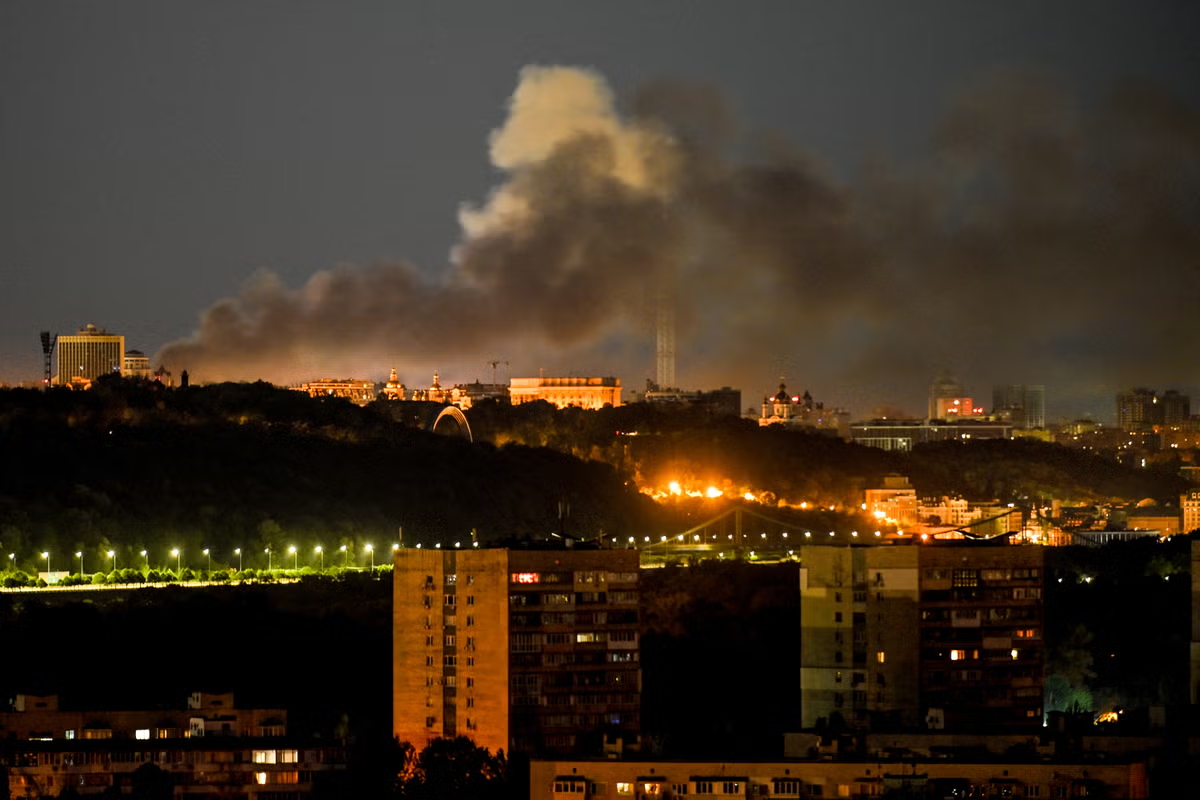
In photos: Major overnight Russian attack on Ukraine turns sky orange
This photograph shows an explosion during drone and missile attacks in Kyiv overnight (AFP/Getty)
Explosion seen during overnight drone and missile attacks in Kyiv (AFP/Getty)
People look at cars damaged during Russian missile and drone strikes at a garage in Kyiv (Reuters)
Huge cloud of smoke rises after an explosion from drone and missile attacks in Kyiv (AFP/Getty)
Arpan Rai2 June 2026 04:50
Advertisement
Russia’s Ilsky oil refinery in Krasnodar region catches fire after drone attack
Russia’s Ilsky oil refinery in the southern Krasnodar region caught fire after a drone attack, local authorities said this morning.
There were no casualties, according to preliminary information, the authorities said.
The Ilsky refinery, with an annual processing capacity of 6.6 million metric tonnes of oil, or 133,000 barrels per day, is export-oriented.
Arpan Rai2 June 2026 04:32
Advertisement
Ukrainian attacks limit fuel sales in Russia-controlled Sevastopol
Fuel sales in Sevastopol in Russia-controlled Crimea will be limited on Tuesday and authorities are working to resume the sales as usual from Wednesday, Mikhail Razvozhayev, the Russian-backed governor of Sevastopol, said in a Telegram post.
Drivers in Russian-controlled Crimea were grappling with gasoline rationing this week after Ukrainian drone attacks constricted road supplies across south-eastern Ukraine, Reuters witnesses and officials said.
In Sevastopol, the largest city in Crimea and the traditional base of Russia’s Black Sea Fleet, Reuters witnesses reported long queues at filling stations.
Advertisement
Former Ukrainian lawmaker Oleg Tsaryov, a pro-Russian figure, said that the road that connects Crimea to the mainland in the north had been attacked by Ukraine.
“Fuel in Crimea is being sold in limited quantities and via rationing coupons. The reason is Ukrainian drone attacks on fuel trucks on the ‘Novorossiya’ highway – a land corridor linking mainland Russia and Crimea,” Tsaryov said.
People put their names on a list to join the queue for fuel at a gas station after the authorities restricted fuel sales in Sevastopol, Crimea (Reuters)
Arpan Rai2 June 2026 04:14
Russia attacks Ukraine after Zelensky warns of major assault
This morning’s barrage of Russian drones and missiles came just hours after warnings were issued that Moscow was planning a major assault.
Advertisement
Ukrainian president Volodymyr Zelensky on Monday reiterated warnings of a potentially major assault and urged residents to pay special attention to air raid alerts.
“Intelligence warnings regarding Russian strikes remain in effect. A massive strike is possible, they have prepared one,” Zelensky said in his nightly video address.
“Our defenders are ready 24/7 to the fullest extent possible with the supplies currently available,” he said.
Russia last week warned that it intended to launch “systematic strikes” on targets in Kyiv linked to the Ukrainian military as well as decision-making centres, and urged foreigners to leave.
Advertisement
Russian missile strikes buildings in Kyiv (AFP/Getty)
Arpan Rai2 June 2026 04:13
Ukraine secures deal for 20 new fighter jets partly built in UK
Ukraine will significantly bolster its air defence with new Gripen fighter jets from Sweden under a new deal announced by President Volodymyr Zelensky and Swedish Prime Minister Ulf Kristersson.
The deal, unveiled at a joint press conference on Thursday, involves Ukraine purchasing 20 advanced Gripen E models and Sweden donating 16 older C/D variants next year.
The agreement builds on a letter of intent signed last year for Sweden to potentially sell up to 150 Saab Gripen E jets to Kyiv. While Gripen E deliveries are several years away, the immediate provision of C/D models offers a crucial stopgap for Ukraine’s air force, which operates a mix of Soviet-era and Western aircraft.
Advertisement
James Reynolds2 June 2026 04:00
Five dead as Russia launches massive overnight attack on Ukraine
At least five people were killed and dozens were wounded in the early hours today after Russian forces attacked major Ukrainian cities including Kyiv, Dnipro and Kharkiv, officials said.
Most casualties are being reported from Dnipro where regional governor Oleksandr Hanzha said four people were killed and 16 were injured in a brutal attack on a residential area and a children’s playground.
Advertisement
All those injured were hospitalised and reported to be in moderate condition, he said. The official shared photos of heavily damaged residential buildings, burnt-out vehicles and a destroyed playground for children.
In Kyiv, at least one person was killed and 29 others were injured in attacks across the capital, said Tymur Tkachenko, the head of the capital’s military administration.
Kyiv mayor Vitali Klitschko said a suspected missile strike on a 24-storey apartment building triggered a collapse, with people likely trapped under the rubble.
Other buildings, including a nine-storey apartment block, caught fire from suspected missile debris, he said.
Advertisement
“In the Obolon district, cars are burning after being struck by falling missile debris. There are also fires at two locations in open areas, including one near a kindergarten,” Klitschko said.
As of this morning, thousands of residents of Kyiv were taking refuge inside metro stations and other shelters, witnesses said, after air raid warnings that covered much of the country.
Russian missile and drone barrages rocked parts of Ukraine overnight (AFP/Getty)
Arpan Rai2 June 2026 03:56
Recap: Kremlin says French seizure of tanker ‘bordering on piracy’ and vows response
The Kremlin said on Monday the French seizure of a Russian-linked tanker was “bordering on piracy” and vowed to respond.
Advertisement
French president Emmanuel Macron said on Sunday that the navy had boarded the sanctioned Tagor oil tanker in the Atlantic Ocean with support of international partners including the UK.
He said the operation took place “in strict compliance with the law of the sea”.
Kremlin spokesperson Dmitry Peskov said Russia considers the move “illegal”, warning that Russia would take measures to ensure the safety of shipping cargo in response.
In February, a Kremlin aide said Russia could deploy its navy to prevent the seizure of its vessels and may retaliate against European shipping if Russian ships are taken.
She is set to take on a gruelling 388-mile cycle and marathon journey from Wembley Stadium to Sunderland’s Stadium of Light.
The five-day challenge begins on Monday, June 8, and will end on Friday, June 12.
Scott, who won 161 caps for England and was part of the Lionesses’ historic Euro 2022 victory, has said she feels “honoured” to have been chosen for the fundraiser.
Advertisement
Jill Scott to run and cycle 388 miles for Sport Relief
She said: “It’s a real honour that they’ve asked me to do it.
“I feel honoured, like out of so many people that could have been chosen for this, I’m the one that gets to go out there and try and raise as much money as possible.
“I’m 100% committed to finishing it, because I really want to try and make a difference to people.”
Her route will include stops at locations central to her football career, including Aston Villa, Everton, Manchester City and Bishop Auckland FC Ladies.
Along the way, Scott will meet people involved in Sport Relief-funded projects to see first-hand the impact of sport on individuals and communities.
Advertisement
She has spoken about the vital role of youth clubs and access to sport during her own childhood, crediting coaches and PE teachers for helping her reach the highest level of the game.
She said: “(As) a young girl, I really had to rely on coaches and PE teachers and people like that to guide me on my journey of wanting to be a footballer.
“I was so lucky that I was offered safe spaces to play football and I was offered these incredible teachers and coaches who I could trust and who could help me, but there’s so many young people that don’t get those opportunities.”
Scott highlighted the sense of purpose and belonging that Sport Relief projects offer to young people.
Advertisement
She said: “A lot of young people say they feel lonely, they feel disconnected.
“That’s definitely something that Sport Relief really do help with – giving kids a sense of belonging, a purpose.”
She urged the public to support the campaign in any way they can.
She said: “I would just urge people, if you are in a position to help, please make sure you do, because without those green spaces, without those youth clubs, I would never have gone on to fulfil my dreams of playing for England.
“I never even thought it was going to be an opportunity.”
Advertisement
Scott also reflected on the changes she has seen in women’s football during her career.
She said: “Times have definitely changed, definitely.
“Even when I went and visited this project in Southwick Snyp (Southwick Neighbourhood Youth Project in Sunderland), there was the same amount of girls playing as there was boys and I didn’t even really think about it until I walked away.
“But the fact that I didn’t think about it, I was like, that’s how far we’ve come.”
Advertisement
She added: “I love that there’s more opportunities for girls as well as boys in the footballing world, but even outside of that as well, just kind of kids having the opportunities to make new friends, and that’s what these hubs really do create.”
Scott’s challenge begins with a 112-mile ride from Wembley to Villa Park, followed by a 99-mile ride to Everton.
On day three, she will complete a 38-mile run into Manchester, then cycle 111 miles toward the North East.
The challenge finishes with a 28-mile marathon to Sunderland’s Stadium of Light.
Ryan Willis McFarland had a criminal record according to police
Peter Hennessy UK & World News Editor and Husna Anjum Senior Reporter
07:37, 02 Jun 2026
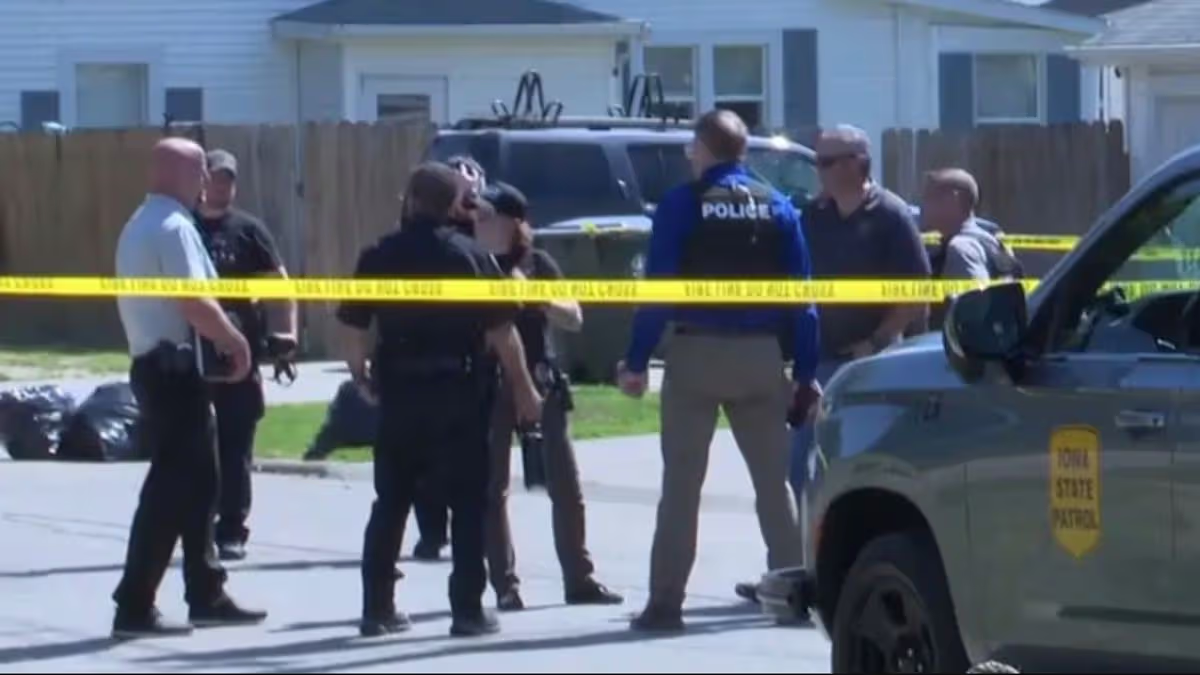
A man is believed to have shot six members of his family before taking his own life. The tragic incident took place in Muscatine, Iowa, approximately 50 miles (80 kilometres) southeast of Cedar Rapids.
Police were called to the scene where they found four people fatally shot, according to Muscatine Police Chief Anthony Kies at a press briefing. He added that the suspect, 52-year-old Ryan Willis McFarland of Muscatine, was later located on a city trail.
Advertisement
The Daily Star reports that when he was approached by police, he turned the gun on himself.
Kies said: “While talking to Ryan Willis McFarland, he took his own life.”
Two additional men, also thought to be relatives of McFarland, were later found shot dead at separate locations across the city, according to Kies. One man was discovered at his residence, while the other was found deceased inside the building of a local business, he added.
Authorities have yet to disclose the identities of the victims or any additional information about them.
Advertisement
“Today I simply do not have the words,” expressed Kies. “This act of evil and what it has done to our community.”
The local police department is persisting with their investigation into the shootings, processing the crime scenes and conducting interviews. Officers have appealed to anyone with information to contact the major crimes unit.
Kies confirmed that McFarland had a criminal record, but refrained from divulging any further details.
Ensure our latest stories always appear at the top of your Google Search by making us a Preferred Source. Click here to activate or add us as your Preferred Source in your Google search settings.
WASHINGTON (AP) — Secretary of State Marco Rubio is set to face a litany of questions Tuesday about the Trump administration’s fragile or stalling diplomatic efforts around the world when he appears for back-to-back hearings on Capitol Hill for the first time since the Iran war began.
The former Republican senator will sit before House and Senate committees to make the State Department’s annual budget request. But the focus is likely to shift quickly to the already unsteady ceasefire between Washington and Tehran, which has been further tested in recent days by back-and-forth attacks.
Cabinet members, including Rubio, have defended President Donald Trump’s decision to launch the conflict despite promises over the years not to engage in “forever wars” in the Middle East. That work has been made more difficult by Trump’s shifting goals for the conflict.
While Rubio is testifying before Congress for the first time since the Iran war started on Feb. 28, he took part in a classified briefing for lawmakers days after the first U.S. and Israeli strikes. He faced Democrats’ anger over the lack of congressional approval but strong support from most Republicans for taking action against one of America’s oldest adversaries.
Advertisement
In the two months since the war began, however, a small but growing faction of Republicans have joined Democrats in questioning the astronomical price tag and overall economic consequences of the conflict as they head into midterm elections in the fall.
Last month, the Senate managed to advance legislation for the first time that would have forced Trump to withdraw from the conflict after GOP Sen. Bill Cassidy — fresh off a primary election loss in which Trump endorsed his opponent — joined Democrats in pushing it forward.
The House also had scheduled a vote on a war powers resolution, but GOP leadership kept it from coming to the floor after it became clear that the majority party would not have the numbers to defeat it.
The actions show the GOP is struggling to maintain political backing for Trump’s handling of the war as rank-and-file Republicans are increasingly willing to defy the president over the conflict.
Advertisement
Following his appearances Tuesday before the Senate Foreign Relations Committee and House Appropriations subcommittee responsible for the State Department, Rubio will return to the Hill on Wednesday to testify before the House Foreign Affairs Committee and equivalent Senate Appropriations subcommittee.
Rubio — the son of Cuban immigrants — also is likely to be questioned about the administration’s escalatory behavior toward Cuba, as Trump has hinted that the small island country could be the next U.S. target after operations in Iran are wrapped up.
Over his congressional career and now as America’s top diplomat, Rubio has maintained that Cuba is a national security threat because of its ties to U.S. adversaries and that Trump is intent on addressing it.
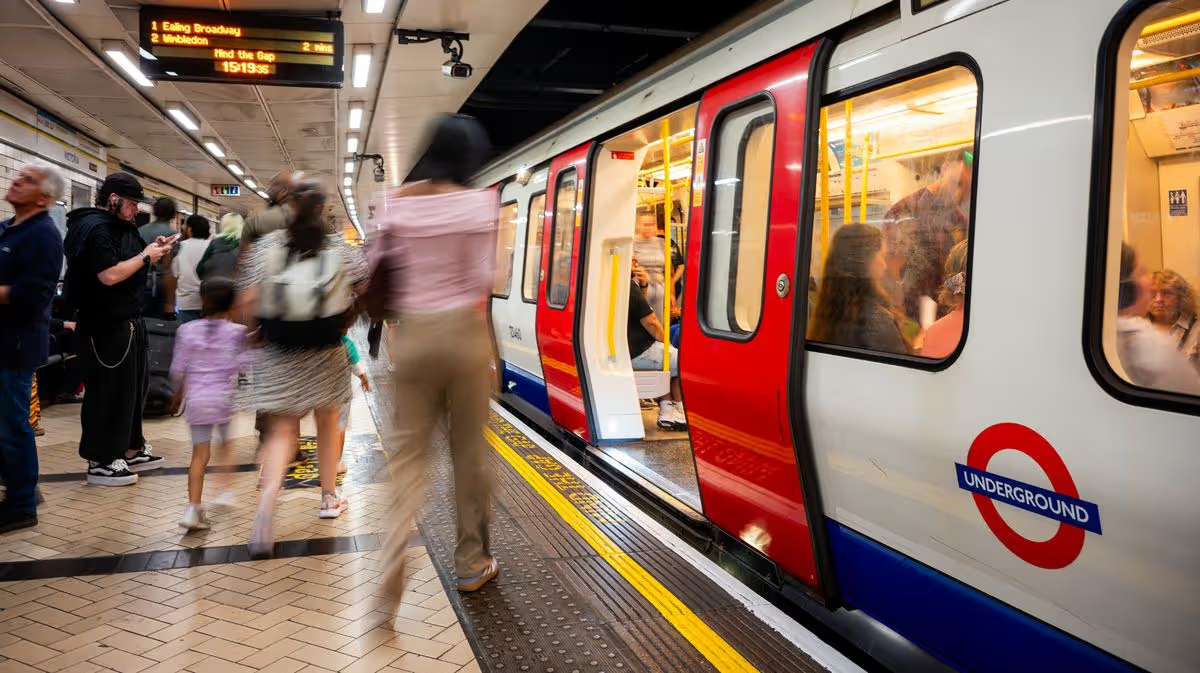
Today’s strike will run until 11:59pm. Here’s what to expect:
No service is expected on the Circle line, the Piccadilly line, the Metropolitan line between Baker Street and Aldgate, and the Central line between White City and Liverpool Street.
Other lines, including the Elizabeth line, DLR, London Overground, buses and trams, will be running as normal but are likely to be busy.
Commuters are being advised to expect disruption to journeys, with services starting late and finishing early.
Advertisement
TfL says travellers should complete their journeys before 9pm.
Multiple services will not be running today(Image: Getty Images)
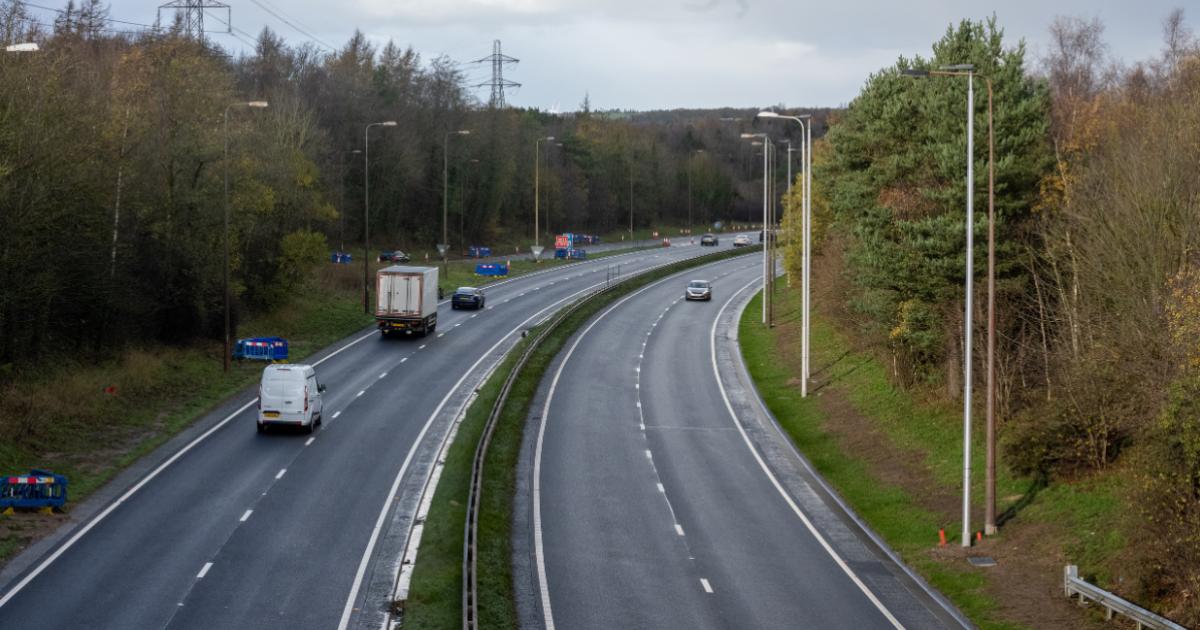
Live updates on roadworks and traffic incidents in Darlington, Bishop Auckland, Durham and the wider North East- including the A66, A19, A1(M), A1, A167, and the A69 this morning (June 2).
Public transport service updates from bus services, train services, including LNER, Cross Country, TransPennine, and Northern Rail.
Updates from the Tyne and Wear Metro and the latest from Teesside and Newcastle Airports.
Advertisement
We’ll also be bringing you the latest hour-by-hour weather forecast for the region.
Sign up for The Northern Echo’s newsletter for all the breaking North East news, including breaking traffic and travel updates, direct to your inbox.
Travel Disruptions
There are not currently any major disruptions on the roads this morning.
Train Disruptions
There are currently no rail disruptions at this time.
Advertisement
What will the weather be like in the North East today?
Darlington residents can today expect both sunny spells and heavy showers – and there is even a risk of hail and thunder, according to The Met Office.
Early cloud will soon break up to give bright or sunny spells, but also scattered showers.
The showers are expected to turn heavy, with the risk of hail and thunder in places, especially during the afternoon. There will be light winds generally, but locally gusty near showers.
Maximum temperature will be 19 °C.
Advertisement
The heaviest of the showers will gradually ease this evening, with conditions becoming largely dry with variable cloud and clear spells developing for many.
Minimum temperature is expected to be at 8 °C.
Are there any roadworks in Darlington?
You can see a full list of road closures in and around the town on The Northern Echo’s website. Click here for more information.
BIRAO, Central African Republic (AP) — The agony began for Maude Ahmad Fadala shortly after sunset.
Her baby was coming. She was in a refugee camp, weakened by typhoid. There were no camp facilities for what was about to happen, and she had no money to travel. She struggled to her feet and started walking.
She stopped every few minutes, gripped by pain from contractions, then could go no farther.
“I gave birth in the street,” she said. “There was no doctor, no midwife, and no one holding my hand.”
Advertisement
___
This is part of a series on maternal mortality in sub-Saharan Africa, which has the world’s fastest-growing population and the majority of mothers dying from pregnancy-related causes: 70%, or around 182,000 deaths every year.
___
Nearly two-thirds of maternal deaths worldwide occur in countries affected by conflict or “fragility,” the World Health Organization said this year. For women like Fadala, fleeing Sudan’s war to countries like Central African Republic, the danger doesn’t stop at the border.
Advertisement
A woman holds her baby outside the registration center for new refugees on the outskirts of the Korsi Refugee Camp in Birao, Central African Republic, Thursday, March 26, 2026. (AP Photo/Caitlin Kelly)
Advertisement
A woman holds her baby outside the registration center for new refugees on the outskirts of the Korsi Refugee Camp in Birao, Central African Republic, Thursday, March 26, 2026. (AP Photo/Caitlin Kelly)
Advertisement
Advertisement
Advertisement
Advertisement
Displacement can mean missed prenatal appointments, dangerous journeys and weakened health systems, often in remote settings.
Women in Central African Republic are 40 times more likely to die in pregnancy or childbirth than in the United States, the United Nations has said. For every 100,000 births in the country, one of the world’s poorest, 829 women die.
‘Risk of maternal death is going to increase’
Years of internal conflict have made Central African Republic and its health system fragile. Despite its vast reserves of gold, health services are scarce outside major cities. One in three people live on less than $2 a day.
The government, aware of its maternal mortality problem, announced a plan in 2024 to increase spending for resources such as skilled birth attendants. Officials did not respond to questions about how it’s working.
Advertisement
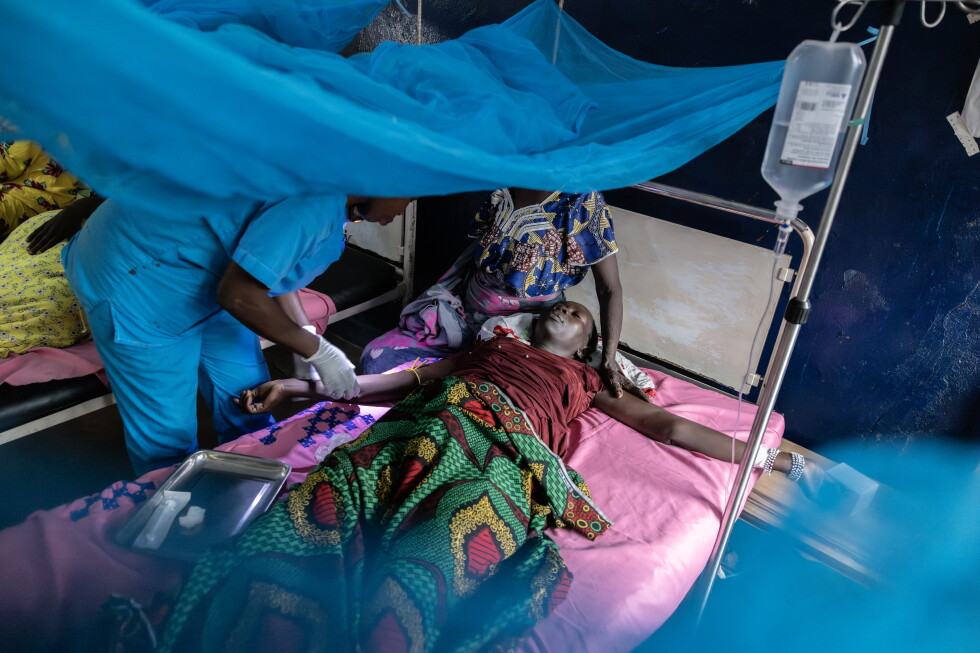
A nurse gives painkillers to patient Amna Adam Hessen, whose baby was delivered stillborn the previous day, at the Birao District Hospital in the Central African Republic, Wednesday, March 25, 2026. (AP Photo/Caitlin Kelly)
Advertisement
A nurse gives painkillers to patient Amna Adam Hessen, whose baby was delivered stillborn the previous day, at the Birao District Hospital in the Central African Republic, Wednesday, March 25, 2026. (AP Photo/Caitlin Kelly)
Advertisement
Advertisement
A woman has her first pre-natal consultation with nurse Delphine Zanabe at the Birao District Hospital in Central African Republic, Thursday, March 26, 2026. (AP Photo/Caitlin Kelly)
Advertisement
A woman has her first pre-natal consultation with nurse Delphine Zanabe at the Birao District Hospital in Central African Republic, Thursday, March 26, 2026. (AP Photo/Caitlin Kelly)
Advertisement
Advertisement
Now, sweeping cuts in humanitarian aid funding by top donor the United States and other countries have made it even harder for women to find care.
In the remote town of Birao near the Sudan border, where Fadala shelters, four local midwives who had been supported by the U.N. Population Fund lost their jobs last year as the Trump administration cut every U.S. funding agreement with the U.N. sexual and reproductive health agency.
Advertisement
Opposite Fadala’s tent is a former UNFPA-funded “safe space” providing transport for pregnant women to the district hospital. It was one of four such spaces in Birao serving nearly 50,000 women. Those have closed without U.S. funding, along with two U.S.-backed health facilities.
Now, “some women run the risk of dying in pregnancy situations that are not medically managed,” said UNFPA program officer Marie Justine Mamba Ibingui.
UNFPA’s budget in Central African Republic has been halved in the past two years to $6.5 million, country director Victor Rakoto said. UNFPA was the only provider of reproductive health products in Birao.
“The risk of maternal death is going to increase if there is no solution,” Rakoto said.
Advertisement
Conflict-affected settings like Birao account for six in 10 maternal deaths globally, according to the U.N.
‘Giving birth here is exhausting’
The district hospital, which Fadala had tried to reach, is a few kilometers (over a mile) away over dirt roads.
On a recent day, birthing assistant Delphine Zanabe moved between patients as dozens of women waited, sitting thigh-to-thigh on hard benches in the sweltering heat. Some had walked for hours to reach the hospital. Others had risked their pregnancy with motorbike journeys over rough ground.
In remote communities near the Sudan-Central African Republic border, pregnant women who fled Sudan’s war are struggling to access health care as clinics close and aid funding dries up. The U.N. warns the cuts could leave more women vulnerable to preventable deaths during pregnancy and childbirth.
Advertisement
From the border, adjoining a part of Sudan held by paramilitary forces fighting the Sudanese military, it’s a 65-kilometer (40-mile) journey to the refugee camp.
Advertisement
“They only come when they are about to give birth,” Zanabe said. “It’s a struggle and it’s either the baby or the mother who suffers.” According to WHO guidelines, pregnant women should attend at least eight prenatal consultations.
For refugees, living in survival mode in unfamiliar surroundings compounds the challenges of poverty and lack of education. Zanabe said those factors often put women at risk for pregnancy and childbirth complications.
In the maternity ward, eight beds were in a room so small they almost touched. They serve a population of about 70,000 people, along with 22,000 Sudanese refugees.
Doctors said 12 staffers have lost their jobs as a result of aid cuts. The majority were from the maternity department.
Advertisement
Amna Adam Hessen had arrived the day before, burning with fever from malaria. Her unborn child was found to be in a breech position, a discovery made late because she had missed prenatal appointments. Brought by motorbike from the refugee camp, she bled heavily during labor and lost her baby.
The next day, her mother, Salet, fanned her in the suffocating heat.
“Giving birth here is exhausting,” she said, describing the long and difficult night.
Amna writhed with fever on the bare foam mattress and cried out, “Mama, mama.”
Advertisement
Zanabe is worried about future cuts in humanitarian assistance affecting mothers.
Over 40% of births in Central African Republic already occur away from medical facilities, the United Nations has estimated — a traditional approach that risks otherwise preventable complications.
Advertisement
UN peacekeepers stand guard of a UN flight refuelling on the tarmac of the Birao Airport in Central African Republic, Wednesday, March 25, 2026. (AP Photo/Caitlin Kelly)
UN peacekeepers stand guard of a UN flight refuelling on the tarmac of the Birao Airport in Central African Republic, Wednesday, March 25, 2026. (AP Photo/Caitlin Kelly)
Advertisement
Advertisement
Advertisement
‘I abandoned them like that’
Clara Abessendé was one of the four midwives who lost their jobs.
She had watched as the number of women arriving daily at the hospital tripled after Sudan’s war began in early 2023, and as staffers ran out of supplies like antibiotics and malaria treatments.
“As a result, there were more cases of infant and maternal deaths,” she said. Abessendé said she feels heavy with the guilt of having to leave her job.
Advertisement
“The children born in my hands …I abandoned them like that,” she said.
Katidje Idrisse Tahire is one of the women she’s no longer there to help.
Tahire walked slowly through the refugee camp to fetch water, one child on her back and two others at her side. She was late in her ninth month, preparing to have another.
She said she fled Sudan four months ago on foot. At the border, armed men robbed her of everything. Her husband hasn’t been seen since they fled Darfur.
Advertisement
“My whole body aches,” she said. “I am very tired and unwell.”
She has no money and doesn’t know if care will be available when her baby comes.
The Associated Press receives financial support for global health and development coverage in Africa from the Gates Foundation. The AP is solely responsible for all content. Find AP’s standards for working with philanthropies, a list of supporters and funded coverage areas at AP.org.
The cycle street in Cambridge gives cyclists and pedestrians priority over motorists, but residents are divided over the project and its ‘first in England’ claim
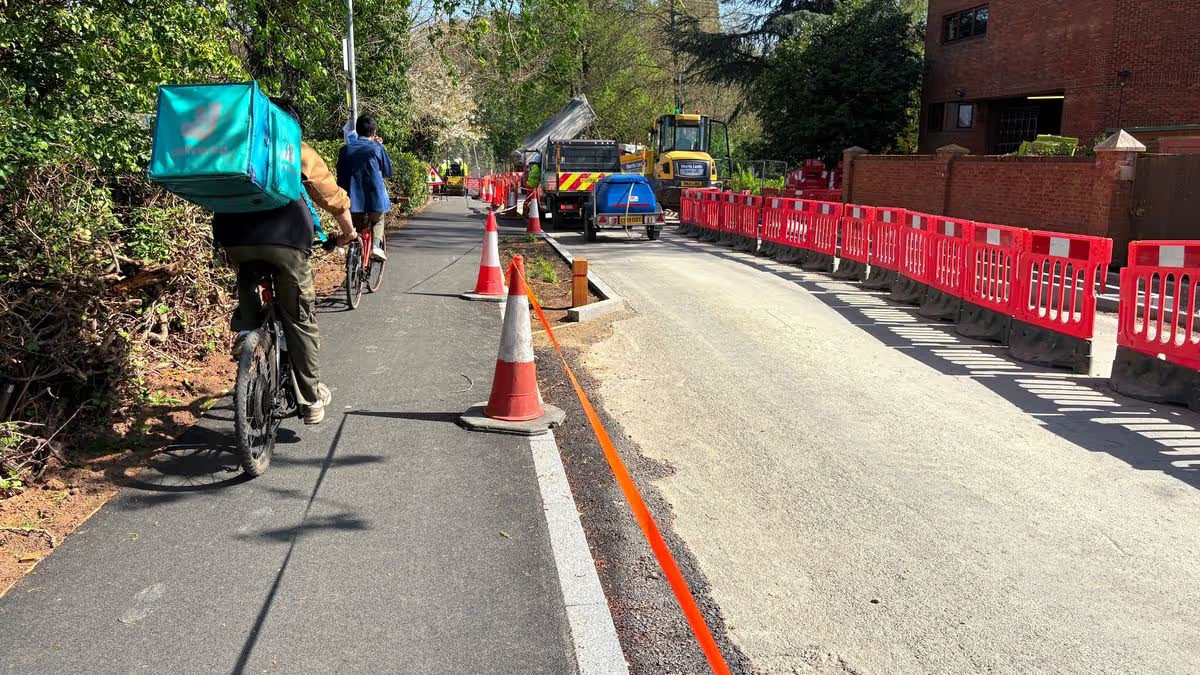
England’s first cycle street has opened in Cambridge, granting cyclists and pedestrians priority over motor vehicles. The cycle street on Adams Road, which has now reached completion, is designed to improve safety for cyclists travelling across the city.
Advertisement
The route establishes a link between Cambridge West and the city centre for commuters and students alike. Adams Road ranks among the busiest cycling routes in Cambridge, currently used by up to 3,000 cyclists daily. Usage is anticipated to grow further as nearby development progresses, according to the Greater Cambridge Partnership.
Construction commenced in October 2025 and has encompassed an upgraded junction offering greater priority to pedestrians at Adams Road and Sylvester Road, full resurfacing of the footways and carriageway, and the widening of footways on both sides to provide additional space for those on foot.
One reader, Garyblowpants comments: “We need this everywhere in the city. Our city is built on the bicycle stretching back thousands of years. It is simply our rite of passage.”
Jemima3 asks: “How does this differ in any way from the stretches that prioritise bicycles going through, e.g. Horningsea, Barton, etc? Surely not the ‘first in England’?”
Advertisement
Rhodabike writes: “Exactly. Every street in and around Cambridge can be cycled on. Many already give cyclists priority over motorists. This is not even the first example in Cambridge, let alone the whole country. Who came up with the absurd claim that this is ‘England’s first cycle street’?”
Feelgood66 adds: “You watch, some utility company will come along and dig some of it up to put services in.”
Freddly quotes: “‘Widening both sides of the footways to create more room for pedestrians.’ This is very welcome and much needed. There are many places in Cambridge where pedestrians are confined to narrow and scruffy pavements metres away from drivers going at 45mph. That needs to end. Car-drivers are sponging – that is, not remotely paying the true cost of the land occupied and social and community issues exacerbated.”
Riccy says: “What a waste of taxpayers’ money. The cyclists pay nothing towards the upkeep of roads whatsoever; that money could be better spent on potholes put right across the country. When are they going to start taxing cyclists beyond the roads and parts in the first place? I hope it’s going to be very soon.”
Advertisement
Nocyclinganywhere writes: “It’s about time cyclists had to pay a tax to use the roads and to help to pay for the unused cycle ways, motorists have to pay a vehicle excise duty, cyclists should pay a bike tax, they want equality, so make them pay for it.”
Skipper feels: “Obviously, the council tax increase last year, and this year (the max allowed as always) was not, as stated by the council, required for essential services. Instead, it was used to fund some push bike lobby councillor’s pet project. Result: A waste of money on a scheme that does nothing for road safety, as the accident record shows.”
Johnsm adds: “Cyclists are on average less obese than drivers. That saves us on healthcare costs alone. Cyclists damage the roads less and take up less road space when parking. They should practically be paid to cycle!”
While over on our Facebook page, Kirstie H comments: “Priorities to cyclists again that don’t pay road tax!”
Advertisement
Clare D simply states: “Madness.”
Tanya B writes: “Stop spending Taxpayers’ money on vanity projects that only the minority use and use it to repair and replace the appalling roads and pavements that everyone uses!”
Ali K says: “Roads of Cambridge cost me £800 for car suspension. Council is just spending money on these silly projects while roads are in miserable condition.”
Do you think that the cycle street on Adams Road will be a success? Comment below or HERE to have your say.
Hello, and welcome to WalesOnline’s live blog for Tuesday, June 2. We’ll be bringing you all of the latest news from across Wales – whether you’re on the move, at home or at work – as well as the latest traffic and travel.
We’ll also be keeping you informed of major news stories from the UK and overseas.
Contribute to the live blog by posting your comments below, or tweet us@WalesOnline to share the news that’s breaking in your area. Read the biggest stories in Wales first bysigning up to our daily newsletter here.
It comes as the number of cocaine-related deaths in Wales and England has increased for 13 consecutive years
06:24, 02 Jun 2026
Advertisement
A 23-year-old man died from brain damage caused by his repeated abuse of cocaine. Jonathan Black, a bricklayer from Croesyceiliog in Cwmbran, was confirmed dead on March 12 last year at the Grange hospital, his inquest at Gwent coroner’s court heard.
Coroner Caroline Saunders said Mr Black had “a significant history of substance misuse, including alcohol, cocaine and illicit valium”. His GP had advised him to get help from Gwent Drug and Alcohol Service but he “showed no inclination to reduce his drug and alcohol use”, according to the coroner.
“On February 25, 2025, Jonathan was staying at his friend’s house where he took some valium and drank alcohol,” said Ms Saunders. “It is not clear whether he took any other drugs at this point.
“The following day he was found unresponsive. Paramedics were called and discovered that Jonathan was in cardiac arrest. They managed to revive him and conveyed him to hospital.”
Advertisement
Tests showed Mr Black had suffered a brain haemorrhage. While in intensive care his brain damage worsened and on March 12 he was declared dead.
Ms Saunders said the nature of the bleeding was in keeping with drug use, particularly cocaine.
Although the post-mortem did not find cocaine in Mr Black’s blood, the coroner concluded his brain haemorrhage had been caused by “regular cocaine use”.
Recording a conclusion of drug-related death, Ms Saunders said: “Whilst pneumonia contributed to his death, Jonathan died from brain damage caused by his ongoing use of cocaine.”
Advertisement
The number of cocaine-related deaths in Wales and England has increased for 13 consecutive years, rising from 1,118 in 2023 to 1,279 in 2024.
Adam Thompson, head of drugs threat at the National Crime Agency, recently told the Independent that over the last decade a cocaine production boom in South America has led to a sharp increase in the purity of the Class A powder sold at street level in the UK, meaning a higher chance of overdose.
He said: “UK law enforcement has held the line but without a reduction in demand from users, stemming the supply of cocaine will be a continuing battle.”
Get daily breaking news updates on your phone by joining our WhatsApp community here. We occasionally treat members to special offers, promotions and ads from us and our partners. See our Privacy Notice.
A simple tweak may help improve summer cooling ventilation and make a noticeable difference to how cool your home feels
13:46, 01 Jun 2026Updated 13:56, 01 Jun 2026
Experts suggest that your windows could be contributing to heat accumulating inside your home, and a straightforward adjustment could make a significant difference. Window specialists Express Bi-Folding Doors have disclosed how a clever, little-known mechanism can help keep homes cooler during hot spells, along with other ways to get your windows working harder for you this summer.
Many modern windows feature a small built-in adjustment screw that controls how snugly the window sits against its frame. While pulling the window closer to the frame helps retain heat during winter, loosening it slightly in summer allows for improved airflow and ventilation when you need it most.
To switch to summer mode, open your window and locate the small adjustment screws on the inside of the frame. These typically require an Allen key and will have a notch currently positioned at around 3 o’clock if you have already applied the winter setting.
Advertisement
Turn the screw anti-clockwise by a quarter turn so the notch moves back to 12 o’clock. This releases the window slightly from the frame, permitting air to circulate more freely when the window is open or on its vent setting.
This minor adjustment can make a noticeable difference to airflow throughout your home, particularly overnight when you want to allow cooler air to circulate without fully opening your windows, reports Kent Live.
Use your windows to create a cross breeze
One of the most effective ways to cool a home naturally is through cross ventilation. Open windows on opposite sides of your home to create a through-breeze, ideally in the morning before temperatures peak, and again in the evening once the outside air begins to cool.
If you have bi-folding or sliding doors, throwing these open alongside a window at the far end of your home can substantially boost airflow, transforming your living space into a far more comfortable setting.
Advertisement
Block out direct sunlight during the hottest part of the day
Between roughly 11am and 3pm the sun is at its most intense, and direct sunlight streaming through windows can heat a room rapidly. Drawing blinds or curtains on south and west-facing windows during these hours can considerably lower the indoor temperature.
Thermal curtains, typically associated with retaining warmth throughout winter, actually work in both directions — their thickness also serves to block solar heat gain during the summer months.
Check your window seals are not trapping stale warm air
If your windows are failing to open or ventilate correctly due to worn or stiff mechanisms, it is worth giving them a thorough inspection. Clean the tracks and hinges, and ensure that ventilation features such as trickle vents are unobstructed and functioning properly, so you can make the most of even the faintest breeze.
Advertisement
Consider window film for south-facing rooms
Solar control window film can be an affordable solution for south-facing rooms that receive a great deal of sunlight. In contrast to ordinary window film, solar film is specifically engineered to deflect heat away from the glass before it penetrates the room, assisting in maintaining cooler temperatures while still allowing natural light to filter through.












































You must be logged in to post a comment Login