Salah may have been a superstar at Liverpool. He is on an even higher plane in Egypt.
With every touch comes loud cheers from his country’s fans with huge pressure on his shoulders on every appearance.
Sunday’s goal was his 68th for his country in 118 appearances, leaving him just one shy of manager Hassan’s all-time goal scoring record, and some will say it’s his most important yet as Egypt finally ended a 92-year wait for a World Cup win.
Former Tottenham manager Ange Postecoglou, told ITV: “If there was any doubt about Mo’s impact on this team, you can still see it.
Advertisement
“It will give them enormous belief. They had to deal with adversity and their big player stood up and that will give them big confidence. You need your big players to perform to progress.”
Former Jamaica winger Jobi McAnuff added: “Just when he was needed, Mo Salah stood up for his country.”
Salah has played for the senior national team for 14 years and his importance to Egypt is such that high-ranking government officials have been known to get involved when he has been injured.
“I even had calls from Egypt’s Minister of Health,” recalls Dr Mohamed Aboud, the national team’s medic, about the time Salah sustained a serious shoulder injury in Liverpool’s defeat by Real Madrid in the 2018 Champions League final, leading to speculation he could miss the World Cup in Russia a few weeks later.
Advertisement
But, despite helping Liverpool to the Premier League title in 2019-20 and 2024-25, the player has yet to lift a trophy for his country.
The generation before Salah won three Africa Cup of Nations titles in a row between 2006 and 2010. Since then, there have been two defeats in finals, against Cameroon in 2017 and Senegal in the 2021 edition, which took place in early 2022.
This World Cup win at least banishes one of Egypt’s ghosts.
Haaland had to wait until the age of 25 not just to make his World Cup debut, but his international tournament bow too.
And the Leeds-born striker is clearly eager to make up for lost time.
“He’s the opposite of Mbappe and Messi,” Williams said. “He’ll beat you without the ball, which makes it even more dangerous.
Advertisement
“You want to help your midfield by squeezing up, so they don’t have to cover too much distance.
“But as soon as you leave the space in behind, he’s going to exploit that straight away.”
One of the keys to limiting Haaland’s influence, Williams says, is to prevent his team mates getting the ball to him.
“You’ve got to stop the balls in behind first and foremost,” Williams said. “Stop the supply going into him.
Advertisement
“If you can play your distances between your midfield and limit his chances, you’ve got half a chance.
“There’s not many times when he actually drops in, gets the ball, beats four players, and scores his own goal, so he does feed off what he’s getting served.”
Haaland is the most clinical of the four, with 57 goals in just 51 caps.
“He’s more lethal,” Williams added. “If he gets a chance, it’s probably going to be a goal.”
Advertisement
What about dealing with Haaland one on one?
“Around the box, you’ve got to get tight and try to get him on his right foot,” Williams said.
“Then you’re just going to have to be as strong as you can, don’t be clever, just get the ball away and buy time.”
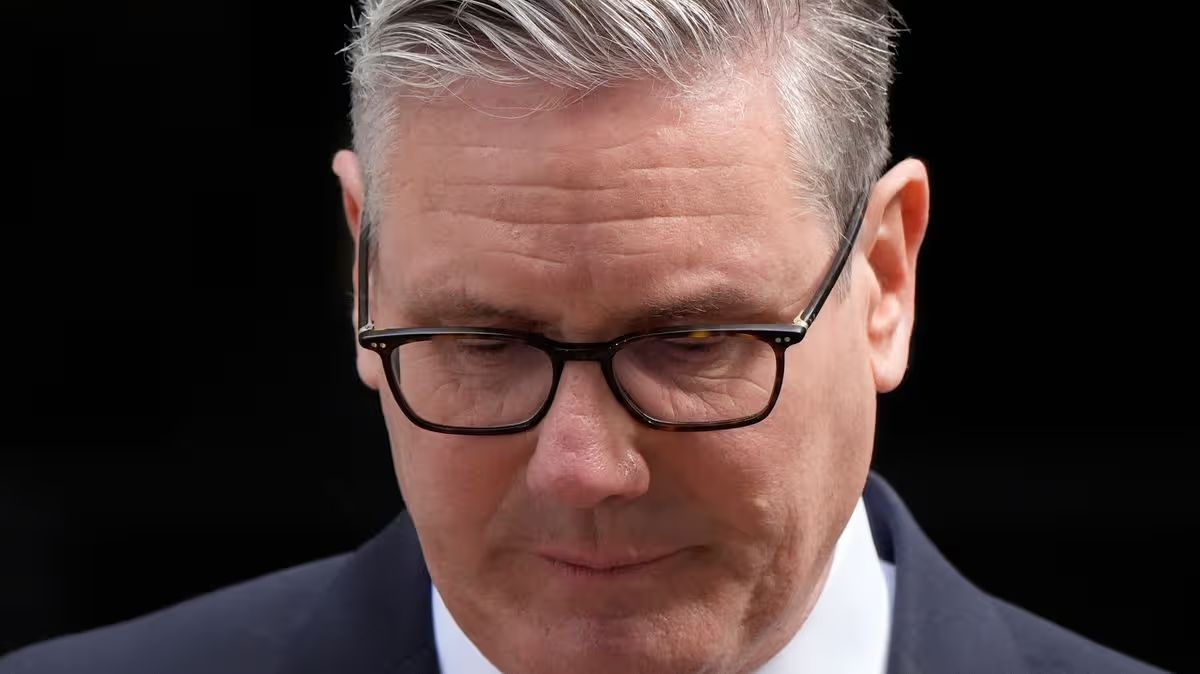
Sir Keir Starmer announced his resignation in an emotional statement outside 10 Downing Street
Prime Minister Keir Starmer has announced his resignation – marking an end to his leadership of the Labour Party after six years and as PM after two years. Speculation has stirred over the last few days that Sir Keir Starmer would leave 10 Downing Street.
Advertisement
The Labour Party leader is the UK’s seventh Prime Minister in the last 10 years. He will remain as Prime Minister until a new leader of the Labour Party is appointed.
Speaking in an emotional statement outside Number 10 this morning (Monday, June 22), Sir Keir Starmer said winning a landslide victory at the 2024 General Election was the “proudest moment of my life”.
He also said that the Labour Party’s victory was a “page turned after years of disappointment and desperation”. He added: “The question my party is asking now is whether I’m best placed to lead us into the next General Election.
“I have heard the answer of my parliamentary party to that question and I accept that answer with good grace. Every decision taken is about putting the country I love first. That’s why I will resign as leader of the Labour Party.”
ALBUQUERQUE, N.M. (AP) — Even as it battled the deadliest drug epidemic in American history, the U.S. Drug Enforcement Administration permitted hundreds of thousands of fentanyl pills to hit the streets of New Mexico between 2023 and 2025, according to three current and former DEA agents and government records reviewed by The Associated Press.
DEA agents repeatedly monitored shipments of fentanyl pills — but did not seize them — as federal prosecutors sought to bring bigger criminal cases against traffickers of a synthetic opioid that the White House last year designated a “ weapon of mass destruction.”
Agents and experts, however, said the tactic amounted to a gamble with public safety that potentially imperiled communities in and around Albuquerque and may have violated U.S. Justice Department rules intended to safeguard the public.
“We poisoned our community to make cases,” DEA Special Agent David Howell told AP in a series of interviews in New Mexico. “Through our own willful blindness, we get to say, ‘We don’t really know what happened to the drugs.’ But we 100% got people killed.”
Advertisement
DEA Special Agent David Howell, who filed a whistleblower complaint, poses for a portrait outside the U.S. district courthouse in Albuquerque, N.M., on Friday, June 12, 2026. (AP Photo/Susan Montoya Bryan)
Advertisement
DEA Special Agent David Howell, who filed a whistleblower complaint, poses for a portrait outside the U.S. district courthouse in Albuquerque, N.M., on Friday, June 12, 2026. (AP Photo/Susan Montoya Bryan)
Advertisement
Advertisement
Advertisement
Advertisement
The DEA has long contended it would not be plausible to seize every shipment of every drug. But the strategy of allowing staggering amounts of counterfeit painkillers to hit the streets shocked several veteran agents who spoke with AP.
Ridding the streets of illicit fentanyl, manufactured mostly in Mexican labs, became DEA’s top priority over the past decade as overdose deaths surged. At the same time, its lethality — a few milligrams can kill the average adult — upended time-tested tactics that had been used to combat drugs like cocaine and heroin. Those methods have included allowing drug transactions to be completed so agents might follow the narcotics through the supply chain. Fentanyl, however, is so dangerous that the U.S. Justice Department developed guidelines for agents in such circumstances, encouraging them to seize the opioid whenever “practicable.”
Albuquerque, which has a neighborhood so besieged by drugs it’s known as “War Zone,” and other regions in New Mexico remain at the epicenter of the fentanyl epidemic. While overdose deaths nationwide fell 14% last year, government data show New Mexico tallied a 21% spike.
Alex Uballez, who served as U.S. attorney in New Mexico from 2022 through last year, said authorities at times allowed drug shipments to go unseized as part of a broader effort to gather intelligence and build cases against major drug traffickers. He said the approach reflected his office’s limited resources and his belief that prosecuting larger organizations can have a bigger impact than interdicting every suspected drug transaction.
Advertisement
Sign up for Morning Wire:
Our flagship newsletter breaks down the biggest headlines of the day.
Advertisement
Last year, DEA recorded the largest fentanyl bust in its history in Albuquerque.
“The bigger fish are worth catching,” Uballez said, “and that will save more lives.”
Advertisement
The DEA said in a statement that “the investigative decisions at issue were lawful, reasonable under the circumstances and consistent with Department guidance.”
“Public descriptions suggesting that DEA knowingly permitted fentanyl to reach communities are false and fundamentally mischaracterize the facts,” DEA spokesperson Amanda Wozniak wrote in an email. She said the investigations involved court-authorized wiretaps “in which agents and prosecutors conducted real-time surveillance, intelligence gathering, and operational analysis targeting larger drug trafficking organizations.”
Advertisement
Tell our investigators
AP’s global investigative team accepts tips securely and confidentially. Choose the method that works best for you.
Advertisement
Precise intelligence on drug deliveries
In some cases, the DEA had such detailed intelligence about drug deliveries that agents were able to tally precise pill counts, according to reports reviewed by AP.
Advertisement
Agents, for example, deciphered coded chatter over cellphones and closely surveilled a transaction at a mobile home park in Albuquerque in June 2023, according to a 66-page report reviewed by AP. Agents wrote in the report that traffickers delivered 74,000 pills as part of that deal, a figure federal prosecutors later confirmed in a court filing.
Days earlier, another DEA report showed, investigators watched the same distribution ring deliver a spare tire hiding another suspected fentanyl shipment that similarly went unseized.
“We did nothing, but sit back and watch,” said Howell, who filed an official whistleblower complaint in 2023 to bring attention to what he thought was a tactic that risked public safety.
Advertisement
This June 12, 2026 photo shows a mobile home park where federal agents monitored, but did not seize, a shipment of fentanyl in Albuquerque, N.M. (AP Photo/Susan Montoya Bryan)
This June 12, 2026 photo shows a mobile home park where federal agents monitored, but did not seize, a shipment of fentanyl in Albuquerque, N.M. (AP Photo/Susan Montoya Bryan)
Advertisement
Advertisement
Advertisement
This photo provided by the U.S. Drug Enforcement Administration shows pills containing fentanyl which were seized by the DEA in New Mexico, on April 28, 2025. (DEA via AP)
This photo provided by the U.S. Drug Enforcement Administration shows pills containing fentanyl which were seized by the DEA in New Mexico, on April 28, 2025. (DEA via AP)
Advertisement
Advertisement
Advertisement
Months passed before federal authorities busted the traffickers, and Howell, who participated in the surveillance, said authorities today cannot account for the unseized shipments.
“It’s outrageous to put that many lives at risk in hopes of making a big case,” said Tristan Leavitt, president of Empower Oversight, a whistleblower advocacy group that has asked the Senate Judiciary Committee and Justice Department’s Office of Inspector General to investigate Howell’s claims.
A former DEA supervisor, speaking on condition of anonymity for fear of retaliation, said he and his Albuquerque colleagues allowed “millions” of pills to go unseized during a multi-state investigation last year.
Advertisement
Howell reported in his whistleblower disclosures that agents on that case permitted the delivery of at least 1.8 million fentanyl pills.
That investigation, the former supervisor and Howell told AP, culminated in the largest fentanyl bust in DEA history, a takedown announced in May 2025 by then-Attorney General Pam Bondi that resulted in the seizure of more than 3 million pills.
“The amount we ultimately seized was hitting the streets every month while that case was going on,” the former supervisor said, adding that the DEA could have dismantled the organization six months earlier.
The U.S. Attorney’s Office in Albuquerque did not answer questions about the unseized fentanyl shipments but, in a statement to AP, said the “conduct” Howell brought to light happened during the prior administration.
Advertisement
“The current leadership of this office is focused on aggressively investigating and prosecuting fentanyl trafficking and disrupting the criminal organizations responsible for distributing these drugs,” Tessa DuBerry, a spokesperson for the office, wrote in an email.
Uballez, the former U.S. attorney, said estimated pill counts “based on intercepted phone calls are not reliable.”
“I don’t think I’d contest that drugs are ‘walked,’” he said, referring to the law enforcement tactic of allowing contraband to go unseized to further an investigation. “How much and how frequently — and with what certainty — is incredibly difficult to answer in retrospect.”
To seize or not to seize
As fentanyl overdoses became an epidemic over the last decade, the U.S. Justice Department developed an internal playbook for combatting the deadliest drug ever to cross the Mexican border. The game plan coincided with a publicity campaign that warned Americans that “One Pill Can Kill,” a DEA effort to highlight fentanyl’s unique dangers.
Advertisement
Adopted in 2017, the department’s two-page “Fentanyl Protocols” called on agents to “seize or otherwise prevent the distribution” of fentanyl “as soon as practicable.” The rules, which have not previously been made public, said that “protecting public safety is paramount,” irrespective of whether seizures compromise investigations.
The Justice Department rewrote the rules in 2024 to afford law enforcement more discretion in such cases. The updated protocols say investigators “may exercise discretion in determining whether to take action to prevent the trafficking of fentanyl,” balancing public safety risks against “the benefits to be achieved through preserving the investigation.”
The DEA rarely discusses the tactic of allowing drugs to go unseized. Its agent manual describes taking drugs off the street as “the usual course of action” but adds “there may be instances where the investigative objectives can be better achieved by not doing so.”
The agency has long used “controlled deliveries” in which constant surveillance of the drugs — and often replacing them with fake narcotics — is followed by a takedown to recover them, according to current and former agents.
Advertisement
This photo, provided by the U.S. Drug Enforcement Administration, shows pills containing fentanyl which were seized by the DEA in New Mexico, on April 28, 2025. (DEA via AP)
Advertisement
This photo, provided by the U.S. Drug Enforcement Administration, shows pills containing fentanyl which were seized by the DEA in New Mexico, on April 28, 2025. (DEA via AP)
Advertisement
Advertisement
Advertisement
In interviews, several current and former agents likened the decision to permit fentanyl to hit the streets to the infamous “Operation Fast and Furious,” a 2011 gun-walking scandal in which straw buyers smuggled some 2,000 assault weapons into Mexico with the intent of tracing the firearms to cartel leaders.
Advertisement
The Bureau of Alcohol, Tobacco, Firearms and Explosives was savaged with bipartisan criticism after two of those guns surfaced at the scene of the fatal shooting of a Border Patrol agent, and the Justice Department explicitly forbid agents from allowing firearms to be trafficked.
Blowing the whistle
Howell became so unnerved by his agency’s failure to seize fentanyl that he began flagging overdose deaths that might have been caused by the very pills DEA permitted to flow to dealers. One of those cases included a 15-month-old toddler who died after ingesting burned fentanyl residue last year in Española, a New Mexico town ravaged by grinding poverty and addiction.
Howell, who joined DEA 19 years ago after a decade in the Navy, took his allegations to the U.S. Office of Special Counsel. The agency, tasked with protecting whistleblowers, initially found a “substantial likelihood of wrongdoing” and asked the Justice Department to investigate.
In early 2024, Howell told the Justice Department’s Office of Professional Responsibility that DEA agents had observed — yet not seized — separate deliveries of 150,000 and 50,000 fentanyl pills.
Advertisement
DEA and federal prosecutors, he added, “are placing themselves in a precarious position where they will not be able to prove that the fentanyl they could have stopped did not result in the death of a person.”
DEA Special Agent David Howell, who filed a whistleblower complaint, poses for a portrait outside the U.S. district courthouse in Albuquerque, N.M., on Friday, June 12, 2026. (AP Photo/Susan Montoya Bryan)
Advertisement
DEA Special Agent David Howell, who filed a whistleblower complaint, poses for a portrait outside the U.S. district courthouse in Albuquerque, N.M., on Friday, June 12, 2026. (AP Photo/Susan Montoya Bryan)
Advertisement
Advertisement
Advertisement
Advertisement
The Justice Department’s Office of Professional Responsibility found in 2024 that the DEA and U.S. attorney’s office had made reasonable decisions in deciding to allow drugs to go unseized and that their inaction posed no “specific danger to public health.”
The Office of Special Counsel, which critics say rarely pushes back on agency findings, deemed the Justice Department’s report reasonable.
Howell, meanwhile, paid a price after coming forward. The DEA relegated him to desk duty for more than a year and docked his performance evaluations, according to Howell and DEA records. Internal records also show prosecutors barred him from testifying in federal court, citing his “pattern of refusing to heed” admonitions to allow drugs to go unseized during long-term investigations.
Pointing to DEA’s own “One Pill Can Kill” campaign, current and former agents said they could not understand the watchdog’s finding that the tactics had not put the public in danger. They noted the drug is so dangerous it has to be handled in a specialized laboratory.
Keir Starmer has announced plans to step down as Prime Minister.
Sir Keir Starmer became Prime Minister in July 2024 after leading Labour to a landslide general election victory, ending 14 years of Conservative government. The former Director of Public Prosecutions entered Downing Street with a large parliamentary majority and a promise to deliver economic stability, rebuild public services and restore trust in politics.
Advertisement
However, his premiership has come under increasing pressure in recent months amid falling poll ratings, internal party unrest and a series of political setbacks. Labour suffered disappointing results in local elections and by-elections, while a growing number of MPs publicly questioned whether Starmer remained the right person to lead the party into the next general election.
One of the most damaging episodes for his government was the fallout from the appointment of former Labour grandee Peter Mandelson as ambassador to the United States. The controversy triggered the resignations of several senior aides and prompted calls from some Labour figures, including Scottish Labour leader Anas Sarwar, for Starmer to step aside.
More recently, tensions within the government deepened over defence spending, culminating in the resignation of senior ministers who accused the Prime Minister of failing to provide adequate funding for the armed forces. The dispute fuelled further speculation about his leadership and highlighted divisions within Labour’s parliamentary ranks.
Pressure intensified following the recent Makerfield by-election, won by Andy Burnham, who returned to Westminster and quickly emerged as the focal point for MPs seeking a change of leadership. Reports suggest dozens of Labour MPs have backed Burnham as a potential successor, with some estimates putting support for him well into three figures.
Advertisement
Over the weekend, multiple reports indicated Starmer had been holding discussions with cabinet ministers, donors and trade union leaders about his future.
Labour now face a leadership contest or an agreed succession process to determine Britain’s next prime minister. Burnham is considered the frontrunner, although figures including Wes Streeting and Yvette Cooper have also been mentioned as potential contenders.
Former Airdrie and Shotts MSP Alex Neil warned voters were furious at politicians on both sides of the border treating the sector – which supports more than 60,000 north east jobs – as a “sacrificial lamb”.
A former Lanarkshire MSP has urged John Swinney to “grow a backbone” and back North Sea drilling after the party’s humiliating by-election defeat in Aberdeen South.
Advertisement
Former Airdrie and Shotts MSP Alex Neil warned voters were furious at politicians on both sides of the border treating the sector – which supports more than 60,000 north east jobs – as a “sacrificial lamb”.
It comes as the Scottish Conservatives swept to a shock victory in Thursday’s by-election after billing the vote “a referendum on the oil and gas industry”.
Former MSP Douglas Lumsden won a thumping majority of more than 6000, defeating the SNP’s Richard Thomson for the Tories’ first Scottish by-election win since 1973.
Mr Neil, who served in SNP Cabinets under both Alex Salmond and Nicola Sturgeon, called on Swinney to renounce the “economic madness” of Sturgeon-era opposition to new oil and gas projects, such as Rosebank oil field and Jackdaw gas field.
Advertisement
He told the Sunday Mail: “It’s about backbone. Swinney needs to stand up to the Greens and to Sturgeon because he’s sitting on the fence and that’s the worst of all possible worlds.
“If you sit on the fence, you don’t please anybody. You’ve got to come off the fence, especially when Scotland’s economy demands it.
“Now the people are demanding it. A clear majority of people in Scotland think that we should continue to develop our oil and gas fields as long as we possibly can, as long as they’re profitable, as long as they’re producing good, high earning jobs.
“There’s public support for this, but I think John’s feart. We are making ourselves the sacrificial lamb when no one else in the world is contemplating such a stupid policy.
Advertisement
“I just think we’ve got it completely wrong on oil and gas and we’re going to pay a much heavier political price in the future if we don’t get it right.”
Meanwhile, the Labour government under Keir Starmer and Energy Secretary Ed Miliband has introduced a controversial ban on oil and gas exploration in the drive for Net Zero. Following Andy Burnham’s seismic by-election win in Makerfield, the former Greater Manchester mayor is strongly tipped to oust Starmer from No 10.
Attention is already turning to his possible Cabinet picks with Miliband, a close Burnham ally, currently the frontrunner with bookies to become Chancellor.
Mr Neil, 74, said: “The worst possible thing Andy Burnham can do is make Ed Miliband the Chancellor of the Exchequer because he’ll then be in an even more powerful position to destroy the oil and gas industry.
Advertisement
“It’s quite clear that is on his agenda and that has huge implications. He couldn’t care less what happens to Scotland, the Scottish economy, or the people in Aberdeen and the northeast of Scotland.
“He just doesn’t care because he’s ideologically obsessed with getting rid of the oil and gas industry. My strong advice to Andy Burnham is not to touch Miliband with a barge pole, don’t let him near the Treasury, because that will be Burnham’s downfall.
“Make him foreign secretary and let him go and travel the world as much as he likes. But don’t give him a say in economic policy because he’s absolutely out of tune with the people.”
*Don’t miss the latest headlines from around Lanarkshire. Sign up to our newsletters here.
Advertisement
And did you know Lanarkshire Live had its own app? Download yours for free here.
The commemorations begin today, June 22, with a flag-raising ceremony outside Bolton Town Hall at 10.55am, followed by a free luncheon for veterans and serving personnel in Festival Hall.
The main Armed Forces Day event will take place in Victoria Square on Saturday, June 27, from 10am until 3.30pm.
A formal service is due to begin at 10.40am, with visitors also able to enjoy military displays, cadet activities, music and family-friendly entertainment throughout the day.
Advertisement
Military vehicles and equipment will be on display, while charities, emergency services and community organisations will also be attending.
Children will be able to take part in free activities and challenges, with stalls and demonstrations planned across the town centre.
The day will begin with a Sea Cadet flag ceremony and conclude with a sunset flag-lowering ceremony at around 3.30pm.
Armed Forces Day is held nationally to recognise the contribution of serving personnel, reservists, veterans, cadets and military families.
Advertisement
Events take place across the UK each year on the final Saturday in June.
Bolton’s event is expected to feature cadet displays, military equipment, community stalls and activities designed to bring residents together in support of the Armed Forces community.
It fell into administration in February, for the second time in 12 months, after a “tough start” to 2026.
Alistair McAlinden and Geoff Jacobs from Interpath were appointed joint administrators, and Interpath announced last month that Quiz would implement a “closure plan” for its final stores over the coming weeks.
More than 100 head office and warehouse jobs were also put at risk when the company entered administration.
Advertisement
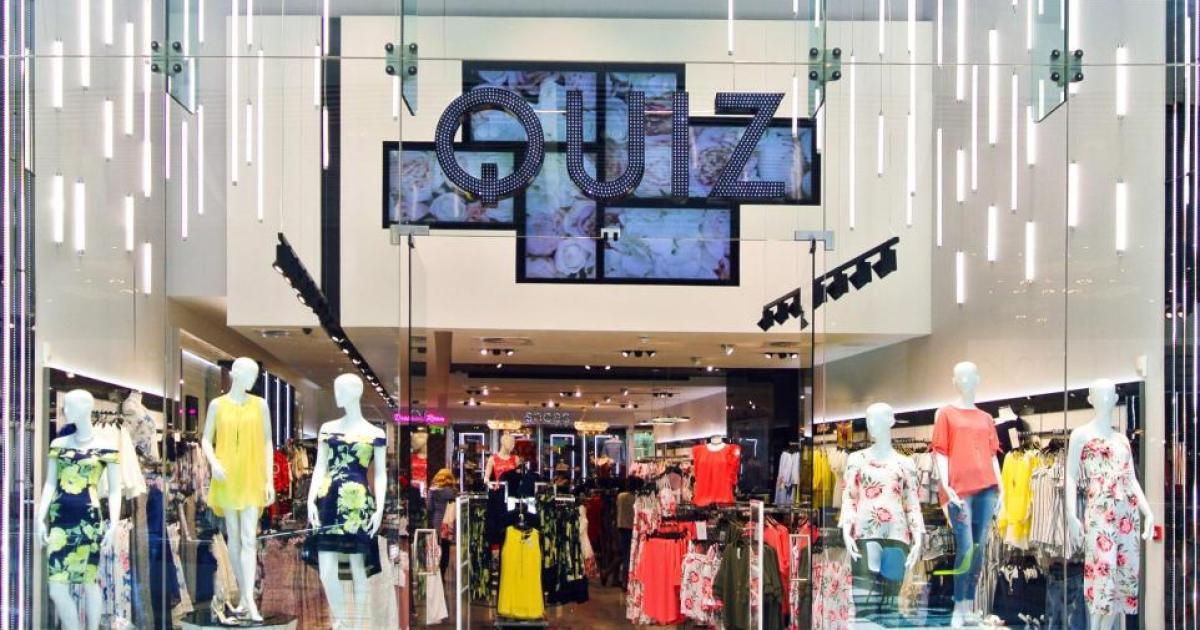
UK fashion brand Quiz to shut final 20 UK stores this weekend
Now, it has been confirmed that all of the remaining Quiz sites, of which there are 20, will shut down by the end of tomorrow (June 20), according to Drapers.
The Scottish retail brand operated 40 standalone stores across the UK before falling into administration.
Three stores were shut before May 21, which was when it confirmed that a “phased closure plan” would see the remaining sites also close down.
Several Quiz store closures took place on June 10, including locations in Aberdeen, Inverness, Warrington, Basingstoke, Bracknell, and Dunfermline.
In the last week, Quiz stores in Warrington, Basingstoke, Hanley, Mansfield, Eastbourne, Telford, Carlisle, Watford, Clydebank, and Irvine have also permanently closed.
Advertisement
Interpath confirmed today that the remaining 20 stores will close by the end of trade on Saturday (June 20), at the latest.
Alistair McAlinden, head of Interpath in Scotland and joint administrator, said: “As the Quiz stores close their doors for the final time, we would like to thank every member of staff for their commitment over the past five months.
“In exceptionally challenging circumstances, their professionalism ensured the business could continue to trade effectively.
“We are extremely grateful for their efforts and wish them all the best for the future.”
Advertisement
The number of workers impacted by all these closures also remains unknown.
Heavy discounts of up to 80% will be on offer at these remaining Quiz stores as administrators seek to sell off as much as possible to help pay the collapsed firm’s outstanding debts.
Full list of the remaining 20 Quiz stores closing by tomorrow
The full list of the final 20 Quiz outlets that will be shutting by the end of tomorrow is:
St. Enoch
Derby
Leicester
Northampton
Portsmouth
Castleford
Newtownabbey
Livingston
Buchanan
Stirling
Trafford
Fort
Merryhill
Braehead
Meadowhall
Metro
Cardiff
Arndale
Craigavon
Hull
Other UK companies that have closed or entered administration/liquidation in 2026
Quiz follows several retailers that have entered administration this year, as well as others who have announced widespread store closures.
Advertisement
Major high street brands LK Bennett and Claire’s both closed all their stores in April, having previously fallen into administration.
UK fashion retailer Leading Labels is also set to close its remaining 15 stores after falling into liquidation.
Other retailers have been forced to close stores this year, including:
It’s also been reported that Morrisons is looking to sell some of its in-store pharmacies as it continues to cut costs.
It’s not been all bad news for the UK high street, with several major brands announcing new store openings for 2026, including Aldi, M&S, and Superdrug.
Did you ever shop in Quiz? Let us know in the comments below.
Labour’s rules mean even getting onto the ballot can be a complex process.
First, candidates must secure the backing of 81 Labour MPs, 20% of the party’s parliamentary strength.
Sir Keir Starmer (Image: PA MEDIA)
They then need to receive nominations from either 5% of constituency Labour parties, or three affiliated organisations (which must include two trade unions) which represent 5% of affiliated membership.
Advertisement
Only after passing those two stages will candidates go before the party membership.
Who could stand in a contest?
Andy Burnham’s decision to stand in the Makerfield by-election – giving up the Greater Manchester mayoralty to become an MP – suggests he believes he has the necessary backing from the parliamentary party to get onto the ballot.
Former health secretary Wes Streeting has repeatedly insisted he has the 81 names required to mount a leadership bid, and has spent the weeks since his resignation setting out his stall.
Former Royal Marines officer Al Carns, who quit as armed forces minister in a row over defence funding and the treatment of Northern Ireland veterans, has also hinted he would seek to enter a leadership race, although it is unclear whether the MP – who was only elected in 2024 – has the supporters required to get on the ballot paper.
Advertisement
How would a Labour leadership contest work?
After a leadership hopeful nails down 81 backers in the Commons and support from constituency parties and trade unions, candidates are then put to a vote among party members, who rank them in order of preference.
A contender is declared the winner if they get more than 50% of first preferences, and this usually happens through a process of elimination during rounds of voting, the timetable for which is set by Labour’s ruling National Executive Committee (NEC).
How long will this take?
Labour’s NEC will set the timetable for the whole election, including how long potential candidates have to secure nominations and how long members will be able to vote.
The party’s last leadership contest, in 2020, ran for around three months, with nominations opening in early January and the result announced in early April.
Advertisement
NEC sources have previously suggested there is little appetite for a long contest, with a maximum of two months being floated.
But Mr Burnham’s supporters have suggested a “transition” period that would see the new leader take over in September, which would mean a longer contest.
What would a coronation look like?
Andy Burnham’s significant support among the parliamentary party could mean he ends up as the only candidate.
With no need for a membership ballot, that scenario could see the contest wrapped up within a matter of weeks or even days.
Advertisement
But given Mr Burnham’s apparent preference for a three-month “transition” period to allow him to prepare for government, it is unclear what would happen next in the event he was the only candidate.
Insisting on a transition would leave Sir Keir as a lame duck over a period that includes a Nato summit where countries are expected to set out plans to increase defence spending, and a UK-EU summit in Brussels seen as crucial to Labour’s attempts to reset relations with the bloc.
There is some precedent for such a coronation, however. Gordon Brown was the only candidate to receive enough nominations in Labour’s 2007 leadership election more than a month before Tony Blair formally stepped down as prime minister.
In that period, Mr Brown still attended leadership hustings around the country to set out his ideas and attempt to win over the public.
A Utah judge is set to decide Monday whether prosecutors crossed a line with public comments about evidence in the murder case against Tyler Robinson, who is accused of killing conservative activist Charlie Kirk.
Defense attorneys for Robinson are asking Judge Tony Graf to prevent prosecutors from pursuing the death penalty, arguing that statements made to the media about a bullet fragment recovered from Kirk’s body could unfairly influence potential jurors.
The dispute centers on comments from the Utah County Attorney’s Office after the defense revealed that early testing was inconclusive on whether the bullet fragment matched the firearm investigators say was used in the shooting.
The Utah judge in the murder case over Charlie Kirk’s killing says he will rule Monday whether prosecutors could face sanctions for comments to the media about a bullet fragment recovered from the conservative activist’s body (AFP/Getty)
Robinson’s attorneys accused prosecutors, including Deputy Utah County Attorney Christopher Ballard, of attempting to shape public opinion by discussing the ballistics evidence outside the courtroom. They argued the comments could damage Robinson’s chances of receiving a fair trial.
Prosecutors pushed back, saying they responded only after speculation surrounding the case spread publicly. Ballard told the court he did not disclose specific details about the evidence and spoke only in general terms about the challenges of ballistics testing.
Advertisement
The high-profile case has drawn intense attention and fueled unverified theories online, including speculation about possible additional suspects. Authorities and attorneys have expressed concern that misinformation could complicate efforts to select an impartial jury.
Tyler Robinson, who is accused of fatally shooting Charlie Kirk, appears during a hearing in Fourth District Court in Provo, Utah, on Dec. 11 (Rick Egan/Pool The Salt Lake Tri)
Legal experts say the defense request is unlikely to succeed. Paul Cassell, a University of Utah law professor and former federal judge, said courts typically handle concerns about media coverage by carefully screening potential jurors rather than blocking prosecutors from seeking the maximum punishment.
“It would be extraordinary” for the judge to remove the death penalty option over the comments, Cassell said.
Robinson, 23, of southwestern Utah, has not entered a plea. Prosecutors have said they will seek the death penalty if he is convicted of aggravated murder in the Sept. 10 killing of Kirk, a close ally of President Donald Trump who was shot while speaking at Utah Valley University.
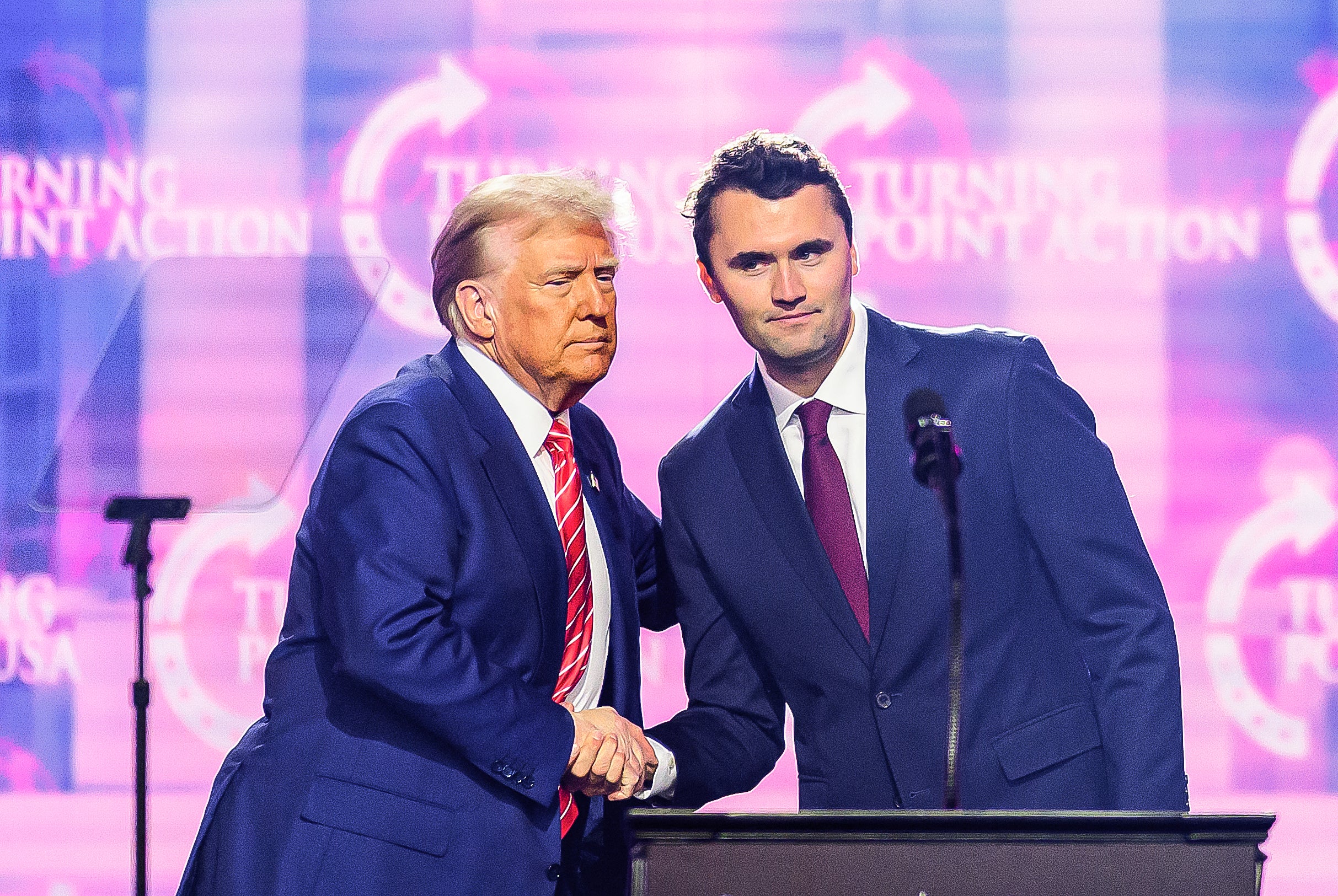
Kirk (R) and and his wife Erika Lane Frantzve (L) on stage during the Turning Point USA Inaugural-Eve Ball at the Salamander Hotel on January 19, 2025 (Getty)
Judge Graf held a hearing last week on whether prosecutors should face sanctions over their remarks. Robinson’s attorneys also pointed to a separate Utah case involving prosecutorial conduct and argued that limiting the death penalty could be an available remedy in extreme circumstances.
A key hearing is scheduled for July 6-10, when prosecutors must present evidence showing the case should proceed to trial.
The Government’s plan for 1.5 million homes is doomed.
Governments don’t build houses. Builders do. But no one builds at a loss or for a miserable profit that doesn’t reward risk or effort.
In 1988 there were more than 12,000 small/medium registered builders.
Advertisement
By 2017 less than 3,000 survived because of increased costs, unrealistic demands and over regulation.
Traditional family firms in York were squeezed out when York Council hiked “affordable” targets from 25 per cent to 50 per cent while reducing the threshold from 25 to 15 dwellings; a ludicrous two dwellings in villages.
As predicted by myself and Paul Cordock planning applications dried up and outturn plummeted – despite City of York Council claiming hostel bed spaces and Lawful Use certificates as new homes.
York’s council blamed anyone but its own policies. Particularly the banks; but many builders had cash reserves and didn’t need to borrow.
Advertisement
Read next:
Those that did couldn’t receive funding because financiers would not take risks where “affordable” demands stripped out profits leaving no headroom for contingencies.
There is a reason why many more homes were built in the 60s and 70s and why people could afford to buy them. There wasn’t the excessive regulations and financial burdens that have since been heaped upon house builders.
Today, even big companies are struggling. They pick and choose sites to proceed and are scaling back operations. Apprenticeships are reduced and the skilled workforce declines. Many entrepreneurs have left the industry. Newcomers are rare because the incentive has largely been destroyed.
Advertisement
Those of us with a lifetime’s construction experience know Labour’s housing targets are unachievable.
Matthew Laverack,
Retired architect and housebuilder,
Lord Mayors Walk,
Advertisement
York
What do you think?
Feel strongly about an issue? Write us a letter. Please write no more than 250 words and you must provide your full name, address and mobile number. Send your views by email to: letters@thepress.co.uk
Write a comment
Advertisement
Join the debate and leave a comment in our comments section below this article – we may use your comments for a follow up article.
























































You must be logged in to post a comment Login