

Politics
A New Lowe: far-right UK politician tells Joe Rogan Dunblane school massacre was ‘one murder’

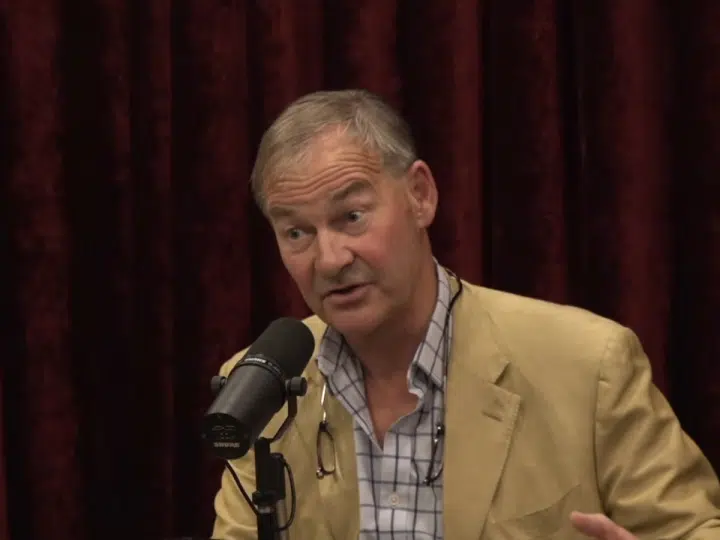
Hard-right Restore Britain MP Rupert Lowe has caused uproar by telling grating Yank podcaster Joe Rogan that the 1996 Dunblane massacre was only ‘one murder’. The tone-deaf right-winger also lamented that his father lost his pistols due to changes in law brought in after the killings.
Well, boo-bloody-hoo, for daddy.
The Oxford-educated ex-banker was talking about UK gun laws with Rogan, who is himself the human embodiment of divorced-man-whose-kids-won’t-speak-to-them energy.
Let’s get this straight. In March 1996, Thomas Hamilton, an alleged nonce, walked into a primary school in Dunblane, Scotland, and massacred 16 primary school pupils and a teacher. He stalked through the halls, at times executing children at point-blank range.
Hamilton also injured 15 more people, then shot himself. The massacre was a significant moment in recent British history. It shocked the nation and galvanised major changes to UK gun laws.
Hard-right MP Rupert Lowe has sparked fury after dismissing the Dunblane massacre as 'one murder' during a pro-gun rant on the US-based Joe Rogan podcast — The National (@ScotNational) July 9, 2026
 pic.twitter.com/3sdjgDdMDK
The tone-deaf and frankly bizarre Rogan-Lowe exchange went like this.
Lowe told the Trump-backing podcaster:
As you probably know they banned handguns in the late 90s because there was a murder up in Dunblane.
Rogan asked:
One murder?
Lowe replied:
One murder.
Poor Lowe – papa got his guns taken away?!
Lowe then told Rogan how his father’s guns had been taken away as a result of post-Dunblane reforms:
So, everybody, my father used to shoot pistols for Oxford University and he had, he’s dead now bless him, but he had all his pistols were taken away, the pistols he used to shoot with at Oxford University.
Needless to say, Lowe has been panned by both victims and politicians. Minister for Scottish Parliament (MSP) Stephen Kerr’s children attended a nearby school:
They’ll never forget being kept in the gym hall until everyone learned the gunman was dead.
They’ll never forget the teachers trying to hold themselves together while reassuring frightened children. To reduce that atrocity to ‘one murder’ is deeply insulting.
It wasn’t a single murder. It was a mass murder. In a primary school.
Jack Crozier’s sister Emma was murdered by Hamilton. He said:
Rupert Lowe’s father had his pistols taken away. My father had his daughter taken away.
He knew exactly what happened at Dunblane. He made an active choice, on one of the world’s biggest podcasts, to describe the massacre of 16 five and six-year-old children and their teacher as ‘one murder’.
The people of Great Yarmouth need to seriously consider if this is who they want representing them.
Lower originally hyped his appearance on Rogan as being about the standard far-right ‘rape gang’ talking point:
A privilege to join @joerogan and hopefully inform a global audience about what has been happening in Britain – mainly the rape, abuse and torture of countless young white working class girls.
I hope you all find our conversation as informative as I did.https://t.co/ApsHRzcffC pic.twitter.com/YOsnLVFkhH
— Rupert Lowe MP (@RupertLowe10) July 8, 2026
Only a day earlier Tory leader Kemi Badenoch had praised Lowe, saying he was better than Reform UK leader Farage:
.@KemiBadenoch praised hard-right Restore Britain leader Rupert Lowe for his work in parliament.
“He turns up to work. Nigel Farage doesn’t,” she said at #POLITICOPlaybookLive.
Rewatch the full conversation: https://t.co/2guaiegerQ pic.twitter.com/0H522qAIn1 — POLITICOEurope (@POLITICOEurope) July 7, 2026
Billionaire Elon Musk has also praised Lowe in the past:
I have not met Rupert Lowe, but his statements online that I have read so far make a lot of sense.
It is hard to know what the worst element of Lowe’s comments is. They were certainly grotesque in their own right. The fact Lowe – a hyper-wealthy, elite-educated banker – was using Rogan’s platform trying to position himself as a defender of ‘white, working class’ children in the first place makes his words all the more contemptible.
Lowe has proven once again why he – and his political bedfellows like Farage, Musk and so on – should be nowhere near power. Not now, not ever. The Canary’s thoughts are with the victims of Dunblane forced to listen to this utter garbage. May God have mercy on his soul. Because we certainly won’t.
Featured image via YouTube screenshot
By Joe Glenton


We hope you love the products we recommend! All of them were independently selected by our editors. Just so you know, HuffPost UK may collect a share of sales or other compensation from the links on this page if you decide to shop from them. Oh, and FYI — prices are accurate and items in stock as of time of publication.
From our sense of fashion, to our interiors, injecting playfulness and child-like imagination into your style is in – and it’s perhaps no wonder the trend has taken off given the impending doom of war, or the imminent threat of beyond-return climate change, that overshadows our lives.
So, if your home still feels decidedly like the third floor flat it is rather than an enchanted fairy cottage, I’ve made it my job to find 27 pieces of furniture and decor that will transform your space faster than you can say ‘bibbidi-bobbidi-boo’.
This way to floating through life.
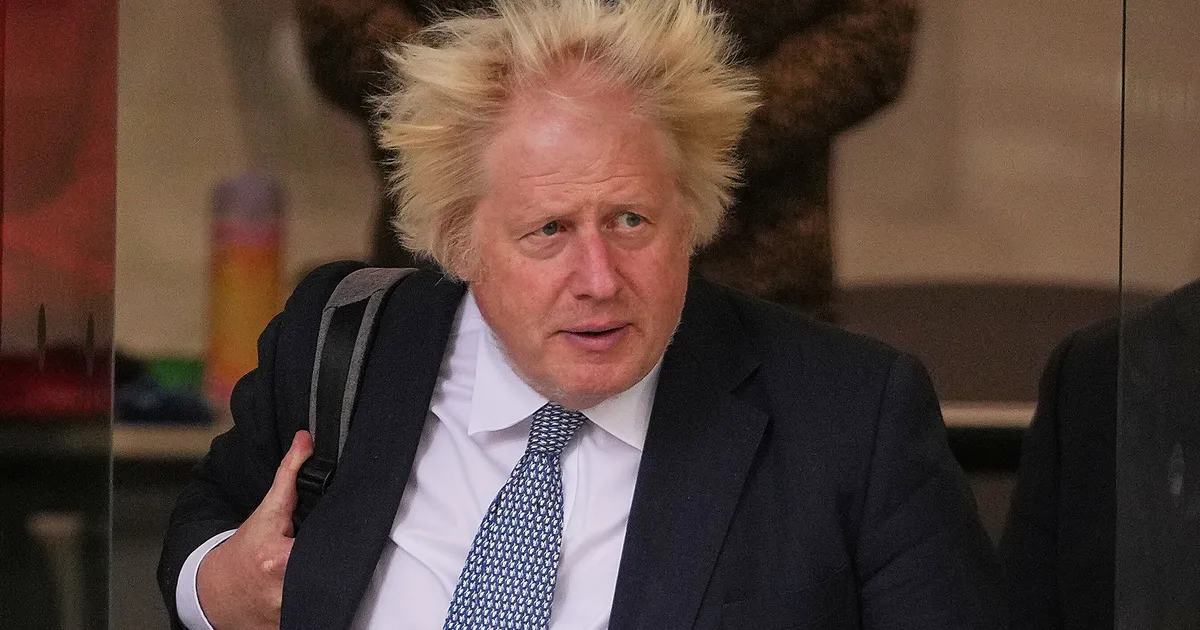
Boris Johnson has claimed Donald Trump could “be the guy” to force Vladimir Putin to end his illegal war in Ukraine.
The ex-prime minister made the bizarre claim more than a year after the US president pledged to bring the conflict to a close in just 24 hours.
The war entered its fifth year back in February.
Trump also famously kicked Ukrainian president Volodymyr Zelenskyy out of the White House last year after his team attacked his outfit and said Kyiv did not “hold any cards” in the war.
Since then, the US has oscillated between pushing Kyiv to give up more land to Moscow in the name of peace, and supporting Ukraine’s ongoing fight against Putin’s land grab.
But, speaking on Sky News, Johnson – who is an ardent supporter of Ukraine – said: “I think that, paradoxically, you know, Trump could be the guy really, to put the hard word on Putin and get this thing done, and there’s no doubt that when it comes to foreign policy initiatives, this is a guy who’s willing to do some, some pretty tough things, right?
“Nobody thought he’s the first American president to use violence against Iran, right?”
Trump chose to join Israel in launching strikes on Iran earlier this year, triggering a significant international conflict and sending the global economy into turmoil.
Johnson continued: “You know, whatever you think about about his logic and how that’s worked out, you know, he is I think he is the guy and I’ve said this to him and I said this repeat.
“I think, paradoxically, although I think that his instincts on on Ukraine haven’t always was language about Ukraine hasn’t always been, you know, put it mildly on, you know, totally on all fours with what I think I think he could he really could fix it. And that’s what I’ve always told him.”
Johnson also acknowledged that Trump has not actually been promoting a push for Ukraine’s sovereignty.
He said: “It would be a very powerful thing if the United States declared that it was, a strategic objective of the United States for Ukraine to be free, sovereign and independent country.”
“No, but you don’t hear that much from Washington, right? And number two, that Ukraine should be part of Nato.”
Asked by presenter Trevor Phillips how Trump responds when Johnson advocates for Ukraine, he said: “I mean, he’s, very good at listening. He’s very good listening.”
Listen to Commons People, the podcast that makes politics easy. Every week, Kevin Schofield and Kate Nicholson unpack the week’s biggest stories to keep you informed. Join us for straightforward analysis of what’s going on at Westminster.
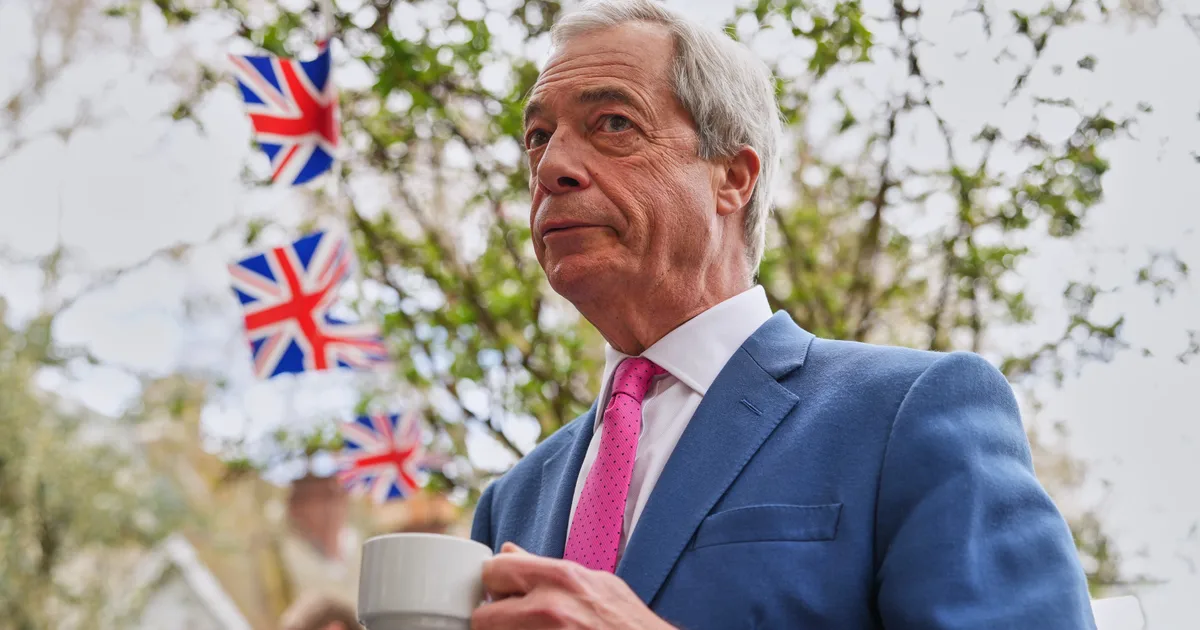
Voters continue to punish Nigel Farage amid the row over his finances as Reform UK slips back in the polls.
According to strategic insight company Opinium, the right-wing party has fallen back to its lowest rate since 2024, having held a comfortable lead with voters for more than a year.
In a survey for the Observer, the pollsters found Reform are currently on 23%.
That’s just one percentage point away from Labour, who on 22%, are at their highest level since April 2026.
It comes as party leader Farage is fighting a by-election he triggered in his constituency of Clacton.
He chose to step down as an MP earlier this month amid heightened scrutiny over his finances.
A parliamentary probe into a £5 million donation he received shortly before he ran in the 2024 general election – but failed to declare – is currently on pause while he is outside of the Commons.
Farage claims he is fighting in a “people versus the establishment” contest, but all major parties have refused to put up a candidate.
The Reform UK leader is now mainly in a race against comedy candidate Count Binface.
Opinium also found the Conservatives are enjoying their highest poll rating since April 2025 on 20%.
Meanwhile, the Green Party lags behind on 14% and the Liberal Democrats are on 11%.
The survey comes after researchers at Survation put both at Labour and Reform UK at 24%.
Polling by More in Common from last week also undermined Farage’s claim not to be part of the establishment.
It showed that 45% of the public believe privately-educated Farage, who is a former MEP and stockbroker, is himself part of the establishment.
That is slightly below Keir Starmer (52%) and Kemi Badenoch (54%), but more than the 41% who think incoming prime minister Andy Burnham is in the establishment.
Listen to Commons People, the podcast that makes politics easy. Every week, Kevin Schofield and Kate Nicholson unpack the week’s biggest stories to keep you informed. Join us for straightforward analysis of what’s going on at Westminster.
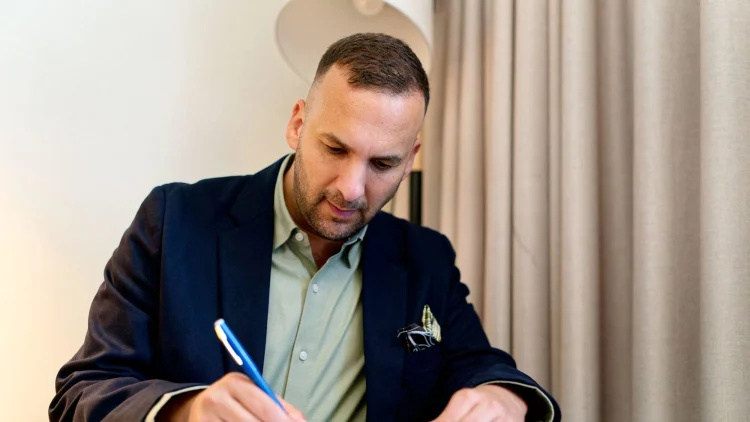
Zack Polanski’s Green Party is at risk of losing voters back to the Labour Party with Andy Burnham as PM (Alamy)

10 min read
As the Green Party embarks on a media blitz to challenge Andy Burnham ahead of his arrival in Downing Street, an internal strategic debate is intensifying over what his premiership means for the party’s future.
After months of benefiting from disillusionment with Keir Starmer’s Labour Party, Green figures are now grappling with a new political landscape. Burnham is viewed as a more formidable communicator who is potentially more capable of winning back progressive voters while also occupying some of the political territory the Greens have started to claim since Zack Polanski became leader last year.
That has prompted a wider discussion inside the party about everything from electoral strategy to political messaging, and even how the Greens define themselves in an increasingly fragmented five-party system.
According to research by Thinks Insight & Strategy for PoliticsHome earlier this month, Burnham will put Labour in a stronger position to win back voters it risks losing to Polanski’s Greens.
Professor Rob Ford, Professor of Political Science at the University of Manchester, agreed that Green voters are some of the “lowest hanging fruit” available to Labour under Burnham.
“They’re the lost Labour voters who are most likely to say they’re still open to voting Labour,” he said.
“They’re most likely to say that the reasons that they shifted away from Labour are that the party’s got too right-wing and they don’t like Keir Starmer, and they also give Andy Burnham very positive approval ratings. If you’re Zack Polanski or a Green activist, that’s bad news for you.”
A senior Green Party source agreed that Burnham presents a new challenge.
“We need to review our political strategy in light of Burnham, and part of the reason for that is we don’t yet know which version of Burnham is going to turn up,” they said.
“If it will be a Blairite prime minister… He’s also had a very different approach as Manchester mayor, and what he will look like in practice is a big question.”
The source added that the Greens could not assume the political conditions that fuelled their recent rise would continue.
“The path and the space the party has been in in the last few months is not necessarily going to be the same as it’s going to be in the next couple of years,” they continued.
One of the biggest questions now facing the party is whether its electoral strategy should evolve.
The Greens’ existing ‘target to win’ approach focuses activists and resources on constituencies where the party believes it has a realistic chance of victory under first-past-the-post, rather than spreading campaign efforts evenly across the country.
The success of that strategy has largely been built around Labour-facing urban seats, but some figures inside the party are questioning whether Reform’s rise means those priorities should change.
The senior Green source said there was an “ongoing discussion” about where the party should focus under Burnham.
“Any party will be recalibrating where it’s at, and there are big decisions for the party to make around where it focuses the next general election,” they said.
“So there’s a debate over whether the party focuses largely on urban seats that would otherwise be Labour, or does it also have a focus on seats that would otherwise be Reform.
“There’s a lot of concern in the party that we have got to play our role in stopping Reform, rather than the target seats that would otherwise be Labour. Otherwise, we’re not part of the solution of avoiding the huge risks of a Farage-led government.”
However, an official Green Party source insisted the debate should not be seen as an either-or choice.
“The Greens are performing well in elections in urban areas and also smaller towns,” they said.
“We are performing well in Reform-facing seats like Hastings and Kettering. Reform and Green voters both want change; both are fed up with the status quo. We are and will be making our case in both Labour and Reform-facing areas on why the Greens’ version of change is the one most likely to deliver real change. Policies such as rent controls, wealth taxes and public ownership are popular with Labour and Reform voters.”
They added that Green and Reform voters had both had enough of the “status quo” and “the super-rich getting ever richer”.
“On the substance of these issues, Burnham looks like he’s more likely to keep things broadly the same, with better comms,” they said.
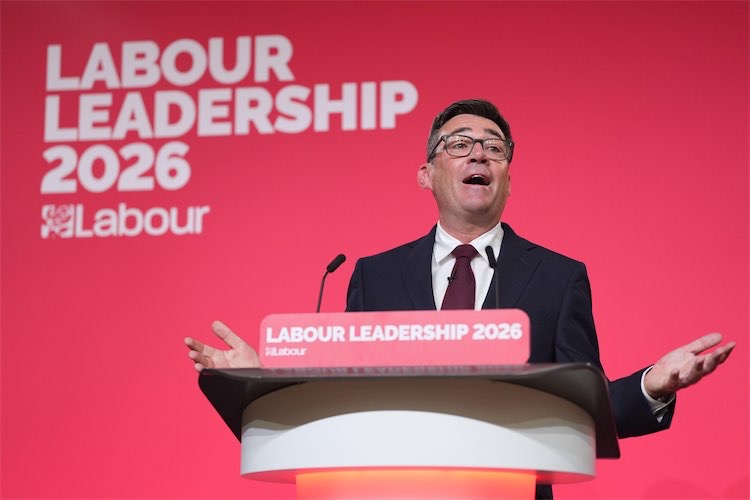
The challenge is not simply deciding which constituencies to target, but whether the party can sustain a national message while fighting very different opponents. Several figures described a tension between emphasising pro-migrant and multicultural politics in Labour-facing cities while leaning more heavily into anti-establishment arguments in seats where Reform is the principal challenger.
Although the national headquarters decides where campaign resources are allocated, local parties retain considerable freedom over campaigning tactics, cross-party deals and power-sharing.
Ford believes prioritising Reform-facing seats alongside Labour-facing target seats would be a “borderline delusional strategy” and an “act of electoral self-harm”.
“The Greens have actually been gifted in 2024, much like the Lib Dems were after the 2019 result, a really obvious electoral map,” he said.
“There are 40 seats where the Greens start in second place, which means there are 40 constituencies where they can start campaigning on day one of a general election campaign, saying if you don’t like the incumbent MP, we’re the most viable local alternative.
“Every single seat is currently held by a Labour MP, and most of them look quite similar to each other. They’re mostly city-centre urban seats. They’re mostly young. They’re mostly ethnically diverse.”
The Greens plan to use Burnham’s first weeks in office to draw political dividing lines with Labour and challenge him over issues including rent controls, wealth taxation, public ownership and arms exports to Israel.
According to an internal Green Party memo seen by The New Statesman, the party plans to specifically target Shabana Mahmood if she is appointed as Burnham’s chancellor next week, accusing her of “fiscal constraint and economic orthodoxy” while also taking aim at her controversial immigration reforms.
Sources close to former Green Party leader Caroline Lucas reject any suggestion that the party has shifted away from its environmentalist roots and more towards the left under Polanski. Instead, they argue that the party has always had a left-wing policy agenda, and its evolution in tone over the years has been strategic.
During Lucas’s most recent stint as party co-leader alongside Jonathan Bartley between 2016 and 2018, the emphasis was on gradually building credibility while Labour under Jeremy Corbyn occupied much of the radical left-wing political space. Under the leadership of Siân Berry, and later Carla Denyer and Ramsay, the focus increasingly shifted towards identifying winnable parliamentary seats and maximising representation at Westminster.
The arrival of former Labour members, campaigners and staff to the Green camp during Starmer’s premiership has accelerated that process. Party sources credit those arrivals with bringing valuable campaign experience that the Greens previously lacked. However, some also worry that Labour’s political culture does not always translate easily to a party that has traditionally built itself from local government upwards.
One senior source warned against narrowing the party’s appeal with more former Corbynites joining the Green Party each month.
“The traditional Green style is one that can have wide appeal, and it’s really important that the party does not create a narrow box for itself that’s just the ex-Corbynites, but that can have an appeal to a wide electorate,” they said.
Another senior Green figure said the debate was not about left versus right, but that the “genuine tension” in the party was about political strategy and to what extent the Greens should be thinking strategically about tactical voting and preparing for a progressive alliance with other left-leaning parties, including Labour.
They said there was a “degree of naivety” in the Green Party when it comes to electoral politics.
“There are a lot of people not understanding that we’re in new territory with a five-party system under first past the post,” they continued.
“People are voting tactically more than ever. People don’t go out and vote simply on the basis of politics and policies; they vote for who they believe can win, or who will keep out the people they really don’t want to see win.”
Party figures distinguish between formal electoral pacts (where parties agree not to run against each other in certain seats), which remain deeply unpopular inside the party, and a broader progressive alliance which could include parties working together after elections in councils, agreeing on common policy goals, or parties signalling they are open to governing together if the numbers allow.
The Greens began exploring electoral pacts with Labour during the Corbyn years, but were refused. They later struck an electoral agreement with the Liberal Democrats in 2019.
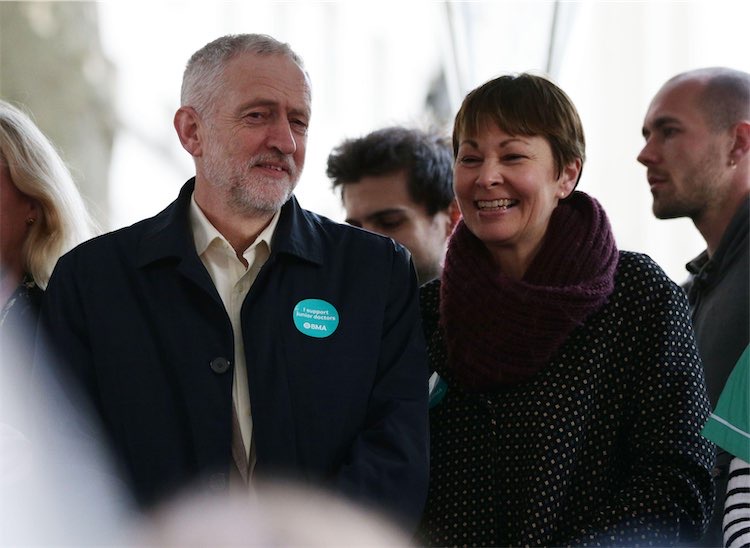
Another Green figure reflected on earlier attempts to work with Labour, saying that if Corbyn had agreed to do a deal with the Greens in 2017, “we might well have seen a Labour-led progressive government” and “wouldn’t have had the 10 years of disaster that we had”.
“But Jeremy just didn’t want to do it, and [then-Lib Dem leader] Tim Farron, at the time, who we met with, didn’t want to do it either, which was heartbreaking.”
There was considerable appetite among Green councillors for cross-party deals following the local elections in May this year.
Green Party councillor James McAsh has become the leader of Southwark Council, with the Greens forming a joint administration with the Lib Dems in the London borough. McAsh, who defected from the Labour Party earlier this year, told PoliticsHome that he and many other Labour-Green defectors were open to the idea of working with Labour going forward.
“Early indications are suggesting [Burnham] would favour a more collaborative approach,” he said.
“We could be in a place where Labour and the Greens are working together more closely in various places across the country.
“Working with the Labour Party is very much still an option in the future, because I think that the progressive bloc is out there, which includes people who are in the Labour Party, and rebuilding the coalition – that 50 years ago existed exclusively within the Labour Party – as a multi-party bloc is in my view the best way to defeat Reform.”
Enthusiasm from the Green leadership for formal national pacts has cooled in recent years, though Polanski has said he would potentially be open to working with Burnham in some capacity.
Former leader Lucas recently told The House she remained sceptical of reviving the idea of a progressive alliance, arguing the Greens’ “fingers have been really burnt by it” in the past.
An official party source said: “The Greens will always have a clear, distinct identity. Zack has made clear that he couldn’t work with Starmer and is open to seeing if there are areas where the Greens can work with Andy Burnham.
“But it is also becoming clearer through his early policy indications and appointments of many people associated with the Blair era that Labour doesn’t look like it’s serious in any way about shifting wealth and power towards working-class people.
“In terms of electoral priorities, it is to challenge everywhere, as a national political party, our message is a broad change message, with appeal across the board, to protect the planet, challenge the power and wealth of the super-rich and give it back to the people.”
Green figures broadly agree that Burnham represents a more serious political challenge than Starmer did. While there is widespread acceptance that the party will need to adapt its strategy, there is far less agreement over what that strategy should look like.
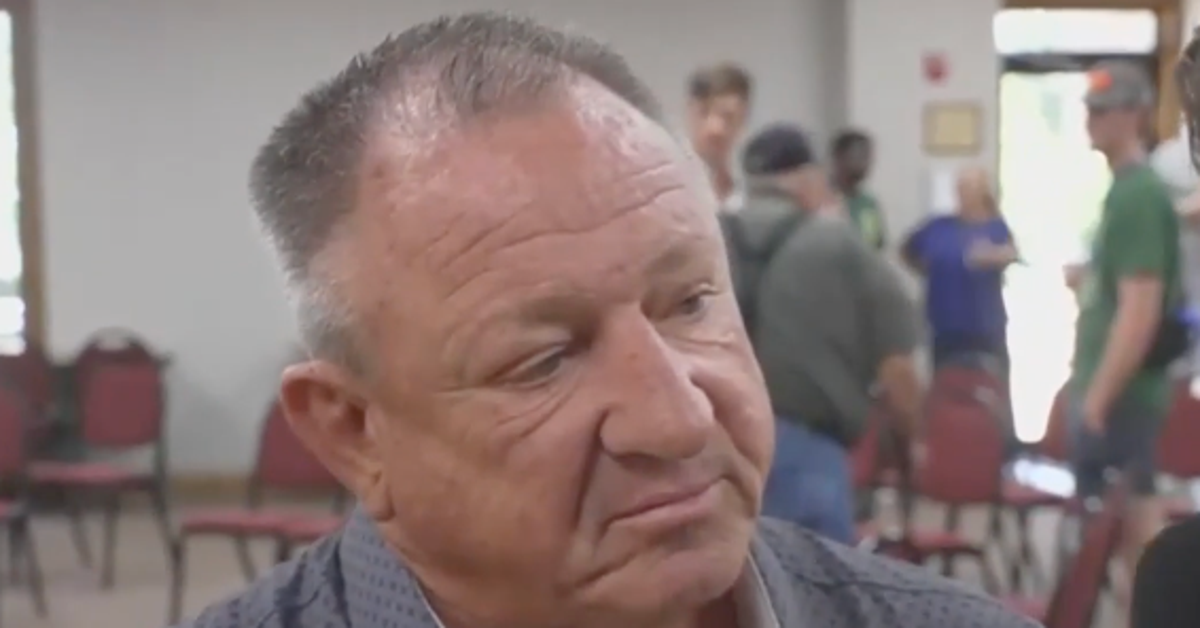
Following the speech, where Trump pontificated about supposed vulnerabilities in voting systems and debunked conspiracy theories about his 2020 election loss, MS NOW’s Alex Tabot spoke with voters in Iowa.
MS NOW’s “The Moment” host Katy Tur featured some of those interviews during Friday’s show, where Tabot asked Mark Bogue how he felt about Trump giving a speech about the 2020 election in 2026.
“I would like to see him move forward and get off that topic, yes sir. I’d like to get back to what we’re really trying to accomplish, and that’s — even today, I want to hear where we’re going. I’m not all for that conversation at all,” Bogue said.
Tabot further pressed Bogue on what he would prefer to see the president focus on.
“Well, let’s get Iran figured out … get the economy, get gas prices back down, which I think they will be if we can get that figured out. So I think right now that’s the biggest topic, is Iran. Where are we going with this thing?” Bogue said.
Watch the clip of Tabot’s interview with Bogue here:
Listen to Commons People, the podcast that makes politics easy. Every week, Kevin Schofield and Kate Nicholson unpack the week’s biggest stories to keep you informed. Join us for straightforward analysis of what’s going on at Westminster.
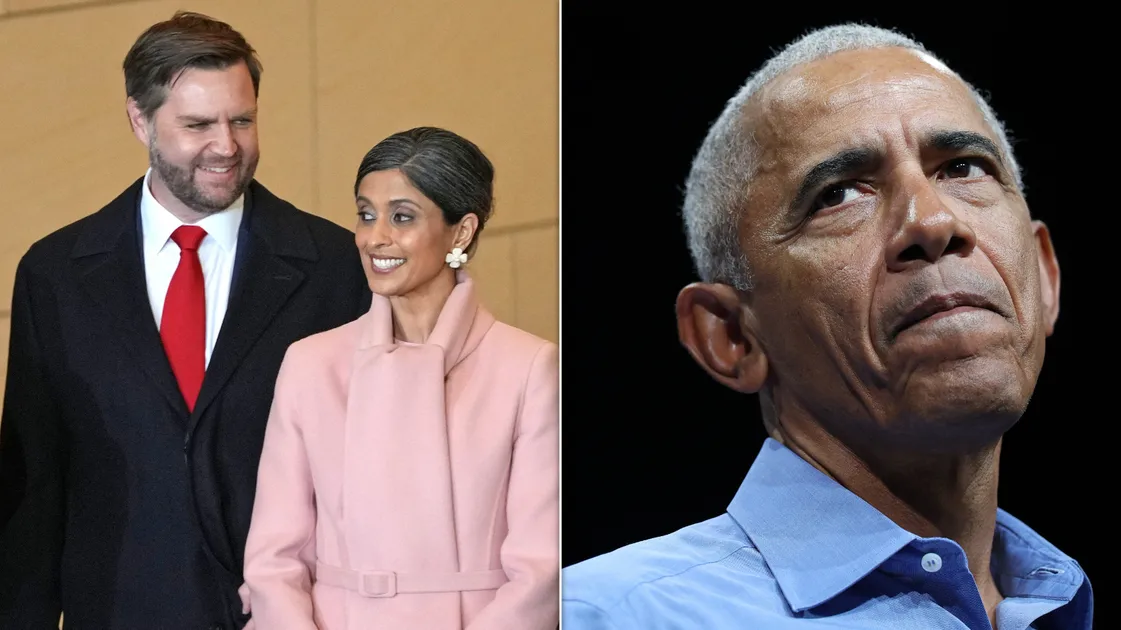
Former President Barack Obama is calling out Vice President JD Vance for his nativist, anti-immigrant rhetoric – but also offered a tiny sliver of hope.
Speaking with author Malcolm Gladwell for a podcast interview on Thursday, Obama noted that “we’ve been having the same arguments” about who should be considered a “real” American since the end of the Civil War.
He then pointed out the irony of Vance spreading white nationalist-coded rhetoric about birthright citizenship while married to the daughter of Indian immigrants.
“At least one of our major parties has been captured by politics that is not that subtle about suggesting that ‘We the people’ means a certain kind of people,” Obama noted to Gladwell.
“When you have the vice president – the current vice president – making a speech that is basically a blood-and-soil version of ‘We the people,’ that it matters who your parents were, how long they’ve been here, despite him being married to… a daughter of an immigrant himself, that echoes, then, ideas about who can be a citizen, who belongs, who gets to make decisions.”
It’s unclear which of Vance’s speeches Obama was referring to, but while speaking to a conservative think tank last year, the vice president heavily implied that real Americans are, well… a particular sort of people.
“Social bonds form among people who have something in common. They share the same neighborhood. They share the same church. They send their kids to the same school. And what we’re doing is recognising that if you stop importing millions of foreigners into the country, you allow that social cohesion to form naturally,’” Vance said.
Griping about the “modern left,” he continued: “I think the people whose ancestors fought in the Civil War have a hell of a lot more claim over America than the people who say they don’t belong.”
Vance later added, “America is not just an idea. We’re a particular place, with a particular people, and a particular set of beliefs and way of life.”
Obama’s point about “who your parents were, how long they’ve been here” was also echoed in Vance’s acceptance speech at the 2024 Republican National Convention, in which he romanticised his own heritage while talking about the people who live near his “ancestral home” in Eastern Kentucky.
Vance described them as “good,” “very hardworking people” who would “give you the shirt off their back even if they can’t afford enough to eat.”
“And our media calls them privileged and looks down on them,” Vance said. “But they love this country, not only because it’s a good idea, but because in their bones they know that this is their home, and it will be their children’s home, and they would die fighting to protect it. That is the source of America’s greatness.”
In response to Obama’s comment about JD and Usha Vance, Gladwell made a slightly optimistic, if cynical, point.
“A hundred years ago, a vice president could not stand up and make a nativist argument if he was married to the daughter of an Indian immigrant — but today he can,” Gladwell said. “So, we’ve moved on from malice to hypocrisy — that’s progress!”
Obama laughed in response.
“Listen, hypocrisy is progress,” he agreed. “Because it means that… you feel guilty enough to either lie to yourself or others. And that is better than not even thinking about the idea that maybe you’re doing something wrong.”
Listen to Commons People, the podcast that makes politics easy. Every week, Kevin Schofield and Kate Nicholson unpack the week’s biggest stories to keep you informed. Join us for straightforward analysis of what’s going on at Westminster.

I’ve been called out for saying “sorry” a lot – it doesn’t help that my automatic response is to apologise.
Jess Baker, a chartered psychologist and author of The Super-Helper Syndrome, told HuffPost UK: “Saying sorry a lot is not always a sign of a deeper issue. For many empathic people, apologising is a sign of awareness, kindness and a desire to maintain good relationships.”
But sometimes, the reflex might reveal something worth exploring.
“The key question is: are you apologising to acknowledge impact, or to manage other people’s reactions?” she asked.
What does it mean if I say “sorry” too much?
The psychologist, who works with “super helpers”, or those who feel a compulsion to go out of their way for others even at their own expense, said she often sees apologies “become a form of emotional over-responsibility”.
“People who are highly attuned to others can start believing it is their job to prevent disappointment, discomfort, or conflict,” she added.
“‘Sorry’ becomes a way of saying: ‘I don’t want to be a problem’, ‘I hope you’re not upset with me’, or ‘I’ll make this easier for you’.”
Baker added there are lots of reasons why people might start to over-apologise, including:
When might over-apologising be worth investigating further?
As Baker said earlier, some people say “sorry” a lot without it really being an issue. However, “it becomes something to investigate when someone apologises for having needs, boundaries, opinions or presence,” she suggested.
“If ‘sorry’ appears before a reasonable request, a challenge, or an idea in a meeting, it may point to a deeper pattern of self-doubt or people-pleasing.”
The aim, she reminded us, is not to stop people saying “sorry” when they want to – the word itself isn’t the problem here.
“A genuine apology is a sign of emotional intelligence. The aim is to make sure you are apologising from compassion, not from fear of taking up space,” she ended.

A divisive discussion thread about supposed “constant feeding” and “snacking” among children has garnered hundreds of comments on Mumsnet.
One user shared that they’d been at a swimming lesson (presumably watching their child), while sat next to two children who they described as “chomping their way through a packet of crisps and a packet of chocolate biscuits at 4pm”.
“We had a day out with friends on Tuesday at a farm park and kids are being handed food every five minutes,” they added.
“You go down the street and everywhere you look the toddlers in buggies have their little hands stuffed in packets of puffs or gripping a biscuit. It’s no wonder we have such chubby children everywhere.”
Asking other Mumsnet users if they were being “unreasonable” for bringing this up, 41% agreed they were, while 59% said they weren’t.
One commenter said: “This completely winds me up. I’m with you OP [original poster]. The snack culture in this country is doing everyone a huge disservice.”
But another parent couldn’t quite understand what the issue was: “I thought it was normal to give your children a snack, we do fruit/crackers/oatcakes/yogurt/veg sticks and hummus mid morning, mid afternoon and sometimes before bed. I also like a snack. We also all eat normal meals.”
A new “Great British Snacking Crisis” report from Imaginakery found that children ask for almost four snacks every day, on average. For one in five (20% of) parents, the snack requests start as early as before 8am.
Of those polled, one in 10 said they never refuse snack requests from their children, while nearly three-quarters (72%) said they are unlikely to refuse more than five requests in a day.
‘We have become a hugely snack-driven culture’
Baby and child nutritionist Charlotte Stirling-Reed told HuffPost UK some of the comments shared online around children’s snacking are “harsh” and “unfair”. That said, she does believe “we have become a hugely snack-dominated culture”.
She mentioned supermarket aisles, where processed snacks are commonly marketed towards young babies and toddlers. “Snacks under 12 months are not recommended at all,” she said. “But actually, right from that age and above we have become a hugely snack-driven culture.”
Off the back of a Panorama investigation into baby food pouches which lacked key nutrients, the BBC previously shared how there’s also been a “rise in sales of snacks like fruit and vegetable-based straws, puffs and wafers”.
This led former chief nutritionist to the government, Dr Alison Tedstone, to remark: “Companies are dressing these products up as being healthy, when actually they’re much like a crisp or a sweetie. They’re putting profit before health.”
Stirling-Reed understands why parents turn to snacks and highlights that “parenting is tough”. She’s right – many of us are time-starved, dashing from A to B and simply trying to keep our kids happy, satiated and any “hanger” at bay.
But often snacks are being used for reasons other than hunger or offering nutrients and balance, she claimed, suggesting parents use them to pacify, bribe, entertain or distract.
“We’re not necessarily using them for the reason we should be using snacks,” she added.
“I think a lot of parents aren’t trying to do this wrong, I think they’re actually struggling with the advertising of snacks that are available – with the bombardment that you get when you go to a supermarket or a petrol station.”
The NHS advises families that fruit and vegetable snacks are “always the best choice” for children, but if they are having packaged snacks “aim for two a day max”.
Imaginakery’s report found biscuits (69%), chocolate (59%) and crisps (57%) top the rankings for the snacks most frequently consumed by kids.
These all fall under ultra-processed foods, or UPFs, which have been linked to everything from gut disruption to “hedonistic hunger” (eating for pleasure or comfort). These snacks are typically nutritionally poor, calorie-dense, and easy to eat quickly.
The problem with placing too much of a focus on snacks
Stirling-Reed said she doesn’t want parents to feel shamed as messaging around snacking is “confusing”, but claims that how parents are using snacks at the moment “is not how they’re meant to be used”.
She explained that some children are “grazing” on food throughout the day “which means they’re not really having much of an appetite for their mealtime”.
“They’re not learning ‘am I hungry?’, ‘am I not hungry?’,” she continued. “And then, they often get to those mealtimes – it might be lunch, it might be dinner – with very little in the way of an appetite”.
This can then result in children skipping meals (or not eating much of them) – and therefore missing out on important nutrition – because they simply aren’t hungry.
“It’s not helping children with their relationship with food, with their appetite, with getting the right amount of nutrients and the right balance in, with eating those evening meals that we spend our time creating,” the nutritionist said.
How to address snacking habits at home
If you’re thinking of overhauling your snack system at home, it might be worth readdressing what a snack actually is. The nutritionist suggested they should be “mini meals” (check out some ideas here) that are “balanced, so we’re trying to get some of those food groups in”. These are fruit and veg, carbohydrates, dairy, proteins, fats and oils.
We should also be trying to address important nutrients like iron, protein, zinc, fibre and omega-3 in our snacks as well, she added.
“But they also should be timed, so we should know they’re happening at certain times through the day,” the expert continued.
“It might be between breakfast and lunch, or between lunch and dinner, and it should be a mini top-up to help them get through to the next meal, rather than what we are currently using snacks for.”
As for processed snacks aimed at babies and toddlers, Stirling-Reed added: “I’m not saying never, ever offer them – of course that’s not realistic. But actually, people relying on them as snacks most of the time is not going to be helpful.”
Nutritionist Dr Emma Derbyshire, who is working with Imaginakery, said children mimic their parents’ actions, so parents can encourage healty snacking habits by regularly eating healthy snacks with their children.
She added that it’s worth appealing to their inquisitive sides by giving them the chance to get involved with washing, peeling or chopping fresh fruit and vegetables. Growing your own produce can also help keep them engaged and interested.
Some parents swear by leaving out “veggie plates” an hour or so before dinner, which are filled with chopped veggies like peppers, cucumber and carrots.
It’s also worth considering which snacks you have readily lying around your home.
“If children see unhealthy snacks lying around, they become accustomed to these products feeling like the norm for snacking,” said Dr Derbyshire.
“Keep healthy snacks at eye level on counters, in fridges and in cupboards, while unhealthy treats should be stored out of reach and view.”

We’ve written before at HuffPost UK about how the modified Mediterranean, or MIND, diet has been linked to a 53% lower risk of dementia among its strongest followers, and a 35% reduced likelihood among moderate adherents.
And now, a new analysis published in Nutrients has reviewed hundreds of studies about interventions like these.
Researchers looked at lab, animal, clinical, and population-based studies and found polyphenols (antioxidants naturally present in some foods) “represent a biologically plausible and increasingly supported, yet not fully established, strategy for promoting healthy brain ageing”.
This included some specific foods and drinks, though the researchers stress that this isn’t so much about “superfoods” as it is maintaining a healthy overall diet.
Which foods are rich in polyphenols?
“Polyphenols are not miracle cures, but research suggests they may be promising tools for supporting healthy brain ageing,” said the study’s senior author, Dr Mónika Fekete, an Assistant Professor at the Institute of Preventive Medicine and Public Health, of Semmelweis University.
“The focus, however, should not be on dietary supplements but on a varied diet rich in plant-based foods.”
With that caveat, the study listed the following as polyphenol-rich food and drink sources:
- berries,
- grapes,
- apples,
- onions,
- flax seeds,
- sesame seeds,
- vegetables in general,
- fruit in general,
- tea,
- cocoa,
- coffee,
- whole grains, and
- extra-virgin olive oil.
These featured a variety of polyphenol sub-classes, including flavonoids, phenolic acids, stilbenes, and lignans.
Not all of these were absorbed in the same way by different people, though, possibly due to differences in individuals’ gut microbiomes.
“This may help explain why the same diet does not affect everyone in the same way,” said lead author Dr Noémi Mózes, an Assistant Professor at the Institute of Preventive Medicine and Public Health of Semmelweis University.
“In the future, personalised nutrition could help us better understand who is most likely to benefit from a polyphenol-rich diet.”
Green tea might help too
EGCG, a compound found in green tea, appeared in a lot of the studies this paper reviewed and seemed to be linked to better memory.
A 2017 trial found that consuming oolong or green tea daily could slash your risk of cognitive decline in half, while more recent research suggested that the compound might help to give our brain cells more energy.
Again, Semmelweis University reminded us that there’s no anti-dementia “miracle diet”.
However, they did say “existing evidence suggests that regularly eating more vegetables, fruits, berries, fibre-rich foods, fish, and nuts” in addition to limiting highly-processed foods “may help support healthy brain ageing and preserve cognitive function over time”.

However, before the film had even been released, there was one supporting cast member whose performance was already being singled out for praise.
British actor Samantha Morton plays Circe in Christopher Nolan’s new take on Homer’s Greek epic, and has repeatedly been mentioned as a stand-out.
In fact, her performance in the movie was so jaw-dropping, the cast and crew apparently stood around and gave her a round of applause when she was done shooting.
“This was a massive film and she is someone who comes in and changes the dynamic,” Nolan told the LA Times. “In some weird way, the film lived or died over that character. She was the fulcrum.”
While The Odyssey might be one of Samantha’s most high-profile projects to date, the Bafta winner has been working steadily in both film and TV since the early 90s – and anyone who has seen her work over the last 35 years won’t be surprised to hear that she is a highlight in Nolan’s film.
In honour of her work in The Odyssey, here are 11 Samantha Morton roles you might well have forgotten all about…
Soldier Soldier (1991)

Samantha’s very first role was in the ITV drama Soldier Soldier.
Nottingham-born Samantha discovered acting when a teacher recommended she apply to the Central Junior Television Workshop, which led to her playing Clare Anderson in four episodes of the first series.
The future Oscar nominee was just 14 when she appeared in the series, which starred Robson Green and Jerome Flynn, and took place in the aftermath of the Cold War.
Band Of Gold (1995)

Samantha followed her role in Soldier Soldier with a smart part in Robbie Coltrane’s crime drama Cracker, before being cast in Kay Mellor’s iconic series Band Of Gold.
Samantha was just 16 years old when she started filming her breakout role as Tracy Richards in the drama, alongside the likes of Geraldine James, Ray Stevenson and Cathy Tyson.
Band Of Gold centred around a group of sex workers in Bradford, with Samantha portraying a teen runaway who was hooked on drugs supplied to her by a pimp.
Years later, Samantha disclosed that there had been uncomfortable moments while shooting this series.
She told The Big Issue in 2019: “When I was in Band Of Gold, there was a scene a particular director wanted me to do topless, though that wasn’t in the script. I was 16 years old. 16! And I was having a sex scene with a man in his 60s.
“I was sobbing in the trailer and it was all, ‘Sam’s being tricky…’ I didn’t understand that I had a right to say I didn’t feel comfortable. I felt I was from the streets and I’d won the lottery even being in the show, rather than feeling I had earned the right to be there.”
“Some of the male directors working in TV drama in the 90s were delicate and kind,” she added. “And some were bullies and brutal.”
Under The Skin (1997)

BFI/Channel Four/Kobal/Shutterstock
A year after her performance in Band Of Gold, Samantha appeared in the British indie film Under The Skin.
She co-starred with Claire Rushbrook in the drama, which told the story of two sisters coping with the sudden death of their mother.
Following its release, she was lauded for her performance as the grieving teen, and winning multiple awards.
Jesus’ Son (1999)

Larry Riley/Lions Gate/Kobal/Shutterstock
As Samantha became more well-known, she appeared in Jesus’ Son, a film based on Denis Johnson’s collection of short stories of the same name.
The drama followed a hopelessly lost man – played by Billy Crudup, and known as just FH – through his stint as an orderly in a hospital, and his time in rehab to treat his addiction to heroin.
Dennis Hopper, Jack Black and Holly Hunter were among the cast who played the colourful characters FH met in his life, while Samantha played Michelle, his love interest.
Code 46 (2003)

By the early 2000s, Samantha had racked up a role in the Hollywood blockbuster Minority Report and earned an Oscar nomination for her performance in the film In America.
Around this time, she starred in Michael Winterbottom’s Code 46, a dystopian love story set in the year 2077.
The high concept sci-fi flick takes place in a divided society, split up into those “inside”, who live in high-density cities, and the others, who live in sprawling concentration camps “outside”.
Access to the “inside” is forbidden to anyone without the right paperwork – with Samantha starring as Maria, a forger who works on creating fake versions of these documents.
Meanwhile, Tim Robbins plays a detective sent to investigate this forgery operation, only to wind up falling in love with Samantha’s character.
While the film itself received a lukewarm reaction, Samantha and Tiim were praised for their performances, with Empire calling them “two fine actors at the top of their game”.
The Libertine (2005)

Isle Of Man Film Ltd/Odyssey/Kobal/Shutterstock
The Libertine is one of many period dramas Samantha has starred in over the years, having also appeared in the likes of Harlots, The Seepent Queen and The Burning Girls.
In the film, she plays Elizabeth Barry, a struggling actor in 17th-century London. Her strong-willed character is taken under the wing of the titular libertine himself, Johnny Depp’s John Wilmot, 2nd Earl of Rochester, and their subsequent affair leads to both of their downfalls.
Once again, the intoxicating biopic of the real-life poet and playboy received mixed reviews, but Samantha received widespread acclaim for her performance, in particular her moving Ophelia monologue.
Control (2007)

Warner Music/Kobal/Shutterstock
In this biopic about British musician Ian Curtis, Samantha played Deborah, the late Joy Division singer’s wife.
Control charts the ups and downs of the couple’s lives, beginning with the formation of Joy Division in 1973, all the way to his death by suicide in 1980.
Co-starring Sam Riley, the musical biopic was described by the BBC as a “gritty” tribute, “with enough wit and credibility to entertain as well as educate”.
Meanwhile, The Guardian singled out Samantha’s work as Deborah as an “intelligent, sympathetic performance”.
Elizabeth: The Golden Age (2007)

Laurie Sparham/Universal/Studio Canal/Working Title/Kobal/Shutterstock
The historical drama was a sequel to 1998’s Elizabeth, and followed the English queen as she faced the Spanish Armada, survived an assassination attempt and embarked on a forbidden romance with explorer Sir Walter Raleigh.
Samantha Morton played Mary Queen of Scots in the Queen Elizabeth biopic, which starred Cate Blanchett as the English monarch.
Joining them in the movie were impressive British names including Clive Owen, Rhys Ifans and Eddie Redmayne – not to mention a small role from a young actor by the name of Jonathan Bailey, still in the early stages of his own acting career.
Cosmopolis (2012)
You might not realise it, but The Odyssey is not the first time Samantha Morton has appeared in the same film as Robert Pattinson.
The two previously shared the screen in 2012’s Cosmopolis, a trippy adaptation of Don DeLillo’s book of the same name.
Samantha played Vija Kinsky in the David Cronenberg film, an advisor to Robert’s billionaire currency trader.
The eccentric film took place almost exclusively in the back of a limo, as Rob’s tycoon character was driven around New York with visits from various key figures in his life.
John Carter (2012)

The same year as Cosmopolis, Samantha appeared in a very different type of film, providing both the voice and motion capture for a key role in John Carter (which, sadly, was thrashed by critics and went on to become considered one of the biggest flops of the 2010s).
In the ambitious sci-fi adventure movie, she played Sola, a kind-hearted Martian who helps Taylor Kitsch’s titular character navigate the red planet.
The Whale (2022)
Samantha played a small, though memorable role, in the film which won Brendan Fraser his Academy Award in the early 2020s.
The divisive film focussed on a reclusive English teacher nearing the end of his life, who hopes to bond with his disillusioned teenage daughter before it’s too late.
Near the end of the film, Samantha appears in one key scene, sharing the screen with Brendan Fraser when she storms into his character’s apartment to give him a piece of her mind.
The Odyssey is in cinemas now.

How To Clean Refrigerator Condenser Coils (And How Often You Should)

Top 10 BEST Money Making Rods in Fisch! (Make Billions Fast)

Harrogate defence firm Armexis to scale up production


-
 NewsBeat3 days ago
London Mayor Sadiq Khan handed a peerage by Keir Starmer alongside 15 other Labour figures… just days before the PM leaves No10
-

 Fashion2 days ago
Weekend Open Thread – Corporette.com
-

 Politics23 hours ago
The House | The City of London can help the new chancellor deliver growth in every postcode
-

 Crypto World3 days ago
CFTC blocks Kalshi from unwinding Michigan trades after court order
-

 Politics4 days ago
Young campaigners urge incoming PM to act on outdoor junk food ads
-

 Business3 days ago
Nvidia Stock Slips After Big Tuesday Rally as Huang Confirms Vera Rubin Chip Is Now in Production Today
-

 Crypto World23 hours ago
Ripple Payments Joins MiCA With 14 Firms, Does It Mean Anything For XRP?
-
 Entertainment4 days ago
Disney’s Most Ambitious Failed Star Wars Attraction Is Coming to SDCC
-

 Crypto World1 day ago
Ripple wins EU-wide access as ESMA adds it to MiCA register
-

 Business3 days ago
Palantir Shares Rise After Expanded Nvidia Partnership and Fresh Analyst Upgrades Ahead of Earnings Day
-

 Crypto World3 days ago
Injective Submits SEC Transfer-Agent Registration to Onchain Ownership Records
-

 Tech5 days ago
Get Your ESP32 Sunny Side Up With This Solar Dev Board
-

 News Videos5 days ago
XRP BOMBSHELL… XRP OMBOARDED FOR TRANSACTIONS!!!
-

 NewsBeat2 days ago
Registration is now open for March for Men with Kev 2026
-

 Tech5 days ago
Dark Secrets Emerge When Jailbreaking LLMs
-
 Sports4 days ago
New Cornerback Enters Vikings Trade Rumor Mill
-

 News Videos2 days ago
Money | Class 12 Economics | CBSE Board Exam 2026-27
-

 Business2 days ago
Banco Bilbao Vizcaya Argentaria, S.A. (BBVA) Discusses Global Macro Environment and Economic Outlook for Core Markets Transcript
-
 Crypto World2 days ago
Two July Windows Left: The CLARITY Act’s Senate Fight and What Failure Means
-

 Crypto World2 days ago
Claude Fable 5 Slips to Second in AI Coding Leaderboard
You must be logged in to post a comment Login