

Politics
Doctor Explains Why You Wake Up At 3am Every Night And How To Stop This


 Almost a third of us wake up in the middle of the night at least three times a week
Even though I have insomnia, my problem doesn’t actually lie in getting to sleep.
I nod off just fine, but my problem is staying in dreamland.
More often than not, I wake up at 3am and simply cannot get back to sleep.
There are things I’ve learned to do to cope with the problem. “Clock blocking”, refusing to stay in bed for more than 20 minutes, and (paradoxically) willing myself to stay awake have all been effective at getting me back to sleep.
But given that almost a third of us wake up in the middle of the night at least three times a week – and that multiple friends had cited 3am as their most common early rising hour – I thought I’d ask Dr Seeta Shah from PANDA London if there’s anything “special” about that time.
Here’s what she told us…
Why do I always wake up at 3am?
“Waking up around 3am is a surprisingly common experience,” Dr Shah confirmed.
This, she said, could be down to a mixture of biological and lifestyle factors, like your body’s natural sleep cycle.
“During a typical night’s sleep, we go through multiple 90-minute cycles that include different stages of sleep, from light to deep and REM sleep,” the doctor said.
“Around 3am, most people are transitioning between cycles, and the sleep tends to be lighter at this point. That makes us more susceptible to waking, especially if there are external disturbances such as noise, light, temperature changes or even the need to use the loo.”
Then, she said, there’s a hormonal component. “In the early hours of the morning, the body begins to increase its production of cortisol, the ‘stress hormone,’ in preparation for waking,” she explained.
“This natural rise in cortisol, combined with a dip in melatonin (the sleep hormone), can make the body more alert and prone to waking around this time.”
Cortisol usually dips to a low at around midnight and slowly rises thereafter.
“If you’re feeling anxious or have an active mind, this early-morning wakefulness can quickly turn into prolonged sleeplessness,” Dr Shah told us.
How can I stop waking up at 3am?
“Lifestyle factors such as alcohol consumption, late-night screen use, inconsistent bedtimes, and even blood sugar dips can all contribute to waking at this hour,” the doctor explained.
If you suspect this may be the cause of your early morning wake-ups, consider changing your habits and seeing how it affects your kip.
But “if waking at 3am becomes a regular pattern, it’s worth examining both physical and mental health, as well as evening habits, to identify and address any underlying causes,” Dr Shah cautioned.
The NHS said that if poor sleep is affecting your day-to-day life and causing you distress, you should speak to your GP about it.
Related…




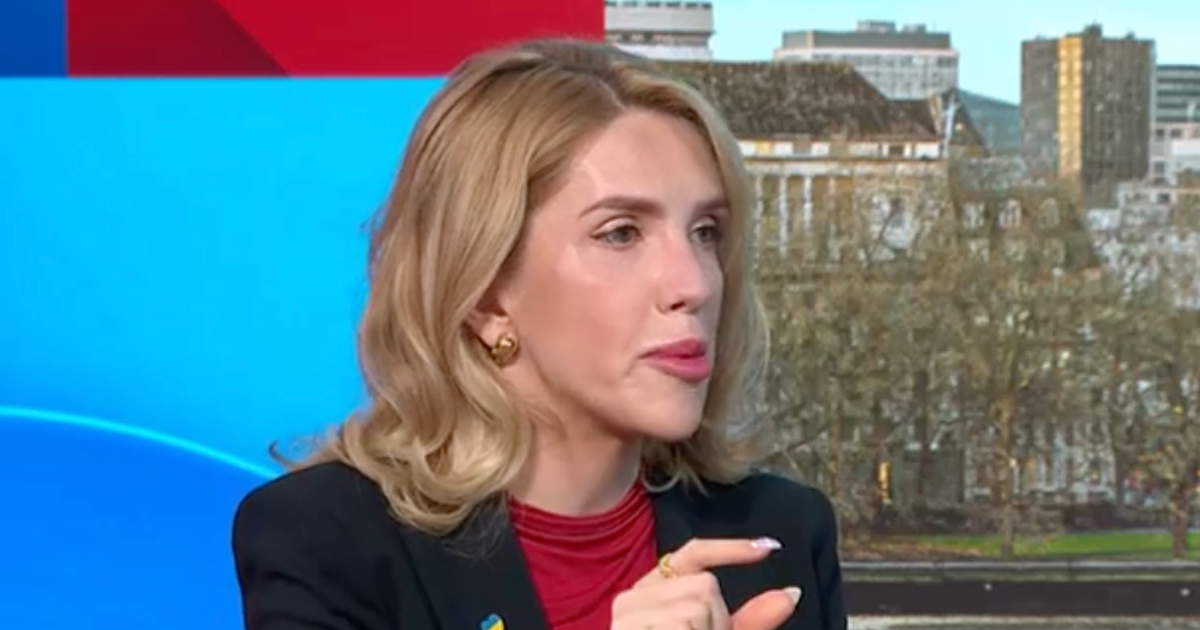
A Ukrainian MP has called out the UK for its “moment of weakness” after the government decided to continue allowing the import of Russian oil products.
Labour triggered intense backlash this week after it declared it was pushing back plans to close a loophole in its sanctions against Moscow.
The government unveiled a set of temporary licences which will allow diesel and jet fuel – refined in third countries but made from Russian oil – into the country.
Ministers insist the ban will come in eventually, but chief secretary to the prime minister Darren Jones refused to give any indication of a timeline when speaking to Sky News.
Ukrainian MP Kira Rudik said the announcement came as a “surprise” to her, and described it as a “point of weakness”.
“At first it was a surprise because the United Kingdom is one of the countries that first has been our strongest partner, but also a country where all the parties are supportive of Ukraine, on different levels,” she told Sky News.
“So to hear that there was this like moment of weakness, a point of weakness was surprising. And I believe this is what was discussed between the [Ukrainian] president and the prime minister.”
Volodymyr Zelenskyy and Keir Starmer spoke on the phone on Wednesday evening.
She continued: “But let me tell you this, no matter what happens, Russia is always laughing that Europe is paying for the war from both pockets, from one supporting Ukraine and from another one paying for Russian gas and oil.
“Is it worthy of continuing doing that? Because it is definitely worthy of supporting Ukraine. And we really hope that all our partners, all European countries, will every day go away from purchasing Russian gas and oil rather than trying to move back a little bit.”
Jones tried to clear up some of the confusion around the controversial decision on Sunday, saying it was “totally wrong” to say the decision stemmed from concerns around jet fuel shortages linked to the war in Iran.
He said: “No, that’s totally wrong. Totally wrong.
“One of my jobs in the Cabinet Office is to chair contingency planning, and I’ve been spending many hours doing that in relation to the impact of the Middle East on the UK.”
Jones said the UK has other sources from around the world to rely on.
However, the decision still stunned shadow foreign secretary Priti Patel.
She said: “When the government says they’re introducing new sanctions, they might be introducing them – but there’s no framework for that. There’s no date coming forward. And in the meantime, they’re now allowing and enabling Russian imported oil to come into the United Kingdom.
“So they’ve contradicted themselves. And clearly that is not helpful when it comes to the Ukraine conflict at all.”
Subscribe to Commons People, the podcast that makes politics easy. Every week, Kevin Schofield and Kate Nicholson unpack the week’s biggest stories to keep you informed. Join us for straightforward analysis of what’s going on at Westminster.

In 2012, Pew Research found that while the typical Facebook user had 245 Facebook friends, the average *friend* someone has on Facebook had 359.
That sounds completely illogical at first. But it’s explained by the “friendship paradox,” a term resulting from sociologist Professor Scott Feld’s 1991 paper.
The phenomenon has since been translated into mathematical theories.
But what exactly is this “friendship paradox”, and what does it actually mean for our social lives?
What is the friendship paradox?
In a Purdue University video, Prof Feld said he was “surprised” to find “that it’s always true in social networks that friends in general have more friends on average than people do”.
If that sounds a bit like a head-scratcher, well, it is (hence the “paradox” part).
“People assume that if there’s a pair of friends, one must have more friends and the other must have [fewer] friends, so you would expect that half the people would have fewer friends than their friends,” he continued.
But instead, he said, some people have loads of friends, and naturally, those people are likelier to be friends with lots of people who have fewer friends than them.
And the other people who have fewer friends are less likely to be our mates.
In other words, it’s not so much that most people hover around an average amount of friends, with some having slightly more than others. Instead, very extroverted people throw the balance off a lot (a bit like counting billionaires when calculating people’s net worth).
“Each of us seems to be thinking that our friends have more friends than we do, which they, in fact, do, because our friends are the people who are friends with everybody,” said Prof Feld.
Later analysis found that the mathematical premise of the “friendship paradox” seems to bear out in real life.
So… what does that mean?
Well, Professor Feld said, one takeaway could be to remember that comparing yourself to your mates isn’t really a great indicator of your true standing: we should try to remember that this sample is “biased”.
Secondly, on a broader level, it means some people could spread more of anything – from ideas to disease and misinformation – than the average person might, meaning more of us are influenced than influencing.
“So if you want to stop the spread of a pandemic,” Prof Feld continued, “you really would like to vaccinate people’s friends more than you’d want to vaccinate random people.”
The same goes for switching people onto a certain product. Basically, whatever spread you want to create, track, or predict, you’re better off looking at other people’s mates’ habits than their own.
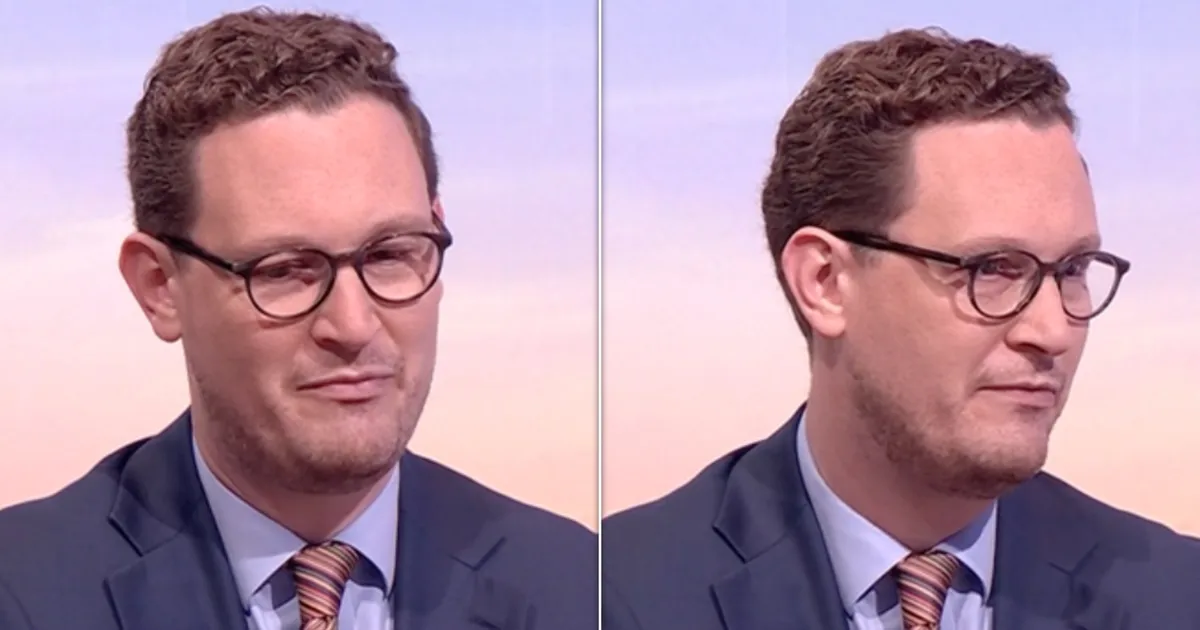
A minister grew visibly emotional on live TV this morning following a troubling BBC interview with a teenage rape victim.
A girl who was raped by two teenage boys told Sunday with Laura Kuenssberg that the judge’s decision to spare her attackers jail was like a “rock straight in my face”.
Speaking anonymously with her family, she said the move “always made it seem as if what the boys did was not OK, but it was OK in the eyes of the law because they were still children”.
Judge Nichoas Rowland said on Thursday he wanted to avoid “criminalising” the “very young” boys.
The attorney general, Lord Hermer, is set to review the sentence.
The two defendants were also convicted of attacking another victim with a third boy.
Both rapes were filmed by the boys and some of the footage was shared online.
Chief secretary to the prime minister Darren Jones, who has three daughters, told the BBC that the government is looking at this case “urgently”.
He said: “As a minister I’m not allowed to get ahead of the attorney general’s decision but those girls deserve justice, as do their families, both for them and other girls put in the position.
“Quite frankly the boys need to know they can’t behave in that way and get away with it.”
Kuenssberg said: “You are here as a minister but I can tell from listening to you, as a dad, I think you found that quite hard to watch and to listen to.”
“It was very hard to watch because no parent wants their daughter to be in those circumstances,” Jones said, as his voice started to break. “You don’t want a society in which girls are growing up in those circumstances.”
Asked if he worries about the message this particular case sends to the public, he said: “I do because those young women deserve justice but I also worry about it because boys need to know they cannot behave that way.
“It is not acceptable in society. And if you do that, there must be consequences for it.”
Jones added that while not all boys are violent or do not care about women, “there are too many incidents like this” and it was important to have a “national conversation” about such assaults.
Prime minister Keir Starmer later responded to Kuenssberg’s interview with the rape victim.
He wrote on X: “This is a harrowing and brave testimony.
“The girls at the heart of this case have shown extraordinary bravery and strength in heinous circumstances.
“This is an appalling case and it is right that law officers are urgently reviewing the sentences.”
Tory leader Kemi Badenoch also described the sentencing as a “disgrace” and Reform’s Treasury spokesperson Robert Jenrick said the judge had made a “very bad error”.
Subscribe to Commons People, the podcast that makes politics easy. Every week, Kevin Schofield and Kate Nicholson unpack the week’s biggest stories to keep you informed. Join us for straightforward analysis of what’s going on at Westminster.
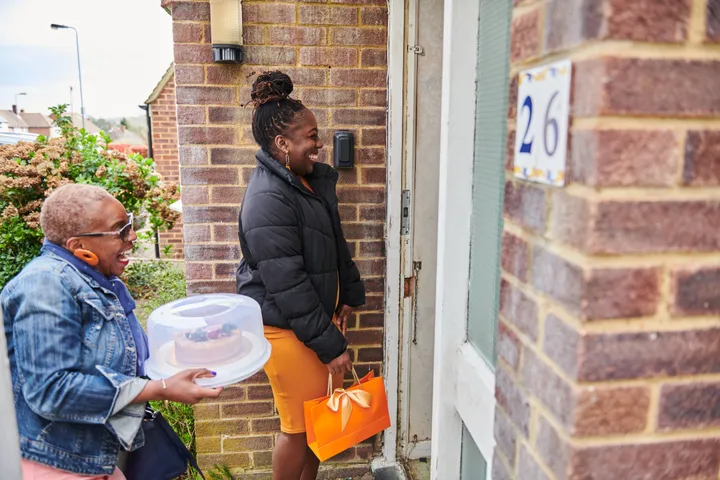
You triple-checked the address, left early to build in time for traffic and arrived at your friend’s bridal shower with plenty of time to spare. That’s good guest behaviour, right? Well… Not exactly.
Whether it’s a shower, dinner party or holiday gathering, showing up early to a party is one of the more inconsiderate things you can do to a host, according to etiquette experts.
“It is impolite to arrive early to a party because the host is taking care of last-minute details,” Diane Gottsman, the author of Modern Etiquette for a Better Life and founder of The Protocol School of Texas, told HuffPost.
“This might also include running around in a robe and hair rollers. Although the guest’s intention is not to be rude, it puts additional stress on the host who is trying to pay attention to the last-minute details before their guests arrive.”
Don’t add stress to those sacred final minutes leading up to the start of the party.
“Skilled hosts tend to change outfits, freshen makeup, plate food, prep drinks, turn on the music, light candles all in those last few moments,” said Jodi R.R. Smith, the president of Mannersmith Etiquette Consulting.
Although you may feel your early arrival reflects your enthusiasm and time management, you can unintentionally place your host – or their party planner – in an uncomfortable position.
“An early arrival may disrupt this process or cause the host to feel rushed or concerned about the guest’s comfort while preparations are still underway,” said Jackie Vernon-Thompson, the founder of From the Inside-Out School of Etiquette.
“Ultimately, etiquette in this instance involves awareness, timing and respect, ensuring that your presence enhances the experience rather than creating pressure for the host.”
What counts as early?
It’s worth keeping in mind that what counts as “early” isn’t universal. The actual time you should arrive depends on where in the world you are, noted Nick Leighton, an etiquette expert and host of the Were You Raised by Wolves? podcast.
“Are we in New York? Berlin? Tokyo? Sao Paolo?” he asked. “There are lots of places in the world where a 7:00 dinner invitation really means people will start arriving at 6:30. But then 6:30 is not actually ‘early’ because this is when the host is expecting you. When in doubt, just ask your host when they’d like you to arrive.”
That said, in most contexts, arriving ahead of schedule will catch your host off guard. “Showing up at 6:45 for a 7:00 cocktail party will definitely catch your host mid-shower or wrestling with a corkscrew,” Leighton said.
And whatever you do, resist the urge to broadcast your early arrival at the door.
“The only thing worse than showing up early is announcing it,” he added. “If you have to say, ‘I hope I’m not too early!’ as you’re walking through the door, you almost certainly are.”

Flashpop via Getty Images
There are a few exceptions to the rule
Of course, there are exceptions to the “arriving early is rude” notion.
“If your host asked you to help them out, this changes the scenario,” Gottsman said. “Hosts may need help moving chairs or directing caterers while they are paying attention to other last-minute details.”
So if you were explicitly asked to come early to aid with the setup, go for it.
“Everyone has someone that just jumps in and helps,” Smith said. “This could be a parent, sibling, BFF, you know who you are – you are welcome to arrive early. If you are not on the closest confidant list, wait.”
For immediate family members who have traveled from overseas to attend this specific event, it’s also more acceptable to arrive early, she added. And of course, the guidelines can vary based on the type of event.
For a big, fancy wedding, arriving early at the venue gives you a chance to snap a photo and find a seat so that the ceremony can start on time.
“For gatherings held in public venues, arriving early is generally more acceptable and far less intrusive,” Vernon-Thompson said.
“In settings such as restaurants, event spaces or banquet halls, much of the preparation is handled in advance by staff, and the host is typically not relying on the final moments prior to the event for setup. Because of this, an early arrival in a public setting is less likely to disrupt the flow or pressure the host. Guests may even be accommodated comfortably while waiting for the event to officially begin.”
When in doubt, be right on time
For a small dinner party, however, your early arrival might be more disruptive. And for a casual backyard barbecue or house party, the relaxed nature can make your timing less significant.
“When in doubt, your default should be right on time,” Smith said. “If you are bold enough to arrive early, you should specifically ask the host if you can help or if you should come back later.”
Sometimes you simply can’t help it. Traffic was lighter than expected, or you overestimated your commute. In that case, the move is to wait it out rather than knock early.
“If your travel took less time than anticipated, occupy yourself until the appointed time,” Smith advised.
“Walk around the block. Drive a few houses down and park to wait. Pop into a corner drugstore or coffee shop. Cool your heels in the lobby. Scroll through your phone. Practice yoga breathing. Think of amusing anecdotes to share. Phone a friend. Play Wordle. Enjoy a moment of boredom.”
For those who choose to wait in their cars, Vernon-Thompson recommended not camping out where you can be seen.
“Indicating that you are sitting outside may cause stress and anxiety for the host,” she noted. “Make every effort to be out of sight when waiting in your vehicle. It is the considerate thing to do.”
The best way to truly understand why early arrival is such a faux pas? Try hosting something yourself.
“In my experience, the people who show up early are the people who have never hosted an event themselves,” Leighton said. “People who throw parties would be the last people to ever do this.”
“If you are having a tough time intrinsically understanding why arriving early at a party is an issue, then you are not entertaining enough,” she said. “It may be high time for you to return all of these thoughtful invitations and host something yourself.”

Dyscalculia – sometimes referred to as “number dyslexia” – is a difficulty in understanding and working with numbers.
It’s thought around one in 20 children struggle with the learning difficulty, which is also a form of neurodivergence.
People with dyscalculia will typically process and understand numbers and mathematical concepts differently to neurotypical people.
One of the signs of this learning difference, according to Evolve Psychology, is difficulty counting backwards.
- Mixing up numbers like 6 and 9
- Still using finger counting in Year 4 despite extra help
- Difficulty understanding what numbers mean beyond memorisation
- Struggling to line up numbers correctly in maths problems
- Challenges learning and recalling basic number facts, like times tables or simple addition
- Problems telling the time, handling money and following multi-stage calculations
- Difficulties estimating quantities and measurements
- Showing anxiety around maths and avoiding number-based tasks
- Being unexpectedly behind in maths compared to other subjects.
Clinical psychologist Dr Elyse Bensusan, who partnered with Explore Learning, suggested the learning difference can show up in ways that are “easy to dismiss” at first.
For example, a young child might have trouble recognising small quantities without counting – for example, they can’t ‘see’ that there are three cookies on a plate unless they count one by one.
“They may struggle to understand what numbers actually mean: not just memorising that 2+2=4, but really grasping that numbers represent amounts,” she added.
Awareness of dyscalculia is low
Unfortunately, research suggests most teachers receive little or no training in dyscalculia – as a result, kids can often struggle in silence, with little support.
One study, led by Loughborough University, surveyed 1,323 education professionals across the UK, Italy, Vietnam and South Africa and found widespread gaps in training and understanding of dyscalculia.
Although most UK educators had heard of dyscalculia, only 42% said they clearly understood it.
Previous studies have found that because maths is a core subject and a gateway to many science, technology and engineering pathways, without appropriate support dyscalculia can limit further study and career prospects.
Kids with dyscalculia are also at increased risk of anxiety, depression, behaviour problems and low self-esteem.
If you suspect your child has dyscalculia
Cherrida Crew, team lead for Specific Learning Difficulties at Evolve, said addressing dyscalculia is “vital” as early recognition leads to swifter intervention and more positive outcomes. “The right support can make a real difference,” she added.
If you suspect your child might have it, Evolve’s team advises:
- Using visual and hands-on learning tools, such as counters, number lines or diagrams to make maths concepts easier to understand.
- Breaking tasks down into smaller steps.
- Reducing memory pressure by keeping multiplication grids, formulas and reference materials easily accessible.
- Linking maths to real-life situations in a more hands-on way.
- Using technology and practical tools in everyday life, such as calculators, contactless payments, smartphone reminders and visual planners.
- Requesting appropriate support in education, including extra time, calculators or note-taking assistance where needed.
- Supporting them to work in quiet, low-distraction environments to improve concentration and reduce cognitive overload during maths-based tasks.
Dr Bensusan noted: “If your child is bright and verbal but seems lost when it comes to numbers – trust your gut. A full neuropsychological evaluation can make all the difference.
“I’ve seen children go from melting down over math homework to feeling proud of solving problems on their own – just by getting the right diagnosis and support. Dyscalculia is real. And with the right approach, your child can thrive.”

After years as one of Strictly Come Dancing’s most beloved dancers, Johannes Radebe is joining the show’s presenting team for the 2026 series.
Earlier this week, Johannes was announced as one of Strictly’s three new hosts alongside TV personality Emma Willis and comedian Josh Widdicombe, marking a huge step for the South African performer, who joined the show in 2018.
During his time as a Strictly pro, he has been partnered with Catherine Tyldesley, Caroline Quentin, Ellie Taylor, and Annabel Croft, perhaps most notably getting to the finale in the show’s first all-male partnership with chef John Whaite in 2021.
Since his debut, the dancer affectionately known to viewers as Jojo has become a fan favourite, thanks to his creative dance routines, beaming smile and gentle demeanour.
As he gears up for the next stage of his Strictly career, we’re looking back at some of Johannes’ highlights from his time on the show…
Johannes storms the stage in heels for a stunning group performance (2019)
Johannes delighted fans and stole the entire show back in 2019 when he strutted onto the Strictly dance floor in a pair of stiletto boots, for a group number featuring the entire troupe of professionals and judges.
Set to a mash-up of David Bowie’s Fame and Blondie’s Rapture, Johannes’ part of the routine saw him strutting across a runway in high heels, striking some fabulous poses and displaying some impressive fan-ography.
As shocking as it is to remember now, in his first year on the show, Johannes didn’t actually receive a partner, so this fashion-themed dance the following season really let fans see him in his full fabulousity.
To this day, this routine is still ranked as one of the best numbers in Strictly’s 22-year history.
Johannes Radebe and Graziano Di Prima deliver a pioneering performance (2019)
It took Strictly the better part of two decades to embrace same-sex partnerships, with Nicola Adams and Katya Jones being the first such pairing to compete on the main show.
Johannes helped pave the way for this change when he performed a landmark dance alongside Graziano Di Prima in 2019, set to Emeli Sandé’s Shine.
Johannes later told the Guardian that this performance “felt like my coming-out party”, adding to Hello! magazine: “For the first time in my life, I feel accepted for who I am. That says so much about the people of this country.
“To be able to dance with a friend I respect and adore is joyous. There’s bromance galore between us, but there were no male and female roles, just free movement.”
Strictly’s show-stopping tribute to Priscilla, Queen Of The Desert (2020)
In 2020, Johannes led a tribute to Priscilla, Queen Of The Desert, alongside fellow pros Gorka Márquez and Giovanni Pernice.
The trio put on their best drag to pay tribute to the stage show inspired by the 1994 camp classic, in celebration of Strictly’s annual Musicals Week special.
After initially hitting the floor in denim, the group delivered a seamless reveal into platform heels and sequined jumpsuits as CeCe Peniston’s Finally kicked in.
The performance delivered some much-needed escapism at the height of Covid restrictions, and has gone down as one of the best openers the show has ever seen.
Johannes Radebe and John Whaite’s Movie Week Paso Doble (2021)
As part of the groundbreaking first all-male Strictly Come Dancing partnership, Johannes and Bake Off winner John Whaite scored a near-perfect 39 for this swashbuckling routine during Movie Week.
Donning bandanas and white shirts to dance dramatically to the Pirates Of The Caribbean soundtrack, Johannes and John’s performance was so strong that even the usually-hard-to-impress Craig Revel Horwood confessed he hadn’t even made any notes as he was so focused on the routine.
Meanwhile, Shirley Ballas and Motsi Mabuse gave the pair a standing ovation, leaving Johannes visibly emotional in the Clauditorium – not least because the routine marked the first time since joining the series that he’d received scores of nines and 10s from the panel.
Even more impressively, this dance was only John and Johannes’ third time performing in the ballroom together, with even more show-stopping routines to come over the course of their partnership.
John and Johannes’ tear-jerking Rumba (2021)
Another more emotional, but just as iconic, Johannes and John moment came when the duo danced a slow, intimate Rumba to Shape Of My Heart by Sting.
Following the sensual routine, John admitted that he and Johannes had “expected to get flak” for their “romantic Rumba”, only for the reaction from the fanbase to be quite the opposite.
John told Rylan Clark on It Takes Two: “We’ve done all these very masculine things, all these very powerful things, which have been great. But to finally show a sensitive, emotional side, it’s beautiful.”
Johannes agreed: “I think it’s an opportunity for me and John to be vulnerable on that dance floor, because we haven’t had the opportunity. I’m loving every minute of it.”
Johannes Radebe and Kai Widdrington tell a love story through dance (2021)
During the results show for Movie Week in 2021, Johannes delivered another heartwarming professional dance.
This time, he was paired up with Kai Widdrington for a period-drama-themed group dance, in which Johannes played a young king with no one to dance with, until Kai stepped in to twirl him across the dance floor.
“For the kids watching this at home, struggling with their own sexuality and feeling a bit different to the others, seeing this front and centre of prime time TV will mean so much and do so much good,” one viewer poignantly wrote on social media.
Johannes Radebe and Annabela Croft’s poignant Couples’ Choice dance, dedicated to her late husband (2023)
Johannes’ relationship with former tennis player Annabel Croft made for emotional viewing from the start, as the athlete had lost her husband of 36 years, Mel Coleman, to cancer shortly before the series began.
However, no performance of theirs garnered more tears than their Couple’s Choice, a slow dance to Wings by Birdy, dedicated to her late husband.
Throughout their partnership, Annabel praised “angel” Johannes for his sensitivity during a “difficult” and “dark time” in her life.
“I don’t know where I would be if I hadn’t had Strictly Come Dancing at this period of time because it has been such a distraction away from terrible grief and you know, I had no concept of what grief was,” she told Good Morning Britain at the time.
“So, to be able to get up in the morning and to have a purpose rather than just sobbing at home, even though that still happens.”
Montell Douglas and Johannes Radebe’s joyous Couple’s Choice performance (2024)
Johannes and Gladiators star Montell Douglas delivered a celebratory Couple’s Choice dance to Skeleton Move by Master KG in 2025.
The Caribbean-inspired routine was dedicated to Montell’s late grandmother, with the athlete admitting she hoped to bring the love, warmth and vibrancy of her family to the Strictly ballroom.
Before taking to the floor with Johannes, the Olympian explained: “This Couple’s Choice dance pays homage to my Caribbean roots. It is Caribbean-inspired, Afro-infused, and it brings together mine and Johannes’ cultures so beautifully.”
She and Johannes scored a near-perfect score of 39 for the performance, which Motsi said she “absolutely loved”.
Meanwhile, Shirley told Montell that her grandmother would be proudly “looking down” on her, suggesting she had “sprinkled her magic dust” on the “exceptional” performance.
Johannes Radebe leads the Strictly pros in a tribute to Beyoncé (2024)
Although an icon himself, for 2024’s Icons Week, Johannes and the rest of the group paid homage to Beyoncé for a show-stopping results show performance.
Taking the lead, Johannes performed to a Beyoncé medley in a Cowboy Carter-inspired all-black outfit, complete with a long leather coat, high-heeled boots and a Steson.
Channelling his inner Sasha Fierce, Jojo was joined on the dance floor by fellow pro Lauren Oakley, sporting a black fringed wig which, naturally, many viewers confused for Claudia Winkleman.
Johannes Radebe’s ‘perfect’ Rumba with Alex Kingston (2025)
Doctor Who actor Alex Kingston made history on Strictly with her “perfect” dance to Tracy Chapman’s Fast Car, when it became the first Rumba to ever earn a 10 from the judges so early on in the contest.
Even the self-proclaimed Queen Of Rumba, Shirley Ballas, was so moved by Johannes and Alex’s performance that she gave it top marks.
“In all my time on Strictly, I have never seen a pair of legs work like that,” she beamed, describing the performance as “an absolute perfect routine” and “fantastic”.
“Your choreography was stunning,” she told Johannes. “The temperature between the two of you was portrayed beautifully.”
In a memorable and arguably quirky moment, Shirley went as far as asking if she could “give the queen a kiss”, before rising from behind the judging panel’s desk to do so.
Move over Miranda Priestly, here come Johannes and Alex (2025)
Fans were in hysterics when Alex and Johannes stayed in character throughout 2025’s Movie Week special, for which they delivered a tribute to The Devil Wears Prada.
The ER star and her partner danced the Quickstep to Suddenly I See by KT Tunstall, with Alex dressed as Miranda Priestly in a short grey wig and sunglasses
While the dance placed fourth on the leaderboard, the audience was in hysterics as Alex played up the steely Meryl Streep character on and off the dance floor.
The performance also included a new side of Jojo, as he transformed from a diva into a hapless assistant, collecting Alex’s bag for her at the start of the routine.
Strictly Come Dancing will return to BBC One later in the year.
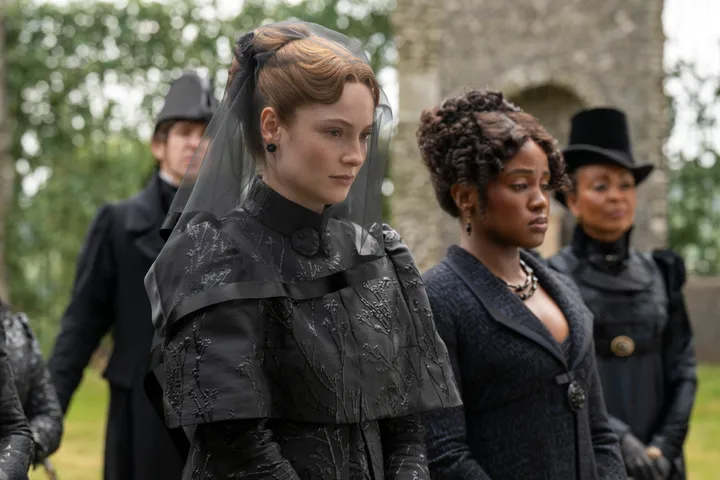
Now that Luke Thompson and Yerin Ha’s characters have found their happily ever, we’re ready for some more Bridgerton.
Back in March, Netflix began teasing more information about what fans should expect from the hit period drama’s next chapter, with its fifth iteration set to mark a turning point for Bridgerton.
If you’re as excited as us to return to the Ton, here’s everything we can tell you so far about the upcoming season 5…
What will Bridgerton season 5 be about?
After months of speculation, Netflix finally announced that the first series will revolve around Hannah Dodd’s Francesca and Masali Baduza’s Michaela.
The official synopsis for season five reads: “The fifth season of Bridgerton spotlights introverted middle daughter Francesca. Two years after losing her beloved husband John, Fran decides to re-enter the marriage mart for practical reasons.
“But when John’s cousin Michaela returns to London to tend to the Kilmartin estate, Fran’s complicated feelings will have her questioning whether to stick to her pragmatic intentions or pursue her inner passions.”
The last time viewers saw Francesca and Michaela, they were still reeling from the sudden death of Lord John Stirling. This loss leaves Francesca widowed, and Michaela without her closest confidant, forcing the pair to grow closer in their time of grief.

“They grieve very differently,” Hannah previously told Netflix. “I don’t think grieving is something that you get over. John’s going to be with Fran, and the impact of John will be with Fran forever.”
Season five will be inspired by Julia Quinn’s novel When He Was Wicked, and showrunner Jess Brownell says fans should expect Bridgerton’s signature mix of romance, laughs and pathos as well as “big-time yearning”.
“It’s going to be a season about queer joy. It is not going to be a season about queer trauma. … We’re having so much fun!” she said.
Meanwhile, speaking to Tudum, Masali teased that the show would have a darker side, with the new episodes exploring her character’s struggle to show her vulnerability.
“She’s used to having all these walls up. I’m excited to tear down those walls and have her let Francesca in,” the actor explained.
“I’m excited for people to see her wanted so deeply and so badly…I’m excited for people to see Michaela yearn for Francesca.”
How will Bridgerton season 5 differ from the original novels?

Benedict Bridgerton has previously been shown having romantic encounters with men and women, but Bridgerton’s fifth season will be the first to have a queer love story as its central storyline.
This does mark a major departure from Julia Quinn’s Bridgerton novels, in which Francesca’s love interest was a male character named Michael, rather than a woman called Michaela.
Explaining this decision, Jess Brownell told Out Magazine: “I feel like Bridgerton made its name in many ways on being an inclusive universe, and for queer stories to be left out of that would not feel right.”
Speaking to Netflix, she described the choice as “groundbreaking”, enthusing: “To make an entire Bridgerton season about a sapphic relationship feels huge.”
Hannah and Masali are just as excited to lead this historical season of the streaming romance, with the latter claiming that queer love stories “have traditionally been excluded from things like period dramas – and queer people did exist, have always existed, and will always exist”.
Masali agreed: “It’s been really special to have Jess guide us on this journey, because she’s very excited about this story. What we really want to achieve is giving a realistic view of queer love onscreen and [giving them] a happily ever after.”

Who else will be in the cast of Bridgerton season 5?
As mentioned, Hannah Dodd and Masali Baduza will take centre stage as Francesca and Michaela.
Joining them in the upcoming series will be The Sandman’s Tega Alexander as Christopher, the Casanova son of Lord Anderson, Carnival Row actor Jacqueline Boastwain as Michaela’s mother, Helen, and Mobland’s Gemma Knight as Lady Elizabeth Ashworth, an old friend of Michaela’s, who serves as her confidante and London guide.
Netflix has not yet confirmed the full season five cast, although most of your favourite actors are expected to return, including Ruth Gemmell as Violet Bridgerton, Claudia Jessie as Eloise Bridgerton, Golda Rosheuvel’s Queen Charlotte, Adjoa Andoh as Lady Danbury, Polly Walker as Portia Featherington, Lorraine Ashbourne’s Mrs. Varley and Julie Andrews as the voice of Lady Whistledown.
Nicola Coughlan has confirmed her return, too, but explained it will be in a more limited capacity.
Speaking to the Dish from Waitrose podcast, the former Derry Girls star said: “Season five has started filming already, so I won’t be in it very much. But I’m always happy to come back.”
There’s also been no official word on whether Simone Ashley, Luke Thompson, Phoebe Dynevor or Jonathan Bailey will return for season five.
Is there a release date for Bridgerton season 5?
Netflix confirmed that production was underway in late March, and announced more recently that the series will premiere on the streaming service in 2027.
This marks a shorter hiatus than fans of the period romance are used to, with Bridgerton traditionally taking a break of two years between seasons.
Jess previously admitted that the production team was “trying to speed up” their usual process, telling The Hollywood Reporter last year: “We are working to try and put the seasons out more quickly, but they do take eight months to film and then they have to be edited, and then they have to be dubbed into every language.
“And the writing takes a very long time as well, so we’re kind of on a two-year pace.”
Is there more Bridgerton to come after season 5?
Yes! Netflix announced seasons five and six of Bridgerton earlier this year.
On the season four red carpet, Jess told Deadline that there are two sisters who will get their own love stories, hinting that Eloise will play the lead in season six.

Executive producer Shonda Rhimes has also made it clear she’s aiming for Bridgerton to run for a total of eight seasons, with one devoted to each of the show’s central siblings.
Until then, seasons one to four of Bridgerton – as well as spin-off series Queen Charlotte – are now streaming on Netflix.

Over the past few years, both my husband and I have felt increasingly bummed that we don’t have closer (geographically and emotionally) relationships with our families of origin.
No family members live in our state, and none of them are as comfortable travelling as we are, so it often falls on us to visit them if we want to spend time together.
But we’ve also become burned out packing up the kids and schlepping to see extended family on their home turf. So this year, we decided to do something about it.
We cherry-picked family members from both sides – including multiple total strangers who had never met each other – and dropped a pin on the map, kinda-sorta-not-really in the middle.
We booked a couple of campground lodgings. We promised no cost to our families; all they had to do was drive there and get along.
It was the biggest multigenerational travel gamble we’d ever taken. But we hoped it would be worth it.

Imgorthand via Getty Images
When planning our trip to include 10 family members ranging in age from three to 60-something, we wanted to be super intentional. After all, the hope is that everyone will have a (reasonably!) lovely time, despite differences, right?
So, I spoke to some pros about how to plan smart – and preserve relationships along the way.
Mindfully planning multigenerational travel matters. A lot.
“Multigenerational travel can be meaningful and challenging,” said board-certified psychiatrist Dr. MaryEllen Eller. “Even people we love can be difficult to spend extended time with – especially with disrupted routines, jet lag, and different preferences around walking speed, food, and activities.”
Even though we were starting from a smart spot – i.e., with a primo selection of family members we actually adore – there were still the drivers vs. flyers to consider, the early risers vs. night owls, plus all kinds of different diets/abilities/activity levels to manage.
One of the trickiest parts of planning this trip was deciding whom to invite – and whom not to. Rather than including every single one of our extended family members, we tried to choose a mix of personalities we thought might blend well. This wasn’t about exclusion; it was about feasibility. A trip like this requires a baseline of openness and flexibility, and we knew not every family member would be up for that.
Eller said it’s totally fine to accept that “not every trip will suit every family member due to differences in mobility, interests, or life stage”.
“When that’s the case, direct and respectful communication is key,” she stressed. “Being open and honest about the nature of the trip — while maintaining a tone of care and consideration – helps reduce the likelihood of hurt feelings.”
Relationship therapist Ligia Orellana agreed and suggested framing the partial family gathering as “more about logistics… Explaining the decision in practical terms can make it feel less personal and less emotionally charged.”
Even people we love can be difficult to spend extended time with — especially with disrupted routines, jet lag, and different preferences around walking speed, food, and activities.
– Dr. MaryEllen Eller, psychiatrist
So, I booked flights to visit my brothers and mom later this year – and my sister and I explained the reasons (my sister’s heart condition and avoidance of flying, plus my nonverbal autistic nephew’s needs) we were planning a road trip to the middle of the forest without them.
Orellana suggests saying something like, “We thought this would be a good mix to try for this year,” to create emotional distance and a hope for future trip variations.
With so many elements to juggle, Eller advises not aiming too high with your trip goals: “The goal isn’t a perfect trip, but a flexible and respectful one,” she said. “Setting realistic expectations ahead of time helps normalise friction and reduce avoidable frustration.”
That means clearly communicating any travel requirements surrounding schedule, cost and more before the trip, as uncomfortable as that may feel. Otherwise, you risk surprises springing up – and nobody wants a mid-trip showdown over who gets which room.
So, when making travel plans: ask, don’t assume.
“Assumptions create misunderstandings,” Eller said. Instead, “clear, proactive communication about expectations – how people want to spend their time, what matters most to them, and where flexibility is needed – can minimise misunderstandings.”
For us, this advance expectation-setting led us to decide we wanted multiple lodging options in close range to each other, plus plenty of wide-open, outdoor space. Chatting beforehand with the family members we’d looped in (my husband’s brother, sister and parents, plus my sister and brother-in-law, who were bringing our niece and nephew), we realised we needed major flexibility to accommodate everybody’s wildly different sleep and energy schedules.
My three-year-old still naps, for example, while my autistic nephew needs lots of runaround space. The adults, meanwhile, wanted to be able to go on hikes or lounge around with a few beers.
This was ultimately how we landed on Emberglow Outdoor Resort in Mill Spring, North Carolina – right near the shores of Lake Lure and situated within 400,00 acres of Talladega National Forest.
Like a high-end version of the classic campground, this spot let us choose between pitching a tent, parking an RV or booking one of the on-site lodgings, from tiny houses to a revamped double-decker bus.
Given the size of our gang – and the uncertainty of mountain weather in the springtime – we selected an ADA-accessible (and fully heat- and AC-equipped) deluxe yurt as well as the biggest pick on-site, the Family Treehouse. Then, we hit the road.
Optimism does have to meet reality at some point
Family members embarked from three different home states and drove six to 12 hours to the campground. At the end of our fourth hour, my partner and I started to feel the emotional whiplash.
Disappointment: we had learned that his younger brother and sister were caught up with work and relationships (ah, twentysomethings!) and wouldn’t be able to make it after all.
Excitement: this could still be amazing! A chance for bonding! His parents, my sister, together for the first time! Then: dread. What if nobody clicks? What if we’ve just invited chaos into the woods and called it a vacation?
If you’re considering a multigenerational trip, this is your first mental prep step: accept that you are inviting complexity into a shared space.
Family therapist Caitlin Blair said the feelings that catch people off-guard most often on big family trips “are regression and resentment. You can be a fully functioning adult and still find yourself sliding back into old family dynamics the moment you’re all under one roof. This is super normal!”
The solution? Build in space, she said.
That’s why we gravitated toward the campground setup, which allowed for both togetherness and privacy, with enough space that people could retreat. That balance was crucial, which became immediately evident upon our arrival: Two kids went straight to the playground, two played in the treehouse, my husband cooked, my in-laws went for a walk, my sister and I vaguely supervised the smallest/most chaotic children, and my brother-in-law disappeared for a nap after driving the 12 hours. Wins for all.
You can be a fully functioning adult and still find yourself sliding back into old family dynamics the moment you’re all under one roof. This is super normal!
– Caitlin Blair, family therapist
After all, “the most successful trips,” Eller said, “balance shared experiences with individual autonomy, allowing for both connection and personal choice. This often means taking time alone.”
Spending was another delicate dance. Even though we had covered the main costs, incidental expenses started to creep in – groceries, firewood, shared supplies. Luckily, everyone wanted to chip in; the baseline of zero accommodation costs made other spending more comfortable. Still, navigating all of it required grace and flexibility.
The grandparents arrived the most prepared; they brought coffee for everyone and enough ingredients for multiple breakfasts. We millennials, meanwhile, kept running to and from the grocery store. All in all, it seemed like we were all doing a well-intentioned, if disorganised, job at keeping generosity flowing.
Here’s what surprised me most: the emotional climate. It was so lovely. Cousins and grandparents were reunited. My sister and mother-in-law hit it off immediately. At one point, I could smell weed and had about five different guesses as to which family member it belonged to. Laughter around the fire. Hot dogs and grilled oysters. Relatives hooting within minutes of meeting each other, thanks to the three-year-old announcing, “EVERYONE, I FARTED.”

Photo Courtesy of Amelia Edelman
Yes, there were also spats and side conversations. My husband and I definitely had a fight during the trip, and one of us stormed off, pissed, to our off-property hideaway (the grocery store). The cousins bickered. My MIL pulled my husband aside one night for a seemingly stern heart-to-heart about his current job hunt.
And people navigated personal boundaries in real time. Some (most) needed alone time. Others wanted constant connection (sincerely, the two of us who shared one trundle bed until college). Some family members bonded quickly, while others kept more distance.
We didn’t over-plan, and that turned out to be a gift. We sketched out big group meals together, but otherwise ran on unstructured time. Grandma brought plenty of crafts, and we swapped gardening magazines. The kids ran amok through the creek and at the nearby playground and basketball courts. My sister and I slipped away to take, I kid you not, an adult ballet class a short distance down the mountain road.
The experts I spoke with recommended this dance (pun intended) between structure and flexibility for multigenerational travel. Too much planning can feel restrictive; too little can lead to disconnection. We landed in the middle, and it worked.
And perhaps most importantly, we showed up – despite many hours of driving and a multitude of misgivings. All 10 of us were willing to take a risk to create something new, let go of perfection and spend spring break stomping through a creek with some would-be strangers who we now truly feel are family.

President Donald Trump was big on bravado and light on details as he addressed the tentative peace deal being finessed between the US and Iran.
On Sunday, a government official told The New York Times both sides agreed in principle to terms that would open the Strait of Hormuz and see Iran commit to disposing of its highly enriched uranium, though they said many of the specifics remained to be sorted.
Never minding the nuts and bolts, or the fact nothing was finalised, the president celebrated the negotiations while simultaneously knocking the diplomatic pact former President Barack Obama helped broker with Iran and international partners over a decade ago.

BRENDAN SMIALOWSKI via Getty Images
“If I make a deal with Iran, it will be a good and proper one, not like the one made by Obama,” he wrote on Truth Social, repeating the dubious claim that the 2015 arrangement “gave Iran massive amounts of CASH, and a clear and open path to a Nuclear Weapon.”
“Our deal is the exact opposite, but nobody has seen it, or knows what it is,” he promised. “It isn’t even fully negotiated yet.”
“So don’t listen to the losers, who are critical about something they know nothing about,” he went on. “Unlike those before me who should have solved this problem many years ago, I don’t make bad deals!”
The reported agreement, which will still need joint approval from the “Art of the Deal” co-author and Iran’s supreme leader, apparently does not lay out a process for how Iran will get rid of its uranium, detail when it will cease nuclear enrichment, or address its existing stockpile of missiles.

A retired Major General in the British Army has warned that a proposed peace deal between America and Iran “looks like defeat” for Donald Trump.
Military expert Chip Chapman’s comments came as an agreement between the two countries to end the conflict remains elusive.
Hopes rose over the weekend that a deal was about to be struck which could finally see the re-opening of the Strait of Hormuz, the vital waterway which carried one-fifth of the world’s oil before the war started on February 28.
But both countries’ negotiators has still not reached an agreement, and Trump has ordered his team not to “rush” into anything.
Appearing on LBC, Chip Chapman, who is a former senior British military adviser to US central command, said the details of a proposed deal which have emerged do not look good for the Americans.
He said: “From a military perspective, if Iran retains proxies, if they maintain ballistic missiles, if the Strait of Hormuz isn’t open – because on of the fundamental principles of American foreign policy post-1945 was freedom of navigation – and if the nuclear weapons are not dealt with, then in a military mission verb that looks like defeat.
“That is, rendered them incapable of achieving their objectives. America is defeated.”
Posting on Truth Social on Sunday night, Trump conceded that a deal “isn’t even fully negotiated yet”.
He added: “So don’t listen to the losers, who are critical about something they know nothing about. Unlike those before me who should have solved this problem many years ago, I don’t make bad deals … If I make a deal with Iran, it will be a good and proper one, not like the one made by Obama.”
Subscribe to Commons People, the podcast that makes politics easy. Every week, Kevin Schofield and Kate Nicholson unpack the week’s biggest stories to keep you informed. Join us for straightforward analysis of what’s going on at Westminster.

The riverside Cambridge pub where Prince William and Kate once had lunch

Brazil’s Lula starts preventive radiotherapy after skin lesion removal

Binance Wallet Event Rush turns on chain events into tradable markets


-

 Crypto World4 days ago
Blockchain.com files with SEC for U.S. IPO
-

 Fashion3 days ago
Holiday Weekend Open Thread – Corporette.com
-

 Crypto World3 days ago
Bitcoin Accumulation Weakens as BTC Realized Losses Hit $600M
-

 Business3 days ago
Dell Technologies DELL Stock Surges 15% on AI Server Momentum and Analyst Upgrades in 2026
-

 Crypto World3 days ago
Space X IPO Is ‘Bad News’ for Tech Stocks: But What About Bitcoin?
-

 Politics3 days ago
Makerfield: a tale of two social-media histories
-

 Crypto World2 days ago
Robinhood crypto COO Tanya Denisova exits
-

 Crypto World3 days ago
MicroStrategy’s Saylor Says Miners No Longer Set Bitcoin Price, Another Force Has Taken Over
-

 Business21 hours ago
NYT Strands Answers May 24 2026 Revealed for Puzzle No. 812 Theme Summer Essentials
-
 Tech3 days ago
A 0.12% parameter add-on gives AI agents the working memory RAG can’t
-

 Crypto World3 days ago
AI infrastructure race heats up as IREN pitches full-stack strategy, WhiteFiber lands $160M deal
-

 Tech4 days ago
WhatsApp ads could make Irish debut after discussions with DPC
-

 Tech4 days ago
You Can Now Add ChatGPT To PowerPoint
-

 Business3 days ago
Trump Invests $1M-$5M in Kura Sushi USA Chain With 27 California Locations
-
 Crypto World7 days ago
Revolut Launches Dogecoin Debit Card Across UK and EU
-
 NewsBeat4 days ago
Charity run by Reform leader Malcolm Offord accused of ‘law breaking’ over Scottish registration
-

 Sports4 days ago
2026 CJ Cup Byron Nelson leaderboard: Brooks Koepka finds putting stroke in Round 1
-

 Crypto World3 days ago
Trump Media’s Bitcoin Stash Shrinks Again as 2,650 BTC Lands on Crypto.com
-
Business3 days ago
Goldman Sachs reinstates Ageas stock coverage with neutral rating
-

 Crypto World5 days ago
Exa Labs raises $250 million in funding led by a16z
You must be logged in to post a comment Login