

Politics
Everything You Need To Know About The King’s Speech

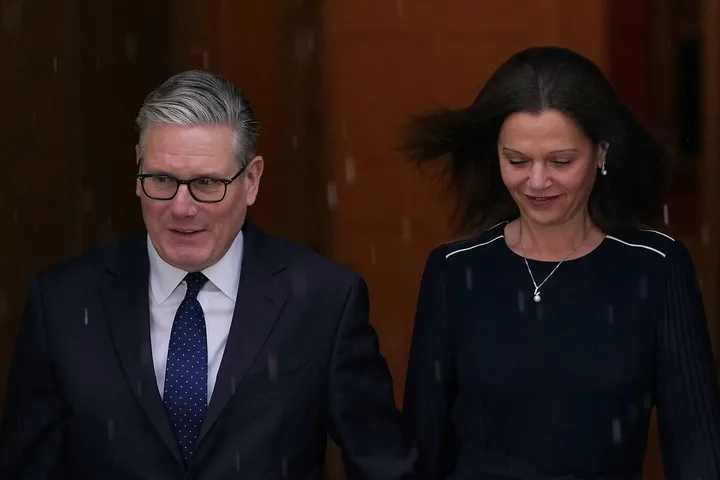
King Charles has laid out the government’s plans for the next parliamentary session in a significant moment within the Westminster’s calendar.
The occasion is laden with pomp and pageantry but it has political weight, too, especially as Keir Starmer’s government is facing a moment of jeopardy.
Here’s what you need to know.
What Is The King’s Speech?
The King’s Speech marks the State Opening of the second session of parliament after Labour’s victory in 2024.
Parliamentary sessions divide up each parliament and the government tends to announce a new one roughly every two years.
It’s a formal occasion which gives the government a chance to reset its priorities.
As the head of state, the monarch reads out the government’s agenda in the House of Lords.
He has no say in its contents but his role is symbolic of the sovereign’s position in the constitution.
No substantive parliamentary business can take place in the House of Commons or Lords until after the speech.
MPs will then start a debate the speech’s contents following comments from the leader of the opposition, Tory leader Kemi Badenoch.
The Lords also hold a general, short conversation about the contents of the King’s Speech though they usually do not vote on the contents.
The debate tends to last over several sitting days and each day focuses on a theme before the MPs vote on its contents.
It is possible for the speech to be amended, though that is quite unusual.
It would be deeply embarrassing if MPs were to vote it down, implying the Commons no longer has confidence in the government,
The last time that happened was in 1924, when Stanley Baldwin’s minority government was defeated and he had to resign as prime minister.
What Was In The Speech?
The King said the government would tackle antisemitism, raise living standards and improve trade relations in the next parliamentary session.
Improving trade relations is “vital”, the King said, and ministers will introduce legislation to take advantage of new opportunities – including a bill to strengthen ties with the EU.
The government will also protect “the energy, defence and economic security” of the UK for “the long-term” amid the ongoing conflict in Middle East and Ukraine war.
Bills to back British businesses – including help to tackle late payments and reduce the “burden of unnecessary regulation” – are also scheduled for this parliamentary session.
Ministers will “defend the British values of decency, tolerance and respect for difference under our common flag”, too.
The government will encourage airport expansion, hasten road building, and deliver a “fair deal” for the north of England through the Northern Powerhouse Rail, while also safeguarding domestic production of steel.
The government vowed to continue investing in apprenticeships as well and will push ahead with its controversial plans to launch digital ID plans.
After the scandal around ex-Labour peer Peter Mandelson and his friendship with convicted paedophile Jeffrey Epstein, the government plans to bring forward a “duty of candour” for public servants – and make it possible to strip Lords of their peerages.
Remediation for people living with unsafe cladding will also be sped up.
On the international stage, foreign policy will be based on “calm assessment of national interest” and offering “unflinching support for Ukraine”.
The government also promised to uphold its “unbreakable commitment” to Nato.
Ministers will invest in social housing and reform leaseholds, along with laws to tackle state threats, extreme violence and cyber attacks.
Charles said clean energy will be scaled up amid a “new era of British nuclear energy generation” in a bid to shore up UK’s energy security.
The King said the UK will be a “leading advocate” on social justice issues, too, including climate change and the rights of women and girls.

Why Is This A Particularly Tense Moment For The Government?
Starmer’s premiership is hanging by a thread following Labour’s catastrophic losses in last week’s elections in England, Wales and Scotland.
Buckingham Palace allegedly double-checked with Downing Street officials that the speech is still going ahead this week as the government looked like it was about to fall on Tuesday.
More than 80 Labour MPs called for the PM to resign amid mounting fury over the government’s direction.
Four ministers and four ministerial aides have also quit and urged Starmer to set out a timetable for his departure from No.10.
But the prime minister is holding firm, insisting he will not walk away from government.
None of his cabinet ministers have yet resigned meaning the government can limp on, despite the mass discontent.
All eyes are on health secretary Wes Streeting, who has aspirations to be the next PM but is yet to directly challenge the PM.
Subscribe to Commons People, the podcast that makes politics easy. Every week, Kevin Schofield and Kate Nicholson unpack the week’s biggest stories to keep you informed. Join us for straightforward analysis of what’s going on at Westminster.

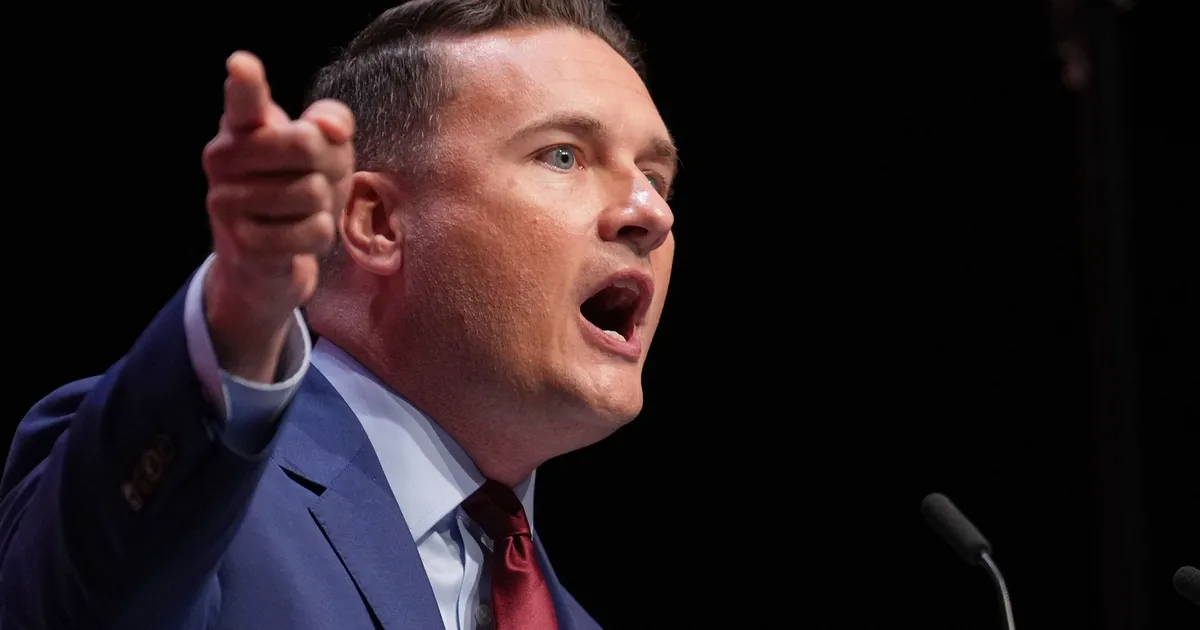
Wes Streeting will definitely run in the upcoming Labour leadership contest, his allies have told HuffPost UK.
It is the first confirmation that he plans to mount a bid to replace Keir Starmer as prime minister.
Supporters of Starmer have claimed that the former health secretary – who resigned with a ferocious attack on the prime minister yesterday – does not have enough support from Labour MPs to mount a challenge.
Under Labour Party rules, any candidate must have the support of at least 20% of its MPs to make it onto the ballot paper. At the moment, that is 81 MPs.
Starmer allies have claimed that Streeting currently only has 43 names, leaving him well short of the number required.
They said that was why he did not formally trigger a contest when he quit the cabinet, as had been expected.
But a source close to Streeting told HuffPost UK: “He has the numbers and will be a candidate when there’s a contest.”
In his resignation letter, Streeting stopped short of saying he would challenge the PM.
But he said: “It is now clear that you will not lead the Labour Party into the next general election and that Labour MPs and Labour unions want the debate about what comes next to be a battle of ideas, not of personalities or petty factionalism.
“It needs to be broad, and it needs the best possible field of candidates. I support that approach and I hope that you will facilitate this.”
A leadership contest appears inevitable, despite Starmer insisting he “won’t walk away” from No.10.
Cabinet ministers, including home secretary Shabana Mahmood and foreign secretary Yvette Cooper, have personally told the PM to set out a timetable for his departure.
More than 90 Labour MPs have so far publicly called on him to quit, while four junior ministers have also resigned from the government.
Andy Burnham kicked off his own attempt to be the next PM when it was announced that Labour MP Josh Simons is standing down to let the Greater Manchester mayor stand in his Makerfield seat.
Labour’s ruling national executive committee (NEC) is not expected to block Burnham’s bid to be the party’s candidate in the resulting by-election.
However, he faces a huge challenge to see off Reform UK and be elected the new MP for the constituency.
If Burnham wins, he is expected to immediately challenge Starmer, triggering a full leadership contest.
Others who could throw their hats into the ring include former deputy PM Angela Rayner, defence secretary John Healey, energy secretary Ed Miliband, Mahmood, Cooper and junior defence minister Al Carns
Subscribe to Commons People, the podcast that makes politics easy. Every week, Kevin Schofield and Kate Nicholson unpack the week’s biggest stories to keep you informed. Join us for straightforward analysis of what’s going on at Westminster.


An independent disciplinary commission will meet on or before Tuesday 19 May to decide whether Southampton breached English Football League (EFL) rules by allegedly spying on a Middlesbrough training session. This decision could affect the Championship play-off final at Wembley on Saturday 23 May.
Southampton: What are the allegations?
Middlesbrough lodged a complaint after a photo emerged showing a man outside their training ground with a camera. The EFL subsequently charged Southampton with breaching competition regulations. If the commission upholds the charge, Southampton could be removed from the play-offs. This would deny them a shot at promotion.
The EFL stressed the hearing is being run by an independent body:
As the proceedings are being conducted by an Independent Disciplinary Commission, the EFL does not control the proposed timetable.
On contingency planning, the league also warned supporters to expect possible changes:
Supporters should, however, be aware that the outcome of the disciplinary proceedings may yet result in changes to the fixture.
Possible outcomes and implications
- If there is no breach found, Southampton will play Hull City at Wembley as scheduled with promotion being decided on the pitch.
- If a breach is found, but sanctions are short of expulsion then it will be fines, points deductions applied to a future season, or other penalties that leave the final intact.
- If a breach is found to be true and expulsion is ordered, Southampton removed from the play-offs; the EFL would need to implement contingency plans, which could include promoting the defeated semi-finalist or rearranging the final.
Each outcome carries knock-on effects. Ticket allocations, travel plans, broadcast schedules and commercial contracts all hinge on the commission’s ruling and any subsequent appeals. The EFL has said it is planning on the basis the final will go ahead on 23 May. However, it has contingency measures ready.
Ticket sales continue
Middlesbrough’s squad have been told to report back to training amid uncertainty. Southampton have given players a short break before returning to prepare for the final. Both clubs and the EFL are continuing ticket sales while warning supporters that arrangements could change. Fans should be cautious when booking travel and accommodation.
The independent hearing is set to conclude by 19 May, is the decisive moment. The EFL’s public position is pragmatic: plan for the final but be ready to adapt. That leaves a narrow window for legal argument, potential appeals and logistical reshuffling before Wembley. The outcome will determine not just who plays at Wembley, but who earns the financial and sporting prize of Premier League promotion.
Featured image via Southampton FC
By Faz Ali
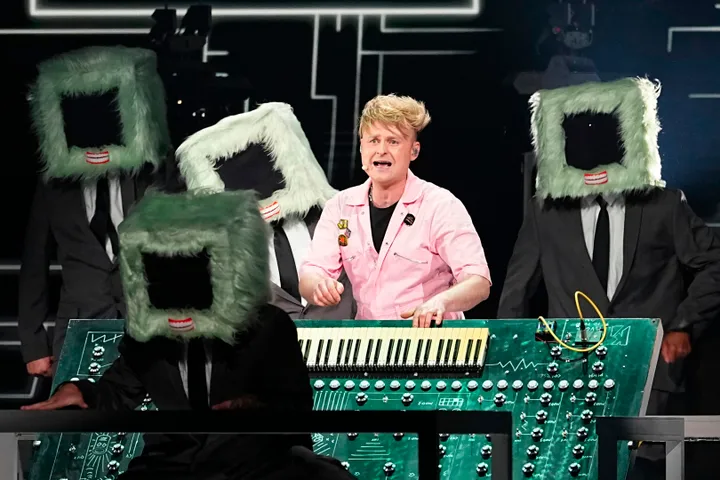
Eurovision star Look Mum No Computer has shared that the BBC took measures to make sure he’d be able to cope with the “pressure” of the contest.
Look Mum No Computer – the stage name of musician and YouTuber Sam Battle – is representing the UK at the 2026 Eurovision Song Contest this weekend with his original song Eins, Zwei, Drei.
Given how the UK has fared at the competition in recent years, it’s fair to say that picking up that mantle is not for the faint of heart, and in a new interview with BBC News, the performer opened up about how bosses wanted to make sure he was up to the challenge.
“They gave me a stress test [to see] whether I could deal under pressure,” he explained, with the BBC describing him as flashing a nervous “should-I-be-saying-this” glance towards his press team as he made the revelation.
“It’s nothing, really,” he added. “Just making sure that you don’t get too nervous and things like that.”
HuffPost UK has contacted the BBC for additional comment.

Past UK Eurovision acts have made no secret of the intense toll that the scrutiny and attention associated with the contest can bring.
Back in 2025, Olly Alexander claimed that his number one advice to the UK’s next Eurovision entrant would be to “get yourself a really good therapist because you’ll have a lot to talk about – for years!”.
Meanwhile, Look Mum No Computer isn’t the only Eurovision performer whose delegation took measures to prepare them for the contest.
Earlier this week, Israeli representative Noam Bettan claimed that, like his recent predecessors, he rehearsed while being booed to prepare for any disruptions that might occur during his performance.
“I had a few people in my crew trying to make it hard for me, to practise for this moment,” Noam told the BBC earlier this week. “But you can’t really prepare for this.”
During Noam’s semi-final performance on Tuesday night, pro-Palestine chants could be heard coming from the audience, with Eurovision later confirming that audience members had been removed for causing disruption.
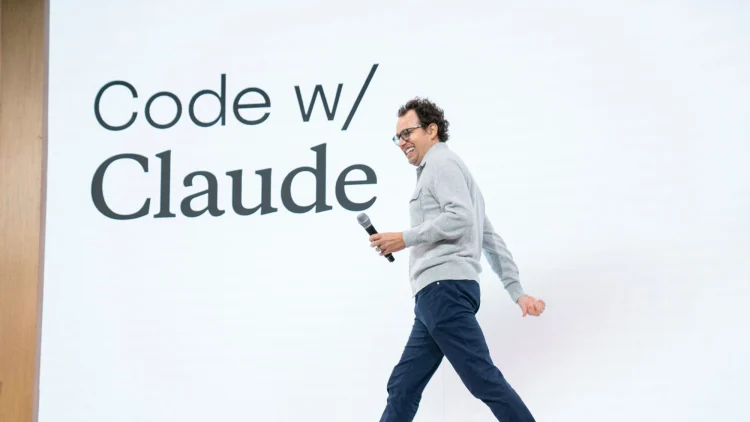
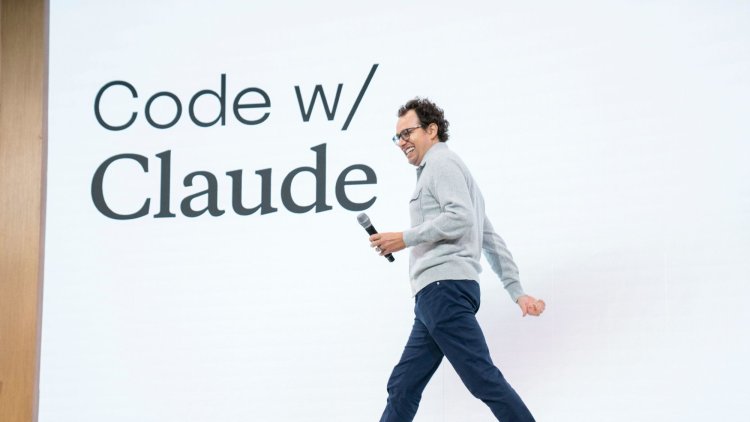
Anthropic CEO Dario Amodei (Associated Press/Alamy)
7 min read
The scale of the disruption to the labour market from AI is becoming clear; we cannot leave it to big tech or populists to frame the debate about what to do about it, argues Roa Powell
If AI is powerful enough to turbocharge Britain’s economy, it is powerful enough to disrupt our labour market. Ministers must reckon with this dual reality.
This government is taking rapid AI progress seriously. They have committed to a world-leading AI Security Institute, invested £500m in the UK’s sovereign AI capability, and plan for the UK to be the fastest AI adopter in the G7. Ministers have described AI as “the defining technology of our generation”, “the engine of economic power” and an “industrial revolution in a decade”.
But the more seriously this government takes AI, the harder it is to justify silence on AI-driven job loss.
If AI is really going to be an “industrial revolution in a decade,” surely we should expect disruption on a similar scale with backlash akin to the Luddites. If AI is going to help streamline the “flabby” civil service, with government suggesting 62 per cent of the most junior civil servants’ work is automatable, surely we can expect our own bosses to follow suit and cut headcount.
According to Public First, two-thirds of UK adults already expect AI to contribute to unemployment, and as AI’s impact on jobs becomes more prominent in the public consciousness, so does the political cost of doing nothing about it.
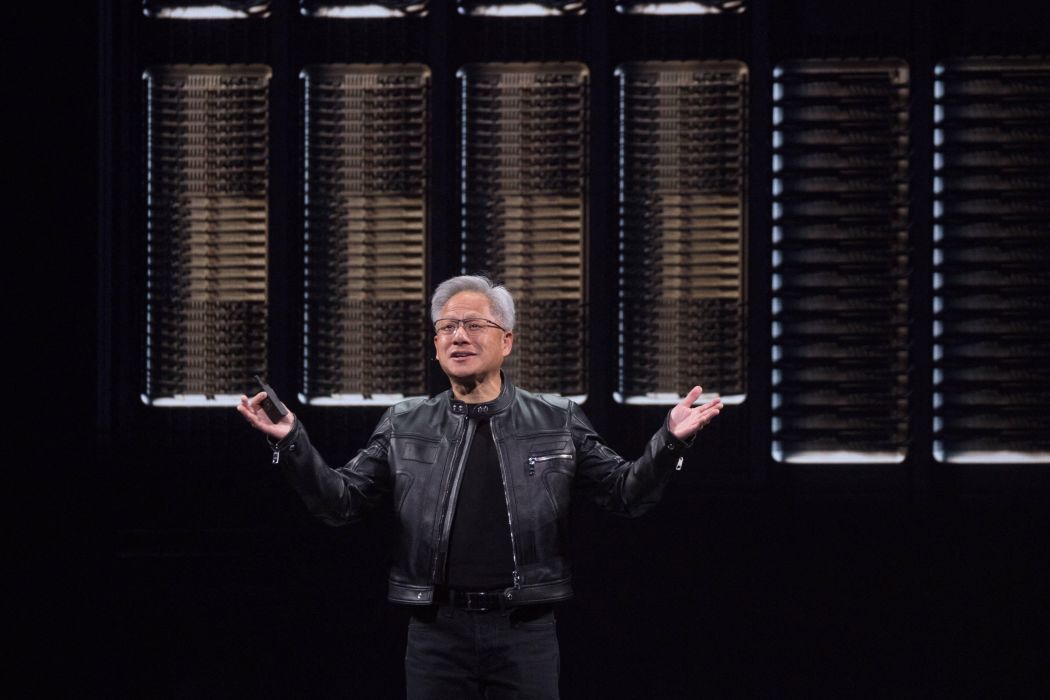
One excuse for inaction is that forecasts on AI-driven job loss still vary widely. Our own analysis at the Institute For Public Policy Research (IPPR) imagines scenarios ranging from eight million UK jobs lost to no jobs lost at all. When the International Monetary Fund said that 60 per cent of roles in advanced economies were exposed, economists pushed back, pointing out that AI being capable of performing a task tells you little about whether that person’s job will actually be scrapped. Even the tech CEOs disagree with Anthropic’s Dario Amodei predicting AI could eliminate half of entry-level white-collar jobs in five years, only for Nvidia’s Jensen Huang to push back, claiming “you’re not going to lose your job to an AI, but you are going to lose your job to someone who uses AI”.
But the forecasts are moving in one direction and the evidence that AI will bring significant change to our job market is mounting. AI’s performance at real-world job tasks has more than doubled in a year. Evaluations show AI matching or beating a human at a full-day task – that is a task that would ordinarily take a human eight hours to complete – 71 per cent of the time. At the same time “agentic” AI is taking us beyond the chatbot interfaces most people know.
Given a goal and control of a computer, AI can be left alone to browse the web, draft and send emails, edit files and book meetings. Meta, Salesforce, IBM, Microsoft and BT have all attributed significant job cuts to AI and entire disciplines have transformed overnight, with top engineers at Anthropic and Open AI saying AI now writes 100 per cent of their code.
Once the impacts are here it will be too late, risking an outcome where the state is grinding into gear just as millions are out of work, tax revenues have collapsed and techlash has peaked
We are also starting to get a sense of how uneven impacts will be. New data from the Financial Times shows 60 per cent of high earners use AI daily compared to just 16 per cent of low earners, with women also using AI less. This makes them less equipped to adjust to a world where our bosses expect us to use AI and maybe pay us more as a result. Young people are also set to feel the brunt of this as entry level jobs are most exposed, and without opportunities to learn on the job they will struggle to reach the next stage in the career ladder. Compared to the industrial revolution, the geography of AI’s impact is expected to be flipped, with high earners in cities more exposed to automation while rural areas can look immune on the surface but be left out of the economic upside.
We shouldn’t expect concrete predictions on this to arrive until very late in the day. The sequence from AI getting more capable, to AI getting adopted and then people becoming displaced doesn’t follow automatically from highly capable AI. Adoption and displacement depend on legal certainty, human preferences, and the relative cost of human versus machine labour. But by the time concrete data arrives, disruption could be well under way.
With AI, the timing trap is brutal. It is not realistic for our government to make major spending changes before bigger impacts from AI have arrived, but once the impacts are here it will be too late, risking an outcome where the state is grinding into gear just as millions are out of work, tax revenues have collapsed and techlash has peaked.
The real challenge for a country like Britain is whether we can capture the economic windfall AI brings, either by attracting firms to the UK so they are part of our tax base, or by considering new progressive tax structures for massive AI-driven profits. Across a wide range of AI labour market scenarios, this will determine whether we have the money to help those most in need.
The UK is especially exposed on this. First, because the sectors most vulnerable to AI disruption, like financial and professional services, currently bring in our biggest tax revenues.
Second, because the companies set to reap the rewards sit largely outside of our tax base. We don’t have any of the technology giants like Google or Microsoft who are already reaping the profits from AI, nor do we have any of the frontier AI companies who are seeing some of the fastest growing revenues ever, like Anthropic which just hit $30bn in revenue, up from just $1bn in January 2025.
In practice, this means we need to lay some serious groundwork now, both politically and practically.
Practically, we need to prepare multiple plans to capture the value from AI. If frontier AI companies hoover up all the profits, we should consider taxes that target them specifically. If the gains spread to any company that uses AI, we will instead need to raise corporation tax to reflect that revenue no longer accrues to workers. And in the meantime, government-backed wealth funds can help us reap some of the rewards whatever happens, by spreading our investment across the AI landscape and redistributing this to workers who need support most.
None of these policies are possible overnight and, for lots of this, the UK won’t be able to go it alone. We already struggle to effectively tax big technology companies, and international co-ordination is essential to allow everybody to take a fair share. For this to work, we need to start detailed scenario planning now.
Politically, our government needs to develop a stronger voice on this issue. The political ground is shifting fast. Just last month, OpenAI published a blueprint promoting robot taxes, a national wealth fund and a four-day working week. Meanwhile, Amodei has written that existing tax systems will no longer make sense and that progressive taxation on AI companies may be needed. These are not the demands of trade unions or left-wing think tanks. When AI’s biggest winners are calling for redistribution, it is beyond time for government to take that seriously.
The cost of waiting is just too high. Waiting would mean ceding the debate to AI companies designing rhetoric to suit their public image, or to populists who are faster in finding a way of riding anti-AI sentiment but would have our economy stall while other countries race ahead. If government remains absent from this debate any longer, its ideas will arrive just as disruption escalates, public pressure builds and simplistic solutions become dominant.
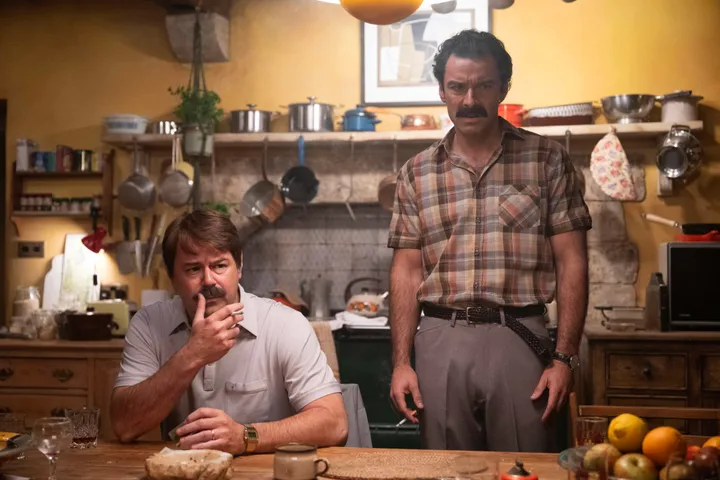
After a two-year wait, Rivals is finally back – and if any fans out there were nervous about whether season two could deliver on the outrageous fun provided by the first run, you can breathe a sigh of relief.
Disney+’s adaptation of Dame Jilly Cooper’s bonkbuster novels returned with three brand new episodes on Friday morning, with three more to come in the weeks ahead, and the rest of the season following later in the year.
In the lead-up to the release, these episodes were met with unanimous praise (check that 100% score on Rotten Tomatoes if you don’t believe us), with many of those glowing four- and five-star reviews hailing the new season as even better than its predecessor.
Here’s a selection of what the critics are saying about Rivals’ second season so far…
“How best to reward such exquisitely knowing escapism? Ten stars? Ten thousand stars? Rivals is beyond earthly praise. Let us instead insert a single rose between its tireless bum cheeks and raise a glass of Cinzano to its naked audacity. Bottoms up!”
“Despite its deliberate corniness, this is also gloriously uplifting television. It is unashamedly celebratory and perhaps even better than the last series, though there is no naked tennis this time.”

“The new series delivers exactly what we need in a week of grim headlines: pure, unadulterated escapism. Its unique blend of utter silliness, seriousness and chaos makes us glad that Rivals is so much more than an illicit affair, it’s a long term relationship we want to keep far beyond the morning after.”
“This is glossy, wickedly funny, politically incorrect and completely unashamed. When it comes to old-school escapist TV, Rivals is unrivalled.”
“[Season two is about] class, petty human jealousy, sex, and love […] of course this is a must watch!”
“What a romp this is. Any notion of second season nerves for the surprise Disney+ hit Rivals (Jilly Cooper was hardly hot property) are quickly dispelled in a gleeful continuation of the bonking, big hair and hilarity where there’s a belly laugh every 30 seconds.”
“Rivals continues to refresh the parts that other television cannot reach – a heady mix of guilty pleasure, trenchant satire, rambunctious comedy and out-and-out trash. Repeatedly, characters take their clothes off and jump into swimming pools for no reason. Sometimes you just have to go with it and take the leap yourself.”

“Dame Jilly Cooper died last October, a few months after season two of Rivals went into production. But her legacy looks secure: the residents of Rutshire are in safe hands.”
“Rivals [is] such a rare treat in today’s television landscape. It is well-written and well-acted, but it aspires to nothing more than being fun. Real, associable human emotions are kept at arm’s length in favour of stylised bucolic horniness.”
“If it were all about the plentiful sex, the audiences’ hard-on for the thrilling ’80s-set revenge drama would have long softened. As such the hateful feud between Tony and womanising MP Rupert Campbell-Black is even more fiery than the passionate entanglements that run rife in the season.”
“An unabashedly over-the-top 1980s-set drama that gleefully embraces the idea that there’s no such thing as a guilty pleasure, it’s a series that, at its heart, is about indulgence, both for its characters and for those watching along at home.
“Though it boasts a prestige cast, lavish sets, and a story that’s grounded in class tensions among the British society elite, it’s a show that determinedly refuses to take itself too seriously, and one that is deeply uninterested in lecturing its viewers about its characters’ (many, obvious) moral failings.”
“If Rivals’ first season was glam and fun, season two uses that as a spoonful of sugar to help the medicine go down. The more complex and morally grey storylines refuse to take the easy way out despite the fluffy packaging.
“You might have found yourself rooting for extramarital affairs in season one, but season two is ready to douse you in some cold water and remind you that all actions have consequences. That’s what makes the series work: you get the good and the bad.”
The first three episodes of Rivals’ second season are now streaming on Disney+. Check out HuffPost UK’s full review here.
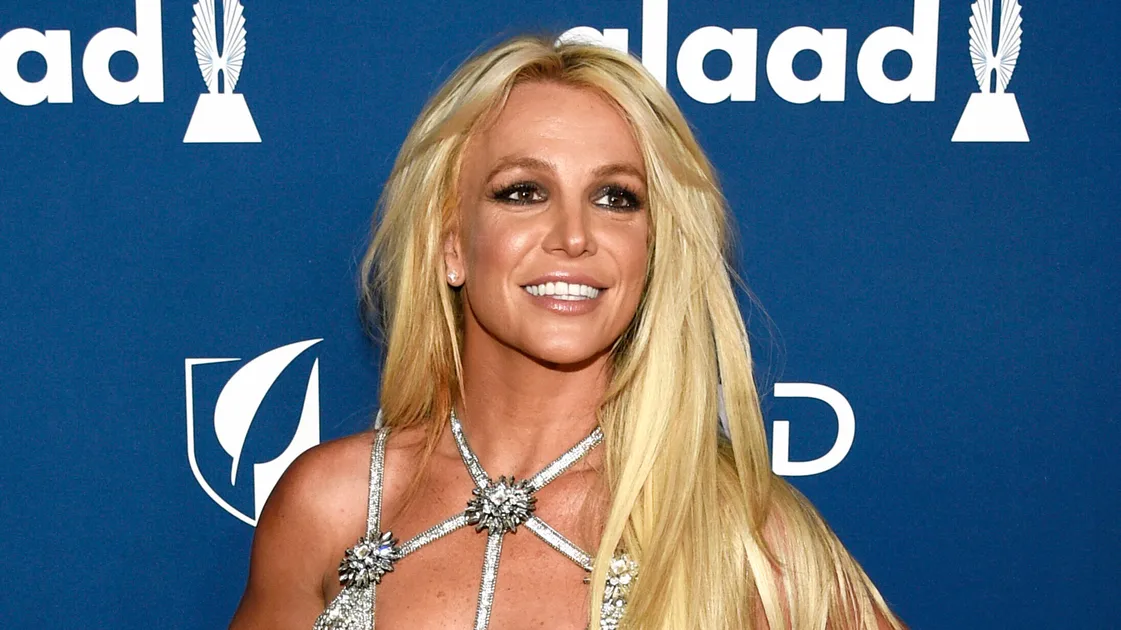
A spokesperson for Britney Spears is sticking up for the singer following accusations that she caused a scene at a Los Angeles-area restaurant on Wednesday night.
TMZ reported on Thursday that Britney had been seen dining out with two people, one of whom was a man she apparently kept saying “I love you” to while they fed each other.
Britney’s rep clarified that she was dining with her assistant and bodyguard at the Blue Dog Tavern in Sherman Oaks, and told a different story than the one reported by TMZ.
Eyewitnesses told the outlet they heard the Piece Of Me star raising her voice, screaming and barking. One described the vibe as chaotic and “kind of sad” though the Grammy winner reportedly “still looked cute”.
At one point, it was reported that staffers had to ask a person with Britney to put out a cigarette she had lit inside, but the most startling moment may have been when she allegedly walked through the restaurant holding a knife.
Entertainment journalist Jeff Sneider wrote on X that he had been dining at the Blue Dog Tavern at the same time as Britney, and called the incident both “wild” and “insane”, adding: “One diner feared for her life. This is not a joke.”
In a statement released to the media, a rep for Britney said the whole story has been unfairly exaggerated.
“Britney was enjoying a quiet dinner with her assistant and bodyguard,” her spokesperson said, while insisting any noise from the singer was because “she was simply telling the story about how her dog was barking at the neighbours”.
“At no point did she put anyone in danger with a knife. She was cutting her hamburger in half,” they added.
“This constant attack on everything that she does and this is exactly what happened 20 years ago when the media tried to depict Britney as a bad person. This is ridiculous and it needs to stop now.”
Britney’s rep notably did not address TMZ’s kissing allegations or the “I love you” comments in the statement.
The story about Britney’s supposedly erratic behaviour comes just over a week after she avoided jail for a DUI charge by pleading guilty to a lesser charge.
She had previously checked herself into a rehab facility following her arrest earlier this year.
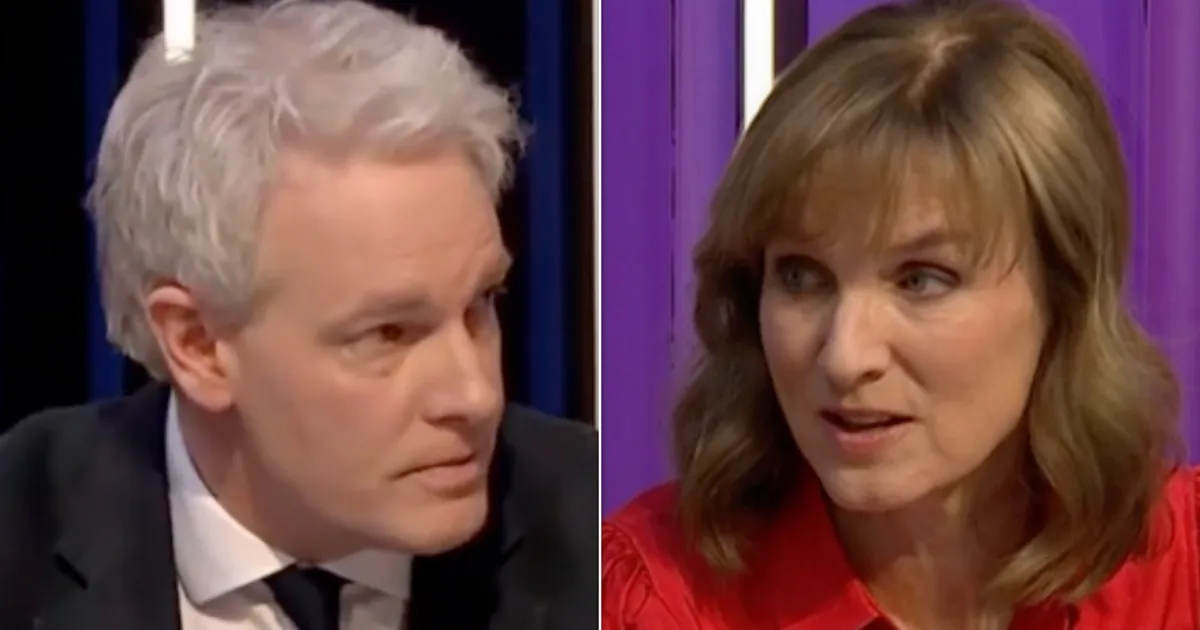
A Reform UK MP was laughed at by the BBC Question Time audience after he was left stumped by the detail of one of his own party’s policies.
Danny Kruger admitted he didn’t know how Reform plans to save £10 billion from the welfare budget by ending payouts to people with mild anxiety.
He was quizzed on his party’s plans for government by Question Time presenter Fiona Bruce.
She said: “Just coming back to the cuts in welfare, because I’ve heard Reform say this every time asked, ‘we’d get rid of benefits for people with mild anxiety’.
“What percentage of the welfare bill do those people make up?”
Kruger, the MP for East Wiltshire who defected from the Tories last year, replied: “I don’t know what that number is, Fiona.”
As the audience laughed, the presenter asked him: “How can you possibly know it’s going to save you £10 billion?”
The MP said: “Excuse me, I don’t know every fact and figure.”
Bruce said: “You’ve just given us a fact which is £10 billion, but you have no idea how you’d get it.”
Kruger insisted he could “stand that up later if you like”.
Subscribe to Commons People, the podcast that makes politics easy. Every week, Kevin Schofield and Kate Nicholson unpack the week’s biggest stories to keep you informed. Join us for straightforward analysis of what’s going on at Westminster.

If you’re considering booking flights for your family, you might want to think carefully about the times you book in order to try and swerve jet lag and the inevitable meltdowns that can happen when kids are overtired.
One badly-timed flight can end up with children refusing to sleep at 3am, emotional airport meltdowns and exhausted parents spending the first three days of the holiday trying to “fix” everyone’s body clocks.
Omar El-Gohary, CEO and superintendent pharmacist at IQ Doctor, suggested the time families choose to fly can have a bigger impact on children’s jet lag than most people realise. And while many parents assume overnight flights are always the best option, he argues that isn’t necessarily true for every age group.
Here, El-Gohary recommends the best time of day to fly with children depending on their age, plus practical tricks to reduce travel exhaustion.
The best flight times for each age group
0-2 years old
Mid-morning flights often work best (9am-12pm), said the expert.
“For babies and young toddlers, consistency matters more than forcing them into overnight sleep patterns they don’t fully understand yet,” he explained.
Mid-morning flights are often the least stressful as they avoid:
- Extremely early airport wake-ups
- Overtired evening travel
- Disrupted bedtime routines
- Pressure for babies to ‘sleep on cue’
“At this age, many children still nap unpredictably, meaning overnight flights can sometimes backfire completely. A baby who usually refuses to sleep on a red-eye can leave parents dealing with 10+ hours of overstimulation, crying and exhaustion in a confined space,” he added.
Morning departures tend to align better with natural wake windows and allow children to nap more naturally during parts of the flight.
- Keep naps flexible on travel day
- Avoid arriving at the airport too early
- Feed during take-off and landing to help ear pressure
- Pack one completely ‘new’ toy for mid-flight distraction
- Don’t try to force destination bedtime immediately after arrival
2-4 years old
Early afternoon flights (12-3pm) can help reduce meltdowns.
“Toddlers are usually the hardest age group to travel with as they’re energetic enough to become restless, but emotionally sensitive when tired or overstimulated,” he said.
“Afternoon flights work well because children have already burned energy during the morning, parents avoid pre-dawn wake-ups, children may naturally nap during the second half of the flight and arrival times are often easier to manage.” (As a toddler mum whose two-year-old is usually out for the count by 1pm, this makes a lot of sense.)
The expert warned that very early departures can be “especially difficult” at this age as disrupted sleep routines can trigger emotional dysregulation for the entire day.
- Let them run around before boarding
- Avoid too much sugar pre-flight
- Download familiar comfort shows beforehand
- Bring snacks in small ‘surprise’ intervals
- Use destination daylight strategically after arrival
5-12 years old
Once kids reach school age, overnight flights start becoming more useful. El-Gohary said 6-10pm is your sweet spot.
Night flights work because their body clocks become more adaptable and overnight flights become more effective for reducing jet lag, the pro suggested, especially if you’re going long-haul.
“At this age, children are more likely to understand travel routines, sleep for long stretches, cope better with delayed bedtimes and manage airport waiting times,” he said.
That said, beware of treating flights like ‘holiday mode’ too early, as “overexcited children staying awake for films, snacks and games throughout the flight often arrive more jet-lagged than adults”.
- Slowly change bedtime a few days before departure
- Encourage sleep shortly after meal service onboard
- Keep screens dim during overnight flights
- Change watches and devices to destination time immediately
- Prioritise sunlight exposure after landing
13-18 years old
Again, late evening flights usually work best. El-Gohary recommends 8-11pm flight times for this age group as “teenagers naturally experience later sleep cycles” so they “often adapt better to overnight travel than younger children”.
“Late evening flights tend to suit teens as they naturally stay awake for longer anyway, tolerate time-zone changes better, sleep more independently during flights and recover quicker from disrupted sleep schedules,” he added.
Teens can still be affected by hidden jet lag symptoms such as travel fatigue, irritability, mood changes, low motivation, headaches or poor sleep quality for several days.
To avoid this, he advises parents to:
- Reduce caffeine before flights
- Encourage hydration before and during travel
- Avoid sleeping immediately after landing if arriving during daytime
- Limit overnight scrolling and blue-light exposure
- Keep first-day holiday plans light.
Politics
Our Survey: Tories expect Burnham to lead Labour to the next election but would ‘prefer’ Starmer did
Accustomed as they have become to getting a say on who leads the Tory Party Conservative members quite obviously have no vote on who might lead Labour.
But they most certainly have a view.
Now before we go further I should say two things. We did ask if Kemi Badenoch should remain leader of the Conservatives after the results which, whilst they had some sparks of optimism, were still not good.
The answer was so big it hardly warrants a graphic – 93 per cent said she should stay.
3.5% said she should go and 3.5% wanted her to stay for now but go before an election.
The second an perhaps more curious point is that this Survey was held over from April to be put into the field over the weekend following the local elections.
It closed completely just as Keir Starmer was due to make his make-or-break speech to try and stave off the absolute meltdown this week has since become for him.
When it closed: Andy Burnham had not so much set foot on a train to London and Wes Streeting was waiting to see – I doubt with much expectation – if Monday’s Starmer pulpit drone would have the effect Kemi Badenoch’s evisceration of Labour in the Commons on Wednesday had on her backbenchers.
It did not. Quite the opposite
But our responders didn’t know that for a fact when they voted on who they expected to lead Labour into the next election;
They already thought it would be Andy Burnham.

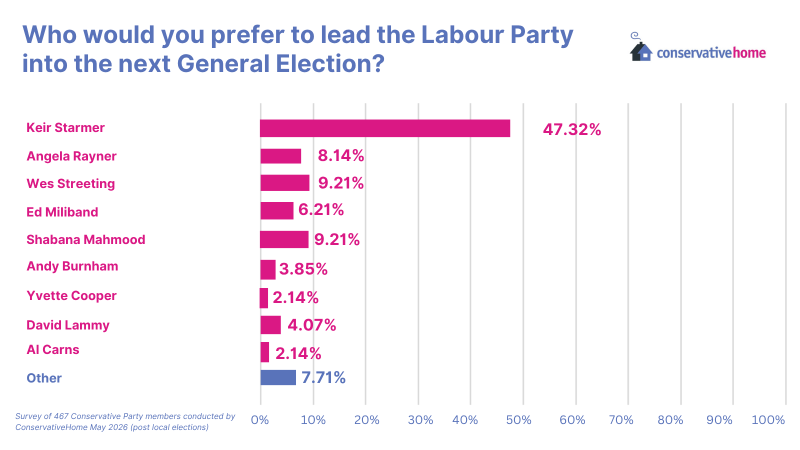
Burnham was out in front on just over thirty per cent, Starmer second but ten per cent behind. Streeting, who resigned yesterday but didn’t launch an official challenge (those his actions undoubtedly mean there will be one) managed less than half Burnham’s total.
Again none of those who responded knew Josh Simons MP, ironically once head of the Starmer backing ‘Labour Together’, would further fragment the wider Labour movement after Streeting’s resignation by resigning his Makerfield seat so Burnham could stand in the coming by-election, an intention Burnham has now confirmed.
Now it’s true ConservativeHome was less interested in who Tory members thought would lead Labour into the next election than we were from a purely political advantage standpoint in who they’d prefer to lead Labour into the next election. A resounding win for the current Prime Minister – for all the wrong reasons.
There are many wise strategists who know that ‘Commons performance’ alone does not make a leader, nor a winner, and they are correct. Kemi Badenoch is a wise enough woman to know that – but it helps. And since, as CCHQ themselves felt bold enough to tweet after her blistering Kings speech response, ‘This is Kemi Badenoch’s chamber, you’re just sitting in it’ it’s perhaps a reflection of her relentless questioning of Keir Starmer and pursuit of his failings that Tory members would prefer him to stay.
There are some of that group however who will undoubtedly have felt that for all his faults Keir Starmer may not be as bad for the country as some of his rivals for the job.
It’s worth just noting though the comparison of expectation for Burnham to lead 30.97% with the preference for him to lead 3.85%.
In all the smoke and mirrors and speculation – some of it wild nonsense to fill the airwaves and ‘socials’ – there isn’t an Elephant in the Room, there’s a herd.
No candidate including the incumbent will reduce welfare spending, and the others will probably argue to borrow more.
If Starmer and his supporters’ argument was that he provided stability in the country and the markets, then why has this all occurred in the first place? Because people including voters in last week’s elections and a third of his own backbenchers have decided he doesn’t and he can’t.
If Starmer had no plan, there’s precious little sign of what plan or vision his rivals have. Badenoch’s team brought an alternative to the oddly back seat product that was the actual King’s speech.
Starmer, who at some point, probably soon, will be leaving Downing Street, had one rather well delivered line about the election results aimed straight at Badenoch:
“We both have in common that we suffered disappointing election results. The difference between us is she has noticed”
She has, and she’s very wise not to ignore that. The bouquets for Wednesday’s speech, the alternative Kings Speech policy programme, and not being afraid to lay out the reason why successive PMs have failed – and will do so again – unless they accept that the entire system of government is constraining them.
She says she has a plan, and I truly believe she does, but she knows it has to include rehabilitating the Tory brand, not just her own, and not just in London but across the country.
Otherwise she’ll be taking a bow, but not a crown, however much she’s unafraid of the member for Clacton – who wasn’t even there.
The post Our Survey: Tories expect Burnham to lead Labour to the next election but would ‘prefer’ Starmer did appeared first on Conservative Home.
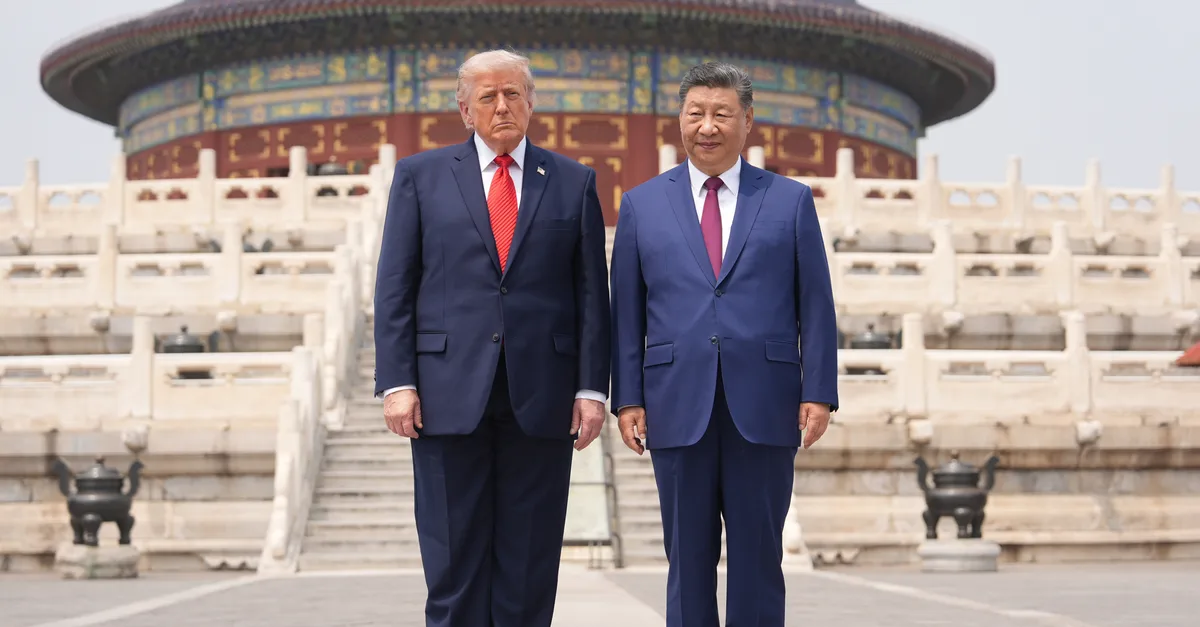
During a wide-ranging Thursday night interview with Fox News’ Sean Hannity, President Donald Trump went on quite a tangent about Chinese President Xi Jinping’s appearance, especially his stature.
“But I say about him (Xi), that if you went to Hollywood and you looked for a leader of China to play a role in a movie … ” Trump said.
“Central casting,” Hannity interjected.
“He’s central casting, you couldn’t find a guy like him,” Trump said. “Even his physical features, he’s tall, very tall. Especially for this country, cause they tend to be a little bit shorter. You look at the military, I mean, the military today was incredible, that military marching was incredible. But no, if you went to Hollywood, you wouldn’t find that. You’re not gonna find a guy to play the role.”
“I mean, I’ll get criticised, they always criticise me when I say good things about certain leaders,” Trump continued.
Trump and Xi met behind closed doors on Thursday morning, where the Chinese president reportedly told his counterpart “the Taiwan question is the most important issue in China-US relations,” according to a post on X by Chinese Foreign Ministry spokesperson Mao Ning.
“If it is handled properly, the bilateral relationship will enjoy overall stability. Otherwise, the two countries will have clashes and even conflicts, putting the entire relationship in great jeopardy,” she wrote.
Trump also told Hannity during the interview that Xi said during their conversations that he “would like to be of help” in negotiations to reopen the Strait of Hormuz and an end to the war in Iran.
Subscribe to Commons People, the podcast that makes politics easy. Every week, Kevin Schofield and Kate Nicholson unpack the week’s biggest stories to keep you informed. Join us for straightforward analysis of what’s going on at Westminster.

3M: Iran Conflict And Inflationary Pressure Could Derail The Recovery (NYSE:MMM)

Stellantis (STLA) Stock: Dongfeng Partnership Fuels Peugeot and Jeep EV Expansion
12 teen shows on Netflix that appeal to Gen Z “and” Gen X

Manchester United reach agreement with Casemiro over contract clause amid transfer speculation

US brings back mandatory military draft registration

Steven Gerrard disagrees with Gary Neville over ‘shock’ Chelsea and Arsenal claim | Football
![Why Bitcoin Won’t Stop! [Even With 3.8% CPI Shock]](https://wordupnews.com/wp-content/uploads/2026/05/1778835689_maxresdefault-80x80.jpg)


-
 Crypto World7 days ago
HarrisX Poll Found 52% of Registered Voters Support the CLARITY Act
-

 Fashion7 days ago
Weekend Open Thread: Marianne Dress
-

 Fashion4 days ago
Coffee Break: Travel Steam Iron
-

 Fashion4 days ago
What to Know Before Buying a Curling Wand or Curling Iron
-

 Tech5 days ago
Auto Enthusiast Carves Functional Two-Stroke Engine from Solid Metal
-

 Politics3 days ago
What to expect when you’re expecting a budget
-
 Business6 days ago
Ignore market noise, India’s long-term story intact, say D-Street bulls Ramesh Damani and Sunil Singhania
-

 Politics6 days ago
Politics Home Article | Starmer Enters The Danger Zone
-

 Tech4 days ago
GM Agrees To Pay $12.75 Million To Settle California Lawsuit Over Misuse Of Customers’ Driving Data
-

 Crypto World6 days ago
PROS explodes 48% as Upbit and Bithumb listings ignite demand
-

 Crypto World5 days ago
CZ says US crypto rivals tried to block Trump pardon
-

 Tech3 days ago
GM agrees to $12.75M California settlement over sale of drivers’ data
-

 Entertainment7 days ago
YNW Melly Denied Bond Again Ahead Of Double Murder Retrial
-
Tech7 days ago
The Most Exciting Apple Products In The Pipeline For 2026 And Beyond
-

 Crypto World6 days ago
Kraken Parent Seeks OCC Charter, Signaling Regulated Banking Access
-
Crypto World7 days ago
The Hantavirus Danger: Can a Potential Outbreak Spark a New Meme Coin Frenzy?
-

 Sports6 days ago
After Waka Waka, Shakira now drops first teaser for FIFA WC 2026 song | FIFA World Cup 2022
-
 Crypto World6 days ago
Solana UFO Meme Coins Surge After Pentagon Reveals Alien Files
-

 Entertainment6 days ago
Bethenny Frankel Says She Loves ‘Torturing’ Men
-

 Sports7 days ago
Why Nathan Mackinnon Remains the Hart Trophy Favourite over Connor McDavid and Nikita Kucherov | NHL
You must be logged in to post a comment Login