

Politics
‘Manchesterism’ is a mirage – spiked

‘There’s no such thing as Starmerism and there never will be’, declared Keir Starmer in 2020, shortly after assuming the leadership of the Labour Party. ‘I have no ideology at all.’
With that statement, Starmer had tried to paint himself as a pragmatic, commonsensical leader. ‘Unburdened by doctrine’ is how he would convey the same message on the day he entered Downing Street in July 2024. Yet less than two years later, his lack of convictions and principles has proven to be his downfall. His time in government has been defined by indecision, drift and u-turns. Just about everyone now agrees, there is no substance beneath the spin, no programme to improve the country and no strategy to keep his party afloat.
Enter Andy Burnham, the mayor of Greater Manchester and Labour’s prince over the water. Burnham, like Starmer, also stands accused of being a serial flip-flopper. Over the years, he has presented himself as a Blairite, a Brownite, a Corbynite and a Starmerite, appealing to whichever tendency in Labour that seems in the ascendancy. Now, in the run-up to June’s Makerfield by-election, Burnham has performed at least six u-turns in just the past few days alone: on Brexit, on women’s spaces, on the government’s fiscal rules, and more – shedding policies that might go down poorly in this Leave-voting, Reform-curious constituency.
Nevertheless, Burnham insists that he does indeed have a guiding political philosophy that he has developed in his nine years as Greater Manchester mayor that he plans to bring to Downing Street. ‘Manchesterism’ has been defined by Burnham as ‘business-friendly socialism’. In his campaign for the Makerfield seat, he has declared that Manchesterism means ‘the end of neoliberalism’ and that Britain has been on the ‘wrong path’ for 40 years. In other words, Burnham is selling Manchesterism as nothing short of transformational, as a near-total overturning of the economic status quo. Yet there is nothing in Burnham’s tenure as Greater Manchester mayor to make such lofty claims stack up.
Burnham is fond of repeating that Greater Manchester has grown at a rate more than twice the national average, making it the fastest-growing region in the UK. The transformation is visible in the new tower blocks filling the city’s skyline, the thriving hospitality industry and its rapidly expanding population. In 1990, as few as 500 people lived in Manchester’s city centre, compared with an estimated 100,000 now, with some property developers expecting this to reach 250,000 by 2035.
Yet the seeds of this change long predate Burnham’s arrival in office in 2017. Indeed, most credit Manchester’s construction boom to Sir Richard Leese, Labour leader of the city council from 1996 to 2021, then Burnham’s deputy mayor until 2021, and the late Sir Howard Bernstein, former chief executive of the city council from 1998 to 2017. The pair successfully courted foreign investment, lobbied for more money and powers from Westminster, and took an unashamedly pro-growth approach to private development. They also expanded public transport and cleaned up the city’s image.
Some critics have argued that Manchester’s growth is largely illusory, buttressed by questionable statistics and the right ‘vibes’. Paul Swinney, economist at the Data City, has asked why Greater Manchester’s supposed productivity boom hasn’t translated into rising wages, as would usually be expected. Mancunians’ disposable income rose by just 0.2 per cent per year between 2013 and 2023, far less than comparable cities. In the same period, Manchester was beaten in jobs growth not only by London, but also by far less celebrated urban centres, including Luton, Basildon and Warrington. As Alistair Heath notes in the Telegraph, Liverpool – a city whose mayor has been charged on suspicion of bribery and misconduct – has enjoyed similar job-growth rates to the much-hailed Manchester.
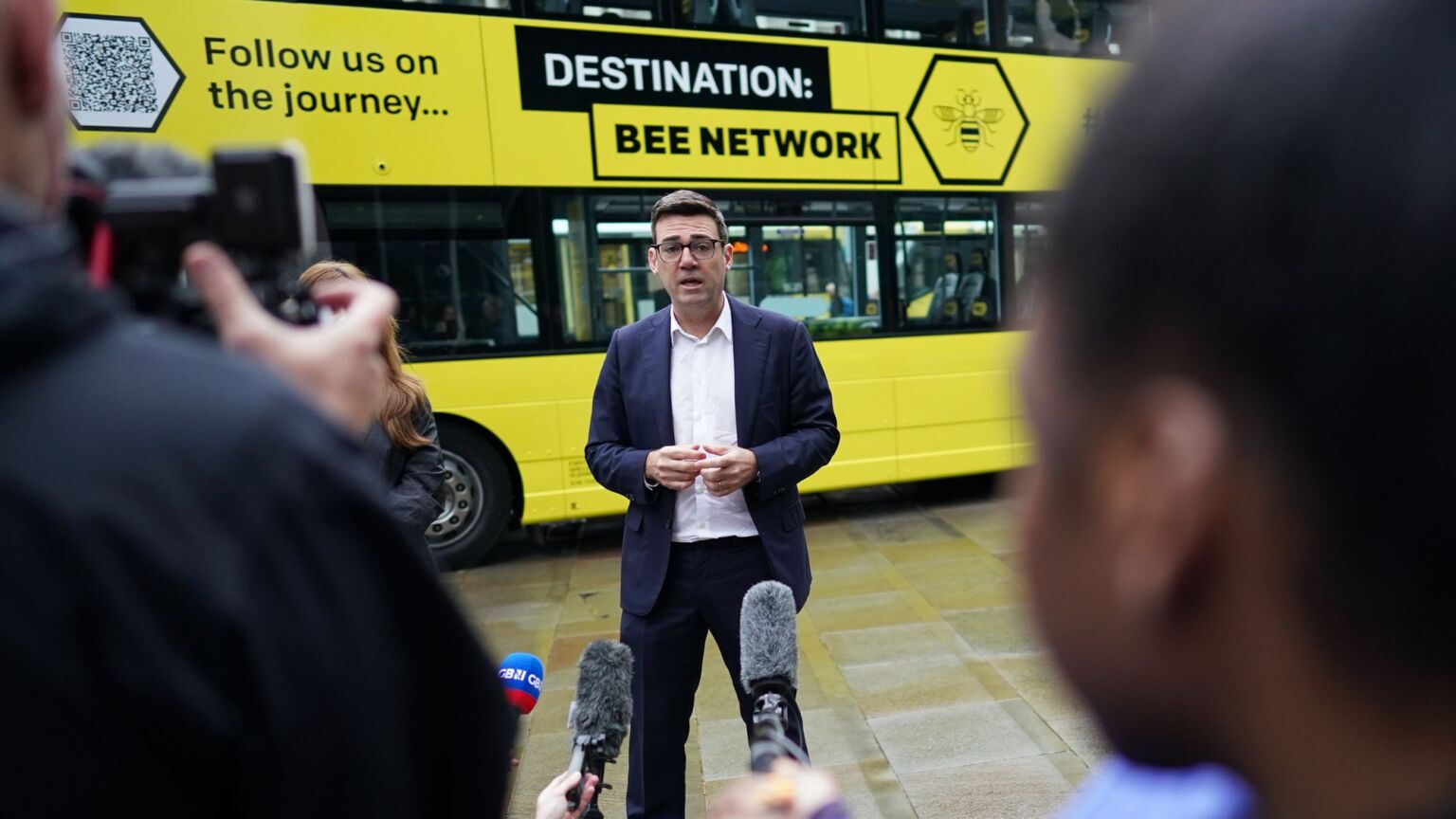
So if Manchester isn’t the economic powerhouse its boosters claim it is, is it a ‘socialist’ city as Burnham likes to paint it? Again, the rhetoric fails to do justice to reality. Burnham’s favoured example of Greater Manchester’s municipal socialism is the Bee network of buses, which brought the region’s hodgepodge of bus services under one umbrella, with the mayor setting fares, routes, timetables and more. Here, the mayor is careful to speak of the buses being under ‘public control’ and not ‘public ownership’. Burnham may claim that his Manchester likes to ‘do things differently’ to down south, yet his buses are franchised out to private companies, just as they are in London. Whatever the merits of the integrated transport system, it is surely a stretch to describe this as anything approaching ‘socialism’. It is hard to imagine any self-respecting socialist manning the barricades for a northern equivalent of Transport for London.
What’s more, like most of the projects that are said to define Manchesterism, bus reform predates Burnham’s arrival. Indeed, it was a key plank of the devolution deal struck by Leese and Bernstein with then Conservative chancellor George Osborne in 2015.
As for Manchester’s development agenda, this has succeeded largely by ignoring the demands of the left, especially when it comes to providing affordable housing. As Leese explained in 2021: ‘If we’d done what our critics wanted us to do, it wouldn’t have delivered affordable housing, it would have delivered no housing at all, zero. If we’d tried to impose 20 per cent affordability on it, it wouldn’t have happened. We wouldn’t have got 20 per cent affordable housing, we would have got nothing.’ Would Burnham bring such a ruthless and clear-eyed pro-development approach to Westminster? I wouldn’t hold my breath.
The great irony here is that the Labour Party is going through great convulsions to replace its ideas-lite, ideology-free prime minister with a man who is just as lacking in convictions and principles. Whatever Andy Burnham says, ‘Manchesterism’ is more of a brand than an ideology. It offers no coherent programme for government and certainly poses no challenge to conventional economic thinking. Burnham’s nine years as mayor show that Labour’s emperor of the north has no clothes, but will party members notice before it is too late?
Fraser Myers is deputy editor at spiked and host of the spiked podcast. Follow him on X: @FraserMyers

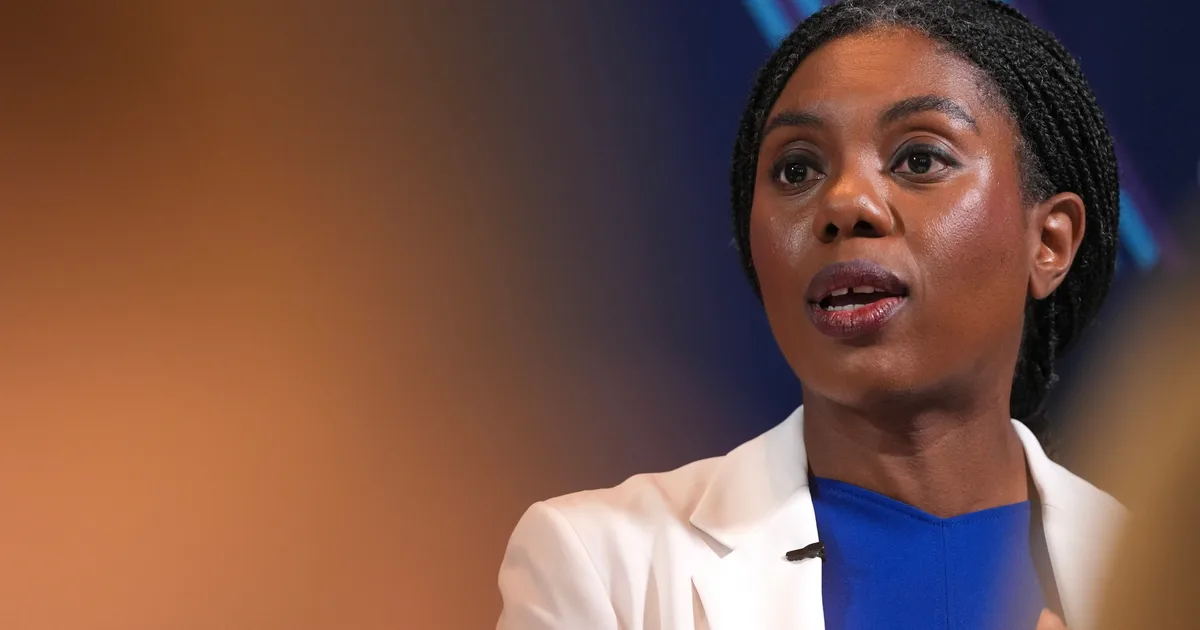
Kemi Badenoch has been told she is “not fit to be prime minister” after comparing a cabinet minister to a Nazi.
The Tory leader said education secretary Bridget Phillipson “has acted like a Gestapo officer” by ending a tax break for private schools.
Badenoch made the remark in an interview with The Spectator.
Responding on X, Phillipson said: “The Gestapo marched hundreds of thousands of innocent people to their deaths. I’ve ended private schools’ tax breaks to invest in state schools.
“No responsible leader makes vile comparisons like this. Kemi Badenoch is not fit to be Prime Minister.”
Labour MP Phil Brickell, secretary of the all party parliamentary group on Germany, called on Badenoch to apologise.
He said: “Kemi Badenoch’s characterisation of Bridget Phillipson as having ‘acted like a Gestapo officer’ over private school VAT fees are contemptible, unbecoming of any parliamentarian and demonstrate – yet again – that Badenoch is completely unfit for public office.
“Her remarks serve no purpose but to undermine the UK-Germany relationship and sow unnecessary division. Ad hominem attacks such as this inexplicable reference to Nazi-era officials should not be tolerated in our public discourse.
“I had hoped that language such as this was a thing of the past. Kemi Badenoch should withdraw her comments immediately and unreservedly apologise.”
A spokesman for Badenoch said: “Bridget Phillipson has pursued a class war on independent schools, forcing many treasured schools to shut, upending the lives of young people across the country, and sending hundreds of children into already overcrowded state schools.
“Worse still, the money from her vindictive tax raid was supposed to fund new teachers, and even the Department for Education’s own website says teacher numbers are lower than under the Conservatives.
“Instead of getting self-righteous, Phillipson should focus on her job. Or even better – stand aside for someone who isn’t out to ruin the lives of people who don’t vote Labour.”
Listen to Commons People, the podcast that makes politics easy. Every week, Kevin Schofield and Kate Nicholson unpack the week’s biggest stories to keep you informed. Join us for straightforward analysis of what’s going on at Westminster.
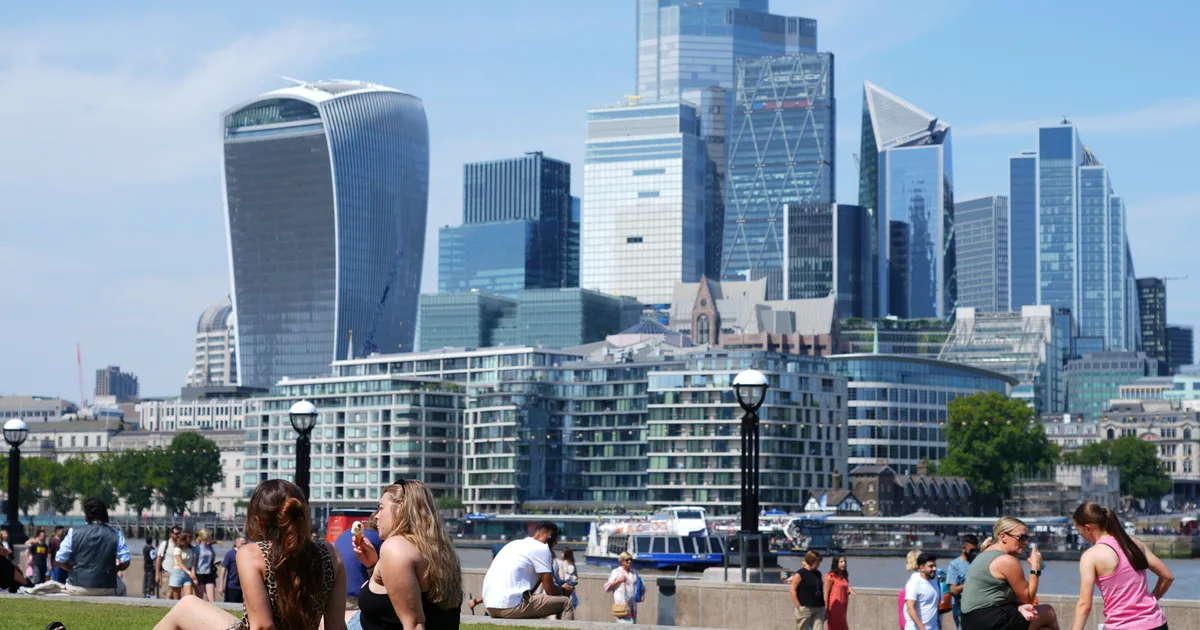
Soon after a 35°C May record-breaker, the Met Office said more heatwaves are likely in the UK this summer.
And it turns out they may be just days away from being proven right in London.
As of the time of writing (17 June), temperatures between 28°C and 30°C are expected in the capital this weekend.
Here’s what you need to know about: when that could happen, what it would take to count as an official heatwave, and why hot spells can be so insufferable in the city.
When could there be a heatwave in London this June?
The Met Office predicts our current miserable weather will take a sunnier turn on Friday, 19 June.
At that point, temperatures will rise to 29°C.
From then on, per the Met Office, Londoners can expect:
- Friday 19 June: 29°C
- Saturday 20 June: 28°C
- Sunday 21 June: 30°C.
Even if the highest of those temperatures come to pass, however, an official heatwave may still not have taken place.
When is it officially a heatwave in London?
A heatwave is defined as three back-to-back days at or above an area’s maximum temperature threshold.
Because some parts of the UK are usually hotter than others, that upper limit changes depending on location.
As you head further North or West, that threshold is set a little lower than the warmer South-East – around 25°C and 26°C.
But in London, the threshold is 28°C.
That means that it’d need to reach at least 28°C on Tuesday after the predicted Sunday and Monday temperatures to officially count (or Saturday would have to be a degree hotter than currently anticipated).
Why does London feel so hot on sunny days?
As we mentioned before, London is already in the warmer South-East. Then, there’s the infrastructure to consider.
Speaking to HuffPost UK previously, Richard Millard, senior sustainability consultant at Building Energy Experts, said that built-up areas can make already brutal UK heatwaves even more unbearable.
“Our towns and cities have a large urban heat island effect due to the amount of concrete, asphalt and such that absorbs heat and releases it slowly, making cities and towns feel hotter,” he shared.
2026′s two consecutive record-breaking May temperatures were recorded in London’s Kew Gardens this year (34.8°C and 35.1°C, respectively).
Former Tory Laila Cunningham, now a councillor for far-right ‘Reform UK’, has told the hard-right Telegraph that she has received death threats from supporters of even more extreme-right ‘Restore Britain’. Restore supporters don’t like that she is a Muslim.
No Muslim should suffer hate for being a Muslim or for the colour of their skin. But Cunningham – also Reform’s candidate in the next London mayoral election – has pandered to white supremacy and Islamophobic race-hate as a campaign tactic. In January 2026, she said that any woman wearing a burqa should be subject to arbitrary stop-and-search, because:
It has to be assumed that if you’re hiding your face, you’re hiding it for a criminal reason.
Trumpist parrot
She has also parroted Trumpist lies that “nowhere” in London is safe and that:
If you go to parts of London, it does feel like a Muslim city. The signs are written in a different language. You’ve got burqas being sold in markets.
As if that wasn’t enough, in 2025 she said she doesn’t “blame people” for hating Muslims and opposed even a definition of Islamophobia. A cynical mind might suspect she’s trying to court Muslim residents’ votes in Makerfield, where Reform hopes to win a parliamentary by-election this Thursday, 18 June 2026.
Islamophobia is disgusting. And Cunningham might want to take a look in the mirror.
Featured image via the Canary
By Skwawkbox
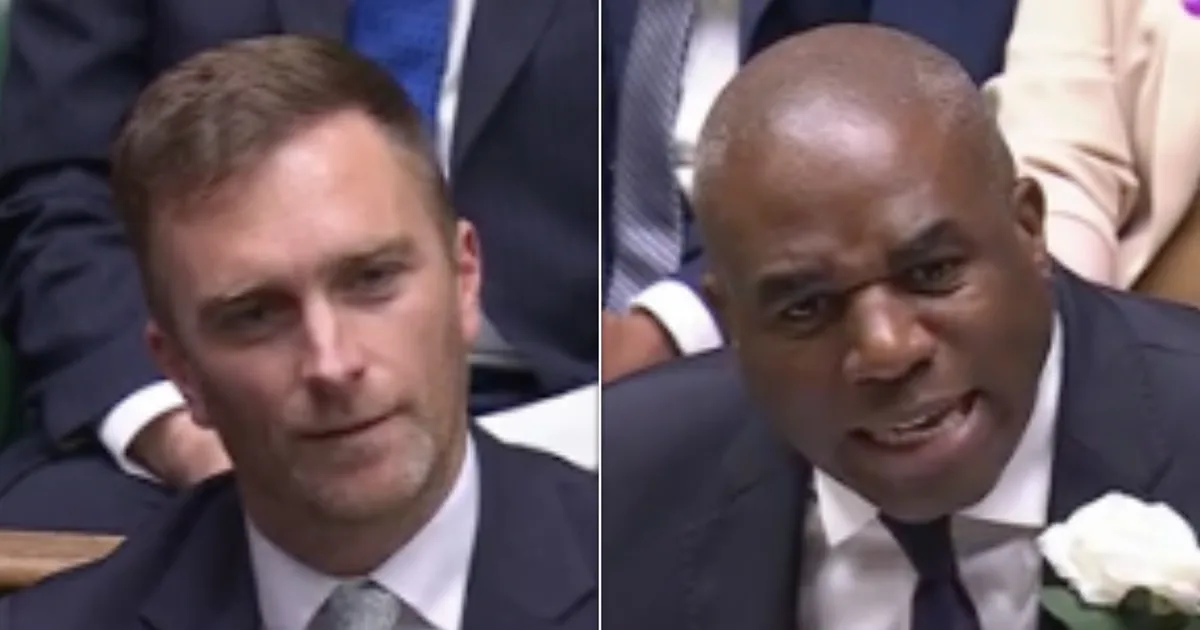
David Lammy told the Conservatives’ deputy chairman he should be “ashamed of himself” after he mocked the arson attacks targeting Keir Starmer.
Two Ukrainians set alight to the prime minister’s family home and his car in 2025 after being recruited online by a Russian-speaking Telegram user “El Money”.
Roman Lavrynovych, and Ukrainian-born Romanian national Stanislav Carpiuc were convicted of conspiracy to carry out arson attacks on Monday.
But on Tuesday, Matt Vickers joined Talk’s Peter Kyle in laughing at the incident.
The Tory MP joked about the far-right conspiracy theory that the two Ukrainian nationals found guilty of conspiring to carry out the attacks on Starmer’s property and car were “rent boys”.
So when Vickers stood up to ask about the high rates of unemployment during deputy prime minister’s questions, Lammy hit back by pointing out the MP had been “laughing and joking” about the arson attacks against Starmer only yesterday.
Standing in for Starmer, Lammy said: “I must say to this Tory deputy chairman, yesterday he was on television laughing and joking about the arson attack on the prime minister’s home.
“Laughing about a firebomb targeting the prime minister and his family.
“Not only that, he joined with promoting conspiracies about the attack and laughed along to demeaning, homophobic remarks.
“He should be ashamed of himself.
“My advice to him is to grow up, apologise, and do considerably better.”
Vickers just shook his head from the Commons’ opposition benches.
Labour chair Anna Turley later said: “It is frankly sickening that anyone would seek to laugh and joke about an appalling attack on a fellow politician’s family home.
“To do so on the same day as we stood in unity to mark the anniversary of our dear friend and much missed colleague Jo Cox, is beyond the pale.
“Matt Vickers is not fit to be an MP and if Kemi Badenoch had an ounce of integrity or respect for the safety of those who seek to serve the public, she would do the right thing and sack him today.
“Just two days ago, Kemi Badenoch rightly called out the perpetrators of the vile attack against the Prime Minister. Some issues go beyond the rough and tumble of Party politics. If she fails to act now, her words clearly will have meant nothing.”
When asked for his take on the story on Talk on Tuesday, Vickers did begin his interview by acknowledging the serious concerns around Russian influence in the UK and the subsequent impact on security.
However, he soon added: “The idea that there some secret Russian effort to destabilise the country via the prime minister… I mean, you’d leave him in office!”
Kyle laughed loudly while Vickers continued: “Let him destroy the country! Don’t distract him, because he’s doing a pretty canny job of blowing himself up.”
Referring to the false rumour spread by Russia around the attacks, Kyle asked: “Were they rent boys?”
“I’m not familiar with them,” the MP replied, smiling.
Kyle said: “His front door was firebombed wasn’t it? Why are you laughing? It wasn’t his back door, it was his front door.”
The presenter then turned to the backlash to the PM’s attempts to introduce a social media ban for under-16s, adding: “He’s trying to bring a social media ban in through the back door quite quickly, isn’t he?”
Vickers struggled to stop his laughter.
A Tory Party spokesperson said: “If you’ve got an issue with the content of the programme, I suggest taking that up with Jeremy Kyle.”
He said party leader Kemi Badenoch had outright condemned the arson attacks on Tuesday.
The spokesperson said: “If you listen to what he actually says, the content of his words isn’t actually saying anything wrong. He laughed on that part, he was purely polite to the host of a radio programme.”
Watch the Talk interview here:
Listen to Commons People, the podcast that makes politics easy. Every week, Kevin Schofield and Kate Nicholson unpack the week’s biggest stories to keep you informed. Join us for straightforward analysis of what’s going on at Westminster.
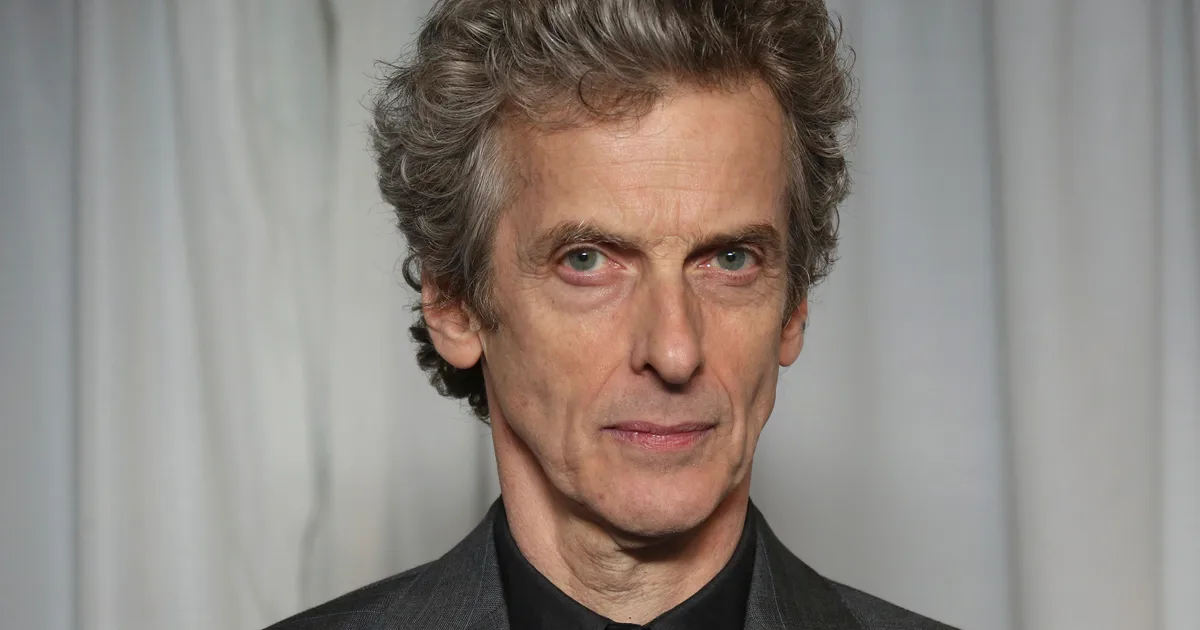
Peter Capaldi, who was the 12th Doctor on BBC hit Doctor Who, has spoken out about his exit from the show.
The Thick Of It Star left the franchise in 2017. In a recent appearance on YouTube series 100 Questions with John Simmons, he claimed that he decided to leave the role because “I just wasn’t sure that it was going to go in the direction that I… everybody was leaving that I’d worked with.”
He added, “Everybody was leaving. Jenna [presumably Jenna Louise-Coleman, who played the Doctor’s companion Clara Oswald] had gone, and Steven [probably former head writer Steven Moffat, who also left in 2017] was going, and Brian [likely Brian Minchin], the producer, was going, and those are the people that make it work for you.
“We’d had some talks about the direction. I wasn’t sure that that was where I wanted to go with the show. And I also thought, I’m not sure I could come up with anything new.”
Peter continued to say that while his regeneration, which saw the actor replaced by Jodie Whittaker, was “very sad”, he thinks that the biological process the Doctor uses to survive serious damage has become “diminished”.
Calling the concept “a very, very powerful death motif,” he said, “To be perfectly honest, I think there are too many regenerations.
“I love all the Doctors, but I’ve lost count now of how many of them there are, so the weight of this kind of regeneration is diminished. Whereas when I grew up as a kid, the first time it happened it was: ‘What just happened there?’ It was mysterious and strange. It holds the mystery of the show, the regeneration.”
It’s not the first time he’s expressed his feelings about the show, of which he was a super-fan in his youth.
On the Half Of The Picture podcast this year, he claimed: “The show became very, very big. And it was never like that when I loved it. So it became a different thing.
“I think the show is a little bit of a victim of its success. You know, the show that I loved was a tiny thing, a little small thing that survived. It just survived, but nobody knew that it was warming its way into the culture in such a deep way. And I think that’s what I have an affinity with.”
In the ’70s, the Doctor Who fan club received so much correspondence from a young Capaldi that then-president of the group, Keith Miller, said he felt “haunted” by the Doctor-to-be.

In a new interview with Sky’s Beth Rigby, Keir Starmer has said he wants Andy Burnham to “have a big role in government” if he wins the Makerfield by-election. What Starmer means is he wants Burnham to be a top level minister. The irony is Burnham will likely be the highest level minister possible – i.e. the prime minister:
— Politics UK (@PolitlcsUK) June 17, 2026
 BREAKING: Keir Starmer says he wants Andy Burnham to have a “big role in Government” if he wins the Makerfield by-election
Burnham returns
Beth Rigby has described her interview with Starmer as “deeply personal”. It’s unclear what personal stuff they got into, as everything she’s highlighted so far was a work thing.
It’s also unclear why we should care about him personally. We’re not employing him to be a person; we’re employing him to be the prime minister. If a colleague at your work repeatedly f*cked everything up, the last thing you’d want to hear about was how the endless mistakes were making them feel.
Here’s what Rigby highlighted anyway:
“After the weekend” is interesting given that the by-election is on Thursday. Presumably this means Burnham will be busy for a few days (and we expect he will be, because he’ll be plotting to bring down Starmer).
The acknowledgement that he “may not lead Labour into the next election” is interesting given his expressed intent to fight off Burnham. If he can read the writing on the wall, why not just go now?
Of course, he could be saying this because Burnham might not win in Makerfield. And should that happen, Starmer may be able to fend off Wes Streeting and stumble on for a few more years. And that really is the most optimistic scenario for him.
Musical chairs
Regarding Burnham potentially returning to the cabinet, Dan Hodges had this to say:
If Keir Starmer is going to offer Andy Burnham a “big role” in his cabinet, which of his existing senior ministers is he prepared to sacrifice in order to try and save himself.
If Burnham returns to parliament only to fall in line behind Starmer, the question shouldn’t be ‘who gets the sack?‘; it should be ‘who even wants to remain in this dysfunctional Labour government?‘. It probably won’t be, obviously, because the sycophants Starmer has surrounded himself would endure any level of humiliation to retain their grip on power.
Featured image via the Canary
By Willem Moore
We hope you love the products we recommend! All of them were independently selected by our editors. Just so you know, HuffPost UK may collect a share of sales or other compensation from the links on this page if you decide to shop from them. Oh, and FYI — prices are accurate and items in stock as of time of publication.
Whenever you have an unfortunate yellow stain on your favourite white blouse, or your beloved vacuum cleaner breaks, there’s one place many of us turn to: Amazon.
So, of course, we’re already dreaming of all the money we’ll save on home products ahead of Amazon Prime Day 2026.
Whether you’ve been eyeing up a new air fryer, or you’re finally giving into the Ring doorbell buzz (pun intended), our shopping writer has rounded up the best early Amazon Prime Day deals for home and garden products.
So far, there are already huge savings on some of our favourite brands, from Shark Ninja, to Tefal, Ring, Russell Hobbs, and more.
Keep reading for 17 of the best early Amazon Prime Day deals, as well as everything you need to know about how to get involved in the sale this year.
What is Amazon Prime Day?
Amazon runs an annual Prime Day sale, with deals across multiple categories, including homes and gardens.
Over four days, Amazon Prime members can shop hundreds of discounts across their favourite products. If you’re not already a member, you’ll need to sign up for Amazon Prime to take part.
When is Amazon Prime Day 2026?
Prepare your wallets, because Amazon Prime Day 2026 is less than a week away. The sales will run from 23rd to 26th June, with savings across all kinds of tech, beauty, fashion, and homes products.
How do I take part in Amazon Prime Day?
To take part in Amazon Prime Day sales, you’ll need to be an Amazon Prime member.
Once you’ve created an account, you’ll have access to hundreds of early deals, and thousands of savings when the event drops on 23rd June.
If you’re already eyeing up specific products, save them to your wishlist to come back to during the event, so you can see if they’re included in sales.
The best Amazon Prime Day early home and garden products to shop now

28% off
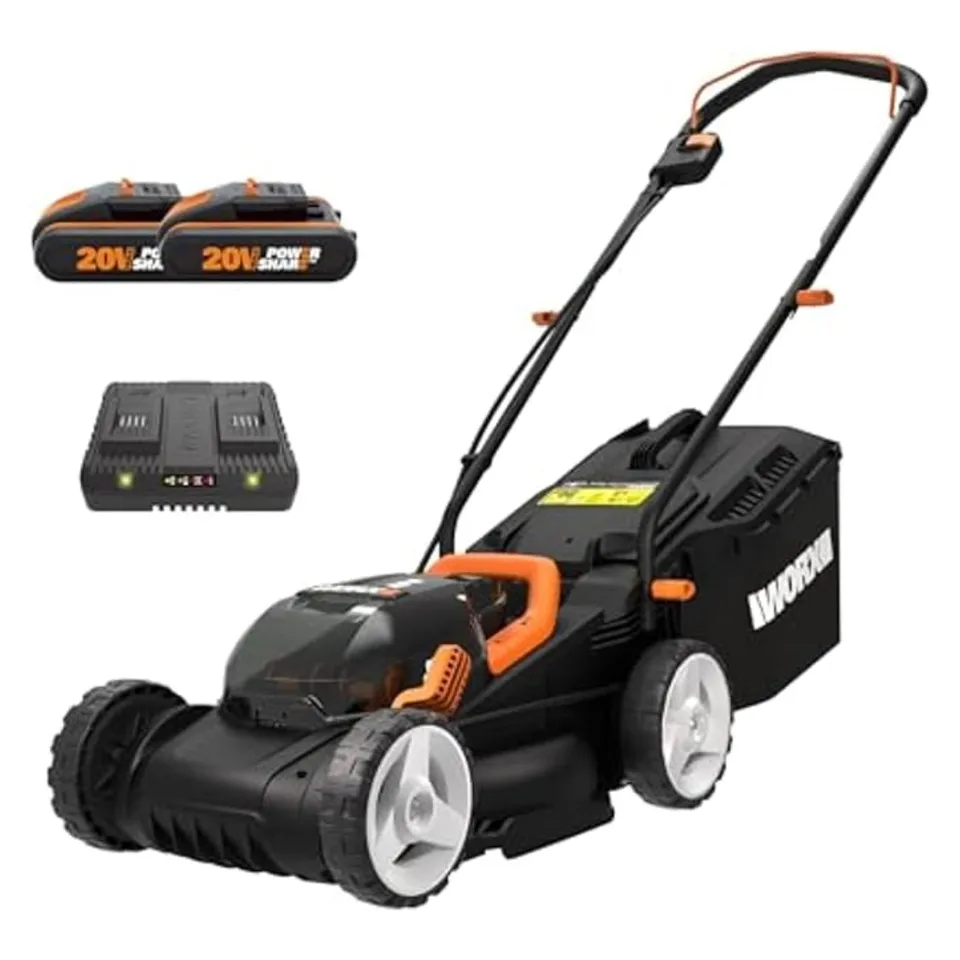
Best lawnmower
There’s nothing like having to get an extension cable out to put you off doing your housework, so this battery-powered lawnmower will be all the motivation you need to get out into the garden this summer. It’s lightweight and compact, but don’t worry: that doesn’t sacrifice on power. The intensity is completely adjustable, depending on the terrain you’re dealing with, and you can also change the height of the mower to make it more comfortable to manoeuvre. Speaking of comfort, you can simply collapse the mower to store it, and the grass collector does its job well, so you won’t be crawling around picking up strays when you’re done.

26% off
Best hand blender
Whenever a recipe calls for blending, I release an audible sigh. If there’s one thing that can convince me to make a salsa, smoothie, or pesto, though, it’s this 3 in 1 hand blender. It’s not only ridiculously easy to use, but it’s much easier to clean than a traditional blender. It comes with two attachments, depending on whether you’re going for a more processed or whipped texture, and comes with either a chopper or beaker container so you can get as up close and personal with your ingredients as the recipe calls for.

25% off
Best standing fan
If you’re looking for a versatile fan, this standing one from Russell Hobbs will cover all bases. With an adjustable height and tilted blades, it’ll provide as much cooling while you’re sitting on the sofa as it will when using a standing desk. The white colour makes it pretty inoffensive, compared to other tower fans, along with the fact it’s fairly quiet.

29% off
Best double air fryer
It can feel somewhat excessive to heat a whole air fryer to make a few fish fingers, which is why we’re big fans of the fact this one from Tefal has a mini compartment that’s separately operated so you can make smaller meals when the time comes. Or, when you’re cooking for the whole family, you can use both – the larger compartment is so big it can roast a chicken, while the smaller can be home to your accompanying veg, chips, or potatoes.

15% off
Best table fan
Whether you’re working or eating, trying to function as normal in the heat can be near-impossible. To keep you cool and sane, this table fan from Honeywell has a 90-degree oscillating head that will stop the sweat from dripping this summer. With three speed settings, you can choose exactly the power that will keep you comfortable, and it even comes with a wall mount should you need it while cooking or doing your makeup (because let’s be honest, things get slippery very quickly).

20% off
Best oscillating fan
It’s all very well cooling yourself down during a heatwave, but if your room isn’t cool it’s game over. To help get the air flowing in your home, this vertical fan oscillates at three different intensities. Even on the highest mode, it’s fairly quiet, making it perfect for hot sleepers – and you can set a timer for up to 120 minutes to keep you cool at night, too.

30% off
Best hedge trimmer
Put the secateurs and ladder away, this cordless hedge trimmer will leave you with the neatest hedges of your life, and you’ll be able to keep two feet on solid ground the whole time. With dual action blades, and a soft grip handle, you’ll barely notice you’re standing there trimming your hedge.

43% off
Best cordless vacuum
Let’s be honest, cleaning is a chore, so whatever help your appliances can give you is a real blessing. When your arms can’t take it any more, this cordless floor cleaner will keep you going with its self-propelling system. With a smart detector, the vacuum and mopping power will adjust based on spillages and stains, and covers more surface area than other vacuums so you won’t miss any dirt where the floor meets the wall. It even has a self-cleaning function, so you won’t have to empty and clean the mechanisms too often.

15% off
Best budget hoover
Sometimes all you need from an appliance is something that gets the job done. No app compatibility, no wireless charging. Just good ol’ suction power. This budget vacuum from the Amazon Home Range comes in at under £30, and has plenty of that baked in. Although it’s on the cheaper side, reviews claim it’s surprisingly powerful, and it can even be taken apart to make a mini vacuum suitable for getting into smaller spaces.

39% off
Best grass trimmer
Can’t be bothered with a whole mower? For smaller patches, this trimmer is designed to be super accurate and lightweight, so you can trim the grass quickly and crack on with the rest of your gardening. With a one hour battery charge, it’ll last long enough to cover your whole garden, and it’s lightweight, so you’ll have no problem carrying it on longer stretches. The handle is completely adjustable, to avoid any strain on your wrists, knees, or back, and it can also be converted into an edge trimmer in seconds.

31% off
Best app controlled robot vacuum
Whether you’re a self-described worrywart, or have precious items you don’t want your robot vacuum to hoover up, this one from roborock puts precise control over its cleaning routine directly in the palm of your hand. While the device itself comes loaded with intuitive obstacle avoidance, meaning it dodges everything from the sofa to the cat, you can also sync it with your phone or smart watch to control it using your voice and ask it to leave specific areas untouched. You’ll also be able to set your own cleaning schedules, and the charge lasts long enough to get the job done in one go.

11% off
Best robot vacuum for climbing steps
Imagine never having to vacuum again. Truly, what could be better? For a hands-free cleaning experience, this robot vacuum from Dreame comes highly rated, not least because of its ability to get under tight spaces that you might not be bothered to get to. Unlike your corded vacuum that gets tangled or won’t reach up the stairs, this one can climb steps up to 6cm with the included ramp. But it’s not just vacuuming it’ll do for you, it also mops and empties its own water into the included tank so you won’t have to get involved with the mucky mop water. Don’t worry though, it won’t mop your carpets, as it uses clever sensor technology to avoid carpets while on the wet function, and extra suction power to give them a deep clean while vacuuming.

58% off
Best smart TV stick
There are so many streaming platforms these days that trying to find which one that show you wanted to watch is on can take longer than actually watching the show itself. Not to mention lag times when your TV is finally catching up with your wifi. Thanks to the easy search voice button function, Fire Stick Plus will make finding programmes easier than ever. Not only will it take you to your favourite shows, but this smart remote can also provide all the information you need about what you’re watching or recommend shows for you to watch in seconds – all you have to do is chat. Plus, you’ll be able to sync your TV up with your smart home to control everything from alarms and food deliveries, to your baby monitor.

50% off
Best video doorbell all round
If you’re not bothered by the whole ephemera of a Ring, and simply want to know who’s approaching your front door, the latest generation of Ring is now at its lowest price ever – woah. As well as being equipped with a more impressive battery life, it comes with retinal 2K night vision, so it shows what’s going out in your front garden in better detail than any other Ring to date. Set with a free 30 day subscription trial, you’ll have plenty of time to test the doorbell’s features by syncing it up with your Alexa or Echo to customise notifications and make sure you don’t miss a single visitor – unwanted or wanted.

46% off
Best for sparkling water lovers
Now that we’re all being more mindful of our plastic consumption, there’s never really a need to buy bottled water. But for the sparkling water lovers out there, that’s a hard pill to swallow. This Soda Stream can make up to 60 litres of sparkling water with one CO2 canister. As well as being BPA free, and dishwasher safe, it can also make any drink you like fizzy – so you can get started with your very own ‘will it soda?’ hobby.

29% off
Most comprehensive Ring bundle
Want to ensure security for your home? If you’ve never heard or seen a Ring doorbell, where have you been?! This one comes with savings on not only the bell itself but a wifi extender, chime box, and nightlight, which all work to make sure you can keep an eye on your front door, whether you’re in the kitchen or away on a cruise.

40% off
It’s smoothie season! If you prefer to drink your greens, it’s time to upgrade to a blender that won’t leave you with clumps. Whether you’re making a gazpacho, frozen marg, or your favourite juice, this blender can handle up to two litres of liquid, and it’ll work with hot food come soup season. So you don’t risk nicking your fingers while you clean it, it comes with dishwasher-safe parts, too.

Great news for fellow Rivals fans: Disney+ just confirmed the show has been given the go ahead for a third season.
That means the Rutshire drama will continue past this year’s November release, when we get to witness the second half of season 2.
But what do we know so far about the coming series?
When will Rivals season three come out?
We don’t know yet, though HuffPost UK has asked Disney and will update if we hear back.
The gap between Rivals season one and Rivals season two was about a year and a half.
What’s Rivals season three about?
According to a Disney press release, the franchise’s third season will be “shocking”.
In a teaser, they said: “As the dust settles post the scandalous revelations in Season Two, we see the stakes become higher and the alliances more fragile, with nothing staying buried for long.
“New romances blossom, old flames rekindle and shocking secrets will be spilled in this third series which takes everyone’s favourite rivalries to the next level. In a world of power, passion and betrayal, everyone has something to lose.”
Lee Mason, vice-president of scripted at Disney+ Europe, Middle East, and Africa (EMEA), added in a release: “Expect more ambition, more romance, more rivalries and, of course, more scandal as we return to Rutshire for another irresistible chapter.”

Is there a trailer for Rivals season three?
Why was Rivals renewed for a third season?
The first half of Rivals season two heralded the biggest original Disney+ premiere of 2026 in the Europe, Middle East, and Africa (EMEA) region.
It’s also gotten rave reviews, which we can’t imagine hurts.
Lee Mason, vice-president of scripted at Disney+ Europe, Middle East, and Africa (EMEA), said: “The phenomenal response to Rivals is a credit to the bold, irreverent and endlessly entertaining world created by Dame Jilly Cooper, our cast, creative team and production partners at Happy Prince.”
Who will star in Rivals season three?
The second series marked the additions of Hayley Atwell, Rupert Everett, Maxim Ays, Bobby Lockwood, Jonny Weldon, Eliot Salt, Holly Cattle, Olive Tennant, Oliver Dench, Amelie Child-Villiers, and Amanda Lawrence to the cast.
HuffPost UK asked Disney whether any cast changes are expected for the third season of the show. They haven’t responded immediately, but again, we’ll let you know if anything changes.
Who’s producing Rivals season three?
The third series will be produced by:
The production company behind Rivals is Happy Prince.
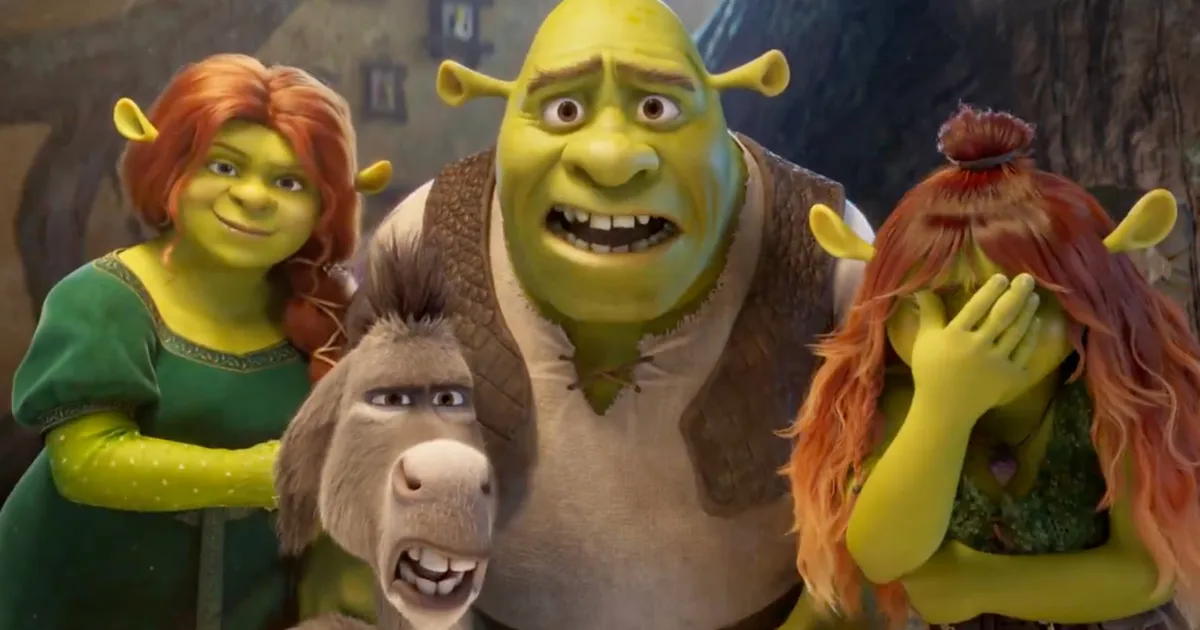
Shrek, the little ogre that could, is set for his fifth movie in the DreamWorks franchise.
Shrek 5 has been confirmed since 2024, and provides a welcome end to the movies’ 16-year hiatus.
Mike Myers will play the titular role, while Cameron Diaz and Eddie Murphy will reprise their roles as Fiona and Donkey, respectively. Originally set to come out in 2026, the flick is now due for release on 30 June, 2027.
Still, at least fans can console ourselves with the just-released trailer, despite its notable omission. Universal had previously released a 2025 teaser, though this was an animated cast announcement rather than a glimpse at the contents of the film.
“It’s happening – it’s really happening!” star Cameron Diaz said in an Instagram post above the new preview.
Universal Pictures’ 81-second-long teaser shows yet another adventure for the donkey and Shrek, as well as what seems to be a worn-out pastiche of Frozen’s Olaf, who growls, pipe in hand: “Wanna date a snowman?”
(In the Disney film, Elsa’s sister Anna famously sings, “Do you wanna build a snowman?” before the princesses meet their animated snowman companion).
The family, including Donkey, Fiona, Shrek, and their children Fergus and Fakle end up imprisoned in the clip, too.
But Shrek and Fiona’s other child, Felicia, who is voiced by Zendaya, doesn’t appear once in the trailer, despite her name appearing under Cameron’s, Myers’, and Murphys’ in the title card at the end of the video.
The first Shrek 5 cast announcement, released in 2025, did feature Zendaya’s voice and character.
Zendaya, whose partner, Tom Holland, seems to have recently confirmed his marriage to the Euphoria star, has a history with Shrek.
After her role in the movie was announced, fans brought up a 2017 X post of hers which read, “I watch Shrek too often in my adulthood”.
“This aged well,” fans said at the time.

Photos of the back of the eyes could offer a way to predict some of the common risk factors linked to Alzheimer’s disease, which is the leading cause of dementia.
That’s according to a new study, which used AI to analyse retinal photographs from more than 40,000 UK patients.
Alzheimer’s disease is thought to be caused by the abnormal build-up of proteins in and around brain cells. It impacts more than 520,000 people in the UK.
Some of the risk factors for developing the condition include: old age, genetics, history of head injury, smoking, obesity, diabetes, high blood pressure, high cholesterol, hearing loss, untreated depression, loneliness, drinking too much alcohol and not exercising enough.
In the latest study, researchers were able to identify regions of the retina associated with Alzheimer’s risk factors.
Lead author Ruogu Fang, a professor of biomedical engineering at the University of Florida, said most of the existing diagnostic tools for Alzheimer’s disease focus on later in life, “when it is too late to intervene”.
But by looking at retinal health earlier on, “we offer new opportunities to identify patients at risk, offer appropriate tests and encourage them to develop healthy lifestyles to mitigate their risk”, she said.
Retinal photos are a relatively easy and cheap way to assess health
Many patients routinely have pictures of their eyes taken – whether because they have diabetes or glaucoma, or for routine eye examinations.
That means analysing retinal photographs could be a simple and low-cost way to spot Alzheimer’s risks factors compared to more expensive technologies, like MRI scans.
Co-author Seowung Leem, a doctoral student at University of Florida, said with the assistance of AI, they were able to identify subtle retinal variations that were previously overlooked across thousands of subjects – and these variations “may function as reliable indicators of future disease risk”.
Their AI model accurately predicted biological characteristics like sex or blood pressure as well as lifestyle factors associated with developing Alzheimer’s, such as smoking, alcohol use and even insomnia.
While these factors might be captured in patients’ medical charts, researchers noted those records are often incomplete. For example, people might not reliably report alcohol consumption or smoking.
Retinal photographs may provide another, more objective way to detect these risk factors, they said. Plus, they can capture damage accumulated over the years. The findings were published in the Journal of Alzheimer’s Disease.
Prof Fang’s group has already shown how retinal photographs can detect active cases of Alzheimer’s disease.
They suggested identifying early risk factors via retinal photos could better identify patients who might respond to earlier interventions – including protective lifestyle changes, some medications or brain training – before irreversible damage takes place.
Police issue major update after woman died following crash

SSR Mining’s Repricing Still Looks Far From Done (NASDAQ:SSRM)

Uniswap’s UNI token surges while rest of crypto market looks to FOMC for guidance

Blockchain.com files with SEC for U.S. IPO

Israel says it has killed new Hamas military leader in Gaza City airstrikes

NYT Strands Answers May 24 2026 Revealed for Puzzle No. 812 Theme Summer Essentials

That is certainly one way to handle a problem #funny #money #shopping #budget #shorts

One of the most dangerous sentences in the world of finance is:“Maybe he’s just that good.”

palamur university UG question paper#Financial Accounting -1#1sem
-

 Business3 days ago
No Jackpot Winner as $257 Million Prize Rolls Over to $269 Million Monday Draw
-

 Crypto World6 days ago
Oppenheimer backs SpaceX as $70 billion retail frenzy builds
-

 Fashion5 days ago
Weekend Open Thread: Tuckernuck – Corporette.com
-

 Crypto World6 days ago
Markets Rally as SpaceX IPO Looms Amid Iran Tensions and Inflation Surge
-
 Crypto World3 days ago
Zimbabwe Requires Crypto Businesses to Register Annually Under New FIU Regulations
-

 Tech4 days ago
NanoClaw integrates JFrog registries to secure AI agent downloads
-

 Tech5 days ago
This Week In Security: Microsoft On Microsoft, Register Your Domains, Linux On ARM, And FreeBSD Joins The File Cache Club
-

 Crypto World4 days ago
Bitget enters Argentina’s regulated crypto market through PSAV registration
-
 Tech6 days ago
Dutton Ranch star claims they ‘didn’t see any disruption’ on set following Chad Feehan’s exit from Yellowstone spinoff fueled by Taylor Sheridan clash rumors
-

 NewsBeat6 days ago
El Nino has formed in the Pacific and could set records, forecasters say
-

 Politics6 days ago
Politics Home | Healey Resignation Is “Colossal Failure Of Government”, Says Former Labour Defence Secretary
-
 Entertainment6 days ago
Donnie Wahlberg & More Heat Up Las Vegas at Circa’s Barry’s Downtown Prime
-
 Tech6 days ago
Opendoor Ends India Operations, Fueling a Bigger Conversation About AI and Outsourcing
-

 Politics6 days ago
Belfast burns, while Met chief points finger at Iran and Russia
-

 Sports6 days ago
First Time Since 1971: Australia Register Historic Low In ODI Cricket
-

 Business6 days ago
AT&T: Verizon's 27% Outperformance Sets Up A Solid Entry Point
-

 NewsBeat5 days ago
FBI searches office of Ohio voter registration group
-
 Tech5 days ago
Anthropic is spending $150M to embed 1,000 AI fellows inside nonprofits. No degree required.
-

 Politics6 days ago
Modi thanks Trump for wishes as US attacks Indian seafarers
-
 Entertainment5 days ago
‘The Pitt’s Fan-Favorite Doctor Confirms Noah Wyle Gave His Blessing to Return [Exclusive]
You must be logged in to post a comment Login