

Politics
Garcia vs Benn fight looks set for Las Vegas

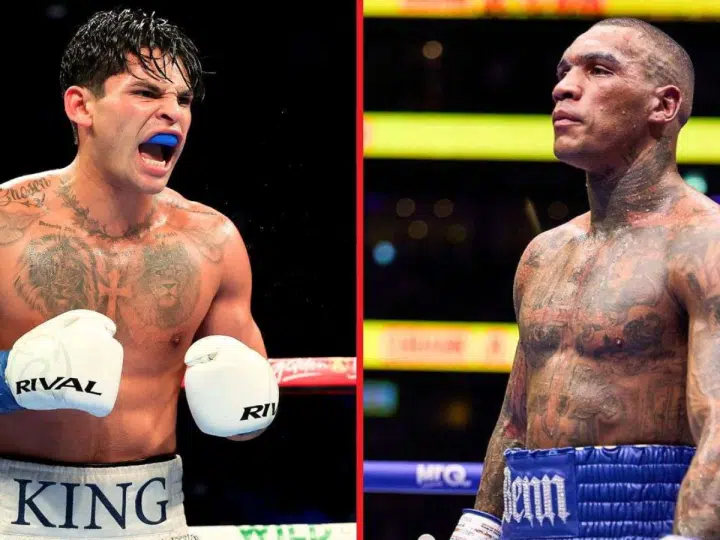

The Benn vs Garcia world title fight is still being finalised for September in Las Vegas, with contracts and sanctioning yet to be agreed. Momentum is building towards a WBC title clash with Ryan Garcia. He named 12 September as his expected defence date in a TV appearance.
The claim — yet to be confirmed by promoters and sanctioning bodies — has sparked a wave of media speculation. Addressing this, Conor Benn’s trainer, Tony Sims, told Sky Sports:
What I’m being told is that negotiations are still going on for the fight, so the date or the venue hasn’t been done yet, but I think we’re heading in that direction […] Conor’s WBC mandatory, so Ryan’s got to defend against him at some stage. I think the fight is getting closer to being made now.
Career-defining stakes
Benn is the WBC mandatory challenger after a run that restored his status as a top welterweight, while Garcia holds the belt and US marketability that guarantees major paydays.
The stakes are high for both men whose fighting styles noticeably differ. Benn fights on the front foot, throwing plenty of punches and looking to overwhelm. Garcia is quicker, measured, and capable of punishing openings.
After turbulent times out of the ring, the upcoming match for Benn will be career-defining moment and a Benn victory would be seismic for British boxing. As for Garcia, the fight is a chance to validate his championship reign against a heavy-hitter.
If Benn can close distance he has a chance. If Garcia controls range and counters cleanly, he retains his belt.
Ring talk before ring walk
The fighters are ready to get in the ring as matchday details remain underwraps. More posturing is expected until a formal announcement is made.
Benn is aligned with Zuffa Boxing, while Garcia fights under Golden Boy, meaning any cross-promotional deal must bridge significant business differences. Benn’s mandatory status gives him leverage, but the WBC must still approve terms and purse splits.
Benn’s camp believe a full training camp could narrow the gap with Garcia.
If made for September in Las Vegas, this would be one of the biggest welterweight fights in recent years. It would also be a defining night for both fighters.
Featured image via Boxing News Online
By Faz Ali

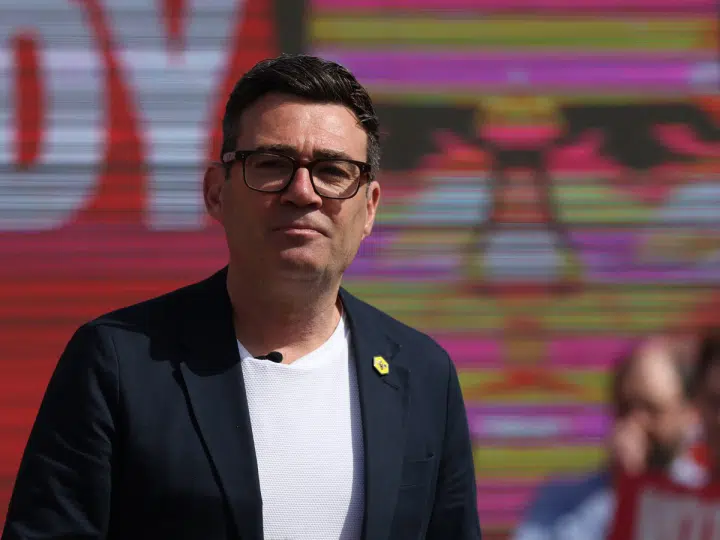

Andy Burnham has finally hit back at Tony Blair’s thinly veiled criticism of his potential leadership of the Labour Party.
Blair previously published a rambling article via his eponymous think tank, the Tony Blair Institute, detailing his belief in the so-called ‘radical centre‘. From what we can tell, that means private-sector deregulation, centering AI above all, slashing welfare and wages, and sucking up to Trump. Really radical, that lot.
The section of Blair’s essay which reads as an attack on Burnham is this:
the alternative which thinks the answer is moving even further left on taxes, spending and welfare, spun with a rehash of the far-left critique about nothing good coming out of the last ‘40 years’ of ‘neo-liberalism’, which presumably includes the last Labour government.
Likewise, Blair also criticised a nascent impulse in what’s left of the supposedly left-wing Labour party to, you know, put out left-wing policies:
It is one thing when in opposition to indulge this perennial delusion that when we lose seats to the right the country is really signalling it wants Labour to move left; it is dangerous to do it in government.
Would we at the Canary necessarily characterise Burnham as all that left-wing? Probably not. However, he’s a damn sight further left than Blair, for sure.
Burnham: ‘life has got harder’
Now, however, Burnham has come out with his rebuttal to Blair’s perceived criticisms. In an article for the Times on 28 May, the Manchester mayor wrote of reading Blair’s essay:
I kept waiting for the main topic of conversation on doorsteps in Makerfield to make an appearance. And it never did. The fall in the living standards of millions, and the reality that life has got harder for most year on year since the financial crash in 2008, is, I believe, the gaping omission in his analysis.
In fact, Blair called for policies which will make people’s living standards even worse. Namely, the ex-Labour leader called to slash the minimum wage, worker’s rights, and benefits. Likewise, he also advocated for the deregulation of both the housing and technology sectors, claiming that:
We need a transformative programme for planning reform and deregulation. The planning system in Britain is an abomination. The government has taken significant steps, but well short of a truly radical reform.
However, this call for deregulation was an ‘in’ for Burnham, who wrote that:
Lest we forget: the principal cause of the 2008 crash was a failure of regulation. So how can a new wave of deregulation plausibly be the answer to the problems we have experienced since? This is the real “retro” thinking, I suggest; the kind of thinking that would doom us to repeat past mistakes and, if we’re not careful, prevent us from protecting children by failing to regulate social media, artificial intelligence and big tech.
Regulation for growth
Instead, the new leadership hopeful called for us to “build a higher-growth economy” precisely in order to achieve “regional equality and social justice”. Of course, exactly how that commitment to social justice lines up with his support for anti-trans and anti-immigrant stances is anyone’s guess.
Continuing in the ‘regulation for growth’ vein, the Manchester Mayor argued:
In Greater Manchester, we have laid a new path to [a higher-growth economy]. We call it Good Growth. In the past decade, we achieved the highest annual average growth anywhere in the UK — 3.1 per cent — and, at the same time, as the Centre for Cities recently found, the biggest reduction in inner-city deprivation. This has not come about by leaving things to the market but by being very interventionist and intentional about it.
It’s certainly correct that Manchester is doing a good deal better for itself than many comparable cities. Part of that is down to the city’s control over its transportation system – including nearly half a billion pounds of dividends from its international airport, owned in part by the council.
As Burnham is wont to do, he turned to Manchester’s buses as an example:
We are proud to be the first place anywhere to reverse one of the biggest Thatcher legacies: bus deregulation. A system that charged single fares of more than £4 when I arrived in 2017 is now capped at £2. […] Tony is right to say that we need welfare reform and that the numbers of young people on benefits is too high, but how can you fix that if people can’t afford to travel to training, jobs and opportunity?
The non-radical center
Burnham finished off by writing that:
We need a huge transfer of power, resources and personnel to combined and local authorities to create more agency at the ground level, empower our community and voluntary sectors and make Good Growth a reality everywhere. This means big changes to British public procurement, using full social value weighting, to give local entities the best chance of winning contracts and recycling maximum value back into communities.
Devolved political power, a regulated private sector, and a empowered communities? Sure, sounds great, we’re all for it. However, as we’ve seen in recent weeks, Burnham’s other policies and actions haven’t quite lived up to his leftist hype. Just as a quick roundup, Burnham:
- Supports Mahmood’s racist immigration changes.
- Is silent on wealth taxes.
- Won’t back proportional representation this parliament.
- Ditched trans rights to panic-grab Reform votes.
- Wouldn’t work to renationalise Thames Water.
As the Canary’s Willem Moore summarised – Burnham might not be right-wing enough for Blair, but that’s hardly saying much. Meanwhile, he’s still not managing to put out a substantive left-wing policy either.
This might not be Blair’s ‘radical centre’ – whatever the hell that means – but by God does it look like the centre all the same.
Featured image via Getty/Ryan Jenkinson
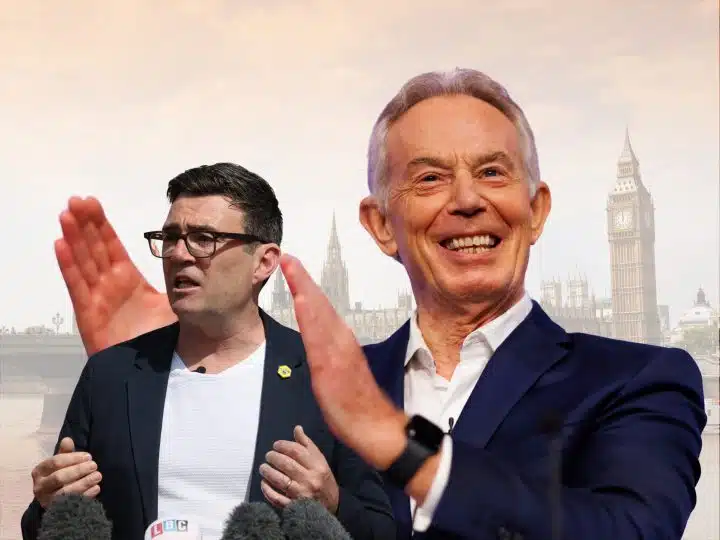

Pragmatism does not mean grifting. Pragmatism is a serious philosophical movement. At its heart is a definition of truth. It seeks an honest answer to the question, “Does this work, and what practical difference does it make in our lives?”
If it’s a short-term gain at a long-term cost, it is not pragmatic. If it enriches a small group of people at the cost of serious economic damage, it’s not pragmatic. At least not in the context of a democratic government.
Pragmatism is one of the most abused words in politics. What should mean, “Will this work?” is weaponised to mean, “I’m scared to challenge vested interests.” Or worse still, “I’m going to do something unpopular with the public, but my donors will love it. I’ll call it ‘making tough decisions.’” The real word for that is cronyism.
The return of the crypt keeper
Tony Blair has popped up out of his box again to tell Labour how pragmatic cronyism should be done. But there was nothing pragmatic about the Iraq War. 179 British service personnel killed. 3,598 wounded. 487,000 civilian deaths. West Asia plunged into turmoil for decades. Was it pragmatic to get £13 billion of NHS PFI investment at the cost of £80 billion? How about failing to regulate the banks, and the subsequent 2007-08 crash?
Now he says increasing carbon emissions is a good idea – after Saudi Arabia gave him £9 million. He thinks handing over our public services to unregulated AI firms is a spiffing idea. It’s pure coincidence that he’s been offered £257 million from global AI giant Oracle.
Blair, like his best mate Mandelson, is one of the most brazen – along with Farage, who says his £5 million undeclared ‘personal gift’ from overseas crypto-billionaire Christopher Harbone has nothing to do with Reform’s policy of tax cuts for crypto-billionaires. The other £22 million Harborne donated to Reform was just a coincidence, apparently.
Burnham’s ‘pragmaticism’
I read an article yesterday that accused Andy Burnham of changing his positions. It’s widely reported that:
- he’s backing Rachel Reeves’s fiscal rules;
- he’s reversed his position on support for refugees;
- he’s abandoning some trans rights;
- he’s changed his position on the EU;
- he won’t take water companies into public ownership, but have “stronger public control”.
I saw a comment that this is ‘pragmatism’. Sometimes people say ‘pragmatic’ when they mean ‘timid’.
If Andy was bold, he’d win big. Polling shows that the number-one reason people will not vote Labour is “I don’t know what they stand for” – followed by being incompetent, being out of touch, and not trusting their promises. None of this will be improved by U-turning.
Funny how it’s always ‘pragmatic’ to be right-wing
“Left-wing” policies are always popular. 74% support mass council-house building. 77% support wealth taxes on billionaires. 82% support public ownership of water. And despite the media reporting and hordes of online bots, 77% of Britons agree that transgender people should be protected from discrimination.
So the establishment attack the messengers. Left-wing politicians lack profile, media experience, and a track record of being in government. They get smeared before anyone can look at their policies. None of that applies to Andy Burnham. He already has massive recognition. His high personal ratings are based on his current image – people see him as “left-wing”.
He does not need to tack right. He won 62% of the vote in Makerfield in the 2024 Mayoral election. Voters know him independently of his red rosette.
Voters would love it if he said:
I will bring water back into public ownership, and the companies that have been squeezing us dry will not get bailed out by tax payers.
Or if he said:
I’ll build a million council homes so everyone can have somewhere secure to live. I will tax billionaires. I will bring in PR, no ifs, no buts. I will protect the most vulnerable and stand against division. Black or white, gay or straight, cis or trans, old or young, able bodied or disabled, I will invest what it takes to build a Britain that leaves no one behind.
If he spoke like he did outside Bridgewater Hall in October 2020 when he stood up against the Tory government, he would win Makerfield at a canter.
But that’s not what he’s doing.
After Starmer
The collapse of Starmerism has handed him an opportunity that almost no one in politics ever gets. He could remake Britain. It’s on a plate.
What’s the pragmatic choice? Listen to the Labour Together advisors, take the path of limping centrism, and lose the general election in three years time? Leave a legacy of crumbling public services, rip-off utilities, and stunted life chances for millions?
Or stand and win on a common sense programme that’s massively popular. Then start to fix what needs fixing. Win a second term and lift millions out of poverty, heal division, and give everyone security from cradle to grave.
Bravery is pragmatic.
Featured image via the Canary
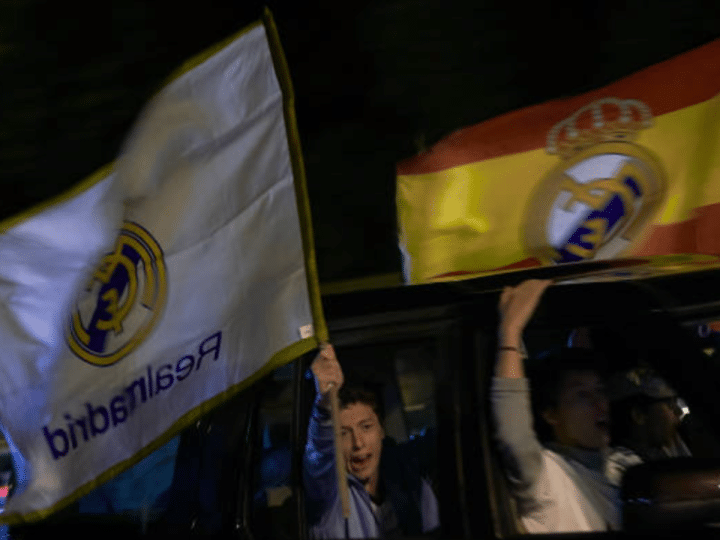

Spanish clubs have dominated the global football economy. Real Madrid are ranked the world’s most valuable club in 2026 and Barcelona is second, according to Forbes. Their latest ranking of the most valuable football clubs exposes the growing gap between Spain’s elite clubs and the rest of Europe. Meanwhile, the Premier League has more clubs in the rankings.
Spanish clubs at the top
Real Madrid remain top of the rankings for a fifth consecutive year, valued at around $9.5bn with revenues of $1.265bn. They are the first club in history to surpass $1.2bn annually. Much of that growth is credited to the redevelopment of the Santiago Bernabéu. The stadium has been transformed into a year-round revenue stream through concerts and major events. Additionally, strong commercial deals and global brand power have contributed to this growth.
Barcelona come second with a valuation of $7.5bn and have crossed the $1bn revenue mark for the first time. This marks a clear recovery after years of financial instability. Their resurgence has been driven by commercial strength, sponsorship, and stability on and off the pitch.
Premier League breadth
Despite Spain’s dominance at the very top, the Premier League remains the most represented competition, with eight clubs in the global top 20 including Manchester United, Liverpool, Manchester City, Arsenal and Chelsea. Broadcast income remains the Premier League’s biggest financial advantage. Furthermore, Manchester United stay among the world’s most valuable clubs despite their decline on the pitch.
Paris Saint-Germain remain firmly among Europe’s financial elite at $5.8bn, while Italian clubs continue to trail the leading leagues. However, Juventus, AC Milan, and Inter Milan retain strong valuations. Few clubs saw a bigger rise than Inter Miami. Lionel Messi’s arrival pushed its valuation beyond $1.3bn. More American clubs are appearing in the rankings as investment in US football continues to grow ahead of the 2026 World Cup.
Football’s new order
Overall, the Forbes figures show that modern football is now shaped as much by money as results on the pitch.
Real Madrid and Barcelona remain football’s financial giants, the Premier League dominates in numbers, and American investment is reshaping football’s economic balance.
Featured image via Gonzalo Arroyo Moreno / Getty Images
By Alaa Shamali
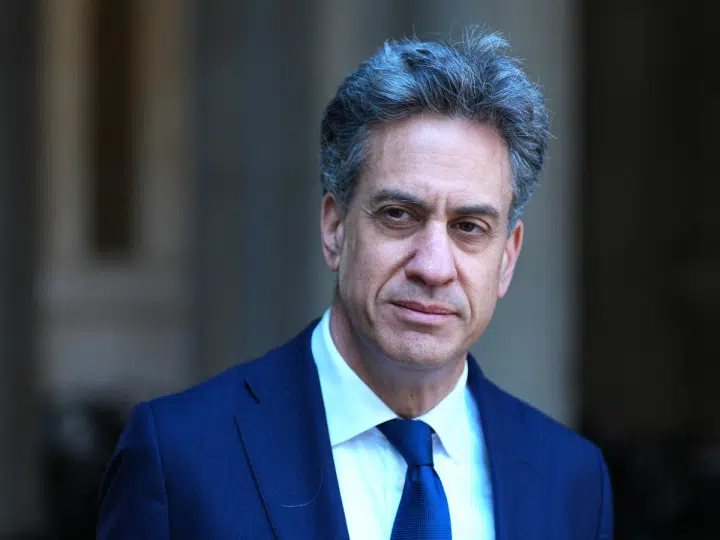

New-ish GB Energy has wasted no time siphoning off public money to private companies. Scottish paper the National has revealed that up to £20m of taxpayer money is going straight to consultancy firms.
GB Energy: corporate capture
Under energy secretary Ed Miliband’s guidance, London-based firms Deloitte and Baringa Partners are gaining lucrative contracts. They’re to handle day-to-day operations of Labour’s flagship — supposedly publicly-owned — corporation GB Energy.
The National has revealed that these contracts, signed on 1 May, awarded the two firms a shared programme — worth up to £10m each — in which they will:
be responsible for “organisational set up support”, “operational design and delivery”, market strategy and “technical support”.
Deloitte is expected to handle the bulk of the contract. Baringa will be expected to step in wherever conflicts of interest arise or where there’s a resourcing issue. The extendable contracts will run for two years.
Under pressure from corporateering Gulf State agent and AI-tech lobbyist Tony Blair, Labour government ministers this week debated scrapping “net zero” altogether. This came amid the UK’s worst May heatwave and a subsequent drought across parts of Britain leaving thousands without water.
Keir Starmer’s Great British Energy is in a sorry state of affairs
More broken Labour promises?
The National didn’t hold back, highlighting that GB Energy was supposed to be headquartered in Aberdeen, which Labour announced but not have yet seen through. (Although the region is notoriously controlled by Europe’s largest oil cartel, so this could be a net-negative, carbon-positive.)
They also underscore that GB Energy was supposed to create 1000 jobs, mainly in the far-north. The National previously revealed that only 30 staff are employed on permanent contracts. The remainder are on temporary or contingent, ergo more insecure, government-sponsored contracts.
Most scathingly, the National reminds us that Labour previously pledged to halve government spending on consultancy contractors. Yet now Labour emphasise “knowledge sharing”, which insiders suggest shows that GB Energy is still building its internal capability from zero. This could signal “limited in-house expertise“.
Consultancy costs ballooned under the Johnson-Truss-Sunak parliament, with £-billions squandered on the non-entity ‘Rwanda Plan’ and punitive anti-migrant small boat measures. They have now dropped by 14% across government departments, with in-housing savings mainly in healthcare and the Home Office.
However, it’s a matter of public record that Labour, especially under its Starmer/McSweeney/Labour Together/Think Labour leadership pivoted hard towards large corporate and private donors. It now takes less from unions combined than it does from corporations.
The ‘Big Four’ revolving door
It’s well documented that the so-called ‘Big Four’ frequently flirts with politics and regularly imbricates its swanky corporate structures and methods into political process.
Between 2009–2012, for example, the Big Four — Deloitte, EY, PwC and KPMG — offered, or donated, almost £2m worth of free labour to the UK’s then-Big Three political parties. This corporate ‘secondment’ comes in the form of unrequited “staff costs,” offering free “expertise” to political parties and government alike.
The Rusbridger-era Guardian reported that Big Four employees regularly worked with MPs, party offices, and the government, often for months. HM Treasury had 15 secondees from the Big Four on loan in 2012.
Given that these same corporate staff regularly consult for FTSE 100 or FTSE 250 companies simultaneously with government, many argue that this alone constitutes conflict. At the time, Andrew Simms of the New Economics Foundation think-tank said:
Conflicts of interest are built into the very DNA of the big professional services firms.
Former Labour MP Austin Mitchell described these firms being “more powerful than government“. These companies’ financial successes grant them privileged access to government big-wigs and policymakers.
This is by no means unique to British politics. It was reported in 2024 that the New York government paid McKinsey $4m for a 95-page deck on waste management. Its revolutionary suggestion was: to adopt wheelie bins. This came at a whopping cost of some $42,000 per presentation slide!
NYC paid McKinsey $4m for a 95 page deck on putting trash in containers, not bags
That’s $42k per slide.
So McKinsey made $42k for this slide explaining the concept of a trash bin https://t.co/QgWPWt7fXJ pic.twitter.com/4S8jqit0aD
— Andrew Lynch (@andrewglynch) July 10, 2024
Australian journalists have also clearly documented the “revolving door” between Big Four firms and their mainstream politicians. Subsequently, Australian government contracts awarded more than quadrupled to over £1.4b in the decade to 2023.
ABC similarly produced a damning investigative article titled:
How the big four accounting firms infiltrated governments, earning more than $10b over a decade while taxpayers are in the dark
Likewise, one New South Wales university researcher extolled an in-depth article titled:
How reliance on consultancy firms like PwC undermines the capacity of governments
It’s time that Britain’s political and media class wake up to this problem like Australians have.
It’s not renewables putting up your energy bills, it’s billionaires
Featured image via Getty/Carl Court
So this is where wokeness has dragged us. Into a moral abyss where a boy is handcuffed by cops as he bleeds to death. Into a wasteland of virtue where an 18-year-old lad, stabbed five times, is treated as a speechcriminal as he gasps his final breaths. Into a sorry, dystopic excuse for a society where the last words a youngster hears are the defamatory cries of the man who killed him. ‘He was racist’, his murderer said. ‘I can’t breathe’, the boy begged.
The case of Henry Nowak has shocked the nation. He was a Polish-Briton in his first year at university. During a night out in Southampton in England in December last year, he had a fatal encounter with a Sikh man named Vickrum Digwa. Some kind of altercation took place. Digwa then stabbed Nowak five times with his kirpan, the ceremonial curved sword that Sikhs carry. Nowak was gored in his chest, his face and his legs. He scrambled over a fence, leaving a blood trail in his wake. ‘I’m dying’, local residents heard him say. He was right.
As savage as the knifing was, it was what happened next that has shaken Britain’s soul. Digwa’s mother arrived and spirited away the murder weapon – it was later found hidden in the family home with 20 other Sikh swords and knives. Digwa then accused Nowak of having racially abused him. He said Nowak used a racist slur against him, punched him and knocked off his turban. These were ‘wicked lies’, the court heard during his murder trial. Yet there was a group of people on the scene of this atrocity who believed Digwa’s vile libels against the youth he had just fatally lacerated: the police.
The police’s behaviour that night defies all logic and humanity. They bowed to Digwa’s defamatory slurs and arrested and handcuffed young Henry. The Telegraph’s report captures the barbarism of the police’s credulous ineptitude that grim evening: ‘As the teenager lay there, unable to breathe as his lungs filled with blood, begging officers for help, they ignored his pleas and placed him under arrest. He died less than an hour later.’ If anything will cause decent Britons to lose faith in the police, it’s this: the haunting vision of a boy being manhandled by the state as he drowned in his own blood.
This week Digwa was found guilty of murder. His mother was found guilty of assisting an offender. And the police have apologised for the fact that Nowak was ‘arrested in the moments before he lost consciousness’. But this isn’t the end of this story. It can’t be. This cruellest of deaths, this humiliation by the state of a boy who was dying, will surely force a reckoning with the social poison of political correctness. For it exposes the extent to which the cult of wokeness has chased truth and virtue from our societies.
We all know why Digwa’s evil lie was believed and why wounded, gasping Henry’s pleas for help went unheeded – it’s because the word ‘racism’ acts like a magic spell on our ruling class. It’s like a rhetorical narcotic. The minute they hear it, they morph, like woke Manchurian candidates, into wide-eyed searchers for the merest hint of that greatest sin in our morally deracinated times: white privilege, and prejudicial speech. Their aim becomes not the discovery of truth but the demonstration of virtue. On that street in Southampton, once the word ‘racism’ had been uttered, the role of the state’s representatives suddenly and radically changed: it was no longer to investigate a potential crime but to obsequiously act out a moral script.
Having prostrated themselves so fully before the new regime religion that falsely calls itself ‘anti-racism’, the police were virtually programmed to believe the ‘brown man’ and be sceptical of the ‘white man’. No doubt the critical race theory that pumps like a toxin in the veins of the establishment kicked in, meaning that the Sikh who had so ruthlessly wielded his sword instantly became the victim, while the target of his red-mist knifing – the white boy – became the oppressor. The state’s intoxication with the hyper-racialised politics of victimhood has driven it ever further into a quagmire of dogma where cool moral judgment is all but impossible.
It’s important to say that this handcuffing of a dying boy was not ‘a failing’ by individual police officers. The police forces of the United Kingdom are expressly instructed to believe, without question, every accusation of hate crime. They are told that even things perceived to be racist are probably racist. They are trained to see ‘racism’ everywhere – in every slight, in every tussle between whites and non-whites. The police’s cruel subduing of a stabbed teen was not an aberration – it was the horrific logical conclusion of the new ruling-class ideology that sees us less as citizens with rights than as racial creatures in need of micro-management. The demeaning of young Henry was the woke state in action.
The state turned a blind eye to the rape of vulnerable girls by mostly Muslim gangs out of a fear of being thought ‘Islamophobic’. The very same wilful blindness born of cowardice led those officers to see a stabbed boy as a tyrant and his stabber as a victim. The questions pile up. For how much longer can we suffer under such a two-tier ideology that allows Sikhs to do what the rest of us are forbidden from doing: carry lethal weapons? Why did Keir Starmer take the knee for George Floyd when he died 4,000 miles away but not for young Henry murdered and failed down in Southampton? And most pressingly, what are we going to do about a state that arrests a boy as he chokes on his own blood and as his killer gloats and maligns him? We have to do something.
Brendan O’Neill is spiked’s chief political writer and host of the spiked podcast, The Brendan O’Neill Show. Subscribe to the podcast here. His latest book – After the Pogrom: 7 October, Israel and the Crisis of Civilisation – is available to order on Amazon UK and Amazon US now. And find Brendan on Instagram: @burntoakboy.
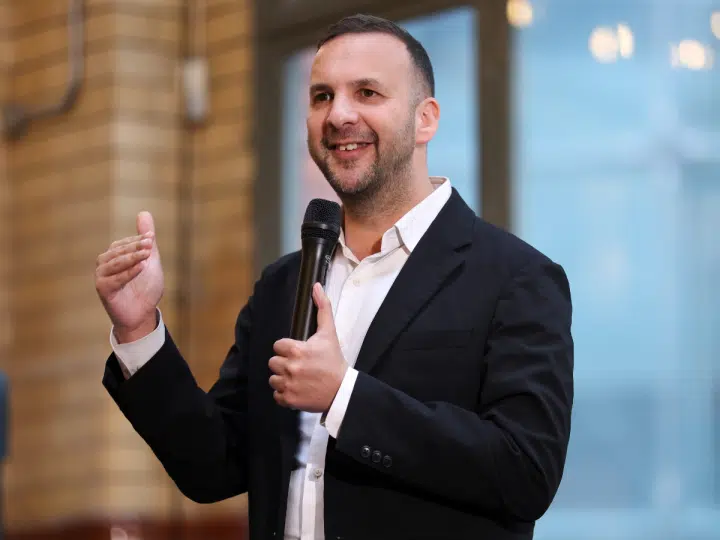

Green leader Zack Polanski has published a letter calling out ex-Labour leader Tony Blair’s links to the atificial intelligence (AI) industry and government. The news comes after war criminal Blair published an essay, via his Tony Blair Institute (TBI) think tank, calling for Labour to essentially shape all future policy around AI.
Of course, this policy recommendation has absolutely nothing to do with the fact that Larry Ellison gave £250m to the TBI. Ellison just happens to be the CEO of AI-specialist company Oracle. He’s also a good buddy of Donald Trump, at whose feet Blair all but worshipped in his essay.
The Canary already covered Blair’s piece on 27 May. It’s truly terrifying example of anti-immigrant, anti-worker fascist pandering dressed up as ‘radical centrism’.
We could pull it apart all week. However, Blair does a great job himself – criticising the left and right for lacking vision, then pulling an about-face to praise Trump, Georgia Meloni, and Javier Milei. Here, however, we’re going to take a look at Polanski’s critique, focusing on Blair’s obvious shilling for the AI industry.
Polanski spots Blair’s cartoon evil
Polanski addressed his letter to Labour’s Chris Ward MP, the parliamentary secretary in the cabinet office.
Tony Blair’s essay published by the Tony Blair Institute yesterday contained some important points, notably, a call to switch to an AI focused economy with more government investment in AI, which he argued would be facilitated by cuts to welfare spending, reductions in the minimum wage and reduced workers’ rights.
You might be forgiven for thinking this was hyperbole. ‘Fund AI by cutting welfare, wages and rights’ seems that bit too cartoonishly evil, even for Blair.
However, because the ex-Labour leader is apparently a parody of himself, it’s perfectly accurate. Blair listed the commitments of the current government:
the new workers’-rights laws; the net-zero acceleration and phasing out of the British oil and gas industry; the uplift in the minimum wage beyond inflation; and the non-dom changes.
He then states that they should be abandoned in favour of growing the private sector:
The prime minister and the chancellor should have said right at the outset: these are commitments which economic circumstances have rendered unwise to proceed with. The priority is growth. That comes with a vibrant private sector which has suffered years of economic instability, and we are going to go all out for making business feel respected and supported.
So long as the businesses feel respected, the voters can do one – fantastic plan there. Blair is also very specific about the businesses he’s talking about primarily: an AI-led “technology revolution”. He then writes:
There is no point in debating whether this technological revolution is a good or bad thing. Just know it is a ‘thing’. In fact, it is ‘the thing’. It will displace jobs, though creating new ones, but no one yet knows the full consequence. Companies and countries will rise or fall on the back of it. It will revolutionise the private sector and should in time revolutionise public services and government.
Just ignore the ethics – spoken like a true war criminal.
The Ellison connection
In his letter, Polanski then moved on to the heart of the matter – the reason why Blair is shilling for the AI industry:
It has been widely reported that Larry Ellison the owner of Oracle, which specialises in AI, funded the Tony Blair Institute with over £250m, and also that the Tony Blair Institute has significant contacts and influence within the government.
All of that is, again, completely true. The Ellison Foundation has funded the TBI with over £250m. In turn, just two months ago, the Treasury called on the help of the TBI and several private companies, specifically to guide AI policy. Treasury secretary James Murray said that:
These people are exactly who can help us create change across the public sector – giving us the hard truths on our approach to AI and advising where we need to prioritise our investment to support real efficiencies.
At the time, Donald Campbell, director of advocacy at tech equity campaign group Foxglove – described the move as:
yet more evidence of the government’s excessively cosy relationship with Big Tech.
Giving tech giants privileged access to decision-making around buying the very products they supply is clearly a risk.
It’s hard to understand how ministers seem to be unable to spot a potential conflict of interest which is blindingly obvious to everyone else.
Hint: they see the conflict of interest – they just don’t care.
‘The challenge of democracy’
Speaking of obvious conflicts of interest, Polanski rounded out his letter by writing:
We are sure you will agree that it’s important for the public to know whether there is a link between Larry Ellison’s donations and Tony Blair’s public advocacy for more government funding for AI. We therefore request that all formal and informal contacts between representatives of the Tony Blair Institute and government departments (officials and ministers) are disclosed.
It would be bad for public confidence if there was a suspicion that large corporate interests are buying access to the government via the Tony Blair Institute.
And he’s damn right there, too. Blair’s (further) corruption by the AI industry is as plain as day – and his arguments to fund it by slashing worker’s rights and pay (along with removing environmental protections) is a clear breach of public interest.
If this Labour government had any shame, they’d make clear the exact links between Ellison’s millions, Blair and their doggedly pro-AI policies. Then again, if they had any shame, they wouldn’t have called in Blair in the first place.
In his essay, the ex-Labour leader stated that:
The challenge of democracy is not transparency, honesty or conspiracy theories about the hidden power of elites.
This is, of course, precisely what a deeply dishonest champion of the (barely) hidden power of billionaires would say. If you listen closely, you can hear the £250m talking.
Featured image via Getty/Ryan Jenkinson

The post The hounding of Helen Mirren reveals the hatefulness of ‘anti-Zionism’ appeared first on spiked.
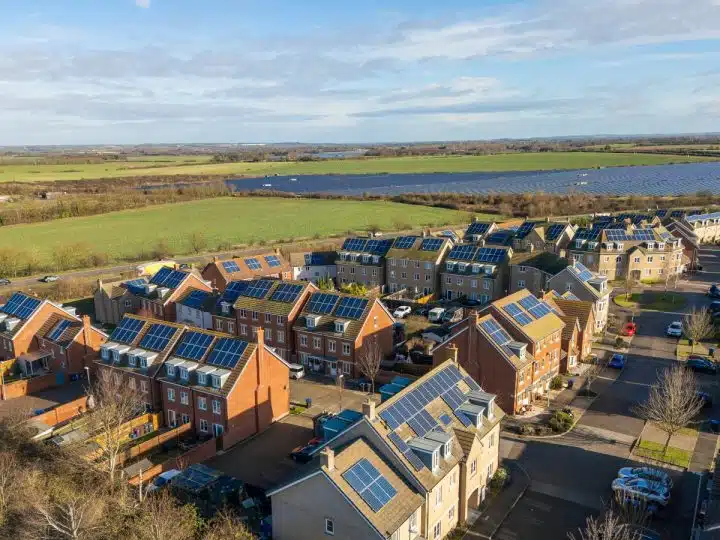

A campaign by fuel poverty and climate campaign groups to “Make Green Fair” is gaining traction. The campaign is aiming for fairer pricing by making sure the cheaper production cost of renewable energy gets passed on to consumers.
Petitions by Fuel Poverty Action and 350.org in support of the campaign have now reached a combined total of over 10,000 signatures.
Ofgem’s new price cap will see bill rises of 13% from 1 July. To mark the day, Fuel Poverty Action and a coalition of allies will be protesting outside the Department of Energy.
Fuel Poverty Action campaigner Stu Bretherton said:
Today’s price hikes show that yet again the government has failed to protect us from energy sector profiteering.
That’s why we’re calling for the government to expand cheap-to-produce renewables, and put in place guarantees so that we’ll all feel the benefits in the form of bill savings.
On 1 July, we need as many campaigners and organisations to join our demonstration as we take our #MakeGreenFair demands directly to the Department of Energy.
Intelligent use of renewables can deliver fairer pricing
In this heatwave, people could be getting free cooling powered by solar, campaigners say.
Energy expert Jonathan Bean argues that the wind and sun can now deliver cheap electricity, but that most people are missing out:
Government and Ofgem must act urgently to make solar, batteries, and cheap tariffs available to everyone.
The Make Green Fair campaign launched with an open letter backed by more than 60 organisations, including Greenpeace and the Climate Justice Coalition.
Since receiving the open letter, the government has announced measures that address some of the issues highlighted in campaigners’ demands.
These include:
- An increase in the windfall tax.
- Steps towards breaking the link between electricity and gas.
- A pilot of free solar panels for people living in flats.
Bretherton calls this “a step in the right direction” but says the government could do more to deliver fairer pricing:
These concessions wouldn’t have been won without campaigners calling out government inaction, and they’re a step in the right direction.
But these measures don’t go far enough. We’re still facing a £221 bill hike in July. Energy companies are still getting away with blatant profiteering. And we’re still not seeing the benefits of cheap-to-produce renewable energy being passed back to us.
Government needs to ramp up renewables, and guarantee that the benefit will be reflected in lower bills for us, not hijacked by shareholders and energy firm CEOs.
Featured image via Getty Images
By The Canary


CMAT has powerfully taken aim at online trolls by showing how people direct disproportionate levels of abuse at artists who are not “thin” compared with other performers, such as Zara Larsson and Olivia Dean.
This is in response to attacks the singer received online following her performance last week at BBC’s Radio 1 Big Weekend.
As a result of this unwarranted torrent of abuse, CMAT – whose real name is Ciara Mary-Alice Thompson – took to Instagram as she felt:
compelled to wade in and speak for myself.
Her disgust isn’t hers alone – with fans having also shared their disgust and dismay at the way in which women’s bodies are objectified.
Moreover, one fan’s Substack outlined how:
If a woman exists outside conventional beauty standards, she becomes subject to outright cruelty. If her appearance changes, she is accused of betrayal.
If she appears too strong, too thin, too sexual, too visible, too unapologetic, the internet collectively decides her body has become public discourse.
Adding that Larson and Dean:
were granted a level of grace and basic humanity that was completely denied to CMAT.
Wrote about the bizarre way female artists are still treated as public property online.
CMAT literally wrote Take a Sexy Picture of Me about this exact abuse & then returned to Big Weekend and I’m seeing very similar patterns on social media…https://t.co/D2RCdXQS3Q pic.twitter.com/EpfUG6sy0c
— Em (@emsocialcalpol) May 28, 2026
CMAT – too much of a gorgeous genius for this shit
In the music industry, this particular issue becomes even more heightened than it is across wider society, as emphasised by this push back against a continuation of this toxic hierarchy of value dependent on Western values of ‘beauty’.
Nevertheless, these attacks – and CMAT’s refusal to take this abuse quietly – will resonate with many across the country who feel this same pressure to conform.
CMAT wrote on Instagram:
It is literally so boring for me, a gorgeous genius, to keep having to yap on about how horribly I am treated because of my body.
I would love to stop but I cannot because it keeps happening, at an accelerating and worsening pace as I become more famous.
Adding that her being able to enjoy her growing success is:
increasingly becoming tarnished by the fact that I would be allowed to enjoy it so much more if I was thin.
Like many other ‘controversial’ issues, to be silent in the face of it is to consent to it.
CMAT makes it inspiringly clear that she will never allow anyone to make her feel “lesser” than other artists and musicians simply because she breaks the mould that, frankly, pervy men have set for us. And, she made it clear that her weight is not a ‘statement’:
I am not being defiant. I am not choosing to look like this or weigh this much as some kind of punk rock act of liberty. I simply have a body, one that I would of course like to change in order to fit in and avoid all of this abuse, but I have had extreme difficulty in doing so. I don’t get a say in whether or not I want to be brave, I simply have to sit here and take it.
Dehumanisation
Her fan, Front Row Feels, also pointed out how little attention people apparently pay to the actual substance of her music, considering that Take a Sexy Picture of Me directly addresses this very same toxic abuse.
In a Substack, she aptly pointed out how we insist on treating women in music as public property, saying:
If music culture genuinely values vulnerability, honesty and emotional truth from women, then audiences need to fundamentally rethink the way we engage with the women creating it. Female artists are not morality tests, branding exercises or public property disguised as discourse. They are human beings that are allowed to change, age, fluctuate, strengthen, soften and simply exist without public consultation.
The least we can do is listen to what they are actually saying instead of immediately evaluating the body saying it.
View this post on Instagram
Looks fade – our value as human beings does not
As a woman who once weighed five stone more, but who has since become “thin” because of the cost-of-living crisis affecting my single-parent family, I find this issue particularly poignant. Since losing weight, people have generally seemed more receptive to what I have to say and more willing to give me space to be heard.
But that creates another doubt entirely: whether people value your contributions for their substance, or simply because they find you more aesthetically acceptable.
And when people dislike what I say, they immediately weaponise my appearance – whether by mocking my supposedly receding hairline or accusing me of having “too many teeth”. People constantly use women’s appearances as a way to manufacture a sense of dominance and control.
At the same time, being “thin” has also brought a notable increase in sexualised abuse and harassment, to the point that I now avoid dating or going out.
Therefore, the reality is that women cannot win – regardless of what we do, people still treat us as public property and subject us to abuse in one form or another.
We will face abuse in some form or other, no matter what we do. So, as CMAT is modelling herself, the most important thing is to learn to accept ourselves regardless of how our bodies change.
Featured image via Getty/Emma McIntyre
Politics
Politics Home | Ex-Energy Minister And Burnham Ally Says Tony Blair Is Wrong About Net Zero
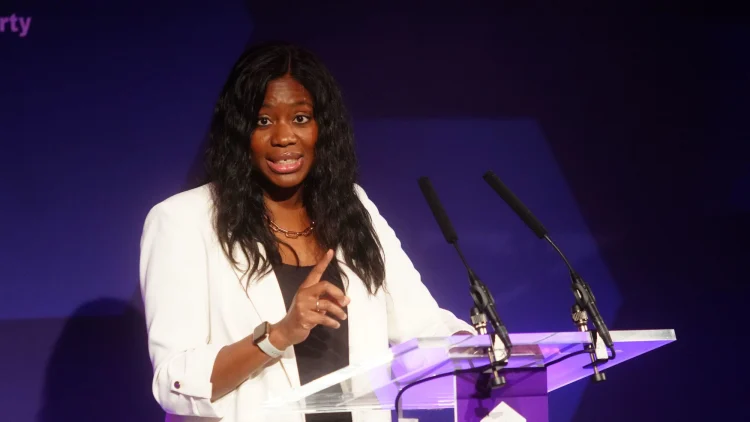

Miatta Fahnbulleh was appointed energy minister in 2024 and then devolution minister in 2025, before resigning from government in May 2026 (Alamy)

4 min read
Former energy minister Miatta Fahnbulleh has said former Labour prime minister Tony Blair was “wrong” about the need for the UK to deprioritise net zero commitments.
On Tuesday, Blair published a highly critical essay setting out where he believes the Labour government has made mistakes in its policy agenda, including its net zero drive and phasing out of the British oil and gas industry.
In the essay, Blair wrote that the government “should try to limit the effect of the changes made and remove those parts of the net-zero agenda which prioritise clean energy over cheaper energy”.
Fahnbulleh, who served as minister for energy consumers between 2024 and 2025, told PoliticsHome that Blair’s views on net zero were “wrong”. She said that while her own children “won’t forgive me if I duck our responsibility to respond to climate change”, it was also important that the UK make the most of the “massive opportunity” around a clean energy transition.
“There is a global industry that is building up around the green transition around renewables,” she said.
“China is at the absolute forefront of that. Why the hell would we not want a piece of that? Why would we not want to be on the front foot?”
She added it would be “strategically mad” not to focus on this as a way to reindustrialise and revive parts of the country.
Blair said that the government needed to focus on cheaper energy over clean energy, with the public continuing to struggle with rising costs of living and energy bills.
However, Fahnbulleh said that while the cost of energy is a “genuine problem”, it is “clearly a function of our dependence on global fossil fuel markets”.
“The way you solve that problem isn’t by pretending it doesn’t exist or burying your head in the sand,” she said.
“It’s by doing what we’re doing and making the push to clean power.”
Fahnbulleh stepped down as minister for devolution, faith and communities earlier this month, having previously served as an energy minister after being elected as the MP for Peckham in 2024.
In her resignation letter, she called on Prime Minister Keir Starmer to set a timetable for his departure from No 10, following heavy Labour losses at the 7 May local elections.
“Whilst progress has been made, we have not acted with the vision, pace and ambition that our mandate for change demands of us,” she wrote.
“Nor have we governed as a Labour Party clear about our values and strong in our convictions.”
Fahnbulleh is an ally of Greater Manchester Mayor Burnham and is helping develop his policy platform as he campaigns to win the Makerfield by-election with the hope of returning to Parliament and potentially challenging Starmer for the leadership.
“There’s one thing that Andy has to do, and that is win that by-election, and that’s not for any kind of leadership thing,” Fahnbulleh told PoliticsHome.
“It’s because this is a battle between Labour and Reform. The politics and the psychology of whether we win this are far more important. It’s a straight-up fight.”
She said that if Labour can win in Makerfield with a campaign based on “a set of progressive ideas”, then it will be able to do so “in constituency after constituency”.
She said that Labour needed to make strong arguments around the “economic model failing”.
“If we win in Makerfield, it changes the political weather,” Fahnbulleh continued. “And it gives us a formula about how we win back those traditional Labour seats that we have lost to Reform that we’ve got to get back.”
Asked whether she thinks the Green Party should step aside in the by-election to allow Labour a clearer path to victory against Nigel Farage’s Reform, Fahnbulleh said they “can do what they like” but suggested that it would be in the political interests of Zack Polanski’s party to do so.
“I would have thought it’s not in their interest to have a resurgent Reform party, but ultimately that is their call,” she said.
“Some of their leaders, like Caroline Lucas, have said so, and I often think that when we’ve got experienced political leaders opining, whether we agree with it or not, it’s often worth reflecting on. And I say that with a reference back to Tony Blair.”
In his essay, Blair said Labour had gone too far to the left and accused his party of having an “almost infinite capacity for self-delusion”. As well as calling for a rethink on net zero, the former prime minister argued that the government must significantly reduce welfare spending and improve relationships with US President Donald Trump.
Both Burnham and former health secretary Wes Streeting, who is expected to enter a future Labour leadership contest, accused Blair of ignoring the issue of inequality in his analysis.
In his own response to Blair, Starmer said that NHS waiting times and net migration coming down were vindications of the government’s policy choices, and argued that his administration had inherited the worst economic situation in nearly 50 years.

*NEW* BEST UNLIMITED WHEELSPINS GLITCH! BROKEN FORZA HORIZON 6 MONEY GLITCH! SKILL POINTS/XP FARM!

Man covered in blood and needing 50 stitches after suspected XL Bully attack

Elon Musk Warns AI Advancing Far Faster Than Most Realize as 2026 Breakthroughs Accelerate


-

 Fashion7 days ago
Holiday Weekend Open Thread – Corporette.com
-

 Business5 days ago
NYT Strands Answers May 24 2026 Revealed for Puzzle No. 812 Theme Summer Essentials
-

 Politics4 days ago
Bridgerton Season 5: Cast, Release Date And Everything We Know So Far
-

 Crypto World6 days ago
Robinhood crypto COO Tanya Denisova exits
-

 Tech4 days ago
Microsoft’s quiet Claude Code retreat and the real cost of enterprise AI
-

 Business3 days ago
Selena Gomez Reportedly Upset Over Benny Blanco’s Comments on Her ‘Terrible’ Diet
-
 Crypto World3 days ago
Micron Crosses $1 Trillion Market Cap as AI Demand Reshapes Memory Sector
-

 Politics7 days ago
Makerfield: a tale of two social-media histories
-

 Business4 days ago
BTS Sells Out Four Las Vegas Shows at Allegiant Stadium for ARIRANG World Tour
-
Tech2 days ago
The Samsung pay deal is the moment Korean unions changed register
-

 Tech4 days ago
Westone Audio and Etymotic Acquired by Fidelity Collective in Major IEM Market Move
-

 Tech3 days ago
Millions of AI agents imperiled by critical vulnerability in open source package
-

 Tech11 hours ago
Waymo dominates autonomous vehicle registrations as Tesla trails behind
-
 Crypto World4 days ago
Nvidia (NVDA) CEO Calls on Super Micro to Strengthen Export Controls Amid Smuggling Probe
-
 Tech3 days ago
China assigns ID codes to 28,000+ humanoid robots
-
Crypto World2 days ago
SpaceX’s $2 Trillion IPO: Why Tech Giants Nvidia (NVDA), Apple (AAPL), and Microsoft (MSFT) May Face Pressure
-

 Tech2 days ago
NASA taps Blue Origin to deliver lunar rovers for Moon Base initiative
-
Crypto World5 days ago
Brian Armstrong Outlines Crypto Vision for the Future Financial System
-
 Entertainment4 days ago
‘Breaking Bad’ Star’s Easy-to-Binge 6-Part Crime Series Spin-Off Is Finally Heading to Free Streaming
-

 Business4 days ago
Yatra Online, Inc. 2026 Q4 – Results – Earnings Call Presentation (NASDAQ:YTRA) 2026-05-25
You must be logged in to post a comment Login