

Politics
Matthew Jeffery: Is this the beginning of the end for Reform UK?

Matthew Jeffery is an experienced global talent and recruitment leader, with more than 25 years advising boards and C-suite executives on workforce strategy, skills, and productivity.
Reform supporters will rage at the very suggestion the show might be coming to end and choke on their morning Cheerios but anger does not change reality.
The signs of decline are beginning to appear. Yes, Reform is still ahead in national polling, although recent surveys show the gap tightening. Yes, it continues to win council by elections but other parties are starting to push their way back in. The question Reform voters must confront is simple. Has the movement reached its peak? Decline does not happen overnight. It is gradual. But are the seeds of their demise already sown?
Credit where credit is due. Nigel Farage has done something genuinely rare in modern British politics. He took a fringe protest movement and turned it into a national force that reshaped the political landscape. Reform broke through where the old parties had grown complacent, rallied voters who felt ignored and forced Westminster to confront issues it preferred to avoid. Under his leadership the party won millions of votes, gained council seats across the country and became a permanent fixture in national polling. Whatever happens next, that achievement stands. Farage built a movement that changed the national conversation.
But times are changing. Has Midas lost his touch?
Reform UK has reached the moment every protest movement eventually hits: the applause has faded, the spotlight has shifted and what once looked like momentum now feels like exposure. Farage is no longer steering the national conversation; he is being questioned by it. For the first time, voters are looking at Reform itself rather than the failures it promised to fix. The phase of possibility has given way to the demand for proof. For months Farage forced Westminster to confront issues it preferred to ignore; that spell is breaking. Voters aren’t clapping the problems he highlighted anymore. They’re asking whether he can meet the standards he demanded of everyone else.
The forces that fuelled Reform’s ascent have not disappeared. Far from it. Immigration, frustration and economic anxiety remain powerful. But success changes the test. Protest movements are judged against the failures of government. Potential governments are judged against the standards they would impose on themselves. The closer an insurgent comes to power, the more it is judged as a government. Reform is now facing that examination and the early signs are unforgiving.
The truth is simple. The qualities that built Reform are not the qualities required to run a modern state. Anger can rally supporters. Charisma can win votes. Neither produces institutions, ministers or disciplined decision making. Campaigning identifies problems. Government must solve them.
Local government is providing the first real examination. Voters will judge Reform not by speeches in Westminster but by refuse collections, planning decisions, balanced budgets, social care and the everyday competence of the councils it now controls.
Kent County Council has already shown how quickly protest politics gives way to governing reality. Reform councillors arrived insisting Conservative administrations had overspent and that substantial savings could easily be found. Once in office, they discovered the opposite. Years of pressure on social care, transport and statutory services meant the budget had already been cut to the bone. Kent entered the year facing a £47 million budget gap, driven largely by rising demand in adult social care and children’s services. More than 70 per cent of spending was already committed to statutory obligations, leaving little room for discretionary cuts. Reform councillors were forced to implement a 4.99 per cent council tax rise; the maximum permitted without a referendum. Opposition offered the luxury of simple answers. Office demanded difficult choices.
The Defence Test
These are dangerous times. War in Ukraine. Conflict in the Middle East. The International Monetary Fund, Bloomberg and several European defence ministries have reported that Russia is now spending more than 50 per cent of its government revenue on its war machine, while the United Kingdom spends around 2.3 per cent of GDP. Long‑standing alliances are wobbling, even our closest ally, the United States, is no longer a guaranteed constant.
Years of underinvestment have left Britain’s armed forces exposed. The Army is at its smallest size since the Napoleonic era. The Navy has world class ships but not enough of them. The RAF has advanced aircraft but too few to generate mass. Ammunition, spare parts and critical components are held in peacetime quantities and industry cannot scale quickly. Britain can fight but it cannot fight for long. Admiral Tony Radakin has warned that Russia could pose a direct threat to the UK and NATO by 2030. Britain is weak and vulnerable.
This is not a policy debate. It is a test of seriousness.
Reform is not meeting that test.
It has no dedicated defence spokesperson and no developed approach to the strategic choices government must make, from procurement and force structure to the future of the nuclear deterrent and Britain’s alliances. Defence is the first responsibility of government. If a party cannot explain how it would defend the country, everything else becomes secondary. That weakness was exposed when Reform’s Laila Cunningham was unable to outline the party’s defence policy when asked by Julia Hartley Brewer on Talk.
The problem extends beyond defence.
Reform has articulated ambitions on taxation and immigration but it has produced almost nothing that resembles a governing programme. It has no credible plan for public service reform, no fiscal framework that explains how its promises would be funded and no operational blueprint for running the Home Office, the Treasury or the Department of Health. It has offered slogans about cutting taxes without explaining which budgets would be reduced. It has demanded lower immigration without outlining the legal, administrative or diplomatic machinery required to deliver it. It has attacked waste in public services without presenting a serious plan for procurement, staffing or productivity. It has criticised welfare without defining eligibility, enforcement or incentives. It has promised growth without a coherent industrial strategy. It has talked about sovereignty without explaining how Britain’s treaty obligations would be managed.
A party that cannot answer these questions is not offering a programme. It is offering a mood. Voters may share that mood but they cannot build a government on it. A movement built on confidence cannot indefinitely rely on confidence alone. Eventually it must demonstrate competence.
Image: A Party With a Reputation Problem
Reform UK does not just face questions of competence. It faces questions of character. The party’s image has hardened in ways that carry real political cost. For many voters, Reform is no longer simply a protest movement. It is a movement associated with hostility, controversy and a culture that feels far removed from the mainstream.
That perception is not abstract. It is shaped by repeated scandals involving candidates, councillors and activists. Racism allegations. Antisemitic posts. Inflammatory rhetoric. Suspensions and withdrawals. A pattern that suggests a party attracting the wrong people and struggling to enforce basic standards. Reform promised to be a clean break from the old politics. Instead, it has acquired the reputation of a party that tolerates behaviour the public finds unacceptable.
The problem is not confined to race or religion. It extends to women and LGBT people. The Makerfield by election exposed that with brutal clarity. Reform defended candidate Robert Kenyon’s comments as “locker room banter” even after he said women presenting rugby “aren’t up to the job,” declared “I’m sexist, sorry but I am,” mocked English women’s bodies, used homophobic slurs and endorsed a sexualised message sent to a female TV presenter with the line “he’s only saying what we’re all thinking.” For many voters, especially women and LGBT people, that is not banter. It is a red flag about the culture inside the party.
The wider record reinforces that impression. Reform is not openly anti‑gay but it has never championed LGBT rights either. It has no policy platform on equality. It rarely engages with Pride events. It offers silence where clarity is expected. Critics see that silence as passive discrimination. Supporters call it prioritisation. The result is confusion, suspicion and a sense that Reform is uncomfortable with modern social norms. In a country where most voters expect basic respect for LGBT people, silence is not neutral. It is noticed.
Farage’s own rhetoric has added to the perception. His comments on immigration, Islam and national identity energise a core base but alienate voters who want toughness without toxicity. Minority communities’ express anxiety about Reform’s rise. Women see a party willing to excuse misogyny. LGBT voters see casual homophobia brushed aside. Image shapes trust and trust shapes growth. On that test, Reform is struggling and the damage is cumulative.
Reform now battles four overlapping reputational problems:
- Racism allegations – repeated candidate scandals have created a perception of intolerance.
- Antisemitism controversies – documented cases and inconsistent sanctions have damaged credibility.
- Misogyny and homophobia – the defence of Kenyon’s comments suggests a party willing to excuse behaviour most voters find unacceptable.
- A “nasty party” aura – Reform’s tone and rhetoric give opponents an easy frame: angry, divisive, hostile.
These perceptions do not need to be universally true to be politically lethal. They only need to be widespread enough to make Reform look risky, unserious or socially corrosive. A party that wants to govern cannot afford to look like a party that makes people uneasy.
Reform promised authenticity. It promised straight talking. It promised a different political culture. But image is not built on slogans. It is built on behaviour, discipline and the standards a party is willing to enforce. On that test, Reform is struggling and the damage is cumulative.
Integrity Is Hardest to Demonstrate
Nigel Farage built his career by holding an unaccountable political class to account. Now he is the one under scrutiny, judged by the standards he once demanded of others. He still presents himself as the outsider battling the establishment but that claim is harder to sustain. By any conventional measure he is part of the establishment: educated at Dulwich College, successful in the City, twenty‑one years as an MEP, leader of multiple national parties and one of the most recognisable figures in British public life. This is not the biography of a man shut out by the system. It is the biography of someone who has spent decades as a member of the establishment himself. Scrutiny is not persecution. It is the inevitable consequence of seeking high office.
Reform promised a different political culture, integrity, transparency, accountability. That promise now meets reality. Farage faces serious questions over the £5 million donation from Christopher Harborne, currently being examined by the Parliamentary Commissioner for Standards and already widened into a Met Police probe. He also accepted money from George Cottrell, who served a prison sentence in the United States after pleading guilty to an offence connected with money laundering. Reform built its brand on integrity. It invited a higher standard of scrutiny. Now it is receiving exactly that.
Farage cannot dismiss every difficult question as establishment hostility. The scrutiny he faces is not punishment for unfashionable views. It is the consequence of seeking power. Questions about donations, transparency and standards are exactly the questions he would demand of any Labour or Conservative leader. The principle does not change simply because he is now the one being asked to answer them.
The optics make the problem sharper. Farage still casts himself as a man of the people, yet the £5 million gift from Harborne sits uneasily with that image. His explanation has shifted repeatedly, personal security, a reward for Brexit, money he could spend on anything from campaigning to Ferraris, before insisting he has not spent a penny. For voters struggling under high taxes and rising costs, that inconsistency does not look like the life of an outsider. It looks like privilege. And when a movement builds its identity on authenticity, moments like this matter.
The danger of becoming a joke.
When ridicule replaces fear, a protest movement enters its most dangerous phase. Movements rarely decline because opponents discover better arguments. They decline when they stop looking inevitable. Criticism invites debate. Ridicule changes perception. Once a movement becomes an object of humour rather than threat, it loses something far harder to recover than votes. It loses authority. It loses seriousness. It loses the aura that persuaded supporters it could actually win.
Farage’s by election against Count Binface has captured that shift with brutal clarity. The defining image is no longer Farage confronting the establishment. It is Farage campaigning against a satirical candidate wearing a bin on his head. Social media is amplifying the humiliation. Memes, jokes and viral clips are spreading across every platform. The British public has a savage sense of humour and a long history of turning politics into farce. The Natural Environment Research Council asked the public to name a new polar research vessel. The winning name was Boaty McBoatface. H’Angus the Monkey was elected Mayor of Hartlepool. Once the public decides something is funny, it becomes almost impossible to make it serious again. This is the danger Nigel faces. The odds are heavily stacked against it but if he loses the by election to Count Binface, it would be humiliating and potentially brand fatal. Even a strong showing by Binface is enough to humiliate Nigel. That’s not what a potential Prime Minister needs. (And don’t forget a comedian became the President of Ukraine).
Rachel Reeves, not known for her humour, understood the symbolism immediately when she tweeted, “It is a farce and a desperate distraction and the people of Clacton deserve better. But if he wants to spend the summer arguing with a bin, I won’t stop him”. Ed Davey, said in interview, “We take elections seriously, so I can’t back a joke candidate with ridiculous policies. So, I hope Count Binface beats him” Whether fair or not, the frame had changed. Farage was no longer shaping the political agenda. He was reacting to it. Established parties can absorb ridicule because decades of institutional legitimacy cushion the blow. Insurgent movements have no such protection.
This matters because Reform’s voters are transactional rather than tribal. They did not join a political family. They backed Reform because it articulated their frustrations more effectively than anyone else. If they conclude the party cannot translate those frustrations into competent government, they will leave as quickly as they arrived. Ridicule accelerates that process because it undermines the credibility on which insurgent movements depend. And if Farage loses the by election, or does not win by a massive majority, the symbolism becomes even more damaging. The joke becomes the story. The meme becomes the verdict.
The polling suggests that shift is already beginning. Nigel Farage’s latest Opinium approval rating has fallen to net -27, his lowest since the 2024 general election. Political leaders can survive periods of unpopularity but sustained declines matter because they shape the public’s perception of momentum. Farage built his appeal on looking like the politician who was always advancing while everyone else retreated. A leader with deeply negative personal ratings finds it much harder to sustain that sense of inevitability.
Farage made his name by exposing other people’s failures. Now he is being measured by the same yardstick. The party that vowed to be cleaner and tougher than the establishment is wrestling with donations scrutiny and the movement that mocked incompetence is learning how unforgiving competence can be.
A Party Built Around One Man
Reform’s greatest vulnerability is not only scandal. It is structure. The investigations, the donations controversy and the Clacton by election have damaged the party but they have done so for a deeper reason. Nigel Farage is the strategist, communicator, fundraiser and defining political asset of the movement. Every major decision runs through him. Every message depends on him. Every surge in support is tied to his presence. That concentration of authority helped build Reform but it also means that when Farage becomes the story, the party disappears behind him.
That is exactly what has happened. Instead of driving the national debate on immigration, taxation and Britain’s economic decline, Reform has been dragged into a conversation about Farage himself. Donations, standards investigations and the Clacton by election have replaced the issues that fuelled its rise. The focus has shifted from the country’s problems to the party’s leader. For a movement built around one individual, which is not simply uncomfortable. It is dangerous.
Strong parties survive their leaders. Weak parties depend on them. Reform has no institutional spine, no bench of credible successors and no centres of authority beyond Nigel Farage himself. It has a leader and a logo. It does not yet have a fully formed strong party.
This is the cost of building a movement around a single personality. When the leader is riding high, the party rises with them. When the leader is engulfed by controversy, the party has nowhere else to turn. Every headline about Farage becomes a headline about Reform. Every question directed at him becomes a question about the party’s judgement, priorities and credibility. The Conservatives are rebuilding a front bench, a governing philosophy and a programme. Reform remains organised around one man. That model works for an insurgency. It is a fragile foundation for a party that wants to govern.
Reformists will point to Zia Yusuf, Richard Tice, Suella Braverman, Lee Anderson and Robert Jenrick as evidence of a deeper party. They will add Laila Cunningham, their London mayoral candidate. But the wave of Conservative defectors tells a different story. Reform built its identity on being outside the establishment, free from the failures of the old parties. That brand was its greatest strength. The moment it began welcoming senior Conservatives such as Nadhim Zahawi, Suella Braverman and Robert Jenrick, it undermined the very premise on which it rose. These were not outsiders. They were architects of the record millions of voters believe failed the country, the record Kemi Badenoch is now working to repudiate.
The defections did more than blur Reform’s identity. They strengthened the Conservatives by removing internal dissent and clarifying the ideological divide. What once looked like a clean break from the past now looks like a refuge for the same politicians Reform claimed to replace. For a movement built on difference, that is a dangerous contradiction.
And beneath that contradiction lies a deeper structural weakness. If Nigel Farage were no longer leader, Reform would face an immediate and destabilising succession battle. The party has no agreed hierarchy and no unifying figure capable of holding its factions together. Zia Yusuf is combative and uncompromising, qualities that energise a core base but struggle to command wider confidence. Richard Tice is more measured but lacks national reach. Suella Braverman polarises opinion inside and outside the movement. Robert Jenrick is politically agile but mistrusted by many Reform activists. The result is a leadership field defined by rivalry rather than authority. A party built around one man has no obvious successor and the moment Farage steps aside, the unity that sustained Reform’s rise would be at risk.
Reform Chose the Wrong Fight
Oppositions do not get many defining moments. One is about to arrive. On 20 July Andy Burnham will arrogantly strut into Downing Street with remarkably little scrutiny of the programme he intends to govern with. His positions on taxation, public spending, immigration, defence, energy and public service reform remain largely untested. For a movement that built its reputation by asking the questions others avoided, this should be political gold.
Yet Reform is choosing a different battlefield. Instead of preparing to put Burnham under pressure from the moment he enters Number Ten, the party is preparing for a by election in Clacton in August that will drag Nigel Farage back to the centre of the story. The headlines will not be about the new Prime Minister or the choices he must make. They will be about Farage, donations, investigations and Count Binface. Labour will escape the examination that should accompany a new government. Reform will absorb it instead.
That is more than a tactical mistake. It is the sign of a party losing clarity about its purpose. Successful oppositions force governments onto uncomfortable ground. They set the terms of the argument. Reform is doing the opposite. It is surrendering the initiative and allowing the national conversation to revolve around itself.
Politics is ultimately about choosing where to fight. At the moment Labour is at its most exposed, Reform is choosing to defend Nigel Farage rather than prosecute the case against the incoming government. For a party that claims to be Britain’s real opposition, that choice may prove to be its most costly error.
Andy Burnham’s arrival in Downing Street creates another challenge for Farage. For years he positioned himself as the great communicator of British politics, a man of the people who could speak to voters in a language Westminster had forgotten. But Burnham occupies the same space. He is one of the most effective communicators of modern politics, a cheeky chappy with a sense of humour and an instinctive feel for ordinary voters. Farage is no longer the only politician who can claim that mantle. And at the moment Burnham is entering Number Ten, Reform is fighting a by election rather than defining the national argument. Farage has competition.
The Conservatives are coming back
Looking back with honesty, Conservatives know they drifted away from their own instincts. Britain was hit by a decade of shocks. Brexit tore open the constitution. The pandemic forced government to step in on a scale no one had imagined. Russia’s invasion of Ukraine sent an energy shock through every advanced economy. Under that pressure, the state grew, borrowing surged and public spending reached levels no Conservative would ever call normal.
Some of that intervention was unavoidable. The mistake was letting emergency government turn into everyday government. Conservatives didn’t return quickly enough to the economic instincts that define Conservatism. Taxes stayed too high. Spending stayed too high. The state stayed too big. Immigration soared during the “Boriswave.” As Kemi Badenoch has said bluntly: mistakes were made. Conservatives forgot to be Conservatives.
But the British people don’t want endless apologies. They want to know whether the Conservatives have learned the right lessons. And the lesson isn’t simply that government should spend less. It’s that government must remember its proper purpose. Every pound it spends is first earned by a hardworking taxpayer. Government should never lose sight of that. It is spending money entrusted to it by people who worked hard to earn it and it has a duty to treat every pound with the same care families and businesses show every day. Every regulation carries a cost. Every tax rise changes behaviour. People respond to incentives. Good economic policy starts by recognising those realities instead of pretending they don’t exist.
Kemi Badenoch understood that before anyone else. She did not imitate Reform’s outrage or chase its rhetoric. She confronted the truth millions of former Conservative voters already recognised. The party had abandoned its principles. It had allowed spending to spiral, taxes to rise and the state to grow without restraint. It had defended policies that contradicted its own philosophy. Badenoch was willing to say so openly. That honesty mattered because it acknowledged the grievance that drove voters away.
She is now rebuilding the party around the principles those voters never stopped believing in. Lower taxes that reward work. A smaller state that trusts people more than bureaucracies. Real spending restraint and a commitment to repay debt. Strong law and order. Secure borders. A welfare system that encourages work rather than dependency. A clear plan to leave the European Convention on Human Rights. An end to net zero targets that drive up bills and damage industry. These are not abstract policies. They are the instincts of the voters who left. They are the reasons they became Conservatives in the first place.
Reform supporters are also starting to notice something more fundamental: the party they thought was a small‑state insurgency is, on paper, anything but. Its platform is packed with big‑state intervention: sweeping nationalisations of rail and utilities, mandatory price controls on energy, heavy‑handed immigration crackdowns that require vast bureaucratic expansion and state‑directed industrial policy that looks more like economic management than free‑market reform. It talks the language of liberty while proposing a government that would be larger, more intrusive and more centralised than anything Conservatives have ever offered. For voters who left the Conservatives because they wanted a leaner state, Reform’s own blueprint reads less like Thatcherism and more like state‑powered populism. That contrast is becoming harder to ignore.
Candidate selection shows the Conservatives shift is real. Badenoch is choosing candidates who support withdrawal from the ECHR and who reject the rigid orthodoxy of net zero. These choices speak directly to the voters who left the Conservatives for Reform. They show a party returning to traditional Conservative principles rather than defending the compromises of the past. Reform supporters will notice this. They will see a Conservative Party willing to challenge supranational constraints, prioritise national sovereignty and question environmental policies that impose heavy costs on households and industry. Candidate selection has become a declaration of intent. It signals that the Conservatives are not drifting back to the centre. They are reclaiming the territory Reform thought it owned.
Reform’s difficulties have created an opening, not a guarantee. Former Conservatives will not return out of habit. They will return only if they believe the party has changed, if they see discipline restored, credibility rebuilt and a recognisably Conservative agenda taking shape. If Badenoch continues on that path, the voters who left out of frustration have a reason to come home. If she fails, Reform’s current problems will be remembered as a pause rather than a turning point in the realignment of the British centre right.
The Seeds are Sown.
Nigel Farage has repeatedly defied political gravity and the forces that fuelled Reform’s rise remain very real. Immigration, weak economic growth, high taxation, pressure on public services and deep frustration with Westminster have not disappeared. Those grievances will continue to shape British politics for years to come. But grievances alone do not produce governments. Every insurgent movement eventually reaches the point where voters expect more than anger, slogans and diagnosis. They expect competence.
That is where Reform now finds itself. For years it was judged against the failures of others. Today it is being judged against its own standards. The questions have changed. Can it govern. Does it have the people. Does it have the policies. Does it have the judgement. Those are far harder questions than asking what is wrong with Britain.
None of this means Reform is finished. Far from it. The movement still speaks to genuine public concerns and no Conservative should assume those voters will simply come home. Trust must be rebuilt. Credibility must be earned. Good intentions must become convincing government.
But political movements do not decline in one dramatic moment. They decline when the story around them changes. They decline when momentum becomes scrutiny. They decline when enthusiasm becomes expectation. They decline when protest becomes responsibility. And they decline when the public stops seeing inevitability and starts seeing fragility.
Over recent months, that shift has begun. The seeds of decline are already visible:
- Protest turning into scrutiny – Reform is now judged as a potential government, not a protest movement.
- Local government exposure – Kent showed how simple answers collapse under real governing pressure.
- Defence incoherence – In a dangerous world, Reform has no defence strategy and no credible spokesperson.
- Absence of a governing programme – Slogans on tax, immigration and sovereignty mask a vacuum where policy should be.
- Integrity questions – Donations controversies and widening investigations undermine Reform’s claim to be different.
- Damaging optics – The £5m gift and the Clacton timing create the impression of evasion, not accountability.
- Ridicule replacing fear – Count Binface turned Farage from a threat into a punchline, eroding authority.
- Structural fragility – A party built around one man has no depth, no succession and no resilience.
- Identity dilution – Tory defectors blur Reform’s outsider brand and weaken its distinctiveness.
- Strategic misfire – Reform chose Clacton over scrutinising Burnham, surrendering the national agenda.
- Credible Conservative leadership – Badenoch offers seriousness and authority where Reform offers protest.
- Conservatives reclaiming Conservatism – The party is returning to the low‑tax, small‑state, sovereignty‑focused agenda Reform thought it owned.
- Image toxicity – Racism allegations, antisemitism controversies and hostile rhetoric make Reform look risky, divisive and socially corrosive.
Taken individually, none of these developments is fatal. But taken together, they reveal a movement beginning to lose the qualities that once made it look unstoppable. Momentum is giving way to scrutiny. Authority is giving way to ridicule. Simplicity is giving way to the hard realities of government. The questions surrounding Reform are multiplying, and each one makes the next harder to answer.
Perhaps that is where British politics stands today, not at the end of Reform UK but at the moment its trajectory first began to bend. Turning points rarely announce themselves. They are only recognised later. If Reform’s momentum continues to ebb, this period will not be remembered as a run of unfortunate events. It will be remembered as the moment the seeds of decline were planted.
One seed rarely changes history. But enough seeds, left to grow together, almost always do.

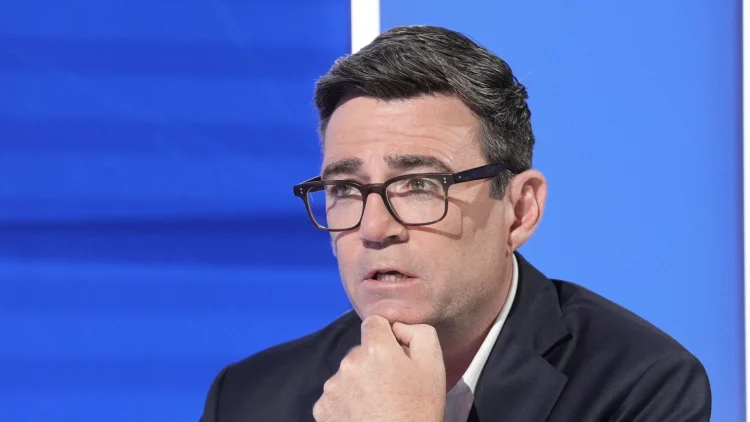
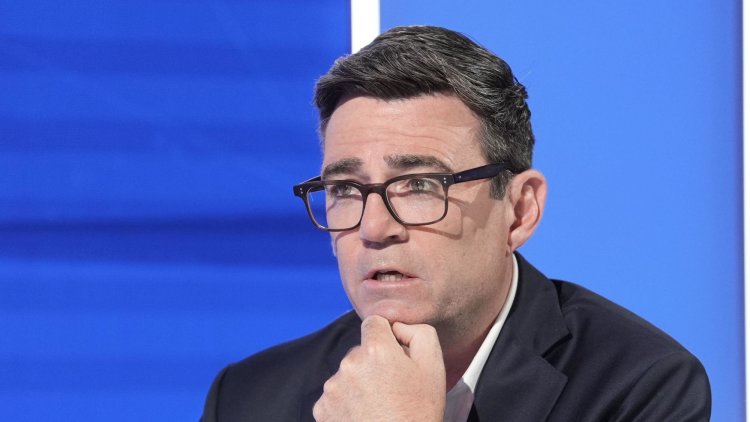
(Stefan Rousseau / PA Images / Alamy)

3 min read
London Labour MPs fighting to stop Heathrow expansion are privately hopeful that incoming prime minister Andy Burnham will cancel the project, with one saying they “wouldn’t put any money on runway three getting any further”.
The MPs, who argue that a third runway at the UK’s largest airport would have unacceptable environmental impacts, told The House that they are reassured by comments made by Burnham on the subject in January last year.
Speaking to Times Radio after Chancellor Rachel Reeves announced government support for the scheme, the then-Greater Manchester mayor said that the project “diverts infrastructure investment away from the North and traps it in London and the South East”.
He added that it was “a model for an ever-overheating UK economy, rather than a more balanced, levelled-up economy, which is what we would argue for”.
One London Labour MP said the remarks “have not passed us by” and that Burnham’s ascendancy brings “an opportunity for a change of conversation” about Heathrow expansion.
“It doesn’t make economic sense – it’s just a financially unviable scheme. I cannot see how it can meet our climate targets, but also I think it would be much better for regional growth [not to build it],” they said.
“If there’s going to be growth in air transport, it’s better to share that out with the regional airports, and I hope to get a good hearing on that from Andy.”
Another London Labour MP said that if Heathrow expands: “Manchester Airport loses out, currently Birmingham Airport loses out even more and therefore the hinterlands, the economies of those regions around those airports… I wouldn’t put any money on runway three getting any further.”
But Steve Race, the Exeter MP who co-convenes the Labour Growth Group, believes the next PM should press ahead with the work started by Reeves.
“As long as we can do it within our carbon budget, as long as we’re forcing airlines and airports to get to [improved] sustainability as quickly as they possibly can, then I think connectivity, trade and infrastructure development is absolutely key to this economy,” he said.
London mayor Sir Sadiq Khan remains resolutely opposed to the project, as he warns it would wipe out the improvements seen in London’s air quality over recent years.
One well-connected source said that as much as Khan and Burnham “don’t particularly get on” with one another, the new PM will not want to “go to war” with London’s mayor “unnecessarily about something he doesn’t really care about”.
But Burnham, they added, may still “take a more economically minded view of this than people might first assume”.
Burnham could, for example, back a rival expansion proposal put forward by the hotel tycoon Surinder Arora. Unlike the airport’s own proposal, Arora’s plan would avoid the M25 motorway needing to be tunnelled under Heathrow, as it would mean building a shorter third runway on the airport’s existing footprint.
“That would be a compromise,” said the source. “Andy is pretty into compromises.”
Heathrow CEO Thomas Woldbye has claimed that the UK “cannot realise its full economic potential without an expanded Heathrow”. The third runway, he added, “is privately funded by some of the largest investors in the world, widely supported by businesses, trade unions and communities across the country and it’s ready to go after years of scrutiny”.
A feature piece on Andy Burnham’s approach to UK infrastructure projects is now available to read in the print edition of The House magazine and will be published online on Thursday 16 July
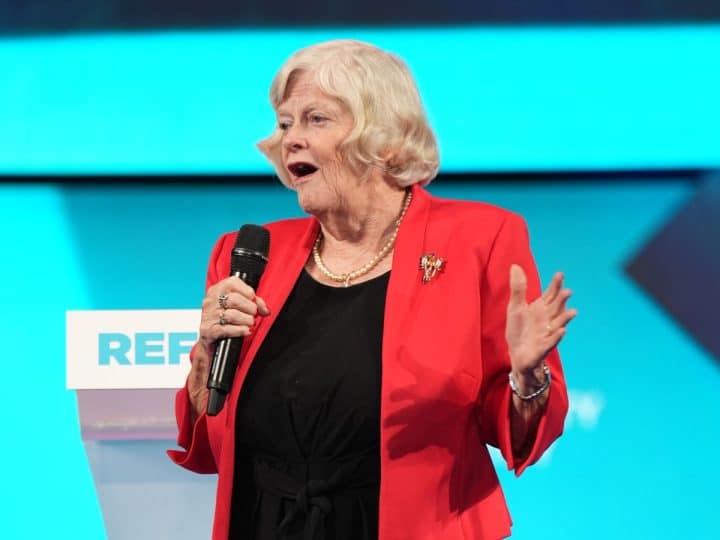
Reform UK party’s senior figures will do anything for a propaganda win. The billionaire-backed racist outfit are always desperate for attention. Now they’re trying to make themselves the primary victim of the alleged murder of former Tory and Reform UK politician Ann Widdicombe.
Counter-terror investigation opened
Widdicombe was found dead at her Devon home on 9 July 2026.
Naturally, the British establishment scrambled to eulogise Widdicombe, a notorious homophobe and reactionary. Waxy TV prattler Piers Morgan even skipped over her bigotry to call her “fun and fiesty”.
Counter-terrorism police have now taken over the investigation. Top counter-terror cop Laurence Taylor told reporters on 13 July:
Building on the progress made by our colleagues in Devon and Cornwall Police, we now have new information and evidence that means Counter Terrorism Policing is now leading the investigation.
We are pursuing multiple lines of enquiry to establish the motivation for this attack.
Our priority is progressing this investigation quickly, with all the capabilities we have available to us. If anyone has any information, please share it with the police.
We would like to thank local communities, the wider public and the media for their ongoing support and patience, and would ask them to continue to support us in the next stage of the investigation.
There’s little suggestion what the ‘new information’ is. But that hasn’t stopped Reform trying to trade off the death – despite warnings from the police about the dangers of public speculation.
Abandoned by the state?
Reform’s shadow home secretary Zia Yusuf took to X to complain about a Daily Mail headline from 12 July. The headline said Reform UK MPs had been given 24hr protection due to the risk of being targeted. He said:
Given the way this headline is worded, many are (understandably) taking it to mean Reform MPs have been given police protection by the state.
I want to clarify that the opposite is true.
The state is providing no protection whatsoever.
He added:
In fact, based on what I have seen in the last 48 hours, none of the government, the Speaker nor the police care at all about the security of Reform MPs.
Several of our MPs have written to the above in recent months about distressing, escalating security concerns, asking for help.
Their correspondence was not even replied to.
I will let you draw your own conclusions from this.
Yusuf’s inference appeared to be that the British state has left Reform figures at the mercy of… somebody? It isn’t clear who so far, because the case has just been opened.
Tice calls media ‘sick’
Reform MP Richard Tice also stepped in on 13 July. He was attacking a Times article, which argued Reform leader Nigel Farage was spinning Widdicombe’s death for propaganda purposes:
The Times Group:
You are sick
Your contempt bordering on hatred of Nigel, myself & Reform means you stoop to any low to smear & discredit us. You lie, libel and make things up. How many more Reform politicians do you want dead?
Shame on you https://t.co/LnCCZ4YEqi
— Richard Tice MP
 (@TiceRichard) July 13, 2026
The offending article had featured Harvey Proctor, a former Tory MP and friend of Widdicombe, slamming Farage for trying to use the death for his own ends:
Ann Widdecombe was far too dear to her family, friends and former colleagues for her murder to be exploited as political propaganda.
The police have expressly asked the public not to speculate about the motive. It is therefore deeply disappointing that Nigel Farage has chosen to do precisely that.
Tice followed up again several hours later after counter-terror cops took over the investigation, doubling down on his original claim:
A lot of journalists MUST now APOLOGISE to Nigel and us at Reform
You know who you are Counter terrorism police now leading investigation into Ann Widdecombe's murder investigation — Richard Tice MP
https://t.co/K8W2TVcCXs
(@TiceRichard) July 13, 2026
Speaker of the House Lindsay Hoyle is reportedly not happy with Reform’s claims:
Hearing that Lindsay Hoyle has spoken to Reform chief whip Lee Anderson over Zia Yusuf's claims that he doesn't care about their MPs' security.
Sounds like the Speaker is not very happy, to say the least.
— Jack Elsom (@JackElsom) July 13, 2026
Reform desperate to play the victim
The investigation into Ann Widdecombe’s death is ongoing. Unlike Reform’s Nigel Farage, we aren’t going to speculate on a live case. But what does seem clear is that Reform are desperate to make themselves the primary victim of an old political ally’s death. Which smacks of sheer, sad desperation and low moral health – among other things.
For a group of people who love to talk about others playing particular ‘cards’ – the ‘race’ card, for example – they like nothing more than playing the victim card themselves. Even if it is at the expense of a former member of their own party…
Featured image via Sky News
By Joe Glenton
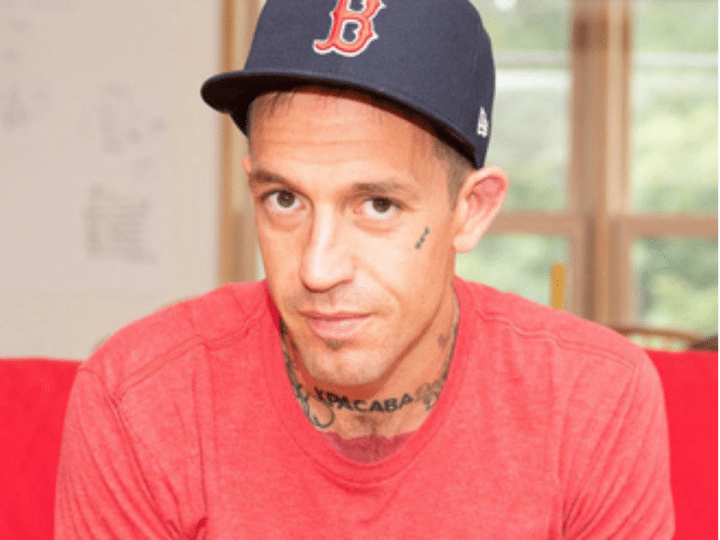
Fergie Chambers, a pro-Palestine donor, is facing US extradition over dubious ‘terrorism financing’ charges after he was arrested in Spain on Friday, the Grayzone reported.
Exclusive: Fergie Chambers facing US extradition over dubious ‘terrorism financing’ charges
The Grayzone has reviewed a sealed indictment for the pro-Palestine donor, who was arrested in Spain on questionable money laundering charges brought by Trump DOJhttps://t.co/x6Yqh6fuDT
— The Grayzone (@TheGrayzoneNews) July 13, 2026
On July 10, six Spanish police vehicles surrounded Chambers’ car while he drove through Ibiza with his family, before detaining him, the Grayzone wrote.
Chambers’ detention marks the first time an individual has faced extradition to the US from Spain for supporting the Palestinian cause.
Vocalpolitics reported that Chambers was denied bail in an Ibiza court on Saturday and is expected to appeal for bail on Thursday.
Pro-Palestine activist and funder Fergie Chambers was detained by Spanish police on Friday as the Trump administration attempts to extradite him to the US on federal charges with a potential sentence of 30 years in prison, including “international money laundering… with the… pic.twitter.com/Kia8JOjZsh
— VPol (@VocalPolitics1) July 13, 2026
According to the Grayzone, Chambers is an heir to the Cox family fortune who sold his stake in Cox Enterprises in 2023 for an estimated $250 million. It goes on to say that Chambers has since donated more than $1 million to humanitarian projects supporting those impacted by the Gaza genocide, and pro-Palestine activist groups.
The sealed indictment offers no evidence he donated to “foreign terrorist organizations”, citing only transfers from US banks to Tunisia, where he relocated in late 2023, Grayzone added.
Palestine supporters being targeted sparks concerns
Journalist and author, Matt Kennard, said that everyone should pay attention to Chambers’ arrest as it signified Trump’s war on Palestinian solidarity going international.
Everyone should pay attention to this
Trump’s war on solidarity with Palestine is going international
Pro-Palestinian activist + funder Fergie Chambers has been arrested in Ibiza and faces extradition to US on trumped up charges
Spain must resist it
https://t.co/icHWH2JeUy
— Matt Kennard (@kennardmatt) July 13, 2026
Journalist Max Blumenthal said:
Chambers’ detention marks the first time anyone has faced extradition to the US from Spain for supporting the Palestinian cause. The sealed indictment conflates his bailing out of pro-Palestine direct action protesters with sponsoring Hamas. It screams political persecution.
Stella Schnabel, Chambers’ partner, is quoted in the Grayzone:
The Department of Justice is politically persecuting Fergie [Chambers] because he is using his wealth to support Palestine, and help people facing genocide in Gaza.
His crime is dedicating his life to building a better society, rather than exploiting people, extract wealth and profit from war.
He should be home safe with our family and continuing his important humanitarian and social advocacy, not incarcerated in a foreign jail facing effective life imprisonment back in the US.
Test of Spain’s sovereignty
Progressive International’s Pawel Wargan said that Chambers’ arrest was an immensely dangerous precedent and an important test of Spain’s sovereignty. He supports blocking his extradition.
With Fergie Chambers’ arrest, the United States is now seeking to extradite anti-imperialist activists from third countries — an immensely dangerous precedent for the movement and an important test of Spanish sovereignty. The extradition must be blocked. https://t.co/pLauAdXuac
— Paweł Wargan (@pawelwargan) July 13, 2026
Vox Ummah said that the extradition request will test Spain’s policy regarding Palestine.
The extradition request will test Spain’s policy in regards to Palestine. The government has typically been vocal in defense of Palestinians, however moving forward with the extradition request would signal compliance with Washington’s anti-Palestinian policies.
— VoxUmmah (@VoxUmmah) July 13, 2026
Donald Trump has lashed out at Spain several times, calling it a “terrible partner in NATO”, as since March, Spain has not allowed the use of joint military bases on its territory for operations against Iran. It has also closed its airspace to US planes involved in the war.
The coming days will reveal whether Madrid bows to Washington’s pressure or stands by its principles.
Featured image via AIR MAIL
By The Canary
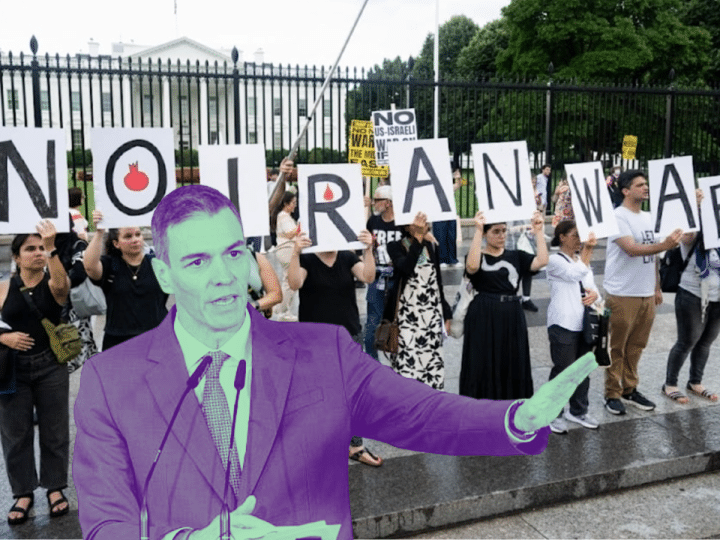

Spain’s Prime Minister, Pedro Sánchez, has once again pushed back against the US military machine. He has made it clear to Trump and his backers that Spain will not allow another US president to drag the country into an illegal war in West Asia on the back of bogus claims.
This refers back to the illegal war on Iraq, which began on the basis that Saddam Hussein had weapons of mass destruction. However, this ‘justification’ for the mass murder of Iraqis was debunked and revealed for the manipulative misinformation it was.
Whilst many haven’t learned and continue to parrot lines from bad actors in power, Spain has, with Sánchez telling Trump:
Twenty-three years ago, the U.S. dragged us into Iraq over claims of weapons of mass destruction. None were found. You cannot fool us twice.
Spanish Prime Minister Pedro Sánchez to Donald Trump:
"Twenty-three years ago, the U.S. dragged us into Iraq over claims of weapons of mass destruction. None were found. You cannot fool us twice." pic.twitter.com/tLk6SRIgCq
— Jackson Hinkle
 (@jacksonhinkle) July 11, 2026
When will other Western leaders learn?
Spain, it appears, has learned from the mistakes of the past. It has consistently opposed both the genocide on Gaza and the current illegal war on Iran.
However, our own leaders are still far too slow – or reluctant – to take any decisive action to stop the world careening into another world war. Equally, they seem unperturbed – meaningless rhetoric aside – by the mass slaughter of Arab men, women and children. Theyhave afforded Israel absolute impunity.
Starmer and co. have said they oppose the war on Iran waged by the petty, childish and egotistical US President, but their words have not been followed by actions. The defence budget has still increased following Trump’s orders, and they still allow the US to use its bases for ‘defensive’ purposes.
Instead of defending international law and calling for true diplomacy, the British government are budgeting huge sums to go directly into the hands of Western arms companies (war lords), who only care about their profits. And there is a hell of a lot of profit to make in war for those who supply the means to obliterate other people.
Sánchez, by contrast, recently spoke about Spain being a “peaceful and pacifist country”, vowing to “put an end to all wars”:
A pesar de la distancia geográfica, España está siempre con sus aliados.
Somos un país pacífico y pacifista. Y un aliado fiable.
El objetivo último de todas nuestras acciones debe ser acabar con todas las guerras. pic.twitter.com/NBTkIuoEOq
— Pedro Sánchez (@sanchezcastejon) July 8, 2026
War mongers want to have their cake and eat it too
The Canary‘s Joe Glenton has written extensively about the military machine and the illegal war on Iraq. Glenton is a former soldier who refused to return to duty in Afghanistan as he rightfully believed the aggression was illegal under international law.
Recognising how these wars only benefit the billionaire-owned arms and fossil fuel companies, Glenton has played a big role in trying to get the British people to open their eyes to the manipulation pushed by Western leaders to justify more endless wars in West Asia.
Glenton wrote of the disingenuous Royal British Legion (RBL) and its incestuous relationship with global arms firms back in February:
Since the ousting of the pre-2003 government, Iraq has become a lucrative cash cow for certain players, including global arms firms – what I prefer to call Big Death. Welcome to the military charity-industrial complex.
What makes the Iraq event and comments from the Royal British Legion striking is that both the legion and the National Arboretum proudly state their connections to the global killing business.
BAE Systems is a major partner of the RBL – to the tune of £400,000. The Arboretum’s website names Amey, Key Systems, Briggs Equipment and Jaguar Land Rover among its partners and supporters. All of these firms make profit from war and global instability.
The press and RBL did not even attempt to reflect these galling truths in their coverage of the event.
Those billionaires fuel fear and spread lies about countries that refuse to follow US orders or possess resources they want to get their grubby hands on.
Therefore, it becomes pretty clear that doing the bidding of arms companies – and the politicians in bed with them – hurts ordinary people, drains our pockets, and enriches only the billionaires at the top.
Britain faces a national security crisis within just a few years due to the impending collapse of global ecosystems, spy chiefs have warned, but the government is refusing to publish their report in full.
A redacted 14-page document warns of severe food shortages, which could… pic.twitter.com/Iia7CxE73k
— Novara Media (@novaramedia) July 13, 2026
A futile situation for the many whilst the few sit pretty
Meanwhile, there is a very real crisis coming towards us as a result of the breakdown of global ecosystems, which we always seem to fail to invest in, instead saying there just simply isn’t the funds.
This was called out recently by Labour MP Chris Hinchliff, who highlighted the blatant hypocrisy and failure to prioritise action on the climate emergency. As reported by Novara Media:
The government can summon billions of pounds for new military hardware when the defence sector calls for it. We need an equally decisive mobilisation of investment to restore the natural world on which we rely for our food, water and clean air.
Without these essentials our country has no future.
Every critical ecosystem across our planet is on a pathway to collapse with an irreversible loss of function, and this poses huge threats to our national security. This looming crisis demands urgent action.
Funnily enough, many of the same billionaires and hedge funds pouring money into arms companies also hold major investments in the fossil fuel industry.
That overlap creates a dangerous conflict of interest. It drives the world ever closer to the brink and forces billions of people to bear the consequences of climate breakdown and social collapse.
As the world burns, whether from bombs or extreme weather, the super-rich retreat to their private islands on private jets, shelter in air-conditioned luxury, and watch.
Featured image via the Canary

Steven Spielberg has paid a heartfelt tribute to the actor Sam Neill, who he directed in the first Jurassic Park movie.
On Monday, the Oscar-winning filmmaker was among the Hollywood stars to pay their respects to Sam, following his death at the age of 78.
In a statement to Variety, Spielberg shared how “saddened” he was by the loss, beginning by expressing his “gratitude” to filmmakers Roger Donaldson, Gilliam Armstrong, Graham Baker and Phillip Noyce “for casting Sam Neill in the roles in which he was so brilliant that brought him to my attention”, which led to him being cast in Jurassic Park.
Spielberg enthused: “Sam was exceptionally collaborative. It was a stretch for him to play a character who acted as though children were messy and smelly because this was the opposite of the loving father he was to his children.
“I adored making all the Jurassic movies with him. Along with Laura Dern and Jeff Goldblum, we will always have our Jurassic family and Sam will never be forgotten by us or his many millions of fans around the world.”
Laura Dern then shared her own tribute with the US outlet, which read: “Sam was my beloved lifetime friend.
“He showed me the depths of loyalty, protectiveness and love always with the driest of wit. He was a true and noble gentleman, wrapped up in my dream leading man.”

Amblin/Universal/Kobal/Shutterstock
“I will love you forever, Dr. Alan Grant,” she concluded.
Following the news of Sam’s death on Monday morning, a number of his Hollywood peers and former co-stars have been paying their respects on social media…
Oscar winner Cillan Murphy, who starred alongside Sam in the first two seasons of Peaky Blinders, told Deadline: “Like everyone who knew and worked with Sam, I admired him and adored him in equal measure.
“He was one of the kindest, funniest and gentlest people, and one of the finest actors.”
New Zealand and Australia’s prime ministers, Christopher Luxon and Anthony Albanese, also posted tributes of their own.
“It is with immense sadness that the whānau of Sam Neill share the news of his passing on Monday 13 July, in Sydney Australia,” his family announced in a statement.
“Sam was surrounded by family and passed with the dignity that has characterised his whole life.”
The Emmy nominee’s death was described as “sudden and unexpected but blessed by the fact that Sam remained cancer-free”.
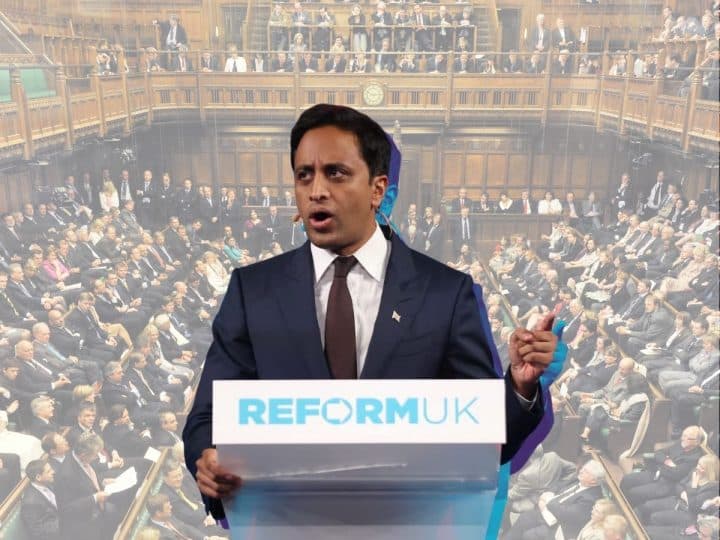
Zia Yusuf has received criticism over his claim that the state provides Reform MPs with “no protection whatsoever”.
Given the way this headline is worded, many are (understandably) taking it to mean Reform MPs have been given police protection by the state.
I want to clarify that the opposite is true.
The state is providing no protection whatsoever. In fact, based on what I have seen in the… pic.twitter.com/TaFZzEMNkH
— Zia Yusuf (@ZiaYusufUK) July 12, 2026
Zia Yusuf: Nobody ‘cares about security of Reform MPs’
The headline Yusuf was responding to read:
Reform MPs given 24-hour protection in Widdecombe murder hunt
In full, Yusuf’s response read:
Given the way this headline is worded, many are (understandably) taking it to mean Reform MPs have been given police protection by the state.
I want to clarify that the opposite is true.
The state is providing no protection whatsoever.
In fact, based on what I have seen in the last 48 hours, none of the government, the Speaker nor the police care at all about the security of Reform MPs.
Several of our MPs have written to the above in recent months about distressing, escalating security concerns, asking for help.
Their correspondence was not even replied to.
I will let you draw your own conclusions from this.
Since Yusuf made these claims, multiple MPs have come forwards to dispute them, including Rosie Duffield, an Independent MP for Canterbury, Whitstable and the villages.
Every single sitting MP is entitled to security provided by @HouseofCommons. This also covers our outside engagements.
— Rosie Duffield MP (@RosieDuffield1) July 12, 2026
An MP messages: “Each MP is afforded personal security at their advice surgery and constituency engagements should they wish.
“We’re also able to make use of physical security measures at our homes and offices – including cameras, door strengthening devices, and alarm systems.… https://t.co/6gM8MYu8WJ
— Kevin Schofield (@KevinASchofield) July 12, 2026
Commentator Dan Hodges said:
Zia Yusuf’s statement was untrue. And he knew it was untrue. It had one purpose. To try and deflect from legitimate scrutiny of Nigel Farage.
Hodges also called out Reform mayor, Andrea Jenkyns:
A perfect example of how Reform are manipulating the security issue. Yesterday morning Andrea talked about how security had been provided for her surgeries. But this contradicted Zia Yusuf. So by the evening she was claiming she’d had “zero” support. https://t.co/UTGcpcVYD6
— (((Dan Hodges))) (@DPJHodges) July 13, 2026
Zia Yusuf vs Lindsay Hoyle
The Sun’s political editor noted the following:
Hearing that Lindsay Hoyle has spoken to Reform chief whip Lee Anderson over Zia Yusuf's claims that he doesn't care about their MPs' security.
Sounds like the Speaker is not very happy, to say the least.
— Jack Elsom (@JackElsom) July 13, 2026
Yusuf is now feuding with the speaker of the house, as you’d expect from him.
He said:
Lindsay Hoyle, the Speaker of the House, has no jurisdiction over me.
I am not afraid of him.
He is a bully who did not even reply to a letter from a female Reform MP pleading for assistance with security until after I revealed it.
If this is not true then I invite him to deny it on the record rather than try and bully the very people he has let down.
Instead he briefs the press like a coward.
He is a disgrace to his office.
Yusuf doesn’t have to worry about Hoyle because he isn’t an MP and neither is Yusuf because his own party keeps blocking him from standing, which the Canary explored why this could be.
What goes around comes around
Another point people are raising is that Reform politicians pursue a maximally divisive form of politics. Despite this, they’re also the first to complain that they face hostility. You really can’t have it both ways.
If you’re going to label people ‘traitors’ — as Zia Yusuf has — then people are going to get angry. If you’re going to claim successive governments have overseen an ‘invasion’ — as he has — then tensions are going to rise.
Politicians who stoke fear and division think they can ride the wave, but hatred is more like a fire than a sea. And people who play with fire get burned.
Featured image via the Canary
By Willem Moore
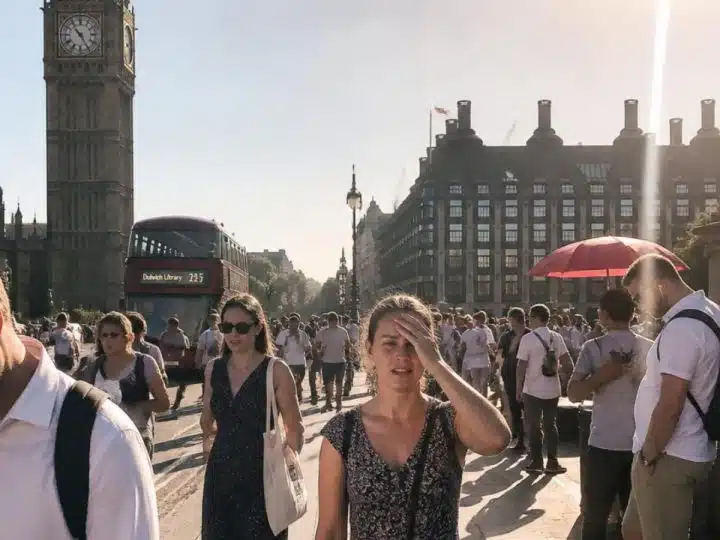
The heatwaves in the UK over May and June are estimated to have caused over 2,700 excess deaths. Around 42% of those deaths are thought to be a consequence of climate change, which increased maximum temperatures by 3-4°C.
That’s according to a study conducted by the Met Office, Imperial College London and the London School of Hygiene & Tropical Medicine. It builds on previously published UK research from 2022, which found that rising temperatures caused nearly 800 excess deaths annually.
Imperial College London’s Dr Clair Barnes stated that:
Every time we have a heatwave, our news is filled with reporters at swimming pools, images of people eating ice cream and sunbathers on beaches. We all love the sun, but people need to be aware that we are now seeing dangerous climate-change-fuelled heat that is claiming lives, disrupting schools and hospitals and shutting down transport and infrastructure.
It’s time we woke up to the fact that we now live in a country with dangerously hot summers. To protect people during future extremes, we must urgently adapt to the reality of the climate we now have, and double down on global efforts to reach net zero emissions to stop this from getting worse.
Heatwaves ‘longer and more frequent’
The researchers compared historical mortality records using rapid-analysis modelling methods. They focused their efforts on England and Wales, as Scotland and Northern Ireland didn’t face the same extraordinary high heat.
Professor Lea Berrang Ford, chief of the Centre for Climate and Health Security’s UK Health Security Agency (UKHSA), explained more:
These modelled estimates are based on past trends in temperature effects on mortality and provide an important indication of the potential health impacts of sustained hot weather, particularly for the most vulnerable among us. While they are not a measure of observed mortality, they help illustrate the scale of risk associated with extreme heat and the growing threat climate change poses to our wellbeing.
As set out in our most recent Health Effects of Climate Change report, periods of heat in the UK are likely to become more intense, longer and more frequent as the world continues to warm.
During May’s heatwave, West London saw temperatures of 35.1°C. Likewise, in June, meteorologists recorded temperatures above 37°C for East Anglia. Both of these figures broke national records for their respective times of year.
The Met Office explained that temperatures like these would be extreme even in mid-summer, noting that they occurred during the start of the season. Normally, July and August bring the highest temperatures of the year across the country.
The Met Office’s Dr Mark McCarthy emphasised that these extremes are due to human activities, stating:
it is clear that human-caused climate change is leading to more frequent and more intense summer heatwaves. This intensification is driving many impacts, including those affecting human health and mortality and other issues, such as agriculture, effects on transport infrastructure and biodiversity.
‘A major health risk’
During the May heatwave, the study estimated that around 550 people died due to the heat. Approximately 59% of those deaths are attributable to human-caused climate change.
June’s heat event was even more devastating, with around 2,200 excess deaths according the the model’s findings, of which 38% were due to climate change.
It’s also notable that the risk pattern associated with the heat is shifting northwards. Although the highest temperatures were recorded in the south, the Midlands showed similar estimated rates of fatalities. The researchers attributed this trend to the fact that the Midlands are less accustomed to extreme heat.
Dr Malcolm Mistry of the London School of Hygiene & Tropical Medicine said:
With climate change driven by human activity making summer heatwaves more frequent and more intense, these spikes of extreme hot weather are rapidly evolving into a major health risk for people in the UK.
It is vital that action on adapting Britain’s homes, workplaces, and critical infrastructure to extreme heat outpaces these health risks, especially if we are to protect those most vulnerable to its impacts, such as older people, babies, and children.
As the Canary previously reported, over 1,500 people participated in a heat strike in the last week of June. Workers staged symbolic lunchtime-walk-outs and took thermometers into work to demonstrate their unsafe conditions.
Participants in the strike are calling on ministers to set a maximum working temperature – a demand already voiced by the Bakers Union for over a decade. In doing so, the UK would join countries like Austria, Belgium, China, India, Portugal and Spain, which already regulate maximum working temperatures.
Featured image via the Canary
By Grace

A few summers ago, I noticed tiny, tapioca-like clusters of bumps on my fingers. They were flesh-coloured and incredibly, hand-bitingly itchy.
This turned out to be a condition called pompholyx or dishydrotic eczema. The issue is sometimes nicknamed “summer finger bumps”, due to how much worse it tends to get in the hotter months.
In fact, warm weather and excessive sweating are listed as factors that may cause pompholyx to form or flare up.

What are the symptoms of dishydrotic eczema?
- extreme itchiness
- the sudden appearance of tiny blisters on your hands (especially the sides of your fingers) or feet
- a prickling sensation
- dry or cracking skin after the blisters burst
- feelings of heat in your soles or hands.
Symptoms typically last two to three weeks.
It’s more common among women, people under 40, individuals with another type of eczema, those with asthma and heavy sweaters.
It’s a chronic condition, meaning that though there are ways to manage the symptoms, we don’t have an outright cure yet.
Flare-ups may be more likely during times of stress, hot weather or contact with soaps, cleansers and detergents.

What should I do if I suspect I have dishydrotic eczema?
Don’t try to diagnose yourself, the NHS says. If you have new skin issues you suspect are due to dishydrotic eczema, see a GP.
The same goes if you have pompholyx that’s already been diagnosed but “the blisters are very painful, leak yellow or green pus or are covered in a yellow-brown crust – these are signs of an infection”, they added.
Soaking your hands in potassium permanganate may help if they’re weeping or oozing. Using an emmolient moisturiser on the affected area is one of the main ways to manage flare-ups.
Sometimes, your doctor may prescribe a steroid cream to help you manage the itching or send you to see a specialist for UV or other treatments.
-
washing your hands with warm water and using a moisturising soap,
-
wearing protective gloves (ideally with a cotton lining) when using chemicals like shampoos, cleansers and detergents
-
wearing socks, tights or stockings made from cotton or silk, rather than nylon, if the condition affects your feet,
-
wearing shoes made from leather, rather than plastic or rubber (again if the condition affects your feet),
-
avoiding anything you think causes your symptoms, such as cleansers, some metals, or detergents.
Don’t burst your blisters, as this can lead to further damage and leave your skin open to infection.
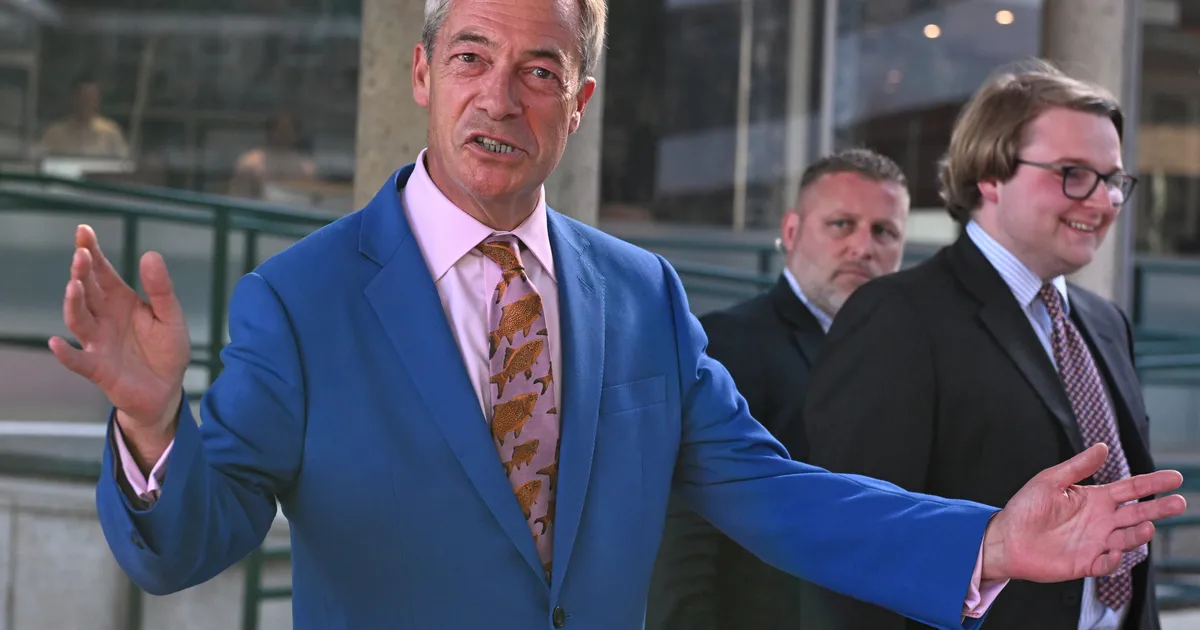
Nigel Farage has claimed he is being “treated like a war criminal” by his critics.
The Reform UK made the astonishing remark while being interviewed by the party’s in-house podcast.
He was speaking after he shocked Westminster last week by quitting as MP for Clacton to trigger a by-election in the seat.
Farage claimed he was the victim of a “witch hunt” as he faces a parliamentary standards investigation over a £5 million gift from a Thailand-based crypto billionaire but did not declare.
He could also face separate probes over support he received from convicted fraudster George Cottrell and lobbying he has done on cryptocurrency.
On the podcast, he said calling the by-election was “the right thing to do”.
“I think effectively I’m being treated like a war criminal,” he said.
“It’s quite astonishing, and it’s like our mainstream media think we have to defer to them at all times, and I just don’t buy that.
“You look at today’s press and they say he doesn’t want scrutiny. I don’t mind scrutiny, but I do mind illegally obtained information, I do mind computer hacking. I genuinely mind those things, and the intimidation of my family.
“I just thought it had all reached such a frenzy that I had to do something.”
The decision to trigger the by-election has backfired, though, after Labour, the Tories, the Lib Dems, Greens and Restore Britain all said they would not stand candidates in the contest.
Instead, Farage faces a head-to-head battle with Count Binface.
The Reform leader said: “I’ve done something positive. They wanted a by-election here. Well now they’ve got one and they don’t want to stand.”
Listen to Commons People, the podcast that makes politics easy. Every week, Kevin Schofield and Kate Nicholson unpack the week’s biggest stories to keep you informed. Join us for straightforward analysis of what’s going on at Westminster.


1951: ‘Still Life (I Belong to Samuel Fastlicht)’ by Frida Kahlo (Private Collection)

4 min read
An arresting exhibition exploring her enduring influence and appeal, the number of Frida Kahlo’s paintings on display may be limited – but this show more than demonstrates her range as an artist
I don’t want to stress you out or add to your already huge ‘To Do’ list, but you have to buy a ticket to Frida Kahlo at Tate Modern this weekend. It’s turned out to be Tate’s biggest selling exhibition in its history, at least as far as advanced tickets are concerned. It’s outsold David Hockney, the previous record-holder for almost a decade, and even Tracey Emin, whose blockbuster exhibition is currently on in the same place. As a trustee of the Tate, this makes me very happy.

What is it about Kahlo that seems to grip the imagination of the British public? She’s Mexican. She died in the 1950s, before she was 50. She was the wife of the great Mexican muralist Diego Rivera, and to an extent lived in his shadow. While she received some recognition in her lifetime – including high-profile shows in New York and Paris – and the respect of surrealist artists who embraced her work, she never achieved a substantial breakthrough while alive.
Today, however, she is regarded as one of the greatest artists of the 20th century. A Frida Kahlo self-portrait is instantly recognised, and her iconography has inspired artists across the world. “Fridamania” is now a thing, and has grown since the 1980s into what it is today.
Much of this is to do with Frida’s story. Her emergence into the limelight is part of the welcome movement to reclaim female artists and give them the prominence they deserve.
One of my favourite exhibits is not a Kahlo at all. It’s an arresting portrait photograph of the artist Tracey Emin, dressed as Kahlo
She also struggled throughout her life, first with polio, which she contracted when she was 13, and then with the debilitating impact of bus accident when she was 18, which left her with life-changing injuries. She was also highly individualistic, painting herself and her friends, reclaiming Mexican heritage and displaying her fluid sexuality. As a result, she has become a hero to many people, who admire someone who refused to compromise with the mores and conventions of her time.

Kahlo painted perhaps 150 to 200 paintings during her career, and as she has been embraced by Mexico as part of its cultural heritage, few come up for auction, and few are in collections abroad. As a result, the Tate exhibition has managed to amass only about 20 paintings for the show, which is nevertheless a respectable amount and more than shows her range.
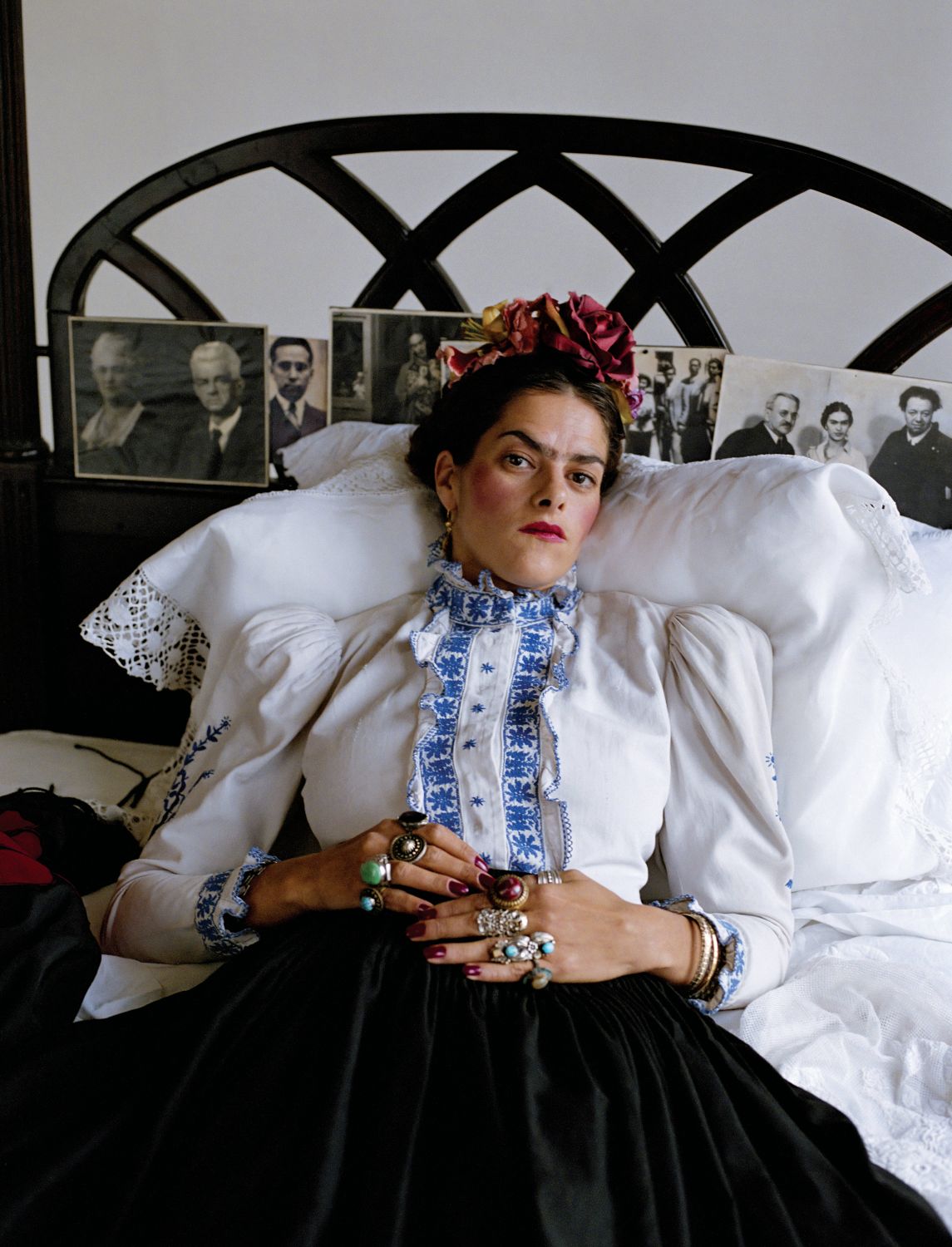
There are also many of Frida’s dresses, celebrating Mexican heritage, which caused a sensation when she visited New York in the 1930s. An equal amount of space is given over to the work of many of the artists that inspired her, illustrating her enduring influence from the 1970s onwards. Ironically, one of my favourite exhibits is not a Kahlo at all. It’s an arresting portrait photograph of the artist Tracey Emin, dressed as Kahlo, lying on a bed, staring disapprovingly at the camera, in a picture taken by Mary McCartney.
I love the fact that Tracey and Frida are exhibiting side by side, and to add to your To Do list, why not buy a ticket for both?
Lord Vaizey is a Conservative peer
Frida: The Making of an Icon
Curated by: Tobias Ostrander, Estrellita B Brodsky and Beatriz García-Velasco
Venue: Tate Modern – until 3 January 2027

Burnham will not ‘tax the hell out of you’

Bitcoin Edges Lower on Iran Pressure With $62,000 at Risk
‘The Odyssey’ Stars Explain the Intense Timing Constraints of Christopher Nolan’s IMAX Epic


-

 Fashion7 days ago
Open Thread: What Great Books Have You Read Recently?
-

 News Videos6 days ago
Whats Hidden Inside This Cash Register? #treasure #reselling #money
-

 Fashion4 days ago
Loro Piana Fall 2026 Enters Houston’s Art Scene
-

 Fashion3 days ago
Weekend Open Thread: Nutriplenish Leave-In Conditioner
-

 Crypto World7 days ago
$1,000 Credit Alert! BlockDAG X Exchange Pre-Registration Now Officially Open, Polkadot Dips & Zcash Rebounds
-
 Tech6 days ago
Anthropic’s new “J-lens” reveals a silent workspace inside Claude that mirrors a leading theory of consciousness
-

 Business7 days ago
AXT Shares Jump Nearly 14% as Semiconductor Materials Maker Rebounds on AI-Linked Indium Phosphide Demand
-

 Sports6 days ago
Joshua Pacio ‘more complete’ ahead of ONE rematch vs Malachiev
-
 Sports4 days ago
2026 Genesis Scottish Open Thursday TV coverage: Round 1
-

 Tech6 days ago
Anthropic brings Claude Cowork to mobile and web as usage data shows most users aren’t coding
-
 Crypto World7 days ago
SK hynix (000660.KS) Stock Dips as $28B Nasdaq ADR Offering Drives AI Memory Expansion
-

 Sports3 days ago
Super Eagles star Moses Simon opens up on Liverpool transfer regret
-
Sports6 days ago
We have punished the disrespect
-

 Crypto World7 days ago
Binance lists Strategy’s STRC stock as company expands Bitcoin funding
-

 Tech4 days ago
Character.AI enters the microdrama arena with its own productions, but there’s a twist
-

 Tech7 days ago
9 Best Keyboards (2025), Tested and Reviewed
-
 Business7 days ago
Enbridge: AI Tailwind Priced In (Rating Downgrade)
-
 Crypto World6 days ago
Claude AI Created Something Anthropic Never Designed
-

 Crypto World6 days ago
Nasdaq arthritis company holding Moshe Hogeg crypto hits all-time low
-

 News Videos6 days ago
“What’s going on?!” Carl Froch discusses Floyd Mayweather Jr financial issues
You must be logged in to post a comment Login