

Politics
Older Women Have Stopped Caring About These 6 Things


Actor Helen Mirren once told People magazine that she thinks ageing and all the changes that come with it are something to embrace rather than try to hide.
“I think women were just so terrified of having white or grey hair because it immediately puts them into a different category,” she said.
“And of course, you are in that age group. I’m sorry, but you are! So, why not just embrace it, go along with it, and welcome it? Make it a positive thing as opposed to a negative thing.”
For some, it’s a tough pill to swallow, but ageing is inevitable and happens to all of us. Throughout our lives, we evolve with socially constructed beauty standards that try to dictate what we’re supposed to look like at every decade.
That may lead to using hair rollers daily for perfectly bouncy curls, waxing your body monthly, or indulging in new makeup trends.
But it’s not unusual to come to a point where you don’t want to deal with the upkeep, and you simply don’t care about investing so much time and money in your appearance.
This can mean letting go of decades-long rituals and routines that used to boost your confidence or even felt like a necessity – and it’s incredibly freeing.
We spoke with six women over 50 who shared the things they just don’t care about anymore and why it’s liberating.
A rigid daily beauty routine
At 50, Lisa Richards let go of almost every beauty routine she once felt committed to. “And it’s been incredibly freeing,” she said.
In her younger years, she felt like she had to do it all, including a full face of makeup, styled hair and constant upkeep.
“There was this unspoken pressure to always look ‘done.’ Now, I’ve completely stepped away from that mindset,” Richards explained, adding that what changed for her is how she defines beauty.
“It’s no longer about effort or perfection, it’s about ease and confidence. Letting go of all the ‘extras’ has given me my time, energy and a sense of authenticity I didn’t have before.”
For Richards, the most liberating part of getting older is that she feels prettier now at 50 than she ever did when her beauty routine was lengthy. “There’s something really powerful about no longer feeling like you have to do anything to be enough.”

Courtesy of Sheree Edwards
Lengthy salon appointments
Sheree Edwards, 56, is currently battling cancer and has shifted her perspective on beauty and the routines she keeps.
“I’ve found myself moving away from some of the more time-intensive or ‘extra’ rituals that I used to prioritise,” she said.
“I don’t bounce back the way I once did, so spending two-plus hours on manicures and pedicures, or even the physical toll of things like dyeing my hair, just isn’t something I do as often anymore.”
Her approach to makeup has evolved as well: “I used to do a full face every day, but now I focus on simplicity – if I don’t have the time or energy, I make sure I at least have my signature red lipstick on, which still makes me feel like myself. I’ve learned to embrace a little imperfection because, honestly, what’s a few extra hairs here and there?”
Hair removal
Karine Kazarian, 65, had always done electrolysis for hair removal; however, this is something she’s stopped as she’s gotten older. “My Armenian roots have resisted all kinds of hair removal, so I’ve surrendered and no longer care,” she explained.
She’s also moved away from heavy foundation in favour of tinted serums. In the ’90s, she would go to work with a full face of makeup, but in 2026, she prefers a fresh face with limited products.
“I’ve learned to embrace ageing in a way that feels honest to me. I’m not interested in face-lifts or fillers. I believe in taking care of my skin and letting it reflect a life well lived,” Kazarian explained. “Beauty, to me, is about feeling confident in your own skin.”

Courtesy of Roxie Robinson
Straightening hair
Roxie Robinson, 66, no longer straightens her hair daily. “Aside from the damage that comes with constant heat, I’ve really learned to embrace my natural curls,” she said.
“Curly hair definitely comes with its own challenges – mainly finding the right products,” she noted. “I rotate between three different product lines depending on how my hair is behaving, and every couple of months, my stylist helps reset things with deep conditioning treatments, especially when I’m colouring.”
A few years ago, Robinson experienced significant hair loss after surgery, and her hair hasn’t been the same since: “It’s not as thick, and my curl pattern changed – but I’ve found a new appreciation for it. The ease of a wash-and-go routine, the time saved, and just letting my hair be what it is … it’s been freeing.”
Dyeing hair
As Kim Ressler, 54, has gotten older, she’s learned that letting her gray hair grow out is surprisingly empowering.
“For me, it’s less about ‘giving up’ and more about simplifying and embracing what feels natural at this stage. I decided to cut my hair shorter to make the transition easier and more intentional. It takes the pressure off trying to blend everything perfectly and instead makes it feel like a style choice,” she said.
“It’s been a shift in how I define beauty for myself. Less about maintenance and more about confidence.”
Pressure from generations past
Sandra Davidoff, 71, had a mother who embodied the glamour of the 1950s her entire life. She had her hair done, a full face of makeup, and perfect nails. “It wasn’t vanity. It was discipline. It was who she was,” she explained. “As an only child, I watched, I learned, and I leaned in hard.”
Growing up, Davidoff believed that showing up polished every single day mattered. She knew this required a lot of work and time, but she loved every minute of it.
But as she’s gotten older, the routine has scaled back a bit. “The lashes go on. The makeup gets done. But I no longer stress if I skip a day,” she said. “Less is more now. Not because I’ve let go of myself, but because I’ve grown into myself.”
And she’s proud of the natural ageing on her skin because it shows just how much she has lived, which is a liberating realisation that’s only grown: “Yes, I have wrinkles. I’ve lived. I’ve laughed. I’ve loved. I’ve stressed, survived, and laughed again. Every line on my face tells a story. And I love that.”


We hope you love the products we recommend! All of them were independently selected by our editors. Just so you know, HuffPost UK may collect a share of sales or other compensation from the links on this page if you decide to shop from them. Oh, and FYI — prices are accurate and items in stock as of time of publication.
I’m probably not your typical games console reviewer being a mum of two under-fives who barely has time to go to the loo (and if I do, it’s usually in the company of a smol person).
That said, I grew up learning the ropes on a Nintendo 64 (Golden Eye 4eva), and later, an Xbox.
My partner’s now got a Playstation 5, but our kids – who are two and four – are a bit young to fully grasp how the controls work (there’s a lot of aggressive button-bashing without the desired outcome), so it’s not really something we can play on together.
That’s why I was especially excited to learn of Nex Playground’s launch in the UK and Ireland. I’d heard about the motion-based games console a while back, when it was only available in North America.
After reading a whole host of positive reviews on Reddit, I was curious about how it would fare for families with younger kids. Little did I know its next stop on the road to world domination would be good old Blighty (it’s currently available to pre-order ahead of an estimated late-June release).
What is the Nex Playground?
For those who’ve not yet heard of the Nex Playground, it’s a small (3-inch) cube-shaped games console with a built-in camera. There are no controllers because you, as the user, are the controller.
The camera picks up your movement and up to four of you can become part of the game. There’s no sitting still – it’s all dancing, jumping, hitting and swinging. And it’s ideal for all ages.
Inspired by his own family’s needs (his daughters were two and seven when he first started building it), Nex’s CEO David Lee wanted to create a product that kids, parents and even grandparents can use – and he’s certainly delivered.
Rather than smartphones which suck up our attention and seem to ironically isolate us from one another, this is a device that has the power to bring families together. I know, because I watched it happen.
The games console costs £269 and comes with five games. You can also pay for an annual Play Pass subscription (£90 per year) which gives you access to 60+ games.
There’s a real mixture to choose from, helping cement the console as a family staple – I love Starri (which takes me back to the days of stomping on dance mats, but with Sabrina Carpenter’s Espresso blasting out instead), my partner loves Basketball Knockout, my toddler loves the Bluey mini games and my four-year-old is utterly obsessed with Mirrorama.
My parents even came to visit and I’ve never heard my mum and daughter giggle as much as they did while running around with emoji faces hovering over them on the screen – it’s one of the features in Mirrorama, which is pure silliness and kids are guaranteed to love it. Mine loves to try and steal the smiley face from whoever has it (hence all the giggling)!

Is it easy to set up?
I have the attention span of a goldfish and I’m constantly being pulled in many directions, so setting things up isn’t usually my strong point. However, this was super simple and I did it in minutes.
The Nex Playground comes in a small(ish) box with a petite remote, power cable, HDMI cable and small instruction booklet.
All you need to do is plug it in to the mains, hook it up to the TV (via the HDMI) and then turn your telly on and commence set up, which involves typing in your WiFi and adding the code for your play pass, if you’ve bought one.
What’s the security like?
I asked Lee about privacy and security, because it’s always at the front of mind with two young kids – and, ya know, there’s a camera now in our living room.
He explained motion-tracking data and processing stay local to the device (“nothing’s sent to the cloud”), and every system includes a built-in camera cover, which is magnetic so it snaps onto the front of the console easily.
There’s no third-party software involved. Nex is directly accountable for the trust, safety, and certification of the entire experience. They also have kidSAFE+ certification.

What do I think of it?
It’s a really clever piece of kit. I absolutely love that it gets both kids moving and it’s also really helping my four-year-old come to terms with the idea of winning and losing (which can be hard to swallow at that age, but she’s getting there!).
Many of the games are easy to understand and play – even for a two-year-old. And I don’t think the kids have ever slept as well as they did that first day we played on it. They were absolutely exhausted from all the jumping, dancing and pretending to be animals (thanks to reenacting Bluey’s Magic Asparagus).
There have been a couple of times where it’s glitched (ie. getting confused with tracking who’s who), or has been a bit slow to load, and some of the games like the driving ones can be a bit tricky for younger kids to navigate using their bodies (my four-year-old seems to just spin in circles whenever she’s trying to ‘drive’ something), but on the whole, it’s been brilliant.

The wide range of games on offer is a huge draw (the Play Pass is well worth it) and the company adds about 15-20 new ones per year, so I’m excited to see what arrives next.
Realistically, I – like many parents – sometimes have to rely on screen time to be able to get things done: work, dinner, etc., and there is so much less guilt knowing the kids are playing together, learning new skills (like working as a team or problem-solving) and keeping active instead of sitting on the sofa passively watching a show.
And when they’re tucked up in bed, my partner and I will grab a glass of wine and play a quick game of baseball, or bowling, from the comfort of our living room. There are also fitness games on there, so if you struggle to find time to exercise, you can easily grab 20 minutes here and there.
With British weather being as changeable as it is, I can see this is going to be an absolute godsend for parents over the summer holidays on those inevitable rainy days when you need to entertain the kids and work.
If you’re in need of a console that suits a range of ages, but 3- to 12-year-olds in particular, I couldn’t recommend enough.
Families in the UK and Ireland can pre-order the Nex Playground at Amazon, Smyths Toys, and Argos.

President Donald Trump mocked a heckler who interrupted his rant about transgender athletes at his Friday night rally.
“Go home to mom. Take him home to mommy! He’s going to be in trouble,” Trump told the heckler as the crowd began to chant “USA.”
The president appeared in Suffern, New York, to support Republican Rep. Mike Lawler, who is up for reelection in November’s midterm elections. His tangents hit on a few of his usual talking points, including voter identification and transgender people in sports.
Trump asked the crowd, “Do you want to hear the swimming story or not?” joking that his wife, first lady Melania Trump, did not want him to tell it.
“She says, ‘Darling, please, you speak so beautifully, would you do me a favour. Don’t do the swimming story, don’t do the weightlifting story, it’s so damn unpresidential,’” he continued.
Trump went on to tell the story anyway to an enthusiastic crowd until someone from the audience interrupted him. The footage captured by CSPAN shows a crowd circling the heckler, pointing and chanting.
“You know what he doesn’t say is, his mom’s watching on television now and she’s loving it,” Trump said, before continuing his story.
The heckler’s dissent from the president’s supportive crowd comes amid multiple polls indicating backlash over Trump’s leadership.
A new poll published Thursday by the American Research Group found that only 31% of American voters approve of Trump. A recent poll released by Fox News also Trump’s overall approval rating has dropped 10 points since the start of his second term.
Subscribe to Commons People, the podcast that makes politics easy. Every week, Kevin Schofield and Kate Nicholson unpack the week’s biggest stories to keep you informed. Join us for straightforward analysis of what’s going on at Westminster.

If you took part in No Mow May, chances are your garden’s looking pretty busy right now – and the British wildlife will be absolutely loving it.
You might be taking Monty Don’s advice and continuing the no-mow vibes throughout June, but that doesn’t mean there aren’t other gardening jobs to get done while you lay off the lawnmower.
Longer days and warmer temperatures mean plants will be growing quickly, flowers are blooming, and vegetable gardens are starting to produce crops. So, watering, feeding and general maintenance are essential.
If you’re not really sure what exactly to prioritise in the coming month, Amber Tunney, plant buyer at Cherry Lane Garden Centres, has shared her top gardening jobs for June.
1. Put your hanging baskets outside
The gardening expert said by June, temperatures are usually warm enough for hanging baskets to be moved outdoors permanently: “Position baskets in a sunny, sheltered spot and water regularly, especially during hotter weather, as containers can dry out quickly.”
2. Feed containers and hanging baskets
Ideally you should be doing this every few weeks to encourage growth and good flowering.
“Plants in containers and hanging baskets use up nutrients quickly during the warmer months, so regular feeding is important to encourage healthy growth and continuous flowering,” said Tunney.
A liquid fertiliser applied every couple of weeks can help plants stay vibrant and full throughout summer.
3. Cover your fruit with netting to protect from birds
Whether you’re growing strawberries, currants or something else entirely, cover them with lightweight netting so the birds don’t get at them.
4. Apply tomato feed to your fruiting vegetables
If you’re growing tomatoes (or any other fruiting vegetables) and they’re beginning to produce flowers and fruit, Tunney recommends switching to a tomato feed to help support healthy development.
“This is because tomato feed is high in potassium, which is essential for encouraging strong growth and supporting crop development throughout the season,” she explained.
5. Pinch out your side shoots on tomatoes
While we’re on the topic of tommies, removing the small side shoots that grow between the main stem and branches helps the plants direct more energy into producing fruit rather than excess leafy growth.
“This is particularly important for cordon tomato varieties, especially those grown in greenhouses or trained against supports,” said Tunney.
6. Start harvesting those early potatoes
You can begin harvesting early potatoes in June, which the gardening pro said “provides the best, freshest flavour while also helping gardeners avoid peak blight season later in the summer, when warmer and more humid conditions allow the disease to spread more easily”.
She advises carefully lifting potatoes with a fork to avoid damaging the crop – enjoy them while they’re fresh for the best taste and texture.
7. Shade your greenhouse to protect from the scorch
As we enter the hotter months, greenhouses can become particularly toasty, which can stress or damage plants.
“Using greenhouse shading, blinds or even temporary netting can help regulate temperatures and protect plants from scorching,” said the gardening pro.
8. Give wisteria its summer prune
If you’re growing a gorgeous wisteria, a summer prune will help keep growth under control and encourage better flowering next year.
Tunney suggested that “long, whippy side shoots” can be cut back to around 20cm, helping maintain the plant’s shape and prevent it becoming overcrowded.
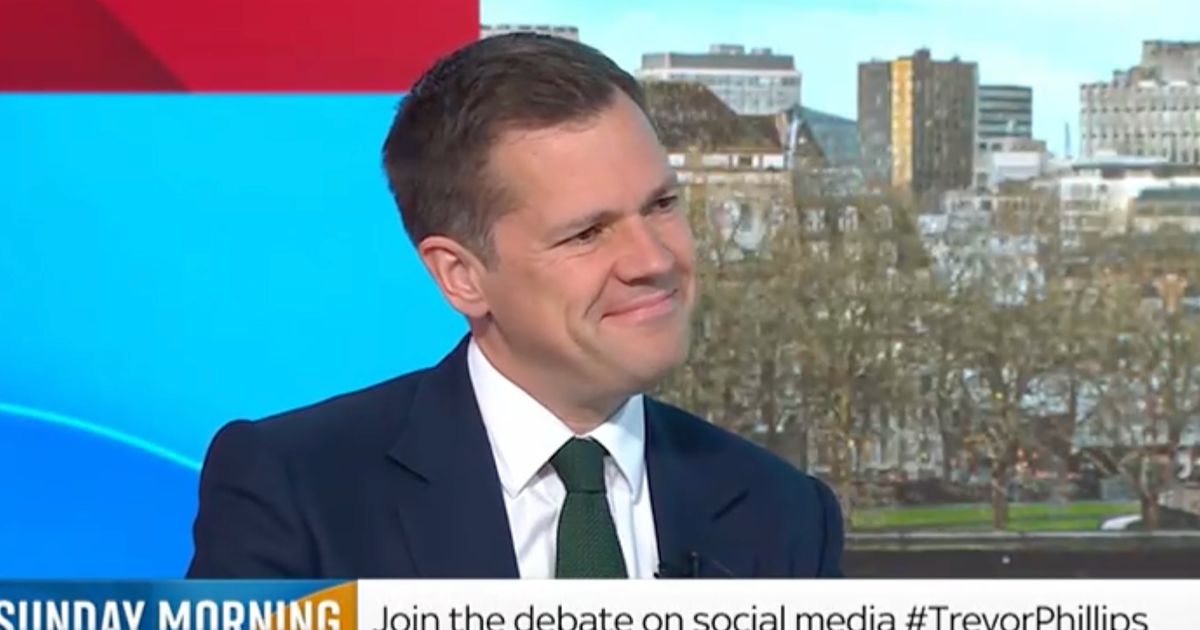
Robert Jenrick has somehow tried to take credit for the recent decline in net migration despite not being in government for three years.
The MP for Newark used to be the Conservative immigration minister under Rishi Sunak but quit in 2023 when he claimed the government was not taking enough action to cut migration numbers.
He defected to Reform in January and is now the the right-wing party’s Treasury spokesperson.
Labour’s home secretary Shabana Mahmood has overseen net migration fall to its lowest level since early 2021, as official figures revealed this week.
Data from the Office for National Statistics (ONS) showed net migration fell to 171,000 in 2025, which is a 82% fall since its peak in early 2023 of 944,000.
But Jenrick told Sky News’ Sunday Morning with Trevor Phillips: “I secured the very changes that are making this, announced them and then resigned because they weren’t enough.
“I want the numbers to come down much more.”
He continued: “Reform… We don’t want hundreds of thousands of people coming into the country. We want net emigration.
“That means more people leaving every year than are coming in. Why? So that we can reduce pressure on housing, people getting a doctor or a dentist, and stop this constant pressure where British workers wages are being hammered because there’s an easy lever of foreign labour.
“So it’s got to keep coming down. Reform have a very clear policy, net emigration. We’re going to get it right down and have a long period, maybe a decade or more, which would give the country breathing space.”
Earlier this week, Jenrick also pointed out the 246,000 British nationals left the UK, which he branded the “Starmer exodus”.
But the ONS said the number of British nationals emigrating has been “broadly stable” in recent years, with 257,000 leaving in 2024 and 255,000 in 2023.
Subscribe to Commons People, the podcast that makes politics easy. Every week, Kevin Schofield and Kate Nicholson unpack the week’s biggest stories to keep you informed. Join us for straightforward analysis of what’s going on at Westminster.

A few months ago, I started burping. Not in a funny, show-off-for-the-kids way, but in a constant, uncomfortable, what-is-happening-to-my-body kind of way.
I started counting: 30, 40 times a day. And like any adult in 2026, I immediately turned to Google to ask whether that was a normal amount of belching.
From the obvious offenders (sparkling water and speed-eating) to more serious underlying conditions like ulcers, small intestinal bacterial overgrowth (SIBO) or, in rare cases, cancer, I spoke with gastroenterologists to break down when burping is harmless, and when it’s a signal that something else is going on.
What counts as ‘normal’ burping?
“Burping is normal,” Dr. Samantha Nazareth, a board-certified gastroenterologist and chief medical officer at metaME in New York, reassured me. “It’s air moving up from the food pipe (oesophagus) or the stomach.”
That said, “normal” isn’t exactly a fixed number. What feels like a lot to one person might barely register for someone else, and the range is wider than you’d think.
“It is difficult to give a ‘normal’ cutoff,” shared Dr. Rabia de Latour, a double board-certified gastroenterologist and therapeutic endoscopist in New York. “Some people burp infrequently, some burp 10-20 times a day, some only burp a few times after eating or drinking and some people can voluntarily produce a burp.”
Still, there are some benchmarks that can help put things in perspective. One 2020 study published in the Journal of Clinical Medicine found that patients who burped more than 13 times a day were more likely to have an underlying gastrointestinal issue than healthy individuals, who averaged closer to two daily episodes.
“In general, we consider abnormal burping when it disrupts your daily activities or quality of life or occurs with any other symptoms like trouble swallowing or nausea or bloating,” explained Dr. Elena Ivanina, a triple board-certified integrative gastroenterologist and functional medicine doctor.
The most common (and totally harmless) reasons you’re burping more
Just because you’re burping more than 13 times a day doesn’t automatically mean something is wrong. In many cases, it comes down to simple, everyday habits – especially how you eat.
One of the biggest culprits is swallowing excess air. That can happen when you eat too quickly, talk while eating, chew gum, smoke, suck on hard candies or drink through a straw.
“It can be purely behavioural,” de Latour said, noting that these habits can lead to more air entering the digestive tract, and eventually, more belching.
What you’re eating and drinking plays a role, too. If you’re a sparkling water person, for example, all that carbonation has to go somewhere. “Dietary factors often include increased carbonated beverages, chewing gum, sucking on candies, drinking through straws, high-fat or fried foods or food high in fermentable carbohydrates like lactose (dairy),” Ivanina explained.
A few lifestyle factors can quietly add to the mix. Stress and anxiety can increase how much air you swallow throughout the day, while slouching or lying down right after eating can make it harder for gas to move through your system. “Stress/anxiety can contribute to this,” Nazareth noted. “Slouching or lying down after eating can trap gas.”
Taken together, it means that a sudden uptick in burping isn’t always a red flag. Sometimes, it’s just your daily habits catching up with you.

The Good Brigade via Getty Images
When it might be something more than just air
But let’s say you’ve cut back on the LaCroix, slowed down your eating, and you’re still belching like a six-year-old at a birthday party… It might be time to pay attention.
De Latour flags these symptoms as ones to watch: bloating, abdominal pain, acid reflux, unintentional weight loss, heartburn, diarrhoea, blood in your stool or vomit, vomiting, loss of appetite, chest pain, new anaemia (especially iron deficiency), and early satiety – that’s feeling full faster than usual.
Beyond the physical symptoms, there’s a simpler gut-check (so to speak): if it’s disrupting your life, that’s the real red flag.
“It becomes problematic when it is bothering the patient; either because it is too frequent, uncontrollable or causing feelings of embarrassment due to any of the above or odour,” de Latour said.
As for when to pick up the phone, you don’t need to be checking every box. Even one or two symptoms from that list, especially if they’re new or persistent, is reason enough to loop in your doctor. Trust your gut. (Sorry, had to.)
What actually helps reduce excessive burping
The good news: most belching is fixable. A few things worth trying before you spiral into a gastroenterology rabbit hole:
Stop multitasking while eating
It sounds obvious, but Nazareth’s first recommendation to patients is simple – slow down, chew thoroughly, and stop talking with your mouth full.
Watch the usual suspects
Carbonated drinks, chewing gum, hard candy and straws all sneak in extra air.
Check your anxiety
Stress and nervous swallowing are surprisingly common triggers.
Look at your diet
Certain foods – onions, garlic, beans, cruciferous vegetables – are notorious for producing gas in the lower part of the digestive tract.
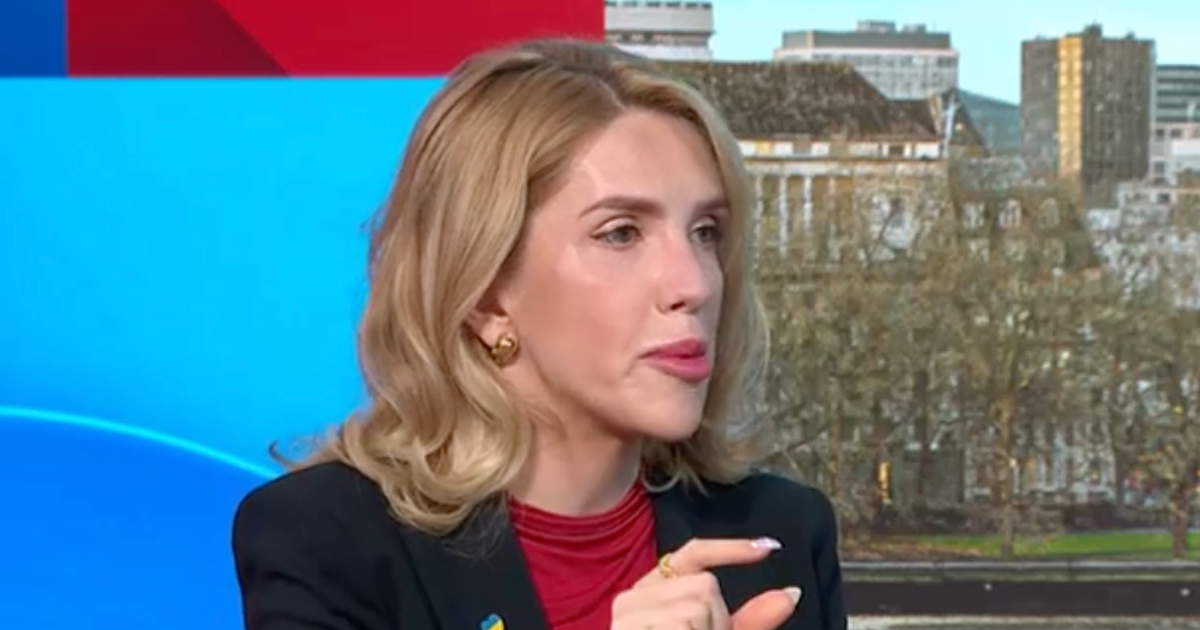
A Ukrainian MP has called out the UK for its “moment of weakness” after the government decided to continue allowing the import of Russian oil products.
Labour triggered intense backlash this week after it declared it was pushing back plans to close a loophole in its sanctions against Moscow.
The government unveiled a set of temporary licences which will allow diesel and jet fuel – refined in third countries but made from Russian oil – into the country.
Ministers insist the ban will come in eventually, but chief secretary to the prime minister Darren Jones refused to give any indication of a timeline when speaking to Sky News.
Ukrainian MP Kira Rudik said the announcement came as a “surprise” to her, and described it as a “point of weakness”.
“At first it was a surprise because the United Kingdom is one of the countries that first has been our strongest partner, but also a country where all the parties are supportive of Ukraine, on different levels,” she told Sky News.
“So to hear that there was this like moment of weakness, a point of weakness was surprising. And I believe this is what was discussed between the [Ukrainian] president and the prime minister.”
Volodymyr Zelenskyy and Keir Starmer spoke on the phone on Wednesday evening.
She continued: “But let me tell you this, no matter what happens, Russia is always laughing that Europe is paying for the war from both pockets, from one supporting Ukraine and from another one paying for Russian gas and oil.
“Is it worthy of continuing doing that? Because it is definitely worthy of supporting Ukraine. And we really hope that all our partners, all European countries, will every day go away from purchasing Russian gas and oil rather than trying to move back a little bit.”
Jones tried to clear up some of the confusion around the controversial decision on Sunday, saying it was “totally wrong” to say the decision stemmed from concerns around jet fuel shortages linked to the war in Iran.
He said: “No, that’s totally wrong. Totally wrong.
“One of my jobs in the Cabinet Office is to chair contingency planning, and I’ve been spending many hours doing that in relation to the impact of the Middle East on the UK.”
Jones said the UK has other sources from around the world to rely on.
However, the decision still stunned shadow foreign secretary Priti Patel.
She said: “When the government says they’re introducing new sanctions, they might be introducing them – but there’s no framework for that. There’s no date coming forward. And in the meantime, they’re now allowing and enabling Russian imported oil to come into the United Kingdom.
“So they’ve contradicted themselves. And clearly that is not helpful when it comes to the Ukraine conflict at all.”
Subscribe to Commons People, the podcast that makes politics easy. Every week, Kevin Schofield and Kate Nicholson unpack the week’s biggest stories to keep you informed. Join us for straightforward analysis of what’s going on at Westminster.

In 2012, Pew Research found that while the typical Facebook user had 245 Facebook friends, the average *friend* someone has on Facebook had 359.
That sounds completely illogical at first. But it’s explained by the “friendship paradox,” a term resulting from sociologist Professor Scott Feld’s 1991 paper.
The phenomenon has since been translated into mathematical theories.
But what exactly is this “friendship paradox”, and what does it actually mean for our social lives?
What is the friendship paradox?
In a Purdue University video, Prof Feld said he was “surprised” to find “that it’s always true in social networks that friends in general have more friends on average than people do”.
If that sounds a bit like a head-scratcher, well, it is (hence the “paradox” part).
“People assume that if there’s a pair of friends, one must have more friends and the other must have [fewer] friends, so you would expect that half the people would have fewer friends than their friends,” he continued.
But instead, he said, some people have loads of friends, and naturally, those people are likelier to be friends with lots of people who have fewer friends than them.
And the other people who have fewer friends are less likely to be our mates.
In other words, it’s not so much that most people hover around an average amount of friends, with some having slightly more than others. Instead, very extroverted people throw the balance off a lot (a bit like counting billionaires when calculating people’s net worth).
“Each of us seems to be thinking that our friends have more friends than we do, which they, in fact, do, because our friends are the people who are friends with everybody,” said Prof Feld.
Later analysis found that the mathematical premise of the “friendship paradox” seems to bear out in real life.
So… what does that mean?
Well, Professor Feld said, one takeaway could be to remember that comparing yourself to your mates isn’t really a great indicator of your true standing: we should try to remember that this sample is “biased”.
Secondly, on a broader level, it means some people could spread more of anything – from ideas to disease and misinformation – than the average person might, meaning more of us are influenced than influencing.
“So if you want to stop the spread of a pandemic,” Prof Feld continued, “you really would like to vaccinate people’s friends more than you’d want to vaccinate random people.”
The same goes for switching people onto a certain product. Basically, whatever spread you want to create, track, or predict, you’re better off looking at other people’s mates’ habits than their own.

A minister grew visibly emotional on live TV this morning following a troubling BBC interview with a teenage rape victim.
A girl who was raped by two teenage boys told Sunday with Laura Kuenssberg that the judge’s decision to spare her attackers jail was like a “rock straight in my face”.
Speaking anonymously with her family, she said the move “always made it seem as if what the boys did was not OK, but it was OK in the eyes of the law because they were still children”.
Judge Nichoas Rowland said on Thursday he wanted to avoid “criminalising” the “very young” boys.
The attorney general, Lord Hermer, is set to review the sentence.
The two defendants were also convicted of attacking another victim with a third boy.
Both rapes were filmed by the boys and some of the footage was shared online.
Chief secretary to the prime minister Darren Jones, who has three daughters, told the BBC that the government is looking at this case “urgently”.
He said: “As a minister I’m not allowed to get ahead of the attorney general’s decision but those girls deserve justice, as do their families, both for them and other girls put in the position.
“Quite frankly the boys need to know they can’t behave in that way and get away with it.”
Kuenssberg said: “You are here as a minister but I can tell from listening to you, as a dad, I think you found that quite hard to watch and to listen to.”
“It was very hard to watch because no parent wants their daughter to be in those circumstances,” Jones said, as his voice started to break. “You don’t want a society in which girls are growing up in those circumstances.”
Asked if he worries about the message this particular case sends to the public, he said: “I do because those young women deserve justice but I also worry about it because boys need to know they cannot behave that way.
“It is not acceptable in society. And if you do that, there must be consequences for it.”
Jones added that while not all boys are violent or do not care about women, “there are too many incidents like this” and it was important to have a “national conversation” about such assaults.
Prime minister Keir Starmer later responded to Kuenssberg’s interview with the rape victim.
He wrote on X: “This is a harrowing and brave testimony.
“The girls at the heart of this case have shown extraordinary bravery and strength in heinous circumstances.
“This is an appalling case and it is right that law officers are urgently reviewing the sentences.”
Tory leader Kemi Badenoch also described the sentencing as a “disgrace” and Reform’s Treasury spokesperson Robert Jenrick said the judge had made a “very bad error”.
Subscribe to Commons People, the podcast that makes politics easy. Every week, Kevin Schofield and Kate Nicholson unpack the week’s biggest stories to keep you informed. Join us for straightforward analysis of what’s going on at Westminster.

You triple-checked the address, left early to build in time for traffic and arrived at your friend’s bridal shower with plenty of time to spare. That’s good guest behaviour, right? Well… Not exactly.
Whether it’s a shower, dinner party or holiday gathering, showing up early to a party is one of the more inconsiderate things you can do to a host, according to etiquette experts.
“It is impolite to arrive early to a party because the host is taking care of last-minute details,” Diane Gottsman, the author of Modern Etiquette for a Better Life and founder of The Protocol School of Texas, told HuffPost.
“This might also include running around in a robe and hair rollers. Although the guest’s intention is not to be rude, it puts additional stress on the host who is trying to pay attention to the last-minute details before their guests arrive.”
Don’t add stress to those sacred final minutes leading up to the start of the party.
“Skilled hosts tend to change outfits, freshen makeup, plate food, prep drinks, turn on the music, light candles all in those last few moments,” said Jodi R.R. Smith, the president of Mannersmith Etiquette Consulting.
Although you may feel your early arrival reflects your enthusiasm and time management, you can unintentionally place your host – or their party planner – in an uncomfortable position.
“An early arrival may disrupt this process or cause the host to feel rushed or concerned about the guest’s comfort while preparations are still underway,” said Jackie Vernon-Thompson, the founder of From the Inside-Out School of Etiquette.
“Ultimately, etiquette in this instance involves awareness, timing and respect, ensuring that your presence enhances the experience rather than creating pressure for the host.”
What counts as early?
It’s worth keeping in mind that what counts as “early” isn’t universal. The actual time you should arrive depends on where in the world you are, noted Nick Leighton, an etiquette expert and host of the Were You Raised by Wolves? podcast.
“Are we in New York? Berlin? Tokyo? Sao Paolo?” he asked. “There are lots of places in the world where a 7:00 dinner invitation really means people will start arriving at 6:30. But then 6:30 is not actually ‘early’ because this is when the host is expecting you. When in doubt, just ask your host when they’d like you to arrive.”
That said, in most contexts, arriving ahead of schedule will catch your host off guard. “Showing up at 6:45 for a 7:00 cocktail party will definitely catch your host mid-shower or wrestling with a corkscrew,” Leighton said.
And whatever you do, resist the urge to broadcast your early arrival at the door.
“The only thing worse than showing up early is announcing it,” he added. “If you have to say, ‘I hope I’m not too early!’ as you’re walking through the door, you almost certainly are.”

Flashpop via Getty Images
There are a few exceptions to the rule
Of course, there are exceptions to the “arriving early is rude” notion.
“If your host asked you to help them out, this changes the scenario,” Gottsman said. “Hosts may need help moving chairs or directing caterers while they are paying attention to other last-minute details.”
So if you were explicitly asked to come early to aid with the setup, go for it.
“Everyone has someone that just jumps in and helps,” Smith said. “This could be a parent, sibling, BFF, you know who you are – you are welcome to arrive early. If you are not on the closest confidant list, wait.”
For immediate family members who have traveled from overseas to attend this specific event, it’s also more acceptable to arrive early, she added. And of course, the guidelines can vary based on the type of event.
For a big, fancy wedding, arriving early at the venue gives you a chance to snap a photo and find a seat so that the ceremony can start on time.
“For gatherings held in public venues, arriving early is generally more acceptable and far less intrusive,” Vernon-Thompson said.
“In settings such as restaurants, event spaces or banquet halls, much of the preparation is handled in advance by staff, and the host is typically not relying on the final moments prior to the event for setup. Because of this, an early arrival in a public setting is less likely to disrupt the flow or pressure the host. Guests may even be accommodated comfortably while waiting for the event to officially begin.”
When in doubt, be right on time
For a small dinner party, however, your early arrival might be more disruptive. And for a casual backyard barbecue or house party, the relaxed nature can make your timing less significant.
“When in doubt, your default should be right on time,” Smith said. “If you are bold enough to arrive early, you should specifically ask the host if you can help or if you should come back later.”
Sometimes you simply can’t help it. Traffic was lighter than expected, or you overestimated your commute. In that case, the move is to wait it out rather than knock early.
“If your travel took less time than anticipated, occupy yourself until the appointed time,” Smith advised.
“Walk around the block. Drive a few houses down and park to wait. Pop into a corner drugstore or coffee shop. Cool your heels in the lobby. Scroll through your phone. Practice yoga breathing. Think of amusing anecdotes to share. Phone a friend. Play Wordle. Enjoy a moment of boredom.”
For those who choose to wait in their cars, Vernon-Thompson recommended not camping out where you can be seen.
“Indicating that you are sitting outside may cause stress and anxiety for the host,” she noted. “Make every effort to be out of sight when waiting in your vehicle. It is the considerate thing to do.”
The best way to truly understand why early arrival is such a faux pas? Try hosting something yourself.
“In my experience, the people who show up early are the people who have never hosted an event themselves,” Leighton said. “People who throw parties would be the last people to ever do this.”
“If you are having a tough time intrinsically understanding why arriving early at a party is an issue, then you are not entertaining enough,” she said. “It may be high time for you to return all of these thoughtful invitations and host something yourself.”

Dyscalculia – sometimes referred to as “number dyslexia” – is a difficulty in understanding and working with numbers.
It’s thought around one in 20 children struggle with the learning difficulty, which is also a form of neurodivergence.
People with dyscalculia will typically process and understand numbers and mathematical concepts differently to neurotypical people.
One of the signs of this learning difference, according to Evolve Psychology, is difficulty counting backwards.
- Mixing up numbers like 6 and 9
- Still using finger counting in Year 4 despite extra help
- Difficulty understanding what numbers mean beyond memorisation
- Struggling to line up numbers correctly in maths problems
- Challenges learning and recalling basic number facts, like times tables or simple addition
- Problems telling the time, handling money and following multi-stage calculations
- Difficulties estimating quantities and measurements
- Showing anxiety around maths and avoiding number-based tasks
- Being unexpectedly behind in maths compared to other subjects.
Clinical psychologist Dr Elyse Bensusan, who partnered with Explore Learning, suggested the learning difference can show up in ways that are “easy to dismiss” at first.
For example, a young child might have trouble recognising small quantities without counting – for example, they can’t ‘see’ that there are three cookies on a plate unless they count one by one.
“They may struggle to understand what numbers actually mean: not just memorising that 2+2=4, but really grasping that numbers represent amounts,” she added.
Awareness of dyscalculia is low
Unfortunately, research suggests most teachers receive little or no training in dyscalculia – as a result, kids can often struggle in silence, with little support.
One study, led by Loughborough University, surveyed 1,323 education professionals across the UK, Italy, Vietnam and South Africa and found widespread gaps in training and understanding of dyscalculia.
Although most UK educators had heard of dyscalculia, only 42% said they clearly understood it.
Previous studies have found that because maths is a core subject and a gateway to many science, technology and engineering pathways, without appropriate support dyscalculia can limit further study and career prospects.
Kids with dyscalculia are also at increased risk of anxiety, depression, behaviour problems and low self-esteem.
If you suspect your child has dyscalculia
Cherrida Crew, team lead for Specific Learning Difficulties at Evolve, said addressing dyscalculia is “vital” as early recognition leads to swifter intervention and more positive outcomes. “The right support can make a real difference,” she added.
If you suspect your child might have it, Evolve’s team advises:
- Using visual and hands-on learning tools, such as counters, number lines or diagrams to make maths concepts easier to understand.
- Breaking tasks down into smaller steps.
- Reducing memory pressure by keeping multiplication grids, formulas and reference materials easily accessible.
- Linking maths to real-life situations in a more hands-on way.
- Using technology and practical tools in everyday life, such as calculators, contactless payments, smartphone reminders and visual planners.
- Requesting appropriate support in education, including extra time, calculators or note-taking assistance where needed.
- Supporting them to work in quiet, low-distraction environments to improve concentration and reduce cognitive overload during maths-based tasks.
Dr Bensusan noted: “If your child is bright and verbal but seems lost when it comes to numbers – trust your gut. A full neuropsychological evaluation can make all the difference.
“I’ve seen children go from melting down over math homework to feeling proud of solving problems on their own – just by getting the right diagnosis and support. Dyscalculia is real. And with the right approach, your child can thrive.”

The truth behind England international’s Wales switch as Steve Tandy intervenes
Poland stocks higher at close of trade; WIG30 up 2.22%

Nex Playground: A Mum’s Honest Review As Console Launches In UK


-

 Crypto World4 days ago
Blockchain.com files with SEC for U.S. IPO
-

 Fashion3 days ago
Holiday Weekend Open Thread – Corporette.com
-

 Crypto World3 days ago
Bitcoin Accumulation Weakens as BTC Realized Losses Hit $600M
-

 Business3 days ago
Dell Technologies DELL Stock Surges 15% on AI Server Momentum and Analyst Upgrades in 2026
-

 Crypto World3 days ago
Space X IPO Is ‘Bad News’ for Tech Stocks: But What About Bitcoin?
-

 Politics3 days ago
Makerfield: a tale of two social-media histories
-

 Crypto World2 days ago
Robinhood crypto COO Tanya Denisova exits
-

 Crypto World4 days ago
MicroStrategy’s Saylor Says Miners No Longer Set Bitcoin Price, Another Force Has Taken Over
-

 Business21 hours ago
NYT Strands Answers May 24 2026 Revealed for Puzzle No. 812 Theme Summer Essentials
-
 Tech3 days ago
A 0.12% parameter add-on gives AI agents the working memory RAG can’t
-

 Crypto World3 days ago
AI infrastructure race heats up as IREN pitches full-stack strategy, WhiteFiber lands $160M deal
-

 Tech4 days ago
WhatsApp ads could make Irish debut after discussions with DPC
-

 Tech4 days ago
You Can Now Add ChatGPT To PowerPoint
-

 Business3 days ago
Trump Invests $1M-$5M in Kura Sushi USA Chain With 27 California Locations
-
 Crypto World7 days ago
Revolut Launches Dogecoin Debit Card Across UK and EU
-
 NewsBeat4 days ago
Charity run by Reform leader Malcolm Offord accused of ‘law breaking’ over Scottish registration
-

 Sports4 days ago
2026 CJ Cup Byron Nelson leaderboard: Brooks Koepka finds putting stroke in Round 1
-

 Crypto World3 days ago
Trump Media’s Bitcoin Stash Shrinks Again as 2,650 BTC Lands on Crypto.com
-
Business3 days ago
Goldman Sachs reinstates Ageas stock coverage with neutral rating
-

 Crypto World5 days ago
Exa Labs raises $250 million in funding led by a16z
You must be logged in to post a comment Login