
Connect with us
DAPA Banner
DAPA Coin
DAPA
COIN PAYMENT ASSET
PRIVACY · BLOCKDAG · HOMOMORPHIC ENCRYPTION · RUST
ElGamal Encrypted MINE DAPA
🚫 GENESIS SOLD OUT
DAPAPAY COMING

Politics

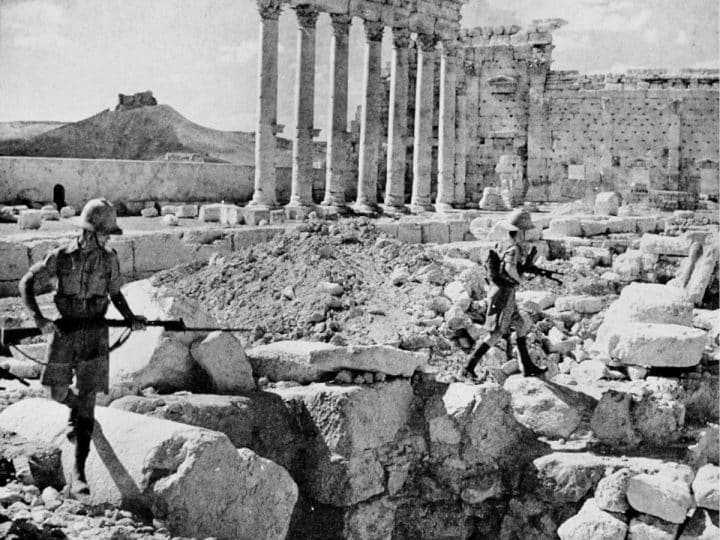
“Operation Exporter” 1941: South Lebanon in the Calculations of Global Military Geography

Published

on

“Operation Exporter” 1941: South Lebanon in the Calculations of Global Military Geography

Scarcely had a temporary calm returned to settle over the Palestinian-Lebanese border following the suppression of the Arab Revolt in 1939, when violent political and military storms swept in from the European continent.

These events overturned the strategic equations of the Middle East, bringing an abrupt end to the harmonious relations and mutual agreements that had long prevailed between the mandatory regimes in Beirut and Jerusalem.

Vichy Lines and the Fracture of the Shared Mandate

In April 1940, French defences collapsed, and the capital, Paris, fell beneath the onslaught of the Nazi German army. This led to the installation of a collaborationist French government in the city of Vichy.

This strategic shift meant that Lebanon and Syria were now ruled by a French military and political administration that pledged absolute loyalty to the Vichy regime. Consequently, this placed the French Levant states in a state of overt hostility and turned them into a direct battlefront against British-mandated Palestine, which was leading the war effort against the Axis powers.

Advertisement

The British military command in London and the Middle East viewed the presence of Axis-aligned Vichy forces in Syria and Lebanon as a highly dangerous strategic vulnerability. They feared Nazi Germany could exploit the territory as an air and land staging base to strike the Suez Canal and seize vital oil reserves in Iraq and Palestine.

Driven by these existential anxieties, the British General Staff moved rapidly to draft precise military plans to invade Lebanon and Syria, thereby uprooting them from Vichy control. These plans, however, were entangled in complex political calculations.

The “Free French” forces, led by General Charles de Gaulle, were informed of the operational details to alleviate the deep apprehensions of the French. They suspected that Great Britain’s ultimate, long-term objective was to exploit the war to expel the French imperial presence from Beirut and Damascus and replace it with exclusive British imperial influence. The joint invasion blueprint was finalized under the codename “Operation Exporter”, historically remembered as the Syria-Lebanon Campaign.

On 30 June 1940, British authorities in Jerusalem partially closed the Palestinian-Lebanese border as a precautionary measure, sealing it completely and tightly by 25 May 1941. While the immediate impact of these rigorous administrative and military measures on the daily lives of the Upper Galilee farmers remains entirely undocumented, it is certain that the official and solitary border crossing at Ras al-Naqoura bore the direct brunt, as the vital arteries of commercial and social interaction were severed.

Advertisement

Iron and Fire in the Passes of Jabal Amel

On 8 June 1941, the military signal was given. “Operation Exporter” launched with immense ground, air, and naval momentum.

Although the broader campaign included a parallel offensive in the east to capture Damascus and overrun Deir ez-Zor on the Euphrates River, the primary tactical focus and most critical military lessons were concentrated on the main axis: the invasion of Lebanese territory from northern Palestine.

The Lebanese capital, Beirut, was the primary strategic and political objective for the British command in this sector. To secure it, a massive assault force was assembled, consisting of two infantry brigades from the 7th Australian Division – renowned for its combat resilience – supplemented by a distinguished battalion of Zionist commandos and youth trained in guerrilla warfare and reconnaissance (the Palmach).

Conversely, they faced a French force of roughly equal numbers and conventional equipment on the other side of the border. This force was loyal to the Vichy government and entrenched in excellent mountainous defensive positions. Nonetheless, the military balance shifted clearly in favour of the Australians due to their overwhelming advantages – specifically, absolute air superiority and the support of the British Royal Navy, which controlled territorial waters.

Advertisement

Here, the unforgiving military geography of the region imposed strict conditions on the movement of troops. The rugged, mountainous terrain of Jabal Amel and Marj’ayoun confined the advance of the Australian division toward the Lebanese interior to two sole, irreplaceable geographical axes: the narrow coastal road leading directly to Beirut, and the winding inland route cutting toward the Beirut-Damascus highway via the Beqaa Valley.

These two axes forced the advancing Allied forces to move through exceptionally narrow and exposed corridors, granting an extraordinary topographical and defensive advantage to the Vichy forces holding the high ground and overlooking the deep ravines. Yet, the Australian soldiers had no tactical alternative but to engage in direct, bloody combat with the twisting, rocky terrain of Jabal Amel as they launched their thrust across the border extending between the coast and Metula.

At the same time, the coastal axis offered the Australians their only opportunity to exploit their most lethal asset: a monopoly on heavy naval gunfire from the British fleet, which battered Vichy fortifications along the coastal ridges.

Battles on the border

On the opening day of the invasion, 8 June, Australian forces advanced and successfully captured the fortified Lebanese border post at Ras al-Naqoura, beginning a cautious northward push under a blanket of bombardment.

Advertisement

The inland supporting assault achieved a rapid breakthrough, capturing the strategic town of Marj’ayoun on 11 June. However, the Australian celebration of this advance was short-lived, as complex military crises rapidly developed on the ground.

On 10 June, a unit of Zionist commandos was tasked with launching a swift, specialized raid to seize the vital Qasimiya bridge on the coast to secure the flow of armor and prevent the French from demolishing it. The attack failed catastrophically and bloodily in the face of resolute Vichy defence. During this fierce engagement, a young Zionist Jewish soldier named Moshe Dayan lost his left eye when a sniper’s bullet struck his binoculars.

Following this failure, and fearing that the primary coastal offensive would grind to a complete halt at the Litani River, the Australian command made a perilous tactical decision to suspend the supporting advance in the Beqaa sector. They ordered the bulk of those forces to wheel sharply westward toward the coast via the rugged roads of Marj’ayoun and Jezzine to rescue the coastal front.

As a consequence of this sudden redeployment, the command left a nominal, small military force to secure Marj’ayoun – a fatal strategic error that Vichy forces immediately exploited. The French launched a swift counter-offensive, recapturing the vital town on 16 June, while the main body of the supporting Australian brigade found itself isolated and trapped in the rugged mountains of South Lebanon. Their supply lines severed, this unit was completely cut off and virtually decimated in the mountains.

Advertisement

Military Calculations

The victorious Vichy forces in Marj’ayoun lacked the numerical strength and logistical depth required to exploit their success into a conventional counter-offensive to invade Palestinian territory through the Metula gateway. This allowed the Australians to regroup and recapture the town in late June, following intense artillery bombardment.

Meanwhile, the main Allied coastal assault, heavily sustained by absolute air and naval supremacy, slowly and bloodily forced its way through French strongholds until it reached the outskirts of Beirut. Confronted with this military impasse and the fall of Damascus in the east, the Vichy command recognized the futility of continued resistance. An armistice agreement was formally signed on 14 July 1941, officially terminating Vichy rule in the Levant and handing control of the territories over to the Free French and British forces.

The legacy of “Operation Exporter”

Although “Operation Exporter” is considered a minor and marginal chapter in the massive volumes of Second World War military history, it served as the military academy and field laboratory that taught the newly formed Zionist Jewish military leadership in Palestine, who gained invaluable lessons regarding strategy and operations in the complex geography of South Lebanon. This military force later became the core of the “Israel Defense Forces”.

The campaign provided a decisive, practical demonstration of the vulnerabilities Palestine faced due to the military geography of the border region. It became clear that, while Palestine’s flat terrain was inherently open and exposed to irregular infiltration from Lebanon at any time and without obstacles, the axes for conventional, organized military advance from Palestine into Lebanon were few, narrow, and structurally suffocating.

Advertisement

In fact, assuming a relative parity in air support and indirect firepower between the two sides, it was militarily certain that French Vichy forces could have halted both Australian thrusts and permanently blocked their advance. However, looking at the geographical reality – which dictated that there were only two viable main highways for invading Lebanon from the South (the coastal maritime route and the inland Metula-Marj’ayoun-Beqaa route) – and considering the abundance of secondary roads and valleys running from east to west rather than the natural north-south progression, Zionist military planners arrived at a definitive strategic conclusion.

They deduced that, in the event of a clash between forces of roughly equal competence and number, the tactical defensive advantage always favors the force facing south – namely, the army entrenched within Jabal Amel. Furthermore, the rapid and dangerous threat of an invasion into northern Palestine that loomed when Vichy forces seized Marj’ayoun left a deep, enduring imprint of chronic anxiety in the minds of Zionist commanders regarding a potential offensive threat from the north.

This conventional “threat” would inevitably have to contend with the exact same harsh topographical difficulties and barriers that impeded any offensive operations directed northward.

Strategic Contradiction and the Riddle of Northern Sovereignty

The successive military experiences – tied first to the construction of “Tegart’s Wall“, and second to the battles of “Operation Exporter” – left conflicting and perplexing strategic concepts in the minds of Zionist planners.

Advertisement

Zionist strategic thought found itself confronting a security dilemma and a riddle requiring a radical solution. From a security standpoint, would it be more beneficial for Israel in the future if South Lebanon were heavily fortified and strong? Garrisoned by large numbers of official Lebanese security personnel and a regular army capable of, and authorized to, secure the border and prevent irregular operations and cross-border infiltrations against targets inside Palestine? This was the self-evident lesson derived from the uprisings and revolts of 1925 and 1936–1939.

Or was it better, from the perspective of Zionist military planners, for South Lebanon to remain militarily weak, poorly guarded, and devoid of organized forces? Such a scenario would guarantee and facilitate the success of rapid offensive operations or swift retaliatory strikes launched from Palestine into the Lebanese interior, while simultaneously ensuring that any conventional attack from Lebanon could be easily repelled due to topographical superiority. This second conclusion appeared far more pragmatic and operational from the perspective of the 1941 “Operation Exporter” experience.

Yet, there loomed a third, terrifying possibility that alarmed Zionist military commanders – a scenario that combined both dangers: intensive irregular commando raids inside Palestine that enjoyed the full political backing of the Lebanese authorities, while being simultaneously protected by a strong conventional and regular military force stationed in the South.

The aversion of this frightening scenario was precisely what was realized and codified in the strict military clauses of the 1949 Armistice Agreement between Israel and Lebanon. Israel succeeded in imposing conditions that restricted the strength and capabilities of the Lebanese Army to just 1,500 soldiers, depriving it of heavy weaponry and armor throughout the entire region south of the Qasimiya (Litani) River. Consequently, South Lebanon was left exposed and weak, entirely subject to Israeli military superiority.

Advertisement

Featured image via About History

By Mohammad Fakih

Source link

Advertisement
Continue Reading
Click to comment

You must be logged in to post a comment Login

Leave a Reply

Politics

Pro-Palestine donor faces 30 years in prison as US targets activists

Published

on

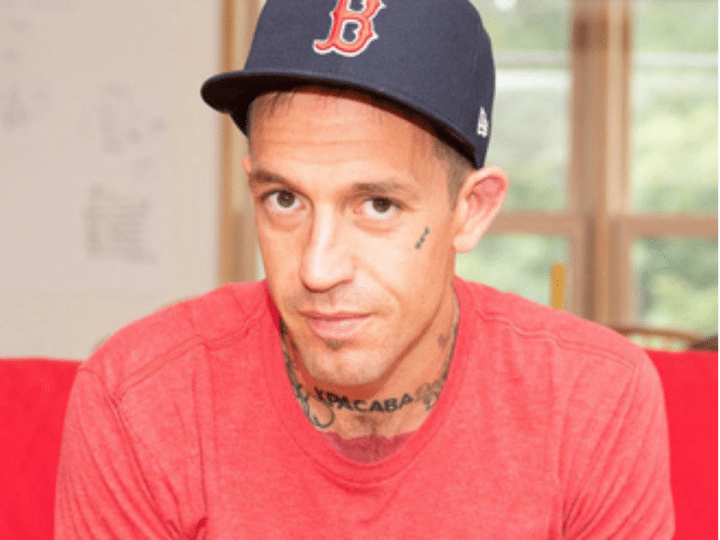
Fergie Chambers, who has small face tattoos and a neck tattoo on show above his crew neck tshirt, looks at the camera from beneath his baseball cap. He is a vocal supporter of Palestine.

Fergie Chambers, who has small face tattoos and a neck tattoo on show above his crew neck tshirt, looks at the camera from beneath his baseball cap. He is a vocal supporter of Palestine.

Fergie Chambers, a pro-Palestine donor, is facing US extradition over dubious ‘terrorism financing’ charges after he was arrested in Spain on Friday, the Grayzone reported.

On July 10, six Spanish police vehicles surrounded Chambers’ car while he drove through Ibiza with his family, before detaining him, the Grayzone wrote.

Advertisement

Chambers’ detention marks the first time an individual has faced extradition to the US from Spain for supporting the Palestinian cause.

Vocalpolitics reported that Chambers was denied bail in an Ibiza court on Saturday and is expected to appeal for bail on Thursday.

According to the Grayzone, Chambers is an heir to the Cox family fortune who sold his stake in Cox Enterprises in 2023 for an estimated $250 million. It goes on to say that Chambers has since donated more than $1 million to humanitarian projects supporting those impacted by the Gaza genocide, and pro-Palestine activist groups.

Advertisement

The sealed indictment offers no evidence he donated to “foreign terrorist organizations”, citing only transfers from US banks to Tunisia, where he relocated in late 2023, Grayzone added.

Palestine supporters being targeted sparks concerns

Journalist and author, Matt Kennard, said that everyone should pay attention to Chambers’ arrest as it signified Trump’s war on Palestinian solidarity going international.

Journalist Max Blumenthal said:

Chambers’ detention marks the first time anyone has faced extradition to the US from Spain for supporting the Palestinian cause. The sealed indictment conflates his bailing out of pro-Palestine direct action protesters with sponsoring Hamas. It screams political persecution.

Stella Schnabel, Chambers’ partner, is quoted in the Grayzone:

The Department of Justice is politically persecuting Fergie [Chambers] because he is using his wealth to support Palestine, and help people facing genocide in Gaza.

His crime is dedicating his life to building a better society, rather than exploiting people, extract wealth and profit from war.

Advertisement

He should be home safe with our family and continuing his important humanitarian and social advocacy, not incarcerated in a foreign jail facing effective life imprisonment back in the US.

Test of Spain’s sovereignty

Progressive International’s Pawel Wargan said that Chambers’ arrest was an immensely dangerous precedent and an important test of Spain’s sovereignty. He supports blocking his extradition.

Vox Ummah said that the extradition request will test Spain’s policy regarding Palestine.

Advertisement

Donald Trump has lashed out at Spain several times, calling it a “terrible partner in NATO”, as since March, Spain has not allowed the use of joint military bases on its territory for operations against Iran. It has also closed its airspace to US planes involved in the war.

The coming days will reveal whether Madrid bows to Washington’s pressure or stands by its principles.

Featured image via AIR MAIL

Advertisement

By The Canary

Source link

Advertisement
Continue Reading

Politics

Spanish PM tells Trump his country will not be fooled twice after illegal war on Iraq

Published

on

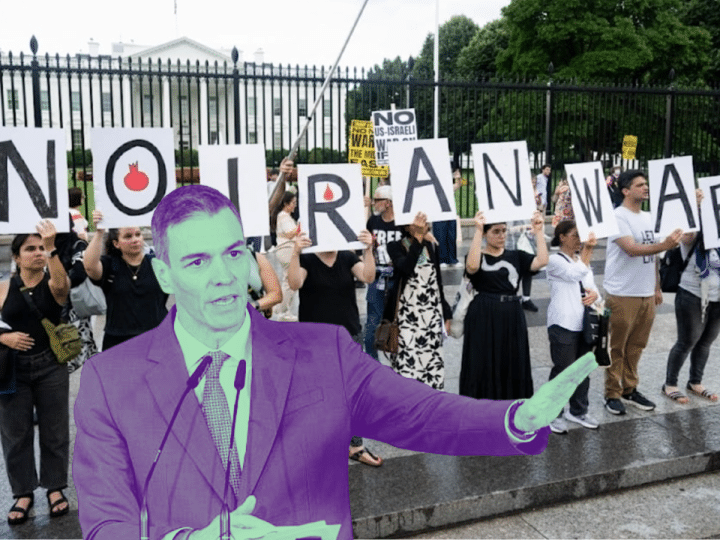
Spain opposes Iran war

Spain opposes Iran war

Spain’s Prime Minister, Pedro Sánchez, has once again pushed back against the US military machine. He has made it clear to Trump and his backers that Spain will not allow another US president to drag the country into an illegal war in West Asia on the back of bogus claims.

This refers back to the illegal war on Iraq, which began on the basis that Saddam Hussein had weapons of mass destruction. However, this ‘justification’ for the mass murder of Iraqis was debunked and revealed for the manipulative misinformation it was.

Whilst many haven’t learned and continue to parrot lines from bad actors in power, Spain has, with Sánchez telling Trump:

Twenty-three years ago, the U.S. dragged us into Iraq over claims of weapons of mass destruction. None were found. You cannot fool us twice.

Advertisement

When will other Western leaders learn?

Spain, it appears, has learned from the mistakes of the past. It has consistently opposed both the genocide on Gaza and the current illegal war on Iran.

However, our own leaders are still far too slow – or reluctant – to take any decisive action to stop the world careening into another world war. Equally, they seem unperturbed – meaningless rhetoric aside – by the mass slaughter of Arab men, women and children. Theyhave afforded Israel absolute impunity.

Advertisement

Starmer and co. have said they oppose the war on Iran waged by the petty, childish and egotistical US President, but their words have not been followed by actions. The defence budget has still increased following Trump’s orders, and they still allow the US to use its bases for ‘defensive’ purposes.

Instead of defending international law and calling for true diplomacy, the British government are budgeting huge sums to go directly into the hands of Western arms companies (war lords), who only care about their profits. And there is a hell of a lot of profit to make in war for those who supply the means to obliterate other people.

Sánchez, by contrast, recently spoke about Spain being a “peaceful and pacifist country”, vowing to “put an end to all wars”:

Advertisement

Advertisement

War mongers want to have their cake and eat it too

The Canary‘s Joe Glenton has written extensively about the military machine and the illegal war on Iraq. Glenton is a former soldier who refused to return to duty in Afghanistan as he rightfully believed the aggression was illegal under international law.

Recognising how these wars only benefit the billionaire-owned arms and fossil fuel companies, Glenton has played a big role in trying to get the British people to open their eyes to the manipulation pushed by Western leaders to justify more endless wars in West Asia.

Glenton wrote of the disingenuous Royal British Legion (RBL) and its incestuous relationship with global arms firms back in February:

Since the ousting of the pre-2003 government, Iraq has become a lucrative cash cow for certain players, including global arms firms – what I prefer to call Big Death. Welcome to the military charity-industrial complex.

What makes the Iraq event and comments from the Royal British Legion striking is that both the legion and the National Arboretum proudly state their connections to the global killing business.

Advertisement

BAE Systems is a major partner of the RBL – to the tune of £400,000. The Arboretum’s website names Amey, Key Systems, Briggs Equipment and Jaguar Land Rover among its partners and supporters. All of these firms make profit from war and global instability.

The press and RBL did not even attempt to reflect these galling truths in their coverage of the event.

Those billionaires fuel fear and spread lies about countries that refuse to follow US orders or possess resources they want to get their grubby hands on.

Therefore, it becomes pretty clear that doing the bidding of arms companies – and the politicians in bed with them – hurts ordinary people, drains our pockets, and enriches only the billionaires at the top.

Advertisement

Advertisement

A futile situation for the many whilst the few sit pretty

Meanwhile, there is a very real crisis coming towards us as a result of the breakdown of global ecosystems, which we always seem to fail to invest in, instead saying there just simply isn’t the funds.

This was called out recently by Labour MP Chris Hinchliff, who highlighted the blatant hypocrisy and failure to prioritise action on the climate emergency. As reported by Novara Media:

The government can summon billions of pounds for new military hardware when the defence sector calls for it. We need an equally decisive mobilisation of investment to restore the natural world on which we rely for our food, water and clean air.

Without these essentials our country has no future.

Every critical ecosystem across our planet is on a pathway to collapse with an irreversible loss of function, and this poses huge threats to our national security. This looming crisis demands urgent action.

Advertisement

Funnily enough, many of the same billionaires and hedge funds pouring money into arms companies also hold major investments in the fossil fuel industry.

That overlap creates a dangerous conflict of interest. It drives the world ever closer to the brink and forces billions of people to bear the consequences of climate breakdown and social collapse.

As the world burns, whether from bombs or extreme weather, the super-rich retreat to their private islands on private jets, shelter in air-conditioned luxury, and watch.

Featured image via the Canary

Advertisement

By Maddison Wheeldon

Source link

Advertisement
Continue Reading

Politics

Steven Spielberg, Laura Dern And Cillian Murphy Share Sam Neill Tributes

Published

on

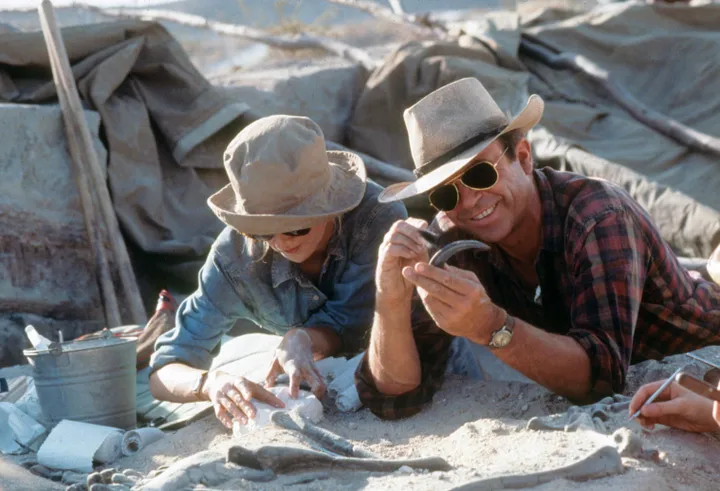
Laura Dern and Sam Neill played the leads in 1993's Jurassic Park

Steven Spielberg has paid a heartfelt tribute to the actor Sam Neill, who he directed in the first Jurassic Park movie.

On Monday, the Oscar-winning filmmaker was among the Hollywood stars to pay their respects to Sam, following his death at the age of 78.

In a statement to Variety, Spielberg shared how “saddened” he was by the loss, beginning by expressing his “gratitude” to filmmakers Roger Donaldson, Gilliam Armstrong, Graham Baker and Phillip Noyce “for casting Sam Neill in the roles in which he was so brilliant that brought him to my attention”, which led to him being cast in Jurassic Park.

Spielberg enthused: “Sam was exceptionally collaborative. It was a stretch for him to play a character who acted as though children were messy and smelly because this was the opposite of the loving father he was to his children.

Advertisement

“I adored making all the Jurassic movies with him. Along with Laura Dern and Jeff Goldblum, we will always have our Jurassic family and Sam will never be forgotten by us or his many millions of fans around the world.”

Laura Dern then shared her own tribute with the US outlet, which read: “Sam was my beloved lifetime friend.

“He showed me the depths of loyalty, protectiveness and love always with the driest of wit. He was a true and noble gentleman, wrapped up in my dream leading man.”

Laura Dern and Sam Neill played the leads in 1993's Jurassic Park
Laura Dern and Sam Neill played the leads in 1993’s Jurassic Park

Amblin/Universal/Kobal/Shutterstock

“I will love you forever, Dr. Alan Grant,” she concluded.

Advertisement

Following the news of Sam’s death on Monday morning, a number of his Hollywood peers and former co-stars have been paying their respects on social media…

Oscar winner Cillan Murphy, who starred alongside Sam in the first two seasons of Peaky Blinders, told Deadline: “Like everyone who knew and worked with Sam, I admired him and adored him in equal measure.

“He was one of the kindest, funniest and gentlest people, and one of the finest actors.”

Advertisement

New Zealand and Australia’s prime ministers, Christopher Luxon and Anthony Albanese, also posted tributes of their own.

“It is with immense sadness that the whānau of Sam Neill share the news of his passing on Monday 13 July, in Sydney Australia,” his family announced in a statement.

“Sam was surrounded by family and passed with the dignity that has characterised his whole life.”

Advertisement

The Emmy nominee’s death was described as “sudden and unexpected but blessed by the fact that Sam remained cancer-free”.

Source link

Advertisement
Continue Reading

Politics

Zia Yusuf called out over claim Reform MPs receive no security

Published

on

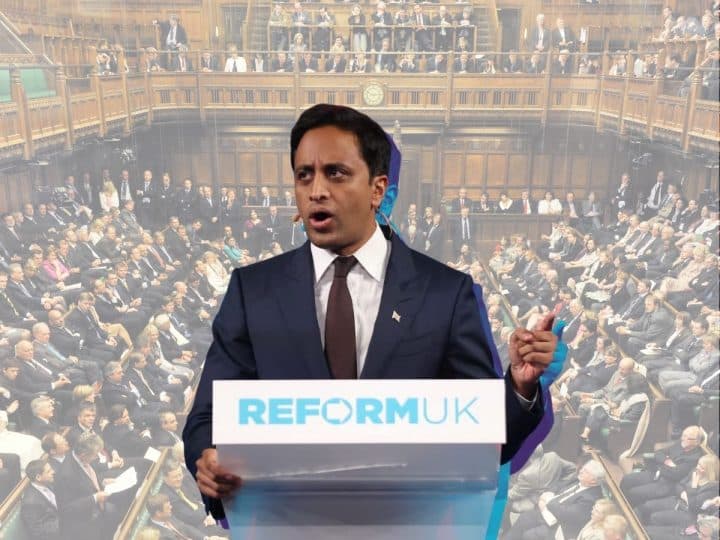
Zia Yusuf at a Reform-branded podium speaking with an image of a packed House of Commons behind him

Zia Yusuf at a Reform-branded podium speaking with an image of a packed House of Commons behind him

Zia Yusuf has received criticism over his claim that the state provides Reform MPs with “no protection whatsoever”.

Zia Yusuf: Nobody ‘cares about security of Reform MPs’

The headline Yusuf was responding to read:

Advertisement

Reform MPs given 24-hour protection in Widdecombe murder hunt

In full, Yusuf’s response read:

Given the way this headline is worded, many are (understandably) taking it to mean Reform MPs have been given police protection by the state.

I want to clarify that the opposite is true.

The state is providing no protection whatsoever.

In fact, based on what I have seen in the last 48 hours, none of the government, the Speaker nor the police care at all about the security of Reform MPs.

Advertisement

Several of our MPs have written to the above in recent months about distressing, escalating security concerns, asking for help.

Their correspondence was not even replied to.

I will let you draw your own conclusions from this.

Since Yusuf made these claims, multiple MPs have come forwards to dispute them, including Rosie Duffield, an Independent MP for Canterbury, Whitstable and the villages.

Advertisement

Commentator Dan Hodges said:

Zia Yusuf’s statement was untrue. And he knew it was untrue. It had one purpose. To try and deflect from legitimate scrutiny of Nigel Farage.

Hodges also called out Reform mayor, Andrea Jenkyns:

Advertisement

Zia Yusuf vs Lindsay Hoyle

The Sun’s political editor noted the following:

Advertisement

Yusuf is now feuding with the speaker of the house, as you’d expect from him.

Advertisement

He said:

Lindsay Hoyle, the Speaker of the House, has no jurisdiction over me.

I am not afraid of him.

He is a bully who did not even reply to a letter from a female Reform MP pleading for assistance with security until after I revealed it.

If this is not true then I invite him to deny it on the record rather than try and bully the very people he has let down.

Advertisement

Instead he briefs the press like a coward.

He is a disgrace to his office.

Yusuf doesn’t have to worry about Hoyle because he isn’t an MP and neither is Yusuf because his own party keeps blocking him from standing, which the Canary explored why this could be.

What goes around comes around

Another point people are raising is that Reform politicians pursue a maximally divisive form of politics. Despite this, they’re also the first to complain that they face hostility. You really can’t have it both ways.

Advertisement

If you’re going to label people ‘traitors’ — as Zia Yusuf has — then people are going to get angry. If you’re going to claim successive governments have overseen an ‘invasion’ — as he has — then tensions are going to rise.

Politicians who stoke fear and division think they can ride the wave, but hatred is more like a fire than a sea. And people who play with fire get burned.

Featured image via the Canary

By Willem Moore

Advertisement

Source link

Continue Reading

Politics

Met Office study attributes 2,700 excess deaths to heatwaves in May and June

Published

on

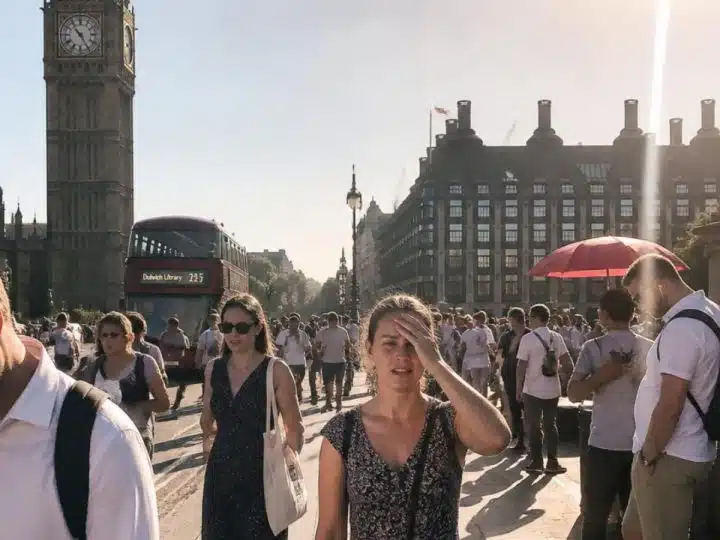
Pedestrians on Westminster Bridge in heatwave

Pedestrians on Westminster Bridge in heatwave

The heatwaves in the UK over May and June are estimated to have caused over 2,700 excess deaths. Around 42% of those deaths are thought to be a consequence of climate change, which increased maximum temperatures by 3-4°C.

That’s according to a study conducted by the Met Office, Imperial College London and the London School of Hygiene & Tropical Medicine. It builds on previously published UK research from 2022, which found that rising temperatures caused nearly 800 excess deaths annually.

Imperial College London’s Dr Clair Barnes stated that:

Every time we have a heatwave, our news is filled with reporters at swimming pools, images of people eating ice cream and sunbathers on beaches. We all love the sun, but people need to be aware that we are now seeing dangerous climate-change-fuelled heat that is claiming lives, disrupting schools and hospitals and shutting down transport and infrastructure.

It’s time we woke up to the fact that we now live in a country with dangerously hot summers. To protect people during future extremes, we must urgently adapt to the reality of the climate we now have, and double down on global efforts to reach net zero emissions to stop this from getting worse.

Advertisement

Heatwaves ‘longer and more frequent’

The researchers compared historical mortality records using rapid-analysis modelling methods. They focused their efforts on England and Wales, as Scotland and Northern Ireland didn’t face the same extraordinary high heat.

Professor Lea Berrang Ford, chief of the Centre for Climate and Health Security’s UK Health Security Agency (UKHSA), explained more:

These modelled estimates are based on past trends in temperature effects on mortality and provide an important indication of the potential health impacts of sustained hot weather, particularly for the most vulnerable among us. While they are not a measure of observed mortality, they help illustrate the scale of risk associated with extreme heat and the growing threat climate change poses to our wellbeing.

As set out in our most recent Health Effects of Climate Change report, periods of heat in the UK are likely to become more intense, longer and more frequent as the world continues to warm.

During May’s heatwave, West London saw temperatures of 35.1°C. Likewise, in June, meteorologists recorded temperatures above 37°C for East Anglia. Both of these figures broke national records for their respective times of year.

Advertisement

The Met Office explained that temperatures like these would be extreme even in mid-summer, noting that they occurred during the start of the season. Normally, July and August bring the highest temperatures of the year across the country.

The Met Office’s Dr Mark McCarthy emphasised that these extremes are due to human activities, stating:

it is clear that human-caused climate change is leading to more frequent and more intense summer heatwaves. This intensification is driving many impacts, including those affecting human health and mortality and other issues, such as agriculture, effects on transport infrastructure and biodiversity.

‘A major health risk’

During the May heatwave, the study estimated that around 550 people died due to the heat. Approximately 59% of those deaths are attributable to human-caused climate change.

June’s heat event was even more devastating, with around 2,200 excess deaths according the the model’s findings, of which 38% were due to climate change.

Advertisement

It’s also notable that the risk pattern associated with the heat is shifting northwards. Although the highest temperatures were recorded in the south, the Midlands showed similar estimated rates of fatalities. The researchers attributed this trend to the fact that the Midlands are less accustomed to extreme heat.

Dr Malcolm Mistry of the London School of Hygiene & Tropical Medicine said:

With climate change driven by human activity making summer heatwaves more frequent and more intense, these spikes of extreme hot weather are rapidly evolving into a major health risk for people in the UK.

It is vital that action on adapting Britain’s homes, workplaces, and critical infrastructure to extreme heat outpaces these health risks, especially if we are to protect those most vulnerable to its impacts, such as older people, babies, and children.

As the Canary previously reportedover 1,500 people participated in a heat strike in the last week of June. Workers staged symbolic lunchtime-walk-outs and took thermometers into work to demonstrate their unsafe conditions.

Advertisement

Participants in the strike are calling on ministers to set a maximum working temperature – a demand already voiced by the Bakers Union for over a decade. In doing so, the UK would join countries like Austria, Belgium, China, India, Portugal and Spain, which already regulate maximum working temperatures.

Featured image via the Canary

By Grace

Source link

Advertisement
Continue Reading

Politics

Why Do My Fingers Suddenly Have Tiny Itchy Bumps?

Published

on

Disyhdrotic eczema

A few summers ago, I noticed tiny, tapioca-like clusters of bumps on my fingers. They were flesh-coloured and incredibly, hand-bitingly itchy.

This turned out to be a condition called pompholyx or dishydrotic eczema. The issue is sometimes nicknamed “summer finger bumps”, due to how much worse it tends to get in the hotter months.

In fact, warm weather and excessive sweating are listed as factors that may cause pompholyx to form or flare up.

Disyhdrotic eczema

What are the symptoms of dishydrotic eczema?

  • extreme itchiness
  • the sudden appearance of tiny blisters on your hands (especially the sides of your fingers) or feet
  • a prickling sensation
  • dry or cracking skin after the blisters burst
  • feelings of heat in your soles or hands.

Symptoms typically last two to three weeks.

It’s more common among women, people under 40, individuals with another type of eczema, those with asthma and heavy sweaters.

Advertisement

It’s a chronic condition, meaning that though there are ways to manage the symptoms, we don’t have an outright cure yet.

Flare-ups may be more likely during times of stress, hot weather or contact with soaps, cleansers and detergents.

The first eruptions of dishydrotic eczema blisters

What should I do if I suspect I have dishydrotic eczema?

Don’t try to diagnose yourself, the NHS says. If you have new skin issues you suspect are due to dishydrotic eczema, see a GP.

The same goes if you have pompholyx that’s already been diagnosed but “the blisters are very painful, leak yellow or green pus or are covered in a yellow-brown crust – these are signs of an infection”, they added.

Advertisement

Soaking your hands in potassium permanganate may help if they’re weeping or oozing. Using an emmolient moisturiser on the affected area is one of the main ways to manage flare-ups.

Sometimes, your doctor may prescribe a steroid cream to help you manage the itching or send you to see a specialist for UV or other treatments.

  • washing your hands with warm water and using a moisturising soap,

  • wearing protective gloves (ideally with a cotton lining) when using chemicals like shampoos, cleansers and detergents

  • wearing socks, tights or stockings made from cotton or silk, rather than nylon, if the condition affects your feet,

  • wearing shoes made from leather, rather than plastic or rubber (again if the condition affects your feet),

  • avoiding anything you think causes your symptoms, such as cleansers, some metals, or detergents.

Don’t burst your blisters, as this can lead to further damage and leave your skin open to infection.

Advertisement

Source link

Continue Reading

Politics

Nigel Farage Says Hes Treated As War Criminal By Critics

Published

on

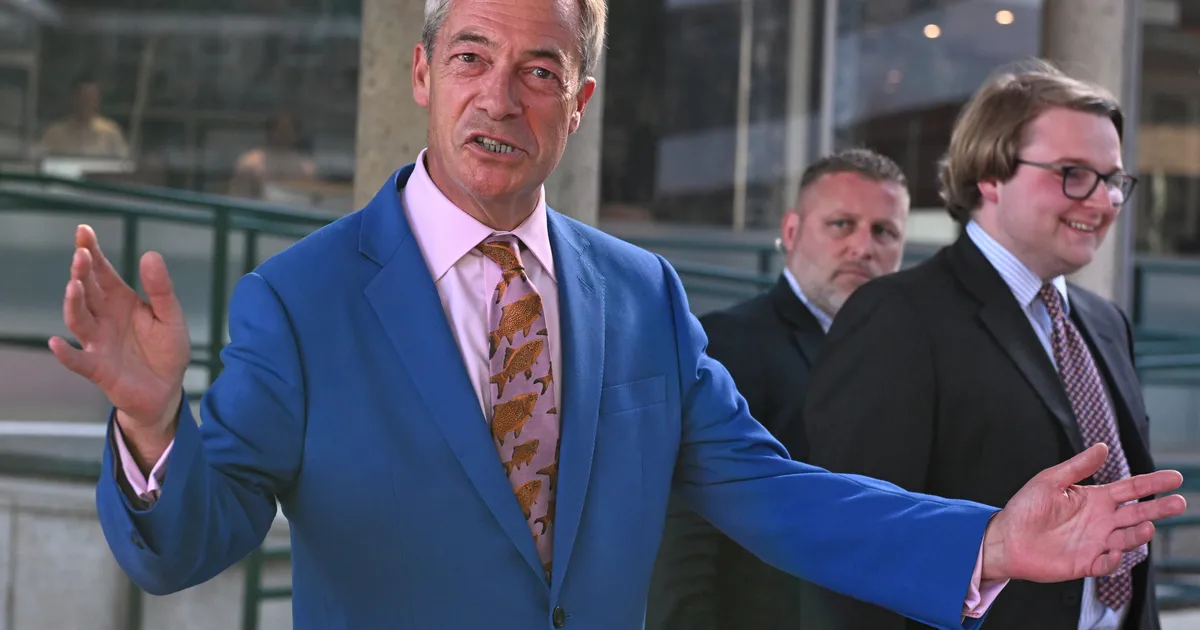
Nigel Farage Says Hes Treated As War Criminal By Critics

Nigel Farage has claimed he is being “treated like a war criminal” by his critics.

The Reform UK made the astonishing remark while being interviewed by the party’s in-house podcast.

He was speaking after he shocked Westminster last week by quitting as MP for Clacton to trigger a by-election in the seat.

Farage claimed he was the victim of a “witch hunt” as he faces a parliamentary standards investigation over a £5 million gift from a Thailand-based crypto billionaire but did not declare.

Advertisement

He could also face separate probes over support he received from convicted fraudster George Cottrell and lobbying he has done on cryptocurrency.

On the podcast, he said calling the by-election was “the right thing to do”.

“I think effectively I’m being treated like a war criminal,” he said.

“It’s quite astonishing, and it’s like our mainstream media think we have to defer to them at all times, and I just don’t buy that.

Advertisement

“You look at today’s press and they say he doesn’t want scrutiny. I don’t mind scrutiny, but I do mind illegally obtained information, I do mind computer hacking. I genuinely mind those things, and the intimidation of my family.

“I just thought it had all reached such a frenzy that I had to do something.”

The decision to trigger the by-election has backfired, though, after Labour, the Tories, the Lib Dems, Greens and Restore Britain all said they would not stand candidates in the contest.

Instead, Farage faces a head-to-head battle with Count Binface.

Advertisement

The Reform leader said: “I’ve done something positive. They wanted a by-election here. Well now they’ve got one and they don’t want to stand.”

Listen to Commons People, the podcast that makes politics easy. Every week, Kevin Schofield and Kate Nicholson unpack the week’s biggest stories to keep you informed. Join us for straightforward analysis of what’s going on at Westminster.

Source link

Advertisement
Continue Reading

Politics

Lord Vaizey on Tate Modern’s record-breaking exhibition

Published

on

'Frida: The Making  of an Icon': Lord Vaizey on Tate Modern's record-breaking new exhibition

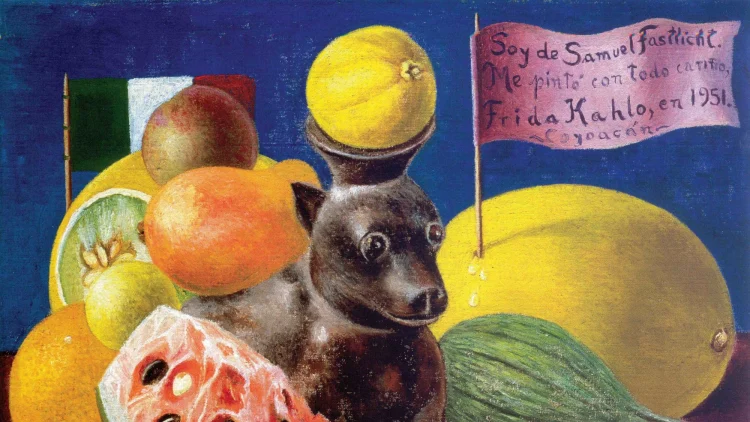
1951: ‘Still Life (I Belong to Samuel Fastlicht)’ by Frida Kahlo (Private Collection)


4 min read

An arresting exhibition exploring her enduring influence and appeal, the number of Frida Kahlo’s paintings on display may be limited – but this show more than demonstrates her range as an artist

Advertisement

I don’t want to stress you out or add to your already huge ‘To Do’ list, but you have to buy a ticket to Frida Kahlo at Tate Modern this weekend. It’s turned out to be Tate’s biggest selling exhibition in its history, at least as far as advanced tickets are concerned. It’s outsold David Hockney, the previous record-holder for almost a decade, and even Tracey Emin, whose blockbuster exhibition is currently on in the same place. As a trustee of the Tate, this makes me very happy. 

Frida untitled
1940: ‘Untitled (Self-portrait with thorn necklace and hummingbird)’ by Frida Kahlo | Image courtesy of: Nickolas Muray Collection of Mexican Art

What is it about Kahlo that seems to grip the imagination of the British public? She’s Mexican. She died in the 1950s, before she was 50. She was the wife of the great Mexican muralist Diego Rivera, and to an extent lived in his shadow. While she received some recognition in her lifetime – including high-profile shows in New York and Paris – and the respect of surrealist artists who embraced her work, she never achieved a substantial breakthrough while alive.

Today, however, she is regarded as one of the greatest artists of the 20th century. A Frida Kahlo self-portrait is instantly recognised, and her iconography has inspired artists across the world. “Fridamania” is now a thing, and has grown since the 1980s into what it is today.

Advertisement

Much of this is to do with Frida’s story. Her emergence into the limelight is part of the welcome movement to reclaim female artists and give them the prominence they deserve.

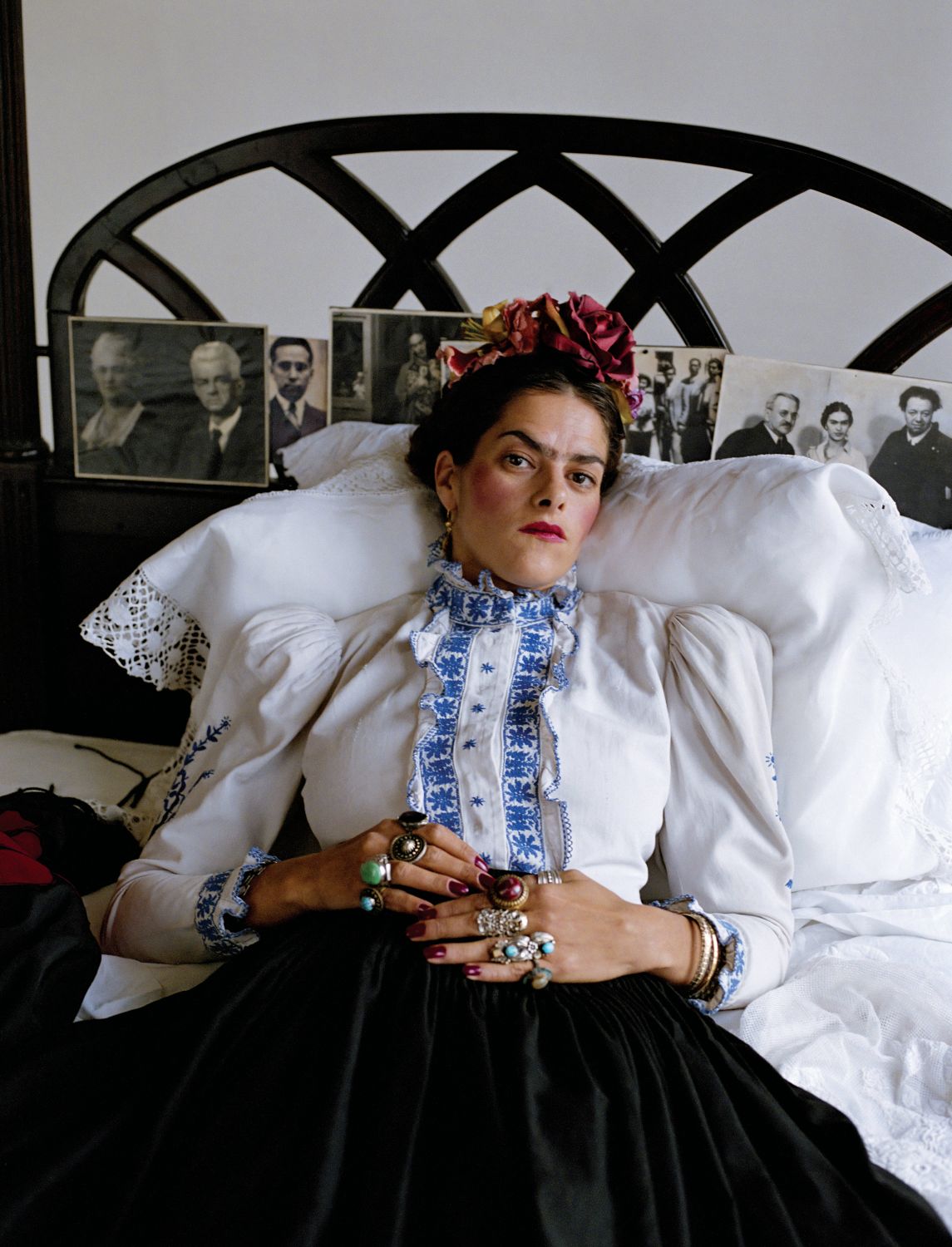
One of my favourite exhibits is not a Kahlo at all. It’s an arresting portrait photograph of the artist Tracey Emin, dressed as Kahlo

She also struggled throughout her life, first with polio, which she contracted when she was 13, and then with the debilitating impact of bus accident when she was 18, which left her with life-changing injuries. She was also highly individualistic, painting herself and her friends, reclaiming Mexican heritage and displaying her fluid sexuality. As a result, she has become a hero to many people, who admire someone who refused to compromise with the mores and conventions of her time.

Advertisement
Ghetto Frida
2009: ‘Ghetto Frida’s Mission Memories’ by Río Yañez | © Río Yañez

Kahlo painted perhaps 150 to 200 paintings during her career, and as she has been embraced by Mexico as part of its cultural heritage, few come up for auction, and few are in collections abroad. As a result, the Tate exhibition has managed to amass only about 20 paintings for the show, which is nevertheless a respectable amount and more than shows her range.

Being Frida
2000: ‘Being Frida’ – Tracey Emin photographed by Mary McCartney | Image ©: Mary McCartney

There are also many of Frida’s dresses, celebrating Mexican heritage, which caused a sensation when she visited New York in the 1930s. An equal amount of space is given over to the work of many of the artists that inspired her, illustrating her enduring influence from the 1970s onwards. Ironically, one of my favourite exhibits is not a Kahlo at all. It’s an arresting portrait photograph of the artist Tracey Emin, dressed as Kahlo, lying on a bed, staring disapprovingly at the camera, in a picture taken by Mary McCartney.

I love the fact that Tracey and Frida are exhibiting side by side, and to add to your To Do list, why not buy a ticket for both?

Lord Vaizey is a Conservative peer

Frida: The Making of an Icon

Curated by: Tobias Ostrander, Estrellita B Brodsky and Beatriz García-Velasco

Venue: Tate Modern – until 3 January 2027

Source link

Advertisement
Continue Reading

Politics

Digger Trailer Offers First Look At Tom Cruise’s Transformation

Published

on

Tom Cruise and Riz Ahmed in Digger

Tom Cruise has undergone a dramatic make-under for his role in the new dystopian comedy Digger.

In the Alejandro G. Iñárritu’s much-hyped new film, the Top Gun star leads an all-star cast that includes Riz Ahmed, Jesse Plemons and Sandra Hüller, playing the titular Digger Rockwell, a billionaire tasked with saving the world from an environmental disaster that he’s seemingly responsible for causing in the first place.

Already one of 2026’s most anticipated new cinema releases, the first Digger trailer dropped at the end of June, although many were intrigued to discover that it was made up almost entirely of footage of clips from Tom’s old films, including Risky Business, Cocktail, Mission: Impossible, Jerry Maguire, Eyes Wide Shut and Tropic Thunder.

However, the first full-length trailer for the new film was released on Monday afternoon, depicting the Oscar-nominated Hollywood icon as you’ve never seen him before.

Advertisement
Tom Cruise and Riz Ahmed in Digger

The footage also offers viewers a first glimpse at some of his A-list co-stars’ own transformations for the film for the first time.

Check out the new Digger trailer for yourself below:

Digger will also feature appearances from Call Me By Your Name’s Michael Stuhlbarg, Talk To Me’s Sophie Wilde and House Of The Dragon’s Emma D’Arcy, as well as Emmy winner John Goodman, who will play a fictitious president of the United States.

Its director Alejandro González Iñárritu, is a five-time Oscar recipient who has previously helmed the likes of Birdman and The Revenant.

Advertisement

While critics are yet to see Digger in full, footage from it premiered at CinemaCon in April, and was immediately praised by critics and journalists in attendance.

Billed in the new trailer as a “comedy of catastrophic proportions”, more specific details about the movie are being kept under wraps for the time being.

Digger will hit cinemas on Friday 2 October.

Advertisement

Source link

Continue Reading

Politics

The 9 Best Carry-On Suitcases That Fit In The Overhead Locker (Even On Ryanair)

Published

on

Peak Design/ Away suitcases

We hope you love the products we recommend! All of them were independently selected by our editors. Just so you know, HuffPost UK may collect a share of sales or other compensation from the links on this page if you decide to shop from them. Oh, and FYI — prices are accurate and items in stock as of time of publication.

When did taking a checked bag on an airplane get so expensive? At some point in the last few years, airlines have found a way to charge us for basically existing anywhere in the vicinity of an airport, as if going on holiday wasn’t expensive enough…

That means, if you want to take even a fraction of your toiletry bag, you’re likely to end up paying through the nose for checked baggage.

Advertisement

If you’re not in the business of spending more money than you need to to get where you need to go, you might prefer to take a carry-on suitcase instead.

To make sure you have a container that doesn’t drive you insane when you embark on your next trip, we’ve rounded up the best carry-on and cabin suitcases in the UK right now.

How we tested the best carry-on suitcases

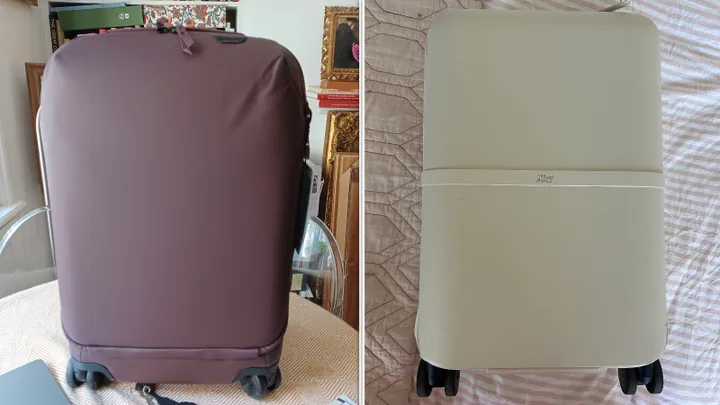
Peak Design/ Away suitcases

Amy Glover/ Honey Jane Wyatt

Peak Design/ Away suitcases

To make sure we’re only recommending the best of the best suitcases, our shopping writer enlisted the help of the HuffPost UK team to test out different kinds of carry-ons.

Advertisement

For each suitcase tested, we looked out for features like durability, zip strength, size, compartment options, compression, expansion zips, locks, and wheel smoothness.

We also considered whether cases fit UK airlines’ carry on guidelines and if they came with a warranty.

The 9 best carry-on suitcases in 2026

Best large carry on

If it makes you normal to be able to pack the right amount, call me weird, because I’ve never done that in my life.

Advertisement

That’s why this big (and expandable) carry on from Away is calling my name: it can hold up to 10 outfits, and comes with a flex feature that unlocks an extra 6cm on space.

Beware though, you might need to upgrade to a checked bag when it’s expanded, so make sure you check with the airline first.

Dimensions: 57.7 x 39.2 x 24.4cm
Weight: 3.9kg
Warranty: Lifetime.

Best hybrid carry on

This case might look like it has a squishy exterior, but that is in fact a rigid frame packed with a super-thin felt-lined interior so you have even more packing space.

Advertisement

The outside is home to a quick access pocket, filled with its own teeny pockets (meta) to keep everything in its place. Meanwhile, the larger compartment is held in place with a drawbridge-style strap unlike any other we’ve ever seen to keep your things visible and stationary.

Its 360 spinner wheels and comfy handle don’t hurt, either, according to our lifestyle writer, who praises its expansion zip that adds more space for when you pick up souvenirs on holiday (or even just at the airport).

Dimensions: 55.6 x 35.6 x 23cm
Weight: 3.9kg
Warranty: Lifetime.

Best hard shell carry on with a pocket

If there’s one thing we’ve lost in all of this push for protecting our possessions, it’s the ability to quickly grab something from a front pocket.

Advertisement

Should you be the type who isn’t keen on taking extra bags on board a flight, this stylish carry on from Carl Friedrik has its very own front pocket so you can grab your essentials from it on the go.

The polycarbonate outer shell will make sure nothing gets bumped on your journey, while two sets of compression straps inside keep everything nice and snug.

Dimensions: 56 x 38 x 25cm
Weight: 4.7kg
Warranty: Lifetime.

Best lightweight carry on suitcase

If you’re anything like me, you’ll want to pack to max capacity without harming your arms when you go to lift your case into the overhead locker.

Advertisement

Luckily for you, Bondi has created a super lightweight carry-on set with all the features of a heavier one. The set up inside is pretty standard, but it does come with a detachable mesh wash bag so you can keep all your toiletries snug throughout your journey.

If this panna cotta yellow isn’t doing it for you, it also comes in a range of other shades – some as fun, and others more muted for the minimalists reading.

Dimensions: 56 x 36 x 20cm
Weight: 2.4kg
Warranty: 10 years.

Best glossy luggage

If there’s one surefire way to be able to spot your luggage in the overhead locker, it’s when it’s shining down at you. This glossy case from HORIZN uses German engineering to make it the best of its kind.

Advertisement

Not only does it come with premium features like 360 spinner wheels, a telescopic handle that locks at your perfect height and a TSA lock to keep your belongings safe, but the two inner pockets are guarded by mesh panels, so you won’t have one side with stuff falling around.

Dimensions: 55 x 40 x 20cm
Weight: 2.9kg
Warranty: Lifetime.

Best expandable suitcase

Who knows what kind of delights you’ll encounter on holiday that you’ll want to bring home with you? If you’re looking for an excuse to do some shopping, this carry-on lays the groundwork for a spending-filled trip, as it has an expandable zip that increases its capacity.

The inside is filled with one large compartment, held down by a Y-shaped compressor strap, while the other compartment is held down by a separator with three mesh pockets to fit all your knick knacks.

Advertisement

And, as with all Antler cases, it’s protected by a lifetime warranty, in case the combination lock and coil zips fail you at any point over, well, the rest of your life.

Dimensions: 55 x 36 x 23cm
Weight: 2.8kg
Warranty: Lifetime.

Best budget suitcase

Travel can be expensive but your luggage doesn’t have to be. If you’re not trying to break the bank on the thing that merely holds your clothes, this suitcase from Dunelm is the value for money you’ve been looking for.

It’s super lightweight, so you’ll have no probem getting it into the overhead locker no matter how much you overpack. With four spinner wheels, it’s easy to manoeuvre, and it even has a handy side handle so you can convert it into a briefcase-style bag if you’re not into the sensation of dragging something along a pavement.

Advertisement

Dimensions: 55 x 40 x 20cm
Weight: Not stated
Warranty: None.

Best for long journeys

Look, we’re not just including this case because it’s pink (although that’s at least part of the reason) but also because if you’re a frequent traveller, this is the case for you.

Loaded with a removable battery pack that can charge your phone and your laptop, this carry-on will save you from spending your whole journey worrying you’re not going to be able to order your Uber at the other end.

But it’s not just that that will make your life easier. As well as being almost completely silent, the wheels glide along like a cloud in the sky, and the entire exterior is reinforced with an aerospace-grade shell so it can withstand bumps on the road – or even in the sky.

Advertisement

Dimensions: 55 x 38.5 x 21.5cm
Weight: 3.4kg
Warranty: Lifetime.

Best for Ryanair

If you’re travelling on a budget, it can be tricky to walk the line between a case that fits more than a literal shoe and going over the travel allowance. This one from Tripp is *just* the right size for the Ryanair guidelines, so you won’t be stuck with any annoying fees to kick off your holiday.

After unclipping the padlocked zips, you’ll find two compartments – one with a mesh cover and the other with X-shaped packing straps – to keep everything in place.

While the original size alone is more than spacious enough for a week’s worth of belongings, you can also unzip the extra zip to make it big enough to hold all the keepsakes you’ll inevitably pick up on holiday (if you’re anything like me, that is…).

Advertisement

And, most importantly, the hard outer shell makes it sturdy enough to last for years, according to our audience editor. It even comes with a five-year guarantee.

Dimensions: 65 x 45cm
Weight: 2.7kg
Warranty: 5 years.

Source link

Advertisement
Continue Reading

Trending

Copyright © 2025