

Politics
Rosebank campaigners highlight human rights record of Israeli company



Campaigners, faith groups, human rights lawyers and politicians have today gathered outside the Foreign, Commonwealth & Development Office to oppose the controversial Rosebank oil field. And they warned that the project risks funnelling millions of pounds to a company linked to human rights concerns in Palestine.
The Rosebank field, which has long faced staunch opposition on climate, environment and economic grounds, could send over £200m towards Delek Group if it gets the green light. Delek, one of Israel’s largest companies, is a fuel conglomerate that the UN has flagged for human rights concerns in the Occupied Palestinian Territories.
The company operates in illegal West Bank settlements and provides fuel to the Israeli military via its subsidiary, Delek Israel.
The demonstration highlights growing concerns over the human rights implications of Rosebank and follows earlier demonstrations which took place across Scotland last week, with support from MSPs and the Scottish Palestine Solidarity Campaign.
The move also follows legal advice, which led to the Scottish Palestine Solidarity Campaign warning the UK government earlier this year that it could breach its own obligations under international law should it choose to reapprove the Rosebank project.
Among those demonstrating outside the Foreign Office today were Green Party MP Ellie Chowns, Labour MP Richard Burgon, human rights lawyer Alice Hardy and representatives from War on Want, Palestine Solidarity Campaign, Christian Climate Action, Fossil Free London and more.
Hardy, a partner at Bindmans, said:
Approving this project would see the UK condone the flow of hundreds of millions of pounds towards a company operating in Israel’s West Bank settlements – which are indisputably illegal under international law.
The UK government has already been warned that it could breach its own obligations under international law should it choose to do so.
Ministers now face a choice: respect international law in their decision making, or wave through a project without regard for those laws.
There are endless reasons why the polluting Rosebank project should not go ahead – but the fact that it could financially benefit a company that is connected to atrocities in Palestine cannot be ignored.
Burgon, Labour MP for Leeds East, commented:
Rosebank is wrong on every level. Not only will it cause unparalleled climate damage – it risks funding serious injustice and human suffering abroad.
At a time when the links between oil and conflict are more stark than ever, the UK government must wake up to reality. Not only will new fields like Rosebank keep us locked into the fossil fuel rollercoaster, they will simply enrich oil giants and companies like Delek Group that the UN has linked to serious human rights concerns.
The government must get off the fence and reject Rosebank – making it clear that the UK will not allow North Sea oil profits to fuel harm overseas.
Dr Ellie Chowns, Green MP for North Herefordshire, said:
Moving ahead with the Rosebank oil field project would be a fundamentally reckless and indefensible decision, inflicting devastating damage on our environment while doing nothing to protect energy security or jobs.
At a time when ordinary families across Britain are reckoning with the impacts of climate breakdown and the economic pain of yet another conflict-driven energy crisis, the government should be making every effort to speed up investment in a just transition to renewable energy, not rubber-stamping new fossil fuel projects.
There is also growing evidence that revenues from the Rosebank project could benefit a company linked to illegal settlements and human rights abuses in Palestine, implicating the UK in breaches of international law against Palestinians already suffering amidst ongoing starvation, besiegement, and genocide.
The government cannot disregard the clear environmental, economic, security, and human rights risks posed by this project – it’s time to reject Rosebank for good.
Featured image via the Canary
By The Canary


The post ‘We must break the spell of trans’ appeared first on spiked.


3 min read
The Union Jacks were the first thing I noticed. As my car pulled off the M61, the streets of Makerfield announced themselves in red, white and blue. This is a place that doesn’t need to be told it can fly a flag.
I was out knocking doors the day after Josh Simons announced he’d be stepping down. I’ll be honest, I wasn’t quite sure what to expect.
This is, historically, a Labour heartland and a seat that went our way just a couple of years ago. But last week, 24 out of 25 council seats in Wigan went to Reform.
I knew it would be tough. It wasn’t what I expected. The first door I knocked belonged to a woman in a semi-detached, path of white pebbles across grey stone.
She wasn’t in any hurry to close it. Surprised Labour was out this early, she said. I told her why it matters, why this party needs to rebuild trust in places like this.
She called her husband through from where he was decorating. Yorkshire and Lancashire, together chatting over a doorstep, unhurried, the way politics almost never allows.
He’d voted Reform the week before, and in the general election. If Andy Burnham stood here, he said he’d have to have a “really deep think”, but could convince him to come back to Labour. Eight days after putting a cross next to the party in teal, this man was genuinely reconsidering.
That matters. A few doors down, someone else put it with a directness I won’t forget. “I’ve got a bit of Labour left in me, just need to find a way to get it out.”
These aren’t voters who have abandoned us. They are voters who want a reason to come back. There is a difference, and Westminster forgets it constantly.
Andy Burnham’s name came up again and again. Not as a political calculation, but with the warmth you reserve for someone you actually know. “He’s done a lot for Manchester. I’d be sad to see him go as mayor.”
But they’d be glad to have him as their MP too. Everybody had a story, a friend, a family member, one degree of separation from the man. That kind of proximity counts for more than any amount of targeted advertising. I also heard something generous about Josh Simons, who is standing down. “He’s a young lad who moved his family from Cambridge and chose to bring them up locally. You can’t ask for more than that.” People notice authenticity. They always have. It’s a small reminder that north and south aren’t opposing forces.
They’re simply waiting for the right moment to be bound together. There were doors that didn’t swing so easily. I won’t pretend otherwise.
Whether it was schoolchildren running excitedly around the corner ready for their weekend to start, or a group of people having a chat outside the local chippy, there was a sense that people here look out for each other, and that underneath the frustration, something is still there.
The argument that Reform voters are beyond reach is not just wrong, it is condescending. We have been here before. In the ashes of 2019, we didn’t win back the voters we’d lost by telling them they were wrong to choose Johnson and the Tories.
We asked them why. And then we listened, properly, and acted accordingly. That is how we won. It is the only way we ever win.
The people I met in Makerfield weren’t making an ideological statement. They were asking to be listened to. And they were, when given the chance, very willing to have that conversation. Nigel Farage is in for a fight here. This is a seat with Labour in its bones. The right candidate, with roots that people can feel, can remind it of that. We should rise to that challenge.
Despite what you or we might think, in the eyes of the Scottish Football Association this ISN’T a pitch invasion. This is simply what a football match in progress looks like.

Because according to the absolutely extraordinary statement they’ve released this evening, that was game time. The clock was still running, nothing was being added to account for the fact that there were thousands of thugs rampaging across the field, and the game was still happening in that moment, until it was ended four seconds later.
It’s far from the only astonishing line in the statement.

There’s also the admission that the game ended because Hearts manager Derek McInnes, being advised by police before the game was over, feared for the safety of his players and didn’t want to risk carrying on.

That is, in the SFA’s view, if your team’s winning a game with a minute to go and you don’t want to take a chance on the other side scoring, you should not only pile onto the pitch but also do your active best to scare the living daylights out of their players, and the ref will just keep the clock ticking until time runs out, even though there isn’t even a ball any more.
(We imagine it’s proudly sitting on someone’s mantelpiece somewhere in the East End of Glasgow at the moment.)
The laws of the game are absolutely clear.

The referee CANNOT reduce the time declared by the fourth official, and he MUST add time for both goal celebrations and “interference by an outside agent”, ie thousands of thugs on the field of play. The SFA appear to have simply unilaterally overridden those global laws put in place by the International Football Association Board and said “Nah, it’s optional if there are a load of Neanderthal morons terrifying the players”.
It merits saying again: according to that SFA statement, this is not an interruption to play. This is a football match in normal progress, before full-time.

(Just two minutes later, incidentally, the pitch had been cleared and the last minute or so of the game could have been played.)

It is no small feat for the SFA to have limboed under even the incredibly low expectations bar we set for them. But hats off to them, they’ve done it with spades to spare.

Politics
Politics Home | What is the issue uniting innovative British manufacturers, major European industrials and global technology companies?


Credit: Adobe stock

Alexander Prenter, Policy Director
| Fair Standards Alliance
The ability of businesses in the UK to use common industry standards is increasingly constrained by the lack of a sufficiently clear and balanced legal framework. This situation harms the UK’s competitiveness and economic growth
Product innovators such as Tunstall Healthcare, Nyobolt, BMW Mini, Thales, Google, Amazon, Toyota, and many others, who are significant investors and employers in the UK, are increasingly concerned about a complex and untransparent technology licensing system.
That system is the licensing of Standard Essential Patents (SEPs). SEPs cover technologies that are voluntarily contributed to standards such as 5G, wi-fi, and video compression for streaming, with a binding promise to be licensed on fair terms. While smartphones and computers have long supported these standards, the connectivity boom means that these standardised technologies now reach into key British growth sectors such as automotive, energy, and medical devices. However, the current situation acts as a brake on British ambition.
The problem lies in how these technologies are licensed. Royalty demands are often disproportionate to the technology’s underlying value and are made under the threat of market exclusion through court-ordered injunctions. The Intellectual Property Office has identified serious concerns in this area, noting evidence that licensing demands have exceeded court adjudicated rates by up to 500 times.1 UK courts, too, have repeatedly found that SEP holders demand royalties far exceeding a fair rate and rely on the threat of injunctions in negotiations.2
These are not abstract concerns, but direct costs borne by innovative companies operating in the UK. Smaller companies are often hit hardest. The government’s Telecoms Supply Chain Advisory Council noted SEPs are “very highly concentrated among a small number of companies, none of which are UK-owned.” The result is a one-way outflow of value from the UK economy.
Yorkshire-based Tunstall Healthcare provides connected devices that enable elderly and vulnerable people to live independently at home. Its wearable alarms and remote monitoring systems are used by local authorities and NHS trusts to reduce hospital admissions and improve care.
These devices depend on standardised connectivity technology like 4G and wi-fi. Hundreds of thousands of patents are alleged to be essential to just these two standards alone, meaning companies like Tunstall must negotiate licences with multiple SEP holders, often through opaque and complex processes. Despite facing unfair demands, the cost of being unable to sell products owing to a court-ordered injunction is greater. Challenging the demands is also costly; one recent litigation cost £31m. Even large companies will settle at excessive cost to avoid this outcome.
UK companies face millions of pounds in excessive fees, but the impact is not confined to balance sheets. For health-tech, higher licensing costs are passed down the supply chain – to the NHS, local authorities, and ultimately to taxpayers. Lost R&D and reduced product functionality harm businesses and customers alike. Other medium-sized businesses, such as Nyobolt – an innovative, Cambridge-based smart battery systems company – have also reported how SEP licensing uncertainty directly reduces investors’ willingness to provide growth capital.
This week, a large group of UK and global companies will gather in London for the Fair Standards Alliance’s General Meeting. Our message is clear: without reform to curb excessive demands, the current system will continue to stifle innovation, deter investment, and place innovative UK companies at a structural disadvantage.
We are calling on the government to legislate for this pro-growth measure in the next session. Find out more at www.fair-standards.org.
We are hosting a reception in Parliament, with many companies in attendance.
Please drop by from 3.30pm to 5.00pm in the Home Room on Tuesday 19 May, to hear these concerns first-hand.
References
- Intellectual Property Office, ‘Consultation on Standard Essential Patents’, 15.07.2025
- IAM, ‘Ask versus outcome: FRAND valuation, judicial analysis and the continuing gaps in SEP litigation’, 16.01.2026


Palestine Solidarity Campaign (PSC) welcomes the news that London mayor Sadiq Khan has blocked a £50m Metropolitan police deal with notorious US tech company Palantir.
Prior to today’s announcement, over 1,000 PSC supporters in London emailed the mayor asking him to block the contract. It would have been Palantir’s largest ever contract in British policing.
In January 2024, Palantir entered into a “strategic partnership” with Israel’s Ministry of Defence to develop technology and tools to be used in “war-related missions.” Israel has used this technology to accelerate its genocide in Gaza. Palantir’s AI technology and surveillance can rapidly generate targets for Israel’s bombing campaigns. These have destroyed entire neighbourhoods, including schools and hospitals.
Khan’s spokesperson said London residents only wanted public money to go to those that “share the values of our city”.
Alongside blocking this contract, PSC is calling on Khan to intervene now to cancel the existing £500,000 Met contract to use Palantir technology in the force’s “professional service function” signed in February.
Further, PSC is calling on the UK government to to cancel all contracts with Palantir. This includes NHS England’s £330m contract to develop and maintain the Federated Data Platform to store patients’ medical data. Health workers, patients and human rights groups have all opposed this deal.
Lewis Backon, PSC campaigns officer, said:
It is welcome that following our campaigning the mayor of London has intervened to stop a £50m Met police contract with Palantir.
Palantir supplies Israel with AI and surveillance technology used as part of its genocide in Gaza, and wider regime of military occupation and apartheid against Palestinians. Companies enabling human rights abuses across the globe should not receive a single penny of public money.
We call on the mayor to intervene to cancel the existing Met police contract with Palantir, and for the UK government to take note and cancel Palantir’s contracts, including in our NHS.
Featured image via Chris Jackson / Getty Images / the Canary
By The Canary
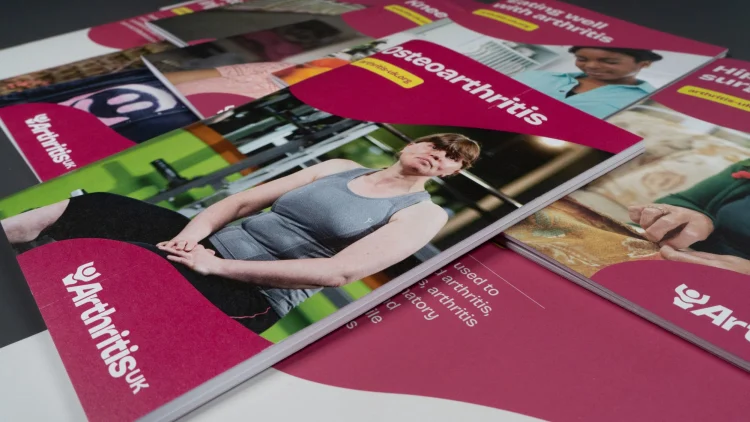


Too many of the UK’s 10 million people living with arthritis face delays to diagnosis, leaving them without vital treatment and support. Early diagnosis is crucial not only for managing their condition, but also for the relief and validation of finally being seen.
To mark May’s Arthritis Awareness month, our upcoming report, The Silent Treatment: Why an Arthritis Diagnosis Matters, highlights the key barriers to a timely and personalised arthritis diagnosis. The report brings together insights from people with arthritis and healthcare professionals to highlight the delays and issues faced at each stage of the diagnosis pathway.
The importance of a diagnosis for people with arthritis cannot be underestimated – in terms of the treatment and support it offers for proactive symptom management, the role it can play as part of secondary prevention, and the validation it can provide for those who have been struggling without answers. It’s critical to get things right.
Arthritis can affect every aspect of someone’s life, from their ability to work, care for family, move independently and live free of pain. Last year, Arthritis UK’s research report, Left Waiting, Left Behind: The Reality of Living with Arthritis, surveyed almost 8,000 people, with 32 per cent stating that arthritis severely or very severely impacted their life in the past year. 60 per cent reported living in pain most or all of the time due to their arthritis.1
Alongside the impact on the individual, a delayed diagnosis can also come at a cost to the NHS. For inflammatory arthritis, early diagnosis directly reduces the risk of permanent joint damage, persistent pain and disability in the long term. Therefore, delayed diagnosis can lead to higher costs overall for the health system, as patients may then need intensive treatment with high-cost medicines for longer periods.2
Delayed diagnosis also costs the economy. If people are left waiting without the right support, they may struggle to stay in or get back into work. One study cited in the report, which looks at a type of inflammatory arthritis called axial spondyloarthritis, has estimated the economic cost of a delayed diagnosis to be £193,512 per person. Based on estimated prevalence rates of axial spondyloarthritis ranging from 0.3 to 1.2 per cent of the UK population, the total annual economic cost of delayed diagnosis was estimated at between £3.1bn and £12.5bn.3
Delays can beset the entire diagnosis pathway, beginning when people first experience symptoms. The limited societal understanding of arthritis and its symptoms means that people may downplay symptoms and delay seeking medical advice. Commonly held misperceptions, for example, that only older people can get arthritis, mean that people may dismiss symptoms.
Heard of osteoarthritis and I associated it with being like an old person’s illness. So, I just brushed it off that I didn’t have that
(Lived experience workshop participant)
Once people do enter the health system, they may face additional delays. Despite the best efforts and dedication of healthcare professionals, they are working in a stretched system that has not historically prioritised musculoskeletal (MSK) health. It means people’s symptoms may be missed; there are delays to diagnostic tests, referrals and appointments; and limited availability of health professionals and services to deliver the multidisciplinary support people need.
When people receive their diagnosis, they may not just be presenting with physical deterioration. They may often be struggling with other aspects of their wellbeing, such as their mental health. The National Early Inflammatory Autoimmune Diseases Audit found that between 2023 and 2034, 60 per cent of patients had probable depression or anxiety at the time of diagnosis.4
This underlines the need for a holistic approach that factors in what people are struggling with at the point of diagnosis, including their mental health. Crucially, for people with arthritis, diagnosis is more than just a label. It can be the gateway to the information, care and support that can be life-changing.
People need a personalised conversation that factors in their needs and sets them up for the road ahead, as they process being diagnosed with a long-term condition. To deliver these effective diagnosis conversations, health professionals need the appropriate training to support them to do so and training that supports them to diagnose and care for people with arthritis more generally. Despite the increased prevalence of MSK conditions like arthritis, this has not translated into proportionate MSK content as part of the medical curriculum. Healthcare professionals could benefit from supplementary training and courses to boost confidence and fill in any knowledge gaps.
Think it was quite clear my mental health wasn’t great, but that was never really discussed. It was well, you know, we’ll get you on this treatment and these meds should do the thing that should help
(Lived experience workshop participant)
A formal diagnosis, with a name and clearly communicated information, equips people with the language and confidence they need to speak about their condition, explain how it affects them, and articulate their needs. Additionally, simple signposting, such as to the Arthritis UK website, can unlock a range of information and support, including on work and benefits. Access to these resources could make a big difference to someone’s ability to work or access information about financial support.
I think the validation is so important, [it provides] a huge sense of relief that [I] haven’t been imagining it… would have been really good to have it some years previously when I was still working, because I’ve been in so much pain at work
(Lived experience workshop participant)
The barriers around an arthritis diagnosis also demonstrate a broader issue. At a system level, MSK conditions lack the strategic prioritisation, national strategy, dedicated local or regional leadership, and sustained infrastructure.
Urgent action is needed now to improve the rate and experience of diagnosis for people with arthritis. People with arthritis should not be left in pain, in the dark, or given the silent treatment while they wait for a diagnosis. Getting it right from the outset will deliver benefits across the health and social care system and wider economy, allowing people with arthritis to get control of their lives back.
- Arthritis UK. (2025) Left Waiting, Left Behind: The Reality of Living with Arthritis. A lived experience survey [Online]. Available here: https://www.arthritis-uk.org/media/3tgj3rxh/ arthritisuk_leftwaitingleftbehind_report_digital.pdf
- Getting It Right First Time (2021) Rheumatology GIRFT Programme National Specialty Report. [Online]. Accessed here: https://gettingitrightfirsttime.co.uk/wp-content/uploads/2021/09/ Rheumatology-Jul21h-NEW.pdf
- Zanghelini, F., Xydopoulos, G., Howard Wilsher, S., Afolabi, O., Webb, D., Eddison, J., Ingram, T. A., Clark, C., Hamilton, J., Sengupta, R., Gaffney, K., Fordham, R. (2025) What is the economic burden of delayed axial spondyloarthritis diagnosis in the UK?, Rheumatology. 64(9):4913–4920. https://academic.oup.com/rheumatology/article/64/9/4913/8120097
- National Early Inflammatory Autoimmune Disease Audit (NEIAA) (revised 2025) State of the Nation Summary Report 2024. Accessed here: Ref.-428-NEIAA-SoN-Report-2024-revised-March-25.pdf


(Illustronaut/Alamy)
5 min read
A decade on from the Brexit vote, the UK and EU are still confronted with the same fundamental trade-off between market access and autonomy, write Sam Lowe and Kathryn Watson
One of the challenges of writing about Brexit’s lingering impact on the UK economy is that, outside of a Marvel movie, it is still not possible to experience a reality that never came to pass. Every assessment therefore involves comparing the UK’s economy as it exists today with one that might have existed had the UK remained a member of the EU.
This is both standard economic modelling practice, and a source of frustration for those who argue that the economic impact of Brexit has been overstated. After all, how can anyone know with certainty what would have happened if the vote had gone the other way?
What should be less controversial, however, is that putting new trade barriers between yourself and your largest trading partner comes with economic costs, even if we can debate their scale and duration.
The question from a UK perspective is whether the additional flexibility associated with controlling its own trade and regulatory trajectory has been sufficient to offset the trade and investment costs of leaving.
On trade, the UK initially moved faster than the EU in securing new deals with Australia, New Zealand, and India, alongside accession to CPTPP. But the EU is catching up, or arguably overtaking, with the announcement of its own agreements with Australia, New Zealand, India, Indonesia and with Mercosur, the South American trade bloc.
More importantly, the economic gains associated with modern free trade agreements tend to be modest, often amounting to little more than fractions of a percentage point of additional GDP. They were always unlikely to compensate fully for the additional friction introduced into UK-EU trade.
Perhaps the clearest recent example of Brexit-related flexibility has been the UK’s approach to the United States under President Trump. Here, the UK was able to move more quickly and secure more favourable tariff treatment in several sectors, while making fewer concessions overall – although the bioethanol sector may take a different view. Unlike the EU, the UK avoided large investment pledges and purchase commitments, while also securing the first, and currently only, dedicated pharmaceutical arrangement with the US.
On regulation, the revealed preference of the UK – particularly in the context of food and manufactured goods – has been that it rather likes EU rules after all. Despite some targeted changes, for example in respect of gene editing of crops or fertiliser usage, successive governments have chosen to retain EU food safety rules and product standards in all but name.
There has been a quieter but more sustained divergence from the EU on services rules, where the UK has opted to take a more flexible, pro-innovation approach. This is most evident in areas such as AI, where the UK has so far opted for a lighter touch framework than the EU.
At the same time, proximity and economic exposure mean that EU policy decisions continue to have an outsized impact on the UK, despite Brexit. Measures such as higher EU tariffs on steel or efforts to promote a more explicit “Made in Europe” industrial agenda risk compounding some of the trade friction already created by Brexit itself.
So, what comes next?
Some degree of rapprochement with the EU was always inevitable. Recent discussions have focused on targeted measures – for example, an SPS agreement to improve agri-food trade, and linking the UK and EU emissions trading systems (ETS). Both make sense. Reducing inspections, cutting paperwork and removing irritants such as “Not for EU” labels would ease costs at the margins, while ETS linkage could help avoid unnecessary costs for carbon-intensive exporters.
But these are practical improvements, not macroeconomic game changers. They should improve trade flows in specific sectors without fundamentally changing the overall trajectory of the UK economy.
On regulation, the revealed preference of the UK – particularly in the context of food and manufactured goods – has been that it rather likes EU rules after all
The government has nonetheless signalled that it wants to go further. Rachel Reeves and others have hinted at closer alignment with EU rules in areas considered to be in the UK’s “national interest”, while legislation expected later this month would give ministers greater powers to facilitate more dynamic alignment with EU regulation.
The trade-off, however, remains fundamentally the same. The kind of frictionless trade the UK says it wants – fewer checks, smoother borders, easier market access – increasingly resembles the arrangements enjoyed by countries such as Norway or Switzerland, both of which depend on accepting shared rules and ongoing alignment. In other words, the economic benefits are difficult to separate from constraints on autonomy.
The EU, meanwhile, remains understandably cautious about opening ambitious new negotiations without clarity on what the UK is prepared to offer in return. There is also the question of durability: whether any deepening of the relationship would survive a future change of government in Westminster.
The next phase of Brexit is therefore unlikely to involve a dramatic reset. More likely, it will consist of incremental and occasionally messy trade-offs, with modest economic gains in some areas and political friction in others, gradually determining where the UK chooses to position itself between autonomy and market access.
Sam Lowe is a partner and Kathryn Watson a director, both at Flint Global


(Ascannio/Alamy)
9 min read
New data shows young people are turning to AI chatbots for mental health support. Could the trend be an effective way of relieving pressure on an overburdened health service, or are we already playing catch-up in our attempts to limit the fallout? Matilda Martin investigates
Imagine sharing your most private thoughts and questions without fear of disclosure or judgement and receiving answers that appear expert and dispassionate.
The attraction of AI tools for children and young adults wrestling with the challenges of growing up is, in some senses, understandable.
So too, however, are the concerns of those who say chatbots are no substitute for genuine therapeutic expertise – or simple human kindness.
That children are using AI to try to manage their mental health just confirms for some the extent to which adults have abrogated responsibility for their welfare to machines.
“I was having a conversation with [ChatGPT] and asking questions, and it told me I might have anxiety or depression. It’s made me start thinking that I might?”
The above is a snapshot of a 12-year-old girl’s call to Childline, shared with The House magazine, after she had spoken to an AI chatbot.
Darker still, in the most devastating cases young people have died after interactions with chatbots, with some families accusing the tech of instructing those vulnerable teenagers to take their own lives.
Teachers are certainly starting to notice their students using the technology for support. Polling by Teacher Tapp, carried out on behalf of The House magazine, shows that just under a fifth of secondary school leaders are seeing students using AI chatbots such as ChatGPT to support their mental health.
While the UK government has clarified that some chatbots are in scope of the Online Safety Act, many experts feel the act is not fit for purpose, with gaps and loopholes meaning young people are still able to access potentially harmful content.
With AI being included in the government’s consultation on further measures to prepare children for the future in an age of rapid technological change, how are children using the technology, and should a form of age restrictions – like those discussed for social media platforms – also be introduced? And with children’s mental health services bursting at the seams, could the technology be a hindrance, or a help?
“There’s a disconnect between how parents perceive children’s use of AI and children’s self-reporting,” school head Damian McBeath tells The House.
McBeath, who is principal of John Wallis Church of England school in Kent, first started to hear about his students using chatbots to seek help with their mental health about a year ago.
His concerns about the new trend have heightened in the last six months. McBeath is concerned that the impact of AI on young people could be even more acute than the concerns that have emerged around social media.
“We are already seeing more children with mental health difficulties. If we don’t get ahead of AI, my personal view is that this is going to be more damaging than social media. If left unchecked, it is going to cause more harm and we are going to see more cases of children who are harmed because of access.”
McBeath is particularly concerned about the technology’s impact on the most vulnerable children, describing it as potentially “hugely dangerous”. He is also concerned that young people testing extreme views on chatbots could be left unchecked and in some cases encouraged.
The sentiment that AI is the next social media in terms of harms is one that is shared by many.
Data shared with The House by the NSPCC, which runs Childline, shows that between April 2025 and September 2025 Childline delivered 367 counselling sessions where AI, chatbots and related terms were mentioned. This is over four times as many as in the first six months of 2024-25.
So far in 2025-26, over half (191) of counselling sessions with Childline mentioning AI have been about wellbeing (mental and emotional health, suicidal thoughts and feelings, self-harm), including using chatbots for support and AI therapy apps.
The NSPCC tells The House that children have raised instances of using AI to rate their looks, body and weight, to “diagnose” eating disorders and to plan long fasts or calorie restrictions.
Conversations have also uncovered instances of AI chatbots being unable to give correct safeguarding advice, including dissuading young people from telling safe adults about abuse or telling the child their experience is not abuse.
Tory peer Lord Nash, who proposed that the government introduce a social media ban for children under 16 within 12 months, would like to see the same age restrictions applied to AI chatbots.
“The issue is that social media has come for our children’s attention, and AI is now coming for their affection, and it is very worrying.” Nash is concerned that AI could “further damage parental relationships with children” and hinder young people’s abilities to “react socially in the real world”.
The onus, he says, should be on the companies to prove the safety of their tech before it can be accessed by young people. The peer thinks the claim that technology in schools has a positive impact should also be called into question, as “most” of it is “completely unproven about its effectiveness”.
The issue is that social media has come for our children’s attention, and AI is now coming for their affection, and it is very worrying
Lewis Keller, senior policy and public affairs officer at NSPCC, says the charity’s priority with the government’s consultation is that personalised encounters with AI chatbots “should be removed for child users”. He would also like to see Ofcom working with the AI Security Institute “to make sure that we’re actually doing the proper risk mitigations that are specific to AI chatbots”.
Debbie Keenan, a senior accredited counsellor with the British Association for Counselling and Psychotherapy, says the use of chatbots “should be approached with caution”.
“If a therapist were to sense that a child was in danger or needed additional support, they would be able to take immediate action,” Debbie explains. Chatbots like ChatGPT however, have no means of doing so.
“If I felt as a therapist that a child was in crisis or needed signposting on, I would do that in the room; AI doesn’t do that. Whereas counsellors are regulated, we’re ethical, we’re constantly training and upskilling, with loads of training, AI isn’t doing that and it has that lack of real empathy.

“It’ll tell you what you want to hear, and it’s reassurance, but it can’t read if the person’s distressed, dysregulated, if there’s suicide ideation, which you could pick up in the room by having someone sat opposite.”
Could there ever be a place for using AI chatbots to triage children to mental health support?
While Debbie feels that such a tool could be useful for giving “quick coping strategies”, she feels “the danger is for vulnerable people who may get more and more isolated and not reach out to a real human for connection”.
Connie Muttock, head of policy at the Centre for Young Lives, says: “Chatbot technology could be harnessed safely to offer stigma free, accessible pathways into the right support – but that support needs to be available, and currently there is a 55 per cent treatment gap for children’s mental health.”
Like Nash, Muttock believes that the government “should not allow tech companies to offer their services to children until they can prove they are genuinely safe by design and are not causing more harm than good”.
“The use of AI chatbots is now widespread amongst children, despite growing evidence that many are encountering harmful content. We should be very concerned that some children, particularly vulnerable children, could become reliant on chatbots at the expense of human interactions and quality advice from trained and accountable professionals.”
OpenAI told The House that its age prediction system means if a user enters their age as under 18 at sign up, or the system estimates they are “likely under 18”, it applies “teen safeguards by default”.
The company added that it has made “several updates to ChatGPT’s default models and strengthened its responses in sensitive conversations”, and has worked with mental health experts “to help ChatGPT more reliably recognise signs of distress, respond with care, and guide people toward real-world support”.
Chi Onwurah, Labour chair of the Commons Science, Innovation and Technology Select Committee, believes there is still far more to be done. She was concerned by Google’s comments when a representative for the company appeared before the committee last year.
If we don’t get ahead of AI, my personal view is that this is going to be more damaging than social media
“Google said that they don’t give advice, they give information. But I don’t think that distinction is clear to a child,” Onwurah says.
As the government continues to consult on the prospect of a social media ban, many will be watching and waiting to see whether AI is also brought under this umbrella.
Professor Victoria Goodyear, professor of physical activity, health and wellbeing at the University of Birmingham, told the Education Select Committee last month that the lessons learned from social media must be applied to AI: “We need to be future-proofing so that we are not in this situation in 10 years’ time with AI.”
A government spokesperson encouraged those experiencing mental health problems to seek support from qualified professionals, telling The House: “AI chatbots can have a role in supporting early conversations or signposting people to information, but they should not be relied upon for diagnosis or medical advice, particularly when it comes to children’s mental health.”
They added: “This government is committed to raising the healthiest generation of children ever by expanding access to early mental health support, and we have delivered on our promise to recruit 8,500 more mental health workers across children and adult services three years ahead of schedule.”
And yet the pull of AI tools remains strong. As the government tries to walk the difficult tight rope of both embracing and being wary of AI, the true impact of its genesis on young minds may not be known for many years to come.

One Manchester-based grassroots campaign group has spent over a year pressing Siemens PLC on its role in sustaining Israel’s occupation. They say Siemens’ pained responses and denialism amount to little more than corporate stonewalling. They shared the full correspondence trail with the Canary.
Didsbury for Palestine (D4P), a community campaign group based in Manchester, has issued a series of increasingly urgent demands to Siemens PLC. Siemens has been a BDS target for many years.
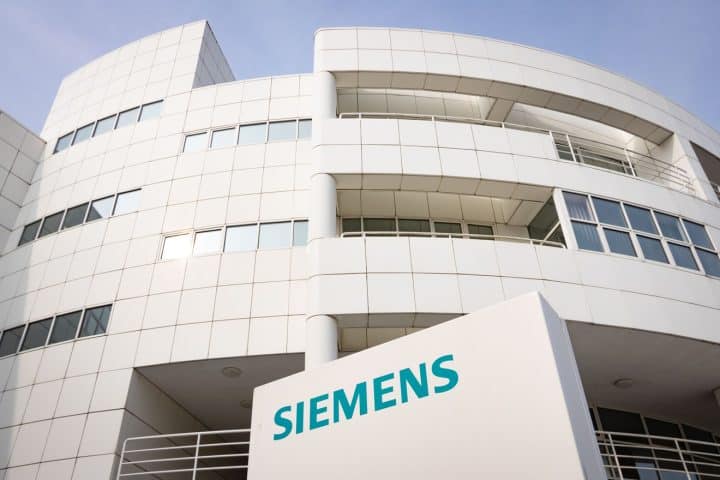
Siemens’ UK headquarters sit on Princess Road in Didsbury, south Manchester. Separately, pro-Palestine direct actionists targeted Siemens’ Cambridge offices in October 2024
D4P calls on the multinational technology giant to end all business activities which the group says contribute to human rights violations in occupied Palestine. They faced twelve months of correspondence, held peaceful protests, and made repeated requests for a face-to-face meeting — all rebuffed or ignored.
D4P say Siemens has failed to provide a single piece of concrete, citable evidence that its operations comply with international human rights law.

One year of stonewalling
The campaign launched on 21 May 2025, when D4P delivered their first letter by hand to Siemens’ Didsbury head offices, addressed to the company’s CEO Dr. Carl Ennis.
The letter set out a damning catalogue of concerns:
- Siemens’ supply of rolling stock for Israel’s A1 railway line, which crosses into the occupied West Bank on confiscated Palestinian land;
- Potential complicity in the Great Sea Interconnector energy project, which D4P says will supply electricity to illegal settlements; and
- The provision of surveillance equipment — including radar, control systems, and night vision technology — to the Israeli Prison Service for use in Israeli facilities. These include Ktzi’ot Prison, where Palestinian detainees — including children — are reportedly held without charge, tortured, and starved.
Dr. Ennis did not respond.
On 30 July 2025, D4P wrote again. This time, the group warned that a peaceful public protest would follow if Siemens continued to ignore them. They noted that Manchester City Councillor Richard Kilpatrick of Didsbury West (Lib-Dem) had offered to facilitate and mediate a meeting. Still, no meeting was offered.
On 5 August 2025 — more than two months after the original letter — Siemens’ Head of Communications, Karen Fenwick, finally replied.
Partial admission of complicity
Her letter expressed “deepest sympathy” for those who had suffered casualties and referenced a €1 million donation to the International Red Cross. (The same IRC repeatedly targeted by Zionist munitions.) Fenwick announced that Siemens was “applying heightened due diligence” in relation to the occupied territories.
According to international law, any commercial activity in illegally occupied territories — especially co-ordinated with the illegally occupying entity, which Israel is — should not take place and is considered illegal.
Fenwick confirmed that Siemens was supplying Double Deck Electrical Multiple Unit (DDEMU) trains to Israel Railways and maintaining them under a long-term contract from 2018. She denied involvement in the Israeli Prison Service. She also dismissed the Great Sea Interconnector as being “Siemens Energy project,” calling it a “separate entity.” Siemens is named as a “preferred contractor” on the energy project’s website.
D4P was not satisfied. In September 2025, the group wrote again, thanking Siemens for finally responding but pressing for the promised meeting. No meeting was offered.
Eight questions Siemens couldn’t answer
On 24 February 2026, D4P sent their most detailed letter yet.
D4P cited eight specific, evidenced questions covering every aspect of Siemens’ activities in Israel and the Occupied Palestinian Territories. They renewed their request for a meeting during March 2026.
D4P’s letter concerned the following activities, each subheading substantiated with endnote citations:
- Siemens’ Human Rights Due Diligence
- Israel Railways Double Deck Electrical Multiple Units (DDEMU)
- Siemens’ Supply Chain and Use of Extal
- Siemens and the Israeli Prison Service
- Siemens Software Licensed for Military Use
- Great Sea Interconnector
- General Questions on Siemens’ Operations in Israel
- Siemens’ Sponsorship of the ADS Group Arms Industry Dinner
Their questions were grounded in documented findings from the ICJ, Amnesty International, Human Rights Watch, B’Tselem, and UN bodies. They asked for dates, methodology, copies or summaries of due diligence reviews, and direct responses to findings of apartheid. No meeting took place.
Siemens finally replied in May 2026; the Canary has seen the response in full.
The corporation’s response — again signed by comms head Karen Fenwick — was an assessment of D4P’s own critical analysis:
brief, generic, and avoids engaging with the majority of the substantive questions.
Conversely, Fenwick’s letter concluded:
We believe we have comprehensively addressed your questions and have no additional information to provide.
D4P’s point-by-point rebuttal tells a different story.

Siemens enable railways on stolen land
D4P’s concerns target Siemens’ contract with Israel Railways, with which they admit commercial involvement.
Siemens confirmed it is supplying 141 DDEMU trains — 60 plus 81 — under a 2018 contract that includes 15 years of maintenance with an option to extend to a total of 29 years, potentially running until 2046 or beyond.
The A1 line — the Tel Aviv to Jerusalem fast rail route — runs through the occupied West Bank, on privately owned Palestinian land. The ICJ, Amnesty International, Human Rights Watch, and B’Tselem have all concluded that Israel operates a system of apartheid against Palestinians.
Palestinians are — in practice, if not (yet) in law — excluded from using this railway as full citizens.
Siemens’ response? That:
an internal and external legal review at the time concluded that this business was in line with our human rights due diligence obligations.
Fenwick added:
We are not aware of any negative impacts related to human rights in connection with our delivery.
Under UN Guiding Principles, which Siemens supposedly oblige, companies have an obligation to be aware of whether their logistical operations or services are being used in war-crimes or human rights abuses.
D4P’s own analysis of this pishy response, in turn, is astonishing:
- No dates were given for the reviews;
- No external reviewer was named;
- No methodology was provided;
- No documentation was shared;
- Siemens refused to say whether it accepts the ICJ’s apartheid findings;
- Siemens refused to acknowledge Palestinian exclusion from the line;
- Siemens avoided any (over-)due assessment of whether the trains carry military personnel or serve settlement-supporting functions; and
- Siemens offered a geographical defence that D4P considers legally irrelevant: that only “short sections” of the A1 run through disputed territory.
Under international humanitarian law, D4P’s assessment notes, the length of the encroachment is entirely immaterial. Any and all use of confiscated private Palestinian land is unlawful under international law.
Siemens — ‘We are not aware’ — the Prison Service question
Regarding the Israeli Prison Service, Siemens’ position is particularly striking.
D4P raised documented reports of torture, starvation, and the detention of children without charge at facilities including Ktzi’ot Prison. Israeli human rights group B’Tselem labelled the prisons “living hell.”
D4P had asked whether Siemens has ever supplied surveillance equipment — radar, control systems, night vision, etc. — to these prisons. Siemens’ response in May 2026 read:
We have not been serving prisons in Israel for the past 15 years. We are not aware that we have been serving prisons (e.g. via partners) prior to this period.
The phrase “we are not aware” — rather than “we have not” — is not lost on D4P:
- The company provided no dates for when any such supply may have ceased;
- No audit confirming that its technology is no longer operational in these facilities; and
- No answer to whether it has investigated indirect supply through partners or subcontractors.

Software, settlements and an arms dinner
D4P also pressed Siemens on reports that its software is licensed via a company called McKit Systems to the Israeli Ministry of Defence, Elbit Systems, RAFAEL, and Israel Aerospace Industries. McKit’s own website states explicitly that it “represents the leading global compan[y] SIEMENS PLM Software”.
Elbit, Rafael, IAI, and, of course, the Israeli state are all entities well-documented for their wilful involvement in war-criminal Zionist military operations, including the ongoing genocide in Gaza.
Siemens’ response? That:
Siemens does not comment on relationships with third parties.
Understandably, D4P describe this part as the “least transparent section” of Siemens’ response:
- Siemens did not deny their plausibly complicit licensing activities;
- Siemens provided no due diligence information, on background or whatsoever; and
- Siemens also offered no assessment of whether such licensing was compatible with its commitments under the UN Global Compact.
Then there’s the EU-co-funded Great Sea Interconnector. It’s a power cable project intended to link Greek and Cypriot grids to Israel, with supply to illegal settlements in East Jerusalem and the occupied West Bank.
Siemens once again sought to distance itself through corporate structuring. Fenwick noted that Siemens AG holds only approximately 6% of Siemens Energy and therefore it:
cannot and does not control management decisions.
The conglomerate declined to address whether the project would supply settlements, and provided no evidence of brand-protection or supply-chain safeguards.
Perhaps most strikingly, D4P noted that Siemens sponsored the ADS Group arms industry dinner on 27 January 2026 at the Marriott Grosvenor House. The event was well-attended by companies knowingly supplying weapons to Israel amidst its multiple bloody and illegal wars.
When asked to explain this decision, and how it was reconciled with Siemens’ purported “human rights commitments,” the company replied that:
all sponsorship activities undergo due process in accordance with the provisions of our Business Conduct Guidelines.
More corporate social responsibility dress-up. Once again: no rationale, no assessment, no reconciliation.
‘Comprehensively addressed’: a claim D4P rejects
The Canary stresses that, across all eight questions in its May 2026 response, Siemens provided no dates, no documents, no assessments, no external evidence, and no specifics.
D4P’s own critical analysis concludes that the response “does not meet the standards of transparency, specificity, or due diligence disclosure” required under the UN Guiding Principles on Business and Human Rights. This is despite the UNGPs being a framework which Siemens itself repeatedly invokes.
The group notes a fundamental contradiction at the heart of Siemens’ position:
- The company cites its commitment to the UNGPs as evidence of its good conduct; but
- The UNGPs themselves require companies to properly demonstrate — not merely assert — that they have carried out comprehensive due diligence.
Thus went a year of letters, peaceful leafleting campaigns at Siemens’ Didsbury gates, and repeated offers of mediated dialogue facilitated by an elected councillor.
Siemens met D4P, at every turn, with delay, deflection, and the same formulaic reassurances. Karen Fenwick’s position, repeated across multiple letters, is that Siemens has already said everything it has to say.
Didsbury for Palestine disagree. They’ll continue pressing the company until it can answer, with evidence, whether its trains, its software, its energy infrastructure, and its presence in Israel are contributing to what the ICJ has described as an unlawful occupation of Palestinian land.
D4P mobilises at 12pm–2pm on Friday 22 May outside Siemens and calls on all supporters to join them at:
The junction of Barlow Moor Road / Princess Parkway, Didsbury, Manchester, M20 2ZA
Didsbury for Palestine can be contacted at d4palestine@gmail.com
Featured image via Siemens website


Tanya Reynolds as Mariella and Siena Kelly as Anna | Photo by Helen Murray

4 min read
Examining the ripple effect of the trial and execution of Anne Boleyn on the lives of everyday Tudor women, Ava Pickett’s play draws powerful parallels with modern day misogyny
A fresh and furious play, the performances of 1536’s central characters are absolutely brilliant. These three sparky young women of Essex are supported by a superb production which makes highly effective use of a black scrim. Yes. I had to look that up.

The early parts of 1536 present a wonderful portrayal of the kind of relationships which can exist between young women. On stage and screen we often see blokes joshing – yet not so often women, especially those with little education, wealth or ‘interesting lives’.
Before the plot unfolds, we witness loving and raucous teasing – a highly charged conduct, very rarely revealed to those outside the inner circle; the joy fairly radiates and is instantly appealing.
In the play’s programme we find a quote by Hilary Mantel: “History is not the past… it’s what is left in the sieve when the centuries have run through it.” And then the programme states this: “Women of the past were ground to such powder that history’s sieve catches nothing of them.”
In that sense 1536 is letting us hear something of the conversations that must have happened during the arrest, incarceration, show trial and execution of Henry VIII’s second wife Anne Boleyn. This is Mantel’s version of “fiction stepping in” which is not to say the conversations were ahistorical, only that they have to be inferred.
Powerful men can still have a catastrophic impact on women’s lives
Set against the backdrop of Boleyn’s arrest and execution in faraway London, 1536 is darkly comic in places, but elsewhere it resonates intensely with depressing aspects of life in the 21st century. Powerful men can still have a catastrophic impact on women’s lives, especially the lives of poor young women. But don’t get me started on Jeffrey Epstein.
Boleyn was arrested on 2 May 1536 and executed just 17 days later on 19 May with only a show trial in between.

Relying on two-day old news, at first the women find it hard to believe “the Queen” could be in any kind of serious peril. For the young women the story quickly moves on from gossip to something a great deal more serious: the nature of their lives and likely futures – and how closely they are tied to the men in their current or future existence.
The next bulletin from the capital reveals that while adultery is ordinarily a matter for the Church courts, in the case of a woman who apparently bewitched the King, and tricked him into marrying her, it becomes a capital offence for which the sentence is death.
The fact that everyone knew Henry pursued Anne for years and changed the law – and indeed the established Church – solely to make it possible for him to marry her counted for nothing.
 As further news of Boleyn’s alleged offences emerges the women realise the lurid details are having a ripple effect, feeding misogyny, and amplifying it in their everyday lives. Which brings us right back to the present day.
We have seen it often – a woman is monstered in social media and newspapers, her reputation and life trashed. Lies are created then embellished, believed particularly if she is a woman engaged in public life – or, as in this story, just a lively poor young woman with dreams and aspirations above her class and sex.
Find time to see this play – though with an age rating of 14+ (there are sex scenes but no nudity) it’s something to bear in mind when deciding who to take with you.
Baroness Thornton is a Labour peer
1536
Written by: Ava Pickett
Directed by: Lyndsey Turner
Venue: Ambassadors Theatre, London, WC2 – until 1 August

Mark Cuban Dumped Bitcoin, Says Hedge Thesis Fell Short

‘We must break the spell of trans’

Bitcoin Reacts as Trump and Xi Strike New Deals


-

 Crypto World6 days ago
BloFin War of Whales 2026 Grand Prix opens registration for $5M trading championship
-

 Fashion6 days ago
Weekend Open Thread: Theory – Corporette.com
-

 Crypto World6 days ago
E-Estate Announces 1 Year Live: Washington DC Summit as Real Estate Tokenization Enters Its Next Phase
-

 Tech7 days ago
Tech Moves: Microsoft AI leader jumps to OpenAI; former AI2 exec joins Meta; and more
-

 Tech6 days ago
Google reimburses Register sources who were victims of API fraud
-

 Business6 days ago
H&R Real Estate Investment Trust (HR.UN:CA) Q1 2026 Earnings Call Transcript
-

 Sports6 days ago
Napoleonic enters 2026 Doomben 10,000 field via Abounding withdrawal
-
 Crypto World6 days ago
BeInCrypto 100 Institutional Awards Nomination: KAST for Best Digital Assets Neobank and Best Digital Assets Fintech
-

 Crypto World6 days ago
Bitcoin Battles US Bond Nerves With BTC Price Dip Toward New May Lows
-

 Crypto World6 days ago
ICE and CME urge US regulators to curb Hyperliquid energy trading
-
 Crypto World6 days ago
Wall Street’s Boldest Gold Prediction Has Russians Rushing to Buy
-

 Fashion5 days ago
On the Scene at Gucci’s Cruise Show in New York City: Mariah Carey, Kim Kardashian, Lindsay Lohan, Iman, and More!
-
 Politics7 days ago
DWP PIP Timms review continues to be an absolute farce
-

 Entertainment6 days ago
David Letterman Returns to Late Show, Blasts Cancellation
-
 Crypto World6 days ago
IREN closes $3 billion convertible notes deal amid AI infrastructure expansion
-

 Fashion5 days ago
Trending Western Style Vests Perfect for Summer
-
Crypto World7 days ago
Lido Finance Selects Chainlink CCIP as the Official Cross-Chain Infrastructure for wstETH Security
-

 Politics5 days ago
Watch: far-right flag-fanatics run over victim, attack locals – Setup By the Left wing for your entertainment
-

 Fashion5 days ago
Amazon Sundays: Memorial Day Hosting
-

 Fashion6 days ago
Creative Ideas for Custom T-Shirts
You must be logged in to post a comment Login