
Politics
Starmer Responds To Trump Over US UK Trade Deal Threat


Keir Starmer has hit back at Donald Trump after the US president threatened to rip up the UK-US trade deal over over the pair’s rift on the Iran war.
The prime minister insisted he is “not going to yield” on the conflict despite pressure from the White House.
The trade agreement struck last year is seen as one of the biggest achievements of Starmer’s time in office.
But in an interview with Sky News on Tuesday, Trump said the deal “can always be changed” as relations between the two men remain in the deep freeze.
At prime minister questions on Wednesday, Lib Dem leader Ed Davey called on Starmer to cancel King Charles’ state visit to America later this month in responce.
The PM replied: “My position on the Iran war has been clear from the start. We’re not going to get dragged into this war. It is not our war.
“A lot of pressure has been applied to me to take a different course, and that pressure included what happened last night.
“I’m not going to change my mind. I’m not going to yield.
“It is not in our national interest to join this war, and we will not do so. I know where I stand.”
Starmer also took a pointed dig at Trump by insisting the so-called special relationship between Britain and the United States is bigger than any one person.
He said: “In relation to the King’s visit, this the purpose of the visit is to mark the 250th anniversary of relations and independence, obviously, of the US.
“The monarchy is an important reminder of the longstanding bonds and enduring relationship between our two countries, which are far greater than anyone who occupies any particular office at any particular time.”
Subscribe to Commons People, the podcast that makes politics easy. Every week, Kevin Schofield and Kate Nicholson unpack the week’s biggest stories to keep you informed. Join us for straightforward analysis of what’s going on at Westminster.



Every few months, a weight loss story captures attention online.
Recently, it was a woman who reportedly lost around 10 stone in just six months. The story was framed around discipline, routine, and a dramatic transformation. The kind that inevitably sparks the same reaction:
“How did she do it?”
And more importantly:
“Could I actually stick to that?”
According to the report, her results were not just down to a traditional restrictive diet. They were supported by the use of prescription weight loss injections, alongside changes to her eating habits and lifestyle. These treatments work by reducing appetite and helping people feel full on much smaller portions, which can make it easier to maintain a calorie deficit without relying purely on willpower.
That detail matters.
Because behind most of these stories sits a familiar assumption that losing weight means strict rules, repetitive meals, and cutting out anything remotely enjoyable.
Chicken. Rice. Salad. Repeat.
But for many people using weight loss injections today, that idea is starting to look increasingly outdated.
The old model of dieting
For years, weight loss advice has followed a similar pattern.
- Cut calories as much as possible
- Stick to “clean” foods
- Avoid anything seen as a treat
- Rely heavily on willpower
For some people, that approach works in the short term.
But for many others, it leads to a cycle of restriction, burnout, and eventually slipping back into old habits. Not because they lack discipline, but because the approach is difficult to maintain in everyday life.
Why things are starting to change
Weight loss injections are shifting the experience in a way that is less about forcing discipline and more about reducing friction.
By lowering appetite and helping people feel full sooner, they change the starting point. Instead of constantly fighting hunger, people are working with a body that is not pushing back as hard.
That is why treatments such as mounjaro weight loss injections are becoming more widely discussed.
But one of the biggest misunderstandings is what this means for diet.
Because while appetite is reduced, that does not mean people are suddenly following extreme or highly restrictive meal plans.
You don’t have to eat like a bodybuilder
One of the most persistent myths around weight loss is that your diet has to look perfect to be effective.
Endless meal prep. Cutting out entire food groups. Eating the same meals every day.
In reality, many people using weight loss injections find the opposite.
Because their appetite is lower, they are not constantly dealing with cravings or hunger spikes. That often leads to:
- Smaller portions without strict tracking
- More flexibility in food choices
- Less focus on “good” and “bad” foods
Food becomes less of a battle and more of a background part of the day.
So what does eating actually look like?
Instead of following rigid rules, most people settle into a more balanced and realistic approach.
That might include:
- Eating when they are genuinely hungry rather than on a strict schedule
- Having smaller versions of normal meals instead of separate “diet food”
- Including foods they enjoy without feeling the need to overdo it
There is still a structure to it, but it is not built around restriction for the sake of it.
For anyone trying to understand how to approach this properly, guidance around what to eat on mounjaro can help turn that flexibility into something more practical without falling back into overly strict dieting habits.
Why extreme diets are losing their appeal
Stories of rapid weight loss still tend to focus on discipline because that is what people expect.
But the reality is shifting.
More people are moving away from the idea that weight loss has to feel punishing to be effective. Instead, the focus is starting to move towards approaches that are easier to live with long term.
That does not mean there is no effort involved. It just means the process does not have to rely entirely on restriction.
A different way to think about weight loss
Rather than asking how strict a diet needs to be, a better question might be how sustainable it is.
Can you actually keep eating that way for months, not just weeks?
Does it fit around your life, or does everything have to revolve around it?
For many people, that is where traditional dieting falls short.
The bottom line
Weight loss stories will probably always highlight dramatic transformations.
But the way people get there is changing.
For some, it no longer looks like repetitive meals and constant restriction. It looks more flexible, more balanced, and far more realistic to maintain.
And for anyone who has struggled with strict diets in the past, that shift might be the most important change of all.
Disclaimer: This article is for informational purposes only and does not constitute medical advice. Weight loss treatments, including prescription injections, should only be used under the guidance of a qualified healthcare professional. Always consult your GP before starting any new diet, medication, or weight loss programme. Individual results may vary.
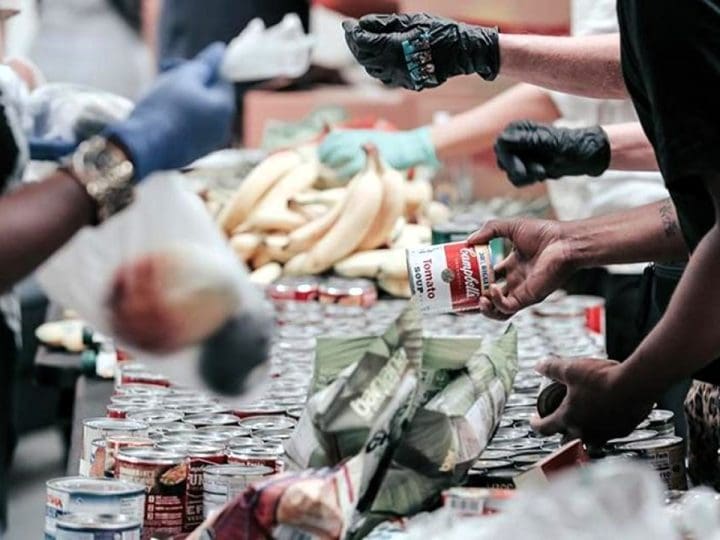

The Green Party have announced measures to tackle the ‘affordability crisis’ and to end the ‘normalisation’ of food banks.
The Greens have called for a raft of measures that will support all people who are affected by the crisis. Though it’s more commonly known as the cost-of-living crisis, it’s clearly more about the fact that people can’t afford the inexplicably rising bills.
Green policies to support all, not just the rich
Leader Zack Polanski and deputy leader Rachel Millward announced the plans at a Community Fridge in Sussex.
The measures will include universal support with energy bills this winter, rent controls, free school meals for all, and for the UK to join a customs union with the EU to reduce costs to businesses.
Though it shouldn’t be controversial, one part of the plans will be talked about far more than the others: the Greens have proposed to introduce a 10:1 pay ratio. This would mean the highest-paid person in a company couldn’t earn more than ten times what the lowest-earning employees do.
In practice, minimum-wage employees would get a pay rise, but crucially, we would also see the end to sky-high executive salaries and ridiculous bonuses.
This will no doubt be met with criticism from the ruling class, but it’s also causing a furore on social media. Annoyingly, some criticism is coming from those in the working class who are desperate to suck off those with a foot on their neck. This is despite the average FTSE 100 CEO earning around 113 times more than the average worker.
There’s always the argument that if we tax the billionaires, they’ll leave, but many of them already have their assets tied up offshore to save money anyway. It’s more important right now that we make lives easier for those who are struggling than do what the rest of the parties are doing and appease billionaires.
Approximately 6.5 million people a year are forced to turn to foodbanks. One in five of these are from a working household. In 2025, the Trussell Trust provided over 2.6 million food parcels. Recent research found that, whilst supermarket prices rise, 40% of people are left with less than £25 at the end of each week.
Policies for real people
As Canary reporter James Wright said recently, while Labour have come up with cost-of-living policies, they’re certainly not new. They’re just the same old tired Labour and Tory policies reheated – something Labour does best.
Polanski was keen to impress that everyone should be able to access support, because it’s far easier to fall into poverty than become a billionaire.
Polanski said:
The affordability crisis is something affecting nearly everyone, from the most vulnerable to people in work and comfortable, where any change in circumstance can push people over the edge into requiring a foodbank.
This crisis is totally avoidable and down to choices made by this Labour government and previous Tory governments. The Greens have a plan which would make different choices, taking on corporate power and vested interests to give ordinary people a way out of this crisis
Rachel Millward pointed to how much wealth there is in the UK, which is being hoarded by a few to the detriment of others:
The UK is the sixth largest economy in the world where the 50 richest families hold more wealth than the poorest 50% of the population. Yet millions face food insecurity, food poverty and turn to foodbanks to prevent them going hungry. A high proportion of these are people from working households.
Millward continued:
It’s time to end the normalisation of food bank use and the scourge of food and energy poverty affecting so many families.
It’s very easy to praise this ambitious policy, but it must also be pointed out that now is a convenient time to announce it. We’re just weeks away from local elections, yet councillors won’t have the power to implement any of this if elected. The Greens have rightly criticised Reform for running with national policies in the same manner.
It remains to be seen whether the Greens will follow through with all of their policies, but its definitely refreshing to see policies that aren’t wishy washy as fuck.
Featured image via the Canary

This morning, BP announced oil trading results in 1Q 2026 are expected to be ‘exceptional’ compared to the ‘weak’ performance of the previous quarter.
BP said that the “ongoing situation in the Middle East” had “heightened volatility in crude oil, natural gas and refined products prices.” So, yes, the price shock and volatility have helped its profits.
The surge comes with Brent crude averaging $81.13 per barrel in the first quarter of 2026. That is up from $63.73 per barrel in the fourth quarter of 2025.
BP hails ‘exceptional’ quarter for oil traders as Iran war stokes volatility https://t.co/gjME3EpQMD
— Financial Times (@FT) April 14, 2026
Shell expects a similar boost from the war. Also, TotalEnergies traders made more than $1bn in March by hoarding crude from the UAE and Oman.
BP and others are wart profiteers
Five leading oil companies, BP, Shell, Chevron, ExxonMobil, and TotalEnergies, have recorded profits of almost half a trillion dollars (US$467 billion) between 2021 and 2026, according to an analysis from Global Witness.
Already in March, professor Nick Butler, a former Downing Street energy adviser who worked at BP for almost three decades, said on LBC that the closure of the Strait of Hormuz could create a physical oil shortage, leading to rationing.
Meanwhile in the UK, Starmer announced £53m for vulnerable households who rely on heating oil in making from the very same crisis mid-March – a pittance if compared to the profits BP and its rivals are expected to make and already made this decade.
So, the winners of the US/Israel/UK war on Iran, Lebanon, and Gaza are the oil and arms traders.
West Asia burns. BP counts its “exceptional” profits.
Featured image via the Canary
By The Canary
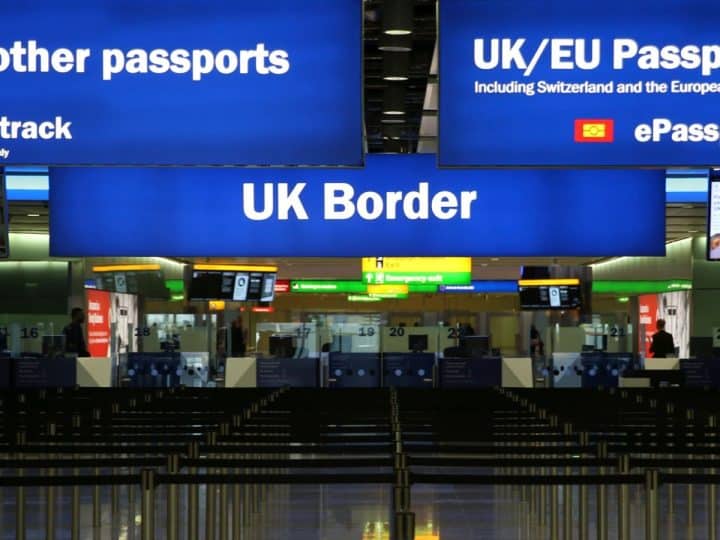

Afghan women fleeing one of the world’s most extreme systems of gender persecution are being denied safe asylum in the UK. And this is undermining the UK’s commitments on Women, Peace and Security, a new briefing warns.
Published by Amnesty International UK and the Gender Action for Peace and Security network, the briefing finds that asylum policies framed as restoring “control” are instead designed to deter people from seeking protection, shutting out women and girls escaping Taliban repression.
Sharp drop in successful Afghan asylum claims
Recognition rates for Afghan asylum claims have fallen sharply from 96% to 34% since the current government took office. At least 370 Afghan women and girls had asylum claims refused in 2025 alone.
Campaigners say the consequences are stark. A country that claims global leadership on women’s rights is turning away women fleeing systematic oppression.
Afghanistan is one of the most extreme examples of gender persecution in the world. Women and girls have been erased from public life, barred from education, excluded from work, stripped of autonomy, and silenced by sweeping restrictions on their movement and expression.
Many are effectively confined to their homes under threat of punishment. This is the reality women are fleeing. Yet current UK asylum policies are denying protection to many of them.
Karla McLaren, Amnesty UK’s head of government affairs, said:
Afghanistan is one of the worst places in the world to be a woman. Women have been systematically erased from public life, denied education, autonomy, and even the most basic right to be seen or heard.
Yet as the Taliban tightens its grip, the proportion of women granted safety here is falling. That is indefensible.
The fact that Afghan women are being denied refuge here, despite clear evidence of the brutality they face under the Taliban, shows the extent of the moral and practical collapse in the UK’s asylum decision-making.
Denying protection to women who so clearly should be recognised as refugees, preventing them from rebuilding their lives with dignity, and deliberately subjecting them to years of uncertainty is not strength, but cruelty.
Ministers cannot claim international leadership on women’s rights while turning away women fleeing persecution. The UK’s treatment of Afghan women seeking protection is a total betrayal of the principles it claims to stand for.
A system designed to deter, not protect
The briefing identifies a pattern of policies making it harder for refugees to secure safety in the UK, with disproportionate harm to women and girls. These include:
- Rising refusal rates, including for Afghans despite well-documented persecution.
- Plans to cut refugee status from five years to 30 months, increasing instability.
- Proposals that could delay settlement for up to 20 years, trapping refugees in prolonged insecurity.
- Ending refugee family reunion, closing a vital safe route used predominantly by women and children.
Taken together, campaigners warn these measures amount to a system designed to deter people from seeking asylum rather than protecting those entitled to it.
The UK is the UN Security Council penholder on the Women, Peace and Security agenda. This means it’s responsible for leading global efforts to protect women and girls affected by conflict.
However, the organisations warn that current asylum policies directly undermine these commitments. Denying protection to women fleeing gender-based persecution, including forced marriage, sexual violence, and exclusion from education and work, contradicts the UK’s stated leadership on the global stage.
At a time of rising global conflict and displacement, campaigners say the UK should be strengthening protection, not restricting it.
The organisations behind the briefing call on the UK government to:
- Reinstate refugee family reunion rules.
- Repeal restrictive asylum decision-making provisions.
- Abandon plans that weaken protection for recognised refugees.
- Expand safe routes for women and girls fleeing conflict.
Featured image via the Canary
By The Canary


The Zionist new owners of the Telegraph — already a hard-right, pro-Israel rag — have made support for Israel compulsory among its staff. Despite claiming ‘free speech’ as a core value, support for Israel is also “core” and non-negotiable — and second on its list of priorities.
Germany’s Axel Springer media is taking over the paper after the Labour government of ‘Zionist without qualification’ Keir Starmer approved the buy-out. Group boss Mathias Döpfner has told staff, including journalists, that the values of the group’s founders are:
1. …freedom, freedom of expression, the rule of law, and democracy.
2. …the right of Israel to exist and oppos[ing] all forms of antisemitism.
3. …advocat[ing] the transatlantic alliance between the United States and Europe.
For good measure, Döpfner made clear that he expects his writers to toe this partisan line completely, telling them that there is “no such thing as neutral journalism”. He expects the Telegraph’s ‘journalism’ to be “pluralistic and surprising, fair, and fact-based” — but clearly it must always be pro-Israel.
The Telegraph rejects both discrimination and Palestinians
A journalist at the rag told Owen Johns that:
To be firmly told by our new parent company-to-be’s CEO that the second most important guiding principle is affirming the right of a country committing genocide and ethnic cleansing is more than a little concerning. It also raises the question of how any reporting from the paper can be considered factual if that is our core principle.
While the paper’s principle list says it “rejects” “all forms of discrimination”, this is not compatible with support for an apartheid ethno-supremacist state still attacking, and stealing land from, its neighbours as well as committing genocide against the Palestinian people that it openly wants gone. The list also says it rejects “political and religious extremism”, but that is not compatible with the ethno-fascism of an occupation that has just passed a death penalty law that only applies to Palestinians and routinely rapes and tortures the thousands of civilians it holds in indefinite detention.
Rather, as Jones notes:
Instead, “oppose all forms of antisemitism” is fused directly with “support the right of Israel to exist.” That conflation matters. Because we know that defenders of Israel have repeatedly blurred the line between antisemitism and opposition to the actions of the Israeli state.
The group’s late founder made explicitly clear how he expects his companies — and indeed European society as a whole – to apply this ‘support’ for Israel. Axel Springer — in a quote still featured on the corporation’s website — said that Israel is “not just any state” and that:
It is the task of our generation to stand firmly by Israel’s side, even if this causes difficulties for our policies elsewhere… [Israel] does not need encouragement, but advocacy… [this is] a German duty.
So committed was Springer to the cause of the ethno-state that his company still boasts, on the same page, that if it wouldn’t have had an adverse impact on sales, he would have “print[ed] his papers in Hebrew”. In case the point isn’t clear enough, it then adds:
At the end of the 1960s, a research institute discovered that there was one single topic on which Axel Springer’s newspapers all took the same stance – namely Israel. Axel Springer dealt confidently with such accusations: “Does anyone want to turn that into an accusation? That’s something I carry with great composure.”
His successor Döpfner, clearly cut from the same cloth, told employees at the group’s German companies that anyone who had an issue with the company flying the Israeli flag should “look for a new job”. But even that was too wishy-washy. Döpfner later said that his political worldview was:
Zionism über alles
which means, “Zionism above everything”.
‘Palestinian’ is ‘antisemitism’
He also described support for Palestine and opposition to Israel’s Gaza genocide as “an almost global wave of antisemitism”, and condemned TikTok’s users for posting millions of comments supporting the Palestinians but only a few tens of thousands “standing by Israel”. “Free Palestine”, said Israeli Presidential Medal of Honor recipient Döpfner, equated to “pro-Hamas”. Döpfner has also amplified false atrocity propaganda about the events of 7 October 2023, including the long-debunked ‘beheaded babies’ lie.
His reference to TikTok is significant. When the US Israel lobby realised that TikTok’s mostly young user base was using the platform to share information about Israel’s genocide and crimes against humanity, its first reaction was to have the US government ban it.
However, it then solved the issue by the ultra-Zionist billionaire Ellison family buying its operations outside China — along with US news outlet CBS. No more pro-Palestinian ‘problem’ in either of them. The purchase of the Telegraph was not necessary to quell any pro-Palestinian output — there was none. But it forms part of the lobby’s push for control of UK ‘mainstream’ media and this country’s political narrative.
Far-right media moves further right
It also bodes ill for freedom of speech in the UK. Keir Starmer is already waging war on pro-Palestinian speech, journalism and activism, but the Springer purchase of the Telegraph will only push that even further. German tabloid Bild, one of the company’s main media outlets, has — as Al Jazeera reported — relentlessly demonised anti-genocide demonstrators as “antisemites”, “mobs” and “Israel-haters”, both in Germany and in the US. Germany’s state enforcers treat peaceful anti-genocide protesters even more brutally and dishonestly than in the US and UK.
For the Telegraph, the buy-out means “business as usual, but even more intensely”. For what survives of free speech and democracy in the UK it is a very bad sign indeed.
Featured image via the Canary
By Skwawkbox

In 2024, Miguel Guzmán, the chief sales officer of Deoleo (a huge olive oil producer which owns brands like Bertolli), said prices were expected to drop by as much as half in early 2025.
That’s because growing conditions had improved in Spain. “The market is expected to begin to stabilise, and normality is expected to be gradually restored as the new harvest progresses and supply increases,” he said at the time.
But over a year on, Filippo Berio director Walter Zanre has said that supermarkets are “taking the mickey” with the prices they expect customers to pay for the product, despite lower wholesale costs.
“We brought prices down twice last year and it’s not all been passed on to the consumer, which is a huge frustration,” he told Sky News.
He added, “The supermarket was surprised at how resilient the shopper was at high prices, so the view is they don’t need to give it all away for nothing”.
In other words, he suggested high prices made them realise just how much more UK shoppers would spend on the product, and they aren’t willing to give that up just because their costs are lower.
We asked the UK Food Council, who said they’d noticed “an upward trend in all food costs” to weigh in on the topic, which they’re “watching closely”.
Why are olive oil prices so high?
“The prediction that prices would halve in 2024 was based on a reasonable expectation,” a UK Food Council spokesperson told us.
“Spain’s harvest was forecast to rebound significantly, and wholesale costs did indeed begin to fall. The problem is that retail prices tend to follow wholesale costs on the way up much faster than they do on the way down.”
To some extent, they added, that can be a reasonable buffer against future risk. In 2022 and 2023, growing conditions in Spain (the biggest producer of olive oil in the world) were so poor that the country only exported half its usual output.
“Supermarkets are understandably cautious – they lock in contracts in advance and factor in hedging costs,” the spokesperson said.
Nonetheless, “the scale of the gap between what brands like Filippo Berio are now charging and what’s sitting on shelf does raise real questions”.
Zanre said that he expected olive oil sales to “fall off a cliff” when they reached their recent price highs. But he added that UK sales only dropped by 20% or so.
“To put it in context: a 500ml bottle of Filippo Berio extra virgin olive oil retailed at around £3.75 in 2022, peaked at roughly £10.50 at the start of 2025, and has since come down to around £7.50 as wholesale prices eased,” the UK Food Council member said.
“That’s still double what it was three years ago, even as the underlying commodity cost has fallen sharply. ONS data from late 2025 showed retail olive oil prices down about 16% year-on-year – meaningful progress, but arguably not proportionate to how far wholesale costs have dropped.”
This is “suggestive”, said the UK Food Council
“Are supermarkets taking advantage of consumers who’ve adjusted to higher prices? It’s difficult to prove intent, but the economics are suggestive. Once shoppers have normalised paying £9 or £10 for a bottle, there’s less commercial pressure to drop back towards £5,” the spokesperson stated.
“That said, increased competition – particularly from Greek and Portuguese oils gaining shelf space – may do more to force prices down than any public pressure campaign.”
Speaking to The Independent, Andrew Opie, director of food and sustainability at the British Retail Consortium, said that supermarkets are doing their best to pass savings on to customers and “operate on very tight margins, reflecting a market driven by savvy customers.
“Olive oil, like many everyday products, is something shoppers can compare across brands and retailers to take advantage of promotions or switch to alternatives that suit their budget”.
Politics
Israeli politicians/media have ’emptied’ the term antisemitism of ‘analytic meaning’, Israeli university finds


A top Israeli university has found that Israel’s leaders and press have emptied the term antisemitism of meaning by using the it as a cheap tool to attack those critical of the settler-colonial state. Tel Aviv University’s global antisemitism report is truly damning — though not without its limitations in regard to Israel’s demonstrably genocidal actions. The assessment even called Israeli government and media behaviour “absurd”.
The study, titled ‘Antisemitism Worldwide; report for 2025‘, said:
Israeli politicians and media have, particularly in recent months, continuously expanded the scope of what qualifies as antisemitism, at times in absurd or hasty ways. In doing so, they do not win arguments or silence critics, as they perhaps believe; rather, they discredit a crucial fight by politicizing it and emptying it of analytic meaning.
The authors stipulated:
The label of antisemitism is harsh and should be applied only after careful consideration and based on solid criteria.
From an elite Israeli university this is particularly damning — even more so when you read the next passage:
The war crimes committed by Hamas justified an unwavering military campaign as well as
retribution against those responsible, including their accomplices. This, foremost, as a matter
of serving the cause of justice.
This historically dubious framing indicates strongly that the authors still hold to Israel’s colonialist state ideology. Claiming a genocidal assault on Palestinians is qualified by the 7 October attack as a pursuit of “justice” is beyond the pale. Yet even these scholars — with these views — concede that the Israeli press and media have diminished the term antisemitism to the level of absurdity.
Shut down the ministry!
In another section, the scholars blast the government of Israel for “draining” the term of meaning to such a degree that they caused harm to the fight against antisemitism:
The government did not carry out even a single significant and effective action and often caused harm. Israeli politicians at the highest levels steadily expanded the scope of the term ‘antisemitism,’ including through cynical and hasty declarations, drained it of meaning, and damaged the struggle against Jew-hatred.
They urged that the ministry for combating antisemitism, which has “failed in its mission”, should be closed:
and its authorities and budgets transferred to Israel’s embassies and consulates, because only ongoing contact, on the ground, with Jewish communities, law-enforcement authorities, and educators, carried out by professionals and based on attentive listening and determined activity, can contribute to the security of the communities.
There is strong sense that the report authors are liberal Zionists attacking the far-right Benyamin Netanyahu regime. But this arguably adds to its power given the withering tone of its findings. And the report also lays into the antisemitism of supporters of Netanyahu’s most high-profile backer: US president Donald Trump.
Trumpian antisemitism
The report’s framing is once again coloured by the author’s apparent commitment to Zionism. For example they say:
The Middle Eastern policies of Trump’s two administrations have so far been, as opposed to a number of careless and dangerous statements he made, by and large commendable.
By this they mean, for example, Trump’s first-term recognition of Jerusalem as the capital of Israel and his aggression towards Iran. Yet they still found:
Trump is also the president who has tolerated, as no contemporary president has, deep seated, loathsome antisemites within his camp, and continues to do so for cynical political reasons.
Adding:
The result is a new culture of everything-goes that is undermining the sense that Jews have had for decades that their future in America is secure.
The report shows us several things. One is that the Gaza genocide and Israeli aggression have caused a crisis at the heart of Zionism. Scholars like these are being forced to tie themselves in ideological knots to stay afloat. And it looks bloody obvious. Zionism’s worst enemy is itself. Because like any colonialist ethnonationalism, it cannot help but contradict itself.
Another is that, as many of us have long suspected, Zionists in Israel and their fellow travelers abroad have reduced a term which should be carefully and properly used to describe a vile form of racism to catch-all slur. And in doing so they have made it harder to face real antisemitism head-on — putting Jewish people in more danger.
Featured image via the Canary
By Joe Glenton


Far-right propaganda outlets are salivating over a new immigration report from an investment bank – that’s mainly because it fearmongers about the Green Party, which has been surging in recent months and presenting a real challenge to Reform UK.
Because the actual report isn’t public, it can’t face proper outside scrutiny. But as a Green spokesperson insisted:
These figures are made up nonsense and we’ve been given no idea how they are calculated.
Green Party: ‘we won’t scapegoat migrants’
The report comes from Simon French, the “chief economist at Panmure Liberum”, which calls itself “the UK’s largest Independent Investment Bank”. And it claims that a Green election win in 2029 would push the country’s population from around 71.5 million to 75.9 million by 2034 (via net migration of about 900,000 a year).
French is a Times columnist who previously worked in government and “had a central role” in pushing through cuts. And he once wrote about “taking a chainsaw to red tape”. But right-wing rags hope we’ll just accept his estimates on immigration numbers without any scrutiny (as they did themselves).
The Green Party has refused to do so, though. Because a spokesperson told the Telegraph that, while it’s “not at all clear” how French got his figures, it looks like he based them:
apparently, on an ‘open borders’ approach, which is not our current policy
They stressed that:
The Greens support a fair and managed migration system – successive governments have presided over a broken and unjust system.
Responding to the Mail, meanwhile, a Green spokesperson placed the focus firmly on economic injustice, saying:
People are concerned about the impacts of immigration because of a massive affordability crisis, but unlike other parties we won’t scapegoat migrants for the unfairness created by our rigged economic system.
An investment bank wouldn’t want you railing against the economic system, would it?
Despite not knowing where French got his numbers from, we do know that even the Tories brought net migration up to 944,000 in 2023. So even if we believed French’s prediction, it wouldn’t be the kind of number the UK has never seen before.
It’s important to remember, of course, that people from other countries contribute strongly to our economy (something the Green Party has openly insisted). It’s also important to remember why immigration happens at all. Because as the Canary has previously explained, the UK has:
- An ageing population.
- Low birth rates.
- Skills shortages.
- A massive underinvestment problem.
- A longstanding addiction to destructive interference abroad which has played a big part in pushing people out of their homes in the first place.
As Green Party leader Zack Polanski has made completely clear, the focus of our rage should not be on ordinary people seeking a new life in the UK. It should be on the putrid economic system that, for at least five decades, has been decimating communities across the country via public spending cuts, with devastating consequences.
In December 2025, Polanski insisted:
We shouldn’t have a race to the bottom on migration. We should have a race to the top on public services!
He’s absolutely right. But investment banks and elitist propaganda outlets are happy with the way the current economic system works, so it shouldn’t surprise us in the slightest that they prefer to spread hate and fear rather than compassion and hope.
Featured image via the Canary
By Ed Sykes
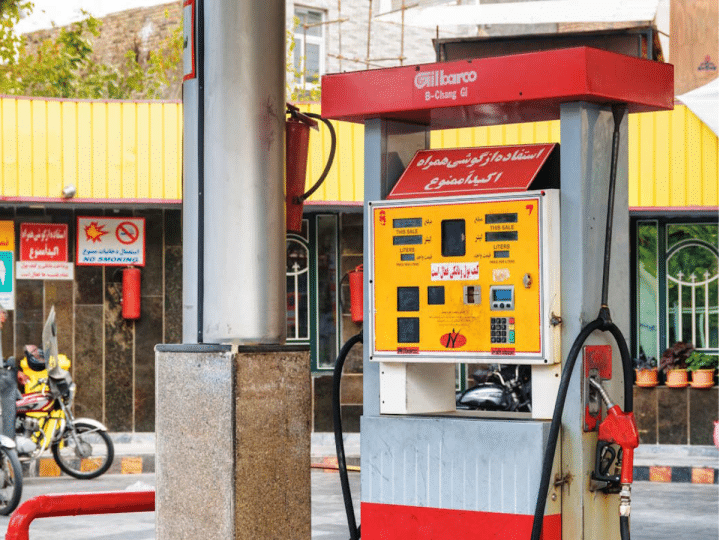

Under state ownership, Iranians pay so little for oil consumption it’s actually a problem. This is somewhat amusing given it shows that nationalisation can dramatically reduce people’s energy bills. Just in Iran’s situation, the price is too low, meaning the government should take more profit and invest it in industries such as education and healthcare.
As a disclaimer for those jumping the gun, this article focuses on only this aspect of Iranian policy, it’s not upholding the overall system of an authoritarian theocracy.
Why is energy so cheap in Iran?
State ownership combined with government subsidies means Iranians pay as little as £0.021 per litre of fuel. The average global price is £1.09, demonstrating how remarkably inexpensive Iranian oil is.
Of course, the cheap oil is also partly because Iran has the third largest reserves in the world.
The issue is that such cheap energy leads to overconsumption. It’s why even under public ownership, finite resources should not be free or too cheap.
Iran’s energy intensity index is one of the highest globally. Plus, 20% of Iran’s daily consumption is made up of oil smuggled abroad and sold to other countries because of the low price at home.
Low cost energy means reduced expenditure for agriculture, delivery and for businesses and people. It’s generally a good thing. But rather than making it too low, profit can be used for public investment in other areas.
Before privatisation, nationalised energy in the UK made significant profit for the public purse, meaning the government can spend more with less risk of inflation.
Green energy over oil
That said, it’s clear that renewable energy is not only cheaper to produce but addresses the climate crisis. We need to move away from oil, no matter what the corporate and state luddites say.
In 2025, Earth Overshoot Day landed on 25 July. That’s the day when, globally, we use the amount of resources that the planet can replenish for the next year — our ecological budget.
This is largely due to consumption of fossil fuels. If we changed to 100% renewables globally, which is entirely possible, it would bring the date back six months.
But Iran does show how much state (or common) ownership can reduce prices for individuals in a society. Amusingly, it’s actually too cheap.
Featured image via the Canary
By James Wright


In the runup to the local elections, we’ve been reporting on the horrorshow that is Reform UK’s campaign. Most of our articles have focused on candidate controversies, and these stories have somehow gotten worse and worse by the day.
For the latest example of this, we present Aaron Lee Taylor:
Taylor has campaigned from Reform’s head office and twice met Nigel Farage, has frequently shared material online that promotes Nazi Germany.https://t.co/om5KugSPN9 — HOPE not hate (@hopenothate) April 14, 2026
 NEW: ‘Hitler was right’, says one of Reform’s top activists, Aaron Lee Taylor
That’s Adolf Hitler, by the way.
The worst Hitler.
The worst person full stop, arguably.
Come and join the Reform UK Party
As Hope not Hate have reported:
Aaron Lee Taylor, who volunteered in Reform’s head office and twice met Nigel Farage has frequently shared material online that promotes Nazi Germany.
Here’s an example of the sort of thing he was posting:

This is something Taylor tweeted on 1 November 2025:
If it’s black send it back
If it’s brown shoot it down
If it’s white it’s perfectly alright (to stay in the UK)
These posts were from late last year. Earlier this year, he began volunteering at Reform’s HQ and taking pics with the top brass Hope not Hate added:
His most recent post in support of Reform was on April 3rd, when he shared an Easter message from the party. We understand that he is now no longer a member of the party. What remains unclear is why Reform appealed to Taylor, an unabashed fan of Hitler.
Yes, very unclear.
We probably shouldn’t be laughing about the UK’s leading political party being up to its elbows in Nazis, but there are two things that could be described as darkly amusing:
- Reform’s laughable vetting process (which they assure us exists).
- The fact that Aaron Lee Taylor is a completely ridiculous figure.
The following image shows Nigel Farage meeting Taylor at the activist’s tanning salon:

That’s right – ultra-racist Aaron Lee Taylor has his own tanning salon.
Saying that, we suppose he’s far from the only orange supremacist in the world:
Does anyone believe Trump‘s BS explanation for posting himself as Jesus Christ?
“Well it wasn’t depicted… It was me, I did post it. And I thought it was me as a doctor and had to do with Red Cross. There is a Red Cross worker there that we support and only the FAKE NEWS could… pic.twitter.com/TwDTvSWnwe — Ed Krassenstein (@EdKrassen) April 13, 2026
Vetting away with it
As Hope not Hate reported, Zia Yusuf said in March that Reform have “the best vetting in the country”. Here’s a picture of Yusuf with Aaron Lee Taylor (tweet taken from Taylor’s Twitter feed):

We’re well aware that Reform’s vetting is non-existent, because we’ve reported the following:
- Reform candidate wants to ‘tear down’ the NHS.
- Reform candidate exposed as a horny nincompoop.
- Another Reform candidate has praised Enoch Powell.
- Reform UK accused of ‘nil vetting’ as another racist candidate exposed.
- Video emerges of Reform’s ‘Nazi salute’ candidate drink driving.
To be fair, ‘non-existent’ is the charitable reading of this nonsense ‘vetting’ process.
The less charitable takeaway would be that this bunch of racists are purposefully enlisting the absolute worst of the worst.
Featured image via Hope not Hate
By Willem Moore

Xanadu Quantum Stock Explodes 54% on Nvidia AI Models as Photonic Pioneer Surges in 2026

Iran Nuclear Deal Bitcoin: The 20-Year Offer

Why weight loss doesn’t have to mean chicken, rice, and misery anymore


-

 Politics5 days ago
US brings back mandatory military draft registration
-
 Sports5 days ago
Man United discover Nico Schlotterbeck transfer fee as defender reaches Dortmund agreement
-

 Fashion5 days ago
Weekend Open Thread: Veronica Beard
-

 Politics6 days ago
Malcolm In The Middle OG Turned Down ‘Buckets Of Money’ To Appear In Reboot
-

 Politics3 days ago
World Cup exit makes Italy enter crisis mode
-

 Crypto World6 days ago
Canary Capital Files SEC Registration for PEPE ETF
-

 Business5 days ago
Tesla Model Y Tops China Auto Sales in March 2026 With 39,827 Registrations, Beating Cheaper EVs and Gas Cars
-

 Crypto World2 days ago
The SEC Conditionalises DeFi Platforms to Be Avoided for Broker Registration
-

 Crypto World2 days ago
SEC Signals Exemption for Crypto Interfaces From Broker Registration
-

 News Videos11 hours ago
Secure crypto trading starts with an FIU-registered
-
 NewsBeat3 days ago
Pep Guardiola and Gary Neville agree over Arsenal title problem that benefits Man City
-

 Business5 days ago
OpenAI Halts Stargate UK Data Centre Project Over Energy Costs and Copyright Row
-

 Business4 days ago
Ireland Fuel Protests Enter Day 5 as Blockades Spark Shortages and Government Prepares Support Package
-

 Politics6 days ago
LBC Presenter Mocks Trump Over Iran War Failures
-

 Crypto World5 days ago
Federal judge blocks Arizona from bringing criminal charges against Kalshi
-
 NewsBeat4 days ago
JD Vance announces ‘no agreement’ with Iran over nuclear weapons fear
-

 NewsBeat1 day ago
Trump and Pope Leo: Behind their disagreement over Iran war
-

 Tech6 days ago
A version of Windows 10 released a decade ago is now eligible for additional security patches
-

 Crypto World2 days ago
SEC Proposes Certain Crypto Interfaces Don’t Need to Register as Brokers
-

 Business5 days ago
IMF retains floor for precautionary balances at SDR 20 billion
You must be logged in to post a comment Login