
Politics
The Netherlands Will Not Return For Eurovision 2027 Over Israel Controversy


The Dutch broadcaster Avrotros has confirmed that The Netherlands will not be returning to the Eurovision Song Contest next year.
The Netherlands was one of five countries to withdraw from Eurovision ahead of this year’s contest in solidarity with Palestine, after it was confirmed that Israel would be returning in 2026.
On Monday morning, an Avrotros rep confirmed that the broadcaster would be following suit at next year’s event.
“Avrotros will not participate in the Eurovision Song Contest in 2027 because the event can no longer be considered neutral, with a participating country still involved in a large-scale military conflict,” they said. “Geopolitical tensions in the Middle East are having a significant impact on the Contest and have led to deep divisions.
“Over the past year, Avrotros has called on the European Broadcasting Union (EBU) to establish transparent rules for the participation of countries involved in military conflicts. However, the recently announced changes by the EBU do not provide sufficient confidence that the independent and neutral character of the Eurovision Song Contest has been restored.
“Participation is therefore no longer consistent with the values of Avrotros: trustworthiness, independence and humanity.”
This update comes after Eurovision refreshed its rules to state that any country involved in an “armed conflict” could no longer serve as a host of the contest, even if they win at the previous year’s event.
Last year, The Netherlands was the first of five countries to announce it would be pulling out of Eurovision, shortly after the decision was reached to invite Israel back for the 2026 contest.
“Under the current circumstances, participation cannot be reconciled with the public values that are fundamental to our organisation,” they said at the time.

Following this, Spain, Ireland and Slovenia’s national broadcasters all announced they’d be doing the same, with Iceland’s following suit around a week later.
The director general of Ireland’s RTÉ said in May that a decision about the country’s Eurovision future had not yet been made, but noted: “For us as a public service broadcaster, who believes in the importance of protecting journalists and believes in human rights, there’s no reason at the moment to change our decision but we will review it in the coming months.”
Meanwhile, Belgian broadcaster VRT has also cast doubt on its own participation in next year’s Eurovision Song Contest.
Eurovision will take place in Bulgaria for the first time in 2027, following Dara’s win with her song Bangaranga.
Israel finished in second place in this year’s competition, for the second time in a row, having also come out on top in the televoting.



Germany’s ‘Alternative für Deutschland‘ (AfD) is classified as an extremist right-wing organisation even by German security services. And the party is determined to be its true racist, eugenicist self. AfD has announced that if it takes power in the approaching Saxony-Anhalt regional elections, it will segregate refugee children into a separate education system. So far, so unsurprisingly evil. But the party also wants to take Germany back to its nazi roots by segregating disabled children as well.
And for good measure, AfD plans to reduce education on the nazi era and politics.
AfD: “the inclusion experiment has failed”
The racist party’s manifesto announced that it finished with integrated education: the “inclusion experiment has failed and and must be ended”. AfD claims that it wants to pull disabled children out of mainstream education for their benefit. It says that it will segregate refugee children to send a “message that their stay in Germany is only temporary” – while it works to shut down the arrival of refugees Germany’s own policies help to create. And even in the refugee schools, Islamic education will be excluded because “Islam is not part of Germany” – making clear just who the AfD’s scapegoat is.
But let’s be clear: this is all about preventing impressionable young people being exposed to, and learning to empathise with, children who are different from them. Nazi ‘othering’ – and the murderous ‘useless eater’ mentality that goes with it – depend on indoctrinating the young to hate those who are not like them.
Keeping German children from being able to empathise and identify with fellow human beings the state – or a political party wanting to control the state – rejects and scapegoats. In the country that gave birth to Nazism and the slaughter of Jews, disabled people, LGBTQ people and people of ‘impure’ or ‘subhuman’ ethnicity, what could possibly go wrong?
Saxony’s education minister Conrad Clemens told Bild that:
The idea of putting foreigners and students with disabilities in separate classes leads to a dangerous division in the classroom. Such ideas are unacceptable for our education system.
Polling projects a strong performance for AfD in the 6 September 2026 Saxony-Anhalt elections.
Featured image via the Canary
By Skwawkbox

In case you haven’t noticed, I like a sweet breakfast (though so-called “frambled” eggs make an acceptable alternative from time to time). If I could, I’d eat dessert every morning.
Which is why I was very, very excited to see banana fritters-eque fried flapjack bites all over my TikTok and Instagram pages.
So, I thought I’d give the ridiculously easy recipe, dubbed “banana nuggets” by food creator Tom Fauconnet, a go.
The super-simple ‘banana nuggets’ recipe takes minutes to make
The posts I saw described banana nuggets as a very simple, minimum-three-ingredient recipe: chop up a banana and add it to a pan with oats and some Golden Syrup, maple syrup or honey.
Some recipes call for butter, and others don’t. But come on: I’m not skipping my beloved Kerrygold here.
I ended up using the following amounts of each:
- 1 banana
- 25g oats
- 10g butter
- 1 tablespoon Golden Syrup
As the heat warms the butter and sugar into a caramel, the oats bind to the banana slices, a little like a flapjack (shaking the pan helps to coat the sections without breaking them apart). And the longer they’re left in the pan, the more crispy and golden that buttery outer layer gets.
Like porridge, the exact measurements aren’t strict. You can mostly eyeball it: add more golden syrup and butter if the oats aren’t sticking, and more oats if your banana is looking conspicuously bald.
I’ll be honest, I wish I’d put more butter in mine. But I was almost out, and the recipe is forgiving – the oats still clung.

Spices like cinnamon are great here, too: I just sprinkled some over the oats in the pan.
I was really impressed by how quickly the mixture came together. For the first minute, it feels like you’ve horribly mismeasured – after that, though, the mix clumps together beautifully. Predictably, given this is basically caramel with toasted oats (which you should use in porridge, too), the smell is divine.
But to get the beginnings of a tan on the outer layer of my bites, I had to leave them in the pan for about seven minutes all-in. (I probably should have been more patient: 10 minutes would have been golden perfection).

The fun really starts once your “banana nuggets” have finished cooking. Many place them on a bed of Greek yoghurt before adding fruit, chocolate chips, nuts and sweet sauces.
Sadly (can you tell I tried this recipe before The Big Shop?), I didn’t have many of those options to play with. Instead, I had to try it with a single square of M&S’ (very good) dark cooking chocolate, which I suppose had the unintended upside of giving me a less tainted banana nugget experience.

So… what’s the verdict?
Even without the extra toppings, and despite the fact that I undercooked them, these banana nuggets were delicious.
Their crispy, buttery (ignore butter-free recipes!) outer layer was crispy and nutty, giving way to soft, sweet banana.
It’s not quite as intense a contrast as deep-fried banana fritters, but it’s got its own flapjack-like appeal.
I really wish I’d had tart fruits, like raspberries, to eat this with, and Greek yoghurt should be considered an almost mandatory part of this dish. It needs something soft, creamy, and slightly tangy.
But even with those caveats, “banana nuggets”, which take minutes, taste amazing, and make your whole kitchen smell divine, have already transformed my breakfasts.
Just make sure to be more patient with the cook time than I was – and don’t skimp on the toppings.
Charles, Lord Banner is a practising planning KC as well as a working peer, and Jack Airey is Director of Housing and Infrastructure at Public First having previously been a planning advisor in No 10.
One of the most consequential planning reforms of the past few decades was a Conservative achievement.
In 2012 a Conservative-led government took more than a thousand pages of planning policy and cut them down to barely fifty, with a presumption in favour of sustainable development at its heart. That turbocharged the granting of permissions. Housebuilding climbed to just under 250,000 homes a year before the pandemic, and has steadily declined since.
The new National Planning Policy Framework, brought forward under Labour, continues that work, and it is a strong document. It opens up brownfield land across the country. It takes a sensible view of green belt allowing its less important parts to be considered for development.
Reforms like these take time to bite, but they will eventually support more private enterprise, more homes and more families able to buy, some of the values the Conservative Party exists to defend.
The framework is the bedrock for a large increase in housebuilding next parliament, provided the jobs and wage growth are there to give people the means to buy. Labour will not hit its target of 1.5 million homes. Overzealous tax and regulation have made building unprofitable in too many places, and a stagnant economy means the demand is not yet there.
Yet a big rise in delivery is desperately needed. The average home in England now costs 7.6 times average earnings.
At the turn of the century it was about four.
The planning system now in place could underwrite that rise early next decade, and it may well be a Conservative government that presides over it. Any temptation to commit to scrap the reforms should therefore be resisted.
Opposition of course still has its place. The NPPF can be improved, and the wider system is far too slow. It does too little for the small and medium builders who cannot get a scheme off the ground because the sums do not work, and it burdens some sites with so many requirements that they cannot actually be built. Ministers should also be pressed on Sadiq Khan’s London Plan, which as drafted will do next to nothing for the capital’s housing crisis. All of that can be argued for while still backing the core of the reforms.
It is worth learning from the experience of New Zealand. Facing a housing shortage as bad as ours, Labour and the National Party worked together to deliver major planning reforms, having decided the problem was too serious for the usual point-scoring.
The reforms led to more housebuilding and housing becoming more affordable.
The Conservatives can stand with the millions who want a home of their own, and the many whose livelihoods depend on building them, while still speaking for local people who want development done right. Held together, those are the makings of a winning coalition. A party founded on ownership and enterprise should build it.
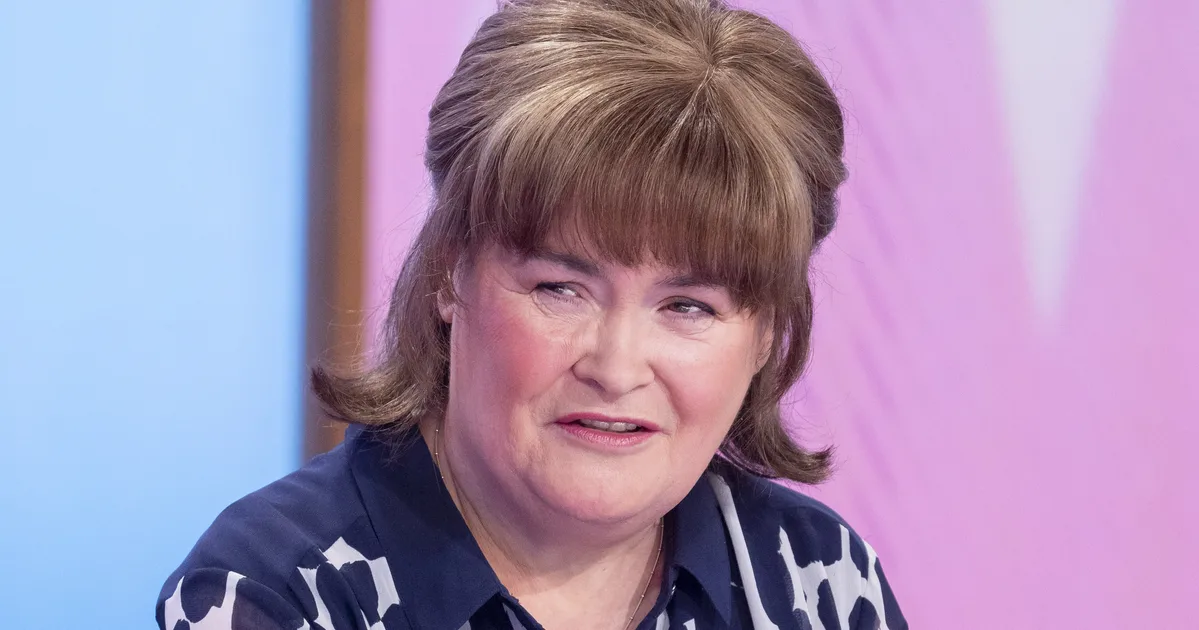
But what we weren’t expecting was that this recent Su-naissance would extend to the Ted Lasso universe.
Since it premiered at the beginning of this month, the former Britain’s Got Talent star has been the name on everyone’s lips in Ted Lasso’s fourth season.
Over the weekend, Susan shared a video of herself watching the latest of Ted Lasso on Instagram, showing Jason Sudeiki’s character admitting he’d finally got round to watching “this Susan Boyle audition”.
“She’s the most talented woman on earth,” he declared, prompting a response from the woman herself.
“Cheers Ted!” Susan enthused, before taking a sip from a dedicated “Ted” mug to reveal the feeling was very much mutual.
“I’m back alright,” she enthused at the time. “I’m feeling OK, and ready to go.”
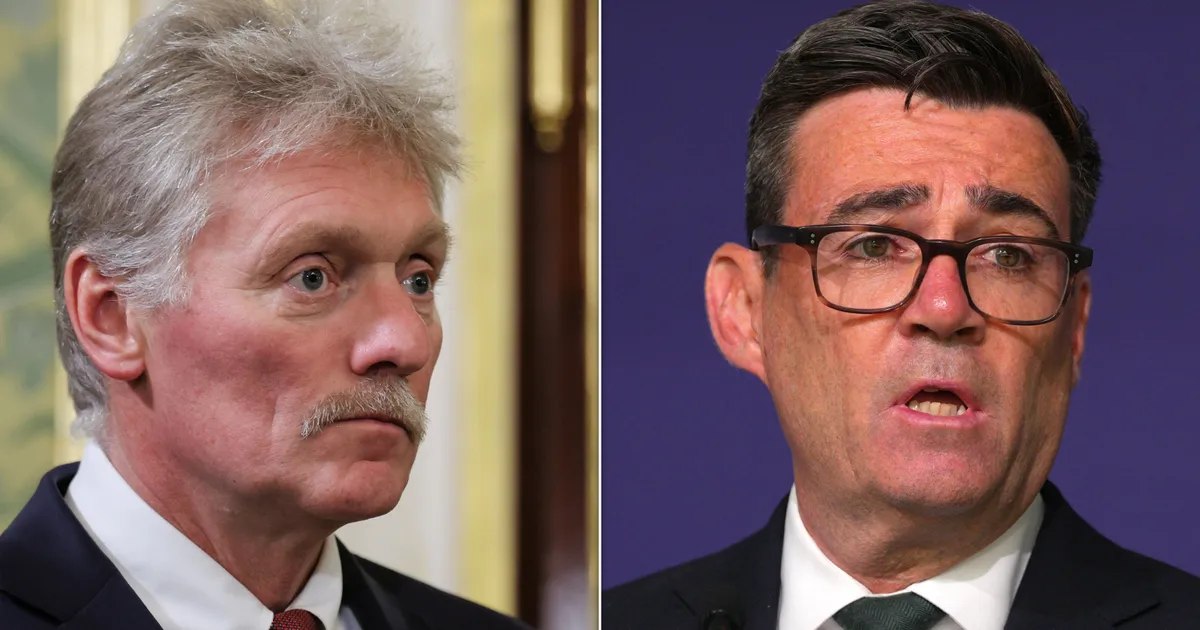
Russia has hit out at Andy Burnham over his decision to share long-range missile blueprints with Ukraine.
The UK prime minister travelled to Ukraine on Monday – his first international trip since getting the keys to No.10 – and is expected to hand Kyiv key information on how to build the advanced rockets.
While marking 35 years since Ukraine first secured independence from the former USSR, Burnham will confirm that a key defence firm can release classified information on British components for the long-range missile SCALP.
It comes after the Kremlin already warned Britain of the “consequences” after it was confirmed that British drones had been used as part of Ukrainian attacks hitting targets deep within Russia.
Burnham brushed off the warnings, insisting that Britain is not a “fair-weather friend” to Ukraine.
Today, he said: “The Ukrainian people should be in no doubt: the UK is behind you today and for as long as it takes.
“I am proud of the contribution our country has made to Ukraine, and I want the Ukrainian people to hear it directly from me that our support will not waver. After all, Ukraine’s security is our security.”
The Kremlin’s spokesperson Dmitry Peskov was furious over the developments, telling Sky News: “[We view them] extremely negative.
“Britain is participating in this war on the side of the Kyiv regime.
“Britain is methodically and consistently adding fuel to the fire and methodically and consistently plotting to prevent a peaceful settlement process.”
“Who started the fire? That’s the question, isn’t it,” Burnham later replied when speaking to reporters in Kyiv on Monday.
The Russian embassy in London also criticised reports from the weekend which pointed out that it had not yet appointed a Russian ambassador to the UK.
Andrei Kelin left the post abruptly on July 21 after seven years in the top diplomatic post.
Embassy staff told The Times that they were not sure when he would be replaced, and the Foreign Office is yet to receive a list of potential candidates for the top job.
But writing on Telegram on Monday, the embassy disputed the article.
It said: “The embassy considers it necessary to note that nothing in its comment provided to the newspaper implies that the Russian side intends to downgrade the level of diplomatic relations between our two countries.
“Such conclusions belong solely to the author of the publication and are based on suggestions by his unnamed sources.”
The embassy notably added: “As for the state of Russia-UK relations across all areas, they have deteriorated to an unprecedentedly low level entirely on London’s initiative.”
The UK’s relationship with Russia cooled considerably after Vladimir Putin launched his illegal invasion of Ukraine in February 2022.
But the Russian autocrat continues to wage war against his European neighbours in a brutal land grab.
Listen to Commons People, the podcast that makes politics easy. Every week, Kevin Schofield and Kate Nicholson unpack the week’s biggest stories to keep you informed. Join us for straightforward analysis of what’s going on at Westminster.



4 min read
It is welcome news that Andy Burnham has made it clear that assisted suicide should not be introduced while the situation with social and palliative care in this country is so dire.
Hospice and palliative care face a severe funding problem. A National Audit Office report published at the end of last year found that nearly two-thirds of England’s independent hospices ran a financial deficit in 2023/24, with expenditures exceeding income by £78m. The hospice care provider, Marie Curie, revealed this year that around 170,000 people die annually in England with unaddressed symptoms, and unmet palliative care needs are expected to rise by 23 per cent in the next 25 years unless drastic measures are taken to fix the deficiencies.
Such a context is not one in which assisted suicide should be legalised. Individuals with unmet palliative care needs would not be given genuine choice at the end of their lives. Sufficient treatment would often not be an option, but a hastened death would be. Indeed, as health secretary, Wes Streeting warned that funding for palliative and end-of-life care would have to be reduced so funding could be diverted to set up assisted suicide services.
Lauren Edwards, the MP sponsoring the latest iteration of the assisted suicide bill, responded to the Prime Minister’s statement by making the claim that you don’t have to choose between fixing palliative care or having assisted suicide – it would be possible to have both. This has become a common refrain from supporters, but there cannot be a genuine choice if funding for care is so inadequate that some terminally ill people may feel forced into a premature death because their basic needs are not being met. The argument just doesn’t hold water.
Not only would there likely be less funding to fix palliative care if assisted suicide were to be introduced, which would bring its own costs, but the reforms needed to solve the deeply entrenched funding problems in the care sector are not a quick fix; they will take time.
The assisted suicide legislation includes an implementation period of a maximum of four years that would begin immediately after receiving Royal Assent and becoming law. This would mean that, after four years, assisted suicide would automatically be introduced regardless of the state of palliative care services at that time. I have every hope that the PM achieves his goal of fixing the funding issues in the care sector, but setting a hard limit of only a few years – less than the lifespan of one parliament – to fully address this monumental problem would be an irresponsible hostage to fortune.
Experts also agree that it is simply not feasible to attempt to do both at the same time. Professor Katherine Sleeman, Chair in Palliative Care at King’s College, London, has said that introducing assisted suicide when care services are so fragmented presents a “huge risk” that people may decide to end their lives “simply because of lack of high-quality care”. Professor Mumtaz Patel, President of the Royal College of Physicians, said something similar to the House of Lords Select Committee that considered the last assisted suicide bill: that people would certainly choose to end their lives “because of the lack of provision around good palliative care”. That, surely, is not what anyone wants.
Fixing palliative care is of enduring national importance, and it is welcome that the PM, along with both supporters and opponents of the assisted suicide legislation, recognises it as such. MPs must unite to implement the reforms needed to address these funding issues.
And yet, it seems irrefutable to me that care services cannot be fixed concurrently with the legalisation of assisted suicide, and that assisted suicide could not be introduced safely. Care services remain in a poor state. The obvious solution, as the PM has recognised, is to defer any talk of assisted suicide until we have fixed the issues with palliative care. Anything else would be irresponsible.
Mary Glindon is Labour MP for Newcastle upon Tyne East and Wallsend

Dua Lipa is opening up about her wedding day.
Earlier in the summer, the Training Season singer married British actor Callum Turner at an intimate ceremony in London, before jetting off to Palermo for a more lavish celebration.
Speaking to Vogue Italia, Dua recalled that hers and Callum’s reception was “such a beautiful celebration”.
The Grammy winner also opened up about how friends of hers and Callum’s had given them “lots of advice” about how best to maximise, but there were “two suggestions that we really took on board”.
“One was to show up at our wedding like we were guests ourselves, which meant we had the best time and we weren’t stressed at all,” she said.
“The other was for Callum and me to keep checking in with each other so we didn’t lose each other in the crowd. As a result, we spent loads of time together and created so many amazing memories.”
Elsewhere in the interview, she spoke about how her attitude to romance has changed over the years – and how this has affected her songwriting.
“[Writing] about having a broken heart is very common,” she explained. “When I was younger, I found much more inspiration in the search for and the longing for [true love] because heartbreak is such a loud emotion.
“But now I want to discover what happens after you find love. I’m interested in the everyday complexities of a relationship, in its quieter moments, in the small things.”
Dua and Callum began dating in January 2024, making their red carpet debut as a couple at the following year’s Met Gala, around a month before confirming their engagement.
Shortly afterwards, she told British Vogue that the engagement was “very exciting”, revealing how Callum had designed her engagement ring for her, and that she was “obsessed” with it.
“It’s nice to know the person that you’re going to spend the rest of your life with knows you very well,” she enthused.
Read Dua Lipa’s latest interview in full in Vogue Italia.


Israel’s occupation regime has issued an order to kill Palestinian children if they dare to fly kites in Gaza.
The order comes after a manufactured panic following four kites that broke loose over several days and landed in Israeli neighbourhoods close to Gaza. The occupation military admitted the kites posed no threat at all, but this has not stopped ‘defence’ minister Israel Katz from announcing that anyone flying kites will be targeted for ‘forceful‘ military action. Katz also threatened to escalate Israel’s wider assassination campaign and forced displacements across Gaza if the kites continue to fly:
A balloon is like a kite, and a kite is like a drone, whether it carries explosives or not.
Respite denied by Israel
Kite-flying is one of the few recreations that have been within reach for Palestinian children to provide a few moments respite from the horrors of Israel’s genocide. Now it is likely, like so many other things in Gaza, to get them killed by the coloniser.
Zionists’ targeting of children has been identified by the United Nations and others as a core part of its Gaza genocide.
Featured image via the Canary
By Skwawkbox

What a year 2026 has been. We’ve had heatwave after blistering heatwave, leading to drought in parts of the UK – and resulting hosepipe bans are expected to last until the end of the year, according to a Thames Water boss.
That’s spelled chaos for gardeners.
The Royal Horticultural Society found that while some species, like wild carrots and lavender, thrived in the parched conditions, others like hydrangeas suffered enormously.
And a peek at Reddit’s r/GardeningUK proves that ordinary growers are starting to reconsider what they plant, too.
Writing to the group, site user u/oldschoolie asked their fellow green-fingered forum members: “What will you be giving up on because it died or needed too much coddling in the drought this year?”
Here are some of the most-upvoted responses:
1) “Anything that died in the drought! If it survived, it can stay”
Credit: u/Normal-Height-8577
BTW, the Royal Horticultural Society offers similar advice. Its principal horticultural advisor, Leigh Hunt, said: “As temperatures become more extreme don’t replace like for like – if a plant is struggling in your garden you can plant something better suited to the space.”
2) “Hydrangeas”
“I’ve been nursing a bunch of them for the last four years… and tried many spots, but every summer [they] become pretty sorry looking. [They] take too much effort to get back to [a good condition] before they get ‘summered’ again.”
Credit: u/Glittering-Mentat-4
Hydrangeas seem to be among the most susceptible plants in a heatwave.
3) “Lupins”
“Urgh. Even with the drought, they still got slug-decimated, and have just sat there looking crap and scraggly since.”
Redditor u/A_Pure_Motive agreed, writing: “Same here, looked fabulous for about a month, if that, and have looked awful since the hot weather hit and also been subject to multiple aphid attacks. Saved all the seeds, hoping to plant more for next year, and now I’m thinking meh…”
4) “50% of the lawn”
“I want some grass, but the rest will be pollinator-friendly plants which don’t need much water.”
Wildflowers, clover, and thyme can “reduce or eliminate the need for watering and improve biodiversity,” explained the RHS. Gardens that follow a mixed grass and wildflower pattern are sometimes called tapestry lawns.
5) “Pots and planters. All of them”
We’ve written before at HuffPost UK about how important it is to place potted plants in dark, shady spots when it’s hot out. Their thinner soil dries out much faster than soil in the ground – this is especially true for dark plastic and unsealed terracotta pots.
In general, container plants suffer more in the heat.
6) “Courgettes”
“They always end up with powdery mildew and look awful. Output has been dwindling in recent years, especially bad this year.”
And u/destria seemed to have a similar experience, writing: “It’s been my worst year for courgettes too. Such a low yield. I’m usually drowning in them, but this year, even with five plants, we’ve only been getting maybe three to four decent courgettes each week. I don’t even like courgettes that much…”
7) “Sweet peas”
“They’ve done very poor[ly] the last two years,” u/insrtitherenow, who‘s also given up on celery, said.
For their part, u/Panda1953 reckoned, “Neither sweet peas [nor] tomatoes have been a success this summer. Won’t bother next summer.”
If you’re looking to overhaul your back garden ahead of what seem to be very likely future heatwaves, we’ve written a handy guide on where to start.

If you’ve tuned into any political news in the last few days, you’ll have heard the official Labour buzzword of the week: pivot.
Prime minister Andy Burnham is apparently swivelling the party left so sharply you’d think he’d just spotted a late bus leaving the station and is sprinting to catch it. He’s promising “a state that isn’t afraid to intervene”, “putting British industry first”, and “fairness for working people”.
I’m sure we have heard this somewhere before…
Pundits are already cooing about a return to roots — like Labour’s forgotten roots were just hiding down the back of the leader’s sofa all this time.
But look past the nicely turned phrases and the perfectly pressed shirt, and this isn’t a revolution. It’s just the same old menu, but with a fancier description on the blackboard.
Let’s give credit where it’s due, if we must.
Burnham: grateful for small mercies?
On paper, it all sounds great. Who wouldn’t cheer for backing our steel mills instead of letting bosses ship jobs abroad to save a few quid? Who’d argue with telling big corporations they can’t hoover up record profits while paying staff so little they qualify for food banks?
It’s the sort of stuff that gets shared a thousand times on Facebook by people who haven’t voted since 2005, nodding along like “at last, someone gets it”.
Then you read the small print — or rather, notice the complete absence of small print on the stuff that actually matters — and it’s like biting into an M&S Gourmet Nut Wellington and finding it’s mostly carrot peel and stewed nettles.
Leaked briefings still talk about “streamlining welfare” — which in Westminster language means something like making life even more miserable for people who’ve already got it tough.
There have been no promises to end sanctions that cut off cash for weeks because someone missed a job centre slot while they were in hospital, or their bus was cancelled — which, let’s be honest, happens most weeks anyway.
And Universal Credit’s infamous six-week wait? Still there, lingering like a bad smell in a bathroomless HMO.
Panic setting in already
On the big stuff? Total silence. Burnham’s said zilch about bringing energy companies into public ownership — the only plan that’d actually stop bills going up faster than a queue at Greggs on a Saturday morning. Nada on closing tax loopholes that let giants like Amazon pay less than your average market stallholder. Nothing about scrapping Trident, even though we could fund every school repair in the country three times over for what that ludicrous white elephant costs.
And it turns out that standing up for ordinary people stops dead the moment it might upset a wealthy donor or a newspaper editor.
This isn’t a pivot. Is it? It’s a panic.
And we’ve seen this act before. Labour won power claiming they’d fix the housing crisis, sort out social care, and the usual nonsense about making work pay.
What has changed? Rents are higher than the roof on my nan’s old council high rise, there are no rent controls in sight, and no-fault evictions are still the greedy landlords’ favourite party trick.
Now we hear 30,000 NHS jobs could go — at the exact same time private firms are trousering millions in outsourcing contracts.
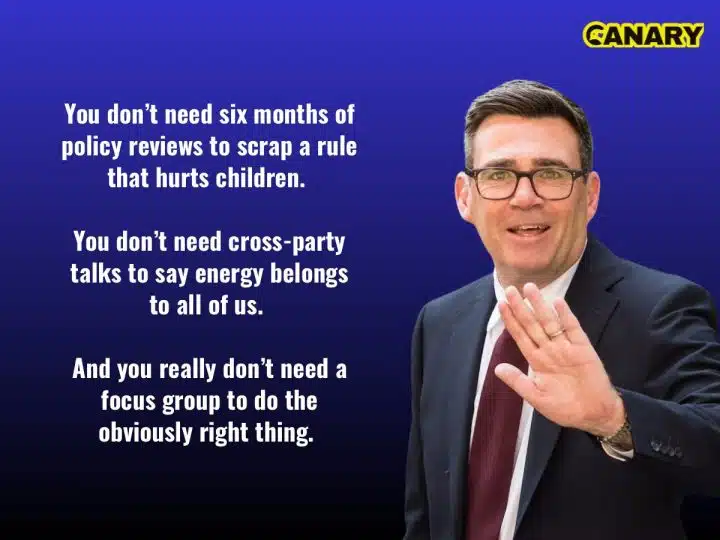
Some will say “give Burnham a chance, he’s only just started, bless him”. Fair enough — but you don’t need six months of policy reviews to scrap a rule that hurts children, right?
You don’t need cross-party talks to arrive at the conclusion that energy belongs to all of us, do you?
And do you really need a focus group to tell you to do the obviously right thing?
Burnham: choosing not to choose
These aren’t tricky administrative puzzles — they’re choices. And right now, Burnham’s choosing not to choose.
Out here in Swindon, in towns across the south west and the north, we don’t care about Westminster wordplay. We care about the neighbour working two zero-hours jobs who still can’t afford to put the heating on.
We care that utter monsters such as Nigel Farage can spout any old rubbish and get called “bold”, while anyone asking for actual change gets dismissed as “unrealistic”.
Burnham might think a few rousing lines will win us back. He might reckon we’re too busy counting pennies for the weekly shop to check if he’s actually delivering. But he’s wrong. We’re not daft. We know the difference between someone who’s turning the ship around, and someone who’s just polishing the brass portholes while it slowly drifts onto the rocks.
We don’t want speeches. We want action. We want a party that’s not scared to pick a side — our side, not the boardroom’s — no fine print, and no last-minute U-turns like the ones that haunted the last Prime Minister, whatever his name was.
Actions speak louder than carefully rehearsed buzzwords — and right now, Burnham’s actions are whispering while his speeches are little more than shouting. This isn’t a bold new journey, it’s just more of the same old drift, with a louder PA system.
At the end of the day, most voters aren’t fooled by sound bites, spin, or fancy pivots. We can all spot a con when we see one. If it looks like the same old Tory-lite soup, tastes like the same old Tory-lite soup, and costs the same old price in our pockets — it really doesn’t matter what label you stick on the tin.
Featured image via the Canary

Best teeth whitening kits 2026: Powders, pens, strips and LED’s, tried and tested

Veezu donation to cricket club after vandals destroyed scoreboard

How can holders turn to defensive strategies and earn more than $7,000 per day





-

 Fashion3 days ago
Weekend Open Thread: Madewell – Corporette.com
-

 Business6 days ago
SMA Solar Technology AG (SMTGY) Q2 2026 Earnings Call Transcript
-

 Crypto World2 days ago
anatomy of crypto’s biggest liquidation event since 2021
-

 Business2 days ago
Musk’s Tesla, SpaceX Confirm $16.8 Billion ‘Terafab’ Chip Plant as World’s Largest Building in Texas
-

 Tech6 days ago
Qwen3.8-27B runs frontier-class coding agents and reasoning locally, no cloud API required
-

 Crypto World7 days ago
OCC Greenlights Trump Family Crypto Firm for Trust Charter
-

 Politics2 days ago
6 months on, Irish renters crushed by effects of government housing bill
-
 NewsBeat2 days ago
The ‘Lucky Dip Gang’ causing carnage for clicks: After five thugs were killed speeding in the wrong direction on a motorway, GUY ADAMS investigates a sick new trend… and why police aren’t even allowed to pursue them
-

 Crypto World7 days ago
NAVI Prime launches institutional lending framework on Sui
-

 News Videos4 days ago
Don’t Leave Your Financial Future To Chance | August 19, 2026
-

 Tech5 days ago
GLM-5.3 hits the API at $1.4/$4.4 per million tokens
-
Tech6 days ago
5 Of The Most Reliable Car Brands To Consider If You’re Buying A Used SUV
-

 Crypto World7 days ago
Dow’s 3-Year Winning Run Isn’t a Crash Signal, Still 49% Odds of Double-Digit Gains
-

 Business6 days ago
Stock Market Today: Tech Futures Slide As Treasury Yields Jump; Nvidia, Micron, Sandisk Sell Off
-

 Tech6 days ago
Keychron K8 Ultra 8K review: a great value keyboard with comfort issues
-
 Tech7 days ago
Nvidia discloses $21B stake in SpaceX
-
Business7 days ago
Fabrinet (FN) Q4 2026 Earnings Call Transcript
-

 Business4 days ago
Five Below: Kids Discount Retailer Reaps Rich Rewards
-

 Business5 days ago
Marvell Shares Jump 7% as Google Chip Deal Confirms Custom AI Silicon Partnership, Analysts
-
 NewsBeat7 days ago
Trump explodes at CNN reporter after question about young blonde aide who wrote him besotted letters
You must be logged in to post a comment Login