
Politics
They Never Fell: 25 Septembers Later by Daniel Forrester

25 Years After 9/11
Twenty-five years ago today, we recall that my country shook violently but never broke.
On the morning of September 11, 2001, I was sitting at my desk in Cambridge, Massachusetts, working on a proposal with my colleague, John Devanney, when the news arrived. A young coworker, Kat Lam, from our company, Sapient, had called in from lower Manhattan moments after the first plane hit the first tower. She told John she would be late to the office because of the falling debris coming down on her. I heard John tell her to be safe and not to worry about getting to the office. As I listened to their brief exchange, my mind began to do what terrorists long for: race, imagine, and let fear take hold.
I turned to my web browser and hit refresh repeatedly. CNN published the first of millions of images of billowing smoke rising from the building that symbolized so much to me as a child. News soon came in that a second plane hit the second tower and then the Pentagon had been hit. America was breaking into pieces as unchecked imagination and deep uncertainty blended into toxic plumes of smoke. Hundreds of colleagues assembled in a restaurant lobby at One Memorial Drive so we could watch events on a single television near the lobby. We were told by the leaders of our company to reach out to account for all our teammates and then head home to be with our families.
John and another colleague, Meg Armstrong, who could not return to NYC that night, came home with me, so they did not have to be alone in a hotel room. As I saw my wife come out of our apartment door in Porter Square, my eyes welled with tears that would flow on and off for many weeks ahead. We huddled around the television and tried to find meaning and context. Stunned silence was punctured only by the nonhyperbolic voice of the television anchor Peter Jennings. I watched the television until the early morning hours of September 12. It was impossible to look away.
The Twin Towers were much more than buildings to me. They were and remain iconic and dreamy markers connecting me to youthful pride in my dad’s professional accomplishments and the heart stopping moment of asking a beautiful woman to spend a life together.
In the 1980s, my father was a successful real estate lawyer who occupied a corner office on the one hundredth floor of the North Tower. Commuting into NYC with your dad to spend the day in the World Trade Center was a heady experience for any kid from Long Island. We took our seats on the Port Washington train line from Manhasset and settled in for the ride to Penn Station. I thought people would talk on the way to work, but it was strangely quiet, save the loudspeaker announcements of the next station. I mostly stared out the window. When we got to Woodside, Queens, I caught a glimpse of the NY skyline. Somewhere amidst the sea of skyscrapers were two shining towers inviting us to join them. I still see them. They never fell.
Dad held my hand as we navigated up from the subway and into the lobby of the North Tower. The grandness of the concourse, with flags hanging down, framed the enormity of the building. My dad held a briefcase with important stuff inside. I thought one day I, too, would have a briefcase like his.
Moments later, the sea of humanity was reduced to narrow lines of workers queuing outside of elevator banks of the North Tower lobby. It took two rides to reach the one hundredth floor, and I was surprised that there was a man seated on a bar stool in the corner of the elevator, set to press the buttons that would bring us to the top.
“They move really fast,” my dad told me. “And your ears will pop, so chew this stick of gum as we ride up.” Riding in the elevators felt like being inside a drafty rocket ship. And they always seemed to ride past the floor you were seeking and then reverse and slowly pulse downward until their doors flew open. My stomach would churn and then reset when the bell rang, signaling the end of the ride. During those elevator rides, I watched my dad’s energy rise. For him, it was another day at work, but I was entering a foreign yet friendly land that floated a mile up in the sky.
Once in the lobby of Dad’s law office on the 100th floor, I remember shaking hands with secretaries and partners. “This is my youngest son, Danny,” Dad would say. Looking out his massive corner office window into a clear view of Brooklyn, I could feel the building slowly sway in the wind. It was designed to sway. Clouds and fog would often bump into the glass. I would sit at Dad’s desk with my feet up and a notepad in my hand, trying to impersonate him. I would deliver packages from the mail room to partners’ offices. Some would invite me into their offices for a chat. They would recall stories my dad had told them about me and my family.
My dear friend Eric Kispert once asked me what it was like to have a father who literally worked in an office in the clouds. To that unexpected question, I could only pause and eventually reply: intimidating and joyful.
During the one hundredth anniversary celebrations of the Brooklyn Bridge in 1983, dozens of people packed into my father’s office for a perfect view of the celebrations as the sun began to set. I remember seeing fire boats shooting red, white, and blue water streams high into the sky. The river was packed with dozens of boats making the pass underneath the bridge. All dressed up for the big party, my sister, Lynn, and I sipped Shirley Temples with extra cherries as the fireworks display began at nightfall. A radio was tuned to an FM station because they had set the fireworks to music for the first time. We pressed up against the glass window for a front row view. The room was loud with the many voices of adults holding cocktails firmly in their hands. The room quieted when white light reflected in our eyes. Sparks streamed down like a waterfall from the bridge into the river. It was magnificent. One of the partners commented that this would likely be the only time in our lives that we experienced fireworks from above. It was a heavenly and hopeful night.
A few times, my dad and I ate lunch at the Windows on the World restaurant. During father and son events with our beloved New York Mets, I once sat next to pitcher Ron Darling and across from first baseman Keith Hernandez. These were heady encounters for a young boy who thought he was meeting New York royalty. Somehow, my dad always made sure I was sitting at or near the head table. Thank you for that, Dad.
My father never lived to see the towers fall.
Thinking about where to propose to your future wife is not an easy task. I knew it would be in New York City, and I thought I would pick a spot that would stand the test of time. And given that the Twin Towers were such a part of my childhood, I thought how cool it would be to propose to Nancy Harvier on one knee and in between two extraordinary buildings.
On a snowy Saturday afternoon in the winter of 2000, I walked with Nancy between the Twin Towers and through what was called Tobin Plaza. Nancy said “yes.” Moments later, we jumped into the same elevators I rode with my dad and landed at Windows on the World to drink some champagne. We sat at the bar next to two British tourists who were the first to hear the news that we would be married. We stared out at the night sky across an illuminated Manhattan with full hearts.
Our children will never see the spot where I proposed to their mother. That ground is now sacred and carries the stories of thousands of lives.
The founding fathers could never have imagined a day like 9/11, but they knew a lot about courage. They knew what it meant to stand up for something much larger than themselves. 250 years ago, they foreshadowed the resolve within Americans that would be summoned on that September morning in 2001. They set in motion something that generations to come would one day see as precious and fragile and amazing, all at the same time. They gave us the DNA for what it means to be an American in the words of the Declaration of Independence.
Jefferson wrote, “we mutually pledge to each other our Lives, our Fortunes and our sacred Honor.”
“Pledge to each other Our Lives”: On 9/11, thousands of first responders and ordinary citizens went into chaos, risking their own lives for others. Millions of ordinary citizens donated blood.
“Our Fortunes”: Tens of millions of Americans donated billions of dollars in relief money.
And “Our Sacred Honor”: Hundreds of thousands of young men and women joined our military in response to the attacks, and tens of thousands became local first responders across communities in every state.
For over fifteen years, I have edited and updated this essay on each 9/11 anniversary. It was a combination of therapy and keeping a living memory. I have reflected on each change, and I am thankful to all who have read it and shared feedback. This will be the last time I re-edit and publish it.
I asked Iain Dale to publish this final version on the 25th anniversary, as he was the one who asked me to write the initial essay. Iain is like a brother to me. He was also my last phone call on the evening of 9/11 as he had frantically attempted to reach me throughout that fateful day. Hearing his voice that night made me well up with tears. We just sat on the line, quiet and stunned. Given how much I travelled for business at the time of the attacks, I thought how lucky am I to have a friend from another country so concerned about my safety? Thank you, Iain, for decades of friendship, asking me to write these words and for comforting me on that terrible day.
The memories of the Twin Towers will never fade for me.
The madness of that day reminds us all how precious, fleeting, and short this amazing life is.
The towers are still there when I see the skyline.
They never fell.
May God bless all those who lost their lives on 9/11.
Daniel Patrick Forrester
Madison, New Jersey

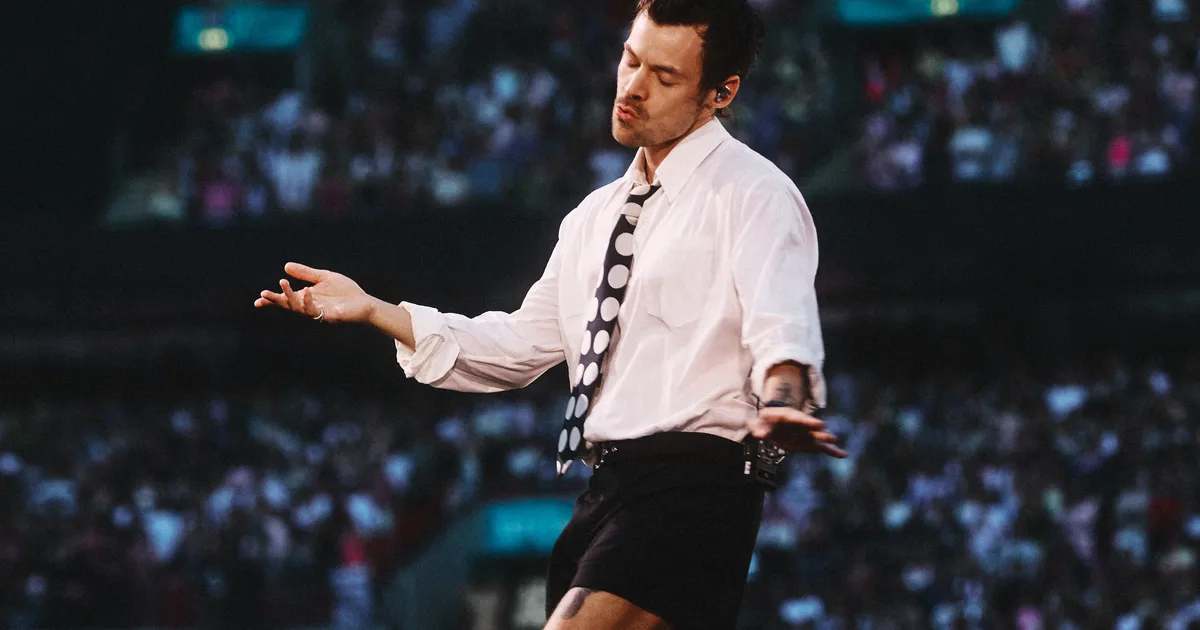
Harry Styles has announced that he’ll be extending his current world tour into next year.
On Wednesday night, Harry – who is currently in the middle of a whopping 30-night residency at New York’s iconic Madison Square Garden – told his fans in an email message: “When we decided to do the 2026 tour I knew it would be special but what you turned it into was far beyond what I could have imagined.
“I love playing music, I love being with all of you and being a part of the love and joy you all create together every night. That’s why I wanted you to be the first to know we will be adding 2027 dates.”
Harry then said that the specifics of these shows would be coming on Thursday, teasing: “After that, I don’t know what comes next for me, but l know that I’m excited to find out.”
“I can’t wait for us to keep dancing with all our friends,” he concluded. “I hope to see you there.”
Harry brought the Together Together tour to London earlier in the summer, performing 12 nights at Wembley Stadium, with Shania Twain serving as his opening act.
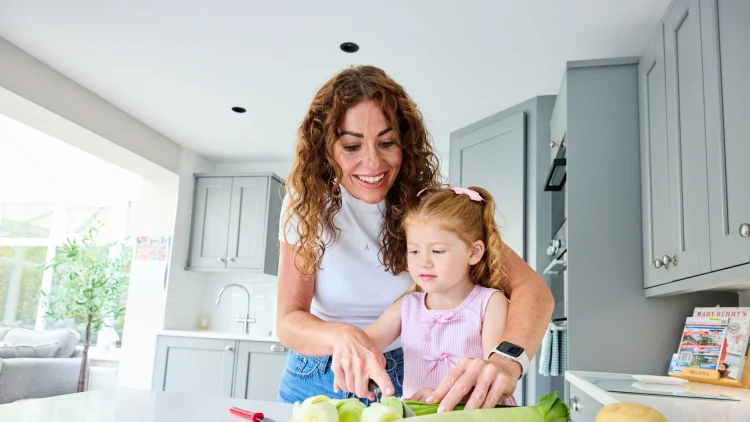


As the challenge of childhood obesity persists, Dr Sarah-Elizabeth Bennett, Senior Nutritionist at Slimming World examines the vital role of families and communities in obesity care and prevention
The recent publication of the Health and Social Care Committee’s report, Food and Weight Management: Fixing the Food Environment1 and the findings from the All-Party Parliamentary Group (APPG) on Obesity policy paper on Childhood Food Environment, Planning and School Food2 has brought renewed focus to childhood health, children’s food environments and the urgent need to support families to live healthier lives.
With obesity among reception-aged children at its highest recorded level, there’s a very clear message: tackling obesity is not simply about individual choices but about creating environments that help whole families thrive. And while the systemic changes recommended by the Committee and APPG, such as restrictions on advertising of high fat, salt and sugar products and mandatory healthy food sales reporting, are vital, sitting them alongside measures that recognise and harness the influence parents can have on children’s health behaviours could have the potential for further widespread benefits.
New independent research3 published in BMJ Paediatrics Open provides compelling evidence of the relationship between parents addressing their own weight concerns and the health behaviours of their children. The study, conducted by the University of Bristol and funded by the National Institute for Health and Care Research (NIHR), explored the experiences of 396 Slimming World members with children aged between five and 11 years old.
The findings reveal the powerful link between parental behaviour change and positive outcomes for children:
- more than two-thirds (67 per cent) of parents who were concerned about their child’s weight felt more motivated to support their child after addressing their own weight
- almost half (48 per cent) of parents reported healthier improvements in what their child ate after they joined a weight management programme
- more than a quarter (27 per cent) said their child had become more physically active
These findings are particularly significant at a time when global projections suggest that by 2050, one in three children, teenagers and young adults could be living with overweight or obesity.4 Research also consistently shows that children with parents living with obesity are more likely to experience obesity themselves.5
Through our understanding of the significant influence parents have on their child’s habits, our Family Affair programme acknowledges the important role family can play in the health of children. It provides our members with a set of resources to support them in encouraging their children to have a healthy, varied balanced diet and form life-long healthy habits.
As policymakers consider how best to address rising childhood obesity rates, recognising the role of families and communities in obesity care and prevention is crucial. In doing so, family influence can become one of the most powerful tools available – putting family at the heart of all adult weight management programmes could help to break the cycle of intergenerational obesity.
Moreover, as the number of people using weight loss medication continues to increase, we should consider whether this could lead to the loss of family influence and what impact this could have on the younger generation, if those using medication aren’t making or being encouraged to make, healthy lifestyle changes alongside it.
Whether our members lose weight with Slimming World alone or alongside medication, they are fully welcome in our groups to receive evidence-based, cost-effective support that ensures they make lasting changes to their diet, activity levels and mindset. We would welcome the opportunity to meet with the government to discuss our commitment to supporting its efforts to help people whose lives are adversely impacted by obesity and introduce them to our members who have lost weight and created lasting healthy habits for their entire family.
For more information on our latest research and outcomes or our programme, please visit slimmingworld.co.uk/health
- https://publications.parliament.uk/pa/cm5902/cmselect/cmhealth/223/report.html
- https://obesityappg.com/inquiries
- Mears R, Sharp D, Searle A, Salway R, Hamilton-Shield J. Effect of parent attendance at an adult commercial weight management programme on their children. BMJ Paediatrics Open. 2026;10:e004417. https://doi.org/10.1136/bmjpo-2025-004417
- Global, regional, and national prevalence of child and adolescent overweight and obesity, 1990–2021, with forecasts to 2050: a forecasting study for the Global Burden of Disease Study 2021 – The Lancet
- https://www.gov.uk/government/publications/childhood-obesity-applying-all-our-health/childhood-obesity-applying-all-our-health
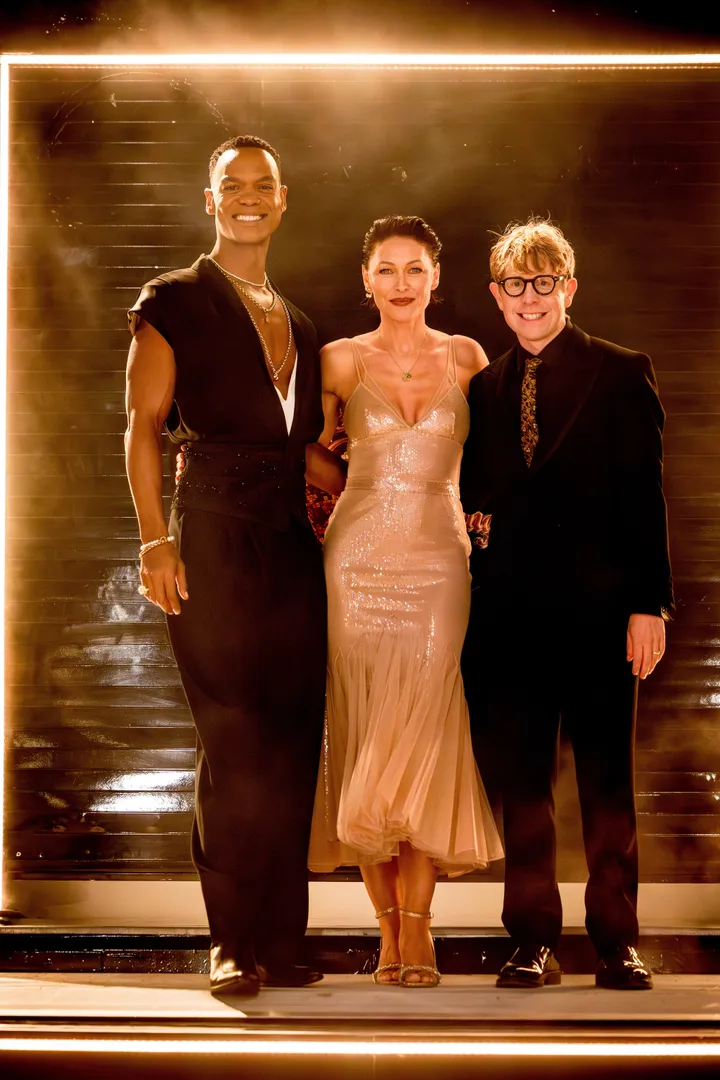
Since Emma Willis, Josh Widdicombe and Johannes Radebe were announced as the hosts of Strictly Come Dancing earlier this year, fans of the long-running BBC dancing show have been speculation as to exactly how they will navigate presenting the show as a trio.
Back in May, before the new presenting team was officially announced, The Sun suggested that “Josh and Emma will have a dynamic similar to Tess [Daly] and Claudia [Winkleman, the show’s outgoing hosts]”, suggesting that “he can bring the comedy they need like Claudia Winkelman did in the ‘Claudatorium’ while Emma is seen as the sensible one, like Tess Daly.”
The report also suggested that Johannes would take on a more “behind the scenes” role, comparable to a “roving reporter”.
However, on the latest episode of the podcast The Rest Is Entertainment, Strictly’s new hosts have had their say the rumours, and given fans a hint about what they should expect from the upcoming series.
First of all, Emma shot down the “backstage roving reporter” rumour, quickly declaring to Richard Osman: “That’s not a thing.”
While he won’t be a backstage reporter, Johannes promised there will still be “a little bit of prying and finding out the truth” from him.
Later in the interview, the former Big Brother host also confirmed that fans should expect some changes in the upcoming series when it comes to the presenting set-up, compared to its previous set-up with Tess and Claudia at the helm.
She explained: “There’s no ‘like for like’. So, no one’s kind of replacing anybody.
“And, at the minute, it’s all very kind of open. We’re having lots of production days where we go in, and we play around, and we’re kind of feeling each other out – well, they’re feeling us out really.”
“It’s going to be like total football,” Josh then quipped. “We’re going to be moving everywhere.”

Before being cast, the trio each had to go through a rigorous audition process for the hosting gig, which included starring in Strictly re-enactments and chemistry tests to ensure they would make the perfect on-screen match.
And it seems even producers hadn’t anticipated the “wild card” move of giving the job to a three-piece team, with Emma admitting that when she, Johannes and Josh had their first audition together, bosses didn’t even have a script prepared for them.
“It’s so much of a wild card, we don’t really have a script for you either,” she remembered the producers telling herself and her future co-hosts. “So we’re going to sit down, get it up on the screen and we’ll have a little tinker all together.”
Former Strictly pro Johannes revealed there is one thing he is concerned about when he moves off the ballroom floor and into a less competitive presenting role.
When Richard asked if Johannes if the gloves would be off should the judges get overly critical of the new crop of contestants, he teased that he was “waiting for that judges’ debrief”.
Emma reminded him: “Now that you’re on the other side, you have to be impartial.”
“You can say that again. I’m going to struggle,” he then admitted.
Johannes added that his new role is “very very exciting,” although he admitted he felt a “little bit of a tinge” of FOMO at seeing the pros in rehearsals.
Strictly Come Dancing will return to our screens in the autumn with 15 celebs from the world of sport, TV, music and beyond ready to compete for the coveted glitterball trophy.
Watch or listen to The Rest Is Entertainment wherever you get your podcasts.
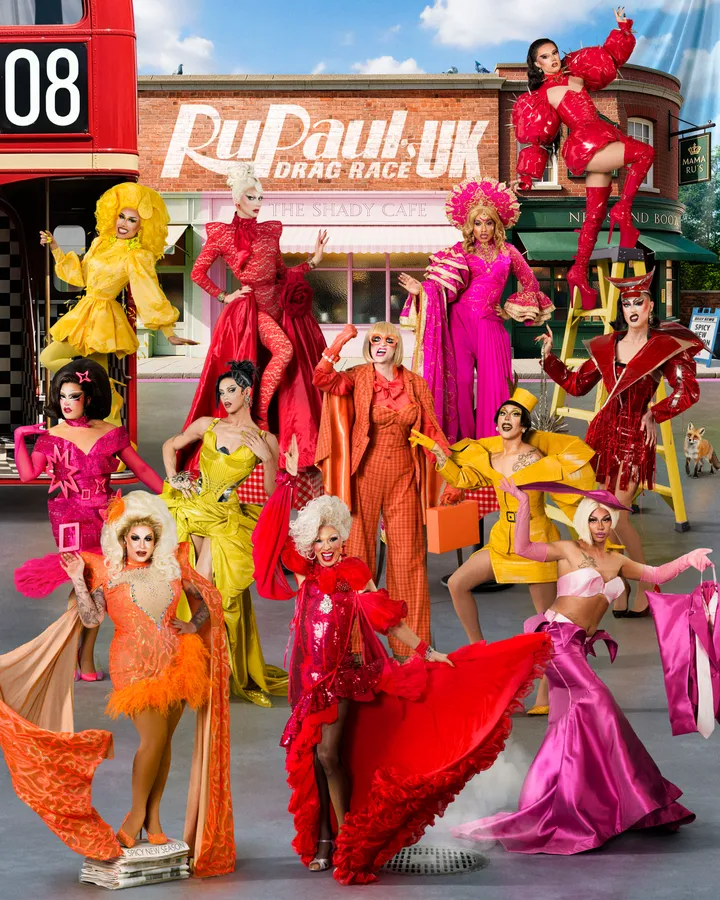
The BBC has confirmed that the current season of RuPaul’s Drag Race UK will be the last with the corporation.
On Wednesday night, the broadcaster confirmed that Drag Race UK had been axed after eight seasons (as well as three iterations of its international RuPaul’s Drag Race UK vs The World format).
“As the BBC continues to navigate significant financial pressures and deliver the savings required of us, we have had to make some very difficult choices, none of which have been taken lightly,” a BBC rep said.
The spokesperson added that the BBC was “proud” of “this groundbreaking show”, before thanking host and head judge RuPaul, production company World Of Wonder and “everyone involved, both on and off screen”.
Drag Race UK launched in 2019, with RuPaul and his right-hand woman Michelle Visage judging queens from around the country alongside Alan Carr, Graham Norton and a crop of rotating guest judges.
Over the last eight years, it has helped boost the profiles of queens like Baga Chipz, La Voix, Tayce, Bimini, Tia Kofi, Victoria Scone and the late The Vivienne, who won the inaugural series.

BBC/World of Wonder/Nick Strasburg
The news of the BBC pulling the show comes after the announcement that it would no longer be moving forward with the LGBTQ+ dating shows I Kissed A Boy and I Kissed A Girl.
Fortunately, while Drag Race UK will no longer be airing on the BBC, World Of Wonder intends to continue the franchise, beginning with the first ever UK-specific All Stars series, which is expected to debut on the streaming service Wow Presents Plus next year.
“Start your engines, All Stars!” World Of Wonder said. “Drag Race UK All Stars series premiere coming in autumn 2027 EXCLUSIVELY on Wow Presents Plus!
“Hot off the heels of the iconic season eight premiere, a new era of Drag Race UK is on the way! Starting next fall, RuPaul’s Drag Race UK is heading to its new home on Wow Presents Plus with the series premiere of RuPaul’s Drag Race UK All Stars!
“This her-storic season will be available virtually globally on Wow Presents Plus and, for the first time, in the UK where members will also be able to stream all eight past seasons of RuPaul’s Drag Race UK plus all three seasons of RuPaul’s Drag Race UK vs The World!”
Drag Race UK began airing its eighth season last week, with new episodes premiering on BBC iPlayer every Thursday evening.

The recent news that Sarah J Maas is bringing out two new books in her hugely popular A Court of Thorns and Roses (ACOTAR) series, which follows the journey of Feyre Archeron as she journeys into the alluring yet deadly world of the Fae, left a lot of fans practically bursting with excitement.
Across social media, influencers and avid book readers are already sharing the missed Easter eggs they’ve spotted in the Great ACOTAR Re-read ahead of the sixth book’s release.
Meanwhile Rebecca Yarros’ Fourth Wing, another best-selling fantasy series following the journey of Violet Sorrengail as she strives to become a dragon rider, is heading to Prime Video.
Romantasy – an amalgamation of the romance and fantasy genres – is as popular as ever. So popular, in fact, that baby naming experts are noticing more people are naming their children after the characters in their favourite series.
“Parents often look to their passions when choosing a baby name; it’s a great way to find something that truly feels special to them and sparks an instant connection,” SJ Strum, BabyCentre’s baby naming expert and author of Baby Name Envy, told HuffPost UK.
“The aesthetic of romantasy is rich and blends fairytale, whimsical landscapes with true love, making the names poetic and dreamy. With people always on the search for a unique name with deep meaning, this trend sparked by Sarah J Maas isn’t going anywhere soon.”
Romantasy-inspired names are typically ethereal with powerful meanings
Pamela Redmond, creator of baby name inspiration website Nameberry, told us she’s seen “a huge increase in interest in romantasy names”.
The site has created a new popularity prediction tool that applies an academic predictive model to both government and its own data to make scientifically-based predictions on the popularity trajectory of names between now and 2040.
“Many Romantasy names are taking off now for babies. Cassian’s contemporary use is completely due to ACOTAR. Azriel is another name whose popularity makes no sense except seen in the context of ACOTAR,” said Redmond.
“Two of the hottest girl names in our projections are Violet and Elaine. We’re predicting Violet to be in the Top 10 of 2040, where it’s never ranked before. And Elaine is the name we’re seeing rising the furthest to make the Top 100 of 2040 – over 200 places in the US charts.”
Rhys is also rising in popularity, reaching its highest point ever in the US, rising to 412th place in 2025, up more than 50 points compared to last year.
And even the name Feyre, a moniker invented by Maas for her lead character, was given to 21 baby girls in the US last year and has ranked on Nameberry’s own Top 1000 of names, attracting lots of interest from readers.
“The Romantasy genre is so vast and so popular that it’s had a huge influence on names in general,” she added.
What’s the appeal? Well, Strum notes that romantasy names “have an ethereal style; think lots of syllables, pretty vowels and powerful meanings”.
Using BabyCentre data, she suggested the name Cassian has risen 1,075 places since A Court Of Thornes and Roses came out, and Azriel has gone up 1,425 spots in the baby name charts.
“Aelin entered the UK baby name charts for the first time ever inspired by the Queen of Terrasen in the popular Throne Of Glass series with Rowan and Dorian from the same series rapidly rising,” Strum added.
Aside from your favourite book characters, here’s the baby name expert’s pick of some of the best romantasy-themed monikers for new parents to consider…
Romantasy baby name inspiration
For the boys…
“Emrys has all the rugged romance of a hero in a fantastic realm. It’s also the druid name of magician Merlin giving it a deep footing for any romantasy fan.”
“Valens is a word meaning strength and vitality and with Valentine becoming linked to love it is the perfect vibe for this trend.”
Meaning: Dark haired warrior.
“An outdoorsy name that has main character energy.”
“Angels frequent the pages of many romantasy books and Malakai has a whimsical sound with a touch of edge.”
“Great romantasy characters balance strength and vulnerability – and the softness of Larkin with it’s graceful birdlike feel, matched with it’s meaning, place it firmly into one of the courts of ACOTAR.”
“Evocative of hunting in a magical woodland; Fletcher is a wearable and playful romantasy aesthetic name.”
“Hamlin is a name full of heart and courage. I love it’s homely meaning and dash of charm.”
Meaning: Warrior of life.
“A gorgeous boy name packed with character.”
For the girls…
“A fairytale name always has an intriguing sound and Welsh Rosenwyn is a compound name that’s whimsy without being timid.”
“Originally from Greek Mythology, it’s like Evelyn and Daphne elevated into a fierce romantasy heroine fighting for good.”
Meaning: From the raven’s fortress.
“A fortress feels both like a prison and a place of security; themes throughout Sarah J Maas’s books. Roxbury has spirit and an enigmatic sound.”
“A little bit fairy with a stylish twist – Ferryn is soft without being frilly and would befit any romantasy-inspired name list.”
Meaning: Beautiful princess.
“Welsh names always create such strong and unique sounds and Delith has warrior princess all over it.”
“I adore this angel inspired name right out of a fairytale; it seems sweet but the prettiness of the name could be deceiving.”
“A nature name inspired by Elm Trees which in folklore are associated with a passageway to the underworld. A dramatic, stunning girl name.”
Meaning: Dark challenger.
“Romantasy novels take us on epic journeys and challenges and this surname as a first name takes us on that adventure.”
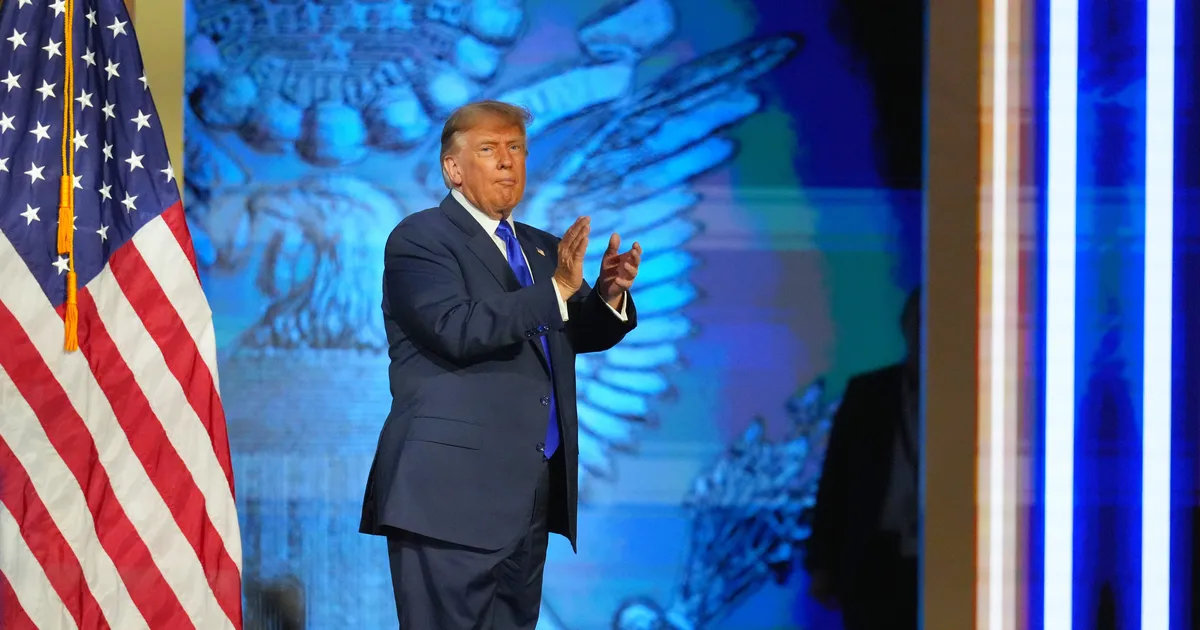
Donald Trump has been mocked online after suggesting the Strait of Hormuz in Iran should be renamed after himself.
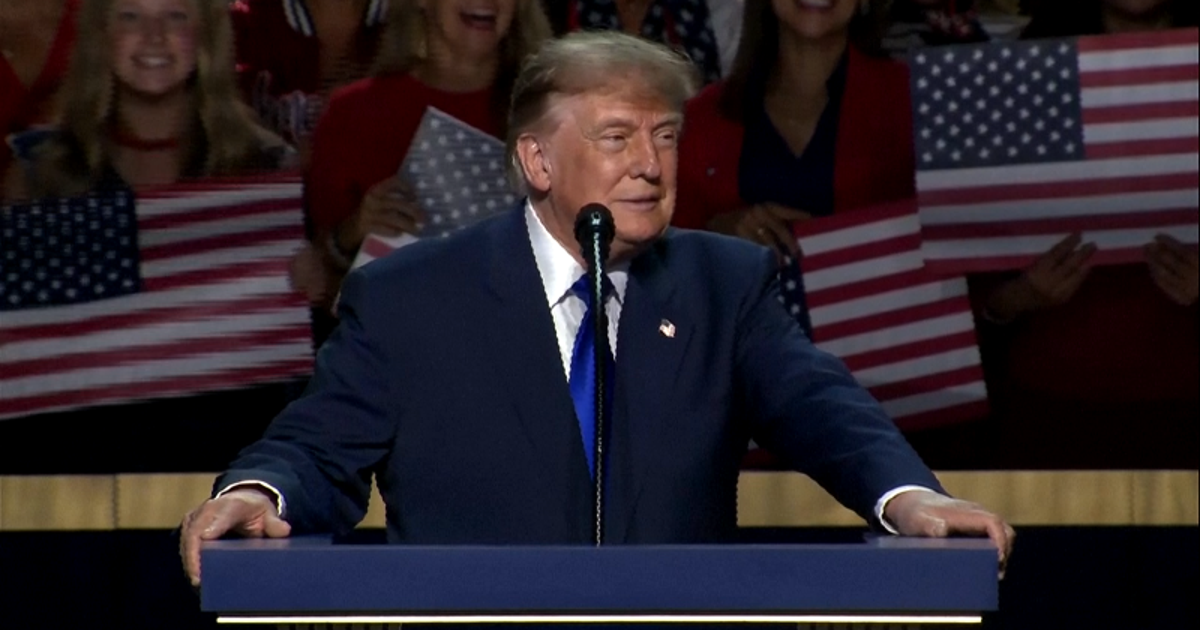
The US president made the bizarre proposal during as rambling, two-hour address to the Republican Party’s so-called “midterm convention” in Dallas.
“I think we should call the Hormuz Strait the Trump Strait,” he said. “I should get something out of it. The Trump Strait.”
As his supporters applauded, Trump added: “Ladies and gentlemen, I’ll have an announcement. We’ll call it the Trump Strait, and I’m sure the Iranian leadership will be thrilled with that.”
The Strait, which used to help transport one-fifth of the world’s oil and natural gas supplies, has been effectively closed by Iran since the war began with a wave of American and Israeli attacks at the end of February.
At the time, Trump said the conflict would only last up to six weeks, but there remains no end in sight.
The president has repeatedly claimed the Strait is either open or controlled by the US, but it remains all-but closed to international shipping, pushing up the global price of oil.
Trump’s suggestion that it should not be called after himself triggered an angry backlash on social media.
Elsewhere in his speech, Trump also claimed that if the Republicans win November’s midterm elections, every American will be sent a cheque for $5,000.
“If the Republicans win, you win with us, and you get $5,000, it will be called the Trump dividend,” he said.
Listen to Commons People, the podcast that makes politics easy. Every week, Kevin Schofield and Kate Nicholson unpack the week’s biggest stories to keep you informed. Join us for straightforward analysis of what’s going on at Westminster.
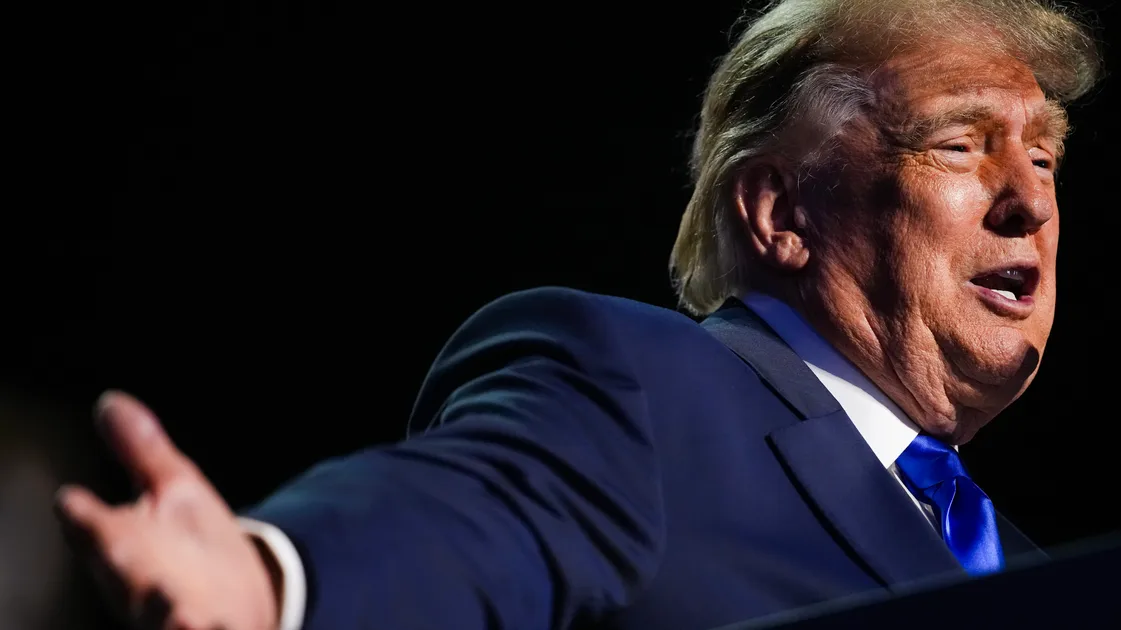
With his party facing electoral disaster, President Donald Trump delivered a lengthy, muddled “midterm convention” speech in which he begged his supporters to vote in November — and preposterously claimed that he will send $5,000 checks to every adult citizen in the US if Republicans hold onto Congress.
It’s not the first time in his second term Trump has claimed Americans will receive free money from his administration, even though a president doesn’t have the authority to send out such payments without congressional authorisation. The promise seemed to be an act of desperation.
“If the Republicans win, you win with us, and you get $5,000, it will be called the Trump dividend,” Trump said at the Republican Party’s “midterm convention” ahead of November’s elections.
The White House did not respond to a request for comment on the president’s proposal, essentially a voter bribe that could cost than $1 trillion. Not that Congress would ever approve it.
The president’s party typically does badly in midterm elections, and Republicans face considerable obstacles in their quest to hold the House and Senate, thanks especially to stubborn inflation worsened by Trump’s tariffs and his war in Iran, which has driven record-high gas prices.
Trump acknowledged the historical pattern on Wednesday. His promise to pay Republican voters, delivered during a nearly two-hour rambling speech, seemed like an effort to beat the polls and defy history.
“If the Republicans win the House of Representatives and the United States Senate, both of them, because of our economic, tremendous economic success, like in history, we’ve never had anything like what’s happening, but because of our tremendous strength and success economically, economically, I will issue a dividend to every adult citizen in the United States of America for $5,000,” Trump said.
The president repeatedly suggested last year he would send out direct payments, which both his and Joe Biden’s administration did in response to the economic fallout from the coronavirus pandemic.
The payments, authorised by Congress, were wildly popular and likely contributed to a record surge in inflation in 2022.
In a November Truth Social post, Trump claimed that tariff revenue had made America rich.
“A dividend of at least $2000 a person (not including high income people!) will be paid to everyone,” Trump wrote.
“We’re going to be issuing dividends later on, somewhere prior to, you know, probably the middle of next year, a little bit later than that,” Trump said in the Oval Office that month. “Thousands of dollars for individuals of moderate income, middle income.”
Republicans on Capitol Hill panned the idea at the time. The money never materialised.
Speaking at Wednesday’s midterm convention ― as though he were accepting his party’s nomination for an election where he’s not even on the ballot ― Trump urged voters to remember the money and join him in his fantasy.
“So please, I ask you this as maybe more important even than the Trump dividend ― please pretend that I’m running and get out and vote on November 3rd or sooner,” Trump said.
Listen to Commons People, the podcast that makes politics easy. Every week, Kevin Schofield and Kate Nicholson unpack the week’s biggest stories to keep you informed. Join us for straightforward analysis of what’s going on at Westminster.
!function(n){if(!window.cnx){window.cnx={},window.cnx.cmd=[];var t=n.createElement(‘iframe’);t.display=’none’,t.onload=function(){var n=t.contentWindow.document,c=n.createElement(‘script’);c.src=”//cd.connatix.com/connatix.player.js”,c.setAttribute(‘async’,’1′),c.setAttribute(‘type’,’text/javascript’),n.body.appendChild(c)},n.head.appendChild(t)}}(document);(new Image()).src=”https://capi.connatix.com/tr/si?token=19654b65-409c-4b38-90db-80cbdea02cf4″;cnx.cmd.push(function(){cnx({“playerId”:”19654b65-409c-4b38-90db-80cbdea02cf4″,”mediaId”:”a5950aaf-84eb-485c-9f1b-3bd05a9a3246″}).render(“6aa22dc2e4b06fbaa80f1447”);});
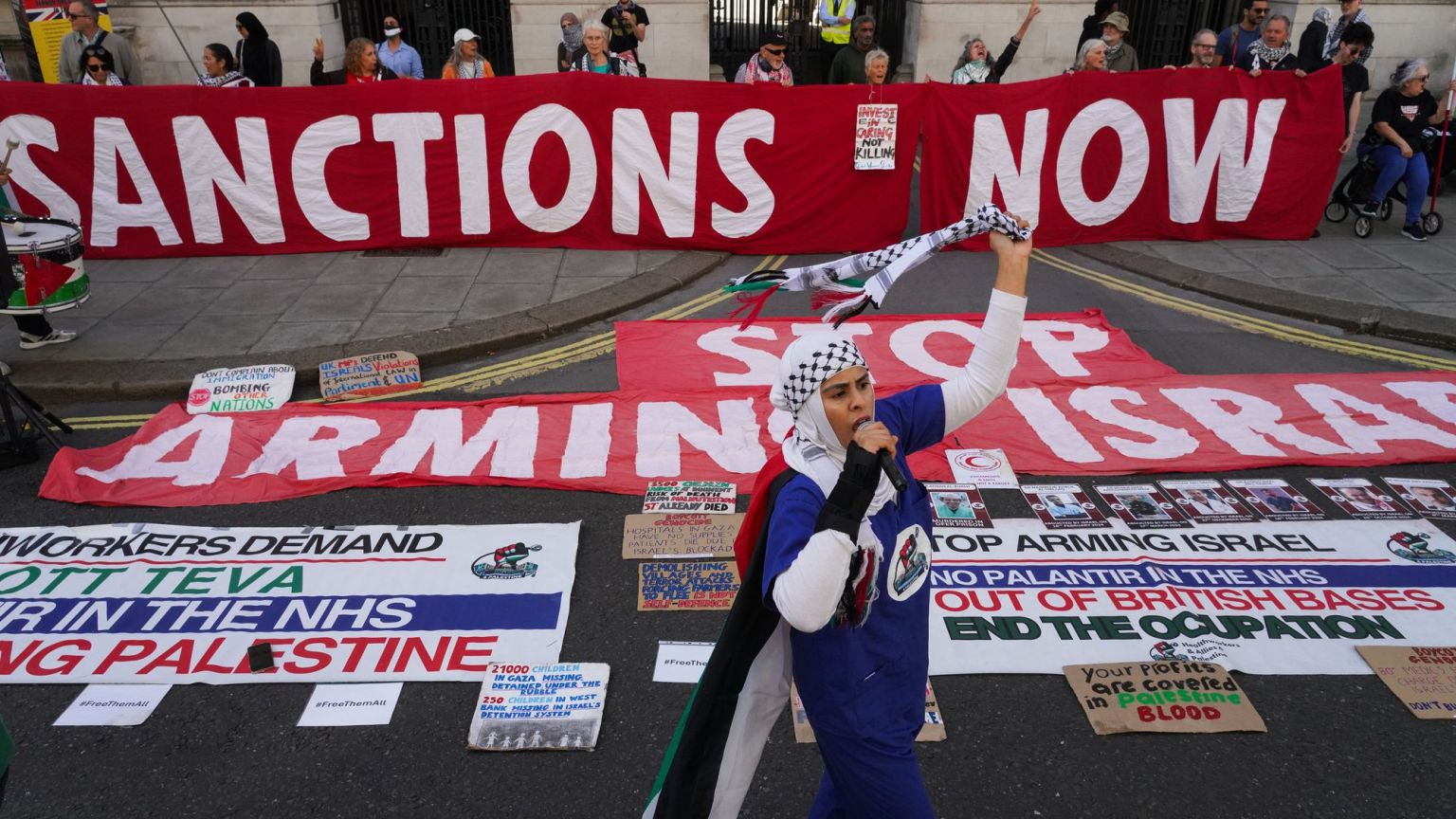
If it wasn’t for Israel, if it wasn’t for that monstrous, marauding state, there’d be peace in the Middle East. This is the Great Lie of Israelophobia. It’s the truthless, venomous current powering the global loathing for the Jewish State. You hear it on the street, on campuses, in mosques: that peace demands the muzzling, if not the outright destruction, of the bloodthirsty Jewish nation. Yesterday, staggeringly, we heard a version of this lie from the foreign secretary of the United Kingdom.
For me, this was the most striking thing about Ed Miliband’s statement to parliament: his propagation of the falsehood that the Jewish State is the prime barrier to a two-state solution and something like peace. With its war in Gaza, which Miliband said was unjustified in its barbarity, and its green-lighting of yet more settlements in the West Bank / Judea and Samaria, Israel has nuked the possibility of peace, he said. It has created ‘a set of facts on the ground’ that have made ‘the two-state solution unviable’. MPs giddily murmured their approval.
Contrast this with how he spoke about Hamas. He condemned Hamas, of course. All politicians engage in a spot of anti-Hamas throat-clearing before piling on the real monster of the Middle East: Israel. Hamas is a ‘terrorist’ outfit, he said. It caused Israel and Jews great ‘trauma’ with its attacks of 7 October 2023. The violence of that day was ‘vile’. And it must now ‘decommission its weapons’.
Spot the difference? Hamas is a pain in the arse, but Israel is the true menace to future peace. Hamas causes trauma, but Israel creates ‘facts on the ground’ that make peace and equality all but impossible. Hamas, in this twisted telling, becomes a bit-part player, albeit a ‘vile’ one, in a horror story authored by a murderous, expansionist Jewish State that is well and truly off its leash. And that’s why, said Miliband, we are rolling out a stringent package of sanctions against the Israeli settlements: to tame Israel’s ‘expansionist’ lunacy that creates ‘facts’ which torch all hopes of peace.
What Miliband said wasn’t only untrue – it was the public execution of truth. He didn’t only spread misinformation – he also inverted reality itself, depicting the seekers of peace as the destroyers of peace, and the Islamofascists who truly jeopardise our civilisation as mere causers of trauma. Like the keffiyeh mob, only in more moderate language, he infantilised Hamas and monstered Israel, presenting the former as a pest but the latter as a threat to all that is decent. It is one of the most misleading speeches a modern politician has given.
The very war that Miliband so stingingly condemned – the Israel-Hamas War – was born not from Israel’s hatred of peace but from Hamas’s. It is well established that Hamas’s carnival of Nazi-like violence on 7 October was designed to destroy not only Jewish life but also the Abraham Accords. These are the accords initiated by Donald Trump and signed in Washington, DC, in September 2020, with the aim of bringing about ‘normalisation’ between Arab states and Israel. The UAE and Bahrain recognised Israel for the first time. Sudan and Morocco followed. Then something extraordinary was reported: Saudi Arabia was considering signing up, too.
It would have been a region-changing development. More than that: a global quake. But it infuriated Hamas’s masters in Tehran, the theocratic freaks devoted to the fascistic annihilation of the Jewish homeland. Internal Hamas documents confirm that the October pogrom was in part designed to ‘thwart the Saudi kingdom’s process of normalisation’. Other documents gloat that Hamas’s savagery during the Second Intifada – when a thousand Jews were shot, stabbed and burnt to death – had helped to stall the Arab Peace Initiative, which Iran also hated.
It is misinformation on steroids to depict a war that sprang from the brutish Islamist instinct to frustrate ‘normalisation’ in the Middle East as proof of Israel’s hostility to peace. The Gaza conflict is the bloody handiwork of an Islamic Republic that fears all peace deals with Israel because they undermine its own genocidal dream of destroying Israel. Israel relentlessly pursued the repairing of relationships with the Arab world as Iran and its armies of anti-Semites – Hamas, Hezbollah, the Houthis – plotted the violent thwarting of those relationships. Anyone who looks back on the past three years of war and says it was caused by the obstinacy and lunacy of the Jewish State is either a liar or a fool. Or both.
As to Miliband’s claim that Israel is the author of a ‘set of facts’ that make a two-state solution ‘unviable’ – what is he smoking? As Jon Mendelsohn says at the Spectator, numerous offers of a Palestinian state have been made since the start of the so-called peace-process era in 1993, but all crashed against the ‘rejectionist architecture’ of Iranian theocracy and its proxy manifestations. Hamas has reiterated time and again its ‘rejection of the two-state solution’, and even the dogs in the street know why: because it desires the Nazi-like erasure of Israel and the expulsion of Jews from the Holy Land. Palestinian Authority incompetence in the West Bank alongside Islamist genocidalism in Gaza did far more to thwart two-state peace than Israel did. It is an act of neocolonial infantilisation, of imperious pity for Arabs, to refuse to acknowledge their contribution to the conflicts of the region. Do you think they are children?
What else might have made two states ‘unviable’? What about 7 October itself? Did that historic atrocity, a pogrom of the like we hadn’t seen since the Nazis, not also lay waste to that old political vision? Certainly many people will think it unreasonable, or at the very least impractical, to ask the seven million Jews of Israel to live next to a state that would have people in it who carried out a Hitleresque assault on the Jewish people with the aim of destroying the Jewish nation. ‘We will repeat 7 October again and again’, Hamas has said. Only the most hopeless dunce would wonder why Israelis aren’t super-keen right now on having a two-state solution.
The anti-Israel mania has long been fuelled by a double bigotry. The bigotry of seeing the Jewish State as uniquely wicked and the bigotry of seeing Arabs as fundamentally blameless. The Jews become the demonic authors of war, the Arabs their wide-eyed victims. One side is monstered, the other robbed of agency. Kipling notoriously described the non-West as being ‘half devil, half child’ – such imperial hubris finds expression today in the treatment of the Jews of Israel as devilish barbarians and their foes as child-like innocents. The Big Lie of Israel-hate.
It’s one thing to see bourgeois pricks in keffiyehs hawk such half-truths and calumnies about Israel. But the foreign secretary? Miliband brought shame on Britain with his fallacious fingering of Israel as the block to peace. This is the low-information appeasement of Islamo-voters at home, with little to no regard for truth or, indeed, peace. Our government has burnt global diplomacy at the altar of domestic sectarianism. It is sickening.
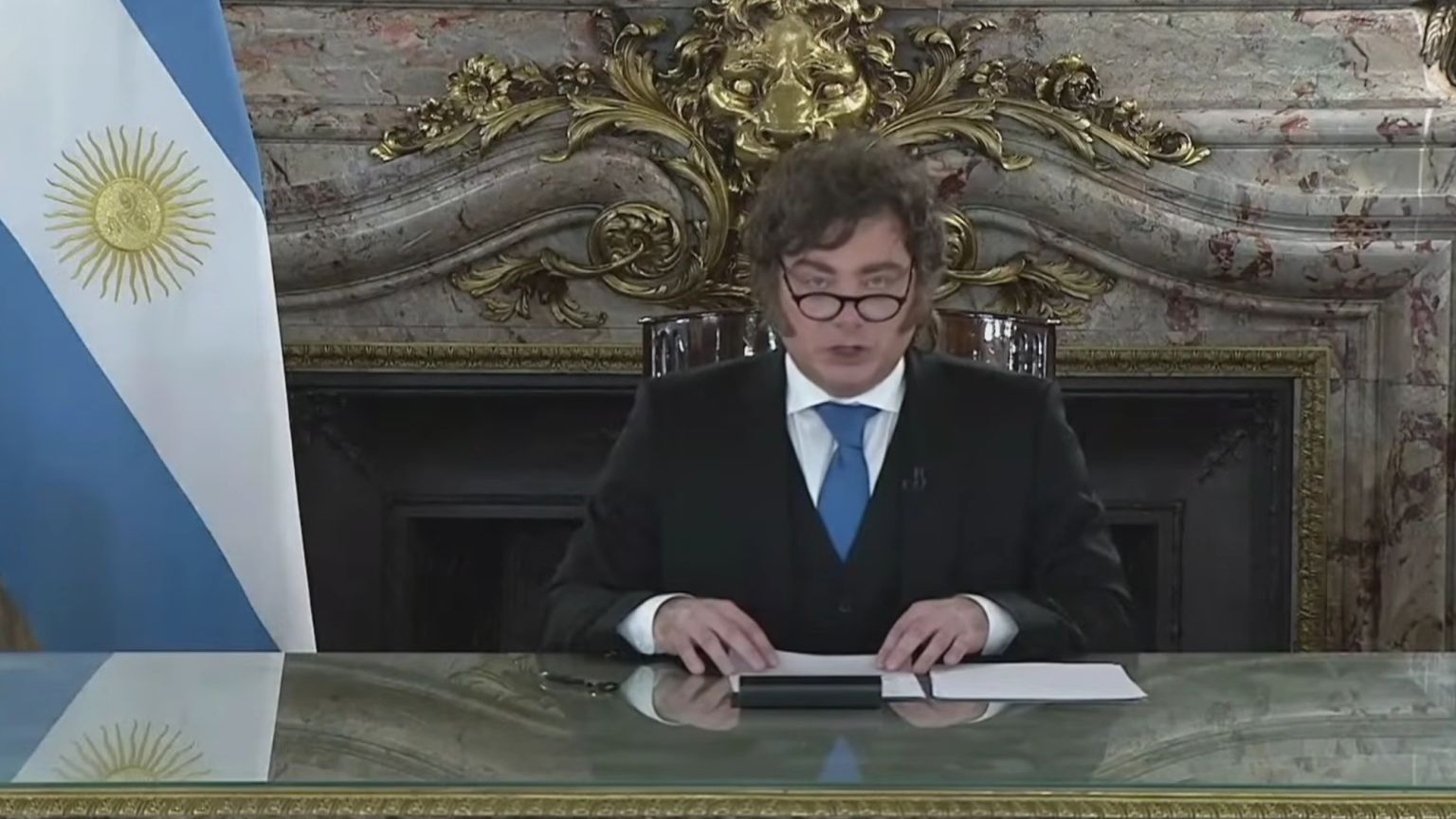
Argentine president Javier Milei finally went there. Addressing the nation last week, he reasserted Argentina’s claim on Las Malvinas – known to the rest of us as the Falkland Islands, the British Overseas Territory 300 miles off the coast of mainland Argentina.
‘The Malvinas are Argentine, historically and legally… there’s no debate about that’, Milei said of this remote South Atlantic archipelago, which was seized by Britain from a then newly independent Argentina in 1833. He was not threatening an invasion, like that undertaken by Argentina’s vicious right-wing military junta in 1982 – a move that led to war with Britain. Rather, he was threatening sanctions against any companies engaged in ‘oil-extraction initiatives’ in the North Falkland Basin.
The embrace of the cause of the Malvinas is something of an about-turn for this proud libertarian. Over the past two decades or so, his left-leaning predecessors all rhetorically exploited the Falklands issue as a righteous, anti-imperial cause of the Global South – and they were backed by their Latin American allies on the left, such as Venezuela’s Hugo Chávez and Bolivia’s Evo Morales. But the right-wing Milei was different. An avowed fan of British prime minister Margaret Thatcher (one of ‘the great leaders in the history of humanity’ as he put it in 2023), he used to downplay the significance of the Falklands War. In fact, he even echoed the British line that it was up to the 3,000-plus Falkland Islanders themselves to determine their own future, although he hoped that they might ‘one day decide to vote for us’.
So what’s changed? Why is Milei now eyeing up the Falklands?
Partly, there are domestic factors at play. Milei’s popularity ratings have plunged over the past year. His chainsawing cuts to state spending have brought sky-high inflation down to more manageable levels, but unemployment is still rising amid continuing economic struggles. So, with national elections now just over a year away, it seems Milei has pivoted to a rally-round-the-flag cause that has long proved popular among the Argentine public.
There is also a more material consideration in the shape of the vast, untapped oil fields in the seas around the islands. Indeed, Milei used his state address to announce sanctions on the firms planning to drill in the Sea Lion field – the Israeli company Navitas and its British partner, Rockhopper. Largely, one would surmise, because his administration wants Argentine companies in on the action, too.
Arguably, however, it is the geopolitical context that has done most to embolden Milei’s government, helping to turn this familiar Argentine flex into a major international flashpoint.
After all, his predecessors made similar statements, but these could comfortably be ignored. Milei’s intervention, however, arrives amid an increasingly violent rebalancing of global power, in which longstanding, postwar alliances and institutions are being pulled apart at the seams. This is partly what Milei meant in his national address, when he talked about the ‘winds of change’ blowing around the world favouring an Argentine claim on the Falklands.
The decay of NATO, in particular, is relevant here. Washington has long been irritated by European allies’ relative lack of investment in their own military and defence capabilities. What were once just cracks in this decades-old alliance have threatened to become ruptures since both Russia’s invasion of Ukraine and, above all, the US-Israel war in Iran. In both cases, the White House has felt that Europe is not pulling its weight. Indeed, it now seems that Britain’s failure to support the Trump White House in its assault on the Islamic Republic has prompted the US to explicitly cast doubt on the UK’s claim on the Falkland Islands.
In April, just over a month into the US’s Iranian venture, an internal Pentagon email, seen by Reuters, suggested the White House was considering withdrawing its formal recognition of Britain’s administration of the Falklands. This clearly sent a message to Milei, a Trump ally. Prior to this, any assertion of Argentine power – legal, military or otherwise – towards the Falklands would have risked damaging relations with the US. But no more. From that point on, the Malvinas have potentially been on the table for Argentina in a way they’ve not been for decades.
And then, just a few days before Milei addressed the nation last week, Trump told GB News that Britain was ‘not there to help me’ in Iran, before he brought up the Falklands, claiming that he doubted Britain would be capable of defending the islands in 2026 in the way it could in 1982. You didn’t have to be a Trumpographer to understand what The Donald was getting at – namely, that the UK will have to defend its claim on the Falklands without US support. Little wonder that when Milei said that the global ‘winds of change’ were behind Argentina’s sails, he explicitly cited ‘President Trump’s [declaration] that the US is re-evaluating its historic position in relation to the Malvinas’.
Milei’s national address also touched on another key factor that has helped reignite the Falklands row: the weakness and disorientation of the British state. Indeed, it is doubtful whether Britain has either the means or the will to defend these distant islands any more.
After all, Britain’s military strength is widely known to be at an all-time low. Its army is depleted, and its navy diminished – a worrying reality revealed to the entire world in March when Britain had to rely on French naval forces to defend a British airbase on Cyprus from a Hezbollah drone strike. And there’s little sign that the UK’s new government is committed to reversing this military decline.
But Britain’s weakness goes deeper than defence capabilities. It is intellectual and ideological, too. Britain is a nation whose political class is imbued with identitarian ideology and has little sense of the national interest, preferring instead to cleave to globalist institutions.
After all, Milei has already seen Britain try to relinquish its sovereignty over another of its overseas territories: the Chagos Islands in the Indian Ocean. The largest of the islands, Diego Garcia, hosts a critical joint UK-US airbase. Yet even this hasn’t stopped the UK government from trying to hand over the islands to Mauritius, a close ally of China, while paying billions to the Mauritians for the pleasure, all supposedly in the name of satisfying ‘international law’.
UK foreign secretary Ed Miliband has said of the Falklands that ‘the Islands are British and will remain so’. But his defiance is not very convincing. After all, this is a politician saturated in the globalist, legalistic thinking of New Labour.
Deeper still, there is now a profound indifference among the British public towards the status of a set of islands that are thousands of miles away. A YouGov poll in 2023 asked Brits how upset they’d be if the Falkland Islands stopped being British. Nearly half said ‘It wouldn’t bother me either way’. Among the young, the indifference is endemic, which is hardly surprising given they’ve grown up in a cultural and educational climate dominated by anti-Westernism and the ideology of decolonisation. According to a recent Telegraph poll, just 10 per cent of 18- to 24-year-olds want to keep the Falklands British.
None of this is to suggest that Argentina is actually about to make good on its claim on the Falklands. Milei’s focus is, for now, solely on the oil-drilling licences. Besides, the islands are actually far better able to defend themselves today than they were in 1982, with a garrison of 1,500 troops, backed by a state-of-the-art air-defence system, several fighter jets and a small naval force. And Argentina is far, far weaker militarily than it was under the rule of the junta.
But the Falklands row is not going away. Western fragmentation and Britain’s weakness have effectively advanced Argentina’s geographical and historical claim on the territory in a way that Javier Milei could never manage by himself. The future of these distant islands has rarely been as uncertain.

A1 northbound running very slowly with one lane blocked

M-tron Industries, Inc. (MPTI) Presents at Moody Capital Disruptive Growth & Life Science Conference – Slideshow

Ant International joins Visa, Mastercard to build AI agent payment standards


-

 Crypto World1 day ago
Bitcoin price risks $76K drop as $78K support weakens
-
 Tech2 days ago
Memory prices are slowing because buyers ran out of money
-

 Crypto World1 day ago
Ethereum price stalls below $2,500 as ADX drops to 11
-

 Crypto World2 days ago
Robinhood Stock: How To Take Advantage With Reduced Risk
-

 NewsBeat1 day ago
What went right this week: an ‘historic’ fall in violent crime, plus more
-
 Crypto World24 hours ago
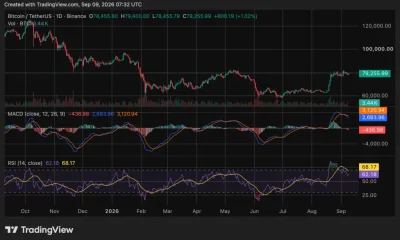
Bitcoin price holds near $79K as cycle drawdowns narrow
-
 Sports2 days ago
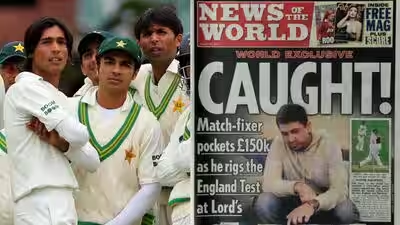
Phones confiscated, players sent home: Pakistan’s England tour turmoil revives memories of Mohammad Amir, Salman Butt and Mohammad Asif’s 2010 Lord’s spot-fixing scandal | Cricket News
-

 NewsBeat2 days ago
England up in reading, maths and science rankings as Scotland and Wales dip
-
 Crypto World2 days ago
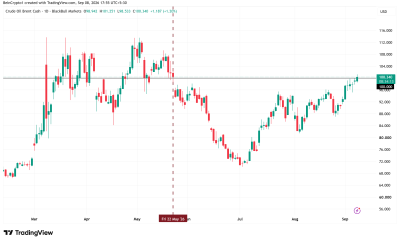
Brent Crude Oil Moves Above $100 for the First Time in 3 Months
-
 Crypto World8 hours ago
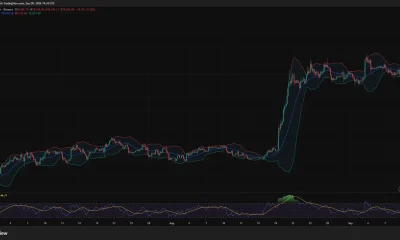
Bitcoin price risks $70K if $78K neckline breaks
-
 Business1 day ago
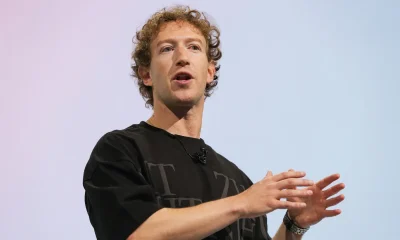
Meta debuts long-awaited personal AI agent, Muse
-

 Crypto World2 days ago
Visa expands stablecoin card network to 160 programs
-

 Business2 days ago
Egyptian TV Presenter Sarah Khalifa, 11 Others Sentenced To Death In Major Drug Trafficking Case In Cairo
-
 Tech2 days ago
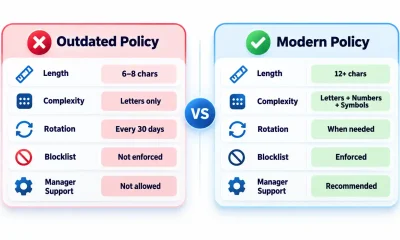
Strong Password Policy and Password Manager Guide
-

 Crypto World2 days ago
Pump Fun and Kraken delete Hunter Biden $LAPTOP promotion
-
 Crypto World2 days ago
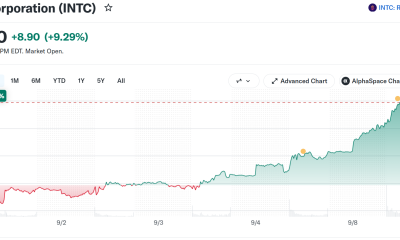
Intel Stock Jumps 9% on Chip Price Hike Report, US Stake Gains $36 Billion
-
 Tech1 day ago
Meta debuts its Muse AI agent. Will consumers trust it?
-

 Entertainment1 day ago
Big Brother Spoilers: Dee SPINS & HUSTLES Votes – Yash Questions the Pact
-
 Business1 day ago
ServiceTitan, Inc. (TTAN) Q2 2027 Earnings Call Transcript
-
 Tech2 days ago
Google’s revived nuclear power plant gets $1.9B loan from US government
You must be logged in to post a comment Login