

Politics
Putin Warned 140 Years To Reach Kyiv Amid Ukraine War


Vladimir Putin has been warned it could take Russia 140 years to reach Kyiv because of the slow progress it is making in the Ukraine war.
British war correspondent Oz Katerji said the conflict “is not going well” for Moscow, more than four years after it began.
Putin ordered the invasion of Russia’s neighbours in February 2022, and the so-called “special military operation” was supposed to be over in a matter of days.
More than four years later, however, Russia occupies little more than a fifth of the country and has suffered 1.3 million casualties.
But Katerji told LBC that at the current rate of progress, it could be well over a century before Moscow achieves its goal of seizing the Ukrainian capital.
He said: “Since the end of 2022, Russia has been very, very slowly advancing.
“If Russia was to continue capturing territory at the same pace at the same pace that it has been over the last four years, it would take 140 years for Russian forces to reach Kyiv.
“So the war is not going well for the Russians, even though they are very slowly advancing.”
Last week, BBC Russia editor Steve Rosenberg said a “sense of fatigue” was emerging among the Russian public as the war of attrition goes on.
He continued: “Also at the same time, frustration with the economic problems, rising communal bills, rising utility bills, rising prices, and also frustrations with the government’s attempts to introduce restrictions on the internet.
“This is all coming together and creating a lot of anxiety and frustration.”
Subscribe to Commons People, the podcast that makes politics easy. Every week, Kevin Schofield and Kate Nicholson unpack the week’s biggest stories to keep you informed. Join us for straightforward analysis of what’s going on at Westminster.


Austin Powers star Mike Myers has given the shortest of possible updates on a possible fourth entry in the hit franchise.
Austin Powers 4, which has been rumoured to be in the works as far back as 2011, has never been officially confirmed – despite Mike, who plays both the titular role and Dr Evil in the groovy flicks, expressing his interest in the past.
Previously, Deadline reported, Austin Powers director Jay Roach said the future of the franchise depended partly on the Shrek star.
“I wouldn’t say ‘never’ never, but it does depend on Mike having something that he’s inspired about and after all these years it hasn’t quite clicked yet,” the director said at the time.
“But I’m always game for anything he wants to do. He’s a genius and he helped me get started and it was a blast.”
Roach may want to get his clapboard ready, then.
During a recent episode of Trevor Noah’s World Cup Watch Party, the host read out a fan-written question: “Are we ever gonna see an Austin Powers 4?”
Myers didn’t hesitate before responding “Yes,” to which Trevor replied, “Wow. That was a quick yes”.
The caption of the Instagram video that captured the moment read, “Did Mike Myers just casually reveal Austin Powers 4?”
If the film ever does come to (lava-lamp-sourced) light – even if it’s released this year – it’ll have been after a gap of at least 24 years.
“He was frozen again for another 30 years,” one commenter joked under the Instagram post announcing the brief update (in the movie, a ’60s spy is brought back to life after being frozen for decades).
And while we still don’t know much else about the movie’s return, Mike formerly told Entertainment Tonight that he’d like to do a new installment from villain Dr Evil’s perspective.

Whilst supporting sexist Robert Kenyon from Makerfield as he attempts to become MP in the upcoming by-election, Suella Braverman has announced Reform UK’s ‘Women and Motherhood Protection Act’ as she states that the far-right party will ‘back working mums’ and:
stand up for women.
Taking aim at the Labour government, Braverman argued Starmer’s party:
believes that a man can be a woman, has failed the victims of grooming gangs and will only let women down.
Watch Suella Braverman lay out how our Women & Motherhood Protection Act will back working mums. — Reform UK (@reformparty_uk) June 16, 2026
 pic.twitter.com/hn77tNFEpv
Braverman believes sexists will ‘protect women’ apparently
However, two pretty glaring issues arise here: her former party, the Conservatives, were responsible for maternity policy for nearly 15 years, and her current party platforms, empowers, and pedestals abusive, sexist men.
Announcing this virtue-signalling policy, Braverman said:
I’m here in Makerfield to support our fantastic Reform UK candidate Rob Kenyon and I’m delighted to be announcing our new policy of which I’m really proud. We want Britain to be the best country in the world for working mums.
That’s why a Reform UK government will roll out the Women’s and Motherhood Protection Act, which represents the largest set of protections for women in the workplace in British history. lost their job just because they had a baby.
As a working mum myself I find that disgraceful. It is unfair and under Reform UK that ends. We will change the law to give women more maternity protections in the workplace.
We’ll make sure that the same work gets the same pay and we will make sure that unlawful discrimination stops.
As has become typical of the bigotry-stoking, hate-fueling far-right party for the super-rich, the former Tory minister took aim at Labour citing the grooming gang scandal and the now pretty worn-out attacks against trans communities.
Then, despite having done absolutely nothing to improve rights for working women when she sat in cabinet, she insisted:
Vote Reform to stand up for women. and to back working mums.
Nevertheless, this hypocrisy becomes even more glaring as she joins Kenyon in his van in a clear attempt to rehabilitate the sexist and win over the women’s vote in the UK.
This arguably suggests that this misogynistic party has remembered that women account for half of the voting population.
Great to have @SuellaBraverman in the van to chat about our new Women & Motherhood Protection Act.
Reform will go further than any party ever has to protect women in the workplace. pic.twitter.com/IFApUv9tqg — Cllr Rob Kenyon (@RobKenyonReform) June 16, 2026
Reform promotes sexual predators – they don’t care about women
Proving the party attracts abusive men and misogynistic attitudes which increase the threats against women – in turn, failing to protect the UK’s female population – really isn’t a difficult feat.
We wrote recently about how Reform supporters in Makerfield showed no shame stating that they would choose sexual predator Jimmy Saville if it meant unseating PM Keir Starmer.
When our own Willem Moore challenged the remarks, Lee Anderson rushed to defend the grotesque glorification of a serial sexual abuser – one accused by around 450 people, 82% of whom were women with 80% abused as children.
Predictably, Anderson’s intervention backfired spectacularly. After all, any sensible adult who respects women could see the defence was indefensible. Rather than containing the outrage by showing even a shred of humility and accountability, he poured fuel on the fire by creating AI generated images which only intensified the backlash and forced the post’s eventual deletion.
Lee Anderson now complicit in a lie.
Look at the one you’ve posted. It’s not Rob Kenyon, and the logo is AI warped. Plus look at the union flag.
Why did your councillor Gemma Painter delete it and then her Facebook?
Because it was real.
Here’s also images by Stephen… pic.twitter.com/MZr7MxKiyd — Reform Party UK Exposed
 (@reformexposed) June 16, 2026
Also, the attacks at Labour – who, yes, do not deserve to stay in power – hardly proves that Reform UK are any better. After all, victims of the grooming gang scandal demanded an apology from Farage last year after he made it abundantly clear that he was interested in ‘fighting’ for victims of sexual abuse only when the perpetrators were Pakistani Muslims.
In his mind, ‘widening the scope’ brought other women in who don’t seem to get any compassion from the millionaire party leader.
One of his former employees has also called out his blatant opportunism – similar to what we are seeing with this ‘protection’ act for women – and we’ve documented numerous times where Farage has been more than happy to mix with rapists and sex traffickers.
Moreover, a female Reform councillor has quit over sexism and bullying, which is pretty telling in itself.
However, this becomes pretty depressing when you see the level of support the party is getting and the fact it stands a very real chance of gaining power in the next general election.
Women and girls NEED genuine protection – and that’s from Reform, too
Reform UK will never be a party which genuinely protects women – that is abundantly clear to see just by who they empower, and the women that they disregard.
If women are prepared to target and vilify Muslim people or asylum seekers in the UK, they have the party’s support. If they wish to draw attention to abuse from other groups, in particular those responsible for the majority of harm – pervy patriarchal white men – they go on the attack and diminish women’s traumatic experiences instead.
Therefore, this sickening attempt to glorify and rehabilitate this party of sexists and racists as somehow the ‘beacon of hope’ for women is frankly, deplorable.
The past few months have shown that women and girls need protection from Reform – not being preached to by a bunch of hypocrites.
Featured image via the Canary


The Canary has reported previously on the Business and Human Rights Centre’s Transition Minerals Tracker. And now the latest report reveals a dramatic and accelerating human rights crisis at the mines supplying the global transition to clean energy.
The figures for 2025 show a staggering 111% overall increase. There were 329 allegations of abuse linked to transition mineral mining operations worldwide, up from 156 the previous year.
The latest report examined more mines than the previous year. Across mines also appearing in the 2025 report, there were 270 allegations, an increase of 73%.
It’s the only research of its kind. And it reveals direct implications for renewable energy companies relying on these minerals and their investors:
- Nearly 70% of mines associated with at least one allegation of abuse are owned by or linked to listed companies. This represents significant material risk for investors.
- In 2025 alone, community resistance resulted in 27 mine suspensions, slowdowns or closures.
- One in seven allegations (44 out of 329) led to lawsuits or regulatory action.
- Since 2010, the report has recorded a total of 1,226 allegations of abuse, closely linked to rising social conflict around mining operations.
Despite these risks, corporate accountability remains dangerously weak. Just 10 companies and 33 mines (out of 299 tracked) accounted for 50% of all 2025 allegations.
Glencore, Rio Tinto and First Quantum Minerals led the list of most frequently implicated companies, in part due to their market dominance.
Yet concentration among a small number of actors does not diminish the systemic nature of the risk. Close to half the mines linked to allegations of abuse lacked even a basic public human rights policy. And the absence of meaningful human rights due diligence is a concern for the entire renewable energy sector.
Systemic risk across geographies and minerals
The 2026 Tracker numbers make clear that human rights risks are not confined to a handful of operations or geographies:
- Copper, which accounts for around a quarter of renewable energy mineral demand, is associated with 60% of allegations recorded since 2010.
- The risks for iron ore, bauxite, nickel and rare earth elements are also growing.
- All regions recorded a surge in allegations in 2025.
- Africa saw the sharpest rise, with 100 allegations recorded – an increase of 122% from 2024.
- South America continued to record a high number of allegations, with 97 in 2025 – nearly double from 2024.
- Workers’ rights and safety are under significant threat, with 92 allegations recorded, including 22 deaths – nearly double the 2024 figure.
Blanca Racionero Gomez of the Business and Human Rights Centre said:
This year’s data is the biggest increase we have ever seen year-to-year and makes clear that this is no longer an emerging issue. The world cannot build a clean energy future on the foundation of human rights abuses – and one built in this way will not ultimately succeed.
The minerals powering our clean energy future are being extracted at a growing human cost, with allegations of abuse up 73% in a single year [across the same mines] – and Indigenous communities, workers, environmental defenders and women paying the heaviest price.
A small number of powerful mining companies are responsible for the lion’s share of this harm – and too many are operating without even the most basic human rights policies in place.
This is a moral failure, and a strategic one: we can see communities are fighting back, mines are being shut down, and supply chains are being disrupted.
Every year of inaction risks more harm to those on the frontlines, as well as another year of risk accumulating for investors and companies who have the power, and the responsibility, to do better.
Direct consequences for investors and their renewable energy companies
There is a human rights crisis unfolding in the supply chains of renewable energy companies and this is turning into a direct risk for investors. Their portfolios are directly exposed to the reputational, financial and legal consequences, representing material financial risk.
For renewable energy companies, the picture is equally stark. Social conflict around mining operations is on the rise, with 173 cases recorded, including protests (61), strikes (10) and lawsuits or regulatory action (44). Failing to address these harms is already leading to mineral supply chain disruptions, affecting operational timelines and costs.
Gomez added:
Mining companies and their investors cannot treat human rights as a compliance exercise. Respect for human rights, fair negotiations, the Free, Prior and Informed Consent of Indigenous Peoples, and protection for people raising concerns about mining impacts are essential conditions for a successful energy transition.
Where these safeguards are absent, conflict follows. Communities resist, projects stall, supply chains become less reliable, and risks for investors and companies grow. A just transition is not only the right approach – it is the only durable one.
Featured image via the Canary
By The Canary

About 40% of Brits hadn’t finished a book in the 12 months between 2024-2025, YouGov reported.
Of those who had, 30% listened to an audiobook; 18% had ticked titles off their list through headphones, without ever picking up a physical book.
Some people think that shouldn’t “count,” though. For instance, author Nathan Bransford said in his blog, “Consuming an audiobook is a fundamentally different activity than reading. We already have a word for it: LISTENING”.
He also argued that reading from a page engages the brain differently. But not everyone agrees.
What does science say?
In 2016, Dr Beth Rogowsky, a professor specialising in language learning styles from Bloomsburg University of Pennsylvania, co-authored a study comparing comprehension rates for people listening to audiobooks to those who read from an e-reader page and another group who did both.
It tracked how much they remembered right after taking in the information and two weeks later.
Speaking to NPR, Dr Rogowsky said, “We found that there was no significant difference between reading a book using a Kindle or listening to a book or doing both – listening and reading simultaneously.”
Of course, that was only for adults who already knew how to read; the professor said physical books might be more helpful to children who can’t yet read.
But, to be fair, the “do audiobooks count?” debate does not rage among three-year-olds so much as it does those with Goodreads accounts and access to Reddit.
OK, but what about the word “reading”?
Fine, you might take in information from listening to an audiobook. But that isn’t the definition of the word reading – is it?
Well, major dictionaries don’t seem to agree about that.
Merriam-Webster defines “to read” as “to receive or take in the sense of (letters, symbols, etc.) especially [but not exclusively!] by sight or touch”.
Another definition – “to learn from what one has seen or found in writing or printing” – does not technically preclude listening.
Cambridge Dictionary, however, puts the first definition as “to look at words or symbols and understand what they mean,” and Collins Dictionary puts “look” in their main definition too.
TBH – who cares?
A very compelling article, written by visually impaired author James Tate Hill for Literary Hub, reads: “It was hard to say if the words read with my ears reached my brain differently from everything I had read with my eyes”.
For instance, he said, the narration of audiobooks placed a new layer on top of the experience – but it took “minutes” for the author’s words to override the narrator’s voice.
He identified as a “reader” thanks to his love of audiobooks, and added it “didn’t matter if I was reading or listening” to his favourite titles; “the words in my ears were the same words other people saw when they held a book in their hands.”
I have to agree. The strongest argument I can find against calling listening to audiobooks “reading” is a (disputed) semantic nuance, but I don’t find that compelling enough to stop someone calling themselves a reader if they want to (side note: self-identifying as a reader is linked to increased happiness).
It’s true that you can’t fold laundry while you’re rifling through War and Peace, and accents and pace changes are more in your control when you read from a page.
But seeing as two in five people aren’t enjoying books in any form, that information seems to land similarly whether it’s read from a page or some headphones, and that reading is good for us, whether we listen or look, I’m not particularly fussed about how it’s done.

An SAS soldier is being prosecuted for allegedly sending grisly images of dead bodies and prisoners to his Royal Air Force (RAF) officer partner. The images were from a classified mission in 2021. The prosecution lawyer says the images risked compromising operations.
The SAS is the British Army’s most secretive and elite unit. The location of the mission has not been disclosed. The Rupert Murdoch-owned Sun newspaper reported on 16 June:
The accused, known as Soldier A, also shared comrades’ names and locations of their secret bases.
Police found 1,100 classified pictures and 140 sensitive videos on his personal mobile phone, which he should not have had on missions, prosecutors said.
They allegedly included pics of corpses and prisoners from a foreign mission “which was classified secret”.
Royal Navy prosecutor Edward Hannah said:
Soldier A divulged information to her that is sensitive, including photographs of himself.
Soldier A’s girlfriend is reportedly a serving RAF officer. Hannah said:
He told her where he was and gave her information about what he was doing.
SAS case
The Sun reported:
Bulford military court heard he was serving with a “specialist unit” and was leading a “sensitive site exploitation team” responsible for seizing intelligence during or after raids.
Soldier A denies:
one charge of disclosure of information useful to the enemy and two counts of negligence of duty.
Hannah said the senior soldier had:
kept imagery while on operation which can be used to help other units.
Adding that Soldier A should have:
used his common sense to know the information was classified.
The leak could have “damaged international relations”, Hannah argued.
The special forces soldier was:
arrested in January 2022. Police seized several electronic devices from his residence and “a significant amount of operational related material” which was classified secret.
UK special forces are rarely, if ever, commented upon by the UK government. Details of where the SAS was in combat in 2021 are not known but it is apparent from the trial that there were casualties. The trial continues at Bulford court martial centre.
Featured image via the Canary
By Joe Glenton
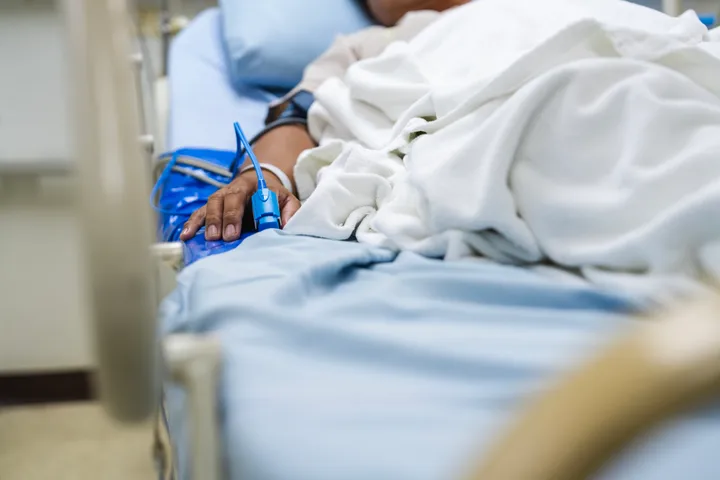
As hard as it can be to admit, you can have a stroke. Your loved one can have a stroke.
Statistically, someone in the United States has a stroke every 40 seconds; every 3 minutes and 14 seconds, someone dies of a stroke. It’s not a concern to ruminate on, per se, but one to be mindful of.
For example, you might avoid habits that can increase the risk, such as being sedentary, smoking, ignoring health concerns and drinking alcohol. Knowing the clear signs of a stroke – illustrated by the BE FAST acronym – is smart, too. BE FAST stands for (problems with) balance, eyesight, facial drooping, arm weakness, speech and time or terrible headache.
However, there’s also a surprising sign of a stroke that many people don’t know, according to vascular surgeons. Hiccups.
Ahead, experts explain how hiccups can be a sign of a stroke, other commonly missed signs and when to see the doctor about this seemingly “harmless” symptom.
How hiccups can signal a stroke
To understand why hiccups can be a sign of a stroke, it’s important to understand exactly what hiccups are – particularly, how they’re connected to the brain.
“Hiccups are caused by involuntary contractions of the diaphragm, coordinated by a reflex arc involving the brainstem, particularly the medulla,” said Dr. Christopher Yi, a board-certified vascular surgeon at MemorialCare Orange Coast Medical Center in Fountain Valley, California. “In rare cases, a stroke affecting this region – most classically a lateral medullary (Wallenburg) stroke – can disrupt that reflex and trigger persistent hiccups.”
Usually, hiccups aren’t so concerning. You might get them after eating too fast, moving too quickly after eating or drinking a carbonated beverage. But if a stroke in the brainstem is causing the hiccups, they need to be taken more seriously.
“In rare cases, hiccups can be linked to a stroke – specifically a stroke affecting the brainstem,” said Dr. Adeel Popalzai, a vascular neurologist and stroke program director at Pomona Valley Hospital Medical Center.
“The brainstem is involved in the hiccup reflex pathway. When a stroke disrupts this area, it can cause persistent, uncontrollable hiccups that don’t respond to usual remedies.”
Yi affirmed that persistent hiccups have been documented in posterior circulation strokes, which affect the back of the brain. They also don’t always cause one-sided weakness (a classic symptom of a stroke) and rather present with more subtle symptoms. This makes hiccups an early and arguably clearer clue, especially when present with other neurologic abnormalities.
That last piece is vital because otherwise, a lot of us would get unnecessarily nervous when we get the hiccups, right?
“It is important to remember that hiccups alone are almost never a stroke, but persistent hiccups with other symptoms can be a warning sign,” Popalzai stressed.

Witthaya Prasongsin via Getty Images
Other commonly missed signs of a stroke
Hiccups aren’t the only symptom of a stroke that often goes ignored, especially with posterior circulation strokes.
“Many people expect a stroke to look dramatic, but some of the most dangerous strokes – especially those in the back of the brain – can present with subtle or misleading symptoms,” Popalzai warned.
The vascular surgeons listed the following symptoms:
- Sudden dizziness, vertigo or a spinning sensation
- Trouble walking, or loss of balance or coordination, which can look like clumsiness, intoxication, veering to one side, difficulty standing or coordinating movements and generalised weakness
- Visual disturbances, such as double vision, trouble focusing or loss of part of the visual field
- Difficulty swallowing
- A sudden, severe headache (particularly in hemorrhagic strokes) – it can signal a brain bleed
- Nausea and vomiting, especially when combined with dizziness or imbalance
- Sudden confusion or trouble understanding, which can present as difficulty processing information or following a conversation, and may appear as disorientation or memory trouble.
“These symptoms are often missed because they don’t fit the ‘classic’ stroke picture, but they are just as important,” Popalzai said.
When to go to the doctor about hiccups or other stroke symptoms
Since hiccups are usually no big deal (well, other than being super annoying), how do you know when you’ve got a normal bout of the hiccups versus a stroke?
According to Yi, consider medical evaluation “when they persist for more than 48 hours, become severe or disruptive or occur in conjunction with neurologic symptoms.” Examples of the latter are the same as above: dizziness, vertigo, difficulty walking, imbalance, double vision, slurred speech and trouble swallowing.
Popalzai agreed it’s best to focus on the context and associated symptoms. He encouraged calling 999 immediately if you or a loved one experiences those signs.
Additionally, having a stroke risk factor, such as high blood pressure, diabetes, heart disease, smoking or a prior stroke, is also a reason to call the doctor ASAP.
“When symptoms are sudden and unusual, it’s always better to err on the side of caution and seek medical attention,” he added.
Yi emphasised the timely nature. “When hiccups present suddenly with any of these neurologic findings, the situation should be treated as a potential stroke emergency, and immediate medical attention is warranted, as timely intervention can significantly improve outcomes,” he said.
The bottom line is that while most hiccups are harmless, they can signal a stroke when accompanied by other brain-related symptoms. Don’t let an unexpected sign of a stroke convince you that a stroke isn’t at play. Take it all seriously.
“Acting fast can save brain function, independence and life,” Popalzai said.

If you spend hours cleaning your bathroom several times a week, put the bleach down: you’re wasting a whole lot of time according to one molecular virology expert.
Emma Harding, postdoctoral researcher at the University of Oxford, has shared that using soapy water to clean your bathroom just once a week is more than enough.
The pro told 9Honey Living: “Soapy water is very effective at killing a wide range of microbes, so your regular cleaning can be done with that.”
If stuff does start getting grottier than soapy water can handle, Harding advises using disinfectant once a month.
In terms of what needs cleaning the most, the expert says that “high-touch surfaces” such as taps and showers should be the priority.
However, there is one non-negotiable – when it comes to cleaning your bathroom, the toilet is an essential.
Harding adds that if anyone in your household is unwell it is crucial to give your entire toilet and bathroom a thorough scrub when they’ve recovered to stop anyone else catching the bug.
Want to keep bugs at bay? It’s all about how you flush the loo after you’ve done your business, according to the expert.
“The bathroom is one of the dirtiest places in the house, especially if it has the toilet in the same room,” Harding explains.
“As a general rule, always flush with the lid down to prevent particles from escaping the toilet bowl and settling elsewhere.”
When you flush the toilet with the lid open, a delightful plume of germs fly out of your loo and settle on the surfaces in your bathroom.
That plume includes nasty poo and wee particles that can carry everything from E. coli to Covid-19 – so it’s really important you shut that lid before you flush.

Reform UK has been making a lot of noise about JCB’s pothole-filling machine, and with obvious reason. Voters hate potholes, and JCB is one of the most evil companies in the UK, so of course Farage & co. would want to work with them. As it turns out, though, the magical pothole machine may not be all it’s cracked up to be. And our source on that is a Reform-run council:
This is awkward.
Michael’s own Leicestershire Council have stated the Pothole Pro is impractical:https://t.co/aEICJaRFbW pic.twitter.com/NBnVXq9AfS
— Reform Party UK Exposed
(@reformexposed) June 17, 2026
Mechanised ethnic cleansing
First things first, we should explain why we called JCB one of the most evil companies in the UK.
As we reported in September 2025, the Stop JCB campaign reported on how JCB supports “ethnic cleansing and genocide in Palestine, India, and Kashmir”. We added:
In Palestine, JCB operates through its sole dealer, the Israeli company Comasco. The corporation holds contracts with Israel’s Ministry of Defence for the same model of JCB machines the Zionist settler state uses in the demolitions and construction of settlements.
JCB has been at it for a long time, with photographers catching Israeli forces demolishing homes in the West Bank using their machinery as early as 2006. We also noted:
Currently, JCB is also complicit in Israel’s ongoing genocide in Gaza. UN Special Rapporteur Francesca Albanese listed JCB in her July report. This was among numerous companies directly aiding and profiting from the genocide. Israel has long used armoured, unbranded JCB High Mobility Engineer Excavator (HMEE) machines, known as ‘Ami’ in Hebrew, and is now using them in Gaza.
Oh, and no points for guessing which party JCB’s billionaire owner and peer Anthony Bamford supports:
JCB owner Bamford: “You can’t get away with £60k benefit handouts.”
Also billionaire brothers Anthony Bamford and Mark Bamford: Not paying a tax bill of up to £500 million.
What greedy, Farage-supporting bastards. pic.twitter.com/KZhpzajO3I
— Politics In The U.K. (@politixintheuk) May 17, 2026
Reform are all filler
Given Farage’s connection to Bamford, it’s unsurprising he made a big deal out of promoting the Zionist pothole machine:
— Politics UK (@PolitlcsUK) March 28, 2025

 WATCH: Nigel Farage arrives on stage at Reform UK’s local election launch on a JCB Pothole Pro pic.twitter.com/B9GKctAExO
Now, a Reform council has suggested Bamford’s hole plugger isn’t all it’s cracked up to be. As reported by the BBC, a 2025 report from Leicestershire County Council (LCC) found:
After two demonstrations, officers concluded that the JCB Pothole Pro did not stack up as an economical piece of kit to repair potholes in Leicestershire
Additionally:
The JCB PP is big – it’s bigger than a normal excavator, it would not be suitable for small defect repairs – the machine is too big and would close the road, it would be inefficient to travel round repairing small potholes.
Another problem was that the quantity of potholes they had to deal with meant they couldn’t:
utilise Pothole Pro’s full potential on a daily basis – which in turn would make it very inefficient
And also:
After two demonstrations, officers concluded that the JCB Pothole Pro did not stack up as an economical piece of kit to repair potholes in Leicestershire
JCB – a company which is happy for its product to be used for ethnic cleansing – suggested that LCC weren’t using the machine correctly, and that a longer test was needed. LCC aren’t the first to criticise what the machine can do anyway:
Reform UK’s ‘right first time’ pothole repairs in @NottsCC should be called ‘shite first time’.
This repair is in Council Leader Mick Barton’s own Mansfield East division: questionable workmanship, unsealed edges, lifespan roughly that of a snowflake in July. Reform UK -… pic.twitter.com/WRBFTYqAhy
— Reform Party UK Exposed
(@reformexposed) November 16, 2025
Bunged up
Given the update, it’s no wonder people are saying things like this:
Leicestershire County Council has found that JCB's pothole machine is not economically viable. I think they will find that it becomes viable when you look at JCB's £200,000 donation to Reform rather than at the extra cost to council tax payers. pic.twitter.com/BIfD4zOigp
— Parody Nigel Farage (@Parody_PM) June 16, 2026
Personally, we don’t think any council should be working with companies that facilitate ethnic cleansing. The fact that these machines may not be all they’re cracked up to be just adds insult to injury.
If Reform should replace Labour in government, we’ve no doubt there’ll be many more questionable contracts, anyway. And the real hole left to fill will be the economic one left behind when they get kicked out.
Featured image via The Canary
By Willem Moore

In today’s world, where news cycles have shrunk to seconds and social media has become the primary source of content, the role of quality journalism has undergone fundamental changes. Digital journalism now faces an unprecedented challenge: how to maintain speed of publication without sacrificing accuracy. In the midst of global information noise, the ability to properly verify information has become a necessary condition for the survival of independent media.
The Evolution of Fact-Checking in the Digital Age
Traditional verification methods based on personal contacts and official requests are now being supplemented by complex technological processes. The problem is that fake news and misinformation spread like wildfire, often outpacing official rebuttals. Modern journalists are forced to work in a state of “constant doubt,” where every piece of data is subjected to rigorous analysis.
To maintain a high level of information accuracy, newsrooms implement strict protocols. These protocols involve checking a speaker’s words and conducting technical audits of information’s digital footprint. It’s important to understand that fact-checking is a continuous process that accompanies a story at every stage of its creation.
Methodology and Journalistic Standards
Despite all changes in technology, ethical principles and related journalistic standards endure. It is crucial to achieve as much impartiality as possible when presenting information to the reader. Therefore, you can’t observe media ethics without cross-checking all the data you use and making sure you have three or more independent sources for each bit of it.
The verification process in modern newsrooms typically looks like this:
- Primary source identification and reliability assessment.
- Technical analysis of photo and video metadata.
- Cross-referencing obtained information with public records.
- Confirming event geolocation via satellite imagery.
- Contextualizing the data by means of consulting experts.
This approach minimizes the risk of spreading false news and busts your publication’s source credibility appropriately in your readers’ minds.
Digital Investigation Tools and OSINT
Amidst all the new additions to journalistic workflows, the incorporation of open-source intelligence (OSINT) definitely stands out. It is no longer possible to imagine investigative journalism without the comprehensive all-round analysis of assorted public information, such as social networks, CCTV footage, or open data records.
It is, of course, worth noting that in-depth digital research requires special sets of tools. Some data should really only be accessed anonymously for safety reasons, for example if the article you’re writing requires mining so-called darknet websites for information. Then there is all the data that is region-locked. Any professional should be familiar with the technical solutions that aid in these cases. For example, when confidentiality is needed to analyze foreign databases or avoid blocks, researchers prefer to buy SOCKS5 proxy, which provides a stable and secure connection when working with sensitive information.
Digital investigations today are impossible without mastery of reverse image search tools and social graph analysis. Journalists examine the digital footprint of every online source to ensure an account isn’t a bot or created specifically to spread disinformation.
Verifying Visual Content
When everyone with a smartphone camera is a potential witness and everyone with an AI video generation app is a potential disrupter, you have to be very careful with visual evidence. The methods used in modern news verification are rather varied, and many of them only a decade ago would have looked like something out of a sci-fi show.
Journalists analyze shadows in photos to determine the time of day. They also check weather conditions for a given day using archived meteorological data and match landscapes in videos with terrain maps. The information verification process includes checking whether an image has been edited or created using artificial intelligence. Understanding how image-processing algorithms work has become a mandatory requirement for those involved in news reporting.
Working with Public Records and Data
Access to public records has become the foundation of quality investigations. Journalists analyze financial reports, court archives, and corporate documents. This allows them to uncover hidden connections and conflicts of interest that cannot be found through simple interviews.
Effective information verification requires a systematic approach:
- Tracing asset ownership history through government databases.
- Analyzing official declarations and comparing them with actual expenditures.
- Monitoring government procurement for corrupt schemes.
- Using specialized software to process large datasets.
A proper approach ensures that reporting is based on facts, not speculation. This is critically important for maintaining an independent media outlet’s reputation.
Community-Sourced Fact-Checking
Recent years saw the rise of communities and official organizations who deal in fact-checking as a trade. These are the people who establish lines of communication with the newsroom, have their own databases of sources, and are the first to chase every important leak. The cooperation between these groups, journalists, and OSINTers helps strengthen industry-wide standards when it comes to ethical, objective, trustworthy reporting.
Verification is a collective responsibility. When journalists share methods and tools, it raises overall media literacy in society. It’s important that readers understand how information made it to a publication’s pages and what steps were taken to confirm it.
Psychological Aspects and Cognitive Biases
Working on information verification is both a technical and a psychological process. Journalists must be aware of their own cognitive biases, such as confirmation bias — where a person subconsciously seeks out facts that support their viewpoint while actively ignoring contradictory data.
Professional discipline requires setting aside emotions and approaching every source with the same level of skepticism. This is especially important when covering conflicts or political crises, where manipulating public opinion becomes a primary goal for many participants.
The Future of Verification in Media
Deepfake technologies have been with us for some time, but the recent rise in AI development has truly empowered the people behind them. Now, the web is teeming with videos that look very real despite being created with nothing but clever prompts, often in a matter of minutes. That presents extra fact-checking challenges that the industry is currently seeking solutions for.
In the nearest future, we can expect to see the emergence of automated credibility monitoring systems for digital journalism to rely on. However, even with those on hand, we’ll still need real people with their inquisitive minds and moral compasses. Critical thinking and the ability to ask the right questions is more critical than ever in the current tumultuous landscape.
Conclusion
In the modern digital age, the fight against misinformation continues to be an uphill battle. However, a lot of the tools available today also enable daring OSINT escapades to a previously unthinkable degree. Armed with rigid ethical standards and flexible digital tools, a journalist can expose the truth and deliver it to their readers.

This week, the government announced a social-media ban for under-16s in the UK. It is set to come into effect by spring next year.
While UK prime minister Keir Starmer insists nine out of 10 parents support it, the ban has not met with unanimous praise. Ian Russell, whose daughter Mollie took her own life in 2017 after viewing suicide content online, has accused Starmer of ‘political opportunism’.
Given how shallow and performative Starmer’s justification for the ban has been, it’s hard to disagree with Russell. The prime minister’s claim that social-media platforms stop ‘children doing their homework, reading, playing with their friends outside, [and] going to bed at a decent hour’ betrays a profound ignorance of just how much childhood has changed in recent decades, long before the surge of social-media use in the 2010s.
In truth, much of the harm to children, from their retreat indoors to their isolation, now being attributed to social media, began with the rise of safetyist culture during the 1990s. The state was happy to sanction the portrayal of the outside world as a dangerous, risky place. The rise of ‘stranger danger’ awareness campaigns made parents reluctant to allow their children to play outside long before TikTok. As Greg Lukianoff and Jonathan Haidt argue in The Coddling of the American Mind, social-media sites are only one side of the coin. Yes, young people today are more risk-averse and, as a result, less resilient than previous generations. But society has done just as much to confine children to their bedrooms as social media.
When I was a teenager in the late 2010s, social media could indeed be a ‘Wild West’ of strange and often unwanted content. But social-media sites also gave teenagers access to things that adult society wasn’t offering. They gave a platform for children to be free, to explore new communities and outlets, to seek out others with the same interests and passions. And they did so when physical spaces were often cut off or heavily supervised. This was particularly important during the Covid lockdowns, when the same politicians now railing against social media’s impact on the young did everything they could to keep a generation of children locked in their homes.
A social-media ban will only exacerbate young teens’ frustration over their lack of independence. It will be experienced as a loss of control they felt they had over an area of their own lives. The freedom and the space to make mistakes in real life, just as much as the online world, are important for young people. Without it, they can’t learn life lessons, be held responsible or make amends. To become independent, they need to be given the space to make decisions that have consequences in the world around them – to learn that they are part of something bigger than themselves.
That isn’t to say we need to romanticise social media. For some young people, the algorithmic echo chambers can lead to spirals of insecurity. In many ways, social-media platforms have reinforced the worst aspects of modern childhood: pressures of educational achievement and expectations of conformity lead to early adultification, while opportunities, responsibilities and freedoms in the outside world decline.
But the crux of the issue for young people growing up online is not the social-media platforms themselves. Rather, it is the prevailing culture of moral relativism and weakened adult authority. Young people lack the framework, which once would have been provided by older generations, to make sense of the intensely globalised, politicised and polarised content online.
What this speaks to is not so much the dangerous power of Big Tech, but the loss of intergenerational knowledge and communication between parents and children. Parental authority has been outsourced to so-called experts, and community experience and values have been eroded by the preoccupation with cosmopolitan norms. Parents and trusted adults have been warned against giving guidance and teaching lessons to their kids due to their allegedly outdated understanding of the world and the prejudices they may have. No wonder, then, that children have become prisoners to everything they see and hear online.
For a political class bereft of principle, social-media platforms have become a convenient bogeyman. We witnessed this in April’s Clapham unrest, when hundreds of young people wreaked havoc on the streets. This was clear evidence of a profound breakdown in parenting and policing – yet social-media platforms, particularly TikTok, were blamed as the source of the problem. Young people may have wilfully broken the rules, but the bigger issue is that the adults in the room rarely try to enforce them.
Starmer’s desire to get children back to reading, sleeping and playing outside cannot be mandated. Children’s behaviour ought to be the responsibility of parents, not No10. The social-media ban will only further erode parents’ authority. After all, if the government doesn’t trust parents, why should their children?
What we need is not a ban on social media, but a conversation about how we strengthen the lives of young people. Further weakening the authority of adults is not the way to go about this.
Like everything Keir Starmer does, his social-media ban is pointless and self-defeating. Children need a strong society to help them flourish as adults – not a stronger nanny state.
Emma Gilland is event coordinator for the Academy of Ideas and author of The Corona Generation: Coming of Age in a Crisis, written with Jennie Bristow and published by Zero Books.

Mike Myers Just Gave A One-Word Update On Austin Powers 4

Noah Gragson subtly calls out Jimmie Johnson’s paid autograph setup with blunt invite

Collecting robot training data is dirty, unglamorous work. Some AI labs are already paying XDOF to do it


-

 Business3 days ago
No Jackpot Winner as $257 Million Prize Rolls Over to $269 Million Monday Draw
-

 Crypto World6 days ago
Oppenheimer backs SpaceX as $70 billion retail frenzy builds
-

 Fashion5 days ago
Weekend Open Thread: Tuckernuck – Corporette.com
-

 Crypto World6 days ago
Markets Rally as SpaceX IPO Looms Amid Iran Tensions and Inflation Surge
-
 Crypto World3 days ago
Zimbabwe Requires Crypto Businesses to Register Annually Under New FIU Regulations
-

 Tech5 days ago
NanoClaw integrates JFrog registries to secure AI agent downloads
-

 Tech5 days ago
This Week In Security: Microsoft On Microsoft, Register Your Domains, Linux On ARM, And FreeBSD Joins The File Cache Club
-

 Crypto World4 days ago
Bitget enters Argentina’s regulated crypto market through PSAV registration
-
 Tech6 days ago
Dutton Ranch star claims they ‘didn’t see any disruption’ on set following Chad Feehan’s exit from Yellowstone spinoff fueled by Taylor Sheridan clash rumors
-

 NewsBeat6 days ago
El Nino has formed in the Pacific and could set records, forecasters say
-

 Politics6 days ago
Politics Home | Healey Resignation Is “Colossal Failure Of Government”, Says Former Labour Defence Secretary
-
 Entertainment6 days ago
Donnie Wahlberg & More Heat Up Las Vegas at Circa’s Barry’s Downtown Prime
-
 Tech6 days ago
Opendoor Ends India Operations, Fueling a Bigger Conversation About AI and Outsourcing
-

 Politics6 days ago
Belfast burns, while Met chief points finger at Iran and Russia
-

 Sports6 days ago
First Time Since 1971: Australia Register Historic Low In ODI Cricket
-

 Business6 days ago
AT&T: Verizon's 27% Outperformance Sets Up A Solid Entry Point
-

 NewsBeat5 days ago
FBI searches office of Ohio voter registration group
-
 Tech6 days ago
Anthropic is spending $150M to embed 1,000 AI fellows inside nonprofits. No degree required.
-

 Politics6 days ago
Modi thanks Trump for wishes as US attacks Indian seafarers
-
 Entertainment6 days ago
‘The Pitt’s Fan-Favorite Doctor Confirms Noah Wyle Gave His Blessing to Return [Exclusive]
You must be logged in to post a comment Login