Foldable smartphones have matured dramatically by April 2026, shedding much of their early bulk and fragility to become practical daily drivers with improved durability, battery life and multitasking capabilities. Leading models from Samsung, Google, Motorola and others now compete closely with traditional flagships while offering the unique appeal of a compact device that unfolds into a mini-tablet or stylish flip form factor.
Industry analysts and reviewers from outlets including PCMag, PhoneArena, ZDNet and Wirecutter highlight a clear top tier based on hands-on testing, real-world performance and value. While availability varies by region — with some Chinese brands like Honor and Oppo offering exceptional hardware but limited U.S. support — the following five stand out as the best foldable phones currently on the market.
Samsung Galaxy Z Fold 7
1. Samsung Galaxy Z Fold 7 — Best Overall Book-Style Foldable
Samsung’s Galaxy Z Fold 7 earns frequent nods as the top foldable for most users thanks to its ultra-slim profile, premium build and polished software experience. Measuring just over 8mm thick when closed and weighing around 215 grams, it feels remarkably close to a conventional flagship yet unfolds into an expansive 8-inch inner display ideal for productivity, media consumption and split-screen multitasking.
The device features a bright 6.5-inch cover screen with 120Hz refresh rate, allowing full app functionality without unfolding. Powered by the Snapdragon 8 Elite for Galaxy processor, it delivers smooth performance across demanding tasks. Cameras have seen meaningful upgrades, with a standout 200-megapixel main sensor producing sharp, vibrant photos that rival non-foldable competitors.
Advertisement
Reviewers praise the refined hinge, improved crease visibility and long software support extending years into the future. Drawbacks include a premium price tag often starting near $1,900 and average battery life that may require midday top-ups for heavy users. Still, its ecosystem integration with Galaxy Watch, Buds and DeX mode makes it a compelling choice for Samsung loyalists and power users alike.
2. Google Pixel 10 Pro Fold — Best for Durability and Cameras
Google’s Pixel 10 Pro Fold stands out for its rugged construction and photography prowess. It boasts a full IP68 dust and water resistance rating — a rarity among foldables — along with enhanced hinge durability and drop protection on the main display. At roughly 258 grams, it feels more substantial than Samsung’s offering but rewards owners with reliable all-day performance.
The Tensor G5 chipset powers intuitive AI features, including real-time call translation, audio magic eraser and Gemini Live integration. Cameras shine with computational photography that delivers natural colors and excellent low-light results, making it a favorite for content creators. The 6.3-inch cover screen and large inner display support seamless multitasking with clean Android 16 software.
Advertisement
Battery life impresses in testing, often outlasting slimmer rivals. Pricing starts around $1,800, positioning it as a strong value for those prioritizing longevity and photography over the absolute thinnest design. Limitations include slightly warmer performance under sustained loads compared to Snapdragon-equipped devices.
3. Motorola Razr Ultra (2025/60 Ultra) — Best Flip-Style Foldable
For users seeking pocketable convenience with flair, the Motorola Razr Ultra delivers one of the most stylish and functional clamshell experiences. Its vertical fold design snaps shut into a compact square, while the generous external display supports full apps, notifications and even quick camera previews.
Equipped with strong battery life that frequently tops competitor flip models, the Razr Ultra handles daily tasks efficiently on its Snapdragon processor. The inner 7-inch display offers smooth 120Hz visuals, and the overall build feels premium with thoughtful details like a titanium hinge option in select variants. Cameras perform adequately for casual use, though they trail book-style models in versatility.
Advertisement
Reviewers highlight its fun factor and practicality for one-handed operation. Starting prices often land in the mid-$1,000 range, making it more accessible than premium book-style foldables. Potential downsides include a smaller unfolded screen compared to tablet-style devices and occasional software quirks in the Motorola skin.
4. Samsung Galaxy Z Flip 7 — Best Compact Flip for Everyday Use
Samsung’s Galaxy Z Flip 7 refines the flip formula with a larger 4.1-inch edge-to-edge cover screen that finally enables meaningful interaction without unfolding. The 6.9-inch inner display provides ample space when needed, while the overall design remains slim and lightweight for easy pocket carry.
Battery improvements help it last through a full day for moderate users, and the Exynos 2500 or Snapdragon variant (depending on region) ensures snappy performance. New DeX support on the Flip adds desktop-like productivity when connected to external displays. Cameras remain solid for social media and quick shots, with the main 50-megapixel sensor delivering reliable results.
Advertisement
Priced starting around $1,100, it offers strong value within the Samsung ecosystem. Critics note it can overheat during intensive multitasking and that battery claims sometimes exceed real-world endurance. Its stylish appeal and improved cover screen functionality make it a top pick for fashion-conscious users or those transitioning from traditional bar phones.
5. Honor Magic V5 — Best Ultra-Thin Alternative for Multitasking
The Honor Magic V5 earns acclaim for its exceptionally slim design, measuring under 9mm folded and around 4.4mm unfolded in some configurations. It targets users who want a near-nonexistent crease and premium feel without Samsung’s ecosystem lock-in.
Featuring a large inner display and capable outer screen, it excels at multitasking with smooth software optimizations. The Snapdragon 8 Elite processor paired with generous RAM handles heavy workloads, while a sizable silicon-carbon battery supports fast charging and extended use. Cameras offer competitive performance, particularly in daylight scenarios.
Advertisement
Availability may require importing in some markets, and software updates could lag behind Google or Samsung. Still, its combination of thinness, battery capacity and vibrant displays positions it as a compelling choice for enthusiasts seeking cutting-edge hardware at potentially competitive pricing.
Buying Considerations in 2026
Foldable phones now address many early criticisms: creases are subtler, hinges more robust and repair programs more widespread. Most top models promise four to seven years of software support, reducing obsolescence concerns. Battery technology has advanced, though heavy multitasking or camera use still drains power faster than slab phones.
Prices remain elevated, with book-style models often exceeding $1,800 and flips starting above $1,000. Trade-in deals, carrier promotions and installment plans can ease the cost. Buyers should consider ecosystem preferences — Samsung for seamless integration, Google for pure Android and AI, Motorola for flip charm.
Advertisement
Durability has improved markedly, but users should invest in quality cases and screen protectors. Coverage for accidental damage varies by manufacturer and carrier.
Regional factors matter: U.S. buyers enjoy broad carrier support for Samsung, Google and Motorola models, while international shoppers may access superior specs from Honor, Oppo, Vivo or Huawei at lower prices, albeit with potential Google service limitations on some devices.
The Future of Foldables
As 2026 progresses, expectations include further refinements such as even lighter builds, under-display cameras that eliminate notches and possible trifold designs from Samsung and others reaching wider markets. Apple’s rumored foldable iPhone could reshape the segment later in the year or in 2027.
Advertisement
For now, the market offers something for nearly every preference: productivity powerhouses, stylish compacts and durable all-rounders. Early adopters who hesitated in previous years will find 2026 models far more refined and reliable.
Consumers weighing a purchase should evaluate their primary needs — screen size for work, portability for travel or camera quality for photography — and test devices in-store when possible. With rapid iteration, waiting for carrier deals or next-generation hints may also pay off.
Foldables represent more than a novelty in 2026; they deliver genuine utility that enhances how many people work, create and consume content on the go. Whether opting for the versatile Galaxy Z Fold 7, the rugged Pixel 10 Pro Fold or a fun flip like the Razr Ultra, buyers are investing in devices that continue to evolve the smartphone experience.
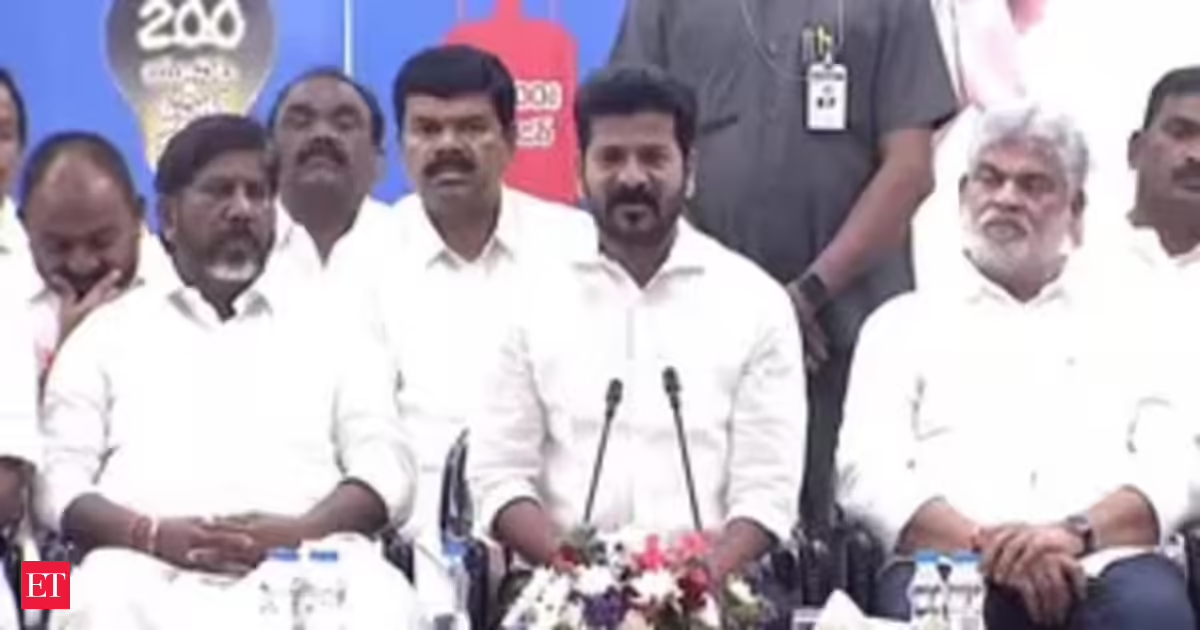
Hyderabad: Riding on its success in the recent Legislative Assembly polls, the ruling Congress in Telangana is banking on the implementation of its poll ‘guarantees’ to score big in the Lok Sabha elections, being held on May 13. An Assembly bypoll will also be held on that day in this southern state.
The morale of Congress cadre is high following the 2023 win.
The BJP, riding high on its growing voter base in Telangana, is now aiming to win over 12 out of the total 17 seats and 35 per cent vote share, in the upcoming Lok Sabha polls.
The party doubled its vote share to nearly 14 per cent resulting in eight seats in the assembly elections held on November 30, last year. BRS, which ruled the state for about a decade since its emergence, is low on morale following the defeat, even as its founder and former Chief Minister K Chandrasekhar Rao‘s daughter K Kavitha was arrested on the eve of poll dates announcement, adding insult to the injury. A SWOT (Strengths, Weaknesses, Opportunities, Threats) analysis of political parties in Telangana. CONGRESS STRENGTHS: -Congress is in power following its victory in the Assembly polls and momentum is on its side. -The implementation of the ‘guarantees’ announced before the Assembly elections by the Revanth Reddy government has generated goodwill for the party. -The popularity of CM Reddy. -Since it is in power, it has more access to resources to fight the polls. -Regarded as a secular party and minorities are believed to have voted for the party in the Assembly elections. -The BRS which was in power for 10 years is demoralised following its rout in the Assembly polls. The contest is mainly seen to be between Congress and BJP in the parliament elections. -Strong cadre at the grassroots level. -The party has already announced candidates for some seats.
Live Events
WEAKNESSES: -The construction of Lord Ram temple at Ayodhya may swing devout Hindutva voters in favour of BJP. -The popularity of PM Narendra Modi would help the BJP and Congress may not be able to address this fully. OPPORTUNITIES: -Decline of BRS, and BJP lacking organisational strength in some constituencies. – CM Revanth Reddy, who is also PCC president, is regarded as an intelligent strategist. – Key issues like Ram temple and CAA may help the party get votes of minorities. THREATS: -BJP’s aggressive campaign -Though BRS is down, it has announced that it will have an alliance with BSP for the Lok Sabha polls. In view of this, Congress needs to ensure that it gets the votes of Dalits and other backward sections in bulk. BJP STRENGTHS: -Consecration of Ram temple at Ayodhya created a spiritual ambience among certain sections which can be transformed into electoral benefits. -Party’s clean image with respect to corruption -Strong leadership at the centre and their political shrewdness -Support from Sangh Pariwar, RSS affiliates like Vishva Hindu Parishad (VHP) and Bajrang Dal -Ability to polarise votes on a “communal” basis. WEAKNESSES: -The party had to pitch turncoats at some segments -For every decision, the local leadership will have to look up to the central leadership. -There is a strong feeling among people that the BJP and BRS have a tacit understanding. -The removal of Bandi Sanjay as state president is still seen as a weakness of the party. OPPORTUNITIES: -The party can claim some of the achievements, such as the Women Reservation Bill and the September 17 official celebration of Hyderabad Liberation Day, to its credit. -BJP may focus on negative aspects of Congress government’s “Six guarantees”. THREATS: -After the Assembly polls, Congress formed the government in Telangana very recently and emerged as an alternative to BRS. So the positive feeling towards Congress still remains -Congress’ campaign may centre around the BJP and BRS’s alleged understanding. The BJP needs to counter it effectively. Congress may use it as one of the major poll issues. -Barring a few, there are hardly any crowd-pullers in the party locally.
Sycamore Partners have been in talks with advisors on the possibility of a London float, which could come as soon as next year
Felix Armstrong www.cityam.com
16:14, 21 Apr 2026
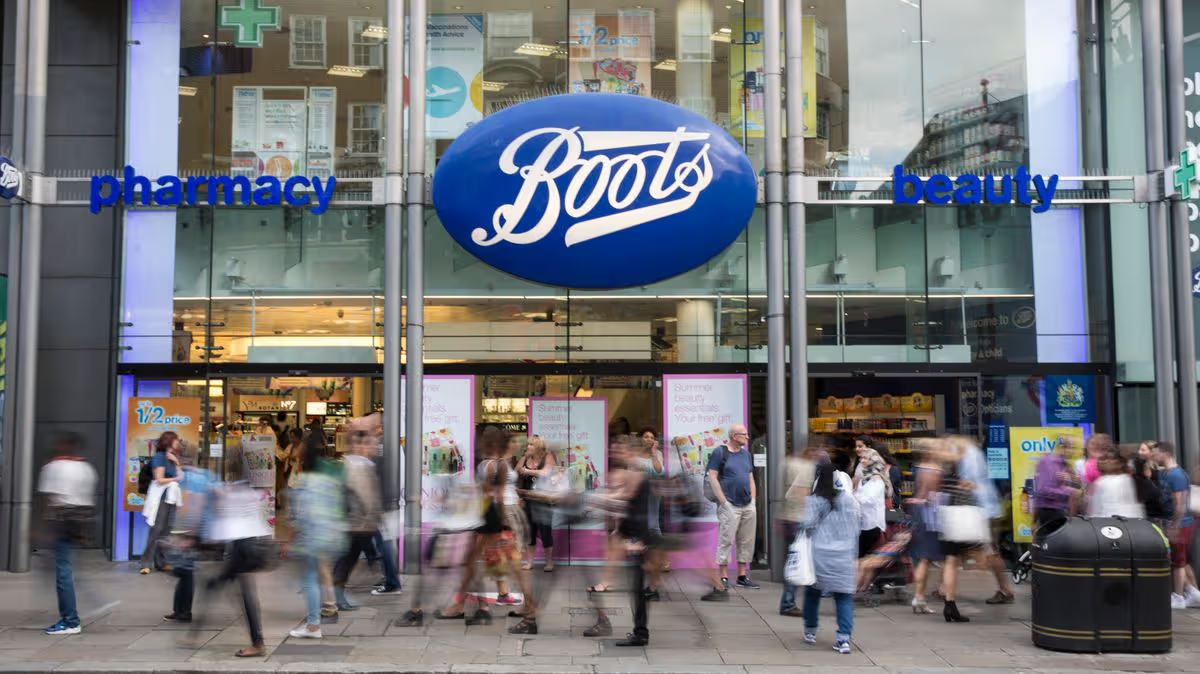
A branch of Boots
The owners of Boots have brought in advisors to prepare the high street pharmacy chain for a potential London stock market flotation, which could happen as early as next year.
Advertisement
Sycamore Partners, the private equity firm behind Boots, has held discussions with advisers in recent weeks regarding the prospect of listing in the capital.
The Initial Public Offering (IPO) would deliver a significant boost to the London Stock Exchange, as policymakers strive to reverse a recent slump in listings by easing tax and regulatory burdens.
Talks surrounding Boots’ prospective London float, first reported by Reuters and by City AM. remain at an early stage, though the move would represent a victory over rival markets in Amsterdam and New York.
The advisors are also being consulted on strategies to expand the company’s footprint in the beauty and wellness sectors.
Advertisement
Sycamore could yet alter course on a London IPO by choosing to sell Boots outright, it has been reported.
Boots, which operates around 1,800 stores, has experienced a notable profit recovery in recent years following a decision to close a number of its branches.
The firm’s pre-tax profit grew by nearly seven times in the year to August 2025, to £215m, up from £31m the year before. The company’s revenue and gross profit grew by three per cent to £192m.
Boots was founded as a family herbal medicine shop in Nottingham in 1849, and has previously been listed in London as part of Alliance Boots, before becoming the first ever FTSE 100 company to be acquired by a private equity firm in 2007.
Advertisement
American pharmacy giant Walgreens acquired a 45 per cent stake in Boots in 2012, subsequently making the high street chemist a subsidiary of Walgreens Boots Alliance.
Last year, Sycamore purchased the British retailer for $10bn, separating it out into an independent business.
Boots would join bookselling heavyweight Waterstones as one of the most eagerly anticipated forthcoming flotations on the London market.
The bookseller has accelerated its plans to list in the UK in recent months, having brought in Rothschild to advise on the float and is said to be searching for a new chairman.
Advertisement
Waterstones, which is owned by activist investment firm Elliott Management, has expanded rapidly in recent years, snapping up rivals Foyles, Hatchards and Blackwell’s under the stewardship of James Daunt.
Horizon Investments CIO Scott Ladner and economist John Lonski discuss market reactions to the war in Iran and first-quarter earnings on ‘Mornings with Maria.’
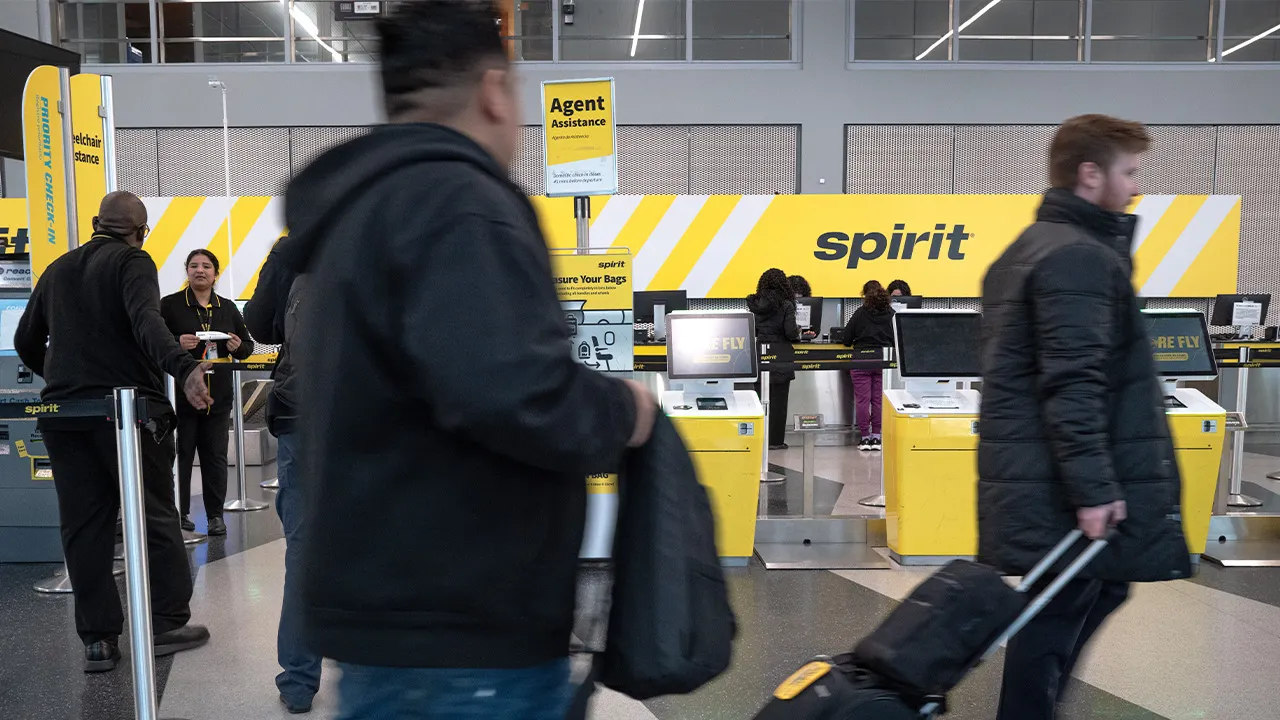
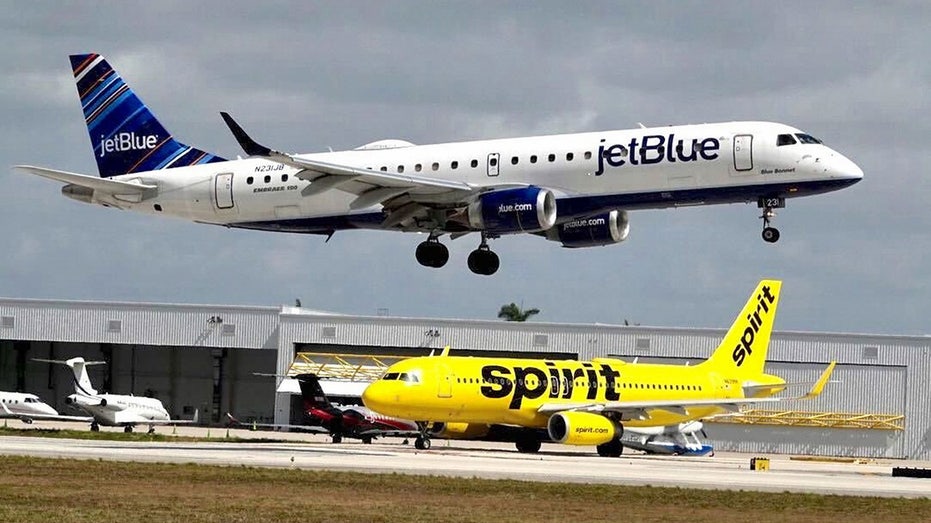
President Donald Trump on Tuesday said he wants to see someone purchase Spirit Airlines, with the low-cost carrier facing headwinds as it looks to exit bankruptcy.
Trump was interviewed on CNBC’s “Squawk Box” and said, “I don’t mind mergers” and suggested that could help resolve the issues Spirit faces.
Advertisement
“You know, Spirit’s in trouble, and I’d love somebody to buy Spirit. It’s 14,000 jobs, and maybe the federal government should help that one out,” the president said.
He also drew a distinction between a merger involving Spirit and the reports of a possible merger between United Airlines and American Airlines, saying those companies are “doing very well. I don’t like having them merge.”
President Donald Trump said he would like to see Spirit Airlines be acquired as the airline faces challenges in exiting bankruptcy. (Scott Olson/Getty Images)
Transportation Secretary Sean Duffy spoke Tuesday at an event on reforms to the nation’s Air Traffic Control system and acknowledged the president’s comments, adding he will look into the matter.
Advertisement
“The president says take a look. And he is my boss. And, so, we will take a look,” Duffy said.
Spirit Airlines filed for its second bankruptcy in August 2025 amid mounting losses and dwindling cash reserves. The low-cost carrier first filed for Chapter 11 bankruptcy protection in November 2024 after unsuccessful merger talks with JetBlue and Frontier.
In late February, Spirit announced a deal that would allow it to exit bankruptcy proceedings by early summer after reaching an agreement with lenders.
Advertisement
The airline told a bankruptcy court the deal would allow it to emerge as a leaner carrier, focusing on routes and time periods with the strongest demand as well as cutting some of its high-cost aircraft leases and improving the utilization of its remaining fleet.
It also planned to expand premium seating options and enhance its loyalty programs to drive repeat business and preserve its low-fare positioning.
Spirit unsuccessfully pursued mergers with JetBlue and Frontier. (Joe Cavaretta/South Florida Sun Sentinel/Tribune News Service via Getty Images)
That plan has been threatened by a recent surge in fuel prices driven by the Iran war because Spirit’s low-cost structure is more vulnerable to surging fuel costs as it has less flexibility to raise fares due to the risk of declining demand.
Advertisement
The Wall Street Journal and Bloomberg reported that some of Spirit’s creditors have explored the potential liquidation of Spirit due to the situation. Creditors have also raised concerns about the viability of the restructuring plan if fuel prices remain elevated.
The report noted that JPMorgan analysts estimate that higher fuel prices could add about $360 million to Spirit’s expenses this year, exceeding the $337 million in cash it reported at the end of last year.
The company said in court filings it expects fuel price volatility to ease in the coming months, with conditions potentially stabilizing later this spring.
Advertisement
FOX Business reached out to the White House and the Department of Transportation.
FOX Business’ Bradford Betz and Reuters contributed to this report.
NEW YORK — Starbucks Corp. shares slipped in midday trading Tuesday, falling 1.62% to $97.35 as investors grew cautious ahead of the coffee giant’s fiscal second-quarter 2026 earnings report scheduled for April 28, with concerns over slowing same-store sales growth and ongoing challenges in China weighing on sentiment.
At 12:24 p.m. EDT, SBUX stock had declined $1.60 from the previous close amid moderate volume. The modest pullback followed a period of relative stability in recent sessions, with shares trading near $98-100 after recovering from earlier 2026 lows. The stock remains down significantly from its all-time highs above $110 in 2021, reflecting persistent pressure on the company’s core business amid shifting consumer habits and heightened competition.
The upcoming earnings report, set for release after market close on April 28 with a conference call at 1:15 p.m. Pacific Time, has become a focal point. Analysts expect revenue around $9.1 billion to $9.3 billion for the quarter ended March 30, 2026, with adjusted earnings per share near $0.59 to $0.65. Consensus forecasts suggest continued softness in comparable store sales, particularly in North America and China, where same-store sales have faced headwinds from cautious consumer spending and competitive pricing.
Starbucks has been working to stabilize its business under CEO Brian Niccol, who took the helm in 2025. The company has introduced new menu items, including Energy Refreshers launched in early April, spring beverages with ube, coconut and lavender flavors, and enhancements to its rewards program aimed at boosting partner (employee) retention and customer loyalty. A new incentive rewards program rolled out in April seeks to share more success with hourly partners through improved pay and benefits, starting in July.
Advertisement
Despite these initiatives, traffic and transaction trends remain mixed. In China — once a key growth engine — same-store sales have struggled with economic slowdown and intense local competition. North American same-store sales have shown modest improvement in some periods but continue to face pressure from inflation-weary consumers trading down or visiting less frequently. The company has responded with value-focused promotions, new afternoon refreshment options and store remodels, including plans to refresh 1,000 locations in 2026.
Starbucks also announced a joint venture with Boyu Capital to accelerate long-term growth in China and is exploring supply chain optimizations, including a new office presence in Nashville, Tennessee, for certain teams. These moves signal a broader effort to improve efficiency and adapt to changing market dynamics. However, union-related labor disputes continue in some U.S. markets, adding another layer of complexity.
The stock’s recent performance reflects a market that remains skeptical about the speed of recovery. While new menu items and rewards enhancements have generated buzz — particularly the April Energy Refreshers and limited-time spring offerings — investors are waiting for concrete evidence of sustained traffic growth and margin expansion in the upcoming report.
Analysts have mixed views heading into earnings. Some maintain Hold ratings, citing valuation concerns and the need for clearer signs of turnaround. Others see potential upside if Starbucks can demonstrate progress on same-store sales, partner retention and China stabilization. The average price target sits modestly above current levels, though forecasts vary widely depending on assumptions about consumer spending and competitive intensity.
Advertisement
Broader market context on Tuesday showed selective strength in consumer discretionary names, but Starbucks traded lower as investors rotated away from names facing near-term uncertainty. The Dow Jones Industrial Average advanced modestly, while other restaurant and retail stocks showed mixed results.
For Starbucks, the path forward involves balancing innovation with cost control. The company has invested in digital ordering, loyalty enhancements and new beverage platforms to drive afternoon and evening traffic. Yet rising labor and commodity costs continue to pressure margins, making operational efficiency critical.
Longer-term tailwinds include the global appeal of the Starbucks brand, expansion opportunities in emerging markets and potential benefits from a more normalized interest rate environment that could support consumer spending. However, near-term risks include further economic slowdown, intensified competition from local coffee chains and execution challenges on store refresh and menu strategies.
Retail investors have shown divided sentiment. Some see the current price as an attractive entry point for a recovery play, citing the company’s strong brand equity and cash-generating ability. Others remain wary, pointing to repeated misses on same-store sales targets in recent quarters and the heavy lifting required to reignite growth.
Advertisement
As midday trading continued, volume remained steady without the extreme spikes seen during major news events. Options activity suggested measured positioning ahead of earnings, with implied volatility indicating expectations for a meaningful post-report move — potentially 6-8% in either direction based on historical patterns.
Starbucks operates more than 40,000 stores globally, with a significant presence in the U.S., China and other international markets. The company has faced scrutiny over store closures in underperforming locations and strategic shifts in its approach to third-place experiences versus convenience-driven purchases.
The upcoming Q2 report will also provide updates on progress with the new rewards program, partner incentives and any color on full-year guidance. Management has previously emphasized a multi-year transformation focused on restoring growth, improving margins and enhancing the customer and partner experience.
Tuesday’s 1.62% decline appears largely anticipatory, with investors locking in gains or reducing exposure ahead of what could be a pivotal earnings update. Whether the stock rebounds or faces further pressure will depend heavily on the tone and specifics shared on April 28.
Advertisement
For a company that once enjoyed near-uninterrupted growth, the current environment demands disciplined execution and clear communication. Starbucks remains a cultural icon with enormous brand loyalty, but translating that into consistent financial results has proven challenging in recent years.
As the clock ticks toward the April 28 earnings release, all eyes are on whether Starbucks can demonstrate tangible progress or if headwinds will persist. In the meantime, the modest midday dip serves as a reminder of the uncertainty surrounding consumer-facing stocks in an uneven economic recovery.
HM Revenue and Customs has confirmed it will appeal against a First-Tier Tribunal ruling that would cut VAT on public electric vehicle charging from 20% to 5%, in a decision that has drawn stinging criticism from charge point operators, campaigners and SME-led infrastructure businesses across the country.
The ruling, handed down last month, followed a case brought by Charge My Street, a not-for-profit charging operator, which argued successfully that electricity supplied through public chargers should fall within the reduced 5% rate applied to domestic electricity use. Judge Harriet Morgan found that applying the standard 20% rate was a “strained construction” of the VAT Act, which treats electricity as being for domestic use provided a single user does not consume more than 1,000 kilowatt hours at one premises in a given month, enough, in practical terms, to recharge a Tesla Model Y sixteen times over.
That finding, uncovered after accountancy firm Deloitte spotted the discrepancy and worked pro bono alongside Charge My Street, offered the clearest hope in years that the long-standing gulf between home and public charging costs might finally close. Three days of tribunal argument turned on the interpretation of a handful of words, notably “a month” and “premises”, before the judge came down firmly against HMRC’s position.
The Treasury, however, has no intention of conceding. In a statement on Tuesday, an HMRC spokesperson said: “We’re appealing this case, as our position is that standard rate VAT applies to electricity supplied through public EV charging infrastructure.”
For drivers, the stakes are considerable. Those fortunate enough to have a driveway pay 5% VAT when charging at home; the estimated 40% of UK households without off-street parking are stung with 20% at public chargers, four times the rate for what is, electrically speaking, identical electricity. In some cases, industry figures note, running an EV on public charging alone can cost up to ten times more per mile than charging at home, eroding the very economic case government policy relies upon to accelerate the switch from petrol and diesel.
Advertisement
According to calculations by charger-mapping company Zapmap, the VAT differential currently nets the Treasury roughly £85m a year. That figure is projected to climb to £315m by 2030 and into the billions thereafter as the national EV fleet scales. Against a fiscal backdrop strained by the Iran conflict, mounting pressure to scrap a planned fuel duty increase, and the government’s own commitment to introduce pay-per-mile taxation on electric cars, ministers are evidently reluctant to surrender a growing revenue stream to replace the £24.5bn currently generated annually by fuel duty.
The appeal has triggered an unusually unified response from an industry more often given to commercial rivalry than common cause.
Will Maden, director at Charge My Street, was blunt: “About 40% of the UK population, they don’t have drives. Transitioning to EVs is a huge problem. Adding 20% makes a huge difference. My personal view is we should be making the transition to EVs as cheap as we can. This is an environmental issue.”
John Lewis, chief executive of charge point operator char.gy, described the appeal as “a deeply disappointing decision, and one that sends entirely the wrong signal to the millions of people who rely on public charging.” Lewis confirmed his firm would pass any eventual VAT cut straight through to customers, adding that “the government talks about accelerating EV adoption, yet is actively choosing to maintain a tax structure that makes public charging more expensive than it needs to be and undermines the transition.”
Advertisement
Tanya Sinclair, chief executive of Electric Vehicles UK, accused ministers of defending inequality by proxy: “Drivers without off-street parking already pay more to charge simply because of where they live. HMRC appealing this ruling is the government choosing to defend that inequality. If you’re serious about EV adoption, you don’t fight the ruling that would fix your most regressive charging cost.”
Ginny Buckley, chief executive of Electrifying.com, questioned the political optics. “For a government that talks about standing up for ‘working people’, the decision to appeal flies in the face of that,” she said. “This hits those without driveways the hardest, making it more expensive for them to switch, and in some cases, that makes EVs more expensive to run than petrol.”
Warren Philips, campaign lead at FairCharge, which has spearheaded the lobbying effort, called the appeal indefensible: “People unable to charge at home pay four times the VAT rate of their neighbours for identical electricity. By appealing, the government is telling 1.4 million current EV drivers, and more than 30 million who will have to switch, that it is willing to go to court to keep public charging costs high.”
The tribunal ruling, for now, binds only Charge My Street. Should HMRC’s appeal fail at the Upper Tribunal, however, the floodgates will open: operators across the sector are understood to be preparing claims for overpaid VAT stretching back years, a liability that could run into hundreds of millions of pounds.
Advertisement
For the UK’s SME charge point operators, many of them small, founder-led businesses already grappling with grid connection delays, planning bottlenecks and capital costs, the appeal represents more than a fiscal irritation. It is, in their view, a test of whether Whitehall is serious about the commercial foundations of the net zero transition, or merely content to talk about them.
Jamie Young
Jamie is Senior Reporter at Business Matters, bringing over a decade of experience in UK SME business reporting.
Jamie holds a degree in Business Administration and regularly participates in industry conferences and workshops.
When not reporting on the latest business developments, Jamie is passionate about mentoring up-and-coming journalists and entrepreneurs to inspire the next generation of business leaders.
The architects who will design the hotel are behind other luxury accommodation in Chelsea, Fitzrovia, Bristol, Battersea, and Chester
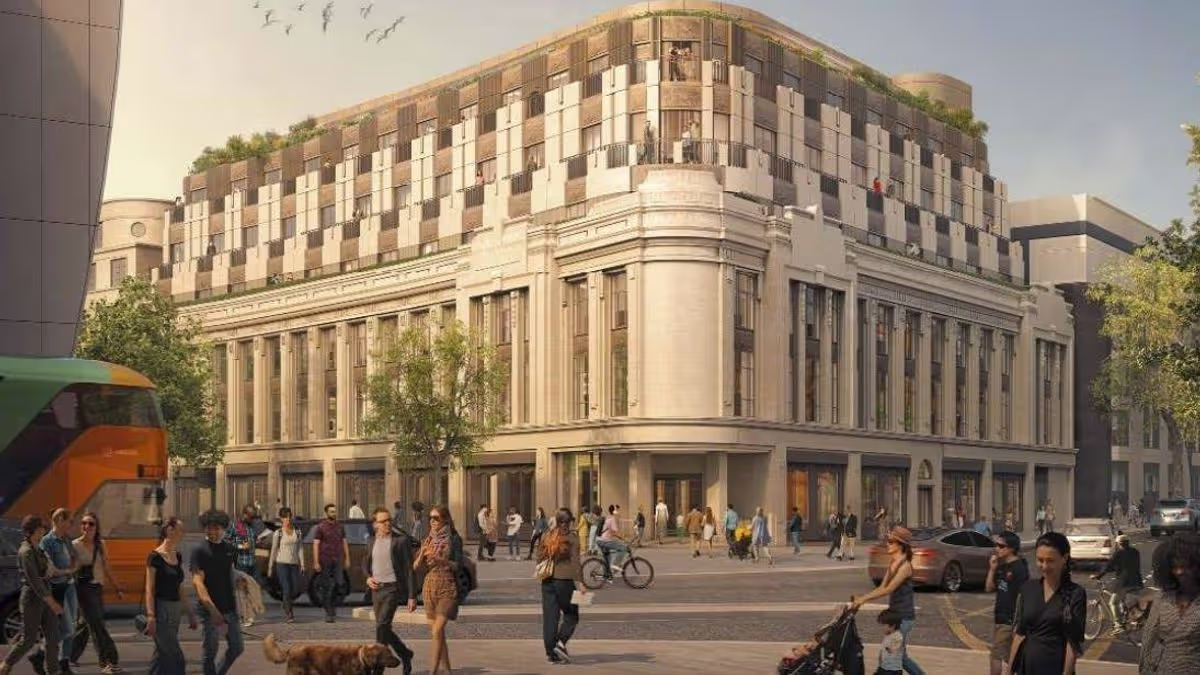
A rendering of the hotel(Image: Paul Treacy Architects)
Planning permission has been granted for the construction of a new four-star hotel in the heart of Cardiff. The council has granted permission to J. B. S. L. Holdings Ltd for the remodelling and change of use of part of the existing building at 125-139 Queen Street in Cardiff.
The plans relate to part of the large building opposite the Capitol Centre at the end of Queen Street where Newport Road becomes Dumfries Place. Plans also include a new three-storey extension plus a roof-top pavilion containing a fine dining restaurant and sky-bar.
The top floors of the hotel(Image: Paul Treacy Architects)
Another view of the hotel(Image: Paul Treacy Architects)
According to the application, the development aims to provide 158 high-quality four-star rooms for visitors to Cardiff while “enhancing the streetscape and contributing positively to the local economy”. Never miss a Cardiff story by signing up to our daily newsletter here
The sky bar and fine dining restaurant are envisioned as “flexible multi-functional spaces that can accommodate various dining and social experiences and be used by hotel guests and visitors alike”.
Advertisement
Its internal design is said to maximise views with “carefully positioned” seating areas that “offer panoramic perspectives of the surrounding cityscape”.
This ensures that “every guest experience is enhanced by the exceptional visual connectivity and spatial quality of the top floor”.
The hotel’s design is said to be inspired by the “historic architecture of Cardiff and the existing buildings’ art deco inspiration ” but with a “modern and contemporary twist”.
The hotel will also offer a range of facilities and services including a lobby, reception area, access to the sky bar and restaurant and fitness centre.
Advertisement
This ensures “guests have access to everything they need for a pleasant and enjoyable stay”.
Paul Treacy Architects has been hired to design the new hotel. Previously it has designed luxury hotels in Chelsea, Fitzrovia, Bristol, Battersea, and Chester.
Sustainability is said to be a “core” aspect of the development incorporating features such as green roofs, solar panels, and “energy-efficient building systems to minimise environmental impact and promote overall energy efficiency”.
“Innovative” approaches to waste management and water usage will also further enhance the project’s sustainability credentials, it’s stated.
Advertisement
Access to the hotel and sky bar will primarily be from Queen Street to ensure “pedestrian traffic flows seamlessly”.
The application reads: “The proposed hotel development represents a significant opportunity to contribute positively to the built environment of Cardiff while meeting the growing demand for hotel accommodation in the area”.
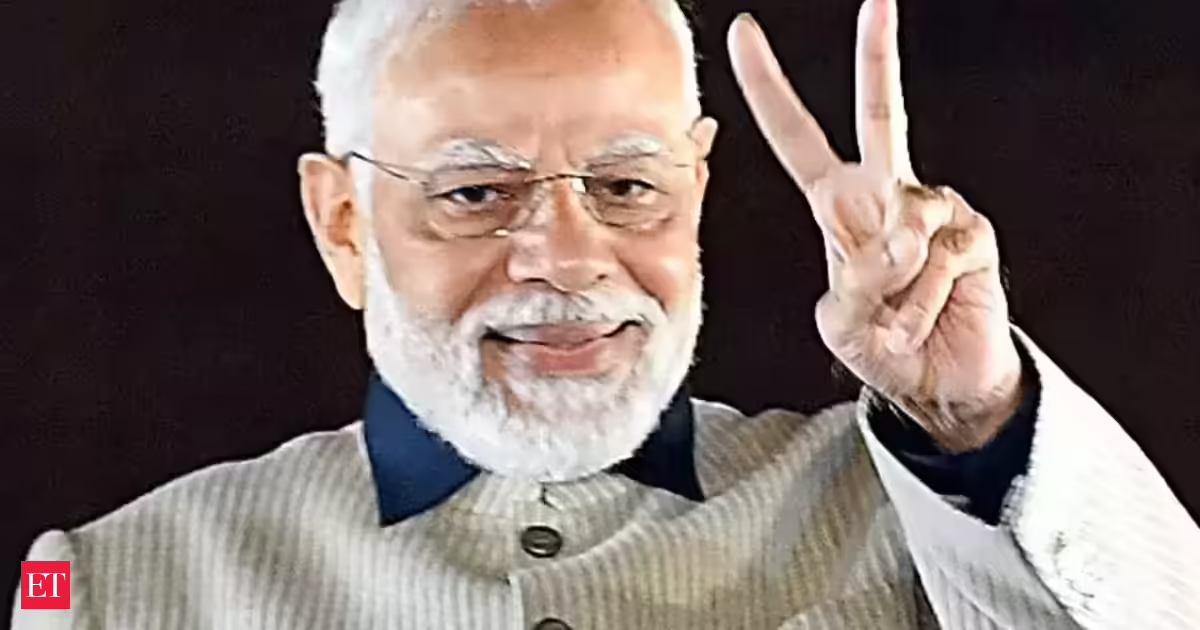
Ahmedabad: The charisma of Prime Minister Narendra Modi is among the key factors most likely to influence voters in the ensuing Lok Sabha elections in Gujarat, according to political observers.
Lok Sabha polls in Gujarat will be held in a single phase on May 7. Counting of votes will be held on June 4. Anti-incumbency, unemployment, inflation, education and healthcare facilities are some of the other important issues in the election, where the ruling BJP in Gujarat will attempt to retain all the 26 Lok Sabha seats it won in 2019.
Gujarat is among the states which will play a crucial role in deciding the outcome of the elections to the Lower House of Parliament. In the 2014 and 2019 Lok Sabha elections, the Bharatiya Janata Party won all the 26 seats in the state.
Here are some issues that will play a decisive role in the elections in Gujarat:
PM Narendra Modi’s charisma: The ruling BJP has a trump card in the form of the prime minister, who hails from Gujarat and was its chief minister from 2001 to 2014 before occupying the top post of the country. His sway over the followers in his home state is still intact. Anti-incumbency: Observers feel that the opposition will try to take advantage of any anti-incumbency sentiment during the last 10 years of BJP rule at the Centre. They feel that “floating voters” who do not vote on the basis of ideology can be swayed by the opposition if they offer proper alternatives.
Advertisement
Live Events
Inflation: Low and middle-income households are the worst-affected in terms of the effects of inflation. So this will be a decisive factor considering how the price rise has impacted the lives of people in the last 10 years. The opposition has been constantly targeting the Modi government over this issue. Unemployment: This is another point that the opposition parties have been using to hit out at the Centre. Since this issue directly affects the lives of common people, this will be high on the mind of voters when they exercise their franchise. Lack of basic education and health facilities in remote areas: If school classrooms are constructed in remote rural areas, there is a dearth of teachers. The lack of primary health centres and doctors also adversely affects health services in rural pockets. Farmers’ issues: Issues like lack of adequate compensation for crop loss due to excess rains, non-availability of fertilisers and land acquisition for project development will also play a major role in affecting voter sentiment, the observers said.
Good day, and thank you for standing by. Welcome to the Vicor First Quarter 2026 Earnings Conference Call. [Operator Instructions] Please be advised that today’s conference is being recorded.
I would now like to hand the conference over to your speaker today, Jim Schmidt, Chief Financial Officer. Please go ahead.
Advertisement
James Schmidt Corporate VP, CFO, Treasurer, Corporate Secretary & Director
Thank you. Good morning, and welcome to Vicor Corporation’s Earnings Call for the first quarter ended March 31, 2026. I’m Jim Schmidt, Chief Financial Officer, and I’m in Andover with Patrizio Vinciarelli, Chief Executive Officer; and Phil Davies, Corporate Vice President, Global Sales and Marketing.
Earlier this morning, we issued a press release summarizing our financial results for the 3 months ended March 31, 2026. This press release has been posted on the Investor Relations page of our website, www.vicorpower.com. We also filed a Form 8-K today related to the issuance of this press release. I remind listeners this conference call is being recorded and is the copyrighted property of Vicor Corporation. I also remind you various remarks we make during this call may constitute forward-looking statements for the purposes of the safe harbor provisions under the Private Securities Litigation Reform Act of 1995.
Except for historical information contained in this call, the matters discussed on this call, including



















































You must be logged in to post a comment Login