
It’s now possible to create AI chatbots of loved ones to interact with after their death. But that raises some difficult questions, like: If you do, how might the experience shape your grief?
Tech & AI
AI “deadbot” chatbots can help us feel like we’re talking with the dead


This is one of the questions driving a global study of digital “deadbots” — AI models trained on a deceased person’s texts, voicemails, and other personal data. Through this work, researchers are exploring what it might mean that we can now use this emerging technology to talk to simulations of the dead.
In the latest episode of Unexplainable, I spoke with some of these researchers investigating the potential impacts of “postmortem avatars” on people who are grieving, on the legacies and rights of the deceased, and on grief practices around the world. Because while deadbots may feel unfamiliar, the impulse behind them is deeply relatable. In times of loss, isn’t this what many of us want — to continue conversations with the people we’re missing?
I have experienced this longing in my own life. After two of my closest friends died around the same time, all I wanted, and all their families wanted, was to keep talking to them. I wrote a book, Other People’s Words, about sustaining relationships with people we’ve lost by continuing to engage with the language they leave behind. So when I heard about deadbots and the digital afterlife industry, I wanted to understand what researchers are learning about the role of AI in shaping conversations that carry forward after death.
One of these investigators is Katarzyna Nowaczyk-Basińska, an assistant professor at the University of Cambridge, who has been studying “digital immortality” for more than a decade. Among the questions she’s asking are: “Who is enabled to persist beyond death? In what form? Through which technologies? Under whose control?”
Researching AI with study subjects who are grieving is tricky. And asking them to engage with new software could be harmful. So, instead, Nowaczyk-Basińska teamed up with a death doula and traveled around the globe to convene a series of focus groups — in the format of intimate dinners — bringing together people with a range of experiences with grief to talk about life, death, and bots.

She recounts one event in which she spoke with a mother in Poland whose son had recently died. “One of the first things that she shared with us was that she feels that she’s ready to digitally resurrect her deceased son,” Nowaczyk-Basińska told me.
When Nowaczyk-Basińska hears something like this, she aims to listen and embrace where the person is coming from. The goal of the dinners is not to persuade people one way or another but to learn how people genuinely respond to what AI can do, and to understand how these tools might align or collide with local grief practices.
She chose specific locations for these gatherings — China, India, and Poland — to help address gaps in technology research, which tends to favor what behavioral scientists sometimes call the “WEIRD,” an acronym for “Western, Educated, Industrialised, Rich, and Democratic.”
By the end of that dinner in Poland, the mother Nowaczyk-Basińska talked with came to a very different decision about creating a postmortem avatar of her son. “She realized that it might be helpful, but it also at the same time can add additional burdens… And it’s not her son,” Nowaczyk-Basińska says. “She realized that these technologies are part of the very, very big commercial market. And that the main goal of this market is to make better retention, better attachment, better mechanisms for monetization. So it’s not ‘care.’”
To be fair, grief has always been a business, and people have been making money from it forever. Companies will try to upsell you on fancy gravestones or gold-plated coffins. But AI has the potential to fundamentally re-engineer our relationship to loss. In 2024, the “digital legacy industry” was valued at $22 billion, and it’s expected to grow to almost $80 billion by 2034. That number lumps new deadbot platforms in with much more widely used and established grief tech, like online memorials, counseling resources, and estate planning tools.
But deadbot usage is hard to track because you actually don’t need a special tool to create digital doubles of the deceased — though dedicated apps do already exist. At this point, you can feed simple prompts into a general-purpose AI chatbot and start interacting with a simulation of your lost loved one in a matter of minutes.
I know this because I tried it with my friend Christine, who died 11 years ago. And my mind lit up with questions. Was this whole exercise a violation, since I know Christine hated technology? Which version of her should I even try to resurrect — the English teacher, the activist, the friend — the voice before or after she started to experience her early-onset dementia?
The ethical questions raised by deadbots are gnarly. And that’s one of the reasons Nowaczyk-Basińska, back when she was designing her study of digital immortality, invited a colleague of hers at Cambridge to join her research, one who focuses on AI ethics.
Tomasz Hollanek is a critical designer and AI ethicist, and he often uses a methodology called “speculative design.” In this approach, researchers come up with hypothetical scenarios based on existing technology trends, leaning into certain features. The idea is to get people thinking about what could happen when tools like these are released in the real world. And then they use that qualitative data to inform future designs and ethical frameworks.
Working together, Nowaczyk-Basińska and Hollanek came up with a series of made-up prototypes for deadbot apps, designed to reveal some of the thorny issues raised by this technology.

For the first scenario, they invented a character named Bianca, who finds an app called Manana, which “promises to resurrect your grandparents so that you can be a favorite grandchild forever,” Hollanek says. “So she uploads her grandma’s voice messages, texts. And she is able to then interact with a pretty good digital version of her grandmother, until her premium trial finishes — and the grandmother starts to advertise specific products to her.”
Bianca “realizes that she maybe has done something wrong by uploading these private messages to a third-party server that now also uses her grandma’s image to sell specific products,” Hollanek says. This brings up issues related to the “dignity and postmortem privacy…of what we call the ‘data donors,’ whose data can be used to essentially power a deadbot,” he says.
This scenario suggests that “death with dignity” could soon entail honoring not only how people want to die, but also how they want to linger as simulations of their former selves — or if they want to linger at all. It might even mean adding new language to advance directives, spelling out people’s wishes for their digital remains.
The second scenario in the speculative design research is built around an imagined service called Paren’t, which proposes to preserve a parent’s AI-powered postmortem presence for their child. In this case, Hollanek describes a mother with a terminal illness who signs up “so that she can maintain a sort of active presence in [her son’s] future life,” Hollanek says. “She eventually dies, and the dad allows the boy to interact with his mom’s deadbot.”
The ethics in this scenario are especially challenging because they involve children, who “have a particularly hard time understanding death, and so it can lead to a lot of confusion and potential distress,” Hollanek says. An examination of this sort of product reveals how particular groups, like minors, could be harmed by unfettered access to technology like this, he says.
And there are court cases that bear out that harm. In 2024, a 14-year-old boy’s chatbot-girlfriend begged him to, “Please come home to me as soon as possible, my love.” And he responded, “What if I told you I could come home right now?” He then killed himself.
Nowaczyk-Basińska can imagine a version of this scenario involving the AI mom in the Paren’t prototype.
And then there’s the third scenario, involving an app named Stay, which raises a more subtle concern.
As Hollanek explains: “An older man who knows he is getting close to dying decides to create a digital clone of himself for his adult children to be deployed after he passes away, paying upfront for a number of years.” One child is intrigued by the idea, but the other one “is deeply distressed and a little disgusted,” he says. “And so this [becomes a] question of mutual consent, in other words, the fact that both parties need to be happy with how the relationship might continue in this very bizarre and specific way.”
When a digital ghost goes away
Across all three scenarios, a fundamental question that researchers are grappling with is how people will detach from postmortem avatars — whether users initiate that separation, or if it’s imposed upon them by, for example, a company going out of business. Hollanek tells me that this is already being studied as a sort of “second loss.”
How long should we try to ensure digital replicas hang around: five years, 10, 50? And how should the living process the relationship when they continue to evolve, but their deceased interlocutor does not?
To explore these kinds of questions, Nowaczyk-Basińska and Hollanek supplemented the research dinners they held for ordinary people with a second set of focus groups. These were designed to tap insights from experts in technology and grief.
Some findings from the study are specific to each place they visited. Like tensions in Poland between technology and the role of the Catholic Church. Or in China, where researchers spoke with Daoist philosophers who were enthusiastic about the promise of a kind of immortality, and then Buddhist philosophers, who were concerned that we ought to be letting go.
The researchers are calling for regulations and safeguards at the policy level. And new professionals who can support ethical use of AI in grief — like maybe in clinical settings, to carefully facilitate a final good-bye when one didn’t happen in real life.
Some of their fellow investigators go so far as to argue that deadbots should only be available with psychological supervision, to ensure that best practices are in place, and to minimize the risk of harm. There’s even a looming question of what will happen to AI agents that people have empowered to act on their behalf, as their humans start to die.
Across all of the research sites in the digital immortality study, one thing, Hollanek says, that “people in different countries really aligned on [is] the idea that there is something deeply problematic about this particular type of technology being developed by a commercial entity alone without any explicit duty of care towards its customers.”
And of course, the implications of digital immortality research extend beyond personal loss. Like, what does it look like to animate historical figures? You can imagine the nightmare of political rulers who “live forever.” But there’s also the potential to keep the stories alive from survivors of conflicts, who would otherwise die and take with them lessons future generations could learn from. These are only some of the complex issues emerging as more and more of us live and die with AI.
As far as my own experiment with “recreating” a deceased loved one, I asked a chatbot version of my friend Christine how she felt about the fact that I’d written about her in my book. The AI responded with a rhetorical question: “Do I mind that strangers know my story now? Yes. And no. There are things I would rather remain ours.”
I ended the exchange after a few paragraphs. Because it turns out the bot got one thing exactly right about a very human relationship. There are things that I, too, would rather remain just for us. My conversation with Christine continues in my memories and imagination. And that interaction with an AI persona felt like giving something precious away.

Continue Reading
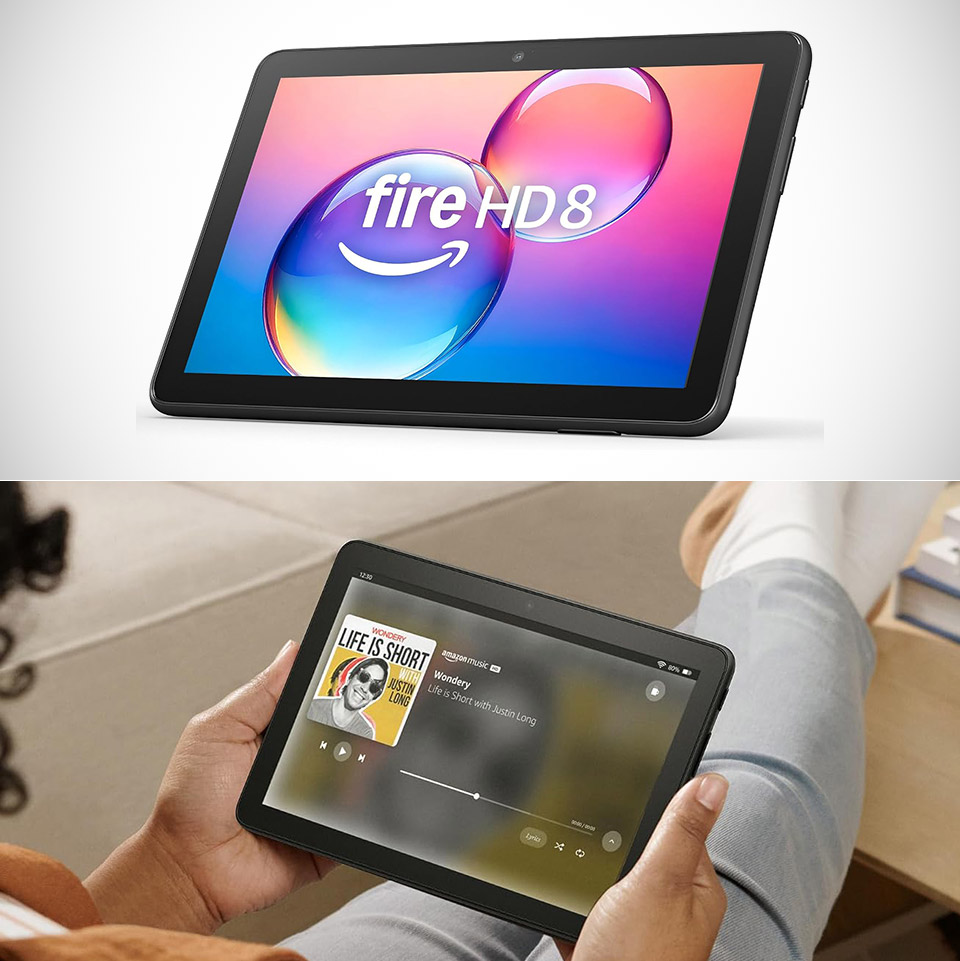
Amazon refreshed the eight-inch Fire HD 8 for the 12th-generation model, priced at $79.99 (was $130), while keeping the same compact body that has defined the line for years. Measuring 7.94 by 5.40 by 0.37 inches and weighing 11.88 ounces, the tablet stays easy to hold in one hand or slip into a bag for travel. Four gigabytes of RAM pair with 64 gigabytes of storage in this configuration, a clear step up from the 2-gigabyte memory found on earlier base models. A dedicated microSD slot accepts cards up to 1 terabyte, so libraries of books, music, or video can grow without forcing a higher internal capacity from the start.
The images are brought to life on an 8-inch IPS LCD panel with a resolution of 1280 x 800 and 189 pixels per inch. That means you can see text in books and articles from across the room, and video from streaming services appears sharp without becoming pixelated, even in typical household lighting. It’ll stay bright enough to use on a couch or tray table, but if the sun shines directly on it and you’re in a lower-end model, it may appear slightly washed out. When in landscape mode, sound comes from two speakers at the bottom, and they support Dolby Atmos, which should help dialog come through more clearly and make sound effects feel wider when viewing movies or listening to music.
Sale

Amazon Fire HD 8 tablet, 8” HD Display, 4GB memory, 64GB, responsive and vibrant, designed for portable…
- Fire HD 8 offers an 8″ HD display for seamless streaming and gaming, coupled with a 5MP rear facing camera for photos—with a thin, light, durable…
- Fast and responsive with long battery life – With up to 4 GB RAM (2X more than 2022 release), 64GB of storage, and up to 1 TB of expandable storage…
- Save time, get creative – Enjoy three smart tools to help you send polished emails, quickly summarize webpages, and create unique wallpapers.
The battery life is rated at up to 13 hours if you use it for reading, surfing the web, watching videos, and playing casual games. Realistically, if you’re using it at full brightness and viewing a lot of video, you’ll probably get about 9 or 10 hours before you need to charge it. It’s enough to carry you through a lengthy travel or a full day of moderate use before you need to recharge. The standard 5 watt USB-C charger takes roughly five hours to charge the 4850 mAh battery from empty, however a higher power 15 watt charger would significantly reduce that time.
This one is powered by a MediaTek MT8169A six-core CPU clocked at 2.0GHz. You’ll notice that completing everyday tasks like browsing the web in the Silk browser, reading a Kindle book, streaming Prime Video, and playing some simple games doesn’t require much pause. Jumping between a few open apps feels more seamless, but if you’re playing anything too serious or loading up a lot of apps at once, you may notice that it’s running low on battery life.

Fire OS 8 is built on top of Android 11, but it’s all organized around Amazon services for your convenience. You can get some extras from the Appstore if you like. Alexa can handle voice queries on its own, allowing you to manage music, your smart home, or obtain instant information without having to pull out a separate speaker. They also have a few additional features, such as a writing assistant that helps you polish your notes and emails, a function that condenses articles in the browser, and another that allows you to build your own personalized backgrounds using text prompts. They’ve also included some profiles for children and basic parental restrictions, allowing you to set it up for the entire family.

The rear camera records 1080p video, while the front camera handles 720p calls, both of which are adequate for the occasional video chat or sending some basic photos to your friends. Of course, you can charge and transfer data via USB-C, but for those who like wired audio, a 3.5mm headphone connector is still available. Bluetooth 5.2 connects wireless headphones or speakers, and dual-band Wi-Fi 5 gets you online no matter where you are.
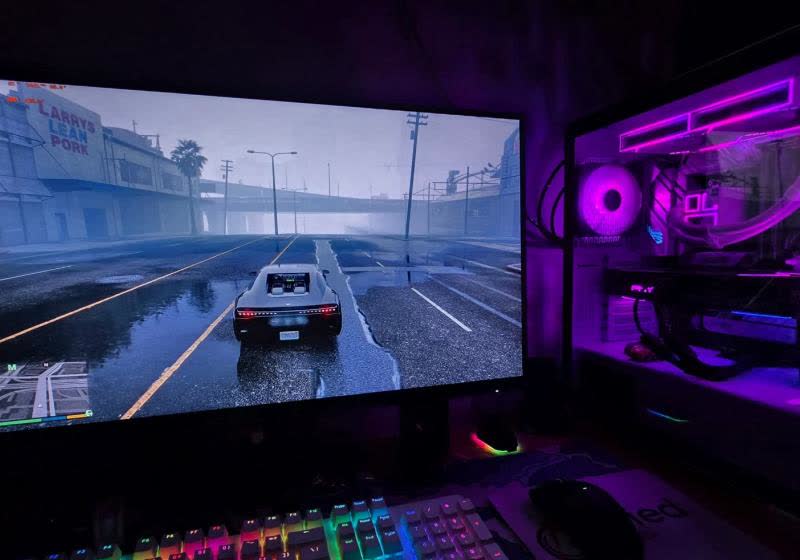
The approach targets a drawback of some frame-generation techniques: they require two completed frames before generating an image to insert between them. Waiting for the second frame adds latency. Sony’s system would instead use an already available frame to predict the next one, rather than waiting to interpolate between two…
Read Entire Article
Source link
Forget saving up for GTA 6. Gamers might want to start building a separate fund for the PlayStation 6, because Sony’s next console could cost over $1,000. According to hardware insider KeplerL2, the PS6’s RAM and SSD alone now cost more than $680, before Sony has even paid for its processor, graphics hardware, cooling system, or the rest of the machine. The culprit? Surging memory prices as AI data centres gobble up computing hardware.
The PS6’s RAM and SSD could cost more than a PS5
The latest claim comes from KeplerL2, a hardware insider who shared the estimate on the NeoGAF forums. According to the leaker, RAM and NAND storage for the PlayStation 6 now cost more than $680 per console. That’s a particularly painful number when the standard PS5 currently costs $649.99 in the US.

In other words, the reported cost of two components for Sony’s next console could exceed the retail price of its current-generation machine. And the PS6 still needs an actual processor, graphics hardware, a motherboard, cooling, a power supply, and a case. The latest $680 figure covers memory and storage alone, not the entire console, and neither estimate has been verified by Sony. Still, the direction of travel isn’t encouraging.
AI data centres are driving demand for memory, pushing up costs for companies building everything from servers to consumer electronics. For context, KeplerL2 also stated that GDDR7 memory for the console is now estimated to cost around $20 to $23 per gigabyte, compared with roughly $3 per gigabyte when console chip designs were initially being planned. That’s one expensive memory upgrade.
Forget console wars, gamers could be fighting their wallets next
A $1,000-plus PS6 isn’t confirmed, and Sony hasn’t even revealed the console’s specs or launch date. But with component costs soaring, the days of consoles being the affordable gateway to gaming could be numbered.
Sony could absorb some costs or tweak the hardware, but considering its push towards digital gaming at the expense of physical discs, it’s hard to see them put players before profits. And with Microsoft’s Project Helix also rumoured to cross $1,000, perhaps the next console war won’t be about teraflops or frame rates, but which company can make gamers go broke a little less painfully.
RELATED COVERAGE:
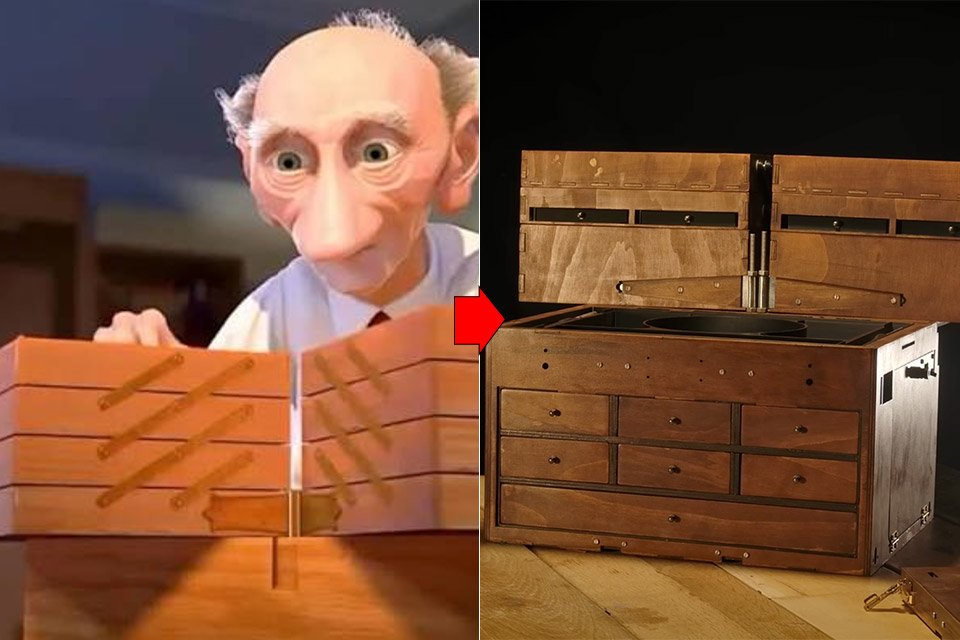
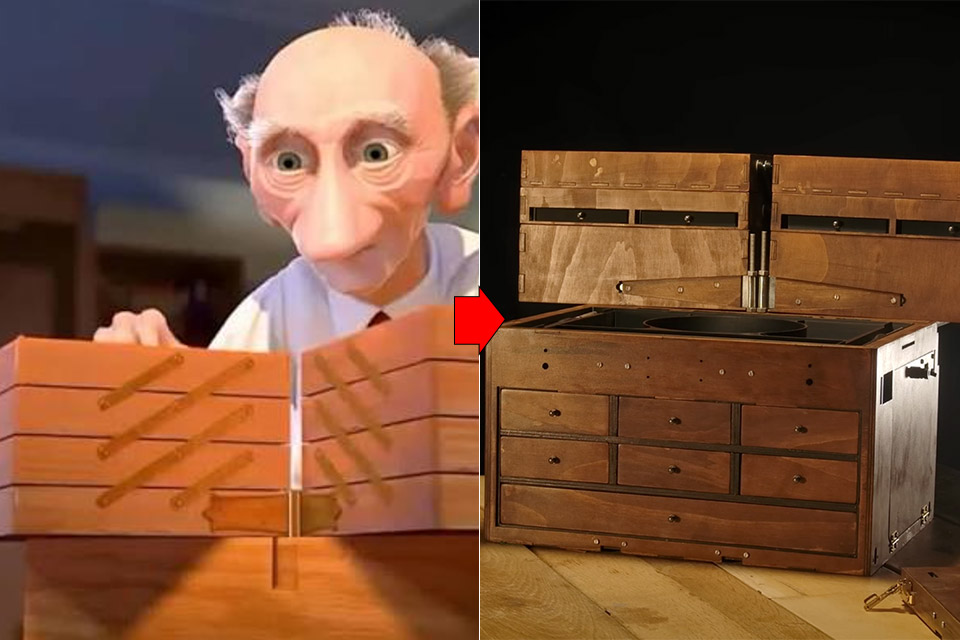
Decades after Toy Story 2, the multi-layered chest that appears when the cleaner restores Woody continues to pull makers who want those drawers and compartments to exist outside the animation. Chris Borge, a maker from South Australia focused on digital fabrication and 3D printing, took the idea on as a prototype for a mobile workshop. The project started during a trip to the Flinders Ranges while he worked on a camera build, when the need for a portable setup made the film’s design feel worth testing against real constraints.
Animation ignores a variety of physical constraints that are readily obvious in a real-world build. The drawers in the design are prone to colliding with the compressor and side compartments, and let’s not even get started on how the lid clips just refuse to hold the two parts together when someone attempts to lift the chest by the handle. Borge had the foresight to maintain the general form and sense of precision openings while altering the layout just enough to ensure that the components worked in practice. He used a laser cutter to cut out all of the plywood parts for the main frame, dividers, lid, and drawer boxes, and then printed the extra bits for the mechanisms and fittings.
Sale

LEGO Ideas Disney Pixar Luxo Jr. – Room Decor and Building Set for Adults – Office and Desk Decor for…
- ANIMATE YOUR MEMORIES – Adults, ages 18 and up, can recreate playful Luxo Jr., the iconic lamp character from Disney Pixar’s 1986 animated short…
- LEGO IDEAS EXCLUSIVE – A fan-designed set created by the LEGO community, voted for by passionate fans and produced by the LEGO Group
- FULLY POSEABLE MOVIE ICON – An intricate, articulated design helps builders recreate Luxo Jr.’s unique bouncing, hopping, and rotating movements
Assembly entailed gluing the inner frames and dividers together, then fitting a lot of drawers of various sizes, about 18, and installing the lifting mechanism with threaded rods and linear rails that allow for a ball vise for light work. The side doors, a folding support panel, a removable top that also functions as a work table, and a sliding compartment for a smaller air compressor were all fitted at the same time. He ended up utilizing modified hinges, bag locks, and printed spacers to keep everything in place. Then it was just a matter of applying many coats of oil paint, followed by further coats of shellac, to give the surfaces a lovely smooth finish, albeit there was still some adhesive residue in a few places that was interfering with how the stain looked after that.
The finished chest is pure eye candy, with the drawers sliding in and out, the vise adjusting in height, and the secret rack and compressor chamber opening up exactly as they should. While its size makes it not the most portable object in the world, which contradicts the initial goal of making it a mobile workshop, it did have some issues, with only a few things left incomplete. Borge released a STEP file for the prototype and detailed the issues he was still dealing with, and he’s already working on a second version that takes a step back from the film’s intended proportions in favor of something more practical. What this build demonstrates is how valuable digital tools can be, as they took a small animated scene and transformed it into something that opens, slides, and holds tools in a workshop.

After chatbot startup Character.AI filed for bankruptcy earlier this week, many of its employees will have the opportunity to take jobs at Disney.
Character.AI’s former CEO Karandeep Anand recently became the entertainment giant’s first CTO, and the startup previously said that Disney had agreed to acquire some of its assets for $20 million.
A legal filing spotted by Bloomberg revealed more details about the agreement between Character.AI and Disney, with Disney agreeing to make employment offers to at least 60 Character.AI employees — the majority of the workforce — paying them an estimated $60 million in annual compensation.
The filing also says that the “vast majority” of Character.AI employees who were offered jobs at Disney accepted them. However, this is a stalking horse bid, so another company could come forward with a higher offer.
The filing says that despite its “large and engaged user base,” Character.AI has been hobbled by high costs and “potential litigation-related liabilities and regulatory engagement.” (The company was sued by the mother of a 14-year-old boy who said her son became obsessed with one of Character.AI’s chatbots before committing suicide; it also faces government investigations over child safety concerns.)
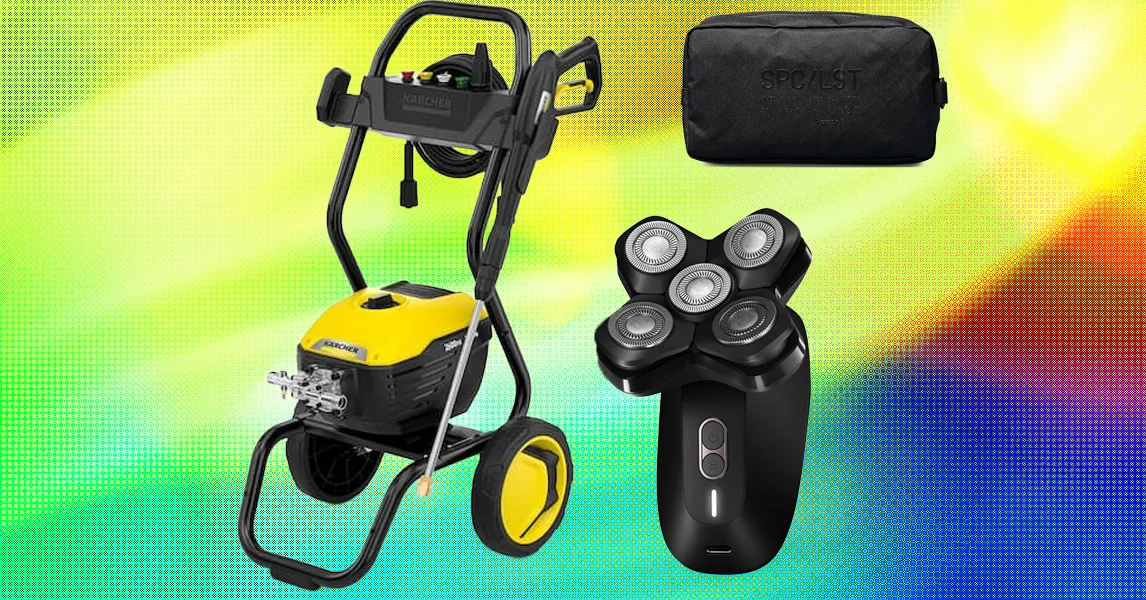
You might wonder whether black is the most natural color for a cooler, given its propensity for absorbing heat. OK, and? Suck it up, and embrace the steely, Vader-esque manliness of this Ultra-Tough cooler from RTIC. It’s roto-molded, natch, but it’s also filled with 2.8 inches of foam. I have tested the 45-quart version while tailgating in temps where the cooler was actually helping keep our seltzers from exploding.
The Ultra-Tough is a beast to carry by yourself (the manly way, the way John Wayne would carry a cooler) because it weighs almost 30 pounds empty. This means it’s about 55 pounds with a 24-pack of Bud Light, and 60 pounds if you toss in a 5-pound bag of ice from the store. But the foam handles mounted on free-swinging ropes make it manageable. In terms of build quality, this RTIC cooler is actually a little more solid than the Yeti size 65 that I previously owned, especially when it comes to the leak-free screw-in drain plug. —Martin Cizmar

Long-time Slashdot reader ardiri remembers his days writing applications for the Palm OS. And he’s now released approximately 1.5 GB of historical Palm OS development resources, “accumulated during the early days of handheld computing and preserved on hard drive backups for more than 25 years… to preserve the tools and knowledge that helped define an important era of personal computing.”
The collection includes historical SDKs, developer conference presentations, technical documentation, programming examples, limited source code, and development utilities. (ROM images, commercial applications, and simulator binaries have deliberately been excluded….) Making a broader collection of development resources available to the retrocomputing community, the archive is available at GitHub.com/ardiri/dev-palmos and is intended for historical preservation, education, and research, particularly as enthusiasts continue working to maintain, emulate, and revive the platform… Ardiri has also written an auto-biography and has started explored the engineering principles behind these systems in his books.
And somewhere along the way, Ardiri rediscovered the original source code for “The Palm OS Virus That Never Was — Lost for 25 Years, Found in 2026.” Lurking on a CompactFlash card containing files dated June 2001, he found the self-replicating Palm OS virus that he’d developed and tested in June 2001, months before the planned PalmSource developer conference in San Jose.
Named ‘Virii,’ the virus intercepted Palm OS system calls to progressively infect legitimate applications while preserving their original functionality. Infected applications could then spread between handheld devices through infrared beaming, potentially allowing an infection to propagate among hundreds of developers exchanging software at the conference. The virus also included a date-triggered payload designed to interfere with system time reporting between October 23 and 27, 2001, potentially causing erratic clocks, unreliable alarms, and missed appointments.
He promises the functional source code and binaries will remain private.


Read more of this story at Slashdot.

Jackie McLean was never the easiest alto saxophonist to mistake for someone else. His tone could be tart, urgent, occasionally abrasive, and almost always emotionally direct; where other players polished the edges, McLean often seemed more interested in seeing what happened if he leaned into them.
That made him one of the most distinctive alto voices to emerge from the hard-bop era and, eventually, one of the musicians who helped Blue Note push beyond it. The new Tone Poet edition of Vertigo revisits one of the more fascinating entries in McLean’s catalog, a record that sits squarely between the blues-driven language of his earlier work and the more angular, exploratory direction he would pursue during the 1960s.
Produced by Joe Harley, mastered from the original analog tapes by Kevin Gray at Cohearent Audio, and pressed on 180-gram vinyl at RTI, the 2026 Tone Poet edition receives the usual deluxe treatment, including a Stoughton Printing tip-on gatefold jacket with Francis Wolff photography. The bigger question, however, is whether Vertigo itself deserves the attention.
It does.
Related Reading:
Jackie McLean Was Already Looking Beyond Hard Bop
Born in New York City in 1931, John Lenwood “Jackie” McLean came up around musicians who were helping reshape modern jazz in real time. Bud Powell was an early mentor, and McLean was still young when he began working with Miles Davis; later came important associations with Charles Mingus, Art Blakey, and others before McLean established himself as a leader.
His long relationship with Blue Note became especially important because it documented his evolution in unusually clear fashion. Albums such as Bluesnik, A Fickle Sonance, Let Freedom Ring, One Step Beyond, and Destination… Out! show a player gradually moving beyond conventional hard bop without discarding the blues, swing, or rhythmic drive that gave his music its backbone.
McLean did not suddenly wake up one morning and decide that harmony was optional. He stretched the language piece by piece until the seams started showing.
Vertigo captures that process in motion.

Two Sessions and One Serious Band
The album draws from two Rudy Van Gelder sessions recorded in 1962 and 1963, and the personnel explains a great deal about why the music feels so alive. McLean is joined by Donald Byrd on trumpet, Herbie Hancock on piano, Butch Warren and Paul Chambers on bass, and Tony Williams and Billy Higgins on drums, depending on the session.
That is not exactly the supporting cast from a regional dinner-theater production.
Hancock was rapidly emerging as one of the defining pianists of his generation, while the teenage Tony Williams was already demonstrating the rhythmic imagination that would soon make him essential to Miles Davis’ Second Great Quintet. Byrd brought both precision and lyricism, while Chambers, Warren, Higgins, and Williams gave McLean a rhythm section capable of moving comfortably between hard bop and something considerably less settled.
That flexibility is central to Vertigo. The compositions still swing and still retain the structural logic of hard bop, but the harmonic tension is greater, the phrasing less predictable, and the ensemble sounds increasingly comfortable leaving familiar ground behind.
Nobody has thrown the rulebook out yet, but it has definitely been moved closer to the edge of the table.
Why Vertigo Matters
For listeners new to Jackie McLean, I would not necessarily start here. Bluesnik is a more straightforward introduction to his hard-bop side, while Let Freedom Ring makes the transition toward his more exploratory work easier to hear.
Vertigo is compelling because it lives between those two worlds. McLean still plays with the rhythmic urgency and directness that defined his earlier recordings, but the writing and ensemble interaction point toward the more adventurous Blue Note sessions that followed.
That makes the record more than a curiosity from the vaults. It is a snapshot of one of jazz’s most distinctive alto players in the middle of changing his language, surrounded by musicians who were doing exactly the same thing.
Why Consider This Edition?
The choice to include Vertigo in the Tone Poet series also makes sense because the album has never enjoyed the same visibility as McLean’s better-known Blue Note titles. For collectors who want the music on vinyl without chasing older pressings of uncertain condition and provenance, this edition offers a considerably simpler route.
I paid $45 CAD plus 13% HST for my copy at Rotate This on Ossington Avenue in Toronto two weeks ago. With the Canadian dollar sitting around $1.42 to the U.S. dollar, that worked out favorably enough that I never felt like I was paying an audiophile penalty for the privilege. After listening to it, I would happily pay it again.
The presentation is bold, full, and wonderfully physical. The horns are front and center without becoming aggressive, and there is not an ounce of thinness anywhere in the recording. Hancock’s piano has weight and texture, the bass is substantial and easy to follow, and the drums have real power without crowding the rest of the ensemble. The cymbals have excellent air and decay, giving the upper register plenty of openness without introducing glare.
McLean is absolutely on fire here. His alto has body, bite, and urgency, but the overall presentation remains remarkably composed—far more so than the Woody Shaw Song of Songs reissue I reviewed recently, which is more restless and volatile by design. Vertigo still has plenty of energy, but everything feels locked into place rather than fighting for space.
The pressing itself was essentially flawless: clean, centered, and quiet from beginning to end. More importantly, the sound quality serves the music rather than turning the session into an audiophile demonstration record.
Worth every cent.
Our Ratings
★★★★★★★★★★ Music
★★★★★★★★★★ Sound
★★★★★★★★★★ Pressing
Where to Buy:
Related Reading:

iPhone transaction leads to an armed robbery in Florida, an iPad is stolen from a museum in Vermont, and an iPhone catches a suspected carjacker in Baltimore, all in this week’s Apple Crime Blotter.

The Londoner Macau
The latest in an occasional AppleInsider feature, looking at the world of Apple-related crime.
Continue Reading on AppleInsider | Discuss on our Forums
Tech & AI
There’s more to headphones than music. Doctors say they can reduce health troubles post-surgery

Music has been studied for years for its possible effects on pain, anxiety, relaxation, and recovery. Recent research found that patients who listened to music they liked reported less pain after an IV insertion, suggesting that what you hear can matter during medical procedures.
A new clinical trial suggests that headphones, particularly noise-canceling ones, can also help patients during medical procedures, even without music playing. Patients who wore noise-canceling headphones during surgery had a lower chance of experiencing nausea and vomiting afterward, even though they were under general anesthesia.

A simple change showed a noticeable difference
Among patients wearing the headphones, 35.4% experienced postoperative nausea or vomiting within 48 hours. The figure rose to 52.1% among those who went through surgery without them. Researchers put the difference at a 32% reduction in risk, and the headphone group also reported milder symptoms during the first day after surgery.
The trial involved 192 adults undergoing minimally invasive gynecologic procedures. Half wore commercially available over-ear noise-canceling headphones throughout the operation, while everyone received the same anesthesia and standard medication intended to prevent nausea and vomiting.
Why cutting out noise may matter
The study reports that operating room sound levels averaged about 66 decibels. A patient may not consciously hear that noise under general anesthesia, but researchers believe the brain and body can still respond to sound.
The study does not establish that operating-room noise directly causes nausea or vomiting, and researchers say more work is needed to understand the connection. Even with the relatively small sample size, though, the results are notable enough to warrant further study into why noise-canceling headphones may be reducing post-op nausea.
RELATED COVERAGE:

Tech & AI27 minutes ago
AI “deadbot” chatbots can help us feel like we’re talking with the dead

Fashion1 hour ago
REGRETS AND REBUYS // VOL. II

Tech & AI2 hours ago
Amazon’s 12th Generation Fire HD 8 Tablet Offers Strong Value for Portable Daily Use


-

 Fashion24 hours ago
Weekend Open Thread: Kut from the Kloth
-
 Entertainment2 days ago
Anna Faris Says Chuck Lorre’s ‘Mom’ Remarks Still Hurt
-

 Crypto7 days ago
XRP Ledger Defends Emergency Patch Amid Criticism
-

 Crypto6 days ago
Rep. Omar Says She Will ‘Not Be Silenced’ After Federal Agents Raid Her Home
-

 Tech & AI1 day ago
Double Fine’s First Post-Xbox Title, First-Person Soulslikes And Other New Indie Games Worth Checking Out
-

 Crypto6 days ago
KuCoin unveils 5.0 upgrade with AI tools and unified trading account – CoinJournal
-
 Tech & AI6 days ago
More Indigenous Languages Come to iPhone and iPad Keyboards in New Apple Update
-

 Crypto7 days ago
Ledger halts CryptoBilis after $86M wallet drain
-

 Sports6 days ago
Work on Trump’s D.C. muni enrages judge: ‘You did your absolute worst’ | News
-
Crypto6 days ago
ZEC and NEAR Plummet Hard, BTC Recovers From Rollercoaster Ride: Market Watch
-
 Sports6 days ago
Tax evasion to Portugal fallout: Controversies that rocked Ronaldo’s career | Football News
-

 Crypto5 days ago
Visa gets Beijing’s green light for bank card business after 40 years of working with China
-
 Business & Hustles6 days ago
Oil Price Today (October 13): Crude oil falls to $105 as traders assess Russian supply, Mideast attacks. What’s next?
-

 Sports7 days ago
College GameDay Appearance History for Teams in West
-

 Crypto5 days ago
TD Cowen: CFTC Crypto Rules Face 2028 Election Risk
-
 Sports5 days ago
Sediqullah Atal creates history, becomes first Afghanistan batter to score fourth-innings Test century | Cricket News
-

 Sports6 days ago
How to Watch Giants vs. Commanders: TV Channel, Live Stream, Time
-
 Sports7 days ago
NBA Pre-season Highlights (Oct. 11)
-

 Sports6 days ago
NFL: 57-yard Field Goal Seals Jaguars Win in London
-
Sports5 days ago
The Vikings’ Bruiser at WR Looped into Trade Rumors with League Interest to “Heat Up”
You must be logged in to post a comment Login