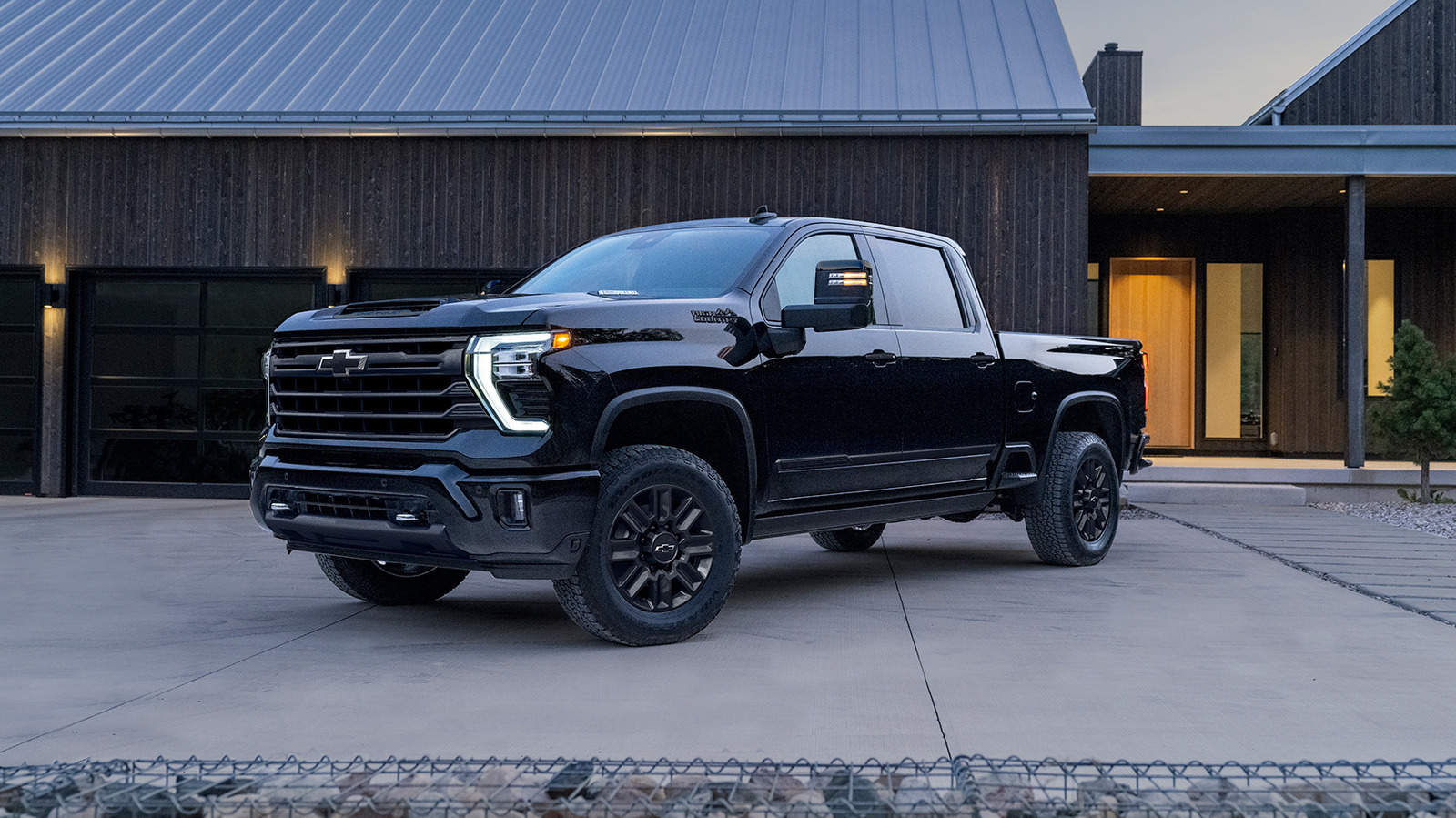
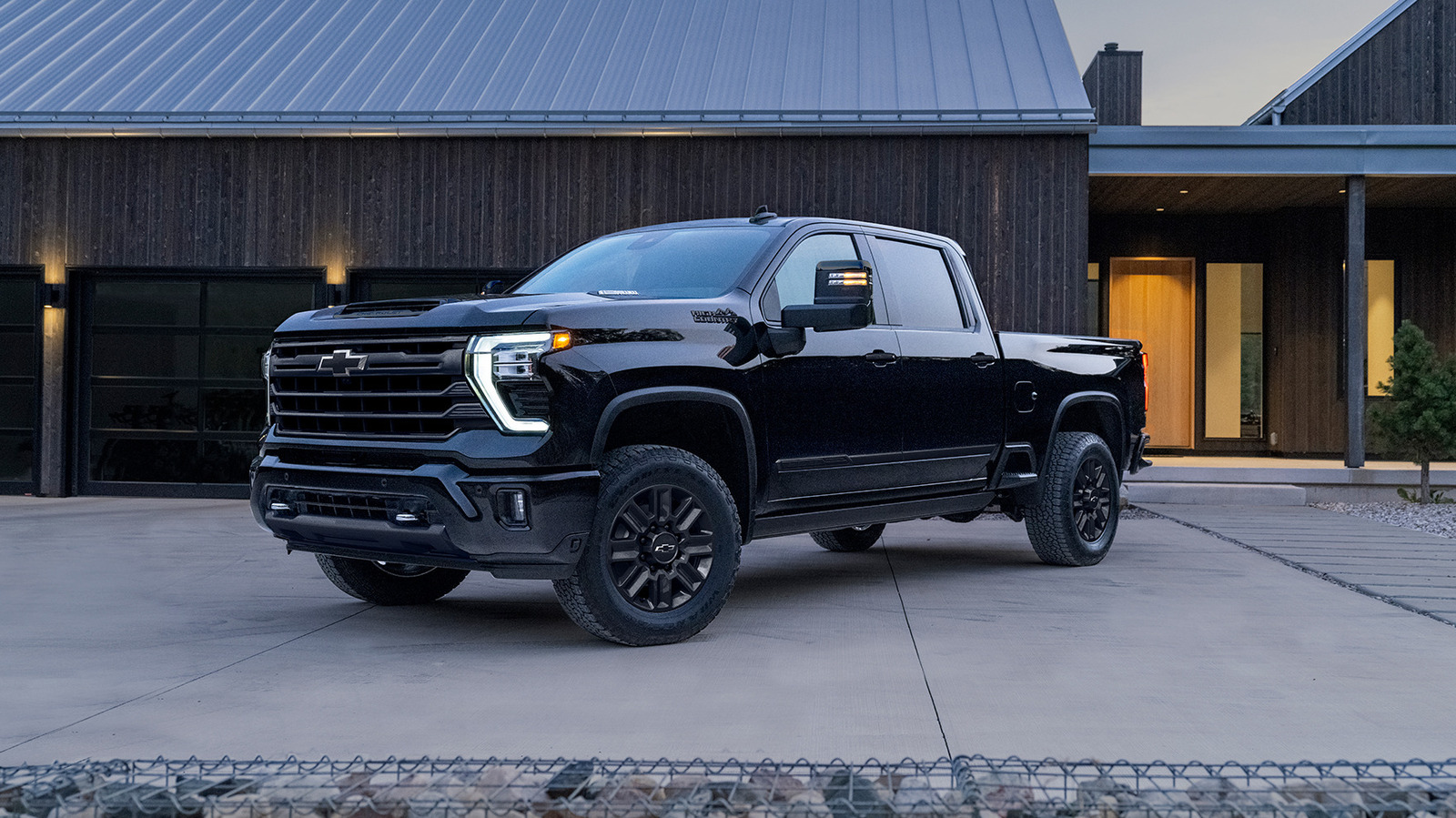
Ever since it entered the market in 1999, the Silverado has been the flagship truck for Chevrolet, constantly going toe-to-toe with the likes of the F-150. Priding itself on all-around practicality with plenty of comfort inside to match, the full-size Chevy has long offered one of the most versatile selections of trim levels, which is even more so the case for the newer models. Throughout the truck’s life, we’ve also had the choice between a few different engine types, which is perhaps the most crucial choice of all. Not only does it dictate how capable the truck can be, but in the Silverado’s case, some engines ring louder alarm bells than others.
Since the Silverado has been around for a while, and the newest models get plenty of praise for being reliable, but that wasn’t always the case. There are plenty of reports and data from owners to give us an idea of which engine options have the most issues, and despite the difference in construction, many fall victims to the same problems.
Advertisement
2014-2018 5.3L V8
For the 2014 model year, Chevrolet introduced a revitalized version of the Silverado, bringing nearly every aspect of the truck up to current standards. It sported a meaner look atop the new platform, but perhaps the biggest change was under the hood, with a selection of entirely new engines available. These were the first of the Ecotec3 engines, and while some, like the 4.7L V6, don’t have as many overall issues, the same can’t be said for the mid-spec 5.3L V6 engine. Unfortunately, the problems of the 5.3L remained relevant throughout the generation, until 2018. It’s certainly worth checking any 2014-2018 model years for these issues.
Advertisement
On CarComplaints.com, the 2014 model year comes out ahead for being the most troublesome. Electrical issues and build quality help out with that, but the engine itself is another major pain point. Specifically, the active fuel management system that was used in this engine is well-known for causing all sorts of issues. Owners report overly excessive fuel consumption, which can subsequently cause larger failures that’ll cost a hefty amount to fix. Another problem directly related to the AFM system is the lifters failing, which comes up plenty of times on the NHTSA website. Engine failure can easily follow. As this active fuel management system was used on every one of these engines from 2014 to 2018, you may want to avoid it, unless it’s been disabled permanently.
Advertisement
2019-2024 6.2L V8
Moving into the 2019 generation of Silverados, Chevrolet opted to keep the engines from prior models and giving them a few updates. A couple of new engines were also introduced, but looking at the reported issues for these Silverados, it’s the existing V8 that proves to be the most troublesome. In place of the AFM system found in the previous generation, a new iteration, the dynamic fuel management system, was designed to refine its performance. While it may have done so, it wasn’t issue-free. Far from it, in fact.
On top of the potential DFM issues that cause similar problems to those found in older engines, things got much worse for 6.2L-powered Silverados built between 2021 and 2024. A massive recall was put out for every Chevrolet that uses this L87 V8, not just the Silverado, due to crankshaft failures and faulty connecting rods. On the NHTSA website and CarComplaints.com, there’s no shortage of reports for this problem, often mentioning the notorious knocking leading to major engine failures if left untreated. A few specific instances also mention crank bearing issues for 6.2L Silverados built before the recall.
Advertisement
2007-2013 5.3L V8
While the engines introduced in the 2014 generation had their fair share of issues, it was the (previous) second generation and its problems that forced to GM try to fix the active fuel management. As a result, we think you should keep clear of the 5.3L engine that was used for the Silverado between 2007 and 2013. On the flip side, the smaller 4.3L V6 doesn’t have anywhere near as many complaints as the 5.3L, nor does the larger 6.0L, despite the latter also using the AFM system.
The majority of the submitted complaints for Silverados built between 2007 and 2013 revolve around excessive oil usage. Owners also reported cam and lifter failure soon after noticing the oil levels drop dramatically, as well as issues with the spark plugs. Similar to the ’14 to ’18 model years, this is an engine you should only consider if the AFM system has been deactivated, to save yourself from potential engine failures.
For those growing sick of Earth’s geopolitics, NASA is looking for volunteers to spend a year living and working in isolated conditions in preparation for a journey to some other celestial orb.
The US space agency is set to carry out a simulated deep space mission from no earlier than August 2027 to understand what might happen to its human lab rats during planned crewed missions to the Moon or Mars.
Advertisement
Johnson Space Center in Houston will be home to the willing participants who are set for a yearlong Moon and Mars Exploration Analog experience designed to help keep potential space travelers safe and mission-ready during future stays on the Red Planet or Earth’s natural satellite. The simulation could also inform plans for a sustained lunar presence through the agency’s Moon Base and future Artemis missions.
The “experience” will take place in two confined habitats. The NASA notice does not say whether there will be outside comms, but specifies physical and educational requirements, as well as a willingness to take part in a multi-day selection process and pass a psychological assessment.
“Candidates also should have a strong desire for unique, rewarding experiences, and interest in contributing to NASA’s work to prepare for extended stays on the lunar surface and the first crewed mission to Mars,” the notice says.
Given the state of affairs, there may well be a flood of applicants who feel skipping a year would be well worth the inevitable curbs on their freedoms.
Advertisement
Nonetheless, they may wonder about the world they will emerge to find when the experiment ends. Will WWE star Cody Rhodes be running for president, given the recent showcase on the White House lawn? Anything is possible in a world that shows an unnerving resemblance to Mike Judge’s 2006 Idiocracy.
Amazon Leo is ready to begin limited internet service later this year, but it’s far behind Starlink — several thousand satellites behind.
Amazon launched 29 more satellites into low-Earth orbit on Thursday, bringing its total to 396 and positioning the company to begin offering internet service to a relatively small customer base. Leo business and product VP Chris Weber posted on X that the company will be able “to support continuous service across initial latitudes.”
Still lots of work ahead — including raising all these new satellites to their assigned altitude — but we’ve completed enough launches for initial service this yr, and future missions just add coverage and capacity,” he added.
But Leo is starting a marathon that Starlink began in 2019 with its first launch. Trillionaire Elon Musk’s company has about 10,000 satellites in orbit and offers internet coverage to more than 150 countries. Starlink also either has or will have internet service on more than 200 airlines, including United Airlines, Air France, Alaska Airlines and British Airways.
In comparison Leo will only have limited service available to US customers later this year — coverage and price to be determined later — and is contracted by two airlines, JetBlue Airways in 2027 and Delta Air Lines in 2028. It will take several years and thousands more satellites launched for Leo to be able to offer widespread coverage in the US and elsewhere.
Of course, underestimate Jeff Bezos and his ability to compete and dominate at your peril.
Advertisement
Satellite internet is a big pie. Grand View Research estimates that the market will grow at a 15% rate from now until 2033, from $13.3 billion in 2026 to $35.7 billion by 2033.
Hans Geerdes, a strategist at R&D firm CableLabs, said Starlink and its rivals pose a major threat to fixed internet service providers such as Xfinity, Verizon Home Internet and T-Mobile 5G Home Internet. “I think every fixed broadband operator should be very worried,” Geerdes said earlier this year. “It’s basically the second coming of fixed wireless, but at much better economics and with very, very aggressive competitive behavior.”
Leo eyes faster satellite deployment
Thursday’s Leo launch was the last of eight with its Atlas V rocket, which had a 100% success rate. Leo will conduct future launches with its heavier Vulcan rocket, which can carry more satellites at a faster deployment rate.
Melissa Wuerl, director of launch systems for Leo, said in a statement that the company has “hundreds of flight-ready satellites standing by” at Cape Canaveral in Florida. The company reportedly has nearly 100 launches scheduled at a cost of $82 billion. The goal is to have 7,727 satellites up by 2035.
Advertisement
Leo and Starlink’s satellites operate roughly 350 to 500 miles above the Earth’s surface, in the region known as low earth orbit (hence Amazon’s name for them, taken from the acronym LEO). This lower altitude allows satellites to deliver faster internet speed and also keeps it more affordable to install satellites into orbit.
Amazon is also hoping to capture a large share of the direct-to-device internet market. Direct-to-device internet basically means that a person’s cell phone or other device connects directly to a satellite. Key to that strategy was the company’s $11.6 billion purchase in April of Globalstar, whose low-earth-orbit satellites provide coverage in over 120 countries.
Once upon a time, there was a bit of a fad for fingerprint authentication in laptops and desktop computers. It has long since faded, but [superdog] wanted just such a device for Linux and Mac machines. Thus, it was time to build one.
[superdog] designed the device, nicknamed immurok, as a tool for people who use external keyboards, and do lots of terminal work on Mac and Linux machines. Repeat password requests can interrupt one’s flow when hustling at the keys, so immurok was designed to ease this pain.
The device is based on a WCH CH592F microcontroller, which comes with Bluetooth connectivity out of the box. This allows immurok to connect wirelessly to the machine of your choice, advertising itself as a standard Bluetooth HID keyboard device. Fingerprint-wise, scanning is done with an R559S capacitive sensor, which verifies the match locally so there’s no transmitting biometric data anywhere. On the computer side, Linux is setup to use a CLI/TUI app plus PAM integration to handle authorization for system logins and sudo in the terminal. On the Mac platform, it’s used with a menu bar app, with PAM integration for admin prompts. There’s also a separate helper path for using it with the lock screen.
Advertisement
If you’re sick of entering your password all the time and wish unlocking your PC was more like unlocking your phone, this might be the project for you. We’ve seen similar projects before, too. If you’re whipping up fun gear for biometric auth, don’t hesitate to let us know on the tipsline.
Alibaba has reportedly banned employees from using Anthropic’s Claude Code and directed them to its own Qoder platform amid a growing dispute over features that can help identify China-linked users. Reuters reports: The ban is part of a deepening spat between the two companies after Anthropic accused Alibaba of illicitly extracting its Claude AI model capabilities — a dispute that highlights the frantic race between the U.S. and China to take the lead in artificial intelligence. […] Anthropic said last month that it had suffered a strike by Alibaba, which it described as a “distillation” effort that involves training a less capable model on the outputs of a stronger one. The distillation helps accelerate China’s ability to reach Anthropic’s advanced Mythos Preview capabilities, it said in a letter seen by Reuters that was sent to two U.S. senators.
Alibaba’s ban comes just days after developers said Claude Code contained mechanisms that inspected user environments, including timezone and proxy-related information, and inserted subtle markers into prompts sent to Anthropic’s servers. An Anthropic employee wrote on Tuesday on X that the feature was “an experiment we launched in March” intended to prevent account abuse by unauthorized resellers and protect against model distillation. The person who spoke to Reuters about Alibaba’s ban said that Anthropic’s restrictions targeting China were difficult to enforce on individual users who can deploy servers in the United States and make traffic appear as if it originated there. But companies were more aware of legal and compliance risks, the person added.
Predator. Omen. Legion, Asus. Imposing gaming PC sub-brands signal the power that elevates them over web-and-Word workhorses. But even before AI model training became the new killer app, gaming wasn’t the only application where performance, even GPU performance, commanded a premium.
Workstations such as Lenovo’s ThinkPad P series and HP’s Z series, optimized for applications like advanced data science, computer-aided design and 3D model rendering, have long boasted specs similar to leading gaming PCs. However, they ship in more conservative exteriors, offer greater durability, and traverse different distribution channels en route to the desks of enterprise users.
But there’s a third type of power user that PC makers have long courted: so-called “creatives” who work in a range of media from video to print.
Advertisement
Latest Videos From
These pros also need power, but their needs often fall between the gaming and workstation markets; this could be driven either by work setting and structure (corporate vs. independent) or kinds of tools and media needed.
While some PC makers have left these buyers to choose the path that they think best suits them, others offer—or have at least tried—targeting certain sub-brands or configurations more explicitly.
Pros and Configurations
Acer was early to recognize the “creator” market potential, launching a line in 2019 called ConceptD. It featured powerful configurations that included Intel Xeon CPUs and Nvidia Quadro GPUs and bold yet organic-looking industrial designs, including a “pull-forward” convertible laptop (like the Surface Laptop Studio) line called Ezel.
Advertisement
It also included display products, including a monitor and a mixed reality headset. While the company shifted away from the sub-brand, Acer America’s associate director of product marketing Eric Ackerson says that ConceptD helped validate the market segment and served as a testing ground to understand the needs of creative pros, which span a broad spectrum.
Sign up to the TechRadar Pro newsletter to get all the top news, opinion, features and guidance your business needs to succeed!
The Acer ConceptD product line included a “push-forward” forerunner to the Surface Laptop Studio. (Image credit: Acer)
Today, he notes, Acer sees the key to reaching those customers more in terms of configurations than branding. “There are meaningful crossovers between [the gaming and creative] categories,” he notes. “The needs are similar, but the workflows are different.” In general, creatives tend to favor more subdued PC designs, an aesthetic that has much in common with what Ackerson calls “executive gaming,”
In contrast, in keeping with the high degree of specialization within its sprawling portfolio, Asus has leaned into its ProArt sub-brand, which targets creative pros, although he agrees on customer aesthetic preferences.
Advertisement
Sascha Krohn, Asus global director of technical marketing,, says that creatives want devices that are more minimalistic and low-profile. “We want the design to be simple and calm so you don’t get distracted by it,” he says. He cites the company’s ProArt P16, which features hardware such as SD Express card slots and touch dials. It evolved from a creator-focused edition of the company’s gaming-focused Zephyrus G7 notebook.
One of the hallmarks of the ProArt line, which spans PCs and monitors, has been its displays, where gamer and creative pro priorities differ. Gamers place a higher value on brightness and, of course, refresh rates. For creatives, color accuracy and matte finishes matter more. However, the company sees an opportunity to satisfy crossover users as OLED displays get brighter. The ProArt P16 features a 120Hz tandem OLED display with 1600 nits peak HDR.
The ASUS Dialpad control is one of several ways, including bundled software, that the company’s ProArt line caters to creatives. (Image credit: ASUS)
Advertisement
Big Things from Small Packages
There are a lot of correlations and similarities [between] a gaming PC and one designed for a creatorWallace Santos, CEO Maingear
The rival PC makers agree also that there is rising interest in small form factor desktops for these customers. ASUS has long championed tiny desktops. After being a close partner in Intel’s New Unit of Computing initiative small form factor PCs, Asus adopted the product line when Intel abandoned it in 2023, releasing new models in both standard and gaming variants. Acer’s Ackerson notes an upswing in interest in its small desktop platform.
Its NUC platforms include Revo, a brand the company had targeted toward entertainment and multimedia, and the GN100 AI Mini Workstation that uses Nvidia’s DGX Spark platform. At Computex, it announced a forthcoming Veriton small-form-factor desktop that will use the new RTX Spark architecture from MediaTek and Nvidia.
Wallace Santos, who founded Maingear more than two decades ago when he was 18 and serves as CEO, has also seen crossover into the creator market. “There are a lot of correlations and similarities [between] a gaming PC and one designed for a creator,” he says. Both need a high-performance GPU, lots of memory, and fast storage.” But creators “tend to want sleeker [PCs with] less flash.” Santos’ team took lack of flash to an extreme when it released two limited-edition high-performance gaming PCs in beige, ‘90s-style cases.
The designs sold out. But the company has shown restraint even in its more traditional gamer products. “When we do RGB, it’s cleanly done. Not rainbow vomit,” he says. Santos is skeptical that small form factor PCs will expand their audience among gamers, noting that huge GPUs, expensive SFF power supplies, and intense cooling demands quickly make mid-towers a more practical choice.
Advertisement
Less Elite, More Discrete
Professional media editing mainstays Photoshop, Premiere, and Pro Tools all launched between 1989 and 1991 (although they came to Windows a bit later). They create digital workspaces to more flexibly and efficiently support workflows that artists and editors used analog, physical tools for previously.
While 3D horsepower has been useful for some creative applications such as Adobe After Effects, system memory has been a more important variable in determining system performance for many of these tasks. Generative AI has changed that, however.
Generating images has become increasingly trivial and reliable, with improvements in conversational editing that eluded leading models just last year. And music and song creation is now flowing downstream from tools like Suno to being baked into Gemini.
Advertisement
While generating video, particularly longer-form video, may still have some rough edges, though, the short-lived Sora democratized shorter clips with Hollywood-quality cinematics and special effects. And Google recently released Omni Flash, a successor to its leading Veo video generation model that includes features for ensuring better consistency in characters and other elements over longer clips.
Introducing LTX Desktop: An Open Source Video Editor Powered by LTX-2.3 – YouTube
Now, instead of just importing video into an editing tool such as daVinci Resolve, video creators can use tools such as Google Flow, which allows them to use prompts to have AI create video, modify it, and keep it on track as elements tend to lose consistency from clip to clip. “The interface becomes less a toolbox and more a layer that translates intent into actions. You don’t need to know the steps. You just say where you want to go,” says Acer’s Ackerson.
Local video generation models like LTX and Wan can create high-quality videos, but require a GPU, preferably with at least 12 GB of VRAM. The full Wan model, which includes 14 billion parameters, optimally needs 32 GB or more of RAM and more than 50 GB of SSD space.
Even with today’s leading GPUs, best practices dictate using a workflow UI such as Comfy for keeping things on track and generating lower-resolution video locally before upscaling it using post-processing tools.
However, these compromises can seem like small sacrifices given the savings versus cloud-based options. And successive PC generations will only close the gap. “AI has removed the barriers,” says Maingear’s Santos. “The toolset is no longer the restriction in today’s creative workflow. It’s still expensive, but it’s achievable now.”
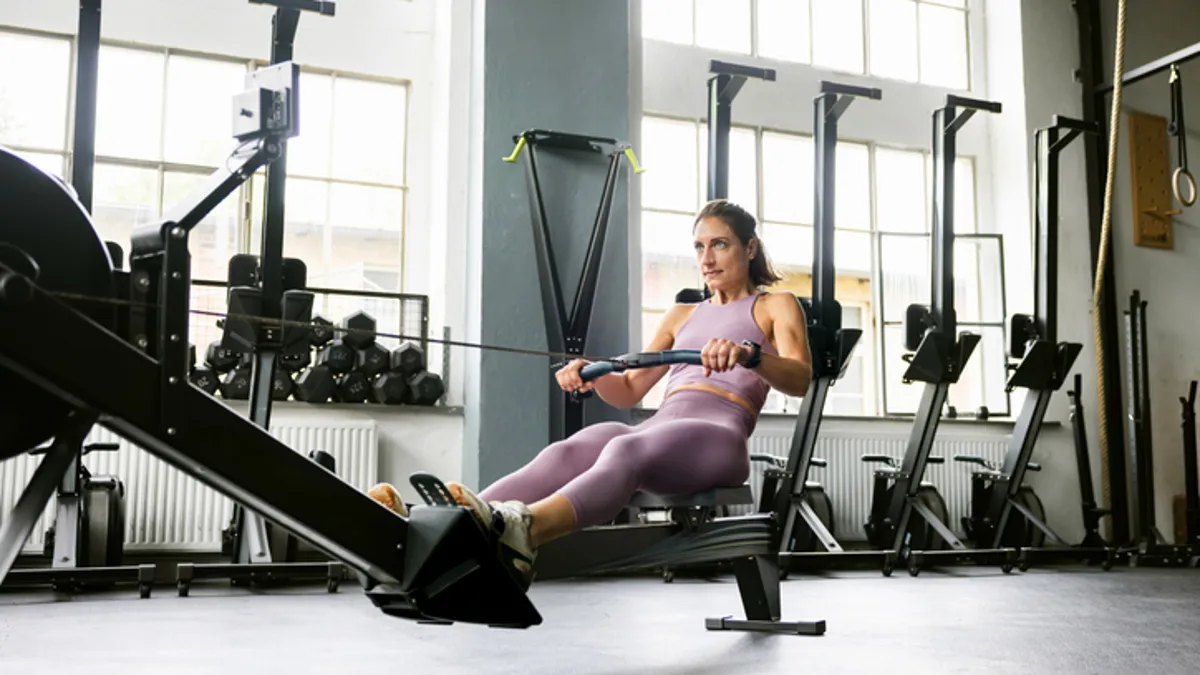
Rowing machines are a great way to get a low-impact cardio workout in. However, it’s easy to use this machine improperly, which is why it’s helpful to know what the right technique looks like. Whether you’re new to rowing machines or have little experience with them, it doesn’t hurt to learn how to row properly. It may take some practice, but once you nail the technique, you’ll understand why this is one of the best ways to do cardio in a short period.
We spoke with a personal trainer to understand the common mistakes people make with a rowing machine and how to fix them with simple cues.
1. You’re mainly using your arms instead of your legs
Advertisement
Rowing is mainly a leg exercise and shouldn’t be dominated by the arms.
Anatoliy Cherkas/Shutterstock
One of the mistakes most people make when using a rowing machine is focusing too much on their arms rather than their legs.
“Most people sit down and immediately pull with their biceps like it’s a cable row,” says Gerard Washack, personal trainer and owner of Strong Republic Personal Training. The problem with this approach is that rowing mainly requires leg strength.
“About 60% of the power should come from your legs driving against the foot plate, 30% from the hips and back opening up and only 10% from the arms pulling the handle in at the very end,” Washack explains.
Advertisement
To help people improve their rowing technique, Washack says he changes how the handle is held: “I have people row with their hands off the handle and tuck the handle into your hip crease and just push with legs, then hips, then arms in that order.”
2. You’re not postured correctly
Pay attention to your posture during your rowing setup.
18042011/Shutterstock
Poor posture is another mistake rowing machine users tend to make. If you have rounded shoulders and a hunched back, you’re not getting the most out of your rowing.
Advertisement
“The spine has to stay long and the chest open during the whole move,” says Washack. He cues clients by telling them to imagine they’re sitting on a barstool with their chest up.
Proper rowing should look long and smooth, with the legs pushing first. Then, the back opens, and the arms pull last. On the way back, the arms go away from the body first, the body hinges forward and then the knees bend last. By following these cues, it should feel like your legs are doing most of the work.
3. The damper is on the wrong setting
Focus less on the damper number and more on your effort.
Advertisement
Microgen/Shutterstock
The damper, the dial found on the side of a rowing machine, controls how much air flows into the fan. This is what you use to adjust the resistance of the rowing machine, and it influences how heavy the stroke feels.
“Beginners usually move it to 10 because they think harder is better,” Washack explains, adding, “The damper isn’t a resistance setting like a weight stack; instead, it’s more like a gear on a bike.” Depending on your fitness level, he recommends the following:
Beginners should keep the damper settings between three and five.
Intermediate users who have their form down can set the damper between four and six.
Advanced rowers who focus on interval training or power can aim for seven or eight, and sometimes 10, on the damper.
Ultimately, though, it’s more about the effort you put into the row. “Elite competitive rowers usually train at four or five,” Washack says, but they’re focusing on their output versus the number on the damper.
4. Your rower lacks maintenance
Be sure to keep your rowing machine clean so it lasts a long time.
Advertisement
PeopleImages/Shutterstock
The damper, the dial found on the side of a rowing machine, controls how much air flows into the fan. This is what you use to adjust the resistance of the rowing machine, and it influences how heavy the stroke feels. Although a rowing machine doesn’t require as much maintenance as other types of fitness equipment, you should still do your best to keep it clean and replace any worn-down parts.
Washack recommends inspecting your rowing machine every month. “Inspect the chain or belt for wear, the seat rollers for dirt and the foot straps for fraying.” You should wipe down the seat and handle after every use, as sweat that falls onto the seat track can wear down the machine.
Depending on the type of rower you own, you may need to focus on different parts for maintenance:
Air rowers: If you own an air rower like the Concept2, these are the easiest rowing machines to take care of. The chain will need occasional oiling, and the flywheel cage (the enclosure where the fan sits) needs to be kept dust-free.
Advertisement
Magnetic rowers: These are rowers that have the most electronic parts and mechanical complexity — similar to some of CNET’s favorite rowing machine picks. “The magnetic resistance system can wear or shift over time, and the cables connecting the resistance to the console can fray,” Washack explains. “I recommend checking those connections every couple of months.”
5. You’re using the rower for the wrong workouts
Work smarter with a rowing machine by experimenting with intervals.
SeventyFour/Shutterstock
Unlike a treadmill or an exercise bike, where you can do long, steady workouts, a rowing machine is best used in short bursts.
Advertisement
Washack likes prescribing intervals to clients who use the rowing machine. “Programs like four rounds of 500 meters with two minutes rest between are my go-to,” he says. “Another day, I do a longer, steady aerobic piece, 30 to 45 minutes at a conversational pace where your legs are working but you could still talk.”
For clients looking to improve their power and speed, Washack focuses on eight rounds of 250 meters with a minute rest.
6. It’s your primary workout
Make sure you have a well-rounded workout routine that includes rowing as your preferred form of cardio.
Advertisement
Srdjan Randjelovic/Shutterstock
Unlike a treadmill or an exercise bike, where you can do long, steady workouts, a rowing machine is best used in short bursts. While rowing machines are great cardio machines, they shouldn’t be your main form of exercise. You should be following a strength-training program in addition to your rowing workouts.
“Combine rowing with two days of traditional strength training, and you’ve got a complete program,” recommends Washack.
Overall, finding a form of cardio you enjoy is important, since it will keep you consistent, and including strength training and mobility exercises will help you remain fit and strong.
The American automotive industry has changed immensely over the last decade. Not only have we seen a shift away from sedans and small cars toward trucks and SUVs, but American automakers also embarked on an ambitious (and increasingly fruitless) move toward electric vehicles, which peaked in the early 2020s.
Ford has been part of that shift; it phased out some of its most established and once-beloved global car nameplates, filling that space in its lineup with additional truck and SUV models. The company did this while embarking on a seemingly unsuccessful pivot towards EVs, one that it will spend $19.5 billion to restructure.
Ford’s current lineup includes some impressive truck and SUV models like the Bronco, F-150 Raptor, and the new Maverick, but for driving enthusiasts and performance car fans, looking back at mid-2010s Ford and the excitement around it feels like a glimpse into another era. From inexpensive hot hatchbacks to race-winning supercars, we think 2017 was Ford at its modern peak. Below are five memorable Ford models that show just how great this year was — and also how much the company has changed since then.
Advertisement
Mustang Shelby GT350
JoshBryan/Shutterstock
In 2017, the fully redesigned S550-generation Ford Mustang had been on sale for two model years with a variety of powerplant options, and the GT350 represented the top end of the lineup. Taking its name from the legendary Shelby GT350 Mustangs of the 1960s, the GT350 and GT350R took the Mustang’s platform and elevated both its performance and its mechanical excitement to new levels.
Ford had already been building high-horsepower, supercharged Shelby Mustang variants for a while, but the GT350, which debuted for the 2016 model year, went in a totally different direction. It had no supercharger, and its 5.2-liter V8 was quite small compared to the competition — but that’s exactly what made the GT350 so special.
Advertisement
The GT350’s naturally aspirated Voodoo V8 was unlike anything that came before it. It made 526 hp and used a flat-plane crankshaft, giving it a redline of over 8,000 rpm. It sounded as much like a Ferrari as it did your typical V8 Mustang, and, unlike newer performance variants of the Mustang, was only available with a six-speed manual. Subsequent Mustang models, including the supercharged Shelby GT500, would eclipse the GT350’s performance, but that hasn’t made the earlier, naturally aspirated models any less impressive. Today, when we look back on Ford of the mid-2010s, the Voodoo-powered GT350 stands out.
Advertisement
Ford Fiesta ST
Zoran_photo/Getty Images
One of the great things about Ford in the 2010s was that it didn’t limit its performance vehicles to its higher-priced models. Look no further than the Ford Fiesta ST, which was sold in the United States between the 2014 and 2019 model years. The Fiesta ST wasn’t the fastest ST model that Ford ever sold, but whatever it lacked in horsepower or raw lap times, it more than made up for with its fun factor.
Its small size, punchy turbocharged engine, and manual gearbox earned the Fiesta ST praise from motoring journalists and drivers alike — both in the U.S. and globally. For the 2017 model year, the Fiesta ST had an affordable base price of just over $22,000, which, adjusted for inflation, is still less than $30,000. Unfortunately for hot hatchback fans, Ford dropped the Fiesta lineup, including the ST, when it cut its small car offerings in the late 2010s.
Today, with all cars — and especially enthusiast cars — getting more and more expensive, the cheap Fiesta ST is a hero from a bygone era. Despite being one of the cheapest performance cars of its time, the Fiesta ST is among the mid-2010s Ford models most likely to become a classic. In fact, it may already be one.
Advertisement
Ford Focus RS
Brandon Woyshnis/Getty Images
There have been many amazing hot hatchbacks over the years, but the North American market was often deprived of some of the greatest — except for one. In 2017, North American Ford dealers had not one, not two, but three different hot hatches for buyers to choose from. At the entry level was the subcompact Fiesta ST, followed by the larger and more powerful Focus ST — both front-wheel drive models. Then there was the ultra-hot Ford Focus RS, which arrived in America for the 2016 model year.
The Focus RS used a 2.3-liter turbocharged EcoBoost engine rated at 350 hp and 350 lb-ft of torque and, unlike its hot hatch siblings, sent its power to all four wheels. The Focus RS’ all-wheel-drive system was of the torque-vectoring variety, and the car even included a drift mode for tire-smoking oversteer shenanigans. The Focus RS was a fast, manic, rally-bred monster machine that was still practical enough to be a daily driver. As with the rest of Ford’s late-2010s hot hatchbacks, the Ken Block factor also helped turn the Focus RS into a generational icon.
While it’s not completely impossible that Ford would ever build a car like this again, we certainly can’t see the company building another gasoline-powered hot hatchback anytime soon. As of 2026, the closest thing you can get to a Focus RS in the Ford lineup would be the all-electric Mustang Mach-E Rally.
Advertisement
Ford Fusion Sport
Scott Olson/Getty Images
Aside from Ford’s 2017 lineup of brilliant muscle cars and turbocharged hot hatchbacks, the company also sold one of the greatest sleeper sedans of the modern era. That car was the Ford Fusion Sport, which was introduced for the 2017 model year.
While many modern cars use the “Sport” branding lightly, the Fusion Sport introduced substantial mechanical upgrades to Ford’s popular midsize sedan. The highlights were a 325-hp twin-turbocharged 2.7-liter V6 engine, with an all-wheel-drive system to put that power down. To most eyes, it looked like any other Fusion model, but the Fusion Sport hit 60 mph in just over five seconds and ran the quarter-mile in the high 13s in Car and Driver’s hands. The Fusion Sport wasn’t just about straight-line speed, though; Ford also added adaptive dampers to improve its cornering.
While it may not have been as hard-edged or track-focused as Ford’s other performance offerings of the era, the Fusion Sport’s underappreciated status as a sleeper performance sedan is just another example of how deep Ford’s car lineup was at this time. Ford discontinued the Fusion Sport after the 2019 model year, with the rest of the Ford Fusion lineup being discontinued shortly after.
Advertisement
Ford GT
VanderWolf Images/Shutterstock
Having a stout lineup of affordable and exciting performance cars earned Ford a lot of praise in the mid-2010s, but the car that sat atop the brand’s lineup, the Ford GT, will not be forgotten anytime soon. Though it left behind the supercharged V8 of its mid-2000s predecessor in favor of a twin-turbocharged V6, the 2010s Ford GT was, and still is, one of the fastest and most exotic production vehicles that Ford has ever built.
The 2010s Ford GT wasn’t just a car for wealthy collectors or track-day enthusiasts, either. It had genuine motorsport chops, and the race version of the GT made history by winning the 24 Hours of Le Mans in 2016. Not surprisingly, despite being less than 10 years old, Ford GTs from this era already sell for significantly more than they cost when new, and we don’t see those prices going down anytime soon.
Advertisement
Ford does, in a sense, have a modern equivalent to the GT in the form of the Mustang GTD, Ford’s 2020s supercar. Despite the GTD’s exotic performance hardware, though, it still uses both the name and general bones of the higher-volume Mustang. Meanwhile, the Ford GT, which ended production in 2022, was a bespoke halo car with racing pedigree to match.
Advertisement
Our methodology
Eric Thayer/Getty Images
With a company that’s been around as long as Ford, we could have chosen any number of years to discuss here. While Ford may have had better-selling or more influential vehicles in other years, we chose 2017 for its strong and diverse lineup of enthusiast offerings that showcased the company’s engineering prowess in a wide variety of ways. Additionally, unlike many of Ford’s earlier years, the excitement of the company’s mid-2010s lineup is recent enough to be vividly remembered by today’s enthusiasts, instead of just being something to be read about in history books and retrospectives.
The Silverado EV offers 410 miles of range and strong reviews but sold only 14,000 units last year as price and towing anxiety keep buyers away.
General Motors sold roughly 14,000 Chevrolet Silverado EVs in the United States and Canada last year, according to GM Authority sales data. The petrol-powered Silverado moves more than ten times that volume in a single quarter. That gap, between what reviewers call one of the best electric trucks on the market and what buyers are actually willing to purchase, captures the central problem facing the American EV truck segment.
The numbers have only gotten worse. Silverado EV sales fell 41 percent year over year in the first quarter of 2026, and GM’s broader EV demand continued to decline into the second quarter. The automaker indefinitely suspended development of its next-generation full-size electric truck and SUV programme earlier this year, and took roughly eight billion dollars in EV-related charges during 2025, including writedowns tied to scrapped production plans and cancelled battery contracts.
On paper, the Silverado EV should be a compelling product. The LT Extended Range trim delivers an estimated 410 miles on a full charge from a 205 kilowatt-hour battery pack, the largest in any production pickup. It comes with GM’s Super Cruise hands-free driving system, a Google-powered infotainment setup, and a list price of roughly $71,000, only about $5,000 above the average transaction price for a full-size pickup, according to CEIC data cited by TechCrunch.
Advertisement
The 💜 of EU tech
The latest rumblings from the EU tech scene, a story from our wise ol’ founder Boris, and some questionable AI art. It’s free, every week, in your inbox. Sign up now!
The problem is what happens when the truck works like a truck. Towing cuts range by roughly 60 percent, which means a fully loaded Silverado EV might manage around 160 miles before needing a charger. According to Strategic Vision survey data, 75 percent of truck owners tow at most once a year, so for most buyers the penalty is tolerable, but for those who haul regularly it remains a dealbreaker.
Price is the other barrier. The $71,000 LT Extended Range is close to the petrol average, but GM also offers an LT Max Range that costs roughly $20,000 more and adds just 68 miles. At that level, the Silverado EV competes with luxury SUVs rather than work trucks, and the federal tax credit that once softened the blow has expired.
Advertisement
GM is betting that its new lithium-manganese-rich battery chemistry will cut at least $6,000 from battery costs while preserving most of the range, but LMR cells are not expected in trucks until 2028. The Ford F-150 Lightning faces the same cost and range dynamic, and Ram’s electric truck has been delayed repeatedly. The American pickup market generates hundreds of billions of dollars in revenue, but the electric versions remain a rounding error in the sales column, waiting for the cost curve to catch up with the engineering.
Dream, the Israeli cybersecurity startup co-founded by Pegasus creator Shalev Hulio, is expanding into Latin America. The company is targeting Trump-aligned governments in the region where cyber attacks are growing fastest and defences are weakest.
Hulio founded Dream in January 2023, months after stepping down as NSO’s chief executive. The company describes itself as purely defensive, providing governments with AI-powered platforms to detect threats and patch vulnerabilities rather than the offensive surveillance tools that made Pegasus infamous.
The latest rumblings from the EU tech scene, a story from our wise ol’ founder Boris, and some questionable AI art. It’s free, every week, in your inbox. Sign up now!
Dream has more than 300 employees across offices in Tel Aviv, Vienna, and Abu Dhabi, with a Munich office planned. The company has built a sovereign data centre near Modiin, Israel, where it trains proprietary language models without relying on public cloud providers.
Why Latin America
Latin America is the world’s fastest-growing market for cyber attacks, with incidents rising roughly 25% annually according to industry estimates. A World Bank assessment scored the region’s countries an average of 10.2 out of 20 on cybersecurity preparedness, though the precise methodology and vintage of that figure could not be independently verified.
Costa Rica demonstrated the stakes in 2022. The Conti ransomware group hit roughly 30 government institutions, demanded $10 million in ransom, and forced President Rodrigo Chaves to declare a national emergency on 8 May, making Costa Rica the first country to take that step over a cyber attack.
Advertisement
Weeks later, the Hive group struck the country’s healthcare system, forcing hospitals to revert to pen and paper. The twin attacks crippled public services for months and showed that a mid-sized Latin American state could be paralysed by criminal hackers operating from another continent.
The political alignment
Dream’s push into the region coincides with a rightward shift that has brought several Israel-friendly leaders to power. Argentina’s Javier Milei has pitched his country as an AI hub and pledged to move its embassy to Jerusalem, aligning Buenos Aires closely with both Washington and Tel Aviv.
In Colombia, Abelardo De la Espriella won the presidential runoff on 21 June with 49.66% of the vote. He has pledged to restore diplomatic relations with Israel that his predecessor, Gustavo Petro, suspended in 2024 over the war in Gaza.
The alignment matters because Dream’s sales depend on government-to-government trust. Selling sovereign AI platforms to national security agencies requires a level of political intimacy that commercial cybersecurity contracts do not, and the company’s Israeli identity is an asset in capitals that have moved closer to Jerusalem.
Advertisement
The Pegasus question
Dream’s expansion into a region where surveillance technology has been exported to governments with poor human-rights records invites scrutiny. NSO Group was blacklisted by the US Commerce Department in November 2021 after Pegasus was found on the phones of journalists, dissidents, and at least one European Parliament member investigating spyware abuse.
Hulio has distanced himself from that legacy, resigning as NSO’s chief executive in August 2022 amid a corporate restructuring. Dream’s investors, led by Bicycle Capital and Group 11, have accepted his argument that defensive cybersecurity is a fundamentally different business from offensive surveillance.
Whether Latin American civil-society groups will draw the same distinction remains an open question. The region has a documented history of governments using surveillance tools against domestic opponents, and Dream’s founder built the most powerful one ever made.
The business case
Dream’s sales have reportedly exceeded $300 million, more than doubling over the past two years. The sovereign defence AI market is attracting new entrants, with startups like Rilian raising funding to deploy AI into air-gapped government environments, but Dream’s scale and government relationships give it a significant head start.
Advertisement
The company operates across three continents and counts sovereign clients in the Middle East among its largest accounts, though it does not publicly name its government customers. Latin America would add a fourth continent and a customer base whose cybersecurity budgets are growing from a very low base.
For Dream, the commercial logic is clear: sell to governments that need the technology, can afford it, and are politically willing to buy from an Israeli firm. For the region, the question is whether the man who built the world’s most notorious surveillance tool can be trusted to play defence.
The change in policy will create new rights for employees looking to stay in their careers for longer, as well as bring in new legal and operational obligations for employers.
This past week (commencing 29 June), the Department of Enterprise, Tourism and Employment brought into effect the Employment (Contractual Retirement Ages) Act 2025, which introduces significant new rights for employees in Ireland and also places new legal restrictions and responsibilities on employers.
The new rules mean that eligible employees, who wish to do so, can now choose to remain employed at their place of work for a period of time beyond their contractual retirement age, where that age is below the State Pension age of 66.
The eligible employee can retire as scheduled if that is their choice and if they elect to stay on, they must formally notify their employer of their plans at least three to six months in advance.
Advertisement
The employer will be expected to consider any notification made under the new act and if they intend to compel retirement at a certain age, there are criteria to be met – namely, they have to respond to a notification within one month, clearly establish the basis for the decision and ensure that it is in line with the higher legal threshold set out in the act.
In support of the new act, the Minister of State for Small Businesses, Retail and Employment Alan Dillon, TD has signed into law an updated Code of Practice on Longer Working, which was developed by the Workplace Relations Commission and is now also in full effect.
Successful complaints around the new legislation brought by an employee through the Workplace Relations Commission could be awarded up to two years’ remuneration or €40,000, depending on which figure is higher.
On the employer’s side, a failure to provide a reasonable response to retirement notifications may constitute a criminal offence and is punishable by a Class A fine of up to €5,000 or imprisonment for up to 12 months.
Advertisement
Golden years
Commenting on the recent change in policy, Ruadhri McGarry, an associate director at IT Search and a DevOps, cloud and cybersecurity specialist recruiter, explained that the right to request a later retirement date will also give older employees additional reassurances.
McGarry told SiliconRepublic.com, “It removes two specific worries. Financially, they can work at full pay for another year and continue pension contributions accordingly, and professionally, not everyone wants to retire – and so many people within the STEM community are deeply passionate about their work.”
It is an opportunity that he believes many people operating in the STEM space are going to take advantage of, particularly as he has noticed an increase in retirement-age professionals extending their tenure as they are still more than capable of producing exceptional work. In many cases they might pivot to consulting work to supplement income, but more often, in his opinion, it is about personal happiness and not feeling that they need to retire based on a calendar.
He said, “We all need a sense of purpose and if any professional can contribute their decades of experience and drive, there is no real reason for them to stop.”
Advertisement
Turning challenge into opportunity
In the wake of the new rules, there may also be an opportunity for organisations to further capitalise on the expertise of employees reaching retirement age.
McGarry said, “From a big-picture perspective, that is an entire additional year, or more, that can add to the industrial body of knowledge.”
He added: “I fully expect employers to use this legislation and subsequent to maximise knowledge transfer across the generations, utilising senior employees to bring new focus to mentoring, project leadership and expertise retention.
“Any legislative change that offers more choice to employees is always welcome, and those that choose to extend their careers for whatever reason will no doubt add a small but significant layer of experience to an entire sector.”
Advertisement
Addressing concerns that extending the tenure of older employees may limit opportunities for early-career starters or younger workers, McGarry is of the opinion that organisations will be clever in how they spend the remaining time with the established workforce.
“I expect that when this change in legislation kicks in, firms will utilise that year to focus on knowledge transfer from technical staff approaching this new retirement date, giving a new focus for their final year,” he said.
“The limiting of opportunities for career starters would be minimal and more than offset by having additional time to learn from those at the end of their professional journey.”
Don’t miss out on the knowledge you need to succeed. Sign up for the Daily Brief, Silicon Republic’s digest of need-to-know sci-tech news.



























































You must be logged in to post a comment Login