



Connect with us
DAPA Banner
DAPA Coin
DAPA
COIN PAYMENT ASSET
PRIVACY · BLOCKDAG · HOMOMORPHIC ENCRYPTION · RUST
ElGamal Encrypted MINE DAPA
🚫 GENESIS SOLD OUT
DAPAPAY COMING

Tech

7 Gas Cars That Get More MPG That The Honda Accord

Published

on


It’s easy to see why the Honda Accord is one of Honda’s most successful cars, and among the bestselling midsize sedans of last year. It’s consistently at or near the top of recommendation lists from big authorities like Car and Driver and Edmunds, and yes, even we’re fans of it. The gas versions of the car are also fairly affordable, ranging up to roughly $32,000 before the hybrid powertrains take over in the lineup. The Accord is quiet, smooth, and decently fun to drive as well, making it a good all-rounder for most people. 

However, Honda isn’t making as many gas-only models these days. In 2026, the gas model only has two trim levels, and they’re the two lowest trims. The hybrid powertrain has largely taken over the lineup, much like what Toyota did with the Camry. That means if you want a gas car, there’s a real chance you might have to branch out from the Accord. 

Advertisement

Since fuel prices are what they are, one of the most important metrics for shoppers is no doubt fuel economy. So, if you’re looking for a car to cross-shop with the Accord, and you’re wanting to keep fuel economy in mind, then you’ve come to the right place. The list below includes every sedan we could find that meets or exceeds the Honda Accord’s 32 mpg (29 mpg city and 37 mpg highway) in fuel economy. It is worth nothing that all of these pale in comparison to the hybrid leaders in fuel economy.

Advertisement

Three other cars at 32 mpg

Three other gas-only cars match the Accord’s 32 mpg combined. They include the Mini Cooper, the Acura Integra, and the Hyundai Sonata, which only gets 32 mpg on its base trim (all other trims are in the high 20 mpg range). This is already a list of interesting prospects. The base trim of the Hyundai Sonata costs about as much as the base Honda Accord, and given that it has the same fuel efficiency, that gives you a direct one-to-one comparison since the two are fairly similar in terms of virtually all of their specs. 

The Acura Integra is also an interesting option because it shares the same platform as the Honda Civic, which means the two cars are very similar. It costs about the same as the hybrid models of the Accord, ranging up to $40,000 for a fully loaded trim. It loses the fight in terms of size but gains it back by being slightly faster than the Accord. It also comes with a manual transmission, which is becoming increasingly rare

Of the three, the Mini Cooper seems like the most entertaining option. It comes with an optional 201-hp engine that scoots it to 60 mph a whole second and a half faster than the gas-only Accord, at 5.8 seconds, while still getting the same fuel economy. Mini Coopers are fun to drive and are surprisingly spacious for how small they are. 

Advertisement

Kia K4 (33 mpg)

The K4 is the smallest gas-only car in Kia’s lineup, replacing the Kia Forte in 2025. It’s also one of Kia’s most affordable vehicles — the base trim goes for $23,000 and the top-of-the-line trim costs a hair over $30,000. That means you can get a maxed-out Kia K4 for the price of a Honda Accord SE, provided you don’t mind the fact that the K4 is smaller overall. 

The Kia K4 gets 30 mpg in the city, 40 mpg on the highway, which adds up to 33 mpg combined, just barely edging out the Accord. You only get that fuel economy with the base engine, however, which is notably slower and a little sluggish in general, according to reviews. The more exciting drivetrain is a 1.6-liter turbo-four that outputs 190 hp, and that’s a few tenths of a second faster than the Accord to 60 mph but reduces fuel economy to 26 mph in the city, 36 mph on the highway, and 29 mpg combined. 

Advertisement

This will be a running theme in this article. Most cars that are more fuel efficient tend to be smaller, slower, and more sluggish, and the Kia K4 is the first of several such cars. That’s part of what makes the Accord so compelling is that it’s reasonably quick and reasonably fuel efficient at the same time, and you usually have to give up one to get more of the other. 

Advertisement

Nissan Sentra (34 mpg)

The Nissan Sentra has been around for decades, and it remains a good budget value for car shoppers. Nissan fully redesigned the car for the 2026 model year, kicking off the ninth generation of the Sentra. Like most other small cars, it costs significantly less than most other models, starting at $23,000 for the base S trim and ranging up to $29,000 for the SL trim. That means you can get a fully loaded SL for around the same price as a base model Honda Accord. 

The Sentra nets 31 mpg in the city, 39 mpg on the highway, and 34 mpg combined. It does this by pairing a 149-hp naturally aspirated four-cylinder engine to a CVT transmission. CVT transmissions have their own set of woes, but fuel efficiency isn’t one of them, and that is on full display here. The downside is that the Sentra’s one single engine option is much slower than the Accord, hitting 60 mph eventually, or if you want actual numbers, about a second and a half slower than the Accord. 

On the plus side, reviewers agree that the Sentra is comfortable and composed, so while it may take you a bit longer to do things, at least it won’t be uncomfortable. In any case, we’d still take an Accord over a Sentra, since the 2 mpg isn’t really worth the weaker engine and smaller dimensions in this case, but if you’re pinching every penny, the Sentra is cheaper at the dealership and at the pump. 

Advertisement

Volkswagen Jetta (34 mpg)

There’s been a lot of Volkswagen Jetta generations over the years, but the car is still good enough to be in the conversation when looking at sedans, particularly compact sedans (we warned you this would be a running theme). This is one of Volkswagen’s smallest and most affordable cars. It starts at $25,000 and ranges up to $31,270 for the top trim, which puts it in the same price category as a Honda Accord SE. That top trim also includes niceties like ventilated seats, which usually come in autos costing way more. 

The Jetta gets 29 mpg in the city and 40 mpg on the highway, averaging out to 34 mpg combined. The 29 mpg figure matches the Accord, which means all of its fuel economy gains are on the freeway. Volkswagen equips all Jettas with a 1.5-liter four-cylinder that makes 158 hp, which is mated to an eight-speed automatic. The combo brings the Jetta to 60 mph in 7.8 seconds, which is only half a second slower than the Accord. 

Advertisement

There is a Jetta GLI with an optional manual transmission and a faster engine, but its fuel economy dips into the high 20 mpg range, so it’s not necessarily a good comparison to a modern Accord. However, in the prior Accord generation, there was a 2.0-liter turbo-four that did 22 mpg in the city and 32 mpg on the highway. The Jetta GLI compares more to that version of the Accord than it does any of the newer models. 

Advertisement

Hyundai Elantra (35 mpg)

The Hyundai Elantra is the second Hyundai to make the list, and as you may have guessed, is also one of Hyundai’s smallest cars. It’s a pretty good example of the modern sedan landscape, as half of its trims, including the most expensive ones, are for hybrid powertrains. Unlike most automakers, it does have a performance model with the Elantra N that is surprisingly zippy. In any case, gas models of the Elantra start at $23,800 and range up to $28,420 for the Limited trim, which makes it cheaper all-around than the Honda Accord. 

The Elantra has two gas-only powertrains. The first is a 147 hp four-cylinder that nets 31 mpg in the city and 40 mpg on the highway, for a combined 35 mpg. It scoots the car to 60 mph in 8.1 seconds, which nearly a second slower than the Accord. The engine is mated to a CVT transmission, which helps explain the fuel economy figures. It’s slow, but there are slower cars out there. If this is too small, the Sonata matches the Accord’s 32 mpg and is in the same size class. 

Much like the Volkswagen Jetta, the most entertaining variant of the Elantra is its performance model, the Elantra N. This model ranges up to $40,000 and comes with an engine that makes it go to 60 mph in a scant 4.8 seconds. However, its fuel economy is substantially worse than the Honda Accord, so it’s not applicable in this comparison. 

Advertisement

Toyota Corolla (35 mpg)

The Toyota Corolla is Toyota’s third most popular car, following only the Rav4 and the Camry. It earned that spot by being affordable, fuel efficient, and reliable, ranking among the best in its segment. Toyota has added a hybrid powertrain to the Corolla, but still sells several gas-only trims that range from $24,000 to around $28,000, or up to $30,000 if you opt for the hatchback. The current model is in its 12th generation, and it’s probably due for a refresh soon since that generation started in 2020. 

The Corolla is one of the most fuel-efficient gas-only cars left on the market. It delivers 32 mpg in the city, 41 mpg on the highway, which adds up to 35 mpg combined. It accomplishes this with a 169-hp 2.0-liter four-cylinder engine mated to a CVT. The excellent fuel economy comes at a cost, though, and that cost is speed. The all-wheel drive Corolla gets to 60 mph in about 9 seconds, which almost 2 seconds slower than the Accord and it’s the slowest car on this list. On the plus side, it’s one of the few sedans with all-wheel drive, although you have to get a hybrid to get it. 

Advertisement

The Corolla is a pretty easygoing car. It’s slow, sure, but it’s also fairly comfortable to be in, and the fuel economy is hard to argue with. Toyota sells a couple hundred thousand of these a year for a reason. 

Advertisement

Honda Civic (36 mpg)

At the top of the list sits the Honda Civic. This car has been around for 50 years and remains one of Honda’s all-time greatest selling cars. It comes in both hatchback and sedan flavors, and costs much less than an Accord. The base trim starts at a hair under $26,000 and ranges up to $29,000. It gets more expensive after that, but that’s when you get into the hybrid drivetrains. Thus, you can get a pretty good mid-trim package for around the same price as an Accord SE. 

The Civic nets 32 mpg in the city and 41 mpg on the highway. That’s good for a 36 mpg combined. We’re not sure why this gets 36 mpg and the Corolla gets 35 mpg, given that they have the same city and highway numbers — the EPA creates these figures, not us. In any case, the gas-only Civic comes equipped with a 150-hp 2.0-liter four-cylinder mated to a CVT, which is very much like the Corolla. It goes to 60 mph in 8.9 seconds, which is one tenth of a second slower than the Corolla. In short, if you want the best fuel economy, you have to get a hybrid or go slow. 

Despite its slow engine, the Accord is known for being even more zippy and fun to drive around than the Accord. It features sharp handling but enough on-road refinement to avoid feeling too firm or bouncy. The most fuel-efficient alternative to a Honda is, as it turns out, another Honda. 

Advertisement


Source link

Advertisement
Continue Reading
Click to comment

You must be logged in to post a comment Login

Leave a Reply

Tech

When the Trump administration cracks down on Anthropic, who benefits?

Published

on

Anthropic recently took its two newest AI models offline due to an export control order from the Trump administration, prompting broad debates about AI policy and digital sovereignty.

On the latest episode of TechCrunch’s Equity podcast, Sean O’Kane, Rebecca Bellan, and I discussed what actually prompted the administration’s moves against Anthropic, and what this might mean for the broader AI ecosystem.

As Sean put it, “Anthropic has not had the best relationship with the Trump administration in a way that stands apart from the other leading AI labs,” so perhaps other Anthropic’s rivals don’t need to worry about a similar crackdown.

But Rebecca also noted that leading cybersecurity experts have “signed an open letter to ask Trump to revoke the order, and they say it’s actually dangerous to have to pull these advanced cybersecurity capabilities from network defenders in the U.S.”

Advertisement

And we wondered whether this could all end up being good publicity for Anthropic, especially since — in Rebecca’s words — “everybody loves a bad boy.”

Keep reading for a preview of our conversation, edited for length and clarity.

Rebecca Bellan: As I’m sure many of our listeners know, the U.S. government basically just forced Anthropic to pull its two newest models offline — Fable 5, and then there was also Mythos 5, which was the one that was available to current Mythos users, [whereas] Fable 5 was more available to the public.

They sent a letter [last] Friday that cited “national security concerns.” No one knows what those concerns are. That report has not been made public, they gave no specifics and told [Anthropic] that they had to ensure that those models couldn’t be used by any foreign nationals. So Anthropic was like, “Okay, I guess we have to just pull the models entirely, because we don’t know when someone’s a foreign national. A lot of our own employees are foreigners.” 

Advertisement

But really, [reports said] the White House got tipped off to this because of some Amazon researchers that allegedly found a way to bypass Fable 5’s guardrails. Amazon CEO Andy Jassy raised these concerns with the White House, and it just kind of spiraled from there.

Sean O’Kane: This all moved really fast, especially for a Friday afternoon into a weekend. And it’s at the same time that the administration was ostensibly trying to negotiate some sort of treaty for the war that it started in Iran. 

Rebecca: Friday evening for us in New York. They love a distraction.

Sean: Let’s step real far back for a moment. Anthropic has not had the best relationship with the Trump administration in a way that stands apart from the other leading AI labs — I think there’s an element, at least, of that playing here. 

Advertisement

So do you think that this is going to have implications for those other companies? Do you think that the Trump administration would be less inclined to sort of turn off the tap on one of those competitors?

Anthony Ha: Part of the context here is that both the reporting and an analysis from independent security experts suggest that the actual security risk from Anthropic is not that unique. So a lot of this seems to stem as much from parts of the Trump administration and Anthropic just [not getting] along very well. Whatever risks there are, those things are gonna blow up out of proportion just because it seems like they can’t have a civil phone call with each other.

If you’re another company — on the one hand, maybe that’s advantageous to you, because you can say, “Well, we just don’t get these guys mad at us and we can do what we want.” But that’s also not a great regulatory landscape to just [say], “Boy, I hope they don’t get mad at us.”

Rebecca: On the one hand, it definitely feels retaliatory — after the government labeled Anthropic a supply chain risk, there’s this big lawsuit going on between them, it really feels like the White House is just looking out for any excuse to pummel Anthropic. And I feel that way not only because that was my initial reaction, but because of what a lot of cybersecurity researchers have said. They say that this should never have triggered an export control [order]. They’ve all signed an open letter to ask Trump to revoke the order, and they say it’s actually dangerous to have to pull these advanced cybersecurity capabilities from network defenders in the U.S. Anthropic itself said some of the same jailbreaks could have been found in several other AI models. 

Advertisement

Cynically, it’s like: Okay, are you just pausing Anthropic so that others can catch up to where Anthropic was?

But at the same time, I’ve also seen reactions that [say]: Anthropic kinda had this coming. They’re like, “This is too dangerous for anyone to use, but not us, we’re the good guys.” They’re talking out of both sides of their mouth. A week before Fable came out, they were [saying], “Hey, we need to slow down AI, guys. It’s getting really dangerous.” But then boom, “Here’s our most insane ever, super powerful model, go off.” 

Anthony: In some ways this feels like a microcosm of a lot of the discussion around AI, where people like Sam Altman and Jensen Huang are [saying], “Hey, let’s try to lower the temperature. Why is everybody mad at us?” Well, you spent the last couple years essentially saying you’ve built this God machine that will take jobs away from everyone. It’s not exactly a shock that people don’t feel great about this.

And there’s something about the way Anthropic talks about Mythos in particular, where they’re like, “This is the most incredibly powerful model ever, it’s too dangerous to release to the public.” And so on some level, [you say,] “Well, okay, let’s say that we take that seriously then. That means that there’s going to be an incredible level of scrutiny around it.”

Advertisement

And I do wonder — it does seem like Anthropic is not happy about this. I want to be careful about not overstating how this could be beneficial to them. But we also ran some stories about Ramp analysis to highlight the fact that the last big blow-up between Anthropic and the Trump administration was good for the company, in at least some ways. Downloads of Claude shot up. I think a lot of people who maybe had thought of ChatGPT as the chatbot, the AI assistant before, suddenly they were looking at Claude as maybe the more responsible one, the more “resistance” one.

And in the same way, [while] Anthropic is very stressed out about this, this could, again, make their models seem even more powerful.

Rebecca: Definitely. “We’re so dangerous.” Everyone loves a bad boy, right? Everyone’s like, “It’s the most powerful model, even Trump says so. Of course, I’ve got to get my hands on it.”

When you purchase through links in our articles, we may earn a small commission. This doesn’t affect our editorial independence.

Advertisement

Source link

Continue Reading

Tech

The Secret Revolution in Battery Technology: 3-D Printing

Published

on

“There’s a revolution in battery technology hiding in plain sight,” reports The Wall Street Journal. “The 3-D printing of batteries has the potential to put energy storage inside any device.

“This will enable lightweight and long-lasting consumer gadgets, long-range military drones and even nanoscale robots.”
Almost all the innovations we regularly hear about — from cheaper, tougher electric-vehicle batteries to “Holy Grail” solid-state batteries — are about changing the chemistry of batteries. The promise of battery-tech 3-D printing (aka additive manufacturing) is simple: What if batteries could fill any available space, even structural elements of our gadgets, rather than always taking a rigid shape like a pouch or cylinder?

The new approach has obvious appeal. The entire airframe of a drone could be filled with energy storage for increased range. Smartglasses could have sleek battery-packed frames, so they look like everyday eyewear rather than “Revenge of the Nerds” props. One of the biggest advantages of 3-D printing is that it works with any battery, regardless of its cell chemistry. It could advance today’s lithium-ion as well as emerging sodium-ion and solid-state tech… Some [startups] are trying to use 3-D printing to create efficiencies in existing battery manufacturing systems. A brave handful of startups are pursuing radical new designs and approaches. They’re starting with defense applications, where cost and scale are less of an issue…

At Silicon Valley-based Sakuu… [r]ather than trying to 3-D-print whole batteries, the company is working on replacing one of battery manufacturing’s biggest pain points, says Arwed Niestroj, Sakuu’s chief operating officer, who is also a nuclear physicist and former head of Mercedes-Benz Research & Development North America. Existing battery assembly lines include football-field-long ovens for drying layers of material that have been dissolved in solvents. This requires a huge amount of energy and is a significant contributor to manufacturing costs, a big reason EV batteries aren’t cheaper. Sakuu’s process, under development for years, uses additive manufacturing to lay down key battery components without solvents, eliminating the need for ovens, says Niestroj.

Advertisement

Sakuu is currently working to commercialize this tech with a major battery manufacturer…

Source link

Advertisement
Continue Reading

Tech

Hackaday Links: June 21, 2026

Published

on

Today marks the summer solstice, the longest day of the year and the start of astronomical summer in the Northern Hemisphere. This doesn’t really have much to do with hacking hardware or building gadgets other than the fact that from this point on you’ll have progressively less daylight hours to do it in each day. Of course, if you do your best work in the middle of the night this won’t impact things much.

If you’re as likely to find a controller in your hand as a soldering iron in the evenings, you might be interested in a recent filing against Sony. Lawyers representing a group of four gamers allege that the entertainment giant is violating a California law that says digital storefronts need to make it clear that buyers don’t technically own the games in question but are merely licensing them — a license which, as we’ve seen in the past, can be revoked or modified at any time with no restitution made to the purchaser.

Now while we agree conceptually that selling gamers a license rather than an actual copy of the game is clearly a one-sided deal, we’re still not sure this case has a lot of merit. As far as we can tell, Sony does make it clear in the fine print that you’re not really going to own anything once they take your money. Or, at the very least, they make it equally as clear as any other company that’s selling digital downloads these days. Should the court actually find that said fine print is a little too fine, it could conceivably have ramifications throughout the entertainment industry. This is certainly a case to keep an eye on.

If you want to be sure none of your games can be removed from your digital grasp without warning, perhaps your best bet is to stick to the classics. Fans of 1989’s F-15 Strike Eagle II on PC will be excited to hear that there’s an ongoing effort by Neuvieme Porte to reverse engineer the flight sim and re-implement the whole thing in portable C.

This would open up all sorts of possibilities, such as ports to other platforms and the addition of new features and content. But before the project can get to that point however, Neuvieme is looking to recruit some virtual test pilots. Just keep in mind that the goal, at least for now, is to recreate the game exactly. That means bugs present in the original release are to be preserved. As such, it would help to have logged enough hours back in the DOS days to recognize what’s an OG bug and what’s been newly introduced.

Advertisement

From working on virtual jet fighters to the real deal, IEEE Spectrum recently ran an article about a startup called Phoenix Semiconductor that’s looking to produce bespoke pin-compatible replacements of critical chips for the military. They reason that the Air Force won’t mind paying $1,000 for a chip that cost them a buck back in 1975 when the alternative is grounding a $70+ million F-18 that needs the thing to take off. The goal isn’t really to recreate the old parts as they were, but instead to build drop-in replacements that are tailored for specific applications. In other words, Uncle Sam doesn’t care of the IC actually looks like the original, so long as it fits and it gets the jet up in the air again.

Finally, on the subject of aerospace technology, NASA’s Jet Propulsion Laboratory published a blog post earlier this week detailing their work on the Exploration Rover for Navigating Extreme Sloped Terrain (ERNEST). While NASA’s Curiosity and Perseverance rovers have done some incredible work on Mars, they’re slow and have to be operated with the utmost caution to make sure they don’t get stuck. In comparison, ERNEST is several times faster and is designed with an active suspension system that lets it lift each wheel up off the ground independently if needed.

The prototype rover also features improved autonomy that may allow future rovers make more decisions on their own. That may not be a huge time saver on the Moon, but given the communication delays with the Red Planet, a Mars rover that doesn’t have to stop and ask Earth for directions so often will be able to get more useful work done at the end of the day.

Advertisement

See something interesting that you think would be a good fit for our weekly Links column? Drop us a line, we’d love to hear about it.


Source link

Advertisement
Continue Reading

Tech

Polymarket Has Reportedly Been Paying Creators To Post Fake Betting Videos

Published

on

The Wall Street Journal reviewed 1,105 videos along with guidance given to creators for crafting their posts.

In case you needed another reason to be wary of those videos showing people winning big on Polymarket, an investigation by The Wall Street Journal has found that the company is paying social media creators to post misleading content promoting the prediction market. Of the 1,105 TikTok videos the publication reviewed, 778 appeared to show someone placing a bet — but a closer look reportedly revealed that none of the latter featured the actual Polymarket website, instead using dummy sites made to look like the real thing.

For more than half of the videos that appeared to show winning bets, those bets would in reality have been losses, The Wall Street Journal reports. The publication spoke to creators who worked with Polymarket and viewed materials they say they were given to ensure their videos were convincing and engaging. In addition, Polymarket reportedly also enlisted a “social-media army” to repost these videos and help them go viral.

Polymarket has been making headlines this year as governments grapple with how to regulate prediction markets. Minnesota last month became the first US state to ban them. Other states have tried to do the same, but multiple lawsuits have challenged these efforts. Meanwhile, Spain blocked Polymarket and another prediction market, Kalshi, in May as it figures out whether they violate the country’s gambling law.

Advertisement

Source link

Advertisement
Continue Reading

Tech

How to watch New Zealand vs Egypt: Free Streams & TV Channels for World Cup 2026

Published

on

Mo Salah’s Egypt meet Chris Wood’s New Zealand at BC Place in Vancouver, with both teams looking to break away from the Group G bottleneck after all four sides opened their World Cup 2026 campaigns with draws.

Although Egypt performed well, especially defensively, in their opener against Belgium, they led for nearly two-thirds of the match before an own goal by Mohamed Hany, arguably caused by the impact of Romelu Lukaku’s introduction, brought Belgium level.

Advertisement

Source link

Continue Reading

Tech

NYT Connections hints and answers for Monday, June 22 (game #1107)

Published

on

Looking for a different day?

A new NYT Connections puzzle appears at midnight each day for your time zone – which means that some people are always playing ‘today’s game’ while others are playing ‘yesterday’s’. If you’re looking for Sunday’s puzzle instead then click here: NYT Connections hints and answers for Sunday, June 21 (game #1106).

Good morning! Let’s play Connections, the NYT’s clever word game that challenges you to group answers in various categories. It can be tough, so read on if you need Connections hints.

What should you do once you’ve finished? Why, play some more word games of course. I’ve also got daily Strands hints and answers and Quordle hints and answers articles if you need help for those too, while Marc’s Wordle today page covers the original viral word game.

Advertisement

Source link

Continue Reading

Tech

Nutanix’s Tech Day London 2026 offers infrastructure insights

Published

on

SPONSORED POST: Come join this working afternoon for infrastructure teams

Your hybrid estate has grown more complicated since the last refresh cycle. Some workloads run in the public cloud, others never left the rack, and a few sit stuck in transition because nobody wants to be the person who broke the database. Add AI to the pile and the platform questions only get harder.

Nutanix Tech Day is a half-day event designed to help the people who have to deal with increasingly complex infrastructure.

Date: Wednesday, June 24, 2026

Advertisement

Time: 12pm to 6pm BST

Place: Prospero House, Southbank, London

Registration is free and includes lunch, refreshments, and time set aside for networking.

What you’ll learn

The agenda runs through the headline announcements and key takeaways from Nutanix .NEXT Chicago 2026. Then you’ll get technical sessions on disaster recovery, data sovereignty, hybrid multicloud management, operational automation, and enterprise AI use cases that have shifted from slideware into production budgets.

Advertisement

The tracks split so you can pick the sessions aligned to your priorities and skip the rest. If you have ever sat through a vendor day waiting for the one talk relevant to your stack, try this instead.

Customer sessions are especially worth turning up for. The Bunker and London Gatwick Airport will walk attendees through what they have done with Nutanix in production, and talking to people who run the platform day to day is the cheapest form of due diligence you will find.

Who it’s for

This event is for infrastructure engineers, technical architects, systems administrators, and cloud professionals. Security and compliance leads have reason to attend too, given the disaster recovery and data sovereignty material on the agenda.

Why attend in person?

The event puts you in a room with peers tackling the same problems and with the engineers who have run these platforms in production, the kind of conversation that rarely transfers to a video call. You can put questions directly to Nutanix specialists in an interactive setting, which tends to be the part of these days that justifies the train fare.

Advertisement

The 12pm start gives you half a day out of the office to meet some interesting people, lunch included, and a working list of things to try when you get back. The tote bag is optional.

Join Nutanix Tech Day London 2026

Discover practical insights from Nutanix experts and industry leaders on AI infrastructure, hybrid multicloud, modernisation, and operational resilience. Register now.

Sponsored by Nutanix.

Source link

Advertisement
Continue Reading

Tech

RENPHO Smart Scales are at their lowest price for Prime Day

Published

on

When did you last step off the scales feeling like you actually understood what the number meant, rather than just hoping it was moving in the right direction?

RENPHO Smart ScalesRENPHO Smart Scales

RENPHO Smart Scales are at their lowest price for Prime Day

RENPHO Smart Scales are at their lowest price for Prime Day

View Deal

Advertisement

The RENPHO MorphoScan Smart Body Scale is built to answer that question, using Bioelectrical Impedance Analysis to track over 13 metrics including muscle mass, visceral fat, body water percentage, and metabolic age alongside your weight.

It’s down to £89.99 from £109.99 during Prime Day, saving you £20 at its lowest price ever on Amazon, which makes this the most accessible the MorphoScan has been since it launched.

Advertisement

Those metrics sync automatically over Bluetooth and Wi-Fi to the RENPHO app, which converts your readings into visual trend charts so you can see week on week whether your training is shifting body composition or just fluctuating water weight.

The app connects natively with Apple Health, Fitbit, and Google Fit, so the MorphoScan slots into whatever health ecosystem you’re already using without asking you to abandon anything you’ve built up.

Advertisement

It also supports unlimited user profiles and recognises each family member automatically when they step on, meaning one device handles an entire household without anyone needing to manually switch accounts or scroll through a settings menu.

Advertisement

The platform itself is built around high-precision sensors housed in a design that sits cleanly in a modern bathroom, so it doesn’t feel like a compromise between function and the way the room looks.

The fact that over 700 verified Amazon buyers have settled on a 4.2-star average for the MorphoScan is the kind of signal that matters more than a spec sheet when you’re choosing something you’ll step on every morning.

If you’ve been tracking progress the hard way and want something that finally gives you a full picture, the £16.50 saving makes the RENPHO MorphoScan a genuinely strong buy before the Prime Day window closes on 26 June.

Advertisement

Advertisement

Source link

Continue Reading

Tech

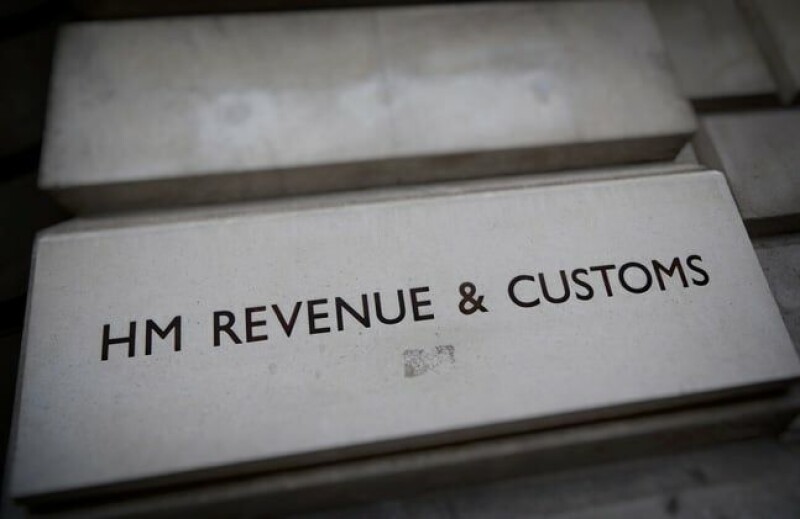
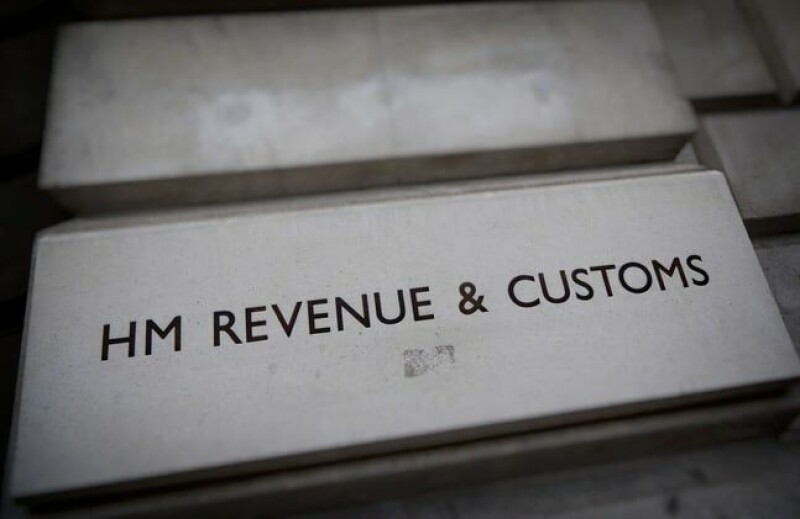
Use of HMRC’s taxing IR35 status tool drops 71% in two years

Published

on

PUBLIC SECTOR

Data suggests firms are turning away from CEST as critics say it fails to reflect recent court rulings

Use of HMRC’s own tool for checking compliance with the UK’s controversial IR35 freelancer tax rules has fallen sharply, according to Freedom of Information data obtained by tax adviser IR35 Shield.

The Check Employment Status for Tax tool, better known as CEST, was created to help firms decide whether contractors should be taxed like employees. But usage fell 43 percent during the 2025-26 tax year, and dropped 71 percent between 2023-24 and 2024-25, from 458,894 determinations to 135,178.

Advertisement

What is IR35?

IR35 is a reform unveiled in 1999 by the UK tax authorities. The latest regulation change – which came into force in April 2021 – forces medium and large businesses in the UK to set the tax status of their contractors and freelancers. Previously this was set by the contractors themselves.

Contractors found to be within the scope of the legislation – i.e. inside IR35 – will have to pay more tax than they might expect.

The reforms are part of the government’s crackdown on so-called disguised employment, where workers behave as employees but avoid paying regular income tax and national income contributions by billing for their services through PSCs, which are taxed at lower corporate rates.

The measures first came into effect in the UK public sector in 2017. The British government hoped the reforms would recoup £440m by bringing 20,000 contractors in line.

Advertisement

HMRC reckons that only one in 10 contractors in the private sector who should be paying tax under the current rules are doing so correctly. It estimates the reforms will recoup £1.2bn a year by 2023.

The findings suggest that firms continue to abandon CEST in favor of alternative status assessment solutions and more comprehensive compliance processes, IR35 Shield said.

CEO Dave Chaplin said: “The majority of firms we speak to for the first time are either lifting blanket bans or seeking to move away from using CEST, having realized it is not compulsory to use, nor does it give them the level of certainty they need.”

The decline is not the result of changes to the tool or legislation, according to IR35 Shield.

Advertisement

“The underlying CEST logic has not been updated since November 2019 and was based on HMRC’s view of the law at that time. Despite the courts dismissing HMRC’s position in key areas, upon which the tool was based, the tool has not been updated,” Chaplin said.

IR35 Shield pointed out that HMRC lost a recent employment status case with Professional Game Match Officials Limited (PGMOL). Entering the facts of the case into CEST would have produced an indeterminate result, it said.

In 2022, the Public Accounts Committee Committee (PAC) found that central government was spending hundreds of millions of pounds to cover tax owed for individuals wrongly assessed as self-employed. “Government departments and agencies owed, or expected to owe, HMRC £263 million in 2020-21 due to incorrect administration of the rules,” the House of Commons spending watchdog said.

Part of the compliance problem was down to HMRC’s guidance and the CEST tool. “Some questions within CEST were difficult to interpret correctly, and the guidance was long, too general in scope and not integrated into CEST itself,” the PAC said.

Advertisement

In a statement sent to The Register, a spokesperson at HMRC, said: 

“We always expected use of the tool to reduce as employers familiarised themselves with the 2021 off-payroll working reforms, and the majority of those who use the tool are satisfied with the service they receive.

“The tool is rigorously tested against case law and we’ll stand by the tool’s results, so long as the information provided is correct in accordance with our guidance.” ®


Advertisement

Source link

Continue Reading

Tech

Is Tesla Planning To Sell Modular AI Data Center Hardware?

Published

on

Electrek reports:

Tesla wants to sell modular AI data center hardware, according to a new trademark application for a product called “Megapod.” The filing describes a complete, self-contained computing system for AI workloads…

Tesla filed the “Megapod” trademark (serial number 99893717) with the U.S. Patent and Trademark Office this month, through its longtime IP counsel. It’s an intent-to-use application, meaning Tesla is claiming the name for a product it hasn’t launched yet. The goods-and-services description is unusually specific for a trademark. Megapod covers “modular data center hardware systems for artificial intelligence computing, comprised of computer servers, computer hardware for artificial intelligence data processing, networking equipment, power distribution units, and cooling systems.” It also covers “self-contained modular computing hardware systems for artificial intelligence workloads,” integrated platforms sold as a single unit — an enclosure bundling compute, power distribution, and cooling — and downloadable software to monitor, manage, and optimize those systems.

In plain terms: Tesla wants to sell a turnkey AI data center building block. Not a battery, not a chip on its own, but the full rack-and-room of servers, networking, power, and cooling that AI training and inference run on.

Tesla’s offering would have to compete with Nvidia’s liquid-cooled, rack-scale systems that simulates a giant GPU, the article points out. But “The bigger issue is that Tesla has no merchant compute-hardware business to build on.”

Advertisement


Tesla’s own AI training cluster, Cortex at Gigafactory Texas, runs on roughly 67,000 Nvidia H100-equivalent GPUs. In other words, Tesla is one of Nvidia’s customers, not a competitor selling alternative hardware… Where Tesla does have a real AI-data-center business is power, not compute. Its Megapack and new Megablock energy storage products are selling into AI data centers as grid buffers — Musk’s own xAI has bought roughly $1 billion of Megapacks to keep its training runs powered. That energy-storage strength is the one credible thread here. A Megapod that bundles Tesla’s power electronics, thermal management, and the enclosure — the “shell” around the chips rather than the chips themselves — would at least sit adjacent to a business Tesla actually runs.

Source link

Continue Reading

Trending

Copyright © 2025