John Sculley’s ten years as Apple CEO saw huge financial growth and innovative ideas like the Newton — but also a financial crash and the ousting of Steve Jobs.
If you can just stick around long enough, your reputation is likely to change. Today it’s common to see ex-Apple CEO John Sculley praised, or at least described as having been unfairly treated by history. There are reasons to back that up, most specifically to do with how he didn’t actually fire Steve Jobs as years of rumors would have it. That’s a little bit hair-splitting, though, because the situation between the two men had deteriorated so badly, but it is true. Continue Reading on AppleInsider | Discuss on our Forums
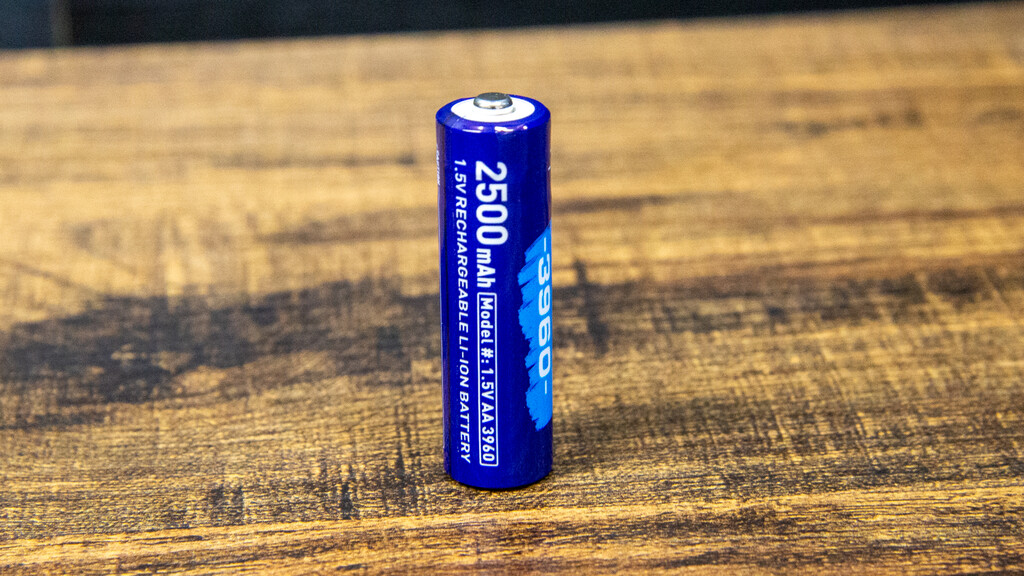
A clever set of Li-ion batteries, the touch-to-check LED system lets you know if the XTAR AA 1.5V 3960 Rechargeable Li-ion Battery cells are ready to go or not. With long life and high capacity, these can be a good replacement for alkaline batteries in most cases, particularly high drain uses, such as torches and toys. There’s no built-in charging, so you’ll need to account for a Li-ion charger if you don’t have one, but that’s the only real potential downside.
High capacity
Integrated battery charge status
Holds charge well
Will most likely require a new battery charger
Key Features
Introduction
Rechargeable AA Li-ion batteries are becoming more popular. Capable of a constant 1.5V output and maintaining their charge, they’re a lot closer to alkaline batteries than standard rechargeables. However, the XTAR AA 1.5V 3960 Rechargeable Li-ion Battery is the first I’ve seen not to include a USB-C port for charging.
Advertisement
It means you need a Li-ion-compatible charger, but the total capacity is higher than that of its rivals, making these a good choice in most situations, particularly where you need high capacity.
Advertisement
Design and Charging
Charge indicator onboard
Long life (1500 charge cycles)
Needs a Li-ion charger
The first set of Li-ion AA batteries that I saw were the Paleblue AA USB-C Rechargeable Batteries, which have a USB-C port onboard for direct charging. Here, things are different, and the XTAR AA 1.5V 3960 Rechargeable Li-ion Battery looks much like a regular rechargeable battery, with nothing distinguishing it from the outside.
Image Credit (Trusted Reviews)
That means you need a charger compatible with Li-ion batteries. Use a regular battery charger and you can destroy these batteries. I was sent an XTAR L8 charger, which can take eight batteries (AA or AAA via the included adaptors). This charger senses the battery type (Li-ion or NiMH) and then charges them correctly.
Image Credit (Trusted Reviews)
Press and hold the positive terminal on top (I found that it needs a bit of pressure and, sometimes, pressing and holding for a few seconds), and a green light turns on to show that these batteries are different: one flash means 0% to 20% charge; two flashes for 20% to 50% charge; three for 50% to 80% charge; and four for 80% to 100%. It’s a handy indicator of whether the batteries are ready to go or not.
Advertisement
Each battery has a capacity of 2500mAh, which is 1000mAh higher than the Paleblue ones. At this capacity, the XTAR AA 1.5V 3960 Rechargeable Li-ion Battery is similar to many NiMH batteries.
Advertisement
XTAR says that these batteries can last for 1500+ charge cycles, which is also similar to a lot of NiMH batteries. That means that you can charge and discharge these batteries 1500 times, so each one effectively replaces 1500 alkaline batteries.
Li-ion batteries, such as these, have two main advantages over NiMH: they discharge at a higher rate (1.5V vs 1.2V) and hold their charge for longer.
Performance
High capacity
Can replace alkaline batteries in some circumstances
To test these batteries I used an XTAR VX4, which is designed for NiMH and Li-ion batteries, testing capacity with a 300mA current. On average, across the four XTAR AA 1.5V 3960 Rechargeable Li-ion Battery cells that I had, the total capacity was a high 2583mAh – that’s only slightly behind the Ansmann Digital AA HR6 2850mAh.
That makes these batteries ideal for high-drain devices, such as torches and toys. I also fitted them to my Yale Linus smart lock. When fitted with NiMH batteries, this lock complains that the batteries are low; with the XTAR AA 1.5V 3960 Rechargeable Li-ion Battery the lock worked correctly.
Advertisement
Advertisement
There may be some devices that these batteries don’t work with, but in many cases you can replace alkaline batteries with these.
Should you buy it?
You need high-capacity alternatives to alkaline batteries
With a high tested capacity, these batteries can replace standard alkaline batteries in a lot of cases.
Advertisement
You want something cheaper
Advertisement
If you’ve got devices that are less fussy, then you can buy high capacity NiMH batteries for less.
Final Thoughts
It all depends on what you want to use the batteries for. If you want to replace alkaline batteries with a greener alternative, the XTAR AA 1.5V 3960 batteries work out as good value over their lifetime, and they cost a similar amount to the lower-capacity Paleblue AA batteries; however, you do need to account for buying a Li-ion battery charger.
Advertisement
If you have devices that will work with NiMH batteries and just need high-capacity, powerful cells, then you’ll find something cheaper on my list of the best rechargeable batteries.
How We Test
We test every rechargeable battery we review thoroughly over an extended period of time. We use standard tests to compare features properly. We’ll always tell you what we find. We never, ever, accept money to review a product.
Find out more about how we test in our ethics policy.
Capacity and voltage tested with an XTAR VX4.
Used in real-life appliances to check compatibility.
FAQs
How do you charge the XTAR AA 1.5V 3960 Rechargeable Li-ion Battery?
You need a battery charger that’s compatible with Li-ion batteries – do not use a standard battery charger.
Advertisement
Advertisement
Test Data
XTAR AA 1.5V 3960 Rechargeable Li-ion Battery
Battery tested capacity
2583 mAh
Full Specs
XTAR AA 1.5V 3960 Rechargeable Li-ion Battery Review
Yet it’s only $699 (or $599 for students). The XPS 13 makes similar trade-offs as the MacBook Neo. First, it starts with only 8 GB of RAM and 256 GB of storage. It also starts with a slower Intel Core 5 processor (note: not Intel Core Ultra). I’ll be interested to find how the performance and battery life stack up against the MacBook Neo, but Dell is clearly taking notes from Apple, which used a slower iPhone chip in the Neo instead of an M-series laptop-grade processor.
What’s nice about the Dell XPS 13, though, is that you can scale it up appropriately. The MacBook Neo is capped in both storage and memory, but the XPS 13 can be configured up to 32 GB of RAM and 1 TB of storage.
I’ve been testing a lot of $500 to $600 laptops recently from companies like Acer, Lenovo, and HP, many of which take a more conventional Windows approach to rivaling the MacBook Neo by offering better specs at lower prices. They all have 16 GB of RAM and use more powerful chips, too. But none challenge the MacBook Neo in display quality and chassis materials. That doesn’t mean there isn’t a place for something like the HP OmniBook 3, but it doesn’t play for the same audience as the Dell XPS 13 and MacBook Neo.
The Wrong Direction
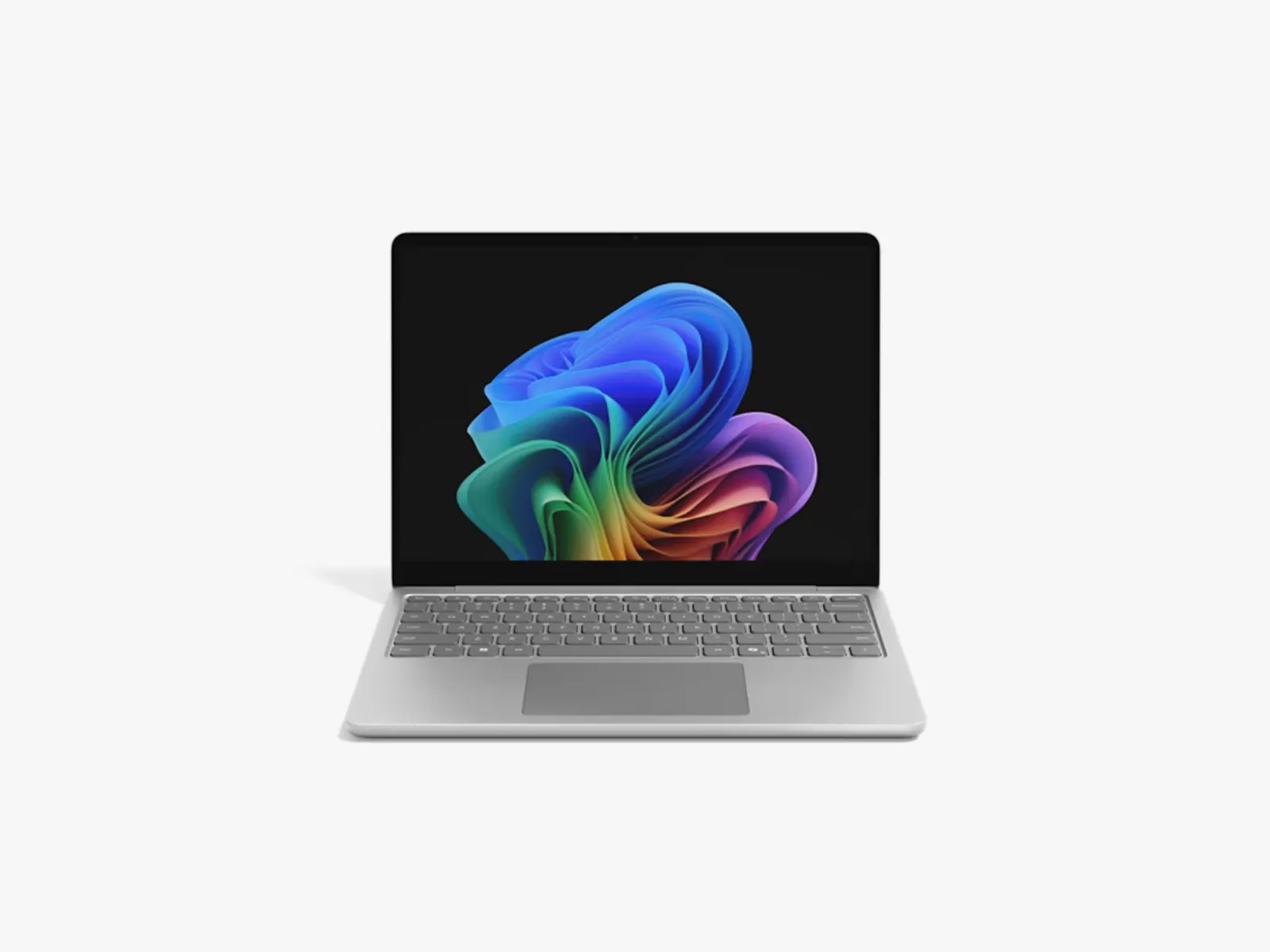
Inevitably there would be a company that thinks it can ride on the success of the MacBook Neo without understanding what makes it tick. Last week, Microsoft announced two versions of its Surface Laptop for Business PCs: a higher-end 13.8-inch model and a cheaper 13-inch device. The 13.8-inch model is a more standard refresh, implementing Intel’s new Core Ultra X7 368H Panther Lake chip—and most notably, it still starts with 16 GB of RAM.
Advertisement
The smaller 13-inch model is where things get problematic. Despite its starting price of $1,200, that configuration only comes with 8 GB of RAM. Don’t get too caught up in the price, since business PCs always come with an up charge. The starting RAM is the eyebrow-raising spec. Unlike the new Dell XPS 13, Microsoft isn’t tricking this out with a thinner chassis and an upgraded screen—it’s just giving you less computing power and calling it good.
And to be fair, this “optional” 8 GB model is coming later this year, separate from the 16 GB and 24 GB versions. But it’s hard to imagine Microsoft being willing to sell an 8 GB laptop in 2026 if Apple hadn’t paved the way. While there’s no 2025 Surface Laptop 13 for Business for direct comparison, the consumer version of the Surface Laptop 13 started with 16 GB of RAM. This feels like a straight generational downgrade.
The ShinyHunters extortion gang stole personal information from 4.9 million accounts after hacking the U.S. telecom giant Charter Communications in early April, according to data breach notification service Have I Been Pwned.
Charter has over 92,000 employees and provides internet, mobile, video, and voice services to more than 32 million customers and over 57 million homes in 41 states across the U.S. through its Spectrum brand.
The company confirmed the breach earlier this week, saying that the attackers did not steal sensitive personal customer information and that it had alerted authorities about the incident.
“No sensitive personal information (PI) or customer proprietary network information (CPNI) data was exfiltrated by the threat actor as a result of recent activity,” Charter told BleepingComputer.
Advertisement
While Charter has yet to attribute the attack and has not shared further details, the ShinyHunters extortion gang claimed responsibility and told BleepingComputer that they breached the company’s systems on April 1 in a voice phishing (vishing) attack that compromised an employee’s Microsoft Entra account.
The threat actors claimed they used this access to steal 42 million records from the company’s Salesforce instance, including consumer and business customer names, email addresses, physical addresses, phone numbers, phone types, plan information, support ticket data, and some CPNI data.
However, Charter spokesperson denied the gang’s claims of CPNI data theft and said that “only sales tools used to manage current, past and prospective Business customers were impacted; no CPNI or sensitive PI was released by the threat actor.”
After the company refused to pay the ransom demanded by ShinyHunters to have the stolen data returned and destroyed, the cybercrime group leaked the documents stolen from Charter’s Salesforce instance on their dark web leak site.
Advertisement
Charter entry on ShinyHunters leak site (BleepingComputer)
Have I Been Pwned analyzed the leaked data and confirmed that the incident affected 4.9 million accounts, whose names, email addresses, job titles, phone numbers, and physical addresses were stolen.
“The group later published the data, which exposed 4.9M unique email addresses along with names, phone numbers and physical addresses,” Have I Been Pwned said. “A subset of approximately 85k records originating from an internal employee directory also included job titles.”
The FBI has recently advised ShinyHunters’ victims not to give in to the gang’s ransom demands, after previously warning that doing so cannot guarantee that threat actors won’t attempt to sell the stolen data to other cybercriminals or extort them again.
Charter Communications’ systems were also compromised in a wave of breaches by a Chinese state-backed threat group tracked as Salt Typhoon that also impacted AT&T, Verizon, Consolidated Communications, Windstream, and Lumen, as well as telecom companies in dozens of other countries.
Advertisement
Update May 30, 03:23 EDT: Added Charter follow-up statement.
Automated pentesting tools deliver real value, but they were built to answer one question: can an attacker move through the network? They were not built to test whether your controls block threats, your detection rules fire, or your cloud configs hold.
This guide covers the 6 surfaces you actually need to validate.
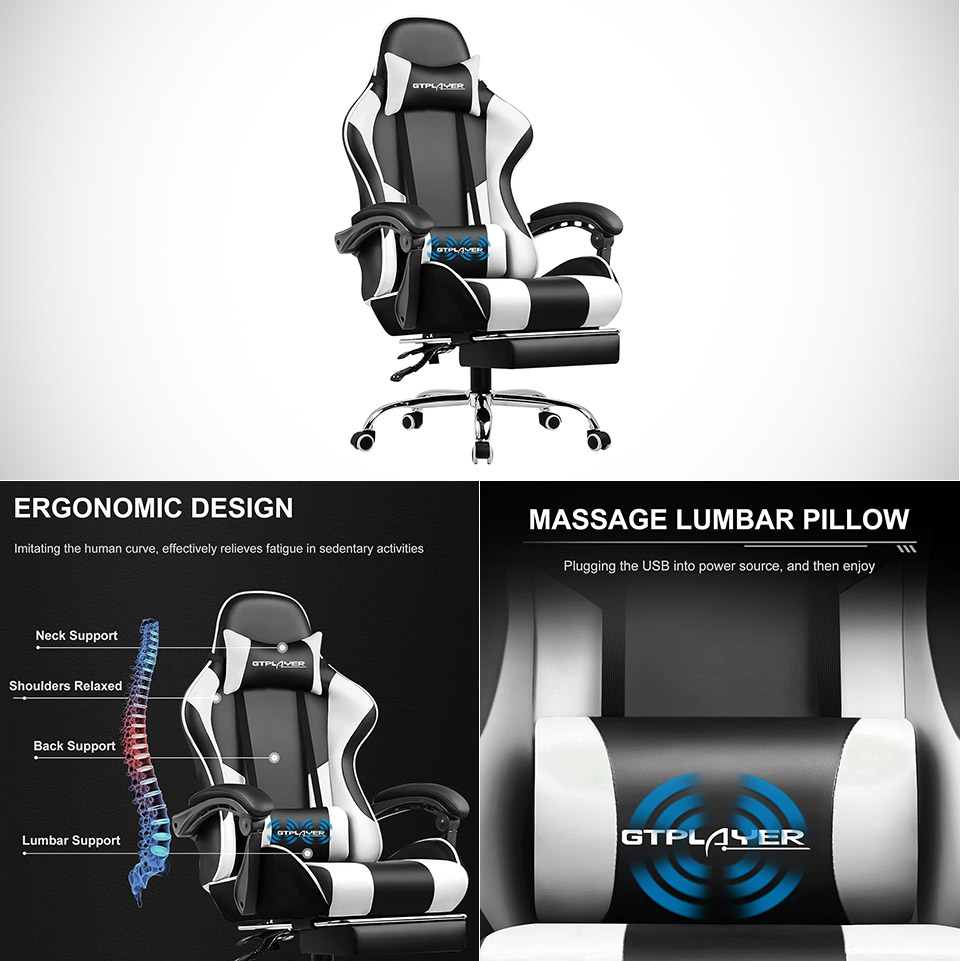
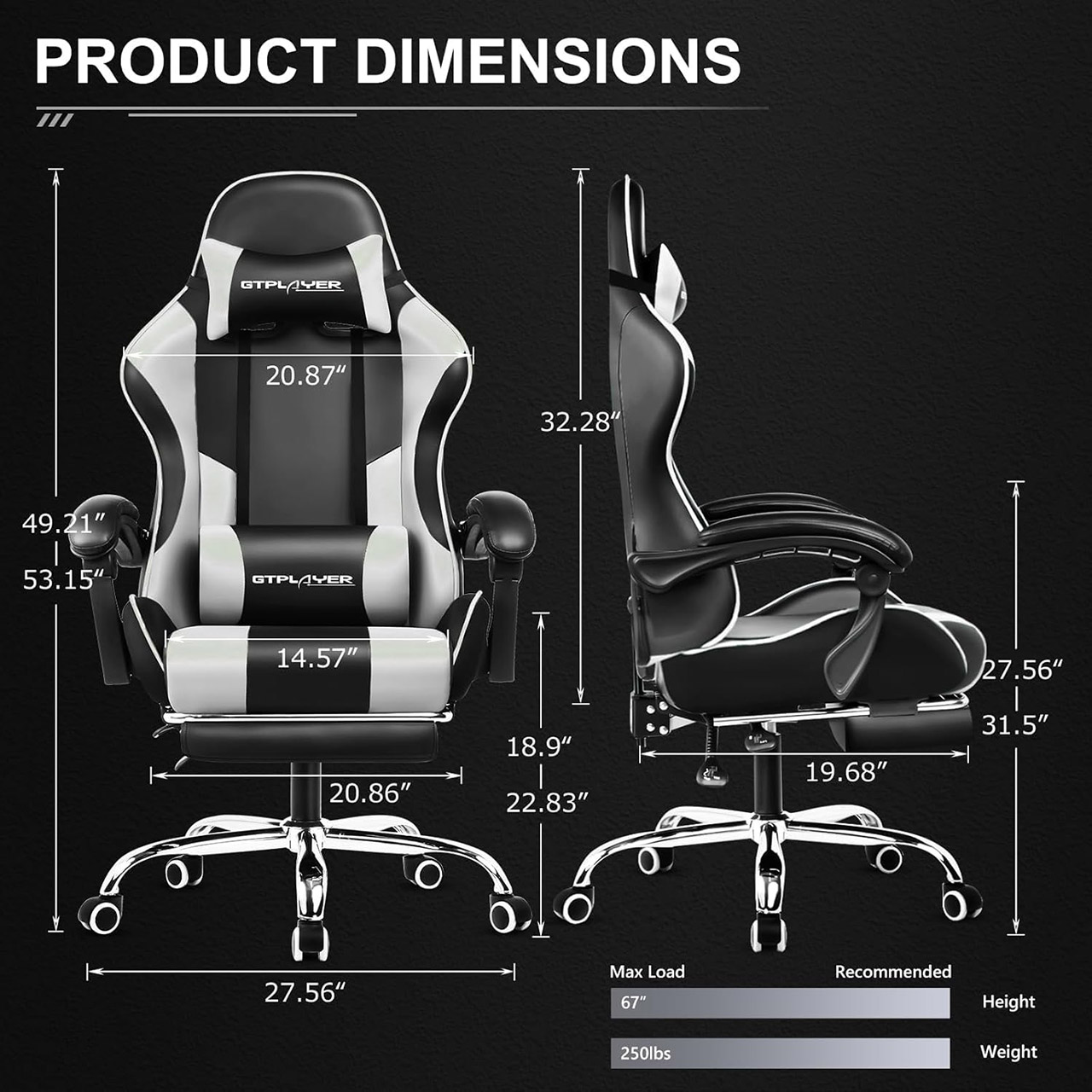
Shoppers looking for a budget desk chair tend to gravitate toward the GTPLAYER gaming chair, which is currently available for around $89.99 (was $140), but what truly sets apart is that its base and legs are made of sturdy metal, as opposed to most chairs at this price point, which are made of flimsy plastics.
The chair’s seat and back are wrapped in faux leather, with some nice quality foam below that keeps it in shape… for the most part. Of course, it all depends on your body weight and how long you plan to sit there. The armrests are padded and fastened in place, covering the area from elbow to wrist. Don’t anticipate any fancy levers or sliders here; simply a simple, straightforward design that should suffice for most folks looking for a place to rest their arms.
Most Comfortable And Relaxing: Equipped with headrest and lumbar pillow. When your neck feels sore from gaming or working with head down for a long…
More Stable Than Others: Common gaming chairs are equipped with plastic legs generally to save costs, but we still insist on applying the same…
Liberate Your Feet: Will you feel tired for sitting all the time? Sure. Then you can choose the chair with footrest to relax your feet. When you…
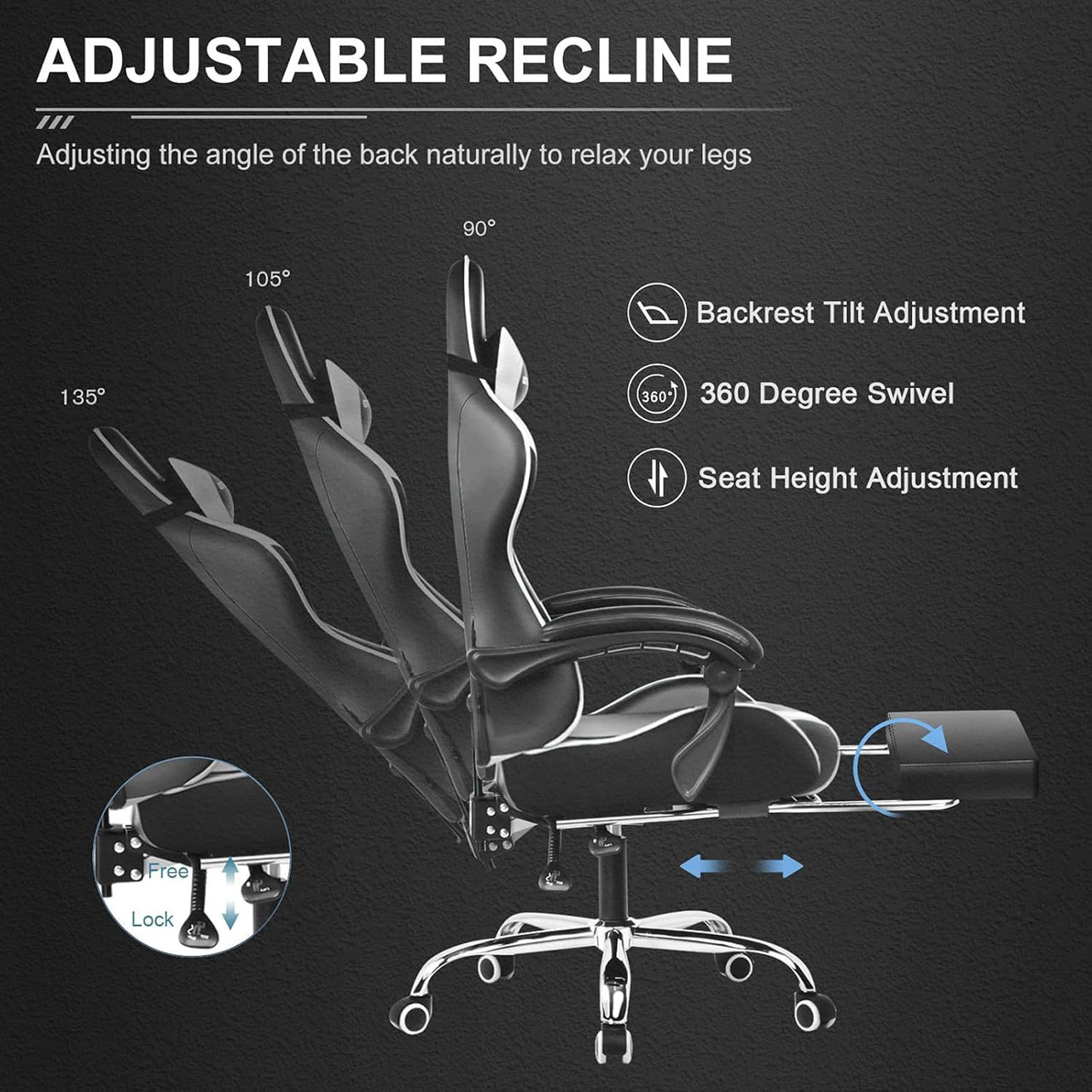
The footrest is a nice addition because the thing stays hidden beneath the front of the seat and pulls out when needed. Not only does it complement the chair’s faux leather, but it also provides a place to rest your feet during long gaming sessions or when you simply need to take a break. The headrest and lumbar pillows are distinct items that come with straps and can be adjusted to accommodate almost anyone, since we all know that we are all shaped differently, and they can be changed or removed as needed. Height adjustment is nice and easy, thanks to the gas lift underneath the seat. Most adults will be able to get comfortable, though if you’re on the taller side you might find it a bit cramped.
Advertisement
The chair’s smooth swivel on its base is a welcome feature that comes in handy when you’re attempting to reach something on the opposite side of the room or switching between displays. If you need to relax, you can recline the chair using a convenient side lever. It won’t topple over on you, so you can truly recline comfortably, and when combined with the extended footrest, it’s the ideal configuration for a little nap.
The seat itself has a reasonable size, about twenty inches across and deep, which should be plenty for most individuals, even during extended gaming sessions or work stretches. When combined with the backrest, it provides enough support for ordinary builds. Users have praised the supplied pillows for reducing neck and lower back pain, the type of hunching that occurs when you stare at a monitor or computer for hours on end.
Even if you aren’t particularly handy, you should be able to assemble the chair in less than an hour. The instructions are relatively straightforward, and the most of the parts fit together fairly quickly. As a bonus, for the current pricing, you receive a slew of extras that you wouldn’t typically find on a chair in this price range, such as the metal base, footrest, and pillows.
We spend hours testing every product or service we review, so you can be sure you’re buying the best. Find out more about how we test.
Motorola Edge 70 Fusion two-minute review
I always come away from Moto phones either hot or cold: the last handset I tested from the company disappointed, and the one before that was my favorite phone of 2025. So which way would the Edge 70 Fusion land? Having spent some time putting it through its paces, I’d say it’s an absolute winner.
Moto’s latest low-cost mobile is ostensibly an affordable sibling to the Edge 70, giving phones journalists something to write about while we wait for the Edge 80 line. But the timing of its release, around the same time as the iPhone 17e and Samsung Galaxy A57, makes it an unexpected rival to these big companies’ budget blowers.
Advertisement
And, even more unexpectedly, it blows them out of the water. And that’s not just because of its price — although that certainly helps. The real reason is that the Edge 70 Fusion is another superb-value Motorola phone that, in certain areas, feels every bit like a true premium handset.
Latest Videos From
For a start, the display here is an absolute winner, offering more colors and a higher level of brightness than you should expect for the price. The battery, too, trumps most rivals, with the 7,000mAh capacity lasting two or more days of use.
For me, though, it’s the phone’s design that delights most. The textured rear, curved edges, and bronze trim see this handset stand out from your average chocolate-bar handset.
However, not all is rosy; there are a few rough edges. The software had a few annoying quirks — the app search function has been replaced by a slow AI tool that takes ages to find your app, for example. The Bluetooth connection was prone to drop-outs, frequently interrupting any music I was playing through the device. Plus, software support is only guaranteed for three years, which falls short of some rivals.
Advertisement
But with the cost of tech skyrocketing in 2026, a budget phone has never been more attractive — and the Motorola Edge 70 Fusion is currently my favorite mid-range pick. Yes, even over the Samsung Galaxy A57.
Sign up for breaking news, reviews, opinion, top tech deals, and more.
I was ready to be even more ecstatic about the Edge 70 Fusion, until I realised that Moto had released another handset at this price point only a year ago that was far, far more advanced. The Moto Edge 60 was 2025’s best-value phone, but due to apocalyptic RAM prices, the new model doesn’t offer nearly as good value for money as that option. Try to find it on sale before you consider the Fusion — or any 2026 mobile, for that matter.
Advertisement
Motorola Edge 70 Fusion review: price and availability
(Image credit: Future)
Released on March 2, 2026
Costs £379.99 / AU$499 (about $520)
Not on sale in the US
The Motorola Edge 70 Fusion was announced on March 2, 2026, at the Mobile World Congress show in Barcelona. It follows the standard Edge 70, which was released the previous October.
The handset comes in at an affordable £379.99 / AU$499 (about $520), but I wouldn’t go so far as to call it “cheap” since Moto G handsets cost even less. Nevertheless, it’s a far cry from the £699 (roughly $920, AU$1,400) price of the main Motorola Edge 70.
Moto’s range of handsets varies by region, and the Edge 70 Fusion isn’t on sale in the US. While in Australia, all of Moto’s phones are priced less than elsewhere.
Motorola Edge 70 Fusion review: specs
Swipe to scroll horizontally
Motorola Edge 70 Fusion specs
Header Cell – Column 0
Header Cell – Column 1
Dimensions:
Advertisement
162.8 x 75.6 x 8mm
Weight:
193g
Screen:
Advertisement
6.78-inch FHD (1,272 x 2,772mm) 144Hz AMOLED
Chipset:
Snapdragon 7s Gen 3
RAM:
Advertisement
8GB
Storage:
256GB
OS:
Advertisement
Android 16
Primary camera:
50MP, f/1.8
Ultra-wide camera:
Advertisement
13MP, f/2.2
Front camera:
32MP, f/2.2
Audio:
Advertisement
Stereo speakers
Battery:
7,000mAh
Charging:
Advertisement
68W wired
Colors:
Pantone Silhouette, Pantone Blue Surf, Pantone Orient Blue, Pantone Sporting Green
Advertisement
Motorola Edge 70 Fusion review: design
(Image credit: Future)
Premium-feeling design
Available in a range of Pantone colors
IP68/IP69 and military protection
Motorola’s really settled into a groove with its Edge designs, and on looks alone, I’m not sure I’d be able to pick out the Edge 70 Fusion in a lineup with its contemporaries.
The handset measures 162.8 x 75.6 x 8mm and features Moto’s regular four-circle camera bump on the back. In the UK, it’s available in just a single color, while in Australia, you get a choice of Pantone options. The power button and volume rocker both sit on the right edge; the former is easy enough to reach, but the latter isn’t.
Picking up the phone reveals some neat touches. It’s pretty light, at 193g, and fits in the hand snug thanks to a rear panel that tapers in at the edges. The thickness isn’t “brag about it in marketing” levels of slender, but it’s a noticeable difference in the hand over other models.
The rear of the phone is plastic, but with a textured, almost fabric-like finish. As such, the device feels pretty premium in the hand and grips well on canted surfaces. It’s little touches such as these that elevate Moto phones above the average chocolate-bar-style handsets that the majority of companies churn out.
The device arrives with both IP68 and IP69 ratings, meaning it can survive being submerged in up to 1.5 meters of water for 30 minutes, as well as withstand high-pressure water jets. It also meets MIL-STD-810H standards, a military-grade durability certification designed to test devices against tougher knocks, drops, and jolts.
Advertisement
Motorola Edge 70 Fusion review: display
(Image credit: Future)
6.78 inches, 1,272 x 2,772 resolution
144Hz refresh rate, 5,200 nits max brightness
Under-display fingerprint scanner hits and misses
The Moto’s 6.78-inch, 1,272 x 2,772-resolution screen is about average for an Android phone. However, it’s there that the comparisons with other similarly priced handsets end.
An AMOLED display, it offers a 1-billion-color gamut, plus a 144Hz refresh rate and 5,200nits max brightness. These are specs you’d expect to see in a top-end phone, not a handset at this price. Fittingly, movies and games look great on the screen, full of color and punch.
If there’s anything that could be better, it’s the under-display fingerprint scanner. It worked most of the time, but now and then it wouldn’t pick up my thumb, and I’d need to try again. This is the type of issue you wouldn’t experienceon a premium mobile.
Advertisement
Motorola Edge 70 Fusion review: software
(Image credit: Future)
Android 16 with Moto twists
Three years of OS updates
Some bloatware, and infuriating features
Motorola packs its phones with software that’s akin to stock Android, but with a few additions and, notably, a few removals.
Ostensibly, we’re looking at Android 16, but booting up the phone reveals a few Moto-themed extra apps and tools. My favorites remain the quick gestures: a karate-chop motion to turn on the torch; a twisting gesture to open the camera; placing the handset screen-down to immediately turn on do-not-disturb mode.
However, some Android 16 features are missing — such as the system themes overhaul, which delivers greater customization options through your phone. You also get fewer years of guaranteed software updates than most other phones, at only three years.
There’s a bit of bloatware and some built-in AI tools that rarely saw the light in my testing, but tidying up the Edge 70 Fusion is easy enough. For those familiar with stock Android, everything is where you want it to be, with few other features that’ll distract you. Sure, converts might miss some iOS or One UI features — but there’s nothing wrong with simplicity.
The one thing that did prove an annoyance is that Moto has replaced the search bar in the app drawer with an AI bot, which claims to figure out what you’re asking of it, if you give it some time to think. However, if you’re simply trying to track down and launch a particular app, the slow loading time of this tool makes using it counterintuitive. For example, when I wanted to find the clock app to set an alarm, the bot would take far longer to find the app than a standard search bar would. It’s an example of AI making the usability of a phone worse.
Advertisement
Motorola Edge 70 Fusion review: cameras
(Image credit: Future)
50MP main, 12MP ultra-wide, and 5MP macro cameras
Cameras lack some vibrancy and optimization
A range of useful camera features
It’s hard to find listings for the Motorola Edge 70 Fusion that don’t scream about the Sony Lytia 710 sensor in the main camera. This is because this 50MP module debuted with the series, and Moto’s really trying to big up this partnership.
Like a grumpy Roman emperor, my thumb’s usually pointed downwards when it comes to Motorola phone cameras, but the Fusion’s example isn’t bad at all. It does what other Motos can’t, in making pictures look bright and colorful.
Pictures display more dynamic range than I’m used to seeing, making snaps taken on sunny days appear more joyous, while also lending more variety to foliage. It’s no Galaxy phone, but the sensor change is clearly adding some pizzazz to the pictures.
Joining the main camera is a 13MP ultra-wide, if you’d like to get more ground and sky into your shots. Pictures taken with this camera display a similar color profile to those taken with the main camera, but you don’t have to crop in far to see lots of grain.
Advertisement
On the front of the phone is a 32MP f/2.2 module for selfies. While selfies looked a touch less colorful than snaps from the main camera — Lytia’s set my standards too high, clearly — the artificial bokeh is smart at avoiding blurring strands of hair.
You get Portrait, Slow-mo, Panorama, and Night options, alongside Photo Booth, which takes four pictures and presents them in a grid.
Motorola Edge 70 Fusion camera samples
Image 1 of 9
Advertisement
This photo was taken at 2x zoom, showing the sun low over a river.(Image credit: Future)
This photo was taken at 1x zoom, showing some flowers in an array of colors.(Image credit: Future)
This picture was taken at 1x zoom in a dimly-lit room, showing a pizza toppings.(Image credit: Future)
This is the first of a run of pictures showing a city-scape, starting at 0.6x or ultra-wide.(Image credit: Future)
This is the second of a run of pictures showing a city-scape, taken at 1x on the main camera.(Image credit: Future)
This is the first of a run of pictures showing a city-scape, starting at 2x zoom.(Image credit: Future)
This is the first of a run of pictures showing a city-scape, starting at 10x zoom or the maximum digital zoom range.(Image credit: Future)
This Portrait picture was taken on the rear camera.(Image credit: Future)
This picture of geese was taken on the 1x camera.(Image credit: Future)
Motorola Edge 70 Fusion review: performance and audio
(Image credit: Future)
Snapdragon 7s Gen 3 chip, 8GB RAM and 256GB storage
Can handle games, but not perfectly
Bluetooth 6.0 for audio had some drops
The Moto Edge 70 Fusion is powered by Qualcomm’s Snapdragon 7s Gen 3 chipset — a solid mid-powered processor designed to help more affordable phones punch above their weight. We’ve already seen it deliver in the Fairphone 6 and Redmi Note 14 Pro Plus.
In Geekbench 6 multi-core tests, the phone returned average scores in the 3,200-3,300s, roughly in line with those of the aforementioned phones and other mid-rangers. For context, the non-Fusion handset hit 4,100s, while the Edge 60 hit 2,900, and premium phones generally crack five figures.
Tests I ran on 3DMark showed noticeably lower frame rates and scores below those of top-end phones from the past few years. This isn’t a gaming phone, but it can handle games.
In tests, I found that the Edge 70 Fusion was capable of handling the titles I threw at it, although not always at the top graphics settings or at blazing speeds. However, for a non-flagship device, I wouldn’t have expected more.
A quick note for buyers, though: the handset did prove quite sluggish in use for the first week of testing. Normally, handsets find their pace quicker than this, but it soon caught up.
Advertisement
Audio-wise, the handset features the same stereo speakers as seen on other phones, plus support for Bluetooth 6.0. It lacks a traditional 3.5mm headphone jack, but a USB-C converter enables the use of wired headphones.
Unfortunately, my test handset’s Bluetooth connection proved quite unreliable. A number of speakers and headphones I used would temporarily drop out, repeatedly —more than they did on other devices. While I can’t say for certain whether it’s an issue with the handset in general or just the review sample, the fact that it would happen most frequently when I put my hand in a certain spot — which seemed to block out the Bluetooth signal — indicates it’s the former.
Performance score: 3.5 / 5
Motorola Edge 70 Fusion review: battery life
(Image credit: Future)
Large 7,000mAh battery
Multiple days of use per charge
68W charging plus some battery health features
Motorola includes a decent-sized battery in the Fusion: a 7,000mAh power pack to be precise (although it seems that in some regions it’s only 5,200mAh, so be sure to check).
Such a module ensures I could reliably get through two days of use on a single charge. On lighter-use days, I was working through only about 30% of the battery.
At 68W, you can power up the handset quickly — but not so fast that you risk overheating the device. With a compatible charger, you can get from empty to full in about an hour. However, said charger — a Motorola TurboPower 68W Charger — doesn’t come in the box.
Advertisement
To ensure your phone remains in good health for years to come, you can use the battery protection tool. This allows you to schedule when the phone is charged to 100%, or the handset will learn your habits and won’t charge past 80% until you need it.
Motorola Edge 70 Fusion review: value
(Image credit: Future)
It’s impossible to talk about the Motorola Edge 70 Fusion’s value without acknowledging that tech has become significantly more expensive in 2026 — you simply don’t get the same level of bang for your buck as you once did with Motorola phones.
Even so, compared to today’s rivals, the Edge 70 Fusion still offers exceptional value. It’s one of a few genuinely affordable handsets that manages to feel premium in a few key areas.
Advertisement
Its design, display, and battery life all punch above its price point. The cameras, performance, and software might deliver middling performance, but taken as a whole, this is still an excellent package. Phones that deliver a similar experience will typically cost you considerably more.
Should you buy the Motorola Edge 70 Fusion?
Swipe to scroll horizontally
Motorola Edge 70 Fusion scorecard
Attributes
Notes
Advertisement
Rating
Value
In an expensive year, you’re getting a reliable phone at a low price.
4.5 / 5
Advertisement
Design
To look at it, you’d think that this was a top-end phone, especially if you can buy some of the interesting color options.
4.5 / 5
Display
Advertisement
The Fusion’s display is bright, full of pixels and vibrant.
4.5 / 5
Software
Moto’s spin on stock Android has some neat tools, but many pre-installed apps and some bloating features.
Advertisement
3.5 / 5
Camera
The main camera takes decent pictures, but it’s still no camera phone.
3.5 / 5
Advertisement
Performance
The chipset is fit for purpose, but it’s no gaming phone, and the Bluetooth isn’t reliable.
3.5 / 5
Battery
Advertisement
With a 7,000mAh, you’re getting days of lasting power with the Fusion.
4.5 / 5
Buy it if…
Advertisement
Don’t buy it if…
Motorola Edge 70 Fusion review: Also consider
Not convinced by the Motorola Edge 70 Fusion? Other companies have their own flagship-alternatives, or competitive mid-rangers, and here are some worth considering.
Swipe to scroll horizontally
Header Cell – Column 0
Motorola Edge 70 Fusion
Advertisement
Poco X8 Pro Max
Samsung Galaxy A57
iPhone 17e
Starting price (at launch):
Advertisement
£379 / AU$499 (about $520)
$469 / £469 (about AU$940)
$549.99 / £529 / AU$749
$599 / £599 / AU$999
Advertisement
Dimensions:
162.8 x 75.6 x 8 mm
162.9 x 77.9 x 8.2mm
161.5 x 76.8 x 6.9 mm
Advertisement
146.7 x 71.5 x 7.8 mm
Weight:
193g
218g
Advertisement
179g
169g
OS (at launch):
Android 16
Advertisement
HyperOS 3, Android 16
One UI 8.5, Android 16
iOS 26
Screen Size:
Advertisement
6.78-inch
6.83-inch
6.7-inch
6.1-inch
Advertisement
Resolution:
2772 x 1272
2772 x 1280
2340 x 1080
Advertisement
2532 x 1170
CPU:
Snapdragon 7s Gen 3
Mediatek Dimensity 9500s
Advertisement
Exynos 1680
A19 Bionic
RAM:
8GB
Advertisement
12GB
8GB / 12GB
Not specified
Storage (from):
Advertisement
256GB
256GB / 512GB
128GB / 256GB / 512GB
256GB / 512GB
Advertisement
Battery:
7,000mAh
8,500mAh
5,000mAh
Advertisement
4,005mAh
Rear Cameras:
50MP main, 13MP ultra-wide
50MP wide, 8MP ultra-wide
Advertisement
50MP main, 12MP ultra-wide, 5MP macro
48MP
Front camera:
32MP
Advertisement
20MP
12MP
12MP
Advertisement
How I tested the Motorola Edge 70 Fusion
(Image credit: Future)
Tested for one month
Everyday usage, including web browsing, social media, photography, video calling, gaming, streaming video, music playback
Benchmarked using Geekbench 6, 3DMark, native Android stats
I used the Motorola Edge 70 Fusion for a month, and as my main handset for the past three weeks.
As a result, most of the testing was based on real-world use. I used the phone as my everyday device for everything from communications and entertainment to navigation and work. I took it on day trips, relied on it to navigate around the city, and used it for a range of voice and video calls.
I also carried out some lab-style benchmark testing to check out performance and battery life.
I’ve been reviewing smartphones for TechRadar since early 2019, including countless Motorola mobiles and plenty of other low-cost Androids.
Environmental activist Erin Brockovich has a new mission: Bringing more transparency to data center construction and the impact those data centers have on nearby communities.
The website describes the map as “work in progress” that includes data centers reported by members of the surrounding community. In a Substack post, Brockovich said that after putting out a call for reports of data center-related issues in April, she received nearly 4,000 submissions in the first month alone.
“The single most common concern — more than noise, more than water usage, more than rising utility bills — is the one word that keeps appearing in submission after submission: transparency,” she wrote.
Advertisement
Brockovich added that she’s not making a “making a blanket argument against data centers” or AI, but rather against “the pattern our map documents: projects announced after permits are already secured, developers who don’t return calls, local officials who signed NDAs before their neighbors knew a project was being considered.”
Apple is already developing its 2027 updates for iOS 28, iPadOS 28, macOS 28, and its other operating systems. This is entirely unsurprising.
As a major operating system producer and hardware manufacturer, it has to work long in advance to perfect its releases. While it has a lengthy schedule for products like the iPhone and Mac lineups, it can take just as long to get software out the door.
In Sunday’s “Power On” newsletter for Bloomberg, Mark Gurman writes that Apple has already kicked off development for the 2027 operating system updates. Indeed, he is told that software engineering teams are at the stage where they develop individual features, apps, and enhancements.
However, at this stage, it has yet to start bringing all of the parts together into cohesive whole operating systems. But, since it has about a year to go before it will show off the product of its work to developers at WWDC 2027, it still has a lot of time to play with.
Advertisement
Gurman adds that the iOS and iPadOS 28 updates have an internal codename of “Bell,” while macOS 28 is referred to as “Poppy.” This has led to employees creating a portmanteau of the two names, referring to the 2027 releases as “Boppy.”
This is not new to the company, as it did the same for the 27 generation. The internal name of iOS and iPadOS 27 was “Rave,” while macOS 27 was known as “Fizz,” resulting in the combination “Rizz.”
Some owners of the HomePod and HomePod mini have been startled awake by music playing from their devices in the middle of the night. There are some things you can do to stop ghost or phantom touches firing up audio at random.
The HomePod display
The HomePod and HomePod mini are largely hands-free devices. Most of the time, you’re directly interacting with them by voice, or through HomeKit, or using AirPlay. All models also include a touch-sensitive display in the top. While you could keep yelling at HomePod Siri to change volumes, you can also tap the display to do the same thing, or to trigger Siri manually. Continue Reading on AppleInsider | Discuss on our Forums
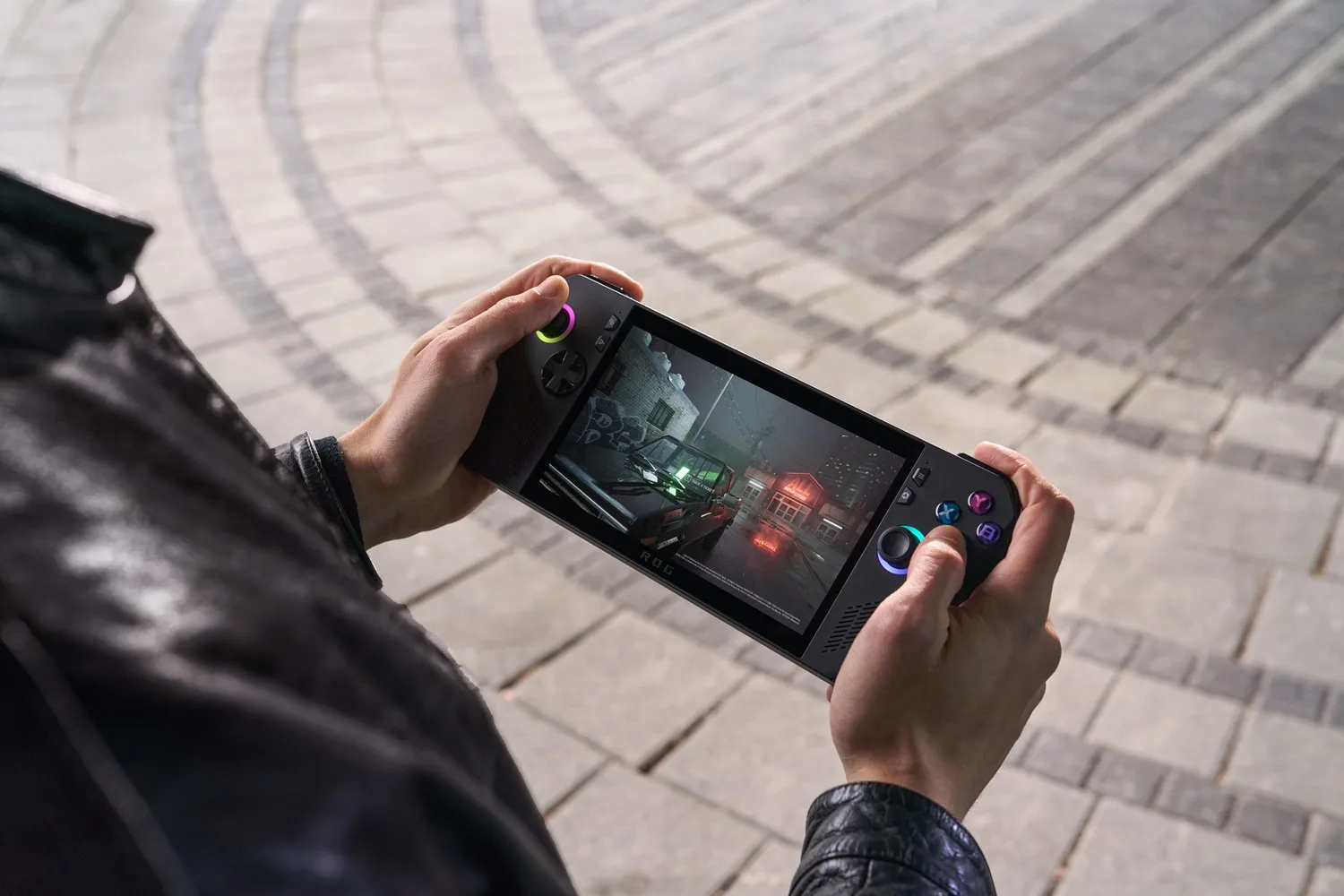
The handheld gaming market moves fast, and that’s exactly why a newly leaked ASUS device feels a little underwhelming on paper. A fresh listing suggests ASUS is preparing another ROG Ally handheld, but instead of delivering a major redesign, the company may simply be refreshing the internals. The leak points to an AMD Ryzen Z2 Extreme processor at the heart of the device, suggesting a mid-generation update rather than a true successor.
That’s not necessarily bad news. The Ryzen Z2 Extreme is expected to be a capable chip for portable gaming. The problem is that handheld gamers are increasingly looking for more than just a processor upgrade.
A familiar formula with a new chip
The listing doesn’t reveal much beyond the processor. Key details such as display technology, battery capacity, RAM, storage options, and even the final design remain under wraps. That leaves plenty of room for speculation, but it also makes the device feel less exciting than some fans may have hoped. If the leak is accurate, ASUS appears to be taking the same route many laptop makers follow: refresh the silicon, keep most of the hardware intact, and extend the product’s lifespan.
Asus
For existing ROG Ally owners, that may not be enough reason to upgrade. The more intriguing rumor is what the handheld doesn’t include. Previous speculation hinted that ASUS could experiment with Intel’s Arc-powered gaming silicon. Instead, the company seems to be sticking with AMD once again.
The display could make or break it
If ASUS wants this refresh to stand out, the screen may be its biggest opportunity. The handheld market has changed considerably since the original ROG Ally arrived. The Steam Deck OLED raised expectations for display quality, while larger-screen devices have become increasingly common. An OLED panel or a roomier 8-inch display would instantly make the new handheld more appealing.
Advertisement
Jacob Roach / Digital Trends
Unfortunately, early clues suggest that it may not happen. If references in the product identifier are accurate, ASUS could be sticking with a 7-inch display once again. That’s where the potential disappointment lies. A faster processor is always welcome, but gamers tend to notice the screen every second they’re using a handheld. If ASUS delivers another LCD-based 7-inch device with only incremental upgrades elsewhere, it risks feeling like a spec bump arriving in a market that has already moved forward. For now, one thing seems clear: a new ROG Ally is on the way — whether it feels genuinely new is a different question altogether.
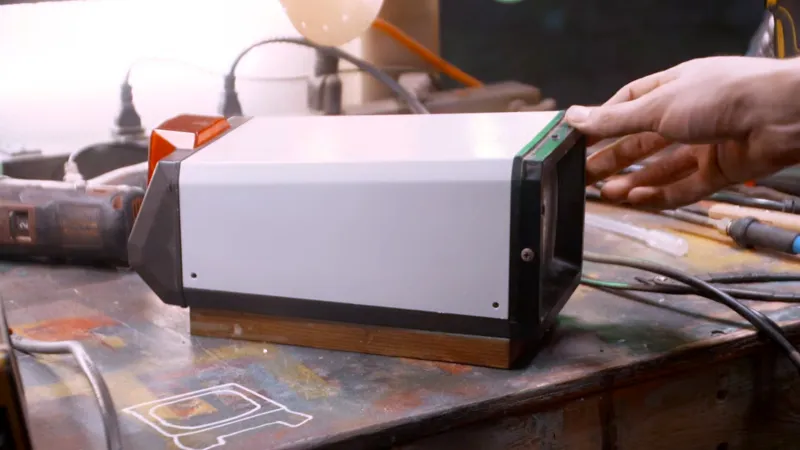
When we think of CRT camera viewfinders, most of us probably imagine the tiny CRTs you’d find in a 1980s camcorder. They’re super cute and a load of fun to play with, but they’re very much a consumer device. Professional cameras of the type you’d find in a studio had their own viewfinders, which were a lot closer to a small TV. They’re about as high quality as it gets for a monochrome CRT, and [Evan Monsma] has done the conversion to a general-purpose monitor.
On one side, this is a very straightforward hack, simply a case of tracing wires to identify the power and video pins. Given a tool battery, the monitor fires up and gives a super-sharp picture. What we like about this is the wooden base he’s made for the thing, at the same time rough-and-ready, and professional-looking from the outside. It has a routed space for the cables, and once mounted flush with the monitor base and given a bit of wood stain, it looks almost as though it was manufactured that way.
It’s likely most of us won’t find a broadcast viewfinder in the trash, instead settling at best for a little Chinese portable TV. But it’s still interesting to see these unusual devices. Perhaps it might make a good cyberdeck.



























































You must be logged in to post a comment Login