

Connect with us
DAPA Banner

Tech

AT&T Promo Codes and Bundle Deals: Save $50 in March

Published

on

Major wireless carriers: A necessary evil if you travel a lot, have a family, or are just interested in coverage that’s reliably consistent and widespread. AT&T is the third-largest provider in the US (first for 5G), with the largest coverage map. I’ve had various AT&T plans for more than a decade, first for just myself and now for my whole family, even though I only get one cell bar at my house and have to stand in one 5-square-foot patch of yard to make a phone call. And have lost entire days of my life to fighting unexpected random charges and upsells. (Verizon is somehow worse.) But anyway! AT&T is fine, it has all the latest phones, and there are some legitimately good perks, like no roaming in Canada or Mexico with select plans. If you know you’re going to have to go with one of the big guys, don’t sign up without checking out the below discounts first.

Save on AT&T Prepaid Phone Plans With the Latest Deals

An AT&T prepaid phone plan is one of the easiest ways to save big on your future phone bills. AT&T has a wide selection of prepaid phone plans, including 5G prepaid plans and multi-month long-term plans. For as low as $25 per month, you’ll get unlimited talk, text, and data. Plus, all AT&T prepaid plans include AT&T ActiveArmor mobile security, and are eligible for an eSIM or SIM card for as little as $0.99.

Get the new Samsung Galaxy S26 Ultra for $0

We on the WIRED Reviews team love the Samsung Galaxy S26 Ultra. We rated it a high 8/10 because of its built-in privacy display. We also loved the horizon lock to capture super steady video footage. Plus, it has excellent performance, great battery life, and a reliable quad-camera system. And right now, you can get a Samsung Galaxy S26 Ultra for free with an eligible trade-in (in any condition, but has a required trade-in of Galaxy S24+, Z Fold5, or newer).

Save Over $600 a Year With AT&T Fiber

AT&T Fiber claims to be the fastest internet network in America. You can find out for yourself (for less) with this new deal. When first time customers sign up for Fiber now, they’ll get 1 Gigabyte for only $37 per month. That’s over $600 in savings per year!

Advertisement

Are There AT&T Promos for Existing Customers?

But I already have AT&T, you might be saying—new deals never apply to me. Do you have AT&T internet, though? If, like me, you have AT&T for your phone plan and Xfinity or CenturyLink for internet, did you know you can save 20% off your AT&T bill every single month if you bundle your internet service with unlimited wireless? This applies to both current phone customers and current internet customers who don’t have both plans.

AT&T wants to reward you for your loyalty: when you sign up for AT&T Fiber and eligible wireless plans, you can get up to $150 in AT&T Visa Reward Cards. Be sure to check out the AT&T deals page for more details on that offer, along with other great ways to save.

AT&T Discounts for Professionals and Students

One of the reasons I went with AT&T in the first place is because my husband is a college professor and we get a generous 25% off our bill. This 25% discount applies for all teachers, as well as active military, veterans, first responders, and many medical professionals. Not one of the above? Students and union members can save $10 per line per month, and union members can also score 20% off accessories like cases, and stuff you used to be able to get with your phones, like chargers and cords.

How Can I Make My AT&T Plan Cheaper?

Not a new customer; not in a place to bundle; and not a teacher/first responder, in the military, or a student? All is not lost on the discount front. You can save over $800 a year on AT&T Wireless when you bundle four unlimited wireless plans with your current internet plan. (Savings based on 20% discount on four voice lines with eligible internet service, plus $10/month discount with eligible AutoPay & paperless bill, which starts within two bills.)

Advertisement

Don’t need four unlimited wireless plans? Check out if your employer offers a discount—a couple of mine have in the past, and you can save $10 per month per line on the unlimited plan. Check here to see if your workplace qualifies.

You can also get a discount on a new phone with an eligible trade-in, but the best deal yet may be the fact AT&T lets you try its wireless free for 30 days. Keep your current service and phone number while trying out AT&T’s network from your device—no catches or commitments. You don’t even need a credit card. It’s a great way to see if you get good service where you’ll be using the phone most.

Save More With AT&T Family Plans

If you want multiple people on your phone line or are adding a line for your child’s first phone, an AT&T Family Plan is one of the most cost effective ways to make the change. With AT&T family plans, you can mix and match any of AT&T’s unlimited plans to get great deals and serious discounts on any smartphone for each family member. Depending on what you choose, plans start at only $36 per month, per line (for 4 lines).

Choose AT&T for the Best Internet for Gaming

If you’re a big gamer, you’re going to want fast, reliable internet that’ll provide clear, bright graphics without laggy gameplay or interactive audio. AT&T Fiber with All-Fi promises to give gamers everything they look for in a service, with super fast speeds (up to 5 GIG), and tons of bandwidth for fast upload and download speeds.

Advertisement

Source link

Continue Reading
Click to comment

You must be logged in to post a comment Login

Leave a Reply

Tech

Congress Wants To Put The Law Behind A Paywall. Again.

Published

on

from the this-is-a-very-bad-idea dept

Every relevant court that has looked at this question — including the Supreme Court — has agreed: no one can own the law. When private standards get incorporated into binding legal requirements, the public has a right to access them freely. The Fifth Circuit, the DC Circuit, and the First Circuit have all reached the same conclusion through different cases over the past two decades.

So naturally, a bipartisan group of senators has reintroduced a bill to override all of that.

Senators Coons, Cornyn, Hirono, and Tillis have brought back the Pro Codes Act, a bill that would grant copyright protection to standards that have been incorporated by reference into law. That means building codes, fire safety codes, electrical codes, accessibility guidelines — the kind of stuff that governs whether your house is up to code and violations of which can carry civil or criminal penalties — would remain the copyrighted property of the private standards development organizations (SDOs) that wrote them.

That would be really, really bad — and also, according to multiple federal courts, unconstitutional.

Advertisement

The press release from these senators is really something. Tillis says the bill “protects a commonsense system that keeps Americans safe without costing taxpayers a dime.” Coons worries about “a penalty for the non-profit organizations that developed them and stand to lose their intellectual property.” The Copyright Alliance (a copyright maximalist org funded by the usual suspects in Hollywood) CEO calls it “a clear win for public safety, transparency, and economic growth.”

You’d think we were talking about some beleaguered group of nonprofits on the verge of financial collapse, valiantly producing safety standards out of the goodness of their hearts, about to be crushed by pernicious freeloaders daring to read the laws for free. The reality, as Katherine Klosek and Garrett Reynolds detailed here on Techdirt, is rather different. The main SDOs pushing this bill — the International Code Council and the National Fire Protection Association — are making more money than ever, with CEO salaries upward of $1,000,000, compared to a median nonprofit CEO salary of around $115,682. Their revenues have grown even as organizations like Public.Resource.Org and UpCodes have been providing free, unfettered access to these incorporated standards for years.

As the Fifth Circuit noted way back in 2002:

“It is difficult to imagine an area of creative endeavor in which the copyright incentive is needed less. Trade organizations have powerful reasons stemming from industry standardization, quality control, and self regulation to produce these model codes; it is unlikely that, without copyright, they will cease producing them.”

Twenty-four years later, the prediction holds up perfectly. The SDOs kept producing standards. They kept growing their revenue. They just also want Congress to hand them a monopoly over public law, because the courts wouldn’t.

Advertisement

And the bill is sneaky about it: it includes a provision requiring that incorporated standards be made “publicly accessible online,” which the bill’s supporters point to as proof of their commitment to transparency. But the bill explicitly says this access must be provided “in a manner that does not substantially disrupt the ability of those organizations to earn revenue.” That’s Congress writing profit protection directly into the definition of “public access to the law.” In practice, as Klosek explained last year, this means read-only access where you can’t download, copy, print, or link to the standards. That’s not access to the law. That’s a peek at the law through a keyhole, on terms set by a private corporation.

Meanwhile, the organizations actually providing genuinely useful, free public access to these laws — Public.Resource.Org, UpCodes, and others — would be exposed to copyright liability under this bill. So the Pro Codes Act doesn’t just fail to improve public access to the law. It actively threatens the entities that are already doing a better job of providing that access than the SDOs ever have.

So when the senators pushing this bill talk up the need for “non-profits” to make money, what they’re really doing is choosing which nonprofits deserve to survive — the (already extremely well-resourced) ones that write the standards, rather than ones like Public.Resource.Org that actually make those standards available to the public.

This bill has never received a committee hearing. Not in this Congress. Not in any previous Congress. The last time around, it was brought to the House floor under suspension of the rules — a process reserved for non-controversial legislation — and still couldn’t muster the two-thirds majority needed to pass. A growing coalition of libraries, journalists, civil society organizations, disability rights groups, and the NAACP has lined up against it.

Advertisement

They’ve lined up against this law because it’s bad. It locks up the law behind copyright.

The Supreme Court. Multiple circuit courts. A broad coalition of public interest groups. All saying the same thing: the law belongs to the public. But as long as the SDOs keep spending millions on lobbying, Congress will apparently keep trying to give it away.

Filed Under: chris coons, copyright, copyrighted law, incorporated by reference, john cornyn, mazie hirono, open standards, standards, thom tillis

Companies: public.resource.org, upcodes

Advertisement

Source link

Continue Reading

Tech

Artemis II astronaut puts all of our iPhone moon photos to shame

Published

on

When NASA allowed Artemis II astronauts to take their smartphones with them, we already knew it could lead to some epic phone shots of the moon. NASA astronaut Reid Wiseman took one such photo on his iPhone, just as the Orion spacecraft his crew was on approached the moon for a lunar flyby. The astronauts turned off all the lights inside the cabin to be able to take better pictures. In the livestream, Wiseman showed the camera a photo he took on his iPhone 17 Pro.

As 9to5Mac notes, he said on the livestream that he took the picture on his iPhone camera with an 8x zoom. NASA reportedly said that the image showed the Chebyshev crater, a lunar impact sight located on the far side of the moon, or the side we don’t see from our planet. Artemis II launched on April 1 for a 10-day journey, with four astronauts onboard the mission’s Orion spacecraft. On April 6, it flew farther away from Earth than any mission before it after it arrived in lunar space, reaching a distance of 252,756 miles from our planet and breaking the record set by Apollo 13. The crew finished the lunar flyby at around 9:35PM on April 6 and is now making its way back to Earth.

We’ll likely see more images of the dark side of the moon over the next few days as NASA releases them. The Artemis II crew is expected to splash down in the Pacific Ocean near San Diego on April 10.

Source link

Advertisement
Continue Reading

Tech

Despite being the Mini LED king, TCL seems reluctant to embrace RGB TVs

Published

on

To RGB or not to RGB, that is the quandary TCL finds itself in with its 2026 line-up.

TCL is the self-anointed Mini LED king. It’s made it its mission in life to sell more Mini LEDs than the competition and by all accounts, it has achieved that goal.

You would presume then, that it would like to sell all types of Mini LED but at its NXT Roadshow event in Paris, it sent out a rather confusing message, one that suggests that it’s not particularly fussed about RGB TVs.

RGB gets no respect

I’ve only seen a few RGB TVs so I’m not going to pray at the altar and say they’re the next coming of the TV Gods. But they may represent an inflection point, a new level of Mini LED performance that’s available at both premium and more affordable price points from the get-go.

Advertisement

It could, effectively, replace your standard Mini LED and I wonder if TCL is ever so slightly perturbed by this.

Advertisement

You’ve got Hisense who seem ecstatic about the potential of RGB. Sony are cautious like someone who has a big secret but doesn’t want to tell anyone just yet. Samsung sees RGB as its next mountain to conquer.

Philips and LG come across laissez-faire about RGB, believing that OLED is still the picture king. TCL doesn’t even like OLED – they’re all about Mini LED and out of all the TV manufacturers their stance is one I can’t comprehend. They seem disinterested to the point of being underwhelmed.

Advertisement
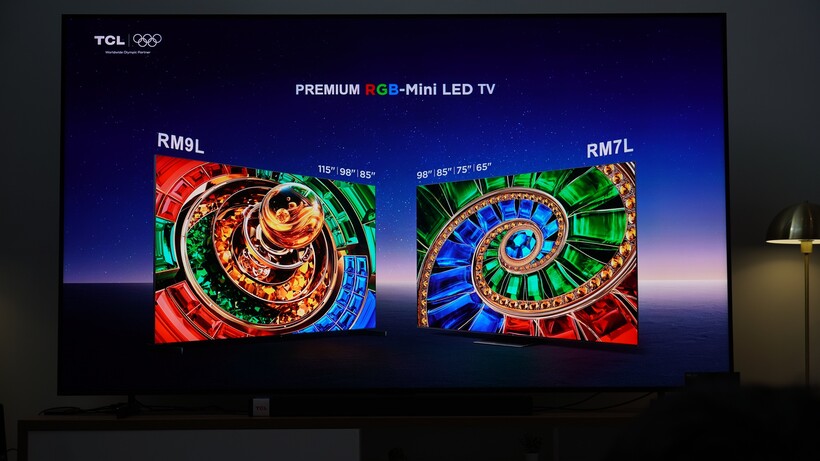
TCL Premium RGB TVTCL Premium RGB TV
Image Credit (Trusted Reviews)

The press release for the 2026 models raves about Super QD Mini-LEDs. But RGB TVs? They get two sentences with no mention of the model numbers.

The chasm between the excitement of SQD Mini-LED versus RGB Mini-LED could not be larger.

There’s an implication that TCL doesn’t believe the technology is quite there yet, something to be refined for its day in the limelight in a couple years’ time once the technology has matured. But if that’s the case, it makes very little sense to me.

Advertisement

While others will be making strides in improving RGB TV tech, TCL will be focusing on its SQD TVs. But will SQD be a long-term concern? I’m not sure there’s a long shelf life with these models.

Advertisement

TCL will be the only company that makes them – they are, in effect, a branding exercise in the same way that Samsung’s Neo QLEDs were Mini LED with a fancy name.

The whole TV market is moving towards RGB in some way, which seems to be the future, at least for the next few years, and TCL seem non-plussed about it.

TCL SQD-MiniLED colourTCL SQD-MiniLED colour
Image Credit (Trusted Reviews)

Perhaps this speaks to TCL’s confidence, a reflection of its current standing in the market where it can throw a disdainful look at RGB. This endorsement of SQD is a strength not a weakness, a sign that TCL goes its own way and won’t be made to follow the same path as others.

But if RGB takes off it might find itself having to play catch-up.

Advertisement

Advertisement

It’s a risk, I think, that TCL is not exerting more of a influence on RGB Mini LED. If RGB does take off, TCL will be stuck between supporting its flagship SQD TVs while trying to boost its RGB models. Producing two models could mean they cannibalize each other’s sales.

Or RGB could struggle to take off and TCL would be right, as long as SQD makes an impact. Somehow, I don’t think that will happen.

2026 will mark the true test of TCL’s standing in the market. It’s not playing catch-up as much in the UK anymore, it’s tussling with the experienced players in the same ring. But not grappling with RGB TV tech could see them susceptible to an unexpected knockdown.

Advertisement

Source link

Continue Reading

Tech

Samsung Weather now shows exactly what’s making you sneeze

Published

on

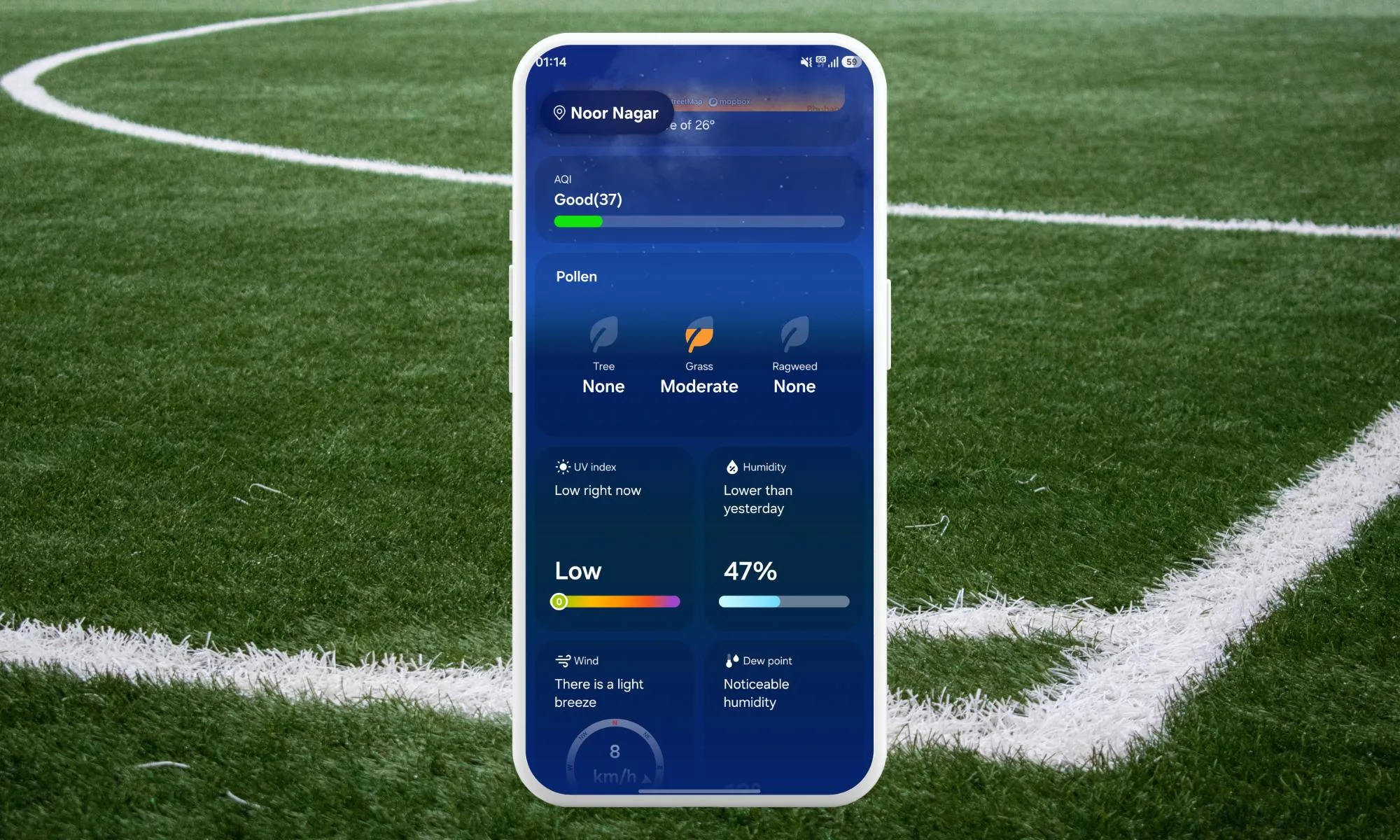
Samsung’s latest Weather update puts the focus where it matters right now, pollen. With allergy season ramping up, the app now shows what’s actually in the air so you can react before symptoms hit.

Version 1.7.30.8 changes how that data appears. Instead of a generic icon, you now get separate categories for tree, grass, and ragweed, making it easier to read conditions without digging deeper.

If you deal with seasonal allergies, the type of trigger matters as much as the intensity, and now that detail sits front and center.

Samsung also reworks how severity shows up, replacing a color scale with text labels. It’s simpler to read at a glance, though some users may find the loss of color cues less precise.

Advertisement

Clearer pollen info at a glance

The biggest shift is how the app presents daily readings. Instead of a single symbol, it splits conditions into tree, grass, and ragweed, giving you a clearer picture of what’s driving symptoms.

That added detail helps with everyday decisions. Tree and grass pollen peak at different times, so seeing them broken out lets you plan ahead with more confidence. If ragweed is high but grass is low, you’ll know what’s likely to trigger a reaction.

More than just pollen changes

This version also brings a few smaller refinements across the app. Moon phase icons have been refreshed, giving nighttime forecasts a cleaner and more consistent look.

Radar gets a practical tweak as well, with new shortcuts that link out to more detailed forecasting tools. That gives you faster access when you want more than the basic overview.

None of these changes overhaul the app, but together they make it feel more polished. Samsung is leaning into incremental improvements that add value without forcing you to relearn anything.

Who gets it and when

Version 1.7.30.8 is rolling out now, but availability is staggered. It’s currently tied to devices running One UI 8.5, so not everyone will see it right away.

Advertisement

Pollen tracking itself isn’t new. Earlier versions like One UI 8.0 still support it, just without the updated visuals, so you’re only missing the redesign if the update hasn’t reached you yet.

The rollout may take a few weeks to reach all devices through the Galaxy Store. If you rely on the app daily, it’s worth checking for updates soon, especially as allergy season picks up.

Source link

Advertisement
Continue Reading

Tech

How to customize a website template: 5 tips

Published

on

You’ve picked a website template, but now it looks like a hundred other sites. That’s the problem with templates. They’re convenient, but they feel generic right out of the box.

You want something that represents your brand. Not a cookie-cutter design that screams “I used template #47.” The good news? Templates are starting points, not final destinations. With the right approach, you can transform any template into a custom-looking site. We’ll show you exactly how.

Source link

Advertisement
Continue Reading

Tech

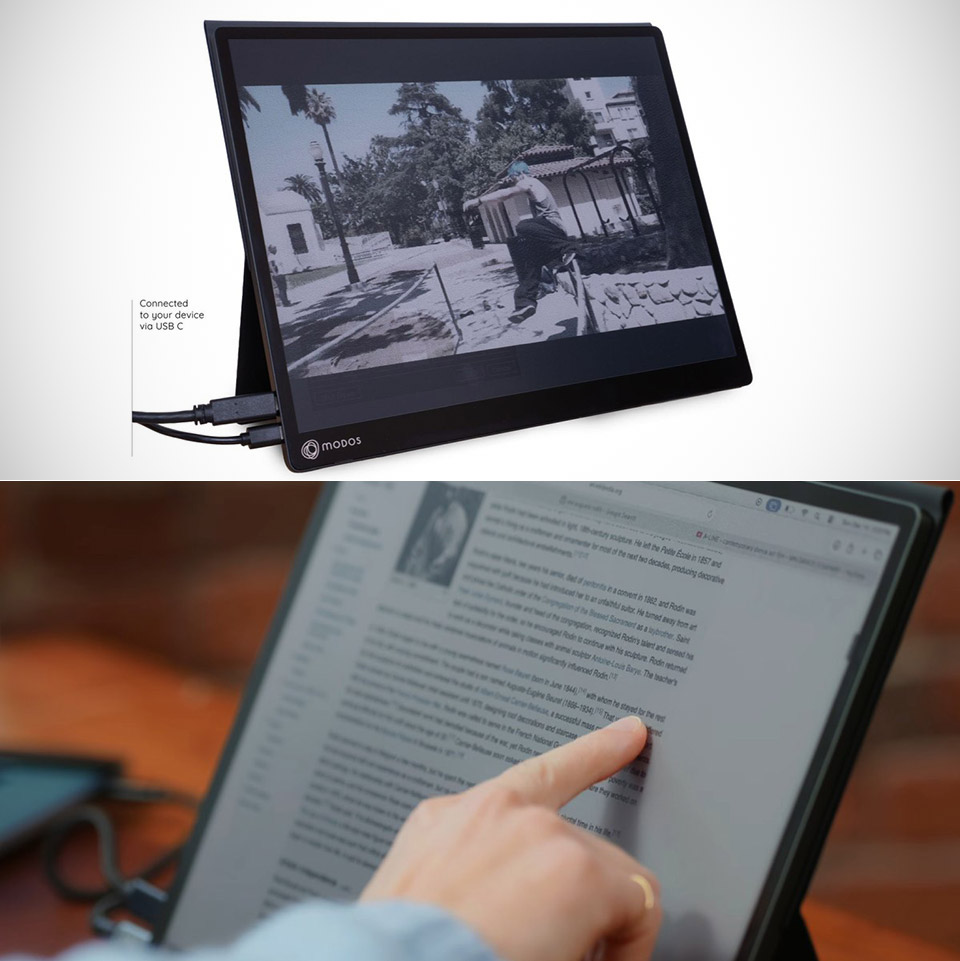
Modos Flow Turns E-Ink Into a 13.3″ 3K Portable Monitor Worth Using Every Day

Published

on

Modos Flow E-Ink Monitor
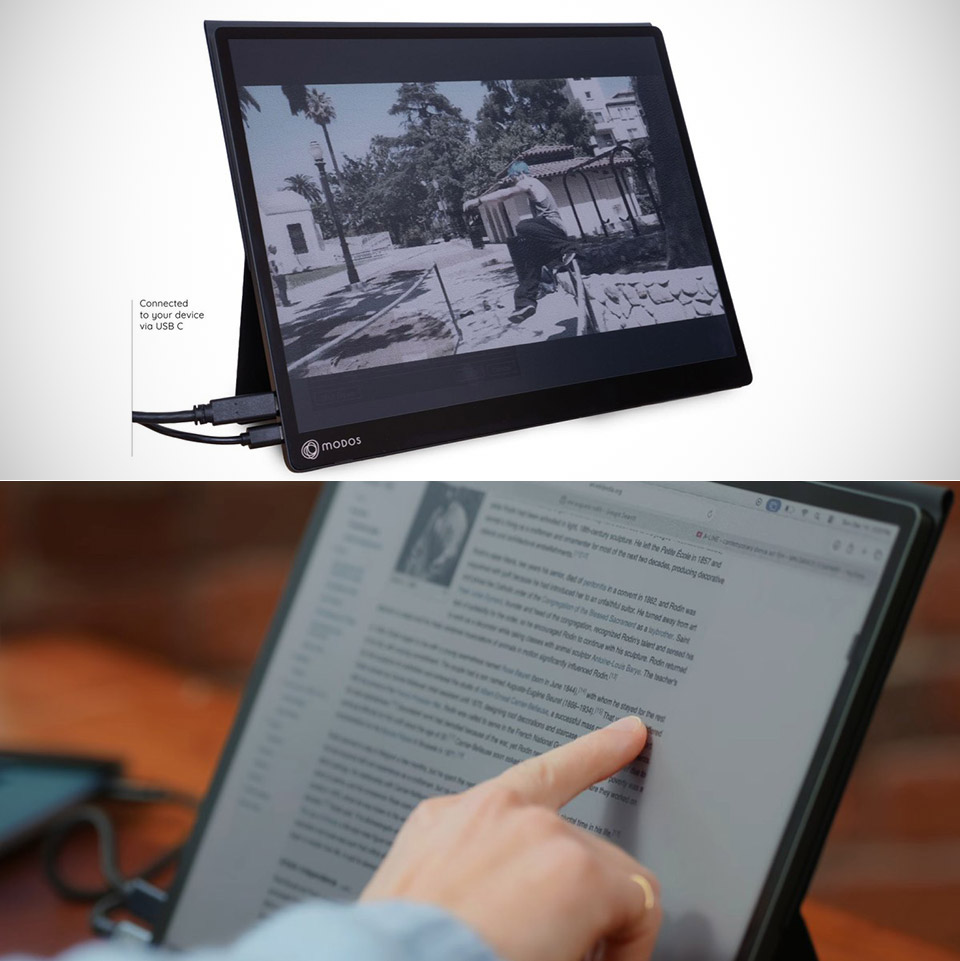
Long sessions in front of conventional LCD monitors can leave you with tired eyes and a throbbing headache. The Modos Flow aims to change that by combining the convenience of paper with the speed of doing serious work on a computer. This 13.3-inch portable display delivers excellent text and images with a smooth motion that will have many individuals switching to it from their primary laptop screen when they need to focus.


The screen has a 3200 by 2400 pixel display in black and white mode, resulting in a very crisp 300 pixels per inch. When you turn to colour, the resolution decreases to 1600 by 1200 with a less sharp 150 pixels per inch, but it still appears good for most documents and online pages. They also have a built-in frontlight that allows you to adjust the brightness and color to match the room you’re in without causing glare. Furthermore, it works well in direct sunlight since the reflecting surface does not bleach out like glossy LCD screens.

Sale


MNN Portable Monitor 15.6inch FHD 1080P USB C HDMI Gaming Ultra-Slim IPS Display w/Smart Cover…
  • Full HD Portable Monitor – MNN 15.6inch portable laptop monitor with 1920*1080 resolution, advanced IPS matte screen support 178° full viewing angle…
  • Double Type-C Port -For Plug & Play, the MNN monitor provides 2 Full Feature Type-C ports. Only One USB Type-C Cable is required to connect to the…
  • Lightweight Ultra Slim for Travel – As a portable external monitor,MNN portable laptop monitor easily accommodate to every suitcase and backpack and…

The refresh rate is 60 frames per second with fewer than 100 milliseconds of lag, which is fairly standard for a typical monitor but is really fast for an e-ink panel. You can also choose from four different viewing modes based on what you’re doing. Browsing mode prevents webpages from being disorganized and having excessive ghosting. Typing mode sharpens everything up, allowing you to focus on your work. Watching mode handles video playback better than some previous e-ink panels, although it still has limitations with fast-paced action. Reading mode simply prioritises contrast and lowers the noise surrounding your text.

Advertisement


You can use the touchscreen directly on the surface, but if you need something more precise, a stylus is provided for notes and annotations. You also get two USB-C ports that handle power and video, but firmware updates are expected to reduce the number of cables to one. The device works with Windows, Macintosh, and Linux laptops right out of the box, and it consumes significantly less power than a laptop screen, which should help you save battery life.

The monitor is constructed of metal, so it feels substantial and sturdy, but it only weighs about 700 grams without the cover. The cover is also quite flexible and may be used as a stand, as well as folded flat for transport. If you want to install it to your desk or a monitor arm, you can utilize the VESA mounting holes in the back. You’ll also find three buttons on the side that allow you to quickly modify the brightness, contrast, and mode with a short press or a longer hold.


Crowdfunding is set to begin soon on Kickstarter, following the success of their last Modos Paper Monitor development kit. If you are an early backer, you may view the pledge options on the campaign page to find out when you can expect to get one. Price is yet to be confirmed, however it should be relatively comparable to other portable monitors on the market.
[Source]

Advertisement

Source link

Continue Reading

Tech

S$100K+ to fly with your pet? S’pore’s 1st pet airline is booked out a yr ahead.

Published

on

On SingaPaw Air’s flights, pets roam the cabin freely, sit beside their owners & are even offered meal options

There’s no sugarcoating it. A US$84,000 (S$108,000) flight to San Francisco with your pet is likely out of reach for most Singaporeans.

But that hasn’t stopped SingaPaw Air, which bills itself as Asia’s first pet jet-share service, from attracting a small and growing group of people willing to spend tens—and even hundreds—of thousands of dollars for the experience of flying with their pets in comfort and privacy.

On its flights, pets can roam the cabin freely, sit beside their owners, and are even offered meal options, much like any other passenger. Every detail, from check-in to in-flight care, is designed for the well-being of both animal and owner.

One recent customer paid just over US$30,000 (S$38,500) for a one-way trip from Singapore to Hong Kong for two people and four cats. Another spent US$15,000 (S$19,300) to holiday in Hong Kong with her toy poodle. And the airline is receiving more than 100 enquiries a day, with some customers booking up to a year in advance.

Advertisement

There clearly is demand for the service—and it is one that founder Jamie Wong saw coming long before anyone else in the region did.

“For me, animals are family”

Wong’s path to building SingaPaw Air is not a straight line.

The 38-year-old started his career in medicine and used to work as a GP at Raffles Medical. But the pull of entrepreneurship eventually won out. He went on to build a five-branch medical aesthetics business and a telemedicine startup that completed two rounds of fundraising, both of which have since closed.

Image Credit: SingaPaw Air/ Jamie Wong

Throughout all of this, he was running TheAsianPawrent, an online community platform for pet owners in Asia, on the side—not as a business play, but out of genuine love for animals.

Wong shares his home with five cats and three dogs, has rescued birds and sent them to animal welfare charity ACRES for rehabilitation, and actively donates to local pet welfare communities. TheAsianPawrent started as a place where pet owners like him could come together to share knowledge, discuss issues affecting their animals, and find community around modern pet parenting in Asia.

Advertisement

For me, animals are not a side interest. They are family. That belief has shaped the way I think about services, community, and the future of pet-related businesses.

Jamie Wong, founder of SingaPaw Air

The longer he ran that community, the more clearly one pain point kept surfacing: travel.

Pet owners across the region were hitting the same wall—restrictive airline policies, stressful cargo holds, banned breeds, and mountains of paperwork. The infrastructure simply hadn’t caught up with how people actually felt about their animals.

That insight, combined with a very personal moment during COVID-19, when Wong found himself unable to bring his family’s dog along on a private plane to Malaysia, became the spark for SingaPaw Air.

Advertisement

“I realised that while I was able to fly over on a private plane, our dog obviously could not enjoy the same ease of travel,” he said. “That was the moment I realised there was a real-world problem that could potentially be solved.”

The business was initially self-funded

Wong founded SingaPaw Air about three years ago, in 2023. “The concept took shape over time, but that was when we began laying the groundwork to turn the idea into a real operating business,” he said.

The airline was initially self-funded, which meant that Wong had to “build carefully” in the early stages. This was followed by two rounds of angel investment, with the company beginning at a valuation of US$2 million (S$2.5 million), according to the founder.

Image Credit: SingaPaw Air/ Jamie Wong

Today, SingaPaw Air claims to be the first of its kind in Southeast Asia, with only a handful of comparable players globally, such as Bark Air and RetrievAir in the United States, K9 Jets in Europe, and Skye Pets in Australia.

While Wong does not come from a traditional airline background, his experience building businesses in regulated industries proved highly transferable.

Advertisement

He also pursued a personal interest in aviation, spending time in flight simulators to practice piloting and understand aircraft operations. He even took some flight lessons, which helped him grasp the operational side of running an airline.

Although this experience was valuable, getting SingaPaw Air off the ground was far from simple.

Beyond registering the company and sourcing aircraft, a big part of the process involved securing the right approvals, including from Singapore’s Animal & Veterinary Service (AVS) and the Singapore Tourism Board.

At the same time, Wong also spent significant effort building an internal team that truly understood the emotional and practical challenges of travelling with pets.

Advertisement

We intentionally built a team of pet owners because people who live with animals understand the anxiety, the logistics, and the level of care required in a very different way.

Jamie Wong, founder of SingaPaw Air

Prices start at S$7K, and that’s just for a short hop to KL

SingaPaw Air operates on a jet-share model, which allows customers to book individual seats rather than chartering an entire aircraft. This approach, Wong said, makes the experience much more accessible compared to a traditional private charter, which can cost upwards of US$100,000 (S$128,500).

By selling per-seat access, SingaPaw Air brings the entry point down to around US$10,000 (S$13,000) per seat.

Image Credit: SingaPaw Air/ Jamie Wong

Its current routes include Singapore to Kuala Lumpur from US$5,500 (S$7,000), Singapore to Hong Kong return from US$19,200 (S$25,000), Singapore to Tokyo return from US$34,400 (S$44,200), and Singapore to San Francisco one-way from US$84,000 (S$108,000), among others.

For those seeking a fully private experience, the airline also offers dedicated jet charters, where the entire aircraft is reserved fully for you and your pets.

Advertisement

Prices for full charters are significantly higher, often reaching six figures for long-haul trips.

For example, a one-way flight from Singapore to San Francisco costs around US$330,000 (about S$424,000). Even shorter routes, such as Kuala Lumpur, can cost around US$30,000 (S$38,500) one way.

To manage these flights efficiently, SingaPaw Air employs a flexible operational model, including contract charters, membership charters, and block-hour arrangements. This allows the airline to tailor how planes and seats are allocated depending on demand, route, and booking type, while maintaining a consistent, pet-focused experience.

Currently, SingaPaw Air works with several licensed commercial flight operators, including Air7Asia, adjusting aircraft and service setups as needed.

Advertisement

Not just a flight

(Left): A pet passport from SingaPaw Air, used to track a pet’s vaccinations; (Right): Boarding passes for SingaPaw Air flights./ Image Credit: @bentley_the_goodest_boi, @theasianpawrent_sg via Instagram

Onboard SingaPaw Air’s flights, a wide range of pets are allowed to fly beside their humans—there are no weight or size restrictions. The largest animal to board so far, according to Wong, was a Great Dane.

The airline also accepts breeds banned from cargo on most commercial carriers. Many airlines prohibit brachycephalic breeds—dogs with shortened snouts, such as French bulldogs and chow chows—due to a higher risk of respiratory distress in the cargo hold.

That said, SingaPaw Air takes extensive precautions to ensure these pets travel safely. Veterinary checks are conducted before every flight, and a certified canine first responder accompanies all journeys.

Pets also enjoy a streamlined clearance process that mirrors that of human passengers, with no need to arrive early. While animals must remain in carriers in the lounge, the aviation centre does not charge additional fees for them.

Image Credit: @bentley_the_goodest_boi, @air7asia via Instagram

What differentiates SingaPaw Air from simply “a charter with a dog on board” is its positioning as an end-to-end travel ecosystem. Beyond flights, the company handles complex paperwork such as vaccination records and import or export permits, processes that can take months for pet owners to navigate on their own.

Travel to Japan, for example, requires an eight-month documentation process, which SingaPaw Air manages in full, completely free of service charges.

Advertisement

It also works closely with the AVS to coordinate inspections for arriving pets. Since SingaPaw Air flights operate from Seletar Airport, which lacks the dedicated animal inspection facilities found at Changi Airport, the team ensures a smooth process by working directly with AVS officers there.

“We work very closely with them to notify them of our arrival date and time, then they will send a team over here to ensure that the whole process, the inspection, is done smoothly,” Wong said in an interview with CNA.

Countries are categorised by AVS based on rabies risk. Destinations deemed rabies-free or low-risk, such as Hong Kong, Japan, and the US, allow pets to travel and return without quarantine.

Meanwhile, countries assessed as rabies-affected, including Thailand, Indonesia, and Cambodia, require a minimum 30-day quarantine on arrival, making them effectively one-way destinations for most SingaPaw Air clients.

Advertisement

It’s still early days for SingaPaw Air, but the runway is long

While trust was initially the biggest hurdle, today SingaPaw Air receives over 100 enquiries a day, with repeat customers and pre-bookings up to a year in advance, showing that demand is genuine.

In the beginning, a lot of the challenge was proving that the model was real, safe, and professionally executed. Once people saw the first flights take place, confidence naturally started to build.

Jamie Wong

Image Credit: SingaPaw Air/ Jamie Wong

Currently, around 70 to 80% of SingaPaw Air’s flights are for relocation purposes. These aren’t frivolous holiday trips, but emotionally significant moves where, for many customers, putting their pet through cargo simply isn’t an option they’re willing to consider.

Wong shared that the most common feedback from customers is how calm their pets are when travelling alongside them. “That sense of calm and closeness is one of the clearest validations that [SingaPaw Air] is solving a real problem.”

For a growing segment of pet owners, this approach resonates. The shift in how people relate to their animals is real and accelerating. Pets today have Instagram accounts, birthday parties, and healthcare plans. The idea that travel should reflect that same level of care isn’t as niche as it once seemed.

Advertisement

With demand building—Wong declined to share specifics, including profit margins—SingaPaw Air has begun expanding its offerings. Its latest addition is the pet discovery flight: a one-hour trip designed to acclimatise animals to altitude changes and engine noise ahead of a longer journey, starting from US$1,300 (S$1,700) for one passenger and one pet, with discounts for existing SingaPaw Air customers.

Looking ahead, the company is in the process of acquiring its own jet, reflecting Wong’s long-term goal to handle everything in-house, not just act as a middleman. The founder also has his eye on domestic pet travel within Indonesia and Malaysia—markets with strong pet ownership cultures but where affordable, regulated pet travel options remain scarce.

To support this growth, another round of fundraising is planned, potentially later this year or next, as SingaPaw Air expands its services and capabilities.

“The market is still in its early stages,” Wong said, “so rather than focusing purely on market share, our goal is to establish SingaPaw Air as one of the most trusted and category-defining names in pet aviation in the region. If we continue to solve real pain points, market share will follow naturally.”

Advertisement
  • Find out more about SingaPaw Air here.
  • Read other articles we’ve written on Singaporean businesses here.

Featured Image Credit: Jamie Wong/ SingaPaw Air

Source link

Advertisement
Continue Reading

Tech

Amazon’s new USPS deal will see postal deliveries cut by 20 percent

Published

on

Earlier this year, Amazon threatened to cut US Postal Service deliveries by as much as two thirds. Now, the parties have reached tentative a deal that will see USPS deliveries reduced by 20 percent, The Wall Street Journal reported. While not as drastic as first menaced, the reduced volume will still deal a financial blow to the USPS.

“We’re pleased to have reached a new agreement with USPS that furthers our longstanding partnership and will let us continue supporting our customers and communities together,” an Amazon spokesperson told the WSJ.

Amazon is the USPS’s largest customer, accounting for 15 percent of its volume and $6 billion in revenue. A two-thirds cut would have been a disaster for the USPS, but a 20 percent reduction could result in more than $1 billion in lost revenue nonetheless. Amazon would have needed to scramble as well, as it relies heavily on the post office for rural and last-mile deliveries.

Amazon’s contract with the USPS was set to expire in September 2026, and in October Amazon said it wanted to strike a deal by December 2025. However, the USPS abruptly pulled out of negotiations, according to Amazon, and implemented a new bidding process for last-mile deliveries. “Our goal was to increase our volumes with USPS, not reduce them — until USPS abruptly walked away at the eleventh hour in December,” Amazon said at the time.

Advertisement

Amazon was reportedly considering expanding its own delivery network if the USPS deal fell through, though the company may have started those rumors itself to prod negotiations. The Postal Service decided to re-engage with Amazon after bids from several Amazon rivals fell short of its volume and revenue expectations, according to the WSJ‘s sources. The new agreement is still subject to approval by the federal Postal Regulatory Commission.

Source link

Continue Reading

Tech

AI startup Rocket offers vibe McKinsey-style reports at a fraction of the cost

Published

on

Indian startup Rocket is betting that the next big opportunity is the part before vibe coding: having AI help people decide what to build. It has launched a platform that produces consulting-style product strategies.

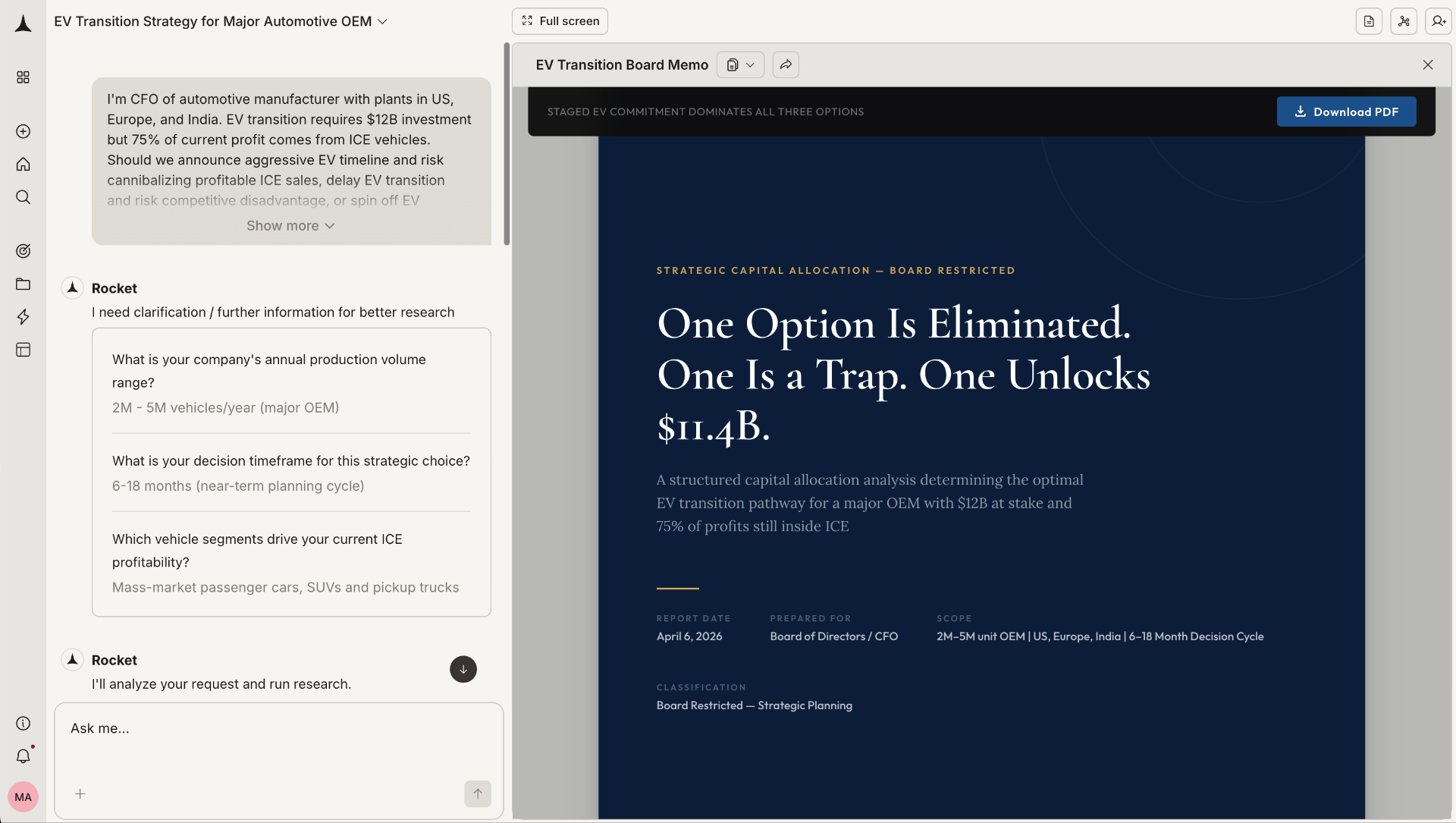
The startup, based in Surat, India, on Tuesday launched its platform, Rocket 1.0, which connects research, product building, and competitive intelligence in a single workflow. The platform generates detailed product strategy documents — including pricing, unit economics, and go-to-market recommendations.

As AI-powered coding tools proliferate — from platforms like Cursor, Replit, and Lovable to features such as Claude Code and Codex — writing code has become significantly easier and faster. “Everyone can generate the code now… it has become a commodity. But what to build is something which everyone is missing,” said Rocket co-founder and CEO Vishal Virani (pictured above), adding that “running a business and just building a codebase are two different things.”

TechCrunch briefly tested Rocket’s platform ahead of its launch and found that it generated product requirement documents in PDF format from simple prompts. These documents resemble consulting-style reports rather than vibe coding tools or chatbots, which largely focus on features and execution.

Advertisement

However, some of the analysis appeared to be synthesized from existing data — combining known pricing models, user behavior patterns, and competitive insights — rather than based on independently verifiable information. This suggests users may still need to validate outputs before making business decisions. Virani said the platform can offer human support when users encounter issues.

Rocket’s platform generates consulting-style reports Based on text prompts given by usersImage Credits:Rocket

The product can also track competitors, including changes to their websites and traffic trends. Rocket draws on more than 1,000 data sources for its analysis, including Meta’s ad libraries, Similarweb’s API, and its own crawlers, Virani said.

Rocket’s subscription plans range from $25 per month for building applications to $250 for strategy and research capabilities, and up to $350 for the full platform, including competitive intelligence.

Techcrunch event

San Francisco, CA
|
October 13-15, 2026

Advertisement

The $250 plan can generate two to three “McKinsey-grade” research reports alongside product builds, Virani told TechCrunch, positioning its higher-tier offerings as a lower-cost alternative to traditional consulting, which often costs thousands of dollars for similar strategy work.

Rocket raised a $15 million seed round in September from Accel, Salesforce Ventures, and Together Fund. Since then, the startup says it has grown from 400,000 to over 1.5 million users across 180 countries. It also reported an annualized average revenue per user in the ~$4,000 range, though it did not disclose detailed paying customer numbers. The startup said it operates at gross margins of over 50%, with 20–30% of its customers being small- and medium-sized businesses.

Advertisement

Rocket has a team of 57 employees and is headquartered in Surat, with operations in Palo Alto.

Source link

Continue Reading

Tech

Europe Gets Serious About Age Verification Online

Published

on

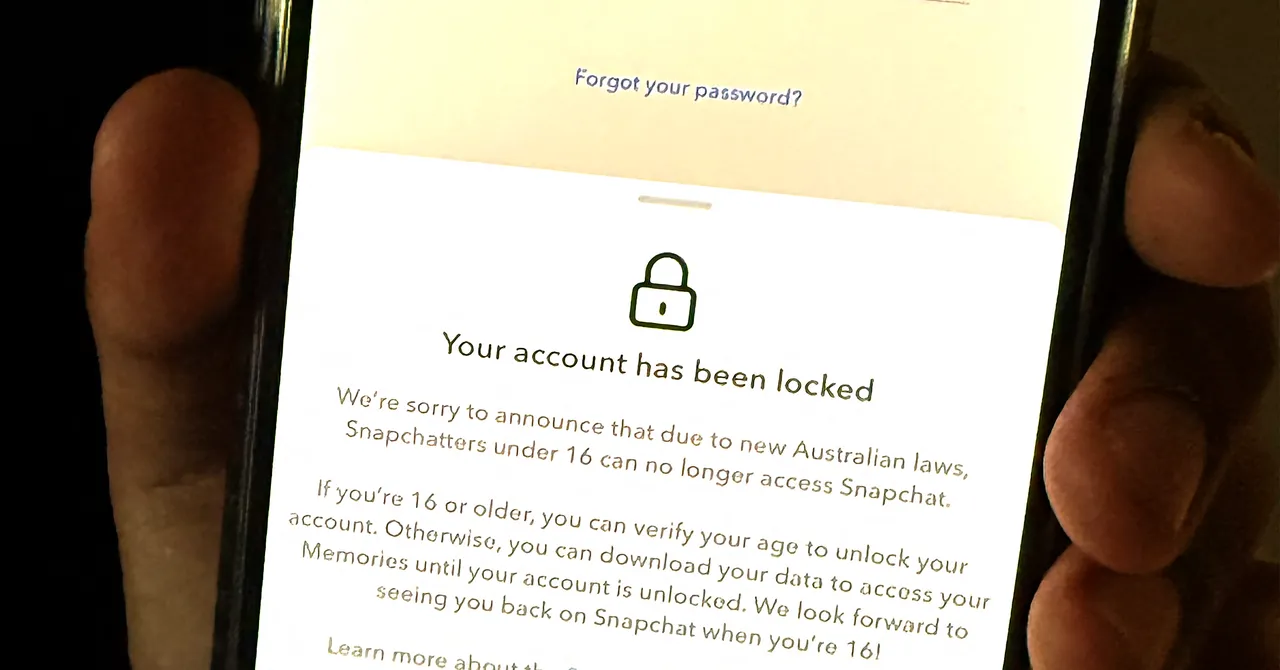
Five member countries are already experimenting with the solution this year, but they don’t all seem to be on the same page. It was pointed out at the press conference that France and Denmark are far ahead, while Greece, Spain, and Italy are lagging. This is why some experts are skeptical that the digital wallet will come into force within the established time frame.

An Alternative to the US Model

Among the players already visible in the European market for age verification are Yoti, which TikTok is using in Europe for this purpose along with other methods such as credit cards and documents, and Persona, which is an identity- and age-verification provider used by platforms such as Roblox, Discord, and Reddit.

The latter has a much more data-intrusive model, one that the Commission says it wants to avoid. In fact, its services include fingerprint verification, face recognition, screening a person’s face to compare it to one on a particular list, and the retention of all such data for up to three years.

In February 2026, it also emerged that Persona publicly exposed thousands of files online. The company responded by saying that this was an isolated testing environment and that the data was not actually exposed, and, in addition, that it does not work with US government agencies to provide it with data on users.

Advertisement

In any case, the US model shows the risks of age verification based on massive collection and analysis of identifying data. This highlights the need for a European alternative, one that shifts the concept to another level: not so much “prove your identity so I can check your age” as “just prove your age, without revealing anything else.”

Brussels is promoting an open source architecture, leaving room for both member states and market players to publish national or derivative versions. Scytales and T-Systems were mentioned during the press conference as services to look to in Europe. Whoever develops the system will still have to consider a “triangular” architecture, officials say: A third party certifies that the user meets the required attribute, i.e., being above a certain age, without the site receiving documents or other personal data. To make the concept more understandable, the Commission cited the experience of Covid certificates.

A Glaring Loophole

There remains, however, a clear distance between the technical promise and the social reality of the problem. As recounted in the press conference, the mini-wallet seems designed primarily to prevent the site from learning too much about the user, but much less to solve the most trivial bypass of all: a minor using an adult’s phone, credentials, or ID. In other words, the system may perhaps reduce the amount of personal data in circulation, but it does not automatically eliminate the risk of age verification being bypassed in practice.

Despite this, the mini-wallet currently appears to be the most promising solution. The Commission has clarified, though, that it is not the only possible solution. The door remains open to alternatives, provided they are “equally effective.” Pornhub is already involved in the pilot phase, while other operators have been invited to participate.

Advertisement

In short, Europe could become the first major policy laboratory where age verification stops being a formality and becomes a real infrastructure, with all the promise and—not to be overlooked—all the risks that this entails.

This story originally appeared in WIRED Italia and has been translated from Italian.

Source link

Advertisement
Continue Reading

Trending

Copyright © 2025