Even though I’ve been a bird-watcher most of my life, nothing prepared me for the experience of witnessing—on my phone—the entire process of birds being born in my own backyard.
I’ve maintained a regular “dumb” nest box for years, the birthplace of generations of black-capped chickadees. I’ve seen them going in and out, but I always wondered what was happening in there, especially the year I opened up the box in the fall and found five deceased fledglings at the bottom. How could this have happened? I wondered.
Thanks to the Birdfy Nest Duo smart nesting box and its built-in thermometer and hygrometer, I now at least have an educated guess. (The poor things likely overheated during an early season heat wave.) Being able to watch the entire nesting operation from all angles, starting with excavation and egg-laying and ending in hatching and fledging, has been one of the most educational and entertaining bird-watching experiences I have ever had, and something I’d recommend to anyone interested in birds, nature, or just life science in general.
Eye Spy
Birdfy makes three smart nest boxes in addition to the Duo. The original, the Birdfy Nest, has one camera—located inside the box—and can only hang from an eye hook screwed into the top. There’s also a version made out of solid fir in contrast to the others’ lightweight bamboo. I have also tested Birdfy’s artful Polygon, but persistent connection issues prevented me from using it this season.
Advertisement
I have not tested the first two single-camera versions, but I can’t imagine not having a second camera outside the hole to see who’s unexpectedly poking their head in. (At one point in my testing, it was a confused flicker; another, a curious starling—this is when I learned chickadees can hiss). It’s also critical to be able to pole-mount the box to keep it away from predators.
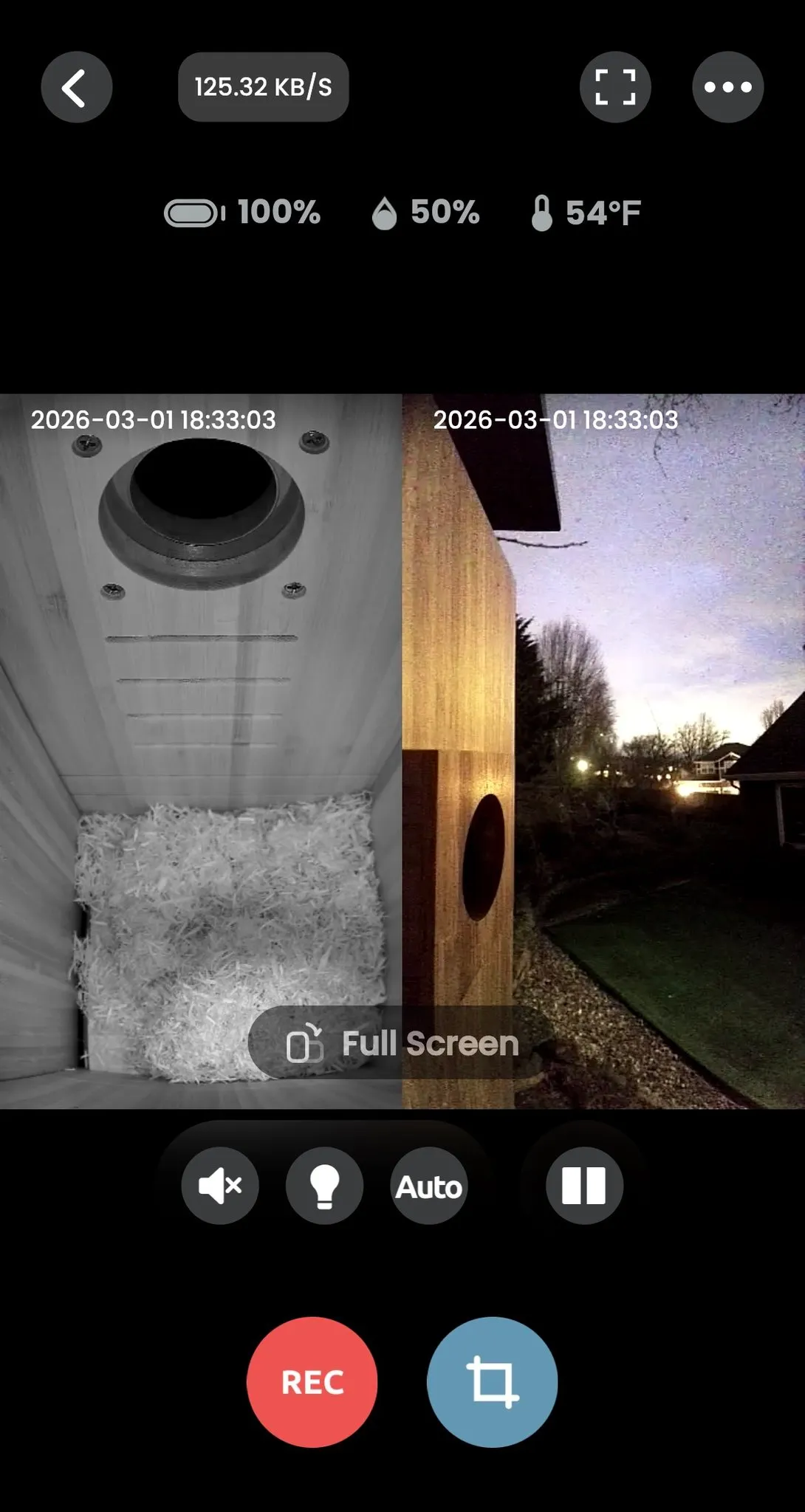
SCREENSHOT: Kat Merck
The Nest Duo is substantial—16 inches tall and about 8 pounds—with one 1080p HD camera facing the nest entry hole on the exterior and another tucked discreetly inside the nest box itself. There’s also an internal hygrometer (humidity) and thermometer (temperature) that show readings on the live view in Birdfy’s easy-to-use app. There are four easy-to-install, screw-on entry hole sizes for different species, from 0.9 inches for wrens up to 2 inches for starlings or bluebirds, along with corresponding metal predator guards to prevent chewing. The entire side of the box opens with a latch for easy cleaning and access.
In the app, each screen capture appears as a split-screen image, which you can tap to view 20-second videos (with audio) of both the inside and the outside of the box. The videos are immediately downloadable and shareable—no subscription is needed.
The screen captures work much like one of Birdfy’s smart bird feeders, but with images shunted to sections labeled “Prelude,” “Nesting,” “Brooding,” “Nestling,” “Fledgling,” and “End.” There seemed to be no rhyme or reason for what process the app thought was happening at the time (for example, if a nestling was simply turned around, the app asked if it should label it as “Fledgling”), but this story format was easy enough to ignore onscreen.
Advertisement
House Hunters
In March of this year, at the beginning of nesting season on the West Coast, I installed the Duo with the 1-inch entry hole on a pole stand and mounted the included solar panel below the box with hose clamps. Black-capped chickadees were consistently interested, popping in and looking around, but something was preventing them from staking a claim. It took me a while to realize they were looking askance at the holes on the metal tray “floor,” which is perforated for drainage. The idea is that this tray can be inserted into one of a series of slots to increase or decrease the nest cavity depth, depending on your local species’ preference.
New video and simulations of the sun’s surface can now bring you a closer look than we’ve ever had before.
The images were captured by the Daniel K. Inouye Solar Telescope, the largest of its kind in the world, located atop the volcano Haleakalā on Maui, which translates to “house of the sun” in English.
These new images of swirling plasma provide evidence that seems to confirm a long-predicted theory about what may be occurring on the sun’s surface.
As liquids of different densities flow past one another, they swirl together at the point where they meet, creating motion that resembles hurricanes or the mixing of ocean waves.
Understanding these complex interactions on the sun may help predict space weather, particularly severe disturbances called coronal mass ejections, which can overwhelm Earth’s protective magnetic field and damage Earth’s infrastructure, including power grids and communications networks.
Advertisement
To see the sun’s newest and most extreme close-up yet, check out the video embedded in this article.
Jesse Orrall
Senior Video Producer
Jesse Orrall (he/him/his) is a Senior Video Producer for CNET. He covers future tech, sustainability and the social impact of technology. He is co-host of CNET’s “What The Future” series and Executive Producer of “Experts React.” Aside from making videos, he’s a certified SCUBA diver with a passion for music, films, history and ecology.
See full bio
US AI leadership will be achieved through an open ecosystem of models, not frontier dominance, Jensen Huang said.
Nvidia is planning to use its $6bn deal with AI start-up Poolside to build open-weight AI models that can rival those made by China’s DeepSeek and Moonshot, the Wall Street Journal (WSJ) reported over the weekend.
The reports come after the chipmaking giant promised a combined $7bn investment into the AI start-up, including $1bn in equity at a pre-money valuation of $12bn. This marks a fourfold jump from the company’s 2025 valuation of $3bn.
Founded in 2023, Poolside is behind the Laguna series of open-weight models, which are small enough to run on a single Nvidia DGX GPU.
Advertisement
Nvidia’s reported plans to make its own open-weight models would also put it in direct competition with other US AI companies it backs, including OpenAI and Anthropic, as global businesses compete for dominance in the space.
Open-weight models are generally far cheaper to run and allow developers to make customisations to suit their needs.
And China is by far the leader in this space, according to data collected by Hugging Face, which found that Alibaba’s Qwen and related models were downloaded more than 3bn times over the past six months, placing it ahead of models from Google, OpenAI, Meta and other rivals by a large margin.
Nvidia founder and CEO Jensen Huang, in a recently published letter, highlighted the importance of open weights for AI leadership. “Our AI leadership will be judged not by one frontier AI model, but by whether the United States builds a strong, open ecosystem that diffuses into every sector,” he wrote.
Advertisement
“Open weights expand access to the AI economy. Start-ups, established businesses, universities and public institutions can build on advanced models without training one from scratch or paying frontier model prices for every task.
“Relying solely on closed models is not inherently safe; they can be breached, misused or fail in ways that outsiders cannot detect. And concentrating advanced AI capabilities behind a small number of closed models compounds that risk.”
Alongside its multibillion-dollar commitment to Poolside, Nvidia is also nabbing the start-up’s 109 employees. The non-exclusive nature of the deal means leadership will not be joining Nvidia and will continue working on their own projects.
Deals like these give Nvidia access to a company’s technical prowess, including research and staff, while minimising impact on the chipmaker’s overall efforts to develop its own technology.
Advertisement
In 2025, the company signed US AI company Groq in a licensing deal that saw much of its talent hired away by the chipmaking giant. The same year, it spent more than $900m to hire Enfabrica CEO Rochan Sankar and other employees at the AI start-up and license the company’s technology.
Poolside employees joining Nvidia will reportedly work on the company’s Nemotron project – which aims to develop open-weight models – according to WSJ sources.
Don’t miss out on the knowledge you need to succeed. Sign up for the Daily Brief, Silicon Republic’s digest of need-to-know sci-tech news.
Ray Hoe is betting on the small Japanese town of Toyama for his first hotel project
For some Singaporeans who make money in the stock market, a second property is the next move. Ray Hoe did too—just not one here.
The 41-year-old channelled his gains into a 77-year-old ryokan in Toyama, a small city on the Sea of Japan coast that most tourists pass through on the Shinkansen without stopping.
He had no hospitality experience, didn’t and still doesn’t speak Japanese, and had never visited Toyama before the property caught his eye.
Four years and a seven-figure investment later, Hooray Toyama, a boutique modern ryokan (traditional Japanese inn featuring tatami-matted rooms), is preparing to open its doors in Sept 2026.
Advertisement
An early interest in hospitality
Ray (left) and his local business partner, Xavi, at Toyama’s local festival in 2026./ Image Credit: Hooray Hotels
Ray has lived in Singapore all his life. He grew up watching his parents draw other people’s buildings—both were draftsmen, the people who translate an architect’s vision into technical drawings.
His father later became a small property developer in Malaysia. At the same time, his mother worked in the drafting studio of an architect who later founded Banyan Tree Hotels.
His parents’ work gave Ray an early interest in hospitality and property. Ray went on to study at the University of British Columbia before returning to Singapore to start his career at commercial real estate firm Jones Lang LaSalle, where he spent years selling international properties in London, Tokyo, and New York to Singaporean buyers.
Along the way, he kept meeting a certain type of developer, the ones who were doing hospitality projects rather than residential ones.
“They were the coolest people. Most generous, most fun, most artsy,” he said. “I thought: one day I want to be a hotelier like them.”
Advertisement
That opportunity came 15 years later. Ray made money in the stock market when COVID-19 hit and had to decide what to do with the gains.
With time on his hands during the pandemic, he began researching hotels in Japan online, looking for a way to finally pursue his long-held ambition of becoming a hotel operator.
Why Toyama?
Toyama’s famous alps comprising the Tateyama Kurobe Alpine Route./ Image Credit: Rakuten Travel
Ray knew from the start he didn’t want a hotel in Kyoto, Osaka or Tokyo.
What he wanted was a Japan that most visitors don’t see—not metropolitanism, but nature and culture and food and the particular quietness of a place that hasn’t been overrun by tourism.
That led him to the Hokuriku region, which stretches along Japan’s northwestern coast and includes Toyama, Ishikawa, and Fukui.
Advertisement
Toyama, in particular, stood out for several reasons. One was the Tateyama Kurobe Alpine Route, which Ray describes as the Japanese Alps in a compact, stunning setting and what he considers the best hiking experience in Japan.
The second appeal is the food. Having visited Japan many times—and even lived there for a year for a previous job—Ray had developed a particular appreciation for the seafood in the region.
“Every time I come back from Toyama, I find that the sushi in Osaka and Tokyo doesn’t match up to the freshness in the Hokuriku region,” he said.
The cold, clean waters of the Sea of Japan feed some of the finest seafood in the country, a fact well known to Japanese food lovers and almost unknown to international tourists.
Advertisement
The third reason was a calculated bet, and Ray was ready to ride the wave.
A significant part of that plan depends on spreading visitors beyond the crowded major cities into regional destinations, and it can be said that Toyama is exactly the kind of place that policy is designed to promote.
“More people will be willing to go deeper into Japan rather than seeing the same things,” Ray said. “And I thought: why not? Let’s try Toyama.”
Advertisement
The ryokanhas been around for 77 years
Exterior and common area of Hooray Toyama./ Image Credit: Hooray Hotels
The property Ray acquired has a relatively long history of its own.
Built 77 years ago, Hooray Toyama has passed through three generations of the same family. A grandmother founded it, and the third-generation owner invested millions in renovation before reopening in 2019, right before the pandemic closed the country.
Unable to survive two years of virtually zero tourism, the property went to auction in 2024.
Ray wasn’t the only one looking at it. He had actually spotted it earlier, but lost it to another bidder.
Assuming the opportunity was gone, he turned his attention elsewhere. He bought a small piece of land along the Shimanami Kaidō cycling route in Hiroshima, overlooking the Seto Inland Sea.
Advertisement
A year later, the winning bidder decided to sell the Toyama property. Ray moved quickly, redirecting the funds he had set aside for the Hiroshima project towards the ryokan instead. The Hiroshima land remains undeveloped for now, although Ray has plans for it in the future.
“I preferred not to buy a property where I have to build everything from scratch,” he said.
A seven figure investment
The ryokan in Toyoma fits Ray’s checklist of a modern boutique ryokan stay.
It features a 10,000 sqft space spread across four floors, a commercial kitchen, a roof garden open in summer as a beer garden, a cafe space that seats 40 to 50, a yoga hall, a library, two onsens, and 11 rooms already fitted out in traditional ryokan style.
Advertisement
“I felt that by taking on Hooray Toyama, I was giving it a chance to succeed. And if it succeeds, it proves to the previous owner that spending so many millions to renovate it was the right decision.”
Large public ofuro bath and Tatami room at Hooray Toyama./ Image Credit: Hooray Hotels
Ray shared that the purchase price of the Toyama ryokan was seven figures, which he financed with an equity loan against his Singapore property, together with some of his savings.
Monthly operating costs average around S$30,000, though they have spiked as high as S$60,000 in months when the boiler and the elevator both needed some attention since the property sat unused for four years.
Ray has drawn no salary for close to a year and a half. His advice to anyone considering something similar is blunt: don’t sell your primary residence in Singapore.
“Maintaining it provides a necessary contingency plan should business ventures abroad fail. If you sell it and something goes bad, it’s very hard to climb back onto the property ladder,” Ray advised.
Advertisement
Making Toyama easier to discover
(Left to right): Xavi (Japanese business partner), Ray and Anri (general manager of Hooray Toyama)./ Image Credit: Hooray Hotels
In a small town like Toyama, Ray found that there was no established international community or expat bubble to draw from.
But he did find people who spoke both English and Japanese fluently—including those with mixed parentage and people who had spent years living between countries.
His general manager, for instance, is half-Singaporean and half-Japanese. His front-desk staff is half-Brazilian and half-Japanese, while his chef is half-Filipino and half-Japanese. His barista is Thai, and two Taiwanese women on the team have lived in Toyama for more than 20 years. His Japanese business partner and co-CEO, meanwhile, grew up in California.
Together, they make up a team of three full-time and six part-time staff. Ray is the only one who still can’t speak Japanese.
He sees that as an advantage when it comes to serving foreign travellers.
Advertisement
“Because I can’t speak Japanese, I’m attracting local people who can speak English and Japanese to come work for me,” he said. “In a small town like Toyama, that immediately stands out.”
The team acts as a bridge for foreign travellers, helping them make restaurant reservations, recommending izakayas and advising on which attractions are worth the trip.
That can be particularly useful in Toyama, where restaurant reservations are often required, English menus are uncommon, and much of the information is only available in Japanese.
“The best thing about Toyama is to eat at the local restaurants,” he said. “The food is of high quality, it’s of value, [and] it’s not ridiculously expensive like Tokyo.”
Advertisement
More than just a place to stay
Ray’s mother at their café and restaurant space at Hooray Toyama./ Image Credit: Hooray Hotels
Ray also wants the hotel itself to give guests a taste of what he values about the region.
Breakfast is served in the café space, with house-made sourdough bread and coffee. When the baker he had originally lined up fell through, he called his mother, who came to Toyama for three months and trained the team using a starter she had brought from Singapore.
At night, the shared restaurant space is closed for regular service but open for private chef pop-ups, an initiative Ray is developing to bring the local Toyama community and hotel guests together.
Rooms at Hooray Toyama start from around JPY¥14,400 per night (roughly S$120), with pricing varying by season and weekend demand, and bookings are open on Trip.com, with the ryokan set to open in Sept.
From the Shinkansen station, Ray encourages guests to walk the 15 minutes to the hotel not just for practicality, but because the route takes you past Toyama’s old trams, some 80 to 100 years old.
Advertisement
“As you walk, you get transported back in time. It’s quiet. It’s like imagining what your parents would experience if they came to Japan during the Showa era,” he reminisced.
Unlike traditional ryokans, Hooray Toyama doesn’t include a kaiseki dinner, which keeps pricing more accessible while still offering the full ryokan experience. “It’s a mini resort in a small hotel in the city,” Ray said. “I wouldn’t expect you to stay in your room all the time.”
Getting the hotel going
Early signs have been encouraging. The hotel has been running a soft launch over the past two months, with friends and family of the team staying at discounted rates.
The response has been largely positive—one group of eight guests from Taiwan arrived for a two-night stay and eventually extended it to a full week.
Advertisement
Ray has been documenting his journey on TikTok, with one video even racking up close to 700,000 views.
Ray and his local team at Hooray Toyama./ Image Credit: Hooray Hotels
Getting there wasn’t a smooth journey, though.
Ray only managed to secure his hotel license in Jun after four years—only for his visa renewal to be rejected shortly after under stricter immigration policies from Japan’s administration under Prime Minister Sanae Takaichi.
He’s found a co-partner to run operations on the ground while he handles the backend from Singapore, and he’s not giving up: he intends to head back to Toyama soon.
Ray’s eventual goal isn’t just to stop at one hotel.
Advertisement
Currently, he is consulting with an architect on plans to build a three-storey hotel with sea views on his land in Hiroshima. It will be a different scale from Toyama but based on the same philosophy of being a boutique property in a place with something to offer that visitors haven’t yet fully discovered.
Ray projects a 10% return on investment over 10 years. But he isn’t in a rush to see returns, knowing that time plays a crucial part in this huge investment of his.
For now, the hotelier’s measure of success is humble: get the Sept opening right, accumulate the first real guest reviews, and prove that a Singaporean who doesn’t speak Japanese can run a ryokan in a small Japanese town that most people have never heard of.
More than half of Gen Z employees were found to be more open about pay transparency in the workplace.
Since coming into effect in early June, the EU Pay Transparency Directive dictates that employers have to acknowledge a new set of rules and guidelines governing how pay is discussed and related information is shared.
Designed to reduce pay inequality in the workplace, the Directive means organisational leaders must provide job applicants with details on initial pay or pay ranges and ensure that job vacancy notices, titles and recruitment procedures are gender-neutral and non-discriminatory.
Employers are also limited in their line of questioning, mainly, they are prohibited from asking candidates about previous salaries. Information regarding an employee’s pay level and how this is determined must also be made more accessible.
Advertisement
Recruitment agency Robert Walters, in the months of June and July, conducted research to explore how modern Irish professionals regard the often taboo topic of pay transparency in the workplace. The company collected data from 1,000 Ireland-based employees aged 18 and older.
What was discovered is that Gen Z aged professionals in particular are more likely to openly discuss their salary at work. 54pc of contributing Irish Gen Z employees were found by Robert Walters to be “disputing existing workplace taboos and discussing their salaries openly with colleagues”.
According to the report, this suggests that, in the wake of the EU Pay Transparency Directive, “the drive for salary transparency is not solely a top-down agenda,” particularly as younger generations of the workforce advocate for openness and transparency in pay discussions.
Commenting on the results of the report, Suzanne Feeney, the country manager for Ireland at Robert Walters, said, “While policy changes are mandating organisations to disclose salary and reward data publicly, we’re also seeing this practice at play at a grass-roots level.
Advertisement
“In fact, it’s Gen Z who are increasingly challenging the traditional attitudes of discretion and confidentiality and opting to open up the conversation around salary with colleagues.”
The age divide
This push for greater transparency is not a motivator amongst all age-based cohorts, found the research. Older employees who took part in the survey were found to be less concerned with discussing financials than their younger counterparts.
Only 29pc of professionals aged 45 to more than 61 explored the topic openly, compared to 41pc who argued it is too personal a matter. From a Gen Z perspective, the report indicated that 38pc of participants in this group don’t perceive any barriers preventing them from openly discussing their salary.
The scenarios in which they most often choose to discuss the issue tends to be if it is with a close colleague (32pc) or if there is a situation in which the sharing of such information is reciprocal (22pc).
Advertisement
Feeney said, “Leaders are now managing workplaces with up to five different generations, each with their own views on issues like salary transparency, workplace culture and employer expectations. For some, pay remains a private matter.”
She added, “As the EU Pay Transparency Directive comes into full force in Irish workplaces, professionals will gain more autonomy in requesting information around their own pay and average pay levels within their organisation. Management teams and leadership will still play a critical role in setting the tone for what is appropriate when salary is discussed in the workplace.
“Professionals have different expectations of salary transparency, but fairness and inclusivity should always be prioritised. When conversations stay constructive, workers don’t risk sharing any information they don’t feel comfortable with, and any discrepancies or inequalities can be identified and quickly addressed.”
In early July, job search platform Mokaru analysed nearly 1.8m global job listings posted between the start of April and end of June on the career sites of 48,758 employers, across more than 46 applicant tracking systems. What was noted is that many organisations and countries have yet to fully adapt to the new rules.
Advertisement
Don’t miss out on the knowledge you need to succeed. Sign up for the Daily Brief, Silicon Republic’s digest of need-to-know sci-tech news.
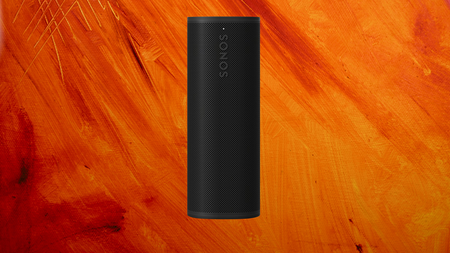
Precision engineered drivers give the Roam 2 a size-defying clarity and bass that make it easy to forget how small the speaker actually is once music starts playing across a garden, a campsite, or a crowded beach.
Advertisement
In fact, to give you more perspective, one of our tech experts, Kob Monney, has reviewed the Sonos Roam 2 in full and praised its clear, detailed midrange performance alongside its strong water resistance and sensible dedicated Bluetooth button.
Kob also singled out Wi-Fi and Bluetooth streaming as one of the Roam 2’s strengths, and that flexibility shows up clearly across ten hours of battery life that cover a full day out, helped by a dedicated button that switches from home Wi-Fi to Bluetooth outdoors.
Automatic Trueplay fine tunes the sound for whatever room, garden, or open space the Roam 2 ends up in, the sort of detail our Best Bluetooth speakers 2026 roundup tends to single out in the top contenders.
Advertisement
Stereo pairing is also on offer, letting two Roam 2 units link together for fuller sound across a room, and the pairing works even with the original Roam for anyone building on speakers they already own.
If you want rugged, Wi-Fi and Bluetooth capable speaker with ten hours of battery and Sonos level sound, £139 gets you exactly that while also saving £40 off the £179 RRP before the reduced price disappears.
Earlier this month I noted that Elon Musk’s Starlink is giving very unsubtle indications that the company wants to jump into the wireless business. I also noted that there’s a very long list of reasons why this isn’t likely to go well for him, ranging from the extremely high cost of network build-outs, to the fact that entrenched giants like AT&T and Verizon are very good at crushing insurgents.
As a launch gets closer we’ve seen more details into how Starlink actually hopes to try and make a wireless phone service work. Experts have already noted that the low-Earth-orbit Starlink satellite network is generally too congested to scale in the way the SpaceX IPO claims it can. The IPO projects a jump from 10 million to 300+ million in just a few years; an impossible feat.
Some had speculated that Starlink would accomplish this by buying a company like T-Mobile. The company also is poised to buy around $17 billion in AWS-4 and H-block wireless spectrum licenses from Echostar after Brendan Carr specifically launched an “investigation” into Echostar making it possible.
But instead of buying T-Mobile, Musk seems convinced that he can launch a nationwide wireless phone service by simply plunking down thousands of meshed femtocells installed on customer rooftops alongside existing LEO satellite dishes. Such femtocells would eat up backhaul capacity shared with the already capacity-constrained satellite-delivered broadband.
Advertisement
Even normally staid analysts at industry trade mags have called the idea incredibly stupid:
“This ranks as one of the top three dumbest ideas in my four decades of being in this industry,” said Earl Lum, the founder of analyst company EJL Wireless Research. What’s currently unclear is SpaceX’s precise definition of a small cell, but a typical outdoor small cell would come with power output of 5 watts per channel, in Lum’s book, and be difficult to install at residential properties.
“You need a real antenna in three sectors. To deploy this, it means you have to have a pole on a roof that’s good enough to hang three radios and three antennas, which is going to be hard,” he said. “You would have to go through the standard permitting for any macro cell site, and at that point why do you want a small cell?”
Keep in mind that Musk’s companies (especially Starlink and Tesla solar) don’t really have, or believe in, functional customer service. So the idea that existing Starlink customers are going to make all this work without coherent support is another wrinkle. There’s very little indication this would work; and it’s near impossible to make it scale up in urban areas where they’d compete with AT&T and Verizon.
Musk and friends may belatedly realize the unworkable nature of the idea later, at which point they just gobble up T-Mobile, which has steadily become shittier and shittier in the wake of the Sprint merger (precisely as deal critics predicted). Though even that would be very expensive and include lengthy, cumbersome integration, with no guarantee of meaningful success.
An anonymous reader quotes a report from Gizmodo: Dr. Dre, the pioneering rapper and seven-time Grammy-winning producer behind hit songs like Tupac’s “California Love” and Eminem’s “The Real Slim Shady,” is very much pro using artificial intelligence tools to make music. In an interview with the New York Times, Dr. Dre and Interscope Records co-founder Jimmy Iovine spoke about artificial intelligence’s recent foray into music production, with the producer characterizing those who oppose AI song generation tools as “afraid of learning new things.” “I don’t see it as a threat. I think the only people that see it as a threat are the people who have trouble creating,” Dr. Dre said. “I had a discussion with a few people a few days ago. They were against AI, and I’m like, ‘OK, you sound like the person that would have been against the drum machine when it came out.’ Or synthesizers, right?”
[…] Iovine, the music executive and Dr. Dre’s partner in Beats by Dre, for his part, says he doesn’t “see the downside at all.” “There will be some crappy music. There’s crappy music now,” Iovine told the NYT. “In the studio, when gifted people have AI, they’re going to make better records.” Dr. Dre said he uses AI in producing “as a tool to see what it would do with what I just did.” The award-winning producer also said he is definitely not alone among his peers in his stance on AI either: many producers use AI but fear to admit it. Iovine calls them “closet AI producers,” and says Timbaland, the four-time Grammy-winning singer-producer behind a long list of hits like “Promiscuous” with Nelly Furtado, is also one.
Muneera Bano and Didar Zowghi of CSIRO explore the human factors that often lead to AI bias.
In the United States, leading HR software company Workday is currently facing a lawsuit over its use of job screening tools powered by AI which allegedly discriminated against applicants based on factors such as age, disability and race.
The company, whose hiring software is widely used by large employers around the world, has denied the allegations.
The case is one of many examples of AI systems alleged to have caused discriminatory harm. When AI systems replicate and amplify discrimination, they blur the boundary between technical error and systemic injustice, turning bias into a digital harm.
Advertisement
And while our first instinct might be to blame the algorithms, they don’t decide what they can generate, what safeguards are built into them, or how a company responds when incidents of discrimination are reported. People make those calls long before an AI produces any output.
That is why technical fixes to AI systems are not enough. What is needed is an overhaul of AI ecosystems to ensure they are more inclusive.
A broader pattern
AI systems quietly narrow who gets seen as competent, employable or fit to lead.
For example, in a 2025 study, we tested how two AI models, OpenAI’s GPT-4 (which has now been retired) and Microsoft Copilot, represented software engineers in a simulated recruitment exercise: 300 candidate profiles for four job roles, followed by recommendations and generated images of each AI model’s preferred candidates.
Advertisement
Both models favoured male profiles, especially for senior roles. Their images also skewed towards engineers who were younger, slimmer, and lighter-skinned. The models were reproducing associations embedded in language, imagery, employment records and assumptions about who belongs in the profession.
These outputs don’t stay contained to a research study. AI-generated recommendations are entering hiring, education and public services.
Even when AI systems operate across different languages and cultures, they often reproduce predominantly western values, assumptions and ways of understanding the world. The wealthy countries have become the main beneficiaries of AI, which widens global inequality.
In another study from 2025, we manually reviewed reported AI incidents.
Almost half involved a diversity or inclusion issue, with racial, gender and age discrimination most prominent. The harms traced back to different points in the AI development life cycle: non-diverse training data, and neglected diversity and inclusion principles during design, development and deployment.
Why technical fixes are not enough
Technical work matters, including bias identification, re-balancing datasets and adjusting outputs. But these fixes often treat bias as a property of the AI model, when much of it originates from outside the system.
People decide what data to collect, how to label and categorise it, and whose experiences are important. These decisions are shaped by history, cultural norms, institutions and existing power imbalances.
Wherever society has linked leadership with men, technical skill with lighter skin, or innovation with youth, AI models learn from those associations and formalise, automate and repeat them at a larger scale.
Bias also usually appears through the intersection of multiple identities, such as gender, race, age, disability and class. A system that looks fair when each identity is tested separately can still disadvantage people at the overlap of several.
Advertisement
Building a more inclusive AI ecosystem
That’s why building a more inclusive AI ecosystem requires interdisciplinary knowledge, such as educating AI engineers about social science theories to help them understand the social origin of bias.
Inclusive AI is not about political correctness; it is about upholding human rights, preventing harm, ensuring justice, and building trust.
It also requires genuine participation from affected groups and sustained attention to the power structures these systems operate within. AI development teams should test not just whether a model is accurate, but whether its benefits, errors and harms are distributed fairly across different groups.
Together, this would help ensure tech companies better understand the nature of a bias once it’s manifested through AI and therefore develop new methods or tools to minimise the harm it causes.
Algorithms don’t decide which data matter or what level of risk is acceptable. People make these choices. It’s high time tech companies remember that. The focus should not just be on fixing a biased algorithm, but rather on examining the human decisions that allowed the risk of harm, and who was missing when those decisions were made.
Dr Muneera Bano is a principal research scientist at CSIRO’s Data61 and an internationally recognised researcher in responsible AI. She leads research on diversity and inclusion in AI, developing practical engineering methods and governance approaches that help organisations design AI systems that better serve the people and communities they affect. Her research bridges software engineering, AI governance and human-centred design, with a strong focus on translating evidence into practice through collaboration with government and industry.
Advertisement
Prof Didar Zowghi is senior principal research scientist at CSIRO’s Data61. She leads the science team in ‘Diversity and Inclusion in Artificial Intelligence’ and ‘Requirements Engineering for Responsible AI’. She built a research team to pioneer a new research area exploring the challenges and opportunities of diversity and inclusion in achieving responsible AI.
Don’t miss out on the knowledge you need to succeed. Sign up for the Daily Brief, Silicon Republic’s digest of need-to-know sci-tech news.
General Motors electric vehicles, including ones built in partnership with Honda, are now facing increased scrutiny from the top U.S. auto safety regulator after hundreds of incidents, more than 20 crashes or fires, and at least six injuries.
The brake problems also extend to some non-EV models, including the Chevy Colorado, GMC Canyon, and the Buick Enclave and Envision. More than 1 million vehicles may be affected.
The National Highway Traffic Safety Administration (NHTSA) first started its investigation in April 2024 after reports of trouble from owners of 2023 model year Cadillac Lyriq vehicles. The agency’s Office of Defects Investigation (ODI) said Monday that it was upgrading this probe to what’s known as an “engineering analysis.” That’s the highest level of investigation that ODI performs, and is often a step the office takes before telling a company to issue a recall.
The initial complaints ODI received two years ago typically involved owners describing receiving a “Brake System Failure” message when starting up the vehicle, or after coming to a complete stop. GM performed “several internal investigations” into the issue, according to ODI, and determined that the problem was linked to fractures in the spindle of its “eBoost” brake-by-wire system.
Advertisement
But ODI said on Monday that it kept receiving reports of a loss of braking assistance that were “inconsistent with GM’s description of a spindle failure.” The additional reports described an “immediate loss of brake assist” while a customer was in the process of braking to slow their car down, which the safety regulator said “could result in extended braking distance, which increases the risk of a crash or injury.” ODI said it needs to do a further analysis of the potential for failures in the eBoost system.
The eBoost system was introduced in 2019 and gradually rolled out to more models over the years. The system ditches a traditional mechanical link between the brake pedal and the braking system, opting for an electronic one instead. This allows GM to change the brake “feel” in different driving modes. The automaker put eBoost on its most popular EVs, like the Blazer EV, Equinox EV, Cadillac Lyriq, and the Honda Prologue and Acura ZDX, which it made with Honda in a joint venture. The Cruise Origin — the purpose-built electric autonomous vehicle with no steering wheel or pedals, which GM abandoned in 2024 — also used eBoost.
In one crash reported to NHTSA, the driver of a 2025 Lyriq said they lost their brakes while trying to pull into a parking space in front of the store. The vehicle drove over the curb and crashed through the store front, coming to rest “mid-way in the store, amidst the furniture and store structure,” according to the driver.
In another, the driver of a 2024 Blazer EV said they had to “deliberately steer the vehicle into a concrete curb” to slow it down and avoid a “catastrophic intersection collision.”
Advertisement
When you purchase through links in our articles, we may earn a small commission. This doesn’t affect our editorial independence.
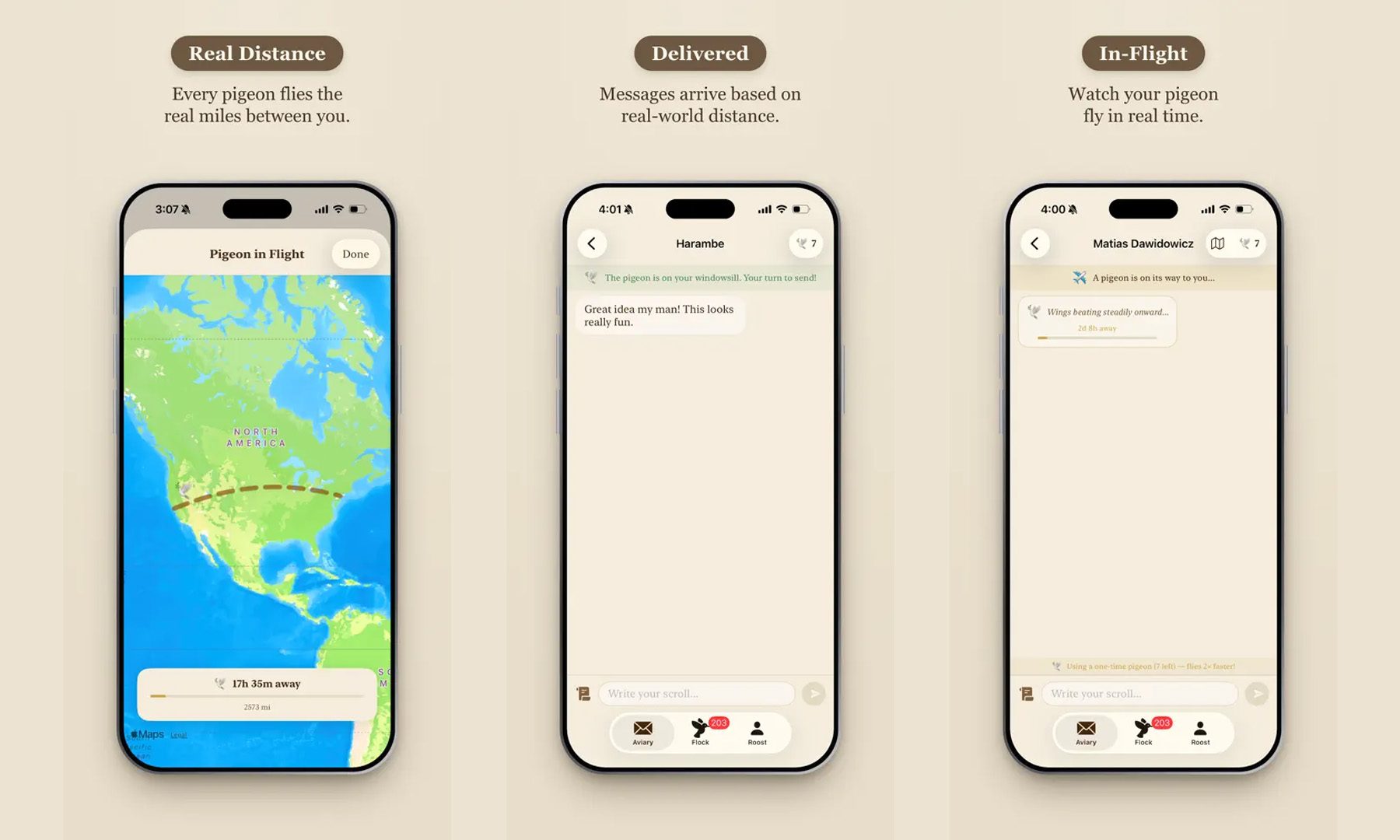
For decades, tech has been obsessed with making communication faster. Now, apparently, we’ve had enough. As The New York Times reports, the latest trend is slow tech, with apps like Carrier Pidge and Roost deliberately making messages take minutes, hours or even longer to arrive. Yes, we’re talking about digital carrier pigeons. Carrier Pidge launched in April and recently jumped from a few hundred users to more than 75,000, while Roost reportedly reached 650,000 downloads this month.
Apparently, waiting is cool again
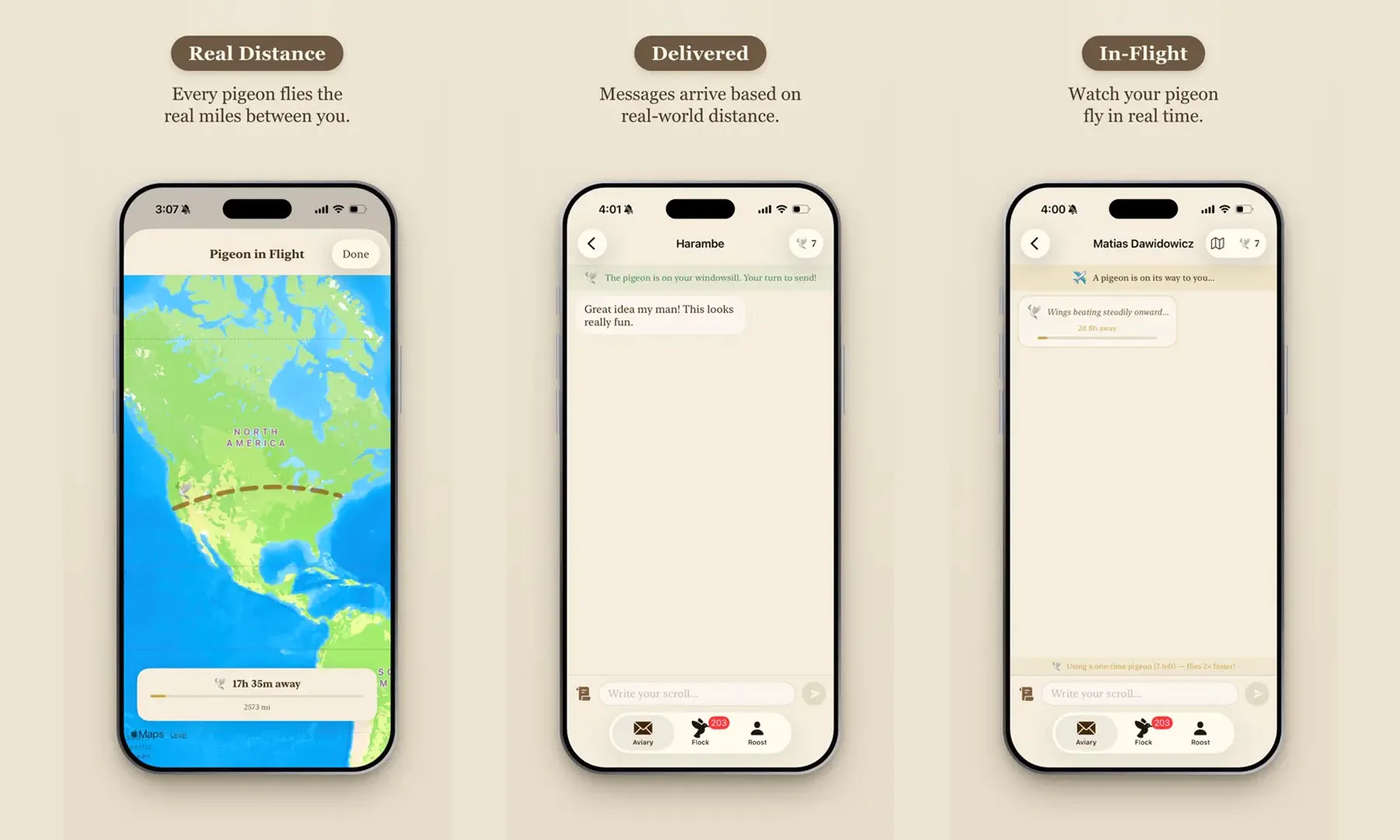
Carrier Pidge lets you send a message via a digital pigeon whose journey you can track on a map. Its speed is based on real racing pigeons, topping out at 110mph, and there’s even a tiny 0.2% chance your bird disappears, meaning you’ll have to cough up 99 cents for a replacement. Roost takes the idea even further, offering more than 1,000 animals, from pigeons and penguins to snails that crawl along at a wonderfully useless pace.
Carrier Pidge AppCarrier Pidge
The appeal isn’t really the wildlife. It’s the friction. Instead of another instant notification demanding your attention, you actually have to wait for someone to respond. That may actually matter more than we think: research has suggested that constantly picking up your phone in short bursts can be more mentally taxing than simply spending a long stretch on it. Carrier Pidge’s 29-year-old creator, Noah Iarrobino, previously made an app that charged users 99 cents every time they hit snooze, while Roost creator Logan Mendelsohn comes from the trust-and-safety tech world and is now planning to hire as the app grows.
Maybe our phones got a little too good at being phones
There may actually be something behind the silliness. A 2023 survey found that 80% of Gen Z adults, defined in the survey as people born after 1997, worried their generation relied too heavily on technology. Cal Newport, a computer science professor at Georgetown University, argues that our brains aren’t particularly well suited to a completely friction-free world where information arrives faster than we can process it.
Digital Trends
And people aren’t just tolerating the slowness — they’re embracing it. One user told The New York Times that she and her friends even started writing to each other in Bridgerton-esque language, calling one another “my dearest lady.”
After decades of making everything faster, maybe the next killer feature really is making us wait. And honestly, if sending a text by pigeon is what it takes to make our phones a little less exhausting, perhaps we shouldn’t laugh at the birds just yet.



























































You must be logged in to post a comment Login