ContourGlobal has inaugurated a $500 million solar-and-storage plant in Chile’s Atacama desert that delivers 200 megawatts of power for up to 6.5 hours at night. Chile has 3,072 MW of battery storage operating and expects an additional 5,400 MW by December 2026.
ContourGlobal, the independent power producer backed by KKR, has inaugurated a nearly $500 million solar-and-storage facility in Chile’s Atacama desert that stores daytime solar energy and delivers it after sundown. The Victor Jara hybrid plant combines 231 megawatt-peak of photovoltaic capacity with 1.3 gigawatt-hours of battery storage, capable of delivering 200 megawatts of power for up to 6.5 hours at night. ContourGlobal calls it Latin America’s longest-duration utility-scale battery system.
Advertisement
The project sits in the Tarapacá region and is backed by a 15-year nighttime power purchase agreement with Copec EMOAC, the energy marketing and renewable power supply arm of Empresas Copec, one of Chile’s largest industrial conglomerates. It is ContourGlobal’s second solar-and-storage investment in Chile, following the launch of a similar system in Quillagua in the neighbouring Antofagasta region last year. Together, the two projects deliver 452 megawatt-peak of solar and 2.5 gigawatt-hours of battery storage.
Why the Atacama
The Atacama desert receives some of the highest solar irradiance on Earth, making it one of the most productive locations in the world for photovoltaic generation. The problem is that the sun produces more electricity during the day than Chile’s grid can absorb, resulting in routine curtailment, wasted energy from solar plants that are forced to shut down because there is nowhere for the power to go. Transmission bottlenecks between the solar-rich north and the demand centres further south make the problem worse.
The 💜 of EU tech
The latest rumblings from the EU tech scene, a story from our wise ol’ founder Boris, and some questionable AI art. It’s free, every week, in your inbox. Sign up now!
Advertisement
Battery storage solves this by absorbing excess solar generation during the day and discharging it at night, effectively turning an intermittent energy source into a dispatchable one. Solar-plus-storage projects are increasingly being designed to serve round-the-clock power needs, including the growing demand from data centres that require constant, predictable supply.
James Lee Stancampiano, ContourGlobal’s South America general manager, said Chile is the place to be in Latin America, citing the country’s regulatory framework, growing electricity demand, and pipeline of renewable energy and storage investments. The company is evaluating additional projects in Chile, including developments closer to the capital Santiago and wind projects in the central and southern regions.
A storage boom in numbers
Chile currently has 3,072 megawatts of battery energy storage capacity either operating or undergoing testing, with most projects concentrated in the Atacama desert, according to the Coordinador Eléctrico Nacional (CEN), the national grid operator. CEN projects the start-up of an additional 5,400 megawatts of storage capacity by December 2026. Battery energy storage systems now make up nearly 42% of Chile’s energy project pipeline by capacity, the largest single category.
The investment is not coming from a single player. AES Andes, Engie Energía Chile, and Enel Green Power Chile all have storage projects in the country. Atlas Renewable Energy, backed by BlackRock’s Global Infrastructure Partners, secured $510 million in financing last year for its hybrid Estepa project, one of Chile’s largest solar-plus-storage developments. Grenergy, the Spanish developer, is building the Oasis de Atacama complex, which it describes as the world’s largest solar-plus-storage project.
Advertisement
Mining, data centres, and the demand driver
What makes Chile different from other solar-rich markets is its industrial demand profile. The country’s mining sector, which produces roughly a quarter of the world’s copper and a significant share of its lithium, is one of the most energy-intensive industries on the planet. Mines operate around the clock and need reliable, predictable power. They are also under increasing pressure from customers, regulators, and investors to decarbonise their operations.
Antonio Cammisecra, ContourGlobal’s CEO, said the presence of a highly energy-intensive industrial base, particularly mining, has driven demand for reliable, long-term renewable power. He framed storage as the technology that shifts renewables from intermittent sources into programmable energy solutions, a transformation he called essential for reducing system costs, accelerating decarbonisation, and replacing conventional generation at scale.
Data centres are the emerging demand driver. The global push to electrify everything, from industrial processes to AI compute, is creating new markets for round-the-clock renewable power. ContourGlobal expects growing demand from data centres that need large amounts of always-on electricity, and Chile’s combination of cheap solar, storage infrastructure, and political stability makes it a credible location for facilities that would otherwise be built in the US or northern Europe.
The model that could scale globally
Chile’s approach, building massive solar capacity in the desert, pairing it with battery storage, and selling nighttime power under long-term contracts, is a model that other solar-rich regions are watching closely. The economics are compelling. Solar generation costs continue to fall, battery prices have declined by roughly 90% over the past decade, and the combination of the two is now competitive with or cheaper than new gas-fired generation in most markets.
Advertisement
The 15-year nighttime PPA structure used by ContourGlobal is particularly noteworthy. It de-risks the battery investment by guaranteeing revenue for the discharge cycle, making the storage component financeable on project finance terms rather than merchant risk. This is the kind of contractual innovation that unlocks institutional capital for storage at scale.
Hybrid renewable energy projects are becoming the standard rather than the exception. Chile’s Atacama desert is the most advanced laboratory for this transition. By the end of 2026, the country will have more than 8,400 megawatts of battery storage capacity online, enough to make it one of the largest storage markets in the world, built in a desert that until recently was known primarily for astronomy and copper.
Ever wondered why fan manufacturers think three speed settings are enough, when what you actually want is the difference between “barely there” and “I can finally sleep” that only proper granular control can deliver?
Most fans force you to choose between a breeze that does nothing and a roar that drowns out everything else, and the gap between those two extremes is where summer nights get genuinely miserable for anyone who runs warm.
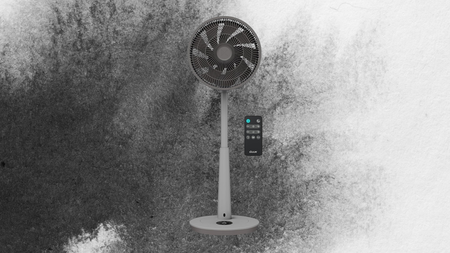
The Duux Whisper 3 fan drops in price today, letting you cool off and save money at once
The Duux Whisper 3 is built to keep you cool on those summer nights, and with a 22% discount, it is considerably easier to justify.
The 26 speed settings are the heart of the case here, because that level of granularity means you’re not approximating comfort, you’re dialling into it precisely, whether that’s a faint background circulation or a 15-metre throw of air across a large room.
Noise levels start at 13 decibels on the lowest setting, which is quieter than a whispered conversation and quiet enough that running it overnight won’t disrupt sleep the way a conventional fan would, even at its lowest speed.
The brushless motor keeps energy consumption to 1.6W at the bottom end and only 19W at maximum power, which is a meaningful figure for anyone planning to run it through a heatwave without watching their electricity bill climb alongside the temperature.
Advertisement
A Natural Wind Mode varies the airflow automatically to mimic an outdoor breeze rather than the mechanical monotony of a fixed setting, and the included remote means none of this requires leaving your chair to adjust it.
The Duux Whisper 3 also oscillates both vertically and horizontally, which is less common than it sounds and more useful than it seems, because it means a single unit can cover a room rather than just one corner of it.
This is the fan for anyone who has ever turned a cheap model off at 2am because the noise was worse than the heat. If you want the full picture before buying, our best fans 2026 guide rounds up every worthy alternative at this price.
‘It’s gonna be awesome’: Salesforce CEO Marc Benioff has high hopes for using AI in its products, says ‘it’s impossible to describe what we’re gonna be able to do for customers’
Salesforce CEO Marc Benioff extols effects of AI at work once again
Benioff hails efficiency gains, but also cost savings of using AI
Having AI agents and humans working together can take your company to the next level, Benioff says
Salesforce CEO Marc Benioff has spoken out again on his vision of the future of AI in software, predicting that the technology will bring forward huge boosts in productivity and efficiency.
Speaking on the All-In podcast, Benioff was unsurprisingly effusive in his praise of AI, particularly when combined with human workers, noting, “Everything’s gonna be cheaper to make, it’s more efficient.”
“I can do things that I just could not do before,” he added. “I can go faster than ever before. I can implement my software and sell it at the same time. I can break through obstacles that I’ve had because I have coding agents and humans working together.”
Latest Videos From
Advertisement
“Unpredecented” effect
Continuing on, Benioff noted that customers would see significant benefits from choosing Salesforce’s AI-boosted tools and services, from CRM to Slack.
“What I can do for our customers is unprecedented; it’s impossible to describe what we’re gonna be able to do for customers. It’s gonna be awesome,” Benioff noted.
Benioff’s bullish approach isn’t too surprising, as he has been at the forefront of the fightback against the so-called “SaaSpocalypse” caused by the influx of AI into workplace software.
Sign up to the TechRadar Pro newsletter to get all the top news, opinion, features and guidance your business needs to succeed!
“We’ve rebuilt Salesforce to become the operating system for the Agentic Enterprise, bringing humans and agents together on one trusted platform,” Benioff said at the time.
The theme of the “agentic enterprise” was announced by Benioff at the company’s Dreamforce 2025 event in October of that year, marking a new focus for its AI efforts.
“We want to connect with our customers in a brand new way…the rate and growth of innovation has been awesome,” Benioff noted in his keynote at the event.
Advertisement
With Dreamforce 2026 only a few months away, it will be interesting to see how Salesforce positions itself again, with the effects of AI growing stronger every day.
Trump-Xi Summit, Benioff: “Not My First SaaSpocalypse,” OpenAI vs Apple, Multi-Sensory AI, El Niño – YouTube
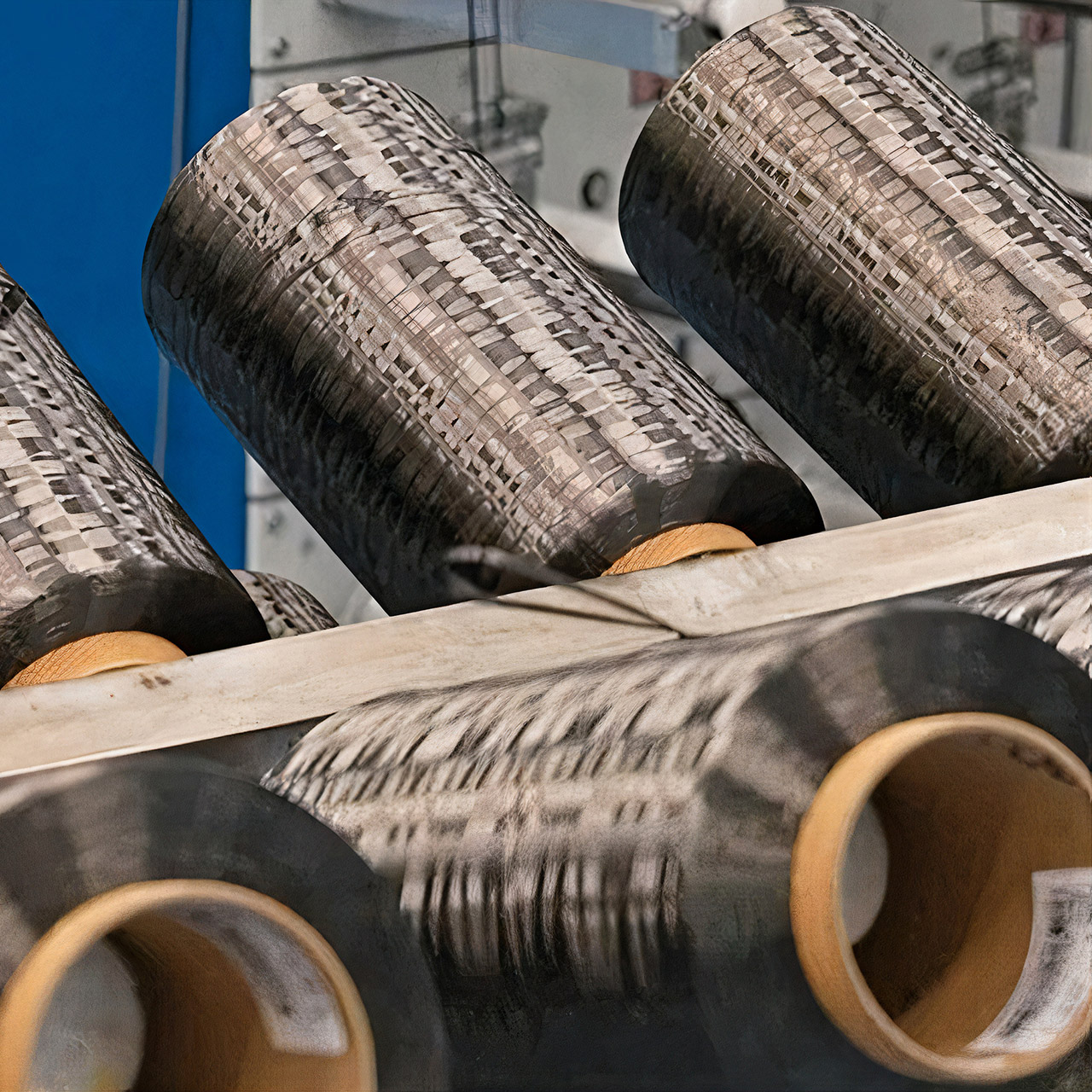
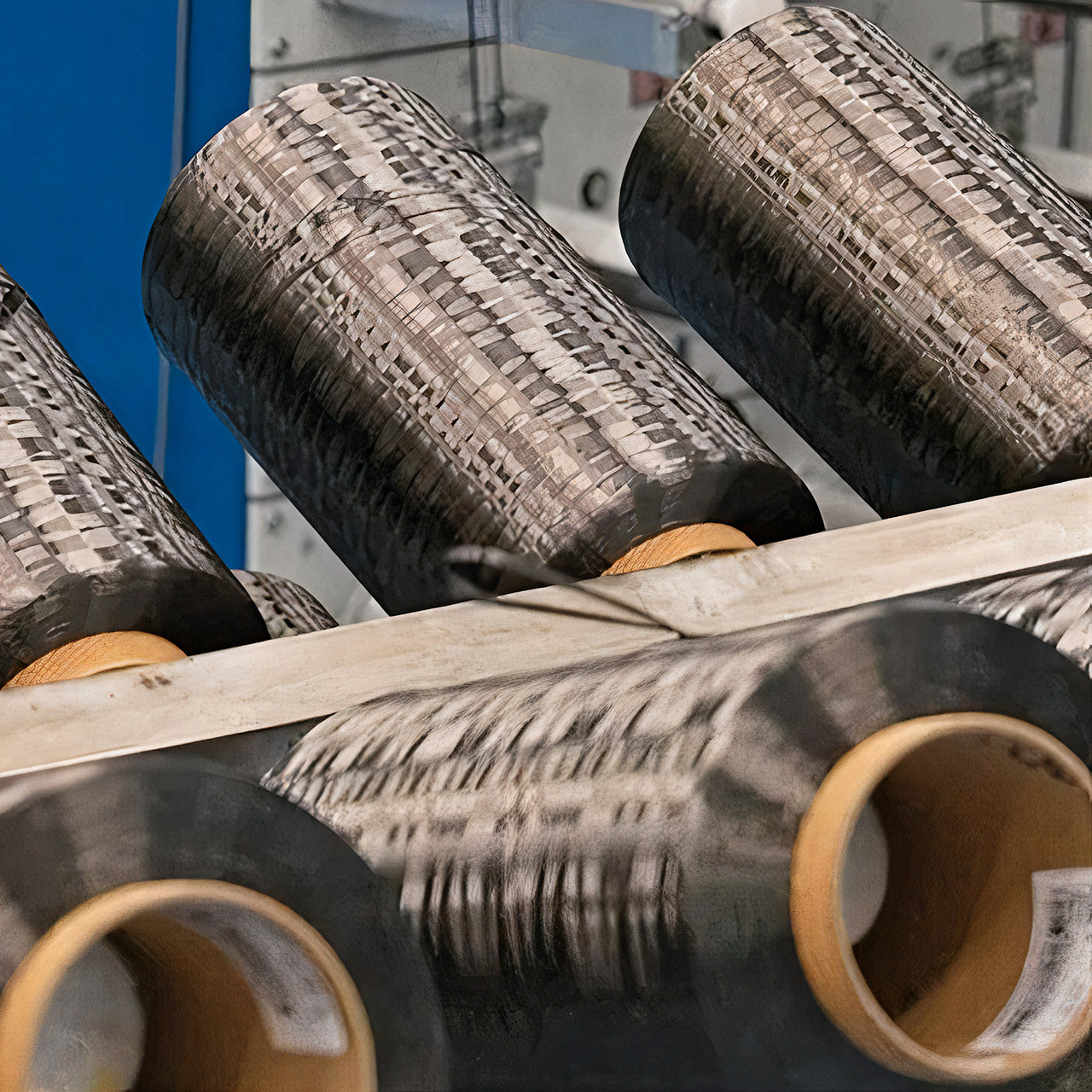
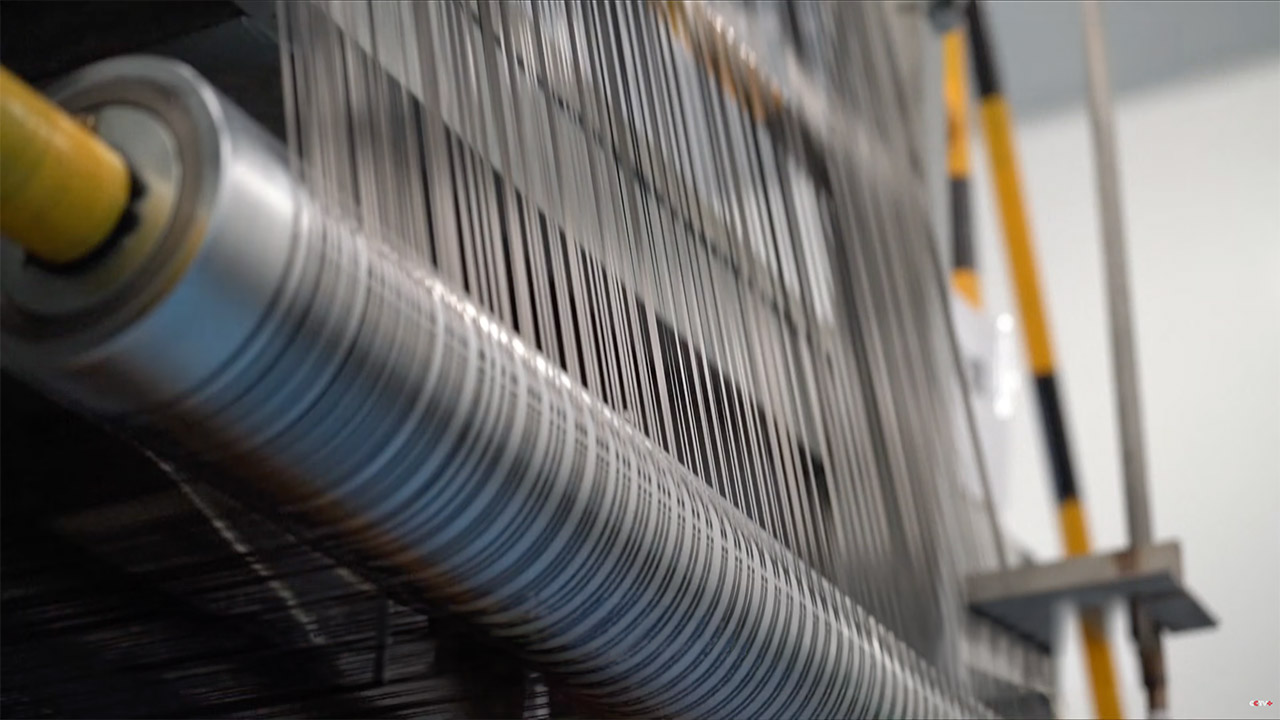
Engineers at a Chinese materials group spent more than twenty years refining a notoriously difficult production process. Their work produced the first steady industrial supply of T1200-grade carbon fiber, a material long recognized for top-tier performance yet held back by limited output. Individual filaments measure only about six or seven micrometers wide. That size sits well below one-tenth the diameter of a human hair. When roughly 120,000 of those filaments form a single cable less than two millimeters thick, the bundle withstands extreme pulling loads.
A clear demonstration of its capability was shown, and all it took was hauling a passenger coach laden with 54 adults along, and the cable did not miss a beat. This fiber has an outstanding tensile strength of more than 8 gigapascals, whereas structural steel will only reach 1 gigapascal before giving way under strain. It also weighs about a fifth of the weight of steel for the same volume, making it an excellent combination in terms of performance and efficiency. When weight is the true bottleneck in how well something operates, this type of coupling is a game changer.
To activate C300 DC Portable Power Station for the first time: Recharge with an 18W or higher USB-C wall charger, such as an Anker USB-C charger or…
Massive Power on the Go: Take portable power anywhere and deliver 300W and 288Wh to your devices. Fast charge with two 140W two-way USB-C ports.
LiFePO4 battery with a 3-year guarantee: featuring LiFePO4 batteries, smart temperature control, and impact-resistant design ensures this power…
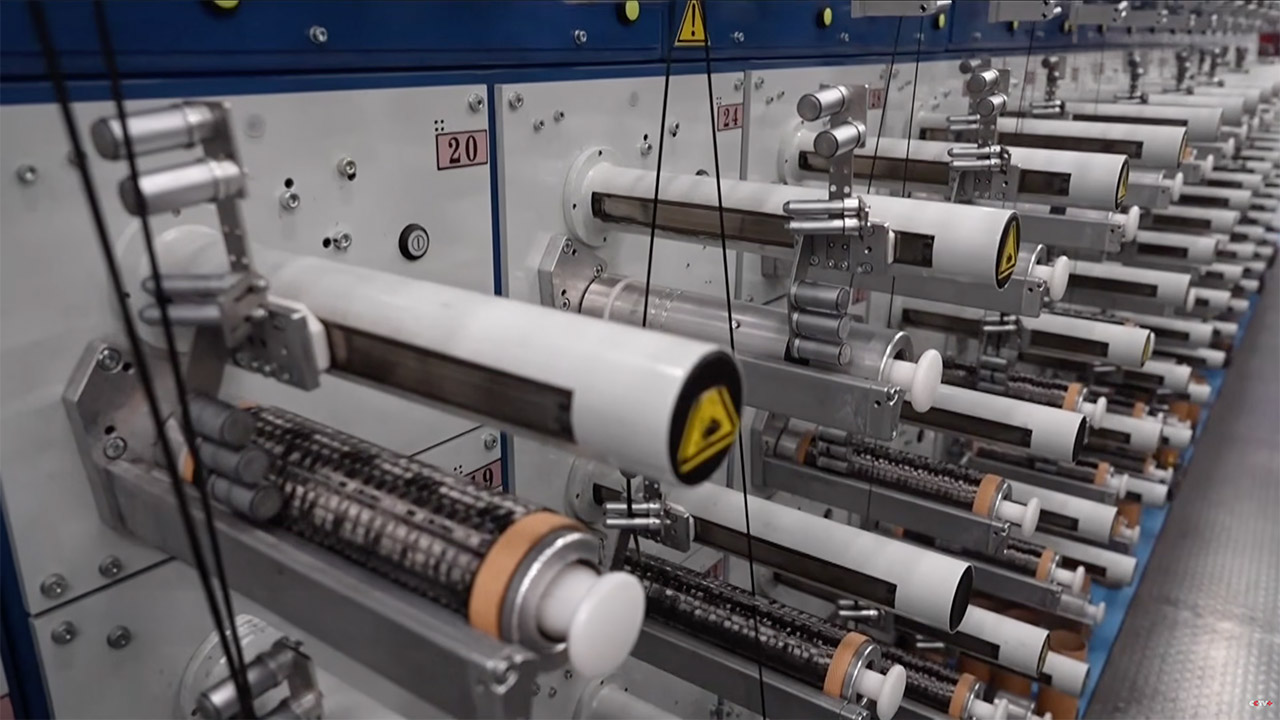
To begin, the fiber is created from a polymer precursor, and it is then carefully heated between 200 and 300 degrees Celsius to achieve the desired internal structure. Then comes the high-pressure heat phase, in which the temperature exceeds 2,000 degrees Celsius and the entire system undergoes a precise change, converting practically everything into aligned carbon. Of course, the entire process is aimed at eliminating those annoying microscopic flaws that can cause the entire system to fail under strain.
Advertisement
Older, high-quality fibers had a serious problem because even the slightest inconsistency during the heating or stretching phases would ruin the whole thing or make scaling up production extremely difficult, but the Chinese team appears to have cracked the code on defect control throughout the entire production line, from raw chemicals to final processing. With that consistency in place, they were able to increase production to an amazing 100 tons per year while maintaining quality.
With all of this in mind, engineers working on aircraft or spacecraft can now design lighter structural components while still meeting the tight safety criteria. The wider picture is that high-pressure hydrogen tanks now have more oomph to handle loads without bulking up, which is a significant improvement for cleaner energy systems. Because of the lower mass, electric car and drone builders can now expect longer ranges and larger payloads, using less energy to get them where they need to go. Wind turbine blades, advanced robotics, and even some medical equipment offer similar advantages. [Source]
Jadis has never been the quiet corner of French high-end audio. Devialet, Advance Paris, Focal, and Triangle have each carved out their own version of French design culture, often cleaner, more modern, and less likely to blind you from across the room. That is not a swipe at Devialet, which remains one of the strongest industrial design stories in high-end audio. Jadis is different. Jadis is the gold trim, chrome, glowing tubes, and “yes, the château has a listening room” side of the family.
Bluebird Music has announced that the new Jadis Aria and Jadis Ode integrated amplifiers are now shipping in the United States and Canada, bringing the French tube brand’s very recognizable aesthetic and sonic identity to more attainable price points. That matters because Jadis has spent more than four decades building amplifiers that look like they were assembled by jewelers, monks, and someone’s eccentric uncle in Burgundy who refuses to explain the wiring diagram.
I owned a Jadis tube integrated amplifier many decades ago, and like many French mechanical things of that era, it could be brilliant, beautiful, rather temperamental, and occasionally in need of a cigarette and a philosophical reset. But it sounded wonderful. Time has moved on, and so has Jadis. The company’s current products have earned a much stronger reputation for reliability, build quality, and consistency, without losing the visual drama and tube-driven performance that made the brand famous in the first place.
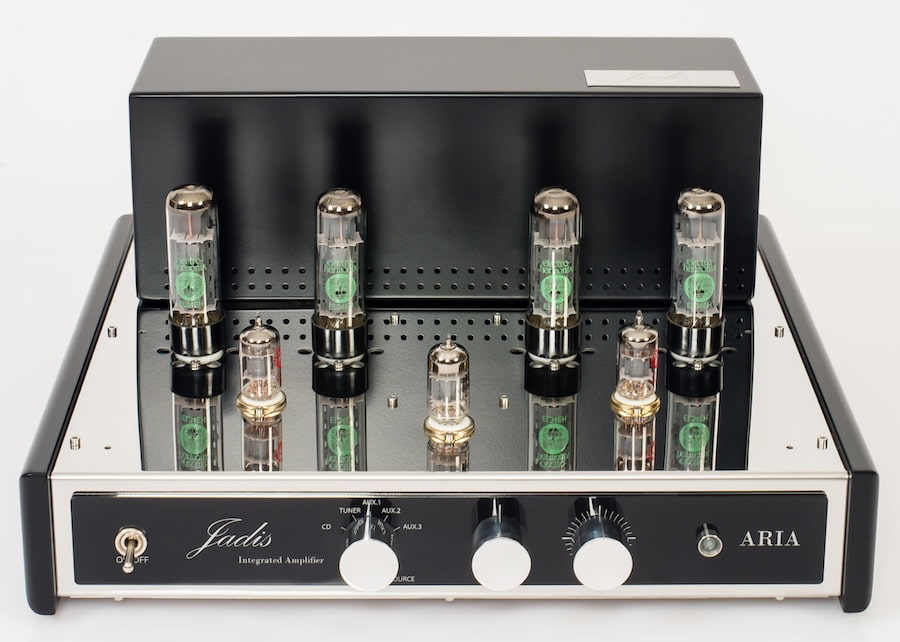
Jadis Aria: French Tube Glamour Gets a More Useful Starting Point
Jadis Aria
The Jadis Aria is not a clean-sheet replacement for the long-running Orchestra Reference so much as a more focused evolution of it. The big technical change is the move to a newly developed, fully tube-based input stage, replacing the earlier hybrid transistor/tube design. That matters because the Aria now keeps the signal path tube-based from input to output, which is very much the point if you are buying a Jadis in the first place. Nobody buys one of these because they want anonymous black-box utility from aisle seven.
The Aria uses four EL34 output tubes as standard, along with one ECC82 and two ECC83 small-signal tubes. Jadis describes the EL34 as the more romantic option, which is very French, very on brand, and only missing a waiter judging your wine order. For listeners who want a different flavor, Jadis also lists KT88 or KT120 tube compatibility, giving owners some room to tune the amplifier’s presentation without moving into one of the company’s more expensive models. Output is rated at 30 watts per channel in Class B operation, with a frequency response of 10Hz to 40kHz at -3dB and 300mV input sensitivity.
Advertisement
The Aria also addresses some of the practical complaints that can come with tube ownership. Jadis lists a bias adjustment/semi-automatic bias system, designed to make tube setup less painful than the old ritual of meter, screwdriver, prayer, and mild profanity. The amplifier includes five line-level inputs, remote control, and a more compact chassis measuring 43 x 36 x 26 cm. Power consumption is listed at 300VA.
Visually, it is still very much a Jadis. The Aria is available in multiple finishes, including white, black, and Toile de Lu, and it keeps the brand’s unmistakable blend of chrome, tubes, and jewelry-counter bravado. Devialet may own the museum-grade industrial design lane, and Focal, Triangle, and Advance Paris each do French audio with less flash, but Jadis still shows up wearing gold cuffs to breakfast. Subtle? Non. Fun? Absolument.
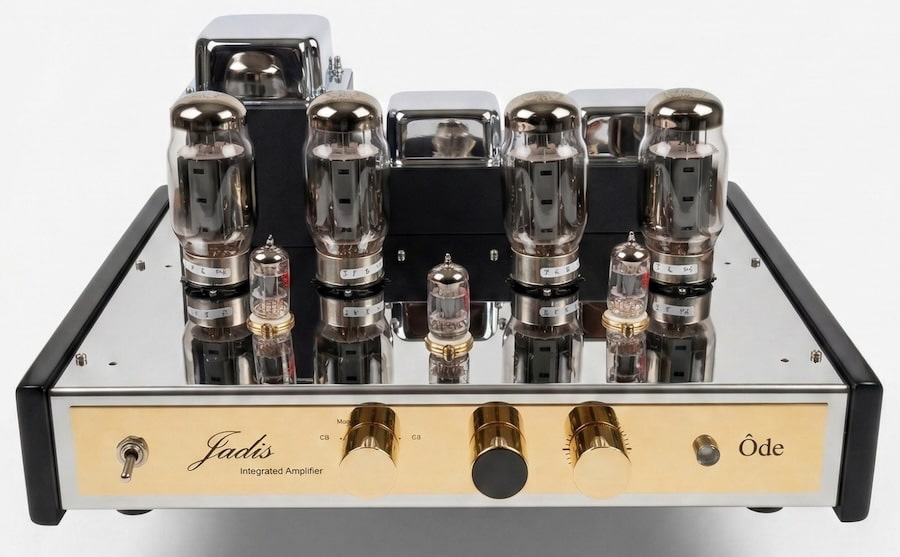
Jadis Ode: Pure Class A, French Style
Jadis Ode
The Jadis Ode takes a more purist route than the Aria. Where the Aria updates the long-running Orchestra Reference formula, the Ode is aimed at listeners who want a simpler, more focused tube integrated amplifier built around pure Class A operation. Jadis rates the Ode at 25 watts per channel in Class A, so this is not about chasing big output numbers. It is about tube topology, transformer quality, and the kind of midrange body and dimensionality that have helped define the brand.
The Ode can be configured with EL34, KT88, or KT120 output tubes, along with one ECC82 and two ECC83 small-signal tubes. That tube flexibility gives buyers some room to shape the amplifier’s presentation. EL34s typically lean warmer and more saturated, KT88s can add grip and scale, and KT120s generally offer more authority and control when the circuit supports them properly. The Ode includes five RCA line-level inputs, remote volume control, 250-300mV input sensitivity, input impedance greater than 100k ohms, and a 5Hz to 60kHz frequency response at -3dB. It is specified for 1 to 16 ohm loudspeaker loads, with factory settings for 4 to 8 ohms.
The transformer story is central here. Jadis has long placed major emphasis on proprietary transformers designed and built in-house, and that matters in a tube amplifier. Output transformers have a direct impact on bandwidth, bass control, stability, tonal balance, and how well the amplifier behaves with real loudspeaker loads. They are not decorative chrome luggage. They are the business end of the amplifier.
Advertisement
The Ode also follows the traditional Jadis construction approach: hand-built in France, point-to-point wiring, custom internal components, and listening-based voicing. The chassis measures 44 x 40.5 x 21.5 cm, weighs approximately 25 kg, and consumes 300VA. Finish options include Gold and Silver, with the gold version delivering the more recognizable Jadis look. Subtle? Not exactly. But Jadis has never been trying to pass as Danish furniture.
Advertisement. Scroll to continue reading.
Positioned below many of Jadis’ larger and more expensive amplifiers, the Ode gives music lovers a more attainable way into the brand’s pure Class A tube sound without stripping away the core ingredients: tubes, transformers, hand assembly, and a visual identity that remains unapologetically French.
Comparison
Ode
ARIA
MSRP
$10,900
$6,900
Type
Integrated amplifier with remote control
Integrated amplifier with remote control
Bias
Automatic
Semi-automatic
Power
25W Class A
30W Class B
Input/Output
5 lines
5 lines
Bandwidth
10Hz to 40kHz @ -3dB
10Hz to 40kHz @ -3dB
Sensitivity
300 mV
300 mV
Tubes
4 x KT120, 1 x ECC82, 2 x ECC83
4 x EL34, KT88 or KT120, 1 x ECC82, 2 x ECC83
Consumption
300VA
300VA
Dimensions
43 x 36 x 26 cm
43 x 36 x 26 cm
The Bottom Line
The Jadis Aria and Jadis Ode make the Jadis experience more accessible, but they are still serious high-end tube integrated amplifiers. The Aria offers 30 watts per channel from EL34 output tubes, a fully tube-based input stage, easier bias adjustment, remote control, and a more compact chassis. The Ode is the more purist model, delivering 25 watts per channel in pure Class A operation with KT120 tubes, hand-built Jadis transformers, point-to-point wiring, and the brand’s traditional build approach.
Advertisement
What makes them different is not a long feature list. It is the combination of French tube design, in-house transformer manufacturing, hand assembly, and the unmistakable Jadis aesthetic at prices below the company’s larger amplifiers. The Aria is the more practical choice. The Ode is for listeners who want the Class A version of the Jadis formula.
What is missing? Neither model is a modern all-in-one system. There is no DAC, no streaming, no HDMI ARC, no room correction, and no phono stage listed, so buyers will need to bring their own sources and choose loudspeakers carefully. At $6,900 for the Aria and $10,900 for the Ode in the U.S., and $8,900 and $13,900 CAD, these are not impulse buys.
They are for listeners who want a dedicated tube integrated amplifier from a long-running French high-end brand and are willing to trade convenience features for craftsmanship, tube character, and a more traditional approach to two-channel listening.
Jay Shetty has signed a deal worth up to $100 million to bring the video version of his On Purpose podcast exclusively to Spotify and Netflix starting 13 July. It is the first time the two companies have jointly signed a creator.
Jay Shetty, the former Hindu monk turned self-help podcaster, has signed a deal to bring the video version of his show On Purpose exclusively to Spotify and Netflix. The arrangement is worth as much as $100 million over multiple years, according to people familiar with the deal cited by Bloomberg. That figure puts Shetty in the same financial league as Joe Rogan, whose Spotify deal was worth $250 million, and Alex Cooper, who signed a $125 million agreement with SiriusXM.
Advertisement
The show will move to Spotify and Netflix on 13 July. Older episodes and promotional clips will remain on YouTube and other platforms, but new full-length video episodes will be exclusive to the two services. Spotify will sell ads on the podcast. Netflix and Spotify confirmed the agreement but declined to comment on the financial terms.
The first joint deal between Spotify and Netflix
This is the first time Spotify and Netflix have teamed up to sign a single creator. The two companies already have an established relationship. Spotify has placed several of its podcast properties on Netflix, including Bill Simmons’ programme, and Netflix co-CEO Ted Sarandos sits on Spotify’s board. Netflix launched podcasts on its service in January 2026 through arrangements with iHeartMedia and Spotify, debuting 34 licensed and original shows in the first month alone.
The joint structure serves both companies differently. Spotify gets an exclusive ad-sales relationship with a top-tier podcast, feeding its advertising business with premium inventory. Netflix gets video content that fills daytime viewing hours, a gap in its programming schedule that scripted and unscripted originals do not efficiently address. Podcast subscriptions and ad-supported models are becoming central to how both platforms think about retention and engagement.
Why video is reshaping the podcast market
The deal reflects a structural shift in how podcasts are consumed and valued. Video now drives 41% of net podcast advertising revenue in the United States, up from 28% in 2024. The global podcast market generated an estimated $9.2 billion in sales in 2025, a 23% increase year on year, according to research firm Owl & Co. Direct advertising accounted for $5.3 billion of that total, while consumer subscriptions contributed $2.2 billion.
YouTube has been the primary beneficiary of the video podcast boom, becoming the default platform for audiences who want to watch interviews rather than just listen. Spotify learned this the hard way during the Rogan era, when exclusive audio deals failed to capture the full audience because listeners had already migrated to YouTube for video. The Shetty deal is designed to reverse that dynamic by pulling a major video podcaster off YouTube and onto platforms that can monetise the content through subscriptions and targeted advertising.
Advertisement
Shetty previously partnered with iHeartMedia for ad sales and did not distribute his video episodes to Spotify. His show, On Purpose, launched seven years ago and has grown into one of the most popular interview podcasts in the self-help and wellness category, with guests including Oprah Winfrey, Michelle Obama, and Tom Hanks.
Shetty’s broader media play
The podcast deal is part of a wider expansion by Shetty into the Netflix ecosystem. His production company has two additional projects in development with Netflix, one scripted series and one unscripted. In 2022, the mental wellness app Calm appointed Shetty as its chief purpose officer, and he toured US theatres last year leading audiences in guided meditation sessions. He is building a media brand that spans podcasting, streaming, live events, and wellness products.
The 38-year-old London-born creator represents a specific type of podcaster that streaming services are now competing to sign. Spotify has been building tools to support creator monetisation, including podcast clips, chapter markers, and creator sponsorship management. But the biggest deals still come down to exclusive content agreements that lock specific creators into specific platforms, the same playbook that drove the music streaming wars a decade ago.
The platform war for podcasters
Spotify and Netflix are not the only companies chasing podcasters. Tubi, the ad-supported streaming service owned by Fox Corp., has signed deals with YouTubers and podcasters to bring their programmes to the platform. Walt Disney’s Hulu has licensed podcasts to complement its catalogue. Netflix itself has launched original podcast programming, including The Pete Davidson Show.
Advertisement
The economics of these deals reveal how streaming services are thinking about content efficiency. Podcasts are cheaper to produce than scripted television, generate loyal recurring audiences, and fill viewing hours that premium content cannot cost-effectively serve. A $100 million podcast deal over multiple years is a fraction of what Netflix spends on a single season of a prestige drama, but the engagement per dollar may be significantly higher.
For Shetty, the deal represents a bet that exclusive distribution on two of the world’s largest entertainment platforms will grow his audience faster than the open distribution model of YouTube. For Spotify and Netflix, it is a bet that signing premium creators away from YouTube is worth the cost. The outcome depends on whether audiences are willing to follow their favourite podcasters to wherever they happen to be, or whether YouTube’s dominance in video podcasting is too entrenched to dislodge.
Among the many Chinese AI companies and laboratories vying for market share and attention (no pun intended) on the global marketplace, MiniMax stands out for its commitment to providing frontier-level intelligence across a range of modalities, including text, coding, and video (through its Hailuo model series) — often under permissive, enterprise-friendly, standard open source licenses.
Now, MiniMax is again raising the eyebrows of AI power users and developers around the world by releasing a new, in-depth technical report on the making of its popular M2 series of language models (M2, M2.5, and M2.7) shedding light on its numerous engineering innovations and clever approaches — while the company and its leaders also teased a whole new sparse attention approach for its upcoming MiniMax M3 series of models, which it says yields up to 15.6 times faster decoding (or LLM response) speed at long contexts (a million tokens) by adopting a custom sub-quadratic framework. In so doing, MiniMax has designed M3 to make ultra-long-context AI agent deployment economically viable.
The M2 report is noteworthy for any enterprise working with AI models, and especially those looking to fine-tune and train their own in-house. After all, MiniMax’s M2 series models often achieved top benchmarks in the world for open source AI performance when they were released.
While the title has since been eclipsed by several other Chinese labs including DeepSeek and Xiaomi, MiniMax’s new report offers a blueprint that can be used to improve AI model and agent performance by enterprises around the world.
Advertisement
As Adina Yakup of Hugging Face observed on X, “Beyond the benchmarks, they’ve done some really solid work on MoE efficiency and agent oriented design. Excited to see where M3 goes next!”
The attention dilemma
The core technical architecture of the M2 series relies on a sparse Mixture-of-Experts (MoE) decoder-only Transformer layout used by numerous other state-of-the-art LLMs.
The foundational backbone houses 229.9 billion total parameters, yet maintains a remarkably lean operational footprint by activating just 9.8 billion parameters per token across 256 fine-grained experts.
To optimize routing and avoid standard load-balancing issues, however, MiniMax implemented sigmoid gating paired with learnable, expert-specific bias terms, heavily reducing reliance on restrictive auxiliary losses.
Advertisement
The most definitive engineering decision documented in the M2 paper was the strict adherence to full multi-head attention with Grouped Query Attention (GQA) across all 62 layers.
In large language models, “quadratic scaling” refers to the computationally expensive reality of standard full attention mechanisms, where every token in a sequence must mathematically connect to every other token. To use a real-world analogy, it is akin to attending a networking event and being forced to have a deep conversation with every single person in the room while simultaneously monitoring all other ongoing conversations.
While this approach yields incredibly thorough context, the processing power and memory required explode at the square of the input length, creating a severe hardware bottleneck as models attempt to ingest hundreds of thousands of words.
The problem with sub-quadratic scaling
“Sub-quadratic” scaling introduces architectural shortcuts designed to bypass this exponential computational load. Instead of mapping every possible connection, sub-quadratic methods—such as Sliding Window Attention or compressed linear attention—might only analyze a localized window of nearby words or generate a compressed summary of the broader text.
Advertisement
These efficient methods drastically reduce hardware costs and allow models to process massive documents at high speeds, but they historically introduce severe trade-offs in accuracy, often causing the AI to miss the “big picture” or lose track of distant context.
This mathematical dilemma defines the architectural evolution from MiniMax’s M2 to its upcoming M3 series. During M2’s development, researchers rigorously tested sub-quadratic shortcuts but found they crippled the model’s “multi-hop reasoning”—its ability to connect disparate clues across a long document—forcing the team to absorb the massive computational cost of full quadratic attention to maintain frontier-level intelligence.
Indeed, they aggressively benchmarked efficient attention alternatives during pre-training but intentionally threw them out. They experimented extensively with hybrid setups, interleaving full attention with sub-quadratic architectures like Lightning Attention or hybrid Sliding Window Attention (SWA) configurations.
The empirical results were definitive: at a larger scale, linear and windowed attention variants exhibited severe reasoning deficits.
Advertisement
On evaluations exceeding 32K context windows, SWA variants performed significantly worse than full attention, dropping from a baseline score of 90.0 to 72.0 on the RULER 128K complex word extraction task.
Sub-quadratic configurations proved prone to memory-bound constraints during training, lacked native prefix caching support, and failed to smoothly align with Multi-Token Prediction (MTP) modules used for speculative decoding. Full attention was deemed necessary to preserve multi-hop reasoning capability.
However, recognizing that physical hardware limits cannot sustain quadratic scaling indefinitely, MiniMax is designing the M3 series around a novel sub-quadratic framework to finally deliver both high-speed processing and uncompromised reasoning.
MiniMax Sparse Attention (MSA) and sub-quadratic scaling incoming
The upcoming MiniMax-M3 breaks away from the compute-heavy constraints of its predecessor. As disclosed by MiniMax’s engineering team under the banner “Something BIG is coming,” M3 introduces “MiniMax Sparse Attention” (MSA).
Advertisement
Unlike DeepSeek’s Multi-head Latent Attention (MLA), which compresses keys and values into a low-dimensional latent space, MSA operates on a standard GQA backbone but utilizes block-level selection on real, uncompressed Key-Values.
Elie Bakouch at AI training infrastructure and platform lab Prime Intellect posted on X noting that the main changes feature “block level selection like in CSA but attention is done on the real KV, not in [compressed space].”
This solves the precision loss and prefix-caching obstacles noted in the M2 paper. By filtering and selecting block-level sequences dynamically, MSA delivers an architectural leap: early hardware profiling indicates a 9.7x speedup in prefilling latency and a massive 15.6x speedup during decoding phases at a 1-million token sequence length compared to the full-attention M2 architecture.
To understand why a speedup in the “decoding phase” is so significant, it helps to break down how an AI actually reads and writes information. When you interact with an AI, the processing happens in two distinct steps: prefilling and decoding.
Advertisement
When you hand an AI a prompt—whether it’s a short sentence or a massive 1,000-page document—it processes that entire chunk of text all at once in parallel, known as “prefilling.” It essentially “reads” the input in one big gulp to build its initial understanding and establish context.
In order to generate a response, the AI must enter a “decoding phase.” To predict the first word of its response, it looks at the prompt. To predict the second word, it has to look at the prompt plus the first word. To predict the hundredth word, it must recalculate the context of the prompt and the previous 99 words it just wrote. So the response actually becomes harder to generate as it goes on, with the end requiring a full review of all prior parts.
For a layperson, imagine reading a dense legal brief (prefilling) and then being forced to write a summary report where, before writing every single new word, you must rapidly reread the entire brief plus everything you’ve written so far to ensure your next word makes sense (decoding).
Because the AI must constantly and repetitively look backward to generate each new step forward, the decoding phase is the most severe computational bottleneck in generating text. It is why AI models often type out their answers word-by-word, and why they slow down significantly as conversations get longer.
Advertisement
Therefore, when the passage states the new architecture achieves a massive 15.6x speedup during the decoding phase at a 1-million token sequence length, it means the model has found a structural shortcut to generate its answer—token by token—nearly 16 times faster. It directly solves the exact bottleneck that normally makes AI chatbots freeze or stutter when handling massive amounts of information.
The evolution of the MiniMax M series and the creation of ‘Forge’
On a product level, MiniMax has consistently evolved its models from simple text generation interfaces into autonomous workers.
The M2 series pioneered an “interleaved thinking” protocol where the model alternates between natural-language planning traces and explicit tool invocations inside a single trajectory. Rather than dropping the intermediate chain-of-thought blocks between execution turns, M2 appends the full thinking history directly into the conversation context. This planning persistence prevents state drift, allowing the model to recover gracefully from runtime errors and revise its strategies based on environment feedback.
To train these long-horizon workflows, MiniMax built “Forge,” a scalable agent-native reinforcement learning system. Forge decouples execution into three independent modules—the Agent Side, the middleware abstraction layer (Gateway Server and Data Pool), and the Training/Inference engines.
Advertisement
As MiniMax engineer Olive Song explained on the ThursdAI podcast, “What we realized is that there’s a lot of potential with a small model like this if we train reinforcement learning on it with a large amount of environments and agents… But it’s not a very easy thing to do,” adding that this environmental training was where the team spent a significant portion of their development timeline. To absorb the extreme trajectory-length variance common in multi-step agent environments, Forge implements two vital engineering solutions:
Windowed FIFO Scheduling: A training scheduler that maps a sliding window over the generation queue. It permits greedy, high-throughput fetching of completed tasks within the window to prevent cluster idle time, while strictly enforcing FIFO boundaries to maintain distributional stability and avoid gradient oscillation.
Prefix Tree Merging: An optimization that restructures batch training into tree computation. Completions sharing identical conversation prefixes are calculated exactly once in the forward pass before branching. This eliminates redundant calculations, generating up to a 40x training speedup with zero approximation error.
This reinforcement infrastructure directly spawned the M2.7 checkpoint, moving the series toward “self-evolution”. Operating inside an automated agent harness, M2.7 functions as an independent machine learning engineer. The model profiles its own active training runs, diagnoses anomalies, reads logs, and automatically modifies its own codebase and configurations.
According to MiniMax, M2.7 successfully handled between 30% and 50% of its own development workflow.
On OpenAI’s rigorous MLE Bench Lite suite, which tests autonomous ML research capability, M2.7 achieved a 66.6% medal rate across independent 24-hour trials, effectively tying Google’s closed-weight Gemini 3.1 Pro.
Advertisement
The continuous cadence from M2 to M2.5, which famously completed 30% of internal tasks and 80% of newly committed code at MiniMax HQ, underlines a broader vision.
As the MiniMax team noted during that phase of deployment, “we believe that M2.5 provides virtually limitless possibilities for the development and operation of agents in the economy.”
With the technical report codifying the M2 generation’s successes and the MSA tech blog on the horizon, MiniMax is signaling that the next frontier of AI is explicitly about translating a mini-activation footprint into maximum real-world intelligence.
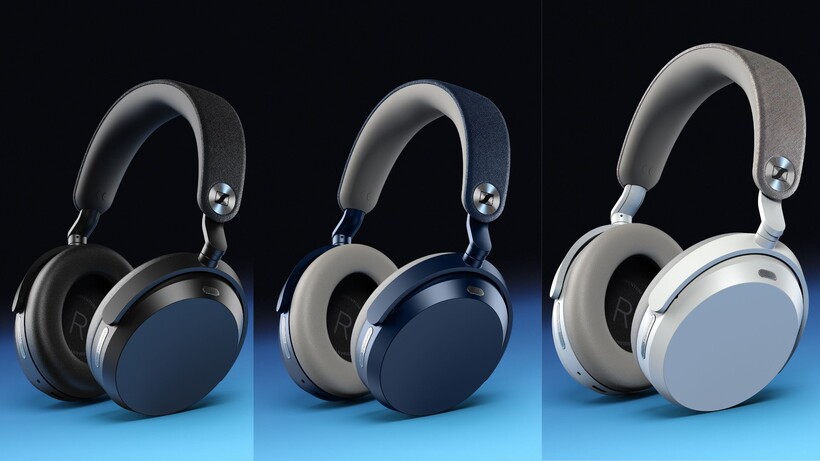
Sennheiser has taken direct aim at Sony’s WH-1000XM6 with the Momentum 5 Wireless, its refresh of its popular series that adds a user-replaceable battery, doubled microphone arrays, and Dolby Atmos head-tracking.
The hardware builds on the same 42mm transducer from the Momentum 4 Wireless, manufactured at Sennheiser’s facility in Tullamore, Ireland, and tuned to the same signature profile that earned the previous generation strong reviews across the audio press, with Hi-Res Audio certification and aptX Lossless support via Snapdragon Sound now extending that pedigree to lossless wireless playback.
Image Credit (Sennheiser)
The ANC system has been substantially reworked, with the microphone count doubling to four per side, a configuration Sennheiser that credits with delivering up to three times more effective reduction of voice-type ambient noise compared to the previous model, alongside improved transparency mode quality during calls.
Battery life holds at 57 hours with ANC (that’s with AAC streaming), a figure that remains competitive compared to the 30 hours the Sony WH-1000XM6 boasts. The addition of a user-replaceable 700mAh cell means the headphones take a more eco-friendly approach to replacing internal hardware with the EU laws regarding batteries set to come into effect in 2027.
Advertisement
Advertisement
Dolby Atmos with head-tracking arrives via a day-one firmware update rather than out of the box, with Bluetooth 6.0 support to follow down the line through a future firmware release.
Apple takes its sweet time in adopting a new trend or technology, but when it does, it comes up with one of the best implementations ever. That’s exactly what everyone is expecting from the company’s first foldable. Call it the iPhone Fold or the iPhone Ultra, the Cupertino giant has more riding on this launch than perhaps any product launched in the last few years, and it could break cover later this year.
The rumors have been building for months, but at this point, we have a clearer picture than ever, both of the engineering advancements Apple is pushing hard for, and the trade-offs it may have to accept along the way. We’re a couple of months away from the iPhone Fold’s launch, and here’s everything you need to know about it.
iPhone Fold / Ultra: At a glance
Specification
Details
Name
iPhone Fold or iPhone Ultra
Apple yet to confirm the official name
Release date
To be announced in September 2026
Availability possibly October–December 2026
Starting price
$1,999–$2,500
256GB / 512GB / 1TB storage options rumored
Form factor
Book-style fold (horizontal)
Similar to Samsung Galaxy Z Fold but with a wider aspect ratio when unfolded
Inner display
~7.76–7.8 inches, OLED
4:3 aspect ratio; near iPad mini-sized when unfolded
Outer display
~5.3–5.5 inches, OLED
Usable as a standard iPhone when folded
Crease
Near-invisible
Apple reportedly pursued elimination “regardless of cost”
Chip
A20 or A20 Pro
Based on expected September 2026 launch timeline
Biometrics
Side-mounted Touch ID
Face ID likely dropped to save internal space
Cameras
Dual rear (main + ultrawide), no telephoto
One front camera on inner display; one on outer display
Battery
5,000–5,500 mAh
Largest ever on an iPhone, per Weibo leakers
Frame material
Titanium and aluminum
Could use liquid metal hinge
iPhone Fold / Ultra: Latest News
May 26, 2026 A report by Letem světem Applem (via PhoneArena) shows the purported iPhone Ultra inside protective case, revealing almost everything about the phone’s design.
May 26, 2026 A claim from Instant Digital (via Weibo) suggests that Apple is facing problems in improving manufacturing yields during the pre-assembly process. The issue is related to Surface Mount Technology (SMT).
May 19, 2026 Chinese tipster Digital Chat Station (via Weibo) shares that Apple could adopt a similar crease-free solution as Oppo Find N6.
May 16, 2026 Chinese tipster Instant Digital (via Weibo) claims that Apple has achieved a visually crease-free foldable display with “long-term stability.” The core problem, however, is improving the hinge reliability.
May 11, 2026 A report from MacRumors states that the first foldable iPhone could arrive in just two colors at launch.
April 7, 2026 After rumors about Apple hitting a development snag with the foldable, Bloomberg’s Mark Gurman pushed back by reinstating the September launch window.
March 16, 2026 Given that the device will run on iOS, and not iPadOS, it might miss out on some of the most popular apps or the advanced multitasking features built for iPads.
When will Apple release the iPhone Fold?
One of the most credible sources of information for upcoming Apple products, Bloomberg’s Mark Gurman, remains confident that the iPhone Ultra or iPhone Fold is on schedule for a September 2026 launch, at the company’s most important fall hardware event, which has also become one of the most important events in the consumer tech industry.
Apple has spent years watching from the sidelines, as Samsung, Google, and a couple of other Chinese companies reveal their foldables, and it wouldn’t risk revealing its first foldable through a separate event, one that might not have as much awareness or gather as much attention as its iconic fall event.
Front Page Tech
I believe the iPhone Ultra could be the last announcement, after the iPhone 18 Pro and iPhone 18 Pro Max reveal.
On the flip side, analyst Tim Long has flagged the shipments for iPhone Fold might not begin until December 2026, implying that the announcement and arrival could be separated by almost three months, corroborating a report by Nikkei Asia about Apple hitting development snags with the foldable, related to engineering problems.
Advertisement
Date
Rumored milestone
Status
Sep 2026
Announcement alongside iPhone 18 Pro and Pro Max
Most Likely
Oct–Nov 2026
Limited availability after a staggered launch
Possible
Dec 2026
Wider availability as mass production ramps up
Contested
2027
Full launch pushed due to hinge engineering failures
Disputed
I think it makes sense, and for one good reason. Releasing the foldable iPhone about three months after the regular iPhone 18 Pro models ship would give customers and Apple stores a chance to catch their breath, and, at the same time, create more hype for the foldable. It would also allow people to make up their mind about spending a fortune on an iPhone that folds in half or settle for the Pro or Pro Max.
How much will the iPhone Fold cost?
On pricing, there’s a rare agreement among the sources: the iPhone Fold won’t be cheap, not by a long shot. Ming-Chi Kuo places the starting price between $2,000 and $2,500, a range that Gurman seems to agree with. However, we’ve also heard rumors about the starting price being less than $2,000.
I believe that a $1,999 starting price could be the sweet spot that is high enough to reflect the technology but just below the psychologically daunting $2,000 ceiling.
The dummy models shared by Sonny Dickson on X in April 2026 make this immediately apparent. Both the cover screen and inner screen are noticeably broader than existing book-style foldables; Apple is clearly charting its own way.
According to Ming-Chi Kuo, the foldable iPhone could come with a 5.5-inch outer display and a 7.8-inch inner screen, both measured diagonally, both featuring an OLED panel. A MacRumors report goes further, citing specific resolutions: 2,088 x 1,422 on the 5.49-inch cover screen, and 2,713 x 1,920 on the 7.76-inch inner panel.
The inner screen could be closer to a 4:3 aspect ratio, as opposed to Fold 7’s 10:9, to better handle side-by-side app multitasking and video consumption without the black bars on the top and the bottom. While the inner screen could get Apple’s ProMotion display technology (up to 120Hz refresh rate), the cover screen could be limited to 60Hz, though that might not sit well with buyers who’re shelling out $2,000 for the smartphone.
yeux1122 / Naver
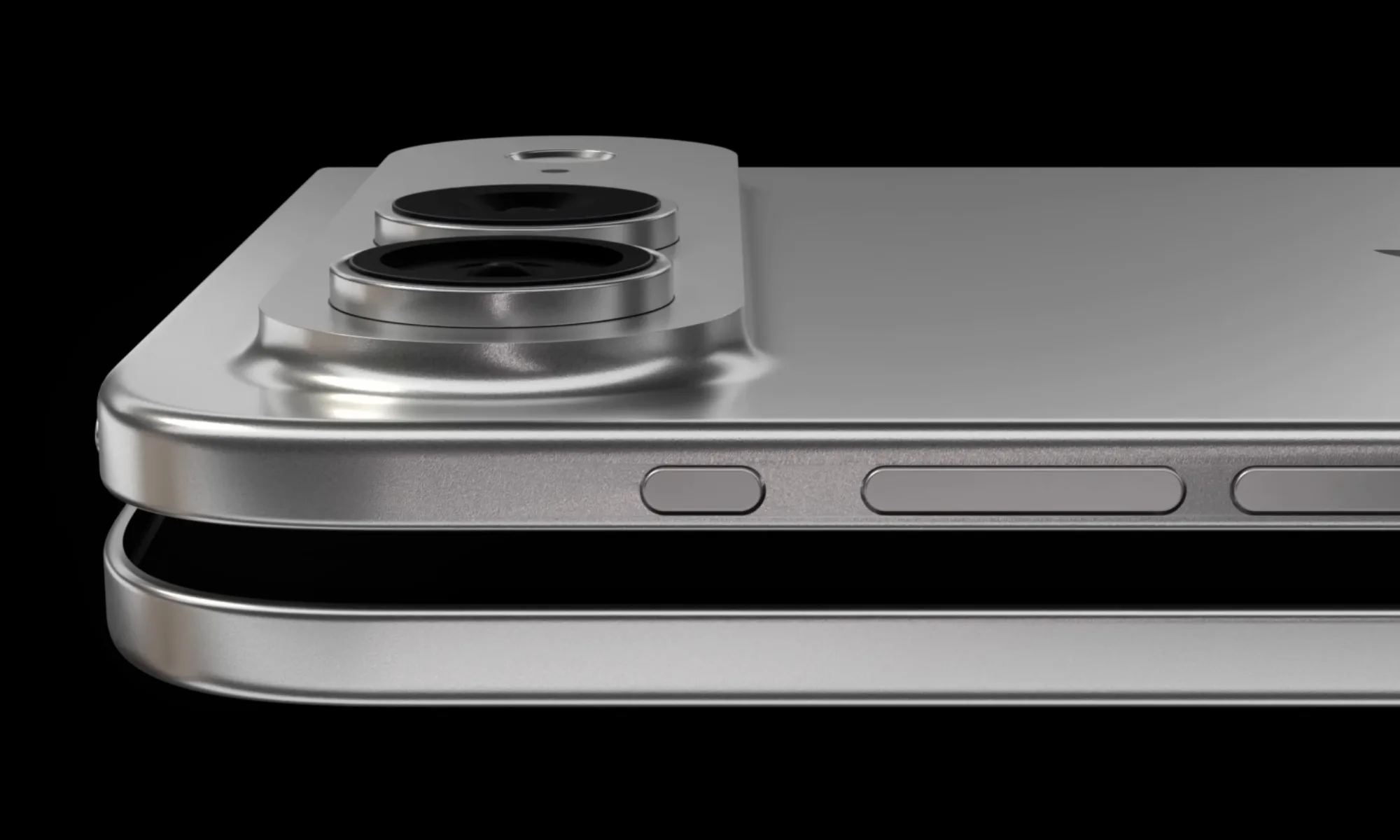
There should be a punch-hole cutout on the cover screen. The inner screen will also have a front camera, though whether it will be a punch-hole or under-display remains unconfirmed. On the back, the phone might feature a camera visor, similar to the one we’ve seen on the Pixel phones, with a double-camera array toward the left and LED flash and microphone on the right side.
The frame could use a combination of titanium and aluminum. The most important design challenge, for Apple, is the foldable’s crease. On the crease front, Apple reportedly pursued a dual-layer ultra-thin glass structure and a liquid metal hinge to minimize it.
Prototype testing in May revealed a hinge rattling issue, but a follow-up leak on May 19 from DCS claimed Apple had since locked in both the hinge and panel design (via Notebookcheck), with the solution mirroring the near-crease-free approach used on the Oppo Find N6.
Performance and software
Under the hood, the iPhone Fold or Ultra will most likely run on one of Apple’s A20 chips, built on TSMC’s 2nm fabrication process. With more transistors on the chip, the chips could be up to 15% faster and 30% more efficient than the A19 series (via WCCFTech). Whether the foldable gets the regular A20 or the A20 Pro chip remains a point of contention.
AI Visualization
The result could be faster RAM access, leading to better performance, less heat generation, and improved on-device Apple Intelligence performance. For those wondering, the iPhone Fold could ship with 12GB of LPDDR5X RAM, the same amount as the iPhone 17 Pro and the purported iPhone 18 Pro. Storage could span across three tiers: 256GB, 512GB, and 1TB.
9To5Mac
On the connectivity front, we could get Apple’s second-generation C2 modem (same as the iPhone 18 Pro), the successor to the C1X modem on the iPhone 17e, which would also bring mmWave 5G support to the foldable. The device could also be eSIM-only, given the limited internal space.
As I mentioned earlier, the iPhone Fold or Ultra will most likely feature Touch ID instead of Face ID, a compromise that might sting in the beginning, but given that fingerprint authentication is already present on existing iPads, shouldn’t take long to get the hang of.
Advertisement
Out of the box, the iPhone Fold is expected to run iOS 27, and a special version of the operating system no less, which will be built around utilizing the additional screen real estate on the foldable.
Apple
It might sound like iOS 27 for the foldable iPhone is taking a lot of inspiration from iPadOS, after all it’s designed for a bigger-screen iPhone, but the Fold won’t run iPadOS entirely, nor will it support iPad apps out of the box. Apple might make it easier for developers to transition their apps from an iPad to the iPhone Fold, but that would be the extent of it.
Apple should give us a glimpse of iOS 27 at the WWDC 2026, which is also when the public beta of the next operating system should come out. The stable version should ship after Apple concludes the September 2026 event.
Cameras and battery
On paper, the iPhone Fold or Ultra’s camera systems don’t look as good as the iPhone 18 Pro, or the iPhone 17 Pro for that matter, and for a device that might cost twice as much, that isn’t a trade-off worth ignoring.
The iPhone Fold is expected to come with two 48MP sensors on the back, similar to the baseline iPhone 17, one with a wide lens and another with an ultrawide lens. What’s missing here, you might ask? It’s the telephoto lens found on the Pro models, and I think it’s likely due to space constraints in the foldable’s chassis that Apple might not include a dedicated zoom lens.
A November 2025 JP Morgan forecast (via MacRumors) also claimed that Apple might drop the LiDAR module and optical image stabilization on the foldable. While the first might be okay, the second could be a dealbreaker, especially for a smartphone that costs around or over $2,000. If I were to presume, the company will lean on computational photography and the A20’s NPU to compensate for the lack of hardware.
Talking about the battery, the iPhone Fold is rumored to ship with the largest battery on an iPhone, ever. According to Chinese tipster Fixed Focus Digital (via Weibo), the foldable could sport a 5,000 to 5,500 mAh battery, which, if true, could be bigger than the Fold 7’s 4,400 and the Pixel 10 Pro Fold’s 4,821 mAh battery.
The Razr Fold has a 6,000 mAh battery, but Cupertino’s foldable might beat it in terms of usage time, primarily due to better hardware-software optimization and its chip’s superior efficiency. Initial rumors hinted toward the presence of a silicon-carbon battery on the purported foldable, but none of the most credible sources have supported the notion.
Letem světem Applem
Contrary to earlier rumors, the iPhone Fold’s recent pictures, via a leaked case listing (via PhoneArena), suggest that it might feature MagSafe charging after all. However, if that doesn’t happen, the iPhone Fold will be the first high-end iPhone to move out of the production line without MagSafe, since the iPhone 11 Pro, a genuinely baffling omission at $2,000.
Bottom line
The iPhone Fold is shaping up to be one of the most consequential product launches in Apple’s history, and one of the most expensive. While the company might actually achieve a crease-free display and create an ultra-durable foldable that passes the test of time, the compromises are hard to ignore, especially at an asking price north of $2,000. Apple needs to do what the company does best: stick with its core instincts and make the product work at all costs.
To the surprise of nobody at all, people are continuing to abuse prediction markets to make a quick buck. Or according to accusations recently levied against a Google employee, a million quick bucks. Software engineer Michele Spagnuolo has been accused of using insider information from his employer to place bets on Polymarket about common Google search subjects. A federal criminal complaint has charged Spagnuolo with commodities fraud, wire fraud and money laundering. He allegedly earned $1.2 million after betting that the top-searched person on Google for 2025 would be singer d4vd, then tried to hide the source of his sudden windfall.
A Google spokesperson shared the following statement with ABC News regarding the case: “We’re working with law enforcement on their investigation. The employee accessed our marketing material using a tool available to all employees, but using such confidential information to place bets is a serious breach of our policies. We’ve placed the employee on leave and will take the appropriate action.”
Insider trading has been making headlines with some regularity on prediction markets. Everyone from an employee of YouTuber MrBeast to political candidates to military personnel have tried to turn privileged information into money on these platforms. Some people have allegedly gotten up to even stranger hijinks to try and scam the bets. Polymarket adopted new rules in March specifically to cut down on insider trading, but only time will tell whether the policies are effective.
Workplace AI usage has nearly tripled repeatedly across global office environments since 2023
ChatGPT lost significant market share as competing workplace AI tools expanded rapidly
Google Gemini emerged as ChatGPT’s strongest challenger within professional productivity workflows
Workplace AI adoption has entered a phase of extraordinary acceleration across global office environments, as The total time spent using AI tools nearly tripled between 2023 and 2024, then repeated that explosive growth into 2025.
A new report from DeskTime analyzed anonymized data from more than 50,000 users over three years, revealing increasing competition with ChatGPT within workflows.
ChatGPT, which commanded an astonishing 99.91% of all tracked AI time back in 2023, has seen that monopoly shattered considerably, as according to DeskTime, which tracked power users who log at least 26 hours annually, ChatGPT’s share dropped to 74.71% during the first four months of 2026.
This erosion mirrors what earlier internet users saw as Firefox gradually lost ground to newer alternatives.
“With AI, it’s often difficult to separate hype from reality, so DeskTime decided to look into what’s really going on in today’s workplace,” said Artis Rozentals, the chief executive of DeskTime.
“The figures are compelling…AI is fundamentally redefining work, and the risk of falling behind is growing exponentially.”
Advertisement
Sign up to the TechRadar Pro newsletter to get all the top news, opinion, features and guidance your business needs to succeed!
Gemini and Claude remains ChatGPT’s major rivals
Google’s Gemini has surged to become the primary challenger among workplace AI tools by capturing 14.38% of office AI time tracked so far in 2026.
Claude has mounted an even more dramatic ascent, now accounting for 8.56% of usage and showing the steepest upward curve this year.
Advertisement
Both rivals have converted casual experimenters into repeat users at a pace that ChatGPT cannot match.
However, Microsoft’s Copilot presents a puzzling contrast, as its share has stagnated at roughly 1% across multiple years.
Neither growth nor collapse appears to characterise this tool’s trajectory within office settings.
Advertisement
Meanwhile, a category of smaller alternatives, including Perplexity and Mistral, has failed to gain any meaningful foothold.
The market for workplace AI agents increasingly resembles a three-horse race rather than a one-player field, and workplace professionals are actively diversifying their toolkits rather than sticking with a single familiar interface.
These figures come from a single productivity tracking service and may not represent a widespread narrative of AI use.
The definition of “AI time” may vary across different job functions and industries in ways that distort competitive comparisons.
Advertisement
Nevertheless, the current trend appears consistent enough to warrant attention from any dominant software provider.
Whether ChatGPT can reverse this decline or will follow Firefox into niche status remains an open question for the remainder of 2026.


























































You must be logged in to post a comment Login