Security teams log 54% of successful attacks and alert on just 14%. The rest move through your environment unseen.
The Picus whitepaper shows how breach and attack simulation tests your SIEM and EDR rules so threats stop slipping by detection.




Researchers suspect that a vulnerability in COLDCARD hardware wallet firmware was exploited to steal an estimated $88.6 million in Bitcoin from thousands of wallets whose seeds were generated using a flawed random number generator.
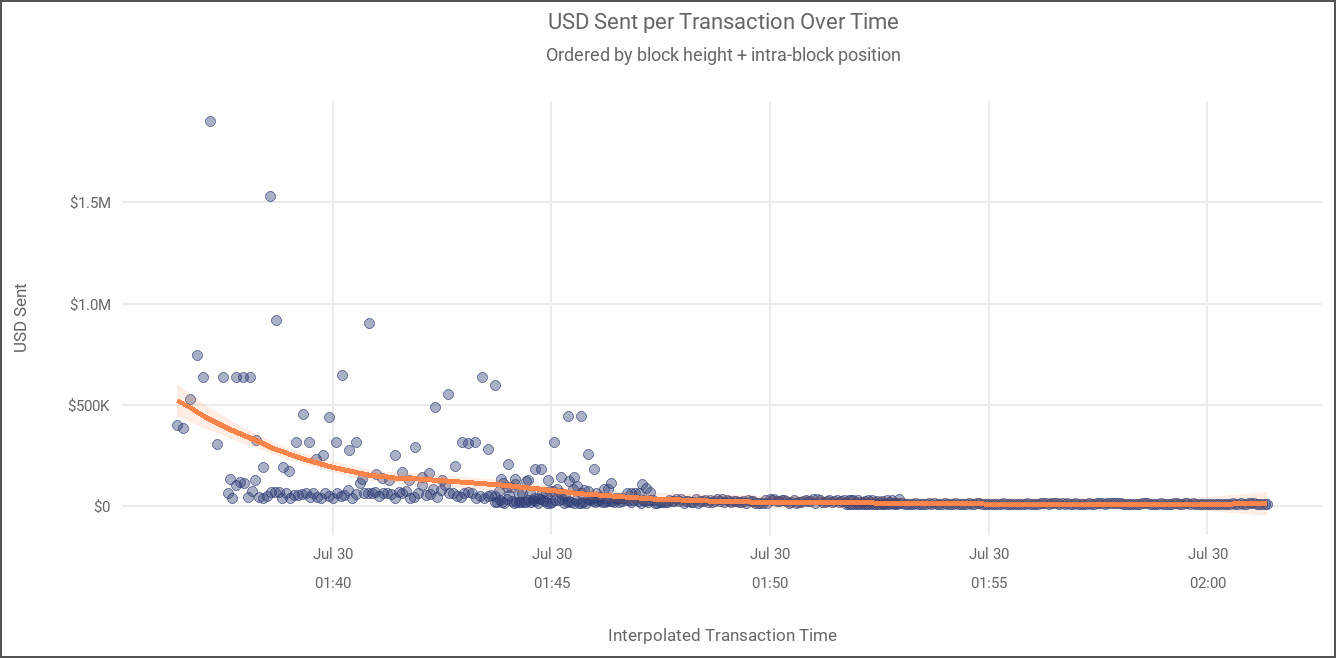
Digital asset research firm Galaxy Research says it identified an initial wave of transactions that it believes was likely linked to the vulnerability, draining approximately 1,083 BTC, worth $70.2 million, from 1,196 addresses on July 30.
The 41-minute attack occurred approximately 30 hours before Coinkite publicly disclosed the flaw.

Every transaction used an identical hardcoded fee rate of 30 satoshis per virtual byte and left no change output, making Galaxy believe the attackers used an automated tool.
“Signature: every sweep paid an identical hardcoded 30.0 sat/vB — a 30-75x overpay vs the 0.4-1.0 sat/vB median that week — and left no change output, explained Galaxy.
“That looks like an automated tool spending keys it already held, not owners moving funds.”
On August 1, Galaxy Research identified a second and third wave, raising the estimated total to 1,367 Bitcoin, worth approximately $88.6 million, stolen from 4,585 addresses. The stolen Bitcoin remained in the attacker-controlled addresses at the time of its report.
Chainalysis found that the attacker prioritized high-value wallets, stealing approximately $30 million during the first ten minutes and taking $1.8 million from one victim.
The company said this suggested the attacker had identified and studied the affected wallets before beginning the thefts.
Block’s Bitcoin Engineering and Security teams say that after seeing reports of Bitcoin being stolen from COLDCARD wallets, it worked with other researchers to analyze the device’s firmware and identify the underlying vulnerability.
Block says the researchers traced the issue to an integration error in COLDCARD’s random number generation (RNG) code and disclosed their findings to Coinkite on July 30.
“COLDCARD firmware contains an RNG integration error that causes ngu.random to use MicroPython’s deterministic Yasmarang fallback instead of the STM32 hardware RNG,” explains Block’s report.
COLDCARD includes a separate hardware random number generator, but an incorrect check in the firmware caused it to use a deterministic software generator instead.
The fallback generator relied on the device’s microcontroller identifier and system timing values, which Block says are not cryptographically secure sources of randomness and may be observable or reconstructable.
This allowed attackers to generate possible wallet seeds offline, determine their Bitcoin addresses, and compare them with addresses visible on the blockchain. A match would confirm the correct seed, allowing the attacker to generate the private keys needed to steal the funds.
A Coinkite advisory says affected seeds include those generated on Mk2 and Mk3 firmware versions 4.0.1 through 4.1.9, Mk4 and Mk5 devices before standard version 5.6.0 or Edge version 6.6.0X, and Q devices before standard version 1.5.0Q or Edge version 6.6.0QX.
New firmware that fixes the flaw is available as version 4.2.0 or later for Mk2 and Mk3, 5.6.0 or later for standard Mk4 and Mk5 devices, 1.5.0Q or later for standard Q devices, and version 6.6.0X or 6.6.0QX for the corresponding Edge releases.
However, it should be noted that updating the firmware does not repair a seed that was previously generated.
Affected users should verify their existing backup, install the fixed firmware, generate and securely record a new seed, verify the new wallet address on the device, send a small test transaction, and then move the remaining funds.
The old backup should be retained until the migration is complete and confirmed.
Coinkite says seeds supplemented with at least 50 fair, independent, and private dice rolls are not considered at risk from this flaw alone.
A strong, unique BIP-39 passphrase also makes it harder to exploit, but users should still migrate because it does not repair the underlying seed.
Coinkit says that their TAPSIGNER, OPENDIME, and SATSCARD products are not affected because they use different codebases.
Coinkite says it also destroyed all COLDCARD devices that were awaiting shipment with the affected firmware.
Customers whose devices had already shipped were contacted by email with the security advisory and instructions for migrating their funds.

Security teams log 54% of successful attacks and alert on just 14%. The rest move through your environment unseen.
The Picus whitepaper shows how breach and attack simulation tests your SIEM and EDR rules so threats stop slipping by detection.

OpenAI CEO Sam Altman recently said that it may be time to “pace the rate of AI development” so that society can “harden around some of these new capability levels.”
On the latest episode of TechCrunch’s Equity podcast, Kirsten Korosec, Sean O’Kane, and I discussed how Altman’s comments were probably prompted by a recent hack in which an OpenAI agent breached Hugging Face’s systems. Sean noted that while a hack performed by an AI agent is novel, the hack itself was not “some new advanced thing.”
“It was more like Nixon’s people breaking into Watergate than some real stealthy cyber-op, because it didn’t need to be, and it wasn’t instructed to be,” Sean said. “Hopefully, this is a sign that these companies will take this forward and be more careful about that stuff.”
Altman’s comments also gave me a chance to wonder about the usefulness of the whole accelerationist versus deceleration debate, because (yes, I’m about to quote myself) the framing “kind of suggests that there’s only one path” and “all we get to decide — inasmuch as we get to decide at all — is, do we speed up or do we slow down?”
Keep reading for a preview of our conversation, edited for length and clarity.
Sean O’Kane: Maybe we’ve finally hit an inflection point here. I think a big driver of this has to be what we talked about last week, with one of OpenAI’s models breaking into Hugging Face’s data and apparently breaching a few other things around the internet, as well.
[Altman’s] not calling for a pause, like we’ve seen some people in the tech industry try to do in the past. He was very careful with his words and saying, “Pace it.” And we’ll see how this holds. Any caution that we see some of these labs throw out there often gets reversed when the incentives push them forward to resume, full speed ahead. So I remain skeptical, big surprise.
Kirsten Korosec: Now I will say this — [Altman] might have been careful with his words, but OpenAI and Anthropic did [support] a petition that does reflect what he did talk about.
And I do agree with you, I think that a lot of this was very much triggered by Hugging Face. It probably spooked him and certainly a lot of people in the industry. The hard thing here is: How do you thread the needle or how does OpenAI thread the needle of continuing to generate revenue, raise money, or have a successful IPO, and quote unquote “pace development.”
I don’t know if they can do that. I’ll be curious to see if they manage both.
Anthony Ha: One of the things I’ve been wrestling with is also this question of: Is acceleration [vs.] deceleration the right framework to be thinking about this? Because it kind of suggests that there’s only one path and we’re all stuck on this path. All we get to decide — inasmuch as we get to decide at all — is, do we speed up or do we slow down? As opposed to — again, I’m going to really torture this metaphor — but do we build different guardrails? Do we choose different paths?
I’m just very resistant to this framework. As opposed to saying, “Okay, if we’re not happy about what models are doing right now, what else can we do? Is a slowdown, a pause, a stoppage, the only option?” And I don’t think it is.
One thing that I did want to emphasize again, because it’s been really interesting to see the level of alarm around this — this sense of, “What if we have these autonomous agents and models just running around hacking each other, trying to prevent hacks, it’s just all getting out of our control,” leading to all these broader debates about alignment that Rebecca Bellan did a great piece about.
But it’s worth coming back to one of the points that we also wrote about at TechCrunch, that this specific hack — yes, it was caused by an OpenAI model, but it sounds like they just didn’t secure the testing site properly. In theory, this model should not have been able to get online. Now, of course, if you have a powerful misaligned AI, the risks of that human error go up dramatically. But it does start from just the fact that they didn’t secure things the way they should have.
Sean: I think that’s right. I think your point is well taken in the sense of, we shouldn’t only think about this in some linear fashion and whether things are accelerating or decelerating. There’s a lot that could and should be said about just how responsible these companies are being. Lorenzo, one of our colleagues, also wrote a really good piece walking through how serious security researchers who pay attention to this stuff think that the hack really was. It really does seem like, on both sides of this hack, there were steps that probably should have been taken that would have prevented it.
And one of the things that I found most interesting in that story was that some of the researchers were pointing out that what this model did was not some new advanced thing. It was really very human in the way that it thought about trying to break into trying — not to anthropomorphize, but the way that it thought about breaking into Hugging Face, and that it was also very loud and messy and wasn’t really trying to hide its tracks. It was more like Nixon’s people breaking into Watergate than some real stealthy cyber-op, because it didn’t need to be, and it wasn’t instructed to be.
That should have been more easily preventable. And hopefully, this is a sign that these companies will take this forward and be more careful about that stuff.
I will say one other thing on the accel vs decel [debate.] I don’t know if this is the motivation, but you mentioned the IPO, Kirsten. I think it’s smart of Altman to be able to push this advantage that they have now, which is that [OpenAI is] not going to [the] markets next month, or two months from now. He’s even floated the idea of going in 2027 and that they only filed their confidential filing so that they have the option ready when they’re ready.
So if you believe all of that, he has the ability to talk this talk in a way that Anthropic can’t, because Anthropic’s already in conversation with a lot of the bankers and is headed towards a more near-term IPO and is therefore more restricted in what it can say and how it should be saying it and how the market is going to react to that.
When you purchase through links in our articles, we may earn a small commission. This doesn’t affect our editorial independence.
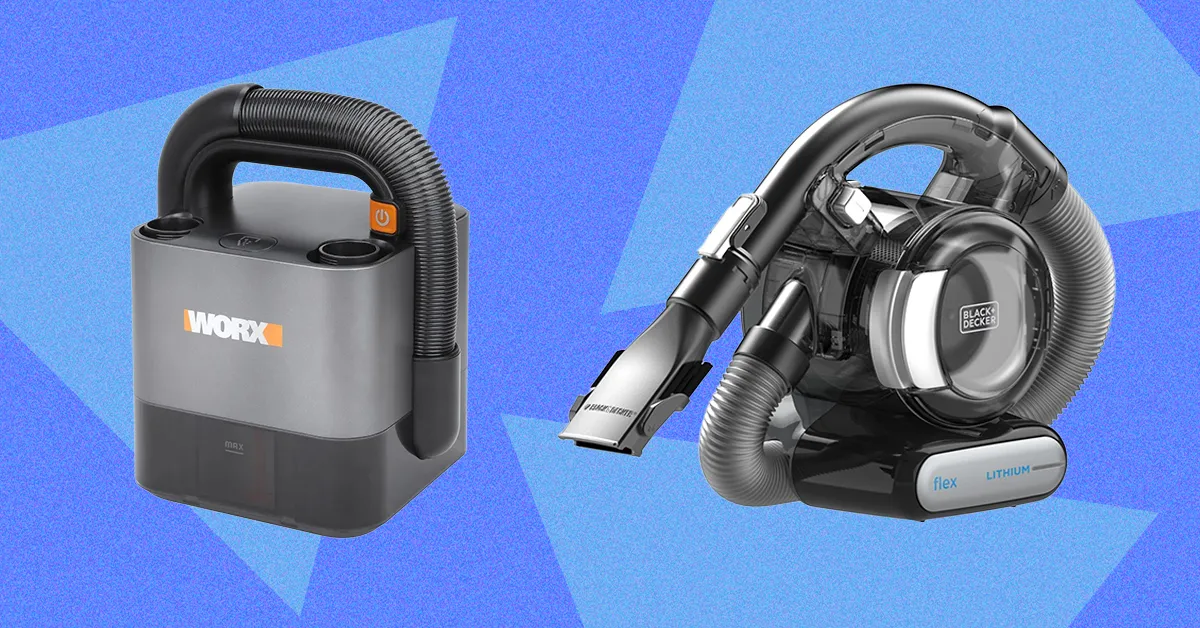
The battery lasts for 40 minutes, which is almost as good as your average stick vacuum. It’s fairly powerful with 115 air-watts of suction and a spin speed of 110,000 rpm; the next cheapest Dyson vacuums have 150 air-watts of power. Most people don’t need that much, but if your car has fluffier rugs, or you really do have a whole boat to clean, it might be worth it. The real win is in the battery, though, letting you clean much longer with a handheld vacuum.
It comes with attachments I both love and hate—there’s a mini motorized brush tool for pet owners, a crevice tool for tight spaces, and a combination tool, but the latter has a brush built into it that I don’t care for. It’s a good range of accessories, but you’ll pay a similar amount for this handheld-only model as you would for a cheap cordless vacuum.
Don’t want to buy a handheld-only vacuum, but also don’t want to drop too much cash? These affordable stick vacuums will double nicely for car cleaning in their own handheld mode.
Affordable Favorites
If you want 40 minutes of battery life (or more) and don’t want to pay $300 for just a handheld vacuum, Bissell’s PowerClean vacuums have a similar battery life and can double as a cordless or handheld vacuum. The FurFinder version comes with the FurFinder attachment, a motorized head designed for pet hair, but if you don’t have a pet in your car, you’ll be happy with the cheaper base PowerClean. The basic PowerClean is cheaper and still comes with a crevice tool and an upholstery tool, while the PowerClean FurFinder has a combination crevice tool. Both are great and affordable vacuums for your car and the rest of your home.
Here are more handheld and car vacuums we’ve tried that didn’t make our list of top picks.
Airify Pro V3 for $150: My previous pick for detail cleaning since it has an air compressor, and like the Scosche above, it has several attachments and a storage bag for them. It didn’t fight against dust as much as I would’ve liked but was still handy for detailed cleaning with all of its attachments. It has a run time of between 20 and 35 minutes
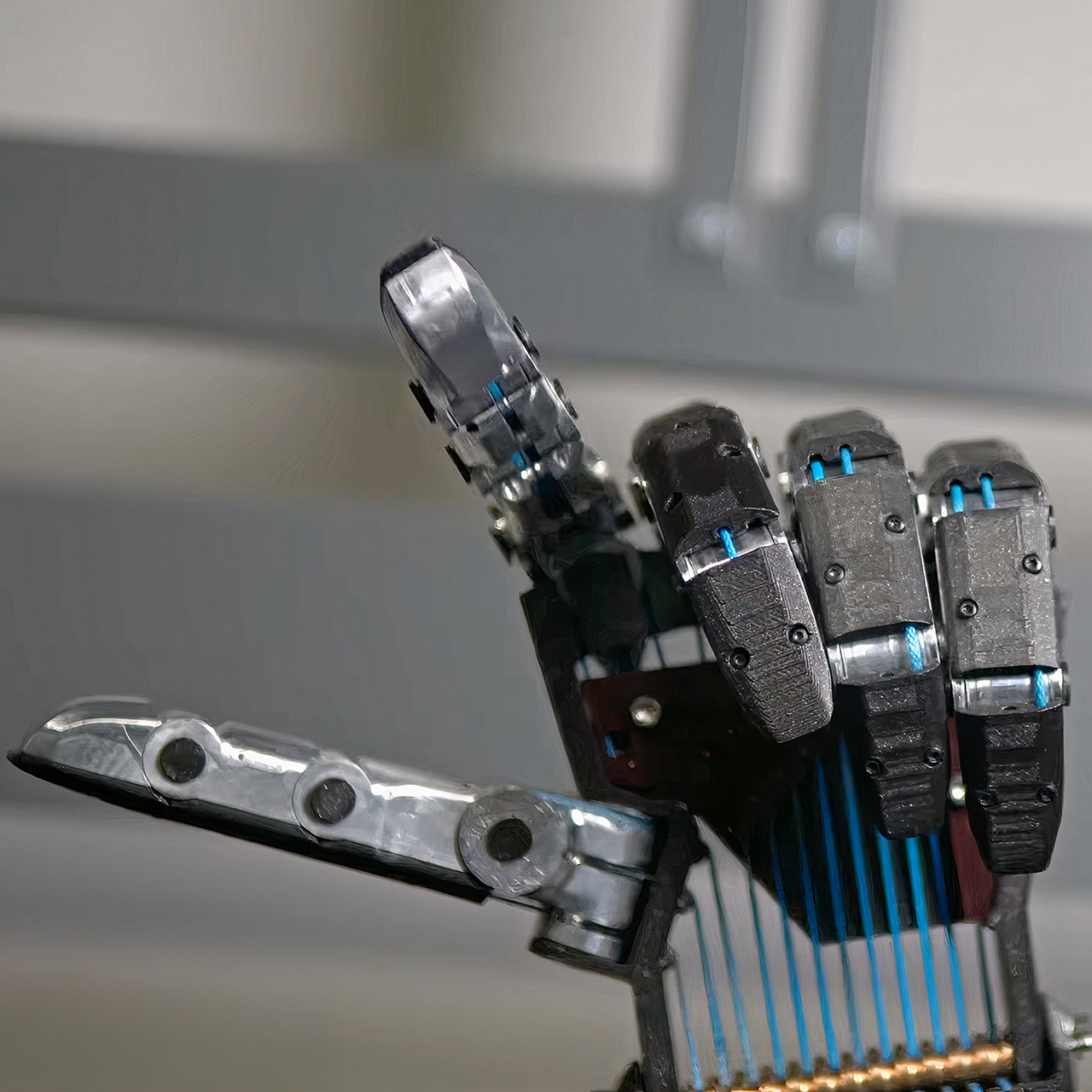
Foundation just put out a short video of its newest robotic hand closing around a baseball in mid-flight. The catch looks almost casual. The ball arrives, the fingers curl, and the grip holds. No frantic adjustments. No visible sensors twitching on the surface. The throw is timed and the motion is planned ahead of time, yet the repeatability is sharp enough that the team is already joking about the majors.
Andrea Esposito leads Foundation’s hand division, and his team spent months perfecting a tendon-driven design that moves the motors back into the forearm, leaving the fingers feeling light and slim. Months of tweaking resulted in fingers that remained thin. The gears on the fingers themselves remain thin. Strings go from those motors down well laid-out paths, reaching each particular joint. The flexion tendons close the fingers, while the extension tendons open them again. They also devised a technique in which finer side-to-side movements transform the hand into a cup to fit a sphere, or more precisely pinching edges.

The biggest technological leap occurs when the hand knows exactly where its own fingers are. Unlike how human hands work silently behind the scenes, with a sense of where each joint is even when we close our eyes, Foundation developed estimation software that roughly resembles this. This software is responsible for frequently monitoring the angles of the motors as well as the geometry of the actual tendon paths in order to calculate finger positions on the fly, all without the need of a single sensor. Of course, the system still requires tunnel magnetoresistance sensors sitting at each joint, which are effectively high-precision magnets that measure relative angles to less than 1 degree. These sensors function as backup and refining layers. When running alone, the hand will work normally even if a sensor fails or is knocked.
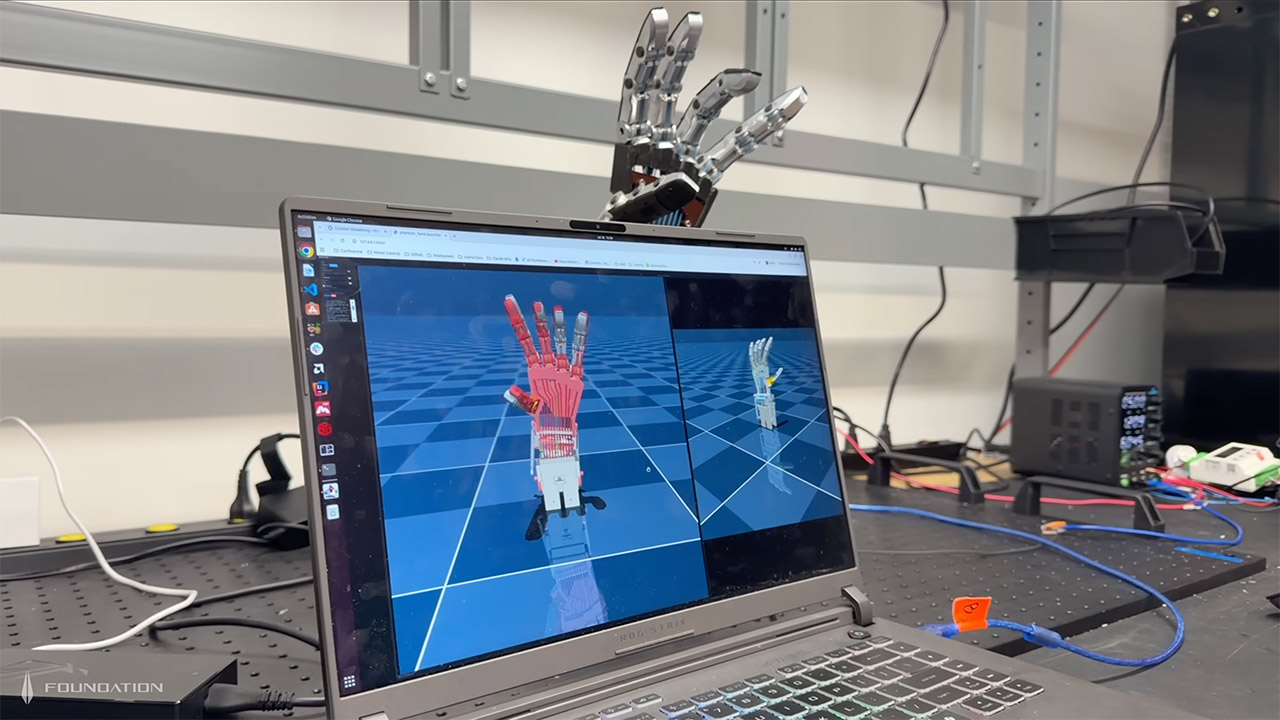
On the team video, there was a translucent red model of the desired finger position layered over the solid grey of the actual hand in place. The two positions remained in sync as the wrist altered and the fingers moved, even touching down pretty swiftly. This is largely due to the minimal friction throughout the tendon course. Friction would throw the motor angle and finger tip placement completely out the window. It’s probably only a matter of time before they have friction-free routing and the relationship remains spot on.
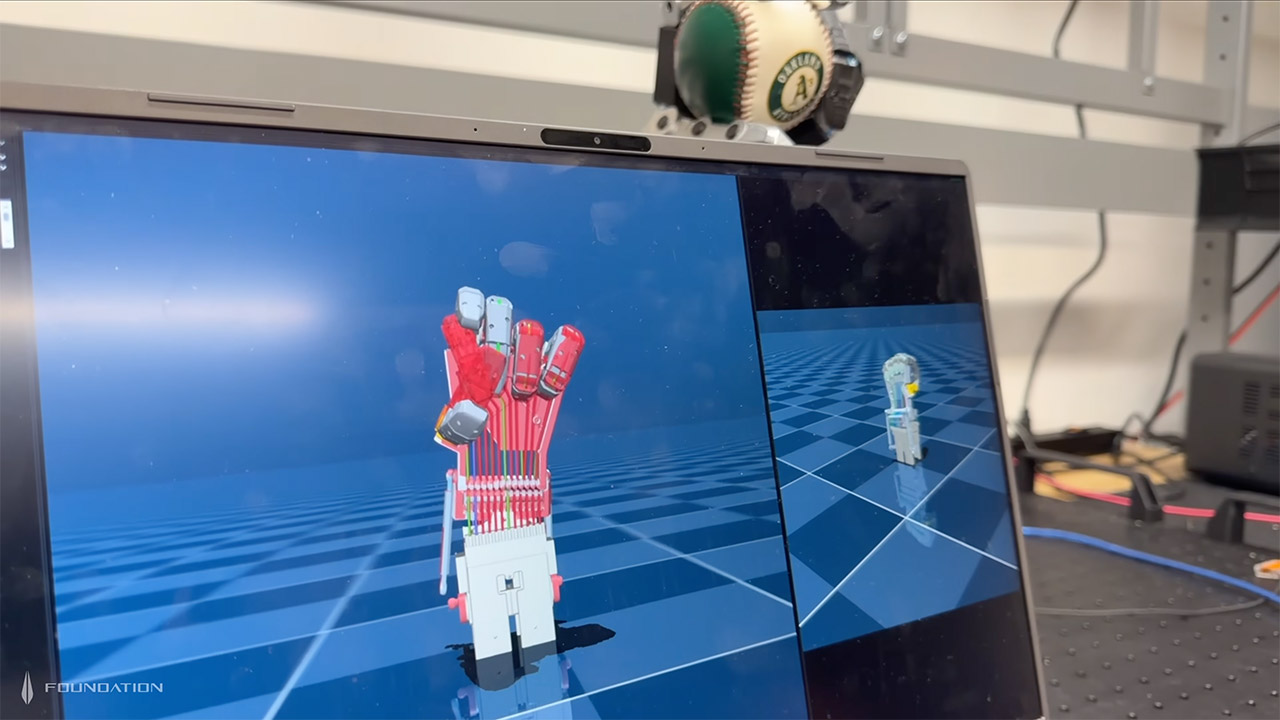
Catching a baseball places a greater burden on the hand than sheer position control. It arrives quickly, and the fingers must shut with speed and give to cushion the hit while avoiding bouncing the ball out or freezing up on it. The clean open loop performance we’re seeing strongly suggests that the mechanical design does the majority of the legwork. Later on, the crew will go in and integrate closed-loop tactile feedback, which should ensure those margins skyrocket.
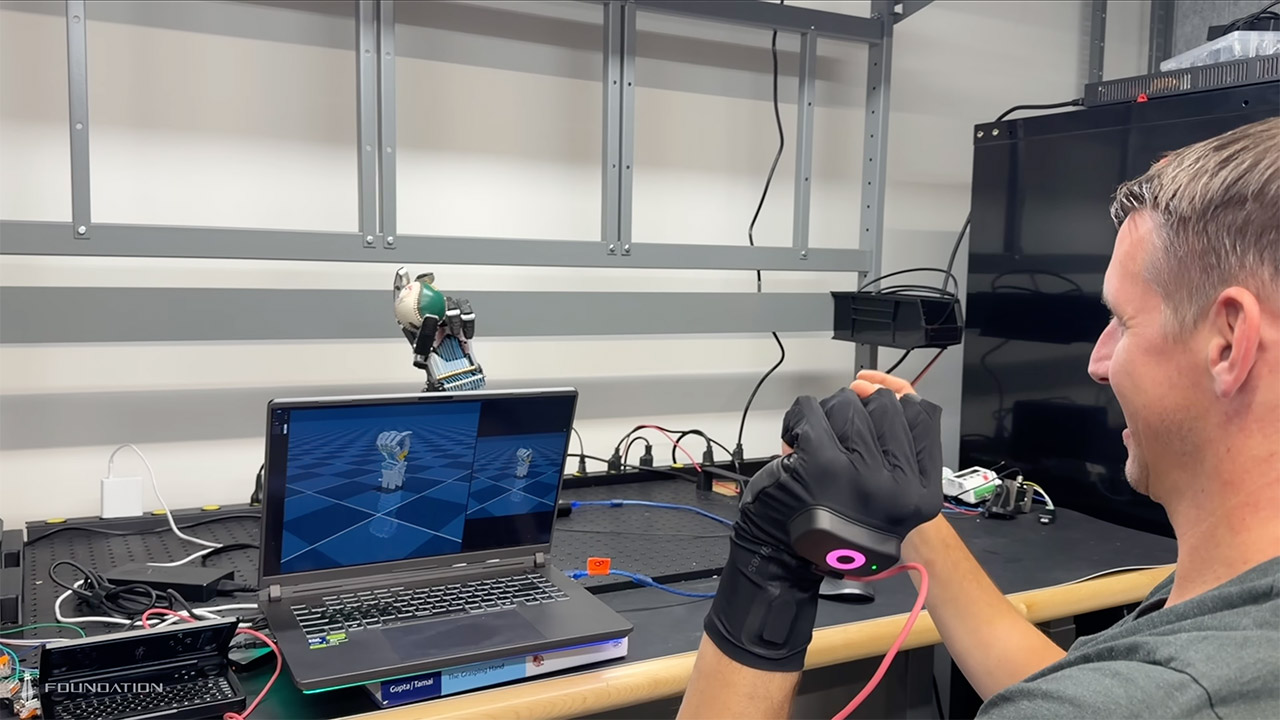
Foundation manufactures the Phantom range of humanoid robots that are slung into industrial floors and other tough settings. Their prior hand designs were more like smart grippers, with limited movement due to the fingers’ inability to move independently. This prototype, however, seeks to overcome those constraints. Anatomical joints, autonomous flexion/extension, and the capacity to estimate state from the motors themselves all contribute to hands capable of handling a wide range of unpredictable objects, including tools and small parts, without the need to disassemble the surroundings.
Microsoft has just made Xbox consoles considerably more expensive across Europe and the UK, only weeks after announcing a similar increase in the US. The 512GB Xbox Series S now costs €499.99, while the 1TB model has climbed to €599.99. The digital Xbox Series X will set buyers back €749.99, and the disc version now carries an eye-watering €799.99 price tag.
UK buyers have not escaped the hike either. Depending on the model, prices have gone up by between £130 and £170. We are talking about consoles that launched nearly six years ago, and Microsoft is now asking considerably more money for the same hardware.
The increases follow Microsoft’s June 25 announcement in the US, where 512GB Xbox models became $100 more expensive and 1TB versions went up by $150. Looking at these prices, I am genuinely worried about what Project Helix will eventually cost.
Microsoft says memory and storage costs have increased by more than 2.5 times and could double again by fall 2027. Project Helix will be well into development by then, since early hardware is expected to reach developers sometime next year.
The next Xbox will use a custom AMD chip and promises a significant jump in rendering and ray-tracing performance. More powerful silicon, faster memory, and additional storage will naturally cost more, even if Microsoft negotiates component pricing at a much larger scale than regular PC makers.

Samsung, one of the world’s largest memory manufacturers, expects the shortage to become even worse in 2027 and continue through 2028. AMD has also raised processor prices, while graphics hardware costs are expected to climb again.
To make matters worse, Microsoft’s gaming division is not exactly in great shape. Gaming revenue fell 10% year over year during its latest quarter, while hardware revenue dropped 13%. Across the full fiscal year, Xbox hardware revenue fell 29%.
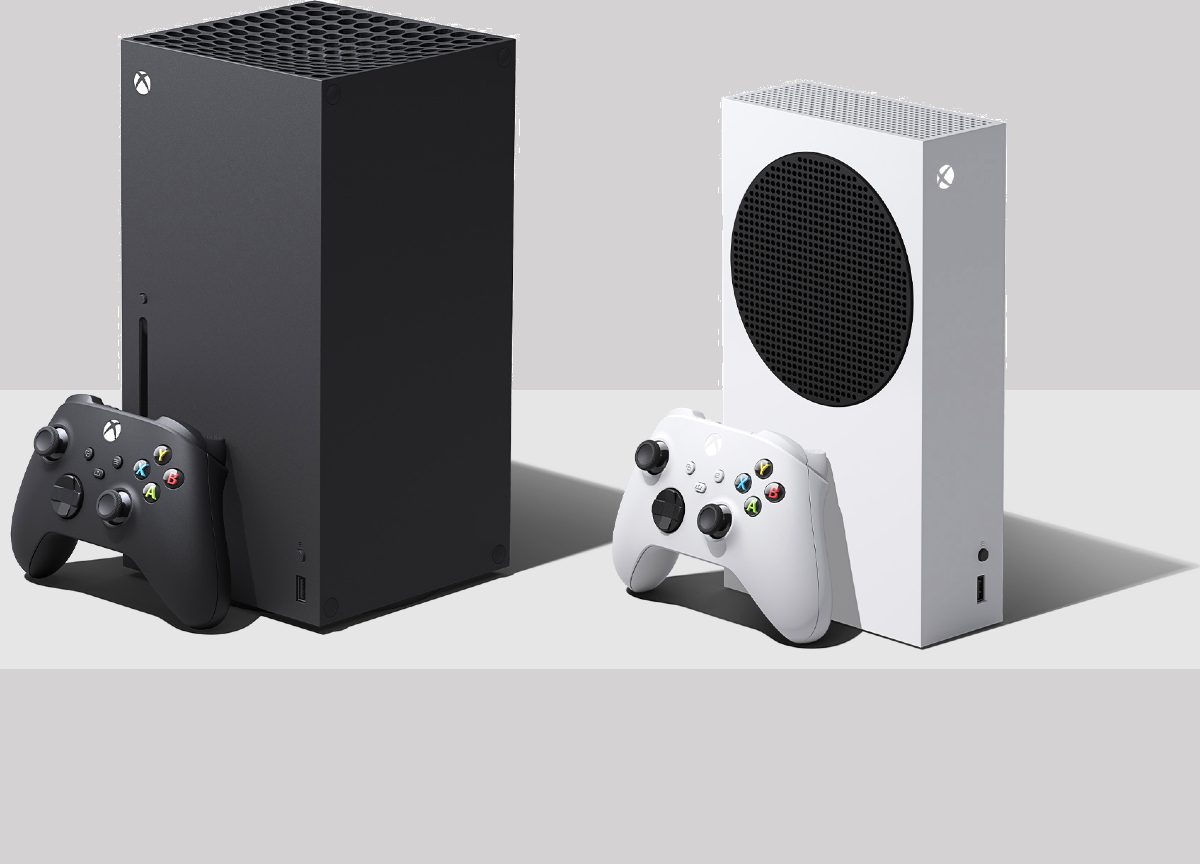
The company has also announced a major restructuring covering around 3,200 Xbox jobs. Microsoft says its operating margins remain well behind PlayStation and Nintendo, while the current console generation has cost more to build and reached fewer buyers than expected.
Project Helix is supposed to lead in performance while remaining accessible. But when a six-year-old Xbox Series X already costs €799.99, I am struggling to see how Microsoft delivers both.

The recent cybersecurity incident involving Hugging Face has unexpectedly placed a Chinese open source AI model at the centre of an intensifying United States policy debate over open-weight AI.
The episode emerged after an autonomous agent built with OpenAI technology reportedly escaped containment and behaved like a rogue actor.
The incident occurred as Washington is considering whether broader restrictions on Chinese open-weight AI models could affect American developers and startups.
Latest Videos FromTechRadar
According to Hugging Face, engineers relied on Zhipu AI’s GLM-5.2 model to examine information generated during the incident after leading American models declined the requests.
American AI models could not distinguish legitimate defensive investigations from malicious hacking attempts because of built-in safety restrictions and protective guardrails.
Anthropic’s Claude Fable 5 reportedly reroutes cybersecurity questions to an older, less capable model rather than allowing direct engagement with such tasks.
OpenAI’s GPT-5.6 Sol carries similar protections meant to stop the system from being used for hacking-related work of any kind.
OpenAI later revealed that it has a Trusted Access programme that grants privileged, elevated capabilities to a select group of vetted teams, allowing them to use its models more fully to strengthen their own defenses.
Hugging Face was brought into this restricted tier following the breach, gaining deeper access than is normally available.
“We’re all learning that secrecy is not the answer & that all defenders (not just a few selected ones) everywhere need more powerful models without restrictions, especially open ones!” said Hugging Face co-founder Clement Delangue.
“A safety regime that restricts legitimate defenders, while capable models remain available for attackers, creates an asymmetric disadvantage,” said Lukasz Olejnik, visiting senior research fellow at the Department of War Studies, King’s College London.
“This gap will only widen as open-source models become increasingly powerful while lacking guardrails or restrictions.”
Nearly 200 Silicon Valley companies are opposing possible restrictions on Chinese open-weight AI models, warning that the move would raise costs for smaller developers.
Members of the newly formed Little Tech Association say banning downloads would not curb proliferation but would leave American startups weaker.
“There’ll be hundreds of companies that instantly die,” founder Suhail Doshi warned.
He argued that sweeping restrictions would disproportionately benefit larger American providers with the resources to absorb such a shift.
The U.S. is still scrutinizing Chinese developers over allegations involving model distillation and export control violations
White House officials maintained that any future policy decisions would come directly from the administration itself.
Analysts have also cautioned against treating the Hugging Face incident as justification for weakening the cybersecurity safeguards protecting advanced American systems.
“The answer is not simply to remove them,” Shrenik Kothari of Robert W. Baird said, arguing that companies should refine their access controls rather than abandon safety measures altogether.
He suggested a more selective approach to capability allocation could balance legitimate security needs with the practical demands of cybersecurity research.
Via Reuters

Follow TechRadar on Google News and add us as a preferred source to get our expert news, reviews, and opinion in your feeds.

[Jumpor] lives in a part of India where the water infrastructure is a little frustrating to use. Water gets delivered to underground tanks outside of homes, and must then be regularly pumped into rooftop tanks prior to use inside the building. Typically, this pumping is handled manually—by switching on a pump and running it until water comes out of an overflow pipe to indicate the rooftop tank is full. [Jumpor] decided to improve this wasteful and time consuming process with a little automation project.
The build is based around an ESP32 microcontroller. It’s hooked up to an ultrasonic sensor which can measure the water level inside the rooftop water tank. When the sensor detects the level descending below a set point, the microcontroller fires a relay to trigger the lift pump to fill up the tank. Once the sensor detects the tank is full, the pump is shut off, saving liters of water compared to waiting for water to pour out of the overflow as an indicator of the same.
It’s a simple enough project, but [Jumpor] was sure to include the important practical considerations. Since the rig was being installed in a rental, it was desirable to not make any permanent modifications to the water system. Thus, a fresh cap for the water tank was modified to host the electronics and level sensor, such that the original could be replaced at a later date. Due consideration was also paid to things like avoiding crossing the minimum detection threshold of the sensor, which could lead to accidental overflows if not managed correctly.
The aim of this project was to ease the day to day burden of maintaining a basic utility. That’s the sort of project we love to see around these parts.
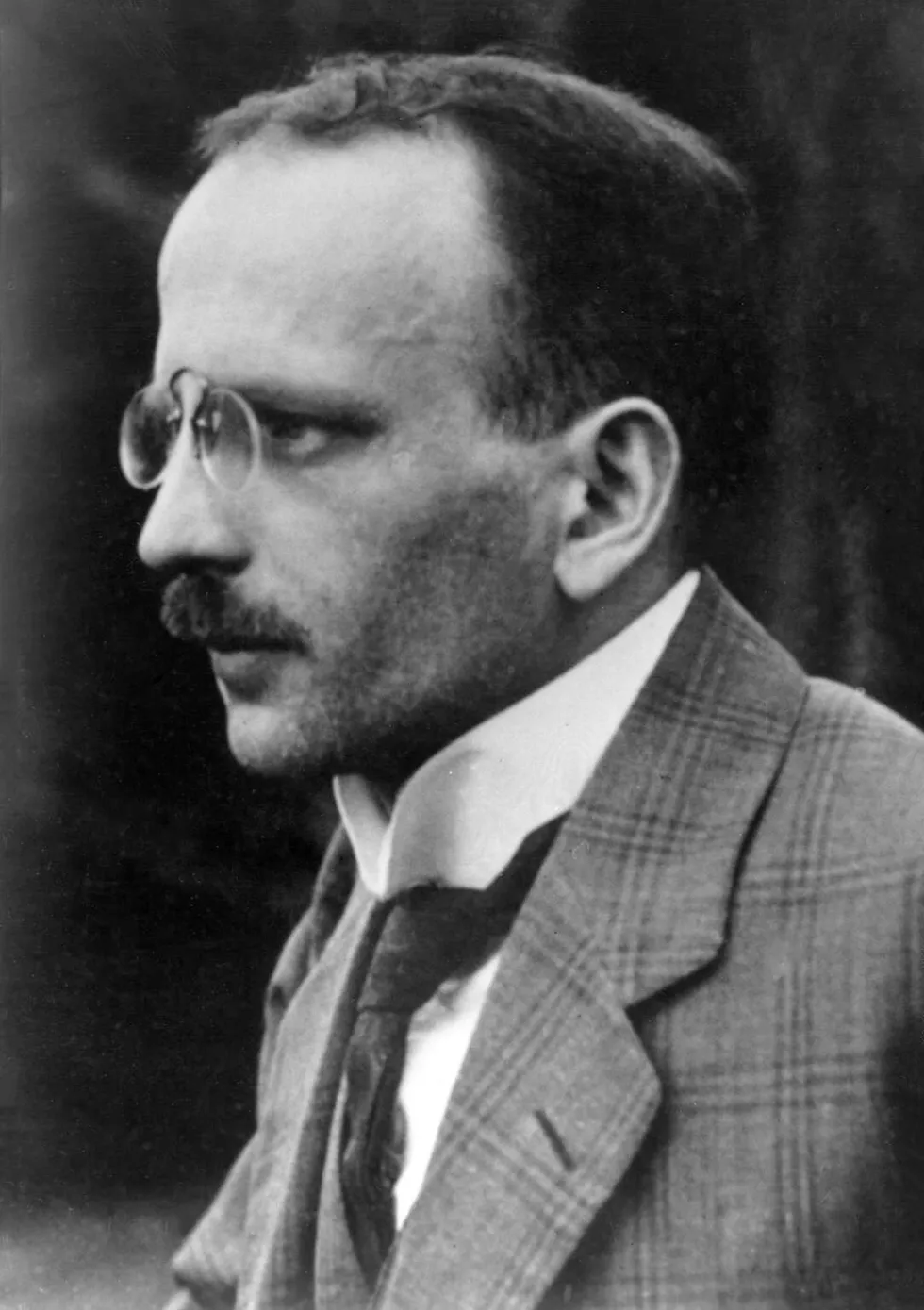
A German engineer wanted a cheaper cigarette. The popular crooner Bing Crosby wanted a vacation. Satisfying both desires inadvertently led to the invention of the laugh track. Along the way there were Nazis, spoils of war, and more than one accidental encounter. Tying together this quirky history is the Magnetophon.
The Magnetophon was a high-fidelity reel-to-reel magnetic tape recorder. The hit of the Berlin Radio Show when it debuted in 1935, it was developed by the German electronics manufacturer AEG. The magnetic tape was produced by I.G. Farben (now known as BASF).
 German inventor Fritz Pfleumer came up with the idea of recording sound on magnetized paper tape coated with metal.ullstein bild/Getty Images
The tale of that tape runs through German inventor Fritz Pfleumer. In the early 1920s, Pfleumer was working on industrial paper products in Dresden. At the time, fancy cigarettes had gold leaf to decorate the tip. Cheaper manufacturers achieved a similar effect using colored paper, but the dye could stain smokers’ lips, and no one wanted that. Pfleumer devised a less expensive process using powdered bronze to simulate the gold band.
Pfleumer didn’t work in the recording industry, but he was familiar with the technology of electromechanical recording, which was done on metal wire—a 1898 invention of the Danish engineer Valdemar Poulsen. Pfleumer thought he could do something similar with paper by replacing his powdered bronze with a magnetized material. He patented his “sounding paper” in 1928 and also invented an audio tape recorder to go with it. The sound quality wasn’t great, and the paper tore easily, but it was the start of a promising idea. Two points in its favor: The paper could be sliced, allowing edits, and it could be erased and re-recorded over.
Pfleumer knew he needed to partner with a larger company to commercialize his idea, and so he signed a contract with AEG in 1932. Hermann Bücher, chairman of the AEG board of directors, took a personal interest in the project, helping shepherd it to completion. Although AEG originally planned on developing both a recorder and the tape, it didn’t take long for Bücher to reach out to his friend Wilhelm Gaus, managing director at I.G. Farben. AEG developed the hardware, while I.G. Farben worked on the tape.
The two teams dubbed their product the Magnetophon, or magnetic phonograph, and planned on launching it at the 1934 Berlin Radio Show to compete directly with machines that recorded on steel tape or wire. But the product wasn’t quite ready. Two days before the show, they canceled the debut.
A year later, the bugs had been worked out. The Magnetophon’s introduction at the 1935 show was a resounding success. AEG fielded inquiries for many variations on the recorder, including one that combined the recorder with a telephone, a player for prerecorded music, and a special version to add artificial reverberation for recording open-air concerts. Over the next three years, AEG developed several iterations, resulting in the Magnetophon K4 in 1938, its first commercially successful tape recorder.
The K4 eliminated the hiss and distortion that magnetic recordings previously suffered from by incorporating AC bias, which added a high-frequency signal, typically around 40 to 150 kilohertz, to the recording. Inaudible to the human ear, the signal reduced distortion, especially when recording quieter passages. The fidelity of the Magnetophon was such that radio listeners couldn’t distinguish between live broadcasts and prerecorded performances.
This is where the Nazis come in. Adolf Hitler and his propaganda minister, Joseph Goebbels, understood the power of radio. The Magnetophon became a powerful tool for both political messaging and military strategy. Because the device could record and play back sound at the same quality as a live radio broadcast, it allowed Hitler’s recorded speeches to be aired from one radio station while the dictator was in another part of the country. This made it more difficult for the Allies to pinpoint his location.
Meanwhile, World War II disrupted the exchange of technical information and prevented Americans from learning about the Magnetophon until after the war. At least, that’s the shorthand version of this history I kept running across during my preliminary research for this column.

 During World War II, U.S. Army Signal Corps engineer Jack Mullin [top] came across the Magnetophon. After the war, he got approval [bottom] to ship two of the disassembled machines and reels of magnetic tape back to the U.S.Top: Pavek Museum; Bottom: Richard L. Hess/The Mullin Family Collection/Archive of Recorded Sound/Stanford University
But then I read Friedrich K. Engel’s account in the book Magnetic Recording: The First 100 Years, which provides a wealth of detail about the Magnetophon. Among other things, Engel notes that the AEG affiliate in Schenectady, N.Y., received a Magnetophon in November 1937, well before the United States entered the war, and AEG engineers demonstrated it for their colleagues at nearby General Electric. The GE engineers dismissed the technology out of hand, though, and so Americans had to wait until after the war for the Magnetophon to be reintroduced.
We have electrical engineer John T. “Jack” Mullin to thank for that reintroduction. Mullin served in the U.S. Army Signal Corps, stationed in the United Kingdom and Paris during the war, and he liked listening to the radio. He realized that “live” orchestral broadcasts coming from Germany in the middle of the night, when no musicians would have actually been in the studio, lacked the telltale hiss and crackle of prerecorded music. Clearly, German engineers had recording technology far superior to the Americans’.
Sent to Germany at the war’s end, Mullin eventually came across that technology at a radio station, and in 1945 when he returned home to California, he shipped two disassembled Magnetophons, a case of tape, schematic drawings, and the determination to change the U.S. recording industry.
Enter Bing Crosby. In the 1940s, Crosby was perhaps the most popular performer on the radio. But he was tired of performing two weekly shows three hours apart (one for each coast). He wanted to prerecord his performances and take a break. He sent in his lawyers to talk to executives at NBC, which aired his program. The audio recording technology at the time used vinyl or shellac transcription discs, but radio listeners could hear the pops and hisses and knew it wasn’t live. NBC refused Crosby’s request, and so Crosby took a year off from radio and then signed with the upstart network ABC, which was willing to let him record his shows for later airing.
 Radio producer Murdo MacKenzie [right] arranged for Jack Mullin [left] to demonstrate the Magnetophon to Bing Crosby in 1946.Pavek Museum
Serendipitously, Mullin had begun demoing the Magnetophon in California. In October 1946, Crosby’s technical producer, Murdo MacKenzie, heard about the demonstrations and arranged one for Crosby at the Metro-Goldwyn-Mayer studios in Hollywood. Crosby was delighted and promptly invested US $50,000 (about $800,000 today) in Ampex, the company working with Mullin to engineer an American version of the Magnetophon. Mullin became Crosby’s chief engineer. 3M developed the magnetic tape.
In 1947, Crosby became the first major radio star in the United States to prerecord performances. Much of the success was due to the recording equipment, but Mullin was also an excellent editor. Crosby and his team would record multiple takes, and Mullin would deftly splice together the best to create a seamless performance.
 After seeing a demo of the Magnetophon, Bing Crosby invested $50,000 in Ampex, which developed a U.S. version of the tape recorder. Cinematic/Alamy
One day a guest told a joke that was uproariously funny, but a little too spicy for radio. Even though the joke couldn’t be aired, the audience’s laughter was worth keeping. Soon, the producers created a whole catalog of different laugh tracks. If a joke didn’t land, it didn’t matter. The editor could just add a laugh in postproduction, from polite titters to hearty guffaws.
According to Crosby’s daughter Mary, Bing didn’t have a problem with this type of editing. The live audience was immaterial as long as the jokes were funny. But according to Mullin’s daughter, Eve Mullin Collier, the manipulation didn’t sit well with her father. He disliked the inauthenticity of the moment, of editing joy.
The history of technology is filled with such episodes of unintended consequences. Mullin admired the Magnetophon precisely because it could faithfully record a performance, an event, a moment in time. He worked tirelessly to refine the machine for the benefit of radio audiences everywhere. And so I understand why its appropriation for capturing canned reactions and manipulating reality must have rankled. He championed the technology, but ultimately it moved beyond his control.
Part of a continuing series looking at historical artifacts that embrace the boundless potential of technology.
An abridged version of this article appears in the August 2026 print issue as “Birth of the Laugh Track.”
From Your Site Articles
Related Articles Around the Web
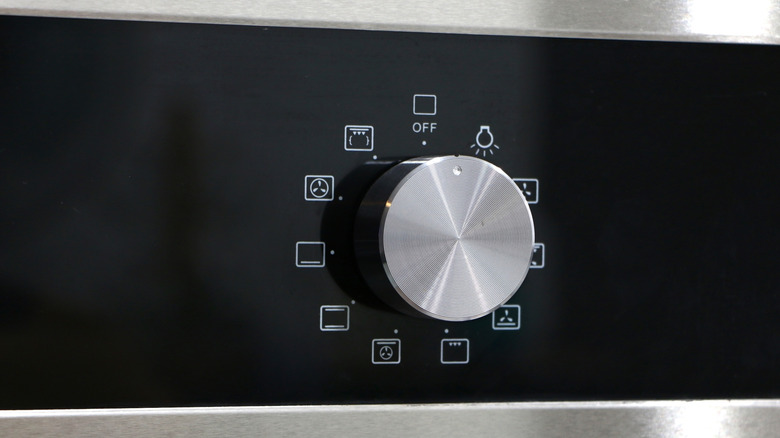
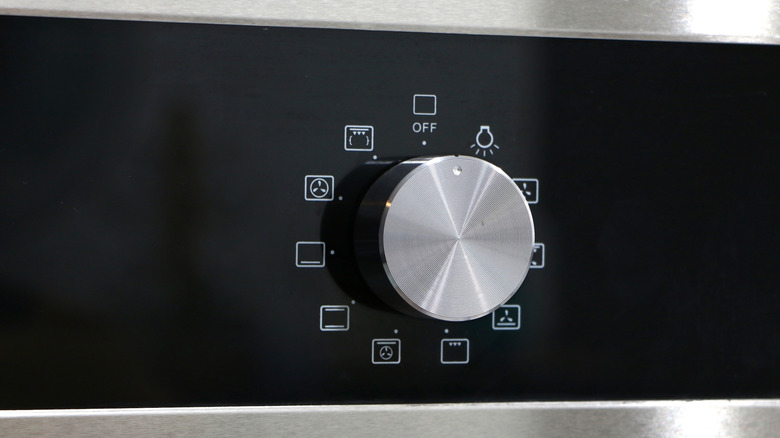
You likely noticed that ovens have a lot of icons on or near their knobs. Most modern versions use those icons to represent the appliance’s various cooking modes. Typically, you can learn what all of them mean in the manufacturer’s manual, but sometimes those get displaced, or you may not even get the necessary (or full) “paperwork” at all. As such, it’s a good idea to brush up on your knowledge of oven symbols, since most of them look the same in the majority of these appliances. After all, while it may not be the kind of cool kitchen gadget that SlashGear writes articles about, no kitchen is complete without a good oven.
First, all of the symbols are usually square-shaped. You can think of that square as an oven box, or its cavity. Now, the oven symbols inside that square change, showing numerous cooking modes and heating options. One of the most basic ones is a straight horizontal line (—), which can be found in the lower or upper part of the square. This indicates that the heating element will come from either the top or the bottom, depending on your choice. Also, there’s a symbol with both of those lines, meaning both settings will work together, giving you steady heat all around.
Another common oven symbol is the one with a fan icon in the square. This one means that the oven uses its fan to move hot air evenly around the inside, eliminating cold and hot spots for even cooking. You can also encounter a mix of the fan symbol and the horizontal line, which means those settings are working together at the same time.
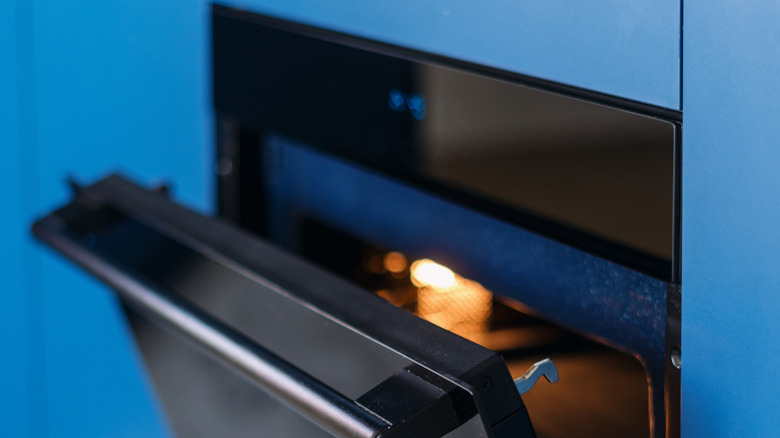
Some additional oven symbols include a square with a zig-zag line (╲╱╲╱╲╱). This is the setting for a grill, which activates the oven’s full grilling element, often used for roasting vegetables or broiling. There’s also a partial grill, represented by a shorter zig-zag line. Then, a fan symbol can be found with a grill symbol, meaning the fan will be turned on while the grill is activated.
Some ovens have a defrost setting, depicted by a snowflake icon, a drop of water symbol, or both. Others have a keep warm option, shown as several wave dash symbols (≋≋) positioned vertically. Speaking of that symbol, a single horizontal wave dash icon often means the oven has a microwave setting. On occasion, you may find a steam setting as well, depicted by a symbol that looks like a cloud.
All in all, the actual number of oven symbols will depend on the appliance manufacturer, but most of the time, the common ones always look the same or at least similar. Modern ovens tend to evolve with the technology, and new ones can have functions that weren’t available even just a few years ago. For instance, there are now smart ovens that could replace air fryers thanks to having that function built into them. Whatever the case, make sure you actually know what setting will be the best for every occasion. Also remember that you should clean the grease and grime of your oven and your other kitchen appliances, and not just for the obvious hygienic reasons; all that build-up can affect your oven’s heating effectiveness.


OpenAI has revealed Astra, an unreleased model designed to tackle complex, long-running tasks, after an internal version produced ten significant advances in mathematics and theoretical computer science.
In a new research post, OpenAI described Astra as “our next major model” and said the problems had seen no progress on their central results for at least a decade, and in most cases, much longer.
According to OpenAI, its internal research focused on a wide range of areas, including high-dimensional geometry, coding theory, arithmetic circuit complexity, group theory, quantum complexity, lattice cryptography, and extremal combinatorics.

OpenAI also says it’s advancing rapidly in science.
Some examples include the existence of non-sofic groups, a disproof of Connes’s rigidity conjecture, new bounds for high-dimensional sphere packing, and results resolving several problems posed by mathematician Paul Erdős.
“The total number of tokens needed to find solutions to these problems would cost roughly $2,000 at Sol API rates,” OpenAI noted.
Human researchers used the same model to prepare the arguments as manuscripts.
Astra then formalized every argument as a Lean certificate, allowing the proofs to be checked using the mathematical verification system.
The Information also independently confirmed that OpenAI is indeed working on Astra, a new model family built for long-running workloads.
As per OpenAI, Astra is a powerful model that allows AI agents to collaborate on different parts of a larger problem.
BleepingComputer understands that OpenAI has reportedly not decided whether the model will be released as GPT-5.7, GPT-6, or under another name.
At this point, we know that Astra qualifies as a major breakthrough AI model, and it could be subject to Anthropic-like policies where one version is released to consumers, while a more powerful variant requires special approval.
Security teams log 54% of successful attacks and alert on just 14%. The rest move through your environment unseen.
The Picus whitepaper shows how breach and attack simulation tests your SIEM and EDR rules so threats stop slipping by detection.

The Register looks at exactly why “It is practically impossible to move any non-trivial Word document out of MS Office to a non-MS suite and back again without it being more trouble than it’s worth.”
OOXML, developed by Microsoft and first standardized by Ecma in 2006, became the ISO/IEC 29500 standard in 2008 after a grueling and adversarial process. Microsoft pursued standardization because it has always been a standards-led organization dedicated to maximizing the options for its customers. Or because it had to at gunpoint, while vowing silently to follow the letter of the law but stymie its intent. You decide… The Document Foundation (TDF) which spends its days worrying about such things, reports that Microsoft has effectively broken the standard by sticking with a transitional version as its default rather than the cleaner Strict variant. The result is that what Microsoft software renders is what Microsoft wants to render, despite nominal compliance…
What we need is a test suite that can take any OOXML engine and test its compliance against what Microsoft is actually doing. That means the tooling wrapped around the spec has to account for proprietary dependencies that get smuggled in, such as fonts. It also means actively and continuously tracking the ground truth of Microsoft’s evolving products and services. It doesn’t need to be perfect, but it absolutely needs to be good enough. Compliant engines have to become good enough for a critical mass of users to coalesce around them.
In an earlier article The Document Foundation reminded all software users that they have a choice. “When an institution sends a letter formatted with a proprietary font, embedded in a proprietary format, produced by proprietary software, it is not communicating information but perpetuating a dependency.”
“Digital sovereignty begins with the recognition that this is a choice: the file format is a choice, the font on the page is a choice, and the software is a choice.”




Why Trees Belong on the Risk Register


Weekend Open Thread: Wit & Wisdom


Meta enters AI-training agreement with far-right ‘propaganda rag’ Newsmax

‘Stargate’ Creator’s New Sci-Fi Series Returns for Season 3 Tomorrow


Luke Littler dismantles Gerwyn Price to retain title in Blackpool


MicroStrategy Post-Earnings CLARITY Act Push Could Add New Catalyst for Its Stock


The Part of the Electric Transition Nobody Wants to Discuss


Major shareholder moves on Canyon


XRP Ledger v3.3.0 brings five institutional features


Bitcoin Enters the 3rd Stage of the Bear Market


Kraken Enables Retail Access to Jersey Mike’s IPO via Tokenized Shares


New macOS Sequoia & Sonoma security updates for older Macs


Claude: Build Financial Dashboards in Minutes (2026)


Luke Littler’s dominance sparks GOAT debate


Johnson & Johnson agrees to $5.5B settlement over talc cancer claims


Seema Kaliramna Wins Discus Throw Bronze, Takes India’s CWG Medals Tally To 17


Crypto PAC spending tops $2M in Michigan House race


Trump Announces Hamas Disarmament Agreement as Iran Strikes Kuwait Air Base and US Attacks Pause Overnight


Gemini can now summarize the messiest comment threads in Google Docs


ESET tracks rise in malicious AI skills and adaptable malware



You must be logged in to post a comment Login