







Connect with us

Tech

Cost-No-Object Audiophile Gift Guide – ecoustics.com

Published

on

Having a bank account with plenty of zeroes does not mean every listening room needs six figures of loudspeakers, amplification, and source components. Room size, system matching, and how you actually listen should still determine where the spending stops. But if the budget really is secondary, finding the best state-of-the-art audiophile gear of 2026 shows just how far manufacturers are willing to push performance when cost is no object.

That pursuit can take very different forms. Some listeners will spend heavily on reference headphones and headphone amplifiers, while others will build systems around statement loudspeakers, turntables, digital sources, DACs, and amplification designed to extract every last ounce of information from a recording. The best examples are not expensive simply for the sake of being expensive; they represent years, and sometimes decades, of engineering, refinement, and very deliberate choices about how music should sound in a serious listening space.

Our cost-no-object audiophile gift guide focuses on products that deserve to be heard before anyone dismisses their price tags as high-end audio lunacy. You may never buy any of them, but a proper demonstration can be instructive, occasionally humbling, and dangerous to both your expectations and your retirement account.

801-d5-light-walnut

Bowers & Wilkins 801 D5

The 801 D5 reference tower loudspeakers are the latest and most advanced version of the iconic Bowers & Wilkins 801, which have been the preferred speaker of Abbey Road Studios since 1988, because of their precision and accuracy. Available now in Light or Dark Walnut, Black or White finishes.

$65,000/pair at Bowers & Wilkins

Advertisement

MartinLogan Neolith

Combining massive physical scale with lightning-fast transient response, the MartinLogan Neolith stands near the absolute summit of modern loudspeaker design. Its balance of micro-detail resolution, electrostatic transparency, and effortless dynamic slam produces an expansive, three-dimensional soundstage that simply must be experienced to be believed.

$59,999/each at MartinLogan

martinlogan-neolith-red
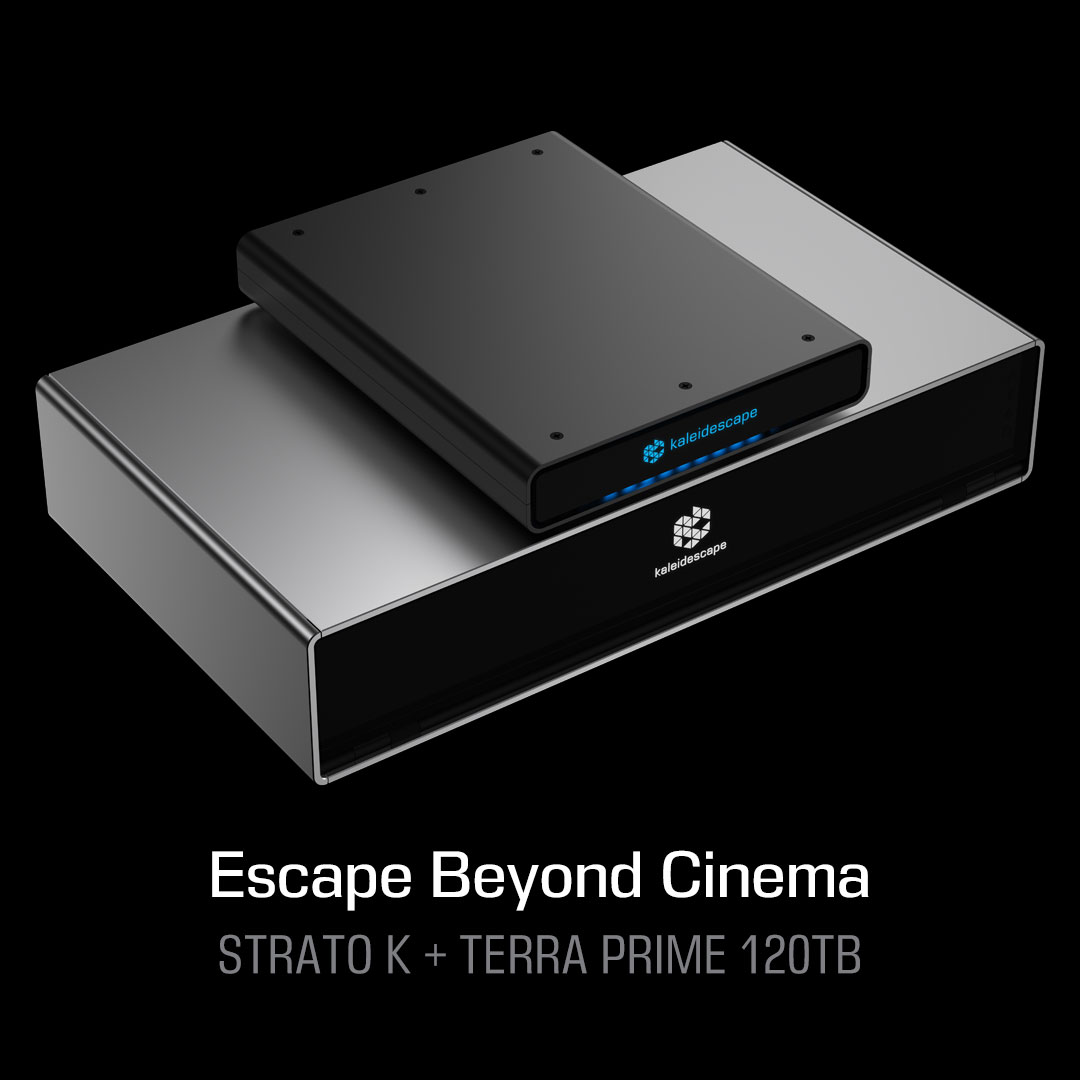
kaleidescape-strato-k-terra-prime-120tb-escape

Kaleidescape Connoisseur System

Escape beyond cinema with Kaleidescape Strato K and Terra Prime 120TB. Strato K is the world’s highest-fidelity movie player, providing access to Kaleidescape’s exclusive 4K Cinematic™ format. Terra Prime 120TB movie server stores up to 2,000 4K movies and unlocks the full Kaleidescape experience. Available from Kaleidescape dealers at $39,990 US MSRP.

Learn more at kaleidescape.com

Focal Scala Utopia Evo M

An exceptional 3-way floorstanding loudspeaker designed and manufactured in France. It unites innovative drive units, state-of-the-art audio technologies and an iconic, sculptural design, delivering sound reproduction with remarkable precision and expression for a truly unique musical experience. Engineered for high-end audio systems, it is conceived for the most dedicated high-fidelity enthusiasts.

Advertisement

$50,000/pair at House of Stereo

focal-scala-utopia-evo-m-lifestyle-taupe
paradigm-persona-9h-white

Paradigm Persona 9H

Completely designed, engineered, and crafted in Canada, the flagship Persona 9H unleashes the full, untamed power of Paradigm engineering. This 6-driver, 3.5-way hybrid floorstander packs 1,400 watts RMS of DSP-controlled amplification to drive its active bass architecture. Encased in an intricately braced, vibration-canceling cabinet, it delivers surgical precision with effortless dynamics and total acoustic authority.

$19,999/each at Paradigm

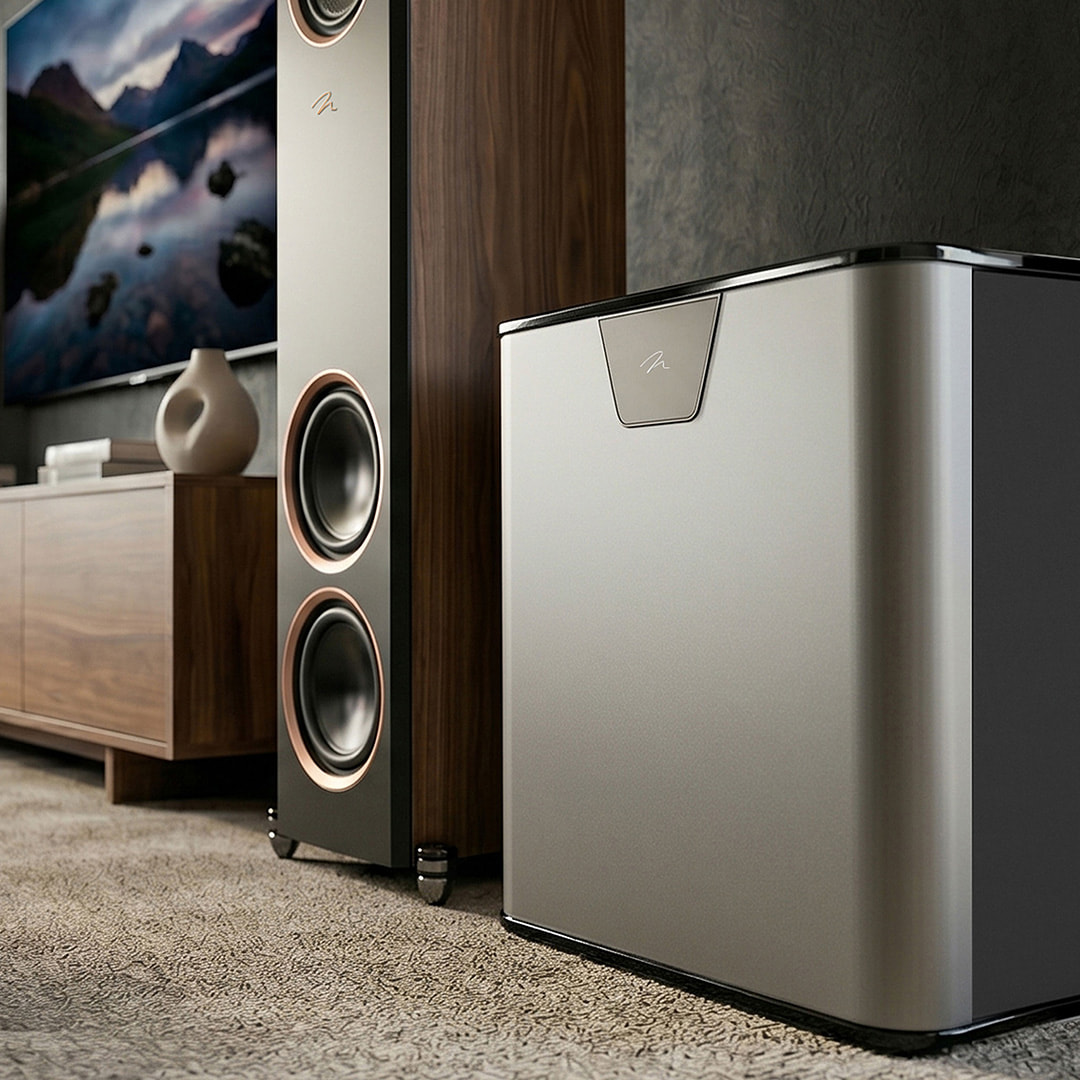
MartinLogan Depth 215

The ultimate expression of MartinLogan bass, the Depth 215 delivers pure low-end dominance. Dual 15-inch Carbon Aerocore woofers in a force-canceling setup eliminate cabinet vibration, while a 64-bit Vojtko DSP engine ensures surgical accuracy. Bone-rattlingly deep and distortion-free, it anchors high-end two-channel setups and elite home theaters alike.

$6,999 at MartinLogan

Advertisement
martinlogan-depth-215-black
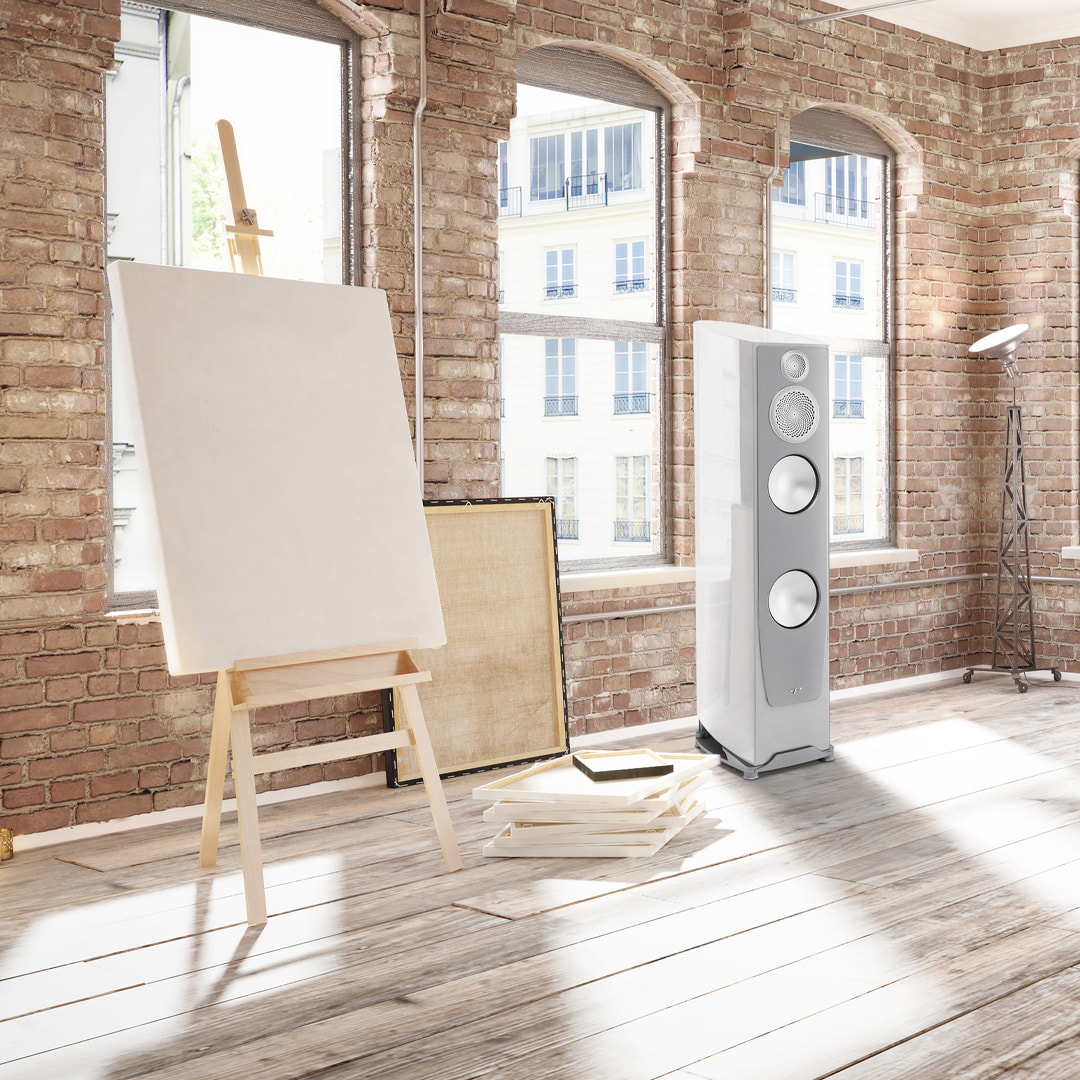
marantz-10-series-silver

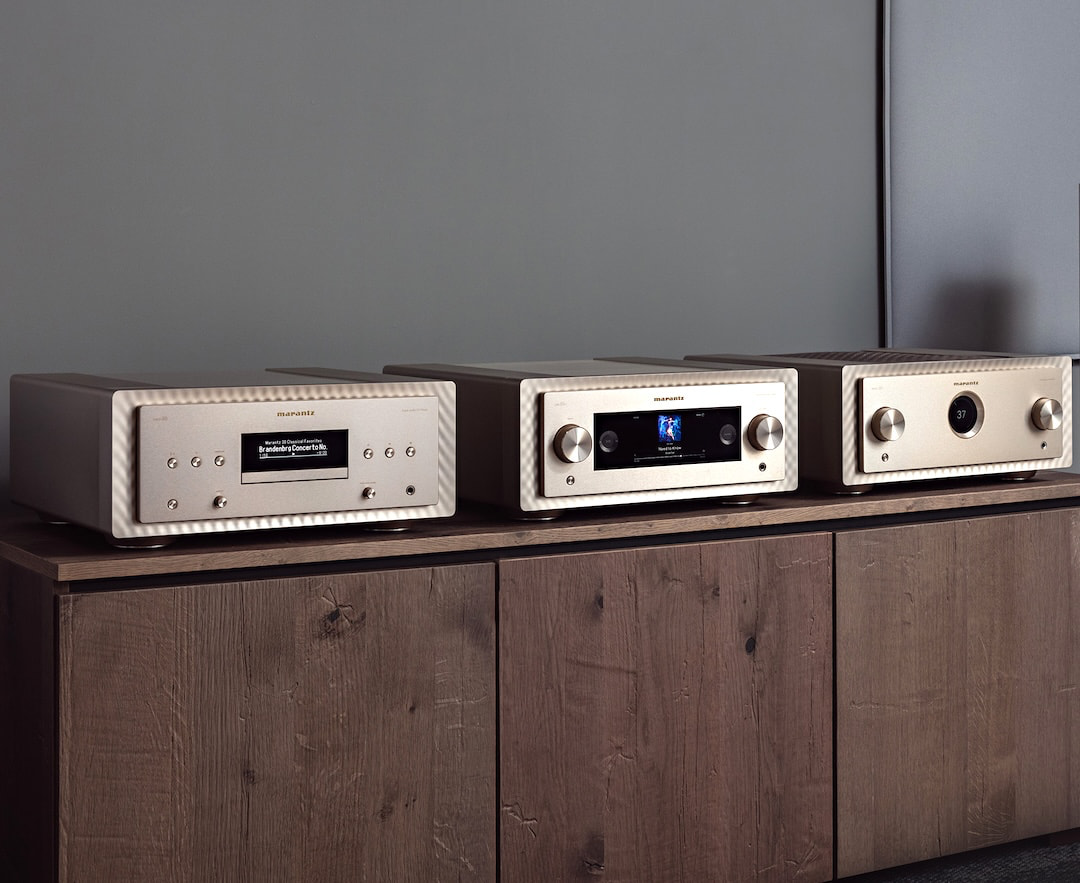
Marantz 10 Series

Unlock the pinnacle of music performances with the top-of-the-line Marantz 10 Series hi-fi components consisting of the Model 10 Integrated Amplifier, SACD 10 Disc Player, and LINK 10n Streaming Preamplifier.

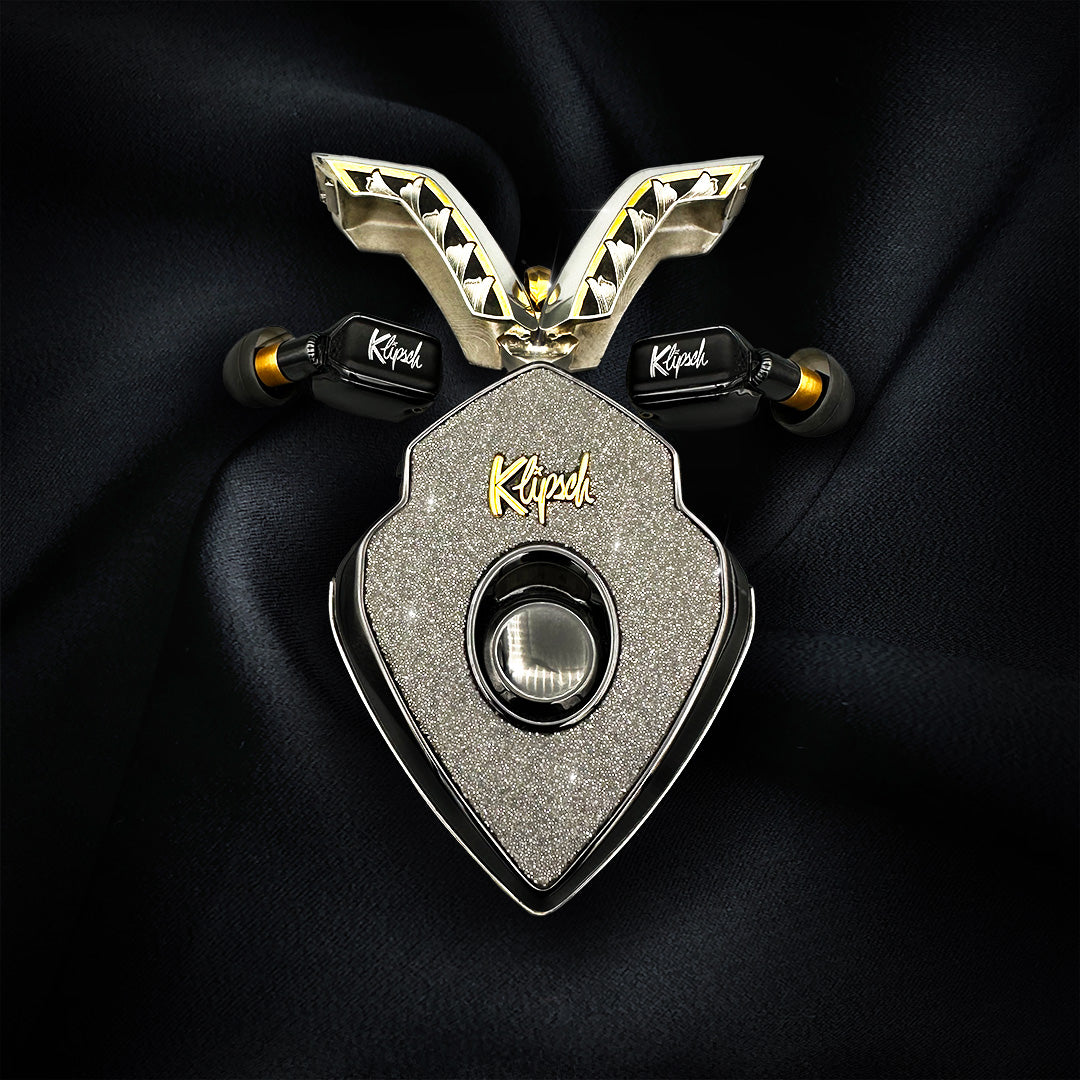
Bartolotta T10 Bespoke

One-of-a-kind in-ear computers combine the craftsmanship of two artisans, Bear Clark and Phil Bartolotta. The charging case pendant features a soft-brushed 925 sterling silver metal frame with a 14k gold inlay border, while the buds deliver astonishing musical playback and functionality.

$22,012.50 at T10 Bespoke

t10bespoke-bartolotta

Need more gift giving ideas?

Disclosure: The products listed above are approved by our Editors, but may be requested by our sponsors. When links to buy are provided, we’ll direct you to the lowest price at time of publication. In doing so, eCoustics may earn a small commission from the associated retailer if purchased.

Source link

Advertisement
Continue Reading
Click to comment

You must be logged in to post a comment Login

Leave a Reply

Tech

An audiophile headset for gamers

Published

on

The Asus ROG Kithara brings Hifiman’s planar-magnetic drivers and signature design to the Mac gaming world with aplomb that’s sometimes undermined by unfortunate complexities.

In a world that’s full to the brim with mediocre gaming headsets, this Asus ROG and Hifiman collaboration is certainly different. Hifiman is known for its premium headphones aimed squarely at audiophiles with plenty of money to spend on their hobby.

By contrast, gamers aren’t known for their willingness to part with their hard-earned cash. Unless it warrants it, that is. And in the case of the Asus ROG Kithara, their $300 would be money well spent indeed.

I’ve spent the last few months with this headset (or headphones, depending on how you look at it.) I’ve used it to play some great games and listen to some not-so-great music. Go West fans shout out in the comments. I can’t be the only one.

Advertisement

In all that testing, one thing has become clear. Asus and Hifiman have made a great pair of headphones. Whether they made a great gaming headset will depend on how you plan to use it.

ROG Kithara review: Design and build quality

The first thing that you notice when unboxing the Kithara is its gargantuan size. It’s easily the biggest headset or headphones I’ve ever used, but with good reason. The size is dictated by the technology.

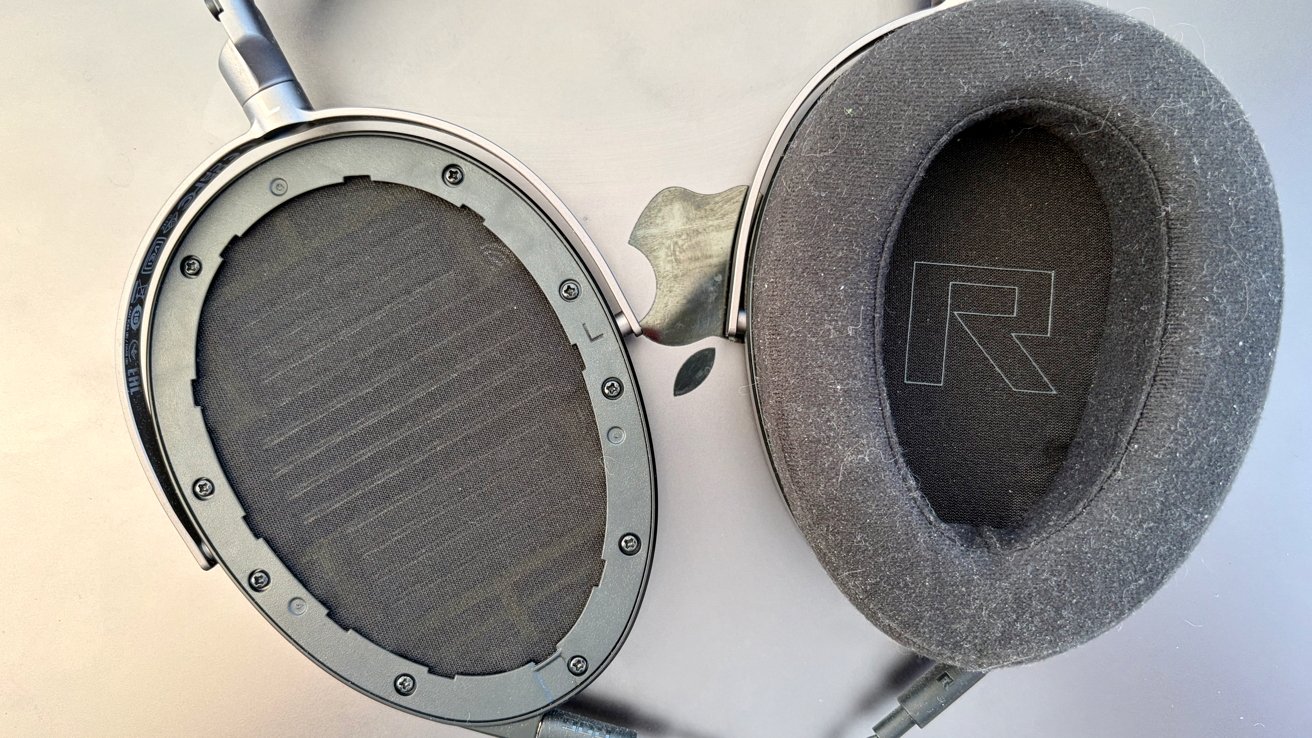
The technology in question is Hifiman’s 100mm planar-magnetic drivers, something that dictates both the size and quality of the Kithara. Apple’s AirPods Max 2 have custom 40mm drivers, just to put that into perspective.

Close-up of over-ear headphones with one ear pad removed, revealing the internal speaker, and the other pad labeled R for right, resting on a light surface

ROG Kithara review: Hifiman’s planar-magnetic driver is huge

Advertisement

Hifiman’s huge drivers are the reason for the Kithara’s mammoth ear cups, and part of the reason for the headset’s 420-gram (14.8-ounce) heft. The other reason is the metal construction. The headband is paired with an oversized metal structure that looks incredibly odd to anyone not wearing it.

The good news is that the band does a good job of distributing the weight across the head. The open-backed design of the ear cups also helps make for a more airy feeling than you might expect when you first see the sheer size of the Kithara.

Buyers of the Kithara will receive two pairs of ear pads in the box, offering a little customizability to proceedings: one set with thick memory foam for cushioned comfort and a faux leather finish and another, slightly smaller pair that features a lighter, cooler mesh material.

ROG Kithara review: Connectivity and features

A lot of premium gaming headsets are wireless, and that’s something that many gamers have come to expect. The Kithara takes a different approach, using a wired connection that ensures it can be used with just about any device you choose to play.

Advertisement

But this wired approach is where some of that complexity first comes into play. The Kithara comes with not one, but two cables in the box, each designed for different use cases.

One of the included cables incorporates a flexible microphone designed for multiplayer gaming. The second cable is for those who don’t need the microphone because they’re listening to music or playing a single-player game.

Advertisement

Advertisement

Advertisement

Advertisement

Advertisement

Advertisement

Advertisement

Advertisement

Advertisement

Price $299.99
Weight 14.8 oz / 420 g
Drivers 100mm Planar Magnetic
Acoustic Design Open-Back, Circumaural
Frequency Response 8 Hz – 55,000 Hz
Impedance 16 Ohms
Microphone Detachable Full-Band MEMS Boom Microphone (20 Hz-20 kHz)
Connection Type Wired only: 3.5mm audio jack, balanced 4.4mm Pentaconn, 6.3mm (1/4″), USB-C
Compatibility PC, Mac, PS5*, PS4*, Nintendo Switch*, Nintendo Switch 2*, Xbox Series X|S (Audio only via controller jack)
*Microphone features require USB-C adapter or split jack input
Battery Life N/A (Wired)
Features Swappable 3-in-1 hi-fi cable, 1.8m gaming cable with boom mic, USB-C DAC adapter (24-bit/96kHz), separate ear pad options (velour & mesh/leatherette)
Software N/A

Each of the Kithara’s earcups has its own 3.5mm socket, so each of the cables connects to each cup separately.

Advertisement

The cable with the microphone also has an inline volume control and the option to mute the mic when needed. The other end of the cable terminates in a pair of 3.5mm connectors; one for audio, one for the microphone. There’s also an adapter that takes both of those connectors and converts them into a single USB-C connector.

This is another area where the Kithara is more complicated than I’d like. Plugging the headset into a PS5 or Xbox is as simple as plugging it straight into the controller.

But if you also want to use the microphone, you’re left with connectors for both audio and the mic itself. Controllers only have a single 3.5mm socket, which is a problem.

There are different workarounds depending on which console you own. PS5 owners can use the USB-C adapter, so long as the cable is long enough to reach its destination.

Advertisement
Hand holding a pair of black over-ear headphones with a wide padded headband and dual metal support bands, shown against a bright indoor background with strong sunlight and shadows

ROG Kitahra review: It’s hard to miss the ROG branding.

Xbox owners will need to buy a TRRS adapter that combines the audio and mic connectors into a single 3.5mm one. They aren’t expensive, but it’s a complication that needs to be considered if you’re an Xbox gamer.

The standard audio-only cable is clearly the one that buyers should use if they don’t need to use the microphone. If only for its flexibility.

This cable also connects to the headset via two 3.5mm connectors, but it’s the other end that’s interesting. It features a 3-in-1 connector that turns into any of the 3.5mm, balanced 4.4mm, or 6.3mm connectors that are included in the box.

Advertisement

This approach adds flexibility, allowing the Kithara to be used with consoles, PCs, and Macs as well as DACs and amps.

ROG Kithara review: Performance

I tested the Kithara headset with a variety of devices, but it spent most of its time connected to my 16-inch M4 Pro MacBook Pro, the family’s Xbox Series X, and our PS5. I used both of the cables and tested the microphone while playing multiplayer games like “Marathon.”

In terms of audio quality, the Kithara might just be the best-sounding headset I’ve experienced. The combination of the near-zero distortion and almost-instant response of Hifiman’s driver tech sees to that.

Black over-ear headphones with large oval ear cups resting on a light surface, casting long shadows from bright side lighting, with a thin audio cable extending from one side

ROG Kithara review: Size apart, this is a good-looking headset

Advertisement

The audio is pin-sharp, aided by the wide soundstage afforded by the headset’s open-backed design. Spatial separation is excellent, making distant footsteps in games like “Marathon” easier to locate.

Listening to music, the one possible knock I have for the Kithara is a slight brightness to the treble. Not too much, but just enough to be noticeable if you’re coming from something like AirPods Max 2.

At the other end of the EQ scale, bass is controlled and avoids the mushiness that can be a hallmark of gaming headsets. The Kithara is equally at home playing games as it is listening to music as a result.

This is helped by the surprisingly low impedance rating for this headset. At just 16 ohms, the Kithara can be driven by iPhones and similar devices just fine.

Advertisement

ROG Kithara review: Hifiman’s DNA wins the day

If you’ve read this far, it should be no surprise that I’m a big fan of the Kithara. It’s my go-to headset when I want to really settle in for a night of gaming or enjoy some music.

For more casual gaming, the Arctis Nova 7x Gen 2 is still the headset I reach for, though. The wireless features and less cumbersome design just make it the pick-up-and-play option.

Hand holding a small audio jack plug in front of a colorful abstract background with glowing, wavy lines and sparkling dots, suggesting vibrant digital sound or music visualization

ROG Kithara review: It’s all about cables with this headset

Advertisement

But it just doesn’t sound as good, and that’s key here. Asus/ROG brought Hifiman on board to produce a headset that is all about audio quality first, everything else second.

It’s Hifiman’s planar-magnetic drivers that win the day for the Kithara, offering a listening experience that’s hard to match. I just wish the cabling situation wasn’t such a chore.

But that might not be a consideration for you. You might plug your Kithara into a Mac and never unplug it again. And you’ll be very happy that you did.

Sure, at $300, the Kithara isn’t cheap. But it’s considerably cheaper than AirPods Max 2 and, dare I say it, sounds even better.

Advertisement

ROG Kithara review: Pros

  • Incredible sound quality
  • Multiple cabling and connector options
  • Surprisingly comfortable
  • Optional microphone

ROG Kithara review: Cons

  • Complicated cable options for some devices
  • Large earcups won’t suit everyone
  • Not for fans of wireless headsets

ROG Kithara rating: 4.5 out of 5

Where to buy the Asus ROG Kithara

The ROG Kithara has a $299.99 RRP but is on sale now at Amazon for less than $250. The headset currently sells for $259.99 on the Asus ROG website.

Source link

Continue Reading

Tech

As Male Teachers Vanish From the Classroom, Schools Look for Ways to Bring Them Back

Published

on

Men account for about 23% of elementary and secondary teachers in public schools, down from 30% in 1988, according to the National Center for Education Statistics. This statistic prompted the Male Educator Network & Policy Institute (MEN), the American Institute for Boys and Men and the National Opinion Research Center at the University of Chicago to survey male teachers about what attracts them to the profession — and what keeps them there.

Why Men Become Teachers

MEN recently released the results of an online survey of 145 practicing male teachers, which precedes a more comprehensive report to be released in the fall. The survey revealed that 78% of participants went into the profession to make a difference in children’s lives, and 74% said education can make the world a better place. Among men who worked with children when they were teenagers, 75% agreed that experience influenced them to become a teacher.

Many survey participants said others encouraged them to join the profession: 86% said a former teacher encouraged them, and 60% had a male teacher encourage them. Of those who were encouraged by a male teacher, 69% found this to be a “very” or “extremely” effective recruitment strategy. Although only 25% encountered recruitment specifically targeted toward men, 72% said it helped to convince them to join the profession.

Curtis Valentine, founder and president of MEN, says these results underscore the importance of male mentorship. “We see men in the profession as a good place to start [recruiting] — to speak highly of education to your students, to speak firsthand about what it means to be a teacher,” he explains. “[It’s also important] for communities and families to give young boys opportunities to get involved in the lives of those younger than them as camp counselors or as babysitters.”

Advertisement

Jeffrey Bradbury, a middle school digital media educator in Connecticut who began his career as a music teacher and orchestra leader, says that his elementary and high school orchestra teachers were major influences. “I always say I wouldn’t have the life I have without those two,” he notes. And he hopes to pay it forward to his male students. “I try to find a couple from the herd each year and push them in the right direction,” he adds.

More than half of the survey participants agreed that financial aid or loan forgiveness specific to the major (55%) and mentorship from other men during student teaching (52%) was or would have been helpful during the recruitment process. Many also cited various job perks as reasons for entering the profession: 72% valued a work schedule compatible with their family and personal life, 68% cited reliable income and benefits, and 60% expected job security and a steady career path.

How Male Teachers Are Treated

When men enter the teaching profession, many don’t feel welcomed or like they can be their authentic selves, Valentine says. “Those who do push through feel left out or feel like they’re marginalized,” he adds. “How do we build brotherhood around teachers, especially men, who are underrepresented in many districts? How do we build community across districts, across states and across the country?”

MEN has launched chapters on college campuses to help build that community of male education students. Some say they’re the only male education students in their schools, Valentine notes. That minority status continues once they get their degrees and head out into the working world, he says. “When you get into a school building, stereotypes abound that men have to push up against,” he explains. “Do you teach gym? Are you more disciplinary and less nurturing? Can you teach early childhood?”

Advertisement

Tim Needles, a technology integration specialist at Smithtown Central School in New York and a former art and STEAM teacher, says that he is used to female-dominated environments but hadn’t realized how much the percentage of male teachers has declined. “There’s obviously a general teacher shortage,” he says. “The occupation is just not as secure as it once was…. The job has also become way more politicized than it used to be.”

From early in his 27-year career, Needles, winner of a 2024 ISTE “Making It Happen” award, recalls an “old boys’ club” in which many men were recruited upward into leadership, which he theorizes might have been “one of the alluring factors” in past decades that kept some males in the profession. But he doesn’t want to resurrect that dynamic. 

“I was never included in that, but I did see it,” he admits. “Now, things have become more democratic. I celebrate female leadership, but it’s interesting, when you look at the data, how many fewer men there are.”

Why Recruiting and Retaining Male Teachers Is Difficult

Economic factors make some young teachers hesitant to remain in the profession, observes Bradbury, whose wife is also a teacher. “In many households, one person is a teacher, but not both,” he notes.

Advertisement

Cole Turner, director of teaching and learning at Concordia International School in Hanoi, Vietnam, has known men who left the profession for higher pay or prestige. He says having men involved in districts’ recruiting processes would help.

“[It could help] to show better pathways for advancement, if that’s something that would potentially hold somebody back — if they’re not seeing the big payoff further down the line,” he reasons. “If there’s a little more intentionality around recruiting online in places where males tend to go more, whether it’s sports-oriented or something like that, it could be a way to attract more men.”

As someone who helped set up the new teacher orientation in a previous district, Bradbury also believes proper welcoming is vital for any teacher, but especially those in the minority. “Whenever [new male] teachers walk into the building, I’ll always say, ‘Hey, how are you doing?’ Setting up a system with a buddy or a mentor is vitally important,” he believes.

The ability to serve and be recognized as professionals is important to male teachers, argues Michael Harvey, director of artificial intelligence in teaching and learning at Lytton High School in Gisborne, New Zealand.

Advertisement

“It’s definitely not the money. The money is OK in New Zealand, but it’s not amazing,” he says. “The idea of serving my community, I see that as being important. . . . And also, it’s the professionalism: the idea of keeping teacher agency at the heart. You’re in control of your classroom rather than government edicts around how to teach.”

Benefits of Male Teachers

According to research analyzed by The Hechinger Report, a teacher’s gender does not meaningfully alter academic or behavioral outcomes for young students. But many believe male teachers provide students vital mentorship — a role that is deeply rewarding for the men themselves. Atlanta-based education consultant James Campbell, who taught history for nearly 20 years, remembers a coach and math teacher who had a particularly positive influence on his life. “I wanted to be that person who filled the gap for students who might be struggling, as people did for me,” he recalls.

Campbell felt a calling to be a role model for the boys in his classes, and says parents appreciated “that this person cares about my child, and they’re going to help my child be successful.” He recalls parents over the years who expressed gratitude to him, saying, “It’s good to have a man in the classroom space.”

At one school, Campbell was the only Black male teaching a core subject area, and one colleague said to him, “It’s important that our students see a Black man in a position of authority, as a teacher,” he notes. “Schools need to make sure they’re generating some type of belonging, and you’re not just hiring someone so you’ve ‘got one of them,’” Campbell adds. But he advises male teachers to make sure they’re not fitting the “drill sergeant” stereotype.

Advertisement

“We’re not going to get respect just because we’re men,” he says.

Source link

Continue Reading

Tech

FDA Approves First Wearable Device to Monitor Glucose, Ketone Levels

Published

on

The FDA has authorized the first wearable in the U.S. to continuously monitor ketone levels and the first device globally to track both ketones and glucose together in a single system. From a report: [Abbott’s] Libre Duo 10 Day continuously measures both glucose and ketone levels in the fluid just beneath the skin every minute, day and night. Readings are transmitted wirelessly to a compatible smartphone, where users can view current glucose and ketone levels and whether those values are trending up or down. The device also can send automatic alerts if ketone levels reach a concerning threshold. The FDA noted that ketone information should be interpreted in the context of glucose readings and symptoms.

Ketones are produced when the body uses fat instead of glucose for energy. When ketone levels rise too high, patients with diabetes can develop diabetic ketoacidosis (DKA), a serious complication that can progress quickly and become life-threatening without prompt treatment. Until now, patients who needed ketone monitoring had to test separately using methods that provided a single measurement at one point in time. Those tests could not show whether ketone levels were rising or falling. For patients with diabetes — particularly those at higher risk for DKA — continuous glucose and ketone monitoring may provide earlier warning of metabolic deterioration and support timelier sick-day management, hydration, insulin adjustment, and escalation of care when clinically appropriate.

Read more of this story at Slashdot.

Advertisement

Source link

Continue Reading

Tech

Seattle’s AI weed wars: One startup maps them, another zaps them

Published

on

TerraPower’s new Weed Maps helps farmers identify individual weeds as small as a quarter inch. Photo via TerraPower.

The next big test for AI isn’t happening in a data center. It’s happening in the dirt.

Really, it’s in the weeds.

Two Seattle-area startups are betting that AI can transform how farmers find and eliminate unwanted plants — one by mapping every weed, the other by zapping them with lasers.

Issaquah, Wash.-based TerraClear is commercializing a new system that uses ultra-high-resolution imagery and machine learning to map individual weeds across entire fields of corn and soybeans, then turns those detections into digital prescriptions that can be sent directly to precision sprayers.

The new Weed Maps technology from TerraClear — best known for its robotic rock picking technology — can identify weeds as small as a quarter of an inch, the company said in a press release today.

Advertisement

Meanwhile, Seattle-based Carbon Robotics is taking a different approach: Its autonomous LaserWeeder uses computer vision to identify weeds and then blasts them with lasers.

Now, the AI powering these systems is getting smarter, too — moving beyond simple weed detection toward models that can recognize and understand plants across different crops, fields and growing conditions.

Carbon Robotics recently-released Plant Profiles, a feature added to all LaserWeeders, enables farmers to tailor the foundational LPM to their unique crops, weeds, and field conditions. Photo via Carbon Robotics.

TerraClear’s new Weed Maps, announced Tuesday, captures imagery at 1.5-millimeter resolution and identifies weeds as small as the eraser on a pencil. Rather than sampling portions of a field, the company says it collects images of every acre and produces a geo-referenced map that can be uploaded to section or nozzle-controlled sprayers used by farmers.

The goal is precision at a level that would be difficult for a human to achieve, allowing a farmer to know where the individual weeds are.

TerraClear says the maps can be delivered the next day, giving growers a chance to act while weeds are still small and easier to control.

Advertisement

Devin Lammers, the chief executive of TerraClear, tells GeekWire that its approach “sidesteps the capital problem entirely.” In other words, farmers need not buy a new piece of expensive equipment, instead using software to turn existing sprayers into precision instruments by telling them exactly where to spray.

He called Carbon Robotics laser-weeding system “impressive technology,” noting that it works well for speciality crops and organics.

But bigger farms producing commodity crops like corn and soybeans — the market TerraClear is going after — need a different approach, he said.

“Modern grain and oilseed sprayers already have individual nozzle control and RTK positioning — the actuation hardware is sitting in the shed,” Lammers said via email. “We just hand the sprayer a shapefile of individual weed locations and it turns the nozzle on only where a weed actually is.”

Advertisement

Given that large corn and soybean growers farm more acres at a lower revenue per acre, Lammers said it’s a “very different P&L” where expensive new equipment needs to pencil out.

With TerraClear’s new system, Lammers added that “the farmer buys a map, not a machine.”

RFK Jr. and new ways to farm

One of the benefits of both approaches is chemical use reduction in the field, a hot topic in political circles with President Trump earlier this year committing $1 billion to modernize farming and reduce chemicals in agriculture. That federal investment could help spark new innovations, like the ones TerraClear and Carbon Robotics are developing.

Advertisement

@media (max-width: 600px) {
aside.callout { float:none !important; max-width:100% !important; margin-left:0 !important; margin-right:0 !important; }
aside.callout .callout-img { display:none !important; }
}

Robert F. Kennedy Jr., the U.S. secretary of health and human services, earlier this year touted Carbon Robotics’s machines on an episode of The Joe Rogan Experience as a possible solution in cutting pesticide use.

In the case of TerraClear, Lammers said the precision mapping technology alone could cut pesticide and herbicide use by up to 80% with no loss of efficacy.

Both startups are part of a broader Pacific Northwest ag-tech ecosystem that has been applying AI and robotics to agriculture, building on the regions farming and tech roots.

TerraClear founder Brent Frei represents that unique farming and tech DNA. He grew up on a family farm in Grangeville, Idaho, before studying at Dartmouth and then moving to the Seattle area where he co-founded Onyx Software and Smartsheet.

Advertisement

Founded in 2017, TerraClear originally attacked a much less glamorous agricultural problem: identifying and removing rocks from farmers’ fields. In 2024, the company raised $15 million, bringing its total funding to $53 million.

By February of this year, TerraClear had expanded to about 50 employees and was approaching 1,000 customers. At that time, it also launched an autonomous field robot called TerraScout, designed to collect high-resolution imagery across a field and convert that information into actionable maps for existing farm equipment.

@media (max-width: 600px) {
aside.callout { float:none !important; max-width:100% !important; margin-left:0 !important; margin-right:0 !important; }
aside.callout .callout-img { display:none !important; }
}

The company says TerraScout can collect more than 4 billion image samples per acre and map more than 1,000 acres a day under favorable conditions.

Advertisement

In addition to TerraScout, Lammers said they are using aerial drones to ingest field-level data into its new Weed Maps product.

“That’s the part that compounds — the imagery we gather is field-level, repeated season over season, and specific to the commodity acre,” Lammers said. “Models get better, which makes the maps better, which brings more acres, which produces more data.”

TerraClear’s autonomous field robot the TerraScout. (TerraClear Photo)

Carbon Robotics is further down the road in making the machine the decision-maker, and eradicating weeds without the use of chemicals.

The Seattle startup’s LaserWeeder combines cameras, AI and high-powered lasers to identify weeds and destroy them without applying herbicides or pesticides. The company has deployed its machines on farms around the world and has built an enormous dataset in the process.

Announced in February, its so-called Large Plant Model was trained on 150 million labeled plants, which Carbon describes as the largest agricultural plant dataset of its kind. The company’s goal is to move beyond narrowly trained computer-vision systems that need to be retrained whenever a new weed or field condition appears.

Advertisement

With the Large Plant Model, farmers can use Carbon’s Plant Profiles feature to show the system a handful of images and customize what the machine should recognize and target.

Given the changing dynamics of a weed during various stages of its growth — and based on conditions such as soil, weather and crop varieties — Carbon wants to correctly identify the difference between a weed and a crop.

“When our robots can understand any plant in any field immediately and adapt behavior in real-time, farmers immediately get maximum value from the machines,” Carbon Robotics CEO Paul Mikesell said in a press release. “The Large Plant Model provides farmers with the most advanced AI technology to maximize the weeding quality of LaserWeeder in their unique environments.”

Founded in 2018, Carbon Robotics has raised $177 million to date and as of last year employed about 260 people at offices in Seattle and a manufacturing facility in Richland, Wash.

Advertisement

The farm becomes a giant AI dataset

TerraClear and Carbon Robotics are attacking one of agriculture’s thorniest problems — weed management — from different directions.

TerraClear wants to allow a farmer to keep using a conventional precision sprayer, while making it dramatically more selective via its Weed Maps.

Carbon, meanwhile, is developing autonomous laser-weeding equipment itself, identifying and eliminating the individual weeds in real time without chemical spray or tractor operators.

The bigger opportunity for both companies may ultimately be neither maps nor lasers, but the underlying data they gather.

Advertisement

Every time a camera passes over a field, it can collect information about plants, soil, crop health and growing conditions. That’s vital information to farmers, seed producers, agriculture researchers and equipment manufacturers.

Source link

Continue Reading

Tech

How are today’s companies managing their technical architecture?

Published

on

A company’s technical architecture is often at the core of everything it does, maintaining it is therefore a key priority.

Technical architecture, from an organisational point of view, is the software, hardware and networks that sit at the centre of a company and is largely responsible for both big and small objectives. That is to say, this form of architecture is crucial to a business and is essentially its foundation. 

SiliconRepublic.com spoke with various leaders in the STEM space about the importance of technical architecture, the challenges of maintaining it and how pipelines can be developed to support its development, as well as what it takes to conceptualise and implement future tech. 

“I believe that one of the biggest challenges is not designing the future architecture, but transitioning to it,” said Natasha Bornhorst, a senior software engineer at Rent the Runway. 

Advertisement

“This is particularly challenging when you’re re-architecting a cornerstone monolithic service into more manageable and scalable microservices. It’s tempting to want to simply build an entirely new system on the side and switch over in one large cutover, but this can introduce significant operational and business risks.

“Instead, we have found benefit in evolving the architecture piece by piece. We isolate individual components, pull them out and re-architect them, gradually cutting over to the new solution while keeping the existing system operational.”

This view was echoed by Mark Greville, the vice-president of architecture at Workhuman, who compared attempts to keep pace with AI and architectural demands to “juggling chainsaws on a single ski while being pulled by a speedboat”.

He explained: “Vibe coding has increased development velocity, but also opened new attack vectors. There is no standard AI SDLC [AI software development life cycle] and the right model today may be outdated in a month.”

Advertisement

He suggested adopting five main policies to be implemented in line with the transformation of architecture.

These included: an adherence to strong governance; the creation of a centralised AI group to enable a standardised system across teams; built-in infosec to identity and address threats from day one; written context in machine readable format for every step taken; and significant human oversight so as to never replace accountability. 

Man versus machine

For BearingPoint’s Declan Leonard, the director of technology architecture at BearingPoint Ireland, the biggest challenge is tied into the idea that advancements, however innovative, are always subject to a review and strict governance – and they can always be improved upon. 

He said: “At its core, architecture is about making informed design decisions that balance business objectives, legacy context, security, resilience, scalability, cost, usability, regulatory obligations and long-term maintainability. However, as organisations become increasingly digital and interconnected, the number and complexity of these considerations continue to grow. 

Advertisement

“For organisations delivering critical services, architecture needs to be intentional from the outset and continuously governed throughout the life cycle. Security, in particular, must be treated as a first-class design consideration, not something added at the end. 

“It needs to be embedded across the entire secure software development life cycle, from requirements and threat modelling through build, test, deployment, monitoring and continuous improvement.”

But, for technical architecture to be maintained and improved to a standard that supports a company’s evolution, a strong, highly skilled and consistent talent pipeline is critical, he said.

Top talent

“A consistent talent pipeline is important as it creates an environment of innovation and fresh thinking for the architecture group and growth for the individuals themselves,” said Eoin Honer, the managing director for technology and transformation at Deloitte Ireland.

Advertisement

“It can be the difference between architecture that evolves and innovates and architecture that perhaps doesn’t. Without a steady flow of skilled people, senior architects end up being overloaded or worse still, a single source of knowledge which can have negative outcomes.  

He added: “Architecture needs both seasoned professionals who understand the domain deeply and newer voices asking, ‘why do we do it this way?’. Invest in relevant training and pathways to prepare your people to be the architects of the future.”

“It is hugely important”, agreed Gerard McMahon, the vice-president and engineering leader for software delivery at Fidelity Investments Ireland. He believes that the best technical architecture comes from the people who understand how systems are actually built, how they are deployed, supported, secured and how they evolve over time. 

McMahon said: “AI will make architectural knowledge more accessible to engineers in the flow of work, but that does not remove the need for sound technical judgement. If anything, it raises the bar. 

Advertisement

“We will need people who can work effectively with AI, challenge its suggestions, understand the trade-offs and keep architecture grounded in real delivery. A strong talent pipeline should therefore develop engineers who can combine hands-on experience, systems thinking and AI-enabled governance, rather than treating architecture as a separate review activity.”

“None of us starts out as an architect”, noted Greville, who further explained that we all learn from those around us and by developing a strong talent pipeline, organisations welcome new ideas, challenge outdated ways of thinking and create a stronger business model based on a range of backgrounds and experiences. 

Forge your own path

Bornhorst finds that while it is important to take into account other people’s views, it is imperative that you learn how to solve problems independently. She said one of the biggest issues that held her back in the early days, as a fresh-out-of-college engineer, was the belief that there is only one right way to do things. 

“I leaned too heavily on those above me, assuming they had the correct answer. But solving problems in a codebase is not the same as taking an exam in college. There is rarely one right architectural solution, there can be many ways to solve a problem, each with its own pros and cons,” she said.

Advertisement

“Don’t be afraid to go into the details, ask questions, read the code and do the research yourself. This can help you become an expert in an area of the codebase that has no experts. Taking ownership of a complex or poorly understood area is a great way to build deep technical knowledge and develop the confidence needed to make good architectural decisions.”

Honer too believes in the value of building a good reputation early on, particularly a strong technical foundation that forms the basis for credibility.  

He said: “From there extend your curiosity beyond your immediate area and really think about how your work connects with everything else and ask yourself what purpose is being served in the broader context. Understanding how each piece fits in helping the organisation achieve its goals, that’s when architecture thinking starts to form.”

“Be curious, ask good questions, document your thinking and build a reputation as someone who can connect technical detail with practical business outcomes,” concluded McMahon. 

Advertisement

Don’t miss out on the knowledge you need to succeed. Sign up for the Daily Brief, Silicon Republic’s digest of need-to-know sci-tech news.

Source link

Advertisement
Continue Reading

Tech

X sends cease-and-desist to open source project Nitter over alleged scraping

Published

on

Nitter, an open source project that allowed people to read X posts without logging into or even opening the X app, has received cease-and-desist letters from X demanding that it shut down. The news was shared via a brief message posted to the project’s website, and follows X’s earlier attempts to knock Nitter offline by technical means.

The service also powers a number of other sites, including XCancel, that allow people to view X posts directly.

This isn’t X’s first attempt to shut down Nitter. In 2024, Nitter’s flagship instance, Nitter.net, went dark temporarily after X rolled out new API restrictions. Nitter worked by fetching public X posts and then stripping out the ads, tracking cookies, and JavaScript, giving people a clean, clutter-free way to read posts without an account or the app.

After that crackdown, those who wanted to host a Nitter instance had to connect it to a real X account, according to the project’s GitHub page. Despite the restrictions, development picked back up and Nitter instances came back online.

Advertisement

This time, X is working to shut down Nitter and its instances via legal means. Nitter’s website states that the Nitter.net project is offline while its creator seeks legal advice after receiving a cease-and-desist letter. That creator, a developer who goes by the handle Zedeus, told TechCrunch by email that other Nitter instances received similar letters.

On Nitter’s website, the message currently reads:

On 24 August 2026 cease and desist letters have been sent by X Corp. demanding a permanent takedown of Nitter instances and the project’s repository.

nitter.net is offline and development has stopped for the time being. I’m seeking legal advice and won’t be commenting further on the specifics for now.

Thank you to everyone who used, hosted, packaged, donated and contributed to Nitter over the past seven years.

Advertisement

The letter from X, which TechCrunch has viewed, accuses Nitter of an “unlawful use and circumvention of X’s Application Programming Interface (API) and associated data,” through its service, saying that X has evidence that Nitter scraped X data and accessed X accounts and session tokens in violation of X’s rules.

Lawyers for X said the actions are in violation of “various state and federal laws, including, but not limited to, the Texas Harmful Access by Computer Act (§ 143.001 and § 33.02) and the Lanham Act (15 U.S.C. §§ 1114, 1125).” The letter gave Nitter until 5 p.m. EST on August 25 to shut down.

X is hardly alone in policing alleged scrapers. Meta has taken numerous scrapers to court, and most larger social networks today restrict the use of third-party readers, forcing users to log in and access the site’s content through the official app, where they can be tracked and shown personalized ads.

It’s an unfortunate development for lurkers, given that Nitter and its instances offered a handy way to keep up with certain people’s posts on X without an account. Now those people will either need to give up that access or, as X likely hopes, create an account and log in.

Advertisement

When you purchase through links in our articles, we may earn a small commission. This doesn’t affect our editorial independence.

Source link

Continue Reading

Tech

New Zealand Introduces Under-16 Social Media, AI Companion Ban

Published

on

New Zealand has introduced legislation that would ban children under 16 from social media platforms and AI companion services. “We have protections to keep children safe in the real world and we need them in the virtual world too,” said Prime Minister Christopher Luxon in announcing the bill. Jurist.org reports: The Online Safety (Minimum Age and Child Safety Risk Assessment) Bill would require an age restriction on platforms with harmful features for children. These features include recommender systems, endless feeds, feedback features and time-limited features. The bill also seeks to restrict underage users from accessing AI companion services. However, it explicitly excludes messaging apps, professional networking sites, gaming and music platforms, and other educational and health tools.

Notably, age verification through self-declared dates of birth and formal identification does not satisfy the platforms’ duty under the law. It also requires platforms to verify their users’ age through other methods such as facial scans and user activity patterns. The bill would also require platforms to conduct child safety risk assessments for all users under 18 and protect them from harmful content such as bullying, violence, and sexually explicit materials.

Read more of this story at Slashdot.

Advertisement

Source link

Continue Reading

Tech

Sony Is Reminding Us (Again) That We Don’t Own Our PlayStation Games

Published

on

Some things are too bizarre to make up, and Sony’s inability to read the room is one of them.

Over the last week or so, the media giant has sent emails to PlayStation users with its entire Terms of Service, which includes a reminder that their digital games are “licensed” and not “sold.” The communication comes as gamers continue to protest Sony’s removal of physical media from the PlayStation 6.

As an isolated incident, Sony’s email isn’t really anything untoward. It lets the user know that they have recently accepted the most recent Terms of Service, Code of Conduct, End User License Agreement and Privacy Policy. The company even included full copies of each in the email. 

But the timing of Sony’s email appears intentional, not just unfortunate. PlayStation users are furious over the company’s decision to remove the physical disc drive from the PlayStation 6, as well as its announcement that it will stop producing game discs altogether as of January 2028. Sony announced the end of physical discs just a few days after removing several digitally purchased movies from users’ accounts.

Advertisement

The email was spotted by The Verge’s Tom Warren, who posted about it on X over the weekend: “Sony emailing everyone about PlayStation terms of use during a backlash over the end of discs and a lack of digital ownership is certainly a choice.”

The backlash has grown large enough to inspire a PlayStation boycott — starting Sunday — with players pledging not to buy, log in to or play games for a week to protest Sony’s abandonment of physical media for the console.

So, right in the middle of a protest centered on concerns about game ownership, Sony is reminding us we’re merely buying a license to use a game under the company’s terms.

The new normal: Lease, not own

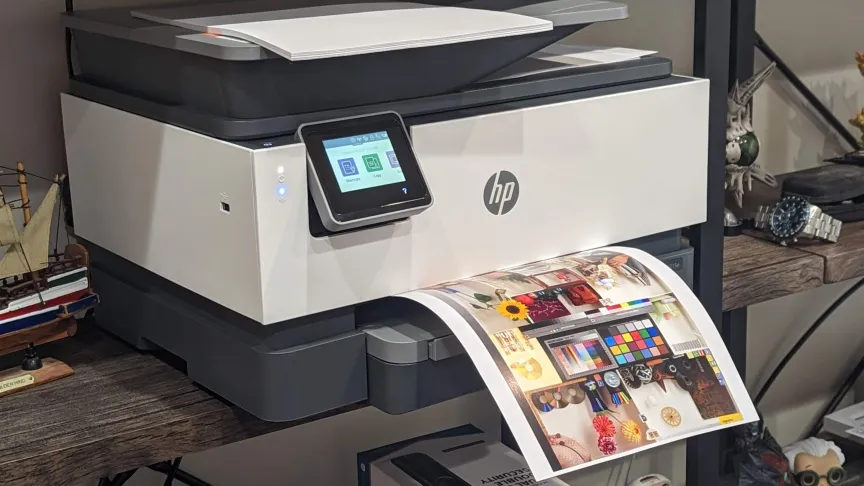
HP printers throw tantrums if you try to use third-party ink cartridges.James Bricknell / CNET

A move like this from another multibillion-dollar company underscores the new normal in gaming and tech, where companies appear to be shifting further away from the idea of ownership. Instead, they ask consumers to retain access to products that may be revoked or restricted at the company’s discretion. These changes didn’t come in one dramatic wave, but in a steady stream of small consumer-facing microaggressions that have built up over time. 

Take the recent HP printer controversy, for example. HP programmed its printers to lock users out if third-party ink is detected. That means you can buy an HP printer and own it — but if you don’t fill it with the official (more expensive) ink cartridges, the printer can sass back like an angsty, spoiled teenager and refuse to work. 

Advertisement

There are subtler attempts to chip away at our agency (and purchasing power) as consumers. Apple raised MacBook prices this year, then started a program where the company will literally rent you one, presumably because you can’t afford it otherwise. You wouldn’t own the MacBook, so Apple could lock you out of your device if you missed a lease payment. 

When it comes to music and movies, streaming has been the norm for years — we’re dutifully reminded every so often that we’re renting the ability to listen or watch something rather than owning it. I’ll never forget a couple of years ago when the entire library from the rock band Coheed and Cambria’s was removed from YouTube Music due to a licensing dispute while I was in the middle of listening. 

Sony and other gaming companies are starting to adopt the same lending-access business model in software and digital entertainment: In this brave new world, mega corporations can own everything and make us “purchase” rentals entirely on their terms. That means they can change, restrict, discontinue or shut down access, but we can never keep, lend, sell or pass down a product.

The shift is leaving older generations (millennials like myself included) increasingly nostalgic for a time when buying something meant taking home something tangible — something that belonged to us.

Advertisement

Source link

Continue Reading

Tech

5 Of The Most Affordable V6 Sedans You Can Buy In 2026

Published

on


In recent years, the SUV has solidified itself as the body style of choice for the majority of new car buyers. According to Edmunds, 60.9% of retail new-vehicle registrations in the United States in 2025 were SUVs. The continued popularity of both SUVs and trucks has led manufacturers to cut their sedan lineups dramatically over the last decade, and that trend doesn’t look to be reversing in the near future either.

At the same time, tightening emissions regulations and changing buyer preferences have seen engines drop in both displacement and cylinder count. Turbocharging and hybridization mean that today’s smaller engines offer similar power to their larger predecessors while being significantly more efficient. That’s bad news for anyone looking to replace their aging V6-powered sedan with a like-for-like equivalent, as many affordable models like the Toyota Camry and Honda Accord are now available only with four-cylinder engines under the hood.

Advertisement

The remaining V6-powered sedans on the market in 2026 hail from premium brands, and they sport correspondingly premium price tags. That said, average new car prices are still hovering around record-high levels, with the average new vehicle in July 2026 costing $49,855, according to KBB. In that context, the V6 sedans left on the market today don’t look unreasonably priced, although they’re still far from being cheap. These five models are the most affordable V6 sedans that you can buy new in 2026, ordered from the priciest to the least expensive.

Advertisement

Cadillac CT4-V Blackwing — $65,395

Usually, the word “affordable” doesn’t apply to a car with a starting price north of $65,000. Nonetheless, in 2026, the Cadillac CT4-V Blackwing, priced from $65,395 (including a $1,795 destination fee), is actually one of the most affordable V6-powered sedans left on the market.

Only the Blackwing variant of the car features a V6, since the standard CT4-V is equipped with a 2.7-liter turbocharged four-cylinder engine. Stepping up to the Blackwing comes at a premium of $13,000 over the standard CT4-V, but for the extra price, buyers get a 3.6-liter twin-turbo V6 engine making 472 horsepower. Unlike many other sedans left on the market, buyers get the option of either a six-speed manual or 10-speed automatic transmission too.

A powerful, rear-wheel-drive sports sedan with a manual transmission sounds like the ideal formula to appease enthusiasts. In reality, it’s just as good as you’d expect it to be, and then some. We spent time with the current-generation car back in 2024 and found very little to dislike.

Its engine offered more power than you could reasonably exploit on the road, its transmission felt accessible while still being precise during spirited driving, and the car didn’t go overboard with nannying electronics. Enthusiasts looking to harness its talents will need to be quick, though, as Cadillac ended CT4 production in June 2026, making 2026 its final model year.

Advertisement

Audi S5 — $64,695

The cheapest European sedan that features a V6 engine in 2026 is the Audi S5, which starts at $64,695 (including a $1,395 destination fee). It’s only $800 cheaper than Audi’s larger A6, with which it shares an engine. In both cars, the 3.0-liter turbocharged V6 engine makes 362 horsepower. The S5, however, is slightly faster off the line and is generally the sportier offering overall, with upgraded S suspension as standard and an additional adaptive suspension setup available.

Advertisement

That suspension keeps it feeling planted in the corners, but it doesn’t hinder the car’s overall appeal as a daily driver. In fact, our reviewer came away from a week with the S5 thinking it might just be the perfect everyday car. Aside from a few minor tech gremlins that crop up in new cars at virtually all price points today, the Audi never failed to impress, both during city commuting and on the backroads.

As impressive as it might be, the S5 isn’t short of competitors. Some of them also have V6 engines, like Cadillac’s pair of sports sedans and Genesis’ top-spec G70, while others like the BMW M340i have inline-6 engines. Both the BMW and Genesis are also less costly than the Audi, as is one of the two Caddys.

Advertisement

Cadillac CT5-V — $60,095

Cadillac’s smaller sports sedan, the CT4-V, sports a four-cylinder engine in regular form and a V6 engine in top-spec Blackwing form. Meanwhile, the larger CT5-V adds a pair of extra cylinders at both performance levels. Its base engine is a 3.0-liter twin-turbocharged V6, while the CT5-V Blackwing receives a 6.2-liter V8.

The catch is that the CT5-V’s V6 engine isn’t as powerful as the V6 in its smaller sibling. It’s not a close fight either — the regular CT5-V offers 360 horsepower, a full 112 ponies short of the CT4-V Blackwing. Given the significant difference in power, the difference in price isn’t as large as you might expect. For 2026, the CT5-V starts at $60,095 (including a $1,795 destination fee), only around $5,000 less than the Blackwing edition of the smaller sedan.

In 2025, buyers could optionally equip their CT5 with a V6 rather than the base four-cylinder, but the automaker did away with that option for the 2026 model year. That leaves the CT5-V as the only variant of the model to receive a V6 engine, but despite being slightly more affordable than the CT4-V Blackwing, it’s the latter that’s still arguably the superior choice for enthusiasts. Even so, the CT5-V remains one of the three most affordable V6 sedans on sale in 2026, as unlikely as that might sound.

Advertisement

Genesis G70 — $54,995

It might be a left-field choice compared to its German, American, and Japanese rivals, but the Genesis G70 is a sports sedan that shouldn’t be overlooked. It’s available with either a four-cylinder or a V6 engine, with the latter option starting at $54,995 (including a $1,395 destination fee). Not only is that a cheaper price than most of its competitors, but it also makes the G70 only around $5,000 more expensive than the average new vehicle.

Advertisement

Inside and out, the G70 is far from average. Reviewing the current-generation sedan in 2024, we found its straight-line power output particularly impressive for the price. Drivers get to experience that power from a cabin that’s competitive with many of its big-name rivals too. Thread the car through winding backroads, and it won’t quite match up to its German competition, but in everyday driving, the Genesis holds its own.

The 3.3-liter V6 engine is the superior choice for performance, but just like many of the brand’s competitors, Genesis charges a significant premium for the additional cylinders. The base-spec G70 features a 2.5-liter turbocharged four-cylinder engine, and it starts just under $44,895, roughly $10,000 less than the V6 variant. This entry-level engine is not short on power either, churning out 300 horsepower compared to the V6’s 365 horses.

Advertisement

Lexus IS — $46,895

The most affordable V6 sedan left in 2026 is the Lexus IS. The Japanese brand gave the long-running model some upgrades for the 2026 model year, but slimmed down its engine offerings to just the 3.5-liter V6. The base trim is now the IS 350 F Sport Design, and it starts at $46,895 (including a $1,395 destination fee).

It’s far from the sportiest of sports sedans, but pure performance was never the appeal for IS buyers anyway. Reliability and comfort have long been its major selling points, and there’s no indication that its longevity is set to change with the latest revisions to the car. The IS has previously been crowned one of the most likely Lexus models to reach 250,000 miles, so for buyers seeking an upscale replacement to their high-mileage Toyota or Honda, it’s the closest match left on the market.

That durability shouldn’t be too surprising — after all, Lexus is owned by Toyota, and some Lexus models share platforms with certain Toyota models. The IS doesn’t have a Toyota-badged sibling in the U.S. market, though, and so buyers looking for a traditional V6 sedan have little choice in 2026 aside from coughing up the cash for the premium model. If the models above are out of budget and a V6 engine is non-negotiable, it’s worth diving into the used market, where plenty of appealing cars still offer V6 power at a lower upfront cost.

Advertisement


Source link

Advertisement
Continue Reading

Tech

Apple defies memory shortage with new Mac minis

Published

on

AI and ml

The cost of memory makes this an expensive ML meal

Apple on Tuesday heralded the imminent refresh of its headless Mac kit with new versions of the Mac Studio and the Mac mini that you can pre-order now for shipping on September 22, 2026. The diminutive desktops promise a high level of local AI performance with memory prices to match. 

Advertisement

“[T]he new Mac Studio is our most powerful Mac ever,” said Johny Srouji, Apple’s chief hardware officer, in a statement, citing the integration of Apple’s Neural Accelerators into processor GPUs and the utility of high-bandwidth unified memory to justify the assessment.

The Mac Studio became Apple’s high-performance standard bearer following the retirement of the Mac Pro in March.

With the “most powerful” slot taken, the Mac mini has been dubbed “our most versatile Mac,” as Srouji put it, highlighting the machine’s recently discovered role as “an always-on agentic device.” 

Earlier this year, the excitement around OpenClaw and open weight AI models led to a run on Mac mini hardware as AI aficionados found Apple’s compact desktop made a comfortable home for AI agents and local inference.

Advertisement

The Mac mini has unified memory – the CPU and GPU share the same RAM – making a Mac with ample unified memory (eg, 64 GB) well suited to GPU inference compared to a PC with 64 GB system RAM but only 16 GB GPU VRAM.

What’s more, Apple silicon hardware supports the company’s MLX machine learning framework, which provides respectable private inference performance on hardware that draws far less power than a desktop GPU workstation.

You have less power, but more money for memory. As outgoing CEO Tim Cook admitted in June, memory prices have been rising due to AI demand, and those costs are being passed on to customers.

The Mac Studio comes with two flavors of chip, M5 Max ($2,499) and M5 Ultra ($5,499).

Advertisement

The M5 Ultra, with up to 36 CPU cores and up to 80 GPU cores, is an inference beast, supporting up to 512 GB of high-bandwidth unified memory with 1.2 TB/s of unified memory bandwidth. 

That memory configuration isn’t available until October, but the existing 256 GB memory option for an extra $4,000 should give you a sense of how pricey a maxed-out Mac Studio will be ($18,299 for 256 GB RAM, 16 TB SSD).

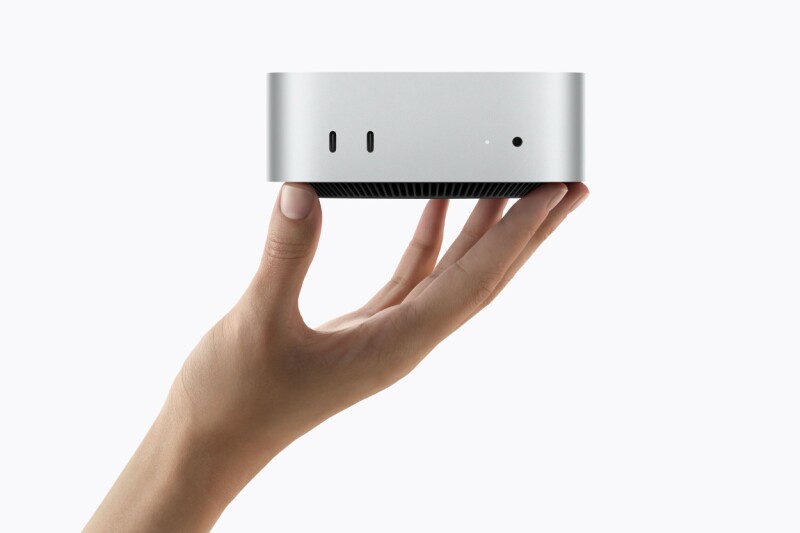
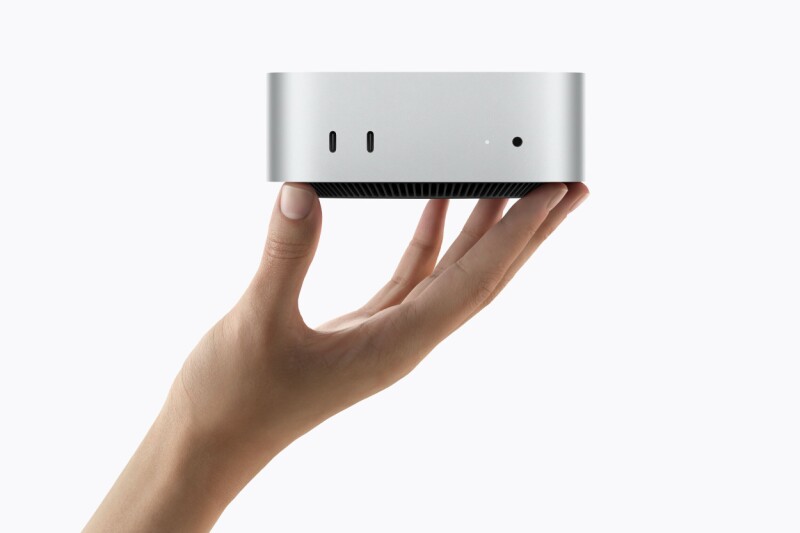
The Mac mini can be had with an M6 chip ($899) or an M5 Pro chip ($1,699), but the base model has just 16 GB of shared memory and it costs a whopping $400 to step up to 32 GB. The M6 is the first Apple silicon to use a 2 nm process. It’s a 12-core processor, which Apple notes is “two more cores than before.” 

“Built using the cutting-edge 2 nm process, M6 combines a new CPU complex, two additional CPU and GPU cores, a Dual 16-core Neural Engine, and more unified memory bandwidth to power through workloads with amazing energy efficiency,” Sri Santhanam, VP of Apple’s silicon engineering group, said in a statement.

Advertisement

The M5 Pro offers more in the way of memory and memory bandwidth, making it a better choice for data-intensive development applications. The M6 supports up to 32 GB of memory and up to 170 GB/s of memory bandwidth, while the M5 Pro supports up to 64 GB of unified memory and 307 GB/s of memory bandwidth.

The Mac mini comes with Wi-Fi 7, Bluetooth 6, two USB-C ports that support USB 3, and a headphone jack. Its rear gunport comes with three Thunderbolt 4 ports for M6 and three Thunderbolt 5 ports for M5 Pro, not to mention HDMI and Ethernet (2.5 Gb or 10 Gb). Thunderbolt 5 allows for clustering, so multiple Mac minis can be connected together to run large AI models on-device.

The Mac Studio also does Wi-Fi 7, Bluetooth 6, and Thunderbolt 5, with support for PCIe expansion chassis.

All of Apple’s incoming hardware comes with macOS 27, which is expected to debut in mid-September. ®

Advertisement

Source link

Continue Reading

Trending

Copyright © 2025