Two of the Google Cloud developers who were hit with bills for thousands of dollars following unauthorized API calls to Gemini models have had their bills reversed, the users told The Register in recent days. But Google plans to continue automatically expanding users’ spending limits, leaving them and countless other customers vulnerable to bills they cannot afford, whether from fraud or a sudden traffic surge.
Australia-based developer Isuru Fonseka – whose usage bill skyrocketed to $17,000 in minutes after Google automatically upgraded his $250 spending tier when a hacker took control of his account – told us that he was happy to put this behind him.
“It’s so good. It felt like they were just giving me the run around until your article. I just hope they fix it properly for everyone,” he said. “It’s great that the article was able to get the refund but it’s sad that it had to go to that level for them to process it urgently.”
Despite refunding his money, Google seems to have lost a customer. Fonseka said that he has since ensured his API cannot be used with Google’s stable of AI products, and will likely try one of the independent foundation models if he needs those features.
Advertisement
“I’ve disabled Gemini on everything – if I ever plan to use AI on my projects, I’m better off using it via a different service such as OpenRouter or going directly to one of the other LLM providers – just as a way to keep Gemini out of my account and the risk as low as possible,” he said.
Fonseka said he was blindsided by a Google policy that allowed the company to automatically upgrade a user’s billing tier without permission or adequate warning. He had thought by signing up for a user tier with a $250 spending cap that his bills would be restricted to that amount. It was only after attackers exploited his API key that he learned Google would upgrade the cap automatically based on his history of spending.
While Google acknowledged that the automatic tier upgrades allowed credential hijackers to rack up thousands of dollars in bills in cases like the one Fonseka described to The Register, it said it has not reconsidered the policy.
In a statement to The Register, Google said that it wants to prioritize access to Google Cloud services without interruption, preferring to prevent service outages over respecting users’ budget preferences.
Advertisement
“With our automated growth tiers, we helped businesses scale as usage increased, built on their historic reputation of payments and usage,” a Google spokesperson told us in a statement. “This prevents their business having a hard service outage once they pass an artificial system quota.”
Tiers vs spending caps
There is some confusion between Google’s usage tiers and its newly introduced spending caps, and Google’s documentation hasn’t helped much.
Google says its users can set their usage tiers not to exceed a certain spending level. For example the maximum spending allowed by a Tier 1 user like Fonseka is $250. However, if the account is older than 30 days and if, over the lifetime of their work with Google, they have spent at least $1,000, then Google will automatically allow that account to spend up to $100,000. So good customers have the most to fear from fraud or from an unexpected spike in usage.
In several cases shared on social media, Google users were only aware of this after their credit cards were billed thousands of dollars.
Advertisement
On April 22, Google introduced a trial of hard caps on spending within Google Cloud, but those are in a preview and are approved on a case-by-case basis.
“We’re excited to announce that Spend Caps are coming soon to Google Cloud. Designed to work with Google Cloud Budgets, FinOps and DevOps can set budgets that enforce automated cost boundaries (caps) at the project level for AIS, Agent Platform, Cloud Run, Cloud Run Functions, and Maps,” Google wrote. “These caps alert and ultimately pause API traffic once your set budget is reached, but leave your resources intact. If you need the traffic to resume, simply suspend the Spend Cap.”
Spend caps can only be set per project for a single, eligible service, Google said. Eligible services for this preview include Gemini API, Agent Platform (previously known as VertexAI), Cloud Run, Cloud Run Functions, Maps, Google said.
Users who apply for a spending cap will have their submissions reviewed on a “one to two week basis” and customers are added in the order they submitted.
Advertisement
“Once onboarded, you will receive an email with instructions on how to access the feature as well as details on how to submit feedback,” Google writes in its sign up page.
Rod Danan, CEO of Prentus, a company that helps job applicants with interview preparation and tracks job placements for universities, told The Register earlier this week that he saw his bill skyrocket to $10,000 in just 30 minutes of usage by attackers who exploited his public API key.
Google forgave the charges on Thursday, he said.
“They got back to me today agreeing to a refund,” he told us. “It’s definitely relieving. You want to focus on the business. You don’t want to have to focus on going and getting refunds from some crazy charges.”
Advertisement
He said the stress of running a startup is hard enough without the addition of fighting one of the largest companies in the world imposing erroneous five-figure charges.
“I’m happy that it’s behind me. I wish it was easier,” he said. “I’ve learned, yeah, definitely don’t give up. Be annoying whenever something is wrong and just keep pushing. Again, try to make it as public as possible, get louder and louder until the people you need to hear you actually hear you.”
Google said any unauthorized use of API keys will be investigated and it historically has treated customers compassionately when there is clear evidence of fraud or error.
“We take reports of credential abuse and the financial security of our customers extremely seriously; and as you know are investigating these specific cases you have pointed to and we will work directly with any impacted users to resolve charges resulting from fraudulent activity,” Google said. ®
Custom printed circuit boards have become more and more accessible to the average hobbyist over the last decade. But one problem still remains: your circuits will take at least a couple days to make. But what if you needed some really rapid prototypes? [The Raccoon Lab] shows us how to do it with a 3D printer.
You start with the usual hobby PCB pipeline: take your idea, make a schematic, and then lay it out in KiCad. That’s where the changes start: to keep traces strong, they are made very thick. The PCB is then exported and opened in 3D CAD software, where the traces are extruded to be 2 mm tall. Off to the printer! The newly printed “circuit board” is made conductive by applying copper tape to it, and traces are cut out along their raised edges.
Samsungtelevisions offer various intelligent features and image enhancements, but some settings should be adjusted before use. Enabling the correct settings can improve the brightness, speed, and performance of your television.
1. Update Your TV Software First
The Samsung Smart TV runs the Tizen operating system, which controls the apps, menu, and other features of your TV. It is recommended that you always have the latest version of the software installed on your device before streaming any movie or installing an app.
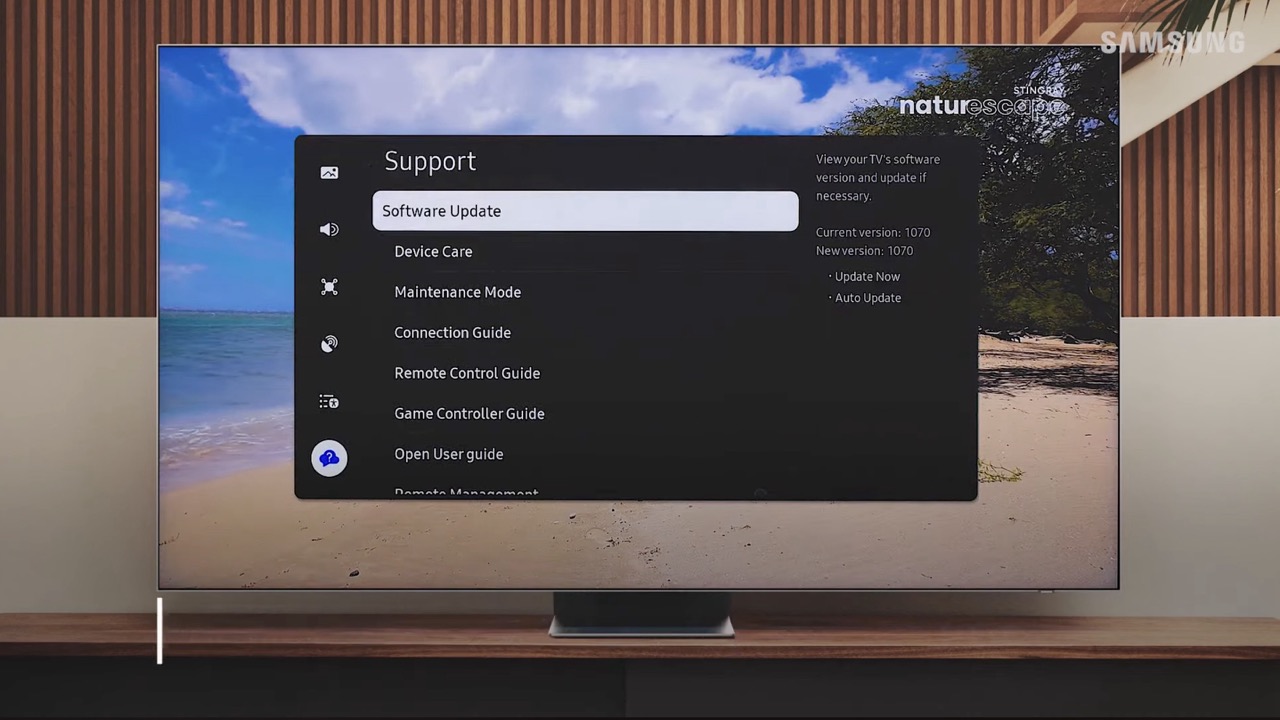
The best way to manually search for updates is to go to Settings > Support > Software Update. Some users disable Wi-Fi after the update is complete, since advertisements, suggestions, and applications can interfere with menu navigation. However, you can still connect the TV to Wi-Fi periodically to install other software updates. Other gadgets, such as Roku, Fire TV, and gaming consoles, can be used as alternatives for app downloads.
2. Turn Off Eco Mode for Better Brightness
If your Samsung TV appears dimmer than you expect due to its energy-saving feature. The Samsung model offers several features, including the Eco Sensor and Brightness Optimization modes, which can be enabled. These modes operate based on environmental lighting information.
To enhance visual quality, the user can disable settings such as Eco Sensor, Brightness Optimizer, and Energy Saving Solution. The features can be found under Settings > General & Privacy > Power and Energy Saving. This is done so the TV can maintain a consistent brightness level, which will improve image quality.
This feature will come in especially handy when watching movies, playing games, or watching sports, since higher brightness is essential for clarity. Users who would like to enhance their HDR settings can navigate to Picture > Expert Settings and select High under Peak Brightness.
Advertisement
3. Enable Intelligent Mode for Automatic Picture Adjustments
Intelligent Mode is one of the Intelligent Features on the Samsung TV, enabling it to regulate itself. The TV uses Artificial Intelligence, which allows it to adjust brightness, color, and sound based on room illumination and users’ personal preferences.
Furthermore, the Adaptive Picture and AI Customization options are available in Samsung’s Intelligent mode. They allow the television to adjust the image settings differently depending on the content – whether movies, sports, gaming, or regular TV shows. The learning process occurs as the user regularly uses the television, gaining more experience.
This feature is especially useful for users who do not want to spend time manually tweaking multiple picture settings. Intelligent Mode becomes more efficient as the television gets used to users’ viewing habits. The option can be enabled under All Settings > General > Intelligent Mode and may be turned off at any time.
4. Disable Auto Motion Plus for Movies
Samsung also includes an Auto Motion Plus feature that creates smoother motion on the TV screen. The feature inserts artificial frames between scenes to reduce motion blur. While this may improve motion clarity, it often creates the “soap opera effect.”
The soap opera effect gives films and TV series a look that’s too natural and unrealistic. Rather than achieving the desired cinematographic style, the scenes begin to take on a daytime television or live-broadcast feel. Many viewers feel this removes the original film-like appearance from movies and streaming content.
This setting can be turned off by navigating to Picture > Expert Settings > Auto Motion Plus. Turning off this setting makes the picture look more natural for video streaming and films. However, when it comes to gaming, a bit of motion smoothing could still make a difference.
Advertisement
5. Customize Audio Settings for Better Sound
Samsung TVs have built-in features that enhance sound quality without requiring any additional equipment. Modern TVs are quite thin, which can hamper speaker performance. For this reason, Samsung offers various sound modes and enhancements in the Sound tab.
Among the many attributes, the one that stands out is the Adaptive Sound feature, which automatically adjusts audio settings according to the environment and the media being played. Presets such as Standard, Optimized, and Amplify are provided by Samsung TVs to help users choose the sound profile that suits their needs. Furthermore, there are multiple EQ settings available for bands.
For customers using Samsung sound bars that support Q-Symphony technology, there is no need to turn off the television speakers, as Q-Symphony ensures the two speakers work synergistically to deliver high-quality sound.
Generative AI’s rapid transition from text-based chatbots to high-fidelity media—spanning images, video, spatial 3D, and audio—has exposed a glaring bottleneck in the modern tech stack: infrastructure. Rendering pixels in real-time requires a staggering amount of compute, and developers are increasingly struggling to manage fragmented GPU clusters just to keep their applications online.
Enter fal, a generative media creation platform that has quietly become the connective tissue for 2.5 million developers across the globe, offering literally hundreds of leading AI image, video, and audio creation and editing models — from proprietary ones like OpenAI’s ChatGPT-Images-2.0 and Google’s Nano Banana Pro 2 to open source rivals — all through its unified interface and APIs.
Today, the San Francisco-based startup, recently valued at a massive $4.5 billion following a $300 million Series D round led by Sequoia Capital, announced it has selected Amazon Web Services (AWS) as its preferred cloud provider.
While the financial terms of the deal weren’t made public, the move signals a maturation in the generative media space, shifting the focus from simply building foundational models to effectively scaling them for mass, commercial consumption.
Advertisement
“AWS has been there for distribution and monetization, and for the use of AI in creative pursuits — helping designers, developers, and the creative community think through how they can use AI responsibly, scalably, and at global scale,” said Samira Panah Bakhtiar, General Manager for Media, Entertainment, Games, and Sports at AWS, in an exclusive interview with VentureBeat.
A one-stop-shop for Gen AI media allowing enterprises to plug in and choose the best model for their needs
At its core, fal operates as a unified gateway to the rapidly expanding generative AI ecosystem. Rather than forcing developers to provision their own servers, deal with latency issues, or string together disparate open-source model weights, fal provides a single, unified API. Through this API, users gain instant access to over 1,000 production-ready AI models.
Think of it as the Stripe or Plaid of generative media: abstracting away the devastatingly complex back-end plumbing so developers can focus solely on the user experience.
It is a “plug-and-play” solution that has already attracted independent creators and enterprise giants alike, powering generative workflows for enterprises including Canva, Adobe, and Amazon MGM Studios.
Advertisement
“Generative media workloads demand a fundamentally different infrastructure layer, one that can handle massive parallel inference, rapid model iteration, and production-grade reliability at scale,” said Gorkem Yurtseven, CTO and Co-founder of fal, in a statement provided to VentureBeat.
Neither AWS nor fal specified what other cloud or GPU providers the latter was using prior to their deal together. Asked who fal had been using before AWS, Bakhtiar did not name a prior cloud or GPU provider, saying instead that fal is now using AWS services.
In a blog post, fal’s Head of Compute Partnerships Emir Lise described AWS as providing the “global scale and reliability layer” for its existing serverless generative-media infrastructure — framing the partnership around elasticity, reliability and enterprise scale rather than a replacement of a named incumbent.
A public search turned up Tigris as a storage provider for fal — with Tigris saying fal runs a “global fleet of GPUs across many clouds” — and an announcement from fal in Septemeber 2025 that it was available through Google Cloud Marketplace, allowing customers to buy fal through Google Cloud billing and governance, but that listing does not state that Google Cloud powered fal’s GPU infrastructure.
Advertisement
99.99% guaranteed uptime?
By partnering with AWS, fail aims to merge its highly optimized inference engine with Amazon’s global reach to handle millions of daily API calls with 99.99% guaranteed uptime.
In addition, Bakhtiar said fal users can expect to see “faster inference and performance, greater efficiency, more scalability, and more seamless service continuity — all things you would expect as a result of partnering with the world’s largest, broadly adopted cloud.”
Therefore, the primary benefit for fal users is better performance and reliability without changing how they work: faster inference, more scalability, smoother continuity, and access to production-ready AI models without managing their own infrastructure.
For fal, the partnership makes its platform stronger for creators, studios, and enterprise customers by backing it with AWS’s security, global scale, and cloud infrastructure.
Advertisement
For AWS, it helps push cloud and AI deeper into creative production, not just distribution or monetization. It positions AWS as a key infrastructure partner for studios, media companies, developers, and individual creators building AI-powered content workflows.
Offloading the GPU burden
The partnership with AWS is designed to address the sheer physics and cost of rendering generative media. By migrating its operations to AWS, fal will be able to leverage Amazon’s broad suite of AI services, including the Bedrock platform, alongside custom-built silicon like Trainium and Graviton processors.
“You don’t have to manage like a GPU fleet to use the AI for creative pursuits,” Bakhtiar explained.
This is a critical pain point for larger-scale media generation demands in 2026. Securing high-performance GPUs for parallel inference is both expensive and technically demanding.
Advertisement
By shifting that burden to AWS, fal ensures that creatives can focus on their workflows, without needing a dedicated DevOps team.
Bakhtiar also noted the powerful “network effect” of building on AWS. Because major studios and creative platforms (like Adobe and Canva) are already deeply entrenched in the AWS ecosystem, integrating fal’s API into their existing pipelines becomes a frictionless endeavor.
Enterprise-grade security and compliance with gen AI creative speed
For IT leaders and developers, fal’s architecture offers a distinct advantage regarding licensing, security, and deployment.
Historically, utilizing frontier generative models meant either accepting strict vendor lock-in from a single provider or attempting to host open-source models locally.
Advertisement
The latter requires significant overhead and forces enterprises to navigate a minefield of disparate open-source licenses (such as MIT, Apache 2.0, or restrictive non-commercial licenses).
fal bypasses this friction by offering commercial API access to a curated ecosystem of models. Developers simply pay for the inference they consume.
Furthermore, the platform is SOC 2 compliant and explicitly built for “enterprise scale,” meaning it meets the stringent data privacy and security benchmarks required by heavily regulated industries and massive consumer platforms.
For large media conglomerates, this managed service approach allows them to experiment with the latest state-of-the-art tools securely, without the risk of exposing proprietary data or intellectual property.
Advertisement
Empowering devs and vibe coders
The true impact of fal’s platform, however, is best observed at the developer level. By democratizing access to high-end infrastructure, fal is enabling a new class of builders—often referred to as “vibe coders”—to create complex, multimodal applications without traditional computer science backgrounds.
As Bakhtiar pointed out, access to these tools fundamentally “levels the playing field”. Whether it is an individual developer or hobbyist vibe coding a side project, or a fully-funded editor or director rendering a blockbuster film, the underlying technology is now identical, infinitely scalable, and ready for production.
“More creatives — whether they’re full-fledged studios, indie brands, or individual content creators — are now going to be able to access these tools, and they’re going to be able to punch way above their weight as a result,” Bakhtiar said, casting the partnership as a way to serve even more users through fal thanks to the reliability of AWS’s servers and custom Trainium, Graviton and Inferentia chips.
The rollout of enhanced AWS capabilities for fal customers will occur in phases throughout 2026.
Lowe’s is teaming up with YouTuber Jimmy “MrBeast” Donaldson for the MyLowe’s Rewards Kids Club, which will host workshops with toy kits related to his Swarm line. These workshops are meant to provide a bonding experience for Generation Alpha kids and their parents (with no technology involved), offering hands-on activities throughout the summer. “I’m psyched about the Kids Club partnership with Lowe’s because we’re giving kids more access to being creative and seeing their own projects come to life,” MrBeast said in a press release.
To take part in the MrBeast workshops, you’ll need a MyLowe’s Rewards membership, a free loyalty program, which is one of the free perks anyone can get at the big box store. Just create a profile for your child to enroll them in the free Kids Club. You can then register for the workshop, which is also free — but space is limited. The only cost is the Swarm kit itself, which is $14.98 plus tax. Each kit includes a wooden builder toy, instructions, exclusive badge, and a Swarm. Some parents have mentioned frustration at being charged for the kit, likely because MrBeast is known for his massive giveaways and philanthropy projects — including giving away multiple cars.
Advertisement
MrBeast x Lowe’s workshop schedule
There are currently three MrBeast workshops scheduled for the summer, and registration is currently open for the whole series. The first is on May 30th, featuring the Swarm Launcher. Your child will make a mini cannonball launcher to see how far their Swarm can go. The second is June 27th, which has them building the Swarm Spinner, a Ferris wheel that can be decorated before Swarm figures take a ride. The final is on July 25th, which has your Swarm riding the Swarm Jet after its built and painted.
Advertisement
These are the first three workshops, with future workshops dates being announced later on. These workshops are open to children of all ages, but it’s recommended for those over eight years old. There are workshops at every Lowe’s store around the country, but you can check workshop and program locations and times on the Kids Club site. If you’re not into MrBeast, there is also a soccer trophy workshop, a mini toybox workshop, a haunted house workshop, and plenty of others for families to check out.
Rajeev Badyal, vice president of Amazon Leo, discusses Amazon’s plans for satellite broadband services while Chris Weber, Amazon Leo’s vice president of business and product, looks on during the Technology Alliance’s State of Technology Luncheon in Seattle. (GeekWire Photo / Brian M. Westbrook)
Amazon Leo is still months away from the commercial launch of its satellite broadband network, but there’s already at least one satisfied user: Rajeev Badyal, who heads up the Amazon Leo team.
“I was in a remote location last week,” Badyal said today at the Technology Alliance’s annual State of Technology Luncheon in downtown Seattle. “I had the terminal with me. … I was in a place surrounded by mountains. I go, ‘There’s no way that we can make it here.’ The team said, ‘Just go put it there, we’ll take care of the rest.’ And they did it. It worked flawlessly.”
Badyal said he and his wife even streamed a movie in an isolated location where their phones couldn’t pick up a signal. “We were both like two kids who had never seen the internet before, discovering the internet for the first time,” he recalled.
For now, Badyal and other insiders are the only ones trying out Amazon Leo’s satellite service on a beta-testing basis, but it won’t be long before the first customers will be able to sign up.
Badyal, who leads the effort as vice president of Amazon Leo, can hardly wait. “That, to me, is the ultimate milestone,” he said. “That’s why all of us have been working on this — to get it out there, get it in the hands of the customers.”
Advertisement
Amazon Leo won’t be entering virgin territory. For years, SpaceX’s Starlink network has enjoyed the dominant position in the market for satellite broadband services via low Earth orbit. Starlink currently has more than 10,000 satellites in orbit, serving more than 10 million customers around the world.
Amazon Leo currently has a little more than 300 satellites in orbit, one year after its launch campaign began in earnest. Over the next year, the team expects the pace to pick up dramatically. “Just a little over a year ago, we used to make one satellite a month, and that was 24/7,” Badyal said. “Now we can do tens of satellites a week at our factory in Kirkland.”
By mid-2029, Amazon is due to have more than 3,200 satellites launched on rockets provided by United Launch Alliance, Blue Origin, Arianespace and even SpaceX, under the terms of its license from the Federal Communications Commission. And it’s already received the FCC’s preliminary go-ahead to add another 4,500 second-generation satellites to the network.
Advertisement
Pieces of the puzzle are coming together on the consumer side as well: Although Amazon Leo hasn’t yet announced plans for pricing and availability, it has released information about three levels of service, offering downlink speeds that range from 100 megabits per second to 1 gigabit per second. This week, the FCC released information about Amazon Leo’s Wi-Fi routers.
During today’s luncheon presentation, Badyal and Chris Weber, Amazon Leo’s vice president for business and product, shared a few inside stories about the network’s development.
How it all began
Before joining Amazon, Badyal worked at Starlink’s satellite development operation in Redmond, Wash., and was famously fired by SpaceX CEO Elon Musk in June 2018. Not long afterward, Badyal met with Amazon founder Jeff Bezos, who he said was “extremely passionate and bullish” about creating a satellite broadband network.
“The next thing you knew, I said, ‘OK, I will come and help you build this constellation and make this vision come true,’” Badyal recalled. “And we joined in October.”
Advertisement
Badyal and five other engineers worked out the design for the satellite constellation in an office that was blocked off with curtains. “These were black curtains, and it basically said, ‘Keep Out,’” Badyal said. The engineers wrote up a vision document that ran longer than Amazon’s traditional six pages. “It was harder to write the document than it was to design the constellation,” Badyal joked.
“In January of 2019, we were in front of Jeff. He had just come back from an earnings announcement, and he had the 40-page document in his hand,” Badyal said. “He puts it on the table, and then he goes, ‘I love this stuff.’ I’ll never forget those words: ‘I love this stuff.’”
How Project Kuiper became Amazon Leo
In the beginning, the network was called Project Kuiper. That was an inside-baseball reference to the icy Kuiper Belt that surrounds the planets of the solar system, in a way that’s similar to the belts of satellites that surround Earth.
Amazon Leo’s Chris Weber says the purplish shade that’s used for branding purposes is not actually purple, but “krypton.” It’s meant to match the color of the plasma generated by the krypton thrusters on Amazon Leo’s satellites.
“Project Kuiper was a project name, so we knew at some point we’d have to evolve that from a project name to an official brand name,” Weber said. “A couple of things went into it: One is, we had to have a name that resonated globally. Number two, it had to be easy to say.”
“Kuiper” just didn’t cut it. Weber recalled an internal video in which an assortment of influencers pronounced the word as “Ky-per, Kweeper, Cooper, etc.”
Advertisement
“Leo,” on the other hand, resonated. For one thing, it’s easy to pronounce. “Leo obviously gives a nod to ‘low Earth orbit,’ so we like that as well,” Weber said. And putting “Amazon” at the front of the name “really means a lot, around trust and credibility,” he said.
Technological turning points
Badyal said the hardest challenge to solve didn’t have anything to do with the satellites themselves, but with building low-cost customer terminals.
“The challenge for us was, can you integrate what you call a receive antenna and a transmit antenna into a single panel that’s small enough and that’s cost-effective?” he said. “We proved that out in 2020. That was the key pivotal point in the program, where you can say the floodgates were open.”
Another breakthrough came with the development of the optical laser links that transfer data between Amazon Leo’s satellites. Badyal said the first test of the satellite-to-satellite connection didn’t work because the satellites weren’t configured correctly. “It’s always the config file that’s the problem,” he said. After the configuration was corrected, the satellites successfully transferred data at the target rate of 100 gigabits per second.
Advertisement
“I couldn’t believe it,” Badyal said. “I had to call the team that night and just tell them what an incredible job they’d done. For me personally, it was emotional. I had to actually sit down for a little bit, just to collect myself. And I was screaming, by the way, and my wife goes, ‘What went wrong?’”
How satellite broadband will change the world
Weber said learning about potential use cases for high-speed connectivity via satellites is “one of the coolest things in my job.”
“I was in Argentina, and we visited a school where the students have a single cellphone that everyone has to share with a connection that’s less than 3G speed. So essentially it’s almost completely unusable,” he said. “What satellite connectivity will bring to those classrooms there is game-changing, not only for that school [but for] that entire community.”
On the business front, Weber said satellite connectivity will also provide greater resilience for enterprises and manufacturing facilities in case terrestrial coverage goes down. And he said there are “tons of use cases” for government services, including connectivity for first responders in remote locations.
Advertisement
“Everyone in Amazon Leo, they come to this not because it’s a job. It’s because it’s this mission of delivering connectivity to underserved and unserved communities across consumers, government and business,” Weber said. “That’s the thing that we wake up to every day.”
But the most interesting of the bunch is the Xreal Project Aura smart glasses, which support full hand gesture support as well as mixed reality view for Android apps available through the Play Store. These smart glasses were first showcased in December 2025, but Xreal confirmed earlier today that the Project Aura smart glasses will hit the shelves in 2026.
Google
The Project AURA smart glasses by Xreal come equipped with a built-in display that offers a 70° field of view, which the company claims is the largest FOV that has ever been offered on a pair of AR glasses. Thanks to the built-in display, you can overlay digital content in your sight while still having a clear view of the world around you. The company notes that you can run multiple app windows and get the full Android app experience without any hacks.
Xreal
This is the full-blown Android experience that we are talking about. So far, the Xreal smart glasses that have been available to customers have run a custom version of Xreal’s in-house software that is launched through an app. The only way you could access Android on the Xreal smart glasses is by mirroring them through your phone or by connecting them to a PC in order to run Windows or macOS.
They have supported multi-windows, offering a massive digital canvas for you to run different apps side by side. These virtual windows can be accessed either affixed in the air, or by making them track your head movements. With the Project Aura, Xreal is getting rid of the software limitations by making these smart glasses run the native Android XR experience, with plenty of Gemini experiences in tow. So far, the demo videos released by the company have shown these glasses connecting to a smartphone-shaped puck through a cable.
Xreal
Unlike the audio glasses that Google showed off earlier today, these glasses won’t be able to run the full Android XR experience without a wired connection due to the processing limitations. Talking about processing, Qualcomm will supply the chip for the Xreal Project Aura smart glasses, promising a dual-chip design which includes a Snapdragon silicon as well as a custom X1S processor.
This is the service we get when we spend $10m plus? asks automated code deployment outfit
PaaS platform Railway says Google temporarily suspended its account on Wednesday without cause, inducing a major outage.
Railway automates code deployment by taking a GitHub repo and doing all the work needed to get it running from the cloud.
Advertisement
It’s struggled to do that for the last few hours and the company’s status page tells the sad tale, starting with an update time-stamped May 19, 22:29 UTC that said the company is “investigating a widespread service disruption” that meant “Users may be experiencing errors including ‘no healthy upstream’, ‘unconditional drop overload’, login failures, and inability to access the dashboard.”
Angelo Saraceno, a solutions engineer for Railway, told The Register the company noticed a problem at around 22:00 UTC. He said the company’s resources appeared to have been deleted and appeared not to exist. Google has since explained it suspended the account, making Railway’s resources invisible.
“Our contacts at Google were confused, customers are irate,” he added.
We are livid and still trying to get all the details
Advertisement
Ironically, in 2024 Railway decided to shift much of its infrastructure into colocation services after Google “caused a multitude of problems that have posed an existential risk to our business.” Those problems resurfaced in 2025 after more trouble at Google Cloud that again impacted Railway’s services.
But Railway kept its control plane in Google Cloud and still has a dependency on databases that run there. Those resources see it spend an eight-figure sum each year. Yet Saraceno said when this incident commenced, it took an hour for Google’s support team to engage.
“We are livid and still trying to get all the details,” he said before advancing a theory that Railway somehow triggered an enforcement rule.
Railway’s status page says that as of 22:43 UTC the company “escalated this directly with Google.”
Advertisement
Oh, to have been a fly on the wall during that escalation!
Railway’s most recent status update, at the time of writing, is an 03:05 May 20 missive that states “More workloads are coming back online. Some users may still experience intermittent issues during the recovery. Non-enterprise deploys remain paused; enterprise deploys are unaffected.”
The Register has contacted Google to ask if and why it blocked Railway’s account. You know the drill: We will update this story if we receive more than corporate platitudes.
Cloud providers might rightly block a customer’s account over unpaid bills or inappropriate use – but usually do so after giving fair warning. Railway told us this incident came out of the blue.
Advertisement
Google has form taking down customers without cause: In 2024 it infamously wiped out all rented infrastructure used by Australian pension fund UniSuper.
Railway’s status page includes apologies to its customers, despite the problem being at Google’s end.
“Our customers don’t care if it is Google,” Saraceno said. “We have to own our uptime.” ®
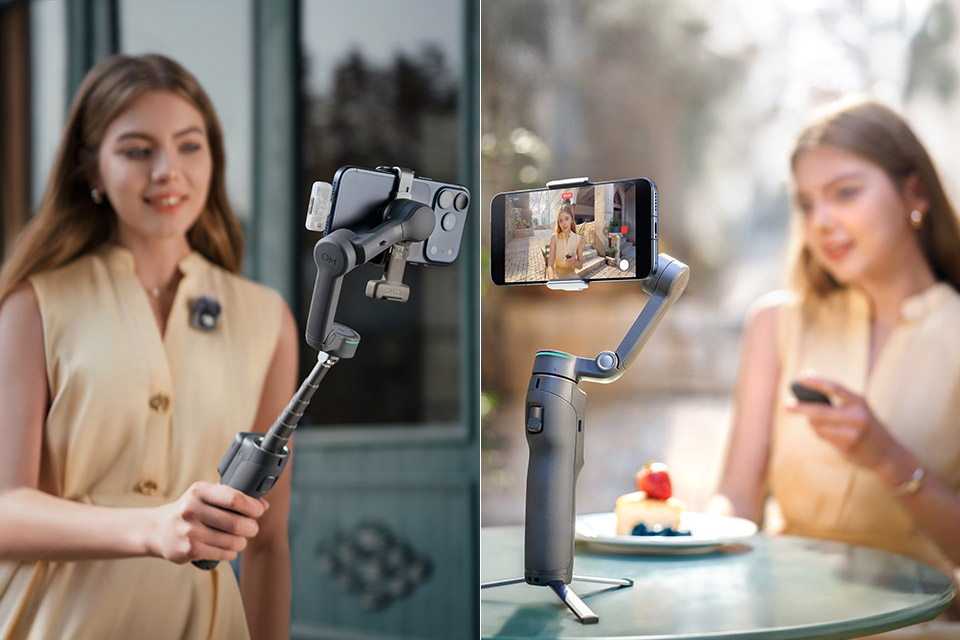
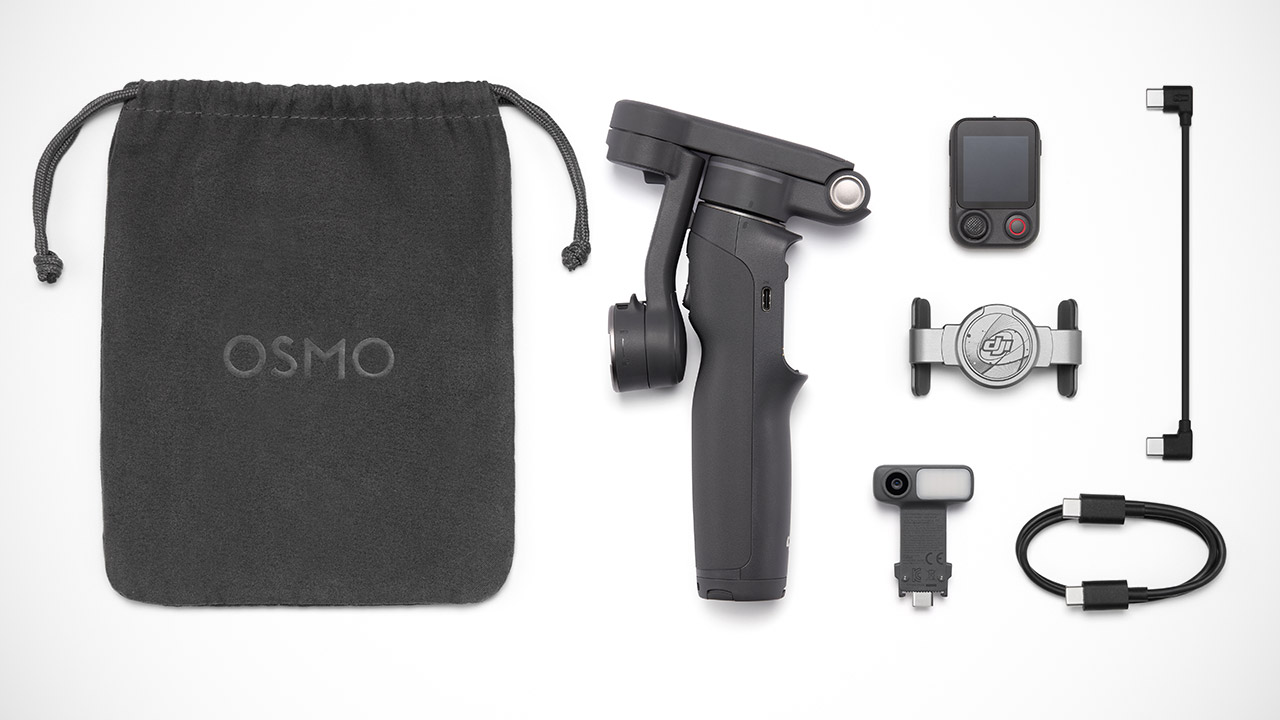
Solo video work often means juggling a phone, a gimbal, and constant checks on the screen. DJI built the Osmo Mobile 8P to fix exactly that problem by adding a small detachable monitor called the FrameTap. Snap it off the handle and the screen mirrors the phone’s live view while staying connected over Bluetooth. Creators can step back ten meters, tap to select a subject, or nudge a joystick to adjust framing and zoom without ever touching the phone itself.
Once you’ve removed the FrameTap from the rest of the gear, it feels really natural to hold. The touchscreen screen clearly displays the camera perspective, allowing you to perfect your composition for vlogs or product pictures. Android phones reflect their entire screen to the remote, however iPhone owners have some additional options courtesy to Apple’s DockKit technology. This allows native camera apps to communicate directly with the remote and perform functions such as object tracking.
Native Tracking With Audio [4] & Lighting [1] – Level up your shots with a DJI gimbal that combines tracking, audio reception [4], and lighting…
Seamless 360° Pan Rotation – Enjoy 360° horizontal rotation for immersive shots. Intelligent tracking lets you follow subjects freely, and the…
Direct Phone Connection for Tracking [2] – Instantly connect your phone to the foldable gimbal for quick setup and intelligent tracking. Portable…
Record buttons are conveniently located on the remote for quick starts, and when linked with the optional Multifunctional Module 2, the screen can also operate an attached fill light across eight brightness levels and eight different color temperatures.
Advertisement
The overall design keeps everything compact and adaptable. A 215mm extension rod pulls out from the body to allow for higher-angle photos or low-angle images close to the ground. Three robust tripod legs are spread slightly wider than before, which should help keep the device stable on uneven surfaces. The gimbal weighs 386 grams and easily balances phones with the integrated magnetic clasp. The gimbal features infinite 360-degree pan rotation, allowing shots to spin smoothly and easily without hitting mechanical stops, and the eighth-generation three-axis motors keep everything stable even when you’re walking quickly or changing subjects.
Tracking performance is excellent during real movement. ActiveTrack 8.0 can follow people, pets, cars, or landmarks through crowds and over short distances with minimal user intervention. In chaotic street scenes or at events, the system locks on and stays on without requiring continual manual adjustments. The Multifunctional Module 2 adds object support, which should be handy for travel footage or creative shots that previous gimbals failed with.
Under normal use conditions, the battery life is approximately ten hours, which should be sufficient for a full day of varied shooting. The roll axis features a USB-C connector that supplies power to your connected phone, allowing you to livestream or record extended takes without exhausting the main device. DJI provides battery life with the remote attached and unattached, giving a realistic view of how it will function in real-world use rather than merely a lab test.
The DJI Mimo app pulls everything together, including a few additional cinematic options. DynamicZoom allows you to produce the traditional push-pull effect while filming, Slow Shutter transforms night lights into smooth trails, Action Shot cleanly stops quick motion, and Widescreen records native 2.35:1 footage that’s ready to edit. Motion timelapse options give a touch of polish without requiring any additional equipment. First-time users should be able to hop in and start filming in a matter of minutes because it’s kept simple.
There are three different bundles available at launch to meet various demands. The regular version costs roughly 159 euros and includes the FrameTap controller. The Multifunctional Module 2 is available for 189 euros as part of the advanced tracking bundle. The creator bundle is somewhat more expensive (219 euros), but it also includes microphone accessories. The global debut date was May 7th, 2026, and it will be available from DJI’s website and approved merchants in the majority of markets outside the United States.
For 180 years, Stearns & Foster has been making mattresses before expanding into bedding, pillows, and frames. Throughout their history, the brand has continuously brought its trademark old-school style of craftsmanship. Now owned by Tempur Sealy, the iconic Stearns & Foster look features hand-stitched details and an elevated design seen in luxury hotels like the Ritz-Carlton. Today, Stearns & Foster is known for using premium materials, hand-tufted covers, patented IntelliCoil technology with an innerspring-in-innerspring design, moisture-wicking Tencel, and memory foam for pressure relief. If you’re looking for reliable, hotel-like sleep night after night for decades to come, investing in a Stearns & Foster mattress is a good idea. This luxury brand is on the pricier side, so we have a Stearns & Foster promo code and Stearns & Foster coupons to make this investment more affordable.
$300 Off With a Stearns & Foster Coupon Code
For a limited time, during the Sterns & Foster Memorial Day Event, you can save up to $700, plus get $300 in free accessories when you buy a mattress (besides the Studio model). With this Stearns & Foster coupon code, you’ll get up to $300 in free accessories or a free flat foundation with a mattress purchase. Just use Sterns & Foster promo code 300FREE at checkout.
Stearns & Foster Promo Code: $200 Off Base
The Ease Power Base is Sterns & Foster’s bestselling smartbedframe. Rated 4.7 out of 5 stars with over 2,000 five-star reviews, people love the adjustable frame to personalize their sleep experience, with a wireless remote to change their base position. The frame even has a Zero Gravity setting to help the body feel weightless with pressure relief for aches and back pain. When you purchase a Ease Power Base, you’ll get complimentary white-glove in-home delivery and a 25-year warranty for extra peace of mind with a purchase made to last decades. Plus, right now, you’ll get a $200 instant credit when you buy a qualifying mattress with Stearns & Foster promo code 200GIFT.
Get Free Pillows With Stearns & Foster
For a limited time, when you buy a qualifying Sterns & Foster mattress, you’ll get up to $300 in free accessories, including pillows and sheets. Perhaps best of all, there’s no catch: This Stearns & Foster deal automatically applies to your cart when you purchase a qualifying mattress. If you’d rather customize your free accessories, you’ll need to remove the pre-created bedding bundle from the cart and manually add the accessories of your choosing to the cart. Use Stearns & Foster coupon code 300FREE for this offer.
Advertisement
Stearns & Foster Free In-Home Delivery
One of the benefits of buying from a high-end brand like Stearns & Foster is their white glove delivery service and 25-year warranty for even more peace of mind. As a mattress reviewer on the WIRED Gear team, I hauled over a dozen mattresses in and out of my home. I can confidently say it was not fun. With this Stearns & Foster deal for free in-home delivery, their shipping team will set up your new mattress in the room and remove and discard all packaging materials, so you don’t have to do any of the grunt work. They’ll even dispose of your existing mattress and box spring if you request it for free.
We spend hours testing every product or service we review, so you can be sure you’re buying the best. Find out more about how we test.
Lego Batman: Legacy of the Dark Knight sees everyone’s favorite morally dubious hero return to the streets of Gotham once more in TT Games’ latest brick-based adventure. It’s a real mish-mash of genres, combining RPG and brawler elements with classic Lego action-adventure platforming fun, but it makes for a charming adventure that Bat-fans are sure to love.
Review info
Platform reviewed: PC (via Steam and on handheld) Available on: PS5, Xbox Series X|S, Nintendo Switch 2, PC Release date: May 22, 2026
Advertisement
They say imitation is the sincerest form of flattery, and if nothing else, it’s something Lego Batman: Legacy of the Dark Knight has turned into an art form. Riddled with references, jam-packed with jokes, and quintessential comic book ka-powery, there’s no denying that thisis an ode to all things Batman.
But in particular, it’s evident how much the Batman: Arkham series by Rocksteady Studios and WB Games heavily inspired gameplay. If you’re more a fan of Lego than you are Batman, you might have missed the trilogy and its many accolades; released in 2009, 2011, and 2015, the three games in the series were met with abundant praise for their inventive free-flow combat, excellent stealth gameplay, and exploration mechanics.
Advertisement
Latest Videos From
Of note is that the original Lego Batman trilogy was released almost in parallel (across 2008, 2012, and 2014). While creative and well-received, ultimately, a Lego game is a Lego game; it’s for all ages and somewhat limited by its own bricky source material. Times have changed, and Lego has since gutted its typical game formula enough for Lego Batman: Legacy of the Dark Knight to make a pretty big swing at being more Arkham-like, combining the best of these two trilogies and Bat-media beyond. But does it hit or miss?
(Image credit: Lego/WB Games/TT Games))
Put ‘em up…
Lego Batman: Legacy of the Dark Knight is still a Lego game at heart; its slapstick humor, goofy parodies of iconic scenes, and low-stakes couch co-op fun form the beating heart of its success. Broadly speaking, Legacy of the Dark Knight respects the Lego gameplay loop: fight, smash stuff, build something grossly overequipped to progress through the level, and repeat.
But hold your horses before you decry it as “just another Lego game”; there are some tweaks to the formula here, including some that fans may take issue with. That starts with the slimmer roster of seven playable characters (compared to over 100 in the most recent Lego Batman game), each with unique skills you’ll unlock as the game progresses. Broadly, these are inventive and distinct, though some fare better than others — I’m looking at you, Batgirl.
Newly added to the mix is a more fleshed-out combat system that mimics the Batman: Arkham series’ free-flow combat system. Now, your heroes can build combo stacks as they attack, dodge, counter, and land satisfying environmental takedowns, combining unique skills with melee combat in a super-fun brawl-style showdown, enunciated by the occasional “THAKK!” or “KAPOW!”.
Advertisement
Sign up for breaking news, reviews, opinion, top tech deals, and more.
(Image credit: TT Games / Warner Bros)
Fights such as these are a dime a dozen in both the overworld and in-level, and while they can be a little repetitive towards the late game, it’s still a marked improvement over older Lego titles. That being said, it feels like a lot was added in half measures to keep things simple; for example, I was a little disappointed by the skill tree for weapons, which offered a rather uninspiring array of movesets and upgrades, especially for the wider Bat-family.
A lot of fights are entirely avoidable if you opt for the stealthier approach; the game is littered with rafters, tunnels, and alcoves you can traverse or use to surprise enemies with a sneak attack. I got a lot of fun out of this, but again, it does make things a little too easy in places, especially when paired with the Detective Mode-like area scan that will help you locate intractable items and enemies.
Thanks to new difficulty settings, you can choose to make these encounters a little more consequential in play; I played mostly in the medium difficulty Caped Crusader mode, which still has infinite health but with more enemies. That’s more so because, for some reason, enemies could see me through walls on a few levels when I’d switched up to the more difficult Dark Knight mode. I’m hoping that’s a bug we’ll see fixed soon, because I enjoyed the higher stakes of having a finite number of lives… even if it was still pretty easy.
Advertisement
(Image credit: TT Games / Warner Bros)
A feast for Bat-fans
So, how does Lego Batman: Legacy of the Dark Knight distinguish itself from Arkham and the original Lego trilogy? Well, the game is packed to the brim with trivia, old and new, parodying everything from more obscure comic book references like Bat-Mite right through to The Batman (2022), laced with ample pop culture references to tie in the humor of Will Arnett’s portrayal in The Lego Batman Movie. As a lifelong fan of Batman, it’s a real joy, and the hits just keep coming.
This mashup of references could well have led to frequent tonal whiplash between bleaker Gotham skies and campier retellings of the Caped Crusader’s escapades, but TT Games has sewn together these disparate storylines wonderfully through the power of parody. Still, over the course of its six chapters, the story does, in places, lose its way, but I was too enamoured by the imaginative level design, slapstick humor, and endless reel of references to really care about whether or not a game built around kids’ toys is delivering a powerful narrative experience.
For me, Lego games have always scratched my collectathon itch, and this new Batman adventure is no different; you’ll collect everything from driveable vehicles, wearable costumes, and props inspired by the franchise, which you can proudly display in your customizable Batcave between bouts of pummeling through mindless hordes of henchmen.
Advertisement
Review info
(Image credit: TT Games / Warner Bros)
Throughout the game you see many characters’ origin stories, good and evil, but my favorite was Harvey Dent, where through a slapstick set of chaotic events he’s pummeled by ambulance doors, pie and then dragged along the pavement. Pure, unadulterated Lego nonsense.
Exploring Gotham City is also great fun as you zip and glide between the looming skyscrapers, scoring Wayne Tech and hidden loot from the rooftops and alleyways. It’s teeming with life and, despite the gloomy backdrop, there’s a real vibrancy to the game — not to mention the somewhat excessive levels of detail. You can literally see the texture of the Lego character paint as though they were real toys, and I’m not sure I even liked it as much as I was impressed with it.
On that note, I had never imagined — or hoped — a Lego game could be one of the more demanding games in my library, and had to drop a fair few settings to eke out the best performance from the game, especially when playing on my Steam Deck. Plus, I’m slightly disappointed to see that the same wall glitches I found in my demo playthrough are still there in the pre-launch software I’ve been reviewing, and I also found a fair few more bugs in the overworld. I was rewarded for completing encounters without ever going near them, the Sub-Wayne entry points frequently reset mid-solution, henchmen didn’t always spawn, and when they did, as aforementioned, they were sometimes X-Ray visioned.
Advertisement
All that being said, it’s undoubtedly up there with my favorite Lego games, and the magic is in how much love and appreciation the developers clearly have for both Lego and Batman. I doubt the new additions to Lego Batman: Legacy of the Dark Knight spell too much about the future of Lego games overall; in fact, it tells me that TT Games might just be itching to do more new and exciting things with each franchise, and that’s never a bad thing. There’s still plenty of fun to be had with the Lego formula, though, and Legacy of the Dark Knight stands as a fantastic example.
Should you play Lego Batman: Legacy of the Dark Knight?
Play it if…
Advertisement
Don’t play it if…
Accessibility features
There’s great attention to accessibility options within Lego Batman: Legacy of the Dark Knight; on first launch, players can select from Vision, Hearing, Motor, and Motion Sickness accessibility presets, as well as between the three difficulty levels, two of which have no fail state (Classic and Caped Crusader).
If these presets aren’t quite right, there’s a litany of settings to customize; for visual needs, you can toggle audio description, high contrast mode, color blindness, full screen effects, text size, HUD visibility, marker display, camera shake, persistent center dot, and third-person camera reset, set up customizable subtitles, and choose between adjustable and dynamic field of view. For auditory accessibility, there are volume controls, closed captions, voiceover icons, night mode and audio output settings, and for any motor needs you can remap controls including sticks, invert the camera and tweak sensitivity, adjust controller deadzone and held or repeated button inputs, toggle aim snap and lock-on assist, adjust the game speed, aiming mode, gadget rapid fire, and skip quick time events or simplify them.
You can also toggle stud loss so the game is less punishing, it auto-saves for ease, and you can review text logs and tutorials at any time from the pause menu. Certain events are skippable via the pause menu (indicated on the HUD), and you can pause any time, even during cinematics.
Advertisement
How I reviewed Lego Batman: Legacy of the Dark Knight
I spent over 20 hours in Lego Batman: Legacy of the Dark Knight, playing on my custom-built gaming PC with a Dell S3225QS monitor, 8BitDo Ultimate controller, and Razer Kraken Kitty headset, but also on my Steam Deck.
I covered a majority of the main storyline, explored Gotham to complete side quests and unlockable content, and played in all three difficulties to assess their impact on play. I compared my experience to other recent Lego games like the Skywalker Saga as well as my fond memories of playing the original Lego Batman trilogy.



































































You must be logged in to post a comment Login