What’s old is new: the command line — the original, clunky non-graphical interface for interacting with and controlling PCs, where the user just typed in raw commands in code — has become one of the most important interfaces in agentic AI.
That shift has been driven in part by the rise of coding-native tools such as Claude Code and Kilo CLI, which have helped establish a model where AI agents do not just answer questions in chat windows but execute real tasks through a shared, scriptable interface already familiar to developers — and which can still be found on virtually all PCs.
For developers, the appeal is practical: the CLI is inspectable, composable and easier to control than a patchwork of custom app integrations.
Now, Google Workspace — the umbrella term for Google’s suite of enterprise cloud apps including Drive, Gmail, Calendar, Sheets, Docs, Chat, Admin — is moving into that pattern with a new CLI that lets them access these applications and the data within them directly, without relying on third-party connectors.
Advertisement
The project, googleworkspace/cli, describes itself as “one CLI for all of Google Workspace — built for humans and AI agents,” with structured JSON output and agent-oriented workflows included.
In an X post yesterday, Google Cloud director Addy Osmani introduced the Google Workspace CLI as “built for humans and agents,” adding that it covers “Google Drive, Gmail, Calendar, and every Workspace API.”
While not officially supported by Google, other posts cast the release as a broader turning point for automation and agent access to enterprise productivity software.
Now, instead of having to set up third-party connectors like Zapier to access data and use AI agents to automate work across the Google Workspace suite of apps, enterprise developers (or indie devs and users, for that matter) can easily install the open source (Apache 2.0) Google Workspace CLI from Github and begin setting up automated agentic workflows directly in terminal, asking their AI model to sort email, respond, edit docs and files, and more.
Advertisement
Why the CLI model is gaining traction
For enterprise developers, the importance of the release is not that Google suddenly made Workspace programmable. Workspace APIs have long been available. What changes here is the interface.
Instead of forcing teams to build and maintain separate wrappers around individual APIs, the CLI offers a unified command surface with structured output.
Installation is straightforward — npm install -g @googleworkspace/cli — and the repo says the package includes prebuilt binaries, with releases also available through GitHub.
The repo also says gws reads Google’s Discovery Service at runtime and dynamically builds its command surface, allowing new Workspace API methods to appear without waiting for a manually maintained static tool definition to catch up.
Advertisement
For teams building agents or internal automation, that is a meaningful operational advantage. It reduces glue code, lowers maintenance overhead and makes Workspace easier to treat as a programmable runtime rather than a collection of separate SaaS applications.
What developers and enterprises actually get
The CLI is designed for both direct human use and agent-driven workflows. For developers working in the terminal, the README highlights features such as per-resource help, dry-run previews, schema inspection and auto-pagination.
For agents, the value is clearer still: structured JSON output, reusable commands and built-in skills that let models interact with Workspace data and actions without a custom integration layer.
That creates immediate utility for internal enterprise workflows. Teams can use the tool to list Drive files, create spreadsheets, inspect request and response schemas, send Chat messages and paginate through large result sets from the terminal. The README also says the repo ships more than 100 agent skills, including helpers and curated recipes for Gmail, Drive, Docs, Calendar and Sheets.
Advertisement
That matters because Workspace remains one of the most common systems of record for day-to-day business work. Email, calendars, internal docs, spreadsheets and shared files are often where operational context lives. A CLI that exposes those surfaces through a common, agent-friendly interface makes it easier to build assistants that retrieve information, trigger actions and automate repetitive processes with less bespoke plumbing.
The important caveat: visible, but not officially supported
The social-media response has been enthusiastic, but enterprises should read the repo carefully before treating the project as a formal Google platform commitment.
The README explicitly says: “This is not an officially supported Google product”. It also says the project is under active development and warns users to expect breaking changes as it moves toward v1.0.
That does not diminish the technical relevance of the release. It does, however, shape how enterprise teams should think about adoption. Today, this looks more like a promising developer tool with strong momentum than a production platform that large organizations should standardize on immediately.
Advertisement
This is a cleaner interface, not a governance bypass
The other key point is that the CLI does not bypass the underlying controls that govern Workspace access.
The documentation says users still need a Google Cloud project for OAuth credentials and a Google account with Workspace access. It also outlines multiple authentication patterns for local development, CI and service accounts, along with instructions for enabling APIs and handling setup issues.
For enterprises, that is the right way to interpret the tool. It is not magic access to Gmail, Docs or Sheets. It is a more usable abstraction over the same permissions, scopes and admin controls companies already manage.
Not a rejection of MCP, but a broader agent interface strategy
Some of the early commentary around the tool frames it as a cleaner alternative to Model Context Protocol (MCP)-heavy setups, arguing that CLI-driven execution can avoid wasting context window on large tool definitions. There is some logic to that argument, especially for agent systems that can call shell commands directly and parse JSON responses.
Advertisement
But the repo itself presents a more nuanced picture. It includes a Gemini CLI extension that gives Gemini agents access to gws commands and Workspace agent skills after terminal authentication. It also includes an MCP server mode through gws mcp, exposing Workspace APIs as structured tools for MCP-compatible clients including Claude Desktop, Gemini CLI and VS Code.
The strategic takeaway is not that Google Workspace is choosing CLI instead of MCP. It is that the CLI is emerging as the base interface, with MCP available where it makes sense.
What enterprises should do now
The right near-term move for enterprises is not broad rollout. It is targeted evaluation.
Developer productivity, platform engineering and IT automation teams should test the tool in a sandboxed Workspace environment and identify a narrow set of high-friction use cases where a CLI-first approach could reduce integration work. File discovery, spreadsheet updates, document generation, calendar operations and internal reporting are natural starting points.
Advertisement
Security and identity teams should review authentication patterns early and determine how tightly permissions, scopes and service-account usage can be constrained and monitored. AI platform teams, meanwhile, should compare direct CLI execution against MCP-based approaches in real workflows, focusing on reliability, prompt overhead and operational simplicity.
The broader trend is clear. As agentic software matures, the command line is becoming a common control plane for both developers and AI systems. Google Workspace’s new CLI does not change enterprise automation overnight. But it does make one of the most widely used productivity stacks easier to access through the interface that agent builders increasingly prefer.
Fortis Solutions, an enterprise technology partner with decades of experience across infrastructure, cybersecurity, and data systems, approaches artificial intelligence as a force that is redefining how work is performed while preserving the importance of human contribution. Its perspective reflects a future where human judgment and machine precision operate in tandem, introducing new ways to elevate performance, strengthen decision-making, and expand what teams can accomplish together.
This perspective emerges within a rapidly evolving landscape where AI continues to influence how organizations operate, decide, and govern. Leadership conversations have shifted from verifying processes to explaining how AI-driven decisions occur, how fairness is maintained, and how control is exercised. This signals a broader transition from traditional compliance models toward governance frameworks that prioritize accountability, transparency, and oversight.
Within this environment, Fortis Solutions emphasizes a foundational principle: AI benefits from human governance. Myron Duckens, President and CEO, says, “Technology becomes meaningful when it reflects human intention. Governance is where intention is translated into action, ensuring that innovation continues with clarity and purpose.” He adds that systems often require clearly defined rules, structured frameworks, and ethical guardrails established by people who understand both operational realities and broader societal expectations.
Fortis Solutions acknowledges that even with strong governance, human limitations remain part of the equation. Fatigue, cognitive overload, and the complexity of modern infrastructure introduce variables that may influence outcomes in subtle ways. In high-stakes environments such as healthcare systems or large-scale venues, even minor inconsistencies can carry significant implications. CTO Jeremy Roach says, “This reality has shaped how we approach the integration of AI. We view it as a complementary force that enhances human capability while maintaining oversight at every critical juncture.”
Advertisement
Credit: CTO, Jeremy Roach
At the same time, the current AI landscape presents challenges that require careful consideration. Generative AI systems can produce outputs that appear credible yet lack factual grounding, often referred to as hallucinations. These outcomes frequently stem from gaps in data quality, incomplete context, or overly generalized training models. Tony Gonzalez, CIO, offers a practical perspective on this dynamic. He says, “Data determines direction. When inputs are precise and validated, outcomes become more dependable. That relationship sits at the center of every AI system.”
Credit: CIO Tony Gonzalez
Concerns around data integrity extend further when considering the widespread use of open and crowdsourced AI models. Industry insights highlight how data provenance, security, and governance remain central concerns for organizations scaling AI initiatives, with a significant percentage of leaders prioritizing risk management and cybersecurity investments. These concerns reflect a broader awareness that while AI introduces new capabilities, it also introduces new considerations around accountability and control.
Another dimension of the current landscape is the pace at which AI innovation is advancing. Roach notes that technological capabilities continue to expand quickly, while governance frameworks, regulatory structures, and organizational policies evolve more gradually. “This creates a gap where systems may operate faster than the mechanisms designed to oversee them,” he explains. The result can include exposure to misinformation, vulnerabilities within infrastructure, and unintended data movement across systems.
Advertisement
Fortis Solutions aims to address this gap through a focus on controlled AI environments. Its approach centers on privatized large language models designed to operate within defined boundaries, using verified internal data rather than external, unfiltered sources. Roach states, “Control creates clarity. When systems learn within a defined environment, they become more aligned with the objectives they are designed to support.” This controlled model is designed to support consistency, help reduce the likelihood of unpredictable outputs, and reinforce confidence in the system’s performance.
Integral to this approach are platforms such as Source of Truth and NetRaven, which function together as interconnected layers within the infrastructure. Source of Truth operates as a centralized decision layer, maintaining a dynamic, real-time understanding of infrastructure components and their relationships. NetRaven complements this by translating system activity into accessible insights through continuous monitoring and visualization.
Together, they form what the team describes as a SMART operational foundation, an acronym which stands for Seeing everything across the infrastructure, Monitoring activity continuously, Assessing what is happening as conditions evolve, Remediating issues automatically to optimize and troubleshoot, and Translating vendor‑agnostic CLI data into a unified operational language. The goal is to create an environment where accuracy and responsiveness are closely aligned.
According to Roach, this alignment becomes particularly meaningful when considering the role of human error in complex systems. Extended work hours, high-pressure scenarios, and large-scale operations may introduce challenges that affect even the most experienced professionals.
Advertisement
“AI systems can help reduce operational inconsistencies, enhance monitoring capabilities, and provide additional layers of validation,” he says. “In healthcare environments, this may support more consistent system performance, while in business contexts, it may contribute to more reliable operational continuity.”
Despite these advancements, perceptions around AI continue to evolve. Fortis Solutions points to concerns related to job displacement and data security that often accompany discussions about adoption. The company notes that these sentiments mirror earlier reactions to cloud computing, where initial hesitation transitioned into widespread acceptance as trust and familiarity developed. “Every transformative technology begins with questions. Over time, understanding replaces uncertainty, and organizations begin to see how these tools can extend their capabilities,” Roach remarks.
A key theme within Fortis Solutions’ approach is the importance of collaboration. AI systems can benefit from diverse perspectives, continuous feedback, and the ability to adapt as organizational needs and societal expectations evolve. Input from both technical and non-technical stakeholders contributes to more well-rounded systems, helping ensure that technology reflects a broader range of insights and experiences.
Advertisement
This collaborative dynamic reinforces the idea that AI functions most effectively as a partner. Humans establish the direction, define the parameters, and interpret outcomes, while AI contributes speed, scalability, and analytical depth. Together, they create a model that aims to enhance efficiency while supporting thoughtful decision-making.
As technology and societal expectations continue to evolve, adaptability remains essential. Fortis Solutions argues that systems built with flexibility, strong governance, and secure infrastructure are best positioned to grow with these shifts, ensuring long-term relevance. In this view, AI becomes a broader opportunity to strengthen organizational decision-making and operational resilience. By emphasizing human oversight and collaborative design, Fortis Solutions frames AI as a means to enhance reliability, maintain continuity, and elevate the overall quality of outcomes.
An anonymous reader quotes a report from Ars Technica: Google’s Gemini AI models have improved by leaps and bounds over the past year, but you can only use Gemini on Google’s terms. The company’s Gemma open-weight models have provided more freedom, but Gemma 3, which launched over a year ago, is getting a bit long in the tooth. Starting today, developers can start working with Gemma 4, which comes in four sizes optimized for local usage. Google has also acknowledged developer frustrations with AI licensing, so it’s dumping the custom Gemma license.
Like past versions of its open-weight models, Google has designed Gemma 4 to be usable on local machines. That can mean plenty of things, of course. The two large Gemma variants, 26B Mixture of Experts and 31B Dense, are designed to run unquantized in bfloat16 format on a single 80GB Nvidia H100 GPU. Granted, that’s a $20,000 AI accelerator, but it’s still local hardware. If quantized to run at lower precision, these big models will fit on consumer GPUs. Google also claims it has focused on reducing latency to really take advantage of Gemma’s local processing. The 26B Mixture of Experts model activates only 3.8 billion of its 26 billion parameters in inference mode, giving it much higher tokens-per-second than similarly sized models. Meanwhile, 31B Dense is more about quality than speed, but Google expects developers to fine-tune it for specific uses.
The other two Gemma 4 models, Effective 2B (E2B) and Effective 4B (E4B), are aimed at mobile devices. These options were designed to maintain low memory usage during inference, running at an effective 2 billion or 4 billion parameters. Google says the Pixel team worked closely with Qualcomm and MediaTek to optimize these models for devices like smartphones, Raspberry Pi, and Jetson Nano. Not only do they use less memory and battery than Gemma 3, but Google also touts “near-zero latency” this time around.
The Apache 2.0 license is much more flexible with its terms of use for commercial restrictions, “granting you complete control over your data, infrastructure, and models,” says Google.
Clement Delangue, co-founder and CEO of Hugging Face, called it “a huge milestone” that will help developers use Gemma for more projects and expand what Google calls the “Gemmaverse.”
These days, it’s easy to digitally sign important documents from your computer or phone. But sometimes you’re handed physical versions on paper that you need to sign, scan and send over email. When you just have to put your signature on a real-life document but don’t have a standalone scanner handy, the easiest way is right in your pocket.
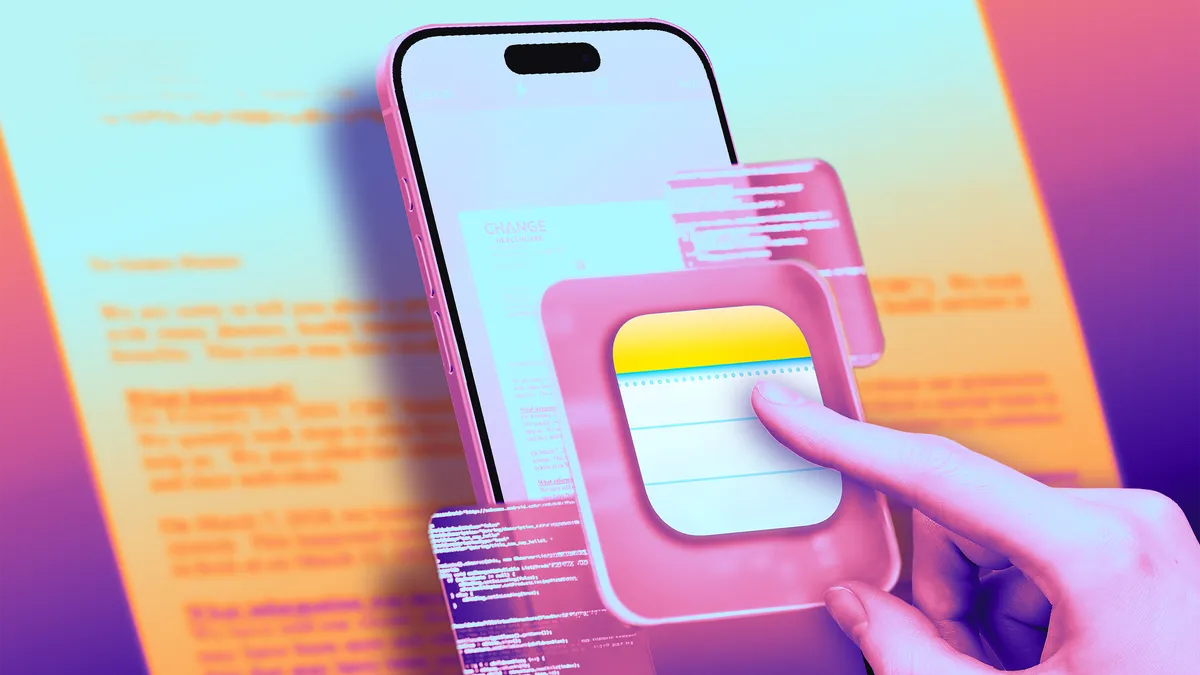
Yes, your iPhone doubles as a document scanner. It may not produce images as sharp as a dedicated scanner would, but it does a respectable job, even when the phone is positioned at odd angles, trying to capture text. iPhones have had this hidden feature since iOS 11 launched in 2017, but as the cameras built into Apple phones have improved, so has their ability to take decent scans of documents and turn them into PDFs you can email.
Advertisement
You won’t need to download additional software or pay for a third-party app — Apple’s Notes app, which comes preinstalled on iPhones, does the trick. The good news is that it’s quick and easy to scan a document, save it, and send it wherever it needs to go. If you’ve kept your phone up to date with iOS 26, it’s easy to use this feature. Keep in mind that the process will be different if you haven’t upgraded past iOS 17, but we’ll walk you through it.
Here’s how to scan a document with your iPhone.
James Martin/CNET
Scan a document with your iPhone or iPad
To scan a document with your iPhone or iPad, first place the document on a flat surface in a well-lit area.
Open up the Notes app and either open an existing note or start a new one by tapping the New Note button in the bottom right corner (pencil-in-square icon). On iOS 17 and earlier, tap the Camera button at the bottom of the screen (or, if you’re editing a note, the same Camera icon above the keyboard), then tap Scan Documents. If you’re on iOS 26, instead of a Camera icon, tap the Attachments button (the paperclip icon), then tap Scan Documents.
Advertisement
This will open a version of the Camera app that just looks for documents. Once you position your iPhone over the document you want to scan and place it in view of the camera, a yellow rectangular layer will automatically appear over the document, showing approximately what will be captured. Hover over the document for a few seconds, and the iPhone should automatically capture and scan the document, but you can also tap the Shutter button in the bottom center. You can scan multiple documents at once if you’d like. When you’re done, tap the yellow checkmark in the top-right corner.
James Martin/CNET
Sign, share or save your scanned document
Once you’ve captured a document, you can tap it and any others you’ve captured in the same session to edit them before saving. You can also tap Retake in the top right corner to start again.
When you edit the document, you can recrop it from the original photo (if you need to tweak its edges) and switch between color filters (color, black and white, grayscale or the unedited original photo). Then you can save the scanned document.
Once it’s saved as a note, you can tap the Markup button (circled pen icon) at the bottom to sketch or scribble with different colors. If you tap the Add button at the bottom right (the plus sign icon), you can add text, your signature, shapes or even stickers. Once you’ve added a signature, you can tap it to bring up a menu, then tap the diagonal line to edit its thickness and color. You can tap and hold the signature to move it around.
Advertisement
There are also AI tools for adding and rewriting text, though they aren’t helpful for signing documents. To use them, tap the center button that looks like a diagonal pencil stylus surrounded by a circle of loops.
To send or save the document locally, tap the Share button at the top (the square-and-arrow icon) to send it via Messages or other apps, copy it, save it locally in the Files app, or print it via a linked printer or other options.
Watch this: ProRaw vs. JPEG: The Hidden Setting Every iPhone Photographer Needs
How to export your scanned document as a PDF
Understandably, you may want to send your scanned document as a PDF. Tap the Share button at the top (the square-and-arrow icon) and scroll down below the contact and app roulettes to the additional list of options.
Advertisement
The easiest way to send your scanned document as a PDF is a bit convoluted: among the aforementioned list, tap Print, then tap the Share button at the top (square-and-arrow icon) again — this will share your PDF-converted document. Then pick your share method of choice, most easily via email, though you can also upload it to cloud storage or send it via text message if you want.
You can also use a third-party app to convert your document to PDF if you so choose. Scroll down past the Print button to find your app of choice. For instance, if you have the Adobe Acrobat app downloaded to your device, you can select Convert to PDF in Acrobat to do so — though you’ll need to wade past several screens attempting to upsell you on Adobe subscriptions first.
Why can’t I find the camera button to scan documents?
If you’re running iOS 26, the Camera button has been replaced by an Attachments button (a paperclip symbol). It should function just the same: Tap it and choose Scan Documents from the dropdown menu
If you can’t see the Camera or the Attachments button, check to see if you’ve opened the note in either the iCloud section or the On My iPhone section — you’ll only be able to scan documents and save them in either of these places. If you can’t tell, tap Folders in the top-left corner of the Notes screen, then select either iCloud or On My iPhone.
Advertisement
The document scanner is just one of many unnoticed iPhone features that come prepackaged in Apple’s handsets, often nested in the apps that come with your phone. Some hidden iOS 26 features add even more surprising capabilities already on your iPhone. But you can also find ways to do other tasks, like making a GIF on your iPhone, using third-party apps, or doing it in your browser.
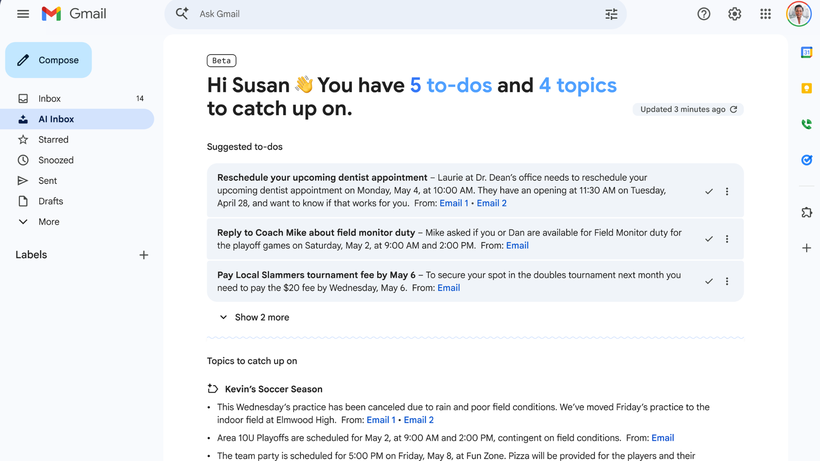
Google has launched Gmail’s AI Inbox in beta for Google AI Ultra subscribers in the United States, replacing the traditional unread message count with an AI-driven system.
The feature sits as a separate label in Gmail’s sidebar and divides unread emails into two sections, To-dos and Topics, with To-dos surfacing time-sensitive items, including messages from designated VIPs, upcoming bills, appointments, and reminders for emails that have gone unanswered.
Topics groups related email threads together under a single heading, allowing users to scan conversations by subject area rather than sender, reducing the back-and-forth of hunting through an inbox for connected messages spread across different dates.
AI Inbox also tracks whether a user has already engaged with a suggested task through signals like reading, archiving, or deleting the relevant email, with Google planning to add a dedicated Mark as Done option to the feature in the near future.
Advertisement
Advertisement
All processing takes place within Gmail’s own infrastructure, with Google confirming that the AI Inbox handles email content securely without routing data outside the platform, a reassurance aimed at users cautious about AI tools accessing sensitive correspondence.
It’s only available as part of the top-end AI plan
Access is currently limited to Google AI Ultra subscribers, a plan priced at $250 per month that also includes the highest usage limits across Gemini, 30TB of Google Cloud storage, a Google Home Premium Advanced plan, YouTube Premium, and access to Google’s broader suite of AI tools.
AI Inbox was previously available only to a small group of testers, with Google having promised broader availability later in the year, though the expansion to Ultra subscribers stops well short of a general rollout given the plan’s steep monthly cost.
For existing Ultra subscribers, the addition represents meaningful value without any extra charge, while users on lower-tier Google plans will need to wait for confirmation of whether AI Inbox will eventually reach more affordable subscription options.
It’s easy to think of online console gaming as an invention of the 2000s. Microsoft made waves when Xbox Live dropped in 2002, with Nintendo and Sony scrambling to catch up with their own offerings that were neither as sleek or well-integrated.
However, if you were around a decade earlier, you might have experienced online console gaming much closer to the dawn of the Internet era. As far back as 1990, you could jump online with your Sega Mega Drive. But what did an online console feel like in the dial-up era?
Mega
The Sega Mega Drive was launched in Japan in October 1988. The company was in a tough battle with Nintendo for gaming dominance, and the new 16-bit console was intended to best its rival’s offerings across the board. With a forward-looking attitude, Sega quickly developed an online offering for the console, which went under a few different names. It was known as Mega Net, or alternatively, the Sega Net Work System.
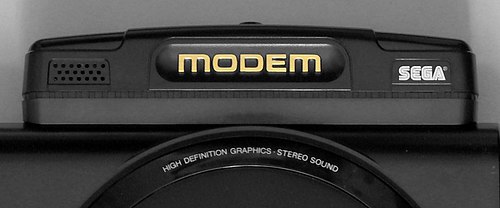
The Mega Modem plugged into the back of the Model 1 Mega Drive. With data rates maxing out at 1,200 bps, it was somewhat limited in what it could offer. Credit: boffy_b, CC BY-SA 3.0
The system hit the market on November 3 1990, exclusively for the Japanese market, with Sega talking up a future launch in the US under the “Tele-Genesis” name. The initial Mega Net kit cost ¥12,800, which included the Mega Modem accessory—a simple 1,200 bps dial-up modem which plugged into the “EXT” DE-9 port on the back of the Model 1 Mega Drive. Access to Mega Net service came at a cost of ¥800 a month. Users got a copy of Nikkan Sports Pro Baseball VAN, which provided live updates and statistics on baseball matches when connected to the service.
The Mega Net pack also included the “Game Library” cartridge. This allowed users to dial up to Mega Net and play a variety of downloadable games. These titles had to be incredibly compact, usually under 128 KB. This was both because of the glacially slow 1,200 bps modem, and because the Mega Drive had no real storage capability to speak of. 42 games were released on the system, and titles would take about 5 to 8 minutes to download. The vast majority were single player experiences. However, two games – Tel-Tel Stadium and Tel-Tel Mahjong – featured online play via Mega Net. Perhaps unsurprisingly, both games were turn-based—a practical necessity given the limited speeds and latency achievable with the slow Mega Modem. A handful of games from Mega Net would later see cartridge releases of their own.
Advertisement
Users could also engage in multiplayer gaming with certain cartridge-based titles. However, this was not using a server-based online system. Instead, this merely consisted of point-to-point dial-up play between two consoles equipped with the Mega Modem.
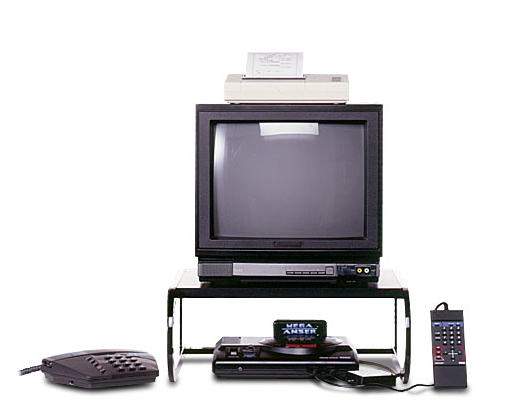
The Mega Anser kit allowed you to manage your banking or life insurance from the comfort of your living room. The optional thermal printer could be used to print statements or receipts. Credit: Sega
Mega Net wasn’t just limited to gaming, however. Sega explored more utilitarian uses for the Mega Drive with the release of Mega Anser. This came as a package that included the Mega Modem, the Mega Anser software, and a numeric keypad controller called the Ten Key Pad. There was also an optional printer that plugged into one of the controller ports. The most notable use of the Mega Anser was for online banking. Depending on your bank, you could manage your funds with the Naisu-kun Mini,Osaka Ginkou no Home Banking Service My Line, or Sumisei Home Tanmatsu.
Unfortunately, the technology wasn’t quite there in 1990 to support a fully-vibrant online gaming service. By 1992, Sega realised there wasn’t a large market for Mega Net and Mega Anser services, and the hardware started turning up in bargain bins for drastically reduced prices. By 1993, Sega had released a remodelled Mega Drive which eliminated the EXT port required for the Mega Modem, making it clear that there was no interest in taking the service any further.
You could use the Mega Net system to access live baseball scores and statistics, though one wonders if it might not have been easier to just watch a televised match instead. Credit: Sega
The end of Mega Net in Japan was swift, but the name would live once more. That time came in 1995, when a similar service saw a last gasp release in Brazil, of all places. Supported by local distributor Tectoy, it ran using a unique modem accessory that plugged into the cartridge slot. The range of services on offer was quite different—users could access emails, fax messages, and read an electronic magazine called Revista Eletrônica. The system was designed to be used with the Sega Mouse for a more computer-like interface experience, and prices started at R$5 a month for access to the service. The service was, in many ways, completely unrelated to the original Sega effort, but was inspired by it and wore similar branding.
Brazil’s Mega Net was more modern and had additional ways for users to interact with each other.
Advertisement
Sega’s early experiment with online console gaming was not a grand success. It failed to attract a huge user base or offer any ground-breaking features. However, it did give the company a base to work from when it came to getting later consoles online, like the Saturn and Dreamcast that arrived years later. Ultimately, Sega would largely be out of the console market by the time online gaming really took off in that world, but you can’t fault the former Japanese titan for trying to get in early.
Dell Pro Premium prioritizes mobility while supporting serious business workloads
Magnesium alloy chassis reduces weight without sacrificing durability or structural integrity
Modular motherboard design improves cooling and maintains CPU performance under load
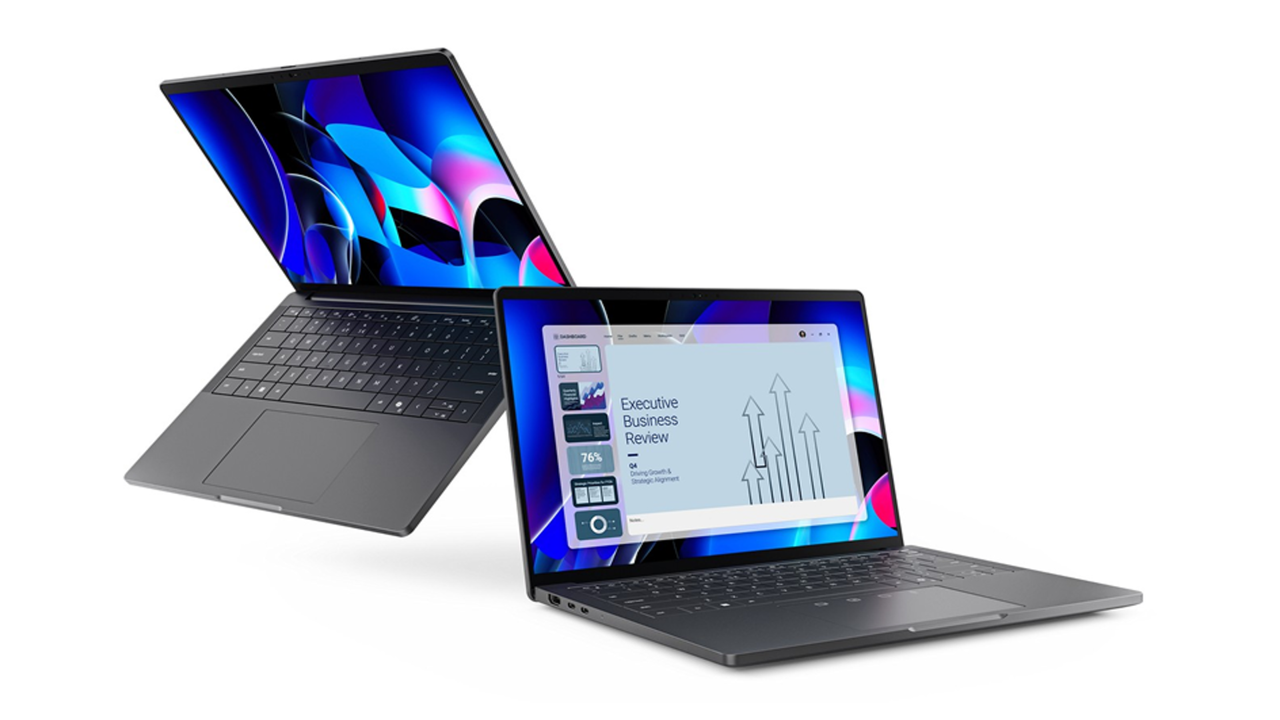
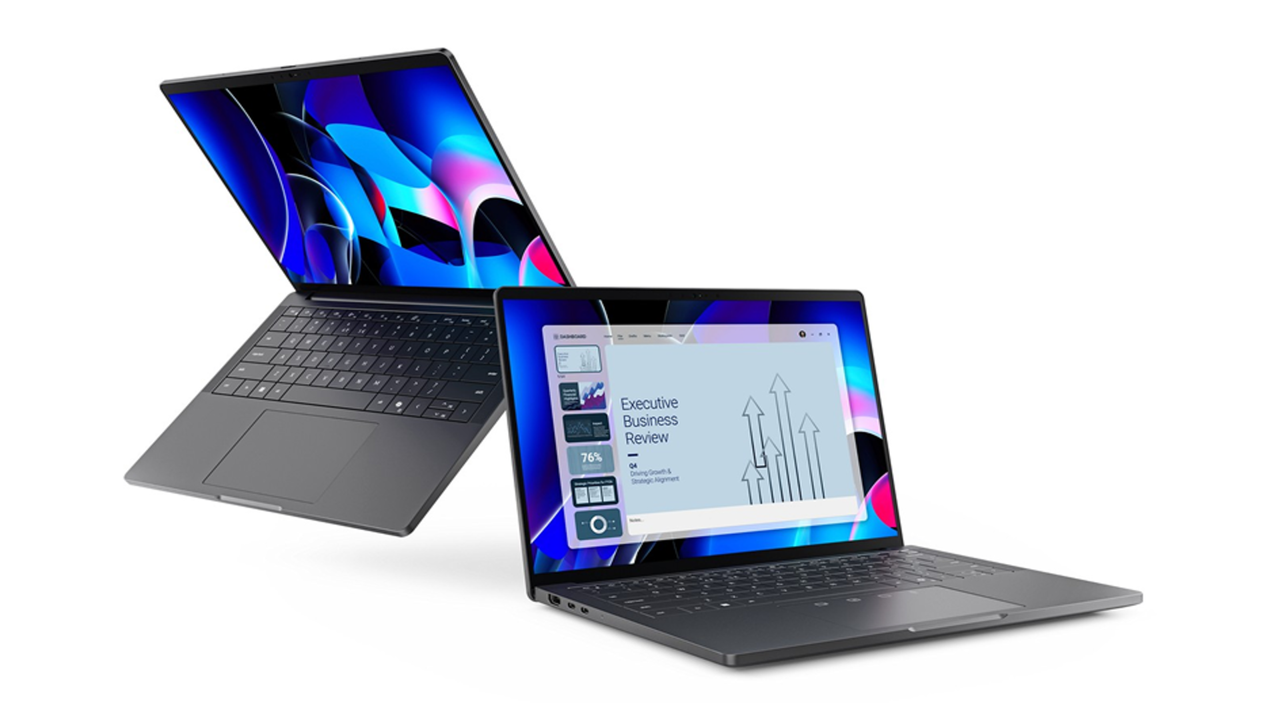
Dell is pushing its executive-oriented notebook business laptop line toward a genuinely workstation-grade experience without adding bulk or weight.
The new 14-inch Dell Pro Premium sits at the top of the refreshed Dell Pro lineup, built for senior executives and customer-facing managers who move between offices, airports, and conference rooms throughout the day.
Dell says it is the lightest notebook in the Dell Pro family, and calculations suggest its chassis could shrink to roughly 15mm — 7% thinner than its predecessor — while still housing a full-sized 14-inch display.
Article continues below
Advertisement
Dell Pro Premium
The chassis relies on a magnesium alloy body finished in magnetite, which keeps mass down while giving the device a more solid, premium feel than a typical all-plastic business offering.
That lighter frame makes it easier to carry alongside a power brick and briefcase over long periods.
Advertisement
Inside, Dell’s modular motherboard layout frees up space for larger cooling fans and more efficient thermal management, helping keep CPU and graphics performance stable during extended meetings or AI-assisted workloads rather than throttling under heat.
The performance of this device focuses on modern business workflows, handling multiple apps, video calls, whiteboards, and large datasets rather than gaming or heavy rendering.
Sign up to the TechRadar Pro newsletter to get all the top news, opinion, features and guidance your business needs to succeed!
Users can choose between Intel Core Ultra Series 3 and AMD Ryzen AI 400 processor options, both of which integrate on-device AI and support Copilot+ PC experiences.
Advertisement
The 14-inch screen offers a Tandem OLED panel with richer contrast and deeper blacks, although higher power use may limit all-day battery life.
An 8MP HDR camera provides high-resolution video calls, supporting executives who rely on a polished virtual presence.
However, for those who need a true workstation, Dell’s Pro Precision 5S and 9 Series hardware complement the Pro Premium by offering much heavier compute and graphics muscle.
Advertisement
The Precision 5S marks the thinnest and lightest mobile workstation Dell has ever shipped – and relies on integrated Intel Arc Pro or AMD Radeon Pro graphics instead of a discrete GPU to keep weight and thickness in check.
At the other end of the spectrum, the Dell Pro Precision 9 T2 / T4 / T6 desktops are built for extreme workloads.
They feature up to 15 PCIe slots and add support for five 300W Nvidia RTX PRO Blackwell-generation GPUs.
“IT leaders can deploy sleek and modern devices users are excited to use at every level of the organization, along with improved performance, without sacrificing the manageability, security, or value they demand,” said Rob Bruckner, president, CSG Commercial, Dell Technologies.
As Sonos has added the Play to its speaker line-up, we’re keen to see how it measures up to the 4.5-star Era 100.
To help you decide which of Sonos’ offerings will suit you best, we’ve compared our experiences with the Play to the Era 100 and noted the key differences below.
The Sonos Play is available to buy now and has an RRP of £299/$299.
Advertisement
Advertisement
The Sonos Era 100, on the other hand, is slightly cheaper with an RRP of £199/$199. Not only that, but the speaker has seen various price drops since its launch, which means it’s not impossible to find a bargain.
Design
Both come in just two colour choices: Black or White
Sonos Play is lighter, at just 1.3kg compared to 2.02kg
Sonos Play has an IP67 rating
Although the Sonos Era 100 has a thicker, more squat design than the Sonos Play, when the two are put next to each other there’s no denying they’re part of the Sonos family. Both retain that classic Sonos design, with a mesh surrounding and flat-top that houses the buttons. Plus, both come in just two colour choices: Black or White.
The Sonos Play, however, is designed specifically for both indoor and outdoor use and weighs just 1.3kg compared to the Sonos Era 100’s 2.02kg. Sure, the Play isn’t as light as the Roam 2, but aided by its carry loop at the back, it’s fairly easy to carry around from room to room.
Advertisement
Advertisement
As the Sonos Play is designed for both indoor and outdoor use, it comes with a reassuring IP67 rating which means it’s dust-tight and can survive short-term water immersion. In comparison, the Sonos Era 100 doesn’t have a specific IP rating, and instead just promises to be “humidity resistant”.
Otherwise, both speakers have a simple button layout on top and a button to turn the microphone off too – although doing so will stop Trueplay tuning from working.
Winner: Sonos Play
Features
Sonos app is better but still not as good as it once was
Although both support Stereo pairing, the Sonos Era 100 is better suited
Both have built-in Alexa and Sonos Voice Control
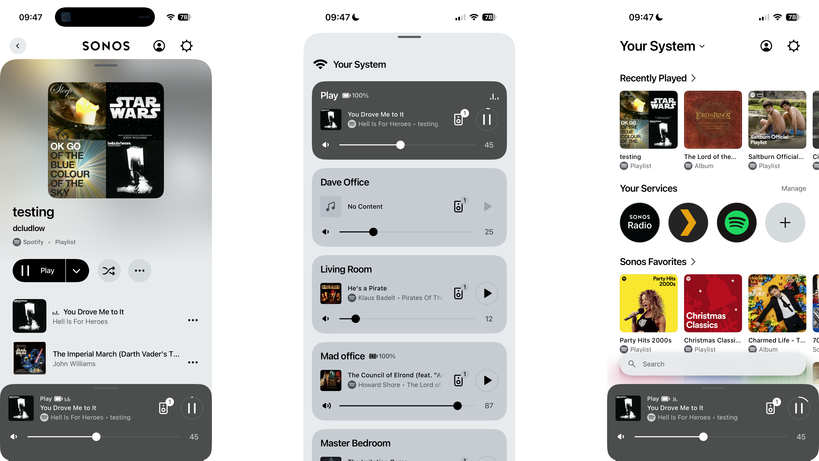
Sonos has fortunately fixed its disastrous app revamp of 2024, and it’s now more reliable and faster to load too. Sure, it’s not as good as the old app but there aren’t any major issues to report.
In fact, the Sonos app does boast numerous useful features including the ability to use a single music subscription to play music on different speakers at the same time, and the ability to sync music across multiple rooms for a party.
Advertisement
Advertisement
Sonos app. Image Credit (Trusted Reviews)
While both the Play and Sonos Era 100 support stereo pairing, we noted a few issues with the former as both speakers to be connected to the same Wi-Fi. In addition, both speakers need to be kept together at all times or the audio won’t sound quite right. With this in mind, if you want speakers specifically for stereo pairing, we’d recommend opting for two Sonos Era 100s instead as they’re fixed.
Otherwise, both are fitted with Amazon Alexa and Sonos Voice Control, and support Automatic Trueplay too which uses the integrated microphone to adjust the audio according to where the speaker is located.
Winner: Sonos Era 100
Sound Quality
Sonos Era 100 handles bass levels brilliantly
Sonos Play sports a balanced audio with solid stereo pairing
Trueplay works well with both speakers
Although Sonos is notoriously secretive when it comes to revealing the specs of its speakers, what we do know is the Play is fitted with three Class-H amplifiers, two angled tweeters and a mid-range woofer. The Era 100 is almost the same, except it has three Class-D amplifiers instead of Class-H.
Advertisement
Advertisement
The difference is that although the Class-H is less power-efficient, it does promise to provide a finer audio experience.
Sonos Play. Image Credit (Trusted Reviews)
We found that the Play performs well, with tightly balanced audio but does sometimes suffer with distortion. In addition, we found its bass isn’t quite as powerful as the likes of the Move 2. While its stereo pairing is also solid, do keep in mind the issues we mentioned earlier.
In comparison, the Era 100 has a weightier performance across the frequency range with more hefty bass and thicker treble too. We also found that although its bass levels are powerful, it’s not at the expense of vocal clarity either.
Sonos Era 100. Image Credit (Trusted Reviews)
Having said that, we’d still recommend you play around with the EQ to alter the bass and treble levels as, out of the box, we noted the Era 100 sounded rather limp. However, this was adjusted quickly.
Advertisement
Winner: Sonos Era 100
Advertisement
Verdict
Deciding between the Sonos Play and Sonos Era 100 will come down to your preferences. If you want a speaker that can easily be carted between rooms and outdoors, then the Sonos Play is a great choice for most. Plus, with a promise of up to 24 hours of battery life, you can even take it on camping trips and the like with relative ease.
In comparison, if you want more of a fixed speaker set-up at home, and don’t plan on moving the speakers around too much, then the Sonos Era 100 will likely suit you better.
Samsung isn’t reinventing the art TV in 2026, it’s refining a concept that has clearly resonated with customers. The latest The Frame and The Frame Pro TVs continue to blur the line between display and décor, offering 4K UHD performance when powered on and a far more convincing art presentation when powered off. Available in 55, 65, 75, 85 and (soon) 98-inch screen sizes, the lineup builds on a design-first philosophy that has quietly turned The Frame into one of Samsung’s most successful lifestyle products since its 2017 debut.
With competitors like Hisense, TCL, and Skyworth now chasing the same “Art TV” idea, it’s clear Samsung didn’t just create a niche—it created a category.
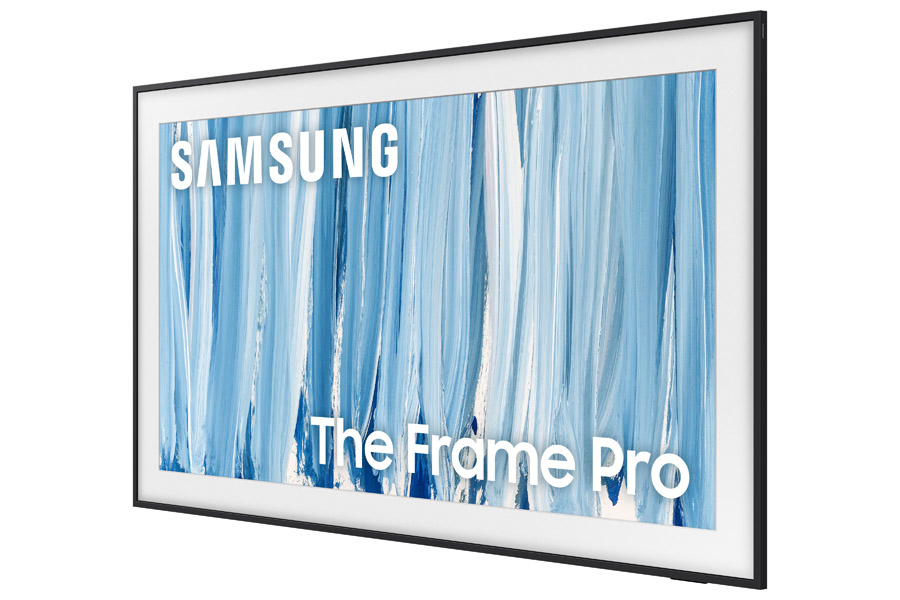
Samsung The Frame Pro (2026).
Samsung Art Mode and Art Store: Still the Whole Point, Just Smarter
When you turn off a Samsung Frame TV, it doesn’t go dark, it shifts into Art Mode, automatically waking when you pass by thanks to its built-in motion sensor. The Samsung Art Store gives you access to a deep catalog of curated artwork, with more than 5,000 pieces from over 800 artists spanning multiple styles, eras, and regions. Subscribers also get exclusive collections from partners like Art Basel, MoMA, the Art Institute of Chicago, and Keith Haring, among others. It’s not just window dressing either, those subscriptions help support the galleries, museums, and independent artists behind the work, which makes this feel a little less like a screensaver and a little more like an actual ecosystem.
While access to the Art Store is technically free (for up to 30 pieces per month), the whole catalog and certain features are only unlocked with a subscription (currently $5/month or $50/year).
Pantone and Anti-Reflection Matte Display
The Frame adds Pantone ArtfulColor Validation, which is Samsung’s way of saying the colors you’re seeing are actually accurate, not just showroom flashy. It’s also UL-certified for its anti-reflection, glare-free matte display, which does a solid job of cutting down ambient light so the artwork looks less like a TV pretending to be art and more like something you’d actually hang on your wall.
Advertisement
The Frame Pro leans harder into that lifestyle pitch. It’s built to anchor a room visually while doubling as your main display for movies, TV, and gaming. Samsung is positioning it as a do-it-all centerpiece—a customizable TV that can pass as a personal gallery when idle and a full-on entertainment hub when it’s not.
Bezel Options
The Frame Pro and Frame provide owners with a broad array of custom Bezel options, such as Modern Brown, Modern Teak, Modern White, and Sand Gold Metal. Additional authorized Bezel options are available from Deco TV Frames. And adventurous customers can find unauthorized (but compatible) options on sites like ETSY.
Display Technology: Matte Panels, Real Color Accuracy, and Less Glare
The Frame Pro LS503HW series(“The Frame Pro”) incorporates a Neo QLED display, with boosted brightness and enhanced contrast, ensuring your favorite art and favorite shows always look their best – even in bright environments.
Neo QLED displays are LCD-based, which combine Mini LED backlighting with local dimming and Quantum Dot technology. Quantum Dots enhance color range and accuracy, while Mini LED backlighting with local dimming enables more precise light control, especially when rendering bright objects against dark backgrounds. When paired with HDR formats like Samsung’s HDR10+, this combination improves both color volume and overall dynamic range. We should note, however, that unlike Samsung’s traditional Mini LED TV lineup, the Frame Pro does not use a full array LED backlighting system but uses MiniLED edge-lighting instead which does decrease the precision of the backlight.
Advertisement
The Step-down Frame LS503HE Series (“The Frame”) incorporates a QLED display with Samsung Dual LED backlighting instead of Mini LED backlighting. Dual LED is a variation of LED edge lighting consisting of two LED strips, one that emits warm light (yellow) and another that emits cool light (blue). The two strips alternate light output to support a slight improvement in color in combination with the Quantum Dot layer. Unlike The Frame Pro, The Frame does not use local dimming.
For viewers, Dual LED supports a slight improvement in color balance at the sacrifice of deeper blacks and whiter whites. Although not as precise as a Neo QLED Display, the LS503HESeries still offers acceptable levels of brightness, color accuracy, and HDR support for most room setups.
Advertisement. Scroll to continue reading.
Additional Features
Wireless One Connect Box (The Frame Pro Only): Samsung is finally addressing one of the biggest aesthetic compromises with wall-mounted TVs—cables. The Frame Pro’s Wireless One Connect Box means the display itself only needs a power cord, while everything else stays tucked away in a separate box. It wirelessly transmits up to 4K at 144Hz from as far as 10 meters (30 feet), which should be enough for most living rooms unless you’re trying to hide it in another zip code. The result is a much cleaner installation that actually delivers on the whole “it looks like art” promise.
Advertisement
The Frame Pro offers a thin profile thanks to a separate wireless OneConnect box that handles all of the connections.
Display Versatility: The Frame lineup isn’t just about pretending to be a painting. When it’s time to actually watch something, you’re getting a full 4K UHD TV with AI upscaling that works scene by scene to clean up lower-resolution content. The Frame Pro steps things up with Samsung’s NQ4 AI Gen3 Processor and local dimming, focusing on better detail retrieval, contrast control, and overall image stability.
Real Depth Enhancer and AI Customization: Samsung’s Real Depth Enhancer adds a bit of perceived dimensionality by separating foreground elements, which can help draw your eye to the subject without overcooking the image. AI Customization Mode goes a step further by letting you pick your preferred picture style during setup, then automatically adjusting settings in real time based on what you’re watching. It’s part convenience, part control—less menu diving, more actual viewing.
Audio Support: For speech clarity, the Frame TVs incorporate the Active Voice Amplifier. This boosts dialogue or key sound effects. Also, the FrameTV incorporates Dolby Atmos, which provides more sound immersion. Also, with Q Symphony, the Frame TV can be combined with compatible Samsung soundbars and Wi-Fi speakers to operate as a single, coordinated sound system rather than isolated components.
Gaming: Gaming support includes Samsung’s Gaming Hub, AI Auto Game Mode, Cloud Gaming, and Motion Xceleration on both series. The Frame Pro supports a 144Hz refresh rate.
Slim Fit Wall Mount: Samsung includes its Slim Fit Wall Mount with The Frame, allowing the TV to sit nearly flush against the wall like an actual picture frame. No awkward gap, no obvious hardware, just a cleaner install that makes the whole art illusion a lot more convincing.
Gaming Hub Cloud Gaming: – Xbox, NVIDIA GeForce Now, Luna, Blacknut, Antstream, Boosteroid AI Auto Game Mode ALLM (Auto Low Latency Mode) Gaming Motion Plus Super Ultra Wide Game View Game Bar Mini Map Zoom AMD FreeSync: Freesync Premium™ Pro HGiG Hue Sync
Gaming Hub Cloud Gaming: – Xbox, NVIDIA GeForce Now, Luna, Blacknut, Antstream, Boosteroid AI Auto Game Mode ALLM (Auto Low Latency Mode) Gaming Motion Plus Super Ultra Wide Game View Game Bar Mini Map Zoom AMD FreeSync: Freesync Premium™ Pro HGiG Hue Sync:
Samsung Vision AI
Vision AI Companion AI Soccer Mode AI Sound Controller Live Translate Generative Wallpaper Multi AI Agents (Copilot & Perplexity) Pet & Family Care Home Insight
Vision AI Companion AI Soccer Mode AI Sound Controller Live Translate Generative Wallpaper Multi AI Agents (Copilot & Perplexity) Pet & Family Care Home Insight
Mobile to TV, TV initiates mirroring, Sound Mirroring, Wireless TV On
Mobile to TV, TV initiates mirroring, Sound Mirroring, Wireless TV On
Multi-View
Up to 2 videos
Up to 2 videos
Galaxy Buds Auto Switch
Yes
Yes
Works with Apple AirPlay
Yes
Yes
Works with Google Cast
Yes
Yes
Daily+
Yes
Yes
Now Brief
–
–
Workout Tracker
Yes
Yes
Karaoke Mic
Yes
Yes
Multi-Control
Yes
Yes
Storage Share
Yes
Yes
Audio
Speaker System: 2.0.2 Channels Output Power (W): 40W Dolby Atmos Object Tracking Sound (OTS) Q-Symphony Active Voice Amplifier (AVA) Pro Adaptive Sound Bluetooth Audio 360 Audio
Speaker System: 2. Channels Output Power (W): 20W Dolby Atmos Object Tracking Sound (OTS Lite) Q-Symphony Active Voice Amplifier (AVA) Pro Adaptive Sound Bluetooth Audio 360 Audio
TV Design
Frame Design (Customizable)
Frame Design (Customizable)
Bezel Type
VNB (Interchangeable)
VNB (Interchangeable)
Front Color
Black
Black
Stand Type
Round Feet
Round Feet
Stand Color
Black
Black
Adjustable Stand:
Yes
Yes
Security
Knox Vault: N/A Knox Security: Yes
Knox Vault: N/A Knox Security: Yes
Power
Power Supply (V): AC110-120V~ 50/60Hz Stand-by Power Consumption (W): 0.5 Eco Sensor Auto Power Saving Auto Power Off
Power Supply (V): AC110-120V~ 50/60Hz Stand-by Power Consumption (W): 0.5 Eco Sensor Auto Power Saving Auto Power Off
Included Accessories
Remote Control: BT SolarCell™ Remote TM2661H Power Cable Slim Fit Wall Mount: Included Simple Stand Included Wireless One Connect Box
Remote Control: BT SolarCell™ Remote TM2661H Power Cable Slim Fit Wall Mount: Included Simple Stand Included
The Bottom Line
Samsung didn’t just stumble into a gimmick with The Frame; it built a category and then spent nearly a decade refining it while everyone else played – and is still playing – catch-up. What still works is obvious: the design remains unmatched, Art Mode is actually useful (not a throwaway feature), and the matte display with reduced glare does more to sell the illusion than any marketing language ever could. The addition of the Wireless One Connect Box on the Frame Pro finally cleans up installation in a way that aligns with the whole “this is art, not a TV” pitch.
What makes it unique hasn’t really changed, but that’s the point. No one else has matched Samsung’s ecosystem: the depth of the Art Store, the partnerships, the motion sensor integration, and the overall polish. Others are making “Art TVs,” but most still feel like TVs wearing a costume. Samsung’s feels intentional.
What’s missing? For all the AI talk, there’s still a lack of clarity around how much real picture quality you’re getting versus Samsung’s more performance-focused QLED, OLED and Micro RGB models. There’s also the ongoing question of value, especially when you factor in Art Store subscriptions and whether buyers are paying more for design than outright performance.
Who is this for? Not the spec chaser. Not the home theater purist in pursuit of perfect blacks in a dark room. This is for someone who wants a TV that doesn’t dominate the room when it’s off, but still delivers a very competent 4K experience when it’s on. If your living space matters as much as your watchlist, The Frame still makes a compelling argument.
Advertisement
For customers who like the idea of an “Art TV” but do want top-notch picture performance, Samsung also now offers the S95H OLED TV. It comes with an integrated picture-frame style bezel, flush wall mounting, Glare Free screen and wireless OneConnect option like The Frame Pro, but with picture performance that rivals the top TVs of 2026.
Advertisement. Scroll to continue reading.
The real question for 2026 isn’t whether Samsung improved The Frame—they did. It’s whether the growing crowd of competitors has figured out how to do it better, or just cheaper. So far, Samsung still looks like the one everyone else is trying to catch.
Pricing & Availability
Samsung’s 2026 4K Frame TVs carry the following prices:
Advertisement
The Frame Pro (LS503HW)
85-inch Class: $3,999.99
75-inch Class: $2,799.99
65-inch Class: $1,999.99
55-inch Class: Coming soon
The Frame (LS503HE)
98-inch Class: Coming Later This Year
85-inch Class: Coming Soon
75-inch Class: Coming Soon
65-inch Class: Coming Soon
55-inch Class: Coming soon
Bonus Offers
Samsung is adding some incentive to soften the blow. Order a 2026 The Frame Pro directly from Samsung.com and you can bundle in the “Picture Perfect” package, which knocks $800 off a setup that includes a white bezel, ultra slim soundbar, professional installation, a one year Art Store subscription, and two years of Samsung Care+. In other words, they are not just selling you a TV. They are trying to finish the room for you.
At retail, the pitch is simpler. Buy either the 2026 The Frame or The Frame Pro and you can take 50% off one of Samsung’s customizable bezel options, which is arguably one of the more important add ons if you actually care about the whole “it looks like art” idea.
As for availability, The Frame Pro is shipping now through Samsung and major retailers, while the standard The Frame is expected to follow later this spring. The official press release did not list the 98-inch screen size announced at CES and confirmed to eCoustics staff in March at an on-site workshop. We’ll update this article if/when we learn more about the 98-inch version.
You might think that Amazon Luna is all about cloud gaming, but that’s not the case. The underappreciated Amazon Prime membership perk also includes a monthly selection of free PC games – offering you the chance to pick up keys for storefronts like GoG or the Epic Games Store (plus Amazon‘s own PC game launcher) at no extra cost.
This isn’t the same as a service like Xbox Game Pass, either, as the games that you get are yours to keep even if your membership lapses. They’re only available for a limited time, and there’s really no reason not to claim them. Even if you’re not too thrilled about an included title right now, you never know when you might want to play it in the future.
There are some truly brilliant games to pick up this month, but you should bear in mind that you will need an active Amazon Prime membership to get them. If you’re not yet a subscriber, you can see the best prices near you and how to access a free trial below.
Advertisement
Article continues below
(Image credit: Sega)
Xcom: Enemy Unknown Complete Pack is the star of this month’s offering, giving you one of the greatest strategy games ever and all of its DLC content. Set in the near-future, it challenges you to manage an elite special forces squad assembled to fight back against an alien invasion.
Meaty tactics and a punishing difficulty level make this a game that you can spend hours in, and I particularly love the in-depth customization options for all of your crew. This complete release includes the base game and the brilliant Enemy Within expansion, plus the Elite Soldier Pack and Slingshot Pack cosmetics.
If that wasn’t enough, you can also claim Total War: Pharaoh Dynasties, an enhanced version of the 2023 Bronze Age conquest game. Pharaoh Dynasties includes loads of new factions, units, a much bigger map, and an overhauled, faster combat system. It also comes bundled with the original game, Total War: Pharaoh, giving you two distinct versions to try.
Advertisement
These are both new additions, but Total War: Rome 2 – Emperor Edition and Total War: Three Kingdoms are still hanging around from previous weeks and can currently be added to your library, giving you a formidable Total War collection.
Sign up for breaking news, reviews, opinion, top tech deals, and more.
Other great picks include both Tiny Tina’s Assault on Dragon Keep: A Wonderlands One-shot and Tiny Tina’s Wonderlands, two brilliant first-person shooters.
To begin claiming games and see the other titles on offer, head over to the Amazon Luna claim page and log in with your Amazon account.
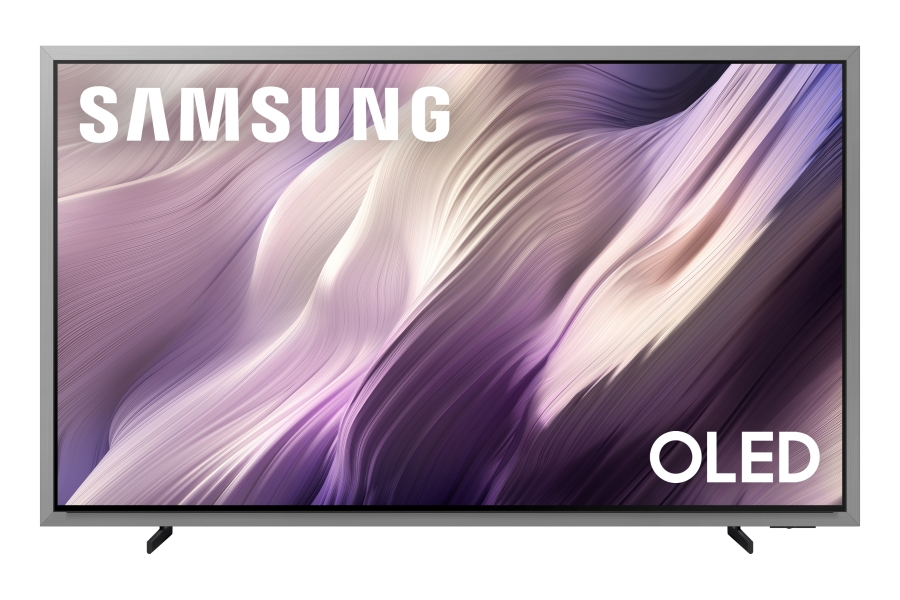
The Samsung S95H is the company’s new flagship OLED TV for 2026, and it’s a decidedly different beast compared to previous Samsung S95 series OLEDs. What’s most immediately different about the Samsung S95H is a beveled metal frame surrounding the set’s screen. Samsung calls this new design FloatLayer, and it gives the TV a picture frame look when flush-mounted to a wall.
Along those lines, the S95H is the first OLED TV to support the Samsung Art Store, a subscription service that lets viewers display a selection of over 3,000 artworks on the TV, including ones from leading museums like the Met, the Museo del Prado, and the Louvre.
The Samsung S95H features a new FloatLayer design that surrounds the screen with a metal frame.
Adding to the S95H’s high art credentials is a new version of Samsung’s Glare Free screen with OLED HDR Pro to better maintain contrast even when viewing in brightly lit rooms. A new QD-OLED Penta Tandem display panel used in the S95H is also said to be 30% brighter than last year’s S95F, which is another factor that will help with bright room viewing. Samsung is a bit cagey about revealing which raw panels are used in which screen sizes, but we believe the QD-OLED panel will be used in 55-inch, 65-inch and 77-inch screen sizes while the 83-inch model will use a W-OLED panel.
Advertisement
With the S95H series, which is available in 55, 65, 75, and 83-inch screen sizes and priced from $2,499 to $6,499,Samsung is clearly attempting to port its The Frame TV concept to the premium OLED TV market. Is it a comfortable fit? Let’s take a look and find out.
Before we do that, let’s briefly cover two additional OLED TV series Samsung announced for 2026. The S90H series is available in 42, 48, 55, 65, 77 and 83-inch screen sizes priced from $1,399 to $5,299. These models also feature a Glare Free screen. Rounding out Samsung’s new OLED offerings is the S85H series, which will be sold in 48, 55, 65, 77 and 83-inch sizes priced from at $1,199.99 to $4,499.99.
The S95H’s new, enhanced Glare Free screen rejects screen reflections while maintaining better black levels and contrast than previous versions of the tech.
Features
The S95H series is Wireless One Connect Ready. That’s a new feature for a Samsung OLED TV, and one that gives you the option to pair it with Samsung’s Wireless One Connect Box. And doing so will also give you a total of eight HDMI 2.1 ports with 4K/165Hz support – four on the unit itself and 4 on the wireless One Connect box. That’s a lot of inputs. (The wireless connection is 4K/165Hz-capable.)
For the S95H series, Samsung is using the same NQ4 AI Gen3 Processor found in its 2025 flagship TVs. This processor brings a host of AI-based picture enhancements such as 4K AI Upscaling Pro for lower-resolution content, AI Motion Enhancer Pro, and an Adaptive Picture function that uses AI to optimize pictures based on the content genre. Another new feature is AI Customization, which can create a custom picture setting based on the viewer’s response to a series of images, and there’s also Real Depth Enhancer, a feature first introduced in 2025 Samsung TVs that analyzes pictures in real-time to enhance foreground detail.
Gamers who skip Samsung’s Wireless One Connect Box will still find plenty to work with. The S95H includes four HDMI 2.1 ports that support up to 165Hz, along with FreeSync Premium Pro and HDR10+ Gaming for smoother, more responsive play. Samsung’s Gaming Hub also returns with a deep bench of cloud services, including Xbox, NVIDIA GeForce Now, Luna, Blacknut, Antstream, and Boosteroid, giving players multiple ways to jump into games without a console.
Advertisement
A 4.2.2-channel, 70W speaker array is used for the S95H’s sound. Samsung’s Object Tracking Sound+ feature ensures that dialogue and sound effects accurately follow the onscreen action, and Active Voice Amplifier can be used to dynamically enhance dialogue. Owners of compatible Samsung soundbars can also take advantage of Q-Symphony, a feature that combines the output of the TV’s speakers with the soundbar for an enhanced presentation.
Last but not least, Samsung includes a set of support feet with the S95H for viewers who choose not to wall-mount the TV.
Advertisement. Scroll to continue reading.
The S95H is designed for a flush wall mount, but also ships with support feet for stand installations.
Hands-on with the Samsung S95H OLED TV
Samsung invited eCoustics to its New Jersey headquarters in early March to spend some hands-on time with the S95H and some of its other new TVs. As part of that process, I was able to make a full set of measurements on a 65-inch S95H.
As mentioned above, Samsung has said that the new S95H OLED is 30% brighter than last year’s Samsung S95F. While I didn’t review the S95F, I can confirm that the S95H is the brightest OLED TV I’ve yet measured, topping even the very bright LG G5 OLED on that front.
Advertisement
Measured on a 10% white window pattern, the S95H’s peak HDR brightness in the Standard picture mode was 2,553 nits, and it measured 251 nits on a 100% (fullscreen) pattern. Peak HDR brightness was notably lower in Filmmaker Mode, measuring 1,072 nits on a 10% window, and 251 nits fullscreen.
The S95H’s peak HDR brightness (10% window) in Standard mode is comparable to some of the best mini-LED TVs on the market, even exceeding Samsung’s own flagship QN90F mini-LED TV from 2025 on that parameter.
At the S95H’s default Filmmaker Mode picture settings, P3 color space coverage measured 99.9% and BT.2020 coverage was 88.4%. Those are stellar results, and they also exceed what I measured on last year’s OLED flagship from LG, the G5.
For subjective testing, I opted to use the TV’s Movie picture mode, which produced a brighter picture than Filmmaker mode. I also watched content in both dark and bright room conditions to evaluate the effectiveness of the S95H’s Glare Free screen.
Advertisement
Checking out Spider-Man: Into the Spider-Verse (in 4K, using a Kaleidescape movie player as a source), the S95H’s picture looked nothing short of fantastic. Shadows were deep and detailed, and the movie’s rich colors popped on the screen. The computer-generated animation in Into the Spider-Verse is finely textured, and the S95H easily revealed the intricate patterns and graphic overlays in the backgrounds.
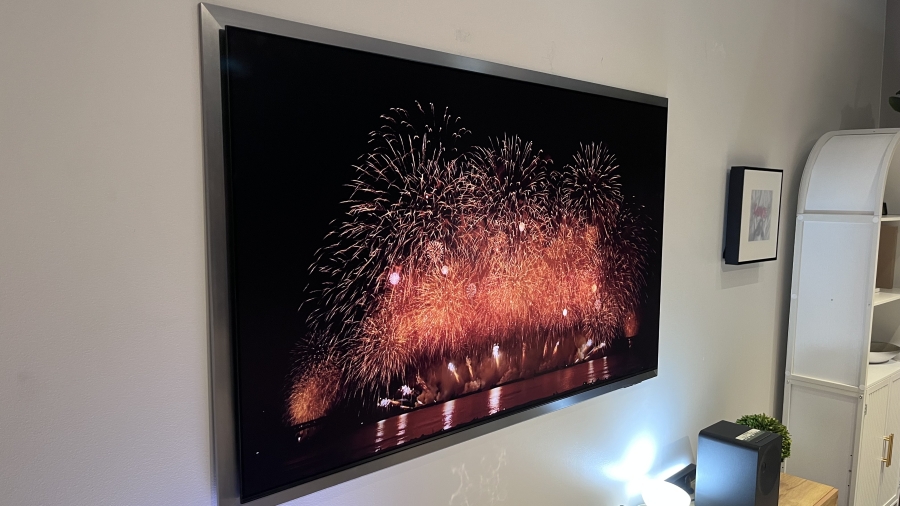
The S95H has exceptional peak HDR brightness in its Standard picture mode.
The movie Alphais a known torture test for HDR tone mapping on TVs owing to its 4,000 nits HDR transfer. (Most 4K/HDR movies max out at around 1,000 nits.) Watching a scene where a figure is positioned against a bright sunset, the S95H’s excellent tone mapping preserved image contrast without eliminating highlight detail.
Next up on the S95H was the opening sequence from the movie Baby Driver – another torture test, this one for motion handling. Samsung’s OLED showed a fair amount of motion judder on this scene in the default Movie mode. As usual with Samsung TVs, adjusting the blur and judder settings in the Custom motion preset fixed the issue, and it didn’t introduce any of the dreaded “soap opera” effect that makes movies look like TV shows.
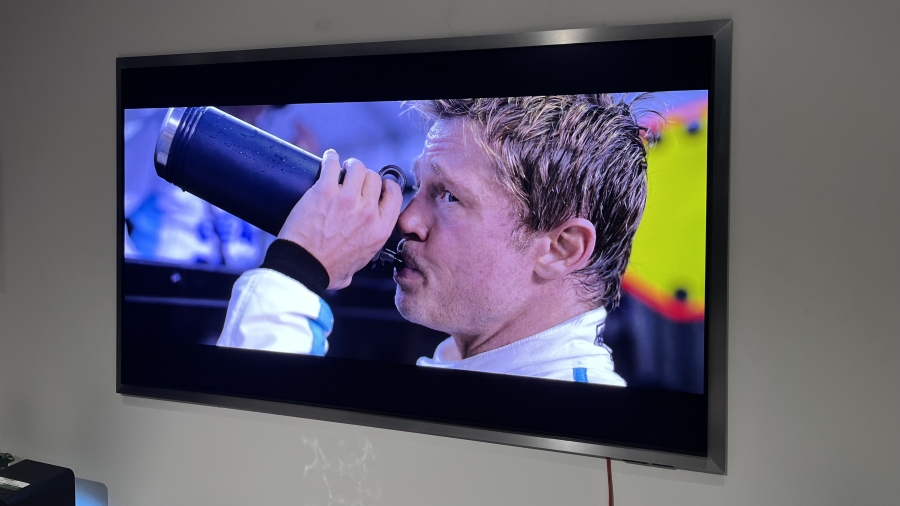
Switching to the TV’s Standard picture mode to let the S95H display pictures at maximum brightness, I turned on the lights and watched some clips from the movieF1. While color accuracy took a hit in Standard mode, the picture looked incredibly bright for an OLED TV. And the set’s Glare Free screen also did a great job of preventing reflections from the room’s overhead lights without losing black depth and detail.
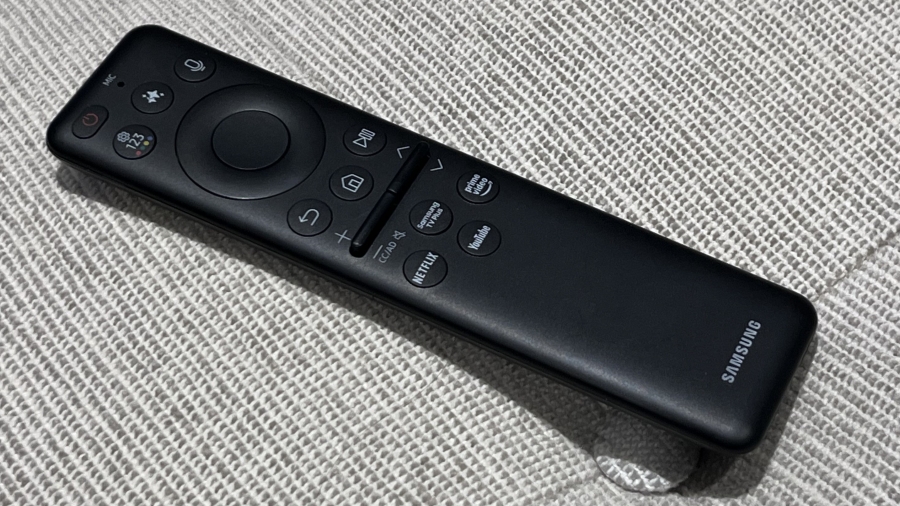
Samsung’s rechargeable Solar Cell remote is used to control the S95H.
The Bottom Line
The Samsung S95H’s fancy FloatLayer design may not be for everyone, but it’s not surprising given the trend of TV makers trying to make their flagship models more luxurious and living room friendly. If that idea doesn’t ring a bell, check out the LG OLED evo W6 Wallpaper TV the company introduced at CES 2026.
Advertisement
Along with making their best TVs more visually appealing, companies like Samsung are pushing the brightness capabilities of OLED and introducing screen glare-reduction tech to negotiate the picture quality compromises that come with installing TVs in well-lit living rooms. From what I saw during the hour or so that I spent going hands-on with it, Samsung’s new flagship OLED TV manages to look great in both dark and bright lighting conditions, and the performance of its Glare Free screen is a marked improvement over last year’s Samsung S95F (which itself improved on its S95D predecessor when it came to black level retention).
Will the Samsung S95H turn out to be the best OLED TV of 2026? It’s a bit early out of the gate to make that determination, but Samsung’s new flagship OLED is certain to grab attention.


























































You must be logged in to post a comment Login