Connect with us
DAPA Banner

Tech

Highguard, a hyperpop arena shooter and other new indie games worth checking out

Published

on

Welcome to our latest roundup of what’s going on in the indie game space. There are tons of interesting games out this week. But first, there’s been some discourse around the Nintendo Switch version of Dispatch, which arrived this week as well.

On other platforms, there’s an option to censor genitalia and other explicit content, but that’s not present in the Switch version. Instead, such content is censored by default, with black rectangles covering up characters’ bits and someone flipping the bird. Noises that suggest sexual pleasure are said to be toned down too.

“We worked with Nintendo to ensure the content within the title met the criteria to release on their platforms, but the core narrative and gameplay experience remains identical to the original release,” developer AdHoc told EuroGamer. Nintendo later said in a statement to GoNintendo that it “requires all games on its platforms to receive ratings from independent organizations and to meet our established content and platform guidelines. While we inform partners when their titles don’t meet our guidelines, Nintendo does not make changes to partner content. We also do not discuss specific content or the criteria used in making these determinations.”

There are other games available for the Switch and Switch 2 that feature nudity and explicit content. There have long been hentai games on the eShop, while mainstream games like The Witcher 3 and Cyberpunk 2077 (we know all about the dongs in that one) still include explicit content on Nintendo platforms. So it’s a bit of a strange one, and AdHoc and Nintendo didn’t exactly clear things up with their statements.

Advertisement

There’s been speculation that AdHoc censored the game to comply with rules in Japan (Cyberpunk 2077 is censored there too) and that it opted to have just one version of the game available globally on Nintendo platforms. All the same, it’s a curious situation that’s resulted in a lot of discourse. But there’s been another indie game that’s been a source of even more chatter this week…

New releases

Highguard is a 3v3 raid shooter from Wildlight Entertainment, a team that includes a bunch of former Apex Legends and Titanfall developers. It broke cover at The Game Awards in December when it was the final reveal of the night but that first trailer wasn’t great.

As it turned out, TGA creator and host Geoff Keighley was a friend of the devs and after trying Highguard, he wanted to include it in the show. Wildlight cobbled together a trailer, but that disrupted the studio’s long-standing plans to reveal and release the game simultaneously — a strategy that worked wonders for Apex Legends (though that game had the might of EA behind it).

After revealing Highguard, Wildlight effectively went radio silent until a release day showcase on Monday to detail just what the game is and how it works. That seems to have been a mistake given the review bombing and strange vendetta some developed against it. Highguard went live on Monday and Wildlight published a whole bunch of YouTube videos revealing the game’s features. Spreading those out between TGA and this week could have tempered expectations.

Advertisement

In any case, I’ve played a few rounds of Highguard and mostly enjoyed my time with it so far. It’s a blend of hero shooter and MOBA. As you might expect for a game from Apex and Titanfall veterans, the weapons feel well-tuned and the gunplay is snappy. There’s a lot going on and the maps are far too big for just six players. It’s fun enough, but I don’t think it’s a game that’s going to break my Overwatch obsession. Riding into battle on the back of a bear feels pretty great, though. You can play Highguard for free on Steam, PS5 and Xbox Series X/S.

I really wanted to like Don’t Stop, Girlypop! more than I did. I’d been looking forward to it for a while, as the promise of a Doom Eternal-style arena shooter with chaotic hyperpop-inspired visuals seemed like a great blend. Don’t get me wrong, I adore the aesthetic and the soundtrack is spot on thanks to some cracking songs from Sarah Wolfe, Xavier Dunn and Candice Susnjar. I just wish it was as fun to play as it is to look at and listen to.

The visual clutter and fast pace sometimes makes it hard to spot enemies and the narrative doesn’t really hang together, as much as the developers have salient points to make about the exploitation of finite resources. The core gameplay idea here is that the faster you move, the more damage you deal and more you heal. The game has its own take on a bunny hop called a wave hop that boosts your speed, but felt like it slowed me down because of the complex combination of inputs (jump, ground pound, jump, dash). That also caused my hand to cramp up very quickly.

I do love the customization here. Slapping rhinestones and baby sharks onto my weapons was delightful. The game’s take on a gravity gun is fun too. So while Don’t Stop, Girlypop! — from Funny Fintan Softworks and publisher Kwalee — didn’t fully land for me, there are some aspects I like a whole lot. It’s out now on Steam for $20 (there’s a 10 percent launch discount until February 5).

Advertisement

We’re been looking forward to Cairn for a while around these parts, so it’s heartening to see that it debuted to broadly positive reviews. This one from The Game Bakers is the latest in a string of climbing adventures, such as the lovely Jusant. So if Alex Honnold’s recent free solo climb up a skyscraper has inspired you to ascend something very large without really posing a risk to your wellbeing, Cairn might be what you’re looking for.

Cairn is out now on PS5 and Steam for $30. There’s a 10 percent launch discount on Steam until February 12, and until February 13 on PS5 if you’re a PS Plus member.

Every trailer I’ve seen for Steel Century Groove has made me smile, so you can bet I’ll be jumping into this when I have a chance. It’s a rhythm game with Pokémon-style RPG elements in which you take control of a robot in dance battles. There’s some original and licensed music to boogie along to and you can load in your own MP3s (you can bank on me loading some Electric Callboy tracks into this game). Steel Century Groove will create procedurally-generated choreography and charts for your custom songs. You can manually adjust the BPM too.

This debut title from solo developer Sloth Gloss Games is out now on Steam for $20. There’s a 10 percent launch discount until February 11. There’s a demo available, and progress from there carries over into the full game.

Advertisement

Rosday’s Wanderling is a roguelike platformer with no combat. You have eight attempts to acquire the gear and learn the knowledge you need to pass each dungeon. Scour for loot and buy upgrades from the shop before night falls to help you on your way. You can place markers to help you remember where you’ve been.

Runs are said to be short at between 20 and 30 minutes. The visuals remind me a bit of Celeste too. You can check out Wanderling on Steam now for $8 (a 10 percent discount brings the price down to $7.20 until February 2).

I can’t help but admire Strange Scaffold (Clickolding, I Am Your Beast, Co-op Kaiju Horror Cooking) and the rate at which it releases games. The latest one is Space Warlord Baby Trading Simulator.

It’s a stock market sim in which you speculate on the future success or failures of the “simulated lives of babies.” You can “short that baby” if you choose as you try to make gains. In a timeline where prediction markets allow you to speculate on just about anything (listen to this week’s episode of the Engadget Podcast to learn more about that), gambling on the future of babies doesn’t seem that farfetched.

Advertisement

Space Warlord Baby Trading Simulator — which is set in the same world as Space Warlord Organ Trading Simulator — is out now on Steam. It’ll normally cost $20, but there’s a 15 percent discount until February 12. Strange Scaffold is also bringing the game to Xbox Series X/S in the near future.

I Hate This Place is an isometric survival game based on the eponymous comic book series by Kyle Starks and Artyom Topilin. The game retains a comic book aesthetic and it has ’80s horror movie-style inflections.

The way that noise is visualized is pretty interesting here. Onomatopoeic words will pop up and you’ll see color-coded footsteps — useful when you’re trying to be stealthy. Crafting is a key aspect of the game as well.

I Hate This Place — from Rock Square Thunder, Broken Mirror Games and Skybound Entertainment — is out now on Steam, PS5, Nintendo Switch and Xbox Series X/S. The regular price is $30 and there’s a 20 percent launch discount on some platforms.

Advertisement

I can’t find a trailer for this on YouTube, unfortunately, but Rebadge caught my eye this week as well. It’s a puzzle platformer from Yuumayay, who appears to be a 17-year-old solo developer. Your character carries badges that allow them to carry out actions like moving and jumping. Other badges include “affected by gravity” and “destroys on contact.” Here’s the trick: you can throw a badge and lose the associated ability, but then you can apply the trait to something else in the world.

It’s a neat idea that draws from the playbooks of games like Baba Is You. Rebadge typically costs $8, but there’s a 15 percent launch discount.

Upcoming

Moon Beast Productions is a studio formed by several of the creators of Diablo and Diablo II. This week, it revealed gameplay for its first title, Darkhaven, which is a fantasy isometric action RPG in the vein of (you guessed it) Diablo. You’ll be able to play this one solo or with friends, and there are PvP elements. Darkhaven has procedurally generated, destructible worlds along with “massive events that threaten your entire world.”

The gameplay shown in the trailer looks a bit rough, but it’s still early days. In fact, Moon Beast is planning a Kickstarter campaign for Darkhaven. There’s no release window as yet, but you can wishlist it on Steam.

Advertisement

Box or Void is a puzzle game that clearly takes some inspiration from Sokuban and Snake. Here, though, gameplay takes place across two planes. You’ll switch between positive and negative space — obstacles on one side turn into pathways on the other. You’ll alter the level layouts by pushing boxes.

This one from Dumen Games has an intriguing premise. There’s no release date as yet for Box or Void, but a demo with 32 levels (about a fifth of what will be in the full game) dropped this week on Steam.

If there’s a game that’s billed as Dredge meets Wall-E, that’s going to be enough to sell me. Describe it as a “petroidvania” and call it Good Boy, and I’m definitely in.

This is a creature-collecting Metroidvania from Observer Interactive and publisher Team17 in which pups are reincarnated as space rovers. I could not dig that premise more. Good Boy is expected to hit Steam later this year.

Advertisement

Source link

Continue Reading
Click to comment

You must be logged in to post a comment Login

Leave a Reply

Tech

AI is speeding up and improving production, driving millions of creators to invest in better cameras and accessories

Published

on


  • Smartphone limits drive creators toward microphones, lenses, gimbals, and dedicated cameras
  • Accessory spending rises as creators invest hundreds and thousands into gear upgrades
  • AI-driven production growth exposes capture weaknesses and boosts hardware demand worldwide

Smartphones still dominate video creation, but growing evidence suggests their physical limits are driving a new spending wave on dedicated gear among millions of creators, experts have said.

A new report from Futuresource Consulting estimates the global population of online video creators reached 246 million in 2025 and could grow to 267 million by 2030. That growth is only part of the story, however, as spending patterns and equipment upgrades appear to be the real commercial driver behind the next phase.

Source link

Advertisement
Continue Reading

Tech

Google app just launched on Windows, and it wants to pull a Spotlight trick from Macs

Published

on

Google has planted its flag on Windows territory. The Google app for desktop is now globally available in English for Windows users, graduating from its experimental phase on Search Labs

The browser tab we reflexively open to use Google every five minutes now has a faster, more efficient replacement sitting on the desktop. 

What Does The App Actually Do?

The centerpiece, mind you, is a keyboard shortcut: Alt + Space. It summons a floating search bar over whatever is on the screen, similar to how Cmd + Space summons the Spotlight search on Macs.

Once you summon the search bar, you can search across local computer files, installed apps, Google Drive documents, and the internet in general, all from one place. 

If I were a Windows user (which I was until about three years ago), I would have installed the Google app for the Spotlight-like search experience alone, but my Mac’s Spotlight has been working fine for the same amount of time.

Advertisement

What else can it do?

Quite a bit, actually. Google Lens, the company’s native image-based search tool, is built directly into the new Google app for Windows. It lets users click and search for anything that’s visible on their screen. 

From translating on-screen text to solving a maths problem, you can do such things without copying anything. The app also supports screen sharing within a search session, so users can keep a document or webpage open while asking follow-up questions. 

Of course, the new Google apps come with AI Mode embedded. So, answers go beyond blue links, responses are conversational, contextual, and connected to the internet with accurate information, along with appropriate citations. 

Google’s global Windows app rollout signals something bigger than convenience; it’s a direct challenge to Microsoft’s dominance over your desktop search experience. Copilot is already embedded in Windows, so Google’s presence is also making itself felt. In the future, we might get to see a dedicated Gemini app for Windows. 

Advertisement

Source link

Continue Reading

Tech

Apple is testing four smart glasses designs as it prepares to challenge Meta Ray-Bans

Published

on


While Meta partnered with Ray-Ban to position its smart glasses as more lifestyle-oriented than experimental, Apple’s design philosophy remains distinctly in-house. In his Power On newsletter, Gurman notes that Apple is taking an independent approach, choosing to develop the product internally rather than collaborate with an established eyewear brand. Each…
Read Entire Article
Source link

Continue Reading

Tech

GeekWire Awards: The machines of the future, from self-driving earthmovers to space robots

Published

on

The finalists for Hardware/Robotics/Physical AI of the Year at the 2026 GeekWire Awards. Clockwise from top left: AIM Intelligent Machines; Brinc’s Guardian drone; Starfish Space’s Otter spacecraft; Orbital Robotics; and Augmodo’s Smartbadge. (Company Photos)

An emerging class of startups is pushing the boundaries of what machines can do in the physical world — retrofitting bulldozers to dig on their own, launching drones that beat police cars to 911 calls, outfitting retail workers with spatial computing badges, building robotic arms for spacecraft, and servicing satellites in orbit.

Those are the innovations represented by the finalists for Hardware/Robotics/Physical AI of the Year at the 2026 GeekWire Awards. 

The finalists are: AIM, Augmodo, Brinc, Orbital Robotics, and Starfish Space.

Now in its 18th year, the GeekWire Awards is the premier event recognizing the top leaders, companies and breakthroughs in Pacific Northwest tech, bringing together hundreds of people to celebrate innovation and the entrepreneurial spirit. It takes place May 7 at the Showbox SoDo in Seattle.

Continue reading for information on the Hardware/Robotics/Physical AI of the Year finalists, who were chosen by a panel of independent judges from community nominations.

You can help pick the winner: Cast your ballot here or in the embedded form at the bottom. Voting runs through April 16.

Advertisement

AIM Intelligent Machines retrofits heavy earthmoving equipment such as bulldozers and excavators to operate autonomously, using sensors and an edge computing system to build real-time 3D maps of a machine’s surroundings and navigate without a human driver.

Originally focused on mining and construction, the company recently expanded into defense, winning $4.9 million in U.S. Air Force contracts to build and repair military bases and airfields.

The Seattle-area startup announced $50 million in funding in 2025 and was founded in 2021 by engineers with experience at Waymo, SpaceX, Google, Stripe, Tesla and Apple. CEO Adam Sadilek leads the company.

Augmodo makes wearable “Smartbadge” devices for retail store employees that use computer vision and 3D mapping to collect real-time inventory data as workers move through aisles, tracking empty shelves, overstocking and product availability. The approach is designed as a cheaper and more efficient alternative to robot scanners.

Advertisement

The Seattle startup, founded in 2023, raised $37.5 million in a Series A round on top of a previously announced $5.4 million seed round. CEO Ross Finman previously co-founded Escher Reality, which was acquired by Niantic Labs, and spent more than four years at the “Pokémon Go” maker. The company recently hired a new CTO from Microsoft HoloLens and Amazon Alexa and has grown its team nearly fivefold.

Brinc builds drones for police, fire and emergency response agencies, recently unveiling Guardian, the world’s first Starlink-connected drone. Guardian can auto-launch on a 911 call, fly up to eight miles at 60 mph for more than an hour, and deliver payloads such as defibrillators and emergency medication. 

The company’s products are used by more than 900 public safety agencies and more than 20% of SWAT teams in the U.S.

Founded in 2019 by CEO Blake Resnick, the Seattle-based company raised $75 million in a round that included a strategic alliance with Motorola Solutions, bringing total funding to $157.2 million. The company now employs 160 people and is moving to a new 35,000-square-foot headquarters and factory in Seattle’s Queen Anne neighborhood.

Advertisement

Orbital Robotics is developing AI-powered robotic arms for spacecraft, tackling the challenge of manipulating objects in orbit where every movement of an arm causes the spacecraft itself to move in response. 

The Puyallup, Wash.-based startup is also working to assemble a consortium to save NASA’s aging Hubble Space Telescope by building a robotic spacecraft to boost it to a more stable orbit.

Founded in late 2024, the company has raised about $310,000 and is working with a stealthy space venture on an orbital rendezvous project for the U.S. Space Force. Co-founders Aaron Borger, Doug Kohl, Riley Mark and Sohil Pokharna are former Blue Origin engineers.

Starfish Space builds satellite servicing spacecraft designed to autonomously inspect, dock with and reposition satellites in orbit — including satellites that weren’t originally built for on-orbit servicing. Its Otter spacecraft can extend satellite lifespans by boosting them to higher orbits or move them to lower orbits for safe disposal.

Advertisement

The Tukwila, Wash.-based company, founded in 2019 by former Blue Origin engineers Austin Link and Trevor Bennett, recently raised more than $110 million in a Series B round, pushing total funding past $150 million. 

Starfish has completed three demonstration missions in orbit and has Otter missions under contract with the U.S. Space Force, NASA, SES and others, with its first operational mission expected to launch this year.

Astound Business Solutions is the presenting sponsor of the 2026 GeekWire Awards. Thanks also to gold sponsors Amazon Sustainability, BairdBECU, JLLFirst Tech and Wilson Sonsini, and silver sponsors Prime Team Partners.

The event will feature a VIP reception, sit-down dinner and fun entertainment mixed in. Tickets go fast. A limited number of half-table and full-table sponsorships are available. Contact events@geekwire.com to reserve a spot for your team today.

Advertisement

(function(t,e,s,n){var o,a,c;t.SMCX=t.SMCX||[],e.getElementById(n)||(o=e.getElementsByTagName(s),a=o[o.length-1],c=e.createElement(s),c.type=”text/javascript”,c.async=!0,c.id=n,c.src=”https://widget.surveymonkey.com/collect/website/js/tRaiETqnLgj758hTBazgd5M58tggxeII7bOlSeQcq8A_2FgMSV6oauwlPEL4WBj_2Fnb.js”,a.parentNode.insertBefore(c,a))})(window,document,”script”,”smcx-sdk”); Create your own user feedback survey

Source link

Continue Reading

Tech

Kia’s New Pickup Has Something Under The Hood You Can’t Get From Toyota Or Ford

Published

on


As evidenced by the Hyundai Boulder Concept and some statements in Kia’s 2026 Investor Day announcements, Kia is getting serious about building a truck. Kia already has a body-on-frame truck, the Tasman, which launched in global markets in 2025, but this potential new offering seems to be different from that particular mid-sized truck.

The new truck, as yet unnamed, will ride on a body-on-frame platform like other American-market trucks from the likes of Toyota, Ford, and General Motors. Whether Kia’s new pickup offering will be able to compete with those well-entrenched models is a question only the future can answer: Kia’s truck isn’t even scheduled to hit the market until 2030.

However, Kia is at least giving the truck a pair of drivetrains that might edge out a win, or at least help it stand out from the competition. More specifically, Kia is aiming to offer two hybrid drivetrains, one of which will be an extended-range model.

Advertisement

An electrified boost

Two giants in the truck industry, Toyota and Ford, already offer hybrid versions of their trucks: Toyota has the newest-generation Tacoma and Tundra, while Ford has the F-150 PowerBoost. However, an extended-range electric vehicle pickup, as the new Kia is supposed to be, would be unique, at least in the North American market.

Advertisement

BYD, the Chinese automaker well known for its electric cars, produces the BYD Shark, a body-on-frame plug-in hybrid pickup, but that truck probably isn’t showing up on American streets anytime soon. As far as American automakers go, Stellantis has teased the Ram Ramcharger — which would have a gas motor to charge its onboard batteries — for years, but it has yet to materialize. Ford has, admittedly, announced a range-extending gas engine for the second-gen F-150 Lightning, but it hasn’t revealed a release date yet.

The new Kia model has the potential to shake up the market, providing American drivers with something unique at a price point that will likely be very competitive. While Kia hasn’t even announced what the truck will look like or what it will be called, it’s certainly a truck to look forward to.

Advertisement


Source link

Continue Reading

Tech

Traeger Just Launched Its Most Affordable Full-Sized Pellet Grill

Published

on

Pellet grill converts aren’t shy about their love for these versatile outdoor cookers, and many, including CNET, regard Traeger as the best in the booming alternative-grill category. Traeger’s pellet grills allow for precise temperature control via convection heat, easy low-and-slow cooking with minimal oversight and wood-fired flavor you won’t get from gas or charcoal setups. But they aren’t cheap.

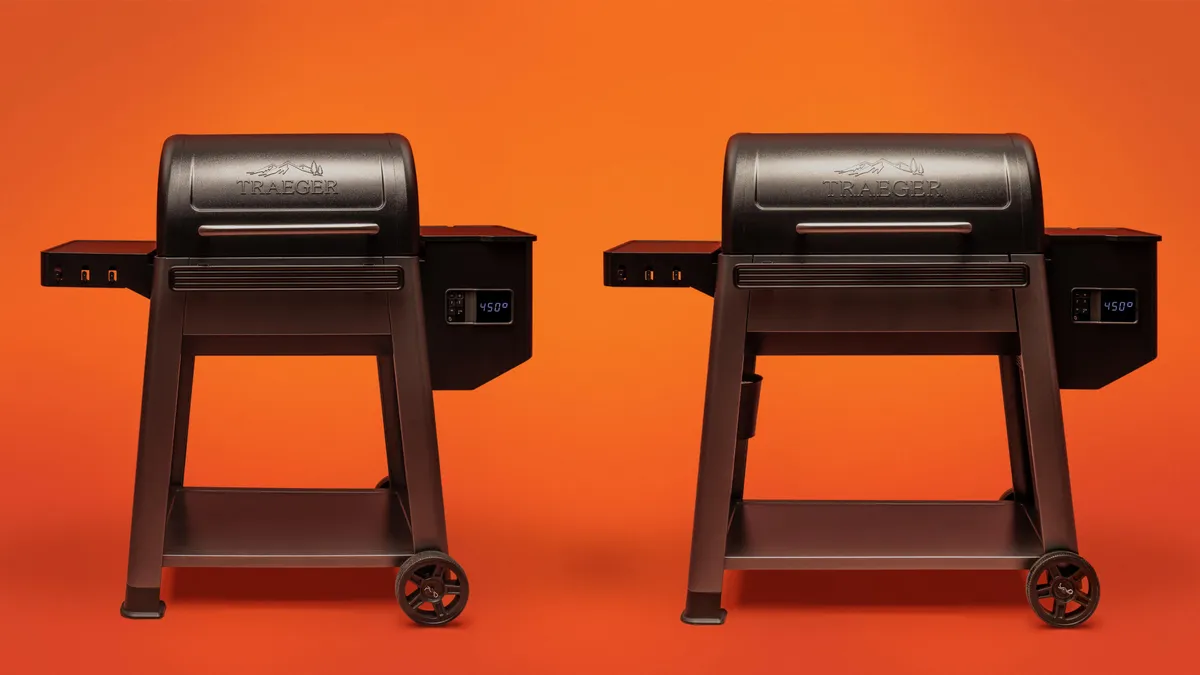
A full-sized Traeger typically costs the would-be pellet griller about $1,000, but the brand just launched its most budget-friendly line, the Westwood series, ahead of summer 2026. That means you can haul in one of Traeger’s cult-favorite pellet grills with most of its signature bells and whistles for less than $700.

Advertisement
An open Traeger Westwood grill open with food cooking

Pellet grills are praised for delivering woodfire flavor and precise temperature control.

Traeger

The new standard Westwood has 653 square inches of grilling space and sells for $699. The XL sports 823 square inches and will cost you $799 — still cheaper than any other large grill in the Traeger lineup. Until now, the cheapest full-sized Traegers, the Ridgewood series, started at $899.

The Westwood series builds on the advanced engineering and flavor-forward technology that Traeger has refined across its top-of-the-line grills, according to a press release shared with CNET, and fuses them into a grill designed for everyday cooking.

Key Features of the Traeger Westwood series:

  • Woodfire flavor with minimal fuss: Natural hardwood pellets and convection airflow work together to deliver richer wood‑fired flavor and consistent results.
  • Easy use: WiFIRE with Bluetooth compatibility lets users monitor and control their grill from the Traeger App for effortless, precise cooking.
  • More cooking options than most grills: Grill, slow cook, smoke or bake with Traeger’s precise temperature control and convection technology.
  • Generous cooking space: Dual‑tier grilling area provides room to cook multiple dishes at once.
  • Space to prep: Integrated shelves and storage create a streamlined workspace, keeping tools, ingredients and pellets within easy reach.
An arm holds down a Traeger grill hood

With the launch of its Westwood Series, Trager’s pellet grills are more affordable than ever.

Advertisement

Traeger

The Westwood Series is now available online and in stores through Traeger retailers

Source link

Advertisement
Continue Reading

Tech

Amazon purchases Globalstar for $11.6B to expand its low Earth orbit satellite network

Published

on


Per the agreement, Amazon will take ownership of Globalstar’s existing operations including its low Earth orbit satellite network and supporting infrastructure, as well as related assets like mobile satellite service spectrum licenses. Amazon is paying $90 per Globalstar share – available either as cash or in Amazon stock – which…
Read Entire Article
Source link

Continue Reading

Tech

The Google Pixel 10 Pro is at its lowest price on Amazon right now

Published

on

512GB of fast, well-organised storage changes how you actually use a phone, especially when you are shooting 8K video and saving high-resolution 50MP images without a second thought.

Right now, that headroom costs considerably less than it should, with the Google Pixel 10 Pro down from $1,219 to $969 on Amazon, saving you $250 on one of 2025’s most capable Android handsets.

Google Pixel 10 Pro on an orange backgroundGoogle Pixel 10 Pro on an orange background

The Google Pixel 10 Pro 512GB is at its lowest price on Amazon right now, giving you more storage for less

256GB of fast, well-organised storage changes how you actually use a phone, especially when you are getting it with a $250 discount.

Advertisement

View Deal

The camera is the obvious starting point, and on the Pixel 10 Pro it earns genuine attention rather than just marketing language, because the triple rear system pairs a 50MP main sensor with 100x Pro Res Zoom for the kind of detail you would normally need a much bigger camera to capture.

Advertisement

That reach is backed by Google’s Tensor G5 chip, which has been purpose-built with an improved TPU and CPU to run Google’s AI processing on-device, meaning tasks like computational photography and Gemini Live happen faster and with less reliance on a network connection.

Gemini Live itself is worth dwelling on, because it turns the phone into something closer to an always-available visual assistant, letting you point the camera at your surroundings and have a natural back-and-forth conversation about what it sees, which feels meaningfully different from tapping through menus.

Advertisement

The Whatsapp LogoThe Whatsapp Logo

Get Updates Straight to Your WhatsApp

Advertisement

Join Now

The 6.3-inch Super Actua OLED display hits 3,300 nits of peak brightness, so reading the screen outdoors in direct sunlight stops being a frustrating experience, and the 120Hz refresh rate keeps scrolling and transitions feeling fluid regardless of what you are doing.

Advertisement

Build quality matches the ambition, with durable aluminium framing and Corning Gorilla Glass Victus 2 on the back meaning the phone can survive the kind of daily contact that would leave cheaper handsets visibly worse for wear.

The Pixel 10 Pro is a strong fit for anyone who wants Google’s best camera and AI experience without paying the full flagship price, and at $969 this is the most accessible that combination has been since launch.

SQUIRREL_13890777

Advertisement

Advertisement

Source link

Continue Reading

Tech

Microsoft raises prices on Surface PCs due to skyrocketing RAM costs

Published

on

The RAMpocalypse continues. Microsoft just revealed across the entire Surface line of products, . The updated pricing has already hit the official Microsoft Store, with other retailers expected to follow suit in the near future.

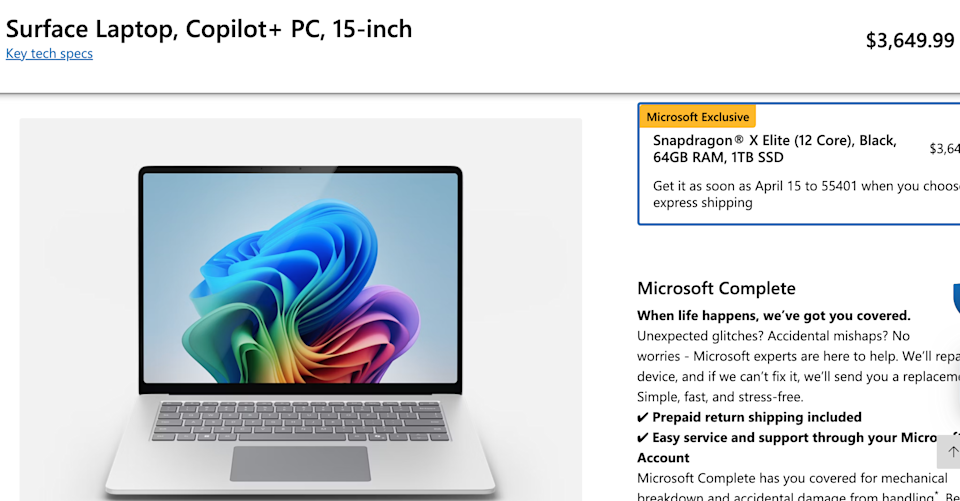
These are fairly significant upticks. For instance, the base model 15-inch Surface Laptop 7 now starts at $1,600. It cost $1,300 when the laptop was first released back in 2024. It did receive a price increase last year to $1,500, so today’s increase tacks on another $100.

The cost balloons even further when upgrading components, as a top-end Laptop 7 with a Snapdragon X Elite, 64GB of RAM and 1TB of SSD storage now costs a whopping $3650. As a comparison, a 16-inch MacBook Pro with an M5 Pro, 64GB of RAM and a 1TB SSD comes in at $3,300, and the .

An expensive gadget.

Microsoft

This trend continues with the Surface Pro line of hybrid computers. The 12-inch Surface Pro starts at $1,050, after launching at just $800. The flagship 13-inch Surface Pro cost $1,000 in 2024 and now starts at $1,500. That’s a $500 increase in just two years, though the base hard drive did get a bit bigger.

Advertisement

These price increases are, of course, being blamed on generative AI’s penchant for . “Due to recent increases in memory and component costs, Surface is updating pricing on Microsoft.com for its current‑generation hardware portfolio,” Microsoft wrote in a statement.

Industry reports that the company is currently readying refreshes across the Surface line. It’s highly likely these new prices if component prices don’t decrease.

These aren’t the due to AI. Motorola recently instituted increases that even . Samsung has also pushed up the cost for its .

The PS5 when compared to the 2020 launch price, though Sony didn’t explicitly blame these increases on RAM, but rather “continued pressures in the global economic landscape.” There are also rumors that the continued RAM shortage has made it difficult for and likely pushed back the release of the .

Advertisement

SSDs , with . It’s getting thorny out there.

Source link

Continue Reading

Tech

These Are The Only Manual SUVs You Can Buy New In 2026

Published

on


There was a time, not terribly long ago, when manual transmissions were everywhere. In fact, back in the 1980s, ’90s, and even into the 2000s, manual transmissions were standard equipment on many of the new vehicles sold in North America. This was true not just on inexpensive economy cars or high-performance sports cars — but on family sedans, pickup trucks, and SUVs as well. While stick shifts are enjoyed by car enthusiasts today, opting for a manual used to be something mainstream auto buyers did just to save money on their purchase or perhaps to get a bit better fuel economy. That’s not the case anymore.

Today, the decline in manual offerings is well known, with what seems to be an ever-dwindling list of new vehicles available with a stick shift and a clutch pedal. As you’d expect, with the manual transmission very much becoming a niche option for drivers, the vast majority of today’s manual offerings come on enthusiast-oriented sports cars, hot hatchbacks, and muscle cars.

Advertisement

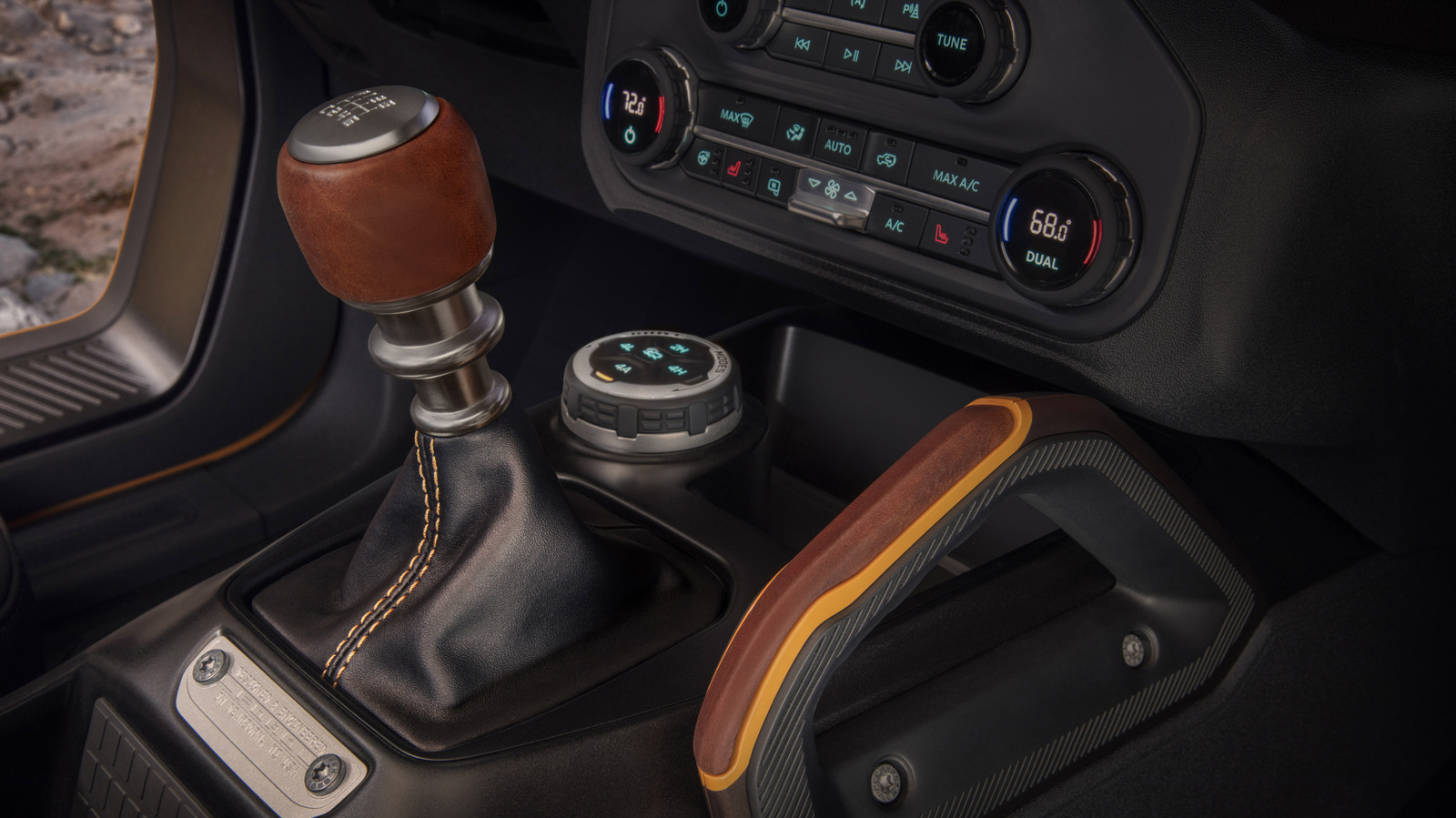
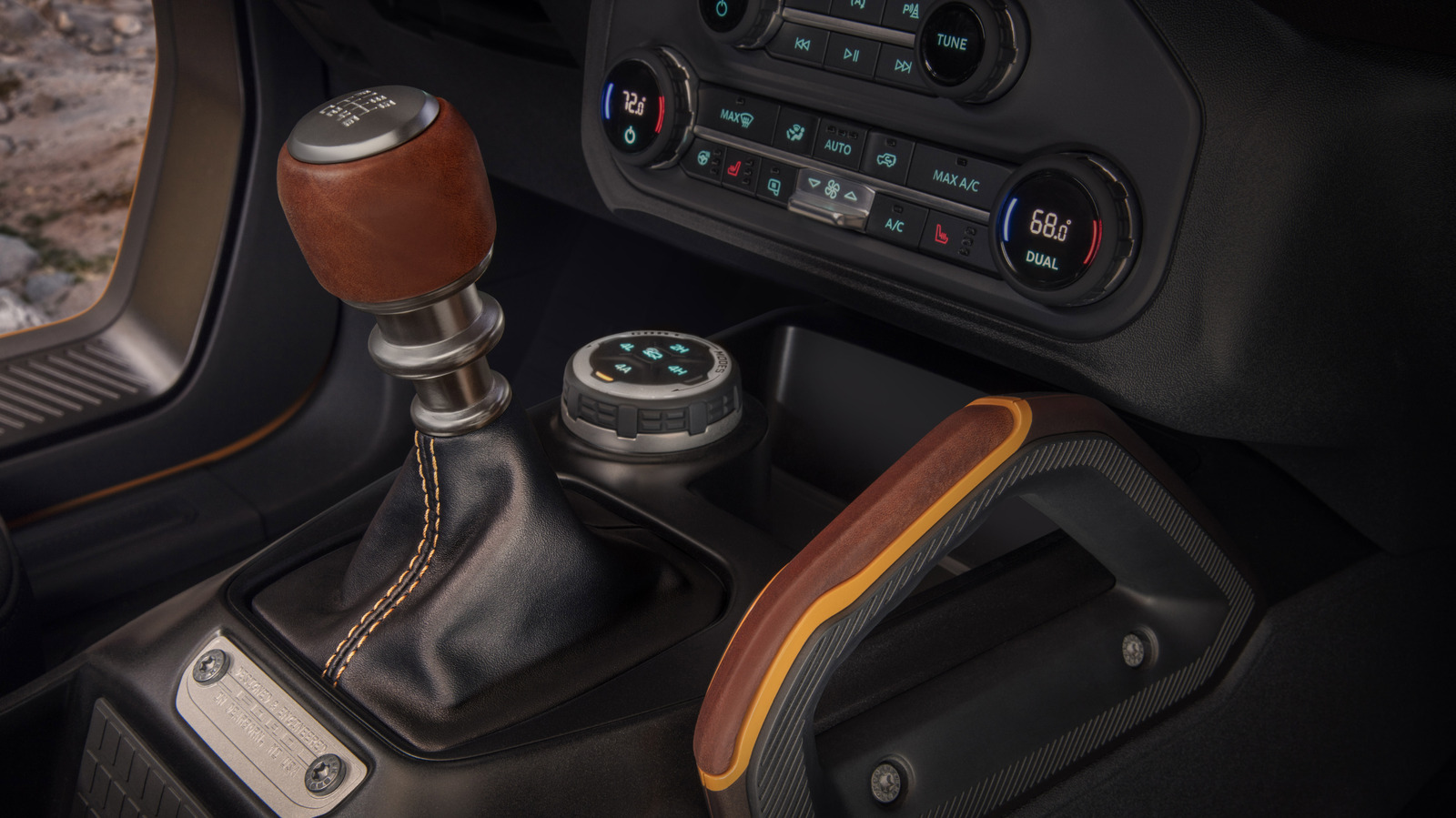
So what about manual SUVs? While SUVs and crossovers dominate the sales charts overall, you’ll need to search far and wide for a manual-equipped SUV on a dealer lot, with just two models currently offering buyers the option of a stick shift. Those two models are the Ford Bronco and Jeep Wrangler, both of which are adventure-oriented 4x4s, rather than mainstream family SUVs. Even on these models, manuals are only found on certain trim levels and with certain engines.

Advertisement

SUVs with manual transmissions are rare breeds

With their iconic names and rugged body-on-frame construction, the Ford Bronco and Jeep Wrangler make sense as the only two SUVs available with a manual transmission. Both 4x4s are offered in two or four-door body styles, and both have removable tops and doors for an open-air adventure experience. A manual simply makes them that much more fun.

However, you can’t simply add the manual option to any Bronco or Wrangler model. The Bronco offers an available seven-speed manual transmission — which is technically a six-speed with an extra crawler gear — but only on models powered by the base 2.3-liter EcoBoost four-cylinder engine. The more powerful EcoBoost V6-powered Broncos are automatic only. 

The Jeep Wrangler is available with a few different powerplants, including a 2.0-liter turbocharged four-cylinder and a 6.4-liter HEMI V8. However, Jeep’s six-speed manual is only available on Wranglers powered by the 3.6-liter naturally aspirated V6. For a time, the Wrangler’s V6 engine was actually manual-only, though Jeep recently brought back the V6-automatic combo following customer demand.

Advertisement

There is some evidence more stick shift SUVs are on the way

There’s one more new vehicle sold with a manual transmission that deserves an honorable mention here, and that’s the Toyota Tacoma — which was as of this writing the only pickup truck sold in the United States with a manual transmission. While it’s, of course, an open-bed pickup rather than an SUV, a Tacoma with a camper shell is the closest you can get to having a new Toyota SUV with a stick shift. Despite having a similar powertrain and essentially being the Tacoma’s SUV counterpart, the Toyota 4Runner is only available with an automatic.

Toyota has said that there’s low demand for a manual 4Runner, yet there’s also some evidence  that the manual transmission has been undergoing a bit of a resurgence as drivers look for an extra connection between them and their vehicles. So, is it possible that we could see other manual-equipped SUVs joining lineups in the future? 

Advertisement

Subaru recently generated some speculation by asking its buyers if they’d be interested in a new, manual Subaru SUV. The company had previously offered its Crosstrek CUV with a manual, but the stick shift was cut from the option sheet for 2024. Whether or not Subaru’s interest pans out into an actual product remains to be seen, but manual lovers can at least have some optimism for the future. Until something else comes to the market, though, SUV buyers who desire a manual will have to make do with a Bronco or Wrangler.


Advertisement

Source link

Continue Reading

Trending

Copyright © 2025