Single sign on (SSO) simplifies access by letting users log into multiple systems with one set of credentials. While this delivers clear benefits to the authentication process, that convenience can also concentrate risk, as the 2025 University of Pennsylvania breach showed.
According to reports, attackers compromised a PennKey SSO account and used that access to reach internal systems including VPN, Salesforce, Qlik, SAP, and SharePoint. The attack also resulted in the theft of data on 1.2 million individuals.
That does not mean SSO is insecure. When it is configured and protected properly, SSO can improve security by reducing password sprawl, centralizing access policies, and making it easier to enforce multi-factor authentication (MFA).
However, organizations can only enjoy those benefits when SSO is treated as a critical security control. If one login opens the door to multiple systems, that login needs robust protection.
Advertisement
So, is your SSO login protected enough? To answer that, organizations need to look beyond whether SSO is switched on, and focus on how it is secured.
Start with strong SSO passwords
‘Implement strong passwords’ isn’t new advice, but it is especially crucial if one credential can unlock multiple systems. However, strong doesn’t have to mean frustrating; after all, SSO is designed to reduce friction during authentication.
The latest guidance from NIST puts the emphasis on length and usability, alongside screening for weak or compromised passwords. For scenarios where single-factor passwords are still acceptable, NIST recommends at least 15 characters.
Passwords used alongside MFA must be at least eight characters, and systems should allow users to create passwords up to 64 characters. NIST also says organizations should check new passwords against blocklists of commonly used, expected, or previously compromised passwords.
Advertisement
Just as importantly, NIST advises against some legacy password rules that still appear in many organizations. Mandatory complexity requirements and routine password resets can push users toward predictable patterns, such as changing one digit or adding a symbol at the end.
Verizon’s Data Breach Investigation Report found stolen credentials are involved in 44.7% of breaches.
Effortlessly secure Active Directory with compliant password policies, blocking 6+ billion compromised passwords, boosting security, and slashing support hassles!
Add MFA, but make sure it can stand up to modern attacks
A strong SSO password shouldn’t be the only thing standing between an attacker and your applications. Infostealers have made it easier than ever for attackers to scrape passwords and other authentication information, and even passwords that meet regulatory requirements appear regularly in these logs.
Advertisement
MFA adds another layer of protection, making it harder for an attacker to turn a compromised password into a successful login. For SSO, MFA should be enforced consistently. That means applying it across users, apps, and access scenarios, rather than only enabling it for a handful of “high-risk” accounts.
It is also worth looking at the type of MFA in place. SMS codes and basic one-time passwords are better than passwords alone, but they are not the strongest option.
Where possible, organizations should move toward phishing-resistant methods such as FIDO2 security keys, WebAuthn, or passkeys, especially for privileged users and access to sensitive systems.
Implement secure MFA with Specops
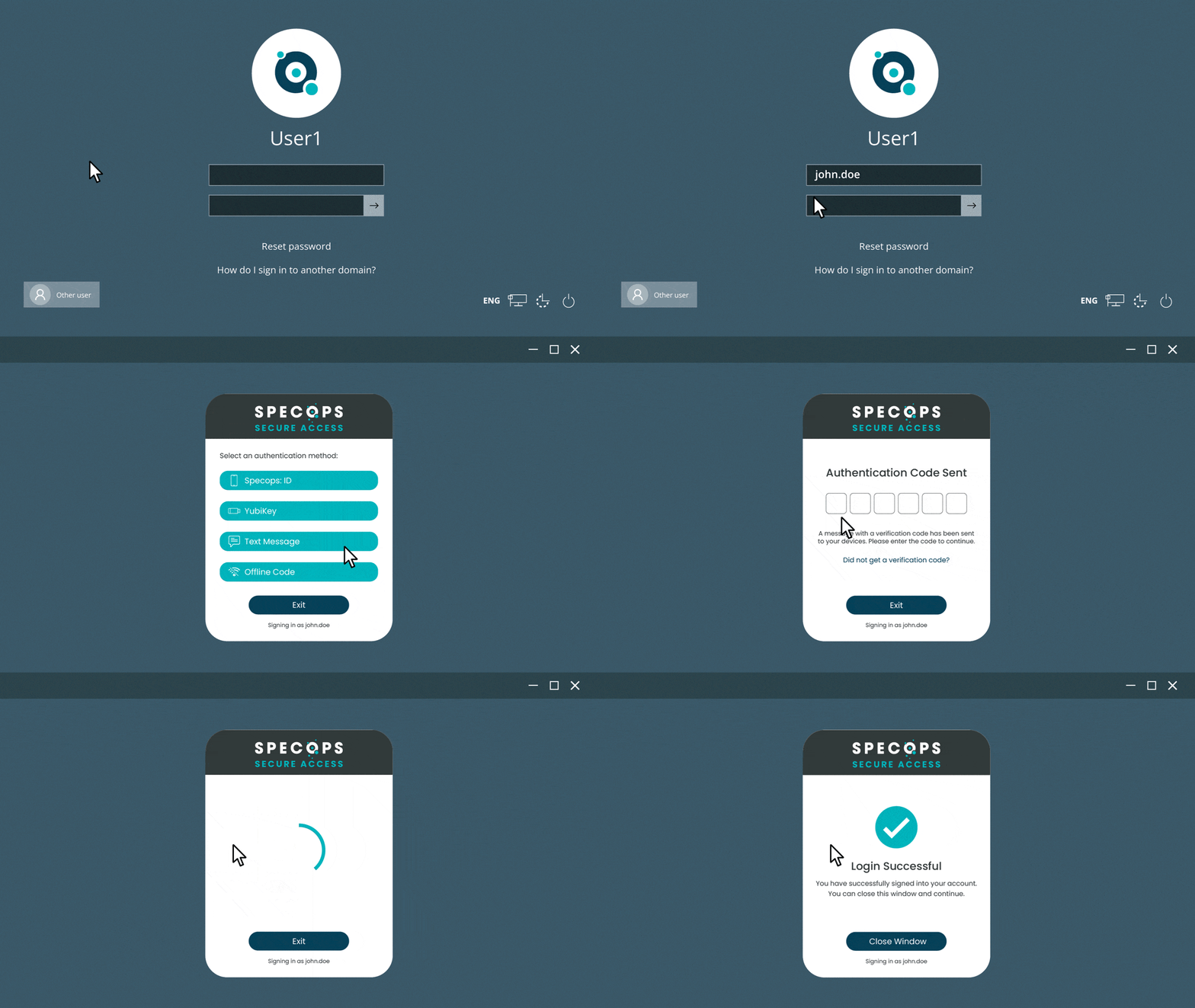
Solutions like Specops Secure Access help organizations defend against password attacks and includes support for SSO for SaaS applications via OIDC and SAML.
Advertisement
Alongside adding MFA to Windows Logon, RDP and VPN authentications, Specops Secure Access helps organizations manage user access from a single place, reducing the identity attack surface while satisfying regulatory audits and cyber insurance conditions.
Specops Secure Access
Secure the assets behind the SSO login
Organizations also need to secure the assets that sit behind SSO and control how identity is issued, trusted, and delegated.
Start with IdP administrator accounts. These accounts can change authentication policies, add applications, add and reset users, and approve integrations. They should be protected with phishing-resistant MFA, separate admin accounts, just-in-time access, and close monitoring.
Signing certificates and keys also need strict control. SAML certificates and token-signing keys are what allow applications to trust the identity provider. If they are exposed or misused, attackers may be able to impersonate users or abuse trusted sessions. Access should be tightly limited, changes should trigger alerts, and certificates should be rotated before they expire.
OAuth secrets and credentials deserve the same attention. Client secrets, app credentials, and refresh tokens can give attackers long-lived access, sometimes without another interactive login. Store them in a secrets vault, rotate them regularly, and review app registrations for excessive permissions.
Advertisement
Finally, review consent grants and delegated permissions. Attackers often look for ways to maintain access after the initial compromise, and risky third-party app permissions can give them that route. Restrict user consent, require admin approval for sensitive permissions, and remove stale or overprivileged grants.
Is SSO secure?
SSO is still worth using, provided it is implemented and protected properly. The benefit for users is simple: access becomes easier. They don’t have to remember separate passwords for every application or keep resetting forgotten credentials.
In most cases, SSO lets them sign in once and move between connected resources without unnecessary friction.
That also helps the service desk, as fewer forgotten passwords and account lockouts mean fewer support tickets, giving IT teams more time to focus on higher-value work.
Advertisement
From a security perspective, SSO gives organizations a central place to manage authentication. Applications do not need to handle the user’s password directly, instead relying on trusted authentication tokens from the identity provider. This reduces password exposure across different services and gives security teams one place to enforce controls such as MFA, conditional access, logging, and account revocation.
SSO can also speed up access to business-critical resources. When users do not need to enter credentials for every tool, they can get to the systems they need faster and with less disruption.
There are compliance benefits too. Centralized access management makes it easier to support reporting, auditing, strong authentication requirements, and rapid access removal when users leave or roles change.
SSO will not cover every sign-in scenario, and it is not secure by default. But when it is hardened properly, it can improve the user experience, reduce helpdesk pressure, strengthen security, and make access easier to govern.
Advertisement
Ensure your SSO is secure with Specops
The security of SSO environments currently depends heavily on credential strength, so it’s crucial that policies enforce strong passwords. Specops helps here with Specops Password Policy, helping organizations simplify policy management and continuously block over 6 billion unique compromised passwords.
Specops Secure Access then extends that protection by applying MFA to SAML and OIDC-based applications, including those federated through third-party identity providers.
If you’re interested in seeing how we can help strengthen the security of your SSO environment, contact us today or book a demo.
The Amazfit T-Rex 2 Ultra is a well-stocked smartwatch for adventurers – you just need to be willing to handle its hulking watch frame.
Plenty of battery life
High-end watch features at a more affordable price
A useful LED flashlight
It’s a big watch to wear
Smartwatch ecosystem lags behind competition
GPS and heart rate tracking not best in class
Key Features
Advertisement
Review Price:
£549
Built-in LED flashlight
Advertisement
Integrated white and green LED modes offer high visibility for nighttime outdoor activities.
Dual-band GPS tracking
Advertisement
Dual-band GPS technology delivers strong distance and pace tracking accuracy during outdoor workouts.
Long-lasting battery life
Advertisement
An 870mAh battery provides up to 30 days of typical use and up to 10 days with always-on display.
Introduction
The Amazfit T-Rex Ultra 2 is a smartwatch built for outdoor lovers who don’t want to spend the big bucks on a new Garmin Fenix 8, Garmin Instinct 3 or Apple Watch Ultra 3.
The Android and iOS-friendly outdoor smartwatch offers many of the same features you’ll find on those more premium options. That includes offline colour maps, turn-by-turn navigation, and sports modes aplenty, all packaged up in a watch design that’s built to operate in extreme environments.
Advertisement
When you’re not heading off for a multi-day hike, the Ultra 2 will let you pay your way, make calls over Bluetooth and let you load up music to keep you company on your off-road outings.
With the arrival of the Ultra, Zepp Health has now grown its T-Rex series to three watches. This sits at the top of that pile, but is it the one you should go for and is this one of the best outdoor smartwatches? I’ve been wearing it for a few weeks to find that out.
Advertisement
Design and screen
Now larger case size
Larger AMOLED display
Comes in one colour
If we’re comparing the Ultra 2 to the last Ultra and the T-Rex 3 Pro, this is a considerably larger watch to live with. You now have a 51mm case that measures in at 14.3mm thick.
Image Credit (Trusted Reviews)
It’s inevitably going to get compared to Garmin’s 51mm Fenix 8 model, which is thinner, though opting for a titanium bezel and buttons helps to ensure it’s not super heavy to wear. At just shy of 90g, it actually sits at around the same weight as Garmin’s 51mm Fenix. You can find lighter, smaller and still rugged watches, including in Zepp Health’s own Amazfit line.
It’s a watch dominated by its titanium bezel that surrounds a now larger 1.5-inch, 480 x 480 resolution AMOLED touchscreen. That’s a screen that can achieve a maximum brightness of 3,000 nits. I did find that in some brighter outdoor light, it can still be challenging to view the screen at some angles. The screen visibility and overall quality are good, but I think you’ll find better screens on rival watches.
Advertisement
Advertisement
Image Credit (Trusted Reviews)
The strap attached to that big polymer case is unsurprisingly a pretty robust silicone one. At 26mm, it’s a sizable strap to whip on. The traditional watch clasp ensures it stays securely in place at all times, with a clippable design that makes it very easy to swap the strap out for a new one.
The visible screws are your indicator that Zepp Health has designed this watch to operate in extreme environments. Whether it’s the ability to handle recreational dives up to 45 metres or offer military-grade resistance to extreme heat and cold temperatures, this is a watch truly built for some serious rough and tumble.
Image Credit (Trusted Reviews)
There is room on that case exterior for an LED flashlight, which has become an on-trend feature for outdoor watches. This one shines nice and bright, making it a worthy addition. There are both white and green LED light modes along with a boost mode, when you need a bump in visibility.
Performance and software
ZeppOS supports Android and iOS
Zepp Pay, App Store and free offline maps
Bluetooth calls supported
Advertisement
Zepp Health keeps the software all in-house. So the Ultra 2, like other Amazfit smartwatches, runs on ZeppOS, which is available for both Android and iOS users. The experience of using it across the two platforms is largely the same, bar a few missing features on either side. iPhone users can control their phone camera remotely, while Android users have the added ability to send quick replies to messages.
Image Credit (Trusted Reviews)
The big addition from the first Ultra is the built-in microphone and speaker. This allows you to handle calls, hear turn-by-turn directions during navigation mode, and it also brings the voice memo feature into play. The speaker goes pretty loud, if not the clearest when using it for calls.
It can also be used with Zepp Flow, which means you can speak to the watch to ask about your fitness stats, switch on the do not disturb mode or just set a timer. While it is not as sophisticated a voice assistant as Google’s Gemini or Apple’s Siri, it works well enough to give you an alternative way to interact with the watch.
Advertisement
Image Credit (Trusted Reviews)
In terms of core features like viewing notifications, using music controls and loading audio, making contactless payments, and generally getting around on the watch, everything works well enough. If you’re looking for a watch you can download apps and watch faces, you can do that here – just don’t expect a storefront that matches the likes of Google Play in Wear OS in terms of variety and the number of available apps and watch faces.
Advertisement
Image Credit (Trusted Reviews)
ZeppOS still lags a little behind the likes of Garmin, Apple, and Wear OS watches when it comes to offering a polished smartwatch ecosystem. It doesn’t necessarily shortchange you in features; it just doesn’t quite match up to the competition.
Tracking and features
Over 180 sports modes
Works with Strava, Komoot and TrainingPeaks
Promises pre-loaded maps and automatic re-routing
Whether you run, swim, bike, stay indoors or love Hyrox-style workouts, the Ultra 2 pretty much has you covered. This is a watch that can also track your daily step counts, monitor sleep time or continuously track heart rate. Those are likely not the main reasons you’re going to be looking at it, though.
Image Credit (Trusted Reviews)
You’re probably going to be sizing it up because of its abilities to accurately track your movements outside, offer maps you can view and follow on the watch and be able to quickly know when you’re about to hit higher-altitude terrain.
Advertisement
I’ll start with tracking accuracy: you get dual-band GPS, giving you the latest GPS technology available in smartwatches. Though as I’ve found, not all dual-band GPS watches deliver the same results.
I’d say the T-Rex Ultra 2 delivers very strong GPS accuracy. The likes of Garmin, Apple and Suunto just shade it overall for the best showcase of dual-band, but for distance tracking and metrics like average pace, I was happy with what the Ultra 2 served up.
Advertisement
Image Credit (Trusted Reviews)
For mapping and navigation support, there is the promise of preloaded maps, but I ended up having to sync them over from the Zepp phone app as I’ve done with other map-supporting Amazfit smartwatches.
Depending on how big the location or region you want to sync is, it can take anywhere from 20-30 minutes to transfer maps to the watch. Even with the option of doing that over Wi-Fi, I found things a bit slow going.
Image Credit (Trusted Reviews)
Advertisement
When the maps are loaded, you can use a mixture of the touchscreen and physical buttons to zoom and move around maps, pick from two different map viewing styles and make use of the onboard navigation features.
You can upload a route to follow, explore nearby spots like coffee shops and create routes directly on the watch. Maps are nicely detailed and easy to view, and the navigation features work well to steer you in the right direction if you veer off course.
If you’re looking for a more traditional sports watch experience, the Ultra 2 can give you that as well. I’ve used it for a range of indoor workouts including pool swims and the tracking in general has been very good.
Advertisement
Image Credit (Trusted Reviews)
Heart rate tracking accuracy is a mixed bag – though I do typically find this is the case with bigger watches. Given the size of the Ultra 2, I do think that contributes to some of the inaccurate readings I’ve seen during more high-intensity workouts. You can pair external heart rate monitors over Bluetooth, as well as various cycling sensors, if you want a more accurate read on your data.
The training features and training insights available are a work in progress for Zepp Health. You can better understand your training volume, see recommended recovery times, and set up interval training sessions, with the watch capable of automatically recognising a range of strength training movements. While these features are well-built and the insights do feel mostly reliable, the presentation needs a bit of work.
Advertisement
Image Credit (Trusted Reviews)
It’s good to see that you can link it to the likes of Strava, Runkeeper, Apple Health and Google Fit, which means you can pull in workout and training data from other sources if you’re not just a one-device person.
Up to 30 days battery life
Up to 10 days with always-on display mode
50-177 hours GPS battery life
The T-Rex Ultra 2 is built to be on your wrist for big adventures, which means it needs to deliver big battery life.
There’s an 870mAh capacity battery inside of its hulking 51mm frame that can max out to a month with what Zepp Health deems typical use. That’s basically when you’re not regularly using GPS, the flashlight or using the most accurate continuous health monitoring support.
Image Credit (Trusted Reviews)
Advertisement
When you start to add some of those features into the mix, those numbers drop. That said, it’s still designed to be a watch that can last over a week – even with the screen on at all times.
Advertisement
I found the battery life in general to be very good. On some heavier usage days, the battery drop was around 10%. Overnight, the drop can be as little as 2%. I never felt there was a noticeable battery drain. When you keep the screen on at all times, you can get up to 10 days of battery, depending on whether you’re using those more power-hungry features.
Image Credit (Trusted Reviews)
When you’re using the GPS, battery numbers range from 50 hours with its most accurate GPS mode to up to 177 hours with the GPS max battery life mode. In most cases, you’ll have to sacrifice the most accurate GPS tracking; I found that an hour of tracking in the most accurate GPS mode dropped the battery by around 5%. That doesn’t equate to the 50 hours promised.
If you compare those GPS battery numbers to the pricier 51mm Fenix 8 Pro, Garmin’s watch can go anywhere from 21 hours to 24 days. So it’s not quite the mammoth numbers promised by the watch it’s clearly trying to emulate.
Advertisement
Should you buy it?
Advertisement
You want an outdoor-friendly smartwatch that’s cheaper than the competition
While an expensive smartwatch, the T-Rex 2 Ultra does undercut the competition while offering a solid all-round performance.
Advertisement
You want the best-value Amazfit outdoor smartwatch
The Amazfit T-Rex 3 Pro is smaller and offers a lot of the same features as the T-Rex 2 Ultra for considerably less money.
Advertisement
Final Thoughts
If the plan for the Amazfit was to offer a good, cut-price alternative to Garmin’s largest Fenix 8 model and similarly priced Garmin Instinct 3, then I think the T-Rex Ultra 2 mostly achieves that.
It’s got a rugged design, a bucketload of outdoor features and can deliver the kind of battery life that means it can last for weeks. The problem is that the T-Rex 3 Pro exists and that’s not far off offering the same qualities for less money.
Really, the Pro model feels like the smarter buy unless you really value a bigger display, a bit more battery and that pretty handy flashlight.
Advertisement
How We Test
We thoroughly test every smartwatch we review. We use industry-standard testing to compare features properly, and we use the watch as our main device over the review period. We’ll always tell you what we find and we never, ever, accept money to review a product.
Worn as our main smartwatch during the testing period
Health data compared against other wearables
FAQs
What are the main differences between the T-Rex Ultra 2 and the T-Rex Pro 3?
The T-Rex Ultra 2 includes a larger 51mm case, more battery life, a built-in flashlight, and more onboard storage than the T-Rex Pro 3.
Apple is presenting John Ternus as the steady continuation of Tim Cook‘s leadership, with the incoming CEO praising the company’s momentum while declining to reveal how he intends to reshape it.
Cook and Ternus appeared together July 27 at the Los Angeles premiere of the Apple TV series Ted Lasso, giving Apple an unusually public setting to present its approaching leadership handoff.
The event was Cook’s final Apple TV premiere as CEO and Ternus’ first since Apple named him as Cook’s successor. Both executives arrived in navy suits, open-collar white shirts and “Believe” pins, reinforcing the image of continuity.
Cook offered an emphatic endorsement of the executive who will replace him on September 1, 2026.
Advertisement
Cook called Ternus “the perfect person for this role.”. Ternus described the promotion as an extraordinary opportunity after 25 years at Apple.
“It’s amazing,” he said. “I’ve been at Apple for 25 years, I love Apple, and to have this opportunity is beyond words.”
Ternus isn’t showing his hand
Ternus offered few details when asked how he might change Apple TV after becoming CEO.
“I am just so excited about the momentum we have,” Ternus said. “There’s so much great content on Apple TV, and now is just the perfect time for us to keep the momentum up, keep bringing in incredible storytellers and creative folks to keep making it better.”
Advertisement
Asked whether he had begun discussing his own plans for Apple TV with services chief Eddy Cue, Ternus said, “I think it’s pretty amazing right now.”
He declined to discuss whether Apple should release more films in theaters, bringing his answer back to the Ted Lasso premiere instead. When asked what he planned to do first on September 1, Ternus was equally guarded.
“You have to wait and see,” he said.
The answers don’t reveal whether Ternus plans substantial changes to Apple TV. They do show that Apple isn’t using the transition to promise an immediate strategic reset.
Advertisement
Apple is selling continuity, not reinvention
Apple announced the succession plan on April 20, 2026. Ternus will take control of Apple’s daily operations, while Cook will become executive chairman and assist with certain matters, including engagement with policymakers around the world.
The cast and Apple executives attend the Ted Lasso Season 4 premiere at the Academy Museum of Motion Pictures in Los Angeles on July 27, 2026. Image credit: Getty Images
Cook said at the premiere that the transition had gone exceptionally well for Apple’s employees and investors.
“It’s over the top great,” Cook said. “John is the perfect person for this role, and the whole thing has just been great.”
Cook previously told employees that he selected the timing because Apple had a strong business, an ambitious product roadmap and a successor ready to take charge. He also said he planned to remain executive chairman for a long time and serve as a sounding board for Ternus.
The arrangement puts Ternus in charge while keeping Cook involved as an adviser and executive chairman. Their appearance at the premiere reinforced Apple’s message that the transition is about continuity rather than an urgent change in direction.
Advertisement
Ternus isn’t an outsider hired to overturn Cook’s strategy. He joined Apple in 2001 and became senior vice president of Hardware Engineering in 2021 after working on products including the Mac, iPad and iPhone.
He also became the executive sponsor for Apple’s design organization at the end of 2025, giving him a wider role across hardware and software design before Apple announced his promotion. Ternus later told employees that Apple would continue focusing on design because it remained central to the company’s work.
Those responsibilities could influence where Ternus places his attention as CEO, but they don’t point to an immediate break with Cook. Apple’s products and strategies develop over several years, so releases during the opening stretch of Ternus’ tenure will largely reflect work completed before he took charge.
No individual executive can quickly redirect a company with Apple’s size, organizational structure and long development cycles.
Advertisement
Ternus may eventually put a distinct mark on Apple, particularly through the design and hardware organizations he already knows. His first public appearance beside Cook as the incoming CEO instead showed that Apple wants the transition to look steady, familiar and deliberately uneventful.
An AI revolution is sweeping through the IT storage world, providing a massively beneficial environment requiring more data to be stored and delivered to AI models and agents, more data to be protected, more data access governance and much better storage operating environments. The downside is that AI can run amok, with data mishaps and deliberate agent-enhanced attacks. We are using AI to make things better and need AI to prevent AI itself from making things worse. Forty-four months ago, when ChatGPT was released, the storage world began an irreversible migration into the AI era. The technology developments needed to provide fast data access to the favorite AI processor, the GPU, revolutionized the NAND and SSD suppliers, the flash array hardware and software vendors and the HPC/supercomputing world. The old and relatively steady, pre-ChatGPT era Dell, HPE, and NetApp-dominated enterprise storage array business met a set of new vendors growing fast, coming from the all-flash array and HPC worlds. Vendors such as DDN, Pure Storage, VAST Data, and WEKA grew rapidly as parallel data access became a key software technology, alongside disaggregated storage array designs, increased use of unstructured data, the rapid growth of analytics, and the emergence of AI-focused data lakes such as Databricks and Snowflake. A whole new public cloud sector emerged: the GPU-as-a-Service neoclouds, such as CoreWeave and Lambda. AI training dominated the early AI storage days but is now being overtaken by AI inference; production AI, with enterprises deploying AI factories to build, tune, deploy, and run their own and third-party AI agents. Model Context Protocol (MCP) and graph technology enable digital employees to act and reason, access and change data, both structured and unstructured. They can make mistakes, meaning that their activities have to be recorded so that they can be reversed if they take a wrong track. These digital employees have to be governed with Agent Identity Access Management. Stepping back for a moment, we can see storage and AI meet in five places: Storage providing data for AI Protecting AI data and actions Storage cyber-resilience extended to govern AI data access Storage using AI in its own operations Storage being protected from AI-driven attacks. Data for AI The dominant GPU vendor, Nvidia, has eagerly supported storage delivery technologies to keep its GPUs running and not being IO-bound. Feeding them data from parallel file systems using disk drive arrays was not good enough. The disks were replaced by SSDs, with NVMe and PCIe interconnects replacing the disk drive era’s SAS and SATA protocols. The transfer of data from a storage array’s x86 controller and its DRAM to the GPU server’s CPU+DRAM subsystem and then to the GPU’s capacity-limited high-bandwidth memory (HBM) was too slow. GPUDirect cut out the storage array controller and its memory from the data flow, with RDMA access from the SSDs. This was applied to files first and then to objects with S3 over RDMA-type technologies. Cloudian, MinIO and Scality have been active here. KV caching schemes have been set up to logically extend a GPU’s HBM to SSDs, reduce HBM data load waits and avoid token recomputation. Nvidia has partnered with the main enterprise storage array vendors to make this happen. Disaggregated storage array (DASE) technology, pioneered by VAST Data, has been adopted by Dell, Everpure, HPE and NetApp. Monolithic, high-end storage arrays from Hitachi Vantara, IBM, and Lenovo-acquired Infinidat have not adopted DASE, nor GPUDirect and not KV caching. Their architecture precludes them from joining in and they are becoming the storage equivalent of mainframes, a left-behind but still necessary niche. AI models process tokens, which are turned into vector embedding data that needs storing and searching. Dedicated vector database suppliers have sprung up, such as Pinecone, Qdrant, Weaviate, and Zilliz, while multi-model OLAP and OLTP databases have added vector support, SingleStore being an example. AI data pipeline technologies are being developed to enable an organization’s entire data estate to be used as an AI data source, but without copying it to a single repository. Apache Iceberg is being used to give data lakes access to external storage and logically bring it into the data lake’s namespace. The monolithic arrays are, of course, data sources for AI pipelines and will contribute. Data management suppliers doubled down on initiatives to map organizations’ data and make it available, via classification, selection, filtering and metadata access so as to protect privileged data, reduce bulk data movements, and accelerate targeted data movement; think Arcitecta, Datadobi, Hammerspace and Komprise. An advantage of DASE array architecture is that storage is decoupled from compute, and the compute can be scaled up to run AI technologies directly on the array. This means that array vendors’ software stacks can be extended upwards into AI data pipelines. They can have the capability to provide services for AI agents and become, in effect, AI operating systems. Indeed VAST Data explicitly calls its extended SW stack its AIOS. Protecting AI data and actions Backup and cyber-resilience vendors, such as Cohesity, Commvault, Druva, Rubrik, and Veeam, have recognized that their backups represent a great data source for AI models and agents. They developed internal AI agents, such as Cohesity’s Gaia, its Gen AI search assistant, to build on this idea. The backup vendors see that their backups contain a temporal record of data changes but they, the changes, have been made by different entities in an organization’s IT estate and are not correlated. AI agents can monitor the backups and find links between events that indicate an existing or developing cyber attack. They can identify the start of an attack, the affected data, the last known good copy of that data, and restore it, helping with cyber-attack response and recovery. Cohesity, Rubrik, and others are promoting cyber-attack simulations where they do this with customer execs and even board members to show them how a cyber-attack needs a cross-business organization response to be effective. Their ability to feed AI data pipelines is growing. AI can be used to search for data relevant to an upstream enquiry, detect and filter out or mask PII data, and then move it to the requesting target. Veeam is going further and starting to combine production data with its backup data for AI purposes. AI cyber resilience The main backup vendors have all become cyber-resilience suppliers and provide some form of identity access management (IAM) plus related data access monitoring. IAM has been a human-centered activity but is rapidly embracing AI agent data and resource access as well. Consider an AI agent to be a digital employee and the need for agent-focused IAM becomes immediately obvious. Then realize that your digital employees operate inside your IT systems and not outside. Unlike human employees, they operate inside IT systems rather than sitting at a keyboard typing commands or clicking GUI buttons. It gets worse. As well as operating at speeds much, much faster than human employees, organizations will likely have thousands, even tens of thousands of, agents, so the likelihood of accidental data mishaps will be many times higher, and the mishap can take place in seconds. The only way to provide agentic IAM would appear to be to use agents. Cohesity, Druva, HYCU, Rubrik and Veeam are active in this space; using AI agents to provide governance for AI agents. We are also seeing the rise of agent activity recording, with storage of temporary files, so that misplaced agent activity, either accidental or deliberate, can be identified and fixed. This is a fast-developing field and the risks and dangers are still being identified. AI enhancing storage internal operations We have seen storage array vendors using machine learning to monitor array telemetry and identify faults for some time. HPE-acquired Nimble was one of the first vendors to do this and it is now commonplace. Modern AI can do more. Storage and data protection admin can be highly complex. One example is a Veeam upgrade issue. An obvious use of AI chatbots is to have them be the interface between an administrator, using natural language, and the data protection software. The chatbot, or agent, is trained on the data protection software’s features and telemetry and can function as a highly-skilled diagnostic engineer helping admin staff. This, we think, will spread like wildfire, as it will effectively up-skill admin staff. They can operate at a higher level, diagnosing data protection gaps, adding new applications to be protected or applications to be given data access, without having to go down into the weeds and set up each individual action according to policies in a manual. In effect, admin staff can “talk” to their data or arrays, manage a fleet of arrays, institute new policies, optimize operations to balance performance, cost and electricity usage more effectively by using AI. We are going to see AI user interfaces being developed, complementing the existing CLIs and GUIs. The big issue AI agents are intangible, invisible and make decisions at microsecond speeds. We human operators are tangible, visible and make decisions slowly. It’s easy for computers to monitor us but it’s darn near impossible for us to monitor agents. We will have to use agents to monitor agents, and that means we have to trust our monitoring agents, really trust them. They have to be immutable, immune to having their identities stolen, and capable of detecting and stopping rogue agents in their tracks. Imagine a North Korea cyber-hacking group developing their own swarm of attack agents. We need to be ready for this. The wolves will be coming. ®
At first glance, the new Apple Upgrade program seems like a no-brainer. Why pay the full $1,199 for a new iPad Pro when you could spread the cost by leasing it for 24 or 36 months with no interest or additional fees? A 24-month iPad Pro 256GB lease will run you $32 a month for a total of $768. After that, you could pay the remaining cost or swap the iPad Pro for a newer model.
In a time of ever-increasing gadget prices, including Apple’s, a new upgrade program with low monthly fees seems like a win for shoppers. But of course, as with anything involving credit, there are downsides to consider.
For one, this is a lease program, so you don’t actually own the device you’re paying for. I suppose that’s not functionally different than paying off something with credit, but it introduces new problems when the lease is over. According to Apple’s FAQ, “You must return your device in good working condition at the end of your lease term.” If you want to return or trade in your device, you may have to pay damage fees, depending on its condition. Apple says you can also pay for AppleCare protection to avoid a damage fee (unfortunately, it’s not bundled with the new upgrade program, as it was with the iPhone upgrade plan).
If you get tired of paying monthly fees, you could just buy out the rest of your lease. But if you wanted to end the lease entirely, you’ll also have to pay “substantial” fees, according to Apple. The company says upgrading early (before the 12-, 24- or 36-month period you signed up for) can also incur “substantial” fees, depending on how many months are left on your lease. If you don’t pay off the lease at the end of the term (or trade in for a new device), you’ll also automatically be moved to monthly payments for up to six months. Apple also warns “your monthly payments may increase” in those additional months.
Advertisement
Unlike the iPhone Upgrade program, your lease and monthly fees for the Apple Upgrade program are handled by Klarna, a “buy now, pay later” company. Apple already offers Klarna as a payment option in Apple Pay, so this isn’t exactly a new partnership. But as with anything involving credit, Klarna could be considered predatory. Its ideal customers are young people who don’t have the best credit. They’re also the most vulnerable when it comes to dealing with extra fees and defaults.
All of that being said, if you can comfortably pay the Apple Upgrade program’s monthly fees, it’s a smart way to snap up new devices. It’s easier than applying for an Apple Card, and it’s cheaper than the 0 percent APR payments that card offers for Apple hardware. And I’ll have to admit, that $32 a month iPad Pro sure sounds tempting… but I’m going to figure out my plan for the end of that lease before I sign up.
Ozlo, the sleep earbuds startup from former Bose engineers, is launching its next device. On Tuesday, the company unveiled Sleepbuds 2, an updated version of its original product that tackles key areas of improvement, including battery life, connectivity, and sound quality. The new model costs $279, a 12% increase from its predecessor.
The launch marks Ozlo’s first major update since the release of its original device and reflects the company’s evolution from a continuation of Bose’s brand into its own sleep platform.
Image Credits:Ozlo
The original Sleepbuds, launched in late 2024, were meant to fill the hole left by Bose’s departure from the category the year prior. Ozlo’s co-founders, N.B. Patil, Brian Mulcahey, and Charlie Taylor, were Bose veterans who had been deeply involved with the Sleepbuds program and saw the potential to continue the business. They acquired and licensed the Sleepbuds research and IP for their new company, Ozlo, making its first product essentially a continuation of Bose’s earlier efforts.
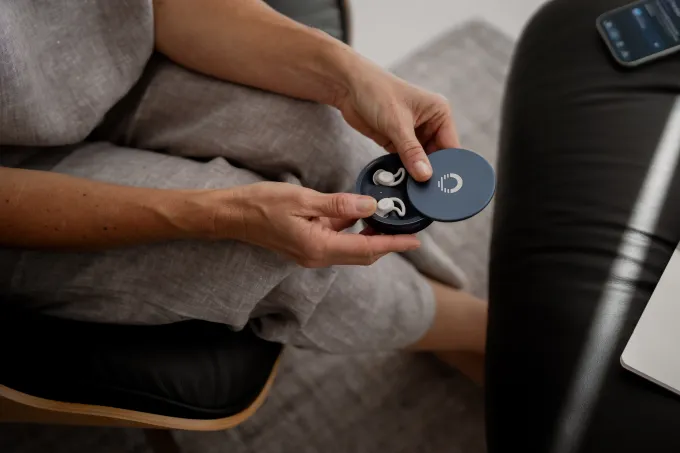
The initial earbuds, which now have more than 200,000 customers, were smaller and more low-profile than AirPods. This made them more comfortable to wear at night, especially for side sleepers. They also offered built-in sleep sounds, Bluetooth streaming, passive noise blocking, an in-ear alarm, sleep tracking, and other features.
The Sleepbuds 2 promise a range of improvements, including, most notably, 14 hours of battery life instead of roughly 10 hours. Plus, the charging case can now store enough power for two to three nights of use per charge and adds a button that lets users play a sleep sound or snooze the alarm without reaching for their phone.
Advertisement
Image Credits:Ozlo
The update also tackles one of customers’ biggest complaints: Bluetooth connectivity, which could be flaky, although software updates improved it over time. Ozlo claims the Sleepbuds 2 offer longer Bluetooth range, a more reliable connection, and dedicated pairing controls for faster setup. The improvements come from a redesigned antenna and extender, Ozlo said.
The audio system has also been updated with a built-in amplifier for better sound masking and improved sound quality. Personalized sound tuning is new, too, optimizing audio for specific use cases such as Spoken Word, Airplane mode, and Focus mode, in addition to a Balanced mode.
Image Credits:Ozlo
Another new feature is a Sleep Shield, which will block incoming calls, alerts, notifications, and Bluetooth audio streaming. This works if the users hasn’t already enable their phone’s built-in sleep focus mode.
Ozlo’s sleep insights have expanded to include more details around sleep patterns. The biometrics in the buds monitor breathing and movement, while the case monitors room conditions, such as the sound levels, light, and temperature. This can help wearers learn which sleep environments lead to deeper, more restorative sleep, helping them improve their sleep over time.
The company outlined its plans to become a broader platform for sleep data during an interview with TechCrunch at the Consumer Electronics Show in January, including plans to use AI for better interpret users’ sleep patterns. It is also developing an AI “sleep buddy” that would allow users to chat with about their sleep data.
To kick off the launch, Ozlo is offering a sleep mask and travel case with each purchase for a limited time. The $279 Sleepbuds 2 also ship with four pairs of silicone ear tips in different sizes, the charging case, and a USB-C cable.
Advertisement
As an aside, I purchased my own Ozlo Sleepbuds after reading initial reviews of the product and found them to be an effective tool for blocking out noise and streaming sounds and music, and far more comfortable than sleeping in my AirPods. They never fell out overnight, either.
However, I found that I prefer streaming from the Calm app instead of using Ozlo’s built-in sounds. (Apparently, i’m not alone: Ozlo and Calm partnered on a co-branded case last year that included a year’s subscription to Calm’s library of sleep sounds, stories, and other sleep experiences.)
I’m looking forward to trying the new Sleepbuds 2 to see if they’re worth the upgrade for an existing Sleepbuds owner like me.
Advertisement
When you purchase through links in our articles, we may earn a small commission. This doesn’t affect our editorial independence.
Meta has funded multiple natural gas power plants over the past 12 months
The corporate renewable energy initiative RE100 includes Apple, Google, and Microsoft among its 444 members
Meta has previously committed to running all operations on renewables by 2020
Meta has confirmed it is withdrawing from the RE100 scheme, following the news that it has funded several gas-fired power stations over the past year.
With the company leaning heavily into AI and the necessary data centers that come with such a commitment, it has opted to exit the collective of corporations planning to transition to 100% renewable energy, overturning a public commitment made in 2020.
While RE100 has many other members, including Apple, Google, and Microsoft, Meta’s confirmation of a move away from the group indicates that it doesn’t see an immediate solution to the power challenges posed by data centers.
Latest Videos FromTechRadar
Advertisement
What does Climate Group membership mean?
The RE100 initiative is led by the Climate Group, a non-profit with former UK prime minister Tony Blair named as a co-founder. Membership of the project gives organizations access to policy support and technical advice to support plans for moving to a 100% renewable energy footprint.
When quizzed, a Climate Group spokesperson responded: “After several in-depth conversations between Meta and Climate Group, Meta has withdrawn from the RE100 initiative, as it is no longer able to meet the technical criteria due to investments made in new gas power.”
Meta isn’t alone in looking beyond the renewable options for supplying power to its data centers. Its former RE100 co-members Google and Microsoft have both recently invested in fossil fuel projects. However, those companies both appear to have hedged their bets more widely, with Microsoft aiming for hourly energy matching (where fossil use is matched by renewable energy) and Google employing a 100-hour battery in a collaboration with Form Energy.
Data centers need heavy industry levels of power
Moving away from commitments to renewables in order to provide data centers with the level of energy they need in the AI era is disappointing, but not entirely unexpected.
Sign up to the TechRadar Pro newsletter to get all the top news, opinion, features and guidance your business needs to succeed!
Advertisement
Modern data centers require power for processing, for cooling, and for backup, and this requires a level of power that traditionally has only been seen in heavy manufacturing industries. The infrastructure currently available for renewable sources of power does not widely account for supply issues, battery systems are underdeveloped, and nuclear takes years to commission.
Meta’s support for gas power includes partnering with Entergy Corp in building seven plants in Louisiana in order to deliver over 5GW for its Richland Parish data center.
Conversely, gas-powered electricity is faster to set up, is a known quantity, and is cleaner than coal. Until infrastructure catches up with the demands from data centers, more withdrawals and fudges on previous green energy commitments from big tech should not be ruled out.
We may receive a commission on purchases made from links.
I get the opportunity to review a wide variety of devices in my career and very few of those — aside from whatever the latest iPhone is at any given time — capture the interest of the younger generation in my household. But there was my daughter, 15 years old and Gen Z, calling her friends to show them how she could wave her hand in front of a door lock in my sunroom. Personally, I just wanted to feel like a Jedi and tell the door that “credits will do fine.”
Whatever the motivation, people in my home both 15 years old and 50, giggled like children once I installed the Tapo DL130. Through my review period I intentionally closed and locked the door just so I could do it over and over again. It’s silly fun, but it’s also pretty impressive.
Advertisement
Of course, another reason I liked the TapoDL130 is because, as a phone nerd, I distinctly remember the LG G8’s vein reading technology. This was a nice little throw-back to that time, and I’d just like to say it here — I miss LG’s crazy phones — and I’m glad it lives on in some form or another. I’ve had the Tapo DL130 installed in my sunroom for one week, and this is my full review.
Advertisement
Installation is easy
Adam Doud/SlashGear
Installing the lock was pretty simple. I’ve installed more than a few door locks in my home, and this one is up there with one of the easiest. All the door hardware you need is included, of course. You’ll just need your own screwdriver, but beyond that you get everything you need. Door locks are usually pretty standard in size, so nothing about this is surprising.
One note about the install, it requires a bolt to be attached through the face of the inside portion of the lock that is covered with a silicone plug. I found it to be a tad tacky, but that was the only part that didn’t go smoothly.
Once it’s installed, you just open the Tapo app to pair it up with your phone. From there, you set up an administrator code and biometrics, and you can set up other users too. This is where things get a bit weird because while each user can have biometrics — palm vein reading and fingerprint — but not an entry code. You can set up separate entry codes in another area of the app, but it seems silly to separate those functions. It stands to reason that individual users might want individual codes and that also helps tracking movement in the log.
Advertisement
With a wave of your hand
Adam Doud/SlashGear
The Tapo DL130 is a deadbolt replacement only. Unfortunately, there are very few smart locks that will replace your door latch, and even fewer that will replace both. So, if you adopt this lock for your home, you’ll be leaving your door latch unlocked. Once installed, there are a few ways to enter. The first is the aforementioned Jedi Mind Trick method, where the door can read the veins in your palm.
You have to hold your hand upright and roughly parallel to the pad, so it can read accurately. It reads fast and if it fails, it’s usually just a matter of holding your hand straighter. The second method is a fingerprint reader which is also fast and accurate. Registering fingerprints is actually a lot nicer than registering a fingerprint for a phone.
You can also enter a PIN on a display that lights up with a tap. Tapo advertises that it will light up random numbers that you have to tap first before you enter your PIN — the idea here is to confuse what Tapo calls “smudge attacks” where an intruder will try to glean your code by looking at the smudges on the PIN pad. I much prefer Locky’s method of simply randomizing the numbers on the pad every time you enter it, but here we are.
Finally, you can use a key. It took a second to find the keyhole which is under a cover that blends in pretty well. That’s okay though, because this is a smart lock, and keys are boring.
Advertisement
A word on battery power
Adam Doud/SlashGear
Once you’re done installing the lock, there’s one last step. Tapo ships a magnetic sensor you need to attach to your door frame. It also includes a handy template to show you where to install it, which was very appreciated. This sensor tells the door when it’s closed so it can latch the door automatically. Speaking of which, every time the door latches and unlatches, it announces it with a voice through the speaker. This speaker is also used to sound the doorbell that’s integrated into the lock.
On the inside, there’s a normal knob to turn the latch, and also the battery compartment. The battery is rated to last for one year. That seems consistent with my testing. During the course of a week, the battery lost one percent. Not to beat the same drum again, but Locky’s Visage door lock includes two batteries so one can power the lock while the other is charging. The battery itself charges with USB-C, so it’s universal with other chargers you’ll have in your home.
Advertisement
One app for everything
Adam Doud/SlashGear
In addition to the door lock, Tapo’s app controls other Tapo smart devices. I have a smart plug and two smart light bulbs in my home. This is one of those platform lock-in instances where if you buy multiple devices from the same company, you can do interesting things. Tapo calls them “smart actions.” Basically, when you trigger one thing, you can get other devices to trigger as well. Open your door, and you can automatically turn on lights. If you use a motion sensor, the app can notify you if the door is open when it detects motion.
Of course this stuff only works when you have multiple Tapo devices, so that’s not the best. My Vivint home security system can do a similar thing, but it also integrates with Philips Hue, Nest Thermostat, and others to give you more options for smart home automations. I like that Tapo has these integrations, but it’d be better if they could work outside the Tapo ecosystem.
Advertisement
UPDATE: On that note — announced on July 9, 2026, and enacted as of August 1, 2026, TP-Link will be ending IFTTT services for this device (and all other Tapo and Kasa products).
Advertisement
Tapo DL130 Price, availability, and verdict
Adam Doud/SlashGear
The Tapo DL130 is available for sale on Amazon where it retails for $229.99, which is very pricey for a deadbolt (if you’re only thinking about the basic bolt part). By comparison, you can buy a basic-as-possible keyed deadbolt for around $20, so this definitely counts as a premium. But smart home tech is usually more expensive than its analog counterparts.
For instance, the latest version of the Schlage Encode Smart WiFi Deadbolt Lock costs approximately the same as the Tapo at $229. The Lockly Visage (mentioned above) will cost you around $350. Once your deadbolts get smart, they get costly.
Overall, I really like this deadbolt. The palm vein reading is fun, and it has a fingerprint sensor as a backup, and a code as a backup for that. Aside from the vein reading, that’s pretty standard for what smart locks offer, but it’s on the pricey side for sure. I like the simplicity of the app, and all the functionality you’d look for is there, even if it is not well organized.
If you can pick this up on a deal, this would be a good buy, but at its current price, it’s a bit too much if you’re not in the market for the latest in “this is the coolest part of my security system” technology. There are certainly other smart locks out there that’ll cost less and do a lot of what this lock does, but this is the one you’re going to want if you’re looking to feel like Obi-Wan Kenobi.
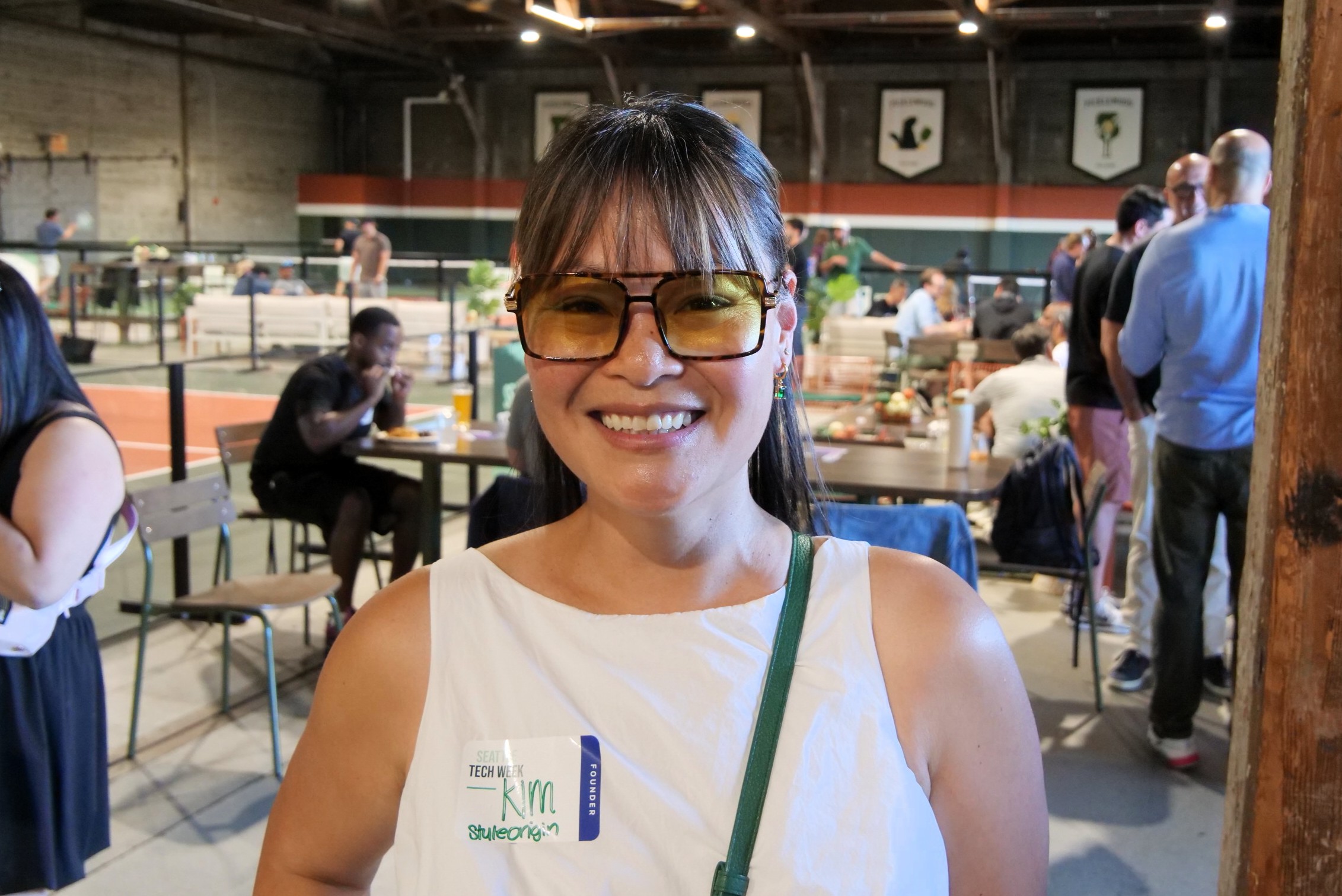
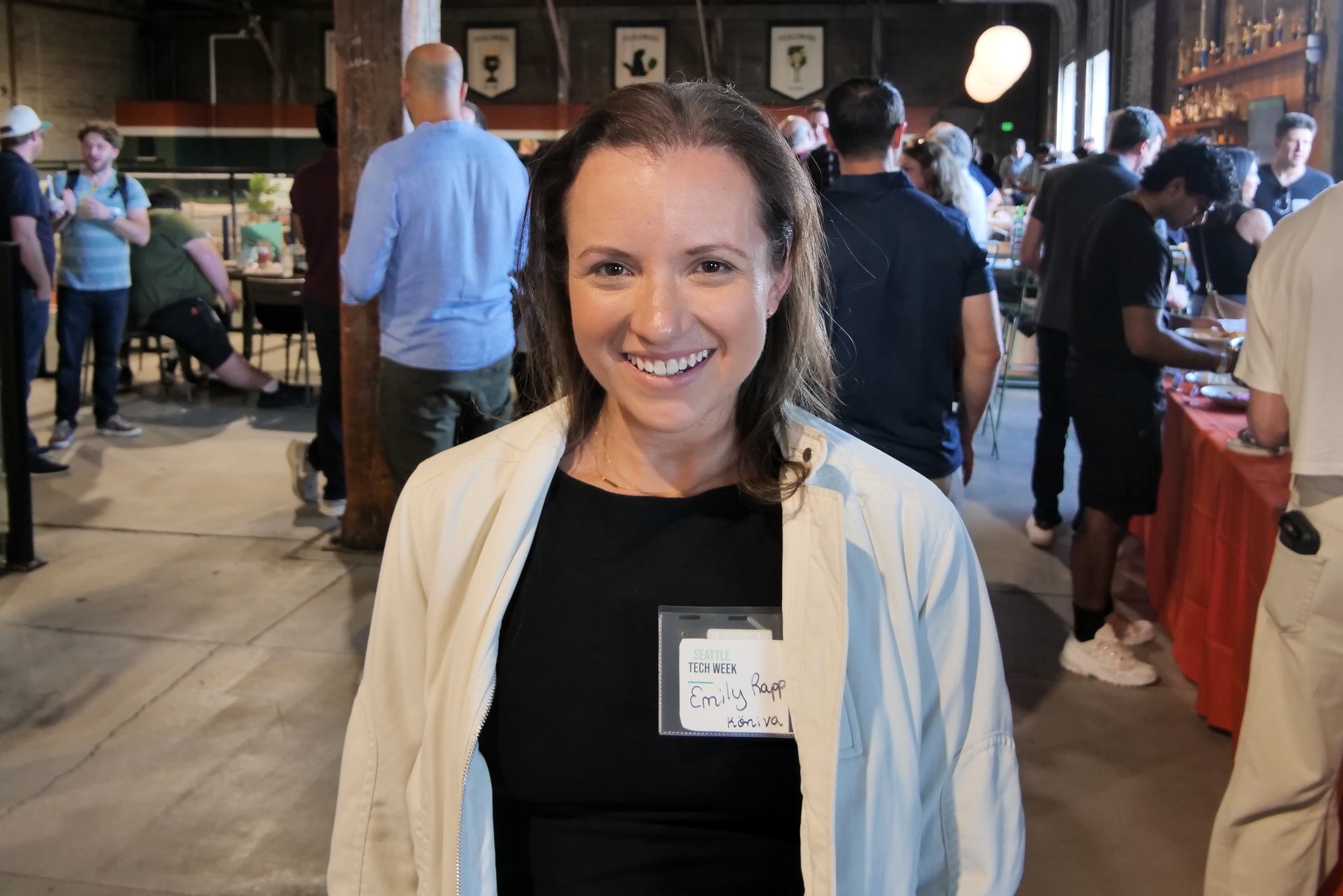
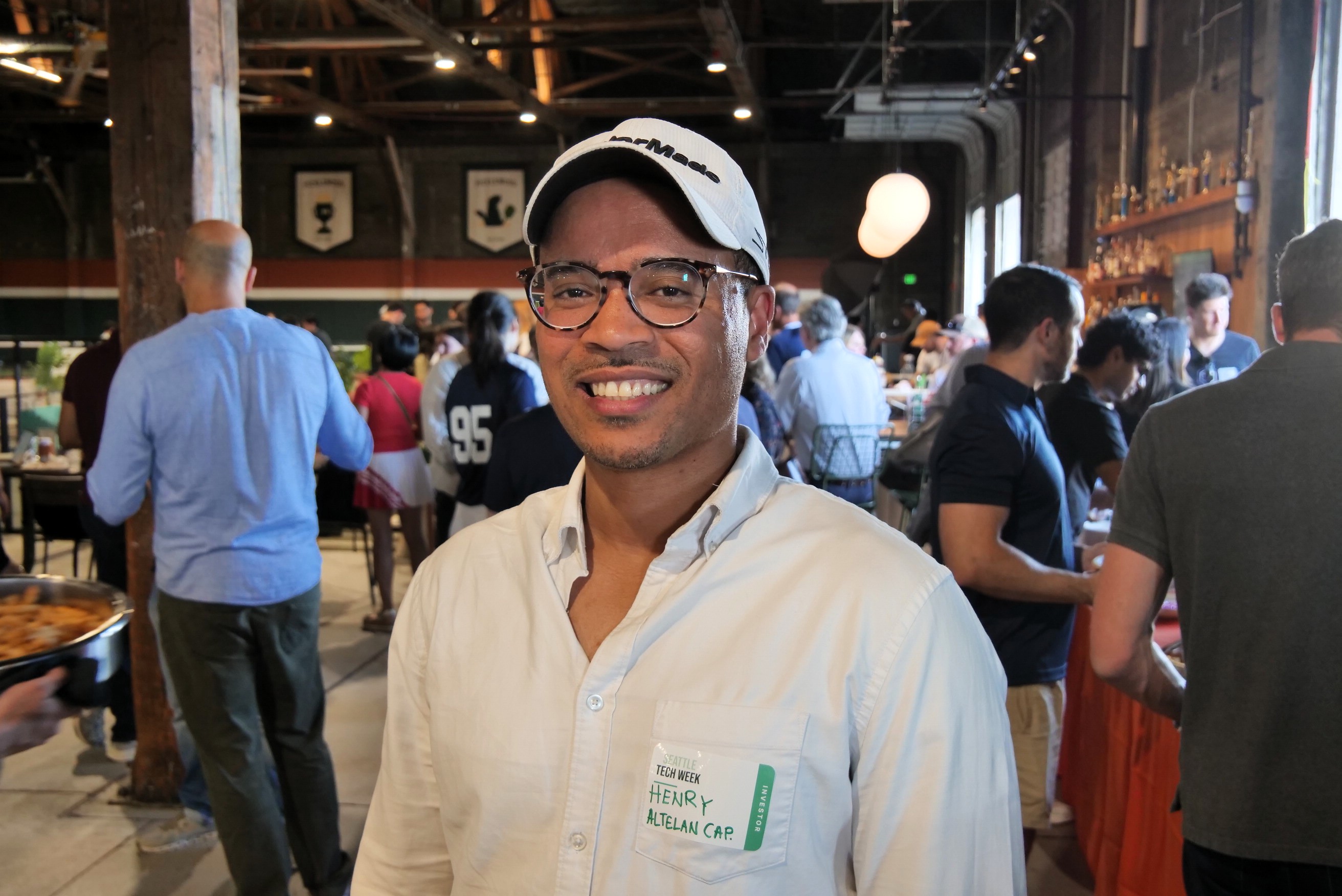
Top row from left: Emily Rapp, Henry Arias, Cleo Escarez, and Jagan Nemani. Bottom row from left: Kim Vu, Andy Liu, Mary Jesse, and Kenny Daniel, at the Seattle Tech Week kickoff. (GeekWire Photos / Todd Bishop)
The fourth annual Seattle Tech Week got off to a big start Monday, with panels and parties bringing together thousands of people from across the region and out of state. Organizers said the week features more than 250 events and drew more than 29,000 event registrations.
We went to Madrona’s kickoff event at Picklewood Paddle Club with one question for the founders, investors, and operators we met: What are you building? Here’s what we heard and learned.
Jagan Nemani, chief product officer of the Seattle Orcas. (GeekWire Photos / Todd Bishop)
What he’s building: An AI system that runs a professional cricket franchise — flights, hotels, ground transportation, and daily schedules for players and staff, all handled over WhatsApp.
Nemani is chief product officer of the Seattle Orcas, the Major League Cricket team now in its fourth season. For the first three, he ran team operations the old-fashioned way: “I ran the entire operations using spreadsheets and people and processes,” he said. That meant tracking a constant stream of inbound flights, hotel blocks and car bookings across a season.
This year, he used Claude Code to build the backend for an AI agent that took over roughly 80% of the operation: booking flights, hotels and cars, dealing directly with hotels and transportation vendors, and telling players and staff when their flight lands, which hotel they’re in, and who’s picking them up. It also handles daily schedules, down to massage appointments.
To accommodate players and staff who were reluctant to adopt new tech tools, he built it to run on WhatsApp, the messaging app they already used every day.
What she’s building: A B2B tool that lets thrift, vintage, and consignment resellers photograph an item and get back the identification, pricing, and listing details they now assemble by hand.
Vu is founder and CEO of StyleOrigin. Getting a single secondhand garment listed for sale is still manual work that takes 30 to 45 minutes an item, she said. With StyleOrigin, a reseller takes one image and an AI analysis returns what they need to list and price it. The company also gives sellers data to guide inventory decisions.
She found the problem herself. Vu ran environmental, social and governance work at Remitly until she stepped down in 2023, then took a year off and started selling vintage clothing. She assumed she was slow because she was new to it. “But turns out everybody does it the same, and so there wasn’t really any good solution out there.”
She taught herself to code and built the first version of the product. StyleOrigin has a working MVP but no revenue yet. More than 70 stores around the country are on a waitlist, and Vu is about to bring her first engineer aboard.
What he’s building: Tools for collecting, storing, and analyzing the data AI systems produce — the record of what agents actually did, not just the code they shipped.
Daniel is founder of Hyperparam, an early-stage Seattle startup, and previously co-founded Algorithmia, the Seattle machine learning company acquired by DataRobot in 2021.
Advertisement
Companies are spending heavily on AI without much sense of what they’re getting, he said. “AI is producing this wall of tokens. Companies are paying huge amounts of money to generate all these tokens, but they have really no visibility into what are these agents doing.”
Every token leaves a trail, and Daniel said most companies ignore it. Mining it would show them where AI is working and where it’s wasting money.
“Where are models being stupid? Where are they going down rabbit holes?” Older analytics tools can’t help, he said, because they were built for numbers and clicks: “People haven’t really been thinking about what do you do when the majority of the data being produced in the world is text.”
What she’s building: An urban mine — recovering precious metals from jewelry and returning them to the supply chain for clean technology.
Escarez is founder of Redyoos, which GeekWire featured in Startup Radar last year. The jewelry industry accounts for 40% to 50% of the global supply of precious metals, she said — the same materials found in “anything that has an on and off button,” from cell phones to wiring.
Advertisement
Demand for those metals is climbing with AI and clean energy, and Escarez said projections point to a supply shortfall of 700% over the next couple of decades. “We mathematically cannot solve this deficit,” she said, which is why she sees jewelry as a viable source.
Redyoos collects jewelry, refines what contains precious metals, and sells the recovered material to clean-tech manufacturers.
Escarez, a former chief operating officer at Boma Silver Jewelry and brand manager at Starbucks, has bootstrapped the company, which has been live a little over a year and is generating revenue. She is now raising a pre-seed round.
What he’s building: An engineering team inside a venture capital firm, automating the work of investing.
Liu is a partner at Unlock Venture Partners, which he helped launch in 2018 to back early-stage startups in Seattle and Los Angeles, and which raised a $60 million second fund in 2022. A longtime Seattle entrepreneur and angel investor with stakes in close to 100 companies, he was previously CEO of BuddyTV, acquired by Vizio, and of NetConversions, acquired by aQuantive.
Advertisement
“We actually have an engineering team that’s trying to automate a lot of what we do in VC,” Liu said, “and trying to make sure we can scale our business just like our own portfolio companies.”
The work covers deal memos and diligence on prospective investments, along with the mechanics of dealing with the firm’s own investors and collecting updates from portfolio companies.
The point, he said, is better decisions: “How do we get smarter as VCs?”
What she’s building: Private AI — letting people own their own data and context, use any large language model, and not be tracked or trained on.
Jesse is co-founder and CEO of ACME Brains, whose first product, nexie, is in beta. GeekWire wrote about the origins of the company last year: after her husband passed away, she turned to ChatGPT and found real comfort in it, then ran into its limits — it couldn’t carry the context of their conversations, and she had concerns about the privacy of what she was telling it.
Advertisement
nexie keeps a user’s notes, journals, and conversations in what the company calls a personal context engine, and carries that context across AI services instead of leaving it scattered in separate chat histories.
Trading privacy for free services goes back to the early internet, she said, but AI tilts the exchange further. A chatbot draws information out of a person in conversation, then combines it with everything already known about them. “AIs can talk you into your data,” she said.
An electrical engineer with more than two dozen patents who spent decades in wireless at McCaw Cellular and AT&T Wireless, Jesse said most people don’t grasp how AI actually behaves, which leaves them exposed — seniors especially. “You need people that understand it to help protect people that don’t.” Her co-founders are Alan Caplan, Amazon’s original general counsel, and patent attorney and engineer Bob Bergstrom.
What she’s building: Voice AI that lets bar and restaurant staff count inventory out loud instead of writing it down by hand.
Rapp is founder and CEO of Köniva. A typical hotel resort bar spends 12 hours and four people on an inventory count, she said; with Köniva it’s two people and 3-and-a-half hours, and more accurate. Staff download an app and wear a lapel mic — you want both hands free on a ladder — and count out loud the way they always have.
Advertisement
She came to the problem after a career in big tech and ad tech. Not wanting to build for an industry she’d never worked in, she took a part-time job at Canlis after training as a sommelier.
When she was injured, the wine director let her help with inventory reconciliation and handed her a clipboard of handwritten numbers plus a login to the restaurant’s inventory software. She asked why they were still using paper and pencil when a whole engineering team had built software for the job. The wine director’s answer: it was faster.
Köniva has 10 customers. At several high-end hotels and restaurants, Rapp said, staff put the app on their personal credit cards to start using it, then helped her pitch their own procurement departments — an unusual path in an industry she said has been badly burned by technology.
“It is insane how bad tech has been to them,” she said.
Henry Arias, founder and managing partner of Altelan Capital.
What he’s building: A growth equity firm investing at the intersection of food brands and food tech.
Arias is founder and managing partner of Altelan Capital, a Seattle firm he started last year. It underwrites companies around the Series A stage, generally, providing growth capital and strategic support.
He came up in the industry itself, leading finance at restaurants and breweries and most recently running corporate development and financial planning for Seattle Hospitality Group. That operator lens, he said, is what he brings to investments and to coaching founders on growth. He has been an investor since 2015.
Arias calls Altelan an AI-native investment fund, using AI tools to get up to speed on an industry and test assumptions about a business’s ability to scale and where the risks are. He’s equally interested in where the technology doesn’t belong and simplicity is the better option: “AI is great, but it may not be the right tool for the job.”
The bigger shift he’s watching is food and digitization. The industry has traditionally worked off “the proverbial clipboard and a notepad,” he said, and the pandemic accelerated the move to technology across the supply chain. “There are many applications of tech in food,” he said, “and that’s what keeps us up and gets us excited every day.”
Seven months into 2026, laundry pod brand Kapsä has made over S$1 million in revenue
When Edison Lim and Lincoln Thong launched home fragrance brand Pristine Aroma in the middle of the COVID-19 pandemic in 2019, they had a problem most businesses would envy: their product was so popular, yet sales were highly seasonal.
Pristine Aroma’s reed diffusers and candles in scents like their signature Himalayan Tea, surged every Christmas but fell quiet every Jul and Aug.
The duo knew they wanted their next business’s revenue to be somewhat steadier.
The fix they landed on was taking the thing they were best at, applying it to the most ordinary chore imaginable, and building an entirely new brand around it.
Advertisement
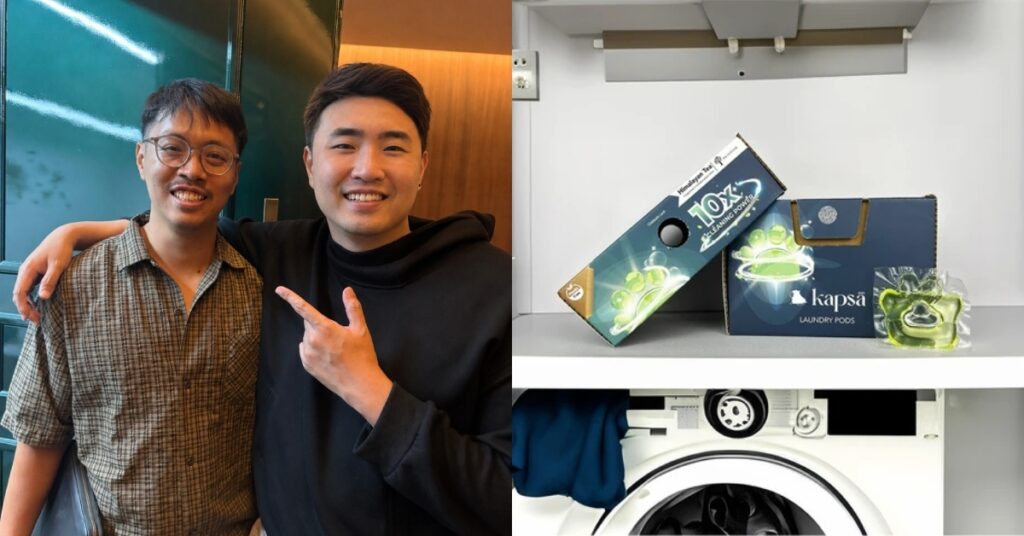
That brand became Kapsä: a capybara paw-shaped laundry pod that smells like a luxury fragrance, now stocked at supermarkets and with a significant online presence.
In under two years since launch, Kapsä has already crossed S$1 million in revenue in the first seven months of 2026.
We spoke to co-founders of Kapsä, Edison and Lincoln, both 33, to find out how a home fragrance brand became the launchpad for a laundry detergent brand, and what it actually takes to compete against laundry giants.
Turning a simple idea into a lucrative business
Kapsä founders Edison Lim and Lincoln Thong./ Image Credit: Kapsä
Home fragrance is, by nature, an occasional purchase. But laundry detergent isn’t. People wash clothes every few days regardless of the month, the mood, or whether Christmas is coming, and that predictability was what the founders wanted.
“We wanted to go into something a bit more recurring on an everyday basis,” Edison said. “There’s demand every day.”
Advertisement
Cool Brands’ first brand, Pristine Aroma, launched in 2019, while Kapsä came in 2024./ Image Credit: Pristine Aroma/ Kapsä
The insight behind Kapsä was that the customer who cares enough about how their home smells to buy a premium reed diffuser is probably also the same person making laundry who cares about how their clothes smell too.
As such, Pristine Aroma’s existing customer base was a marketing advantage that naturally formed the testing ground during the early days of Kapsä.
Eventually, Kapsä launched under Cool Brands Pte. Ltd. in early 2024, about a year after development began in 2023.
Each pod is built around Pristine Aroma’s award-winning scents, marketed explicitly as a premium fragrance experience, coupled with powerful cleaning power.
Scent as the selling point
Most laundry brands compete on cleaning credentials. However, Kapsä leads with fragrance, and specifically with scents that don’t already exist in the category.
Kapsä also currently offers two more scents: Lush Freesia (inspired by English Pear & Freesia, reminiscent of Jo Malone), and Santal Noir (a woody, masculine scent inspired by Santal 33 by Le Labo Fragrances). Of the three, Lush Freesia has become the bestseller.
Kapsä laundry pods come in three scents./ Image Credit: Kapsä
That said, Edison added that the Himalayan Tea scent is still very unique and novel to the laundry segment.
Santal Noir, on the other hand, offers a deeper, woody, masculine scent in the category of laundry detergents often dominated by floral and sweet profiles.
“None of the other brands actually have such a woody kind of scent. Usually people go for floral, a bit more sweet, more girly kind of a scent,” Edison said. “We are more than just chasing trends, but filling the gap in the detergent scene.”
Advertisement
Edison positions Kapsä as more of a premium brand than budget ones, roughly comparable to Tide and Ariel.
The R&D grind behind every new scent
Image Credit: Kapsä
Moving a scent from a diffuser bottle into a laundry pod isn’t as simple as dropping Pristine Aroma’s formula into detergent. The chemistry definitely has to be formulated differently.
The scent notes need to be adjusted so they’re stable and compatible with detergent—a process that took over a year for the first Kapsä product, but now it takes about six to nine months to develop each new scent.
The co-founders shared that R&D with its own suppliers and manufacturers is done in Singapore, Malaysia, and the US, with final manufacturing taking place in China.
In response to customer feedback, the duo created their latest offering: Magic Beads, launched in late Jul 2026—scent booster pellets designed to be used alongside the pods for customers who want their clothes to smell more intensely.
Advertisement
One of the most common pieces of feedback Kapsä received on Himalayan Tea was that the scent, while lovely, was subtle. These scent boosters are designed to keep clothes smelling fresh for up to 24 weeks when stored in a wardrobe after washing.
Winning against big detergent brands, one subscriber at a time
Kapsä is stocked at Cold Storage./ Image Credit: Kapsä
Competing with major laundry brands, which have decades of shelf presence, marketing budgets that dwarf any local brand’s revenue, and default consumer familiarity, is the kind of challenge that would give most founders hesitation, especially as a small brand.
The duo doesn’t pretend it’s easy.
“It was definitely very difficult for us to try to acquire market share, to convince customers why they should use our products over Dynamo,” Lincoln said.
Kapsä’s answer is physical reach on supermarket shelves, combined with sustained subscription.
Advertisement
The brand sells through its own website, on Shopee, and now through physical retail at Isetan, Giant and Cold Storage.
The co-founders acknowledged the challenges that come with stocking in supermarkets, where offline retail charges promotional and advertising fees that can run to S$10,000 a month, making profitability in that channel genuinely difficult.
That said, Edison and Lincoln are still keen on staying put in the supermarket space.
“For us to become a real household brand in the next three to five years, we really need to be on all the channels that we can,” Edison said.
Advertisement
The subscription model, launched alongside the brand in 2024, is where the economics improve. Subscribers typically get a discount and the convenience of automatic replenishment, while Kapsä gets predictable demand and lower customer acquisition costs.
“Usually, people who subscribe to Kapsä, they don’t really drop off,” Edison said. “Once they try the product, once they love it, they don’t really switch back to other brands.”
Each box of 30 Kapsä pods costs S$15.90 at retail price.
4,000 boxes a month and counting
Image Credit: Kapsä
The numbers reflect how quickly Kapsä has found its footing. The brand now moves more than 4,000 boxes a month, a scale that prompted the team to upgrade their Singapore warehouse from 1,600 to 3,500 sq ft in Jun.
The team across both brands sits at around 12 people, kept deliberately lean as the founders focus on building systems over headcount, allowing Kapsä to scale effectively.
Advertisement
Kapsä crossed S$1 million in revenue for 2026 year-to-date as of Jul, a milestone achieved less than two and a half years after its launch.
On the other hand, Pristine Aroma’s revenue has also grown significantly beyond the S$1.6 million figure reported in earlier years, with the brand now selling in Malaysia, Indonesia, and the US.
Kapsä is set to follow the same international path.
Looking ahead, the Cool Brands roadmap goes beyond fragrance entirely. Edison and Lincoln plan to launch a new brand potentially unrelated to scent by mid-to-late 2027, extending the direct-to-consumer group model they’ve been building since 2019.
Advertisement
“Our long-term goal for Cool Brands is to become a successful and sustainable D2C group of consumer goods in the next 10 years,” Edison said. “We want to come with more brands in the future.”
Lincoln’s advice for anyone thinking about starting their own brand is to just be “1% better every day. And that will improve your systems, processes, and your skill sets substantially.”
Apple has had countless patents granted over the smart ring technology it still won’t tell anyone about, but a new one shows just how an Apple Ring might control all of your devices.
Yes, an Apple Ring would surely be a health monitor, and yes, it would likely dominate the fitness market, but it won’t break up marriages. It’s also surely coming some day, sorry Oura, but until now the focus has been on what it will do, not necessarily what it will work with.
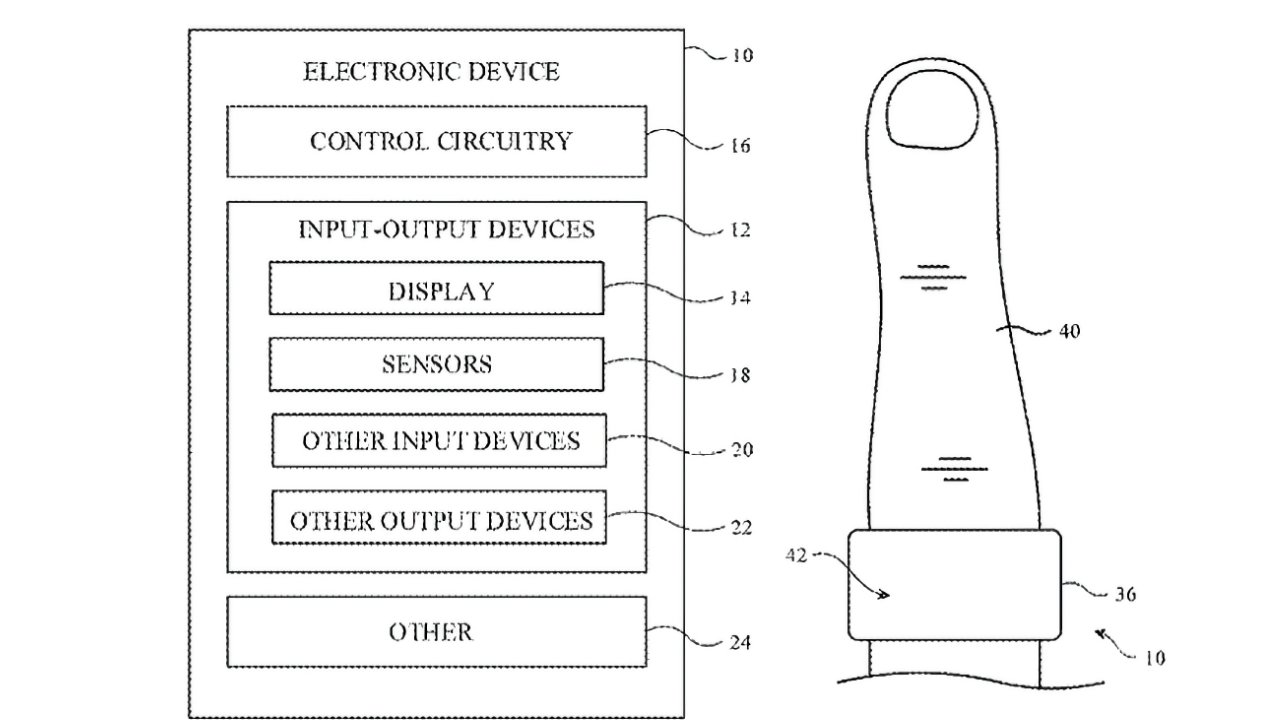
That’s changed with the newly-granted patent, “Electronic device system with ring devices.” It starts by discussing how any given user might have multiple devices, including wearable ones, and how it’s therefore a problem determining which one the user wants to use.
“The target electronic device may be identified using a gaze tracking sensor that senses the user’s point-of-gaze,” says the patent, “a radio-frequency sensor that detects a direction in which the user’s device is pointed, or other sensor circuitry for detecting pointing input, gestures, and other user input.”
Advertisement
There is a section of the 20-page patent that refers to what the ring might do by itself, as well as how it fits within Apple’s privacy ethos.
“If desired, a device may be operated in isolation,” it says. “For example a wearable device that is operating in a stand-alone operating mode may perform health monitoring operations… [which] may or may not be shared with other devices.”
But the main part of the proposal regards how “a ring worn on a user’s finger” could “capture real-time readings on the location… orientation… and motion” of the user and his or her hand. “These activities may be used in controlling devices in the system.”
You know. One ring to rule them all.
Advertisement
The proposal is written in typical patent-speak, meaning that it stops to mention every conceivable device from rings to smart watches, to headsets and more. It also takes the time to specify what could be controlled, here ranging from speakers to thermostats and everything in between in order to thwart as many future lawyers as possible.
Concentrating on the repeated description of a ring, though, the one thing that device is not likely to have is gaze tracking. An Apple Vision Pro already does have precisely that, and iPhones scan faces for Face ID.
Apple keeps trying to refer to generic “electronic devices,” but then it goes and shows you a ring – image credit: Apple
But this may be more like the way an iPhone’s “Always On” screen will actually turn off if you’re not looking at it. It’s the modern equivalent of the light in the fridge, but this power-saving feature means the iPhone does know that you’re looking at it.
Advertisement
Maybe that would be enough. If a HomePod could determine that you’re glancing its way, it surely wouldn’t need precision eye tracking. It could then just know to take your waggling finger as meaning you don’t like this track, move on.
Or raising and lowering your hand could be enough to raise or lower the HomePod’s volume. If the HomePod knew you were looking at it, and if the Apple Ring correctly conveyed the gesture you’re trying to make.
Apple’s strength is in its ecosystem
“Electronic device system with ring devices” is an unusually comprehensive patent for Apple. Rather than setting out the functions of one device or one technology, it is very much about a user’s whole array of devices.
It’s about the Apple ecosystem. And while there is a lot of detail in the patent, what it really does is make a persuasive case for how well an Apple Ring would fit into that.
Advertisement
The patent is credited to two inventors, including Stefan Hafeneger. His previous work for Apple includes multiple Apple Ring patents and patent applications, dating back to 2024.
Apple has been rumored to be working on a smart ring for much longer, though. One of the earliest reports dates back to 2007, when a concept “iRing” image was circulated, and it was expected it would control your iPod.






























![XRP Holders Will Become the New 1%! Elon Musk's 2036 Prediction Will Shock You! [DON'T MISS THIS]](https://wordupnews.com/wp-content/uploads/2026/07/1785270007_maxresdefault-80x80.jpg)







































You must be logged in to post a comment Login